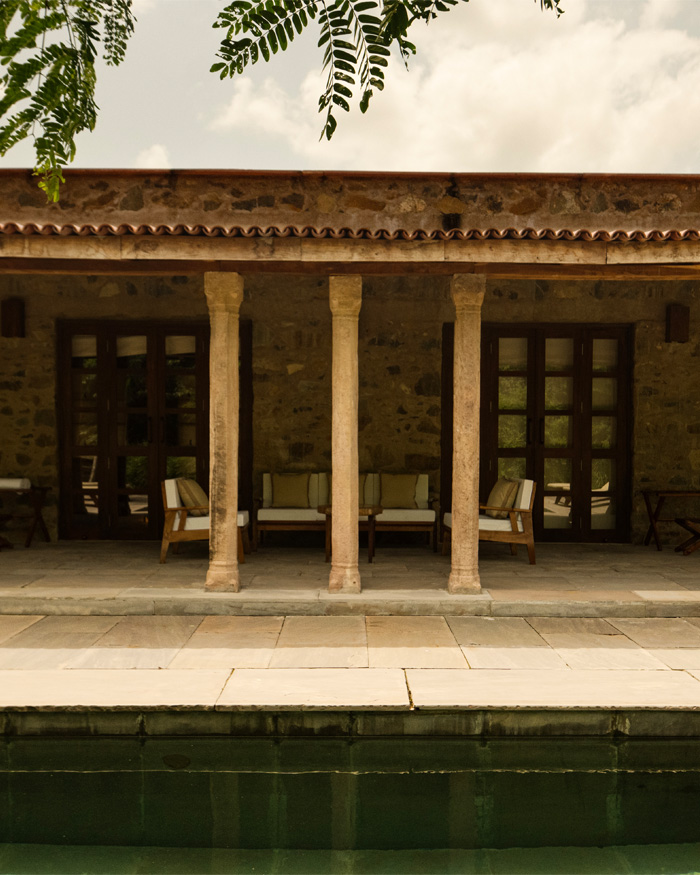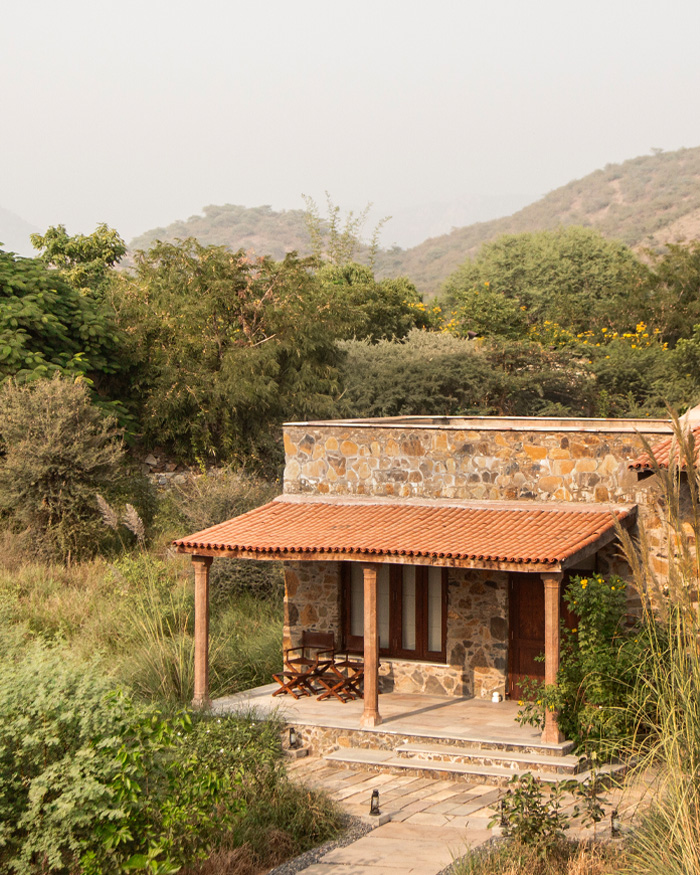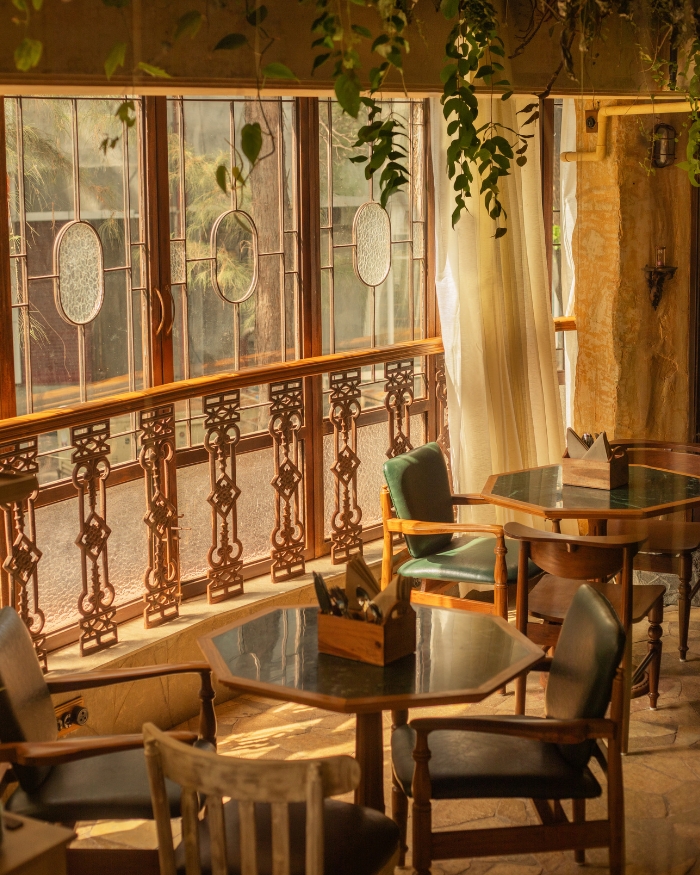
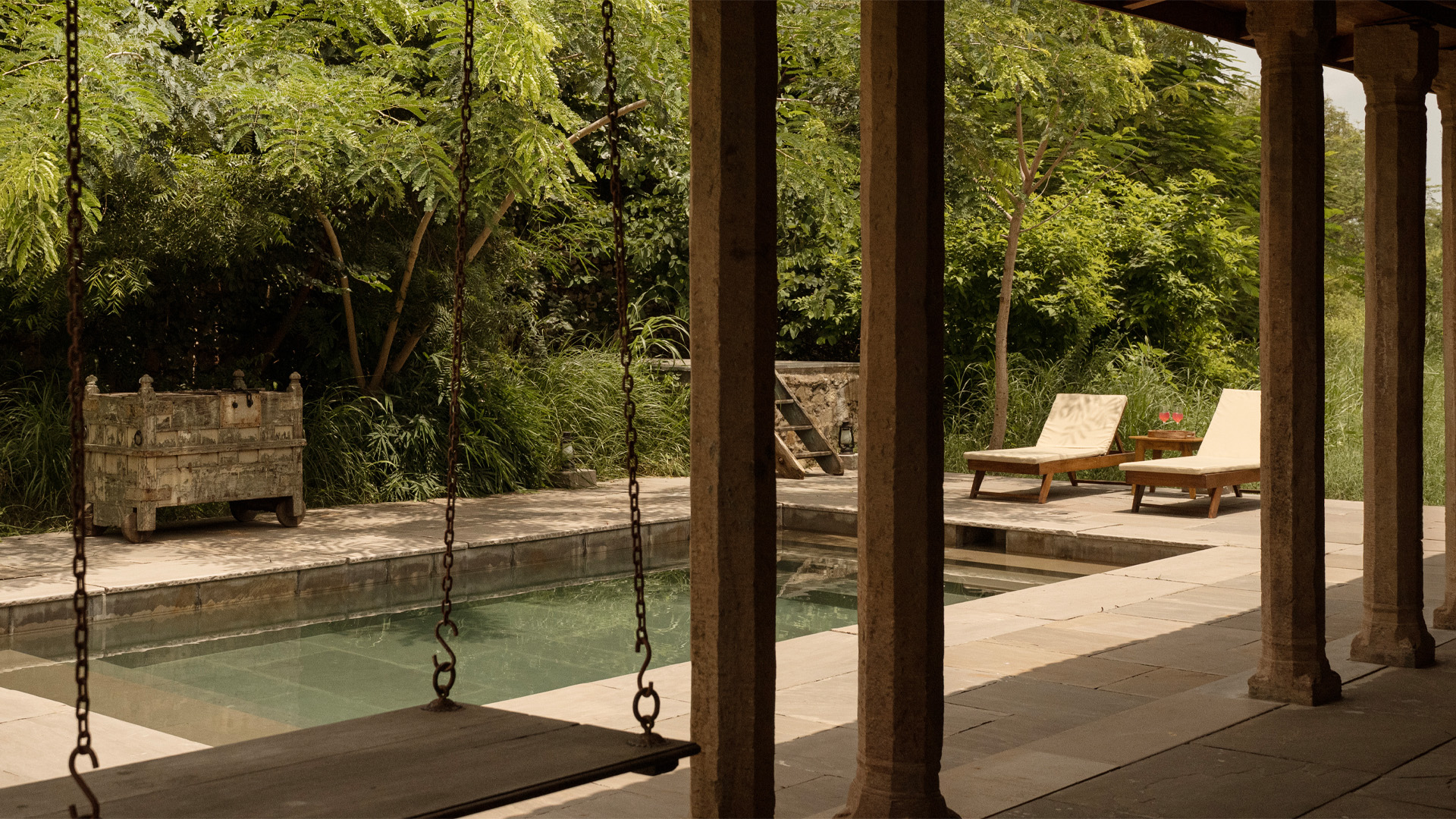
Antique stone columns open towards the swimming pool tucked within its namesake suite; Photography by Syed Ali Husain

The grass is greener this side

At Sariska Lodge in Rajasthan, founders Anand Shekhawat and Puneet Jain rethink luxury through landscape and time

BY

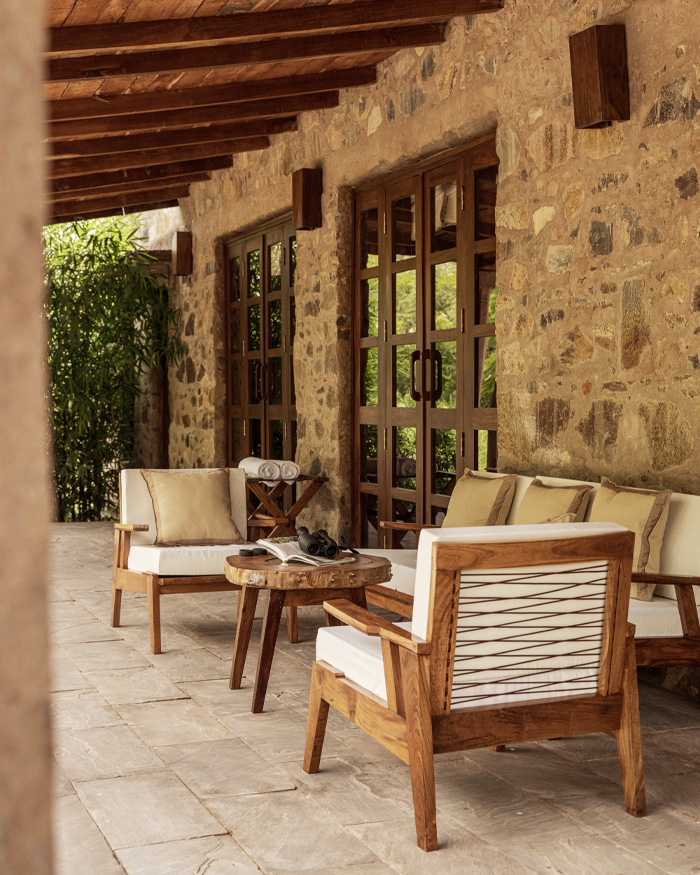
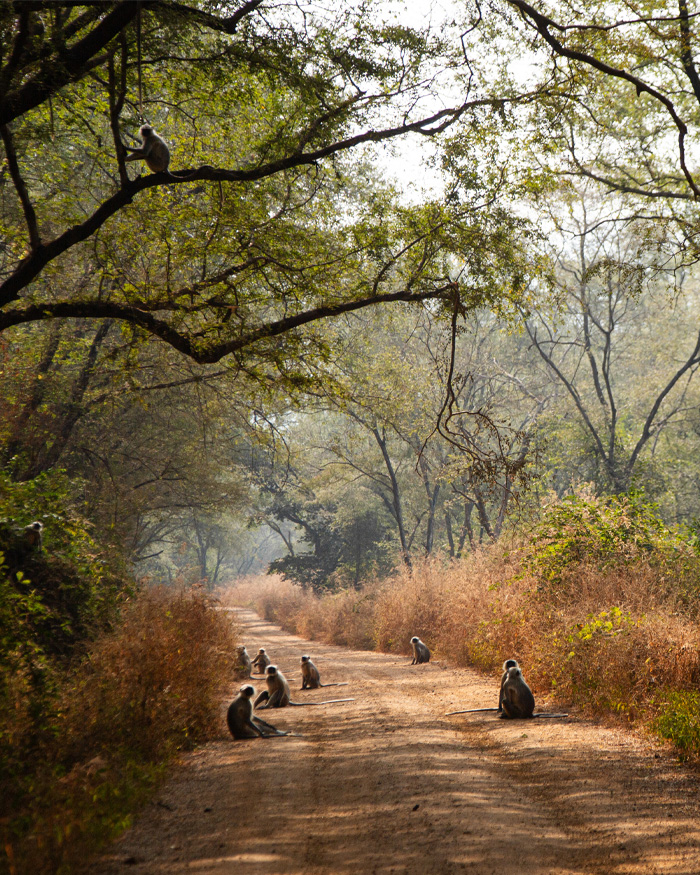
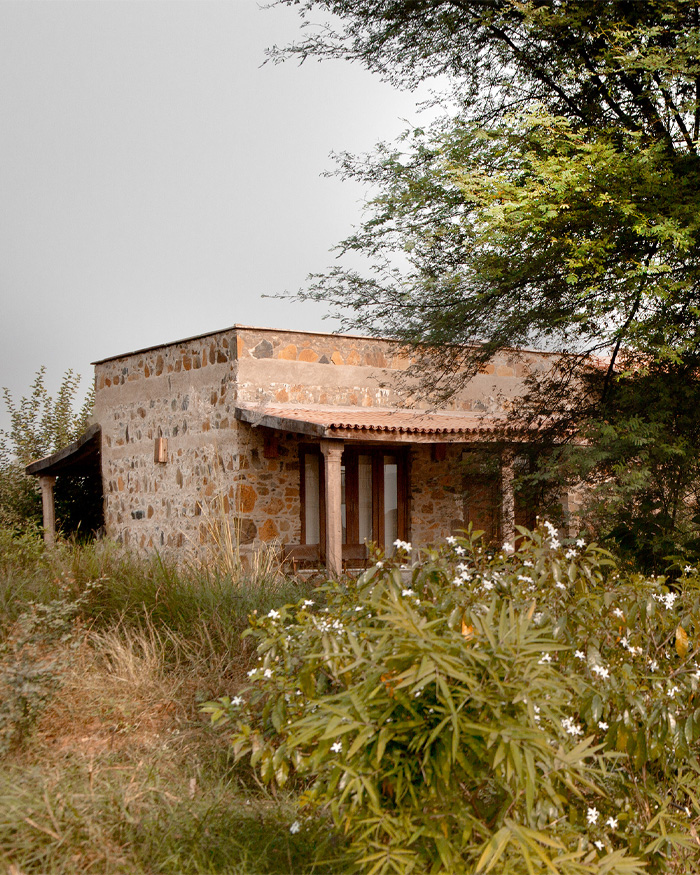
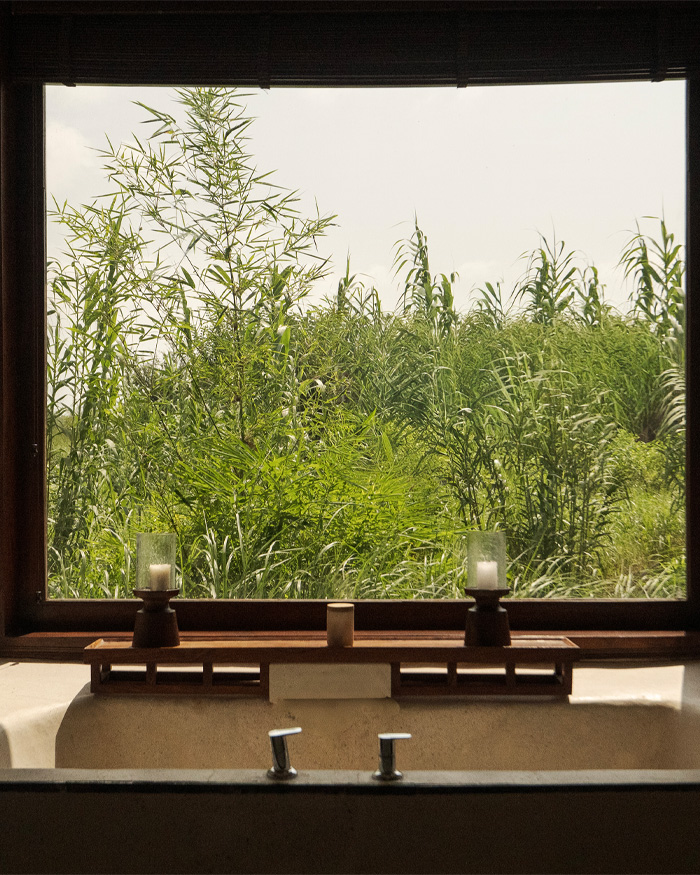
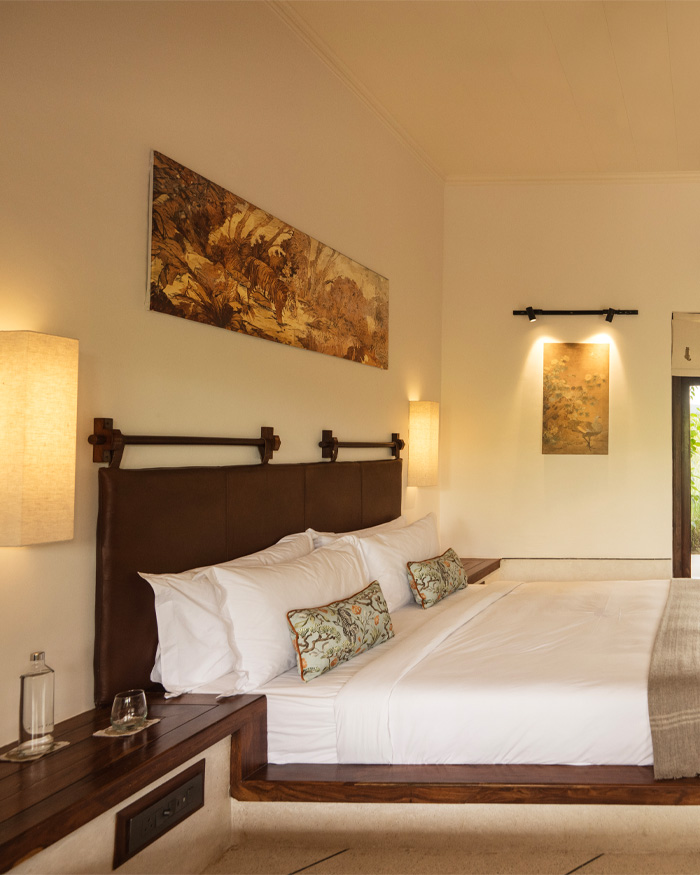
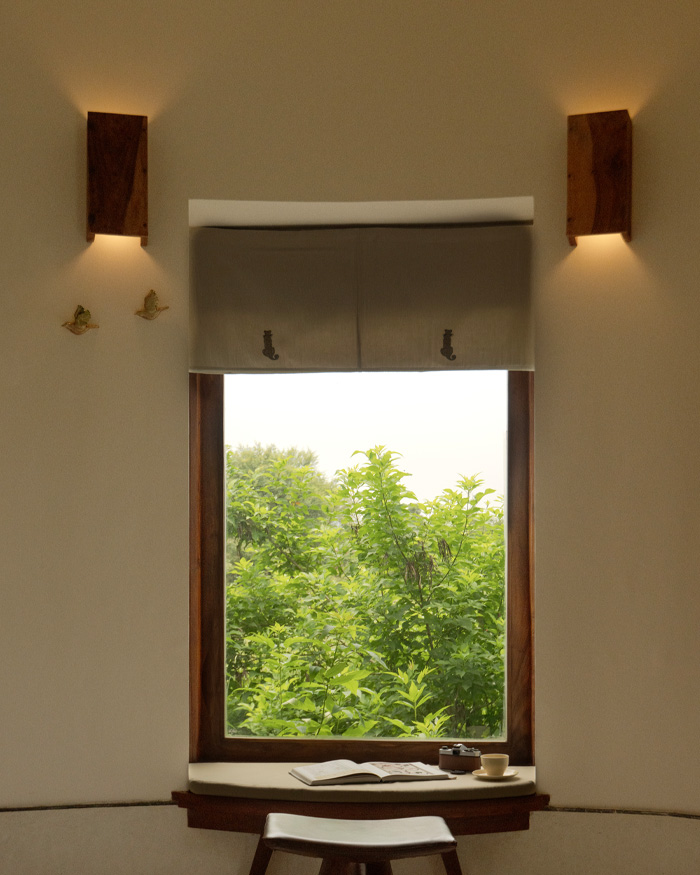
What remains of luxury when you take away its familiar props? Marble, metal, scale and the expected visual certainty. It’s almost like Indian hospitality has become fluent in a specific material language. Sariska Lodge at Alwar district in Rajasthan offers a different proposition. The once barren stretch of land is now a thriving ecosystem of flora and fauna, as founders Anand Shekhawat and Puneet Jain have coaxed the 15 acre land with 11 suites into ecological health over time. Mud walls, repurposed wood, rainwater harvesting, vegetable gardens and fruit-bearing trees seem only incidental to the land that is still work in progress, despite its lushness. When I visited Sariska earlier this year, the first thing I registered was the sound of dry leaves underfoot, a steady and brittle crunch. Mud structures emerged from within the landscape. The road took me to a sequence of small adjustments, a turn here, a clearing there, until the idea of reaching something began to dissolve into simply moving through foliage. I arrived at my suite; a shaded canopy built with antique stone columns, stone walls and a swimming pool tucked into its own enclosure. The construction developed partially in collaboration with Alwar- based designer Shipra Singhania of Sketch Design Studio, bringing together multiple techniques.

"The idea of farm to table, so often articulated as a statement elsewhere, is merely how Sariska Lodge operates. What arrives on the plate is rarely far removed from where you have just walked, and the meals are a continuation of your day with herbs, fruits, vegetables and honey from the same premises"
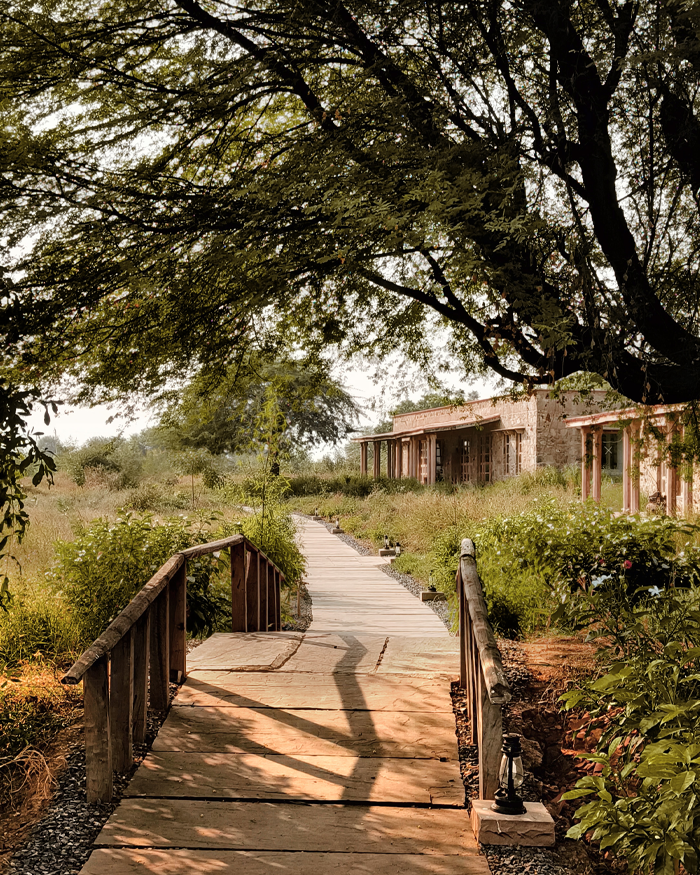
It uses RCC for structural stability, while the walls are built with a mix of lime, cement and stone dust in place of sand. The roofing combines RCC with traditional stone tiling, locally referred to as patod, where layers are placed in a sloped formation to aid insulation and drainage. Dense planting creates privacy around each suite, yet the landscape is relatively new. When Anand began work here, the soil was largely infertile. Leaves were left to decompose naturally, slowly restoring nutrients back into the ground. Trees were introduced to create ecosystems — from shade and shelter to birds and silkworms. The idea of farm to table, so often articulated as a statement elsewhere, is merely how Sariska Lodge operates. What arrives on the plate is rarely far removed from where you have just walked, and the meals are a continuation of your day with herbs, fruits, vegetables and honey from the same premises. As the soil regenerates and recreates over the years, time here too, is not structured into leisure and activity, but as a process. Why else would I, someone attuned to waking up late on holidays, choose to wake up early, eat meals on time and slide into slumber much earlier than my regular bedtime?

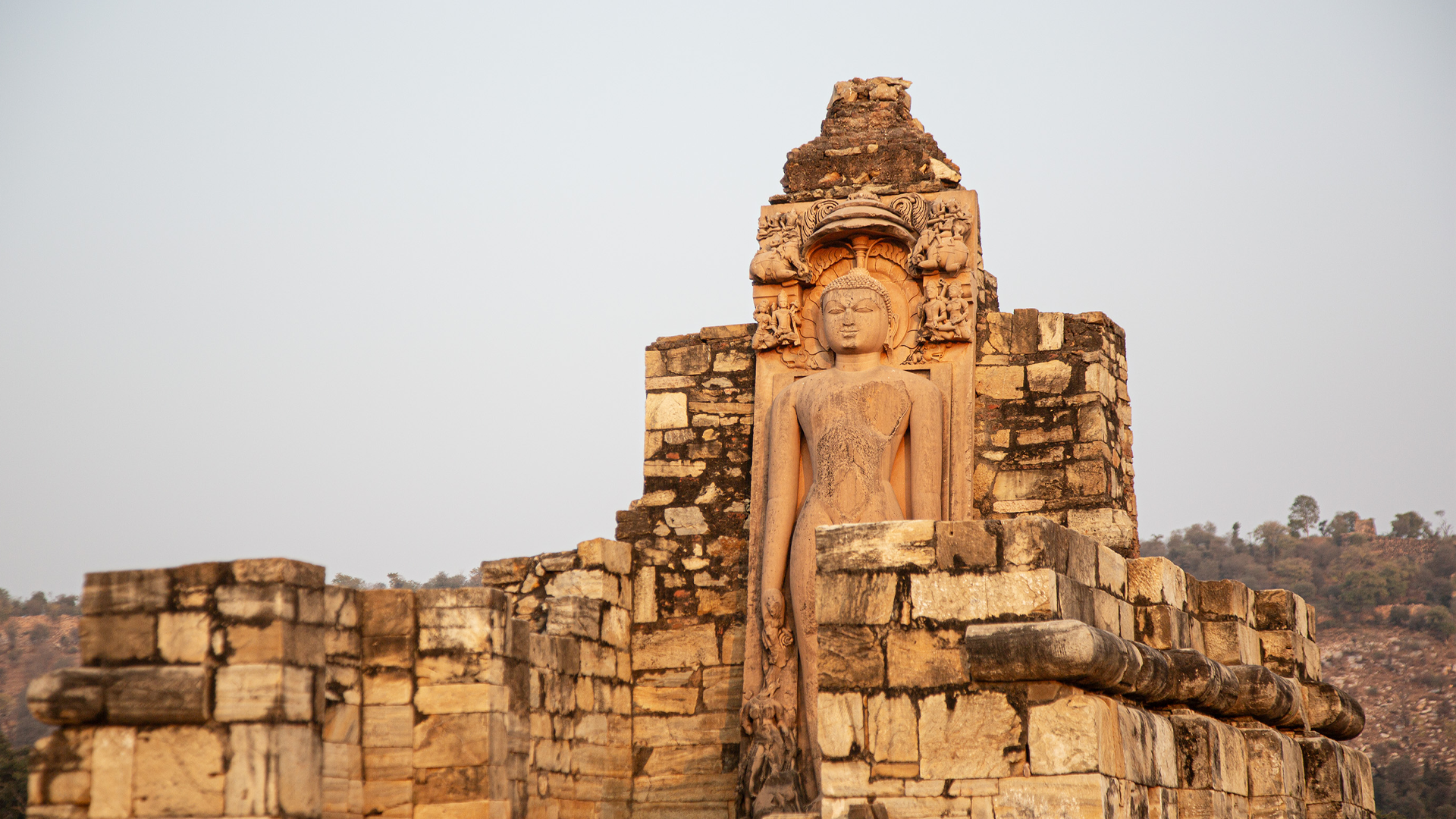
The pace of the day is set not by programming, but by light, temperature, hunger and fatigue. You are sleeping more deeply than usual, your phone remains untouched. Which is also what enabled me to wake up before the crack of dawn and explore temple ruins that date back to the 6th century or game drive safaris. The real luxury at Sariska Lodge is time and grounding. In systems that continue working, materials that remain honest and a landscape still finding its balance. The grass is greener here not because it has been engineered to appear so, but because it has been given the time and conditions to fully flourish.

Read more: Amid Kolkata’s storied lanes, a 1900s mansion breathes again preserved by Ajay Arya with equal parts devotion and craft

Photography by Syed Ali Husain
SHARE THIS ARTICLE

You May Also Like

Watch

No results found.

Search
Close this search box.