Lovebirds in Geoffrey Bawa’s Lunuganga

The estate in Sri Lanka becomes an ethereal backdrop to avant-garde silhouettes and solid colours

BY

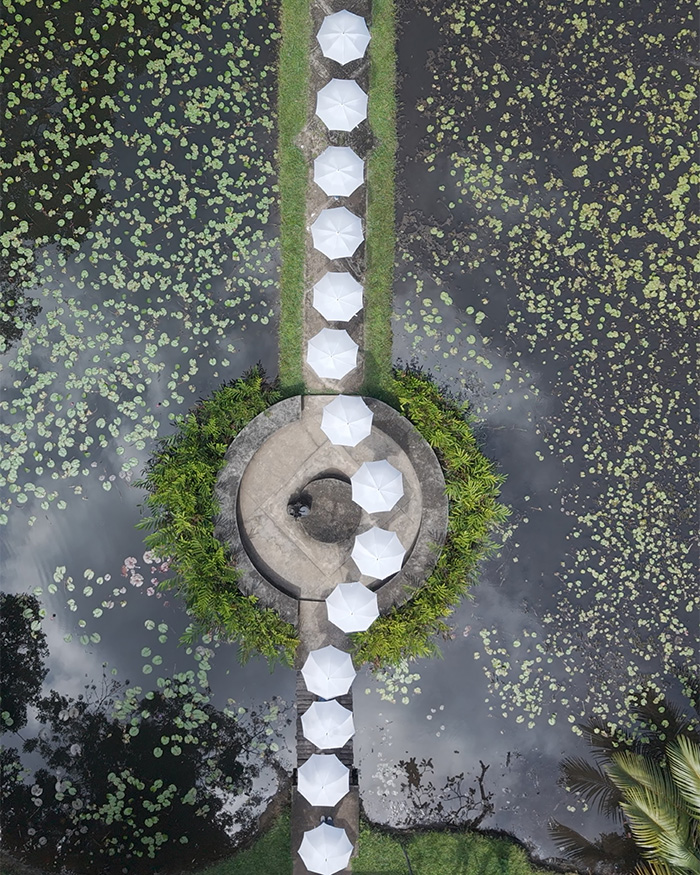
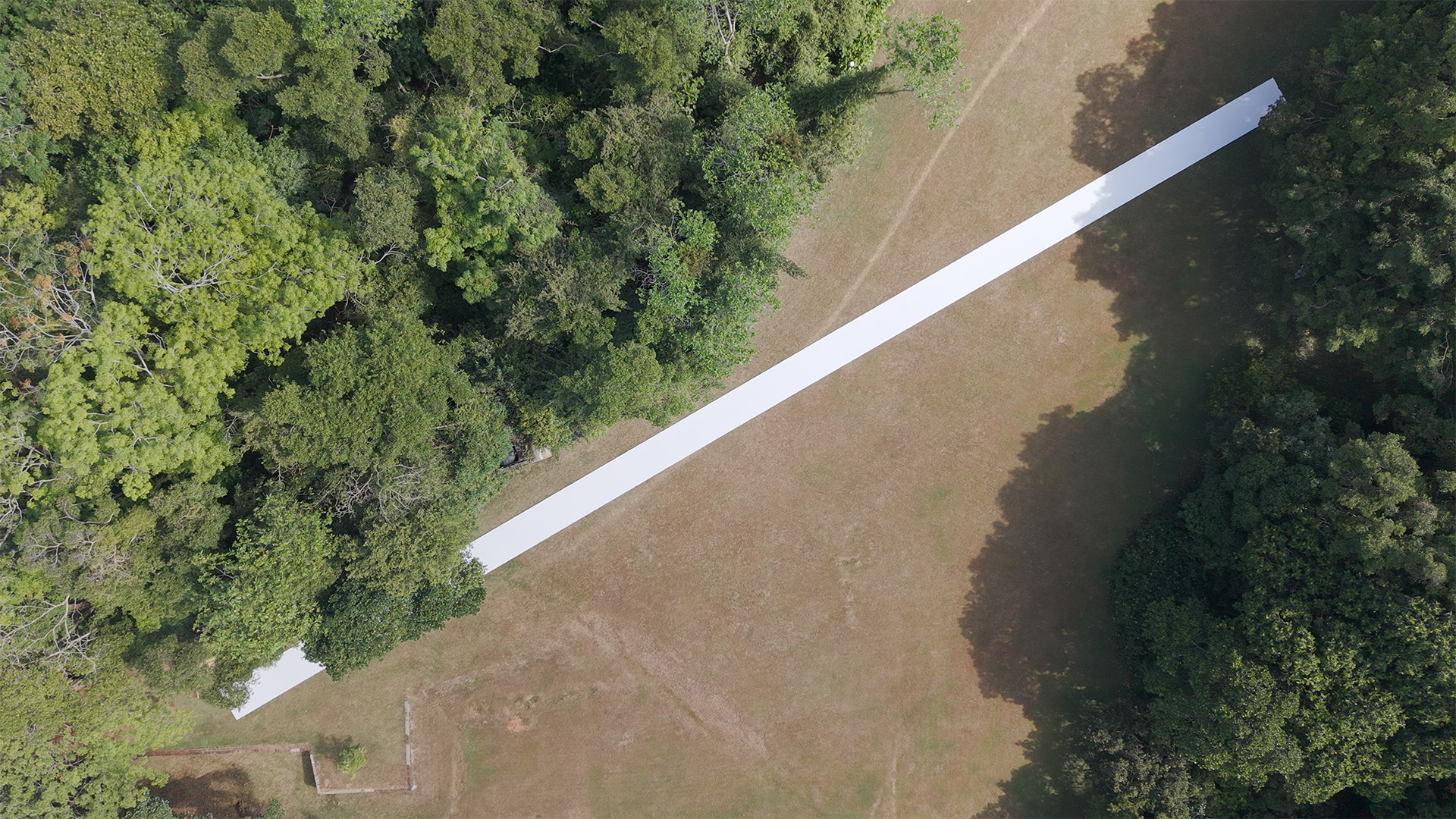
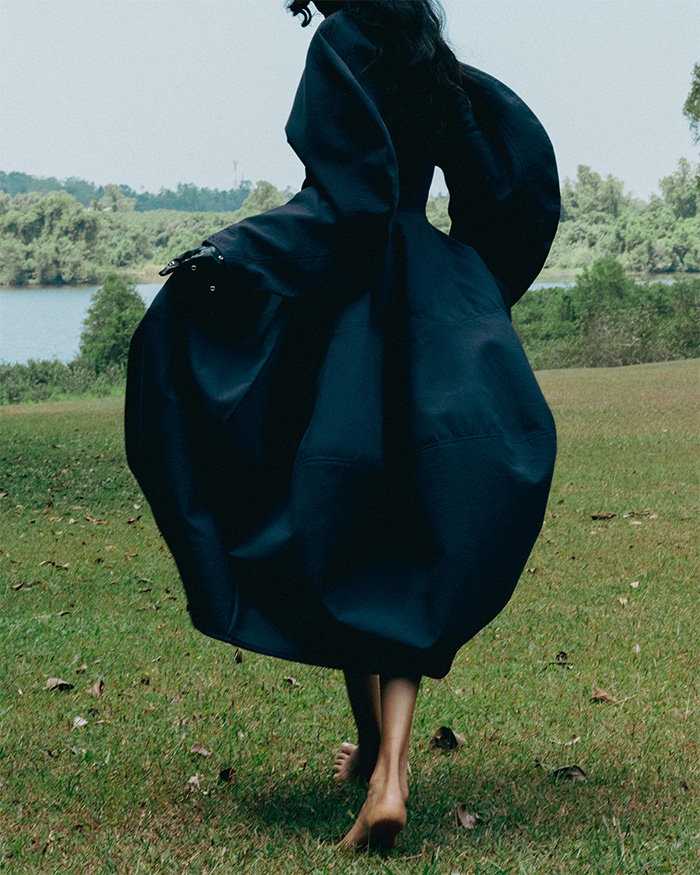
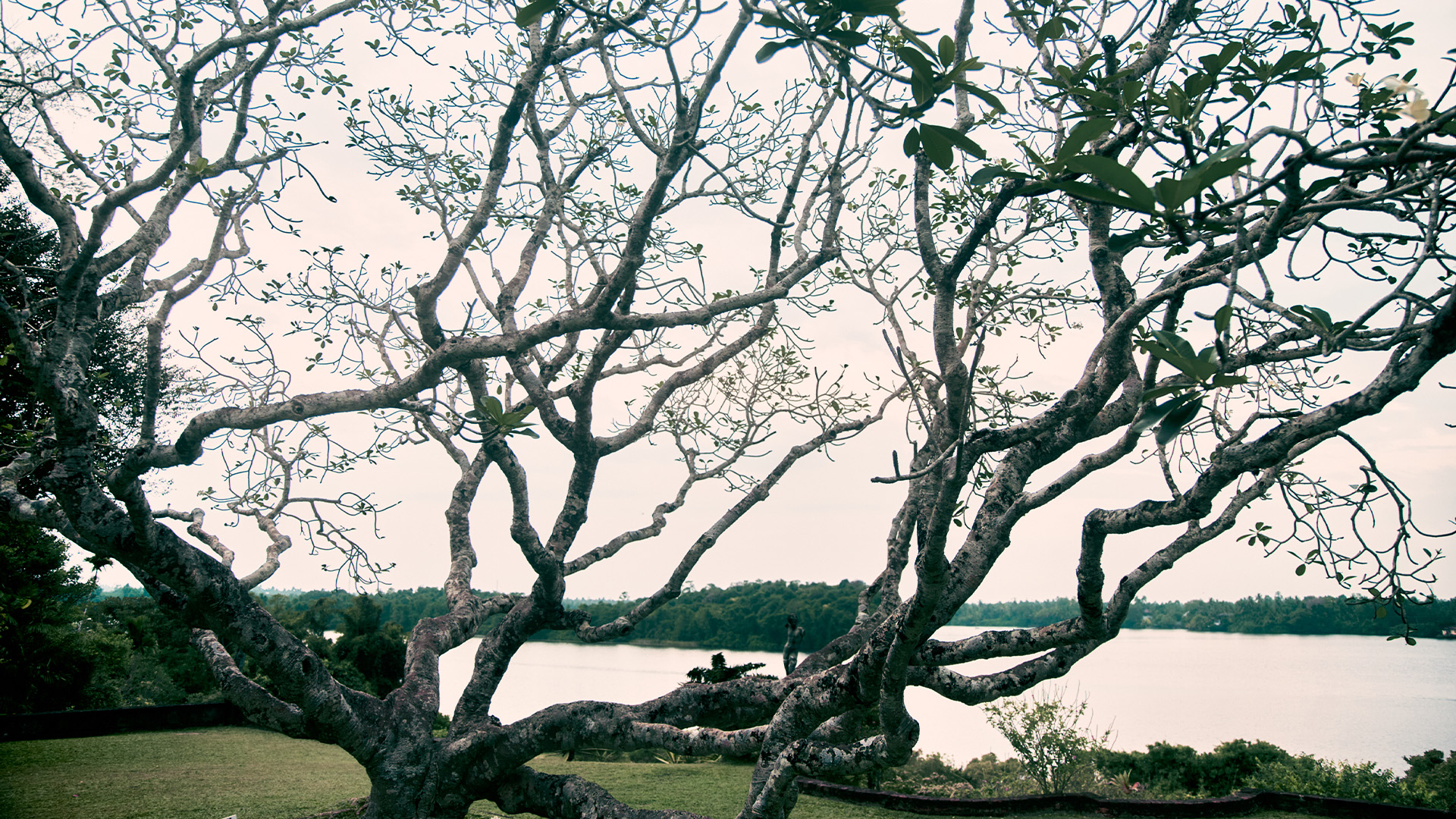
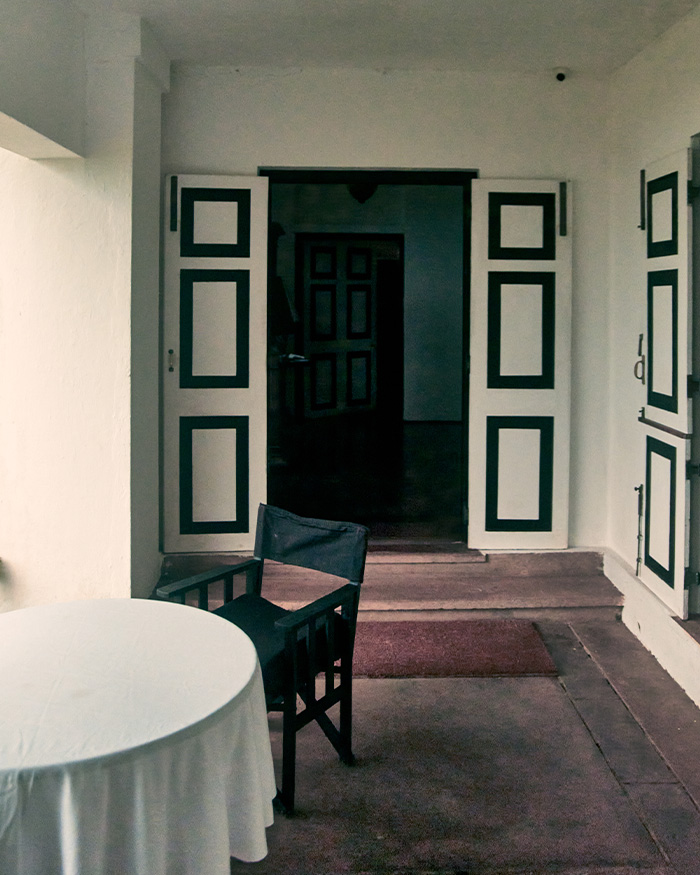
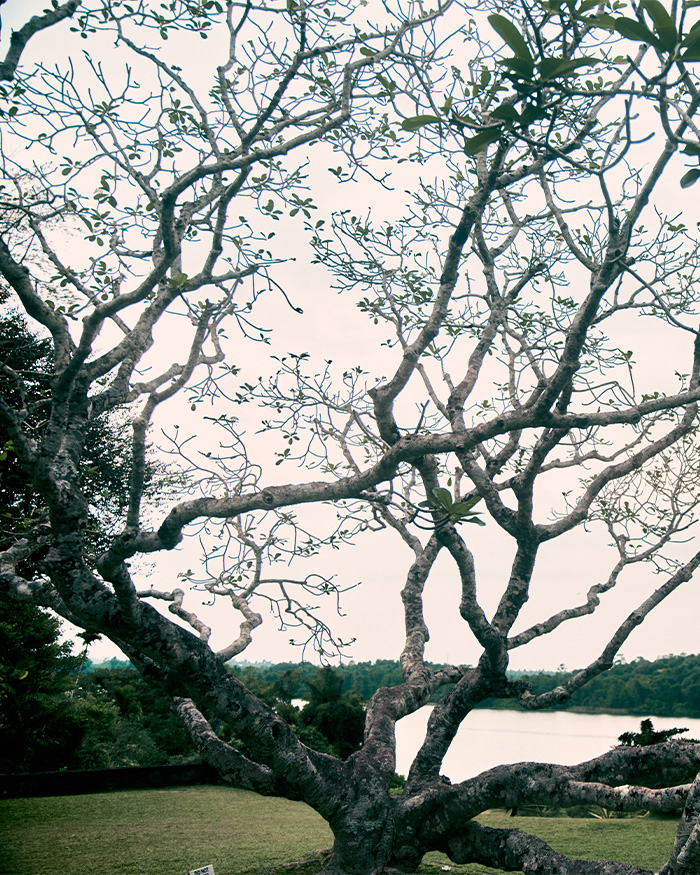
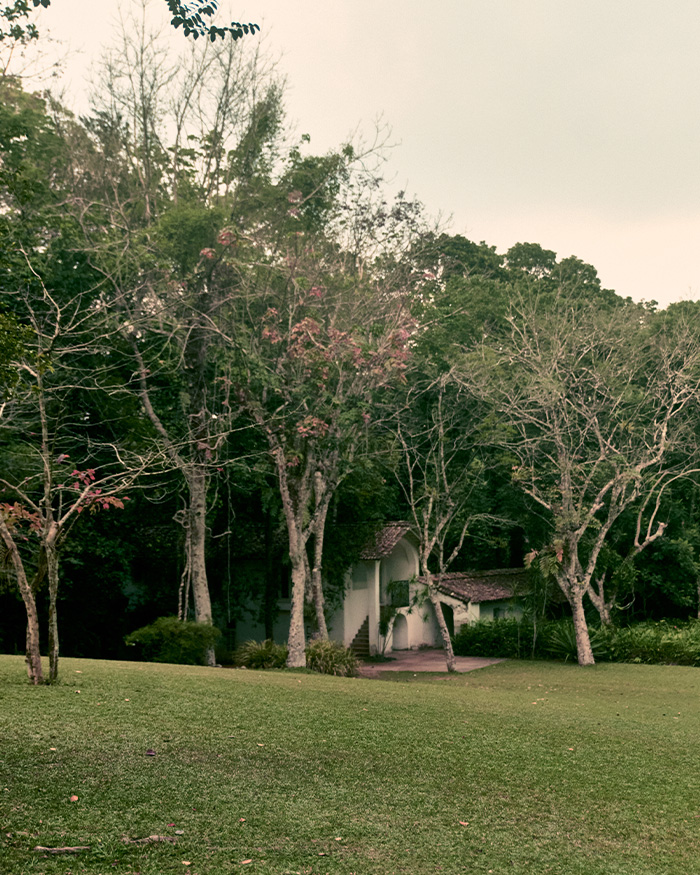
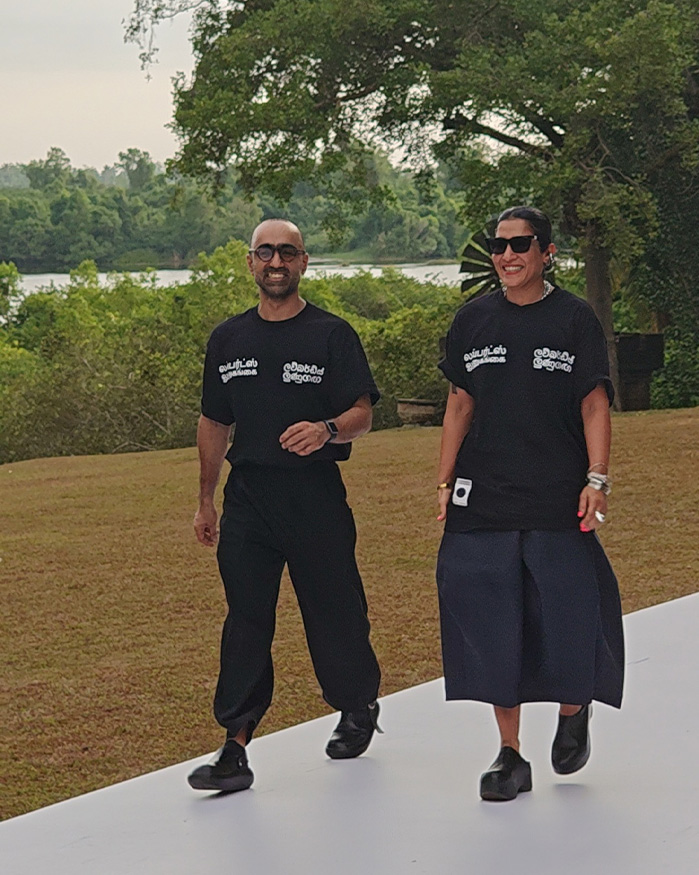
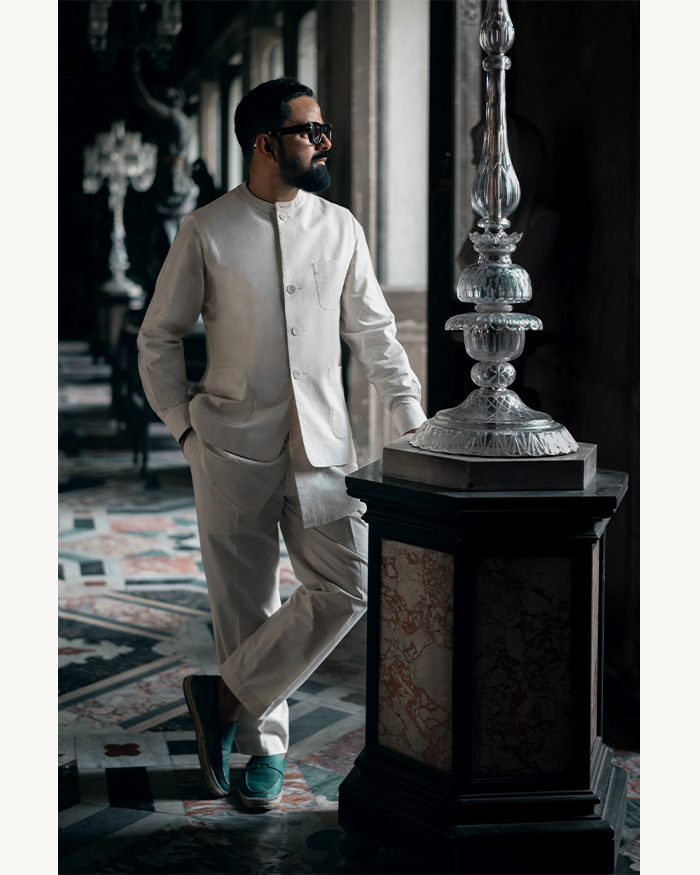
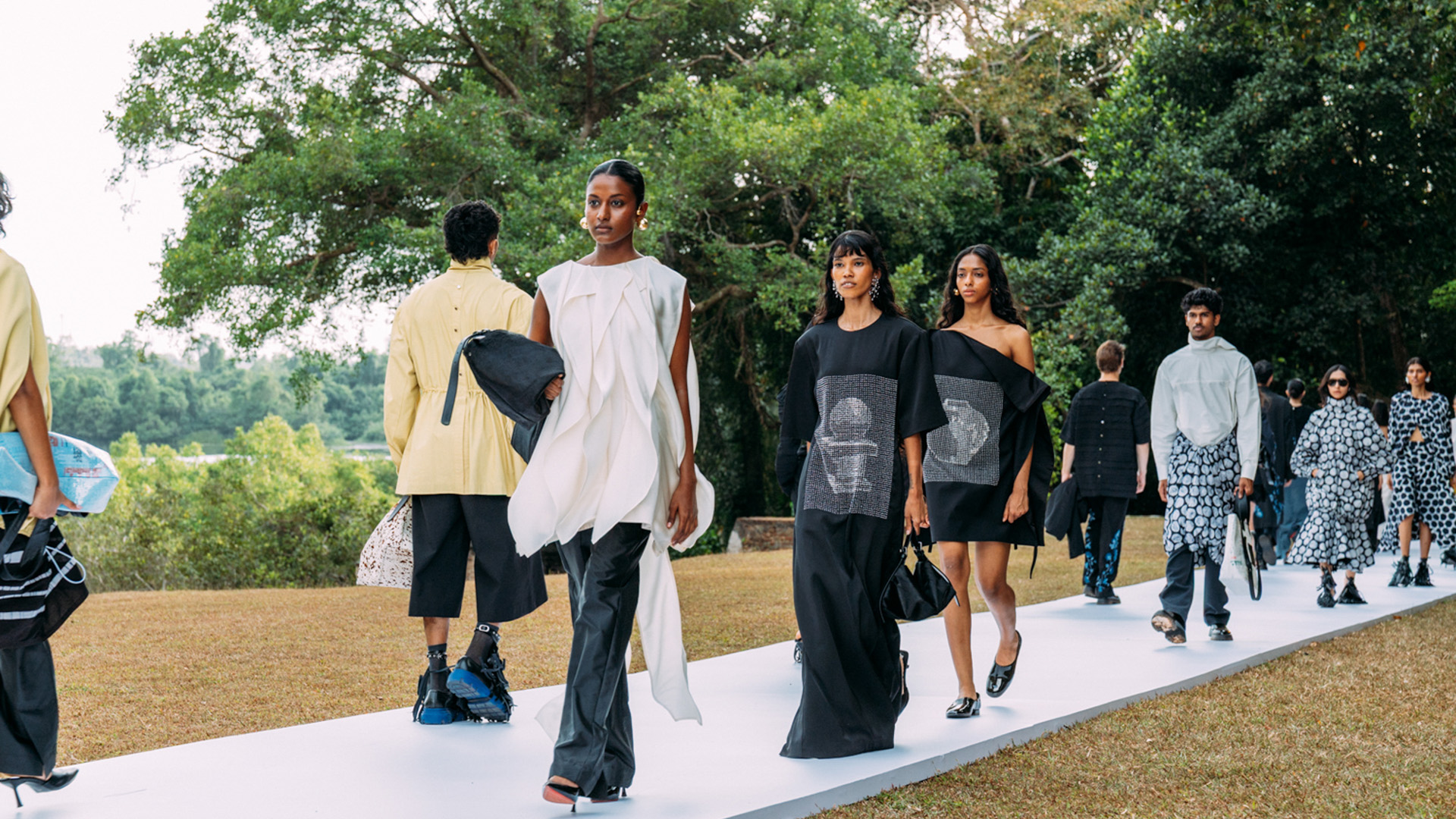
Geoffrey Bawa believed that architecture can never be fully explained; it must be experienced. It engages all the senses — the scent of vegetation after rain, the sound of birds, the movement of wind through trees. The Lovebirds show brought together earth and sky, white and colour, crispness and flow, and we engaged with every inch of the verdant gardens of Lunuganga. When ELLE DECOR India did a special Guest Editor issue with Channa Daswatte, I remember making a mental note as I sat overlooking the curving parapet that the next time I came, I wanted to walk that little hillock. As I walked, dressed in white and black, almost in sync with Bawa’s doors and windows, it felt as if I were at a high-tea gathering (akin to Bridgerton, but in a modern context). Coming back to the show, Gursi Singh and Amrita Khanna’s choice was unexpected. No flashy lights, no paparazzi, no noise. Just a beautiful white runway and a single row of benches running parallel to it. We chat with them about their collection, referencing architecture, craft and more.

"We often think of clothing as a kind of architecture for the body. But unlike architecture, clothing shifts and evolves with time, with movement, and with the life of the person inhabiting it"

Why does Bawa’s Lunuganga resonate with Lovebirds?

The work of Geoffrey Bawa has always resonated with us because of the quiet way he dissolves boundaries. At Lunuganga, spaces unfold slowly, and you experience them almost like a journey. That felt very aligned with how we think about clothing at Lovebirds — as something that exists in dialogue with the body and the world around it. When we presented the collection there, we wanted the intervention to be minimal. A simple white line ran through the landscape, guiding movement, framing the garments and creating moments of pause and reflection. In many ways, the space itself became the storyteller.

What new expressions can open when you disassociate spectacle from resortwear?

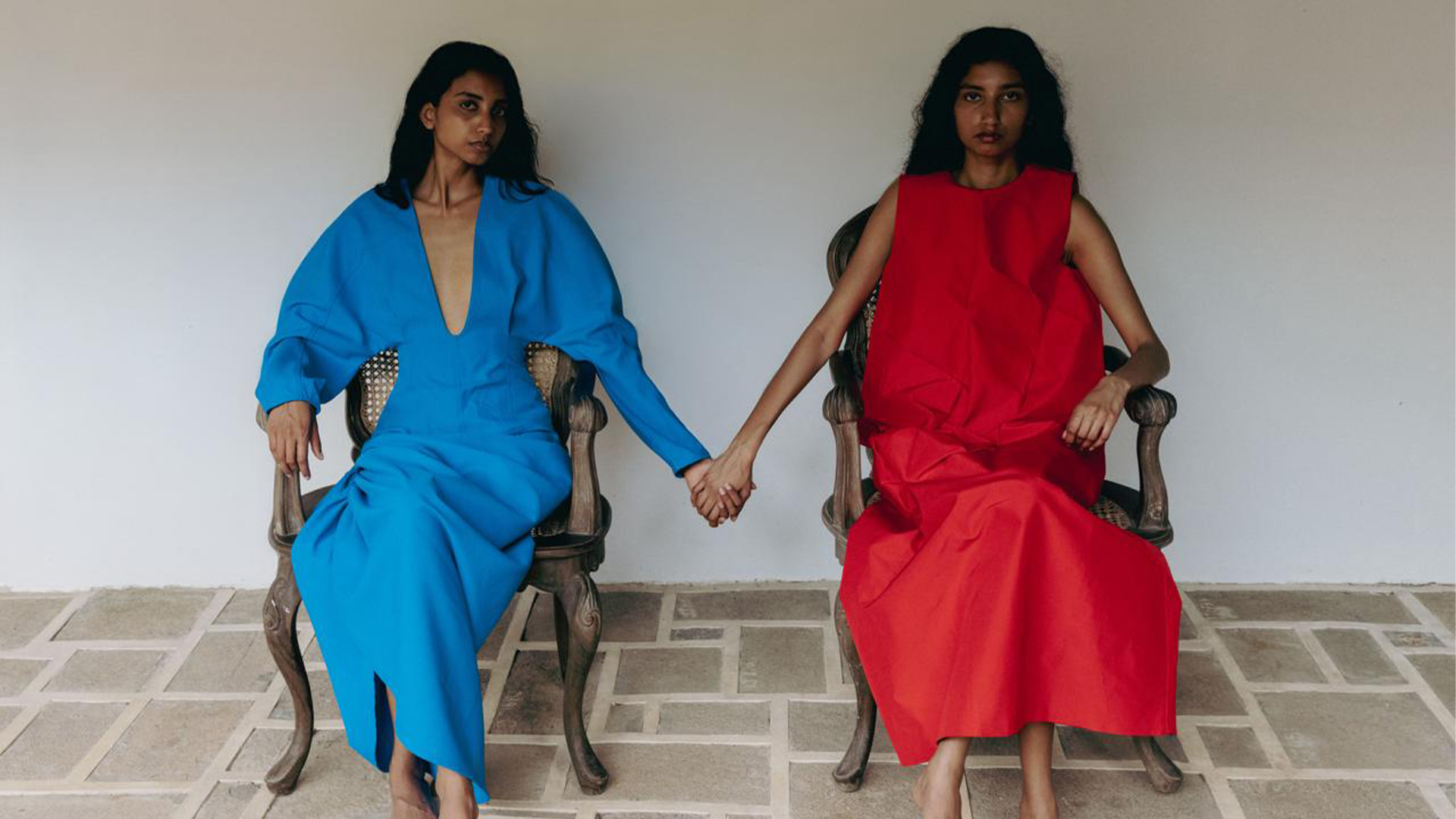
For us, the idea was to shift resortwear from something performative to something considered. The clothes still carry a sense of lightness and movement, but they are grounded in craft, structure and longevity. Without the framing of a “holiday wardrobe,” the garments begin to reveal their deeper intention — they become pieces that move fluidly between environments and occasions, much like the way Bawa’s spaces transition between inside and outside.


How does the clothing evolve with the wearer, and what role does Batik play in it?

We often think of clothing as a kind of architecture for the body. But unlike architecture, clothing shifts and evolves with time, with movement, and with the life of the person inhabiting it. The fabric softens, the structure relaxes, and the piece gradually acquires a memory of the body that lives within it. Batik plays a beautiful role in this idea. The process itself — where wax resists dye — creates layers, imperfections and moments of unpredictability. The wearer inhabits the garment, but the craft becomes the narrative that travels with them.

Read more: Uncover the secrets of Geoffrey Bawa’s Lunuganga, his mythical estate in Sri Lanka

SHARE THIS ARTICLE

You May Also Like

Watch

No results found.