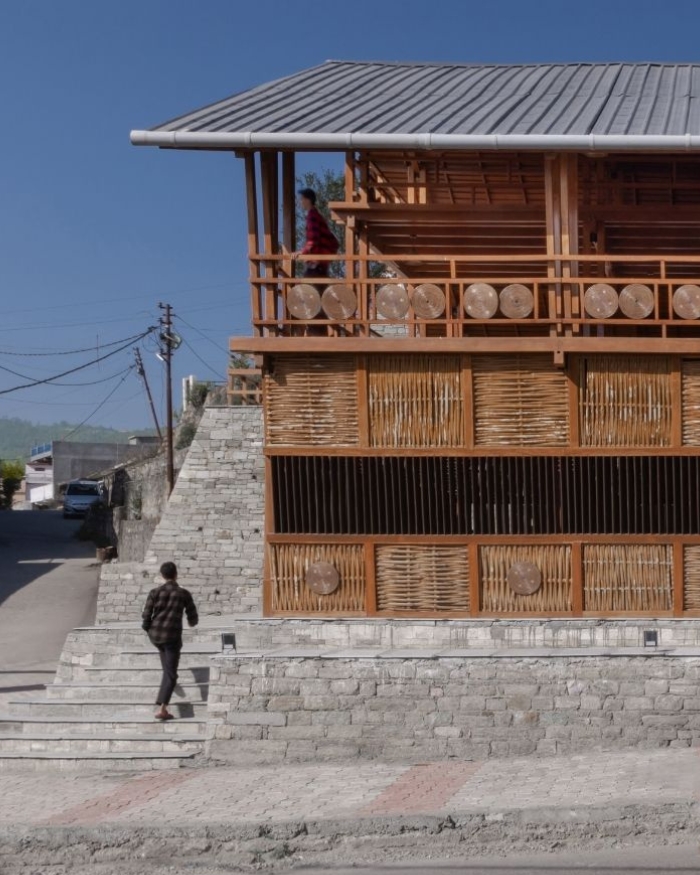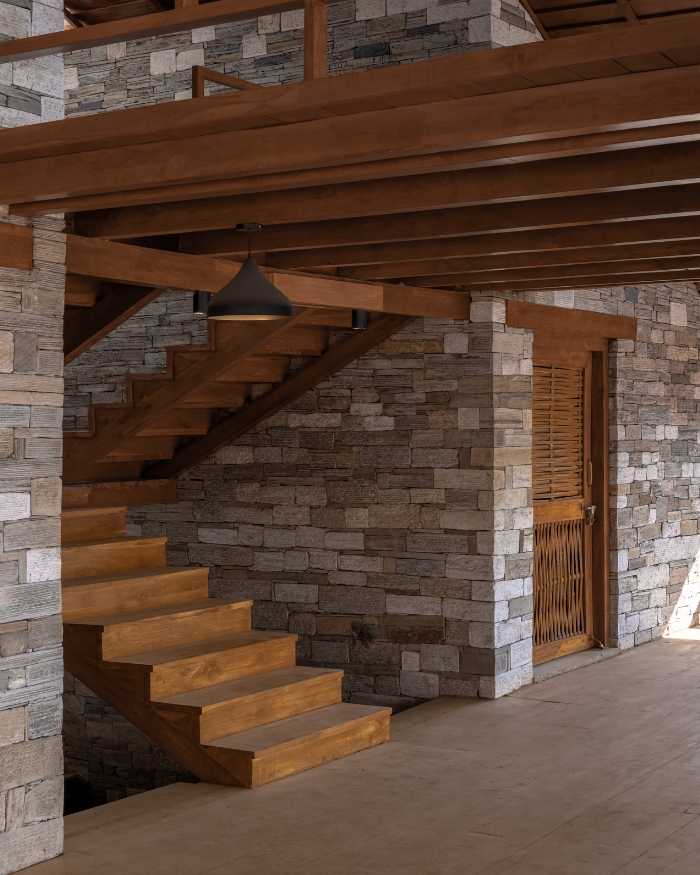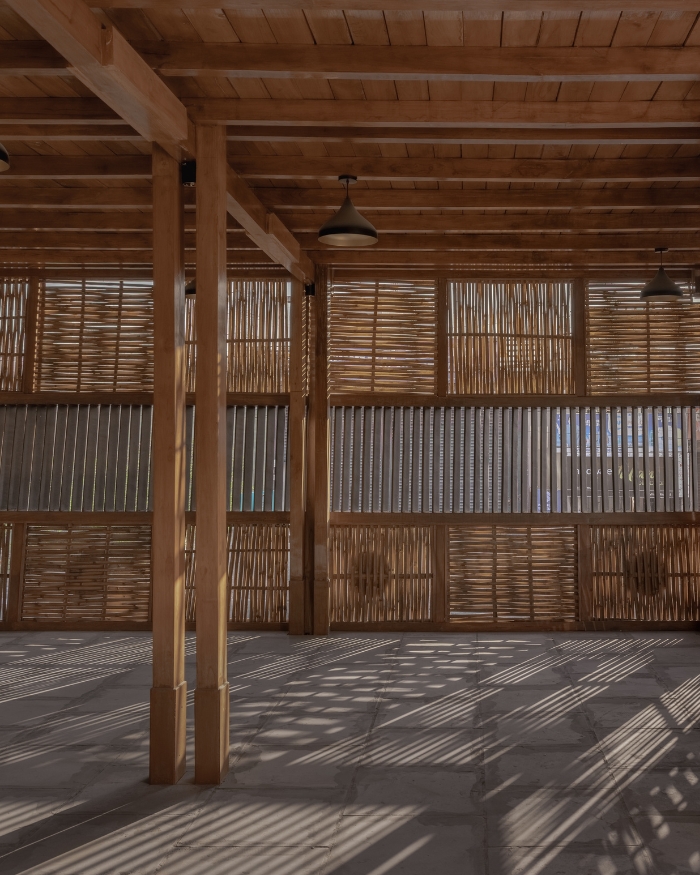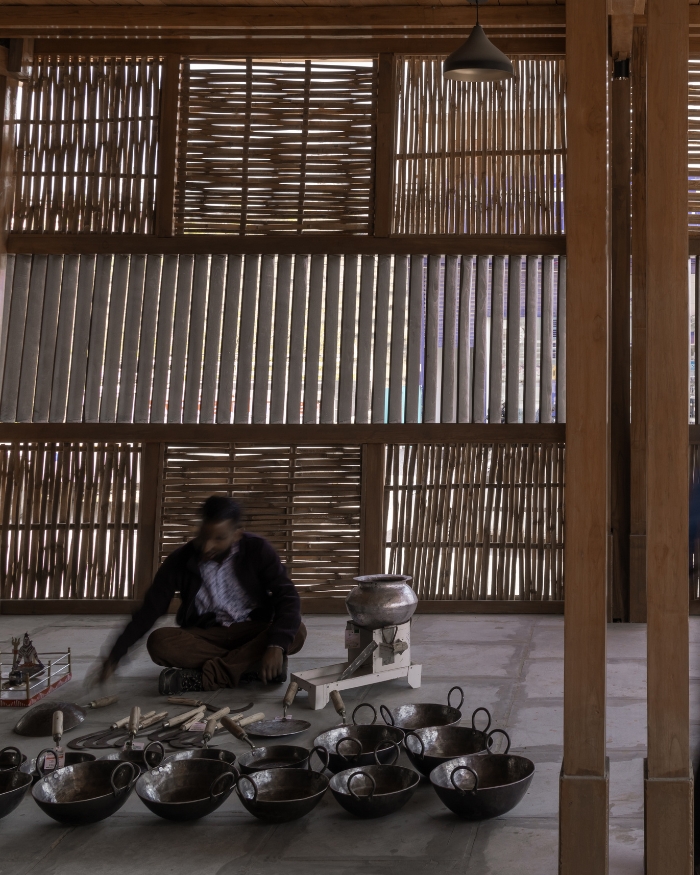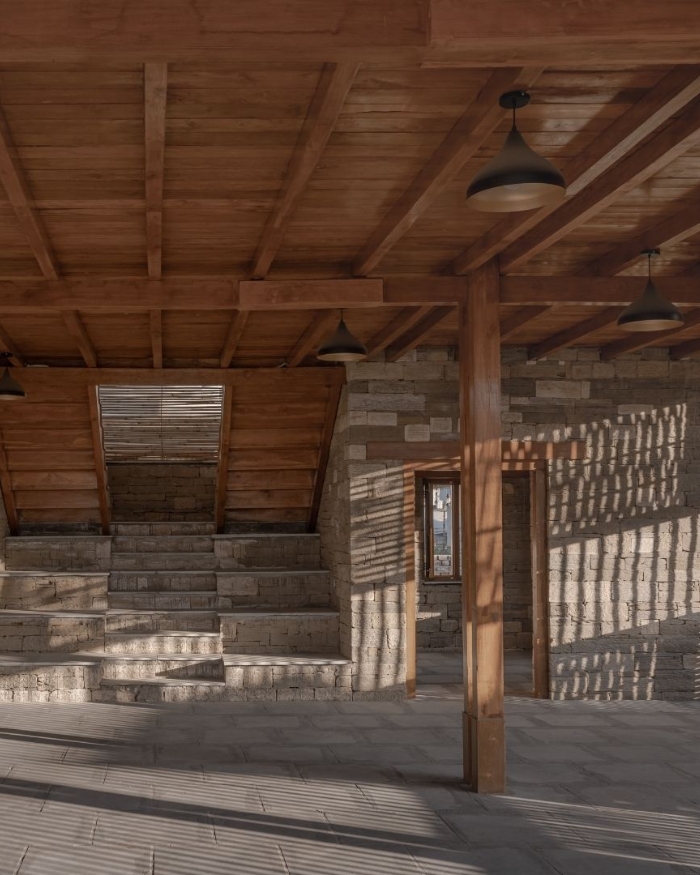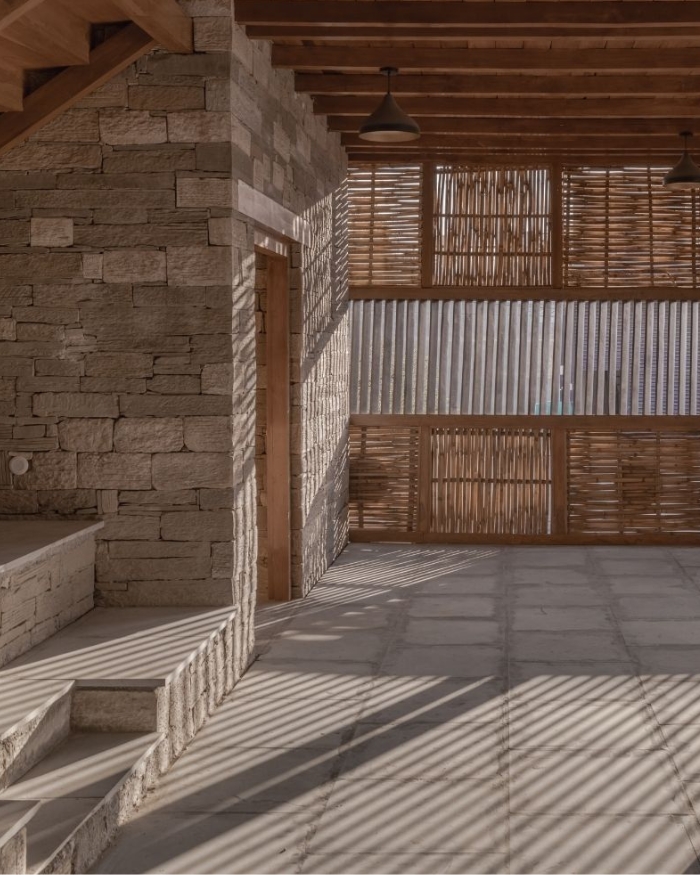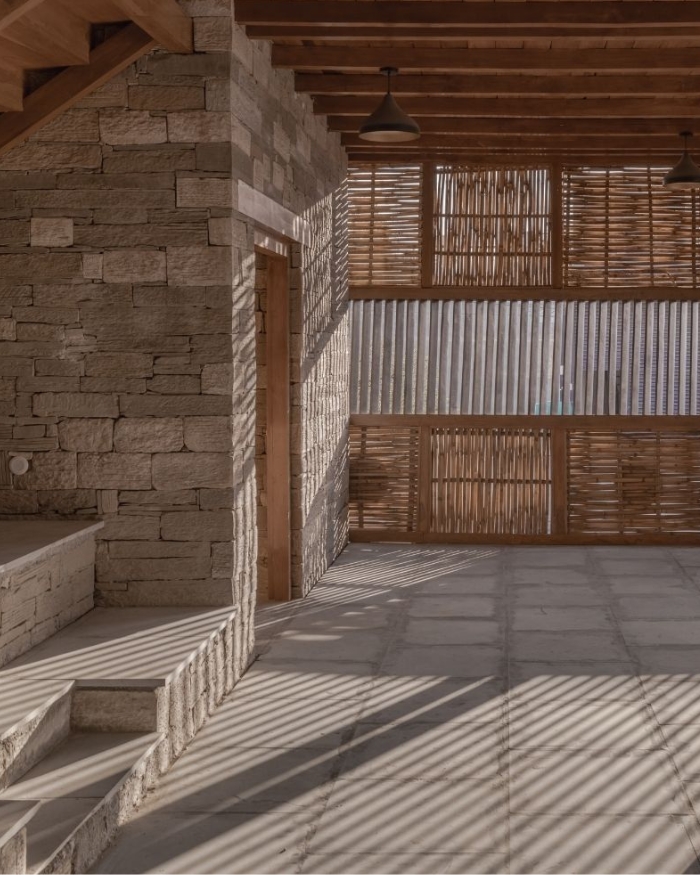
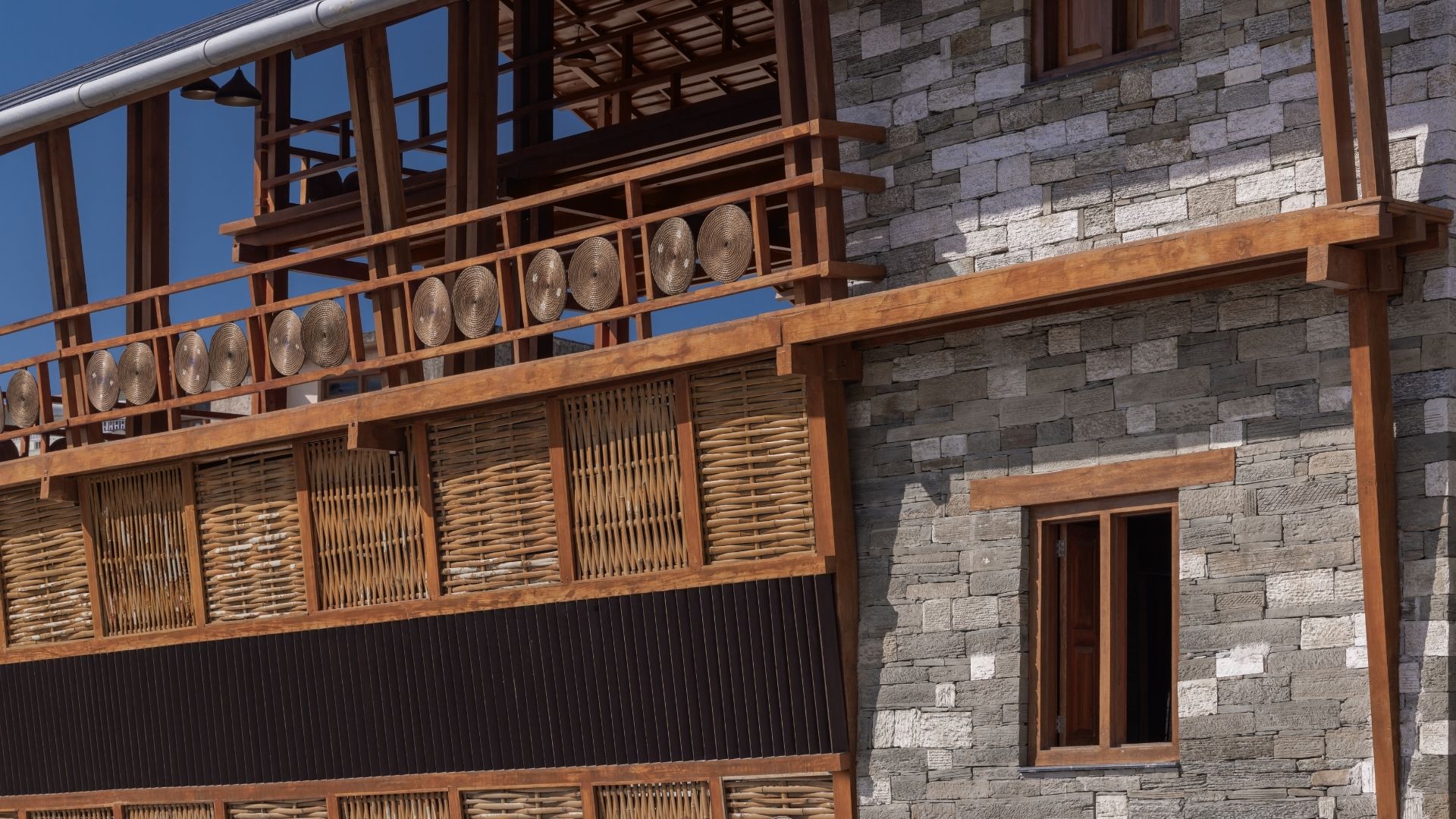
This facade celebrates raw, locally sourced materials: a blend of sturdy stone, teakwood, pinewood, organic bamboo and woven moonj grass; Photography by The Space Tracing Company

A market’s daily architecture in Uttarakhand

Can crafts, commerce and the local settlement become a location’s defining architecture? Compartment S4 asks

BY

At the intersection of rivers and trade routes, markets became places where civic and economic life converged. Before industrialisation and urbanisation transformed the way we lived, weren’t markets our first classrooms? The Champawat Market Plaza resonates this exact thought. As the road winds through the deodar forests of Uttarakhand, villages emerge between layers of misty terraced hillsides. Along the Champawat-Pithoragarh highway, the marketplace takes life as a shared civic space. Rather than rows of conventional shopfronts, visitors arrive at an open courtyard animated by stone carving and conversations beneath shaded verandahs. Designed by Compartment S4 and commissioned by the District Tourism Office, Kumaon Mandal Vikas Nigam (KMVN) and the Small-Scale Industries Department of Uttarakhand, the Champawat Market Plaza reimagines what a market can be. 

Managed by the Uttarakhand Tourism Development Board in collaboration with the Happy Face Foundation, the project embeds the act of ‘making’ into public life where production, exchange, learning and leisure coexist within a shared civic framework. “The project began with a question that eventually became the foundation of the entire design process: can local crafts move beyond being displayed within architecture and instead shape architecture itself?” Monik Shah, co-founder and principal architect of Compartment S4 recalls who worked alongside Aman Amin, Kishan Shah, Krishna Parikh, Manuni Patel, Nishita Parmar, Prashik Chaudhari and Vedanti Agarwal.

'The project began with a question that eventually became the foundation of the entire design process: can local crafts move beyond being displayed within architecture and instead shape architecture itself?'

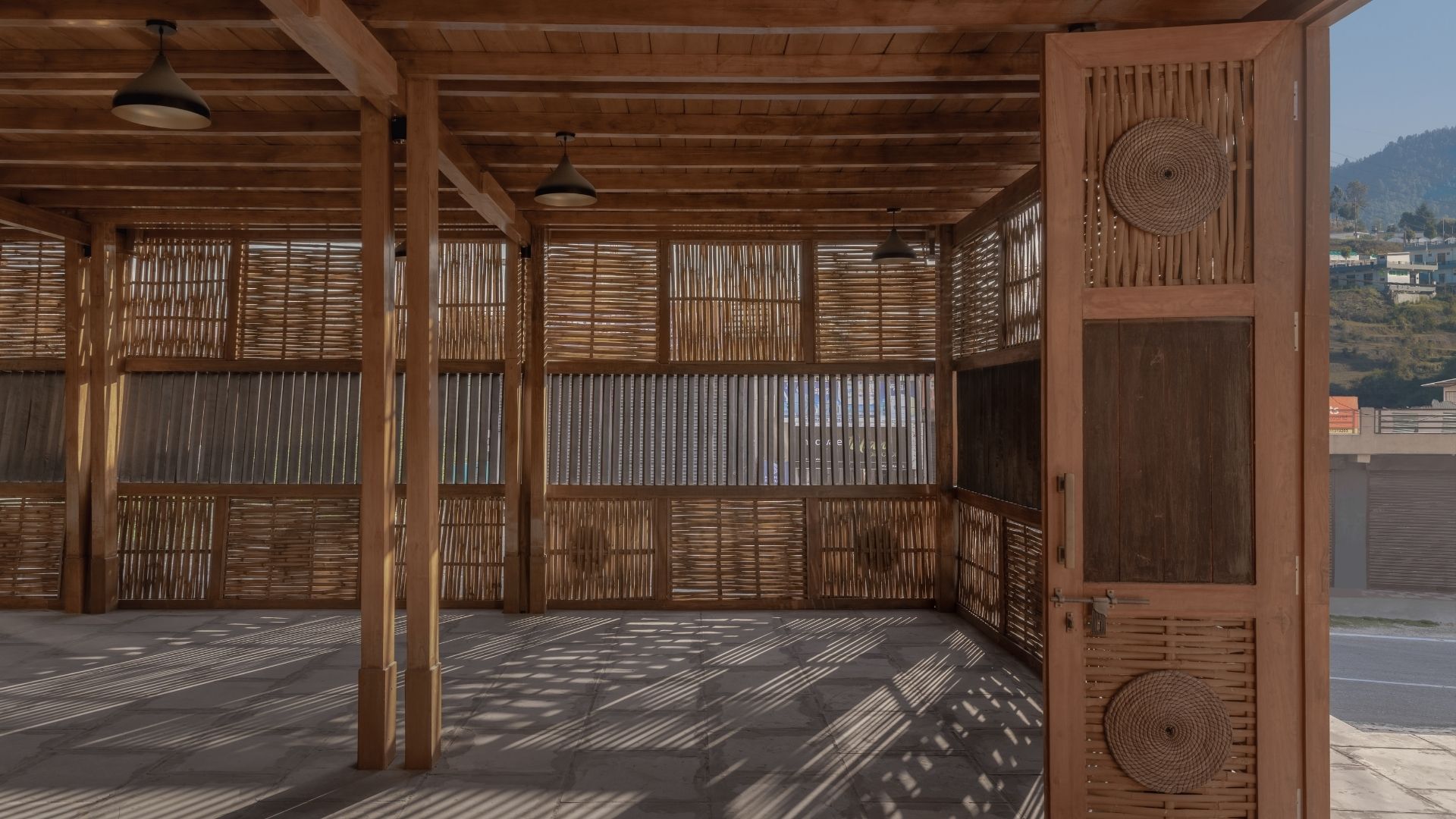
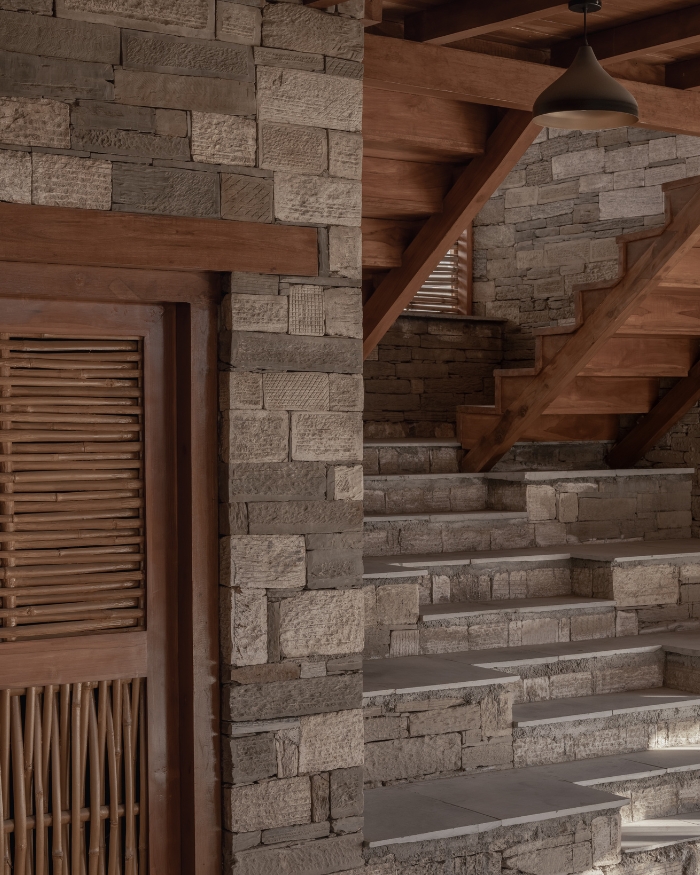
Filtered light creates patterns through the porous bamboo panels, casting a warm and inviting glow across the plaza; Photography by The Space Tracing Company

Craft meets community

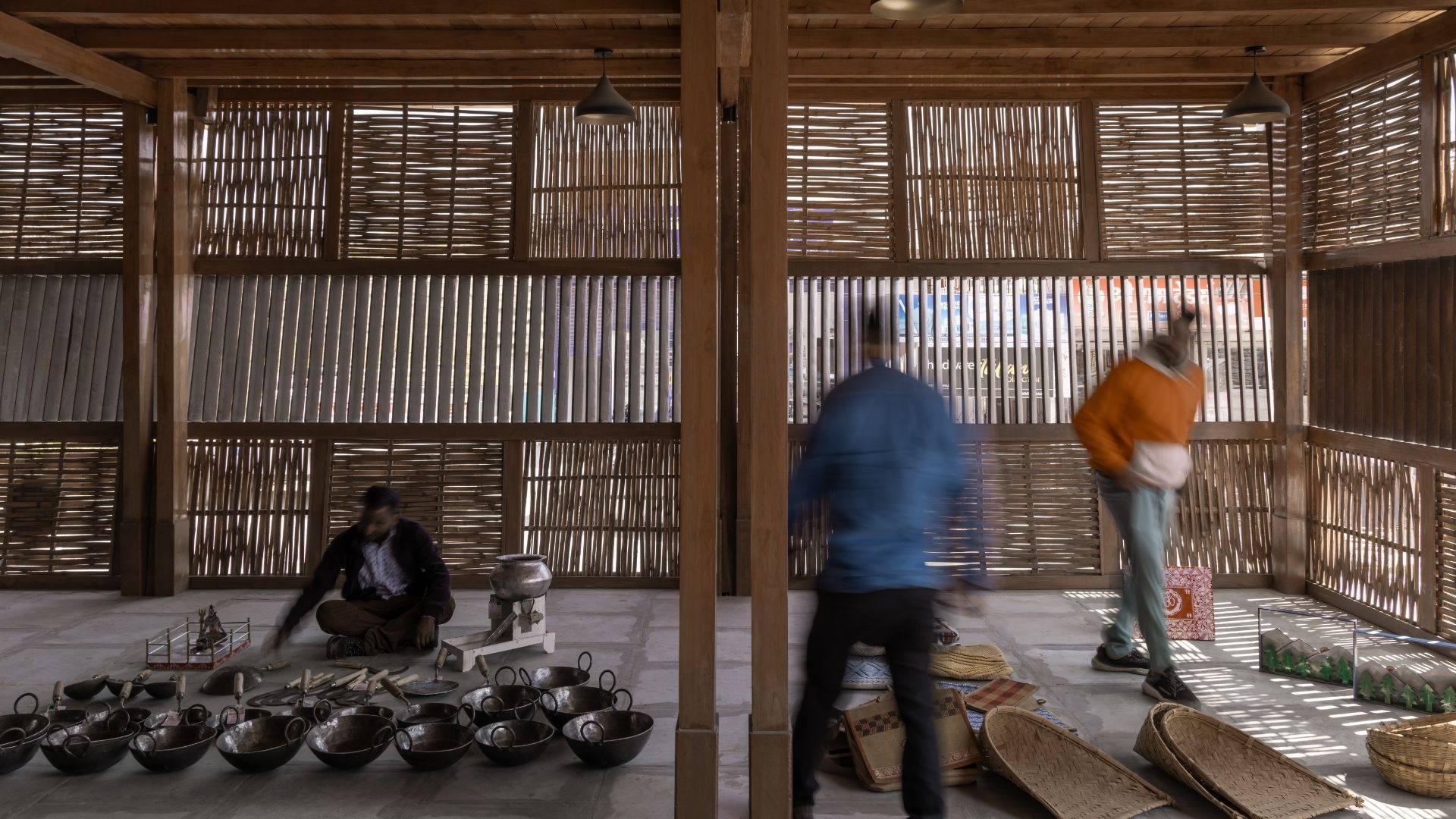
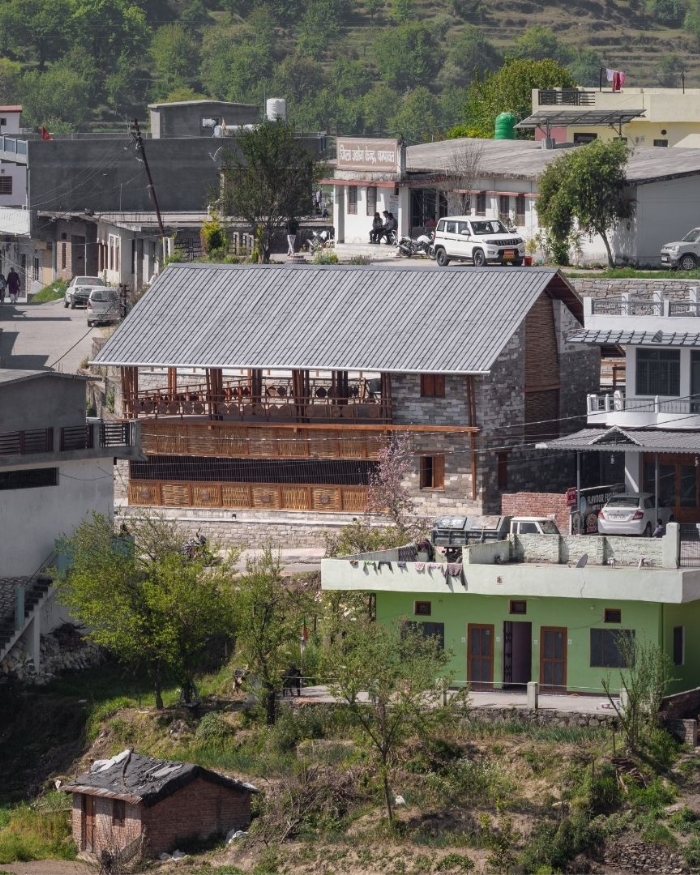
With a picturesque view of the forest, the market lies along a busy transit and tourist route. Integrated into the Himalayas’ steep contours and spanning about 2,690 sq ft, the plaza takes inspiration from traditional mountain settlements, where movement follows the terrain rather than resisting it. Local heritage runs deep, with ancestral skills such as stone masonry, Likhai wood carving, bamboo work, textile weaving, steelcraft and Aipan art. An approach to participatory design addresses the lack of public infrastructure, leading to design development beyond commercial objectives. This design invites visitors into an open court before gradually navigating craft workshops, exhibitions, shaded verandahs, reading nooks, cafeterias with internet connectivity and open gathering terraces.

Photography by The Space Tracing Company
The upper level connects to the pathway, offering an easy transition from open to closed spaces; Photography by The Space Tracing Company

Around the plaza

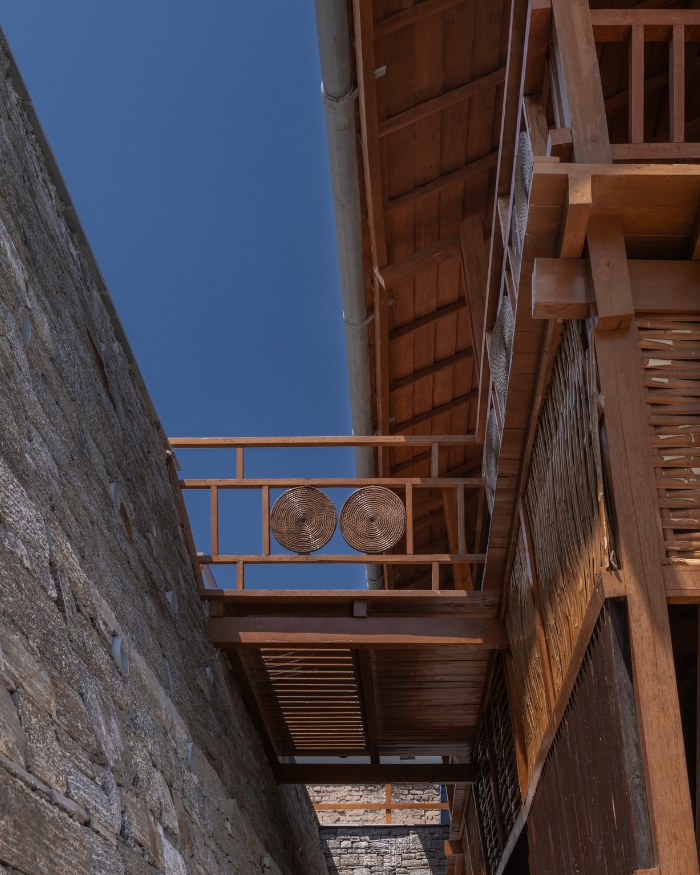
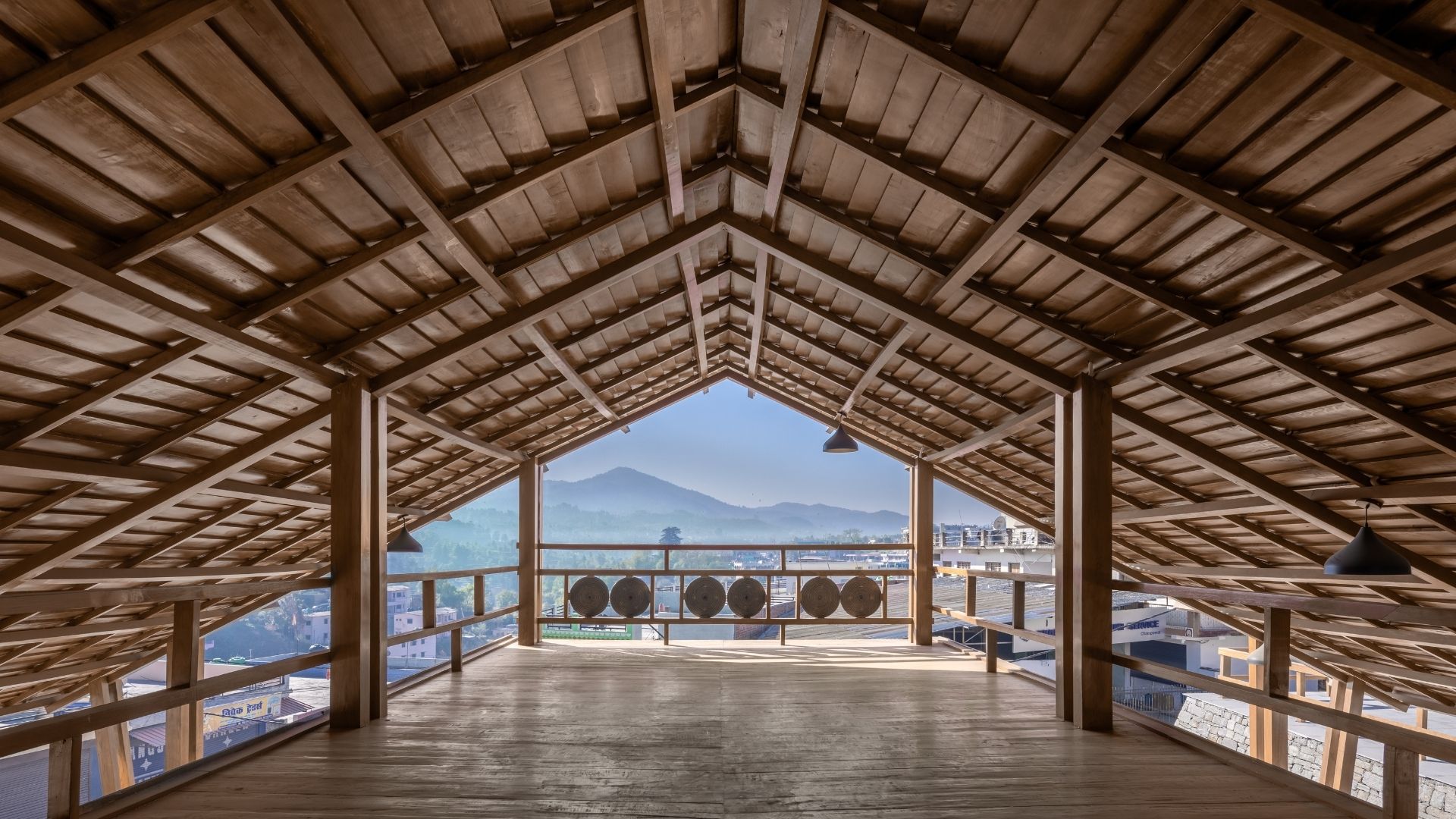
Organised into four structural bays, the building rests on stone plinths, treating the terrain as a spatial opportunity rather than a constraint. Instead of relying on a defined circulation spine, movement meanders through stepped walkways, widening openings and interconnected terraces that echo the rhythm of the Kumaon hill villages. The architectural flow encourages visitors to slow down, pause and discover local craftsmanship — both in the structure and the process of making. Modular stalls and open floor plates accommodate haats, seasonal exhibitions, festivals and formal gatherings, allowing the plaza to adapt to changing patterns of use. At the highest point, an upper terrace frames a panoramic view of the surrounding hills and conifers — a serene spot to sit, dine, read and watch craft come to life. In a region where civic spaces are scarce, and settlements are dispersed across the undulating terrain, this layered circulation, rather than feeling imposed upon its setting, emerges as a natural extension of the hillside, making the architecture feel deeply grounded in its context. 

Photography by The Space Tracing Company
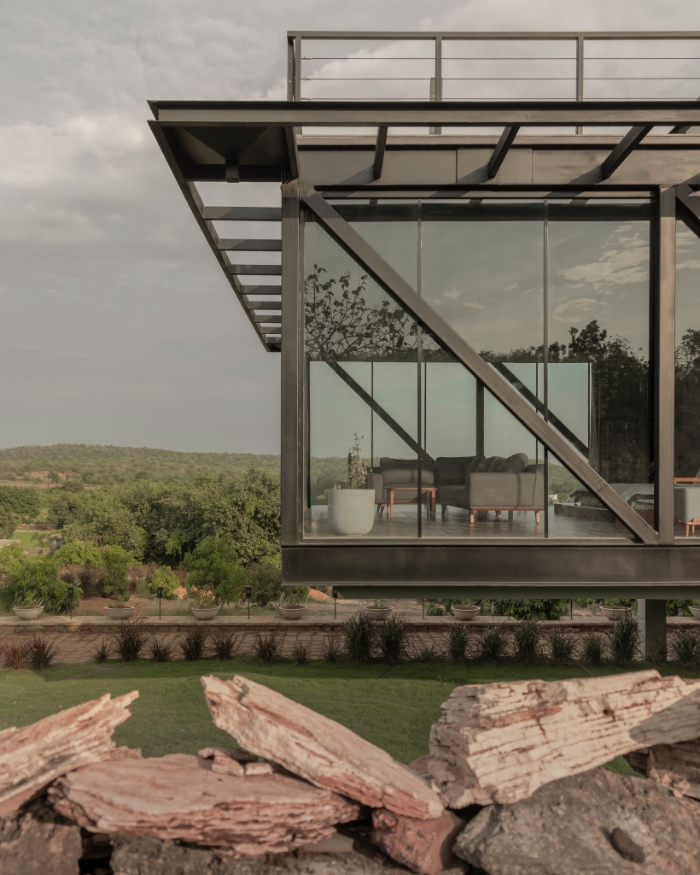
The upper deck frames expansive views of Uttarakhand’s landscape; Photography by The Space Tracing Company

Art or architecture?

“We were interested in moving beyond the conventional approach where craft is treated as an applied aesthetic layer,” explains Monik. “Instead, we explored whether local skills and making traditions could shape the architecture itself.” Materiality became the primary vehicle through which architecture operates as spatial craft. Locally sourced stone is observed in the rubble masonry in walls and retaining structures. 

Filtering light along with visual permeability, bamboo and moonj grass weaving is adapted into modular panels. Structural performance balances cost-efficiency by pairing durable saag (teak wood) columns with lightweight pine beams for roof spans. Material strategy relies on bolted joinery to facilitate ease in assembly while enhancing seismic resilience, paired with traditional wooden plank flooring. The design language, characterised by sloped roofs and masonry construction, extends craft into an architectural element that influences climate response and spatial experience. 

Long before formal schooling, open marketplaces and souks were society’s earliest public informal classrooms. They were spaces where people exchanged not just goods, but the very knowledge that built and sustained civilisations. The focus on basic human métier strips modern design of its aesthetic soul, reducing it to mere functional spaces. The Champawat market emerges in response to this, stepping forward to define — and not redefine — the true essence of art: not ‘and’ but ‘in’ architecture.

Read More: Compartment S4 turns a languishing gaushala in Dahanu into a brick-and-stone sanctuary for the cows and their caregivers alike


Photography by The Space Tracing Company
SHARE THIS ARTICLE

You May Also Like

Watch

No results found.

Search
Close this search box.