
Rewind to your childhood days; there was always a sense of thrill in taking a trip to the post office. The queue, the scent of sealing wax and the view of stamped papers being filed away, all stacked somewhere between our memory and reality. In Connaught Place, New Delhi, this thrill is reimagined in brick, brass and neon at SOCIAL’s newest restaurant and bar.
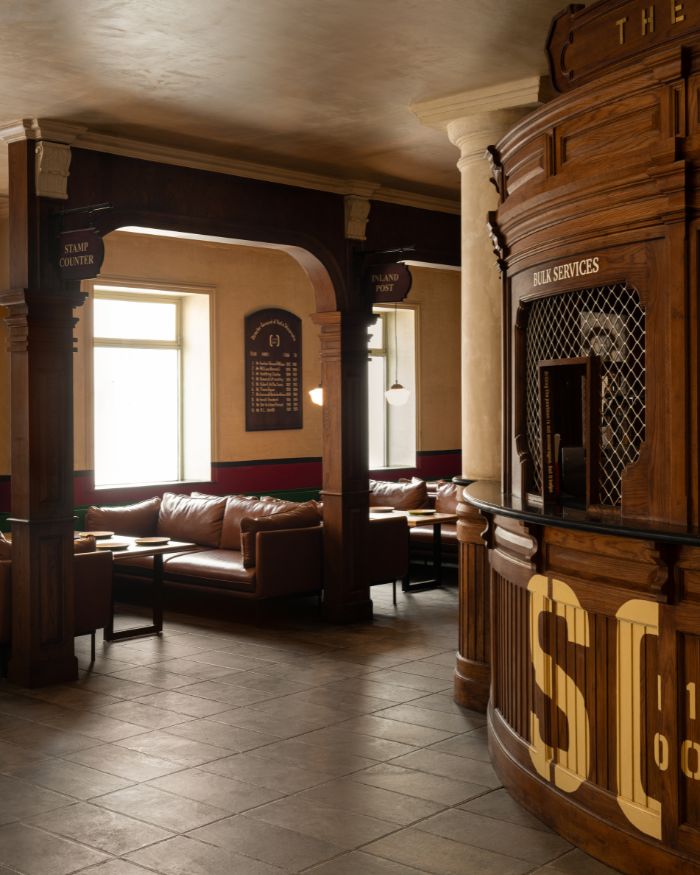
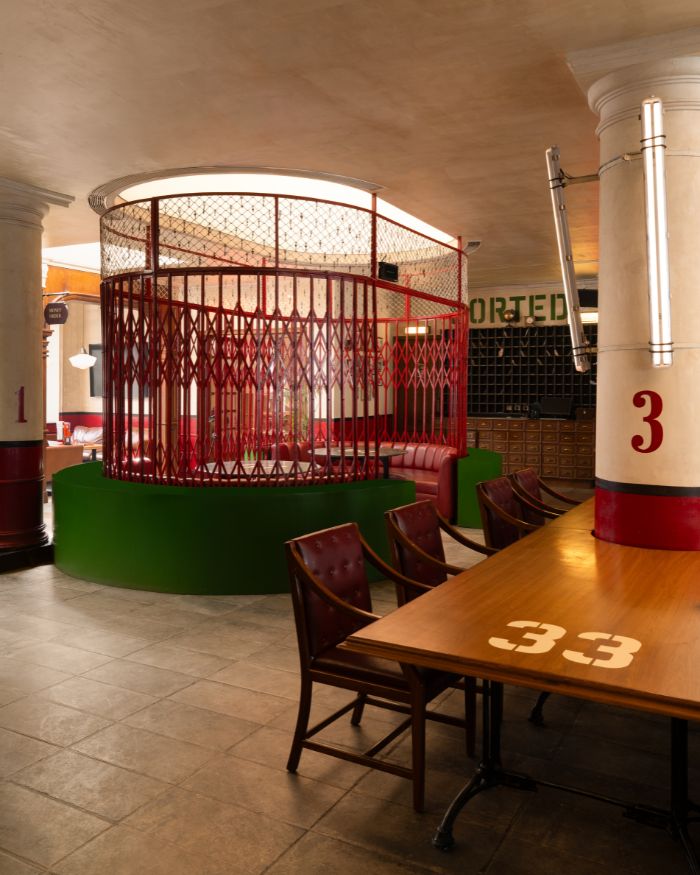
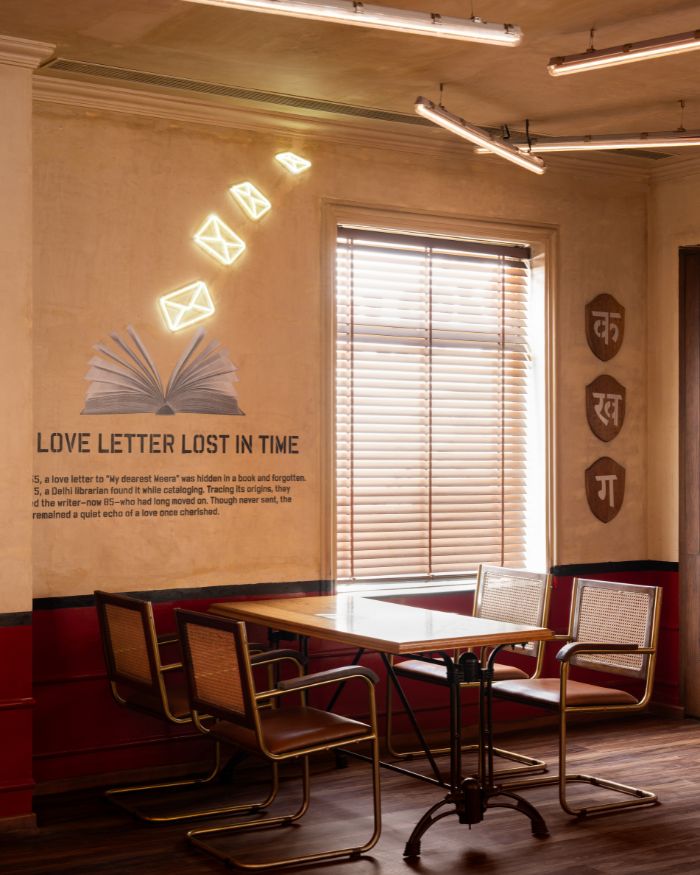
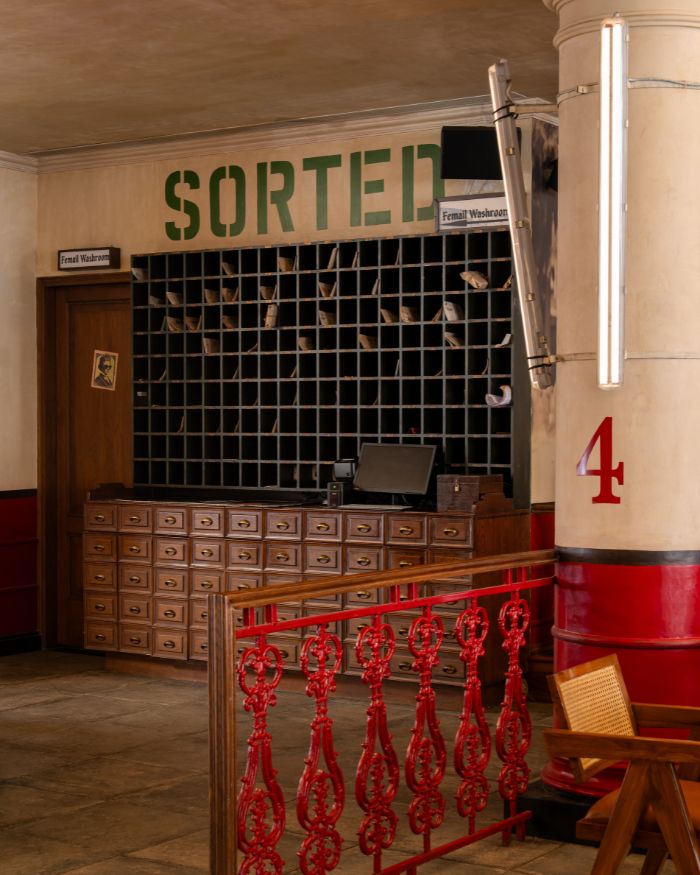
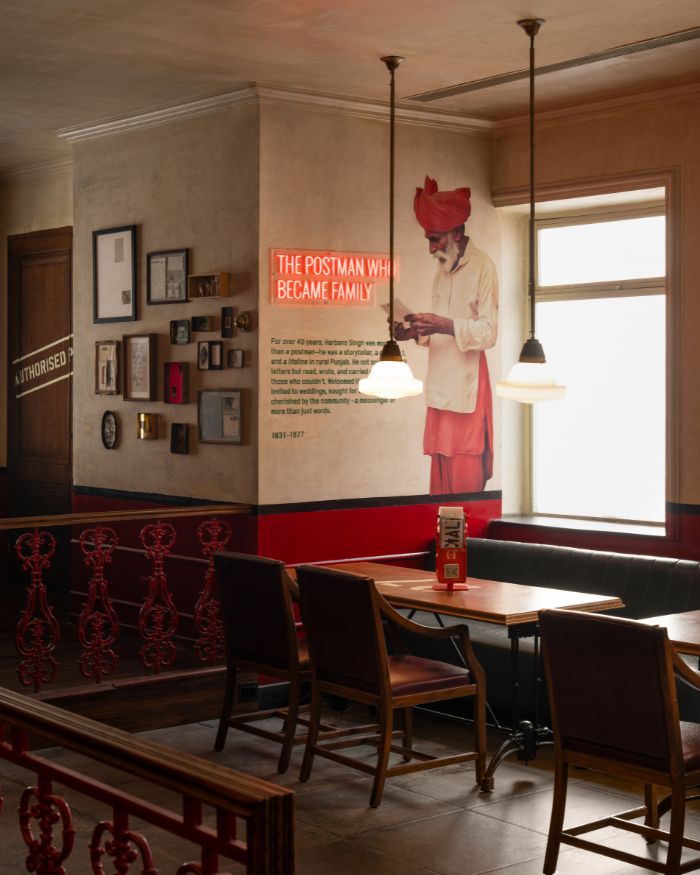
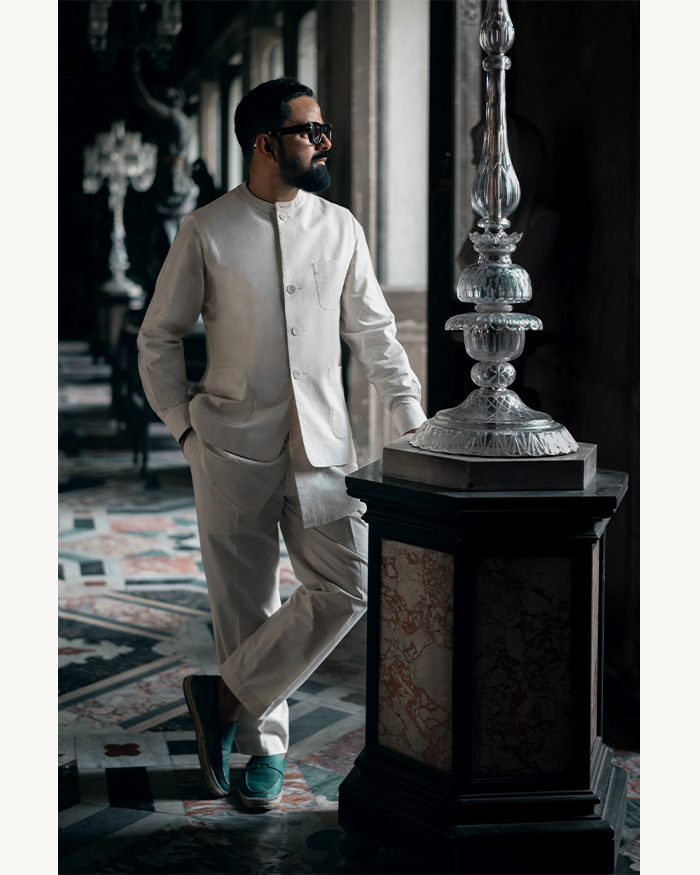
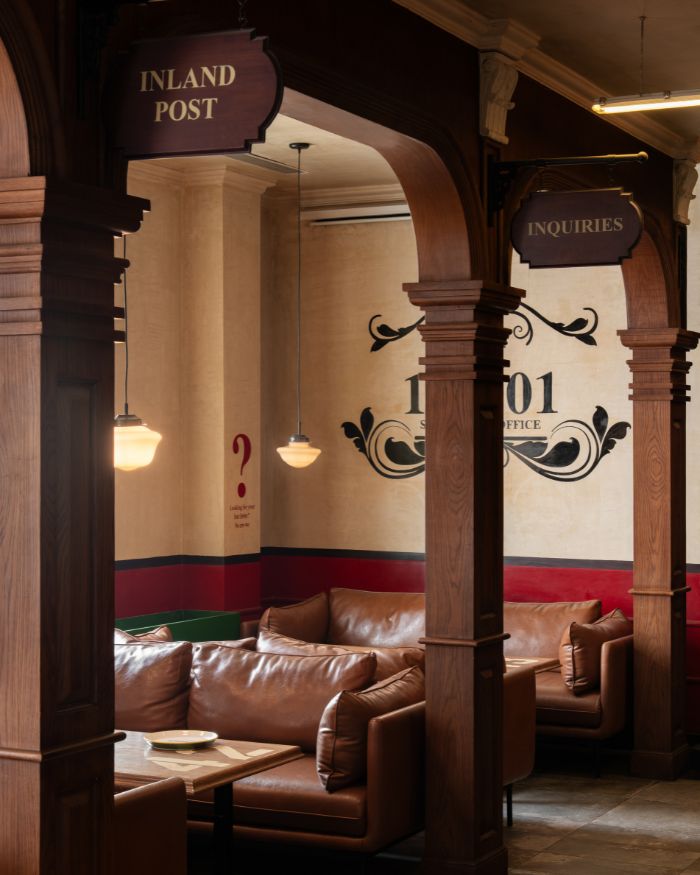
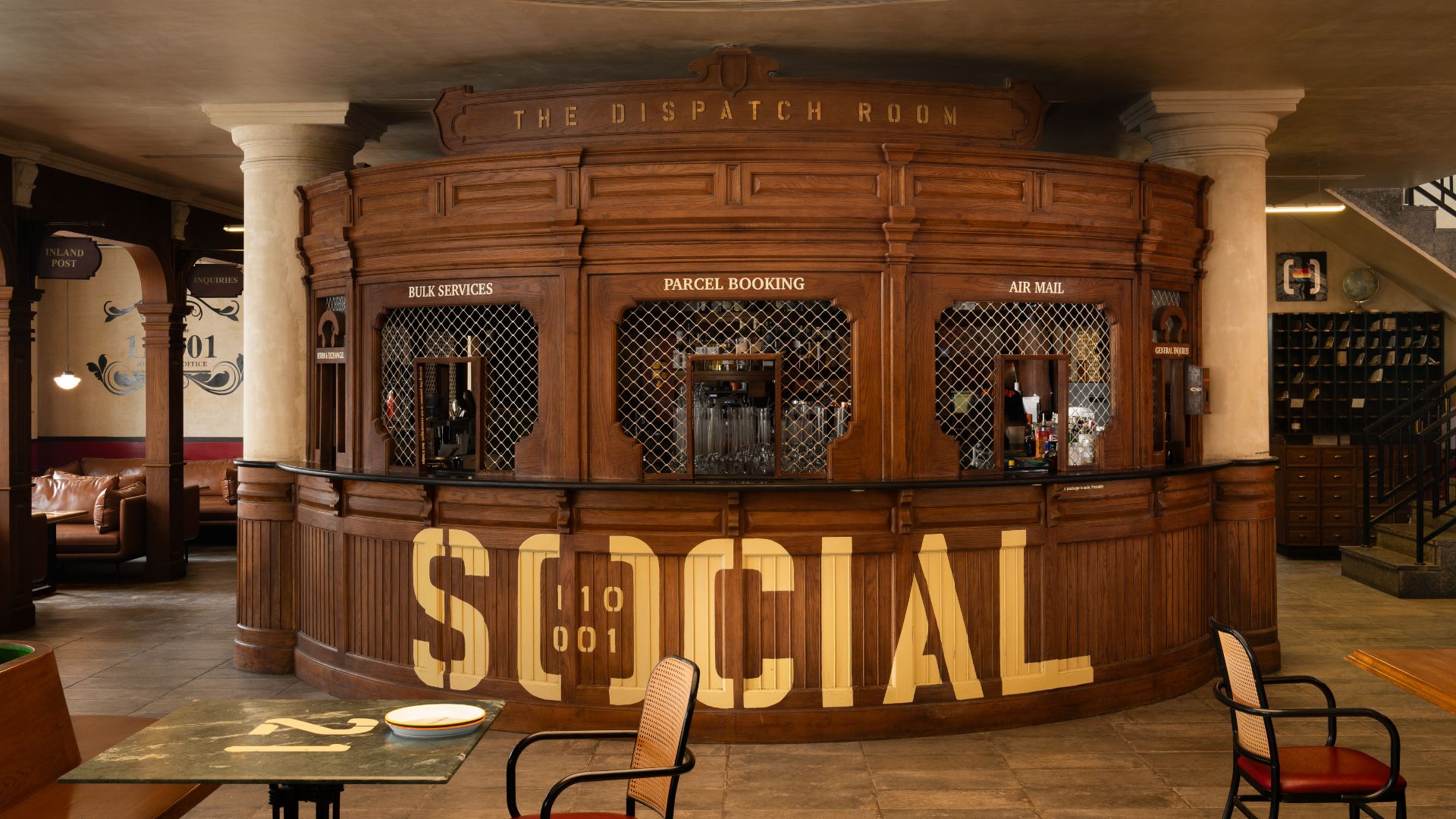
Designed by Amith Chhabra of Studio LCD, in close collaboration with the Impresario Hospitality & Entertainment team, Riyaaz Amlani, Ravi Kaul and Arushi Saini, who contributed to research and archival curation, the restaurant spans an area of 7,500 sq ft, brewing with hints of discovery. It opens into a sequence of postal departments turned into dining rooms, a lounge with booths named after postal functions, a circular island bar named the Dispatch Room, a private dining room sealed behind a steel lattice gate, and a communal table built for SOCIAL’s characteristic sense of community. Thematic corners, from an oversized postcard installation to a mural honouring the neighbourhood postman, punctuate the route between them.
"It's inspired by the working dispatch areas of historic post offices, the spaces where letters were received, sorted and sent across the country. We've reinterpreted that idea as a place where people now come together, connect and spend time"
Amith Chhabra
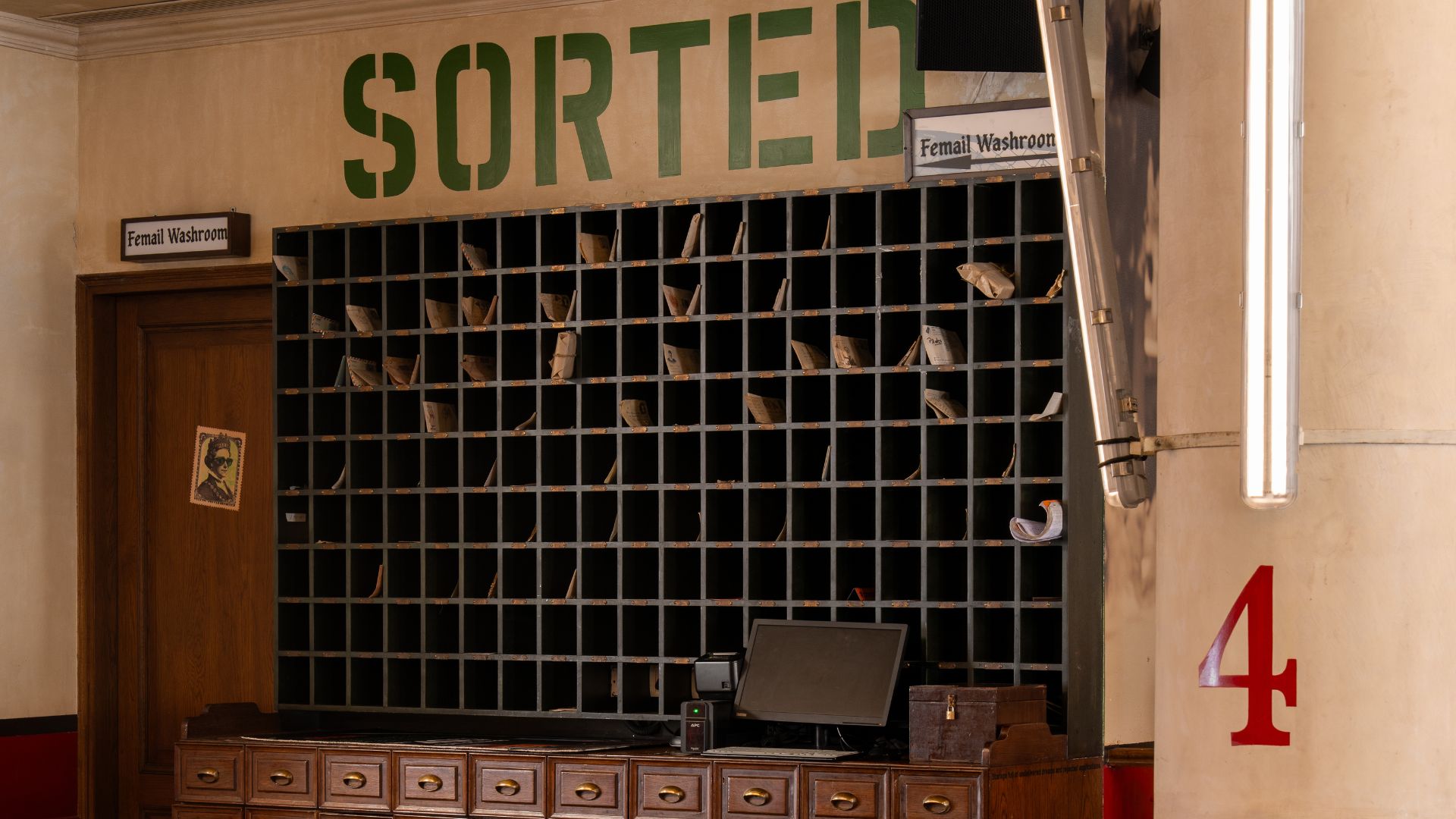
The new SOCIAL began, fittingly, with a conversation about vanishing rituals. “There was a point when visiting the post office was simply part of growing up,” muses Amith. “People stood in queues, filled out forms by hand, waited for letters, and unknowingly created memories that stayed with them for years.” Rather than recreating a post office as a literal set, the studio spent months studying archival photographs, postal counters, typography and sorting systems, choosing to translate memory into architecture rather than nostalgia into décor.
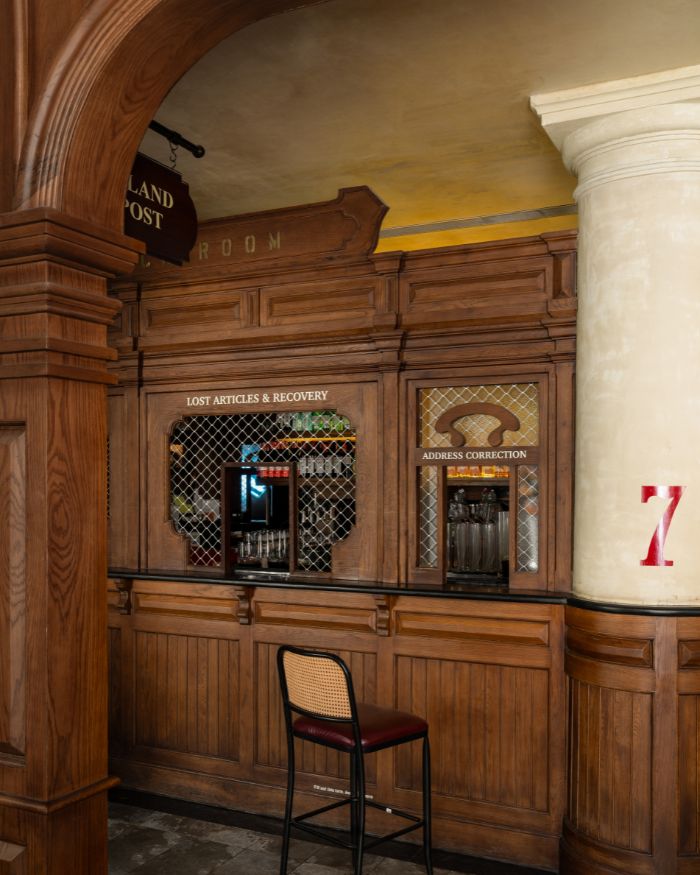
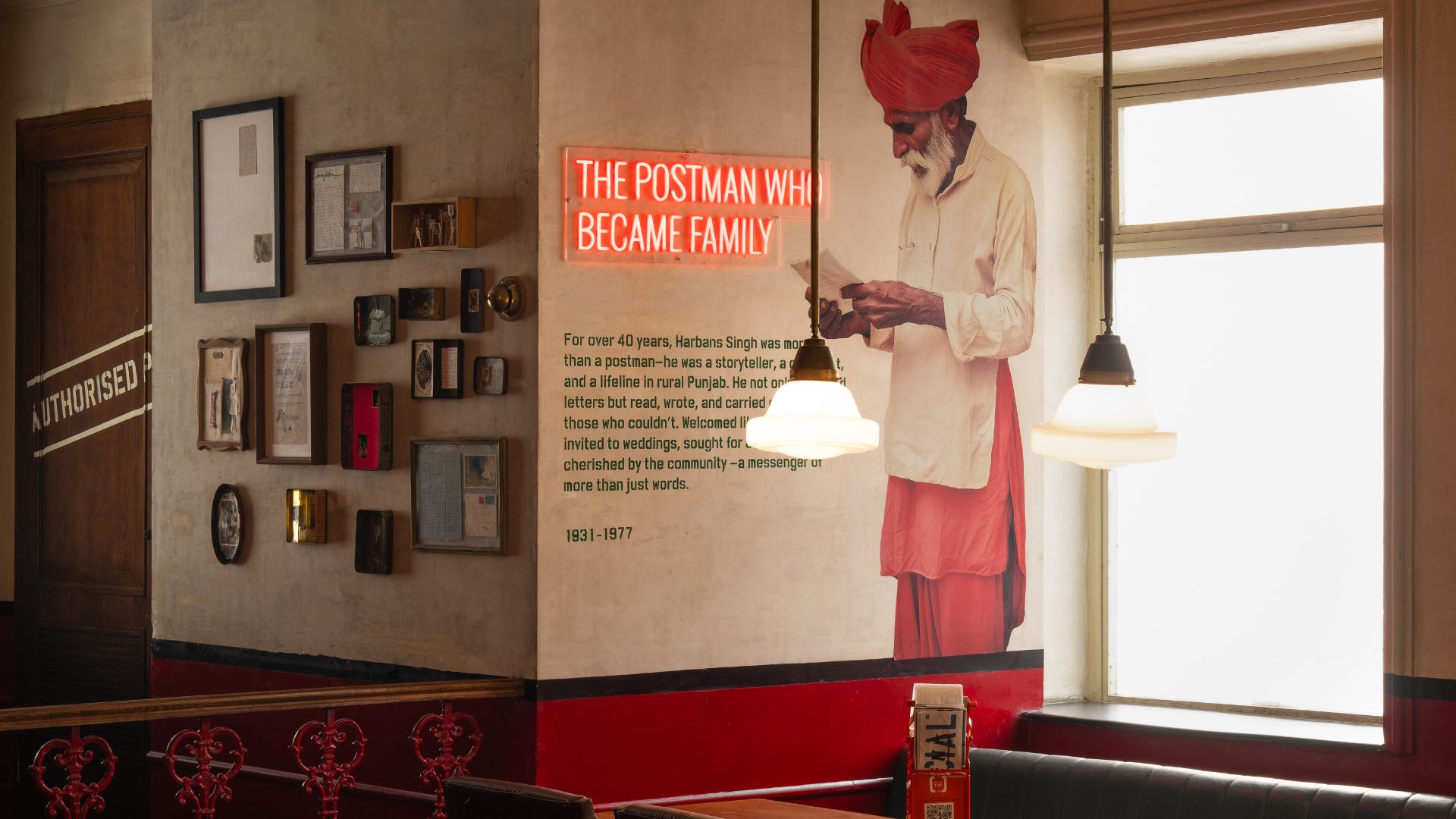
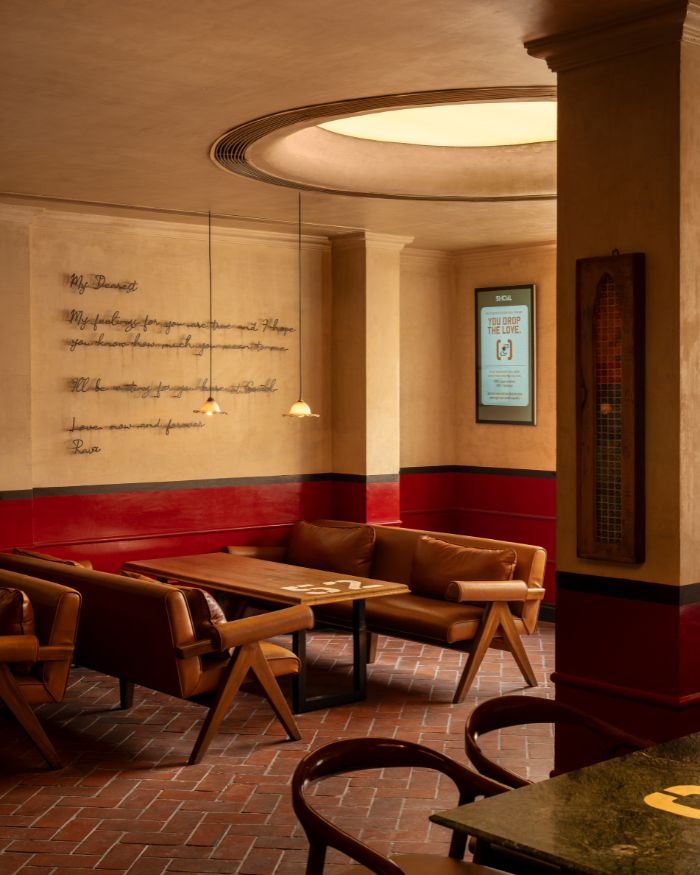
Connaught Place supplies the bones. The circular columns reinterpret the arcade’s colonnades while a run of wainscoting borrows its proportions and colours from the classic Indian post box, stretched into a continuous band across the space. Aged timber, brass, stone and lime-washed walls carry postal reds and muted greens, a palette inspired by old government buildings. Even the lighting carries memory forward: tube light fixtures familiar from old post offices reappear, fitted with warmer technology, while illuminated stretch ceilings mimic the soft fall of a skylight in select corners.
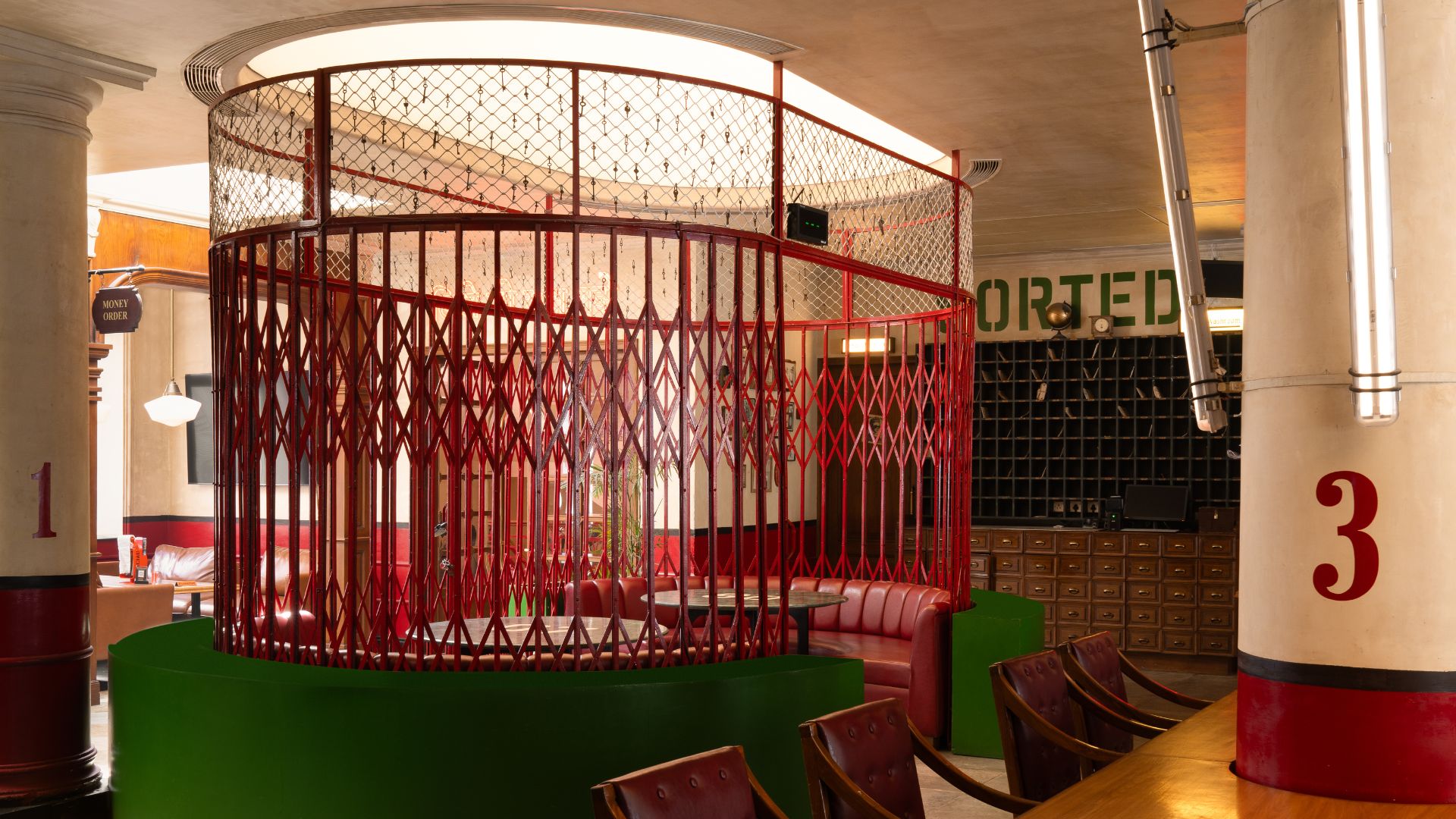
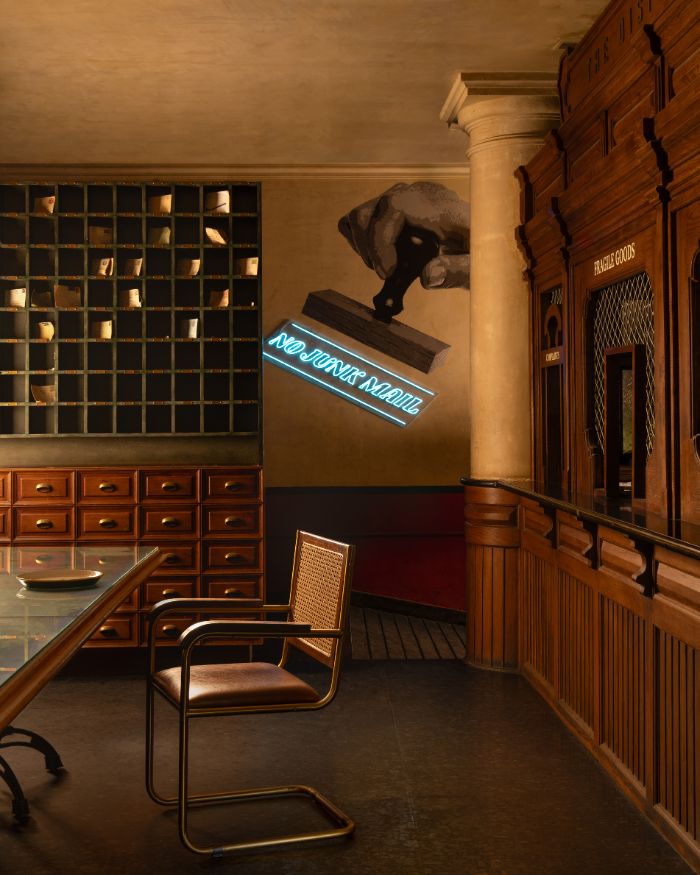
Every project needs a centre of gravity, and here, it is the Dispatch Room — a circular island bar wrapped in handcrafted timber windows marked Bulk Services, Parcel Booking and Air Mail. “It’s inspired by the working dispatch areas of historic post offices, the spaces where letters were received, sorted and sent across the country,” Amith explains. “We’ve reinterpreted that idea as a place where people now come together, connect and spend time.” Close by, a private dining room sits behind a bespoke steel lattice, a nod to the collapsible gates once found at post office counters, now recast as a design statement rather than a barrier.
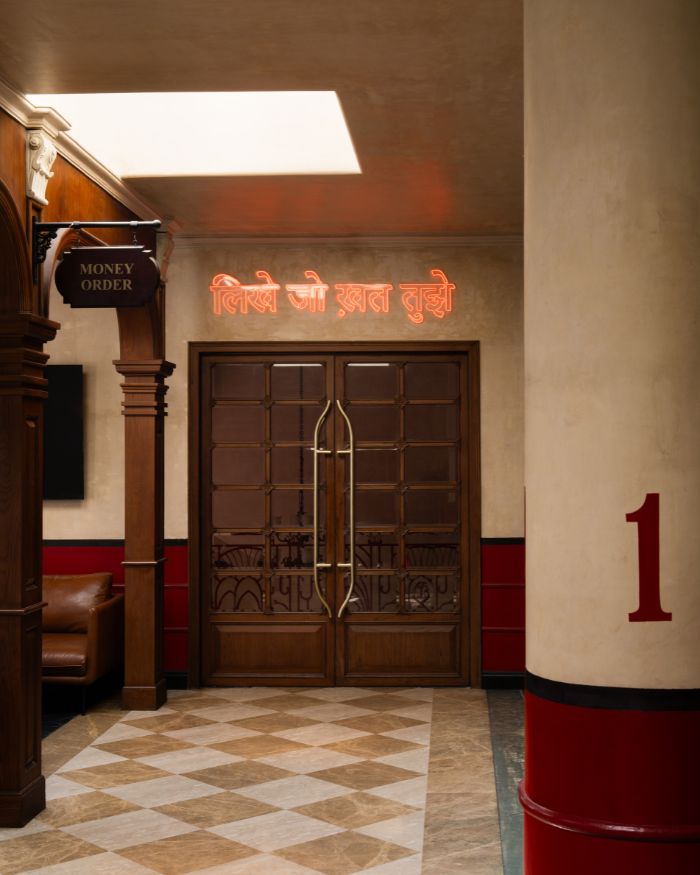
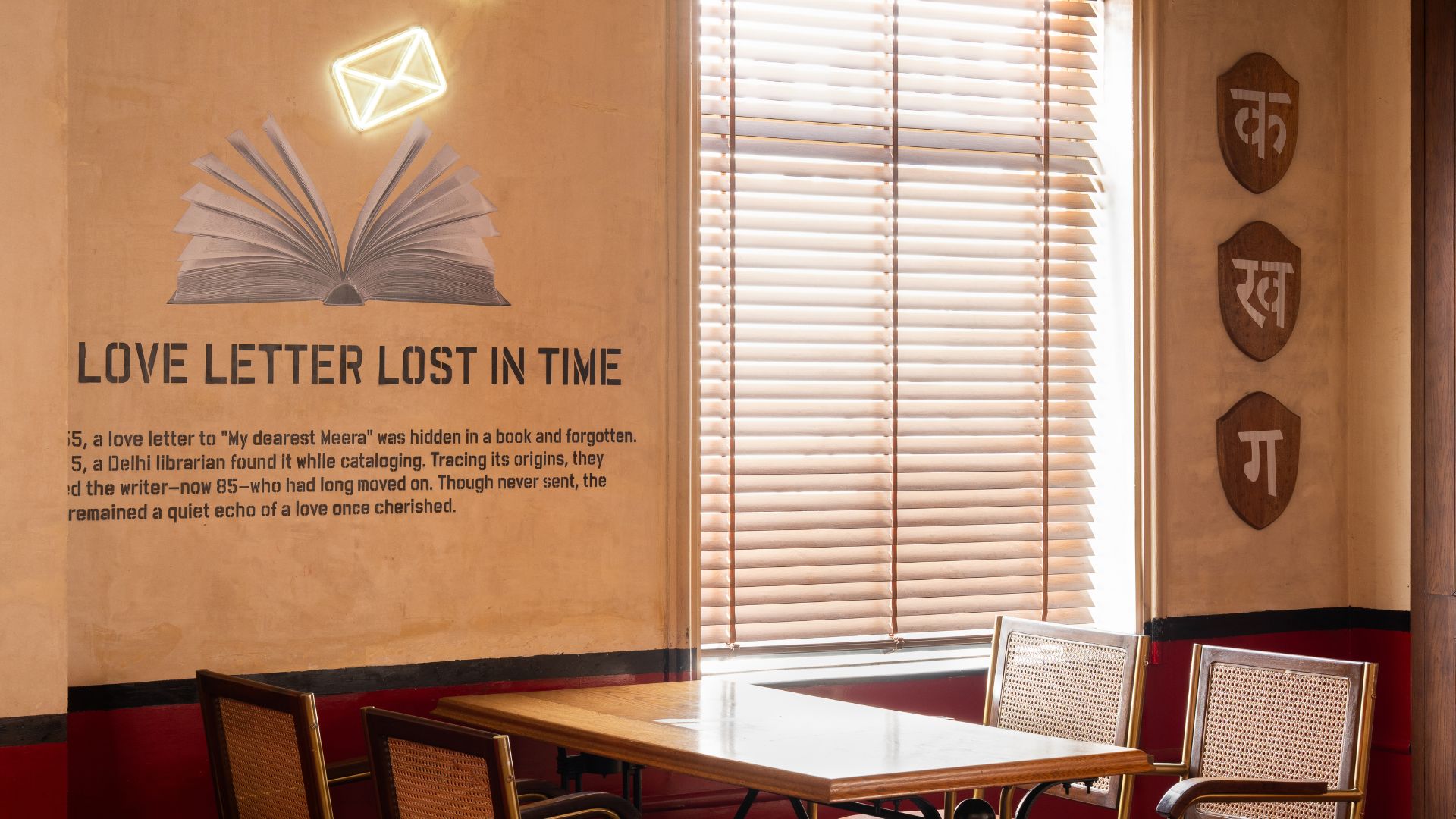
Ask Amith what proved hardest, and the answer is the detailing. “A project like this relies on a lot of subtle interventions that people might not consciously notice, but together they shape the overall experience,” he says. “We wanted everything to feel honest and effortless, so the space never came across as theatrical.” The result is a rediscovered civic building, where a small red letterbox, a hand-stamped “No Junk Mail” graphic and a neon Hindi couplet above a door do the work of making strangers feel like regulars.
Read more: How Studio LCD and other firms draw inspiration from the brand itself to design office spaces


No results found.