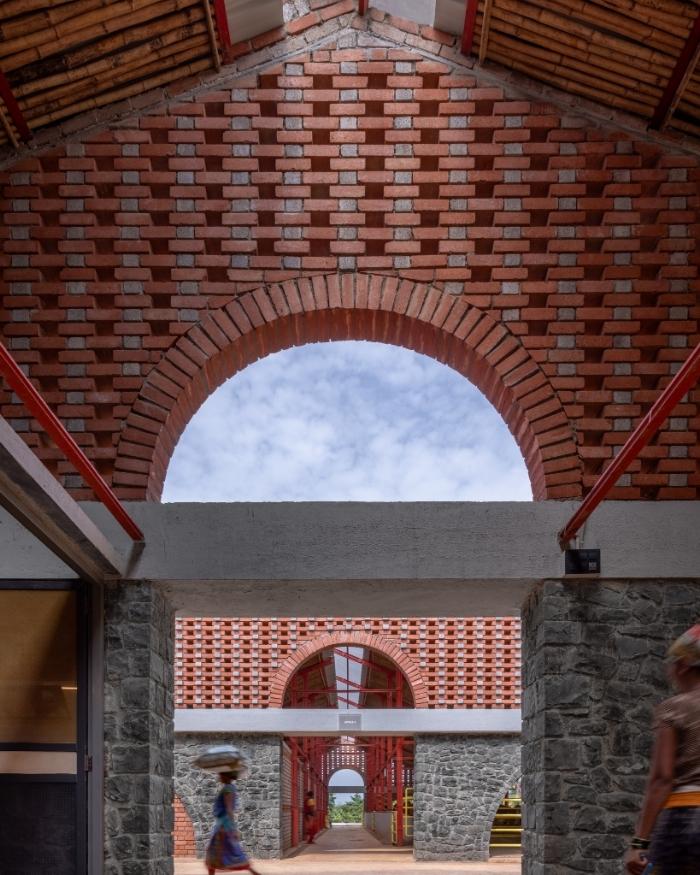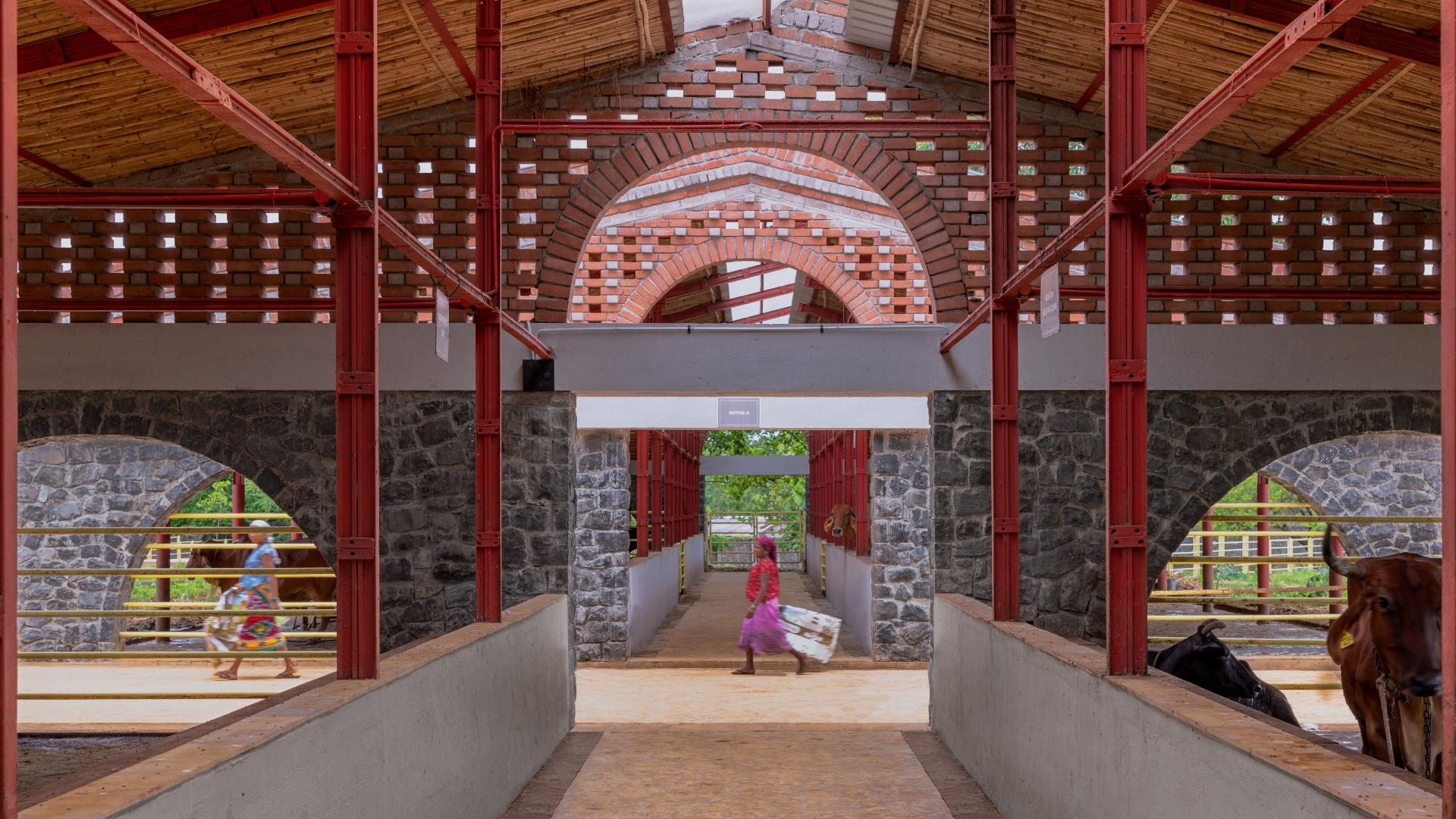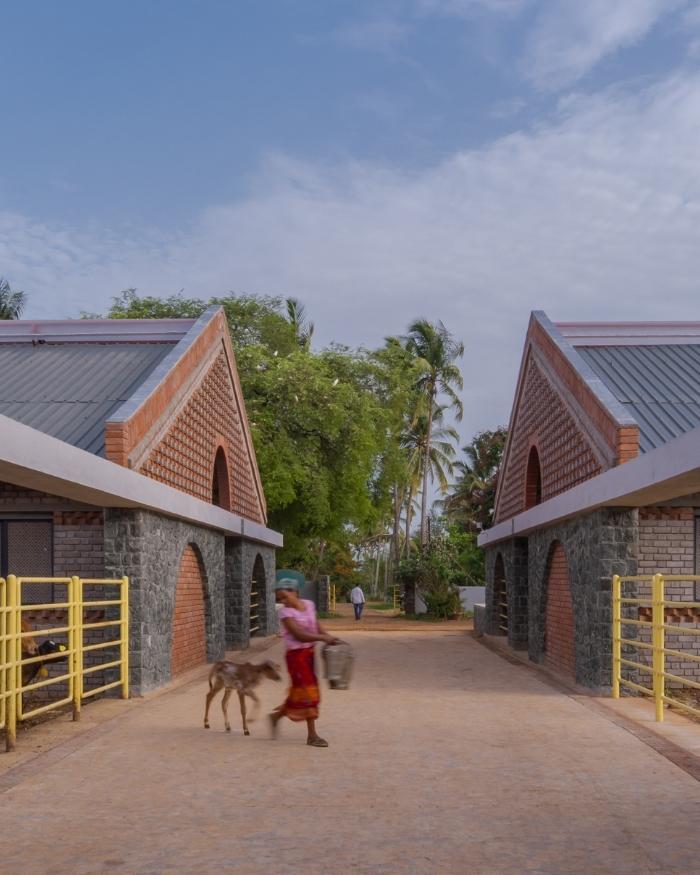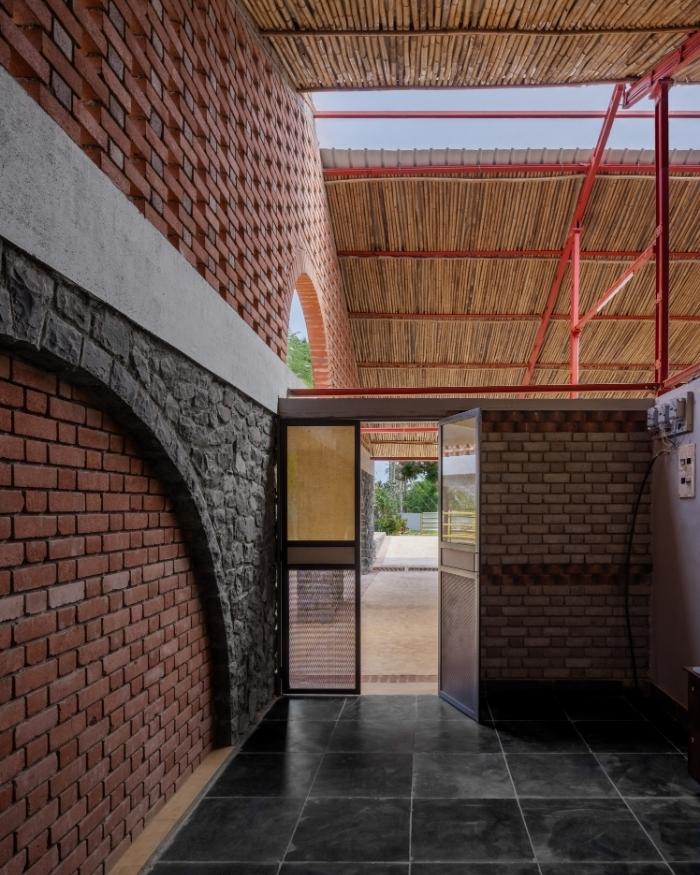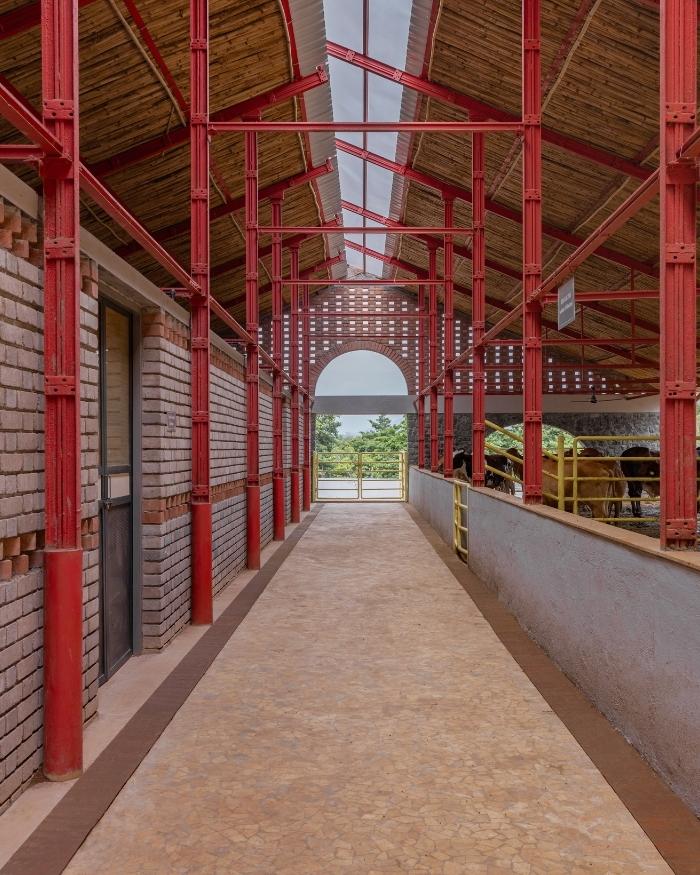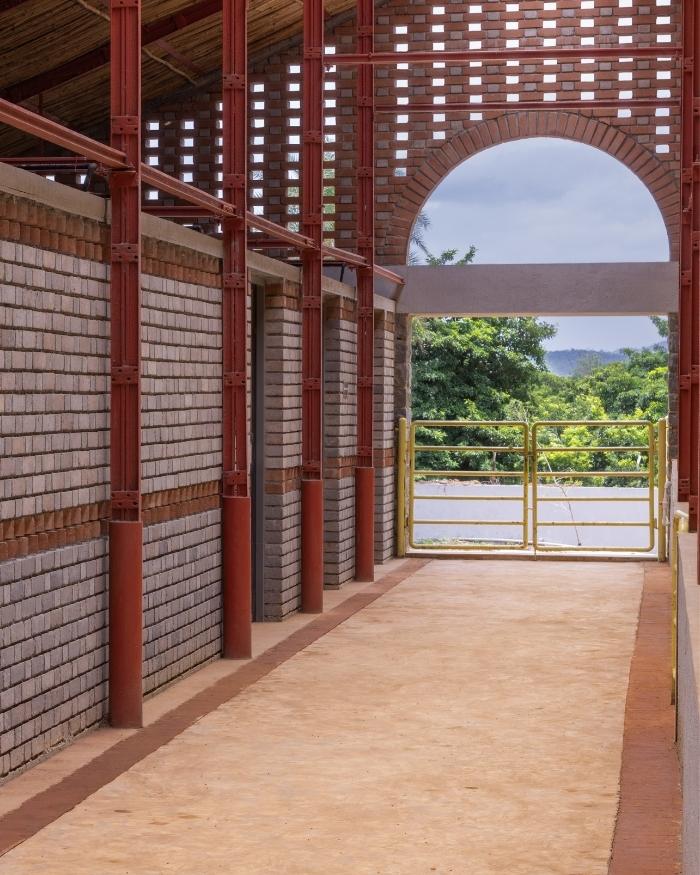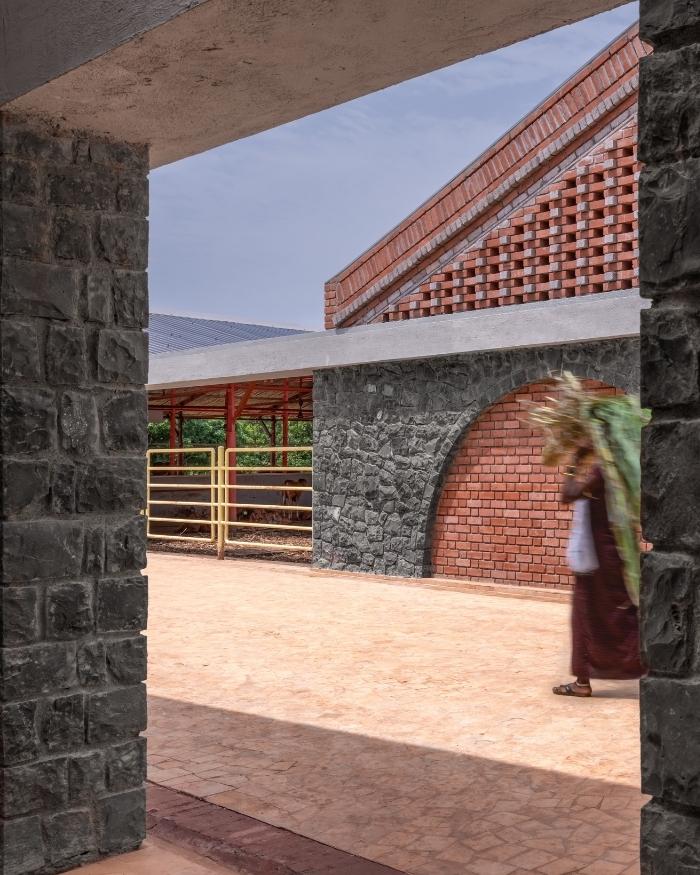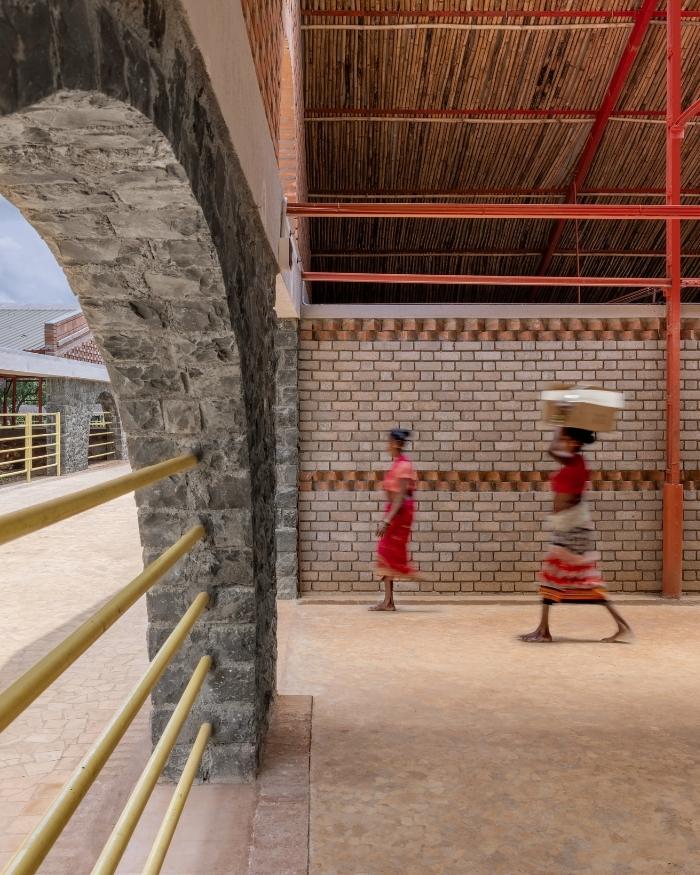
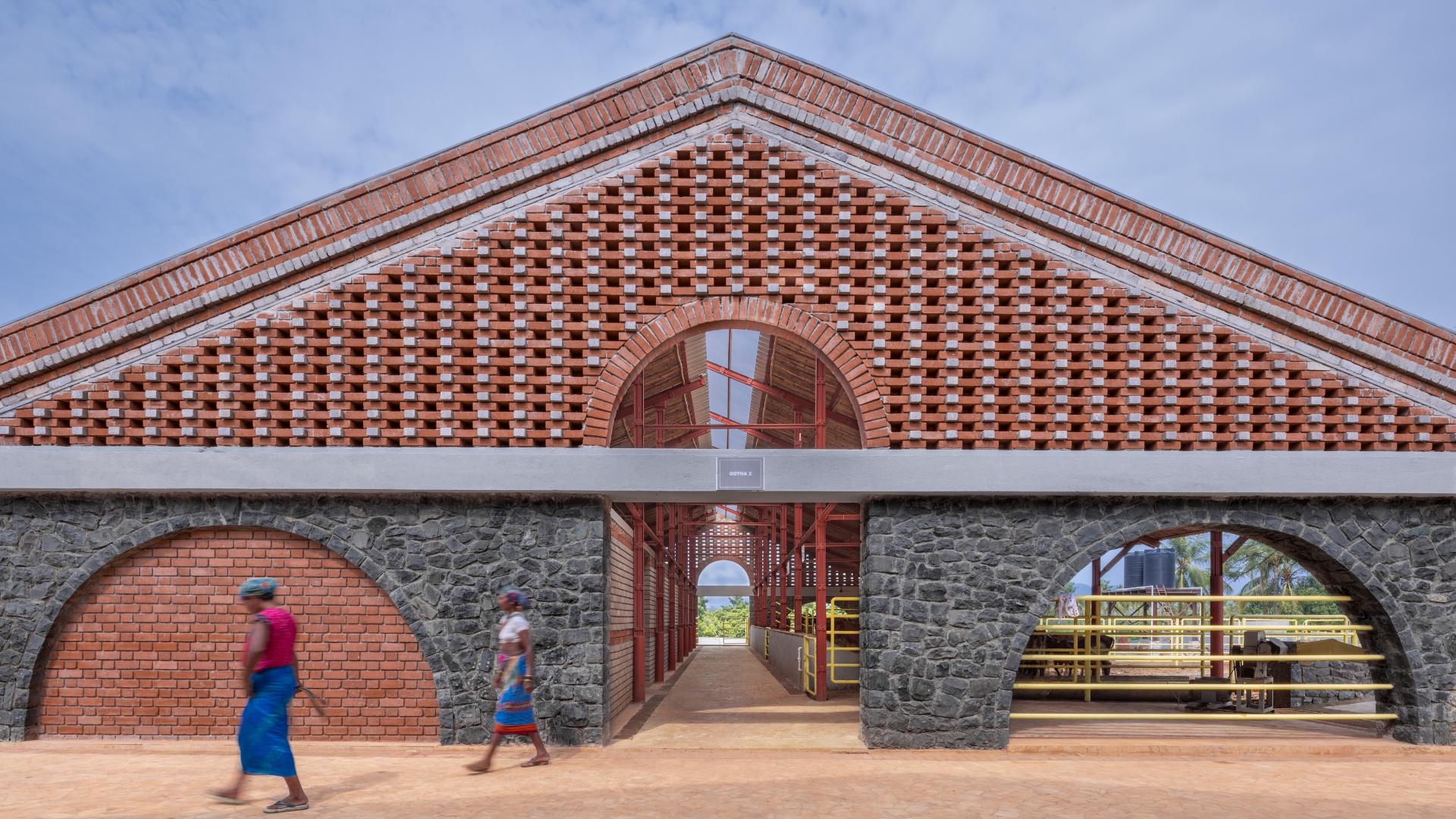
Basalt stone arches and MS structure frame the space alongside exposed brick jaalis crafted from recycled construction debris by Kesarjan Building Centre; Photography by The Space Tracing Company

From shed to sanctuary

Compartment S4 turns a languishing gaushala in Dahanu into a brick-and-stone sanctuary for the cows and their caregivers alike

BY

How does one design a safe haven for 400 cows? For Monik Shah of Compartment S4, redesigning a gaushala in Dahanu felt daunting for more reasons than just the size of the herd. For centuries, cows in India have been precariously touted as both an agricultural necessity and a religious symbol, enjoying far more significance than their other four-legged counterparts. But in domesticated settings, they still continue to inhabit a humble shed in the back of the home, constructed with little to no afterthought about what would be optimal for their well-being. 

Even in a flourishing fruit orchard outside the confines of a city, where spatial constraints couldn’t be cited as a reason, Monik witnessed the same pattern at play. “The shed in Dahanu was operating as a leftover utility space within a larger rural campus, rather than as a carefully designed environment for living beings,” he laments. He chose to pivot from the initial brief, going beyond simply upgrading the existing infrastructure to considering a complete, absolute overhaul of the typology itself. How could the space ensure both organisational efficiency for the caregivers and address the animals’ general well-being at the same time? The 14-acre space that follows addresses these concerns and more, utilising locally sourced basalt stone, exposed brick jaalis and a climate-responsive bamboo ceiling to craft a habitat any cow (or caregiver) would be moo-ved by! 

“The guiding idea remained consistent: every material and spatial decision needed to contribute to comfort, hygiene, durability and long-term wellbeing — for cattle, caretakers and the larger agricultural ecosystem” 

Photography by The Space Tracing Company

From a shed to a habitat 

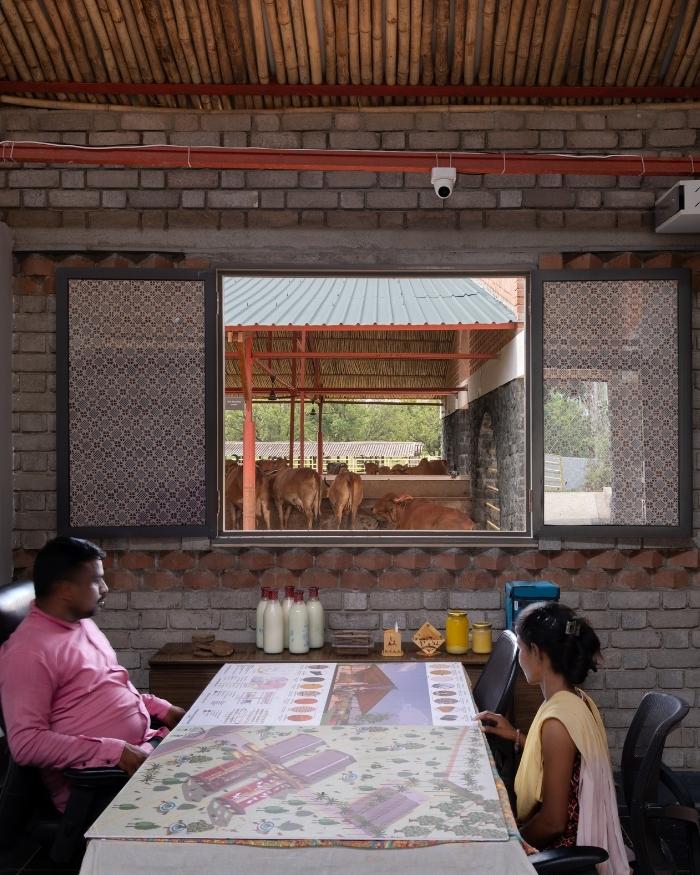
The transformation that followed, in the words of Monik, “reframes the gaushala as a primary habitat rather than a back-of-house agricultural shed.” But before the spatial planning could ensue, it was critical to consider what the cows would presumably want. A series of “basic yet critical” questions emerged: “How does a cow rest? How does it move through space?” Monik asked. The previous structure was hard on the caregivers, too, who struggled to carry out daily functions such as the animals’ feeding, cleaning and medical care owing to poor ventilation and congestion. As a result, the most basic of tasks became physically strenuous, and hygiene was compromised — leading to a lack of pride and sense of belonging amidst the caretakers. How could a space address both these concerns?

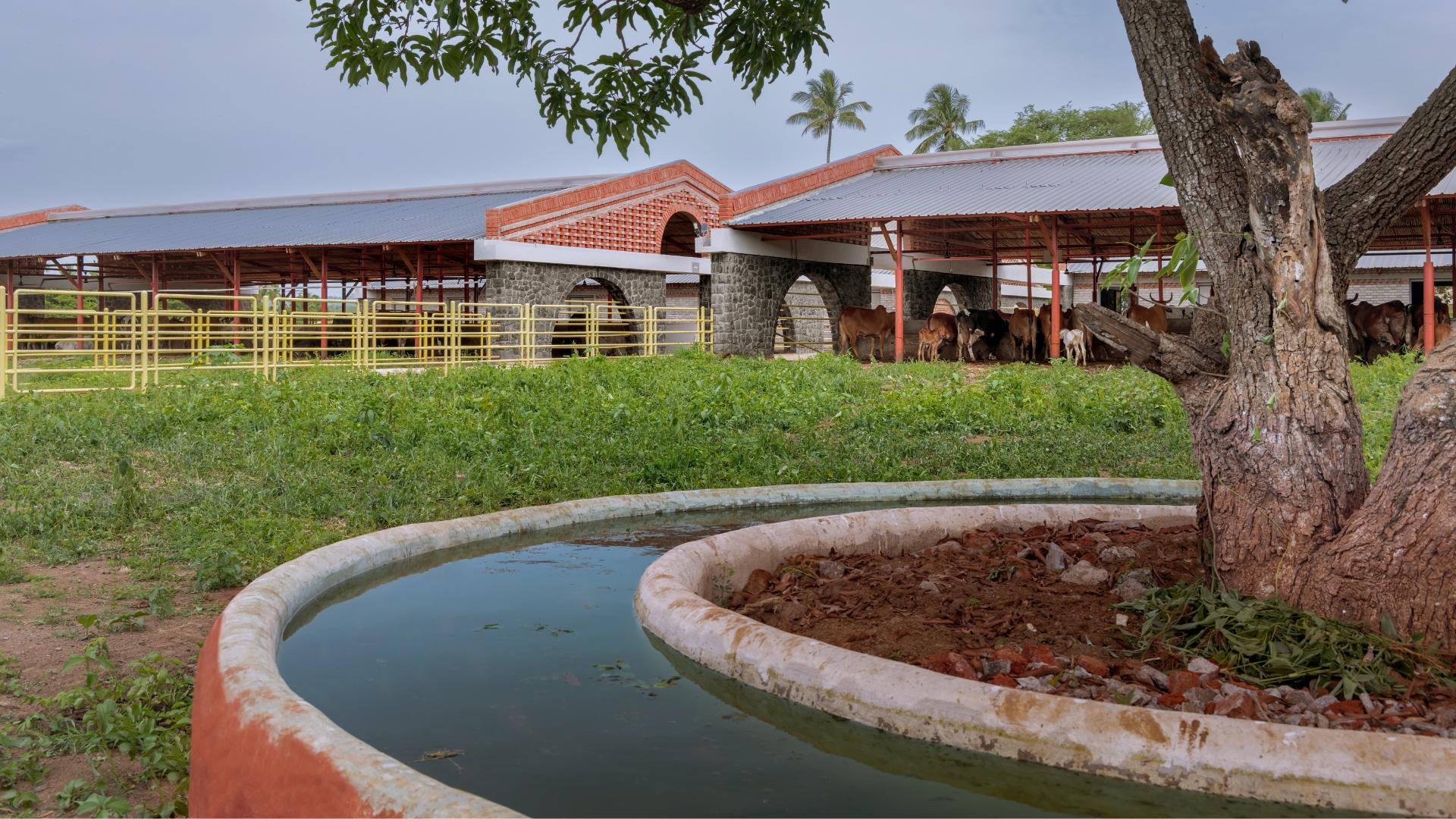
Working in tandem with team members Aman Amin, Kishan Shah, Krishna Parikh, Manuni Patel, Nishita Parmar, Prashik Chaudhari, Vedanti Agarwal, Atharva Janjirkar and Anuya Barde, Monik chose to break the problem down to scale. On a macro level, a clear division of spaces into zones pertaining to each need helped them achieve organisational clarity. Open paddocks were constructed to ensure the animals had space to roam, reducing congestion and aiding hygiene. Separate zones, with sloping roofs and basalt-and-brick walls, were constructed for each service: from veterinary care and milk collection, to even different circulation paths for both the cows and the caretakers. This step helped minimise stress and maximise efficiency. On a more micro level, they chose to study “airflow, thermal comfort, floor materials and edge conditions that affect the animals’ bodies on a daily basis,” affirms Monik. This impacted both the material palette and the break-up of the spaces. For example, they closely studied how cows socialise, and constructed havadas — water bodies amidst open grazing areas, lined with lime plaster to maintain both ease of maintenance and lower water temperatures. Shaded by existing tall trees, these communal water bodies become “the most socially active and climatically responsive spaces within the campus,” avers Monik. Another example that exhibits their attention-to-detail best is the primary structure itself. Since cows tend to scratch themselves against columns, even the steel used in the framework was detailed with rounded edges to ensure their itches are scratched — and the structure remains sturdy for years to come! 

Photography by The Space Tracing Company
Lime plaster walls lend the Havada a raw, textured character; Photography by The Space Tracing Company

The material heroes of the space  

Dahanu’s climate and local cultural traditions, too, played a vital role in the final outcome. Locally sourced black basalt stone became the foundation of the entire project, sculpted into rhythmic arches that stand out against the surrounding orchard’s earthy soil. Fitted with exposed brick jaalis, the bricks’ warmth softens the starkness of the stone and pulls sunlight deep within the space. The emanating facade contrasts between the brick and the stone: basalt helps stabilise temperatures indoors owing to its high thermal mass, and the exposed brick creates optimum ventilation due to its porosity. A win-win! 

However, the reinvented gaushala does retain the traditional metal roofing sheets typically used for sheds — but introduces a handcrafted false bamboo ceiling to take away from the material’s harsh appearance. Not only does this latticed surface help temper the heat indoors, but it also nods to the region’s local crafts. Another element inspired by Dahanu’s cultural heritage is the panels of Ajrakh sandwiched between the glass doors and windows, introducing an element of personalisation and belonging into an otherwise functional space for the caregivers. As Monik sums it up, “The guiding idea remained consistent: every material and spatial decision needed to contribute to comfort, hygiene, durability and long-term wellbeing — for cattle, caretakers and the larger agricultural ecosystem.” 

Rather than being relegated to one part of the fruit orchard, the final result extends beyond a mere rehaul of typology, going as far as to reposition the Gaushala as a part of a larger ecosystem. It is now home to a composting space that turns cow dung into manure for the fruit farm on-site, and even channels all wastewater from the havadas back into the landscape. We can’t imagine who’d be happier about this transformation: the cows, the caregivers, or the fruits in the orchard! 

Read More: Set within the pine and deodars of Nainital, Compartment S4 transforms a colonial cemetery into a landscape encountered through senses.

Photography by The Space Tracing Company
SHARE THIS ARTICLE

You May Also Like

Watch

No results found.

Search
Close this search box.