Photography by Ishita Sitwala

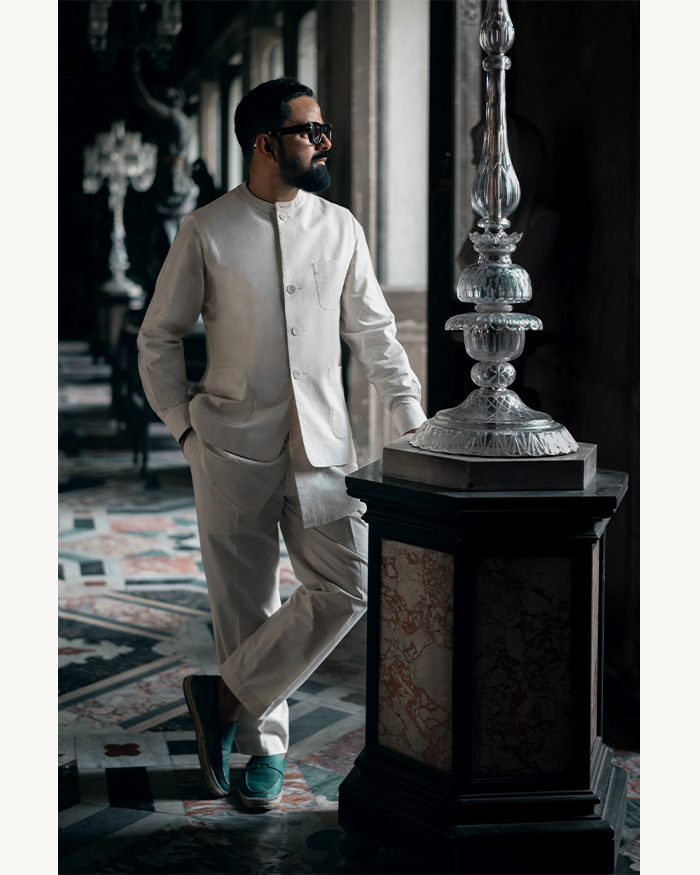
ELLE DECO International A-List featuring George Seemon

An experimental home set within a mango orchard in Bagalur

BY

At George Seemon’s home in Bagalur, almost every design decision began with what already existed. The trees stayed. The landscape dictated the footprint. Even the material palette shifted once excavation revealed better possibilities. That willingness to let a project evolve with its site is emblematic of the approach that has earned the Stapati Architects’ founder a place on the ELLE DECO International A-List.

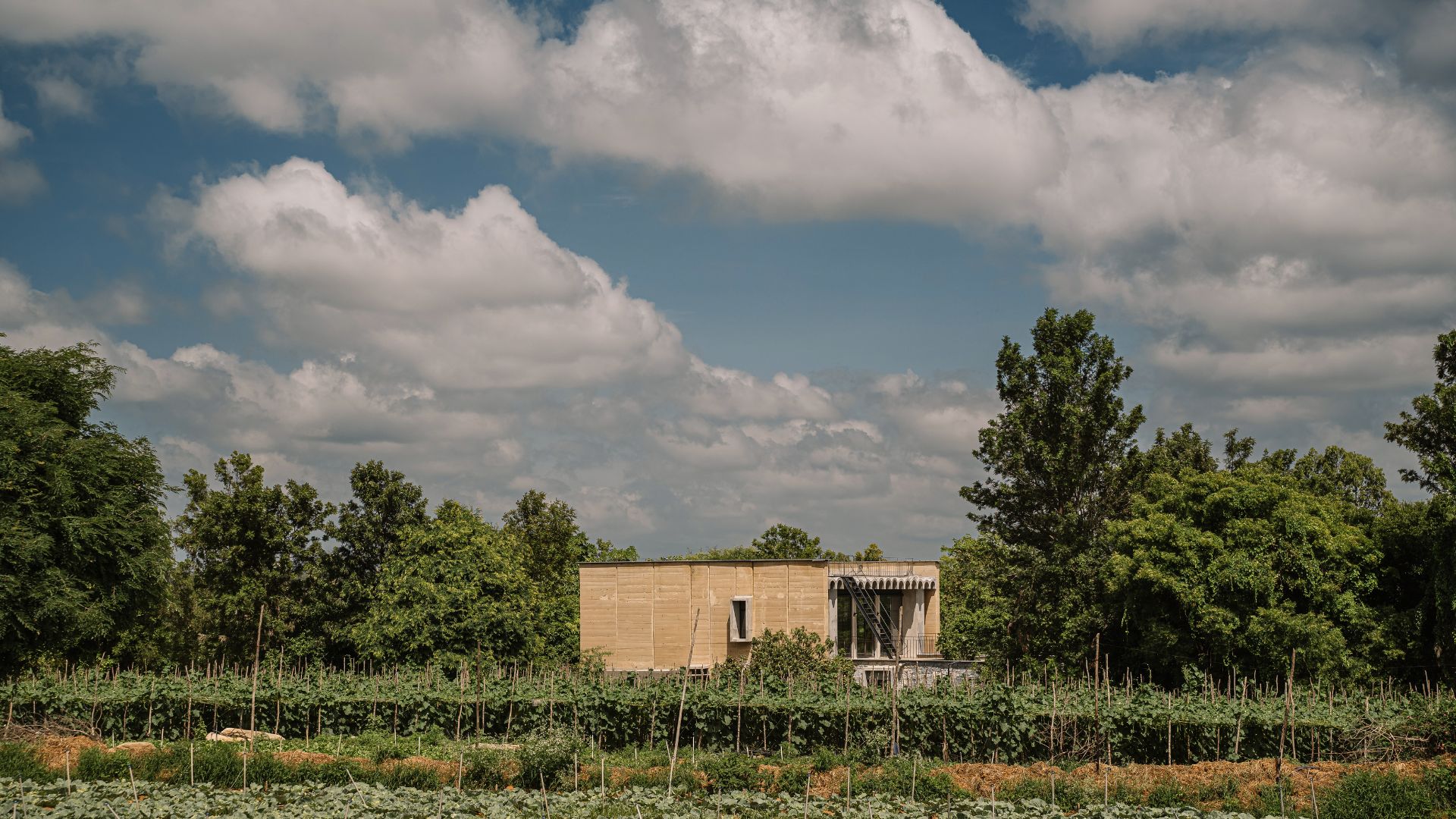
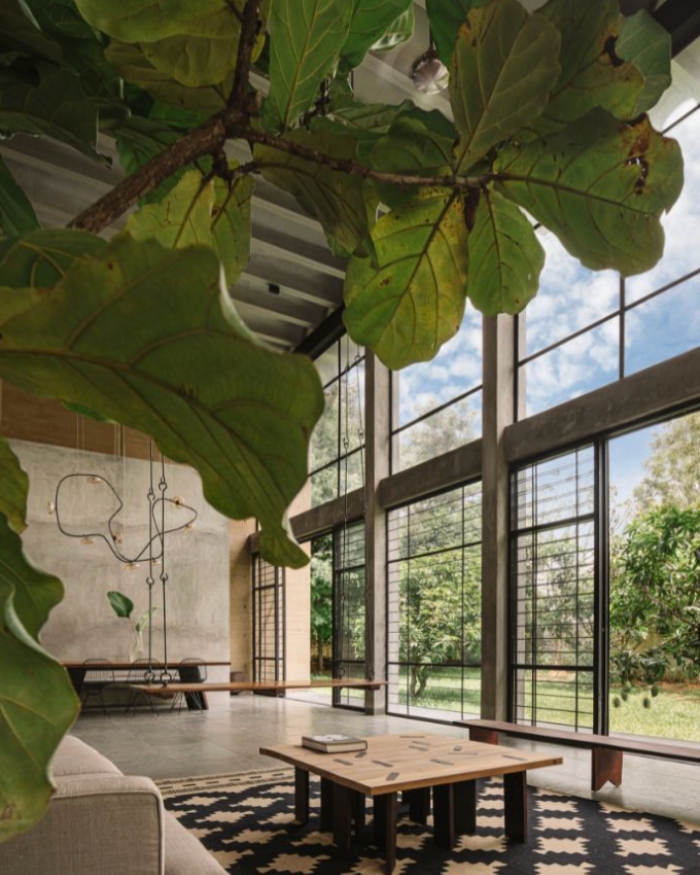
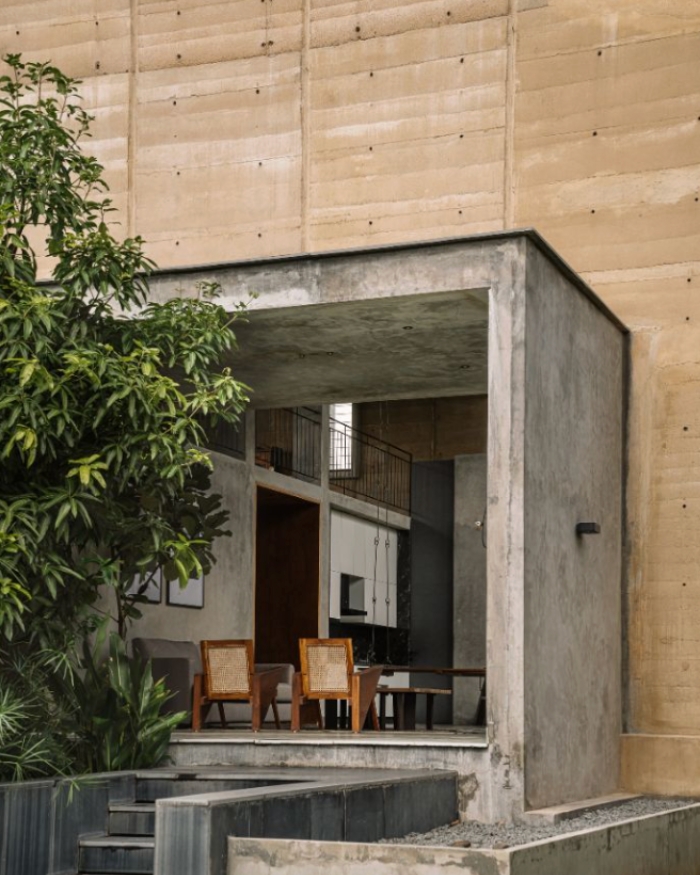
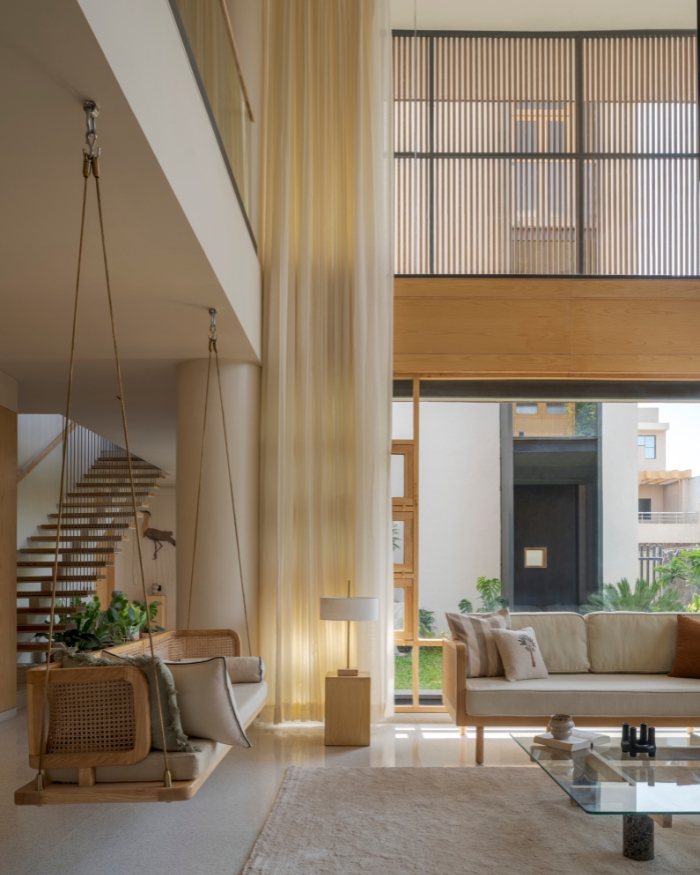
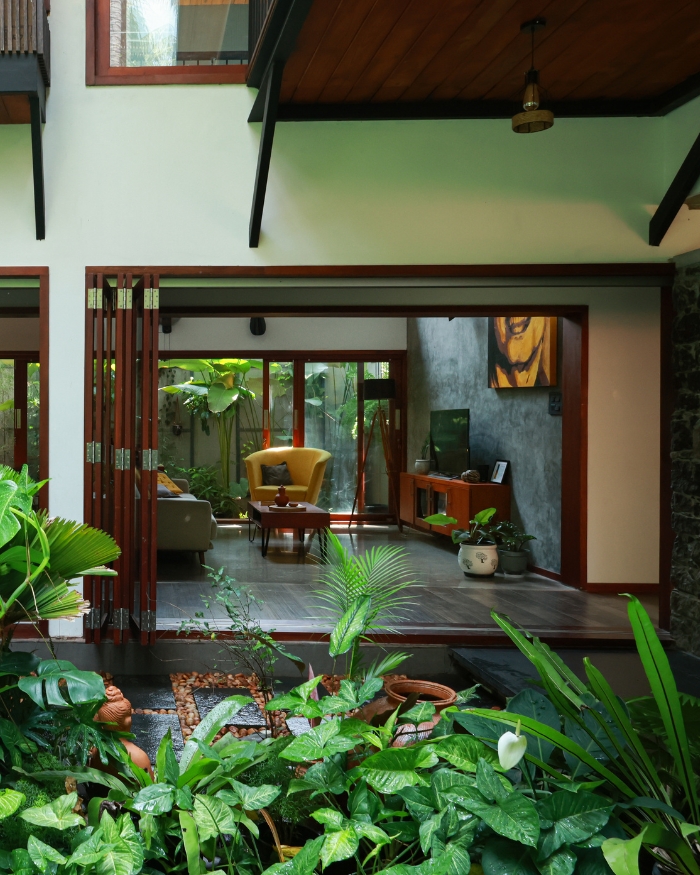
Set within a mango orchard on the Karnataka-Tamil Nadu border, the 2,690 sq ft farmhouse occupies the only tree-free patch of land on the site. The choice was instinctive, allowing the orchard to remain largely untouched while giving the house a natural place to belong. The concept itself was equally straightforward. “Two boxes fitting into each other. Like a matchbox,” George describes it. Conceived as two interlocking volumes, the home is a study in essentialism, where pure geometry replaces unnecessary complexity.

“An element of authenticity and coarseness runs throughout the home. It proves that architecture is not about perfection. You let the house live its life, and you live with it. It’s all part of the process"

Photography by Ishita Sitwala

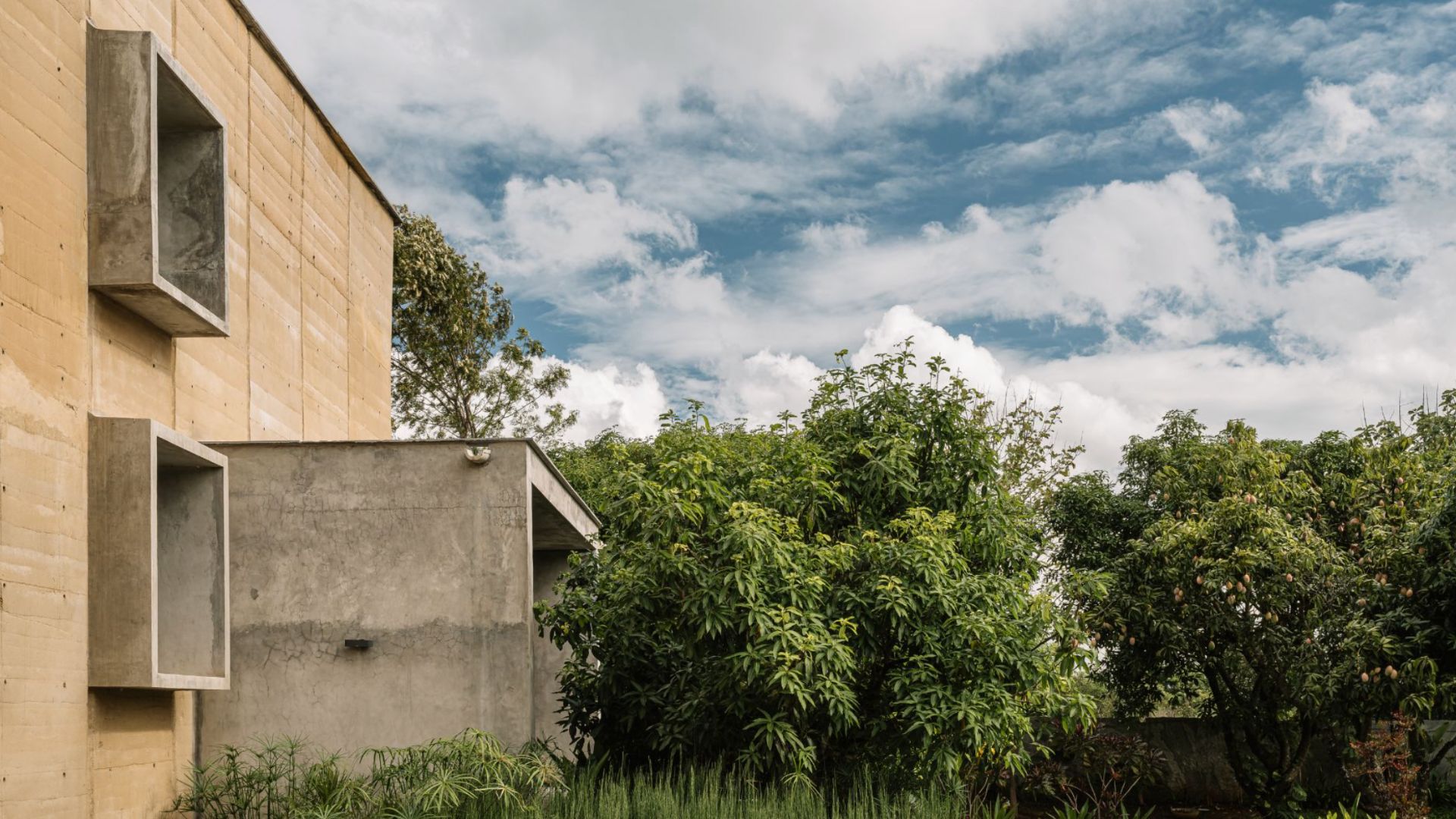
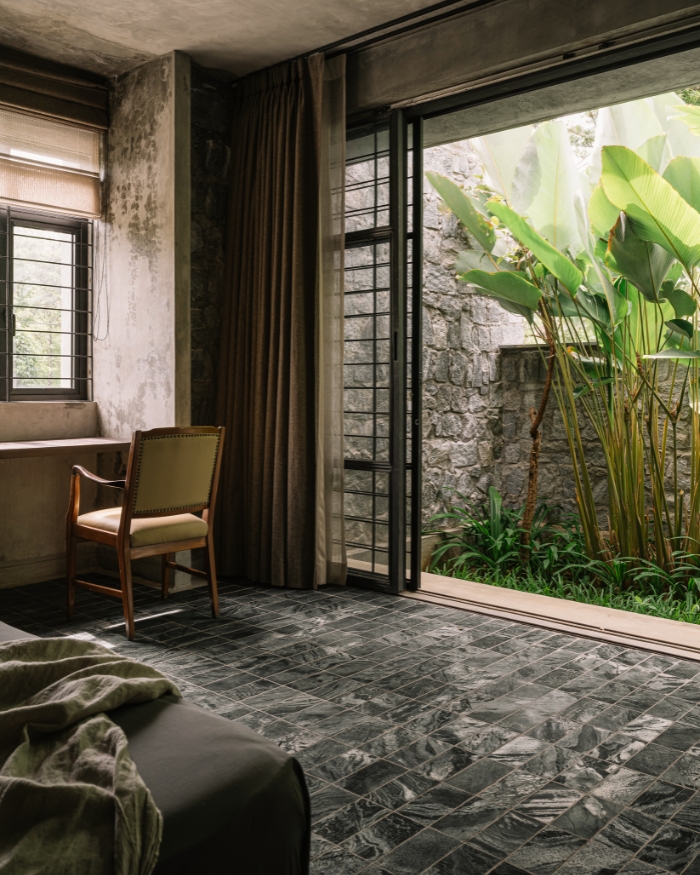
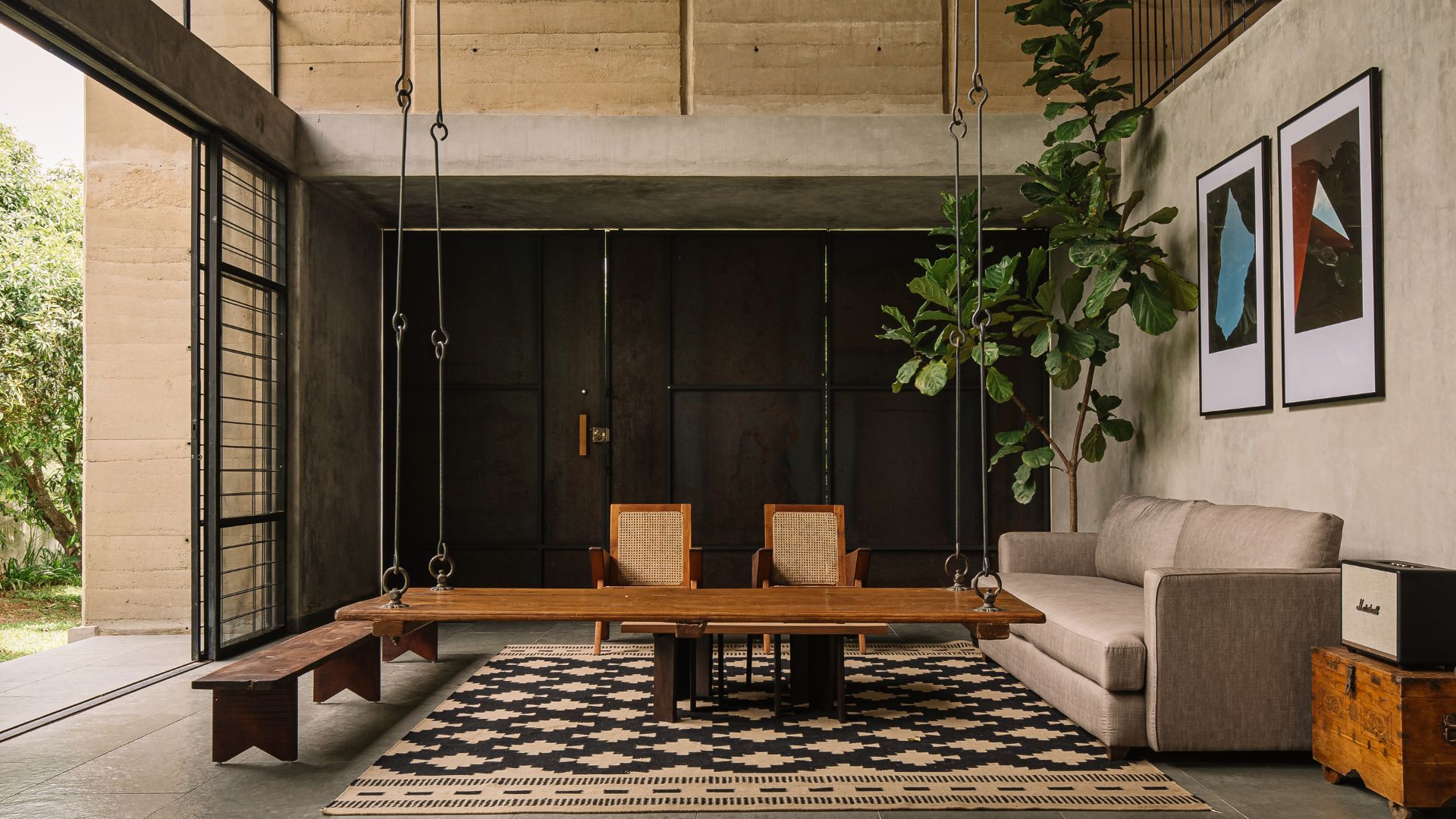
The material palette, however, evolved during construction. While the initial plan was to source rocks from around the farm, excavation revealed soil suitable for rammed-earth construction, prompting a return to the drawing board. The resulting rammed-earth walls now define the larger volume, while stone forms the smaller mezzanine.

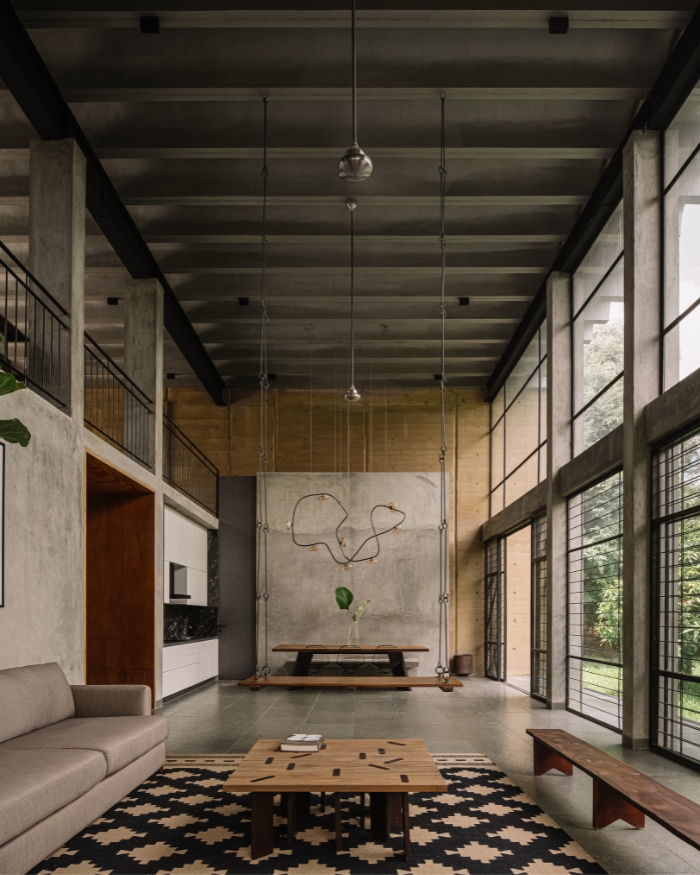
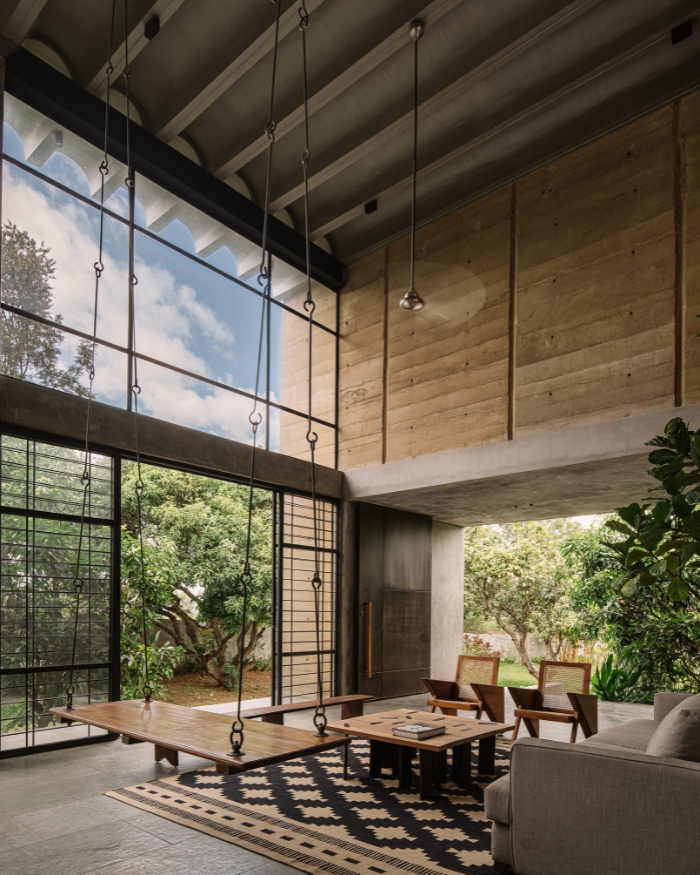
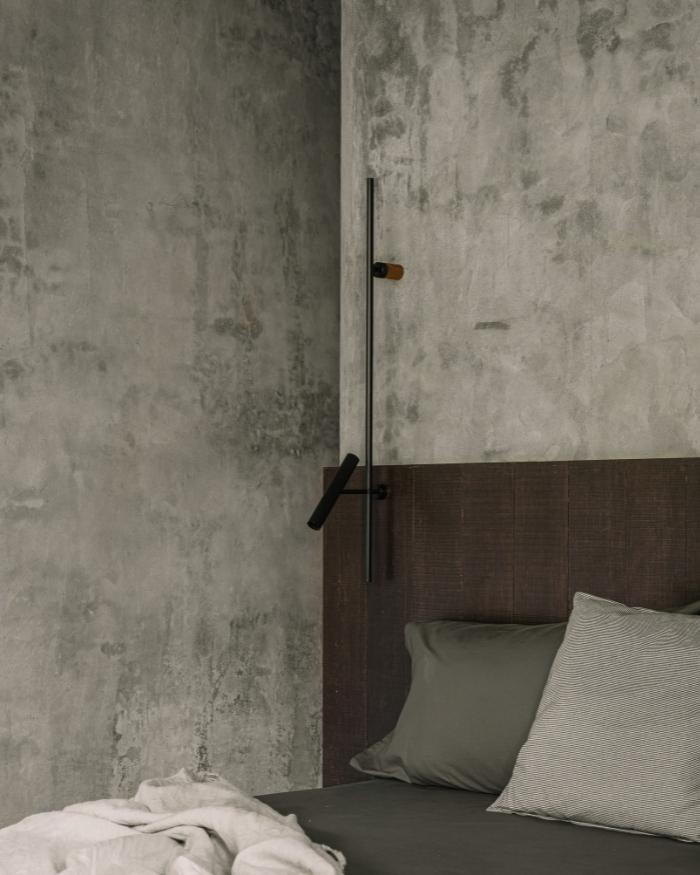
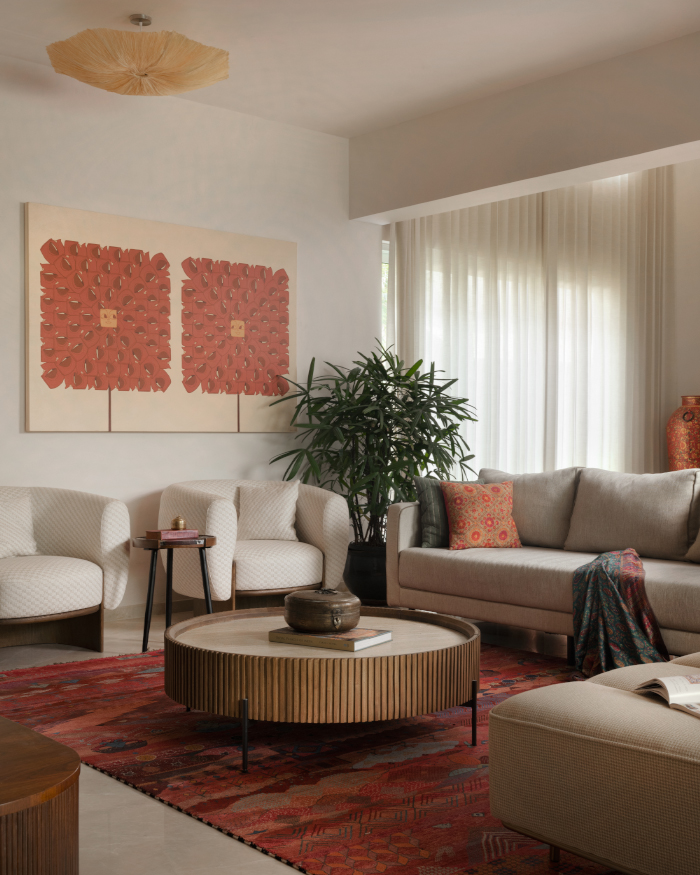
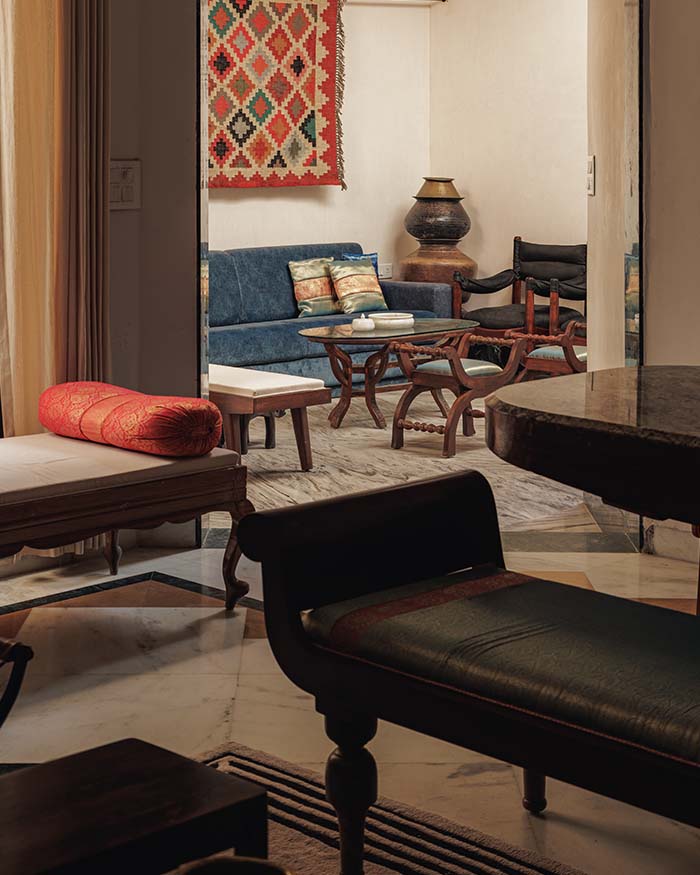
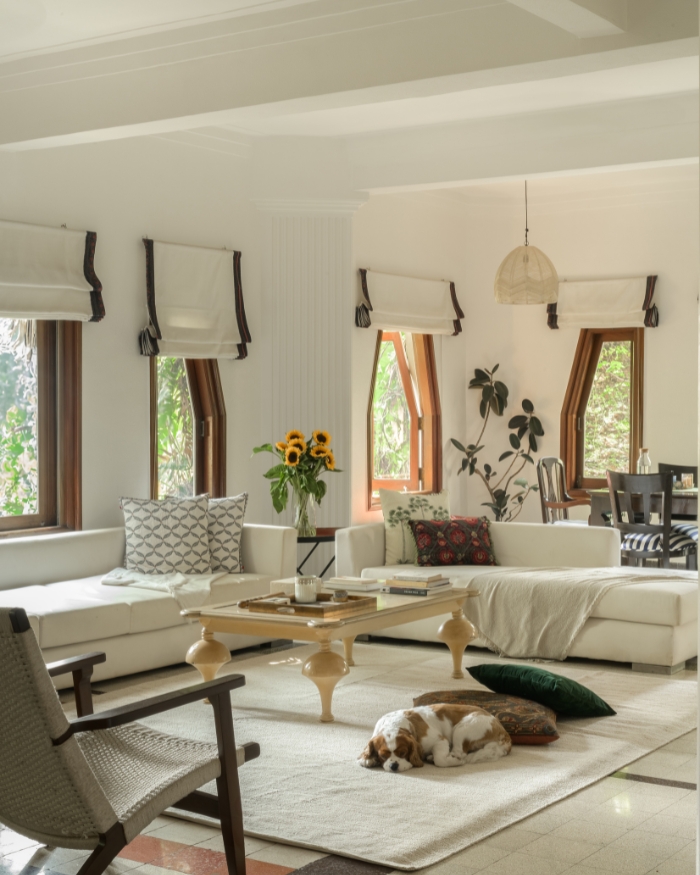
“I am not the kind to complicate a structure with cuts, curves and bends,” says George. Instead, the home celebrates simplicity through raw, local materials that age gracefully over time. This sense of honesty extends throughout the interiors. Bespoke furniture designed by George for his studio, Smaram, sits alongside antiques collected over the years, lending warmth to the restrained architecture.

A striking jack-arch roof conceals the home’s electrical conduits without the need for a false ceiling, while carefully detailed interventions like the concealed bedroom doorway and windows that frame changing views of the orchard demonstrate the precision behind the home’s apparent simplicity.

Photography by Ishita Sitwala

“An element of authenticity and coarseness runs throughout the home. It proves that architecture is not about perfection. You let the house live its life, and you live with it. It’s all part of the process,” notes Mrudul Pathak Kundu, Editor-in-Chief at ELLE DECOR India.

The house embraces the irregularities of craftsmanship, the weathering of materials and the marks left behind by changing seasons. Walls darken with rain, surfaces evolve, and imperfect finishes are left untouched. “The house taught me patience,” he reflects. “It taught me how to experiment, how to be true to myself.” That quiet confidence, rooted in authenticity rather than perfection, is what defines both this home and the architectural language that has established George Seemon as one of India’s most compelling contemporary designers.


Photography by Ishita Sitwala
SHARE THIS ARTICLE

You May Also Like

Watch

No results found.

Search
Close this search box.