Photograph by Sunhil Sippy

The inner life of Mumbai’s racecourse

Set at the Mahalaxmi Racecourse, Sunhil Sippy's photobook RACEDAY is a meditation on photography, impermanence and the shifting value of land in a city that is always remaking itself

BY

Only a few cities have the gall to self-stylise as the centre of the world. It requires astonishing arrogance, surely, but also a disarming ability to inspire adoration, which prevents its flaws from veering into acrimony. In this apogee of cosmopolises run by global heavyweights, the island city of Bombay, or Mumbai, remains among the most unpredictable. This quality lies not only in its scale or density, but in its capacity to withhold and divulge itself in fragments. If you care to linger, the city pays attention, unfolding layers like a winning hand at poker. It is within such moments of slow revelation that RACEDAY, a new photobook by filmmaker, photographer and flaneur Sunhil Sippy, finds its footing, drawing attention to the stories beneath the surface.

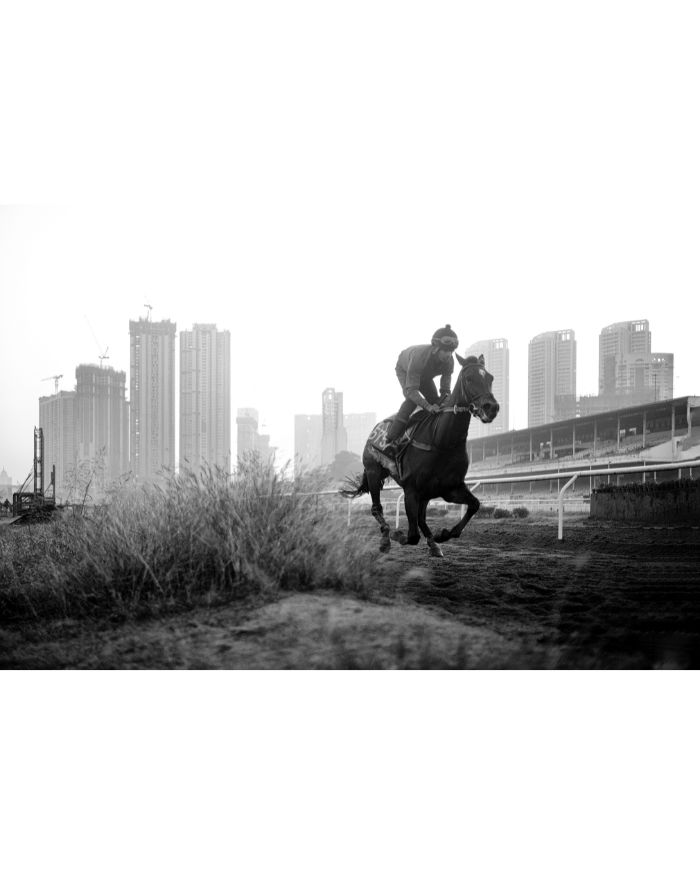
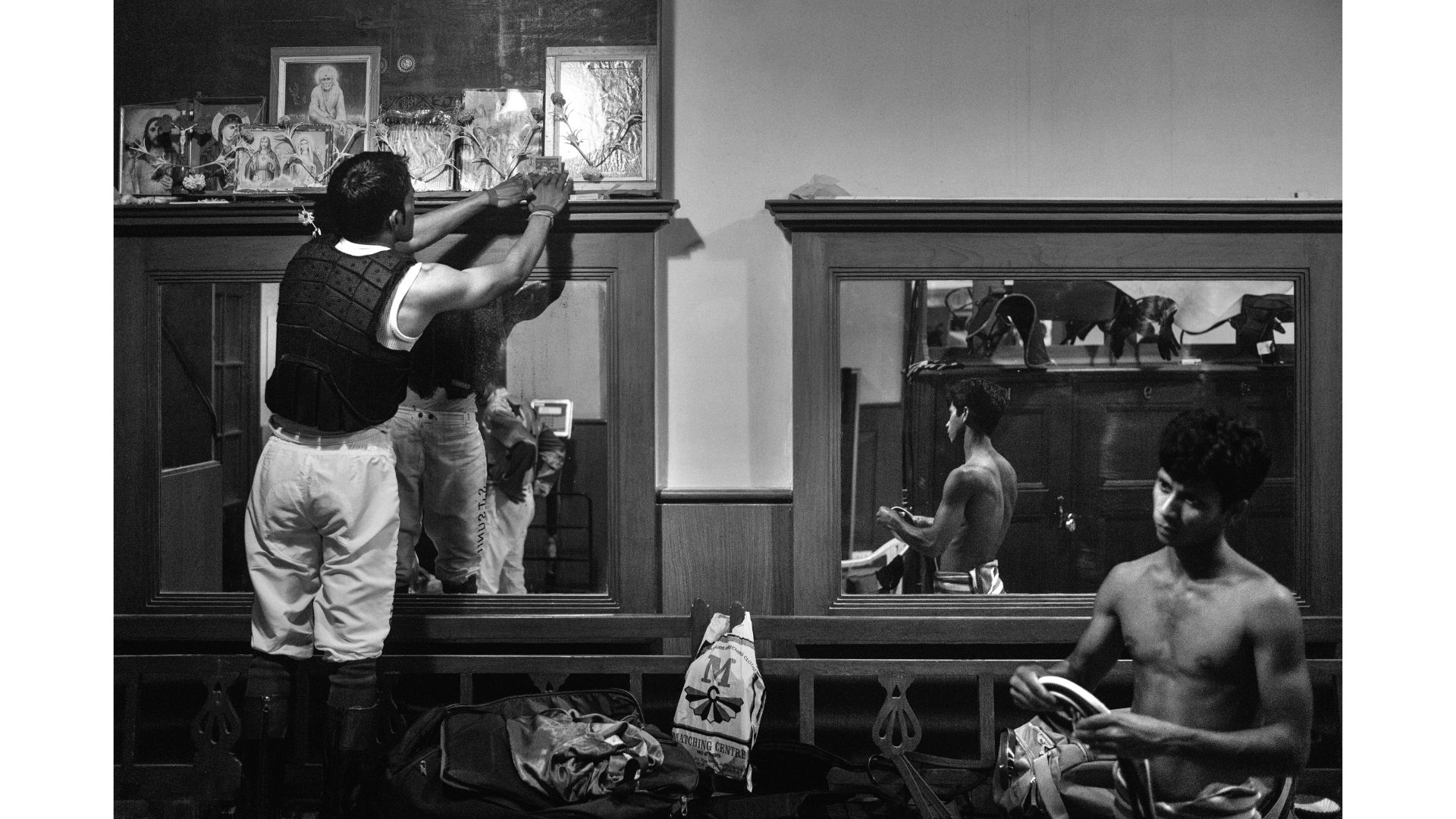
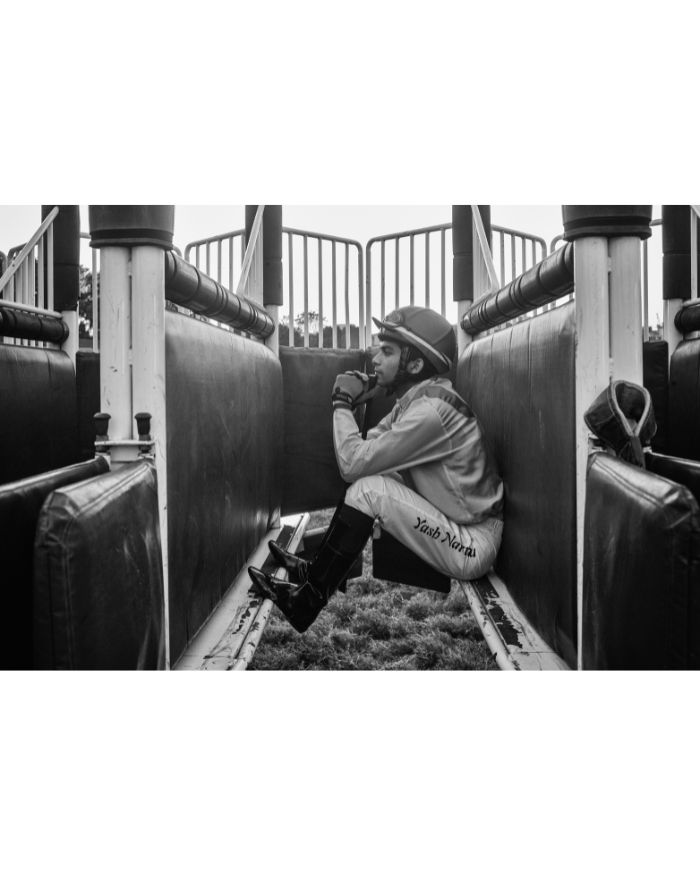
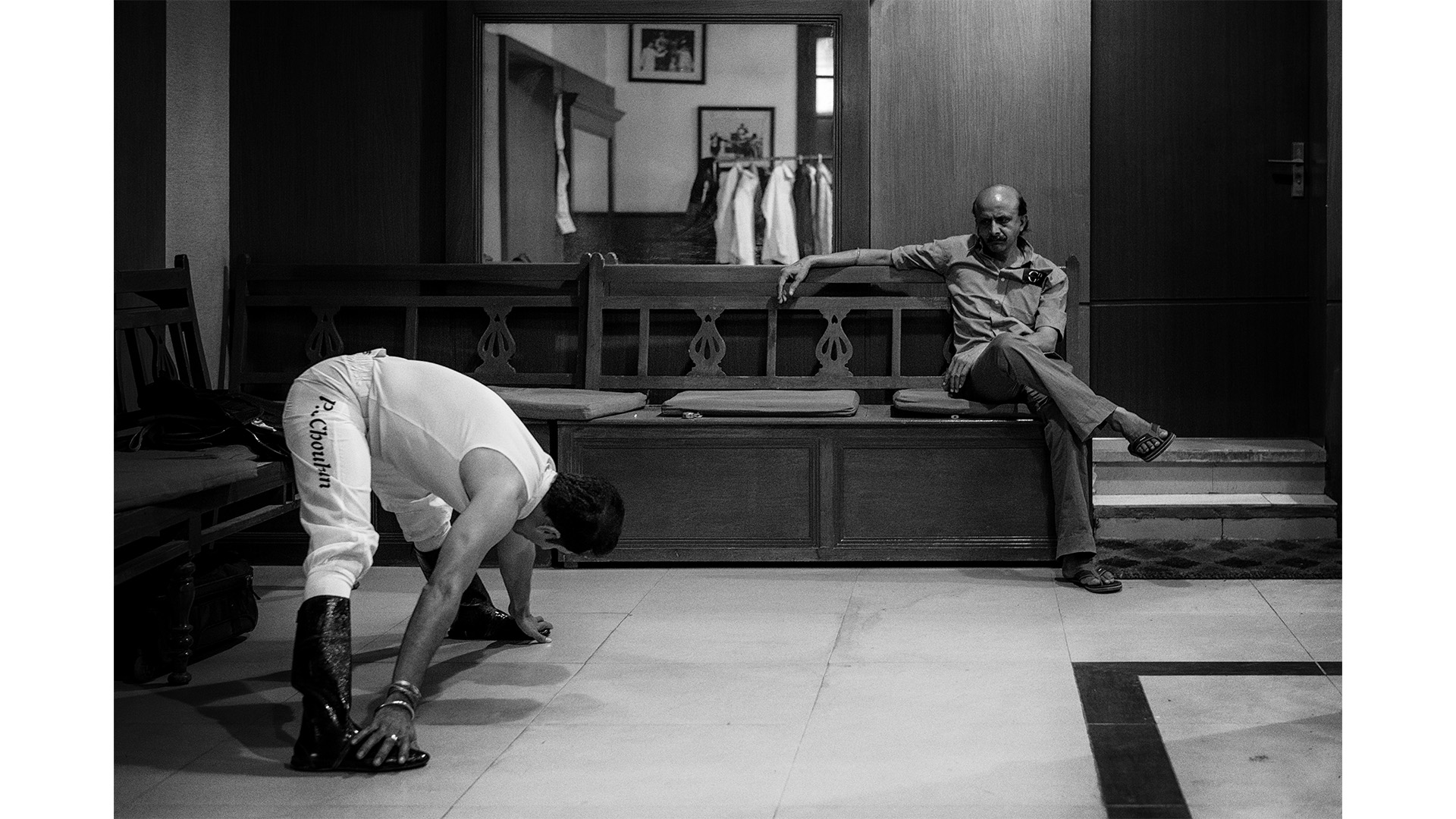
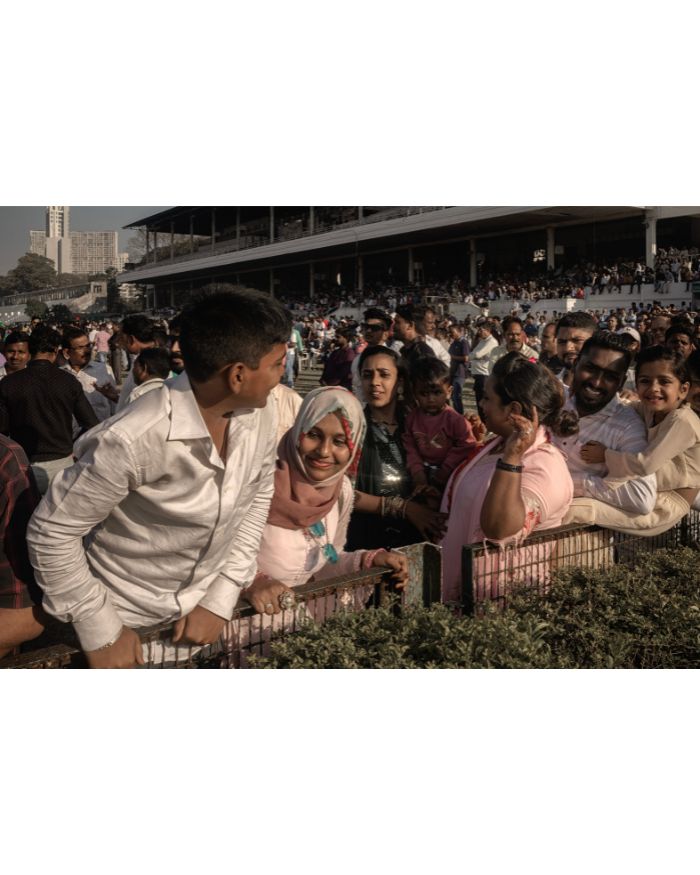
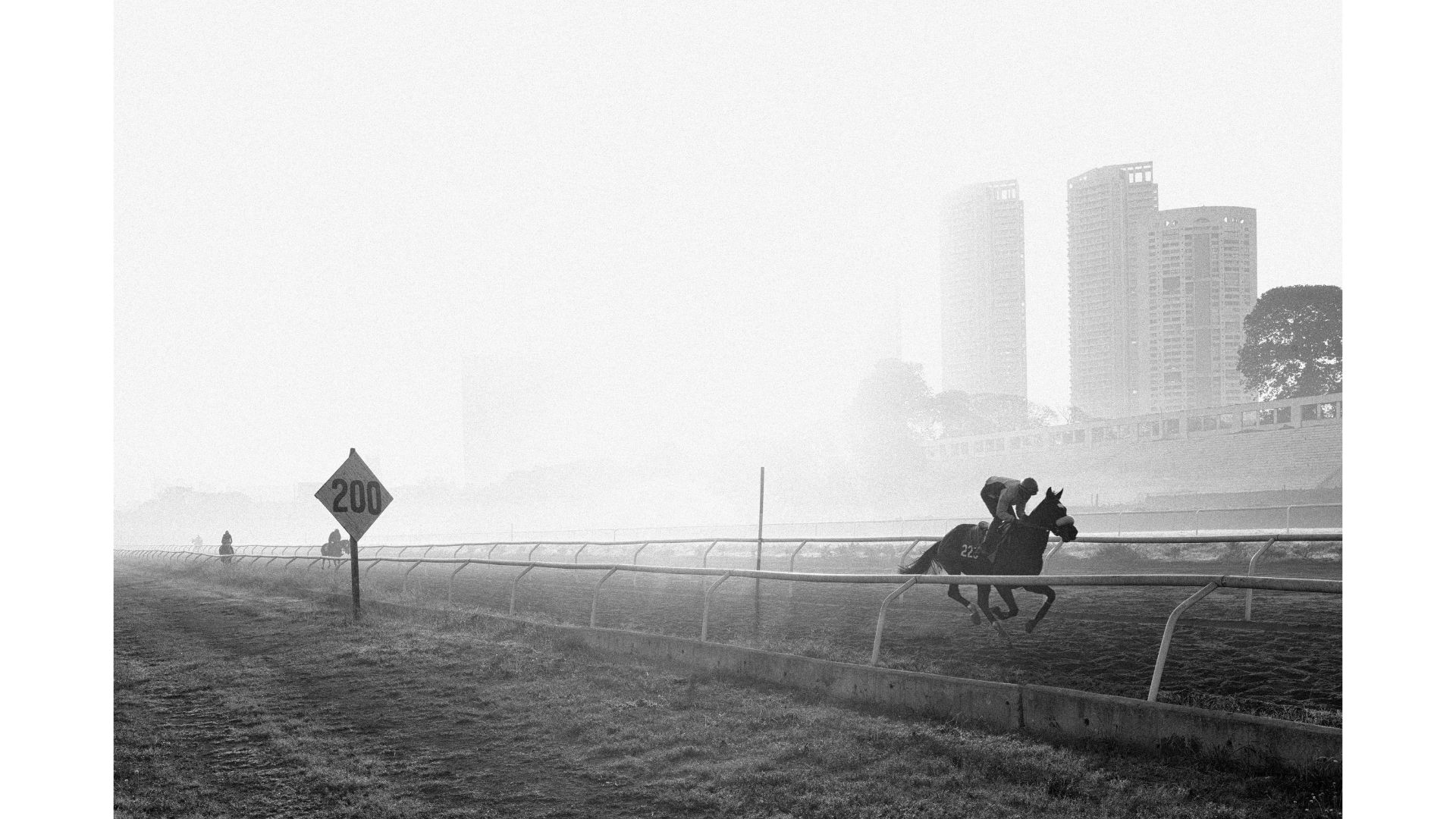
RACEDAY settles on a single site, the Mahalaxmi Racecourse, allowing the city to be read through it. Across its pages lies a documentation of the racecourse over a decade, moving with the honest looseness of observation, taking you behind the scenes of Mumbai’s racing culture like a fly on the wall. This “purposeless” wandering is a distinct characteristic of how Sunhil captures Mumbai, “aimless, devoid of any time frame and broadly without agenda. Essentially, it is to understand where I am.”

“I think at the end of the day, the broad question that I hope the book raises is what is sacred in a city that is developing at the speed that it is”

Photograph by Sunhil Sippy

DUAL LIFE OF THE RACECOURSE

For many in the city, the racecourse remains a distant presence, glimpsed in passing and often reduced to its reputation as an elitist relic. Unlike cricket, which too has a colonial origin, horse-racing is viewed as a sport only enjoyed by the upper echelons of society. What appears as spectacle from afar is, in fact, structured by routines of labour and interdependence, sustained by a community of jockeys, trainers and stable staff. “At a racecourse, whether the racing season is on or not, horses need to be groomed, fed and trained daily, so lots of people directly and indirectly have permanent employment,” says Subhag Singh, Horse Trainer at Royal Western India Turf Club (RWITC). Through his visits, Sunhil slowly earned the trust of the community, acquiring an insider’s perspective visible in interviews such as these. Included in RACEDAY, a Gambler’s Booklet by racing enthusiast and director Shiven Surendranath brings forth the culture’s humour through its distinct colloquial language. Another pivotal essay in the book is by art curator and writer Veeranganakumari Solanki, which is an intimate, first-hand recollection that captures the temperament of racehorses and the deeply personal, often unpredictable bonds between horse and rider.

Photograph by Sunhil Sippy

BETWEEN INNOCENCE AND INTENTION

Photography, especially in a city that has long functioned as a nucleus of cultures, simultaneously coexisting and at cantankerous loggerheads, can be a lopsided assertion of ideas or a sincere search for identity. As Susan Sontag suggests, image-making is never neutral. It can edge into a form of unfairness, particularly when the community on the other side of the lens has historically been relegated to the margins. What this demands, then, is a recognition of the asymmetry embedded within the act of looking.

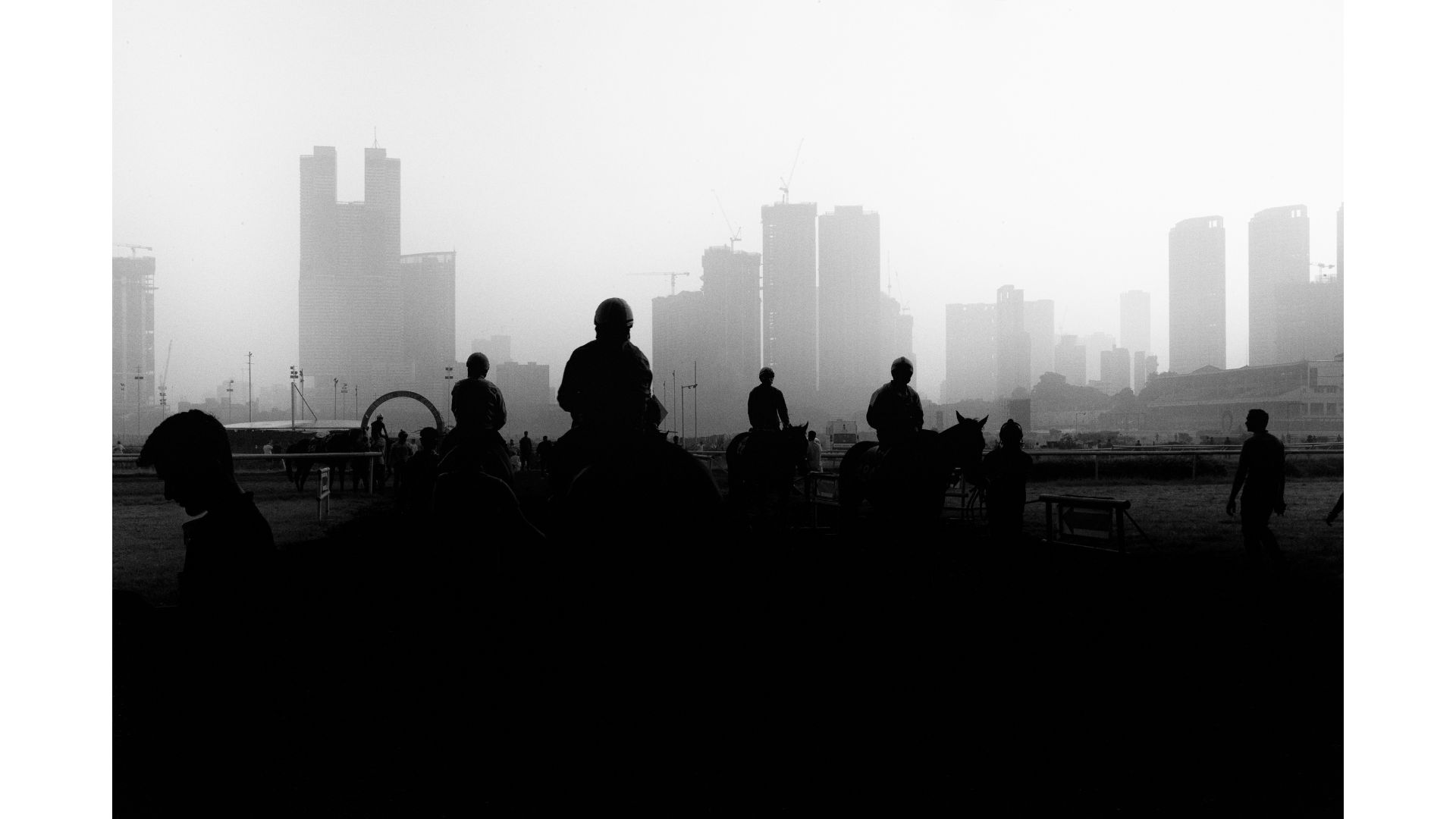
The photographs of the Mahalaxmi Racecourse and the people who orbit in and out of it, were never created with the intention of being a pre-emptive elegy of a time in the city’s history that may cease to exist. Yet in the context of today, they acquire new definitions. Once Sunhil learnt of the impending redevelopment of the racecourse, he confesses, there was a “greater intentionality — and that wasn’t necessarily a good thing.” He tells us how the earlier work carried an innocence in its lack of intentionality. Without the burden of considering where the photographs belong when he makes them, they began as a sensitive response to his environment: “It is only the passage of time that reveals its meaning.”

Photograph by Sunhil Sippy

A SPORT IN FLUX

Roland Barthes, in Camera Lucida, writes of the “studium”, the field of cultural codes through which we read images, and the “punctum”, the detail that escapes it, pricking the viewer with an intensity that cannot always be explained. In a body of work like RACEDAY, the aberration is not always locatable, but it is undeniably present: in the disparateness of the classes occupying the racecourse, how time stands still within its bounds and more. “How the punctum emerges in a body of work is up to the person consuming it,” says Sunhil, leaving room for different interpretations, “I often say what happens to my photographs is none of my business!”

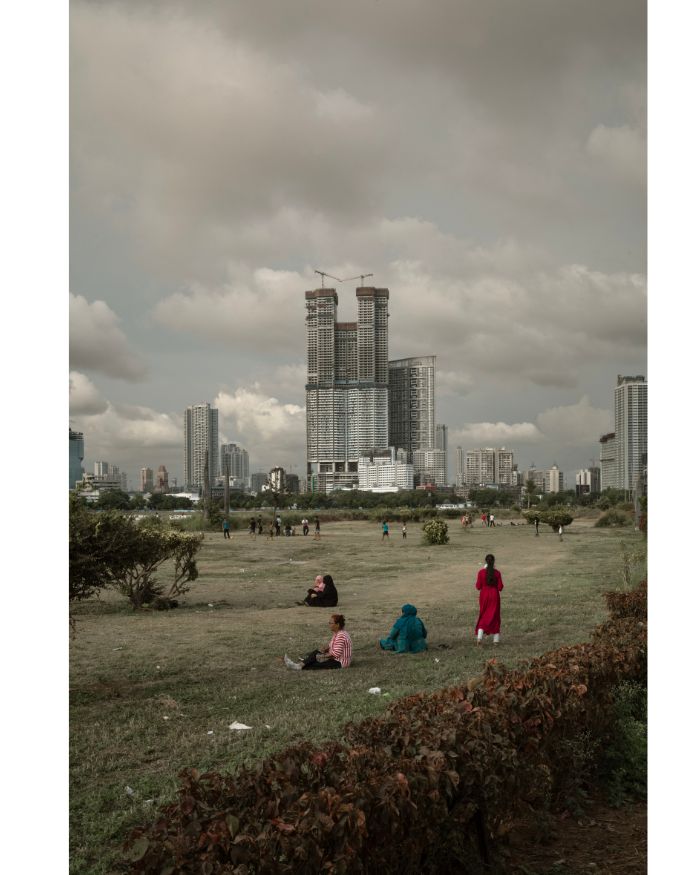
A punctum can also exist beyond the realm of the photograph, mirroring its essence in the life-world of the city. It would not be too far-fetched to relate the presence of the Mahalaxmi Racecourse itself on the map of an ever-expanding Mumbai as a punctum. Established in 1883, it occupies an unusual position within the morphology and public imagination. It has endured against all odds as an open ground, as a rarity in a city defined by spatial scarcity. This endurance, however, is far from guaranteed. Across the country, as interests shift, horse racing has faced multiple challenges. Last year, the state government of Tamil Nadu took over the Ooty Race Course after the Madras Race Club (MRC) failed to pay lease dues. It is now set to be converted into an “eco-park”. Even in larger cities like Bengaluru, there is talk of shifting the historic racecourse from the central Bengaluru Turf Club to the outskirts.

These developments point not only to the decline of a sport but to a renegotiation of how land is valued and repurposed, especially as the Brihanmumbai Municipal Corporation (BMC) is set to acquire 120 acres of the Mahalaxmi Racecourse for the development of a central park. More than a question of land-use, it is a debate of the typology of spaces that are allowed to exist in a city amidst constant reshuffling. As the sport of horse-racing evolves, so does Mumbai’s relationship with fleeting shared memories; what we choose to remember inevitably becomes an act of resistance. Sunhil says, “I think at the end of the day, the broad question that I hope the book raises is what is sacred in a city that is developing at the speed that it is. Is anything really sacred anymore?”

RACEDAY is published by PICTOR and designed by Zeenat Kulavoor and her team at Bombay Duck Designs.

Find more photographs by Sunhil Sippy in this next read: The elusive Marble Palace in Kolkata opens its doors to be documented for first time

Photograph by Sunhil Sippy
SHARE THIS ARTICLE

You May Also Like

Watch

No results found.

Search
Close this search box.