
Over time, a home begins to gather parts of your life. A fridge slowly fills up with magnets from our travels, books stack up on a shelf, plants grow as we tend to them, corners gradually fill up, and the home starts to feel distinctly our own.
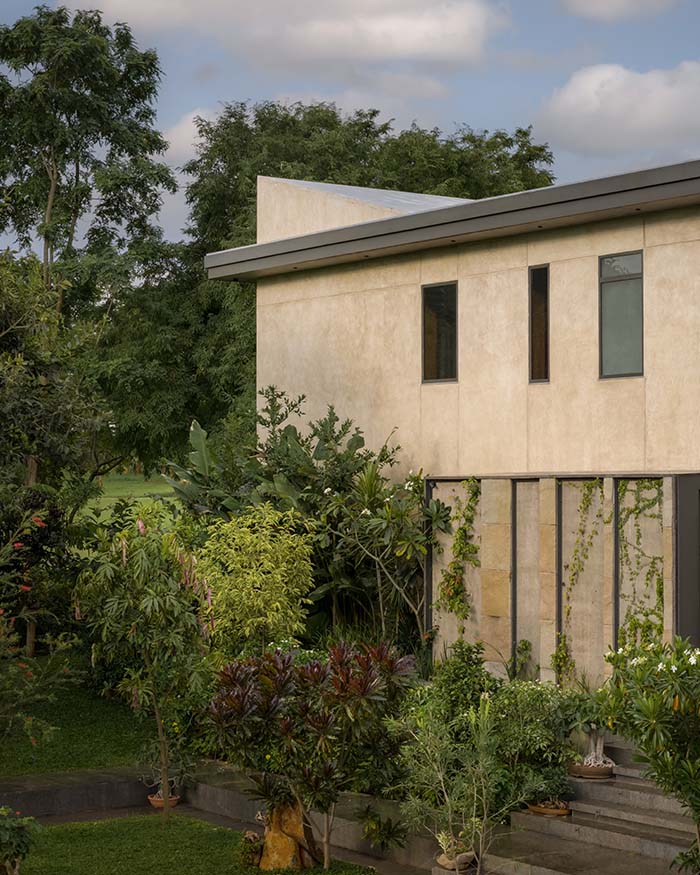
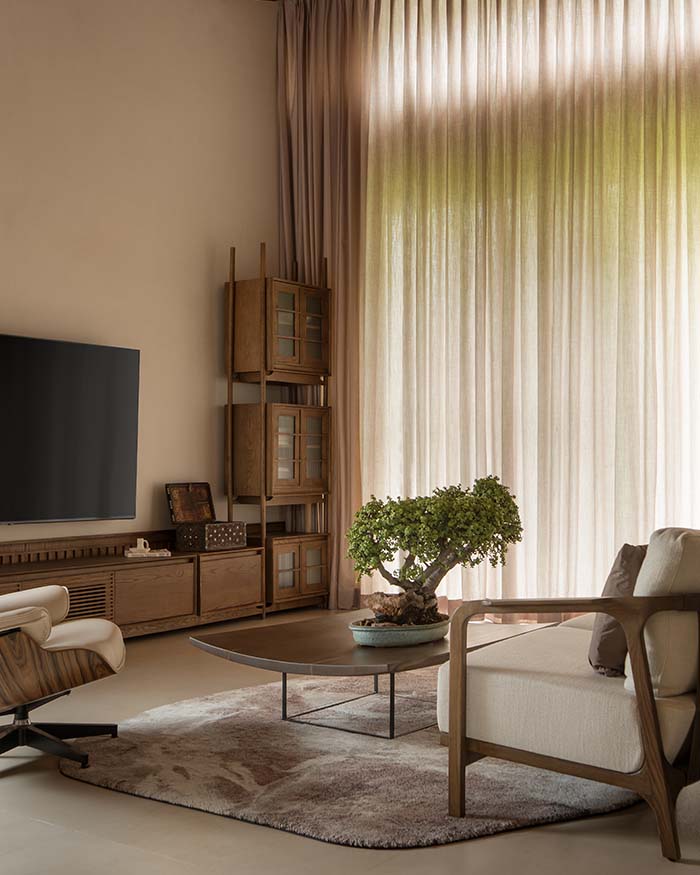
At Sandstone House, set along the edge of a golf course in Bengaluru, this version of life is materialised by the team at 4Brick Studio for a couple of doctors seeking respite from the pace of everyday lives. Leaning into a slower, more restorative rhythm, the central courtyard anchors the home, where returning feels easy. Around it, the home holds on to what the family brings along: bonsais tended over decades, artefacts collected across travels and materials that seem to be chosen not only for how they appear now, but also for how they will age, over time.
“The design grows from the homeowners’ layered interest, their love for travel, nature, art and for collecting objects that remind them of places and moments"
- Vandana Taluru
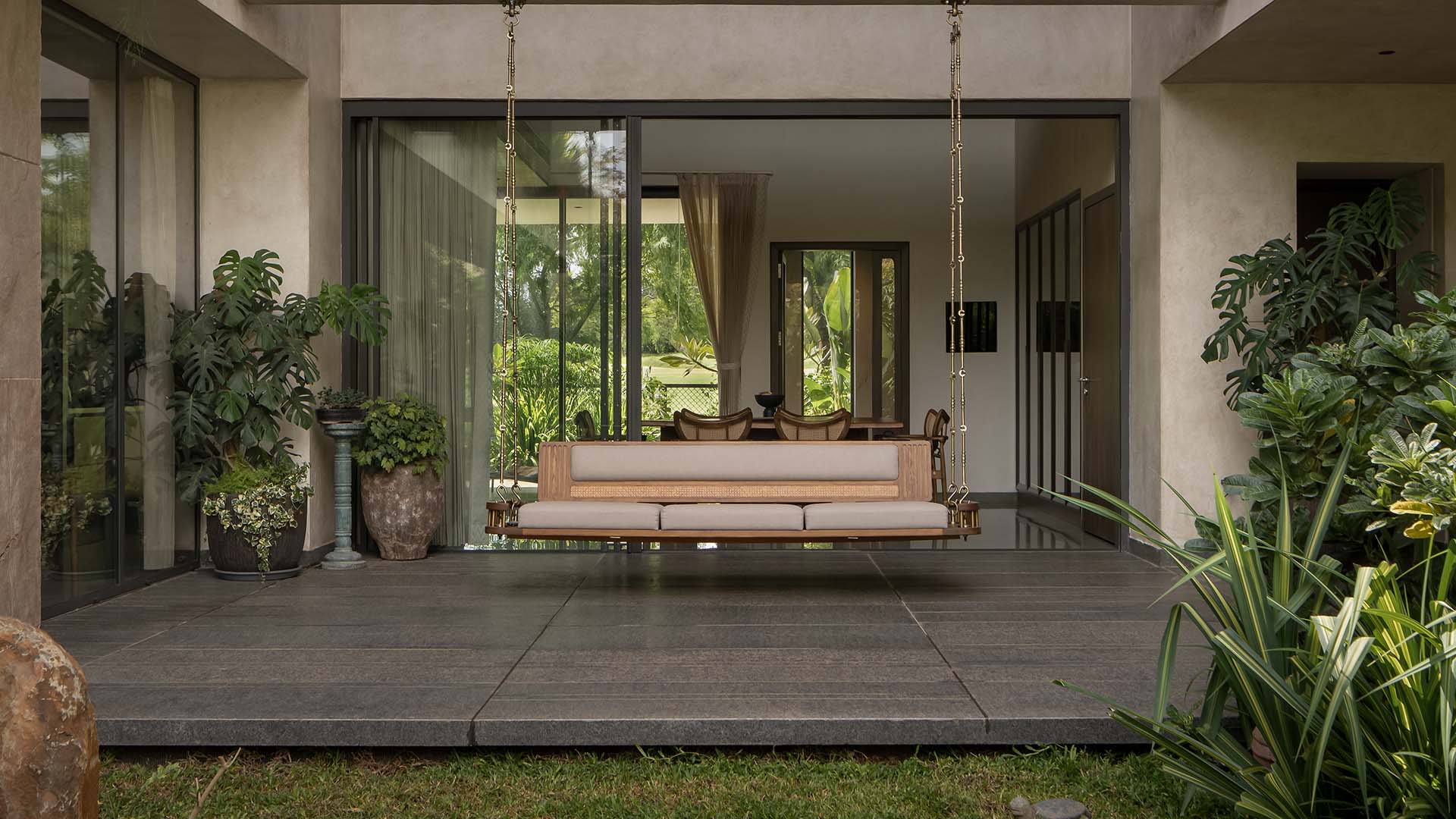
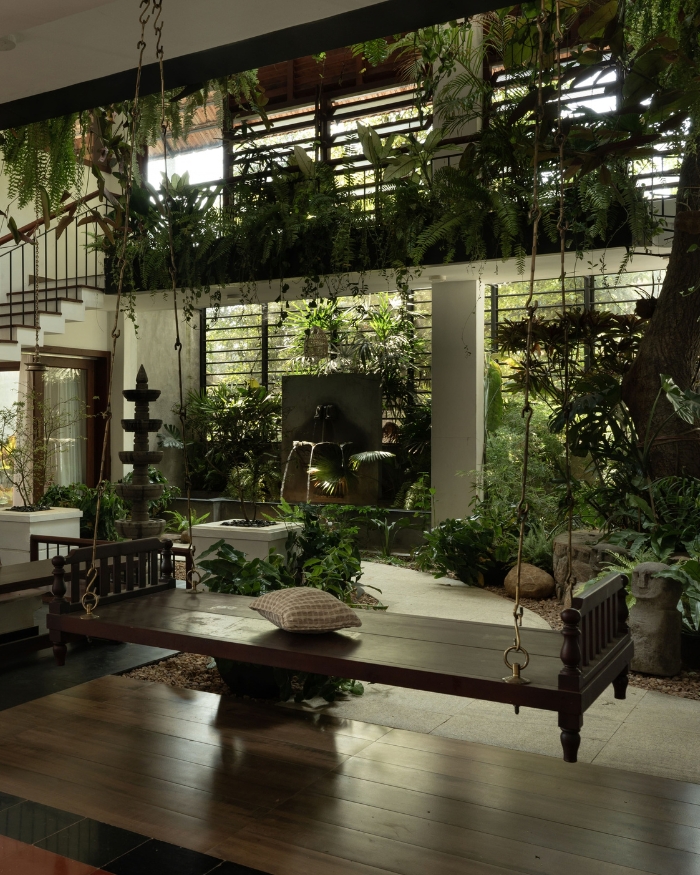
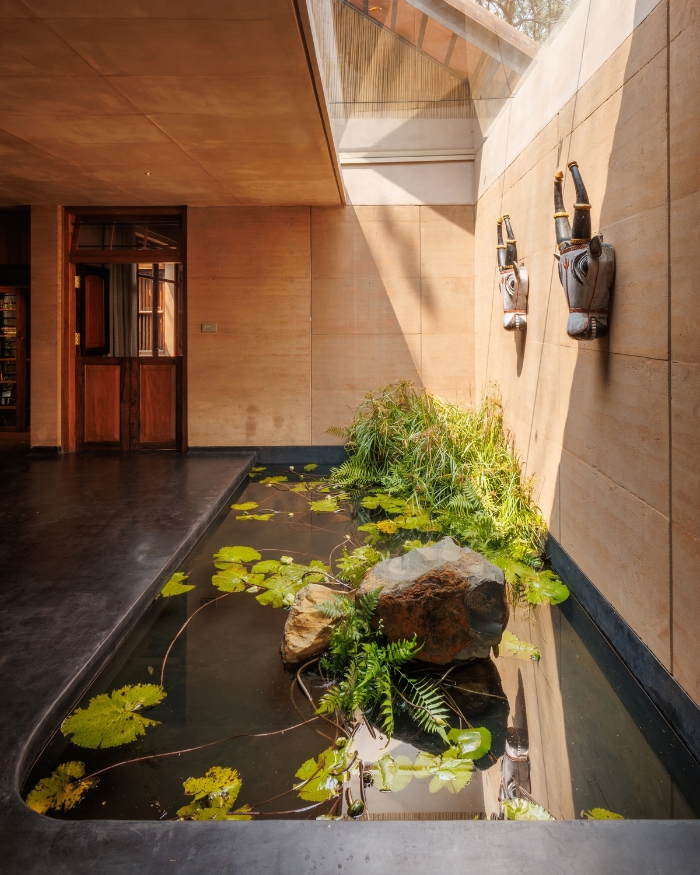
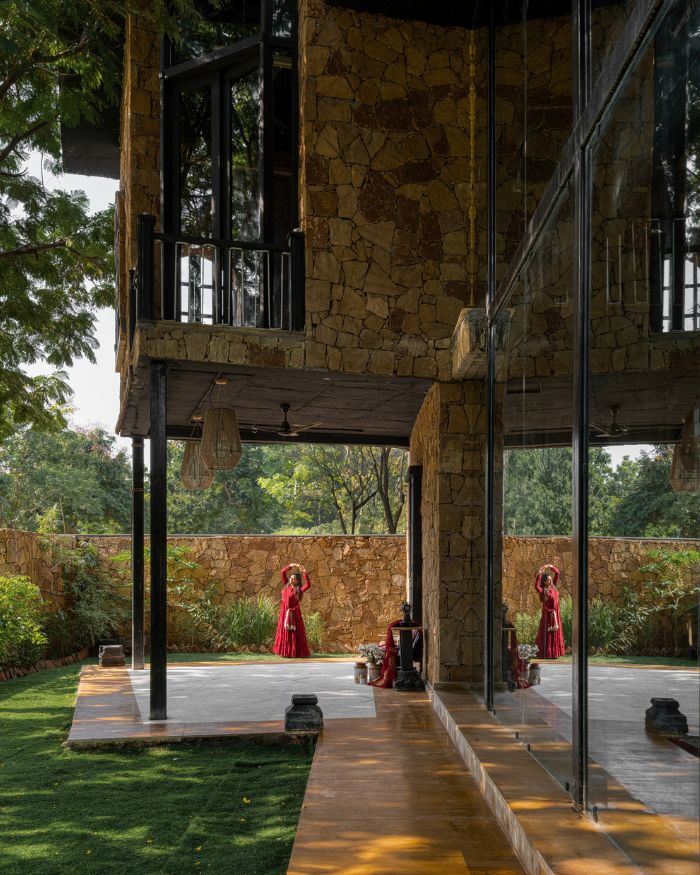
At the centre is the courtyard, open to the sky, drawing light and air into the home through the day. The living and dining spaces sit around it, extending outward toward an outdoor bar and an upper-level terrace that looks back into it. On one side, the house looks inward into this open core and on the other, it stretches out towards the golf course. Many older homes across Karnataka, like the Thotti Mane and Ain Mane, follow a similar approach, with courtyards forming the nexus of daily life, where light, air and everyday activity come together in one place. That sense of use carries through here as well. Because of this, the house stays open in a natural way.
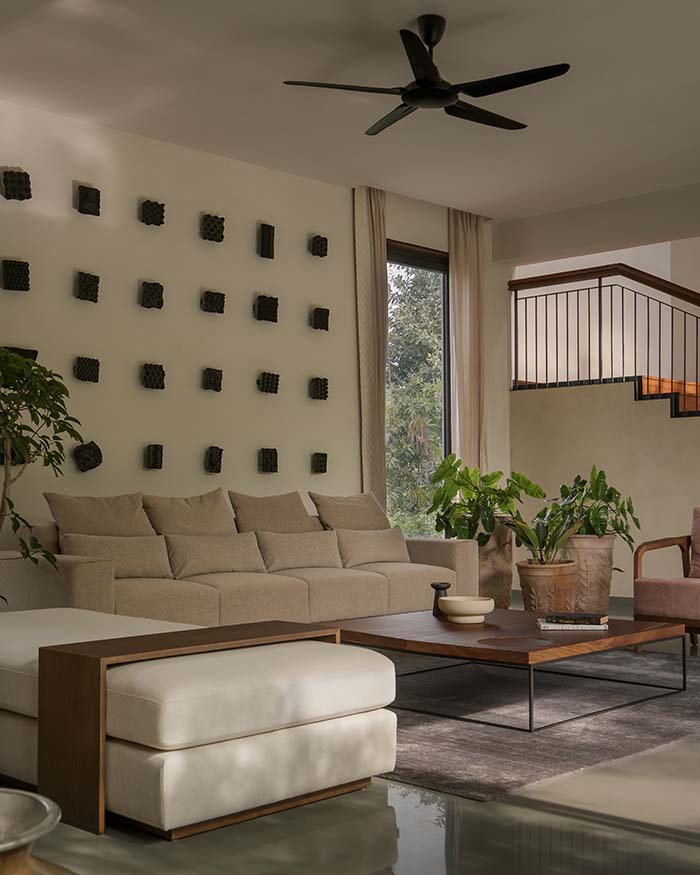
Light travels from the courtyard and into the surrounding rooms, while large openings keep air circulating and views constantly present. The sandstone walls bring in solidity, while glass keeps the spaces from feeling closed in. It’s this balance that defines the house; it feels open and connected to its surroundings, but still able to hold quieter, more private moments within.
“The design grows from the homeowners’ layered interest, their love for travel, nature, art and for collecting objects that remind them of places and moments. It is conceived as a home that holds their collections and memories, opens to the landscape and breathes with light and air,” shares Vandana Taluru, Principal Architect at 4Brick Studio.
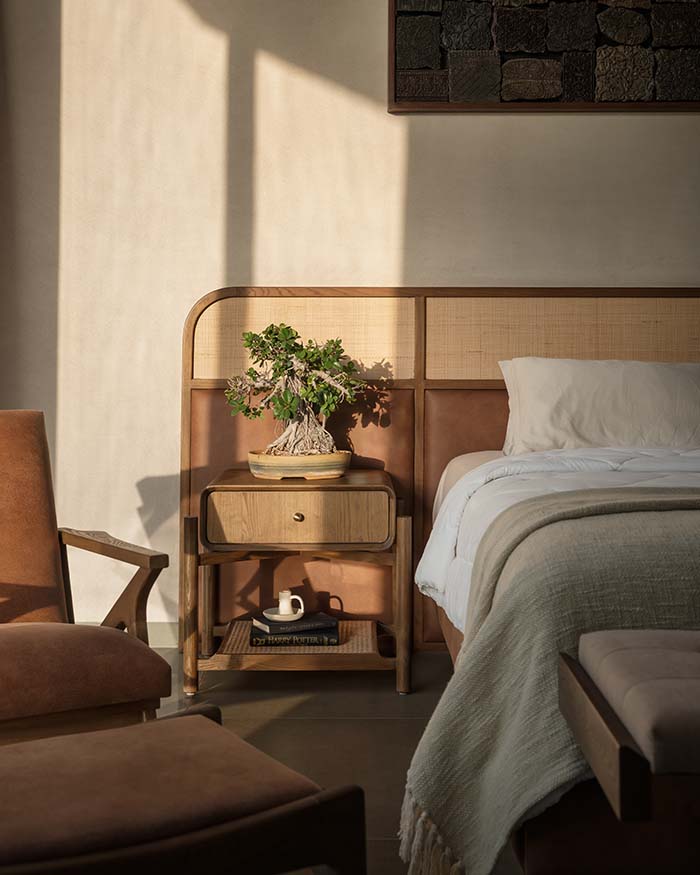
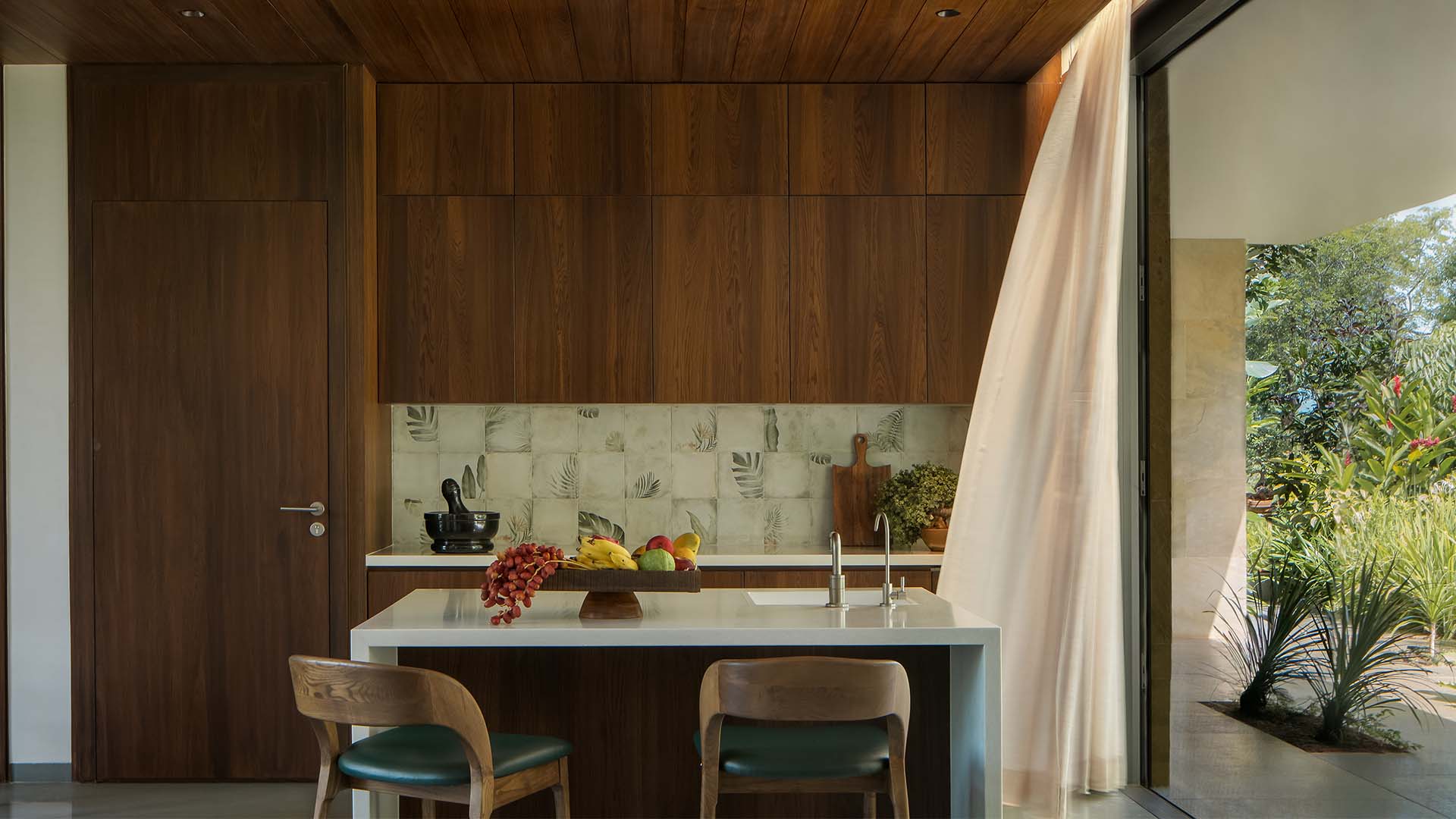
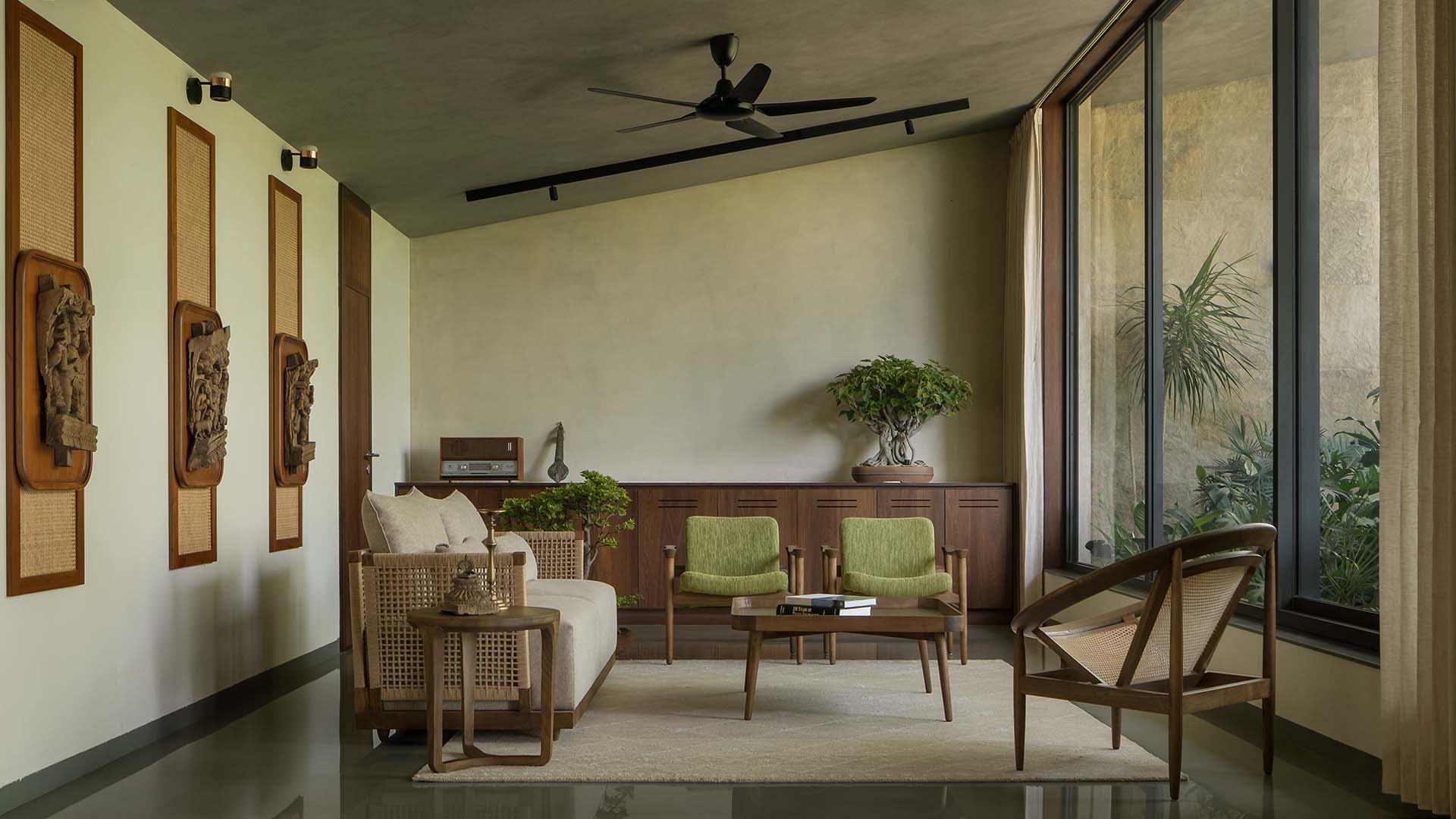
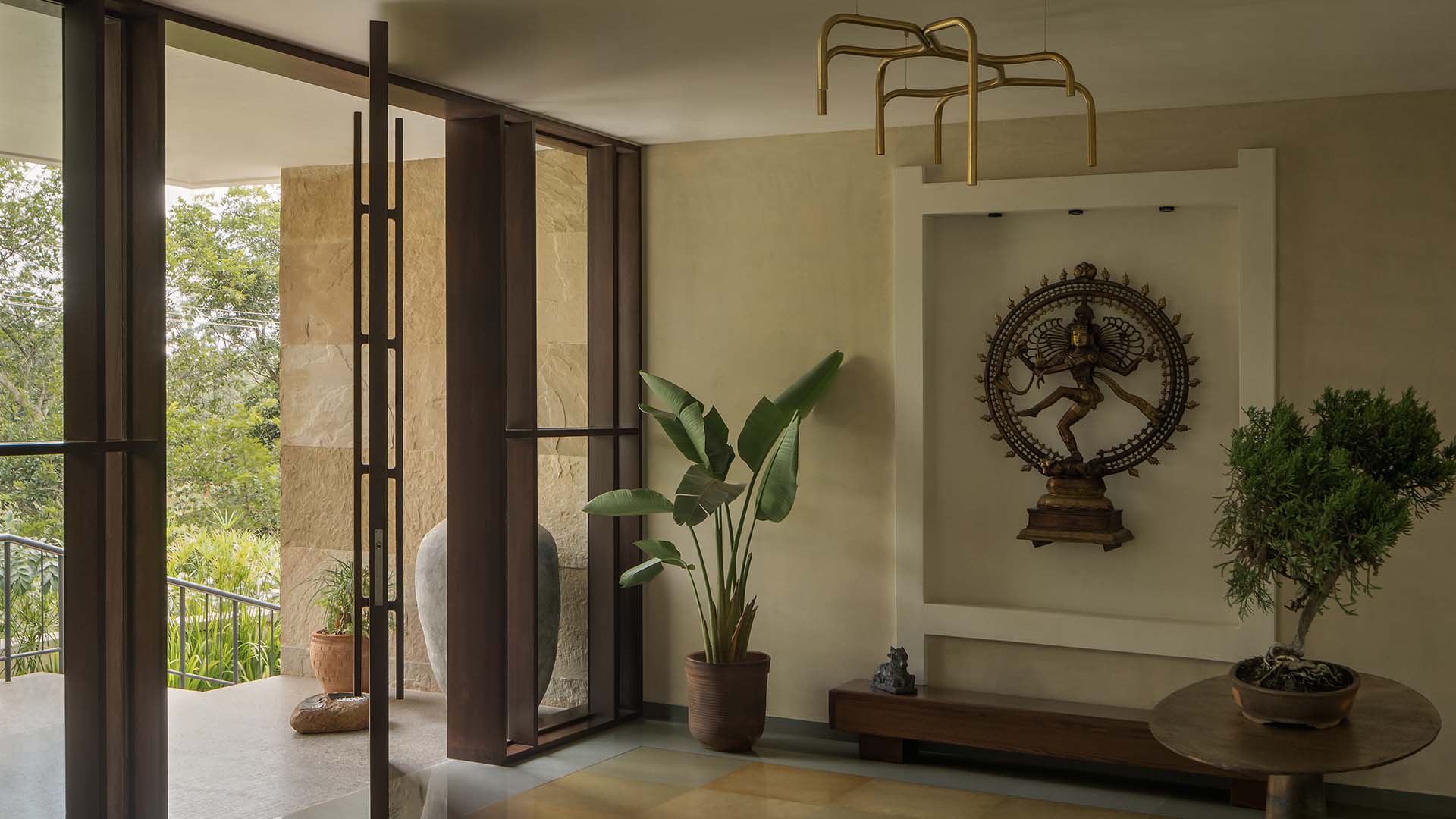
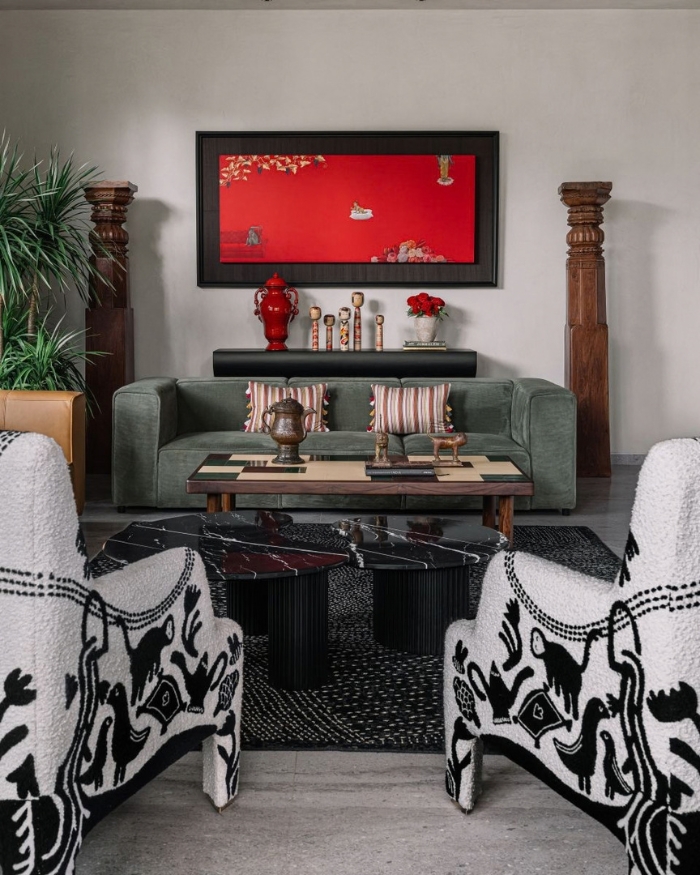
Such bits and pieces from their lives become bones of space. At the entrance, two earthen pots mark the threshold. In the foyer, a juniper bonsai sits on a brass table under a Hatsu chandelier, alongside a framed Nataraja set into a wall niche, all held together by dual-toned Kota stone flooring. In the living room, fragments of a pre-independence wooden chariot and weathered wooden printing blocks are set directly into the wall surfaces, becoming part of how the stone and lime plaster are read rather than separate pieces. Large openings connect the room to the courtyard, keeping greenery in constant view. In the bedroom suite, a 200-year-old wooden chest from 19th-century Lahore is placed within a custom unit and left open, used as part of daily living.
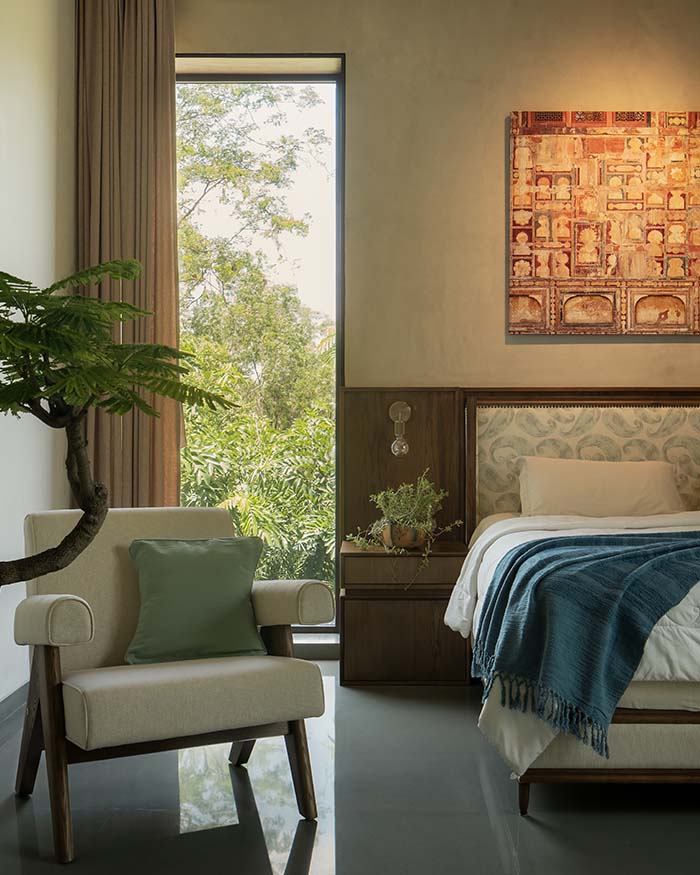
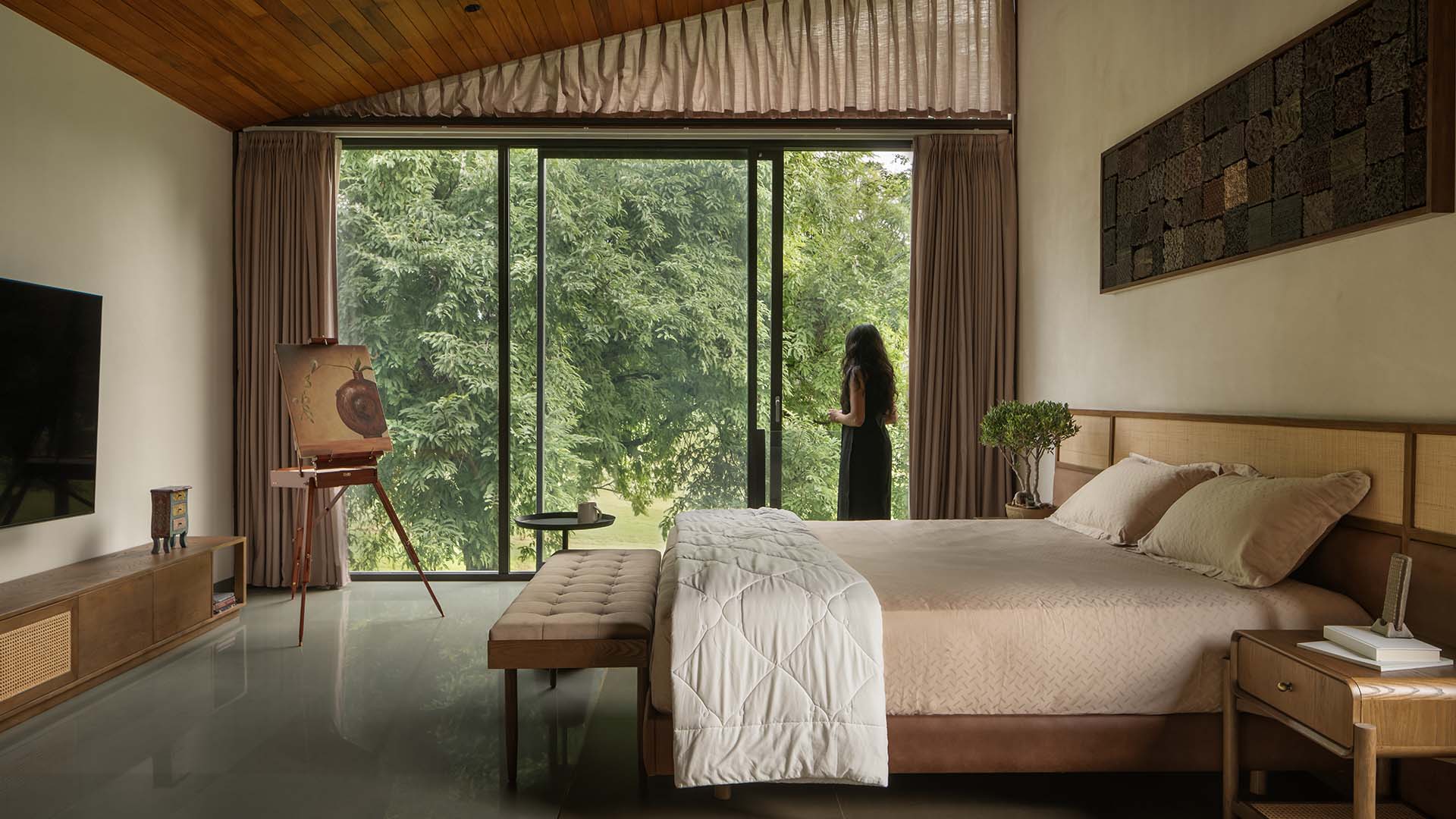
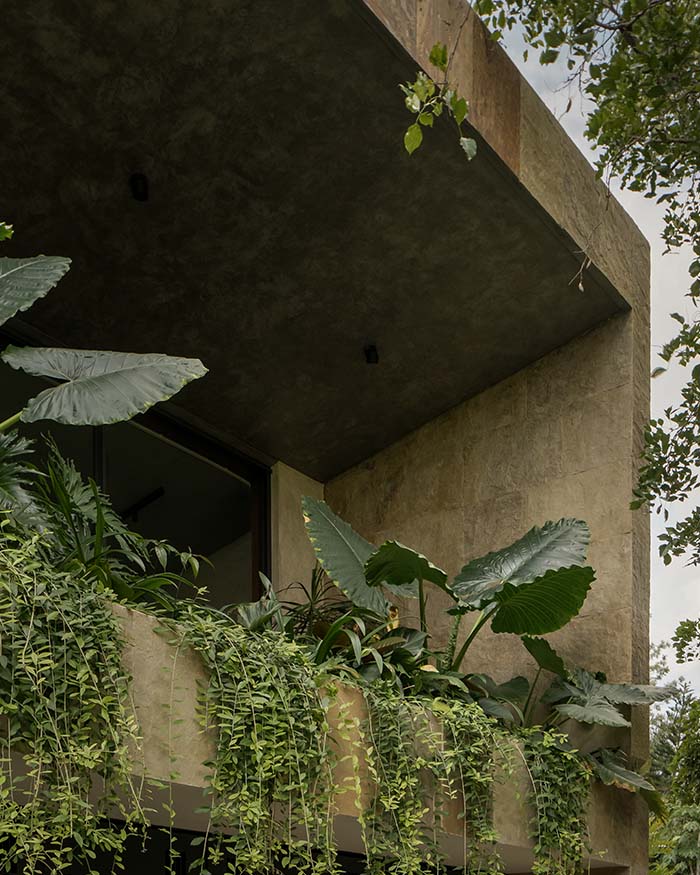
On a trip to Jaipur, Vandana and the homeowners came across sandstone in a quarry that had been left unused because of its uneven surface. Drawn to its uneven surface and variation, they decided against polishing it. This stone is now used across the home, forming its outer skin — hand-chipped, textured and left close to its roots. They had spent nearly two decades caring for and collecting bonsai, along with collecting antiques and artefacts during their travels, each carrying its own story. There is a dedicated terrace garden where the bonsais are kept and maintained. From there, they continue into other parts of the home — terraces, corridors, and living spaces — so they appear at different points as you move through the house.
There’s something familiar about the way the house holds itself. It settles around you as you move through. One’s movement keeps returning to a central open space, while the rooms are loosely held together by what sits between them.
Read more: Studio KE Architects layers Indian craft and Art Deco geometry in a Mumbai home

No results found.