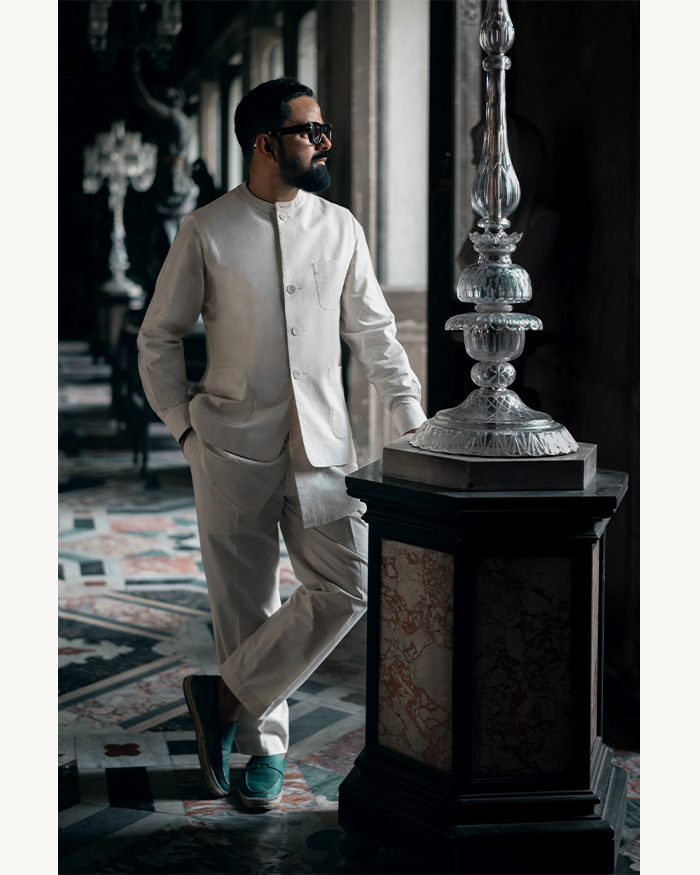

For interior designer Ali Baldiwala, the past is always lurking around the corner. Walls strive to peel back the layers of time, gilded mirrors hint at elongated perspectives and herringbone floors seem to be plucked from a crumbling masseria in the Tuscan countryside surrounded by vineyards. Entwining Late Baroque and Italian Renaissance influences, Ali of his firm Baldiwala Edge imagined this 2,000 sq ft vacation home in Lonavala amidst a soothingly bucolic setting. Dubbed La Dolce Villa, the home’s views are swaddled by the densely wooded Sahyadri range.
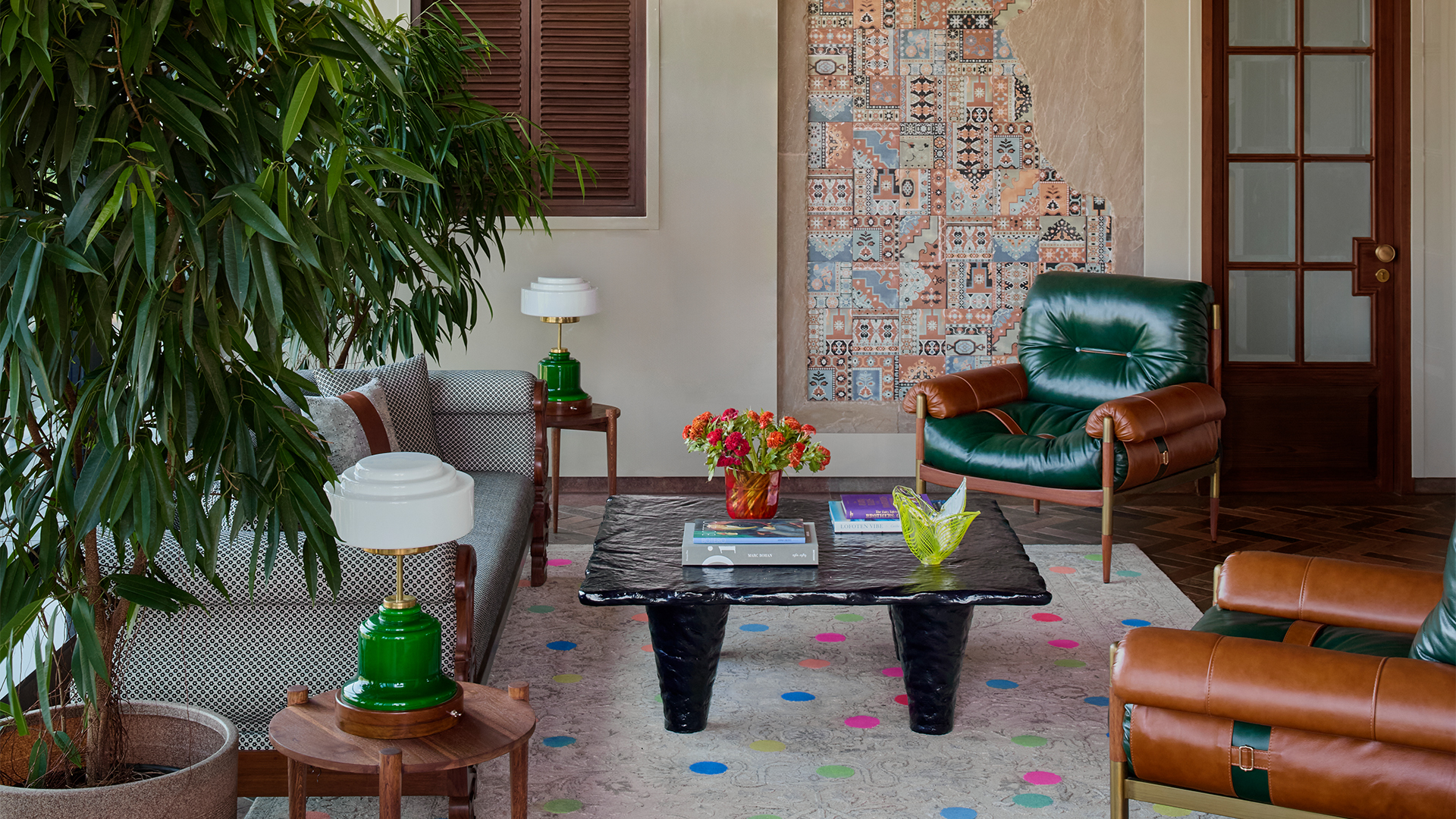
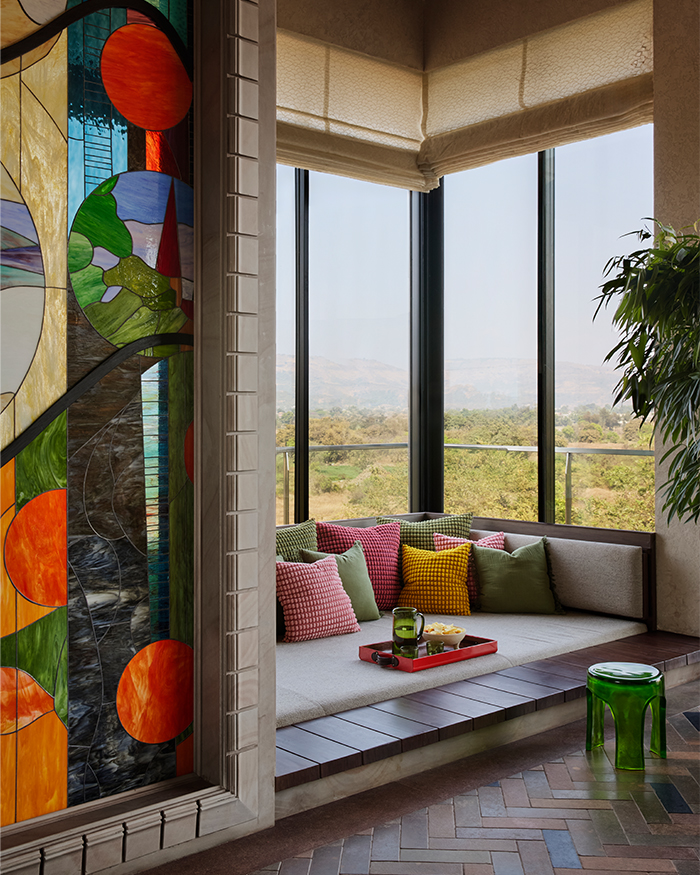
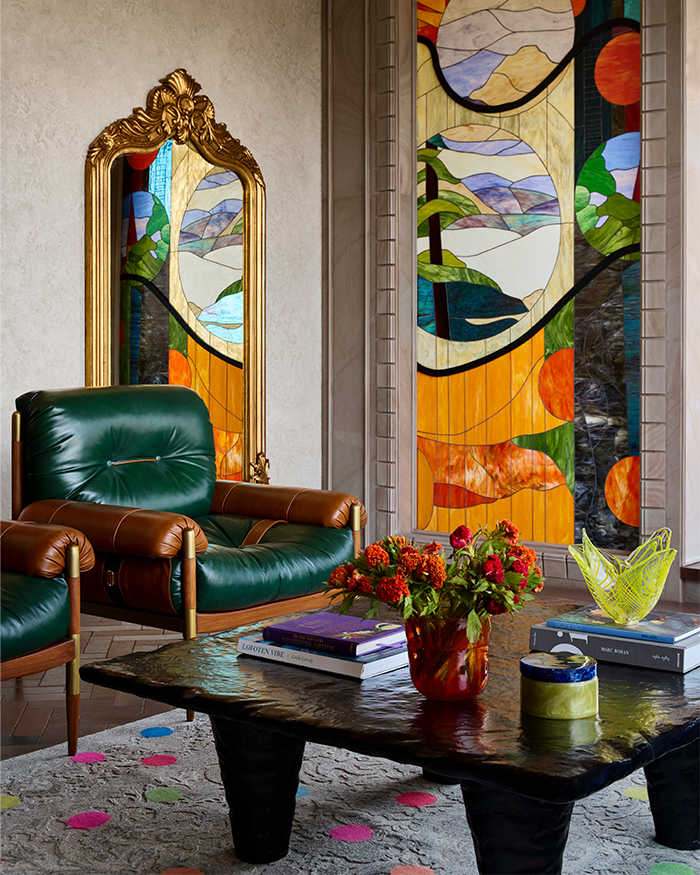
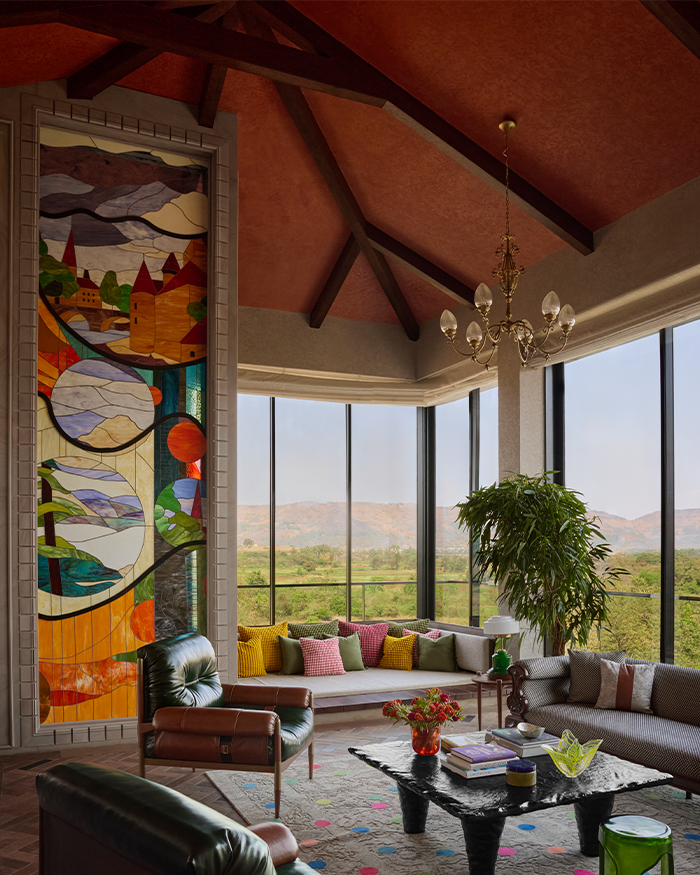
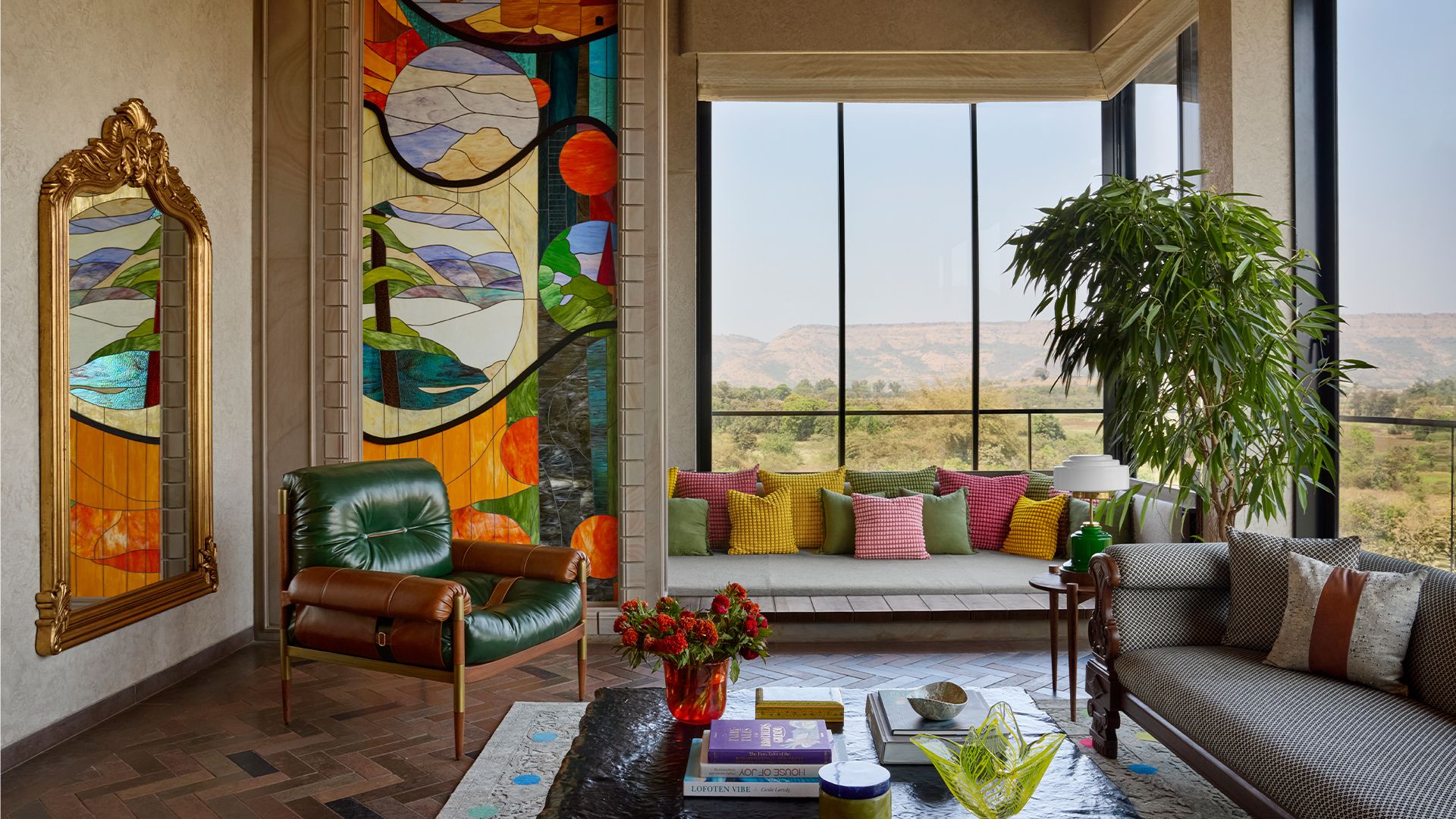
Of the various annexes originally intended to serve as vantage points, the family den is the most unusual. “This room is a meditative zone brimming with textures,” says Ali, gesturing toward the low-slung pitched ceilings, a gadda-style nook, and heaps of natural light gushing in through traditional bay windows.
There’s no missing the colossal 20-foot stained-glass mural that presides over the mise-en-scène like a historical artefact. The effect is grand and beautifully hypnotic, as though the neo-Gothic windows of Sagrada Família had been reincarnated, for which Ali spent more than a month and a half painstakingly experimenting with buttery yellows, fiery reds, swathes of forest green, and iridescent blues.
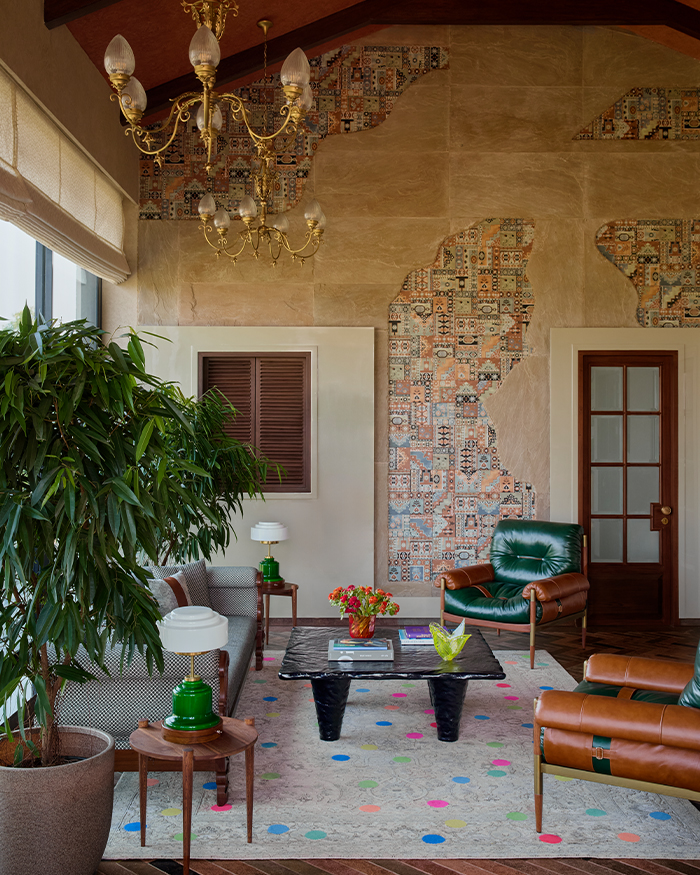
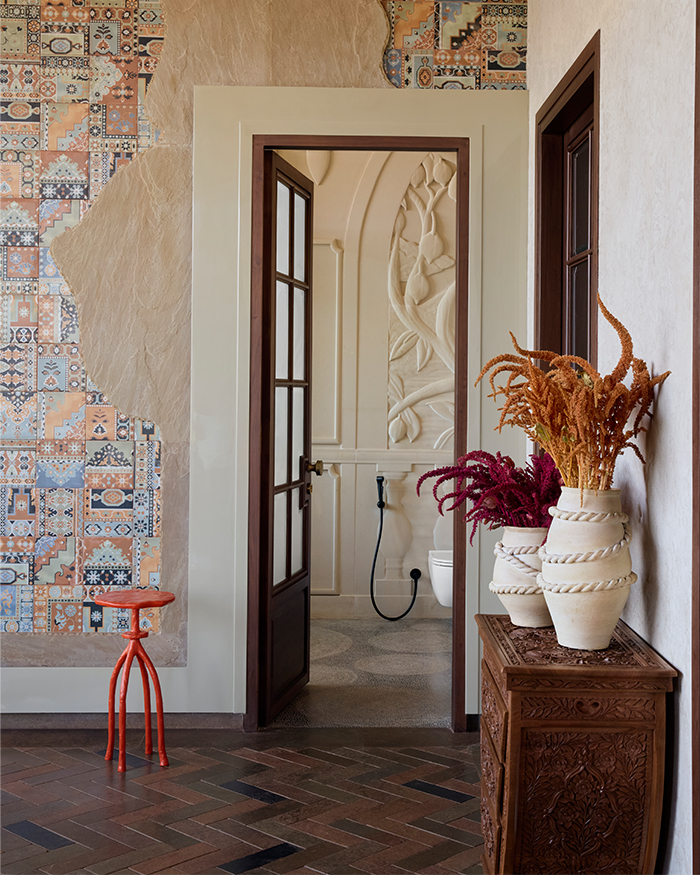
Layered history holds an almost sacred place in the den; Ali purposefully chipped away portions of the natural buff sandstone walls to reveal intricately patterned Mediterranean tiles underneath. 1960s Brazilian Brutalist leather chairs with brass and wood details “awaken a moody, members’ club setting.” Rustic farmhouse chandeliers swing lazily overhead.
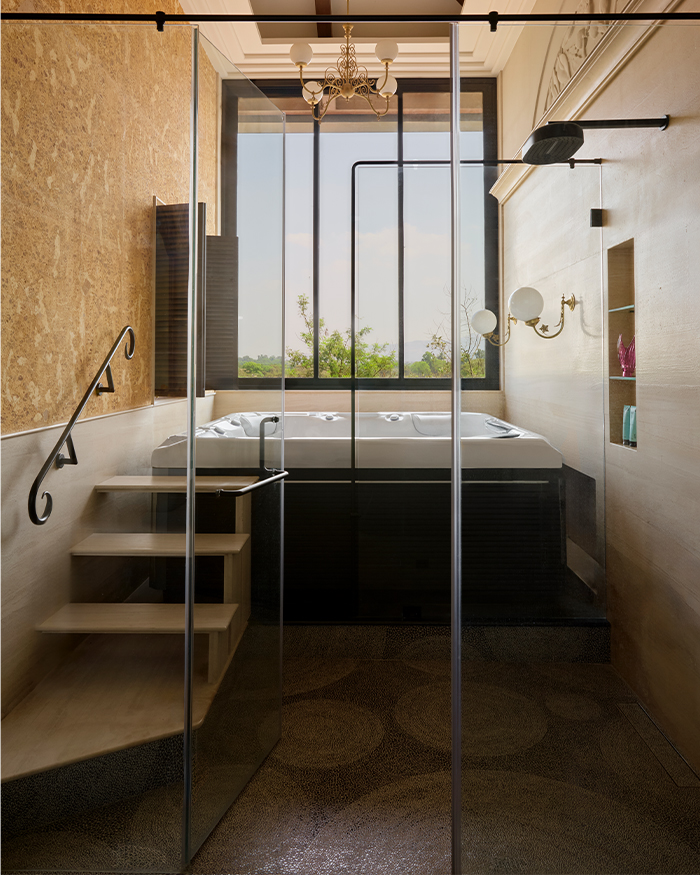
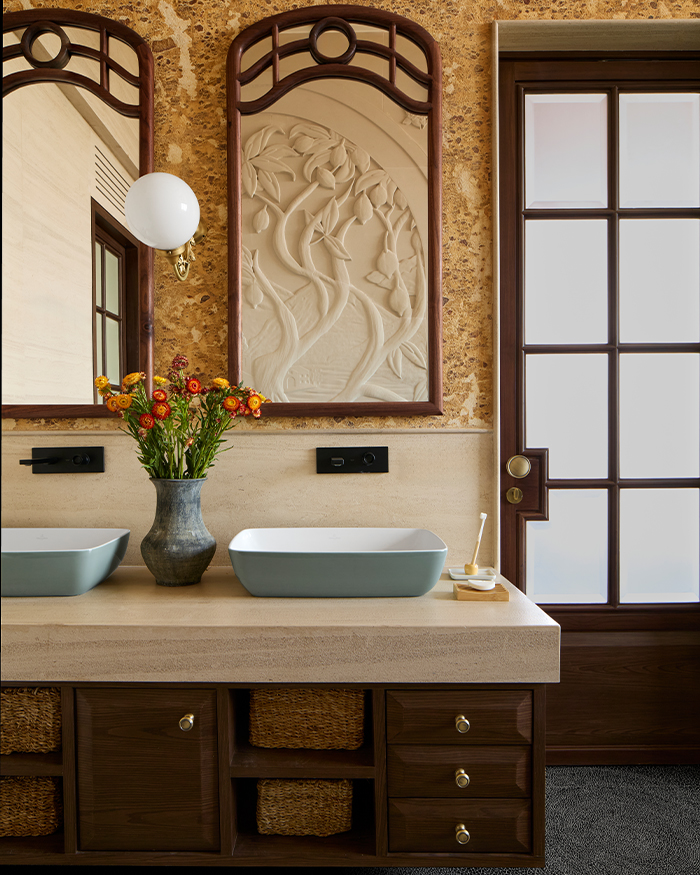
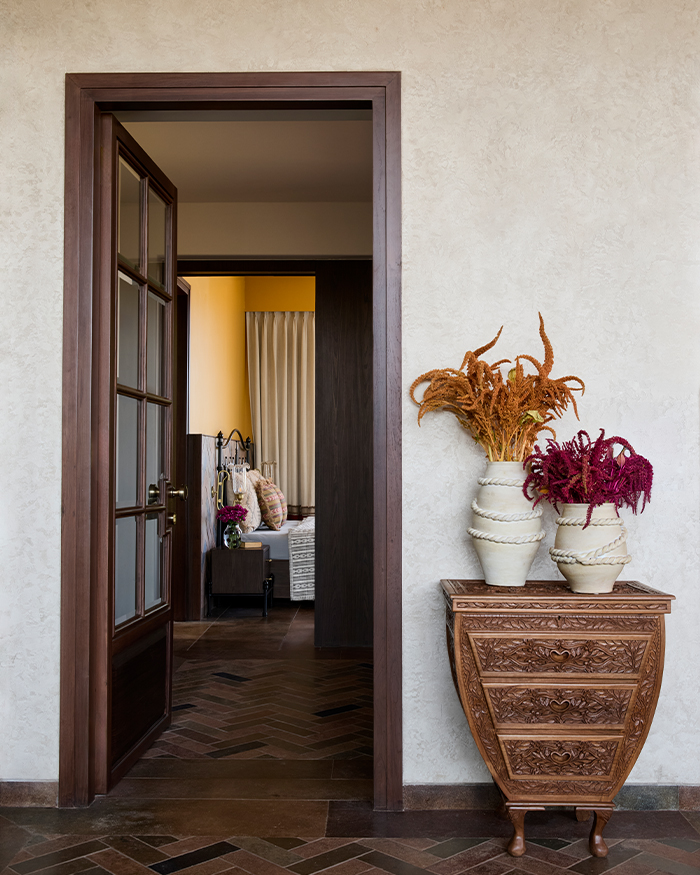
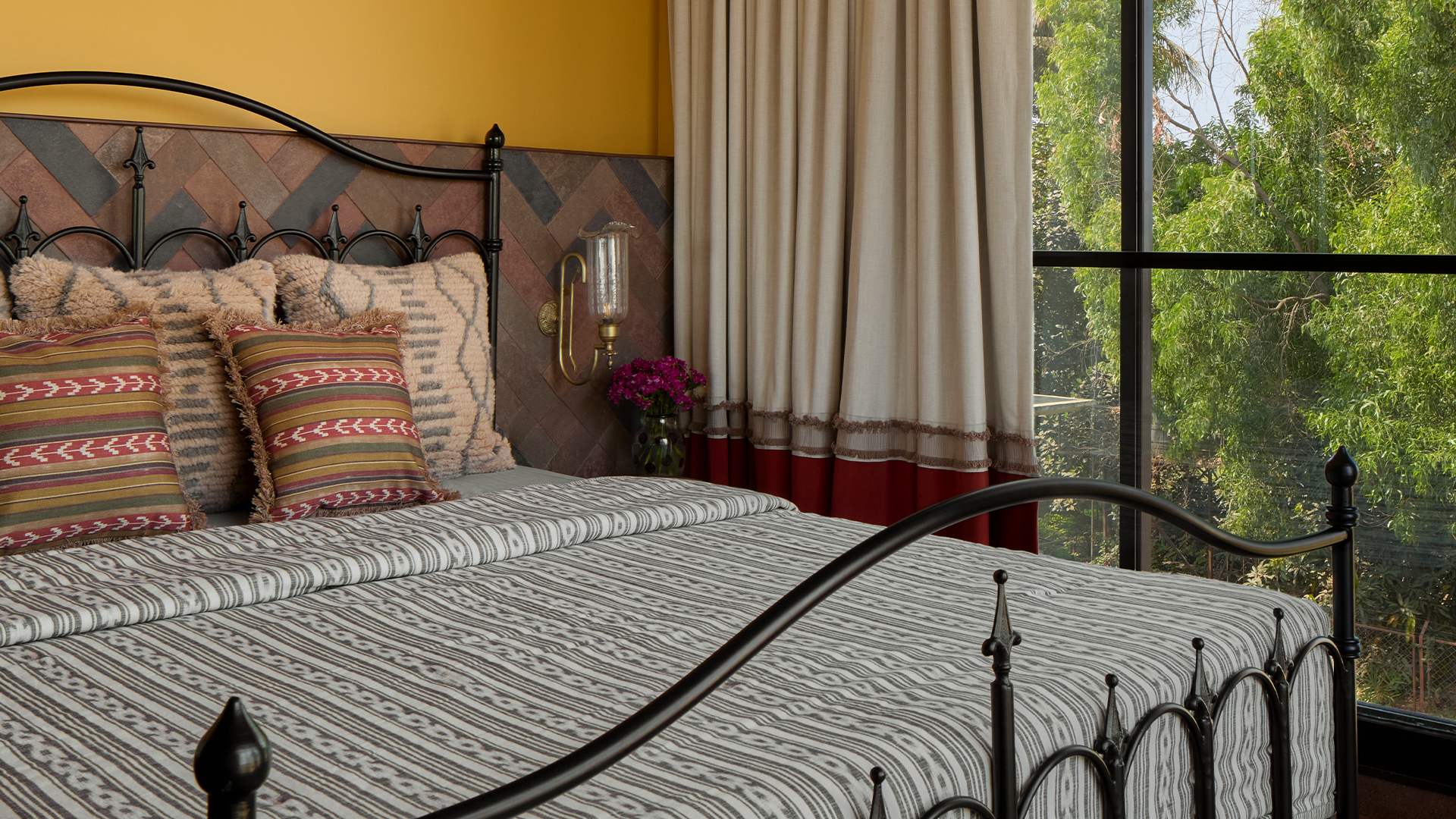
The décor in the master bedroom is a scrapbook of cross-cultural memories. The wrought-iron bed coexists harmoniously alongside a warm mustard-toned wall, recalling Andalusian summers of waterfront palazzos and sun-drenched coastlines. In the capacious 200 sq. ft. master bathroom, a sinewy lemon grove mural carved into a mint sandstone wall strives to take centre stage. Submerged in the hot tub, with a bewildering panorama of mountains undulating below, you could be forgiven for imagining yourself as a modern-day baron of a primordial Elysian estate. Unexpectedly, in this atmosphere of rarefied elegance, we find the black mosaic tile flooring, a darkly expressive addition to the rich honeycomb sandstone of the basin counter wall.
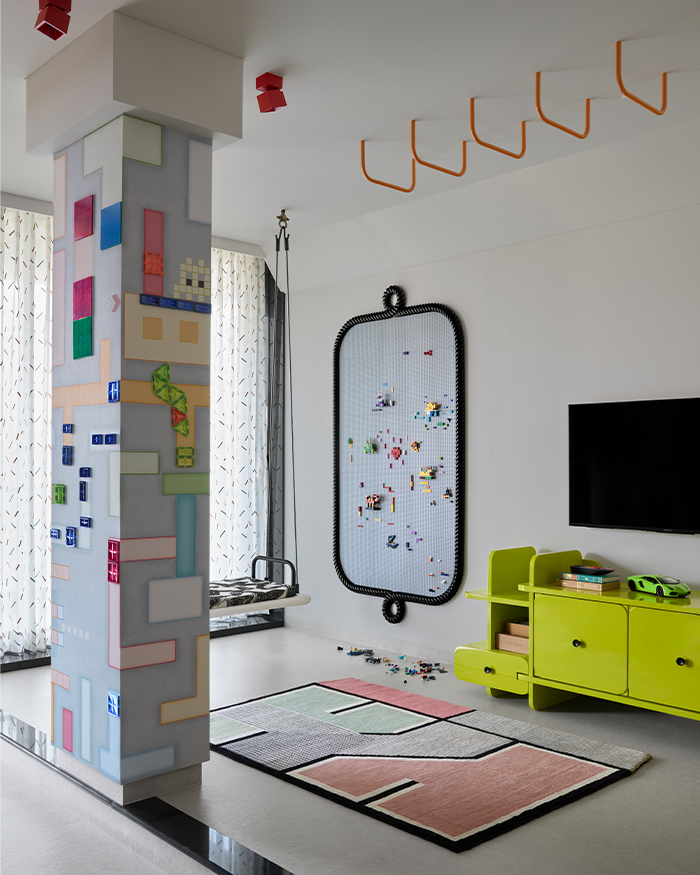
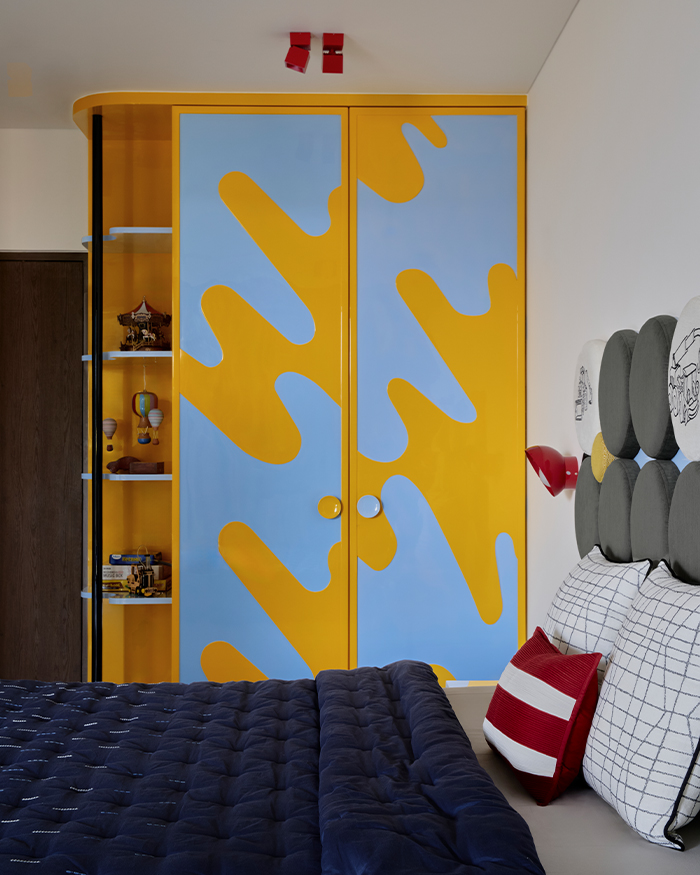
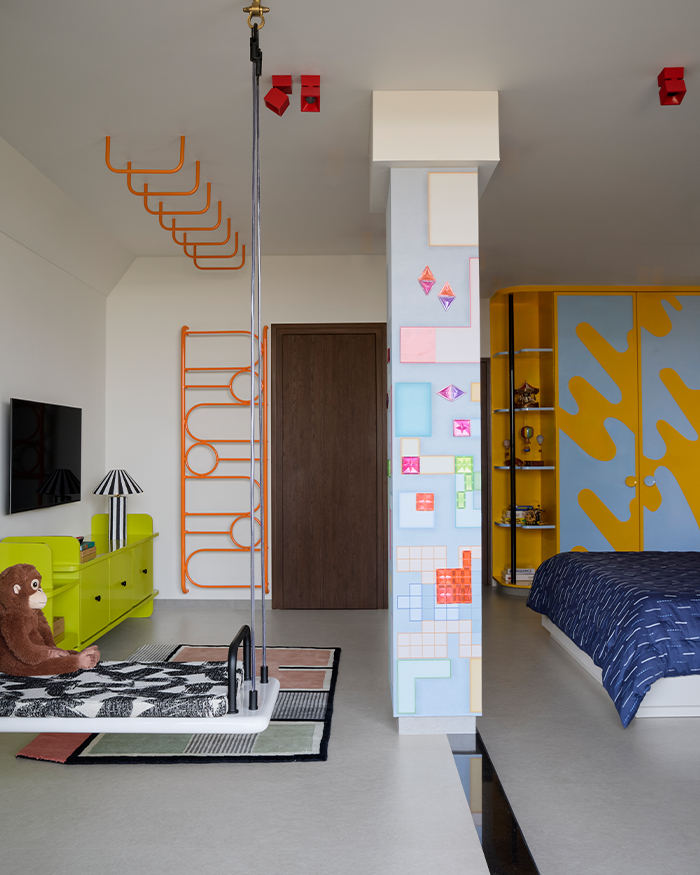
Certain spaces, however, required feats of imagination. The son’s bedroom refused to align with the home’s dominant visual narrative, so in came a structural column that transforms into a magnetic pinboard. A gleaming orange ladder climbs the wall and resurfaces across the ceiling as monkey bars. To lighten the drudgery of never-ending summer days, Ali inserted a swing, a Lego board whose creations serve as a conduit for the child’s restless energy, and Bob the Builder headboard motifs, among other quirky design details.
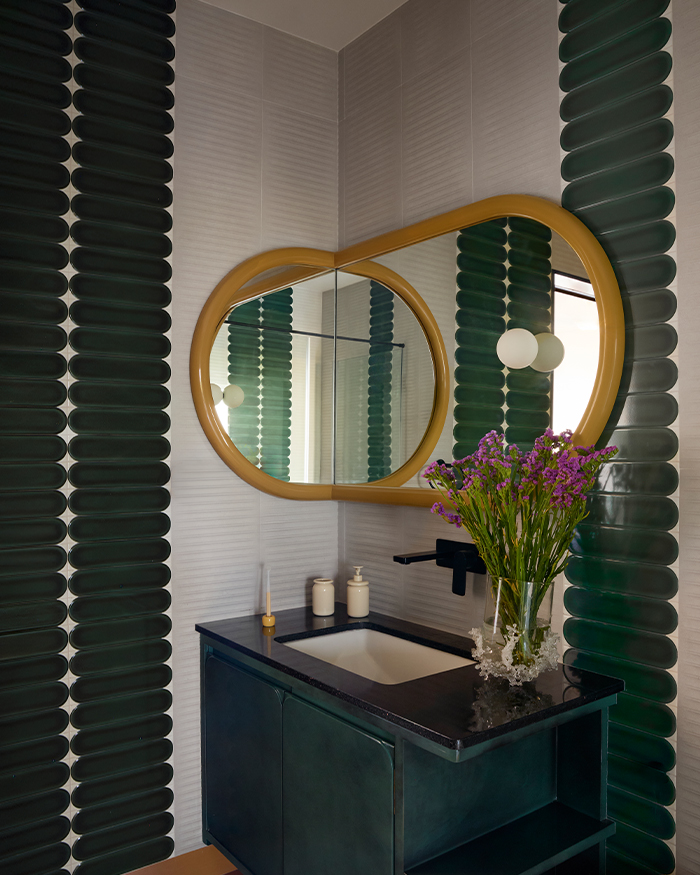
For Ali, slow living became the emotional spine of the narrative. It carries forward a design language shaped by nuanced, worldly sensibilities in dialogue with locally sourced materials. Working from an eccentric brief referencing Antoni Gaudí’s churches and Barcelona’s architectural vocabulary, Ali remixed a dizzyingly eclectic palette: buff sandstone, red and black limestone, mint sandstone, hand-cut ribbed tiles, PU laminated panels, leather, and gleaming metals. For a Mumbai-origin family long accustomed to the maelstrom of city life, this hillside eyrie becomes more than a retreat; it is a recalibration of pace, light, and attention to the things in life that truly matter. La Dolce Villa is, effortlessly, a house that holds this stillness.
Read more: Ali Baldiwala designs a Mumbai home to surprise and celebrate the joy of living
No results found.