
What arrived as a bare shell with four bedrooms in Mumbai’s suburb of Mulund soon took the shape of a three-bedroom, hiding in plain sight a media room within its master suite. To fill the rest of the pieces of the blank puzzle, the homeowners — a young couple and their elderly parents — left all other design decisions to Studio KE Architects’ Esha Tipnis and Karan Danda. “The family wanted a space that did not feel rushed or trend-driven, but one that revealed itself gently and carried emotional presence. This guided our approach to space planning, material choices and the home’s overall rhythm,” explain Esha and Karan about the 2,130 sq ft residence.
The brief was clear: a home that feels personal, multigenerational and anchored in Indian crafts, while remaining contemporary in its expressions. “Because the project evolved over almost three years, ideas had the time to mature. Craftsmanship became central, and every surface was treated as an opportunity to add story and texture.”
The apartment now envelopes an open-plan living, dining and kitchen zone; an expansive master suite created by merging two rooms into one connected space with a media room alongside a parents’ bedroom and guest room, each with an attached washroom.
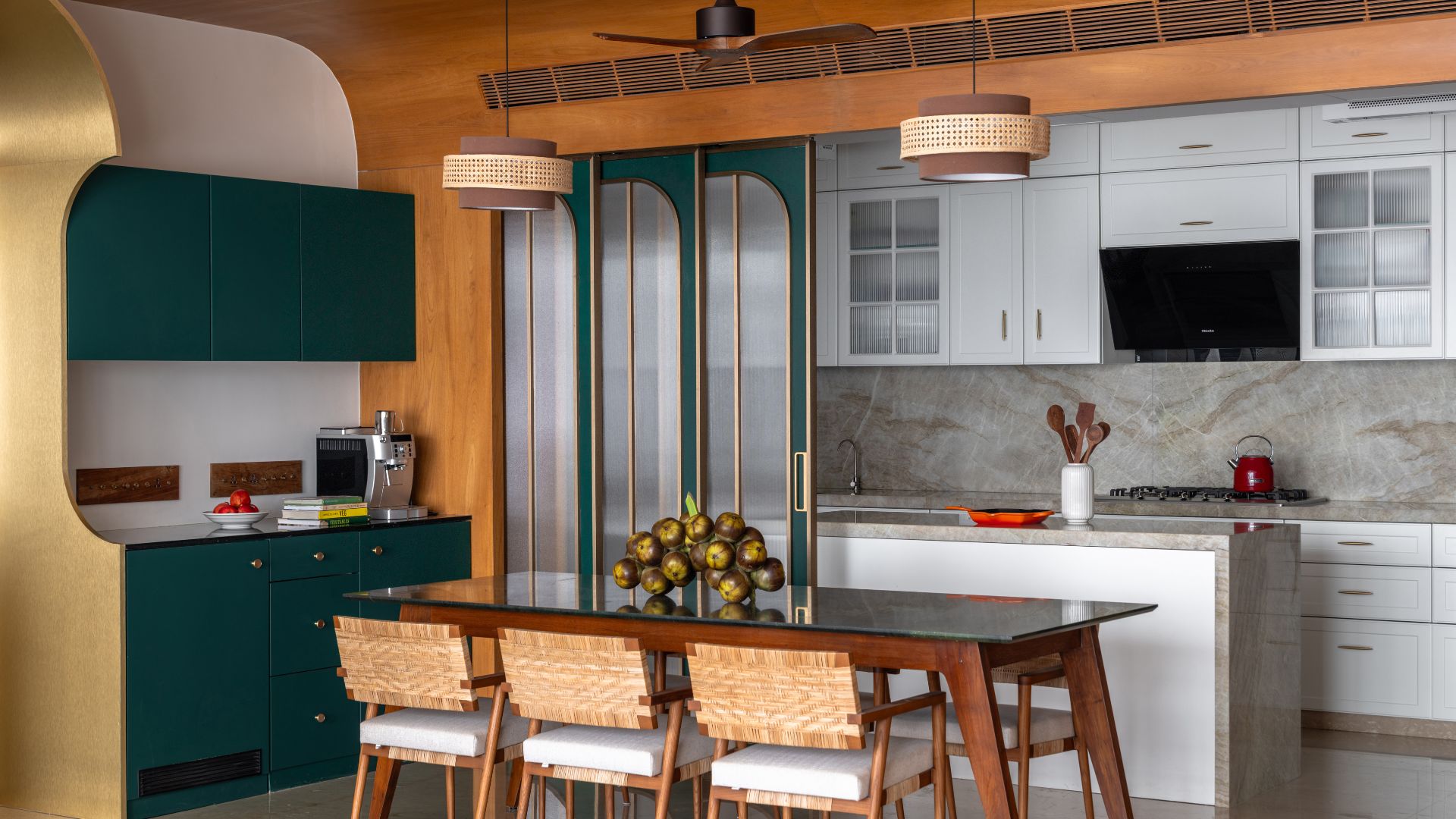
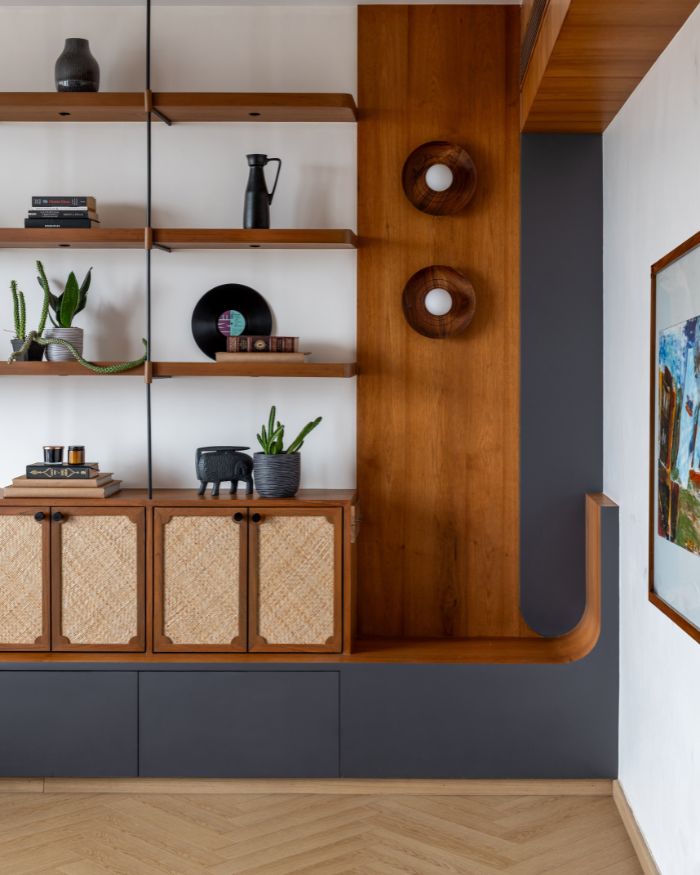
“The goal was to build a home that balanced comfort, emotion, cultural identity and long-term adaptability, while still feeling contemporary and expressive,” state Karan and Esha. The design vocabulary draws from three points of reference: traditional Indian architecture, the geometry of Art Deco and the restraint of modern minimalism. Solid wood surfaces the home in multiple forms, a dramatic curved arch in the dining area, hand-carved rafter junctions in the parents’ bedroom, rattan panelling in the master suite and sculpted cabinetry throughout.
Brass arrives through hardware, lighting and accent detailing, lending the Art Deco references a touch of warmth. Quartzite stone in varieties of Avocado and Taj Mahal bring depth and organic patterning to key surfaces.
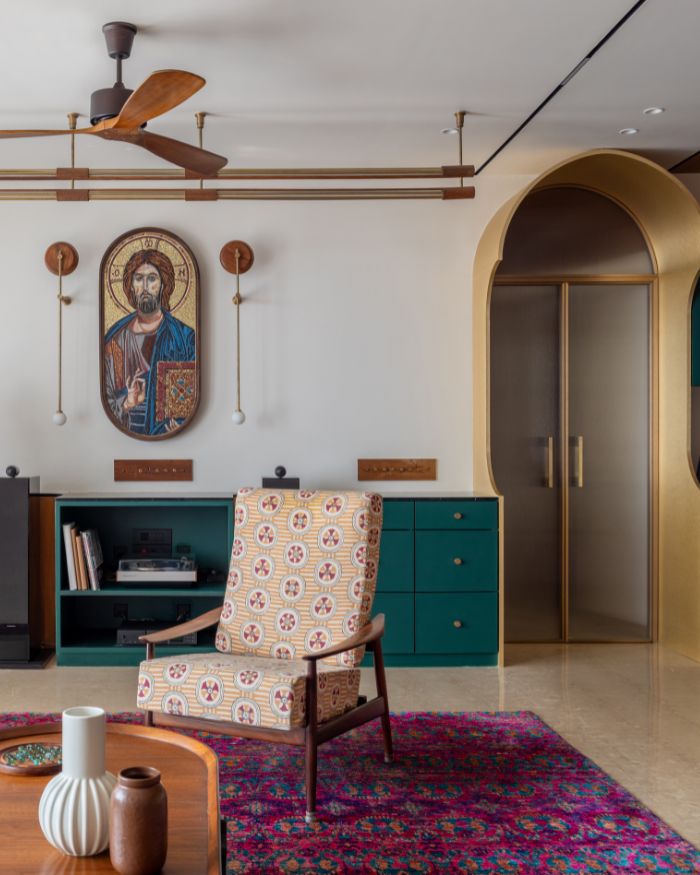
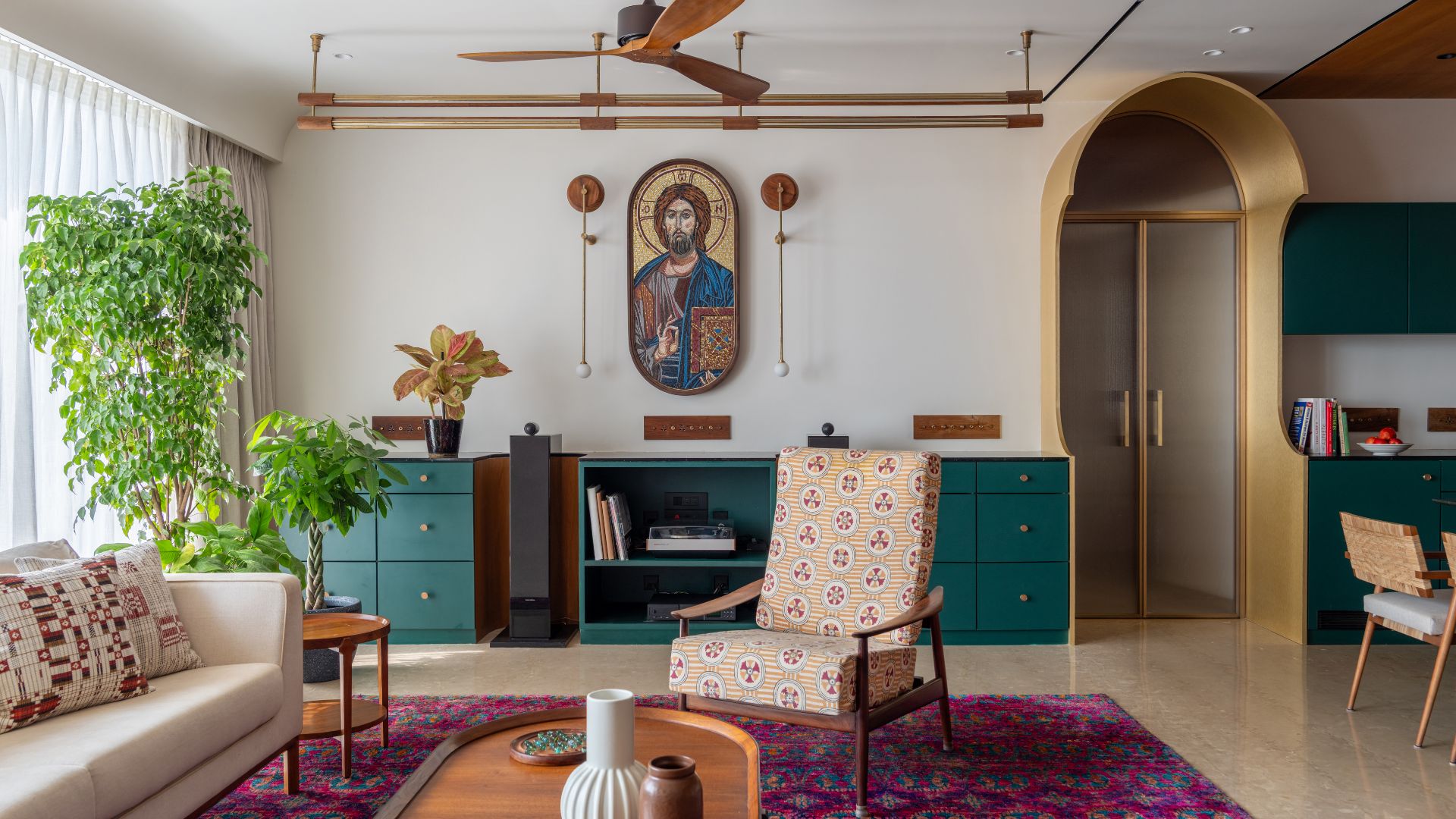
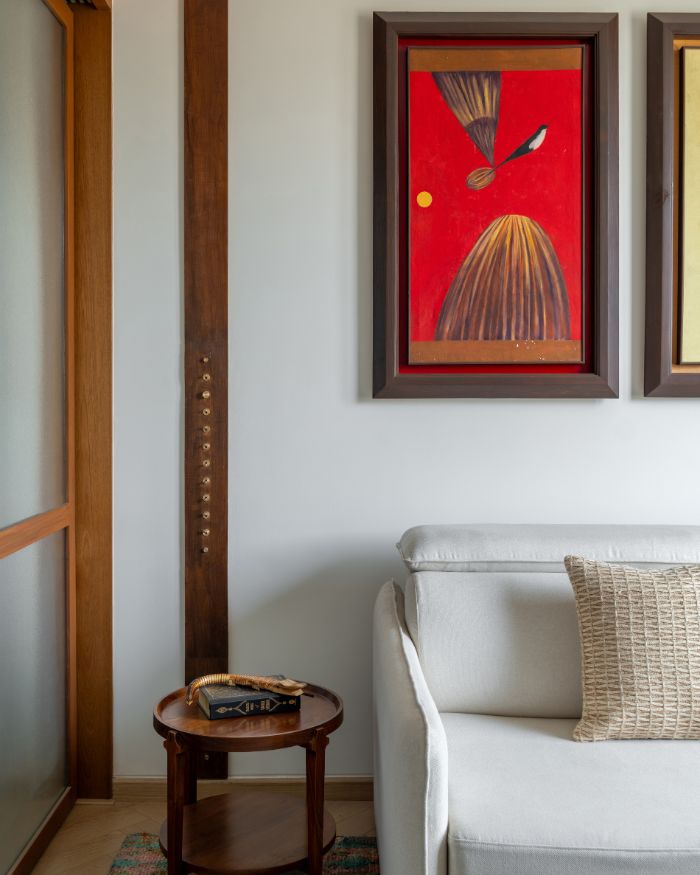
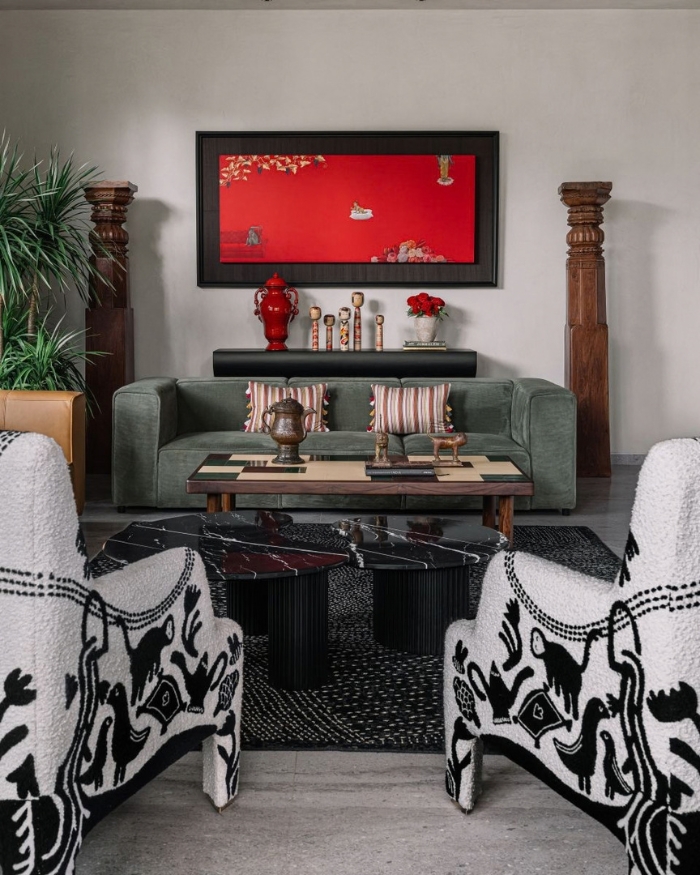
Colour works with restraint throughout. Amber, cream, soft greens and warm whites carry the palette, punctuated with jewel-toned rugs, teal joinery and expressive artworks; among them a mosaic by Orvi Surfaces commands the living room wall.
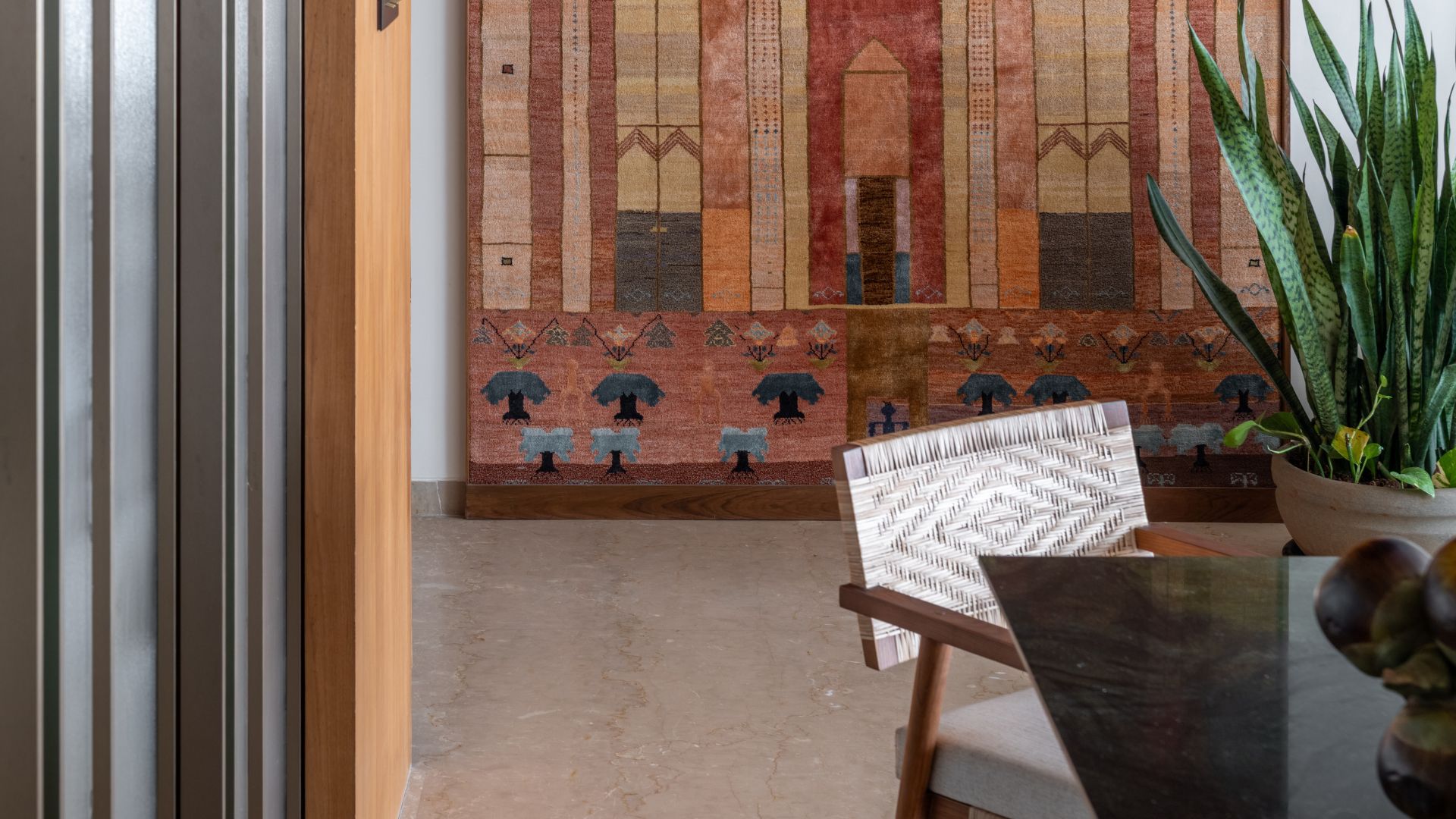
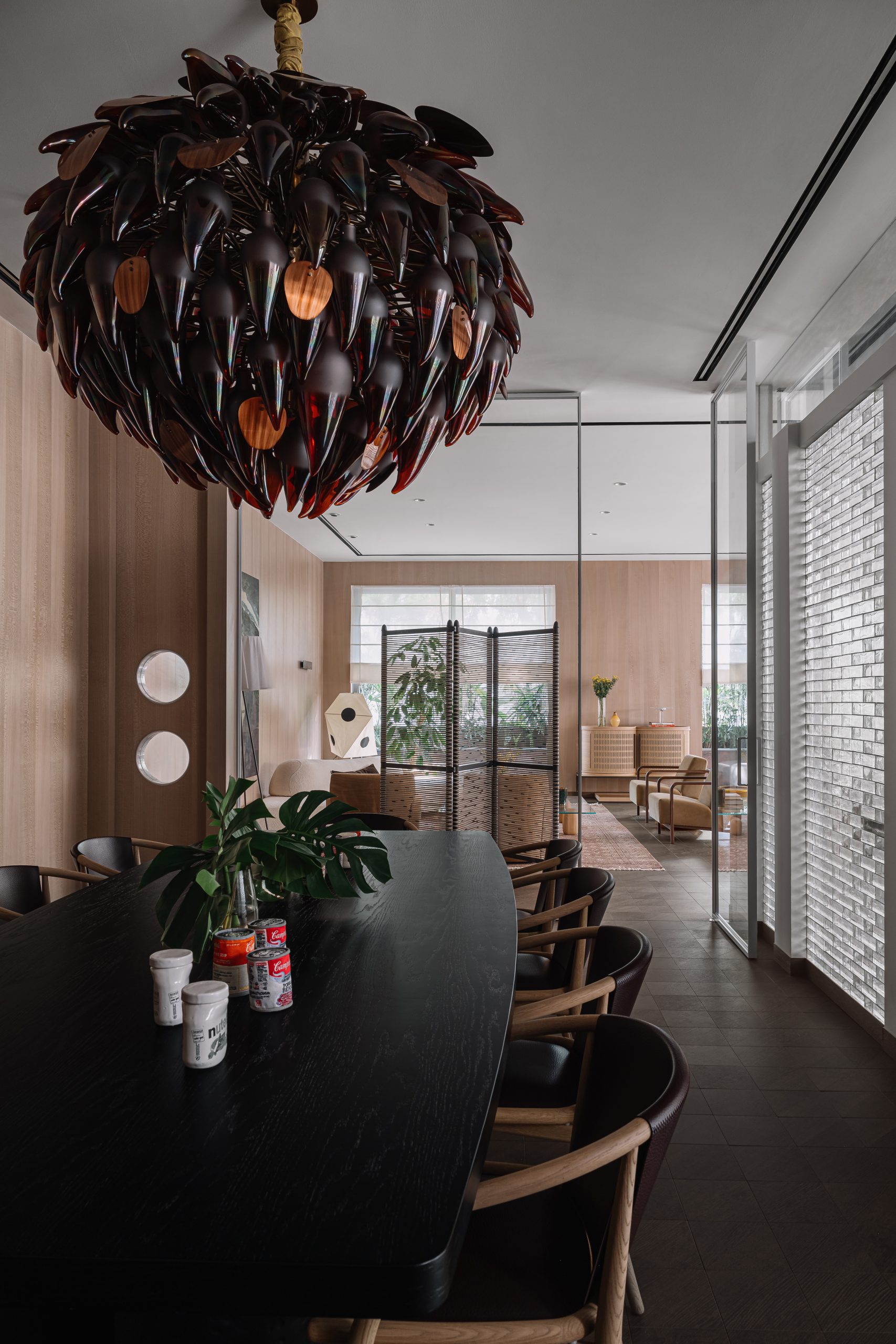
The dining room is the architectural high point. A sweeping wooden ceiling curve draws the eye and unifies the open-plan common areas. What could have been a problem, an awkward structural column offset, becomes a framing device for the home’s most striking installation: a large-format Manchaha Taj Mahal rug by Jaipur Rugs, hung as a wall piece. In rust and ochre, its architectural motifs ground the room with a quiet, assured presence. “It quickly became the most favourite backdrop for all family pictures,” says the duo.
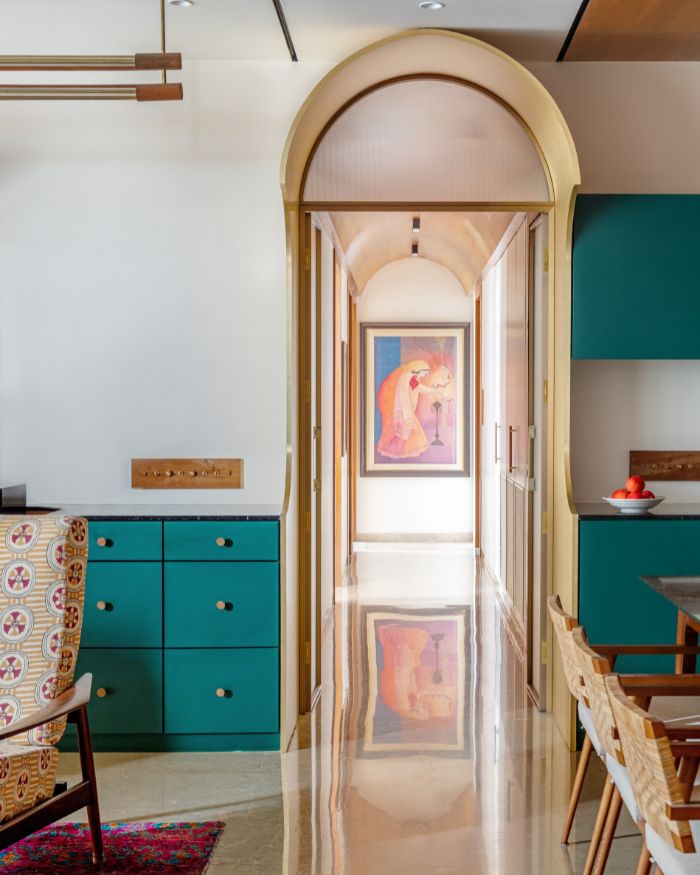
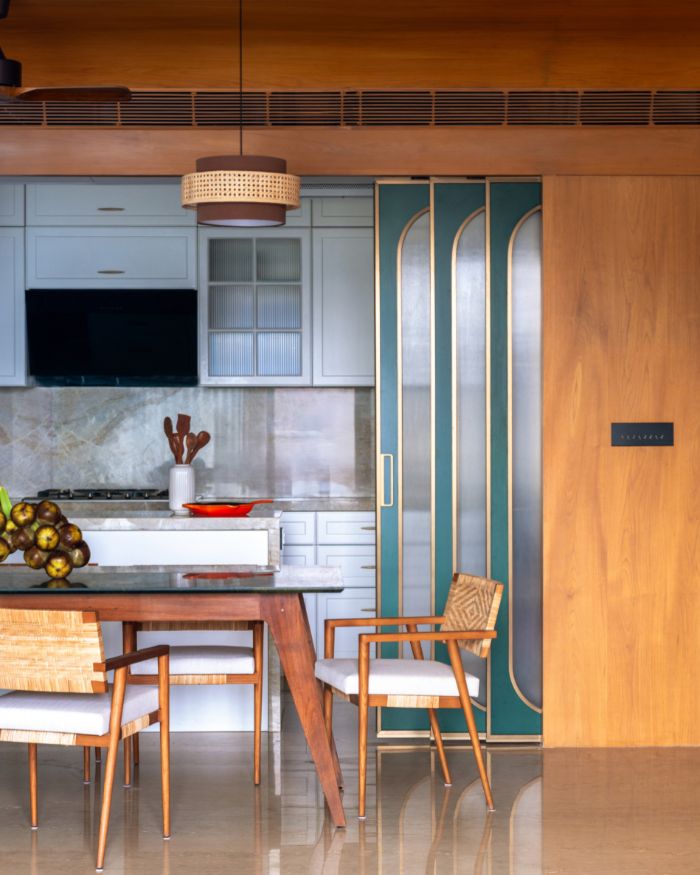
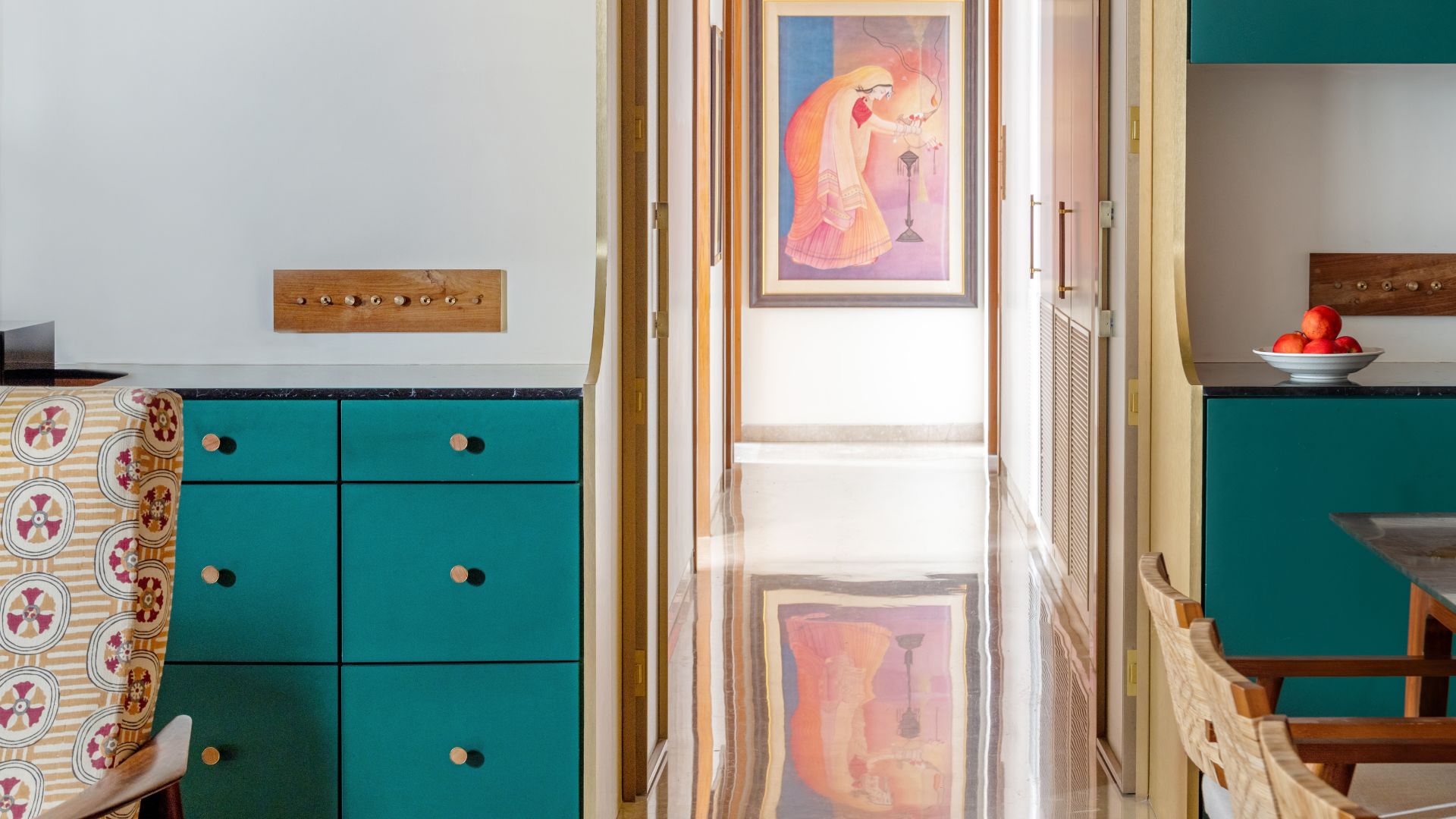
The custom brass archway between the public and private wings is equally deliberate, a symbolic threshold that merges Art Deco geometry with traditional Indian sensibilities. Paired with teal kitchen doors fitted with brass details that tuck neatly into pocket recesses, reeded glass panels and considered joinery, this moment is the clearest expression of the home’s dual personality: celebratory yet grounded.
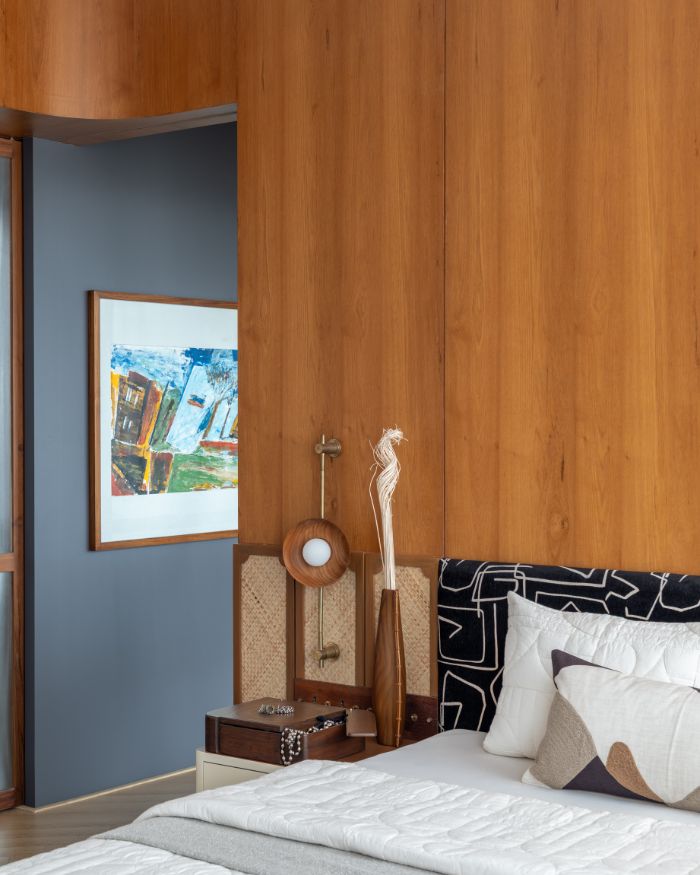
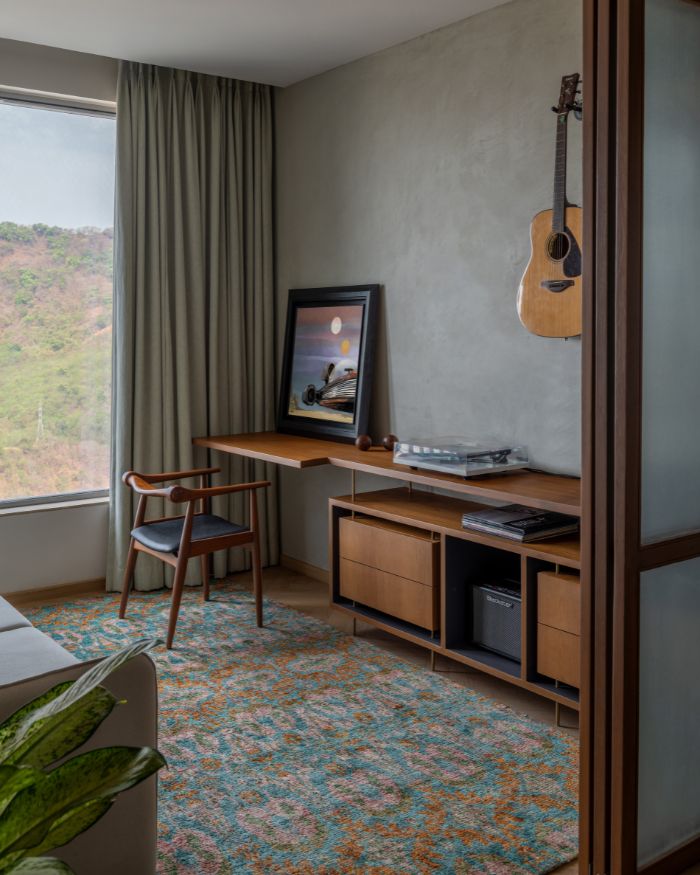
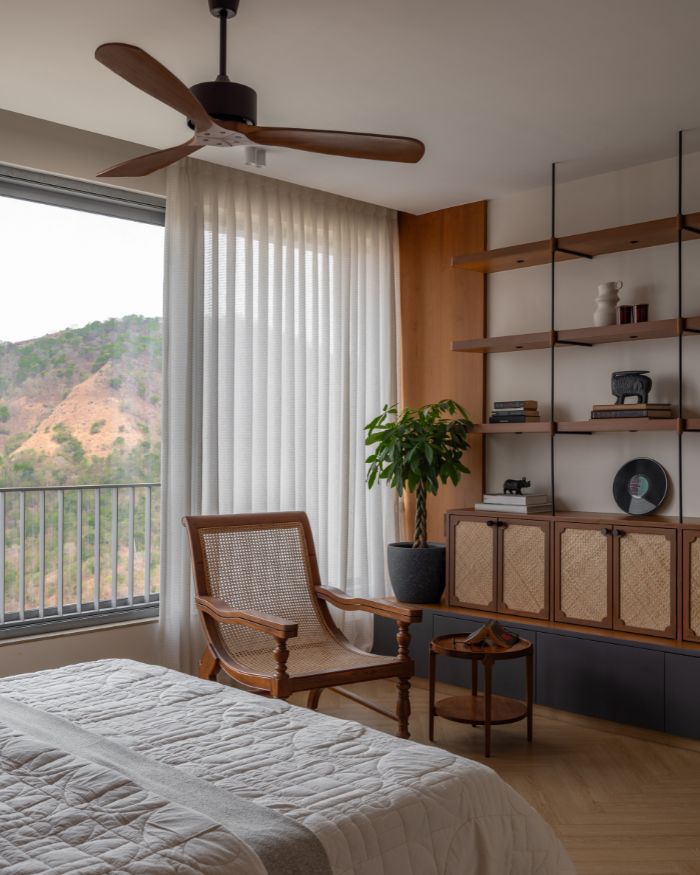
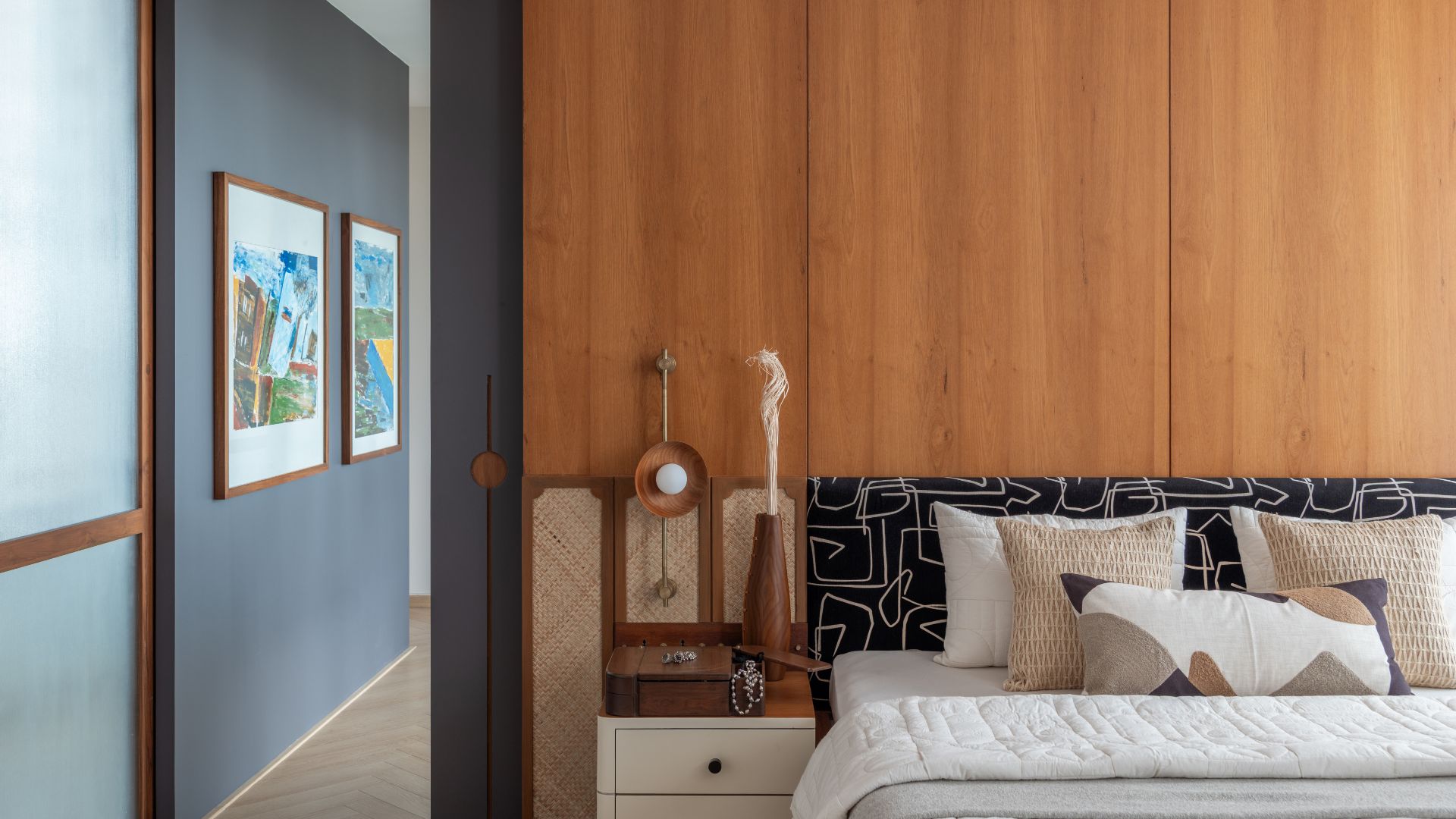
In the master suite, the merged rooms offer a calm, layered private space. A floating study desk on brass supports, rattan-lined wall panelling and a bespoke storage wall in dark slate and warm wood give the room a settled, considered character.
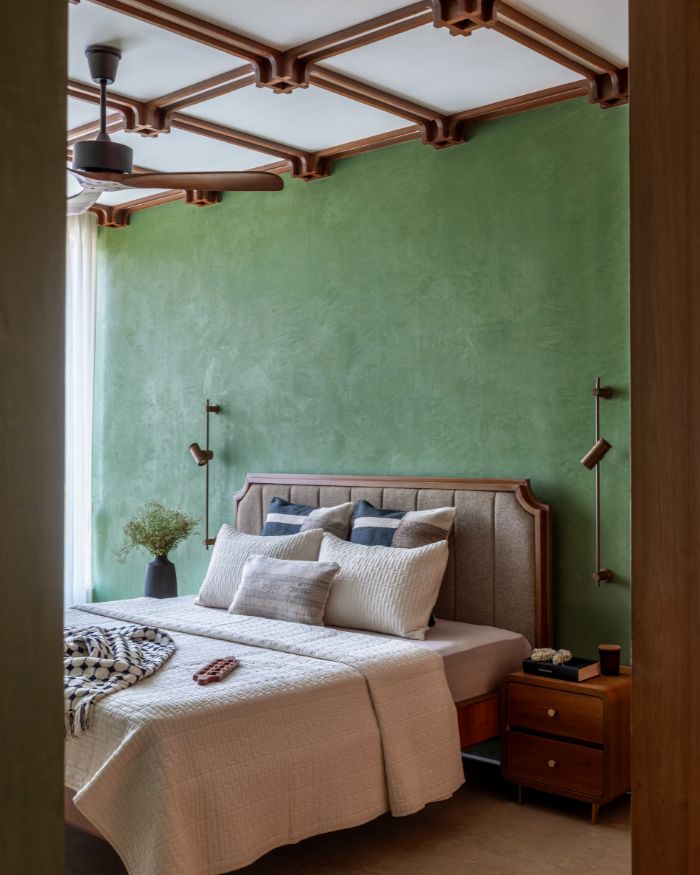
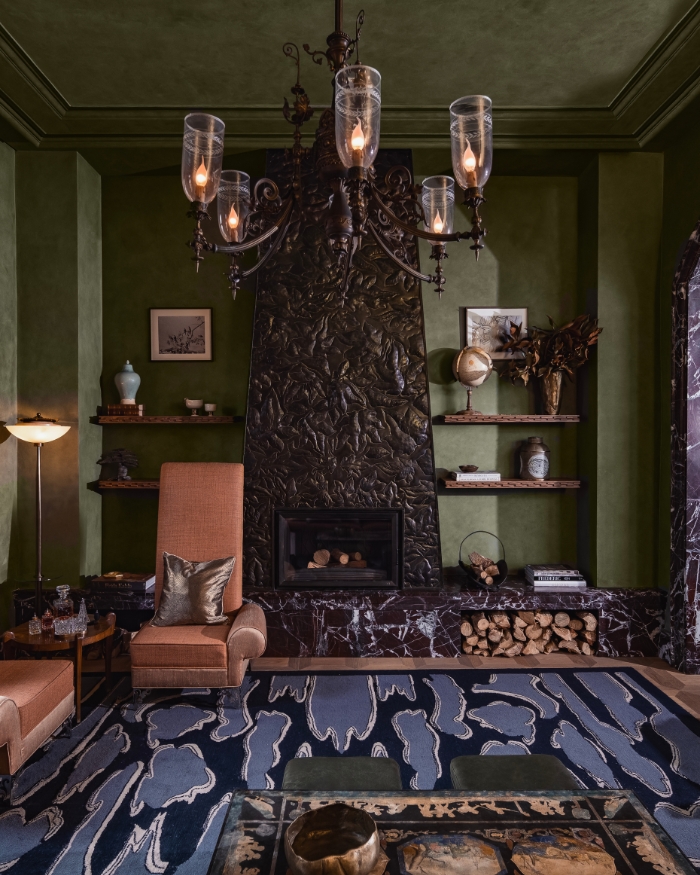
The parents’ bedroom takes a different mood altogether. A traditional rafter grid ceiling with hand-carved junctions houses ambient lighting that feels crafted and restful. A sage-green textured wall anchors the room with colour, offering the older generation a space that feels familiar without feeling dated.
The result is a home that wears its influences lightly. Through carved wood, woven rattan and handmade textiles, Indian craft clues shape the home’s tactile and visual language — so the home does not feel rushed or trend-driven, but feels simply made.
No results found.