
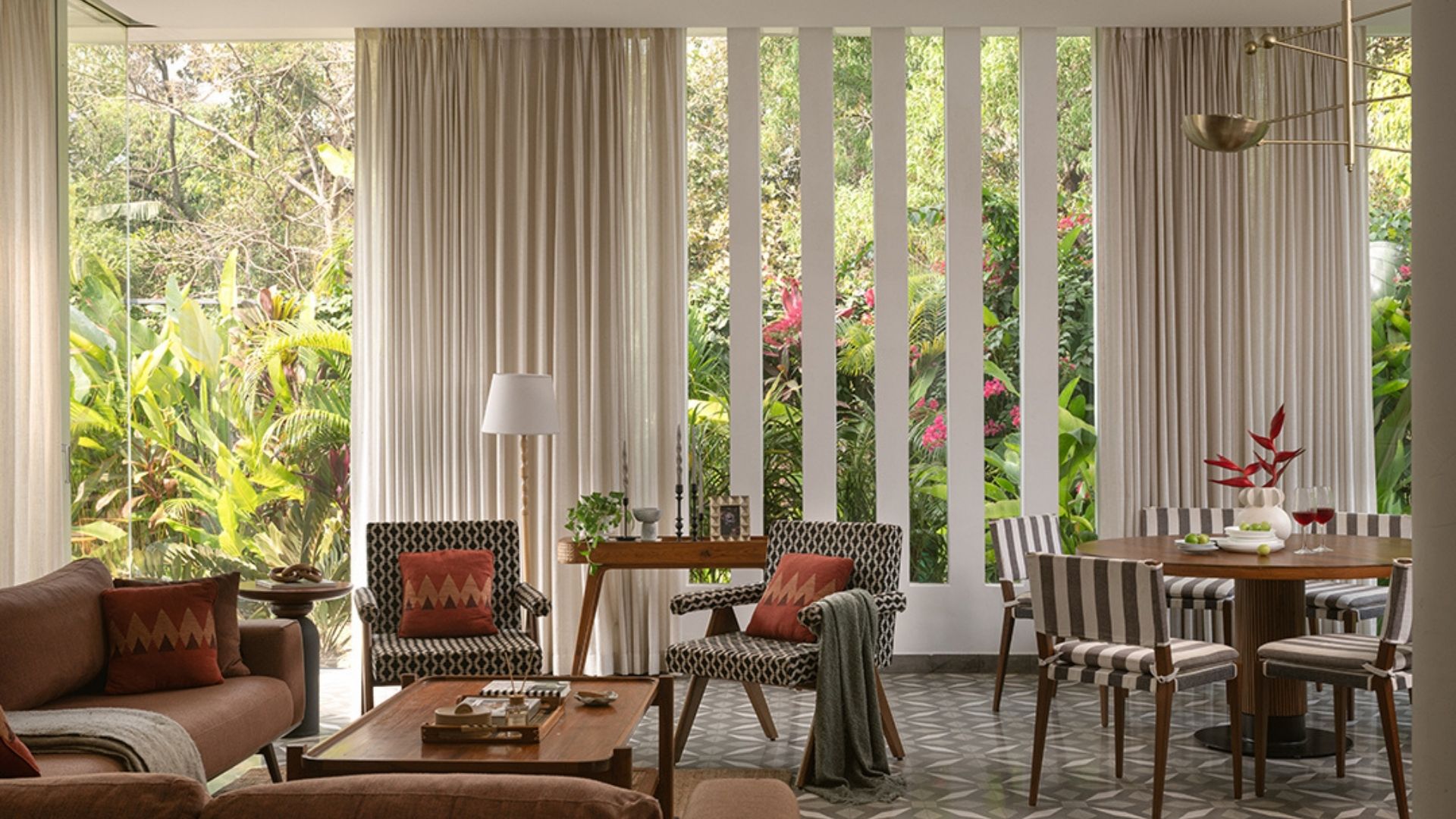
Along the stretches of North Goa in Vagator, where the days hum with energy and the nights carry their own rhythm, Naina Nagpal of Vianaar sets out to craft La Zorita, a collection of twelve twin villas designed to hold the quietude of the landscape. The brief was deliberate: slow-lived luxury, a place where life does not perform itself but simply unfolds.
“La Zorita was conceived as a sanctum sanctorum for those who wanted to experience the calming cocoon and enjoy the stillness of Goa,” explains Naina. The design draws from Bauhaus principles, where form follows function and the visual language stays clean, measured and largely free of ornament. But at La Zorita, that restraint serves a very particular purpose: it gives the landscape room to become the real interior.
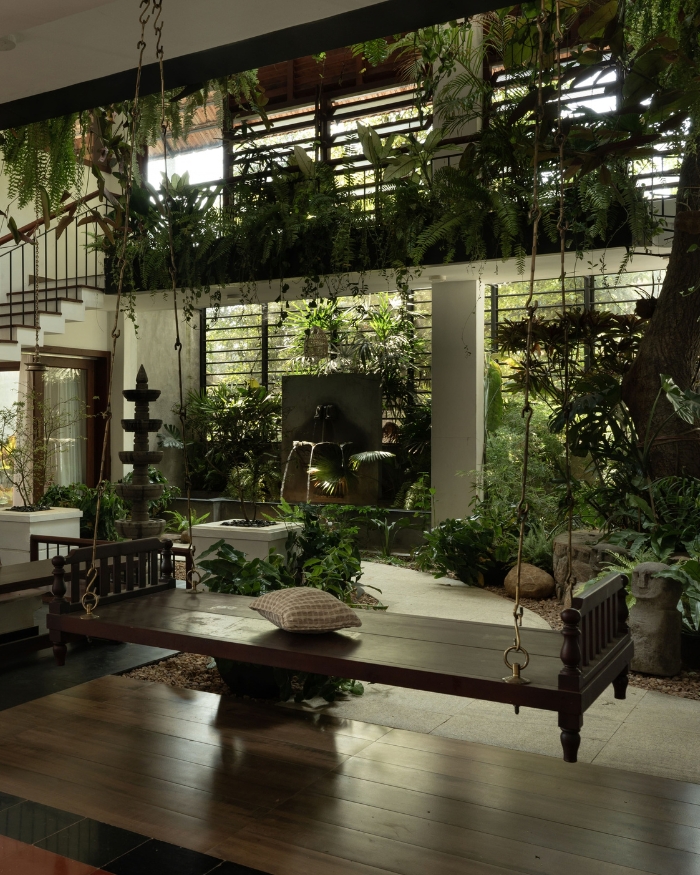
"It almost feels like walking into an open garden without realising that you have actually walked into your indoor living area"
Naina Nagpal
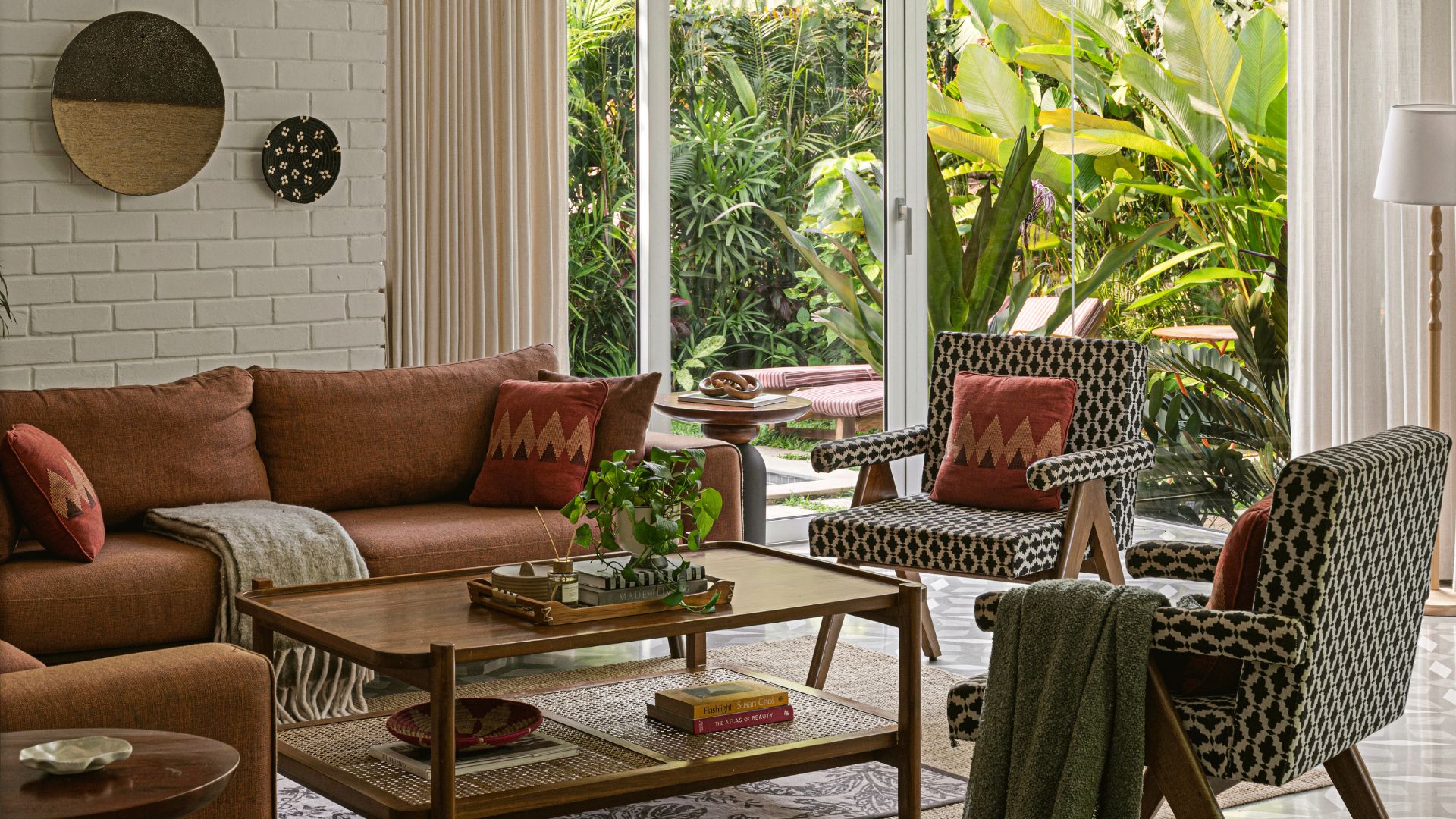
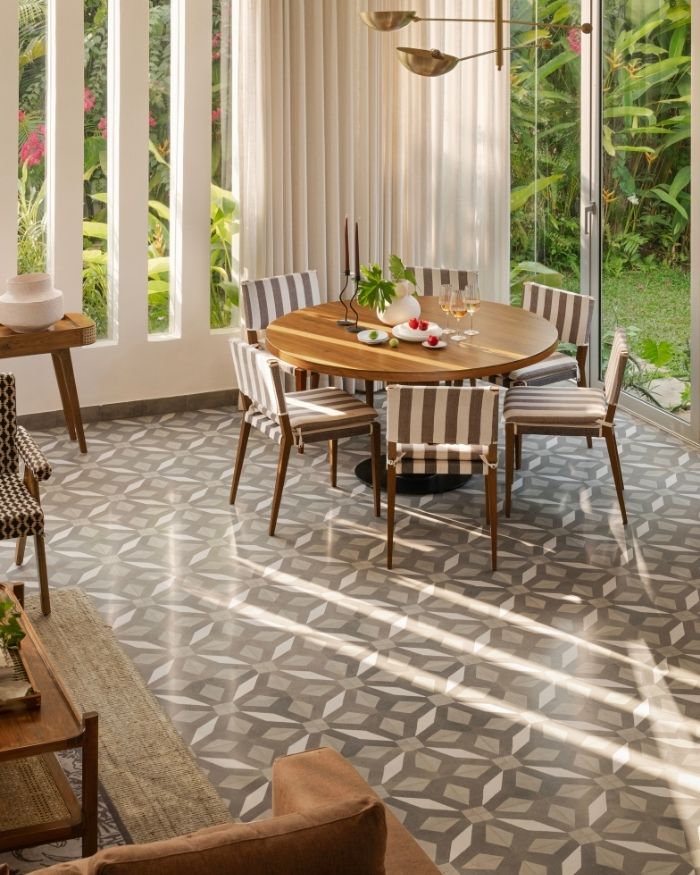
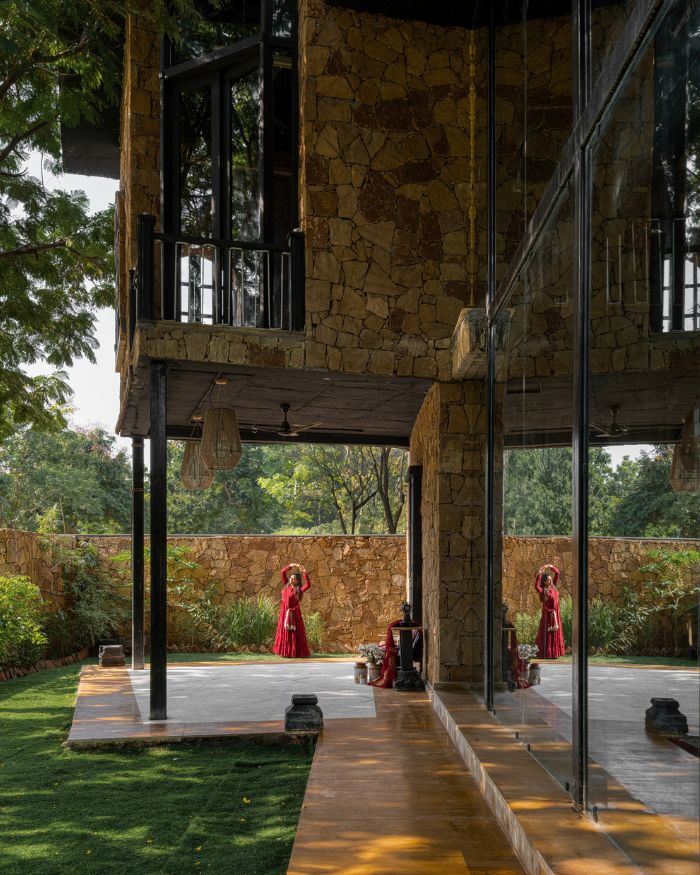
The villas spans a built-up area of 3,150 sq ft across three floors. The ground level houses an open-plan living and dining area, a kitchen and a powder room. The first floor holds two en suite bedrooms and a stairwell that connects to the upper level. The topmost floor is given entirely to the master suite, which opens onto a private terrace and, as it happens, the treetops.
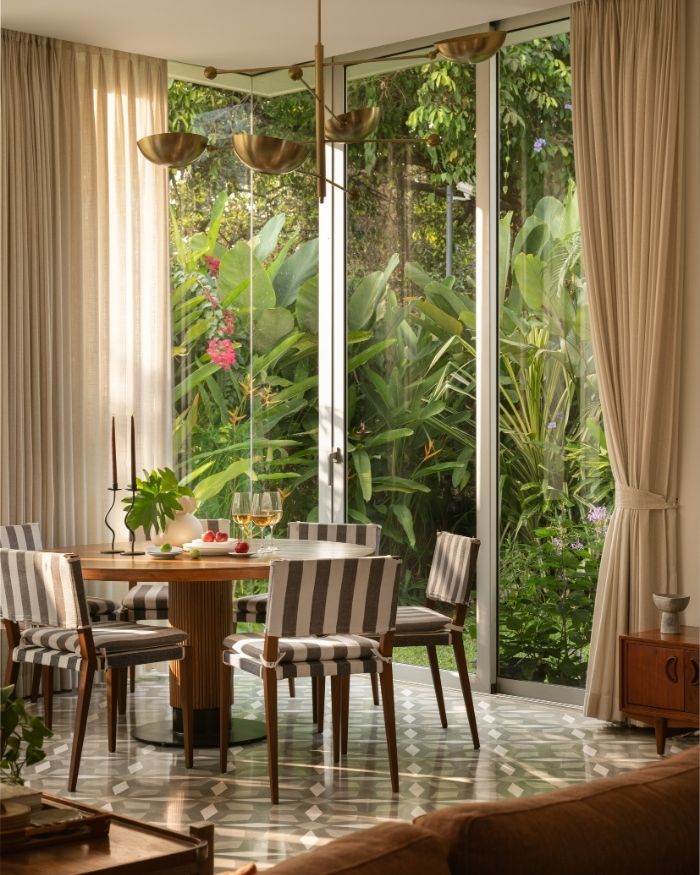
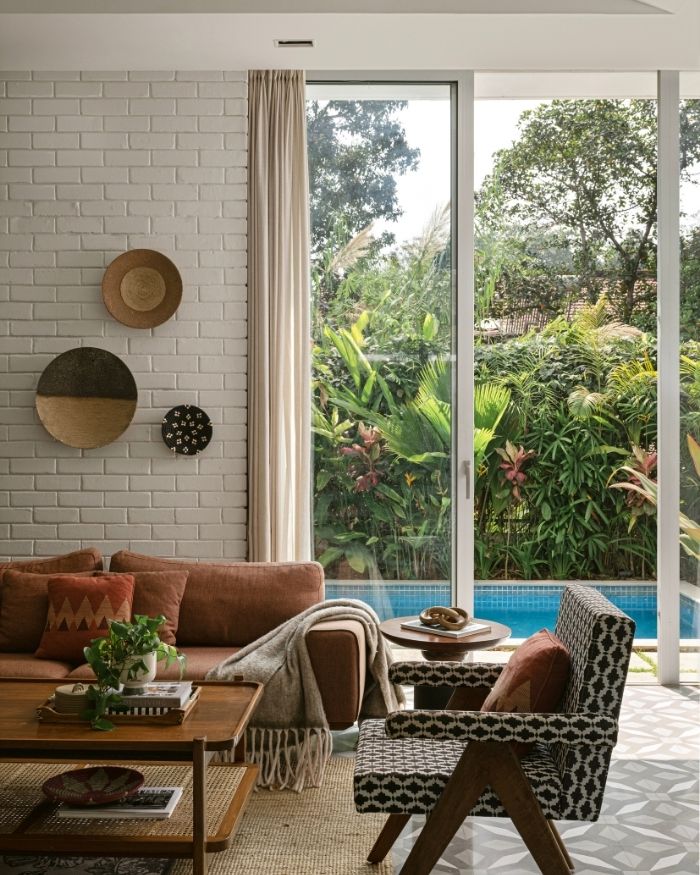
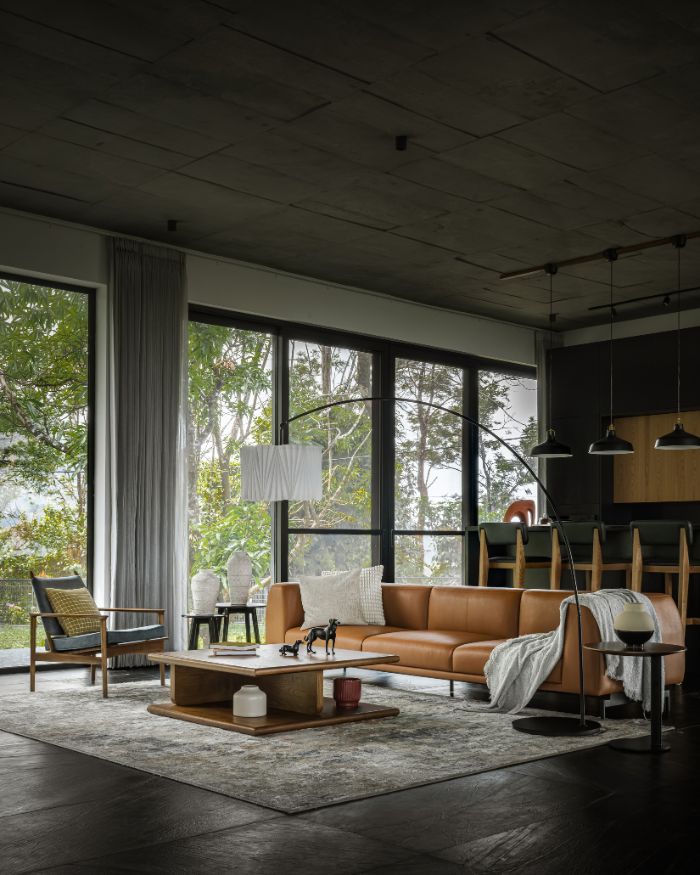
Large corner glass windows on two sides of the living room pull the garden inward. Light arrives from multiple directions. The room begins to feel less like a room and more like a shaded verandah, the boundary between inside and outside becomes a suggestion rather than a fact. “You are greeted by these huge corner glass windows on either side of the living room,” says Naina.
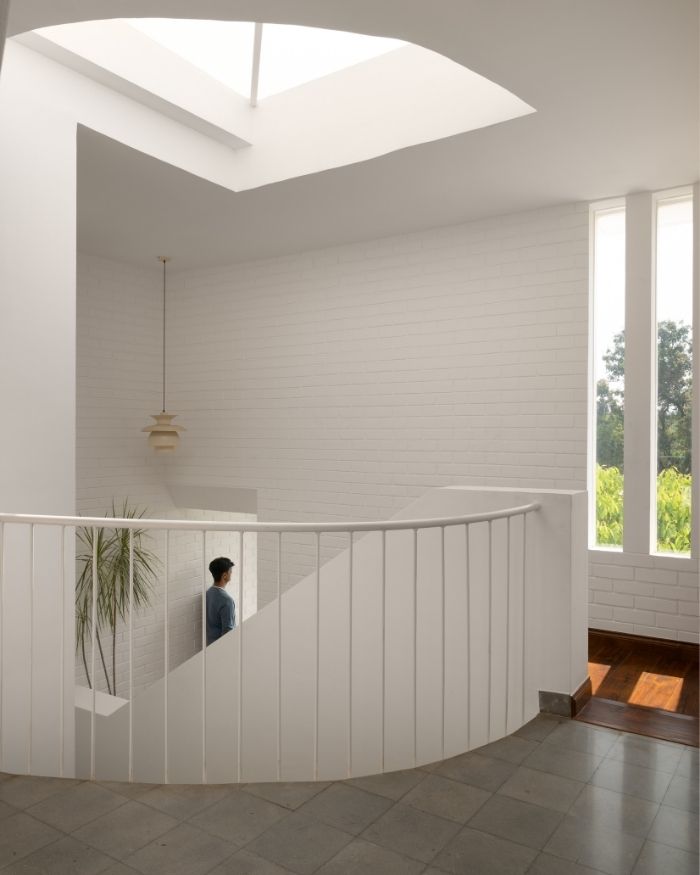
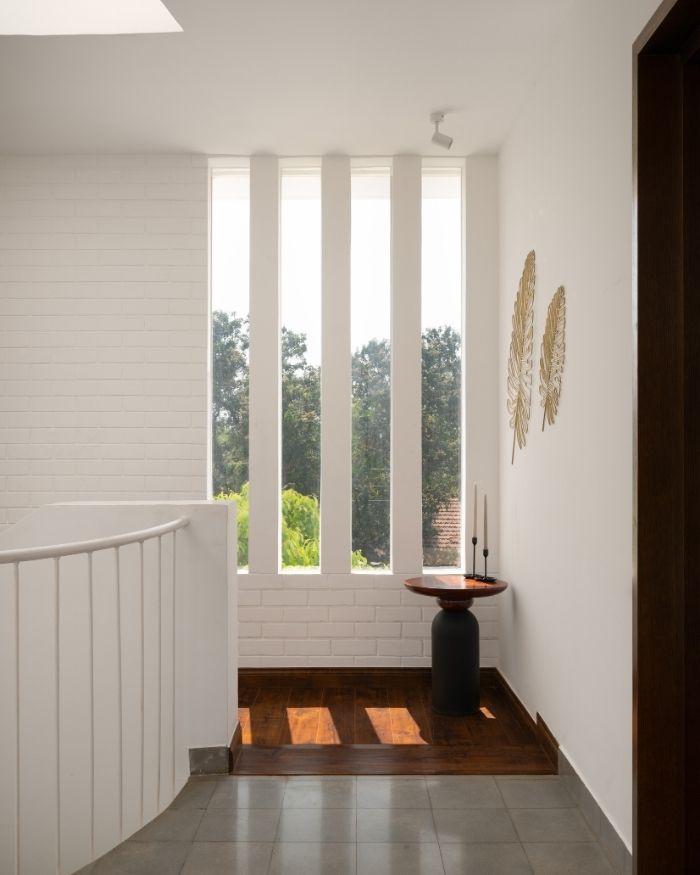
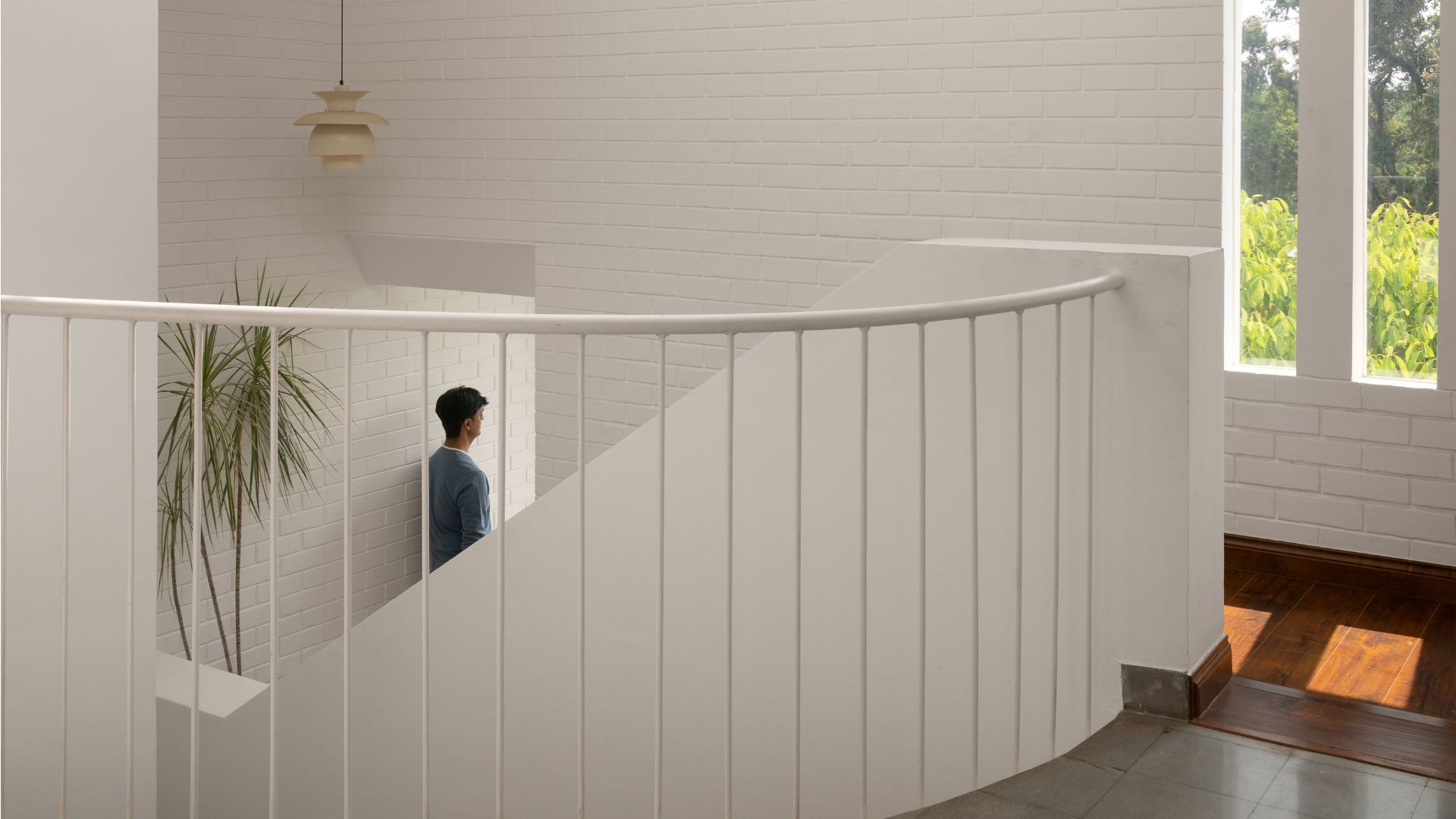
The staircase is the house gathering itself. It rises through a vertical void at the centre of the home, lit from above by a skylight. Through the day, light moves across its form, tracing shadow and shifting the mood of the space with a subtlety that rewards attention. “It becomes more than a passage,” Naina reflects. “A moment where the house gathers itself, where all three levels feel connected within one continuous volume.” The whitewashed brick that lines this corridor keeps the geometry legible and the atmosphere clean. There is nothing superfluous here, and that precision is the point.
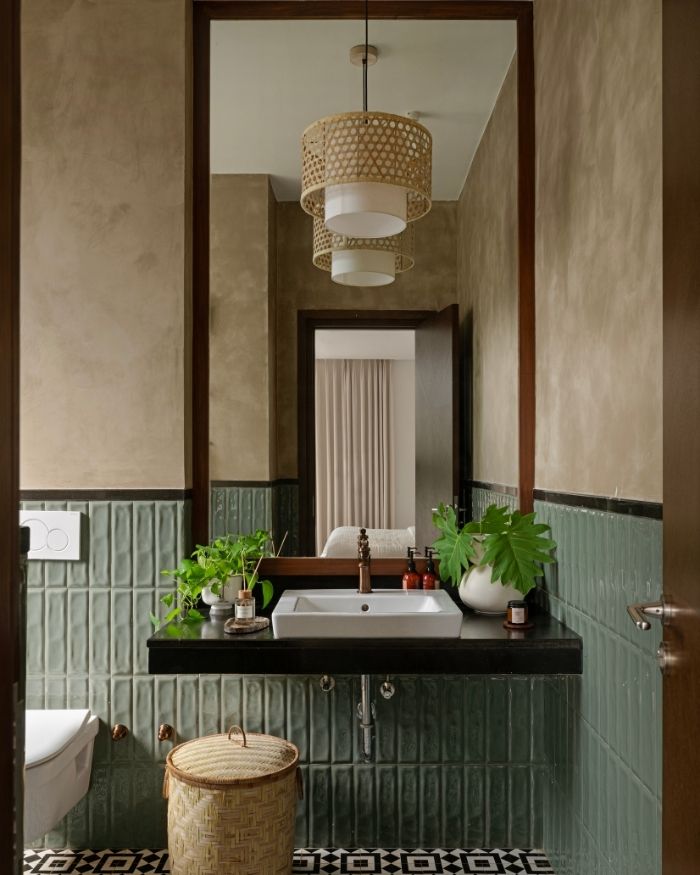
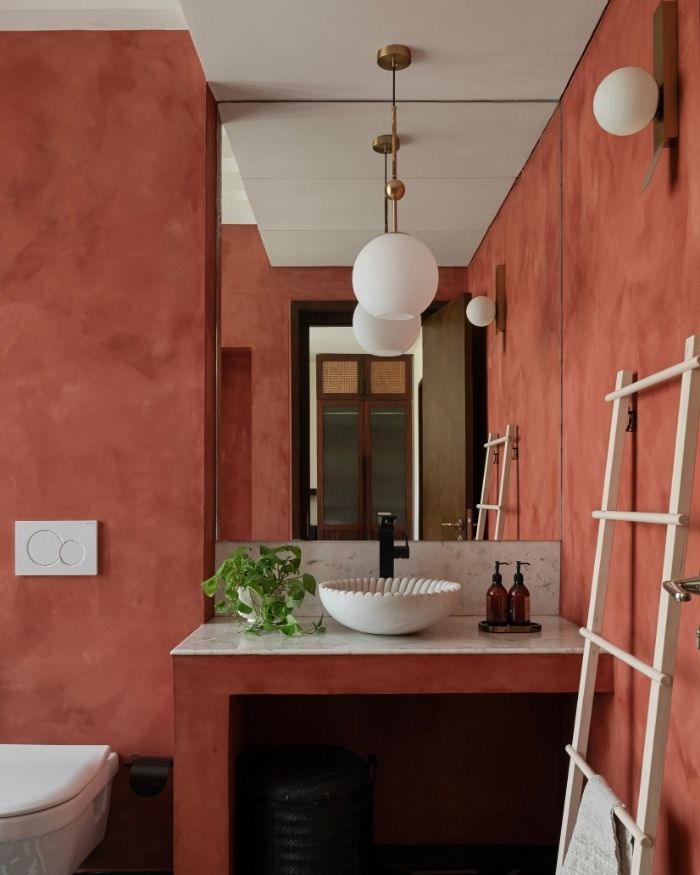
The bathrooms take a different tone. Where the rest of La Zorita composes itself in restraint, the powder room and guest bathrooms arrive in colour. A terracotta wash, black-and-white patterned floors, green ceramic tile set against raw plaster walls, rattan light shades, these rooms carry a more expressive and playful sensibility.
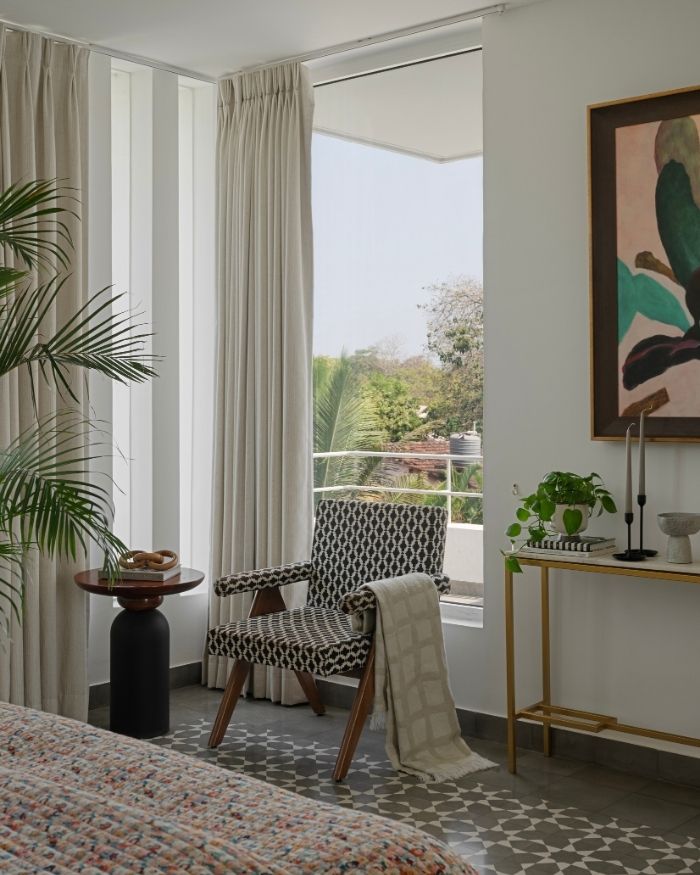
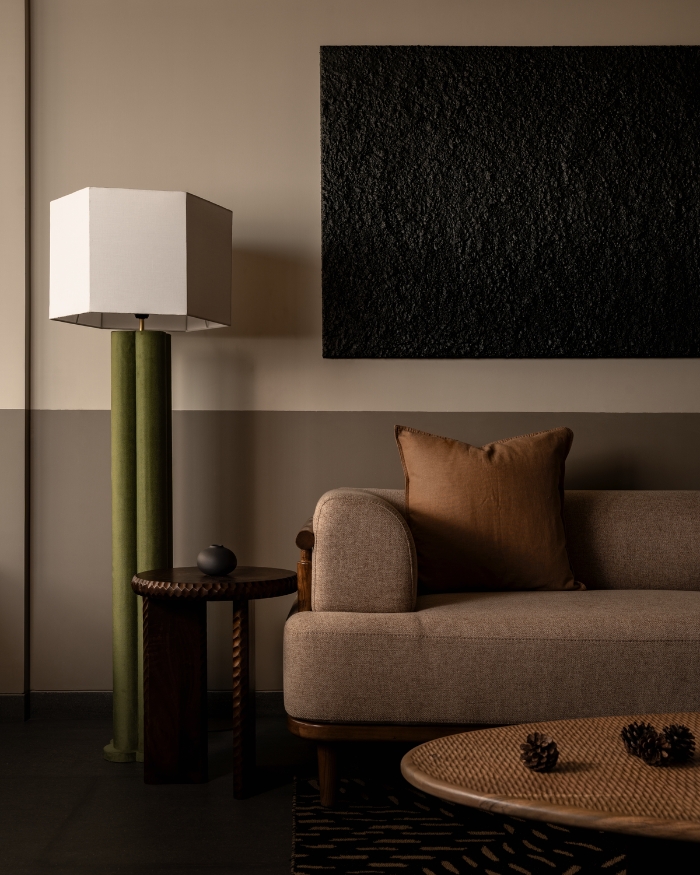
At the uppermost level, the master suite holds a different quality of stillness, elevated and looking outward across foliage and open sky. The private terrace sits close to the canopy, and from here, La Zorita’s central ambition becomes fully legible. The palette keeps its counsel. Neutral tones, clean surfaces and natural materials; wood, cane and soft textiles, carry the interior without competing with the view. Warmth comes from craft, not colour: a hand-finished quality that surfaces quietly and never reaches for attention.
The palette, too, keeps its counsel. Neutral tones, clean surfaces and natural materials; wood, cane and soft textiles, carry the interior without competing with the view. Warmth comes from craft, not colour: a hand-finished quality that surfaces quietly and never reaches for attention.
In Naina’s hands, the site in Vagator becomes not just a place to live in Goa, but a place to live as Goa intends, with space, with green, with the particular peace of a life unhurried.
Read more: Vianaar and Amoeba Design give Indo-Portuguese architecture a nouveau spin in Goa
No results found.