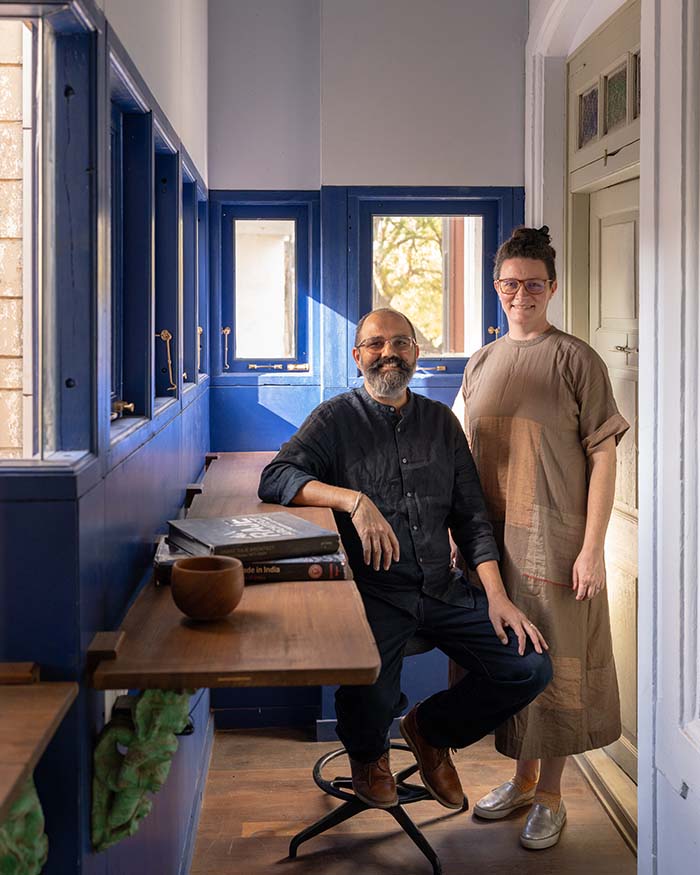
Time is out of joint. Only Shakespeare’s Hamlet, quoted by way of Derrida, seems capable of capturing the thrilling friction between temporalities that ought not to coexist, yet somehow do. A 94-year-old Art Deco residence in the midst of Mithakhali Gam now houses an architecture studio. On one side, a high-speed metro line cuts through Ahmedabad, offering fleeting tableaux of illuminated strangers. On the other, fading vignettes of old houses dissolve into the clamour of scooters and the quotidian rhythms of a small-town neighbourhood. The latest dispatch is that the chowk behind the studio has just been repaved. “It’s one of those weird spaces of scale that probably only architects like,” laughs Melissa Smith. When she and Sachin Bandukwala, the two halves of BandukSmith Studio, began looking for a new site for their workspace, they were drawn to the west of the Sabarmati where the city’s historical villages were situated. “It was a way for us to find an urban context that still feels pedestrian without being in the old city,” Melissa explains. They encountered this residence serendipitously during a nocturnal walk in the neighbourhood. A year of navigating the labyrinthine documentation of the ancestral property followed, then 16 months of restoration before the studio could move in.

“We wanted to respond to what the building offered. It is our space, we could experiment and try things”

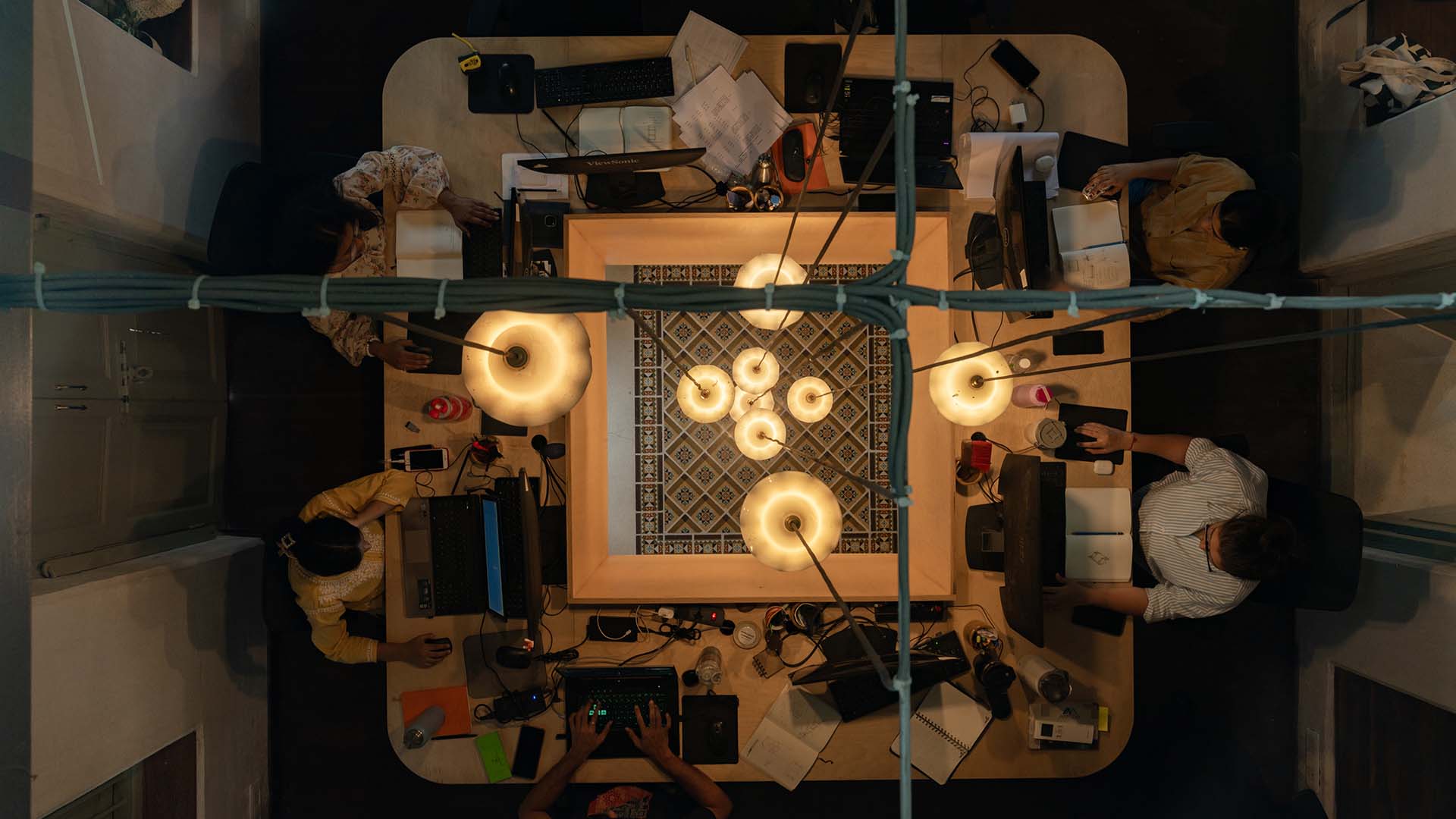
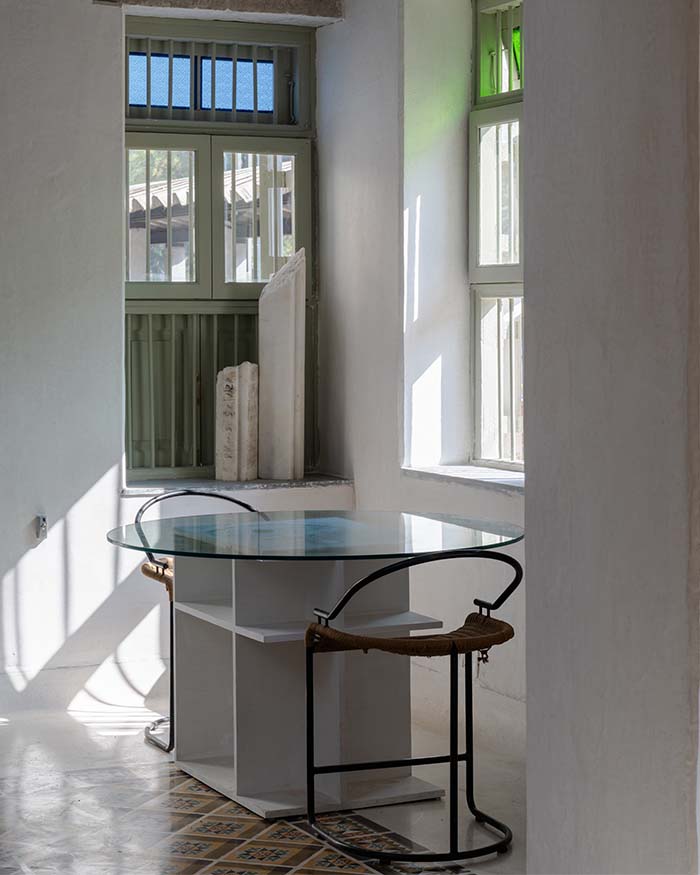
On the first floor, the architects sit around a cut-out that looks into the ground floor. Tiles from the earlier incarnation offer a visual anchor; Photography by Harsheen Mengar

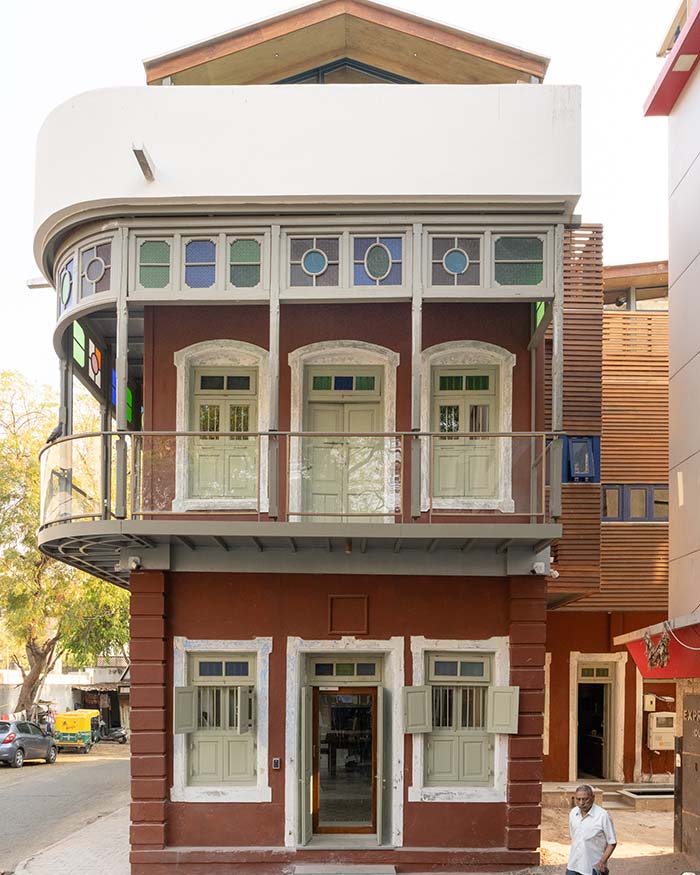
During the restoration, alongside orthographic drawings, they created a photogrammetric scan. Between the visual evidence and their architectural reading, the structure disclosed itself incrementally, almost archaeologically. Among the discoveries were unusually deep jack arches on the ground floor, remnants of the house’s earliest incarnation as a single-storey structure. In 1932, permission was granted for a balcony to extend four feet into the street. Today, the house rises three storeys: the first two inherited, the third a contemporary accretion. In Specters of Marx, Derrida writes of apparitions that survive the exorcisms of newness and continue to exert their influence upon the present. Read spatially, this residence-turned-studio becomes a living archive: a palimpsest in which time has not been erased but reasoned with. The years had been unkind to the built form. Rusting steel deformed the masonry, while an old I-section, introduced to cannibalise the jack arches in pursuit of a cantilever, had itself begun to fail. The endangered stained-glass panels on the façade required meticulous intervention. When reconstructing the failed slab, they punctured it with a light well.


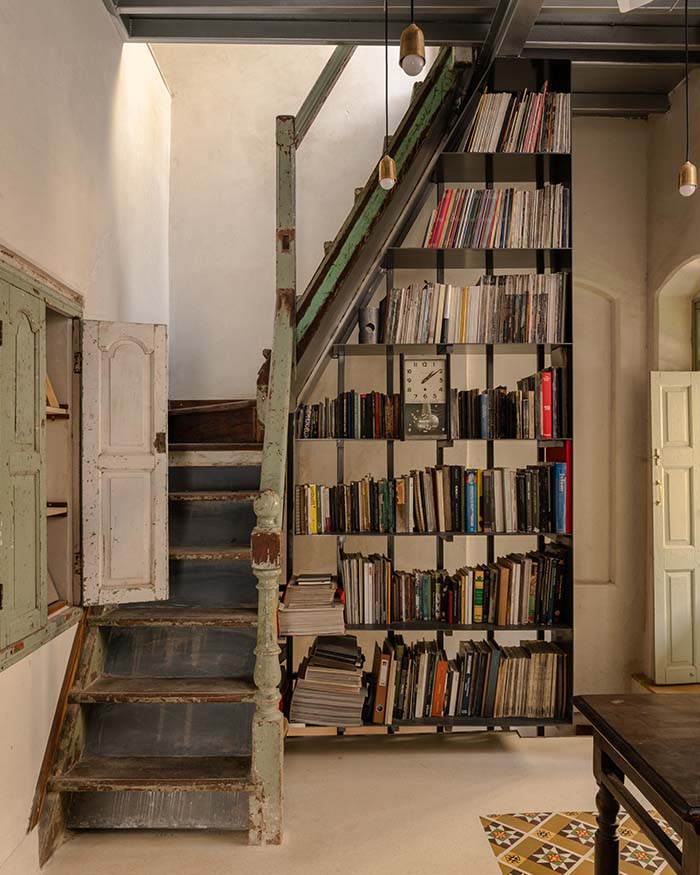
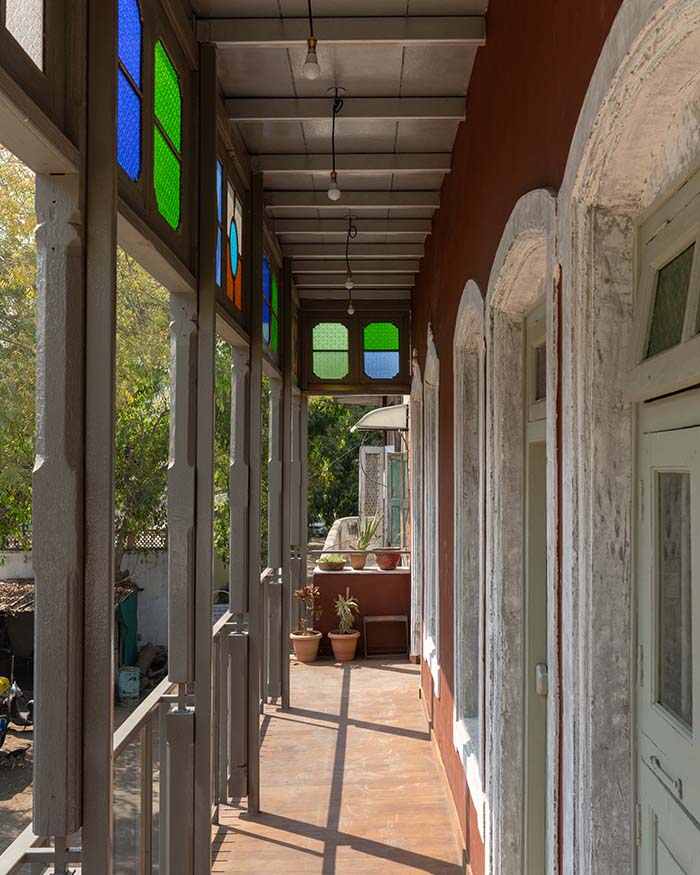
Paint-worn handrails of the old home are kept as evidence of the life lived by the structure. A window on the left is repurposed as a shelf. The tiles are restored and placed as a pattern with gaps to ensure they age well; Photography by Harsheen Mengar
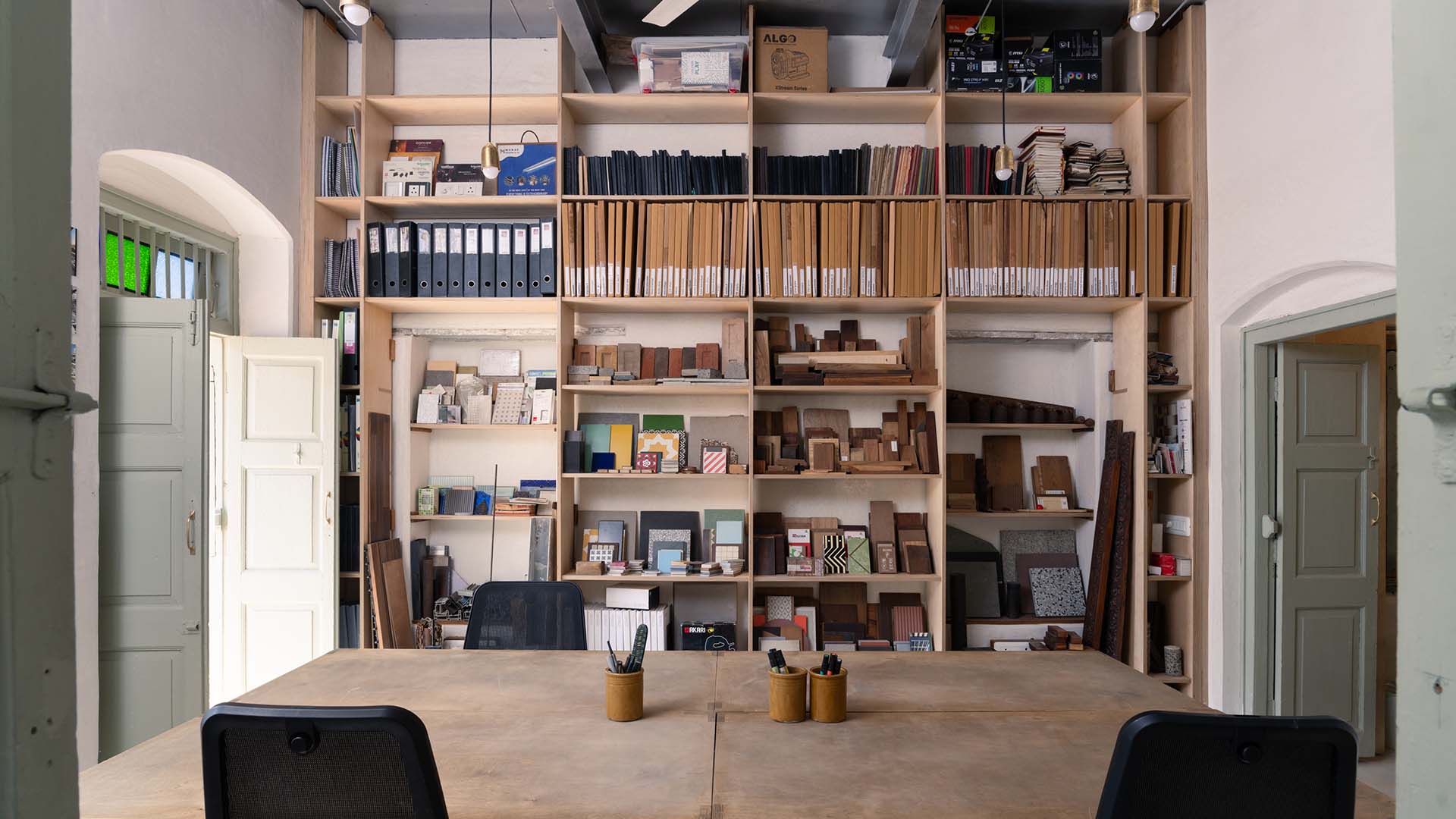
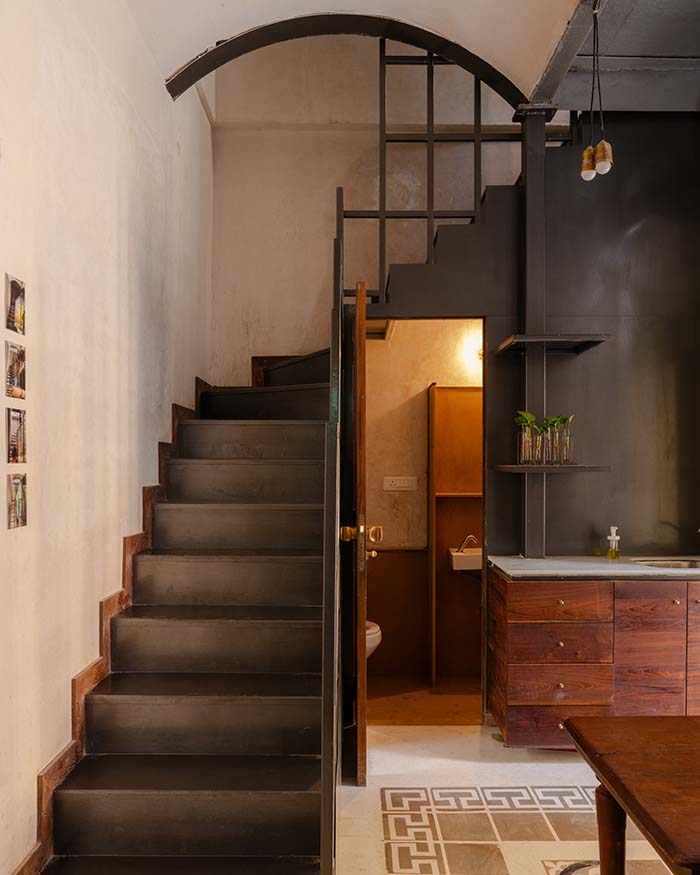
BandukSmith Studio utilises the walls as storage for models and knick-knacks while accommodating areas like print rooms that are essential to a studio; Photography by Harsheen Mengar

The discoveries continued: a single-panel door that may once have served as an older exit, and a 70 ft well beneath the flooring. “The water level is now around 380 ft. So we cannot gather water from the well. But the roof that we have added brings the rain down through the building and drops it into the rainwater harvesting tank,” she says. On the second floor under the pitched roof is also room for temporary inhabitation. And a piano. “I’ve never had a space for a piano, we decided that it was time,” she laughs. She adds, “We wanted to respond to what the building offered. It is our space, we could experiment and try things.” Restoration, when done right, is a negotiation with what remains and what is desired. Time is, indeed, out of joint here, but in the most intriguing sense. The exposed steel, punctured slab and out-of-order well do not mourn an absent ideal of originality. What emerges is a ricochet between remembrance and anticipation: a mercurial presence neither old nor new, but perpetually becoming. A Derridean apparition not of what once was, but of a future that has only begun to arrive.

Read more: Parallel walls of cabinetry define a compact office where light, books and material samples co-exist

Found in a dilapidated condition, the Art Deco residence from 1931 was restored with care to fit the needs of a modern architectural studio; Photography by Harsheen Mengar
SHARE THIS ARTICLE

You May Also Like

Watch

No results found.