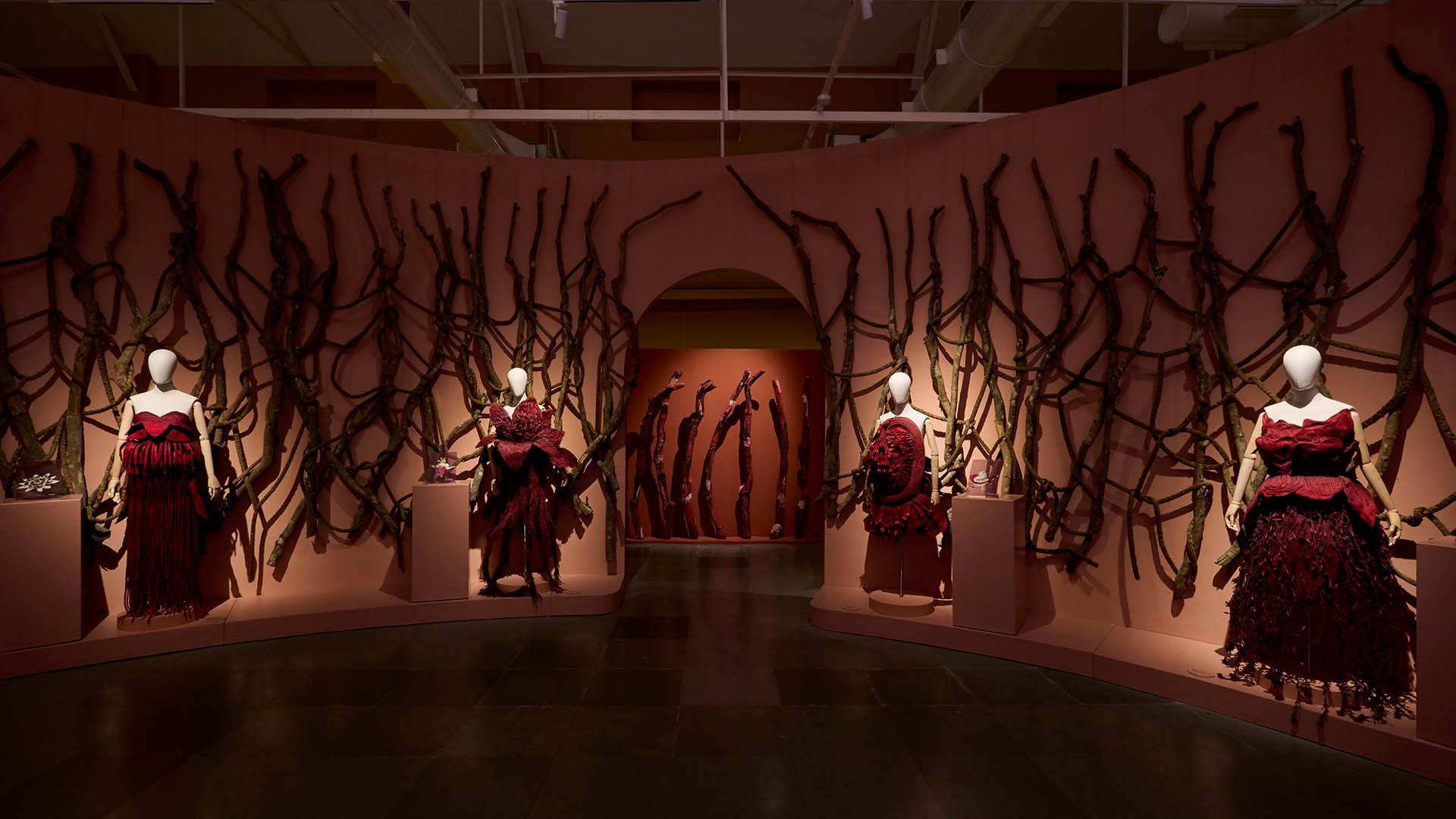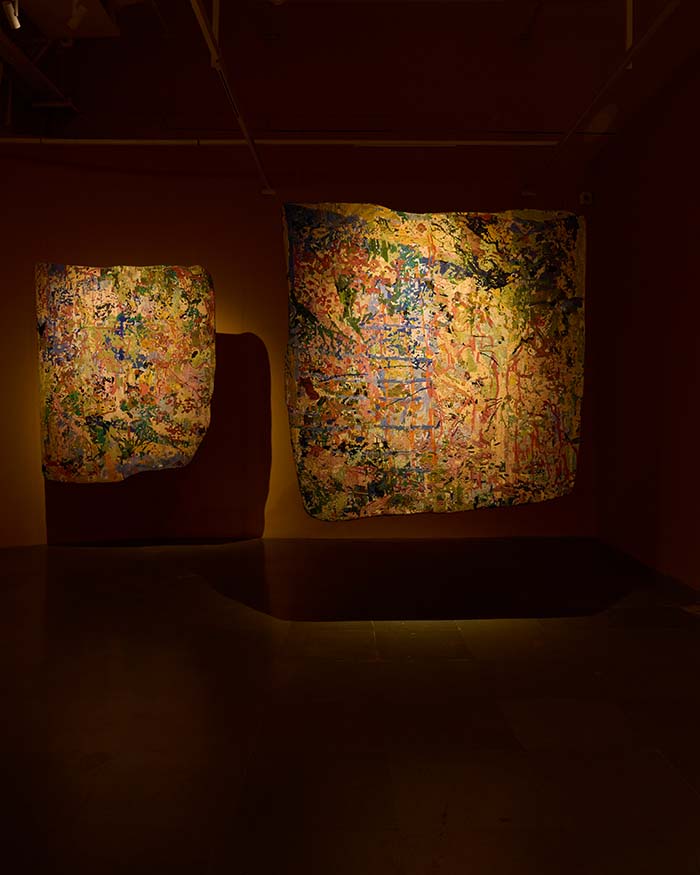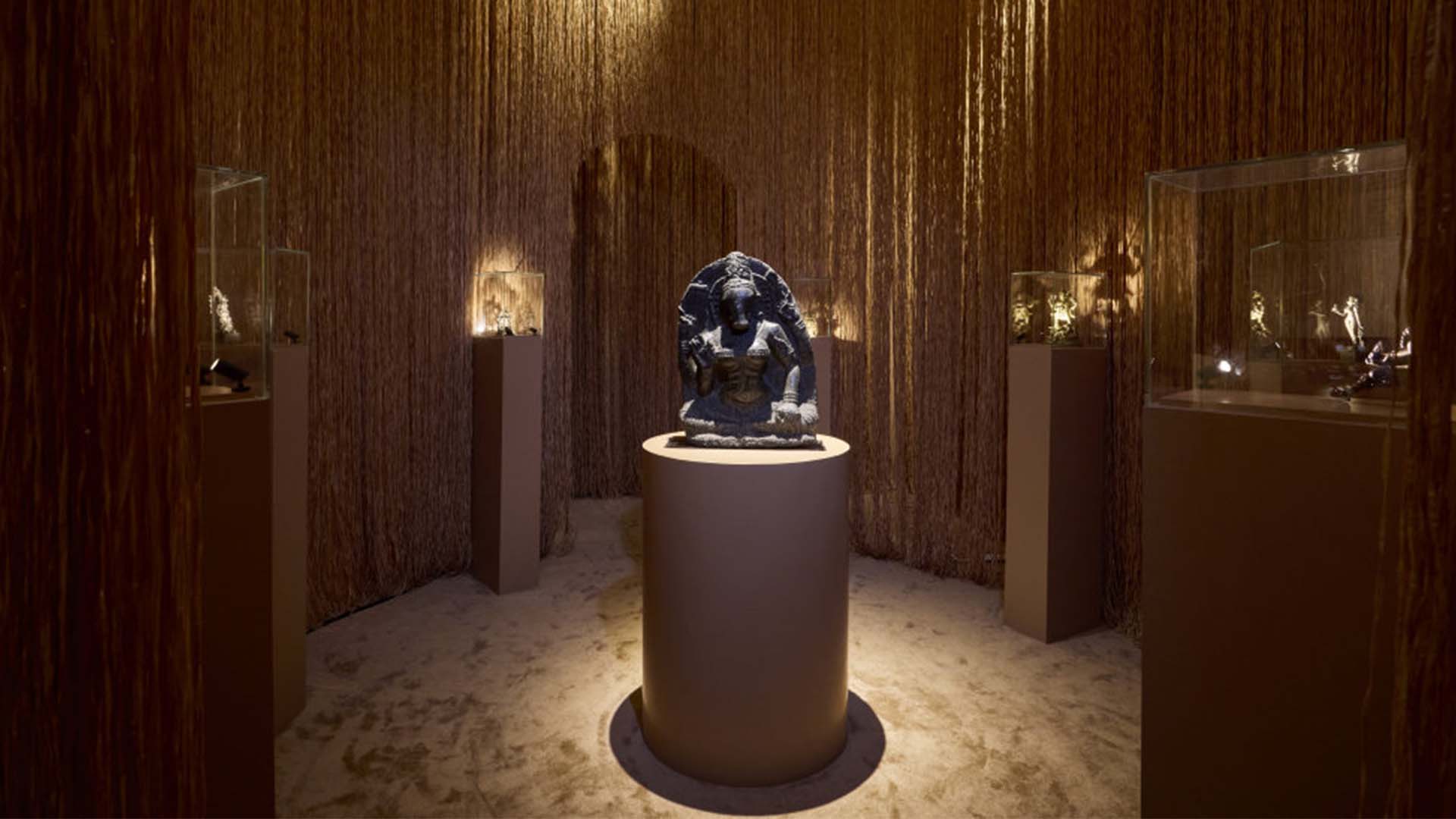
The interesting tension in Karishma Swali’s work is that embroidery, often treated as a decorative or inherited craft, becomes a way of thinking. About maps, movement, authorship, scale and who gets to carry knowledge forward. Across Chanakya’s 40-year history and the School of Craft’s decade of work, her practice has increasingly questioned the separation between craft and contemporary art, instead placing artisans, artists and inherited techniques within the same creative conversation. The three Mumbai exhibitions extend that inquiry in different directions. The layered cartographies of En Route, the collective gestures of Garden of Gestures and the material conversations of Belong. 

We speak to Karishma about what happens when a stitch becomes both archive and artistic language.

What fascinated you most about the six women travellers behind En Route, and how did their journeys become something you could translate through thread?

Clarification: the women travelled across the world. 

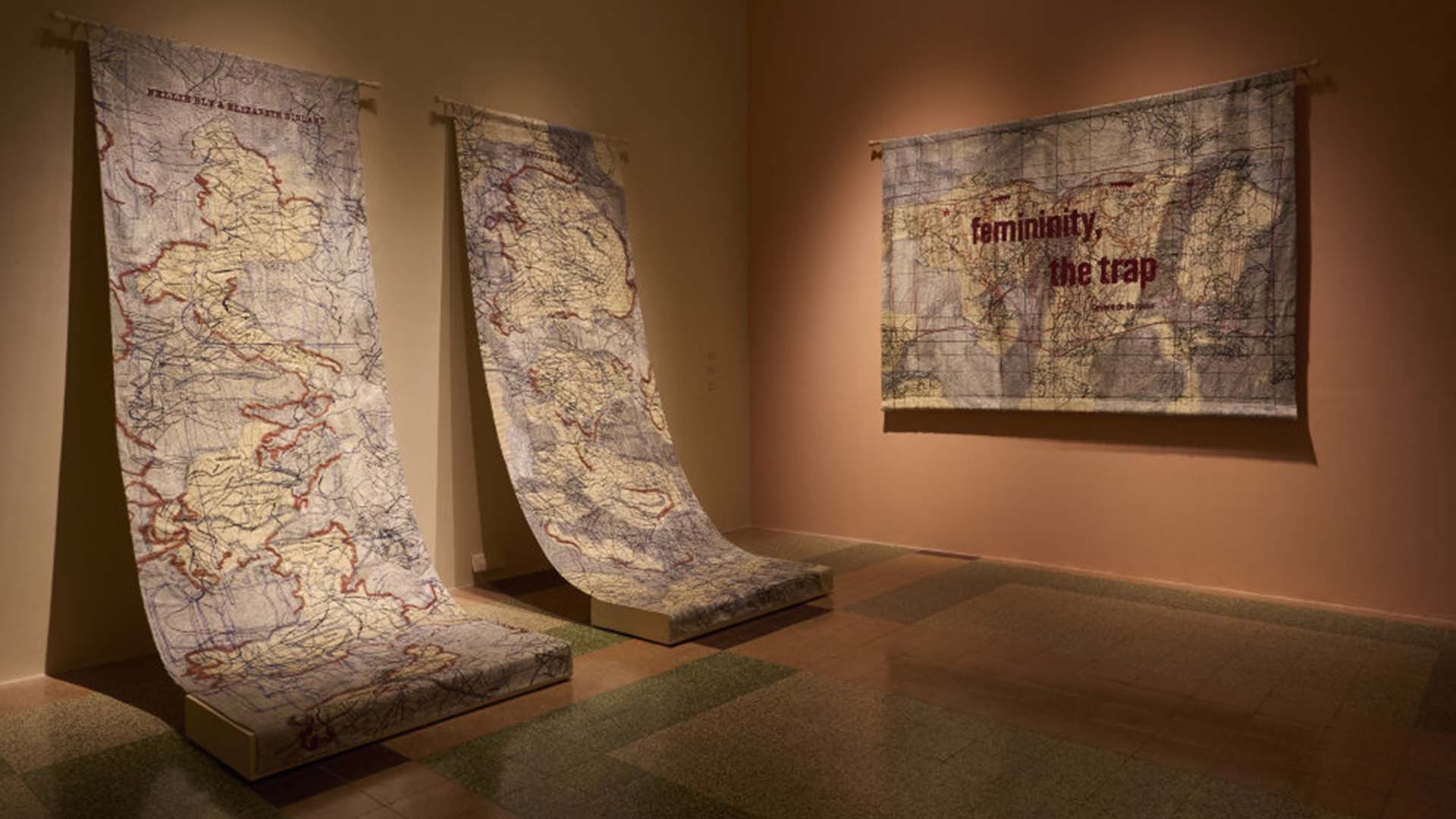
When Maria Grazia Chiuri and I visited the Vatican Apostolic Library, we encountered the writings of six extraordinary women who travelled across continents during the closing decades of the nineteenth century. What interested us was the very act of journeying: how these women moved through unfamiliar geographies with curiosity, observing architecture, landscapes, languages, textiles and everyday life, and creating knowledge through lived experience. Their journeys were also acts of remarkable independence. Nellie Bly circumnavigated the world in just 72 days, while Annie Londonderry’s journey around the world by bicycle saw her exchange the restrictive conventions of women’s dress for clothing that allowed greater freedom of movement. Within the context of the nineteenth century, these were powerful assertions of agency. 
Photograph courtesy of Chanakya International and the Chanakya School of Craft

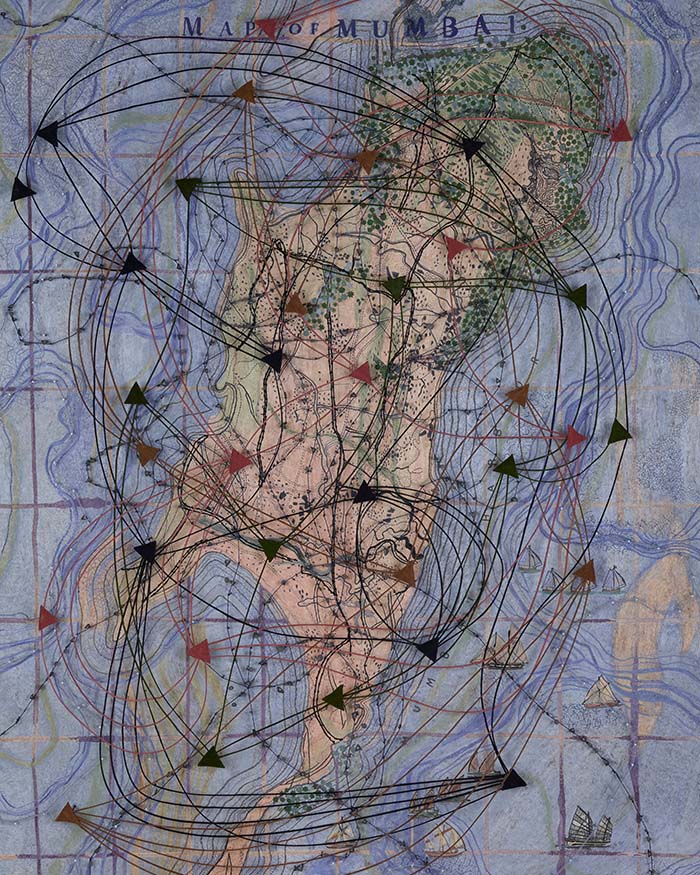
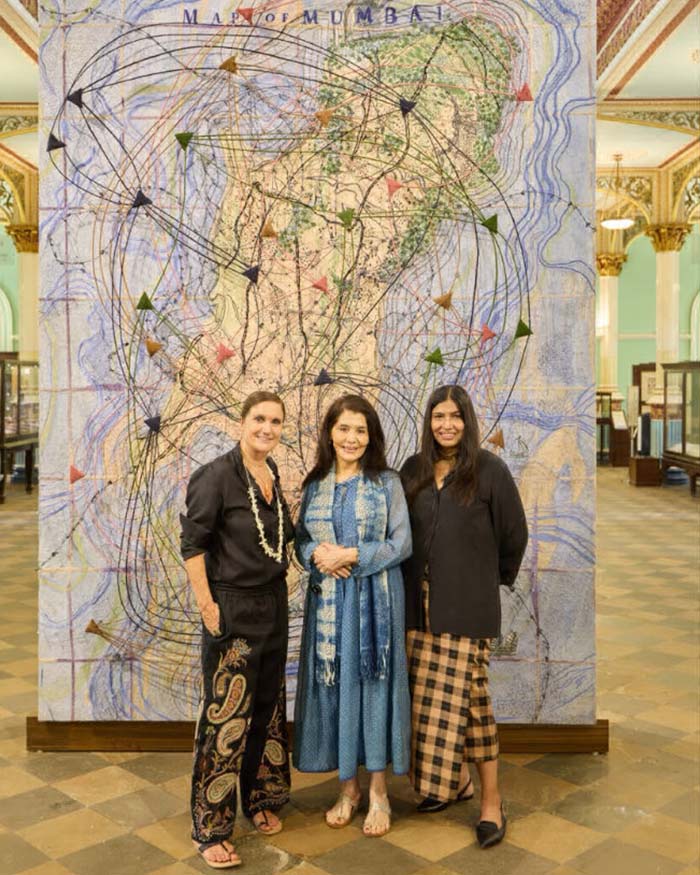
Their stories became a point of departure for En Route, interpreted through overlapping cartographic impressions and embroidery, almost as though each stitch retraces a step in their journeys. As the exhibition travels from the Vatican to Mumbai for Chanakya’s 40th anniversary, this exploration of mapping and discovery enters into a new dialogue with the Dr Bhau Daji Lad Museum. Thanks to the vision and guidance of our Curatorial Advisor, Tasneem Zakaria Mehta, and the Museum’s extraordinary archive of rare maps, we were able to situate En Route within the history of Mumbai itself, tracing the city from its origins as seven islands through reclamation, trade, the cotton mills and the Art Deco seafront. Across both contexts, En Route considers how knowledge travels, how it is preserved, and how each generation finds new ways of carrying it forward. 

Photograph courtesy of Chanakya International and the Chanakya School of Craft

Mumbai is a city that has changed shape over time. How do you capture something so vast and constantly evolving through embroidery?

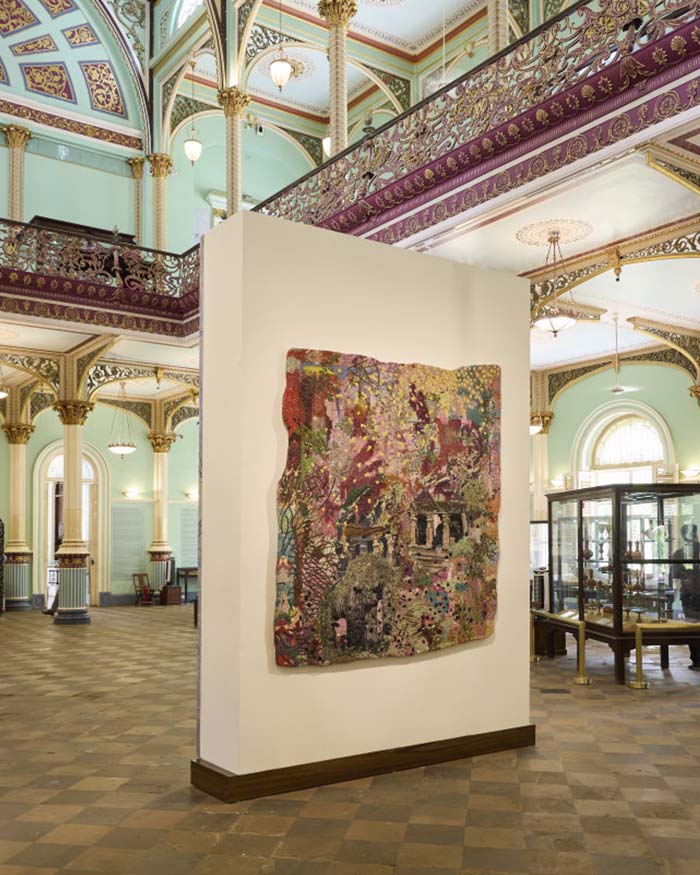
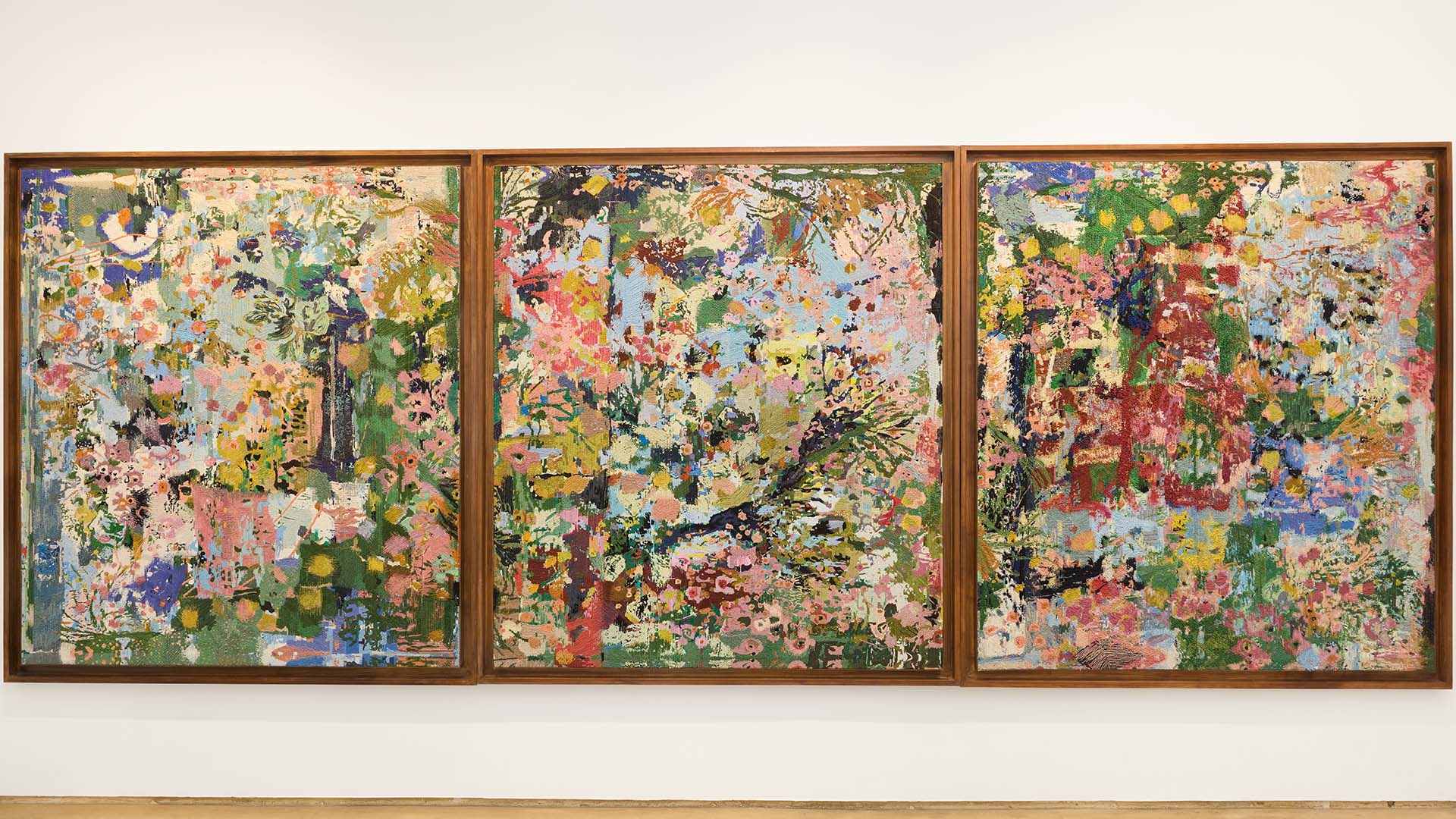
Within our practice, hand embroidery has continually allowed us to explore the relationship between the intimate and the monumental. Across projects of very different scales, from large scenographic works and immersive textile installations to Cosmic Garden and En Route, we have seen how the accumulation of individual gestures can transform a surface into something architectural, spatial and expansive. Scale, for us, is shaped as much by duration and the accumulation of countless individual gestures as by physical dimension. Central to this is our ongoing research into techniques from across the Indian subcontinent and how they can be interpreted within a contemporary artistic language. We are interested in what happens when inherited techniques are re-examined through changes in material, proportion, density and application, allowing them to move beyond their familiar contexts and assume entirely new expressions. In this way, embroidery becomes a continually evolving medium through which we can approach both material and conceptual scale. 

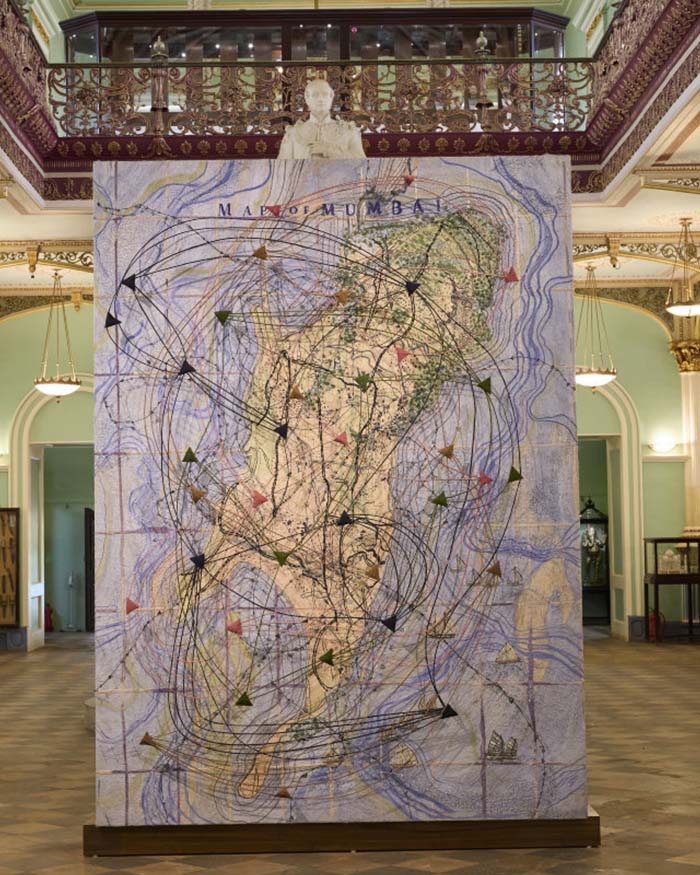
In Mumbai, this became particularly meaningful. With the guidance of our Curatorial Advisor Tasneem Zakaria Mehta, we engaged with the Dr Bhau Daji Lad Museum’s extraordinary collection of rare maps and plans to consider how a city in continual transformation might be expressed through thread. Seven layers of cartographic drawings trace Mumbai from its earliest form as Heptanesia, a cluster of seven islands, through reclamation, trade, the cotton mills and the Art Deco seafront. A second work situates the Museum within this evolving history, recognising its role in documenting, preserving and renewing the city’s industrial, artistic and civic life. 

Photograph courtesy of Chanakya International and the Chanakya School of Craft

What are you able to say with embroidery that you simply can’t with paint, pencil or a digital map?

Embroidery brings a particular materiality and dimensionality to an image. A line drawn in thread is also a physical gesture: it has texture, tension, depth and the trace of the hand. It can be layered, unravelled, interrupted and rebuilt, allowing a surface to hold multiple dimensions simultaneously. In En Route, this becomes particularly meaningful through cartography. The maps are not simply representations of geography; through overlapping threads, techniques and textures, they become tactile records of movement, exchange and transformation. Embroidery allows us to approach mapping as something living and evolving, where each stitch carries both a physical presence and a connection to knowledge transmitted across generations. 

When dozens of hands go into making a single work, who does it belong to?

Perhaps its singularity lies precisely in its multiplicity. Hand embroidery is an accumulation of individual gestures, each carrying the knowledge, intuition and presence of its maker. Even in repetition, no two gestures are entirely identical. This is fundamental to our practice at Chanakya School. A work may be encountered as a single composition, but it holds within it many hands, perspectives and forms of knowledge. For us, it is this relationship between the individual gesture and the collective whole that gives hand embroidery its extraordinary vitality. 

Photograph courtesy of Chanakya International and the Chanakya School of Craft

Traditional craft is built on knowledge passed down over generations. How do you make sure the next generation stays keen on carrying it forward?

The Chanakya School was established in 2016 as a non-profit school and foundation dedicated to craft, culture and creating a new autonomy for women. To date, the School has educated over 1,400 women in 300 techniques, including hand embroidery, hand weaving and macramé. Its holistic curriculum is enriched by the stories and legacies of historical female icons such as Coco Chanel, Frida Kahlo and Sarojini Naidu, inspiring students to explore broader cultural narratives. Historically, craft in India has largely been passed down from father to son. Our School is unique in that it not only teaches the intricacies of hand craftsmanship, but also exposes our students to culture and design through colour theory, semiotics, art history, design thinking, business acumen and finance. As they gain confidence and exposure, their relationship with craft changes. They bring new perspectives, contemporary sensibilities and personal histories into these traditions. 

As they deepen their craft, the women also grow more assured in their interactions, finding their voice and carrying themselves with quiet confidence. Many graduates join the Chanakya ateliers as skilled practitioners, others use the entrepreneurial tools within the curriculum to build independent practices, while some return to the School as faculty through our teachers programme, becoming mentors and custodians of knowledge. For me, this growing creative and economic autonomy is perhaps the most meaningful transformation.

Photograph courtesy of Chanakya International and the Chanakya School of Craft
SHARE THIS ARTICLE

You May Also Like

Watch

No results found.