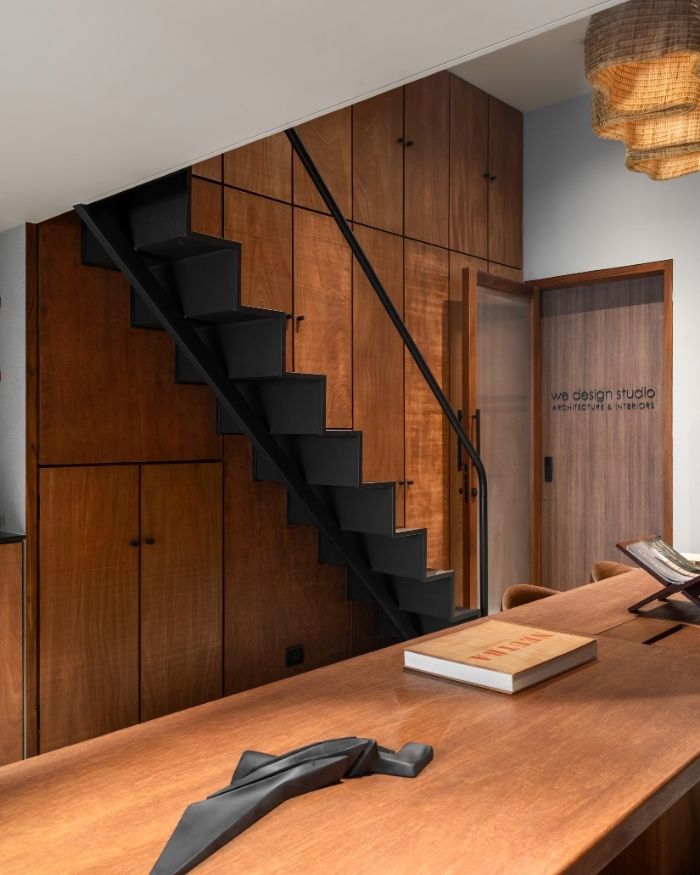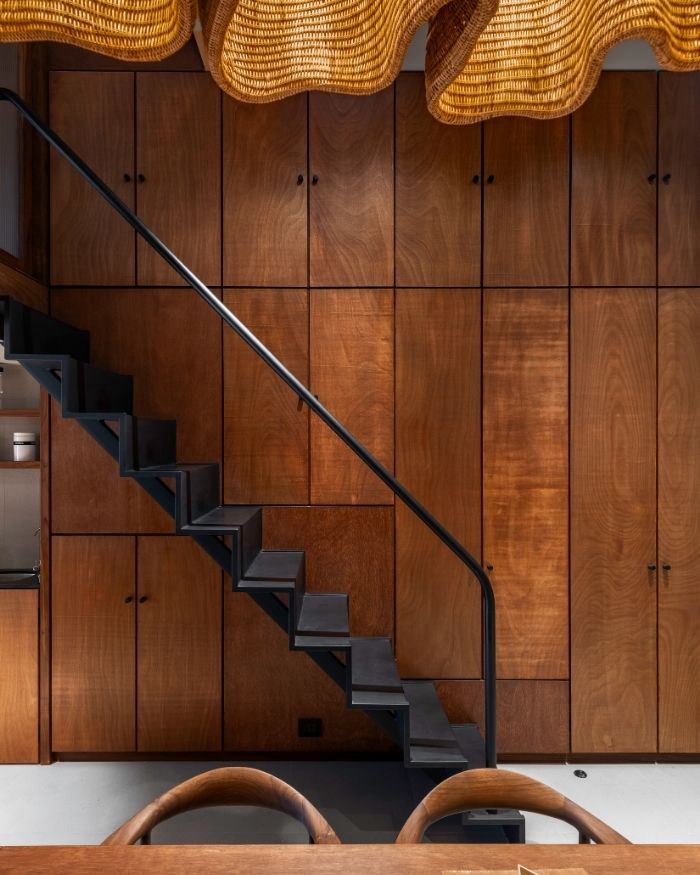

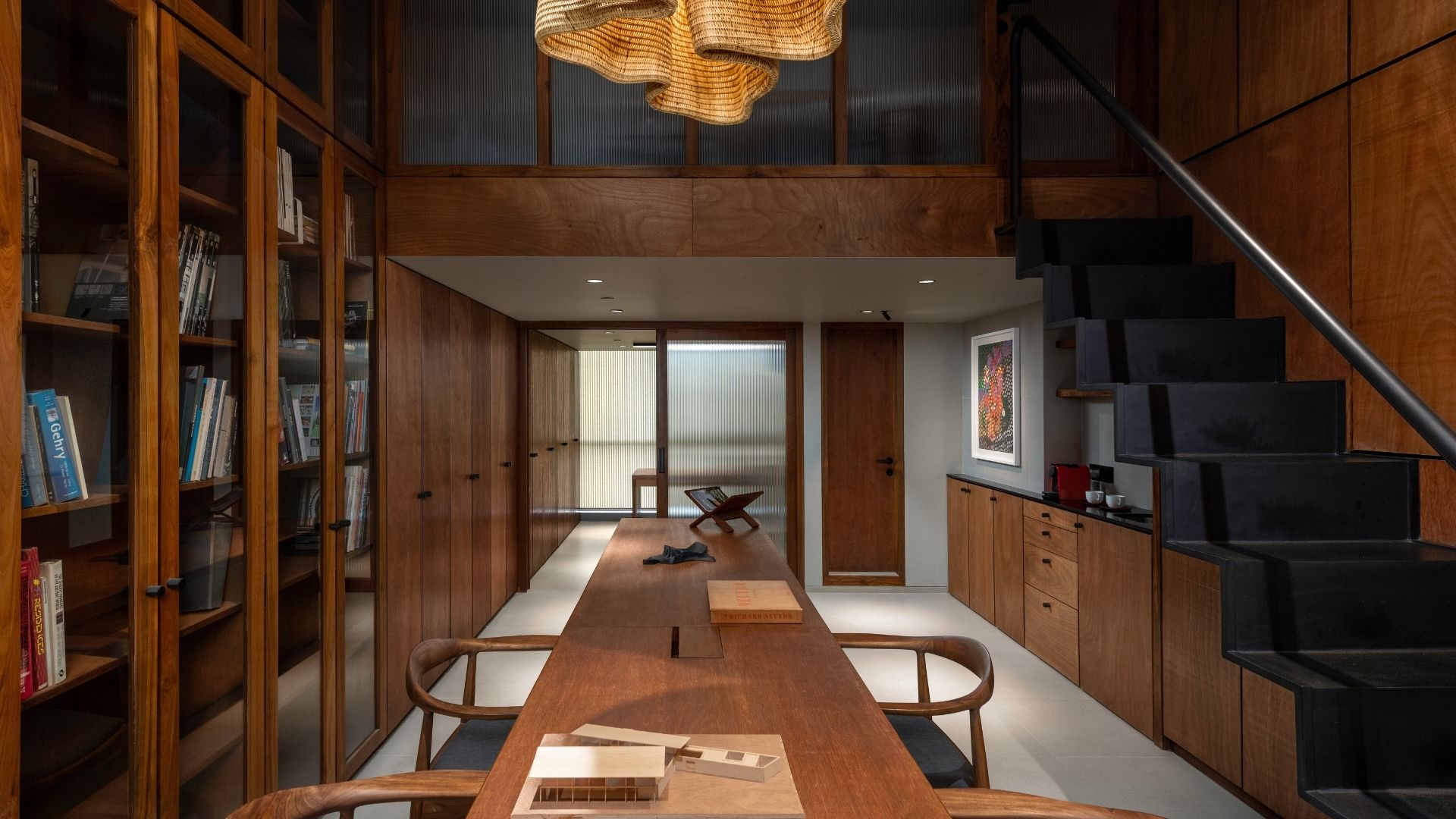
A folded metal staircase rises, cutting through walls of teakwood cabinetry that stretch across both levels of this office in Mumbai. As you begin to absorb more details that materialise around, a fluid-formed woven chandelier decidedly suspends from the ceiling above with a sculptural finesse. Designed by principal architects Nupur Shah and Saahil Parikh of We Design Studio as their own workplace after practising for almost 15 years in a 200 sq ft space, their novel office that spans an area of 650 sq ft conveys that utility and creative expressions can take root even within compact footprints.
Perched on the 20th floor of a commercial tower overlooking the Arabian Sea and the under-construction Bandra-Versova Sea Link, the office holds within two levels connected effortlessly by a mezzanine. As natural light filters through fluted glass partitions and large windows overlooking the sea, the workspace responds to the practical demands familiar to most design practices — storage and organising systems! Books, material samples, scaled models and project files informed much of the planning, resulting in a design decision where cabinetry became the defining architectural element.
“There is 400 sq ft space on the lower level and 250 sq ft space on the upper level. The lower level acts as a meeting area and our private cabin, while the upper level is dedicated to the staff,” explains the duo.
The office is organised between two parallel walls of storage that run through much of the space. Rather than dividing these separate areas with solid partitions, fluted glass screens allow natural light to seep in around the office, maintaining a sense of openness despite the compact dimensions.
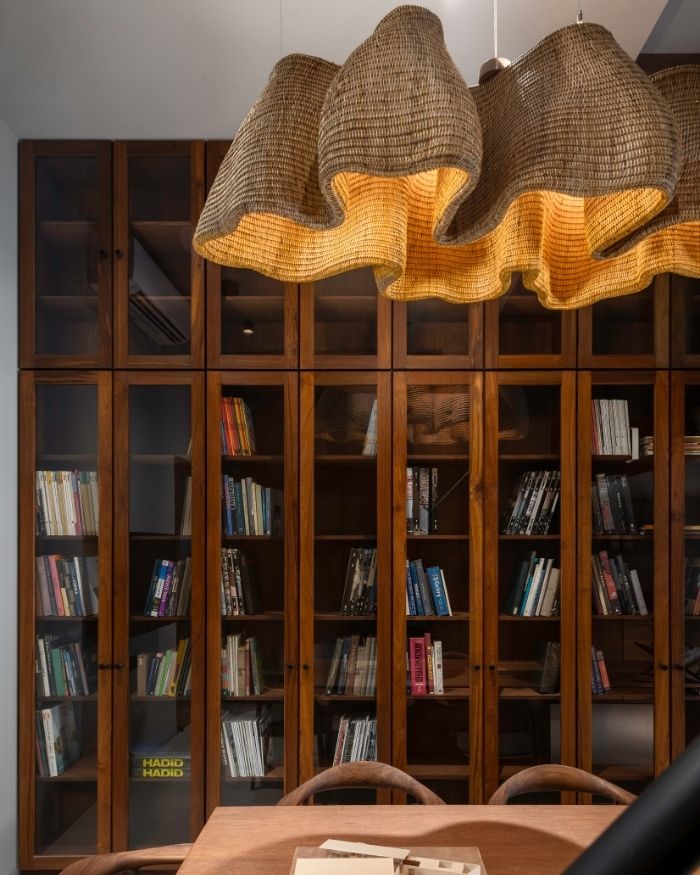
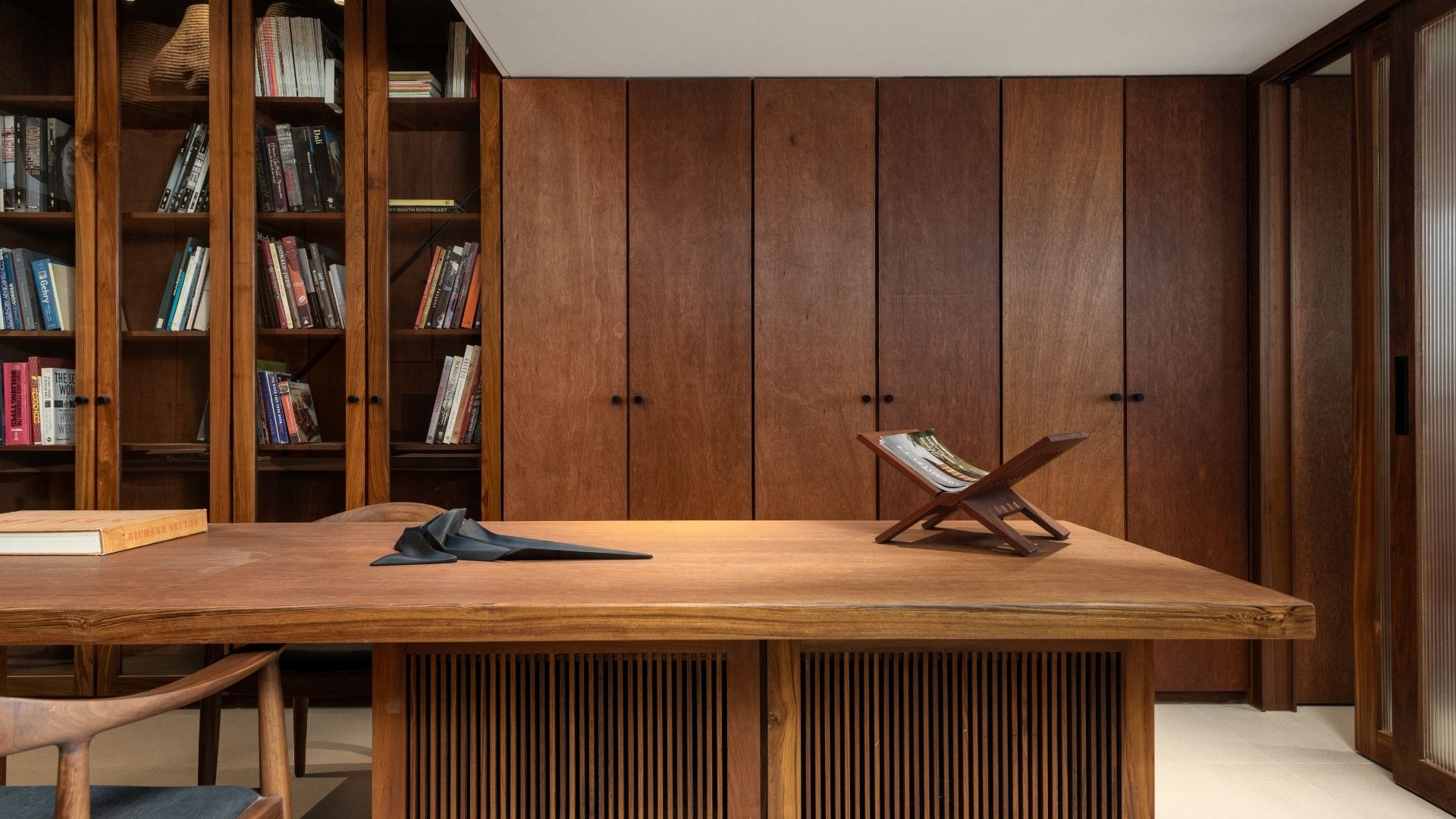
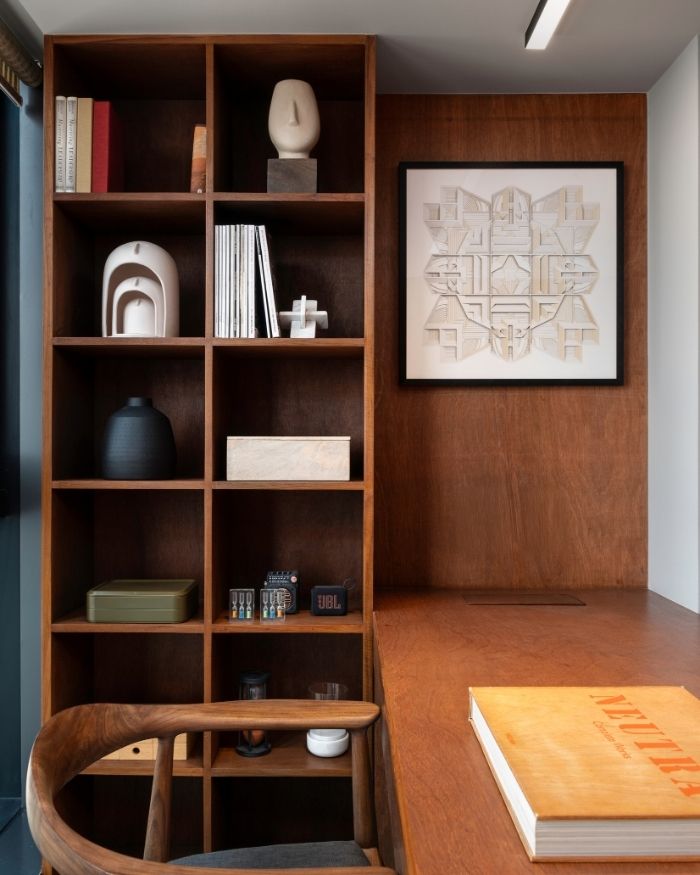
The meeting space benefits from the double-height volume created by the mezzanine. Floor-to-ceiling bookshelves line one side, housing years of reference material, while the folded metal staircase forms a strong graphic element against the timber backdrop. At the centre sits a fifteen-foot-long table that serves equally as a discussion surface, workspace and display area.
The palette remains deliberately restrained. Teak wood and exposed plywood form most of the cabinetry, shelving and furniture, finished in a matte linseed oil polish that highlights the natural grain of the timber. In contrast, the walls, floors and ceilings are treated in shades of grey, creating a muted backdrop for the warmth of the joinery.
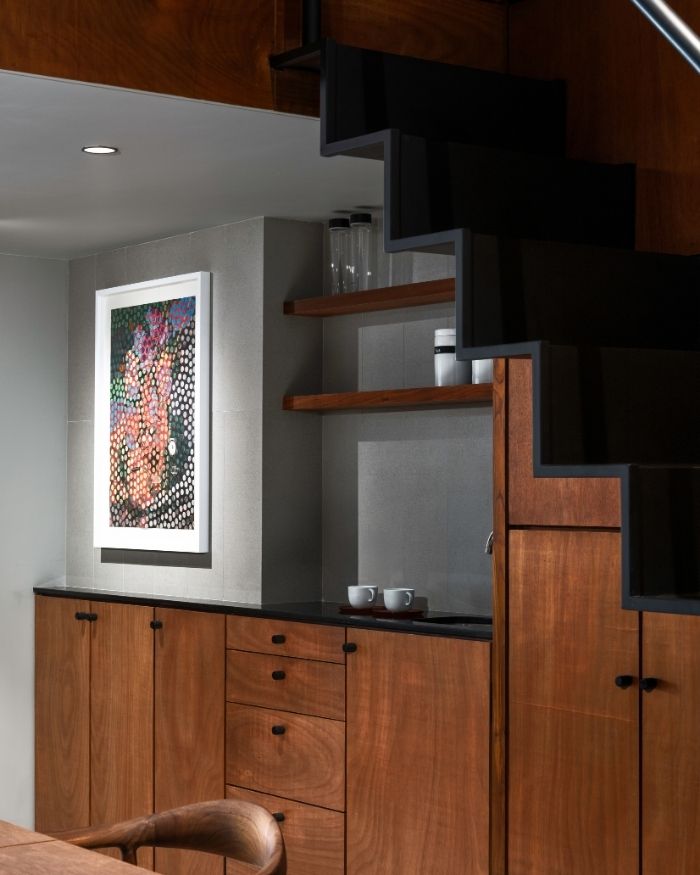
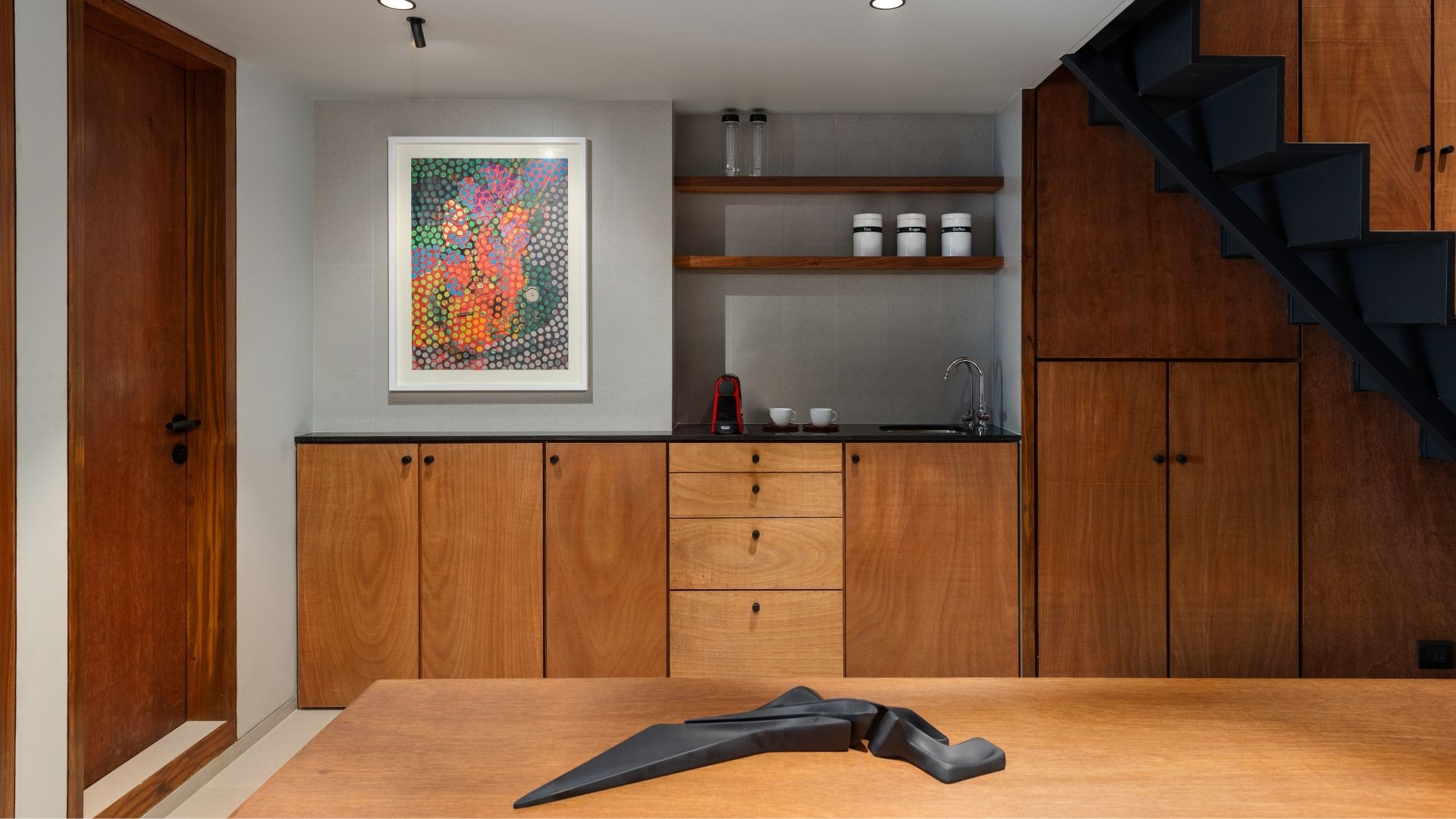
Storage requirements informed much of the detailing. Cabinetry changes subtly from one area to another depending on its use, accommodating everything from books and models to material catalogues and project archives. Services, including air-conditioning and firefighting systems, are integrated within the millwork, allowing the interiors to remain visually uncluttered.
The most engaging part of the office is the meeting area positioned beneath the mezzanine void. Here, the scale shifts noticeably, creating a sense of openness within an otherwise tightly-bound space. Suspended above the table, the Bloom chandelier by Wicker Story introduces texture and movement, its woven form contrasting with the linear geometry of the cabinetry and staircase.
Natural light remains a constant presence throughout the day, entering through windows on both levels and extending deep into the plan. Together with the warm timber palette and carefully integrated storage, it creates a workspace that feels calm, functional and appropriately scaled to its needs.
Read more: Workstations, glass partitions and open spaces: these offices let you revel in design
No results found.