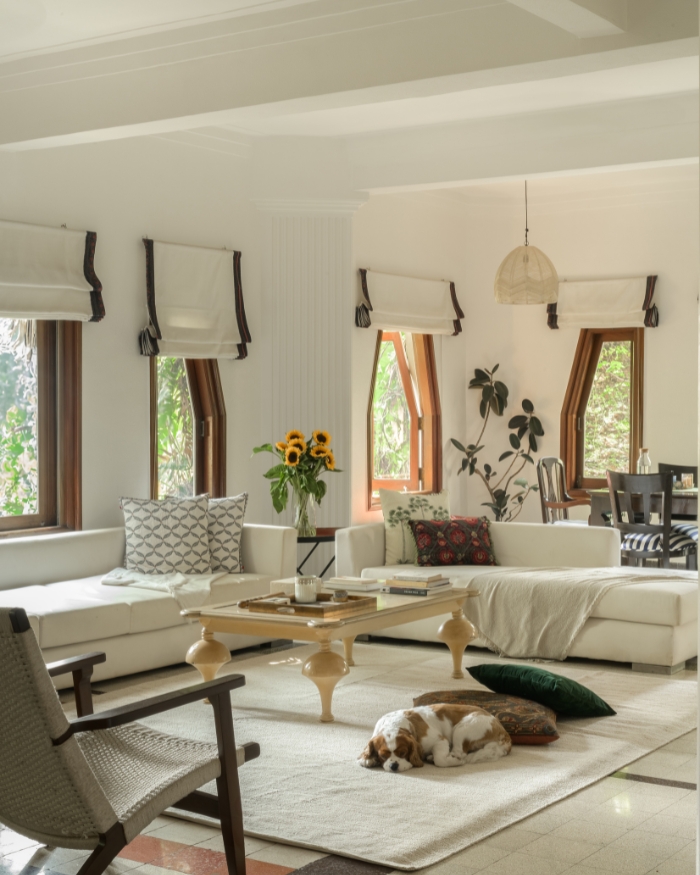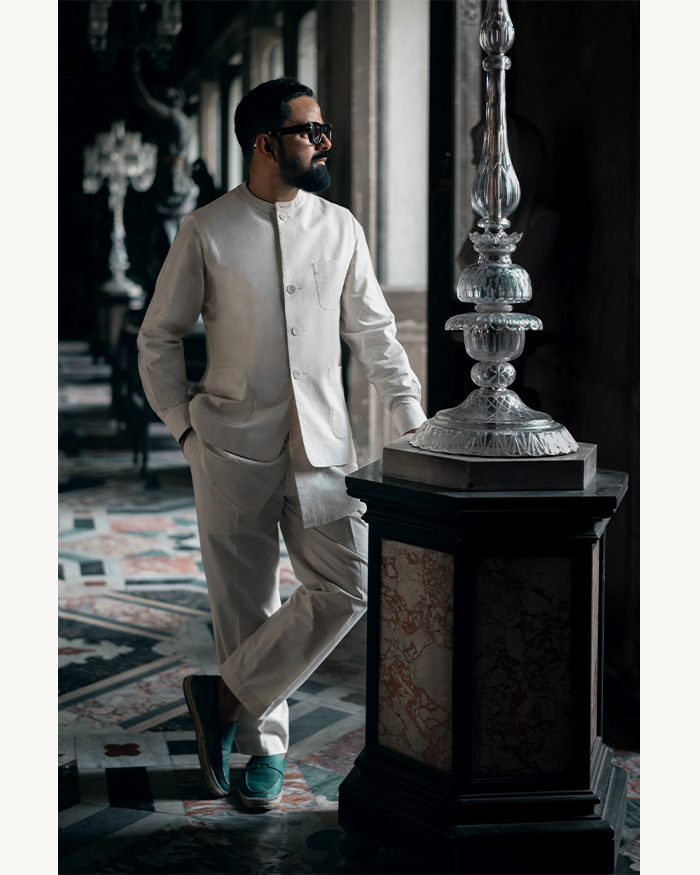

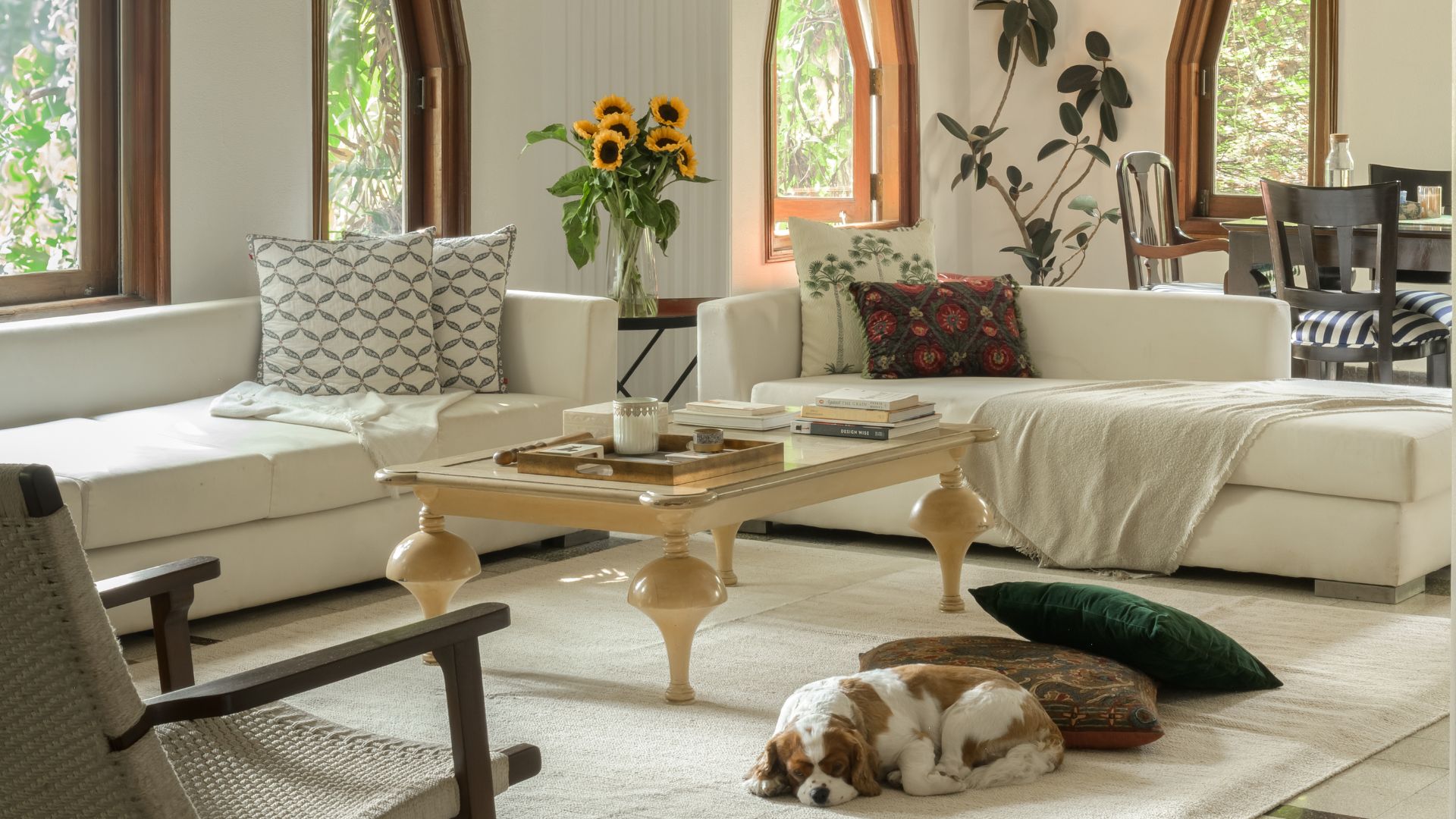
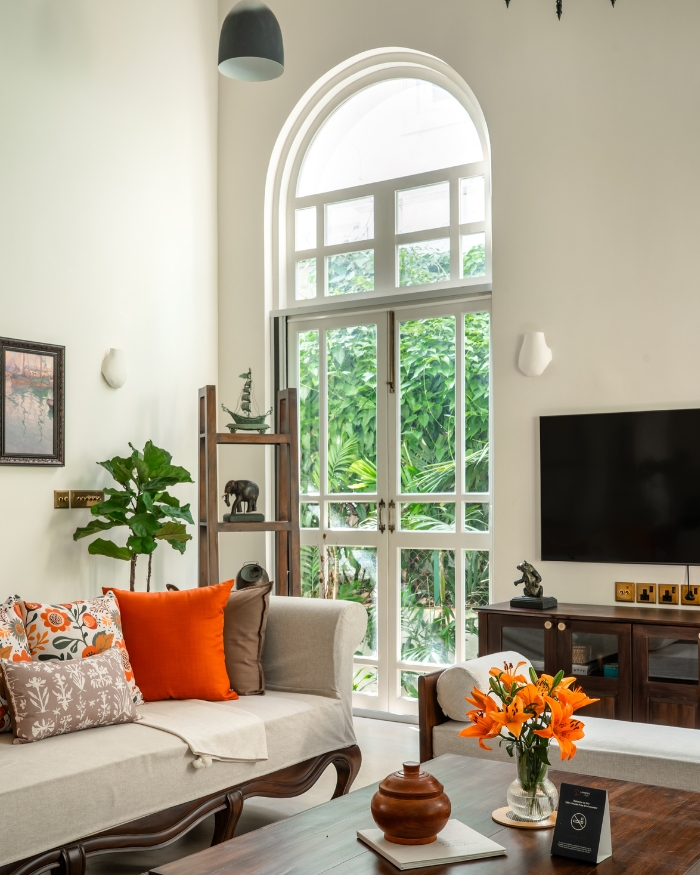
In the airy dining room of this apartment in Mumbai, one window lets in the morning sun while the others hold it back, so the dining functions as a sunlit breakfast spot early in the day and a shaded, snug corner for work by afternoon. It is the kind of detail that only surfaces when a designer has actually lived with a space, and Anjori Alagh, who took on the home’s interior planning, built the entire space around the light and her instincts.
The 2,100 sq ft apartment is tucked inside Dhanraj Mahal, an Art Deco building from the 1930s that was originally constructed as a royal residence for Maharaja Narsingir Dhanrajgir Gyan Bahadur of Hyderabad. While several residential and commercial spaces now find life inside the building, this apartment is imagined such that every room here interacts uniquely with light, shaped around history and the couple’s own collected objects. It holds two bedrooms, one open kitchen and a combined living and dining space. “The architecture already carried so much presence. My role was simply to let it continue speaking,” declares Anjori.
"I believe there is a very thin line between creating warmth and creating clutter"
Anjori Alagh
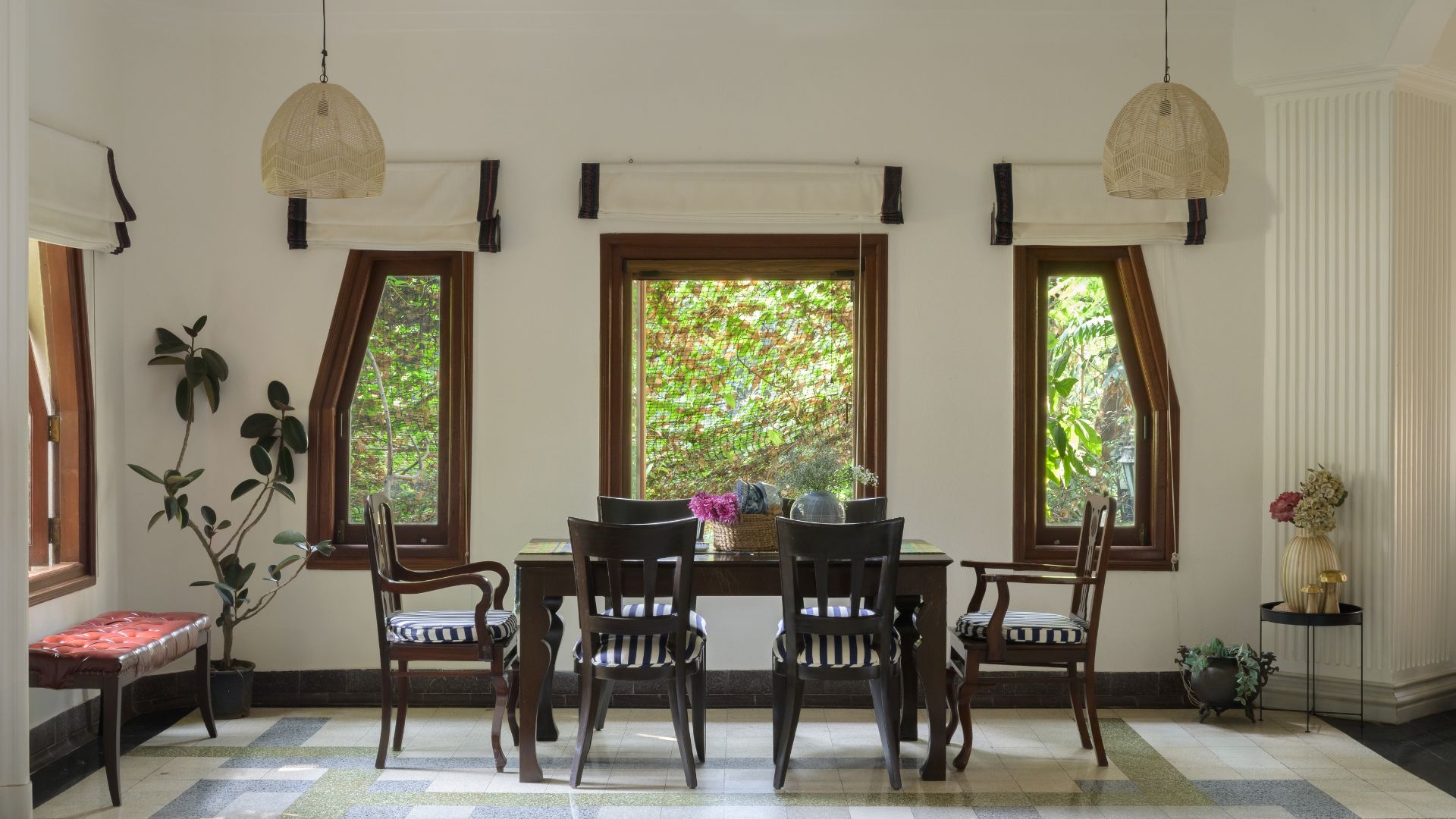
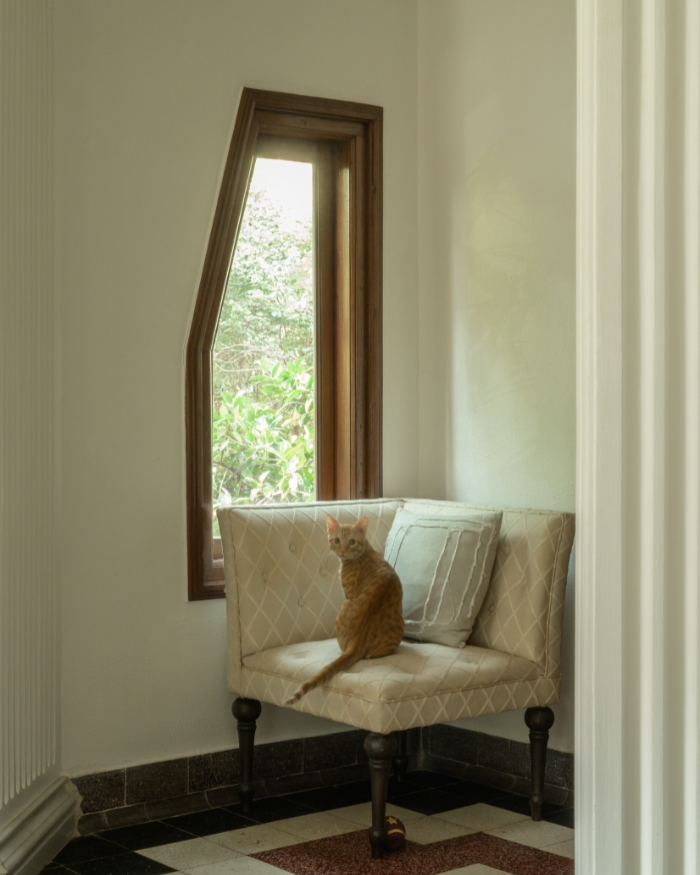
Before any design decisions were made, Anjori spent time simply understanding what Dhanraj Mahal already was. “Architecturally, it’s just gorgeous,” she describes the building’s entrance gates and the drive into its courtyard as an experience that made her feel like she was living in a different era. That sense of arrival carries through the apartment, in its streamlined plaster moulding, its large fluted pillars and a set of Art Deco windows so unusual in shape that Anjori calls them rare and truly irreplaceable.
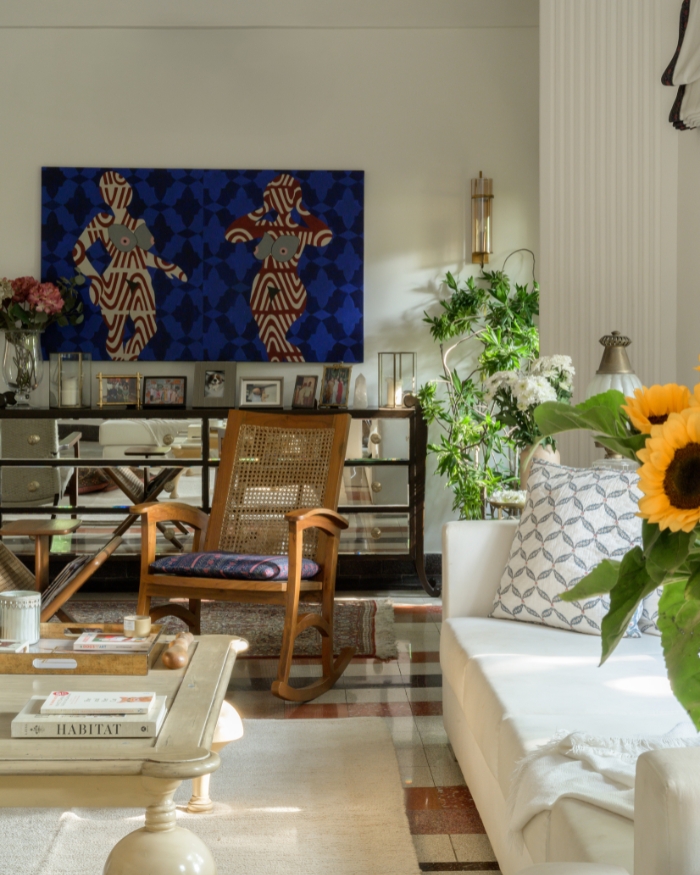
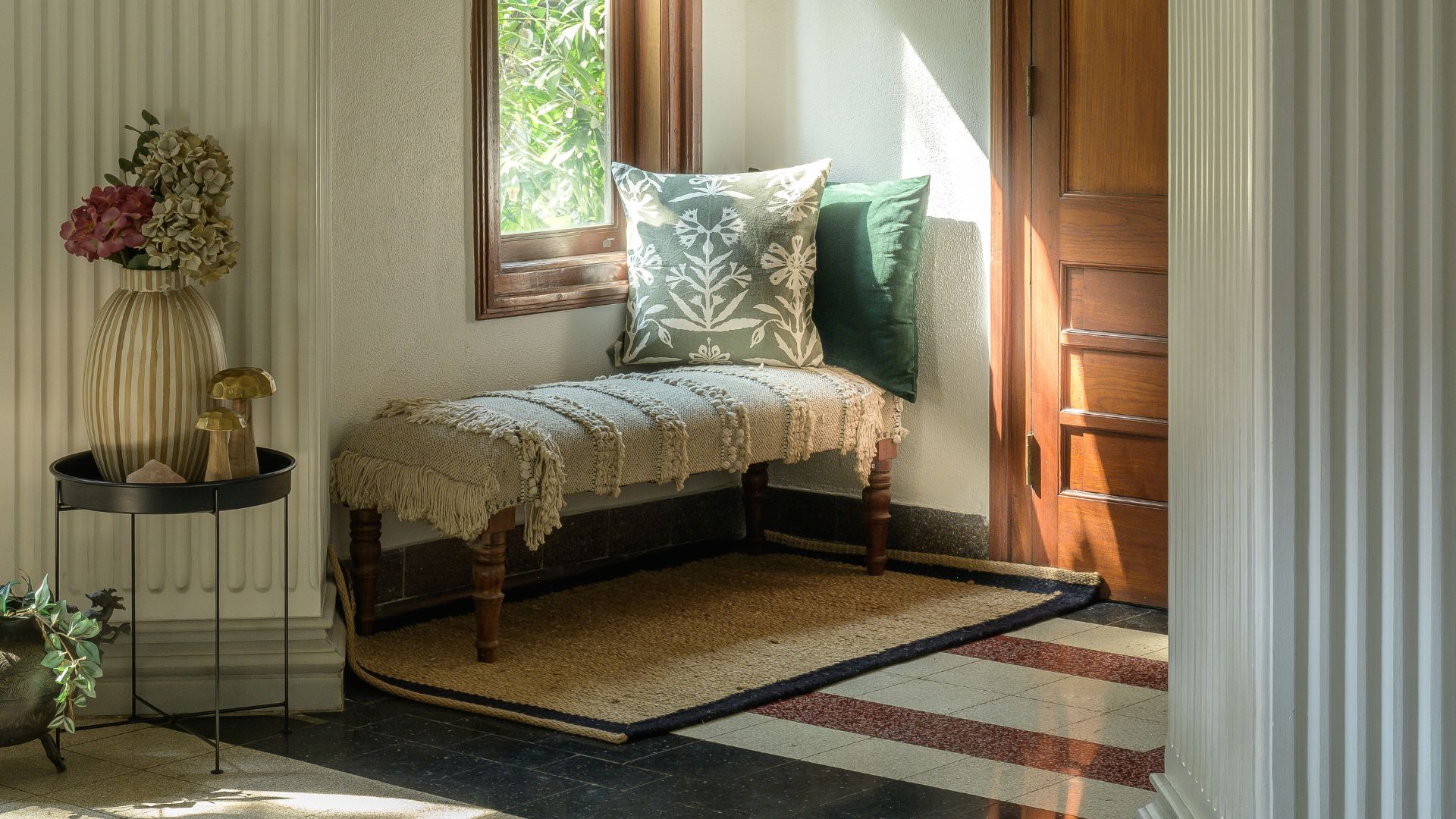
The one element Anjori keeps returning to is the flooring. Patterned in emerald, green, burgundy, white, black and mustard, it reminds her of homes from her own childhood. “The combination is always a winning one,” she says, and instead of covering it or competing with it, she designed every room to let it stay the loudest thing in the space.
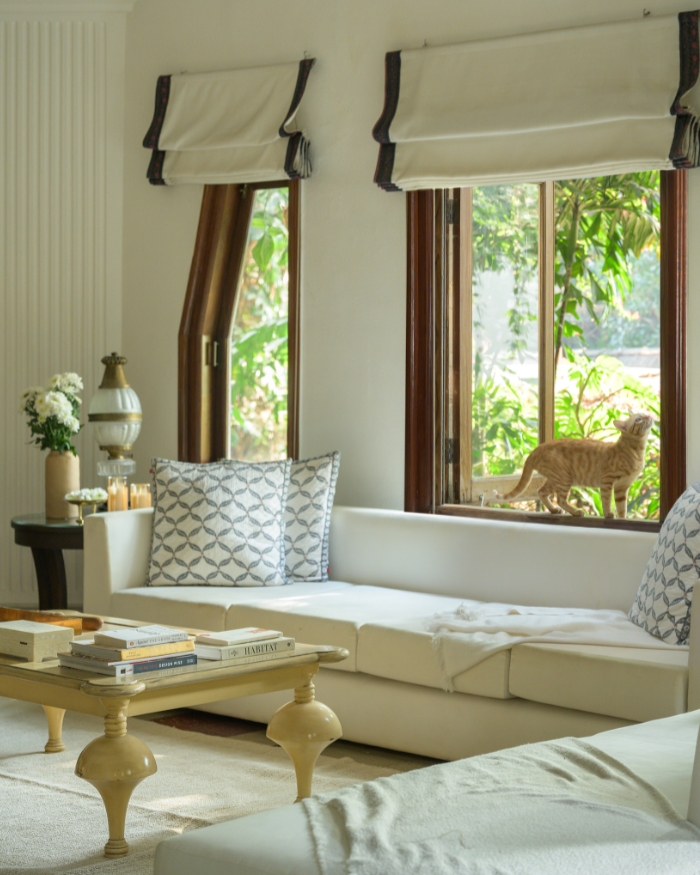
The brief centred on coexistence, a home for two people’s worth of collectibles, memories and quirks, without tipping into clutter. “I believe there is a very thin line between creating warmth and creating clutter,” Anjori says, and it shows in her design; the restrained walls in cream and off white left free to hold artwork, while nooks and hallways gather objects with real stories behind them. Jute rugs sit under Kashmiri silk ones, dark rosewood furniture meets distressed mirrors, and a metal-and-glass trolley adds an unexpected note of shine.
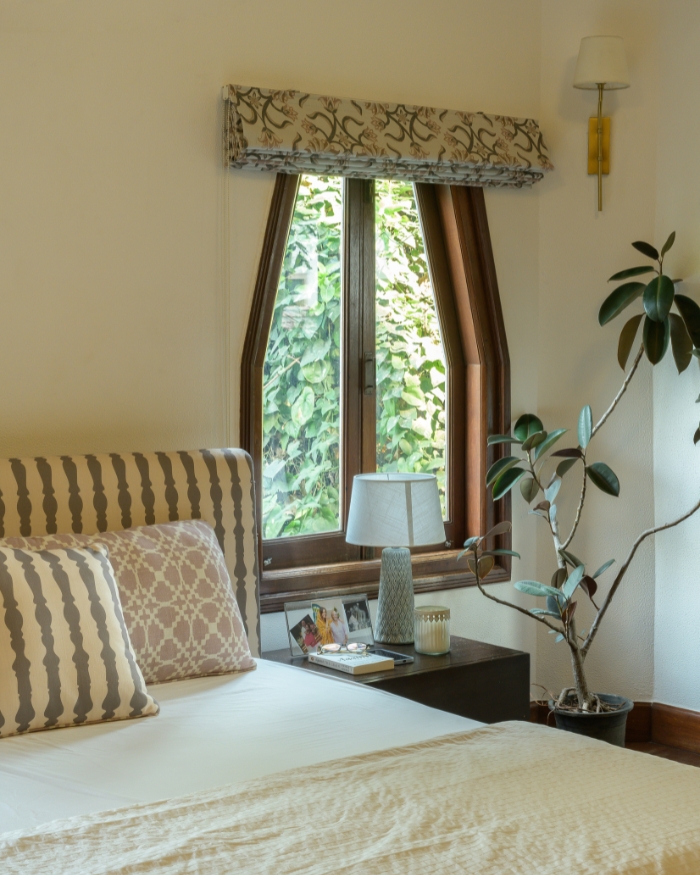
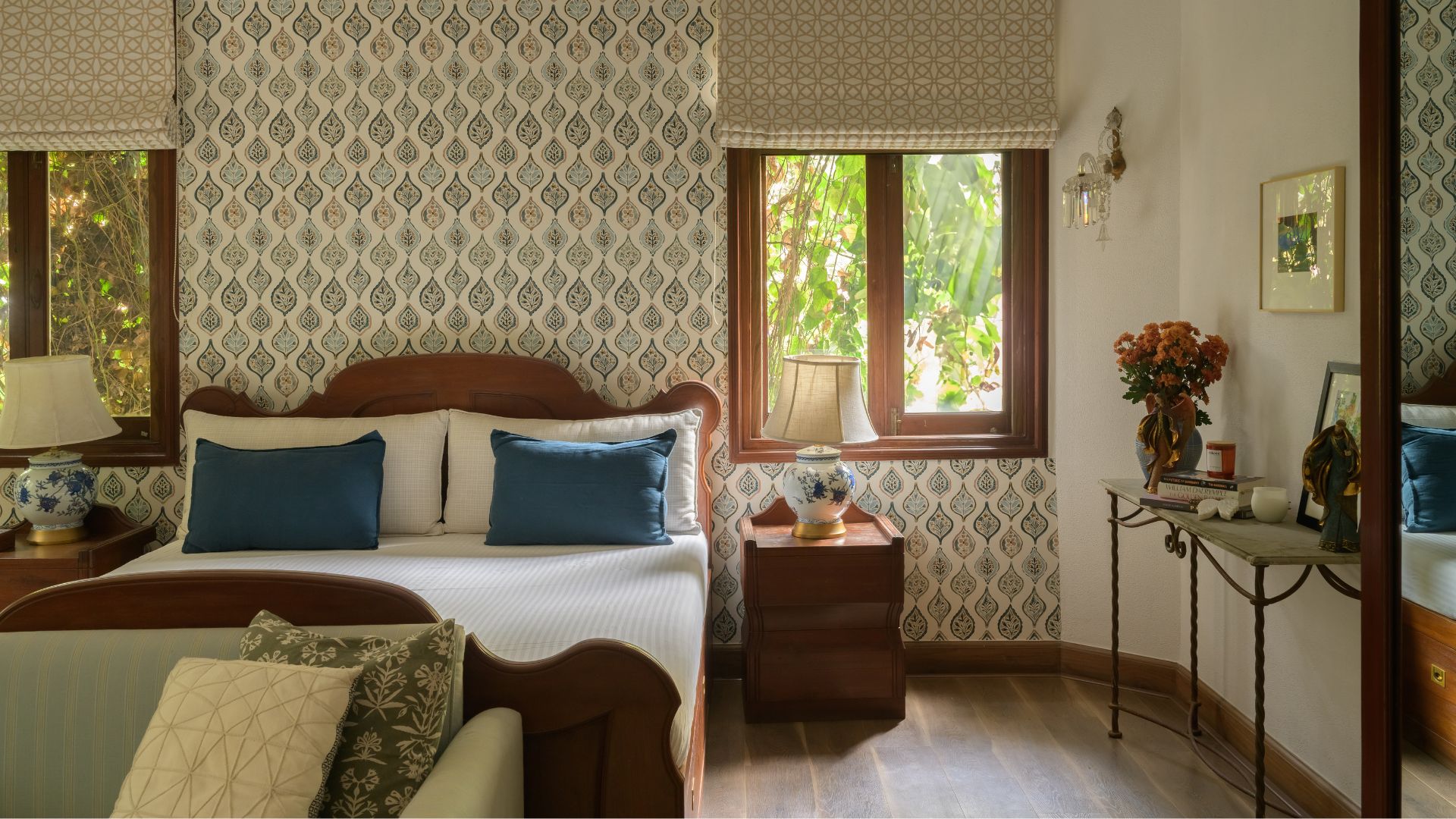
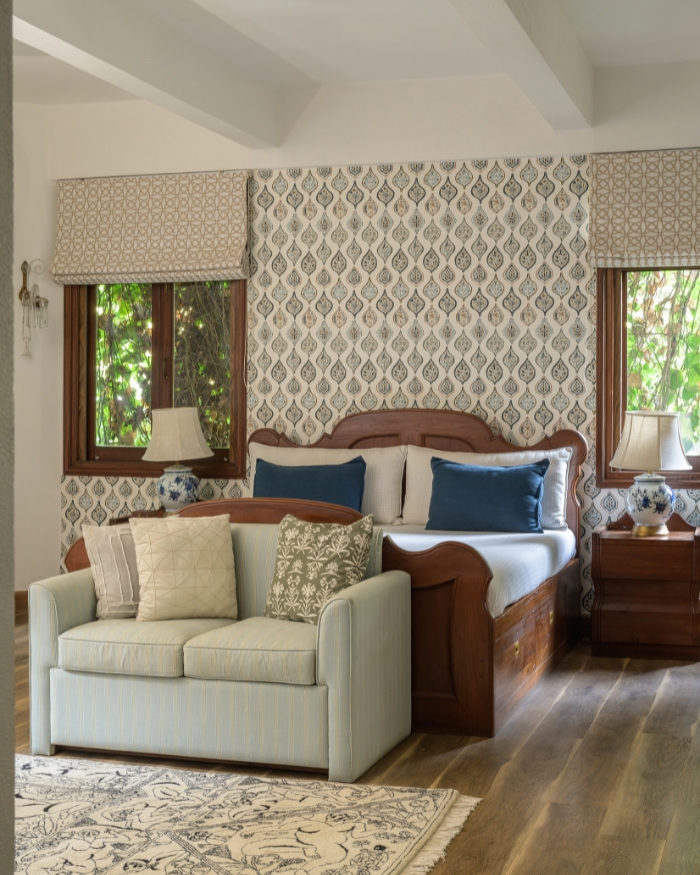
Of all the rooms in the apartment, the guest bedroom is the one Anjori speaks of with the most affection. It began with an old, oversized Art Deco bed, big enough for the whole family to pile onto on a lazy afternoon, and she built the rest of the room around it in beige, blue and off-white, with a soft, patterned wallpaper settling in behind the headboard. It is a small room carrying a large idea, that a guest room can hold as much warmth and thought as any other space in the home.
The open kitchen called for a different kind of approach entirely. Anjori wanted to keep its openness and its Tiffany style lampshades intact, without letting the smell of Indian cooking travel through the rest of the apartment. Her answer was sliding doors, fitted with enough precision to protect the original wooden floors while staying true to the home’s Deco character. “It required thoughtful, precise planning,” she says, and the ease with which the solution now sits in the space says more about that planning than any explanation could.
The courtyard gates that first greeted Anjori still frame the entrance. The old flooring still sets the mood before a single piece of furniture does. And somewhere between the cream walls and the collected objects, nearly ninety years after Dhanraj Mahal was built, this is a home still doing exactly what it was always meant to do, holding a family, unhurried, one room at a time.
Read More: Savour the most experimental flavours in Mumbai at these buzzing restaurants
No results found.