A minimalist label in Maximum City

In a world obsessed with outsourcing inspiration, AMPM's Mumbai outpost makes a case for looking within

BY

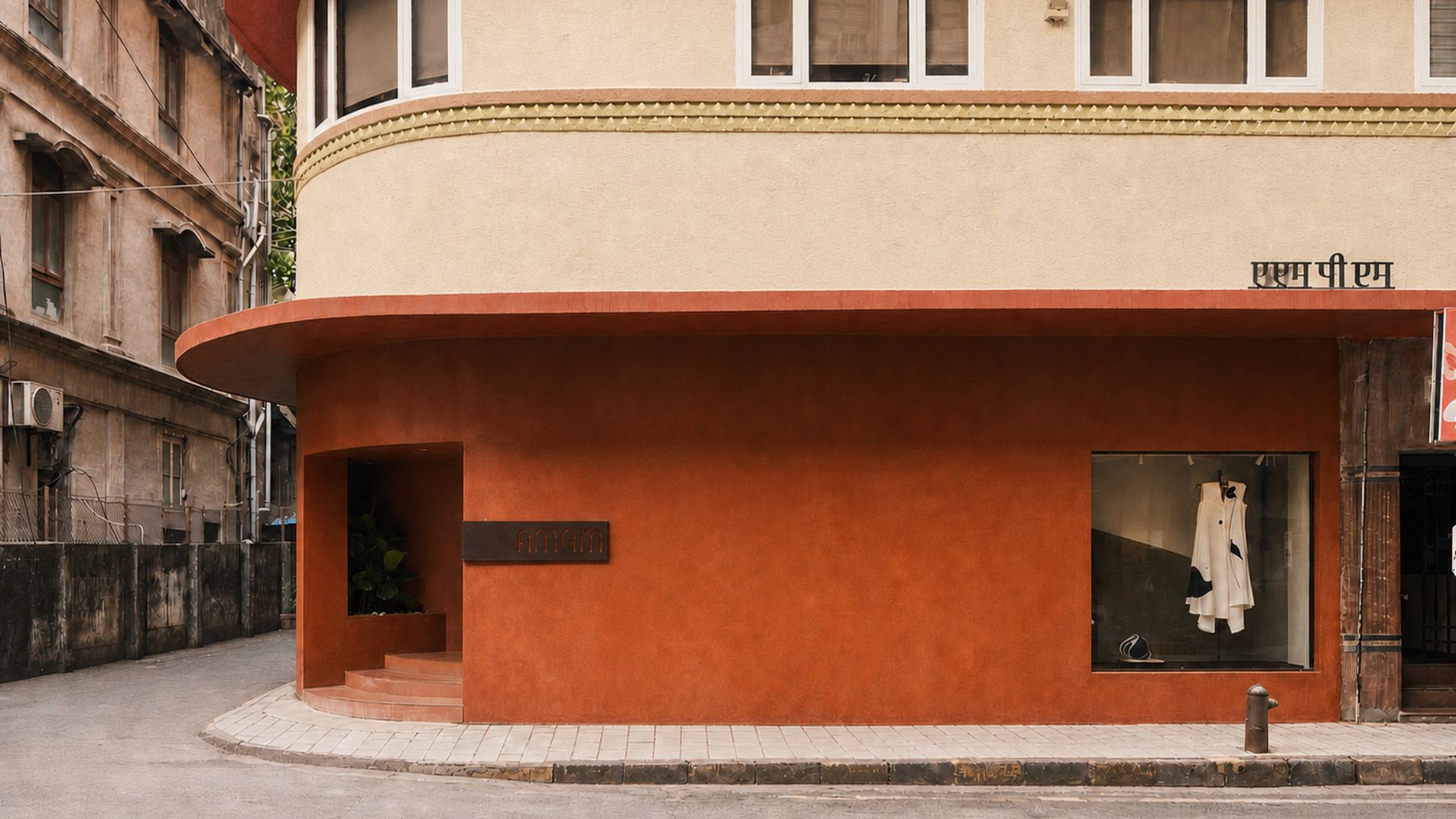
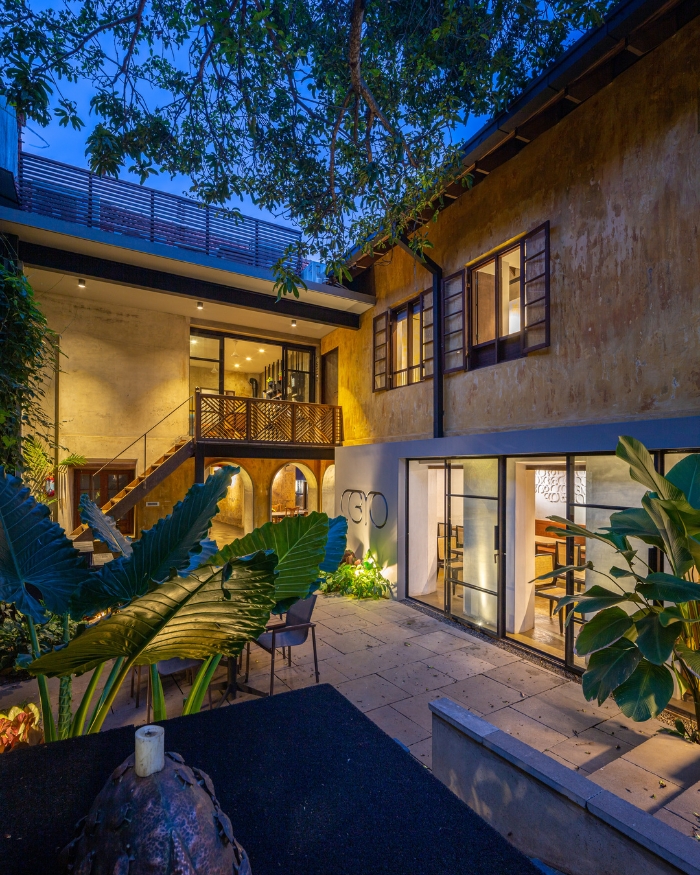
An Art Deco building in Mumbai’s Kala Ghoda has dyed half its eyebrows terracotta. The colour spills down from these wide window ledges, fondly nicknamed by Deco enthusiasts as the arched appendages above your eyes, and coats Seksaria Chambers’ ground floor right up to the middle. This sight may be new, but the sign bears the name of an old friend: AMPM, the minimalist luxury label that left Maximum City seven years ago.

The brand’s time away from Mumbai has been fruitful. They’ve opened three stores across Delhi, found an unexpected audience enamoured by their silhouettes in the Middle East, and ventured beyond apparel to craft playful accessories and jewellery. The new 1,400 sq ft outpost, thus, is as much a homecoming as it is a reckoning with who they were always meant to be. “We always thought we’d come back to Mumbai when we are ready, when we are just our most authentic selves,” enthuses Founder and Creative Director Priyanka Modi. The Mumbai outpost, thus, is a long-awaited reintroduction.

"AMPM has always been about ease, calm and enjoying the space around you, and we wanted the store to carry that feeling"

The mayhem that preceded the waapasi

The building’s bones were sacrosanct from the get-go. Its curving exterior and sweeping height are what drew Priyanka in the first place; hence, an extensive overhaul was out of the question. But her vision was less heavy on the architecture of it all, and more concerned with the emotion it should evoke. “AMPM has always been about ease, calm and enjoying the space around you, and we wanted the store to carry that feeling,” stresses Priyanka. But the question remains: how do you imbue an imposing, double-height space with calm?

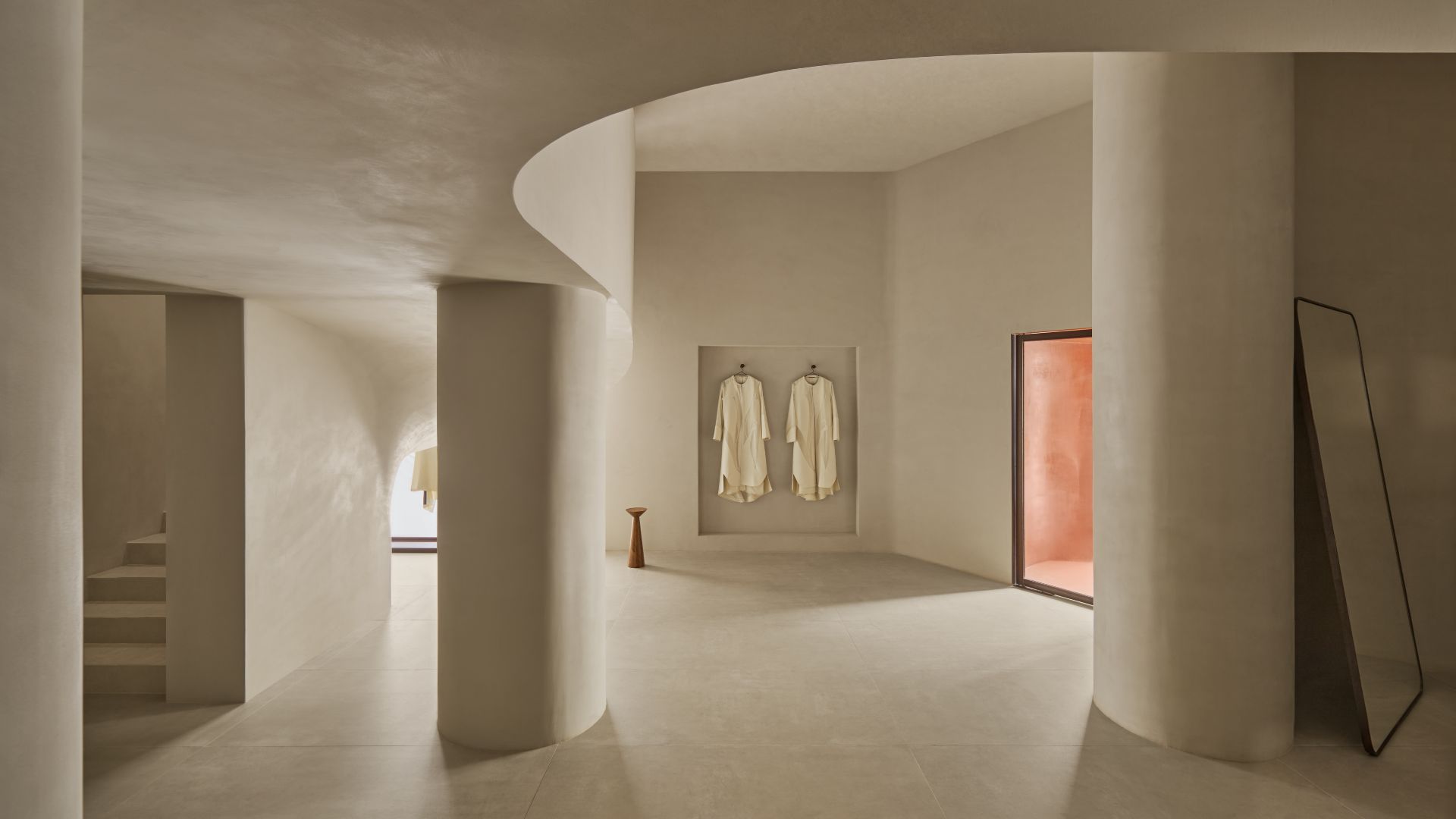
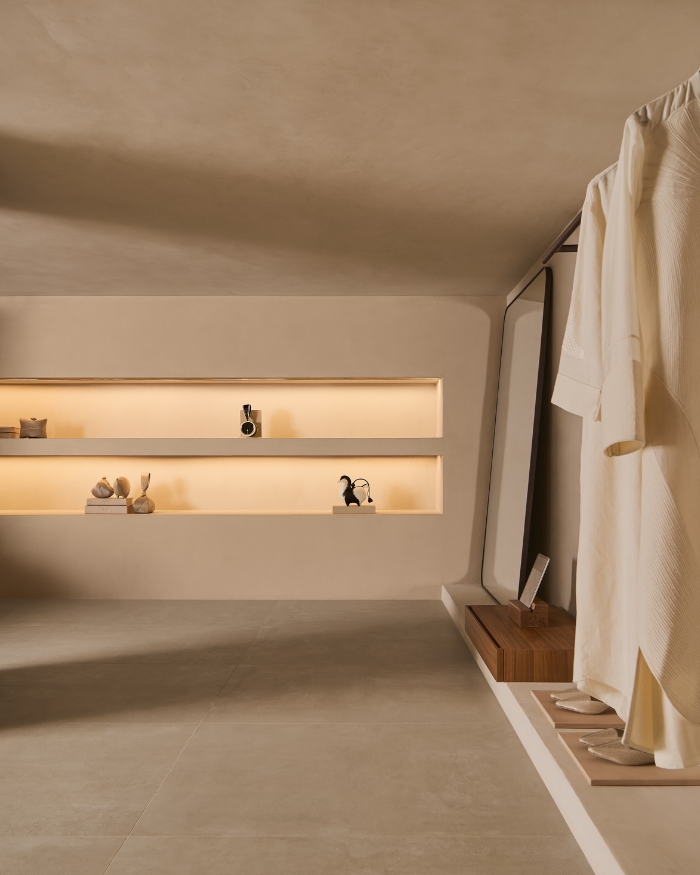
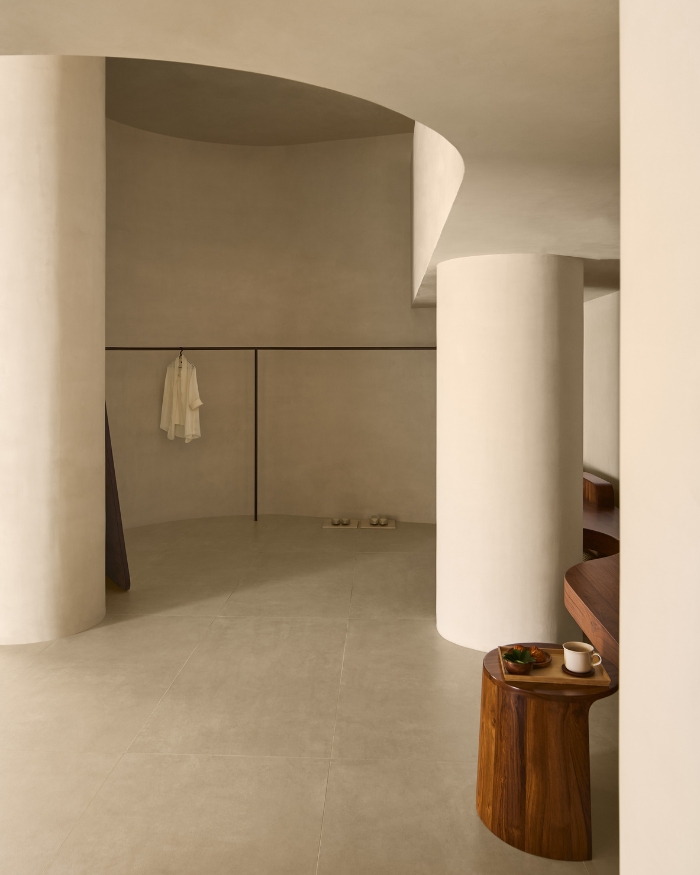
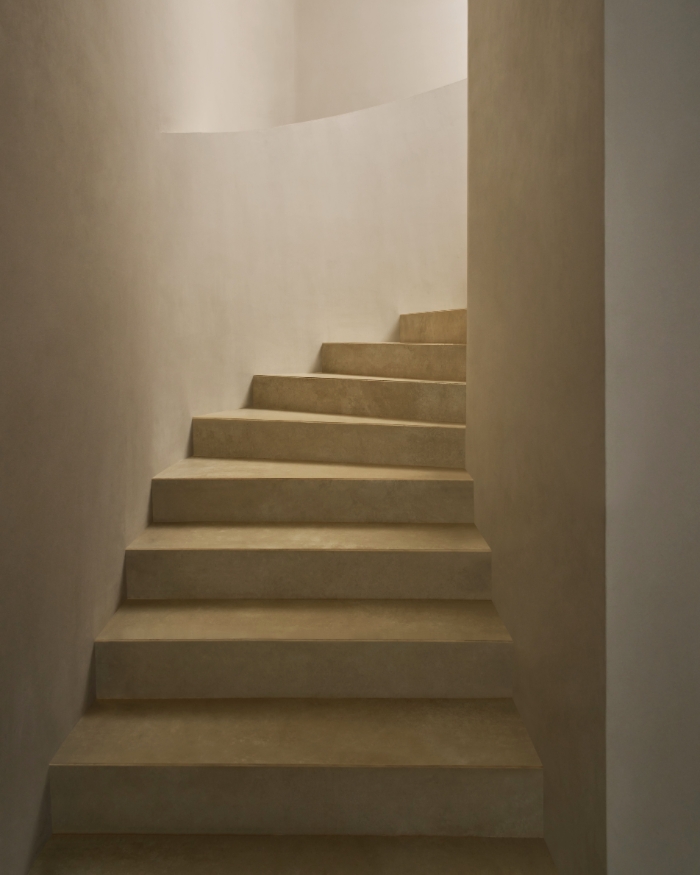
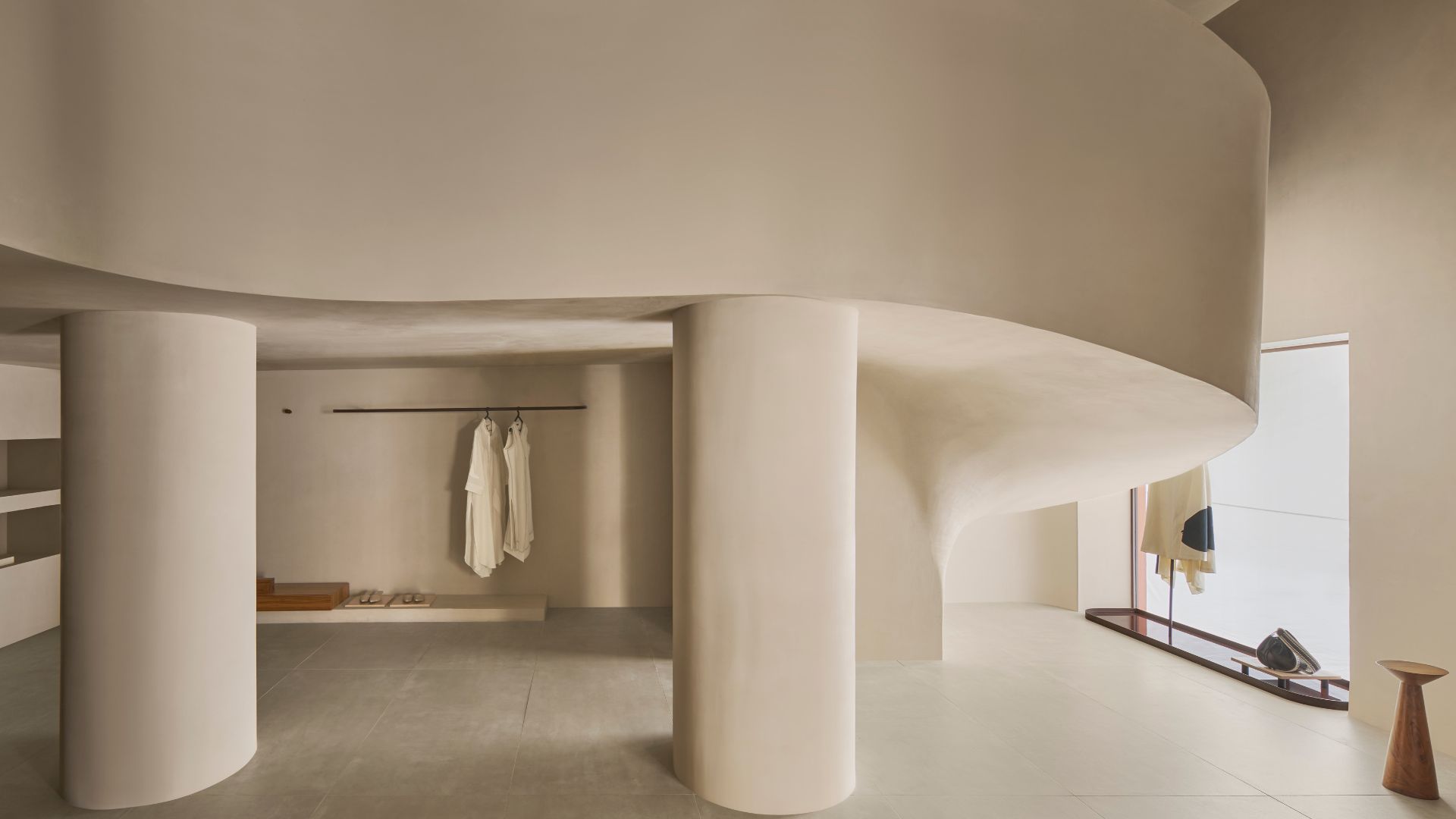
To make the scale feel more personable, the materiality and spatial design became critical in this endeavour. Colour completely takes a backseat. The walls and the floors become one monolithic entity, crafted from the same micro-textured material. AMPM’s curation of clothing and accessories, as a result, shines unabashedly in the store. But this restraint, as Priyanka reminisces, was hard-won. “We broke our backs trying to get this together. I don’t know how many renders, how many redos and, you know, just a little smoothing here and a little there, were required,” she laughs. “And when you see the faces of the contractors, they want to kill you for it!”

While minimalism may not have been the contractors’ cup of tea, it was Priyanka’s choice to forego mannequins that unexpectedly became the most divisive of them all — resulting in a retail employee citing concerns over meeting their targets (mannequins, historically, have been known to boost sales by allowing shoppers to visualise how a garment would look on them) — and quitting as a result!

The art of subtraction

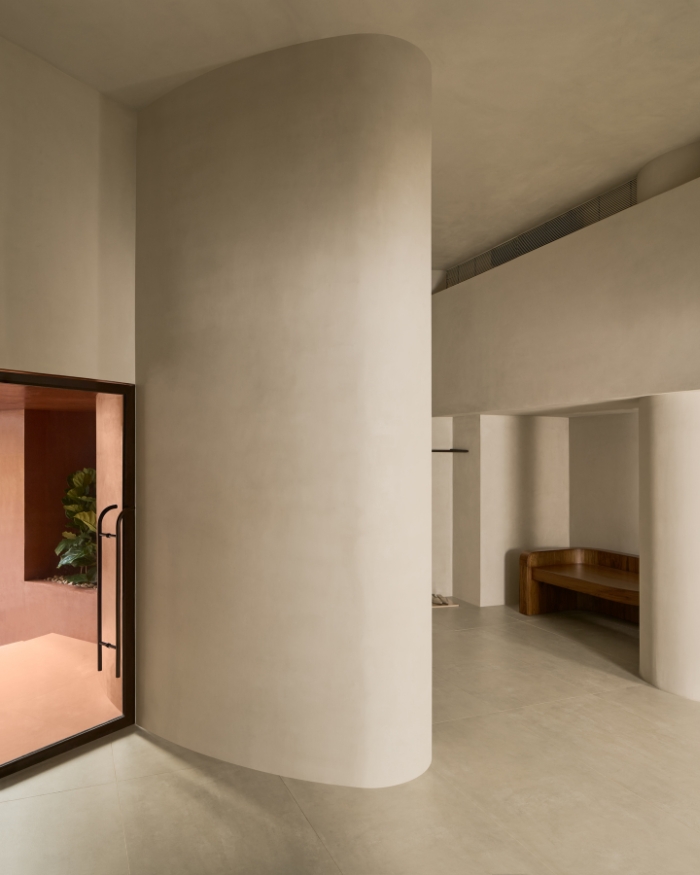
The store’s interiors are a complete antithesis to its terracotta-hued facade. Mystery is maintained: you can’t see the inside in full, even if you stand at the entrance or peer through the window on the far left. But as you step in, the store peels itself to expose a flurry of beige with nary a hint of colour, leaving all terracotta at the doorstep.

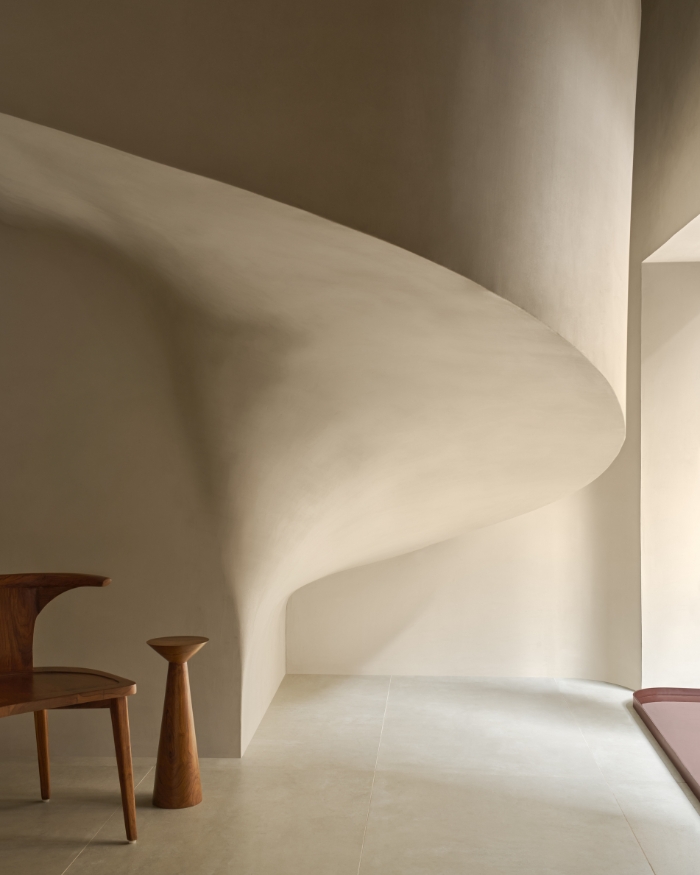
Enter, and all eyes first fall on the sweeping, snow-hued mezzanine that curls up against the double-height ceiling, descending to the ground as a sculptural staircase that sits out of your direct line of sight. While it inspires awe today, Priyanka confesses to feeling rather at odds when she first saw the mezzanine during a site visit. “The ceiling above is not as high. My brother’s tall, and his head was touching the roof when he’d gone upstairs; that’s how short it was!” she recounts. The upper level now functions as storage for everything that didn’t need to remain on the floor — a sacrifice that helped open up the store’s circulation, letting each garment breathe.

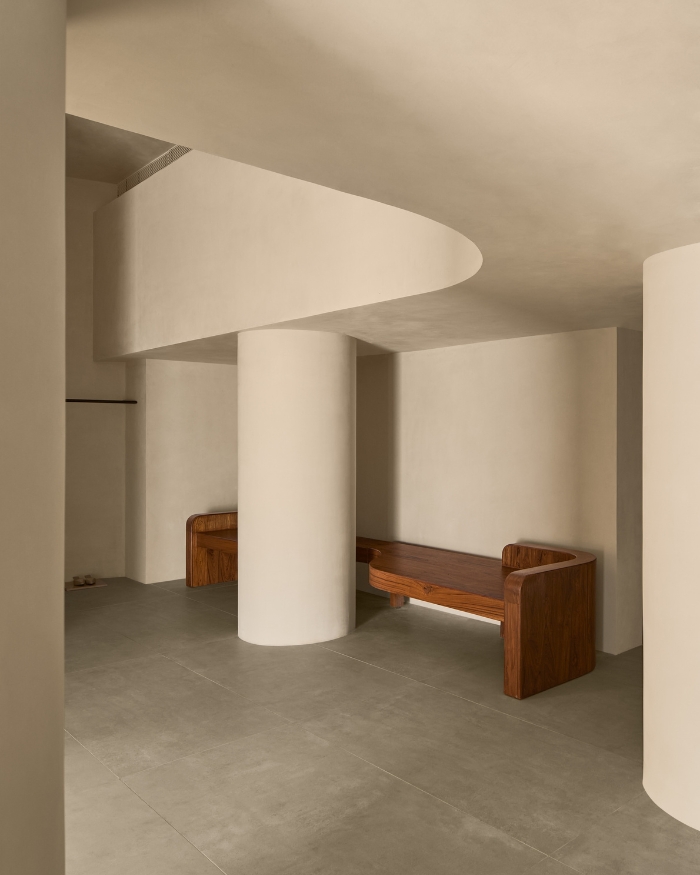
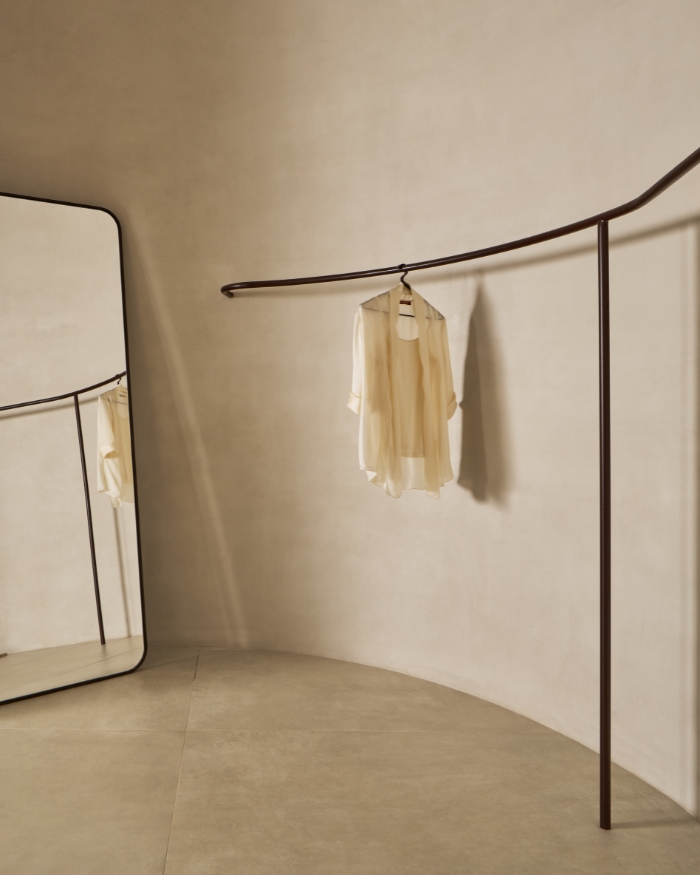
Little to no furniture sits indoors: slim clothing rails curve around the store’s edges, a low-profile bench abuts one wall, and the accessories sit within recessed, dimly lit shelves. Everything unfolds around the store’s original structure, curving around the bulky pillars and the swooping mezzanine that have existed long before AMPM moved in. “The space sort of starts to tell you what you need to do. And this was just one of those spaces,” smiles Priyanka. The store proves that perhaps the antidote to a problem (or a mezzanine ceiling too low) is not to do more, like we’ve been taught. It is to do less.

Read more: 11 stores in India where materials steal the show

SHARE THIS ARTICLE

You May Also Like

Watch

No results found.