Photography courtesy Conçu, Mumbai

Exclusive: Hyderabad’s favourite patisserie opens in South Mumbai

Designed by Sarah Sham, Concu arrives as a cafe and a cocktail bar inside a former print shop in Colaba

BY

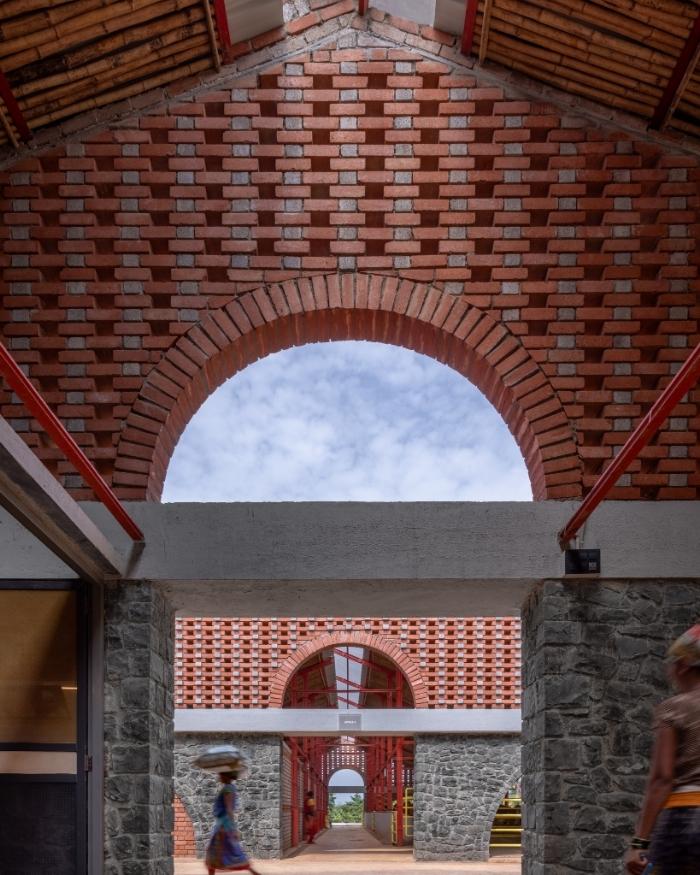
A patisserie, a cafe, a cocktail bar, all bundled up in one, the arrival of Hyderabad’s 14-year old cakeshop, to the heritage heart of Colaba reflects a nostalgia-laced evolution of cafes into places of community, memory and routine. Wearing decades-old rough stone wall and ceilings garnished with exposed timber beams, your first instinct stepping inside the colossal expanse of South Mumbai’s newest cafe Concu may not be to glance up. But, you must look up anyway. Once an old print shop, its triple-height vertical scale leads you to the forgotten spectacle of heritage structures, which hide in plain sight, the weathered silence of its past. Soon after, you must let the background sounds of people’s chatter, clinking of cutlery and the distant hiss of steaming milk bring your gaze back around. Concu, founders Sahil Taneja and Swati Upadhyay, tell me is designed such that it shifts in its visuals and temper through day and night. In the AM, expect the cafe to be dappled with plenty of daylight and come evening, the space transitions to a neighbourhood cocktail bar. 

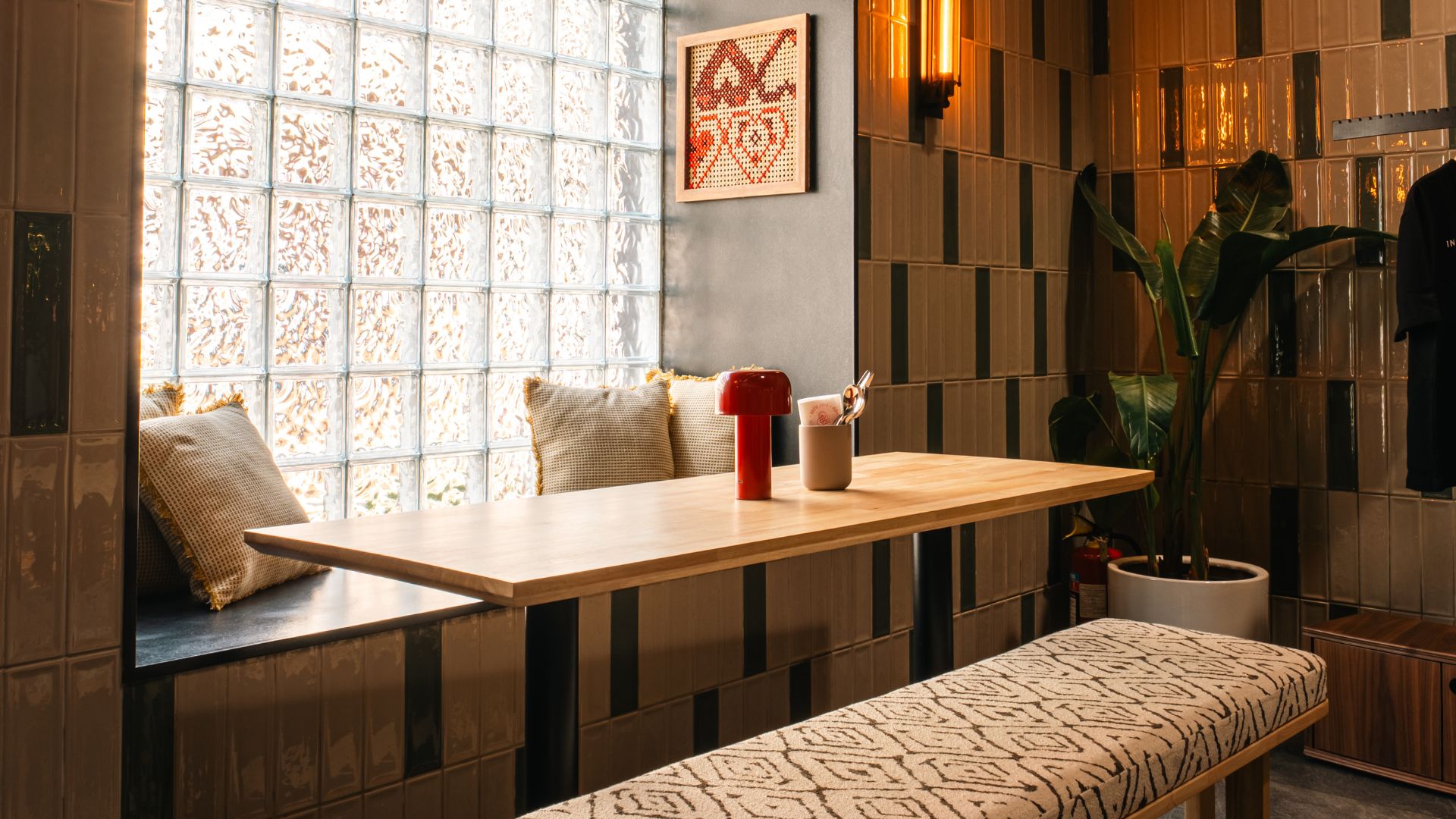
Concu Colaba designed by Sarah Sham of Essajees Atelier emanates a sense of forgotten belonging that only heritage spaces can afford in an age of algorithmic sameness. Within its 2,700 sq ft sprawl, the all-new address packs itself as a 50-seater, meticulously divided into sections of experiences, anchored by the long island-counter that exhibits Concu’s mainstay desserts and coffee making in action.

Photography courtesy Conçu, Mumbai

In Colaba’s context

Sarah, who has worked with founders Sahil and Swati earlier, reveals their first design discussions were far from formulaic. “The brief was rooted in feeling. They wanted something open, easy and genuinely welcoming, but with design elements that would surprise and delight. The heritage context of Colaba gave us the perfect canvas to deliver that.” Pinned just on the edge of the thrumming Colaba market, tucked into a bylane, Concu’s first point of discovery is its soft pink tiled facade. Inside, amidst a voluminous scale stand two long, central tables facing the coffee and bakery islands. The exposed brick wall, uncovered during the restoration process, emerges too, as a tactile relic of the building’s former life, complemented with the seating areas designed as stepped landings within envelopes of greenery. 

She reiterates on the one design detail that every diner must catch, “Look at the original wall — really look at it, from the floor all the way up to the ceiling. The treatment on that wall, travelling the full height, is something you won’t find replicated anywhere. It’s a direct conversation with the building’s past, and it rewards the closer you look.”

Photography courtesy Conçu, Mumbai

Cafe culture is changing

What once started as a made-to-order boutique cakeshop in Hyderabad, Concu, is a rather exemplary opening of the hour in Colaba, located in the close circuit of art-led venues where community experiences matter. It also nudges me to think: How we consume the history of the cities we inhabit is gradually changing. We continue to witness spaces of commerce and hospitality retreating into buildings that predate them by decades — old cinemas, forlorn bungalows and decrepit shops. Perhaps, the new establishments are not enticed by the idea of new construction, rather they trust the process of reclaiming what once was, imbued in the flavours of a romanticised past that seeks to co-exist with the present.     

Photography courtesy Conçu, Mumbai
SHARE THIS ARTICLE

You May Also Like

Watch

No results found.

Search
Close this search box.