When the artist becomes the art

Rohit Chawla’s new book photographs our cultural fascination with verity, searching for the "true selves" of the most recognisable names in Indian contemporary art

BY

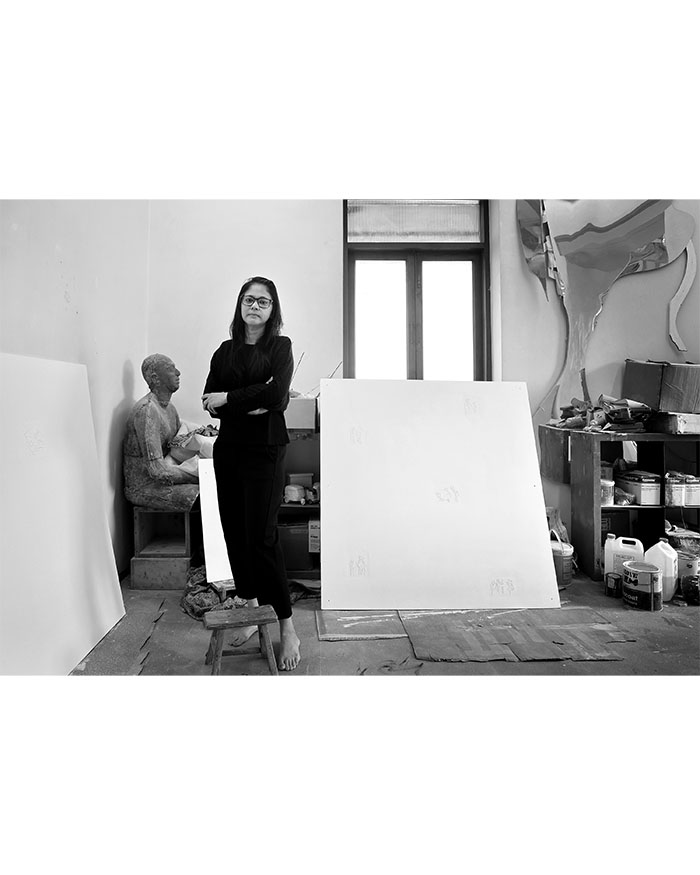
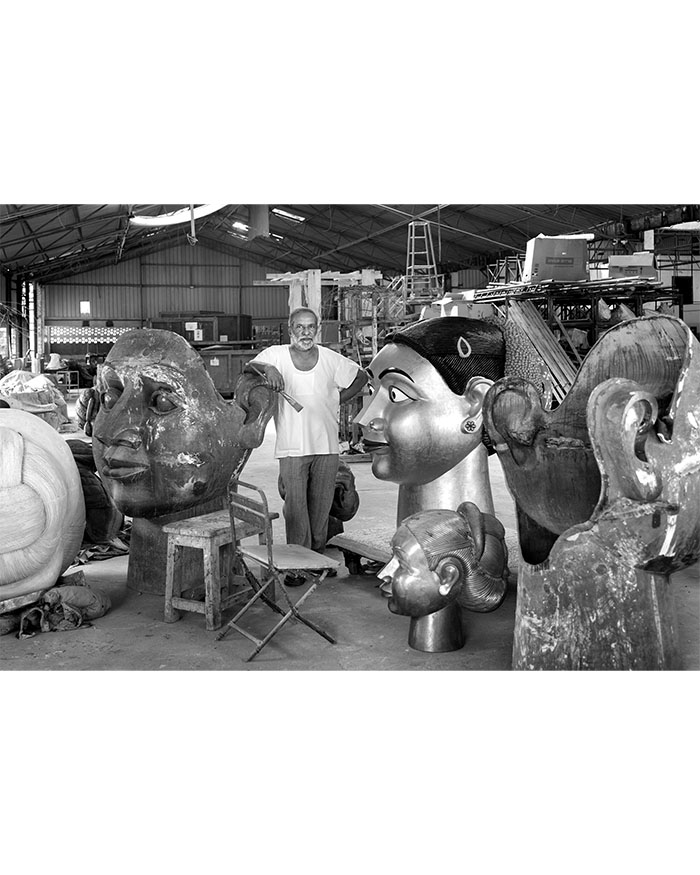
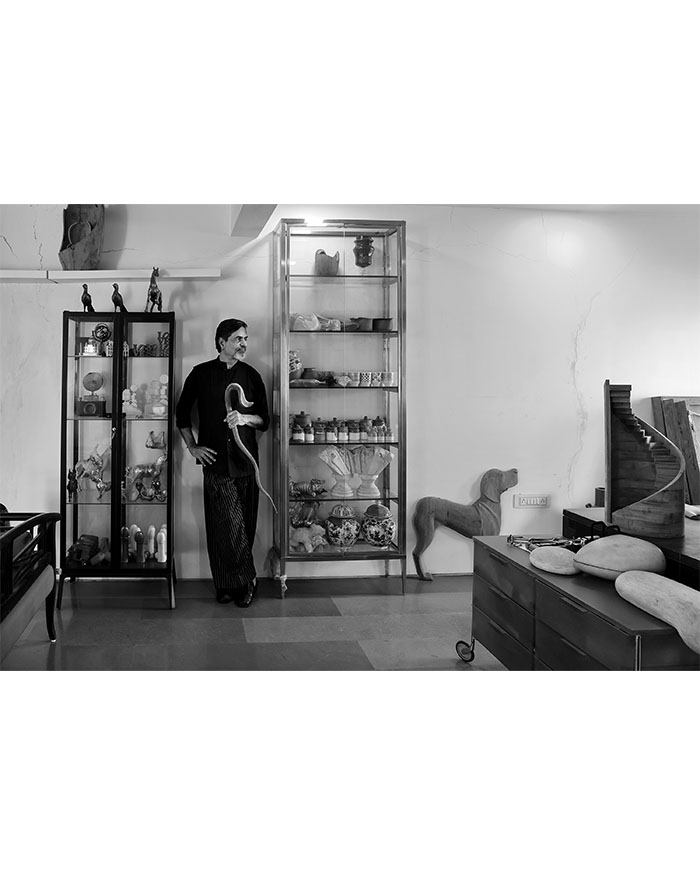
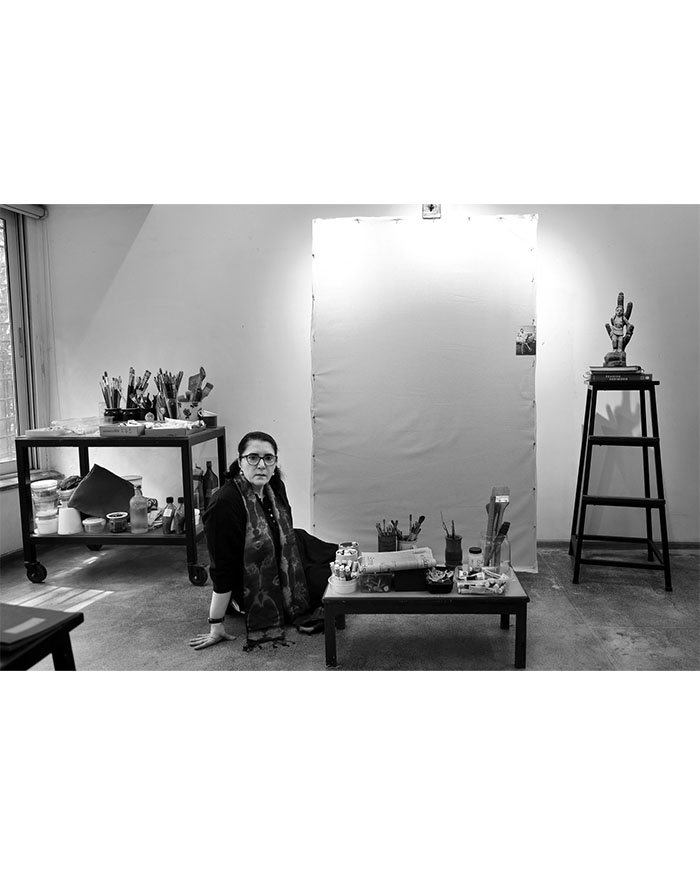
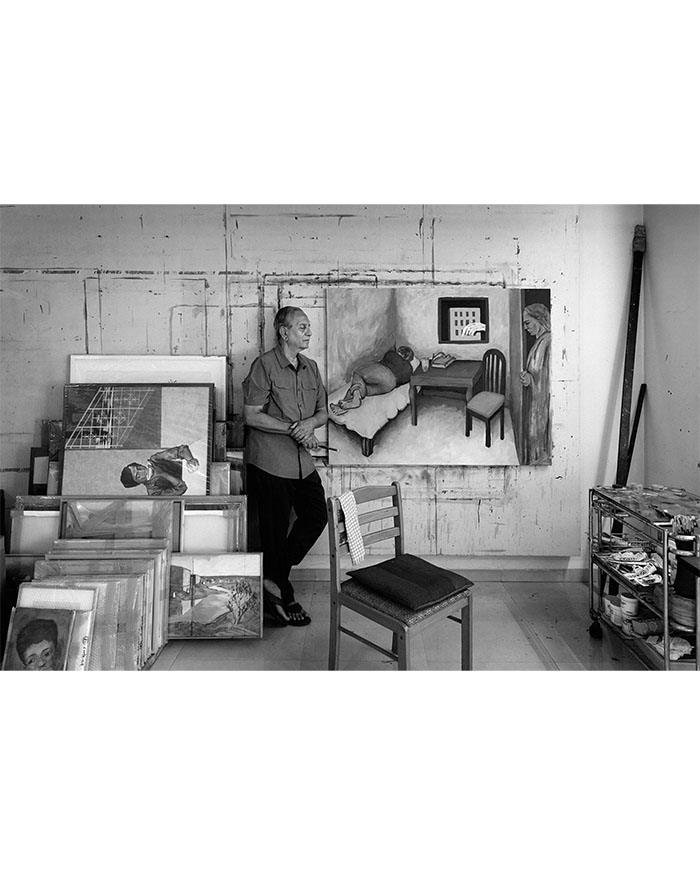
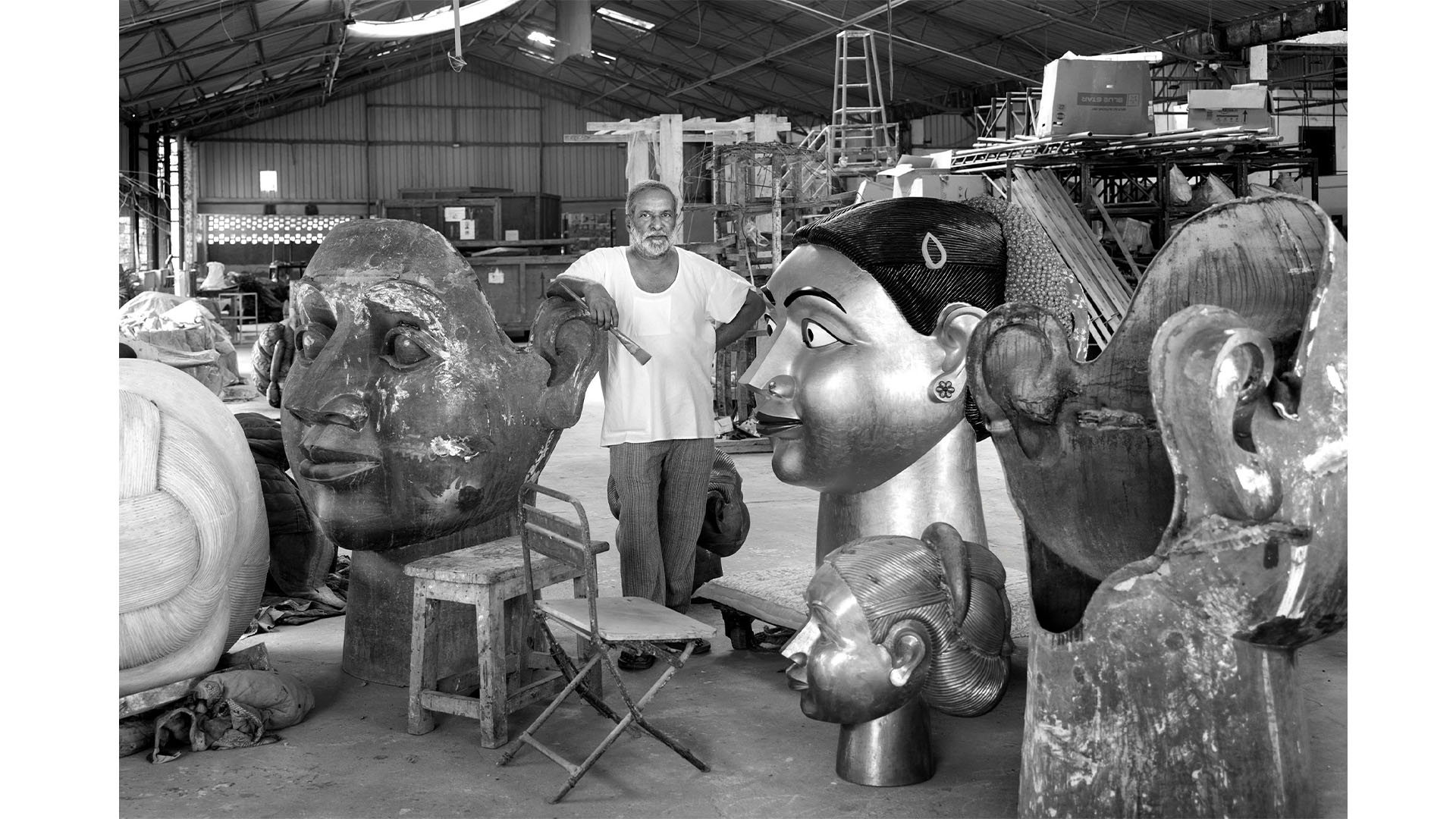
Artists are more often than not behind the scenes, their creative depth encountered primarily through their bodies of work — metabolising the turbulence of the world, conjuring new realities, translating their innermost thoughts. Despite these intense exchanges of intangible concepts and ideas, how much do we truly know about artists and how they choose to create? How do they paint, sculpt, forge or photograph? What objects surround their everyday? Averting the eyes of an ever-present audience, who are they within their most intimate habitats? In Portrait of an Artist, Rohit Chawla offers a sliver behind the curtain, locating the artists’ creative genius in their own studios. Spanning 280 pages, the volume is presented in collaboration with the Kiran Nadar Museum of Art and Mapin Publishing, and features writing by Kishore Singh alongside over a hundred photographs by Rohit. An indomitable curiosity follows the maker into the subject’s seat. The encounter reveals traces of lives hitherto undisclosed. A box of Mentos before Mithu Sen; all of Bharti Kher’s canvases turned away from sight; T Venkanna appearing in a near hermit-like spell. The most recognisable names in Indian Contemporary Art, opening their doors to be perceived not on pedestals or in lauded praise, but in candour and honesty. A bridge between the art and the artist’s self. But should art be so deeply intertwined with its author? Our appetite for knowing more about artists has been on the rise since the Renaissance age. Yet Rohit’s book is not a commentary. Nor does it argue the case of making celebrities of creative personalities. Instead, it searches for the elusive “true self”. This raises its own intriguing paradoxes. Can we ever fully apprehend the authentic selves of individuals who are themselves perpetually in the process of becoming, especially of artists? And is it right to conflate truth with authenticity, process with performance? How does one begin to channel unmediated candour when the act itself is framed and committed to film? Hear it from Rohit himself.

"Call me old-fashioned, but I believe every artwork fundamentally needs to embrace a certain finesse of craft before it begins to attribute political resonance. I will always worship at the altar of beauty, even if I choose to convey politics through art"

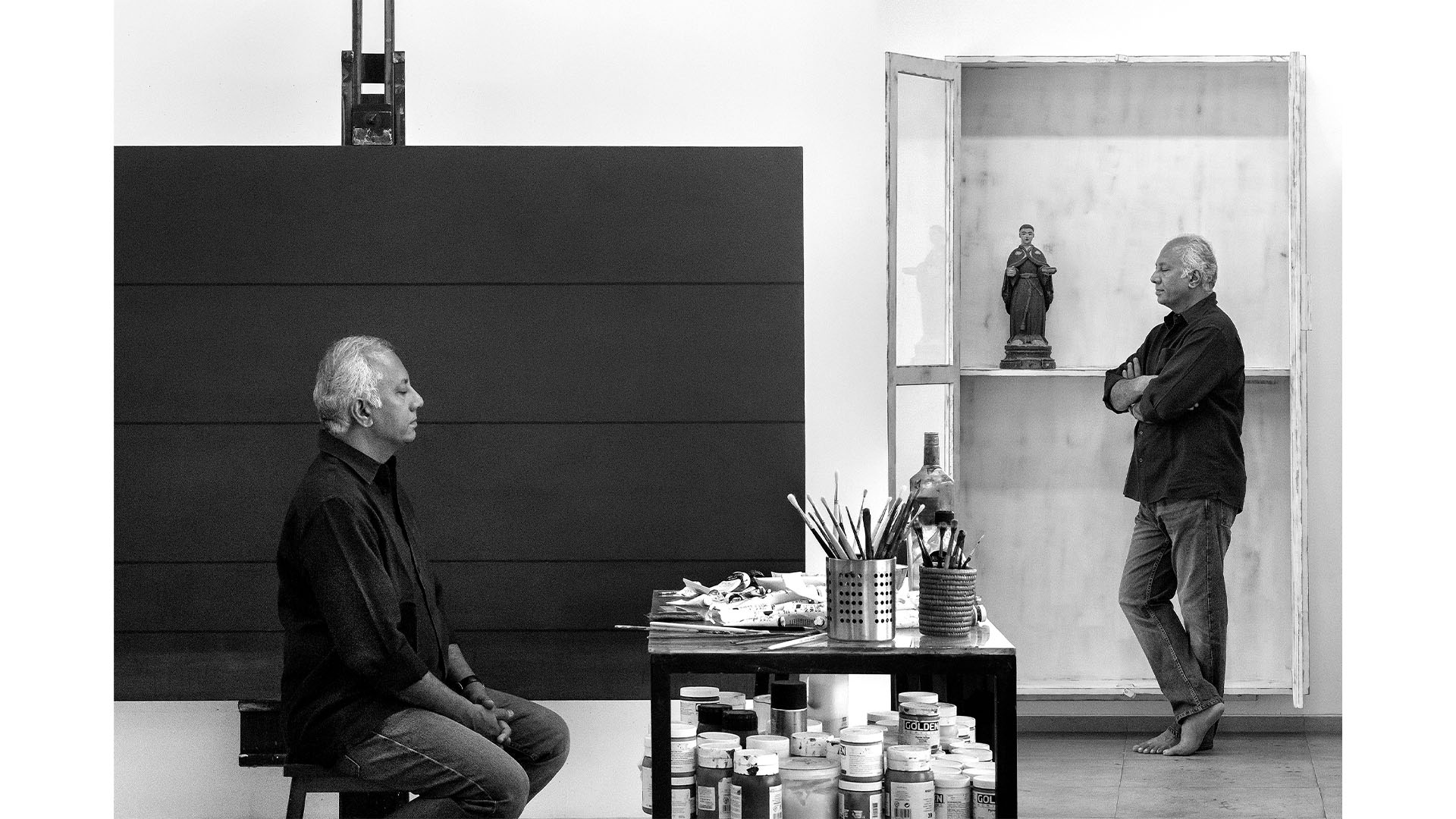
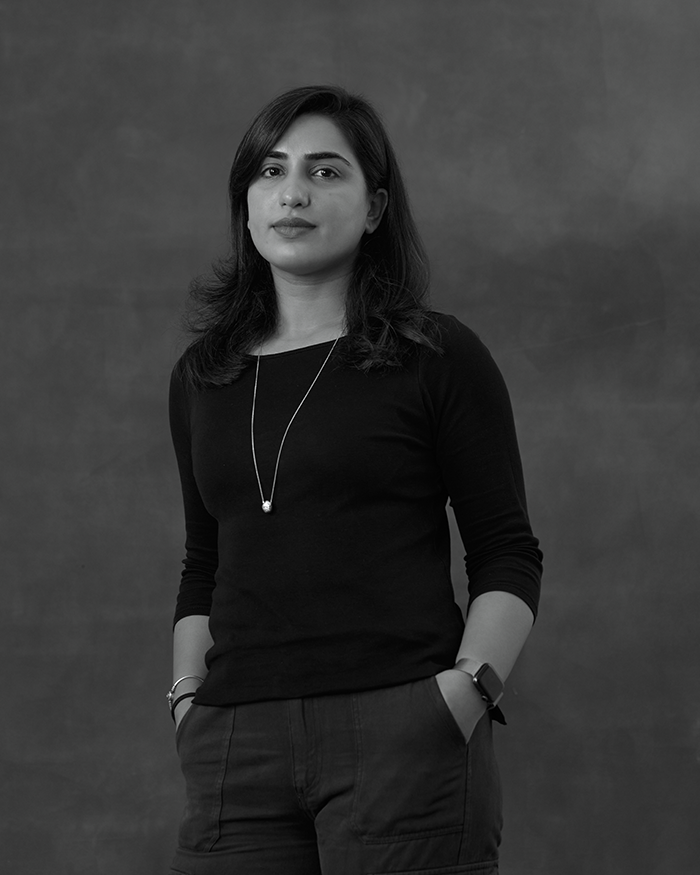
Atul Dodiya photographed by Rohit Chawla

Q: What made you begin this series? And have you thought about a self-portrait in your own workspace?

Rohit Chawla: My portrait practice stems from an innate curiosity, perhaps even a desire, to trespass into the life of a subject who intrigues me. Choosing to do this series has been a constant quest to understand the creative muse that motivates and pushes an artist to create, and the restless spirit that unites us all in some oblique way.

My own portrait in this book came about through a chance assignment where I was shooting portraits at the Synapse Conference for the brilliant Shoma Chaudhury. My makeshift studio and vintage camera became distinctive props of a practice that emerged from an analogue time and space. My own workplace, though, is a tad too minimalist in spirit, and I tend to avoid being photographed. I don’t quite believe I qualify as photogenic in earnest.

Q: Artists bring multiple influences from the world into their studios. But what prompts you to say it is in their studio that they are their truest selves?

Rohit Chawla: Most artists are busy creating visual spectacles within the pristine white walls of galleries, and sometimes neglect their intimate workspaces and studios, as these are never in the public gaze. But any chance encounter with them in their studios gives you a real sense of who they are and of their visual aesthetic, bereft of optics. Here, in their personal and private domain, the objects and materials they choose to surround themselves with say a lot, not just about their practice but about their private aesthetics and sense of self. So yes, it reveals aspects of their inner self, at least in parts.

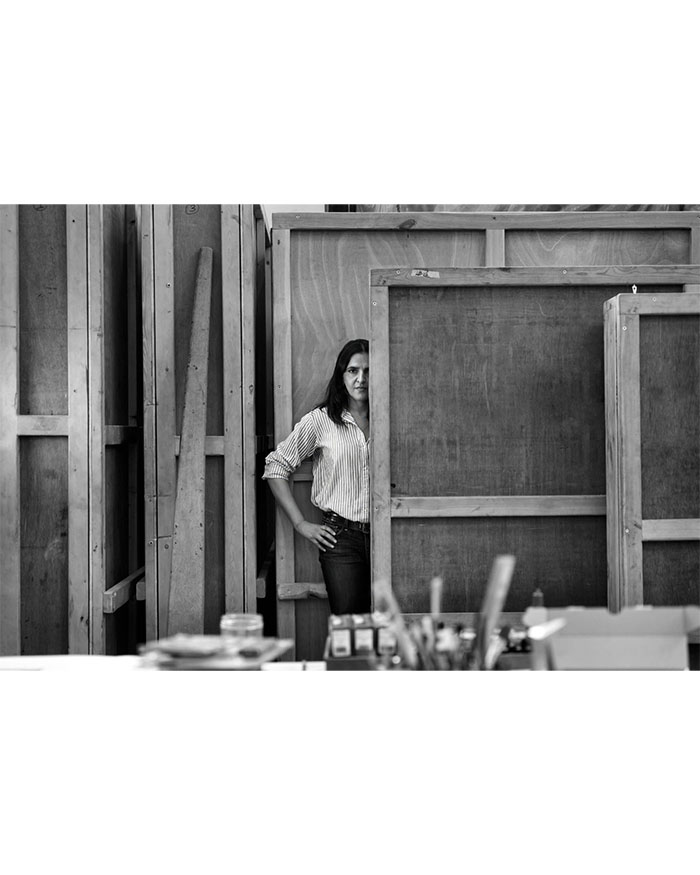
Bharti Kher photographed by Rohit Chawla
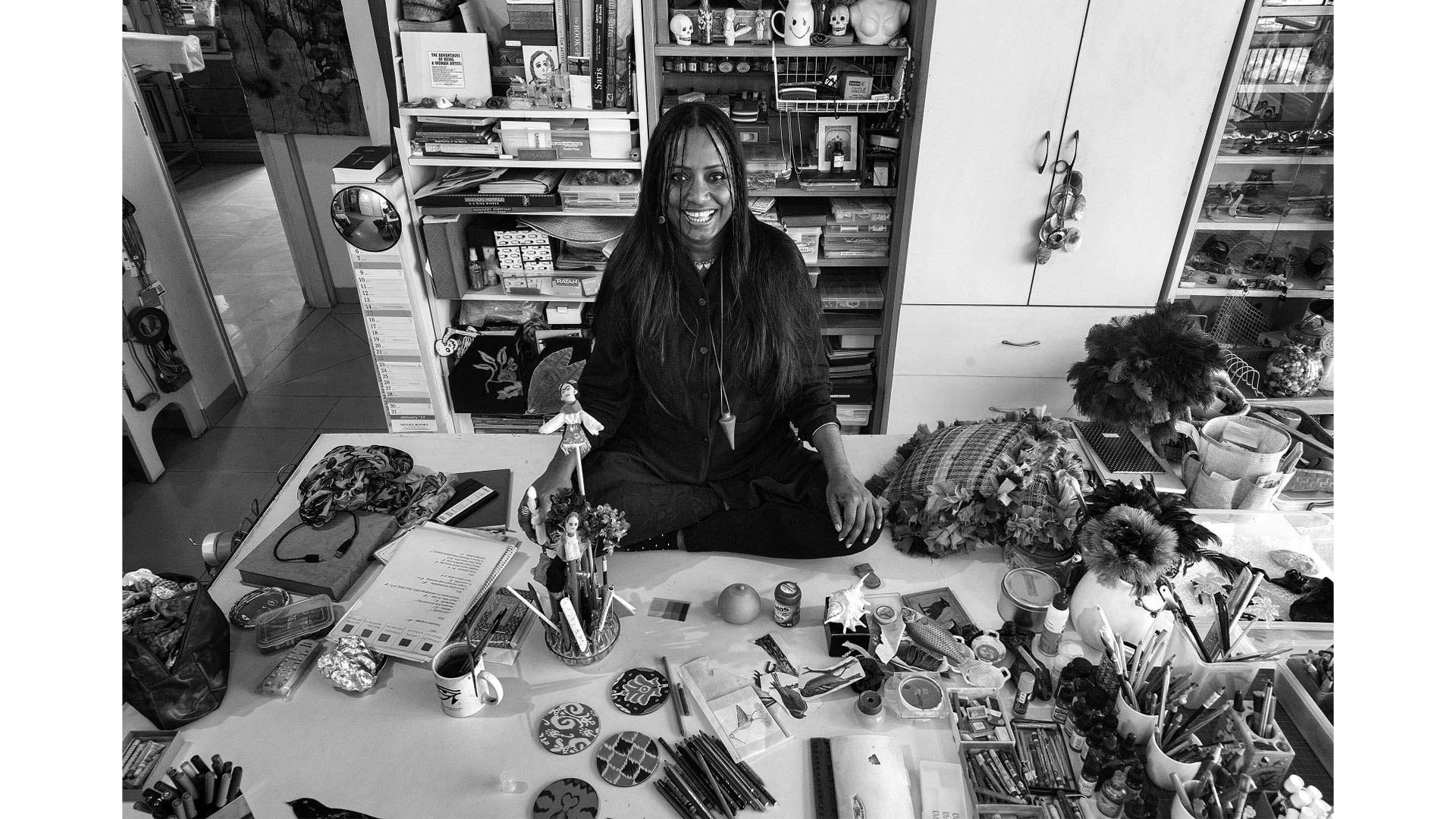
Mithu Sen photographed by Rohit Chawla

Q: Who would you say a portrait belongs to — the subject, the artist, or the audience?

Rohit Chawla: A portrait always belongs to the maker who creates it. Yes, it can be collaborative in parts with a subject who willingly participates in the process. But to say it belongs equally to the subject would be a bit of a travesty. The paintbrush or the camera shutter, the context and timing, the selective framing, the background — most creative decisions rest with the maker of the portrait. Let’s not allow the vanity of the subject to alter the dynamics of this creative idiom.

Q: Do you think an artist’s identity or their art can ever exist outside the external gaze? Can art ever be created solely for oneself?

Rohit Chawla: All artists are motivated by their influences. When you veer towards a particular practice or aesthetic, it invariably shapes your personal taste and percolates into your art. For me, seeing a lot of Richard Avedon imbued a certain minimalism, while the graphic in me was influenced in some ways by Helmut Newton. Our minds invariably pick up cues from what we constantly like and see. All artists are, in many ways, a sum of what they are exposed to in their formative years.

Q: After a work of art is released into the world, should we consider the artist’s original intent the only true interpretation?

Rohit Chawla: There is just too much baloney, and those obtuse curatorial notes don’t help either. Much of what an artist presents as intent is manufactured by market forces, a kind of post-rationalisation that suits gallery owners mired in commerce.

Most political posturing rings false in many cases, as artists can become pawns in the hands of ever-articulate curators who excel at finding meaning where there may be none, especially when a work fails to stand on its own two legs without the borrowed crutches of an obligatory curatorial note.

Call me old-fashioned, but I believe every artwork fundamentally needs to embrace a certain finesse of craft before it begins to attribute political resonance. I will always worship at the altar of beauty, even if I choose to convey politics through art. Activism alone does not make an artwork relevant unless it possesses that elusive poetry of form.

Read next: Following the release of her book UnMyth, Artist Mithu Sen speaks to us about her “slippery” relationship with feminism, Global South as a lens, politics of language and more

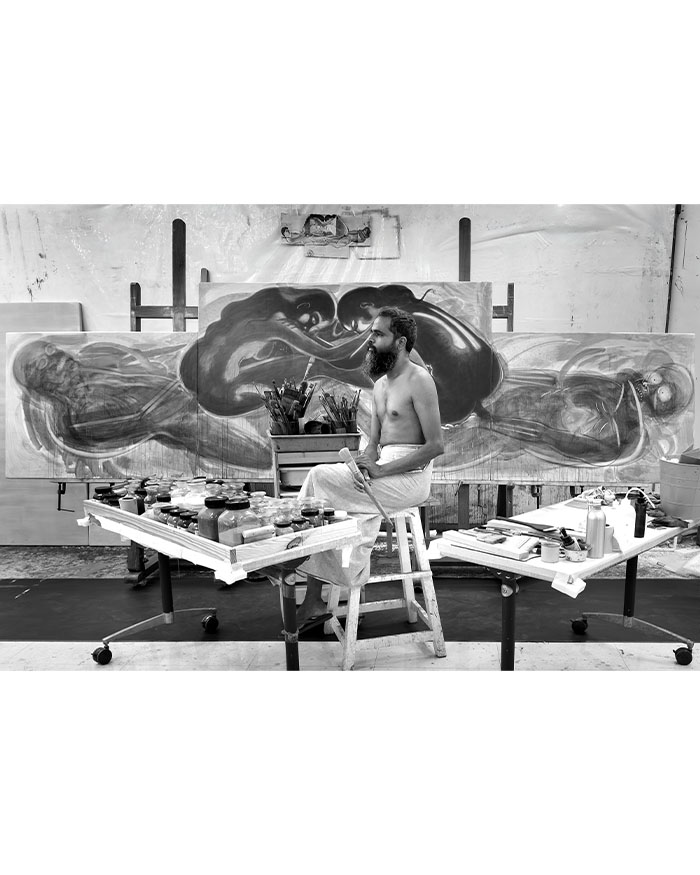
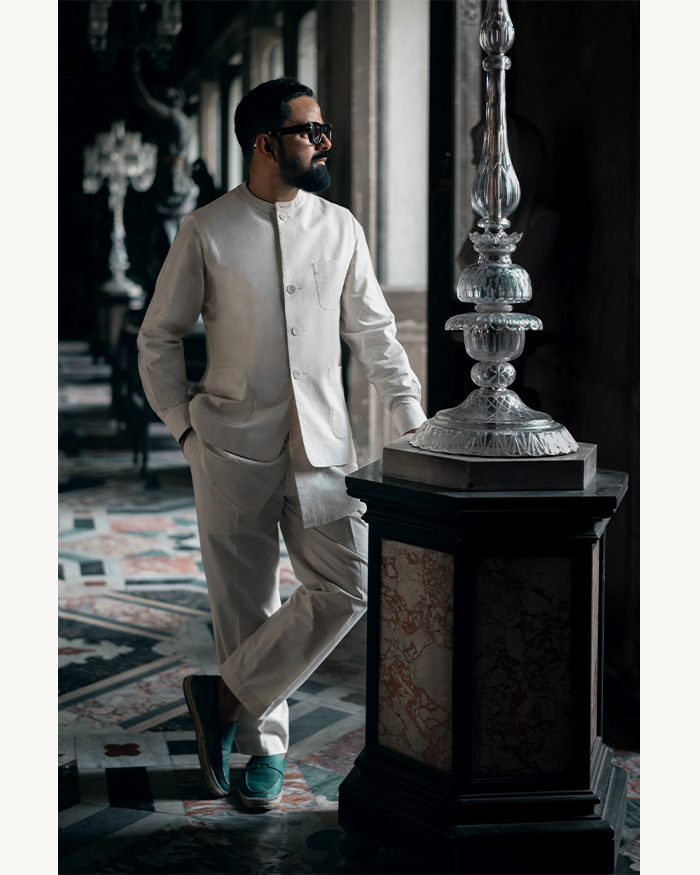
T Venkanna photographed by Rohit Chawla
SHARE THIS ARTICLE

You May Also Like

Watch

No results found.

Search
Close this search box.