SDeG
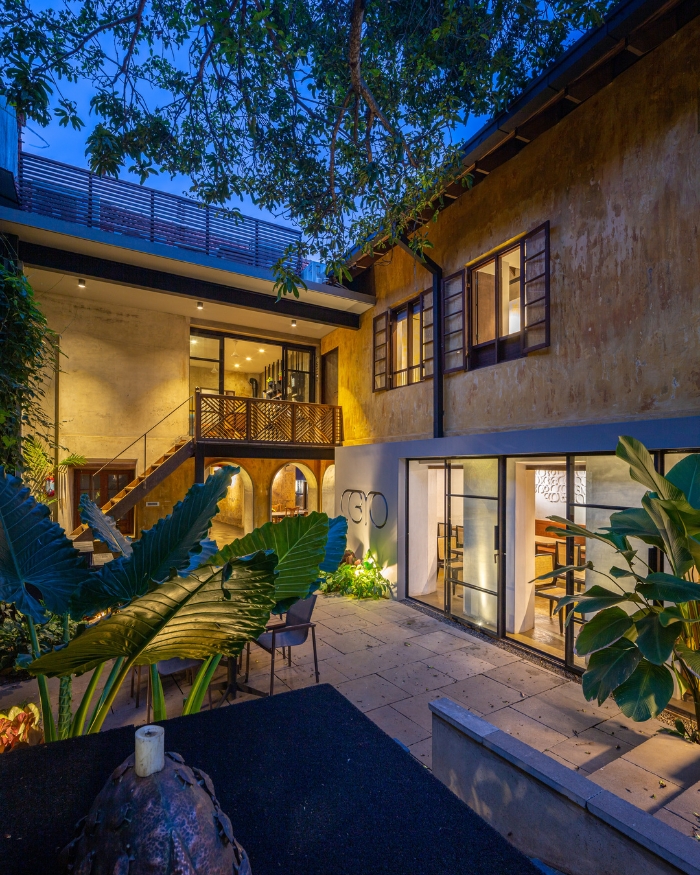
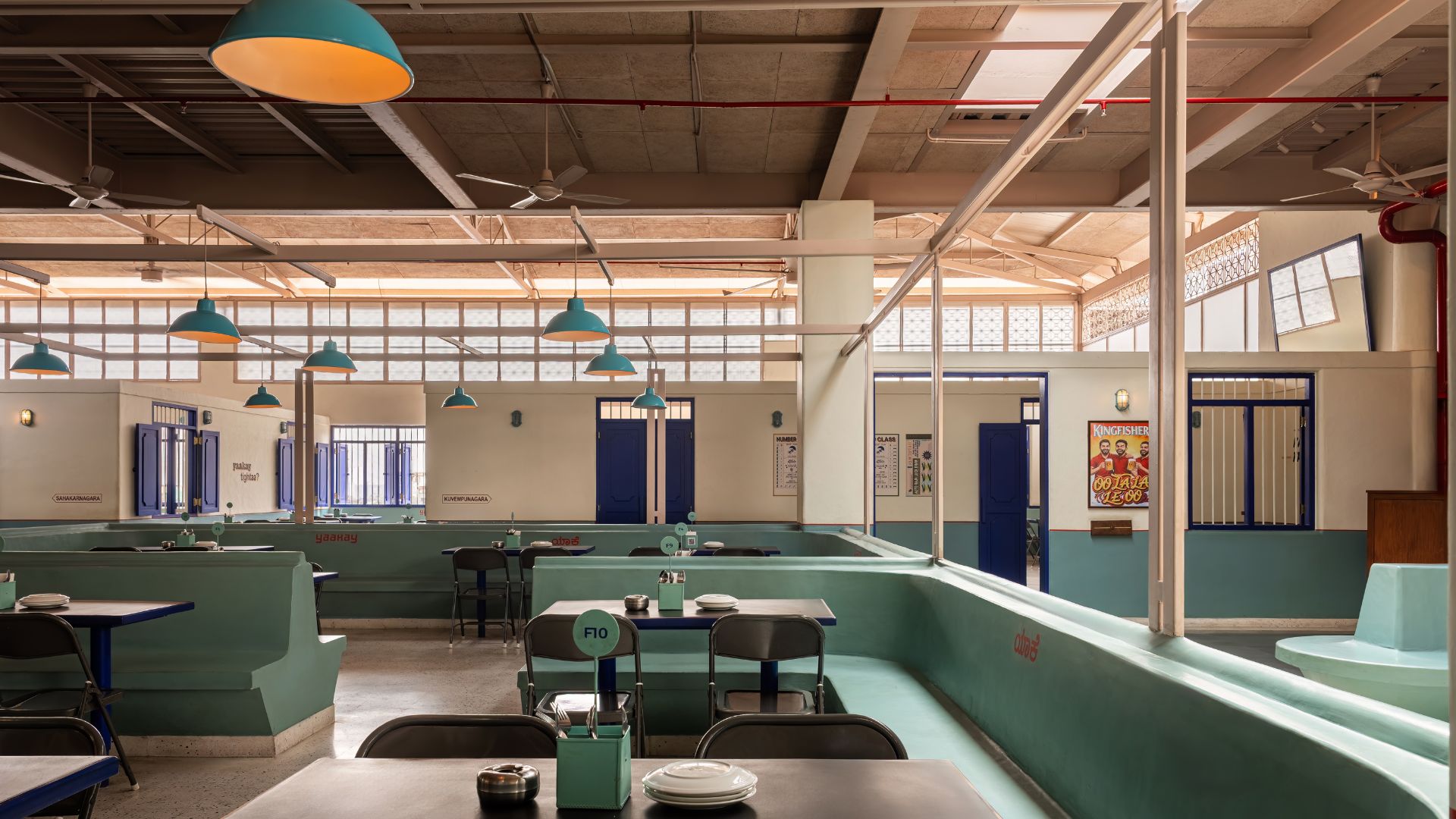
Yaakay spans across an expansive area of 19,562 sq ft; Photography by Jubin Johnson

The people’s bar in Bengaluru

Not every neighbourhood bar disappears with time; some simply come of age and SDeG visualises it!

BY

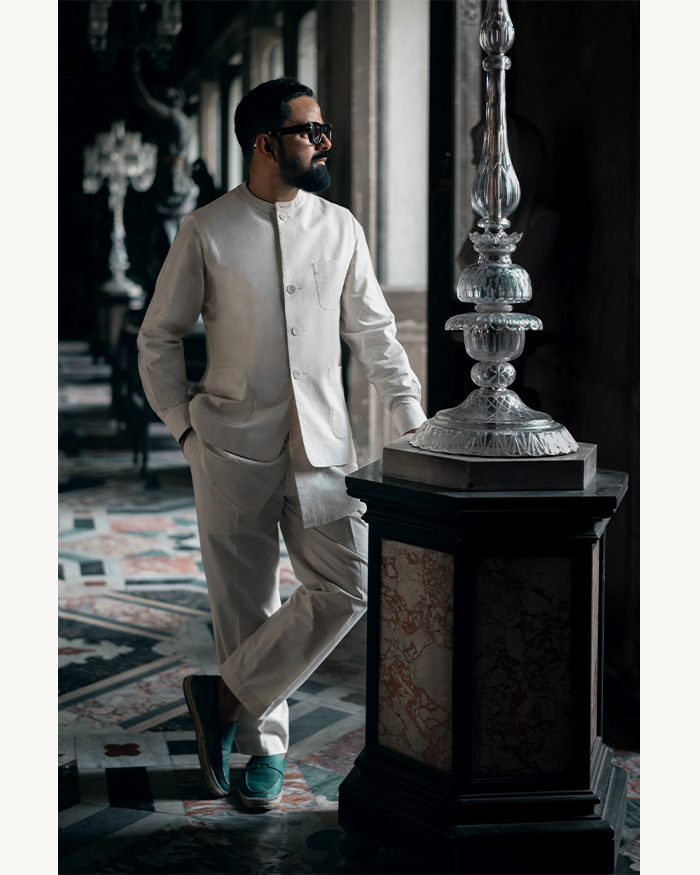
Rewind to the decades of the ‘80s and ‘90s in Bengaluru, a time when gatherings at the city’s neighbourhood bars were a thrumming reverie embedded into the everyday social lives of its people. Its beauty lay less in what it served on the table and more in the way these spaces gathered people. Before cocktail bars became destinations, these canteen-style bars and restaurants anchored the city life, accommodating office-goers, families and regulars under the same roof, making the neighbourhood bar feel like an extension of their personal living spaces itself. Fast forward to today, Yaakay Bar and Canteen revives this retro rhythm for the new-age Bengaluru designed by Sujit Nair and Aruna Sujit of SDeG alongside Bidisha Kumar

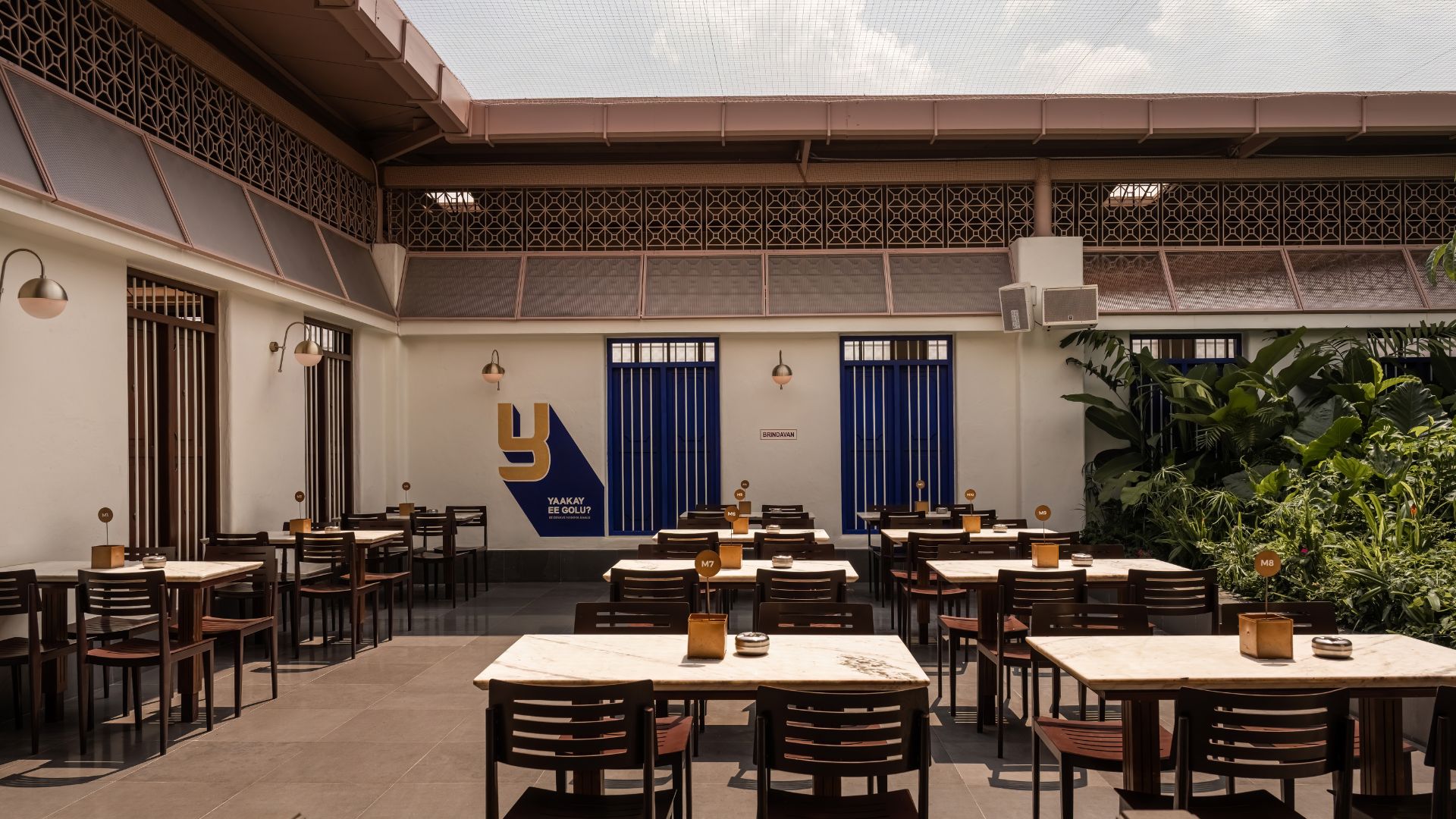
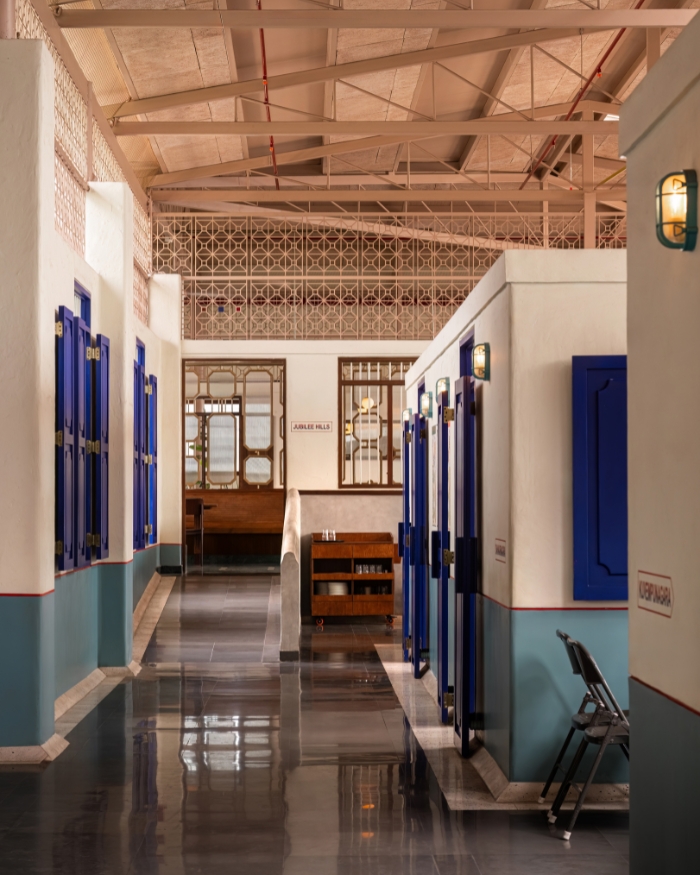
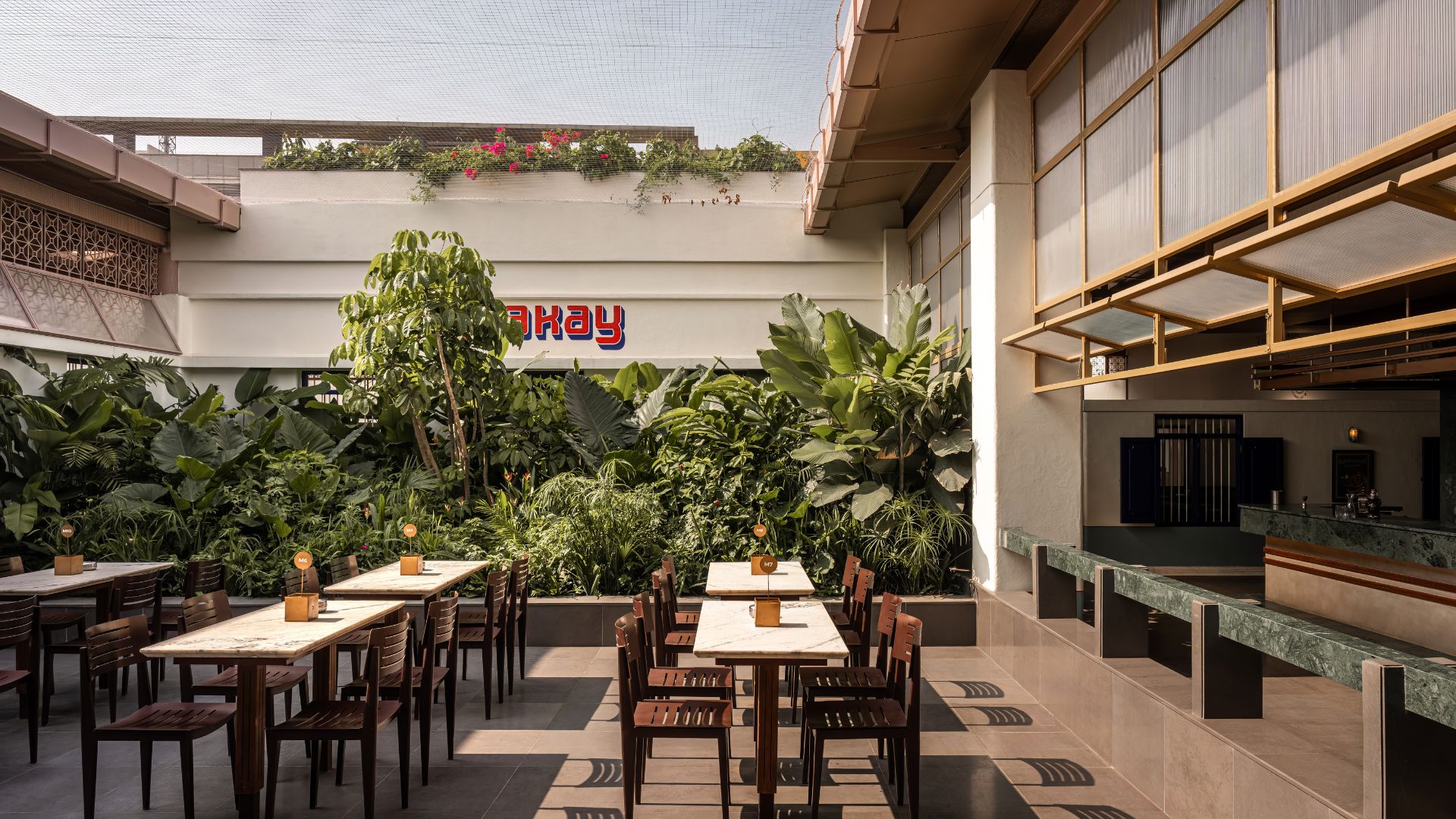
In Kannada, Yaakay literally means why. The bar-canteen begins with a simple question: why did we stop building places like before? “Yaakay was designed to feel like a restored and refurbished courtyard villa (on a large terrace of a commercial building) with a collection of rooms, verandahs, corridors and moods. When fully occupied, it feels like a large social gathering rather than a conventional modern-day bar,” explains Sujit. 

“In many ways, it recalls the ‘area’ bars of the 80’s and 90’s; dimly-lit, energetic, noisy, deeply social, unpretentious and comforting in their simplicity”

SDeG

The people’s bar

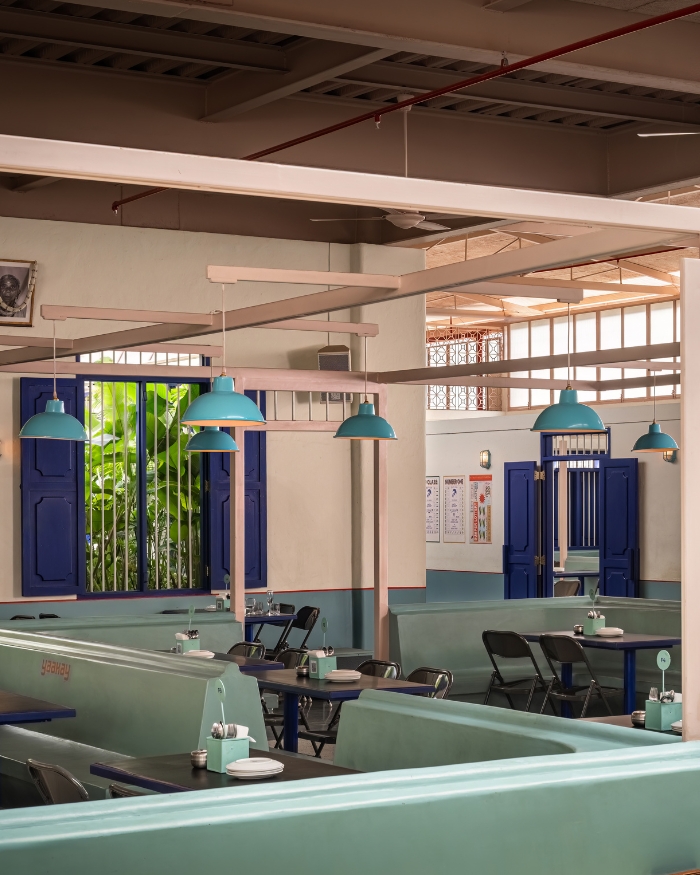
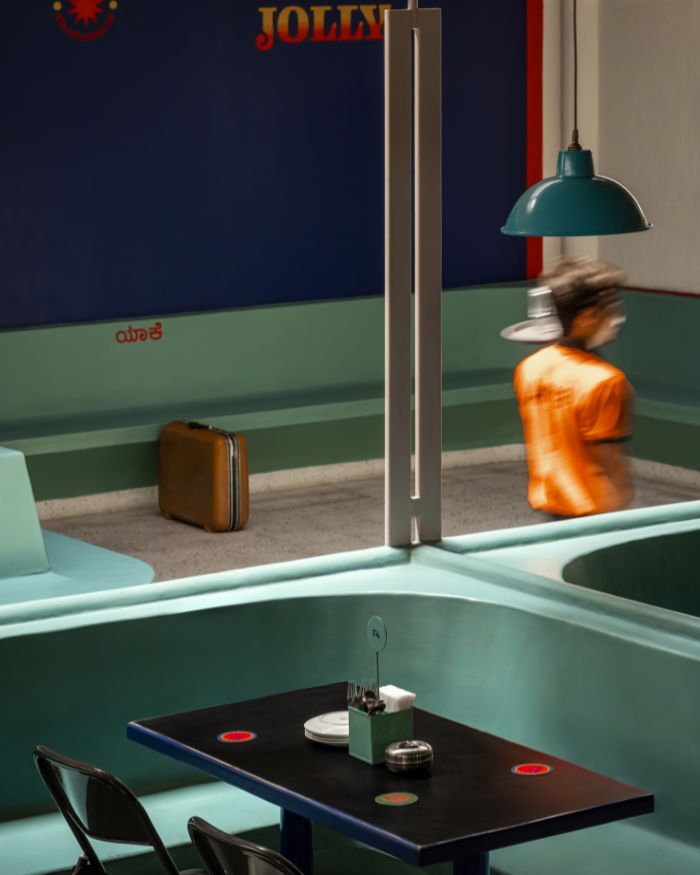
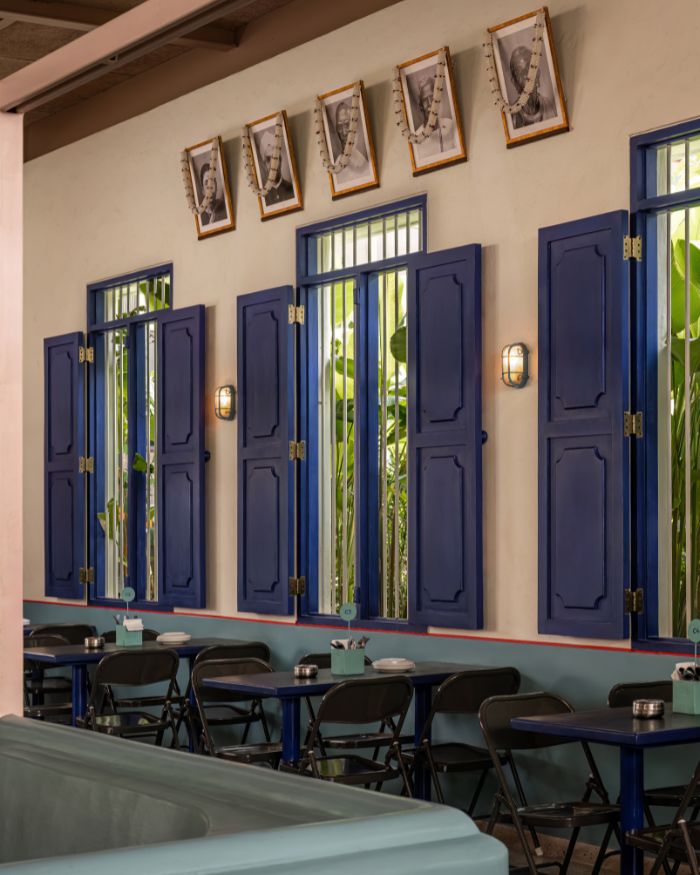
Instead of framing the neighbourhood bar with nostalgia, the restaurant returns to it as a spatial typology. Graphics of comic books, mint-blue hued seating and indigo shutters, all borrow from Bengaluru’s design memory. The interiors unfold as a collection of blue-hued rooms gathered around a courtyard, replacing the predictability of a singular dining hall. adds, “In many ways, it recalls the ‘area’ bars of the 80’s and 90’s; dimly-lit, energetic, noisy, deeply social, unpretentious and comforting in their simplicity.”

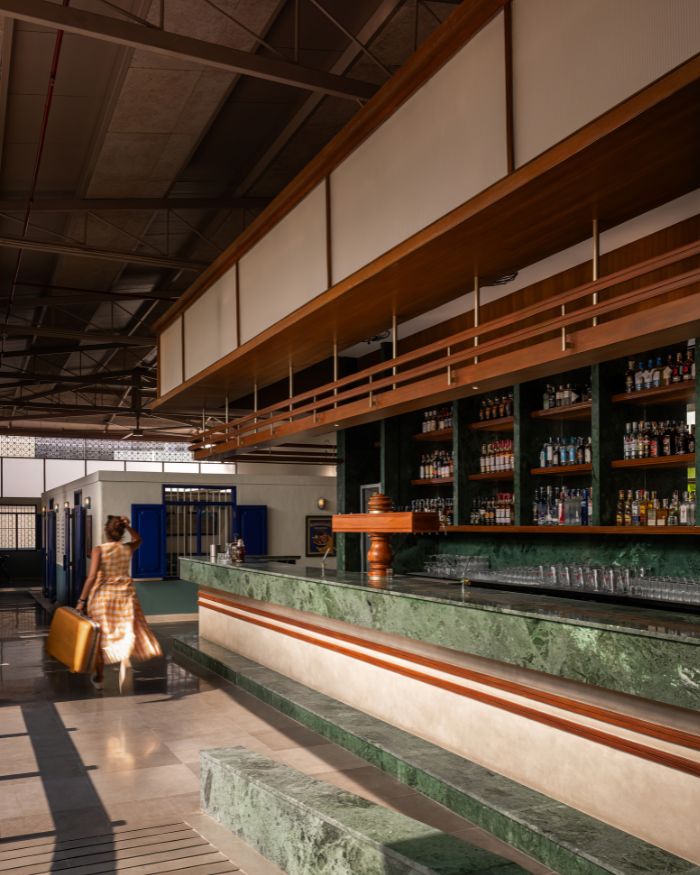
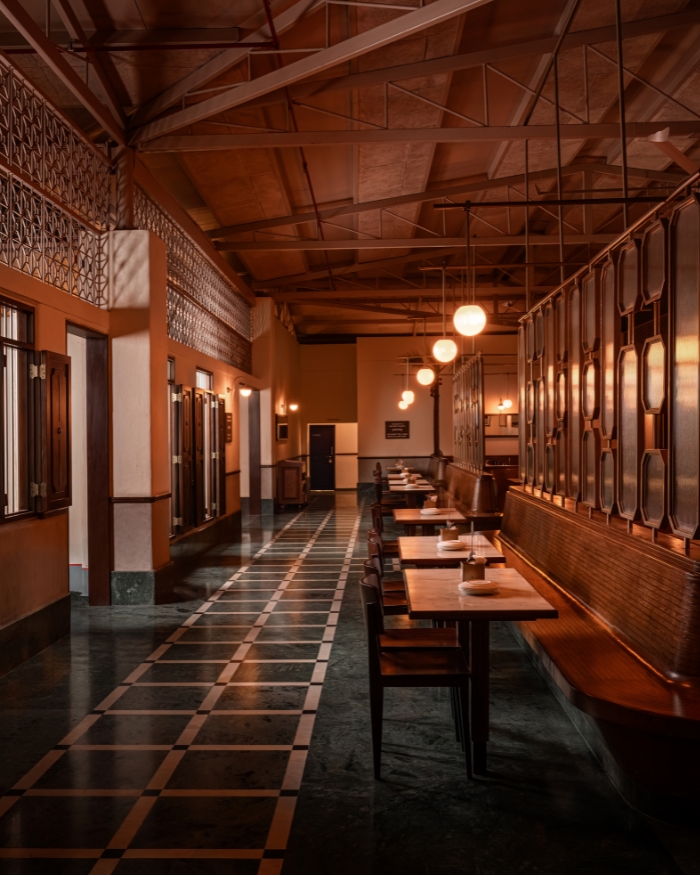
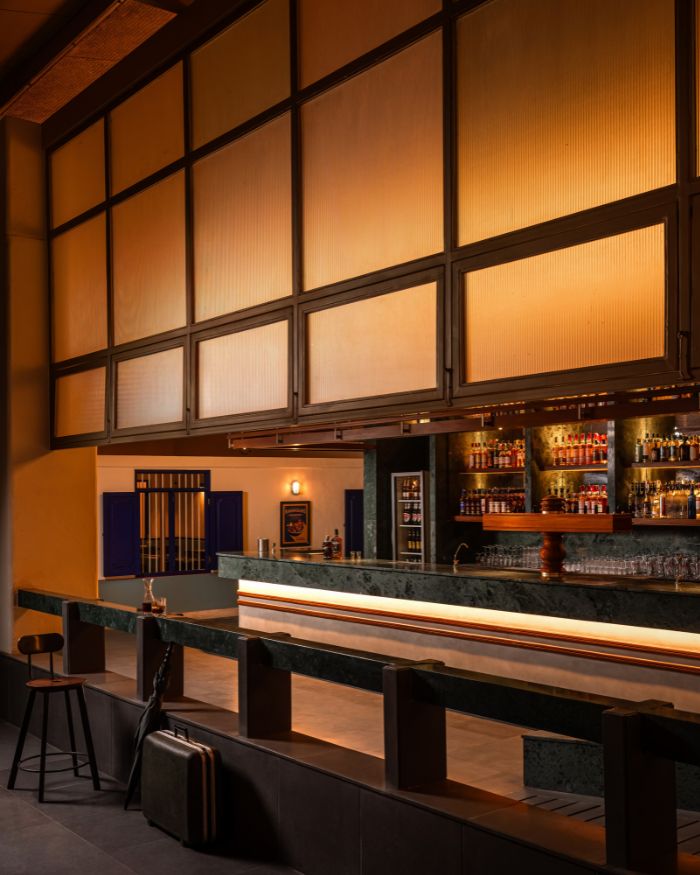
The plan resists asking every diner to inhabit the restaurant the same way. Yaakay, envisioned for BYG Ventures, is organised into two sections, the People’s and the Premium, on either side of a courtyard-facing bar, each wrapped in distinct materials, colours and textures. The rooms cluster around the courtyard, similar to a maze. At its centre, the courtyard-facing bar borrows from the ticketing kiosks of Art Deco cinemas, bringing a theatrical note to the space.

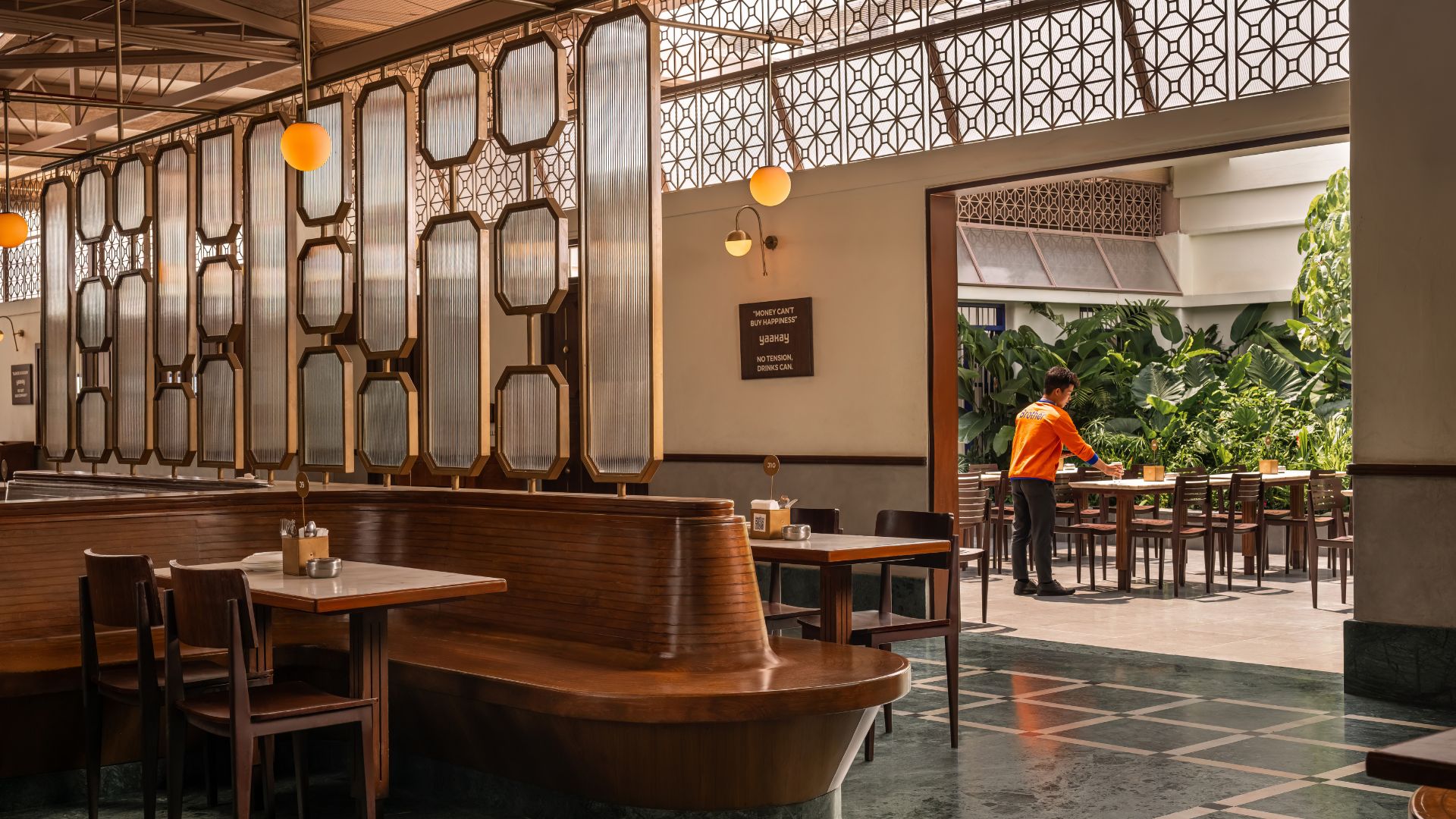
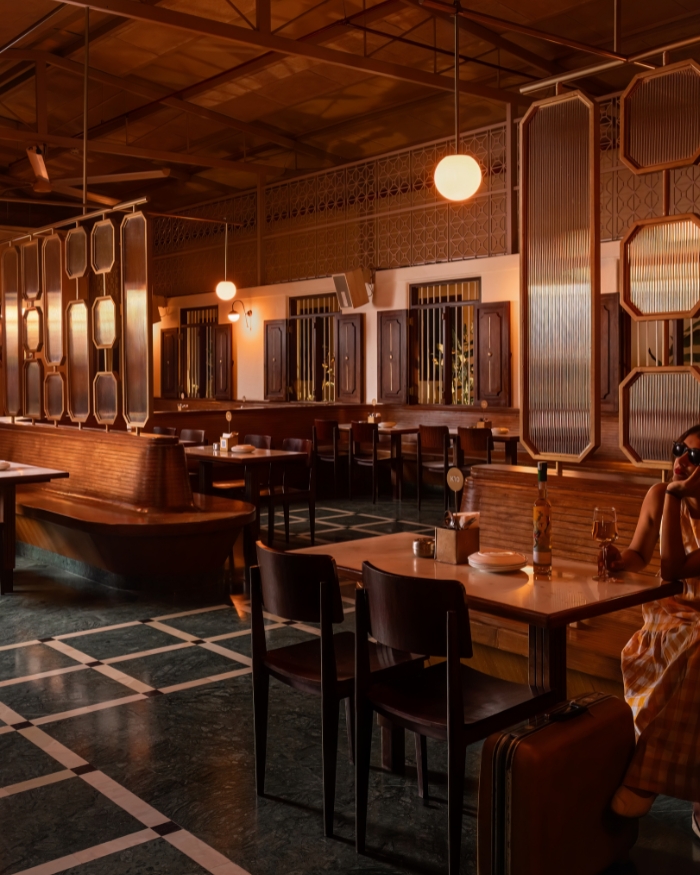
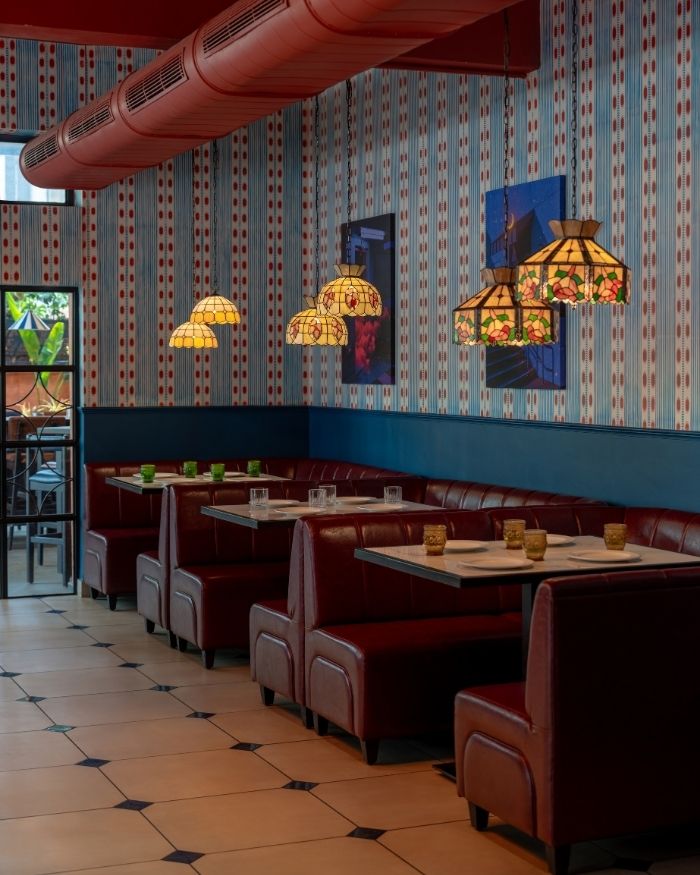
Ergonomic seating and vibrant typography keep the nostalgia from feeling overly reverential. Some areas remain open to the conviviality of the bar, while the Premium section retreats behind ribbed-glass partitions and decorative metal screens, offering an intimate counterpoint to the energy beyond.

SDeG
SDeG

Coming of age

If the planning preserves the spirit of the neighbourhood bar, the material palette is where it visibly comes of age. Blue is the connective tissue, running from indigo timber through to the lattices suspended overhead, stitching the sequence of rooms together. It’s a colour long associated with Bengaluru’s older homes and canteens. 

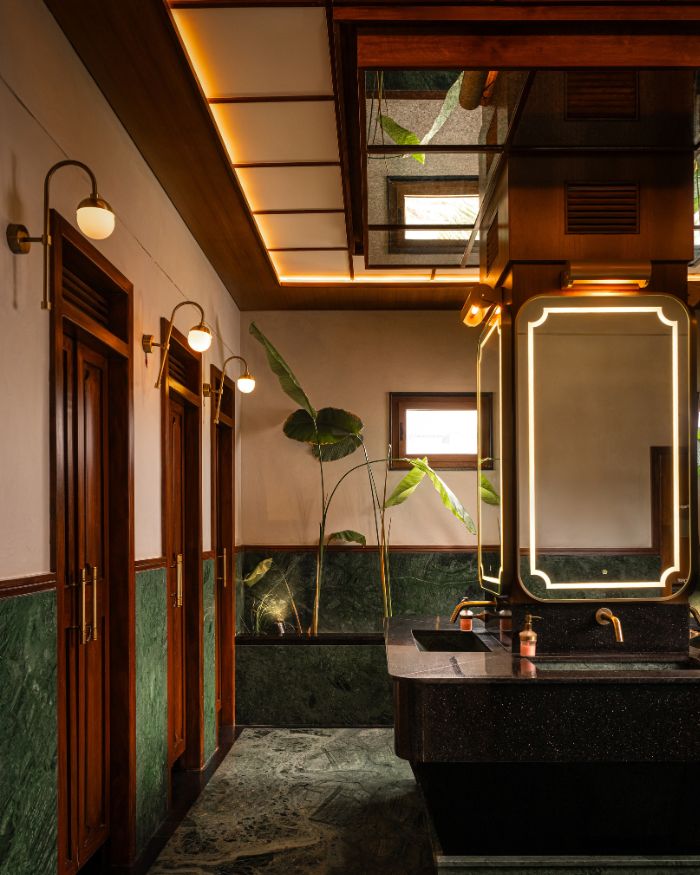
The familiar blue is anchored by Kota stone flooring and muted plaster walls. The premium area reads as the canteen-style bar, all grown up. Green marble introduces pockets of richness, polished timber lends warmth and ribbed glass filters both light and views, letting the atmosphere shift as you move deeper into the plan; lighting dims as daylight fades into an amber glow. 

SDeG
SDeG

Drawn into a comic strip

Look closer and another layer begins to emerge. Comic book typography sprawls across the walls, oversized menus turn into murals and local phrases punctuate the interiors with a playful irreverence that refuses to sit quietly. Hand painted menus, local references, visual clutter that used to build up organically over years rather than arrive fully formed — Yaakay reinterprets that same energy. Every room reads like another frame in a comic strip, revealing itself gradually rather than all at once.

In revisiting the neighbourhood bar as a spatial typology rather than a stylistic reference, Yaakay never mistakes nostalgia for design, for which SDeG collaborated with Sayanand M and Nikita Baliga, alongside the brand identity created by Tonic Design House. It’s the same generosity of planning that ran through the old neighbourhood bars, where family rooms sat alongside bustling drinking halls and every regular eventually found their favourite corner. Yaakay doesn’t replicate those rooms literally; it distils their underlying logic. Movement becomes the norm; wandering between rooms feels a lot like pub hopping, only condensed beneath one roof.

Read more: Culinary haute spots that serve delicious design! Here are 13 must-visit restaurants in India 

SDeG
SHARE THIS ARTICLE

You May Also Like

Watch

No results found.