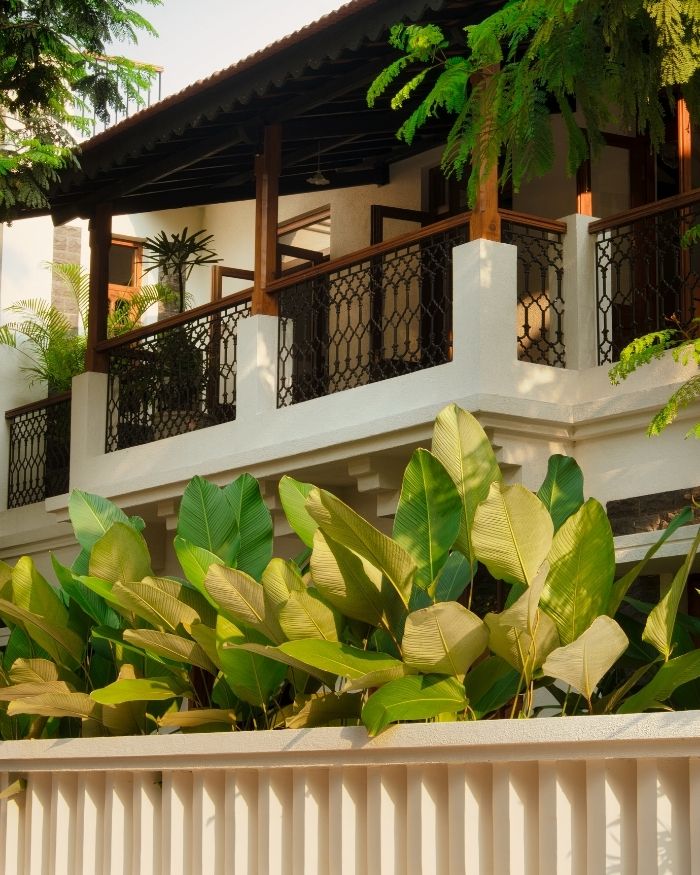

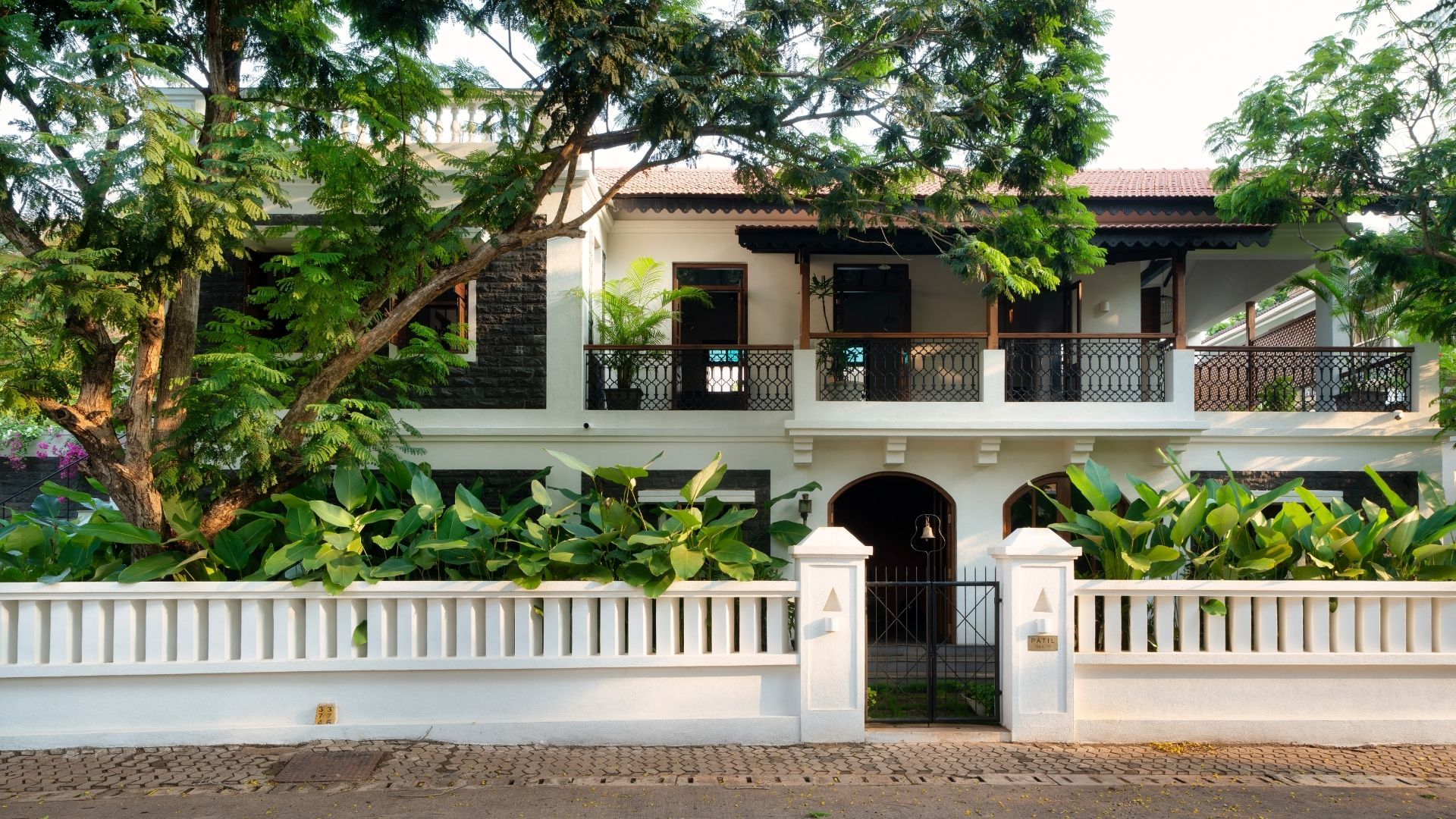
Bambolim sits on the edge of everyday Goa. It’s one of those parts of Panjim where people visit to find respite, pockets of nature and secluded beaches. Along its narrow lanes, houses lean close to one another, their walls painted in colours matured by time. The plot for a 5,600 sq ft home entrusted to Studio 415 speaks of this everyday story. Tucked between other neighbouring houses on three sides, a road runs along this home’s front facade.
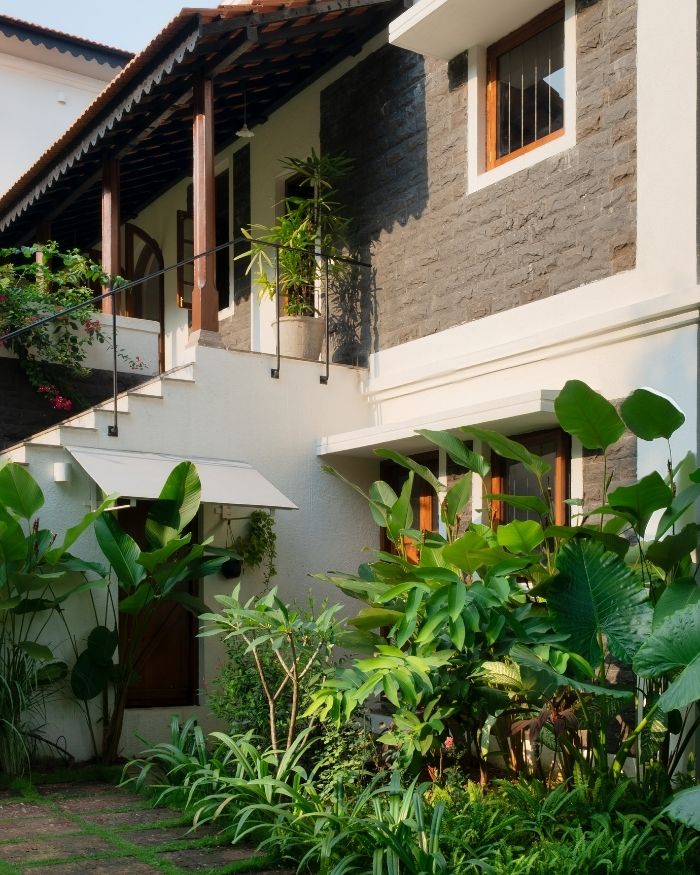
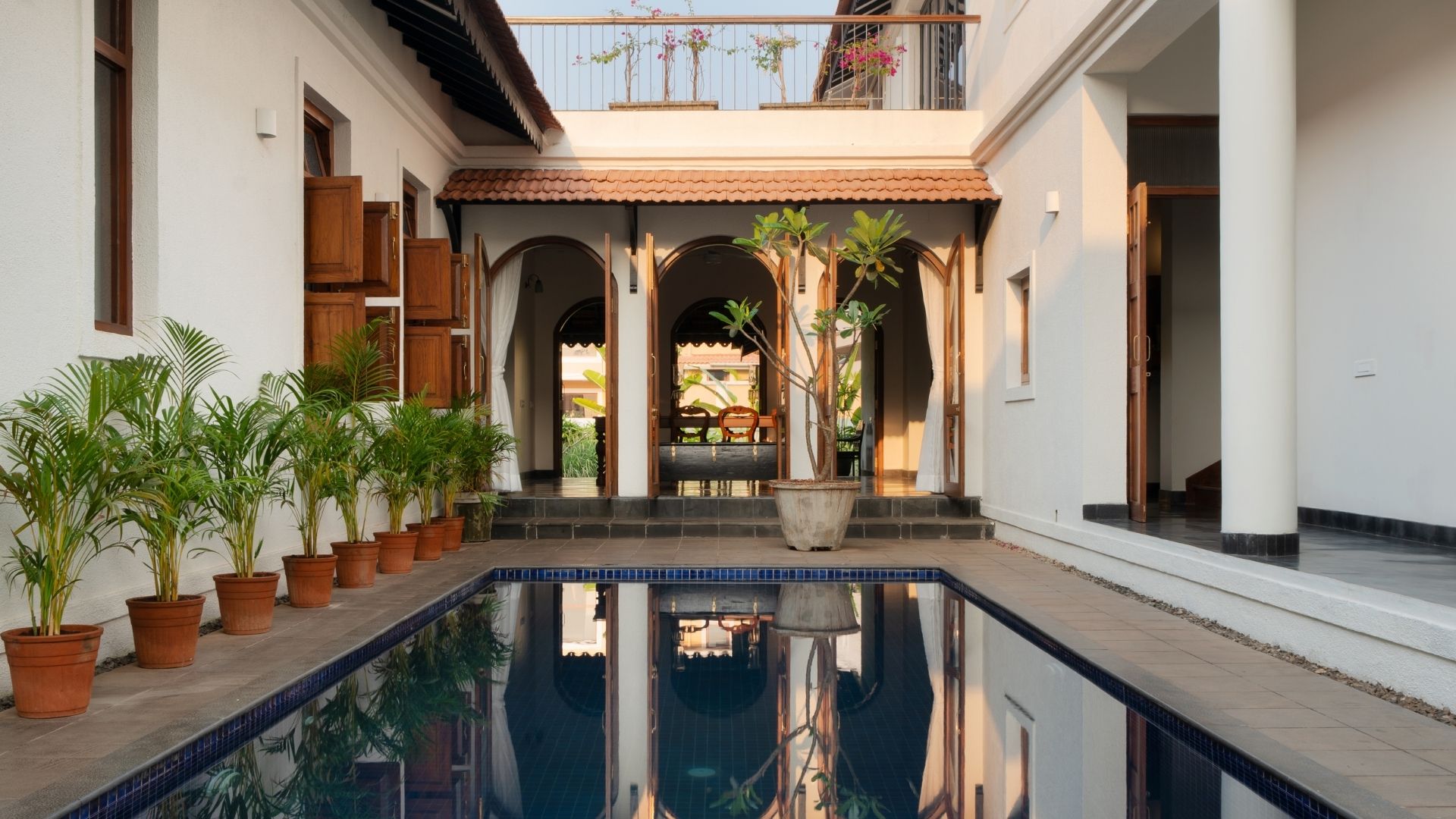
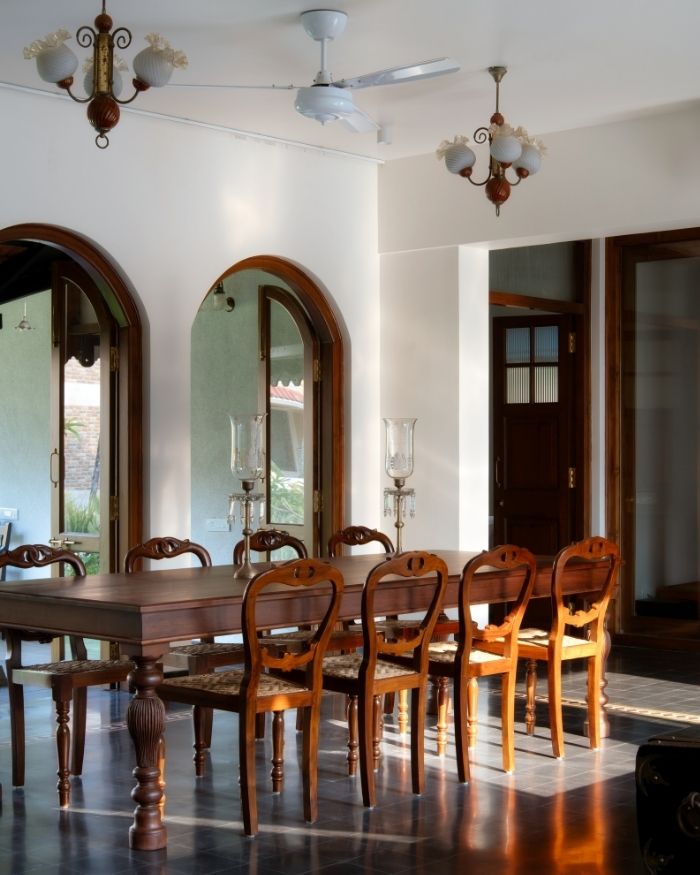
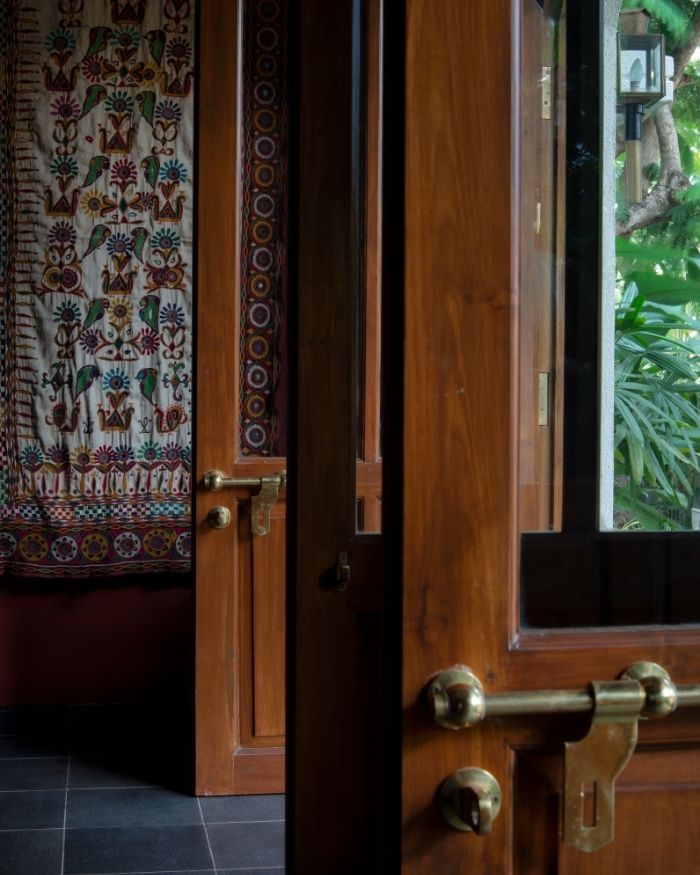
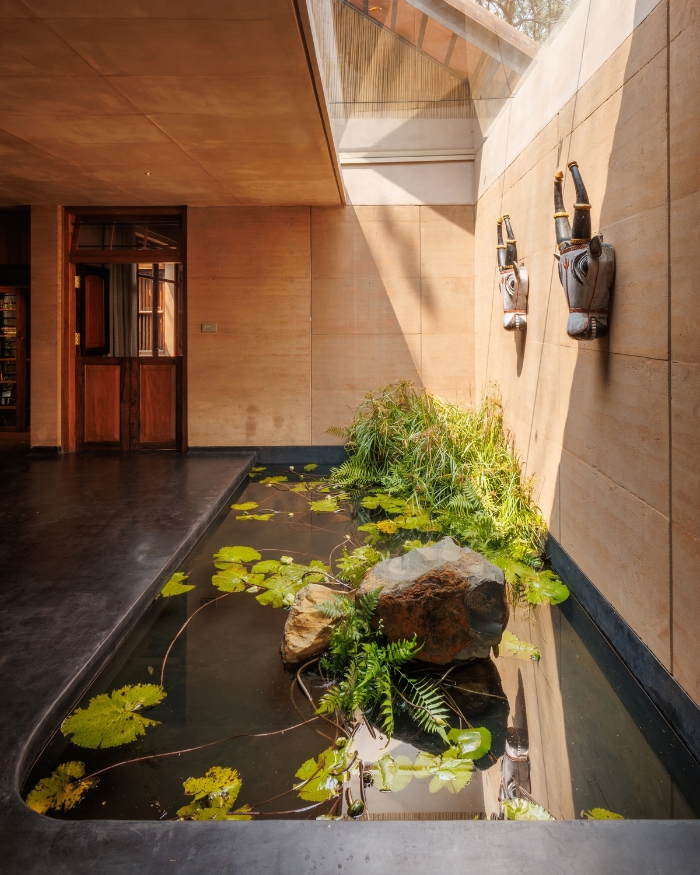
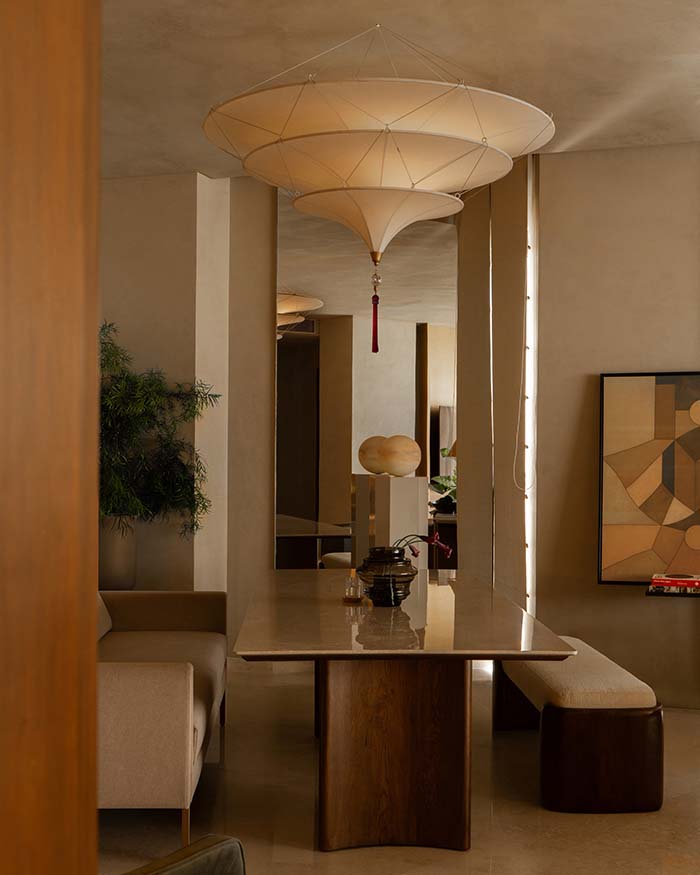
The owners, a Singapore-based family, sought a home that narrated tradition, suffused with accents in its interiors borrowed from the past. Tejas Yelve and Krishnaa Gabhawala, principal architects of Studio 415 responded with a design centred around a courtyard, with a pool becoming the dwelling’s heart. From the outside, the home reminds you of the old Indo-Portuguese bungalows with their raj-aangans. Inside, the space feels as if it’s tempered by old timber and terracotta, brightened by daylight through the arched windows across the basalt floors. “Seventy percent of the doors and windows are old, sourced from different parts of India. The columns supporting the dining verandah are 100-years old, sourced from Chennai,” the duo explains.
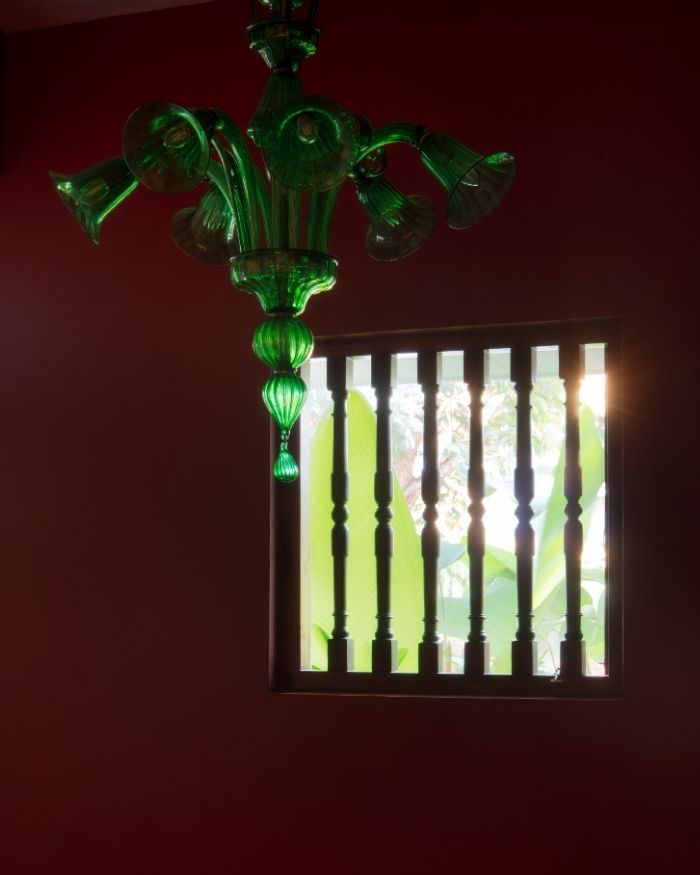
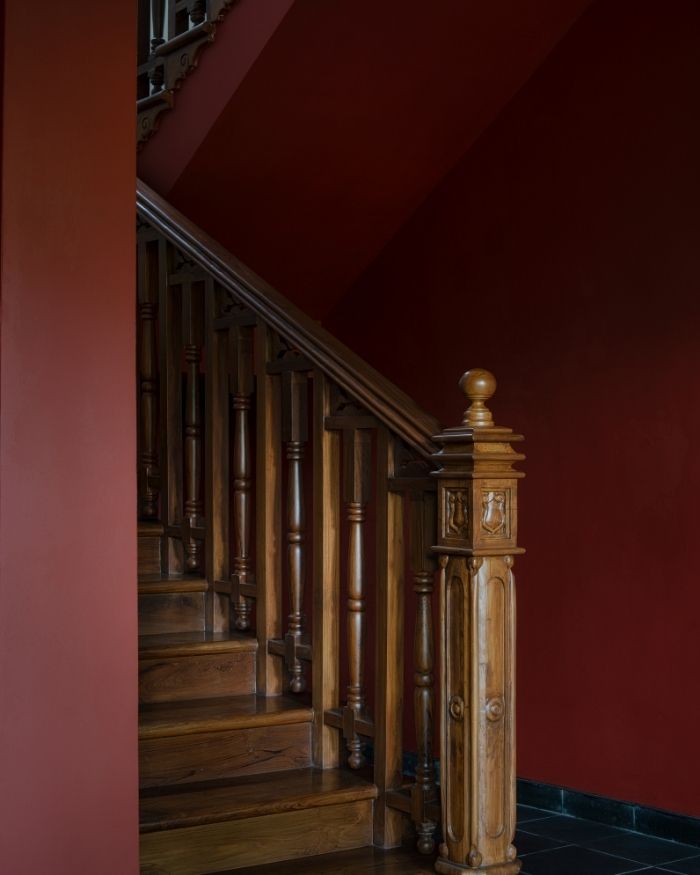
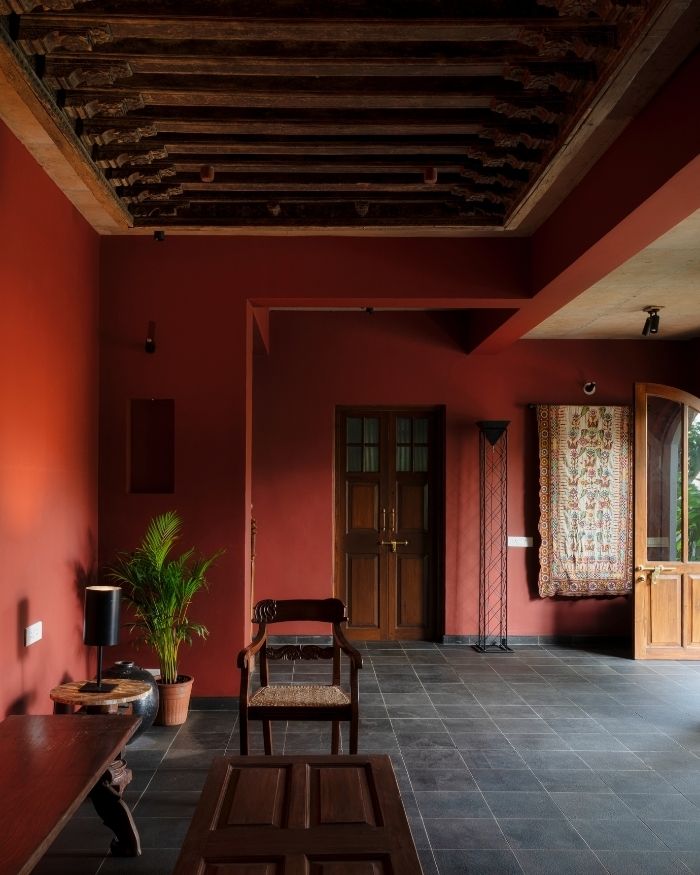
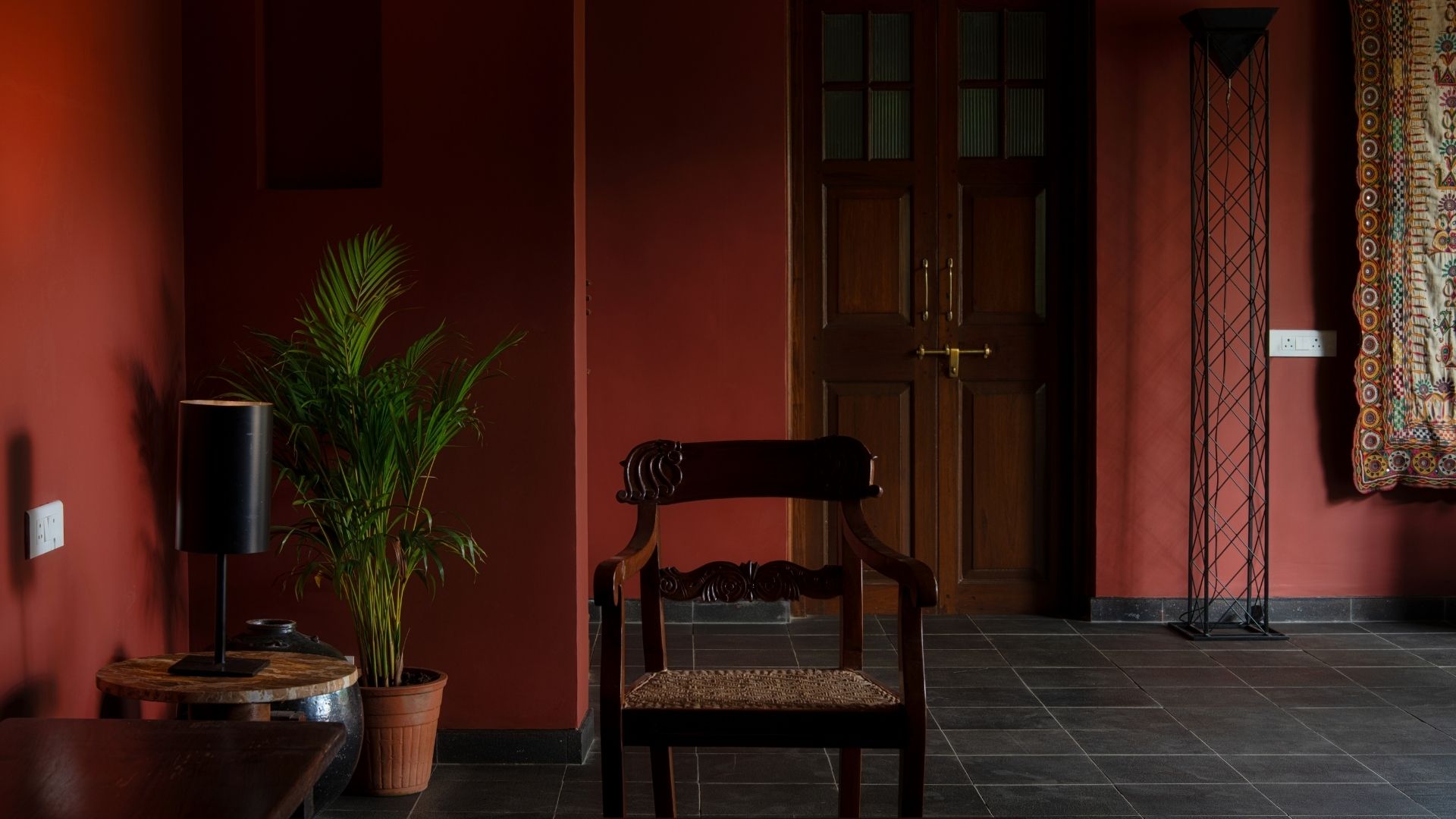
The entrance opens to a compact, red-hued room that instantly sets the rhythm of the house. Its walls are finished in a deep shade of red, a tone borrowed from the Goan laterite soil. The rich colour, adds warmth to the space and sets a grounding tone for the spaces beyond.
The flooring is basalt stone, cool underfoot and practical for the Goan climate. The ceiling done with a raw RCC finish, intentionally left exposed, adds to the rustic appeal of the space. The ceiling panel in the room by the sitting area is over 100 years old, sourced from Cochin. The furniture in this space has a strong vintage appeal—a table constructed using an old door, chairs and a rosewood bench sourced from Cochin—these rustic elements pair with the subtle colonial accents to set the tone for the rest of the house.
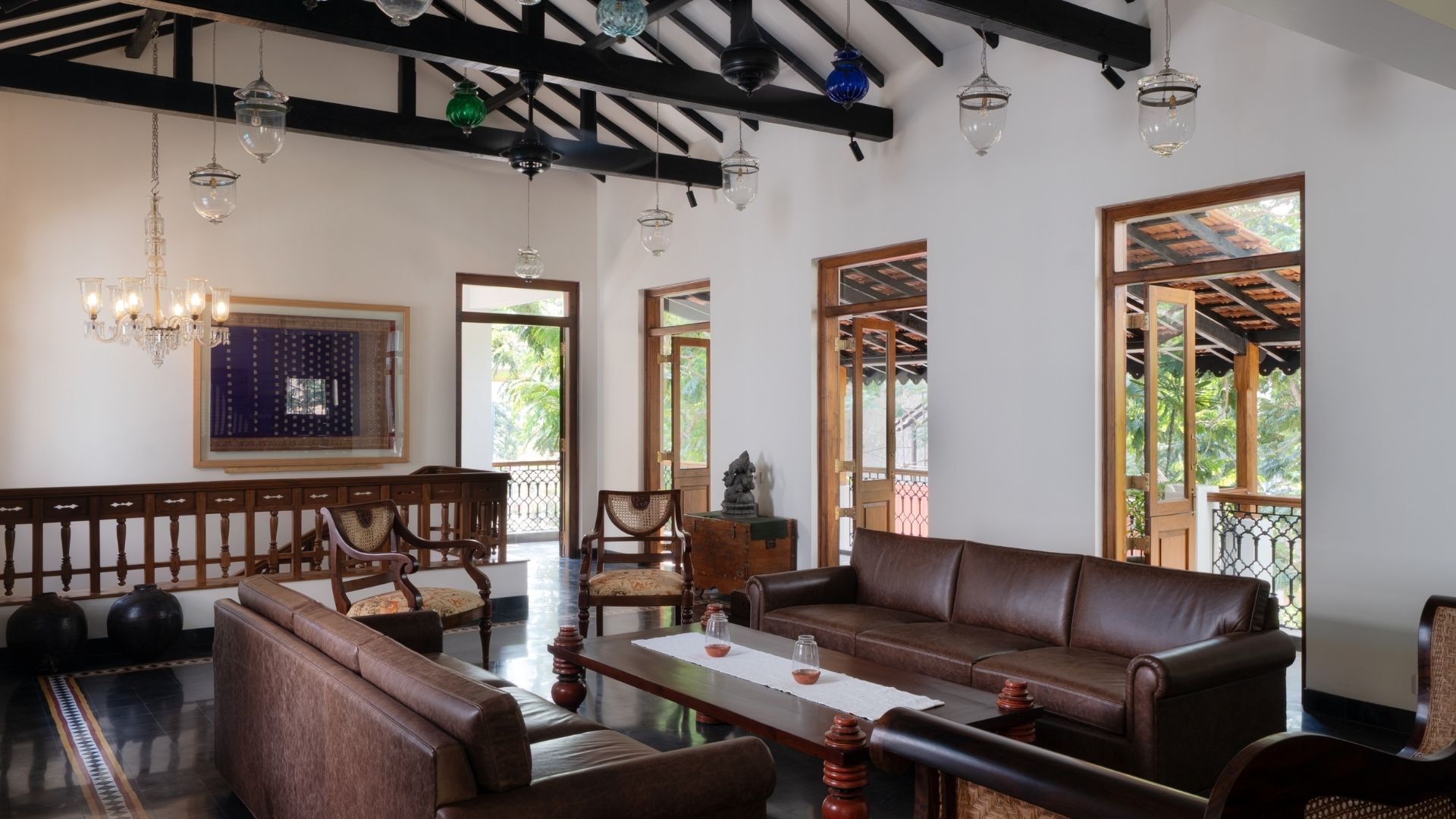
Upstairs, the living room also carries that feeling of an old Goan home. Upon entry, eyes are drawn to the homeowner’s mother’s saree framed and displayed near the stairway, adding a personal touch to the space.
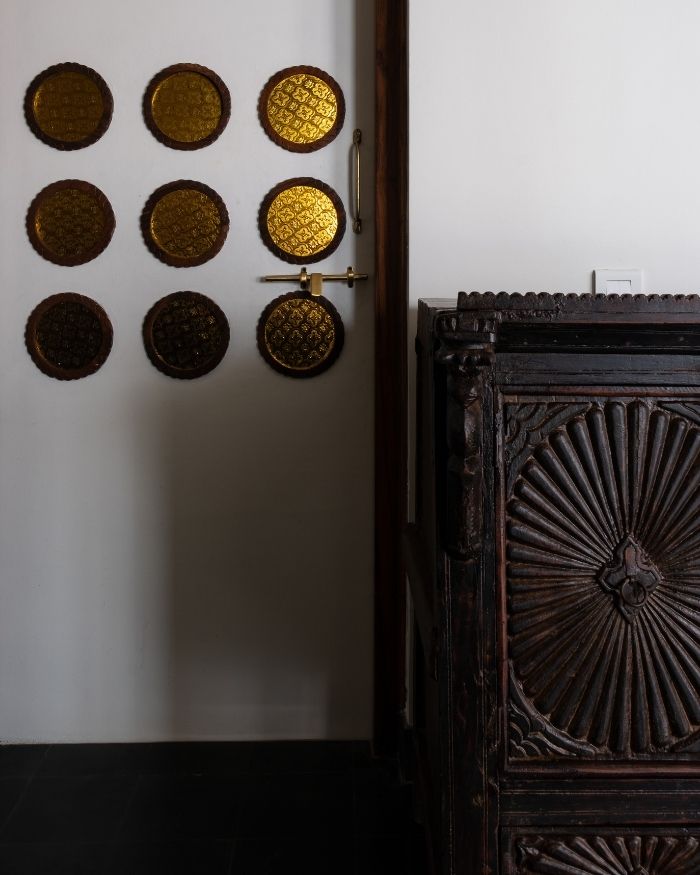
A high, sloping ceiling framed in timber creates an illusion, making the room feel taller than it is, while large doors lead to a shaded terrace facing the courtyard. The flooring is hand-cast cement in a muted tone that catches the morning light ever so softly. “A divider screen crafted from oyster shells inspired by old Goan windows adds a natural, coastal touch while providing privacy and visual interest,” Tejas and Krishnaa state.
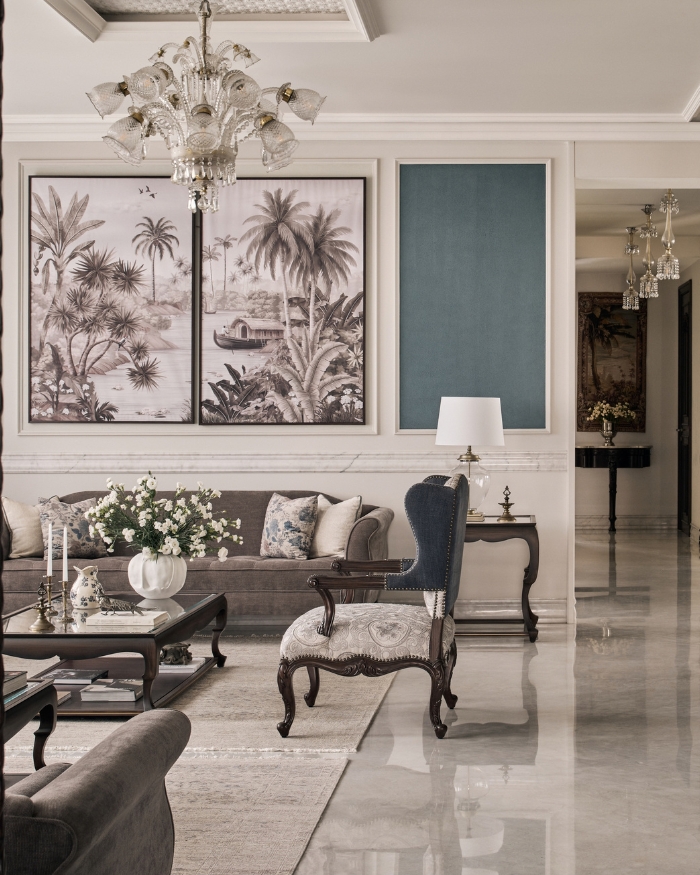
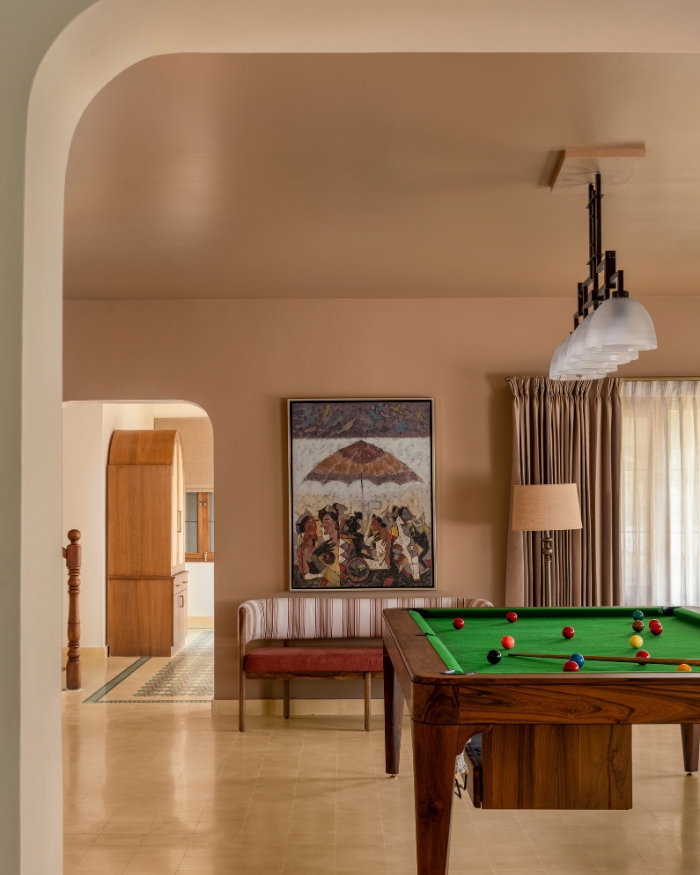
The furniture is mostly restored wooden pieces, with elegant detailing. A glass chandelier hangs from the ridge beam, complementing the Colonial-style furniture.
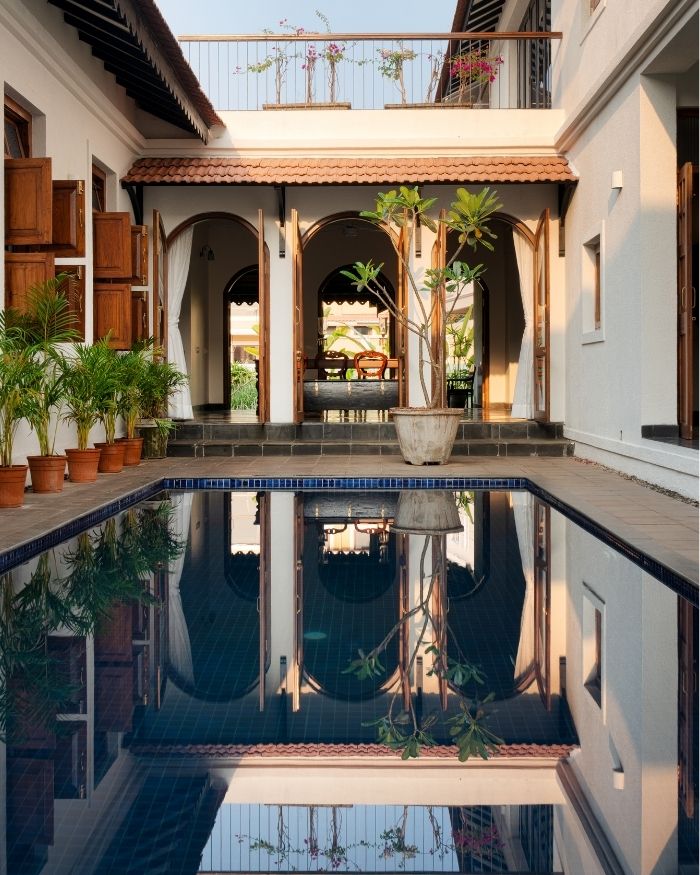
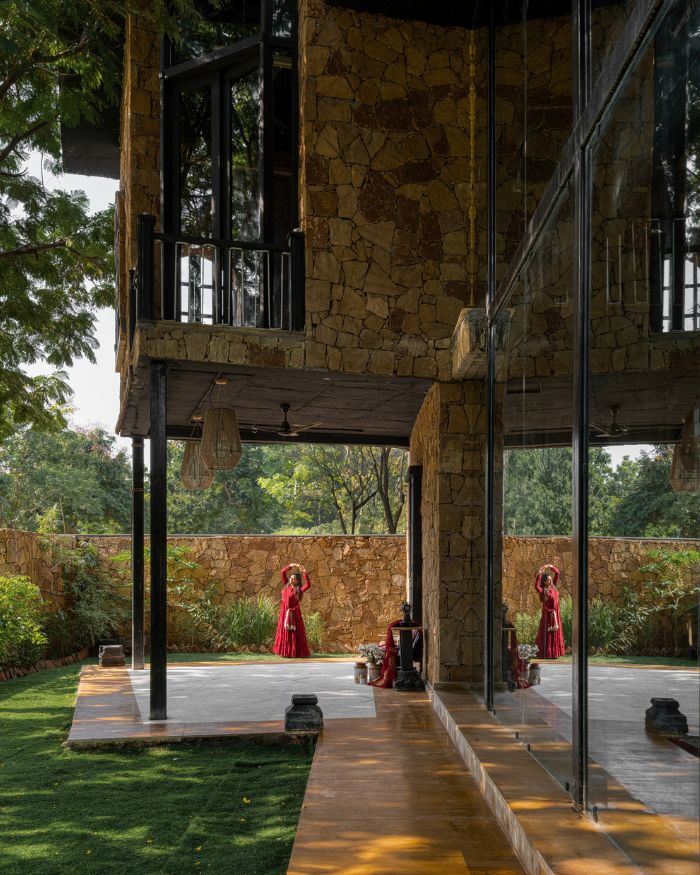
In old Indo‑Portuguese architecture, one sees the use of elements like courtyards, verandahs and balcões, that used to serve as gathering points for families; they weren’t mere structural features — they defined how life unfolded in Goan homes. At this Bambolim home, this story is re‑interpreted. The three‑storey bungalow centres itself on a basalt‑stone courtyard, integrating a pool that brings light, air, and a sense of privacy to the home. Around it, is a shaded verandah (extended from the dining area), supported by 100-year old columns.
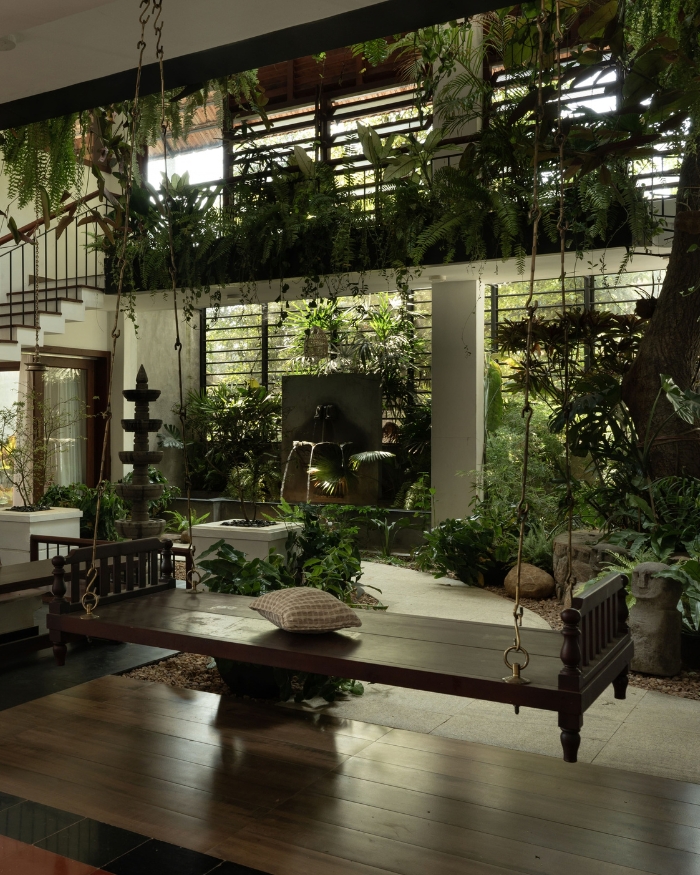
Situated between the lush lawn and dining area, it creates a beautiful spot for outdoor meals and gatherings. Adjacent to the courtyard, the balcão—a shaded timber porch—offers a gathering place for quiet conversation, morning tea, or long evening hours. These spaces work in harmony to create pockets for family time together. They embody susegad living, a slow, considered life, deeply rooted in Goa’s spirit.
Susegad living here means more than stillness. It is laughter drifting across the courtyard, it’s the sound of a pool party thrumming in the heart of the home. Conversations spilling onto the balcão over a midday drink and meals enjoyed in the verandah accompanied by the sound of crickets. The home is Goan to its bones—where living is always a little indulgent, a little old school, and always together.
No results found.