Sumessh Menon Associates
Photography courtesy of Gong

This restaurant in Mumbai is a little window to Asia

A tricky floor plan, abstract motifs and fibre lights drive Sumessh Menon Associates’ design for Gong

BY

Walking along Linking Road in Bandra means being swallowed by constant movement. Cars crawl bumper to bumper as their horns cut through the air. Shoppers rush past stores in a slipstream of noise. Finding a little respite here seems unlikely, until you take the lift to the eighth floor of Mansionz One.

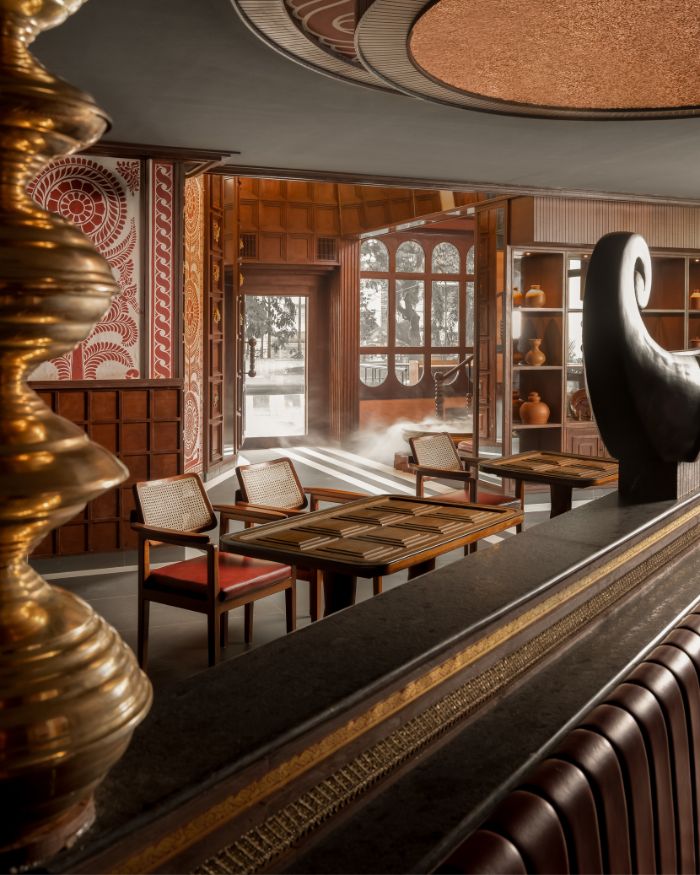
The first clue that you have left the noise behind is a lift that opens up to a rather quiet and equally striking entrance to Gong, a Pan Asian restaurant whose first impressions are probably its embossed walls and glowing lights. Designed by Sumessh Menon Associates, the restaurant begins in a lobby, with a wine cellar which leads to an arched portal. And as one enters, curved forms, warm brass and bronze accents and a soft pour of daylight replace the bustle outside. But why Gong? As Sumessh tells us, it is the lingering resonance of the disc-like metal instrument that inspired the sensorial experience of the space.

“For us, there were actually three elements that helped create the Gong experience: mainly light, art and openness”

Sumessh Menon Associates
Photography courtesy of Gong

A sound idea

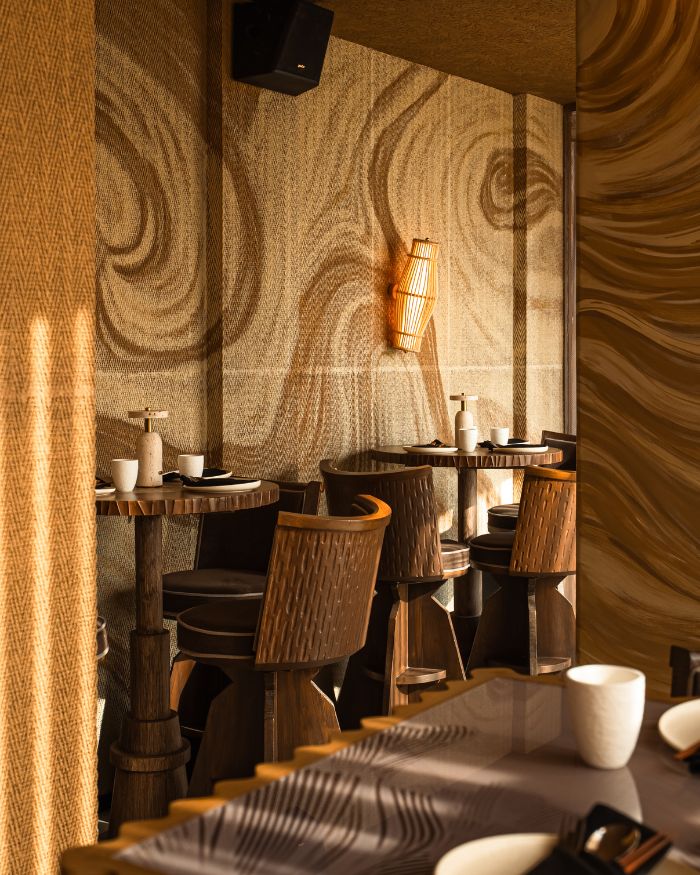
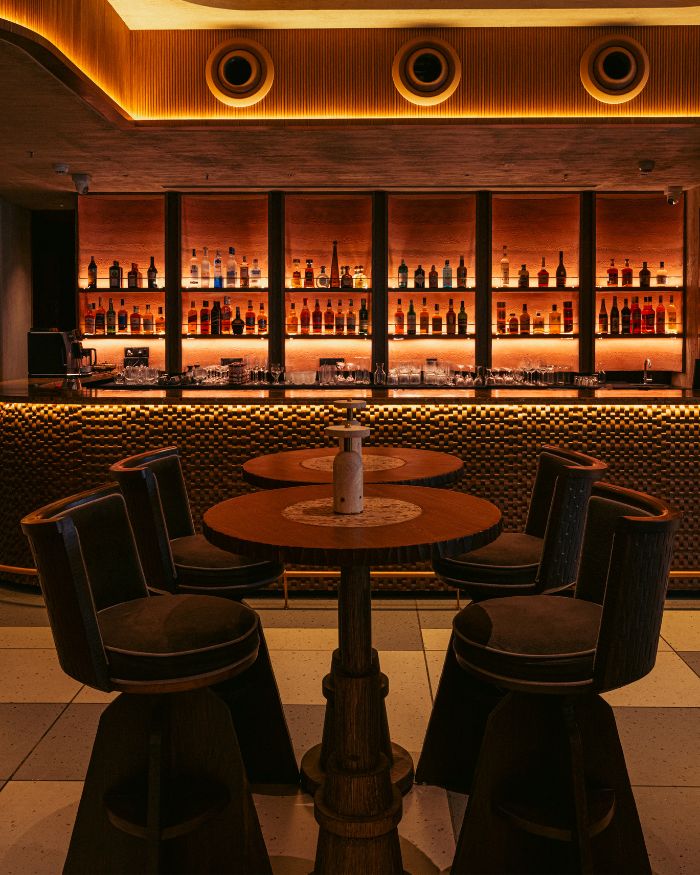
“Asian is not a theme,” says Sumessh Menon, founder and design director at his eponymous firm. Restaurateur Avik Chatterjee of Speciality Restaurants Limited wanted the interiors to be pared back and the team was careful not to lose the character to caricature or overt theming. “This balance can be tricky,” Sumessh admits. So, they worked with muted, earthy tones, bronze-esque accents and textured finishes.

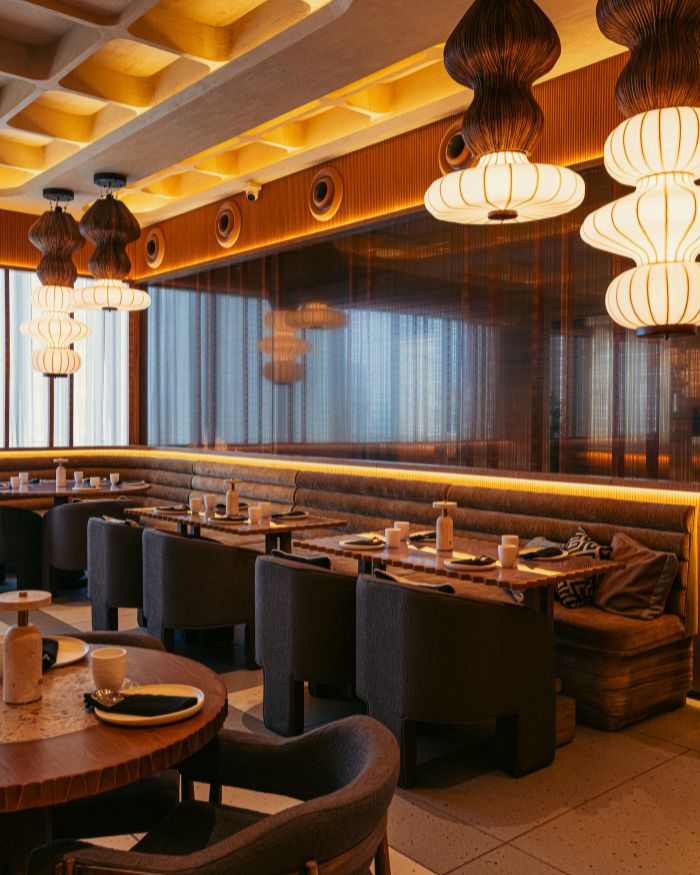
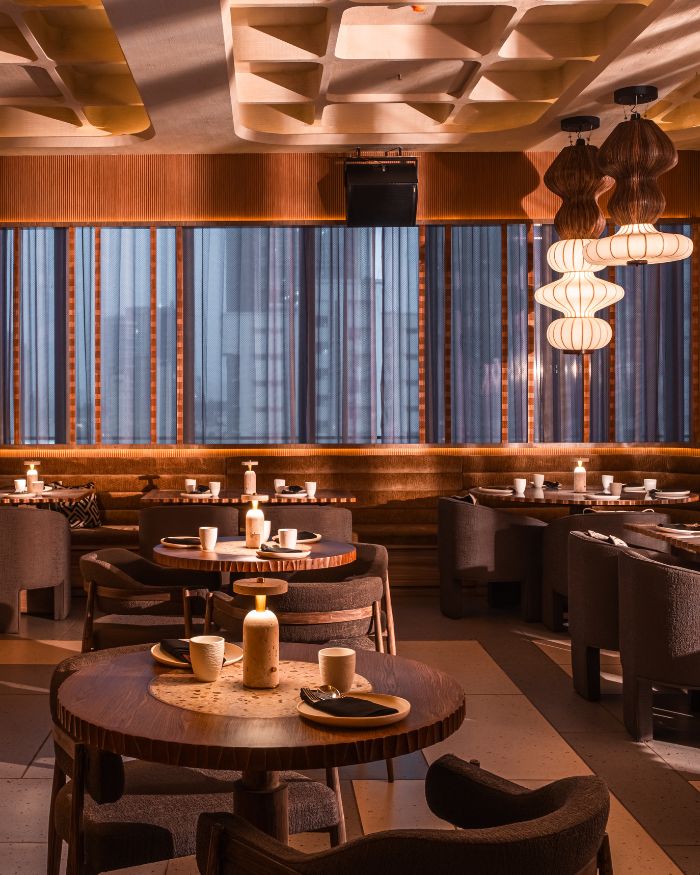
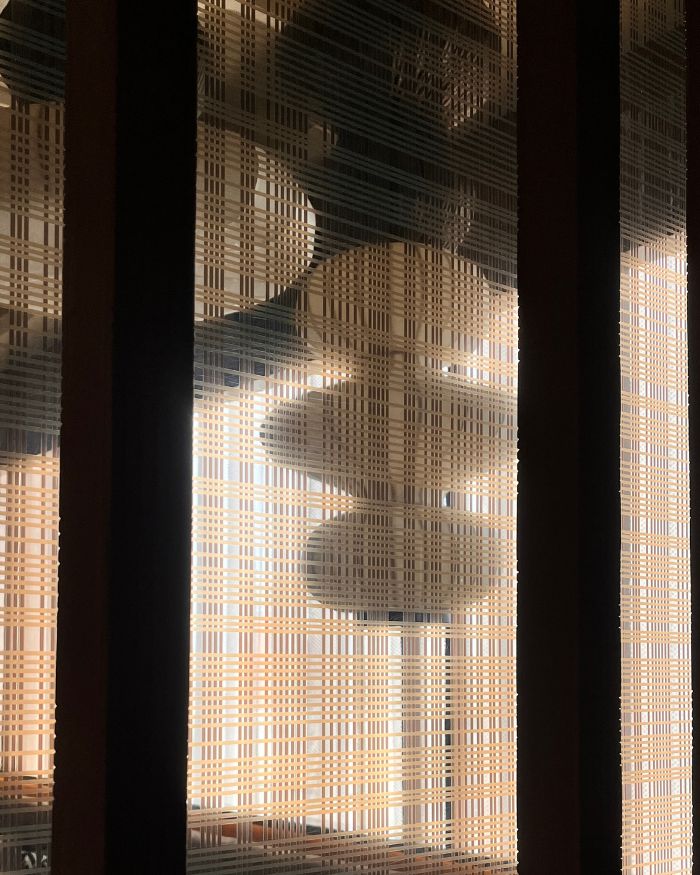
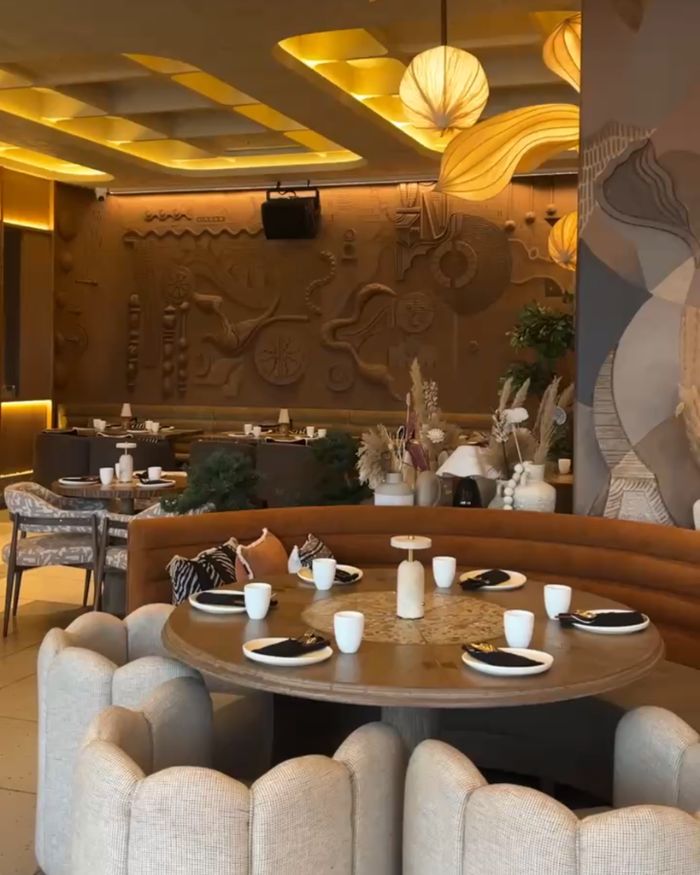
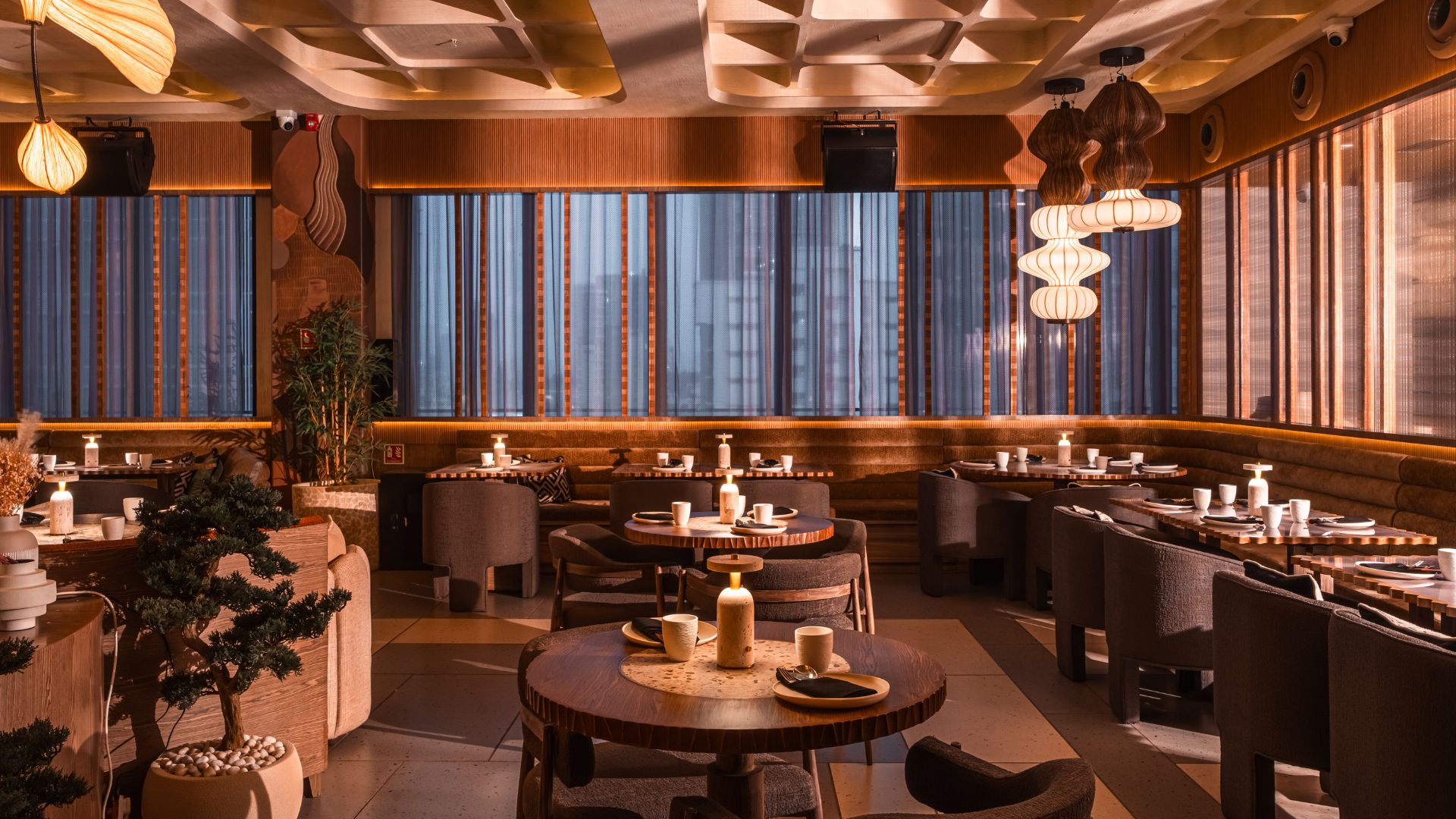
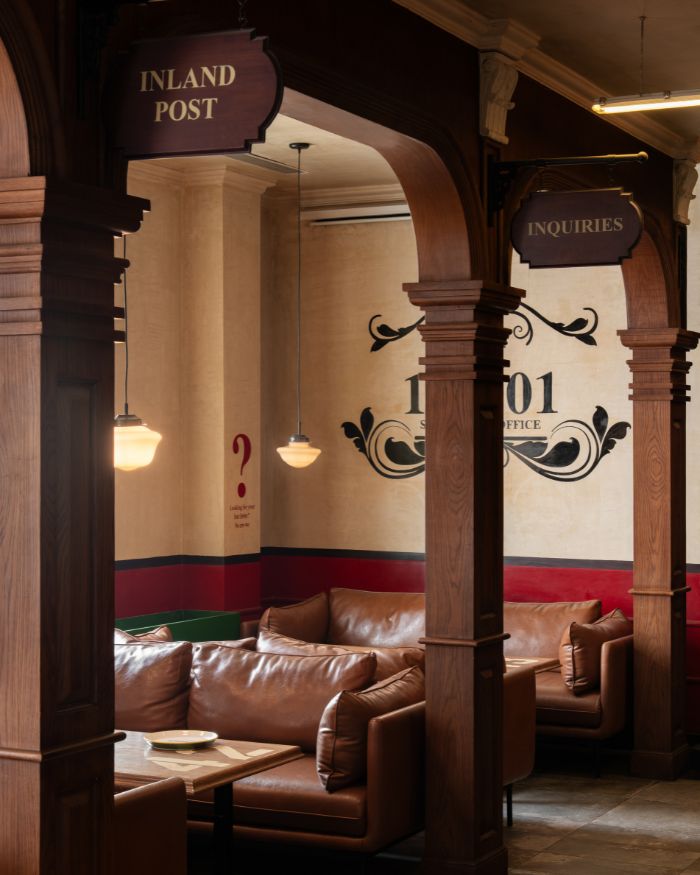
The guiding idea was a soundscape, an attempt to translate “the beautiful waves and reverberations produced by a gong — lingering and melodic — into a visual experience.” It can be felt in the lounge booths sweeping around the tables, while the sheers echo the undulations of the soundscape.

Sumessh Menon Associates
Photography courtesy of Gong
Sumessh Menon Associates
Photography courtesy of Gong

Grids, totems and monochromes

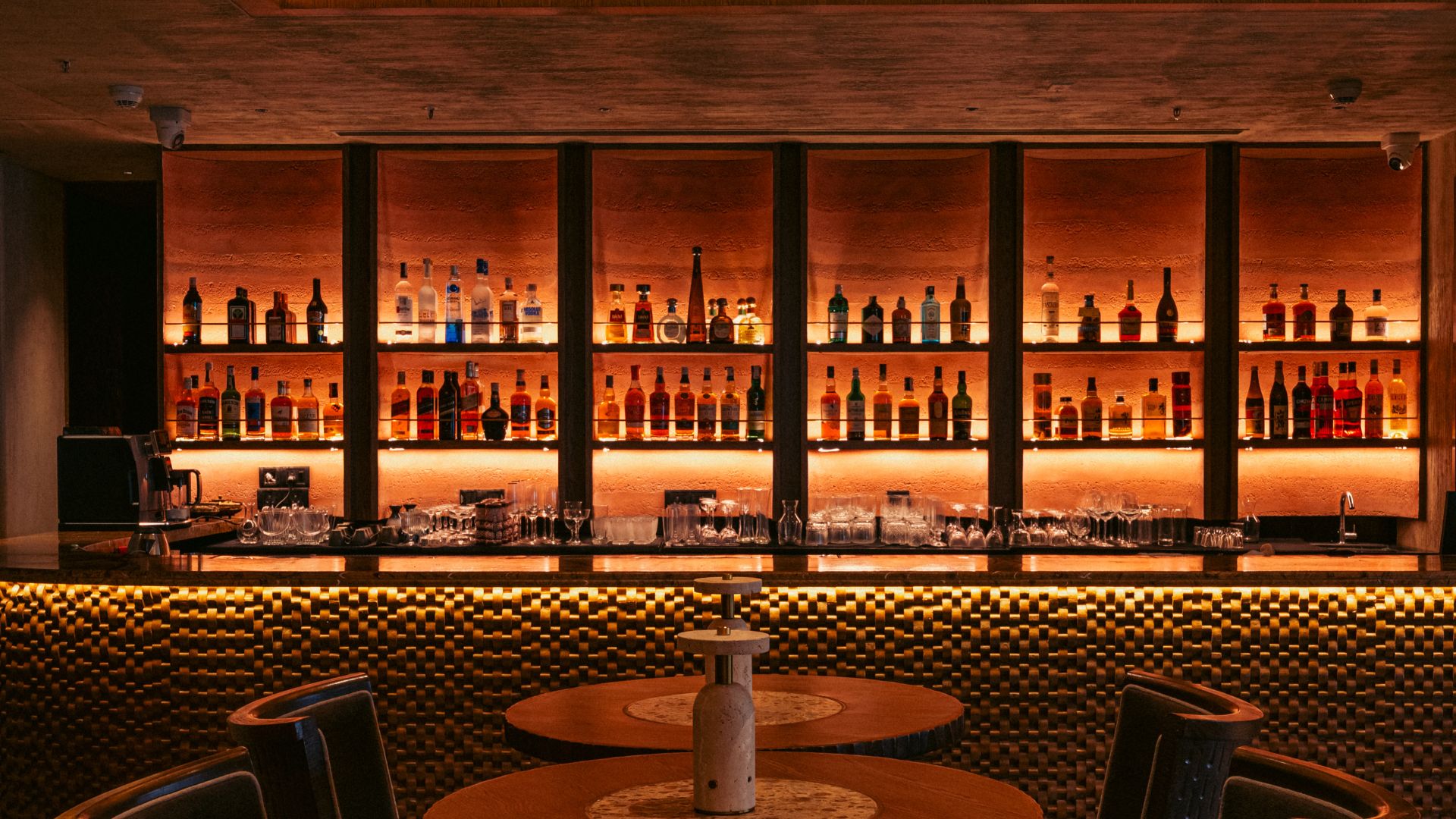
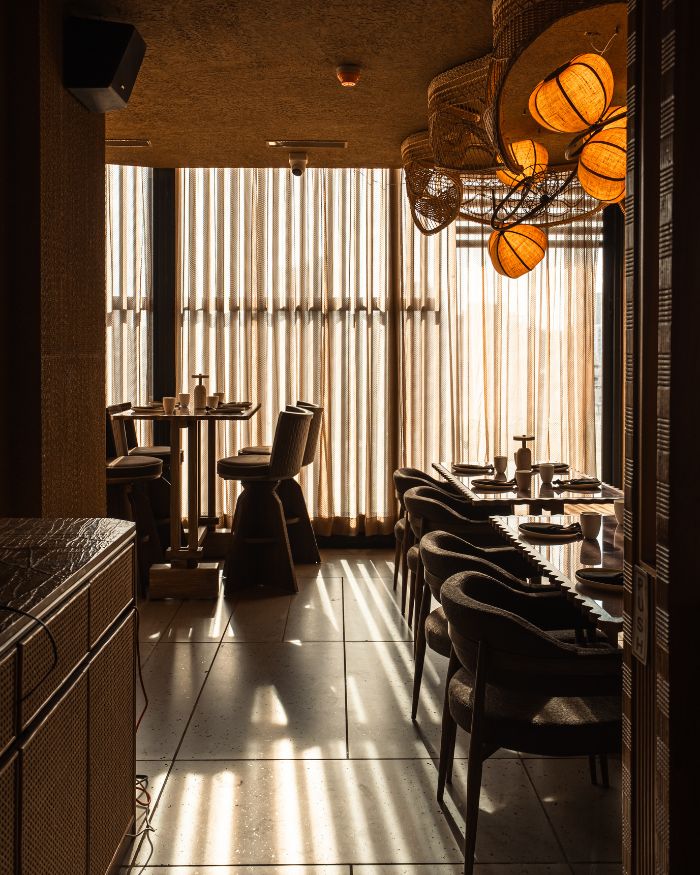
“For us, there were actually three elements that helped create Gong: mainly light, art and openness,” explains Sumessh. The floor itself presented an architectural puzzle as it was split by the lift shaft and lobby. He used that divide to organise the restaurant into three distinct zones: the lobby, indoor dining and outdoor seating. The curved expanses of marble, wood and glass in intervals intersect with one another visually. To preserve a sense of openness, the team also used a nearly monochromatic palette, with light tones helping the interiors feel bright.

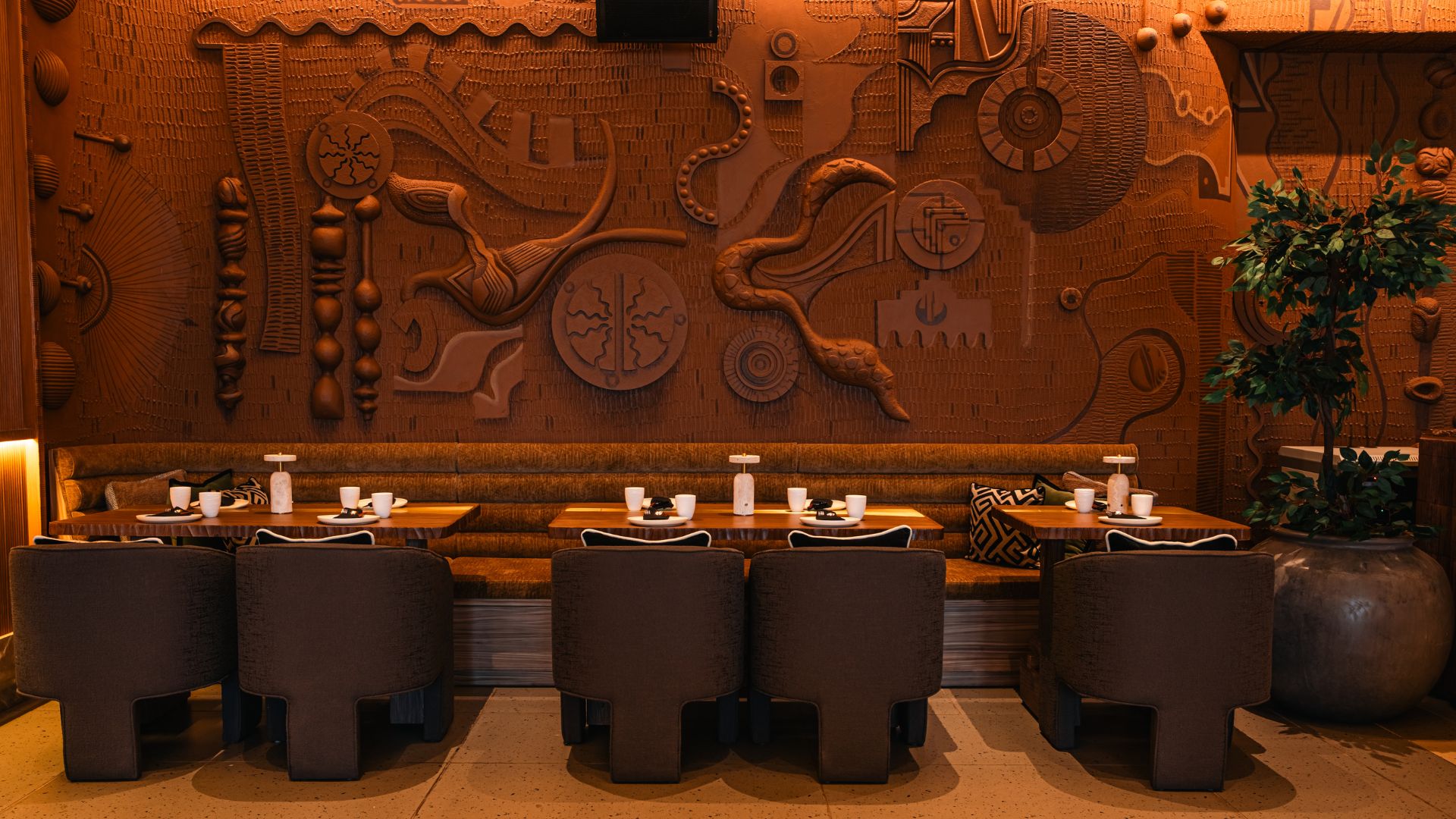
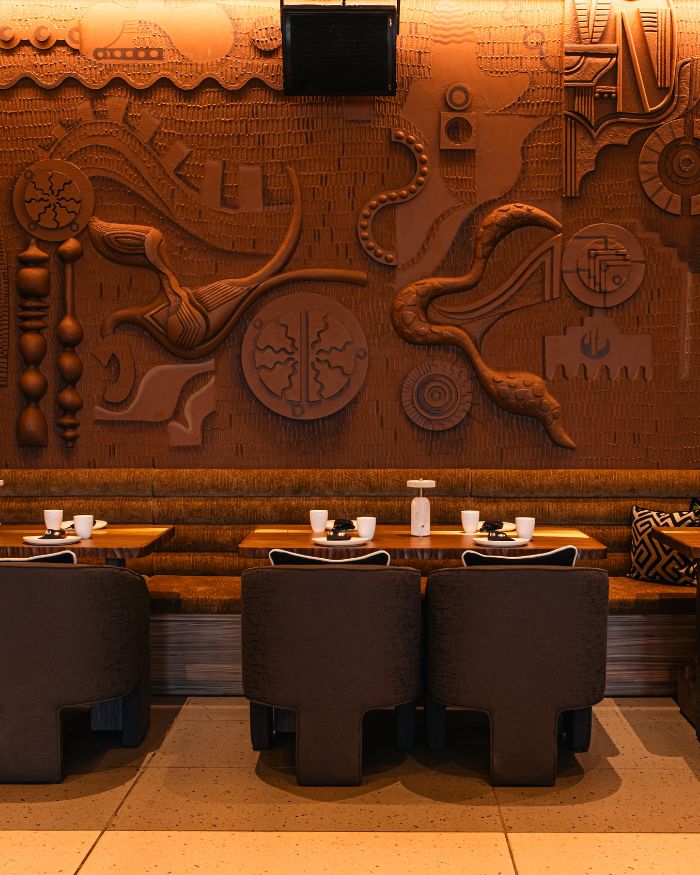
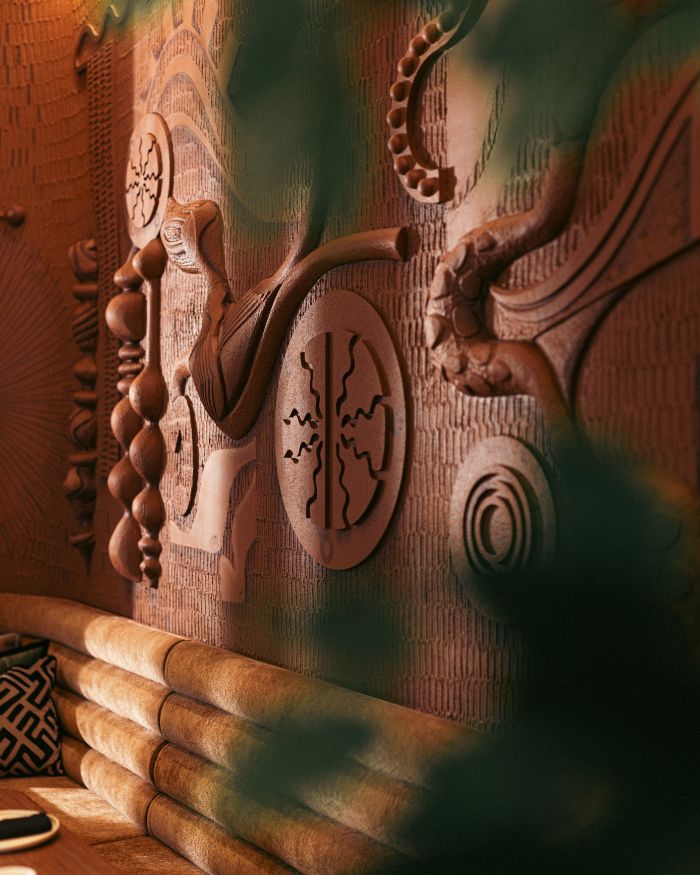
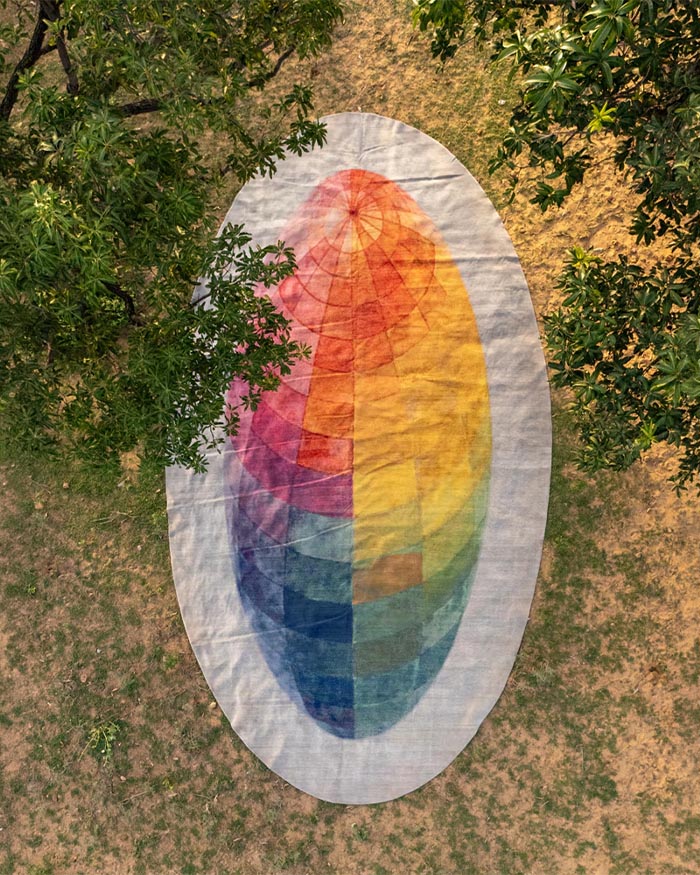
A monolithic mural by artist Zahabiya Gabajiwala of ZA Works stretches across the main dining room. Every texture was made by hand and up close, a grid pattern forms the backdrop for winding lines and beaded, totem-like columns. Across the surface, concentric rings ripple outwards, bringing to mind the vibrations of a gong just struck. Drawing on traditional Asian screen patterns, the mural reworks them into a sculptural creation.

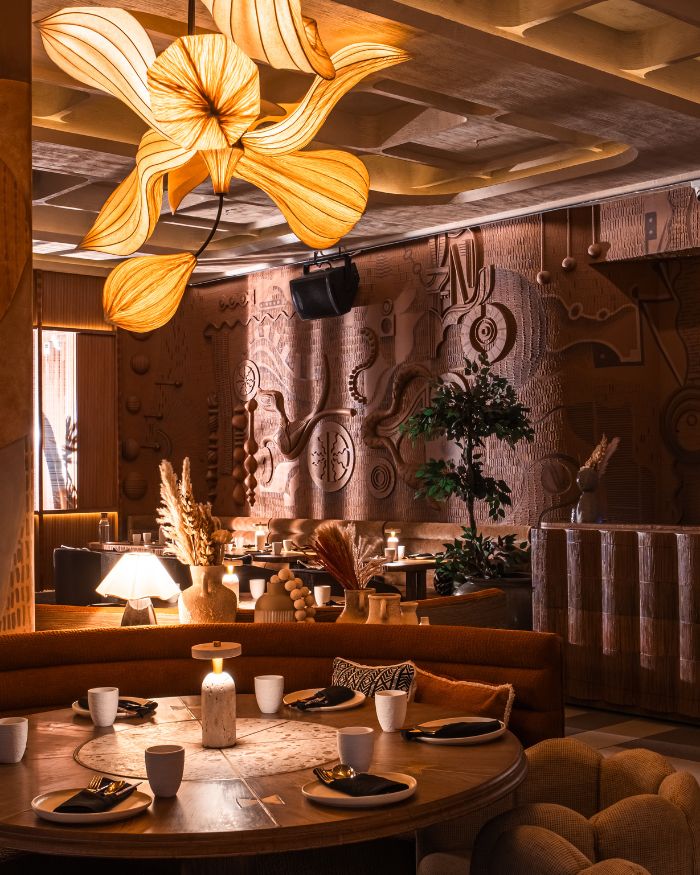
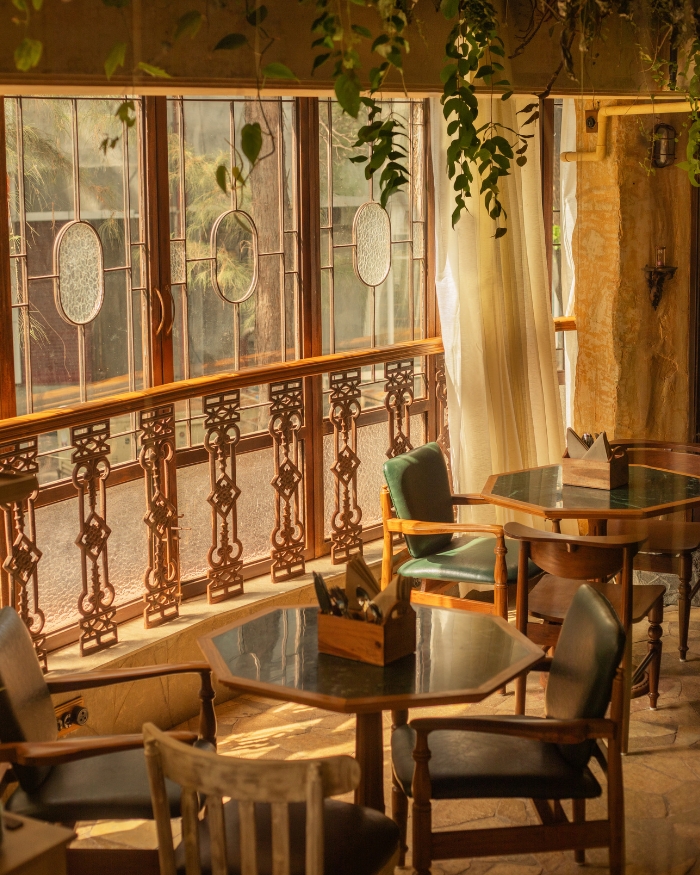
Custom lights designed by Oorjaa are suspended from a coffered ceiling. The fixtures, crafted from banana paper and lantana fibre, take the form of totem-shaped pendants and blooming floral chandeliers, filtering the light into a constant soft glow. Pratishtha Rana, Features Editor at ELLE DECOR India, who dined at Gong, notes that the restaurant is “profusely filled with daylight”. “When I’m sitting at the restaurant and I am looking around, everything is still, but there’s also this very weird sense of movement,” she observes, attributing the effect to the curves and forms of both the furniture and the lights.

Sumessh Menon Associates
Photography courtesy of Gong
Sumessh Menon Associates

Photography courtesy of Gong

Curiouser and curiouser on a plate

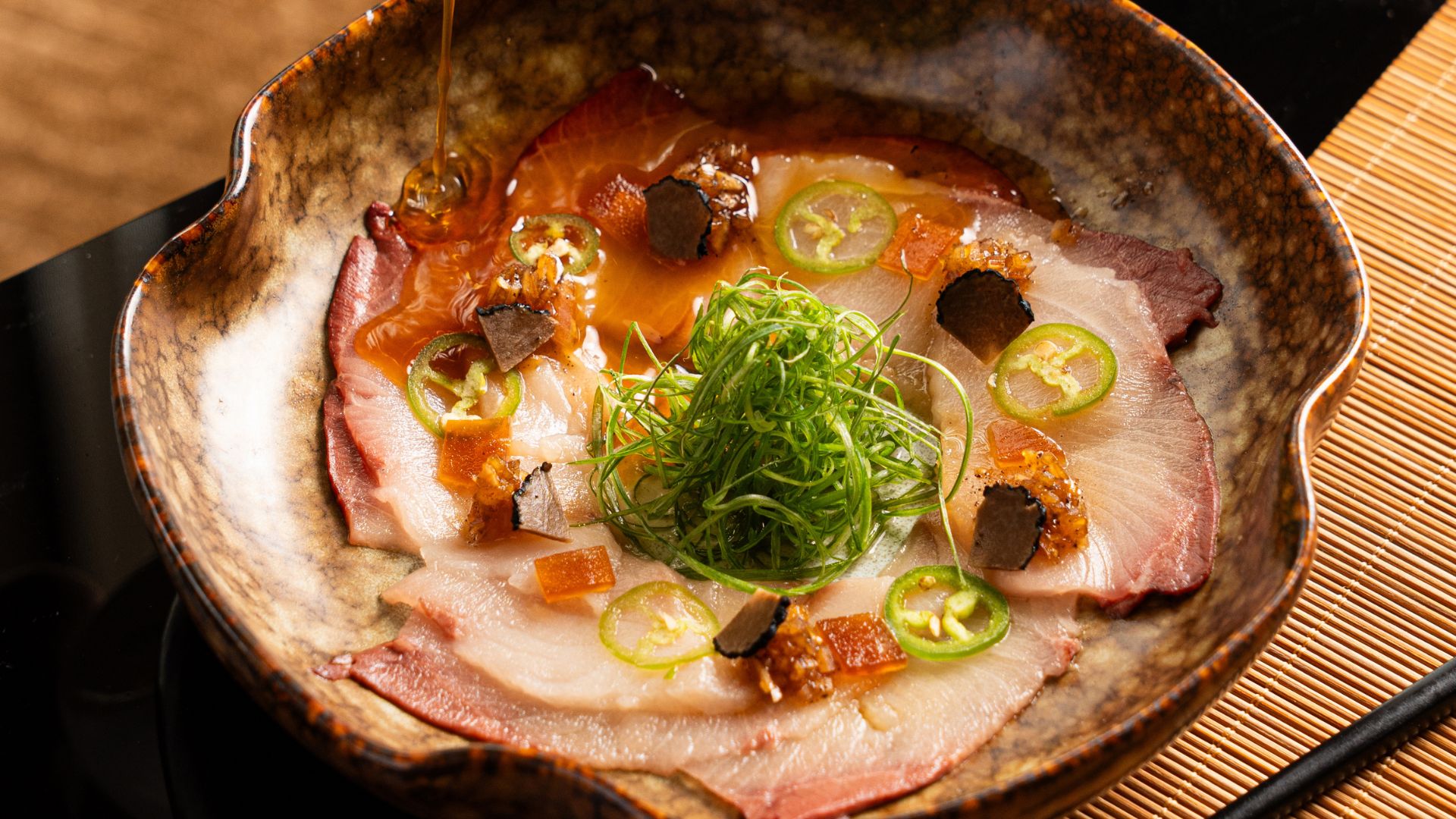
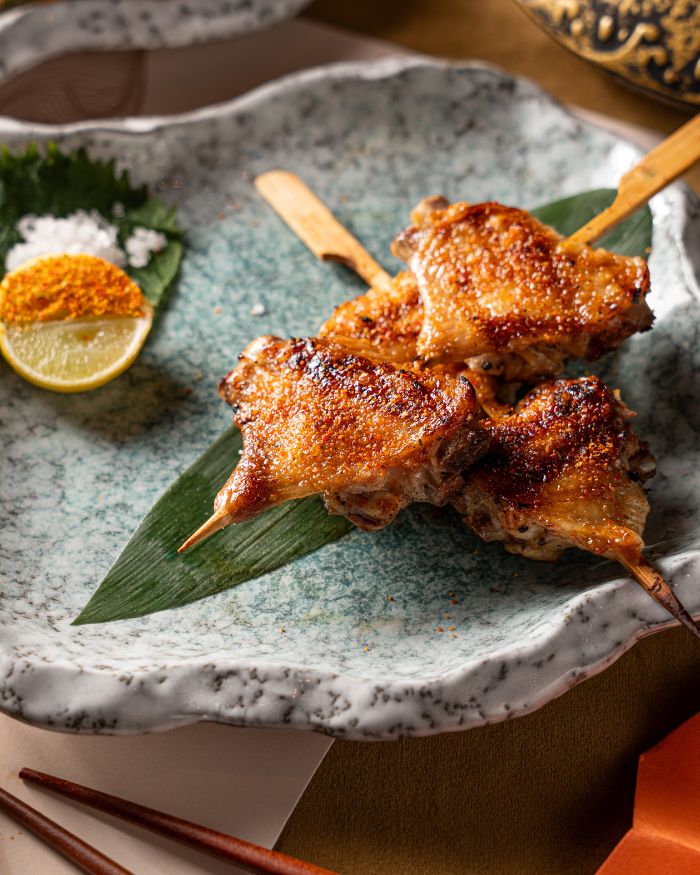
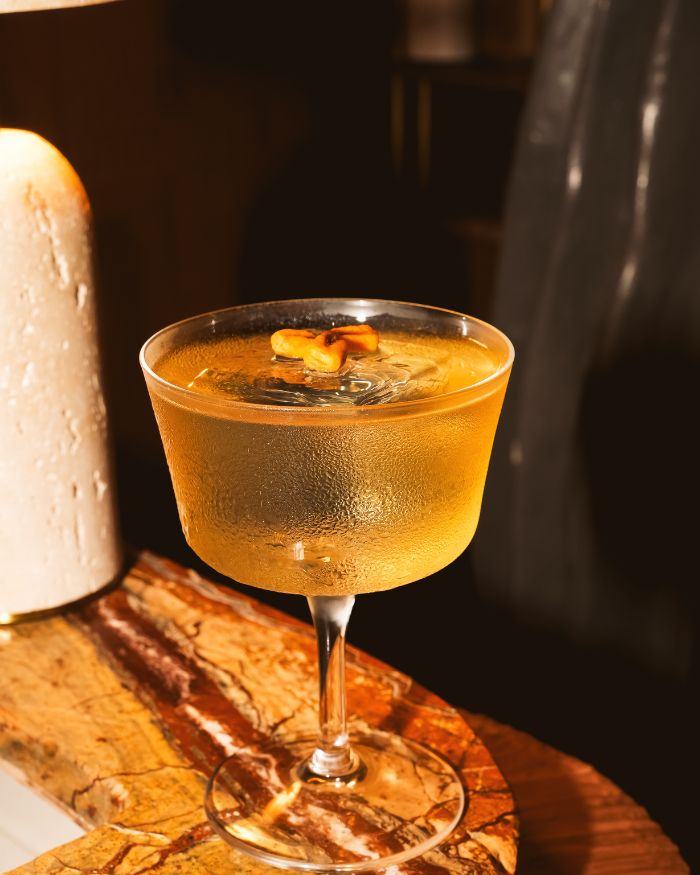
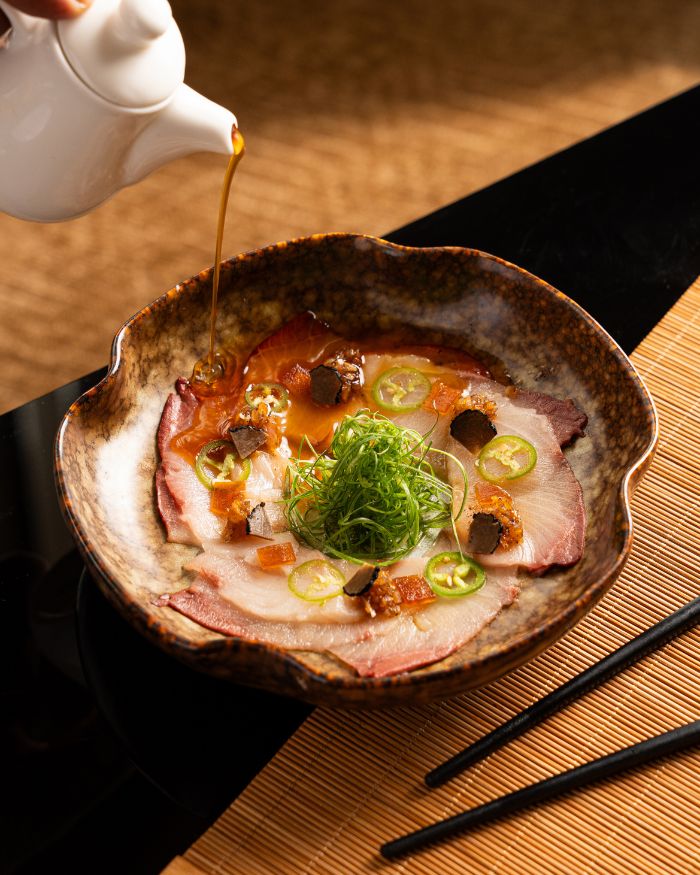
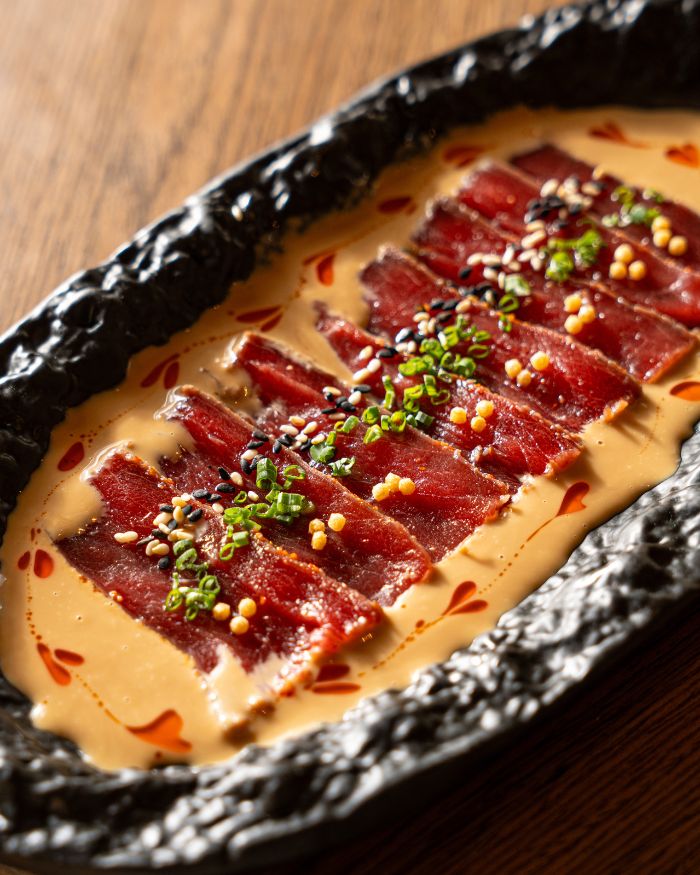
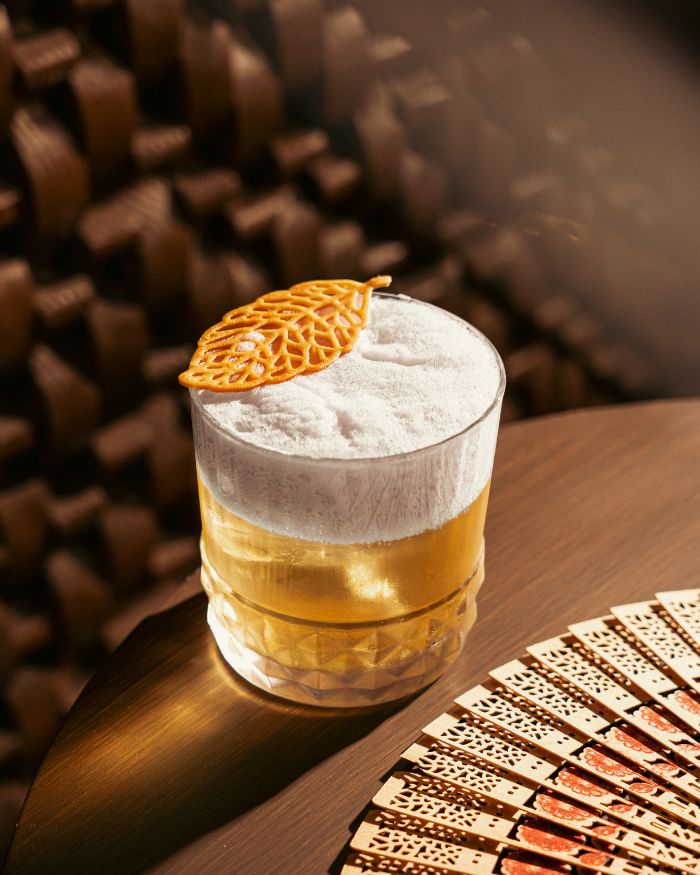
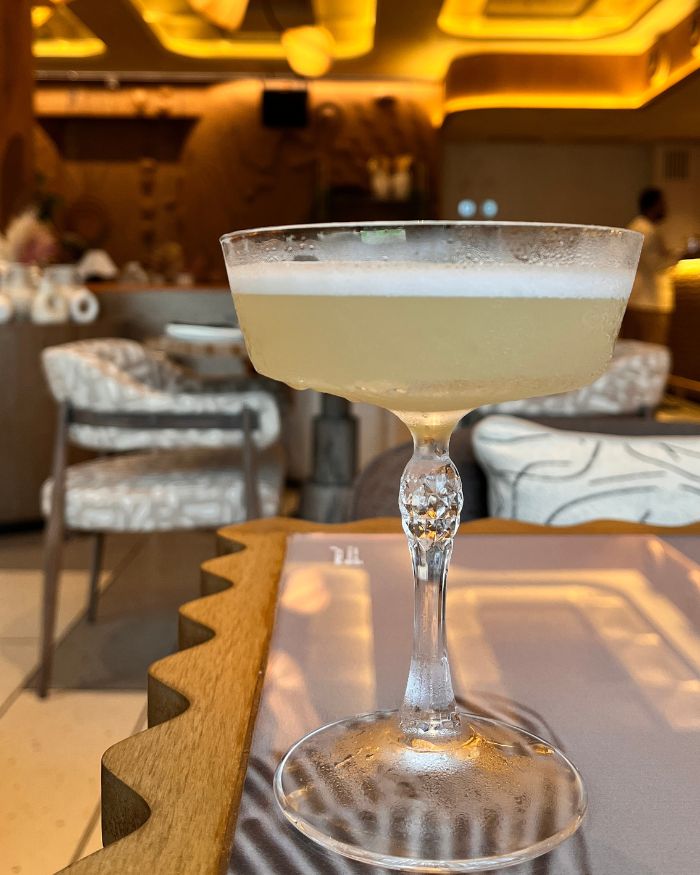
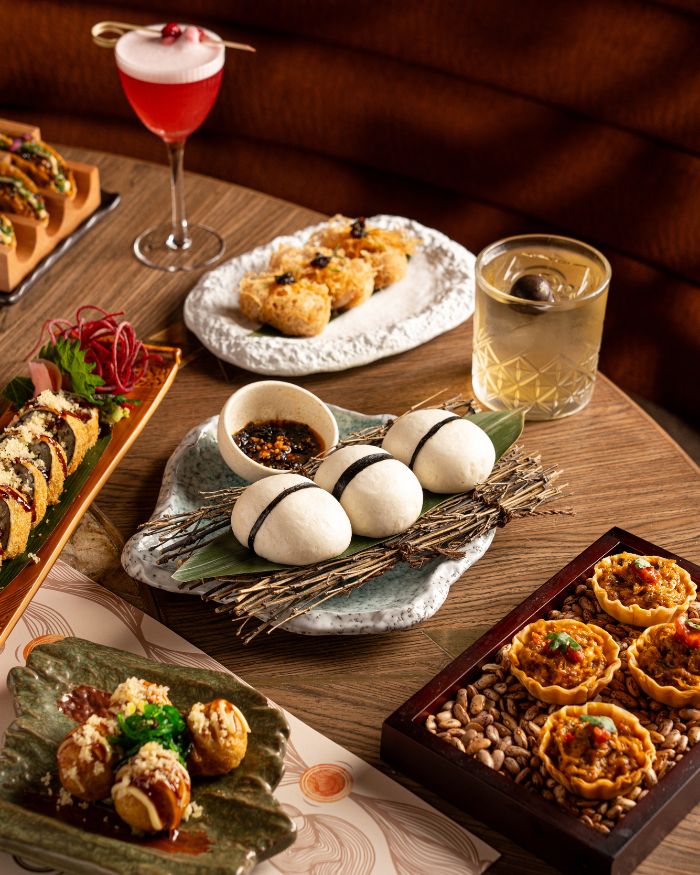
“The menu is a medley of fusions, ingredients and Asian recipes that have been given a very different take,” says Pratishtha, and it is pitched at a well-travelled audience. One of her picks is Kagero, a cocktail of tequila, kaffir lime leaf, wasabi, yuzu juice, mezcal mist and orgeat.  “The amazing thing about this cocktail was that it was extremely light and suited to somebody who loves a soft, citrusy palate in their cocktails,” she says. It paired well with everything she ordered.

Vegetarian diners have plenty to explore, too. The good thing about the vegetarian options, says Pratishtha, is that “they have played around with a lot of Asian ingredients that generally are looked at from a very singular lens.” Asparagus, corn, leeks, chestnuts and a taro puff sit alongside a varied selection of broths, which she says she misses in restaurants. “If you’re at Gong, definitely try the miso butter rice and mapo tofu because it’s a very beautiful balance of texture and fragrance,” she says. Itameshi, the restaurant’s take on Japanese-Italian fusion, is a separate category, and the chef’s most interesting recommendation was the Wafu Pizzet, a pizza-looking dish with a mix of pepperoni or pesto and mushroom burrata. “It looks certainly like an Italian dish, but it also tastes very uniquely Japanese, like experimental Japanese,” says Pratishtha.

Read more: Sumessh Menon Associates design a luminous classical apartment in Lower Parel
Sumessh Menon Associates

Photography courtesy of Gong
SHARE THIS ARTICLE

You May Also Like

Watch

No results found.