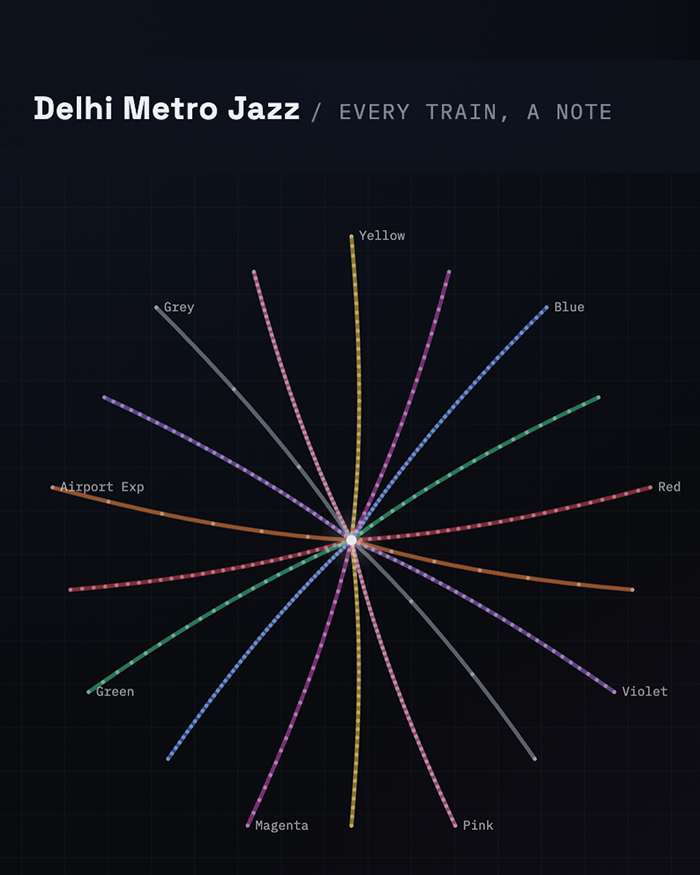
There’s a collective public agreement that Indian cities are in dire need of third space – places that harbour community. Sometimes the third space turns out to be a long queue outside a venue, where you unexpectedly begin to socialise with the people around you, because inside is what your English teacher called the class when it got rowdy: a fish market. So third spaces, in themselves, have also evolved. They no longer necessarily need to be purpose-built cafes, parks or community centres; sometimes, all they need is a reason to linger. Inspired by the New York City subway system and referencing Train Jazz, two 20-something students, Atishay Khanna and Adwitiyaa Pramanik, recently embarked on a side project called Delhi Metro Jazz, turning the city’s nine metro lines into a simulated jazz composition. Each line becomes an instrument, each station a note, and suddenly a commute measured in minutes, delays, and interchanging stations has a soundtrack. The project was intended to make public transport feel more human, but it also makes an everyday piece of infrastructure feel like a cultural space.
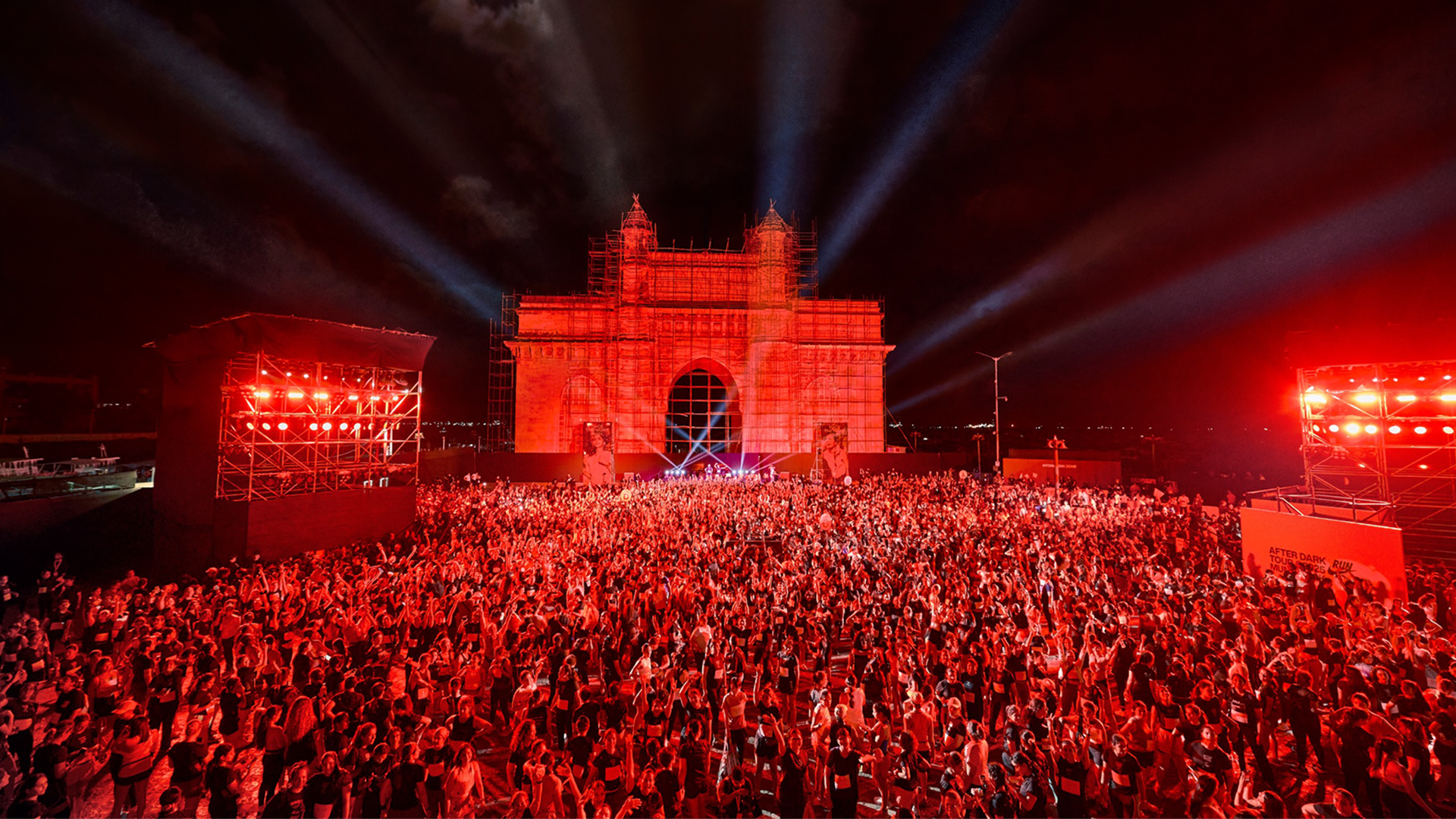
This urge to give places a social life is increasingly spilling into retail, too. The showroom, historically a place one visited to look at something before deciding whether you could afford its offerings, is learning to host. IKEA India, for instance, regularly programmes workshops and events in its stores, from sustainability sessions to art and craft workshops. Its upcoming Open House in Mumbai goes one step further with live music, book clubs, social mixers, workshops and kids’ activities. Nike has similarly turned its stores into starting points for running communities, with training sessions that begin at the store before moving out onto the street. In Mumbai, its After Dark Tour is a sporting event, yes, but also a temporary claim on public space.