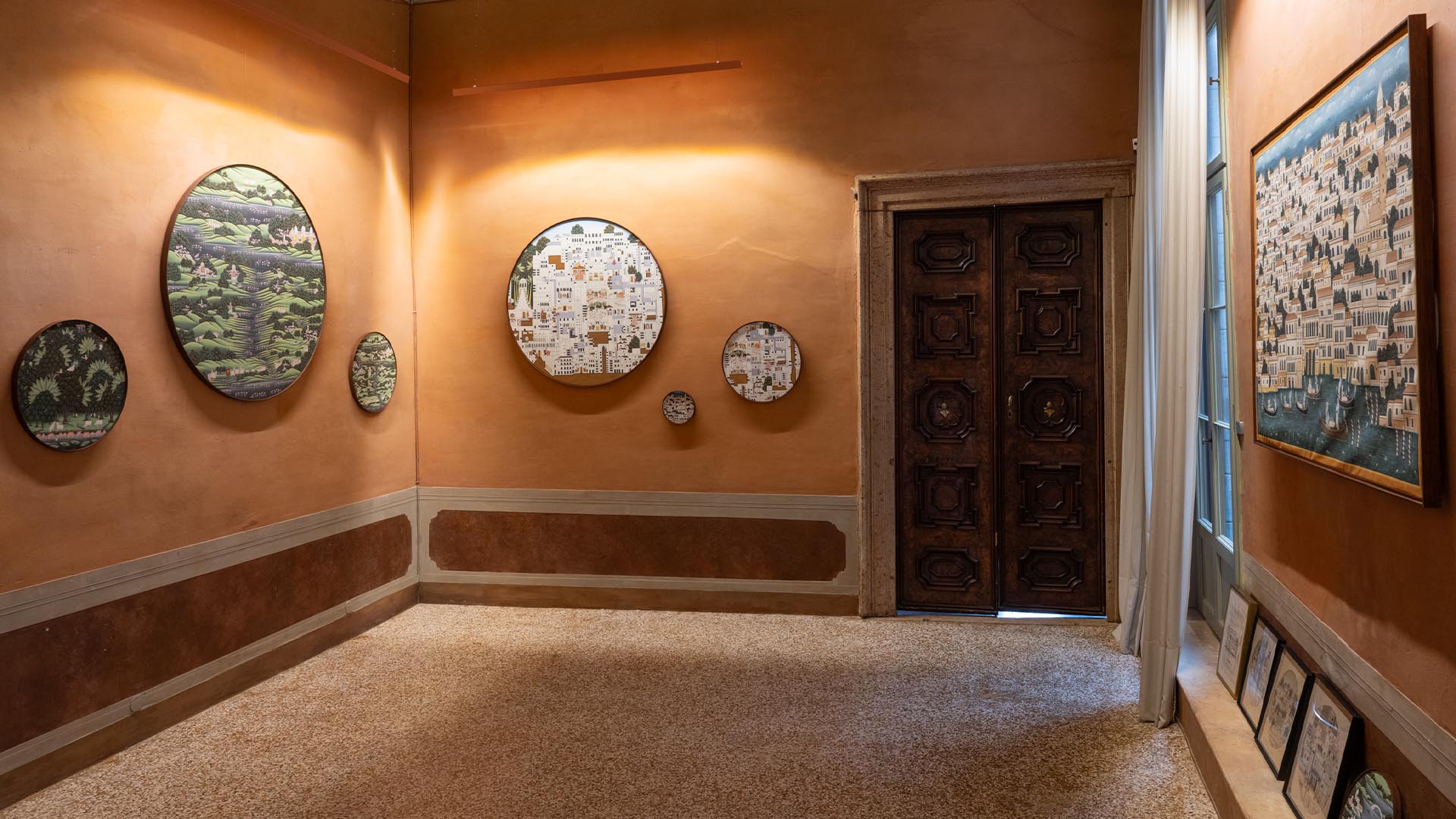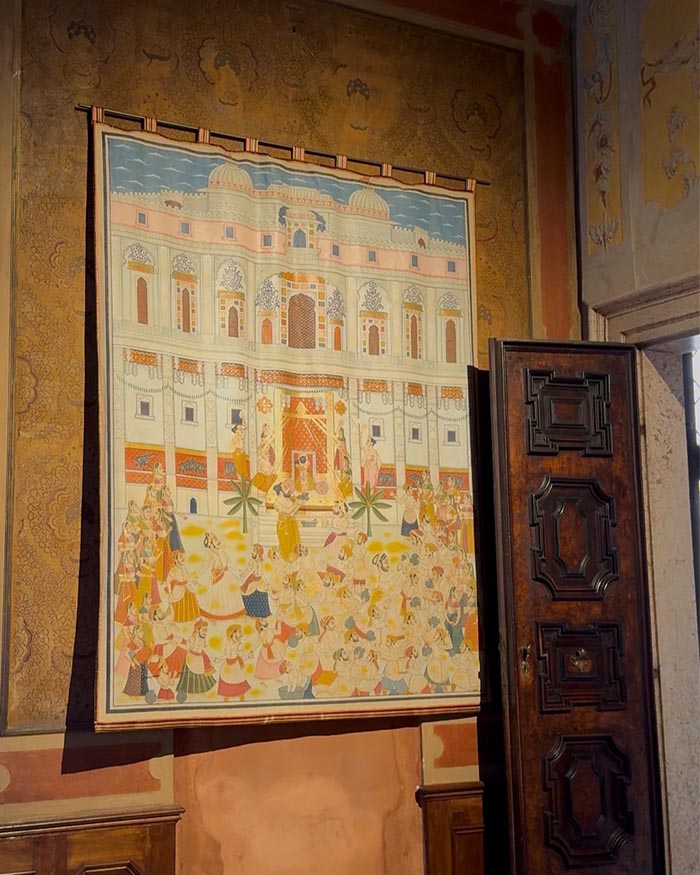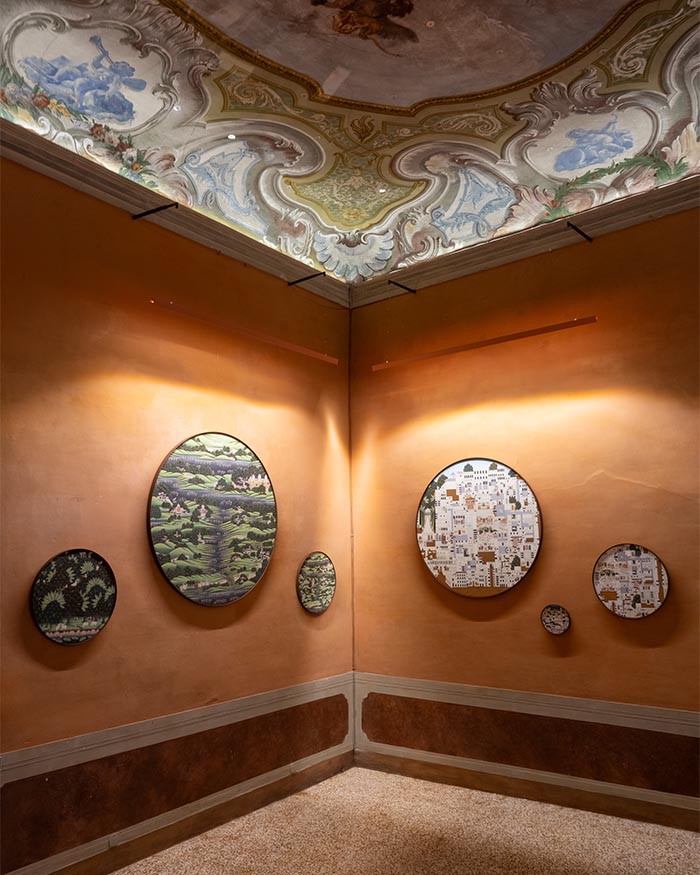
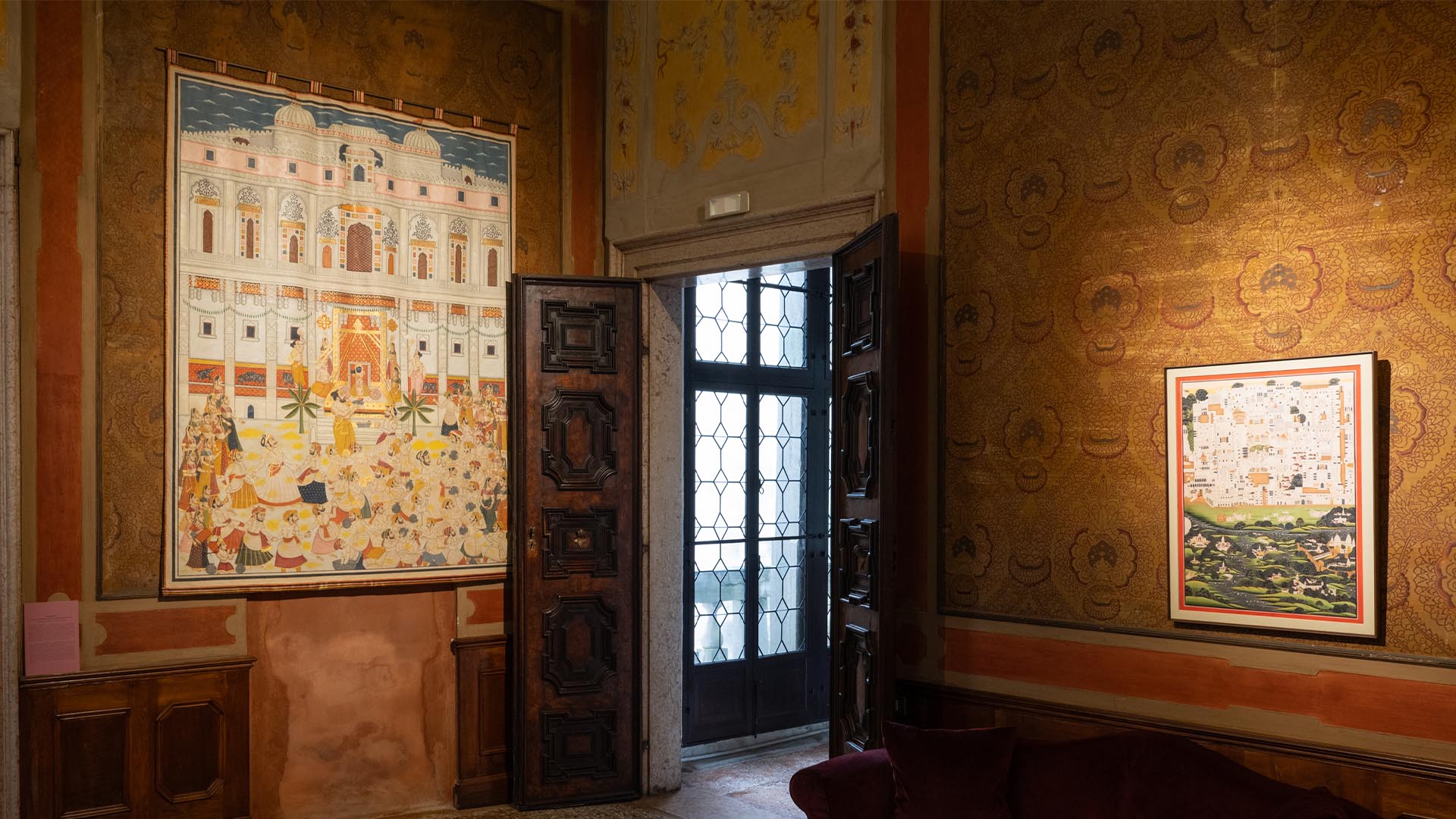
At the precipice of the Grand Canal in Venice, a door opens to a world entirely unto itself. Peeling plaster reveals aged brick. A faint evanescence of terracotta hangs in the air. No signage — or scintilla — gives away the palazzo’s storied history except a single nameplate at the entrance: Curtis. As one mulls over this enigma, Palazzo Barbaro unfurls into a succession of Baroque rooms, replete with painted ceilings, timeworn frescoes and centuries of accumulated memory. Appearing, in contrast yet feeling entirely at home, are Indian Pichwai paintings.
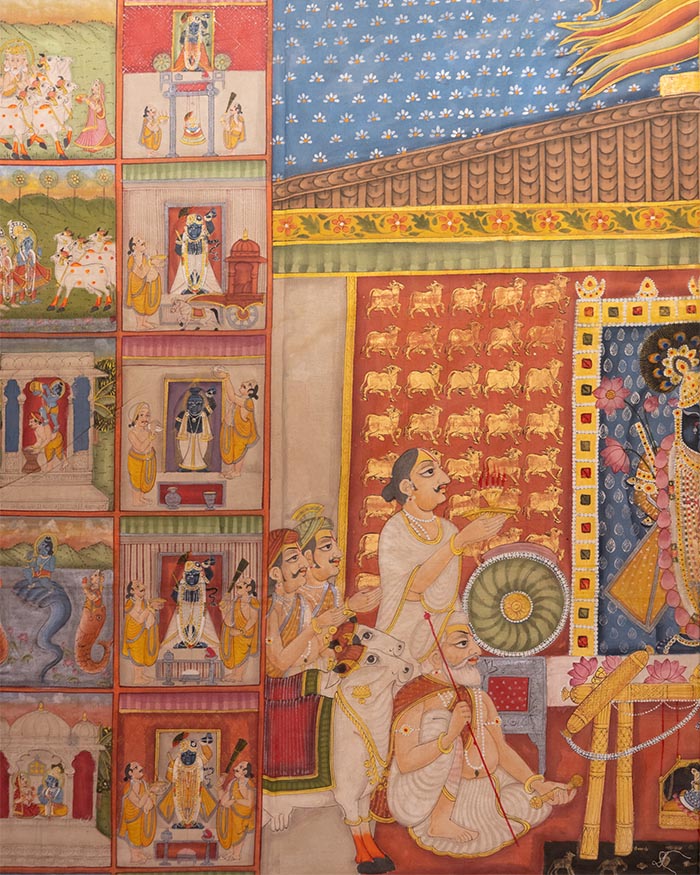
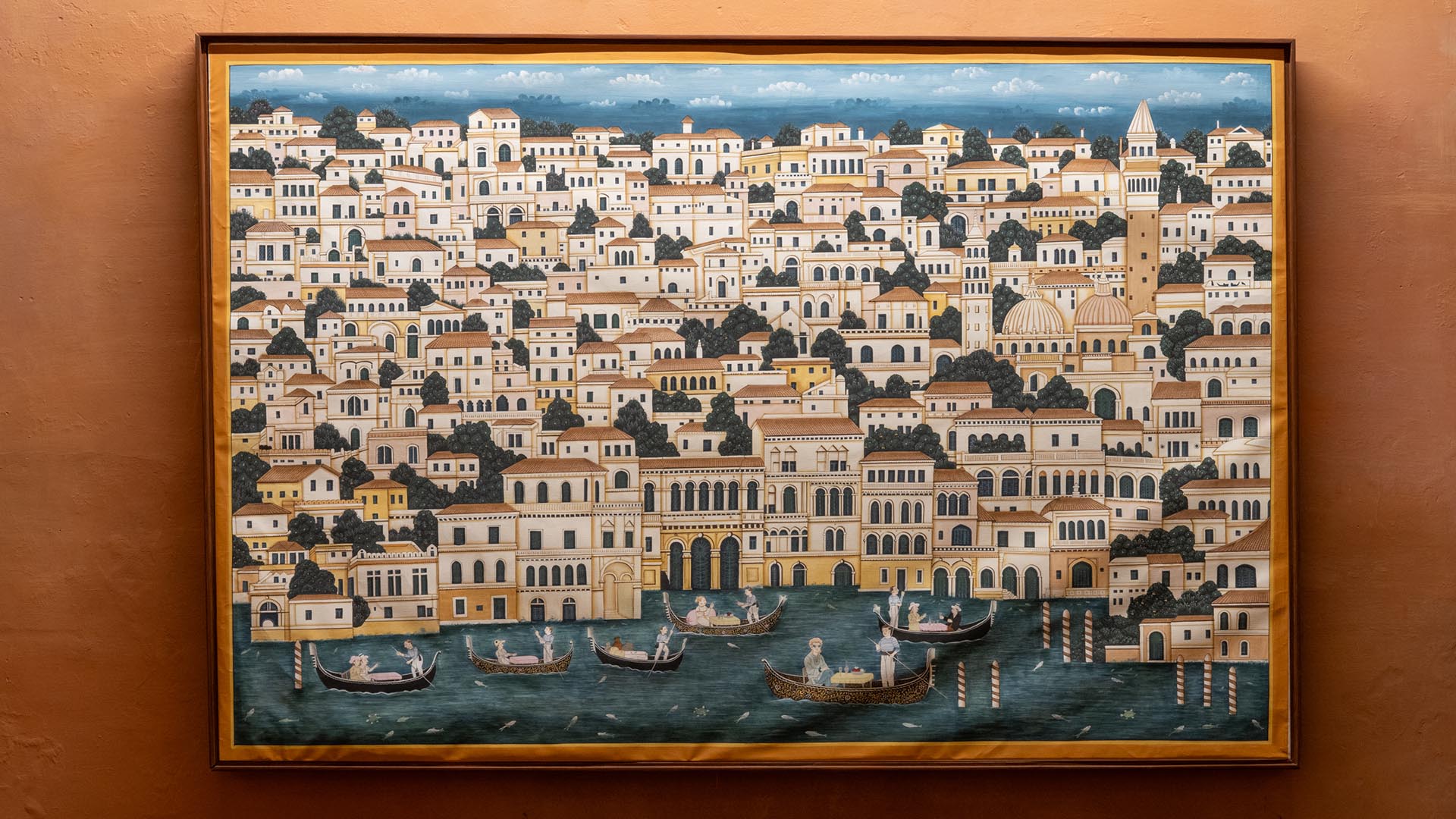
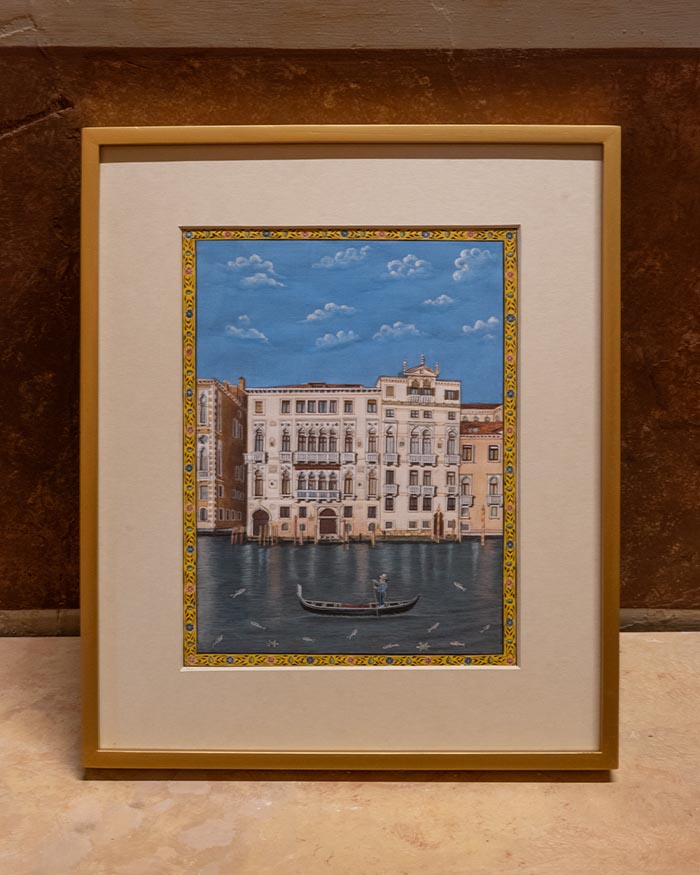
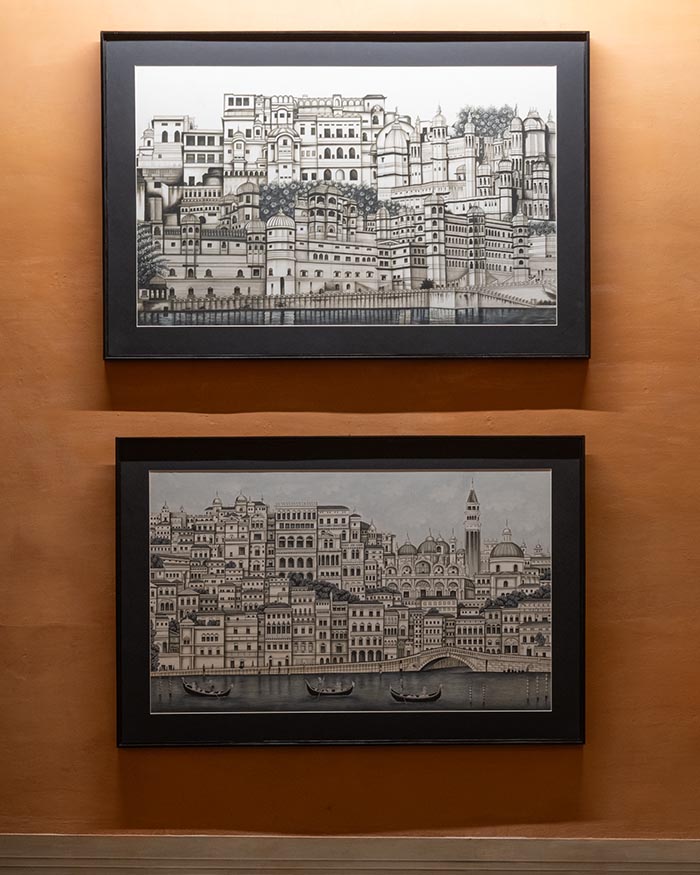
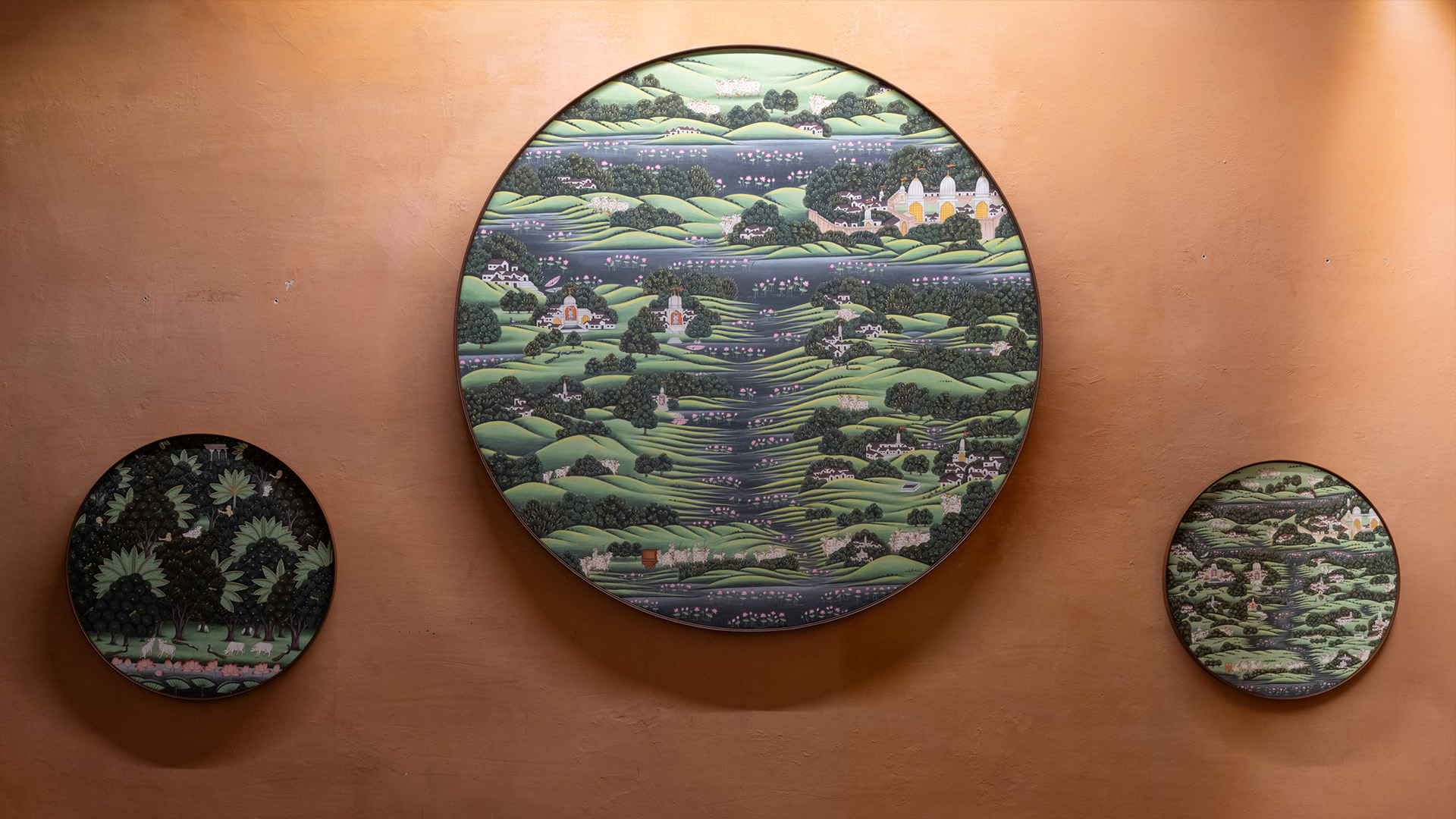
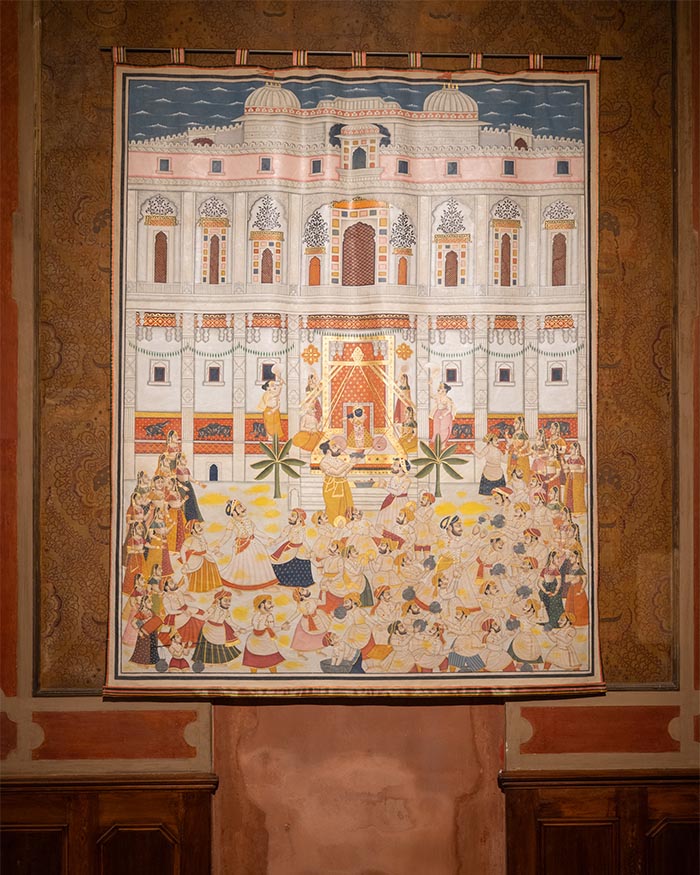
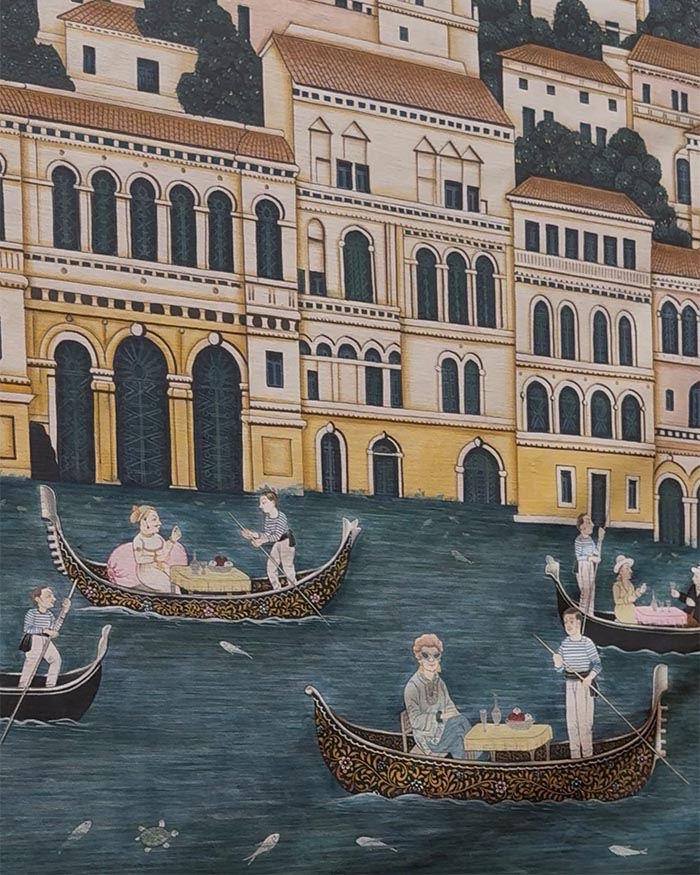
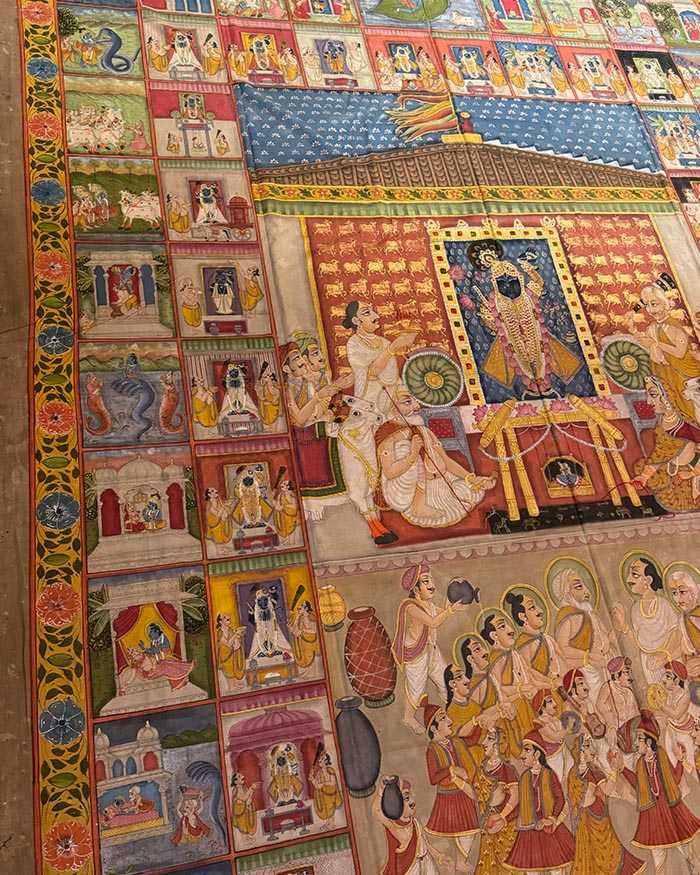
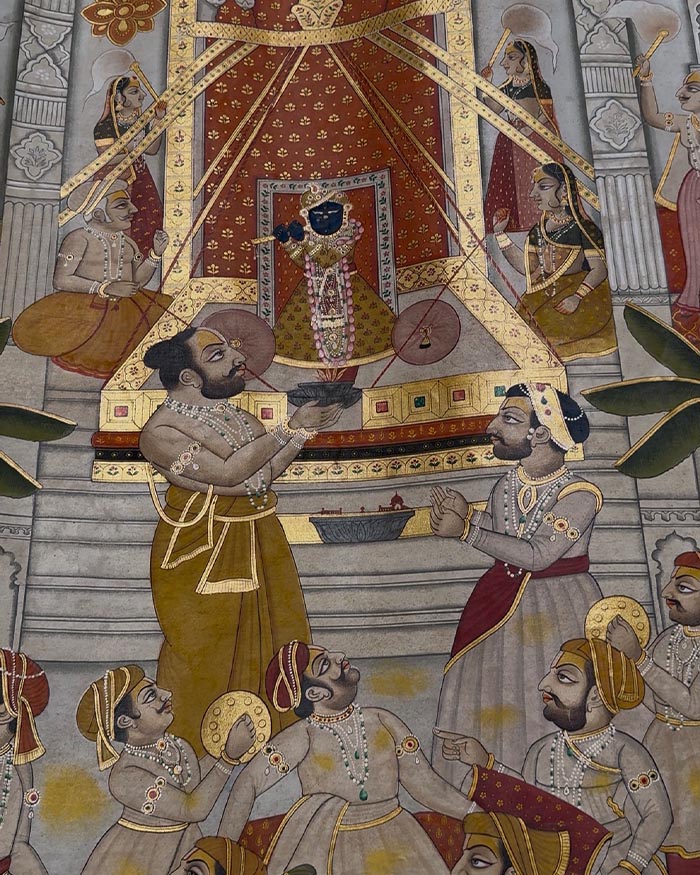
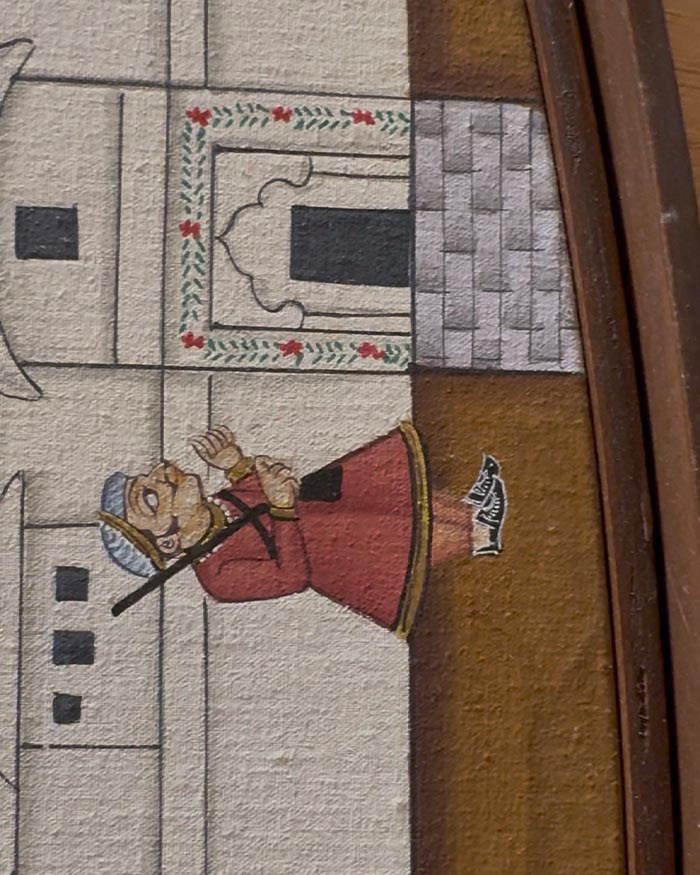
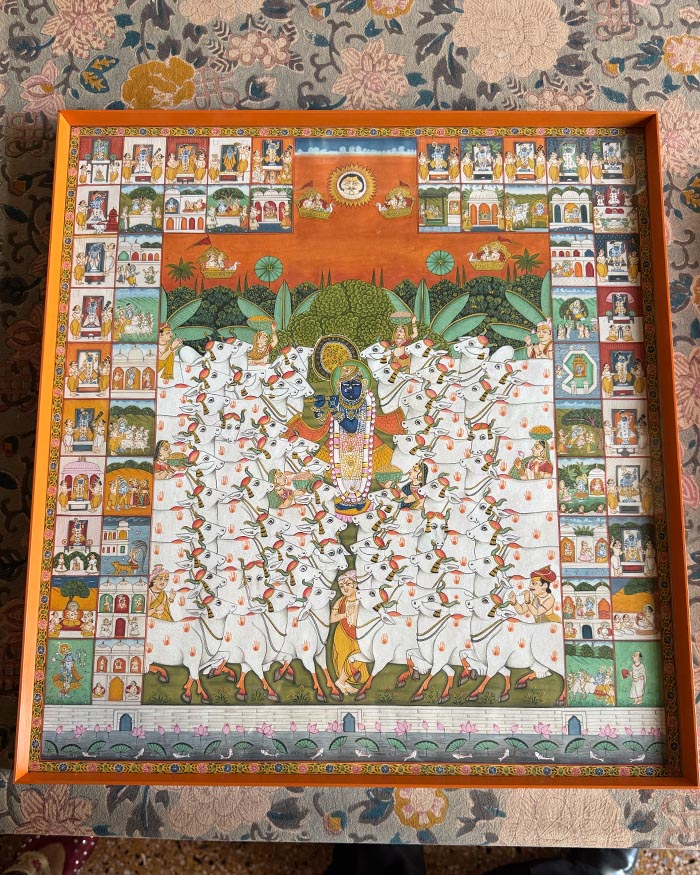
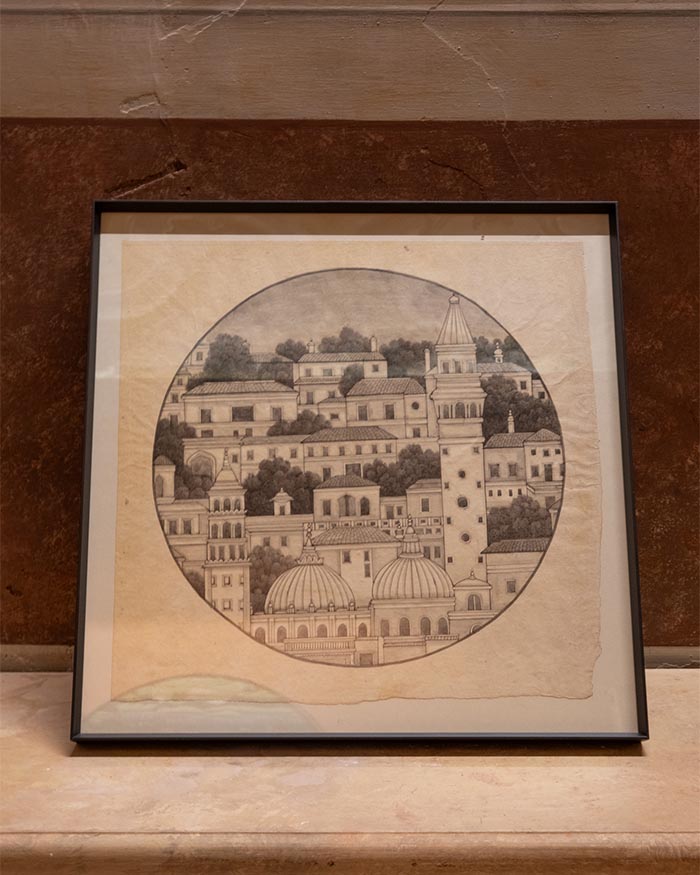
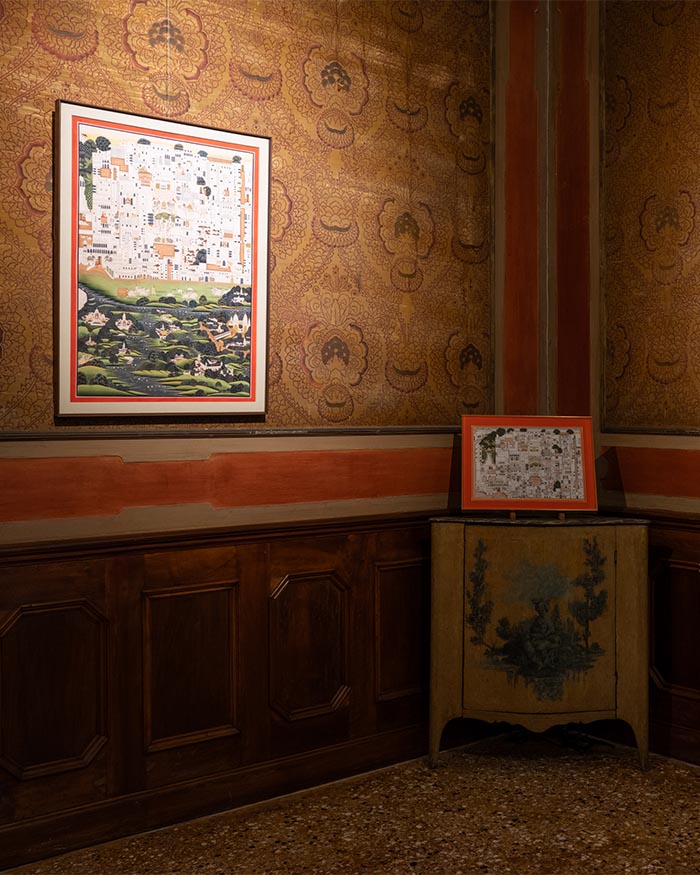
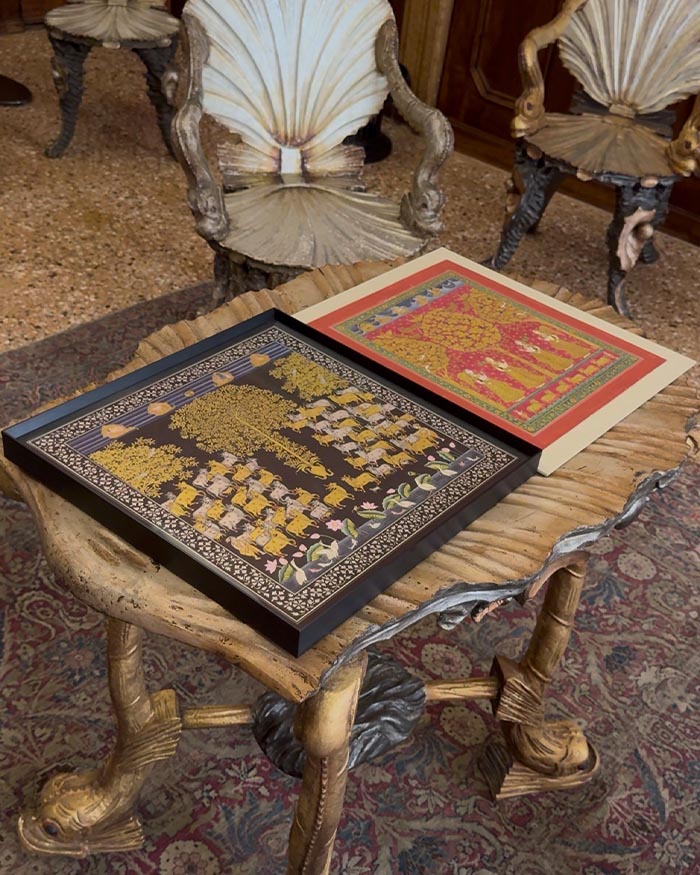
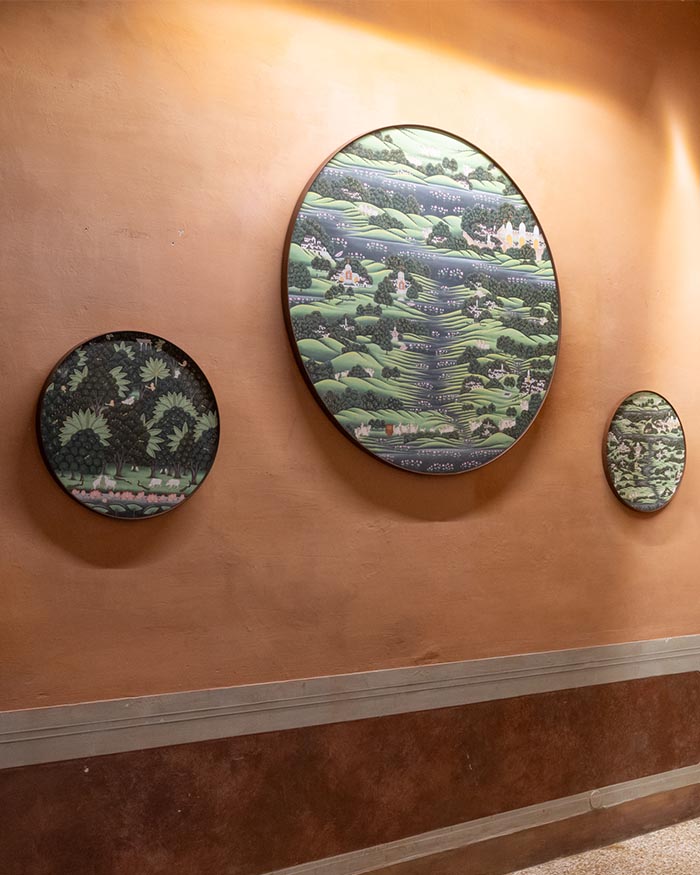
Hailing from Nathdwara in Rajasthan, Pichwais were traditionally painted on cotton-silk textiles and suspended behind the idol of Shrinathji. At the heart of From India to Venice exhibit are ten large-scale works that reimagine the city by the lagoon through the Pichvai tradition. Out of the many highlights, in some artworks, temple maps once employed to depict the haveli of Shrinathji and the sacred topography of Nathdwara now serve as cartographic inspiration. Alongside them are khakhas, the preparatory drawings, now works of art that offer a glimpse into the artistic process. In a few of the visions of Venice, Palazzo Barbaro rises beneath stylised clouds. In others, Gondolas drift through curious perspectives. Fish leap about tranquil canals as though enchanted by this imagined world depicted in luminous stone pigments. In another work, Peggy Guggenheim and Maharaja Bhopal Singh glide through adjacent gondolas, united across geographies and histories. If only Italo Calvino could see this.
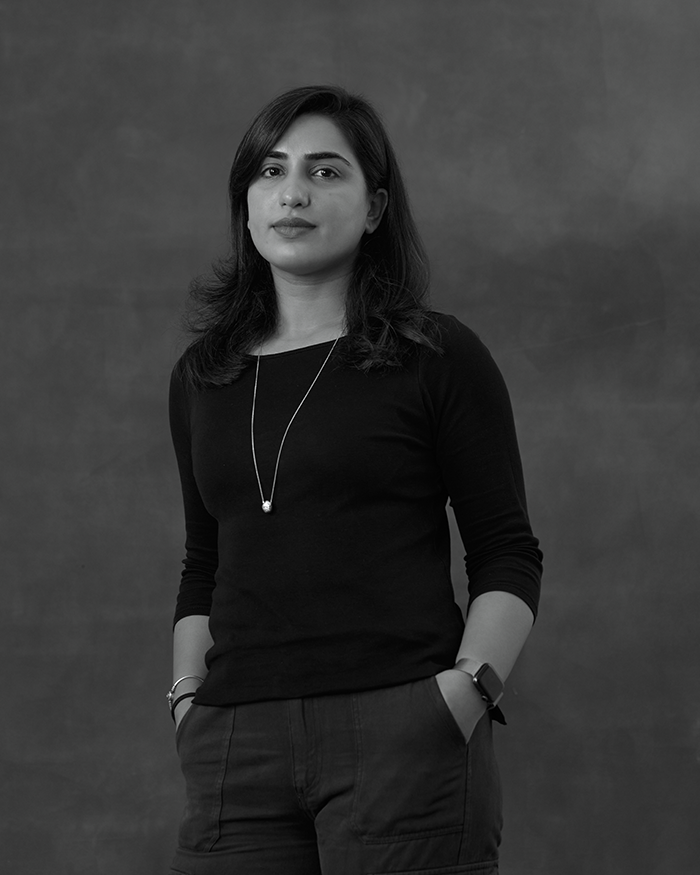
“We always think we’re separate from the past, but actually we’re not,” says Pooja Singhal, founder of atelier Pichvai Tradition & Beyond. Invited by French art dealer and curator Elizabeth Royer, she collaborated with Michele Codoni to present From India to Venice at Palazzo Barbaro during the Venice Biennale. Her foremost commitment with the atelier has always been the preservation and reinstatement of the tradition’s rigour. Only then could reinterpretation emerge, as continuity and a way forward.
“A patron doesn’t just consume. They involve themselves in a way that the art emerges and grows”
Pooja Singhal