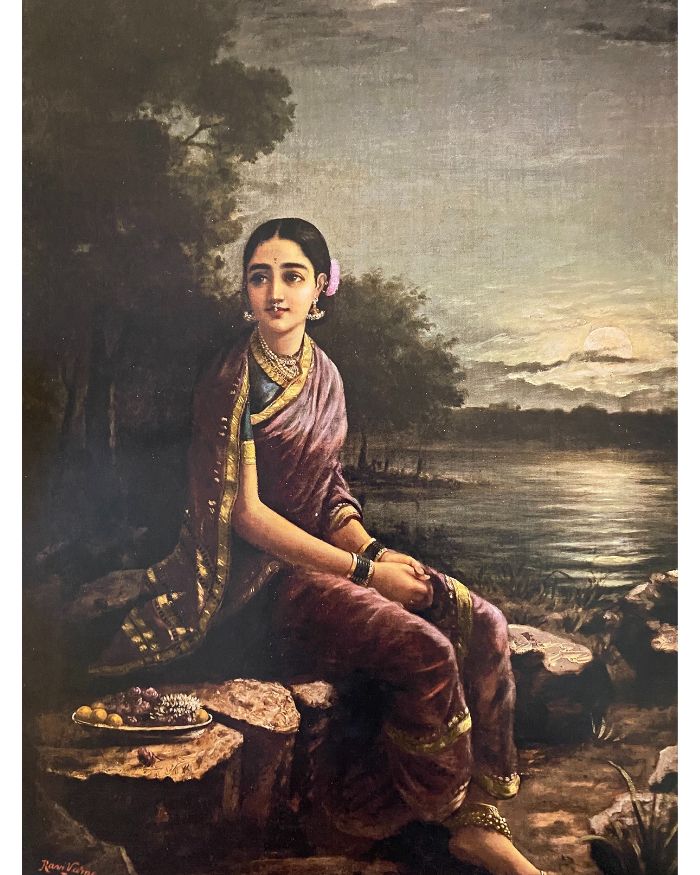

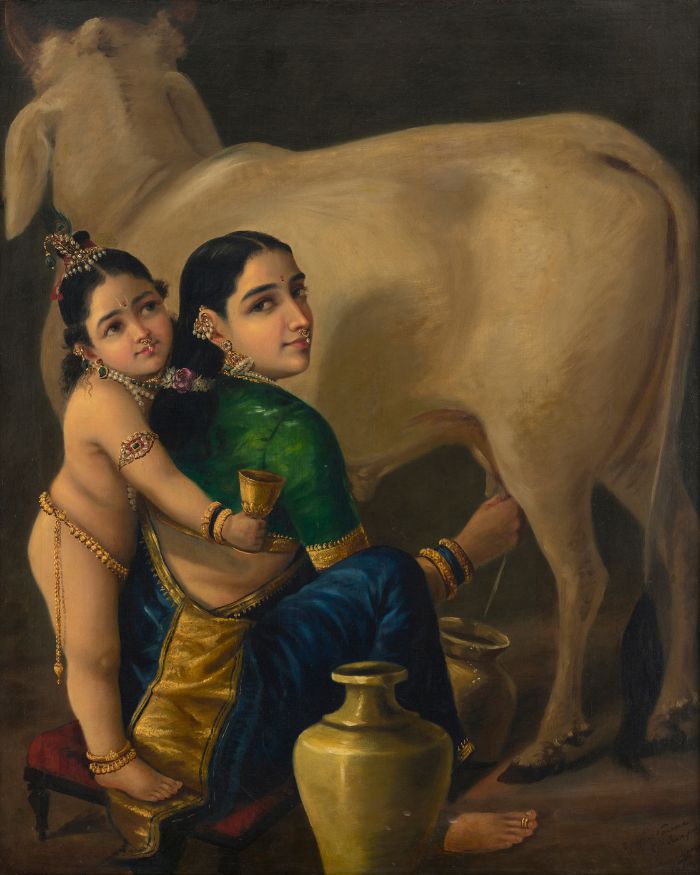
When Raja Ravi Varma’s rare masterpiece Yashoda and Krishna, Circa 1890s sold for ₹167.2 crore at Saffronart’s Spring Auctions 2026, it signalled a familiar arc. The corrective pride of a work residing in the country with its new owner Dr. Cyrus S. Poonawalla, founder of the Serum Institute of India, and not within a museum overseas (specifically the lands of our colonisers).
But what is the ₹167.2 crore figure really measuring?
The value of a Raja Ravi Varma is cultural and symbolic. Before Ravi Varma, myth mostly lived in temples, manuscripts and courtly traditions. With him, gods acquired human bodies, emotions and familiarity. When you think of Lakshmi or Saraswati today, you are thinking in Ravi Varma’s visual language. But the same is not true of most Western masters. The Mona Lisa did not define how women are imagined. But it would be wrong to attribute the personification of gods to his work. From the 17th Century, Pichwai traditions centred around Shrinathji in Nathdwara, Krishna had long existed as an intimate, accessible presence within rituals. In Kalighat paintings in 19th-century Bengal, gods were already portable, sold to pilgrims, circulating outside temple walls. But they remained regional, shaped by a local economy of pilgrims. Madhubani and Warli practices were embedded within tribal life, often anonymous, their makers outside the structures that defined fine art.
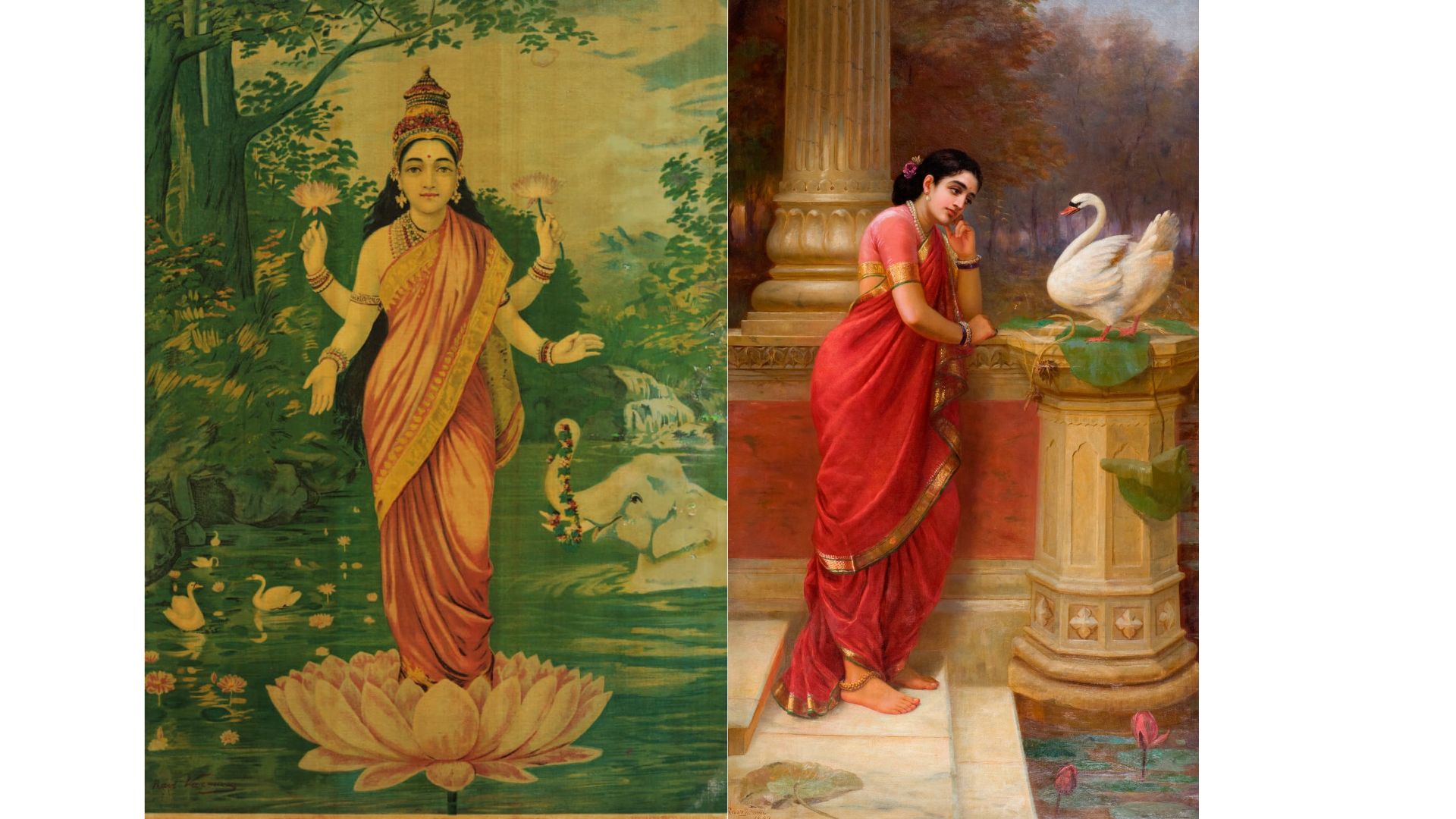
Ravi Varma operated from a space of access and privilege. Born into an aristocratic family, he had access to training, materials and patronage that were not widely available. His adoption of oil painting and European realism allowed him to produce images of gods that were real and intimate. But they were also visually persuasive in a way that earlier traditions did not attempt. An infant Krishna who could be held not only tugged at emotion, but a light skinned Saraswati also aligned with Eurocentric standards of beauty and refinement. Under colonial conditions, Ravi Varma’s perhaps work read as superior and more civilised.
Take for instance our record-breaking Yashoda and Krishna. Yashoda is filtered through a realism that is less regional and more universalised with her fair skin, light eyes and a sharp, defined nose. Krishna, who in earlier traditions is a dark-skinned, earth-bound presence, appears almost luminous with rosy cheeks in Ravi Varma’s world. In Pichwai paintings centred around Shrinathji, Krishna is almost blue-black, his form stylised, his features rooted in a regional visual language that is unmistakably of its place. In Madhubani paintings, figures are flattened, patterned, often with pronounced eyes, sharp noses, dense ornamentation. In Kalighat paintings, the lines are bold, the bodies exaggerated, the physiognomy distinctly local, at times even satirical. While one can argue that regional arts did not attempt realism like Ravi Varma, one cannot deny that they asserted identity because the gods looked like they belonged to the land that imagined them — be it Gujarat, Bengal or Vrindavan. Meanwhile, artists working within Warli, Madhubani and Pichwai traditions remained largely anonymous, their work categorised as craft, their visibility shaped by different structures of value.
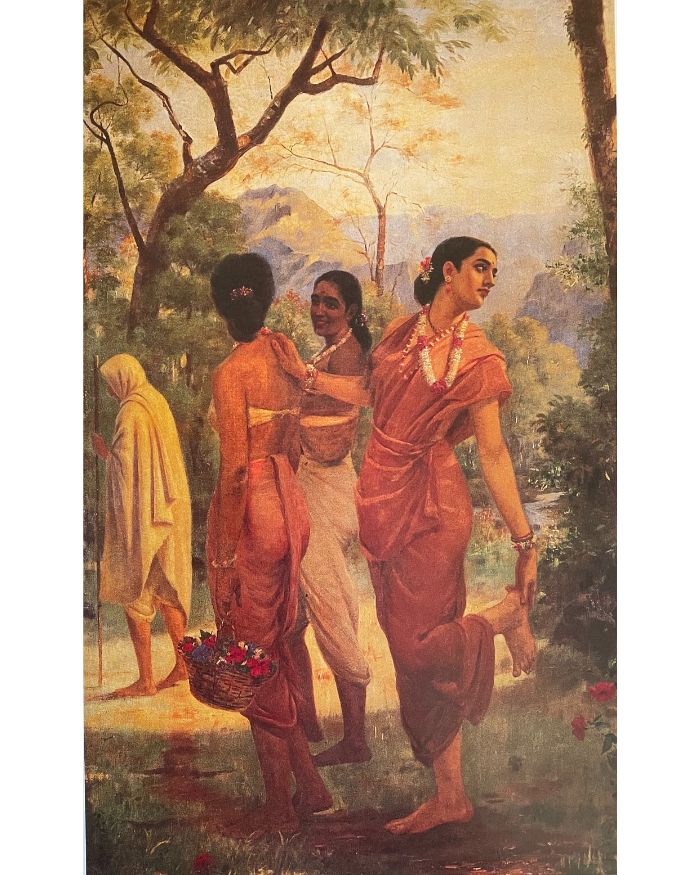
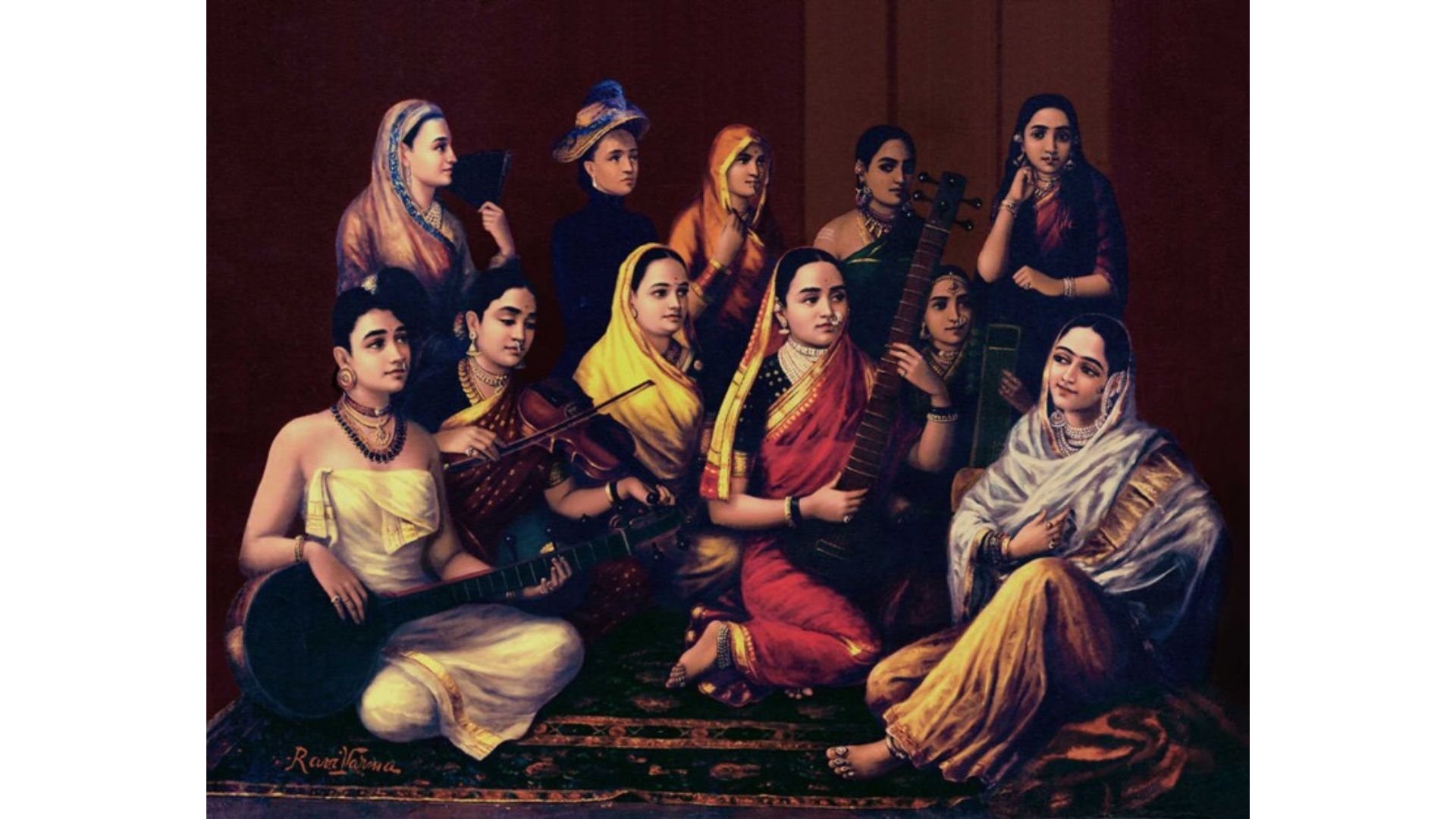
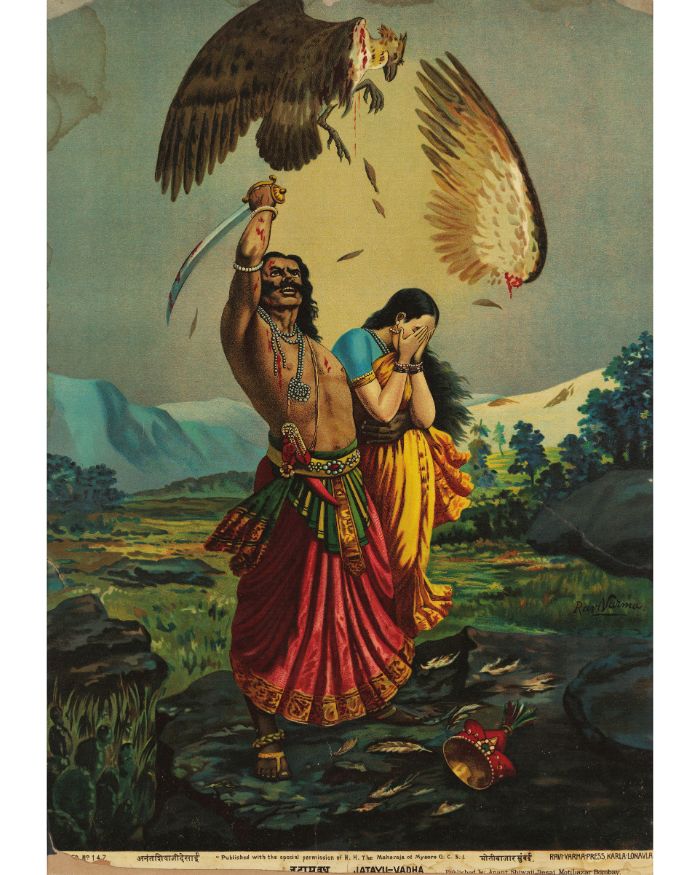
But reading Ravi Varma only through critique is to overlook the scale of his intervention. He established the Ravi Varma Fine Arts Lithographic Press in 1894 in Ghatkopar, later moving it to Malavli near Lonavala in 1899. At the time, it was the largest and most technologically advanced press in India, allowing Ravi Varma’s work to enter homes, calendars and everyday life through mass-production. Collapsing the gap between elite art and everyday life, he standardised how gods looked and made his art repeatable. Long before cinema or advertising, Ravi Varma created a shared visual language for India in the 19th Century, even inspiring Dadasaheb Phalke who worked at his press before he studied printing and cinematography in Germany. The more the imagery travelled and permeated popular culture and media, the more coveted the original source became. Yes, all iconic art lives between reproduction and rarity — reproduction that was enabled by privilege but the intent was radically democratising, and central to his rise.
Ravi Varma is one of the few artists who built that condition for himself and yet today, his work toggles the tension between a democratised image and a concentrated object. The sale of Yashoda and Krishna returns us to that tension. In a statement following the acquisition, Cyrus Poonawalla noted, “This national treasure deserves to be made available for public viewing periodically, and it will be my endeavour to facilitate this going forward.” It is a necessary acknowledgement as the painting now moves into private ownership. Because even as images circulate freely, the original gathers a different order of meaning — provenance, authorship, the authority of source. That is what the market recognises and what public culture cannot afford to lose sight of.
Read more: An exhibit on Aditya Prakash in his own home
No results found.