
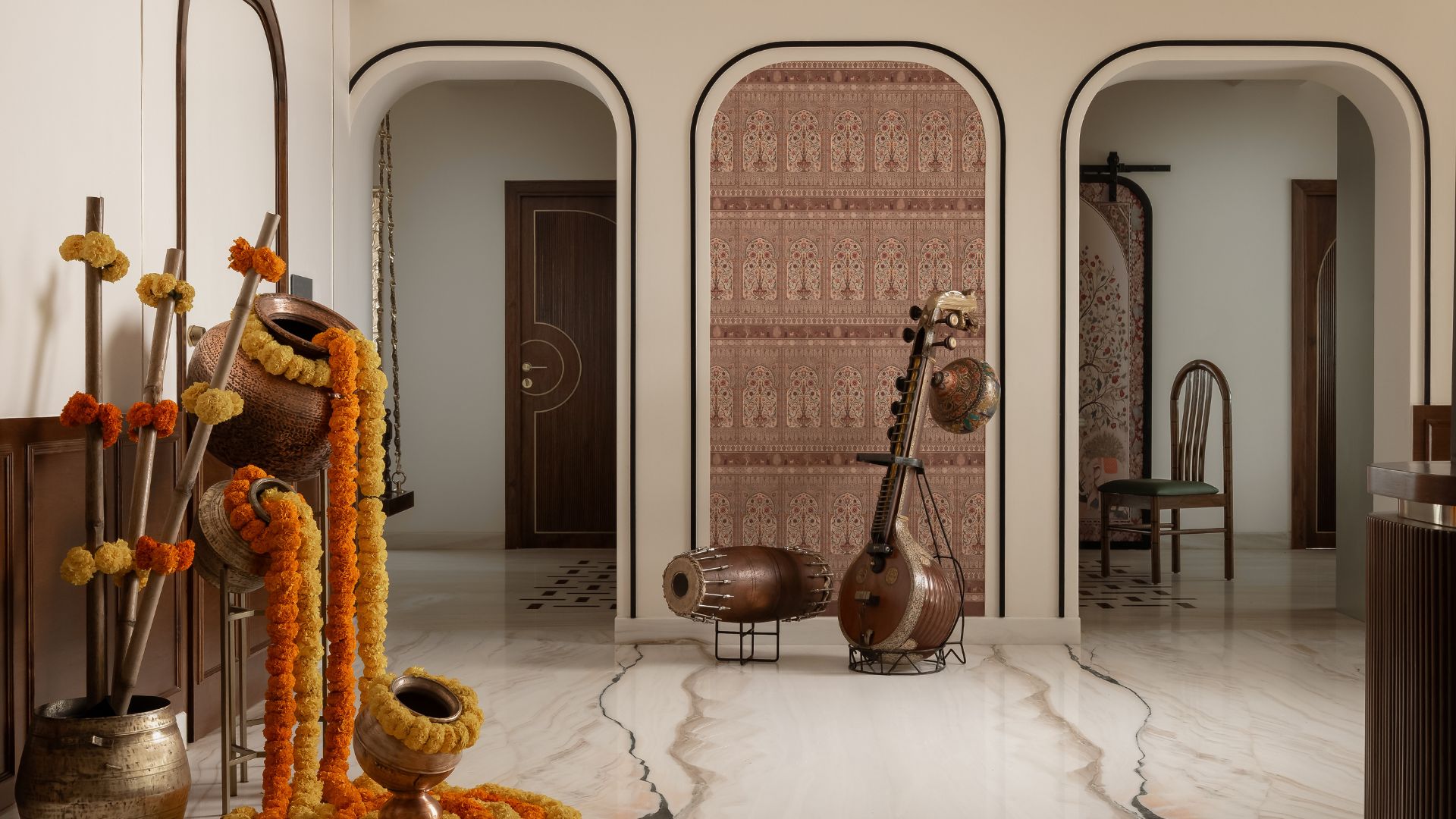
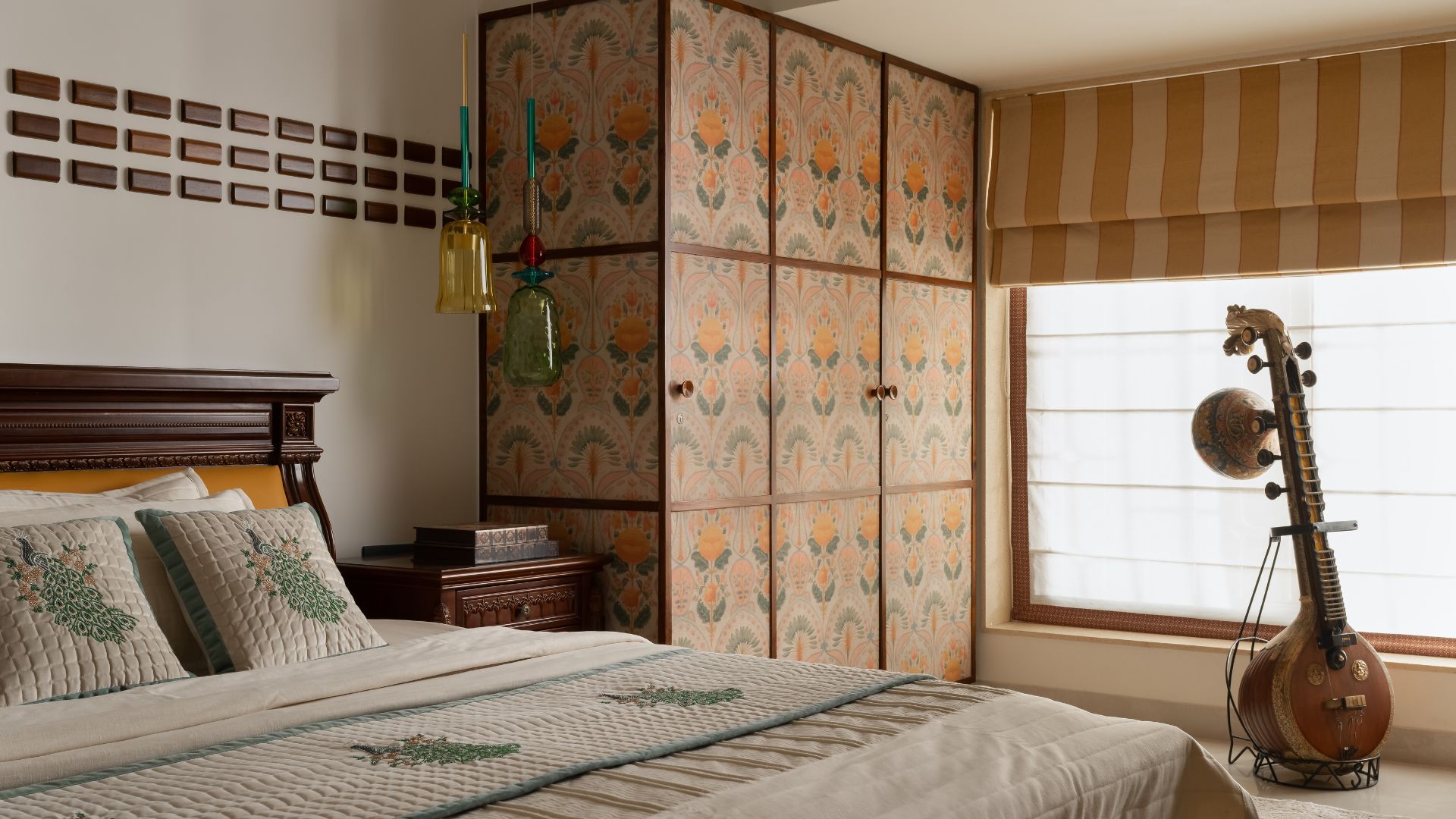
A sitar resting against a teak backdrop, catching the glow of sunlight. Aged brass instruments in the corridors sitting with dignity, as if paused mid-performance. The air feels rich with memory. A vision realised by Kiran Sabnani, Lead Designer of Nebulous Design Workshop, this home unfolds much like the aroma of petrichor that fills the air after the first rain. With the intent to restore a 50-year old ancestral home in Bengaluru while preserving its core identity, the design ideology remains attuned to the present. Guided by revival, this 2,400 sq ft home is shaped by inherited sensibilities rearticulated for today. One space leads to another, carrying you intuitively through the home.
“Like the aroma of saundh (petrichor) that fills the air after the first rains, the design sought to evoke renewal, nostalgia and serenity through every detail”
Kiran Sabnani
“Inspired by the idea of rejuvenation, the theme of where tradition meets modernity became the cornerstone of the design,” says Kiran who worked along with her team Manoj Sabnani, Prerna Sarda, Saivarun and Elsa. Modern, contemporary yet emotional and culturally instilled, the home retains memories close to its core. The design focuses on continuity where older elements are preserved and layered with contemporary interventions. This approach is most evident in the layout which has been meticulously reworked to feel open and connected.
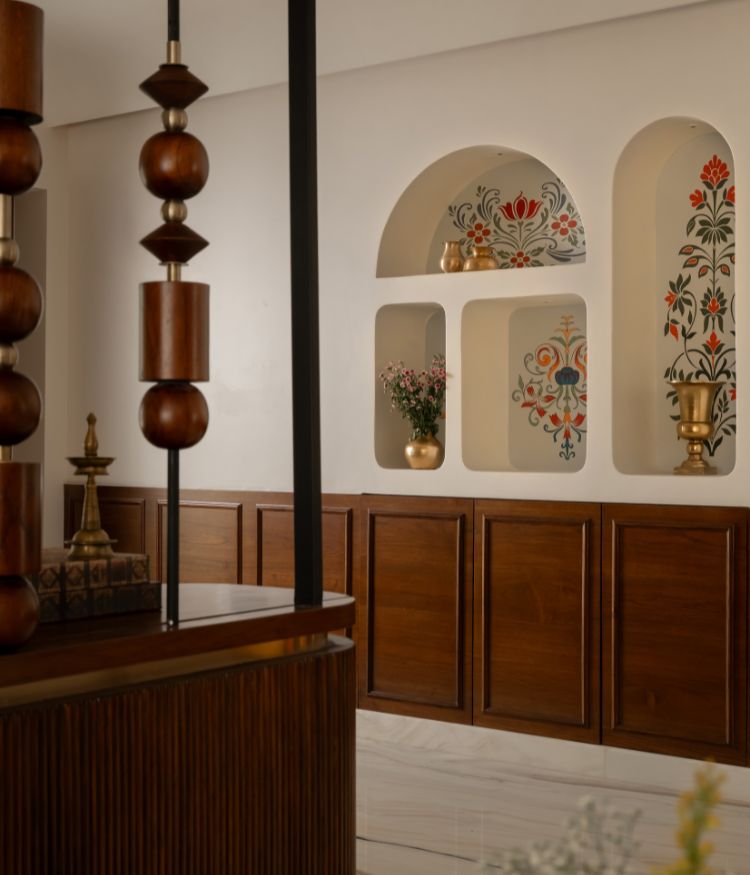
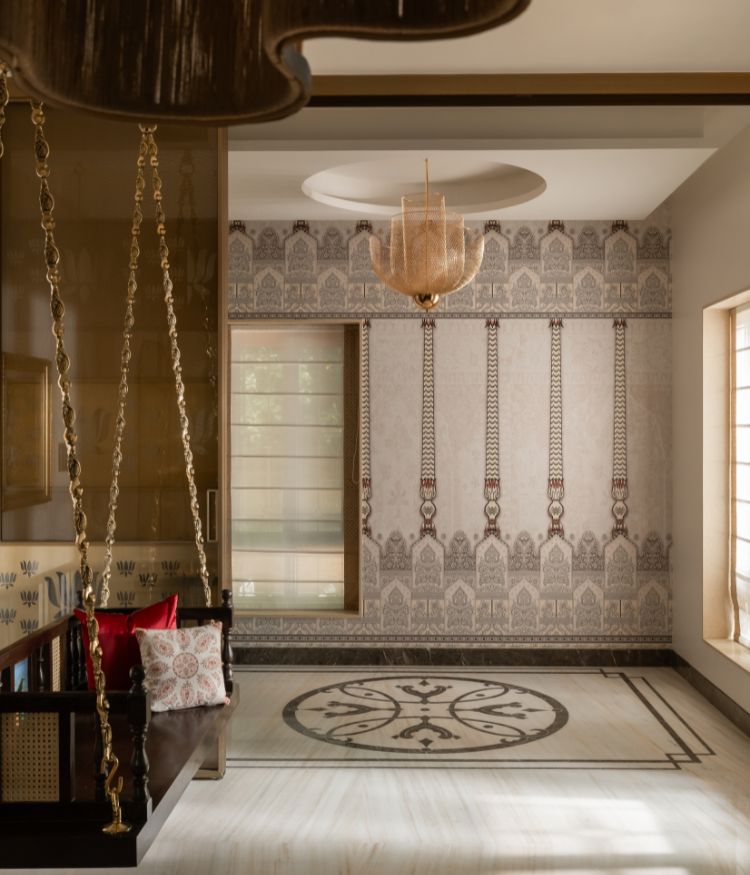
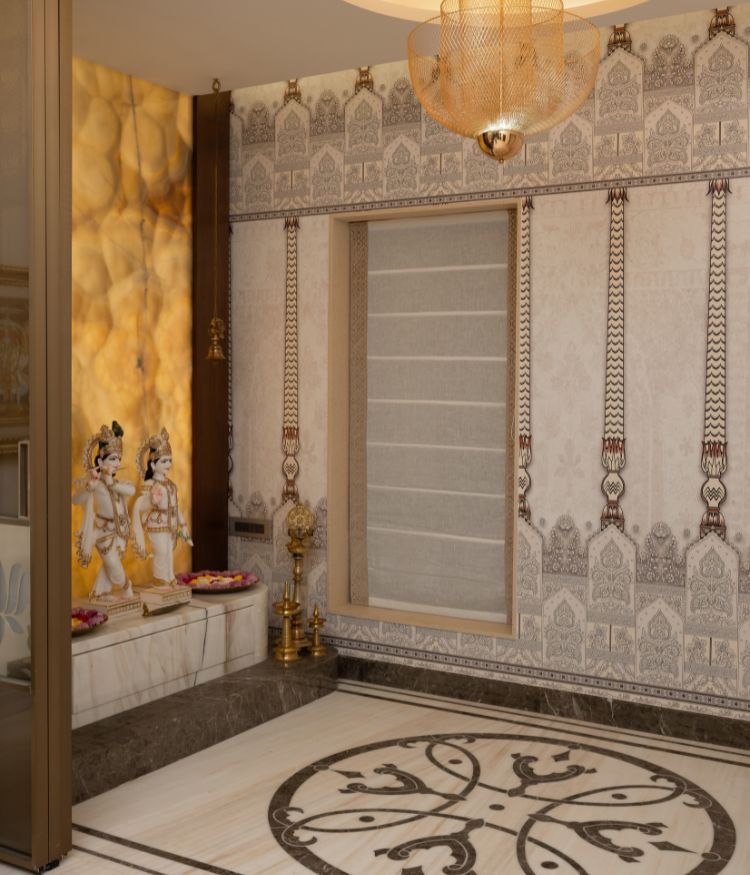
The layout follows a foyer, living room, kitchen, dining area with an adjoining powder room, a dedicated temple space and two bedrooms with attached bathrooms. Traditional Indian aesthetic shapes the home at every turn. The foyer leads directly into the living area, setting up a natural progression into the heart of the home. From here, the plan opens into a combined kitchen and dining zone, planned for movement and interaction. At its centre, the temple emerges as the heart of the home defined by green onyx and a finely crafted marble rangoli.
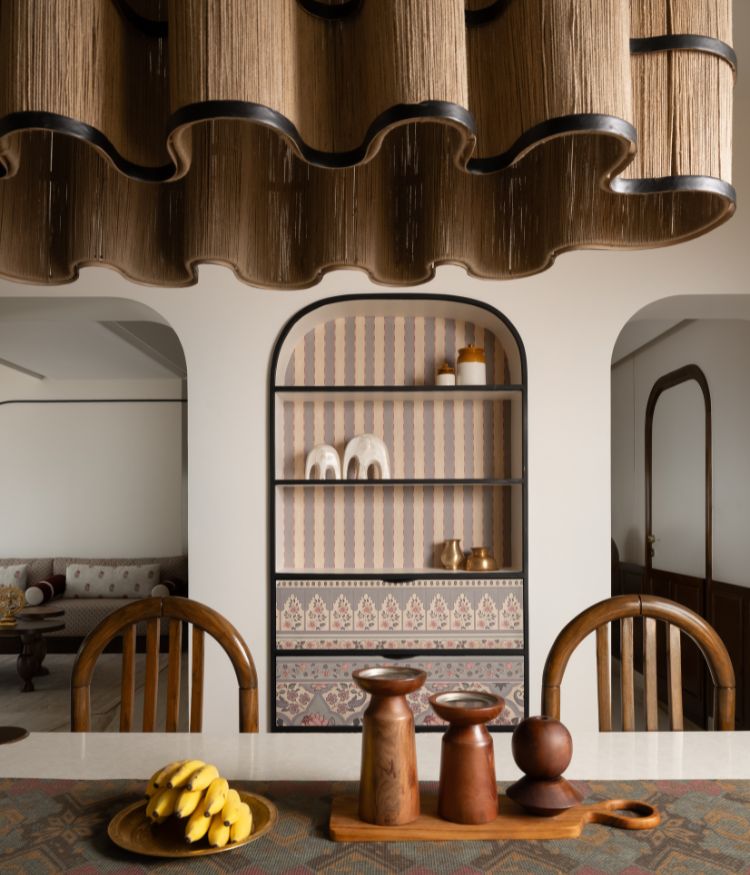
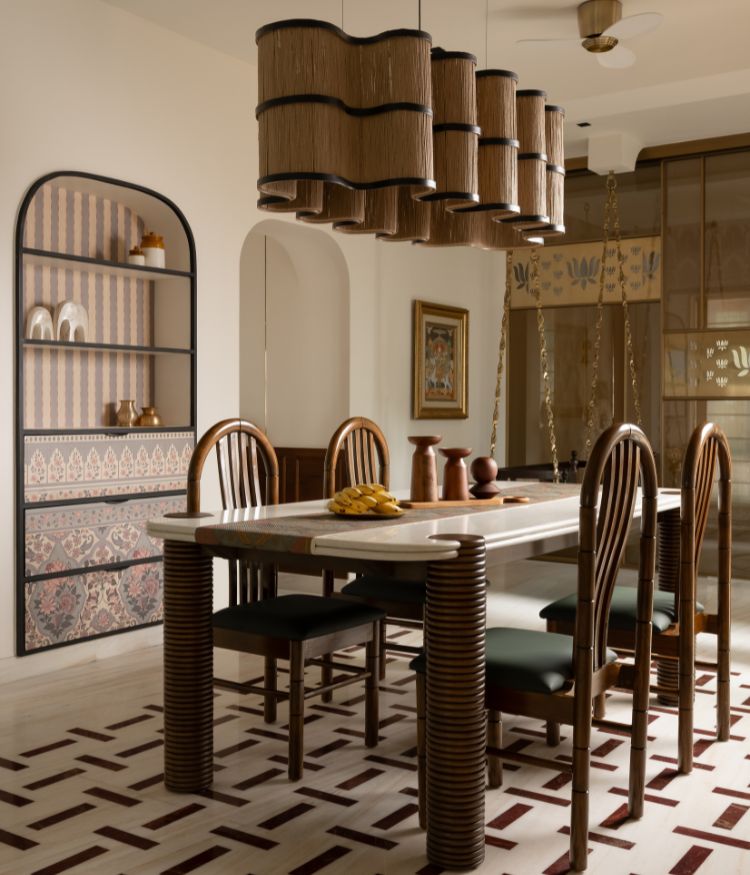
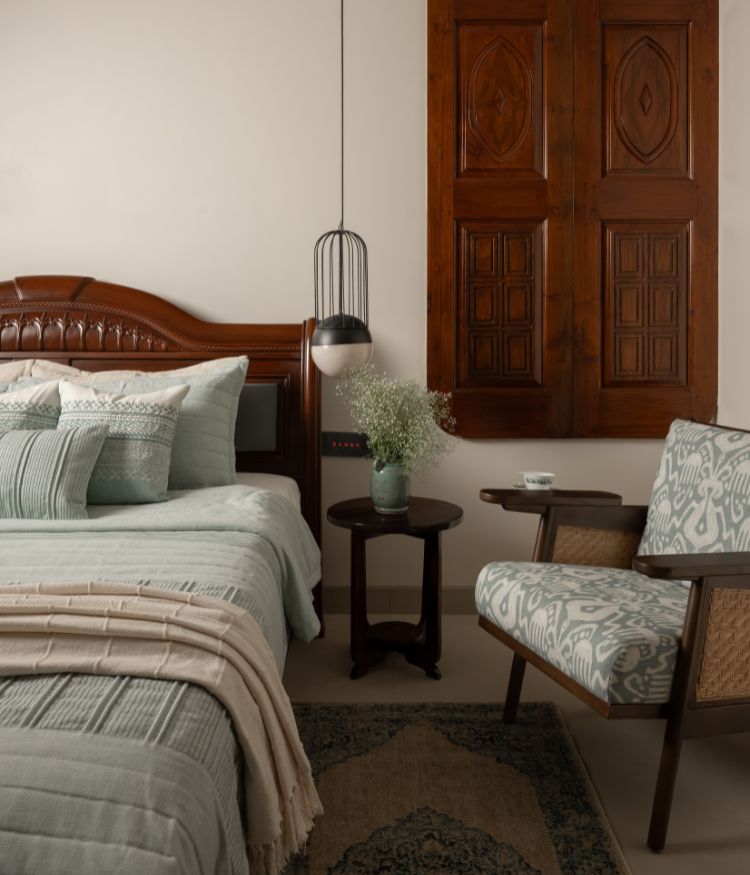
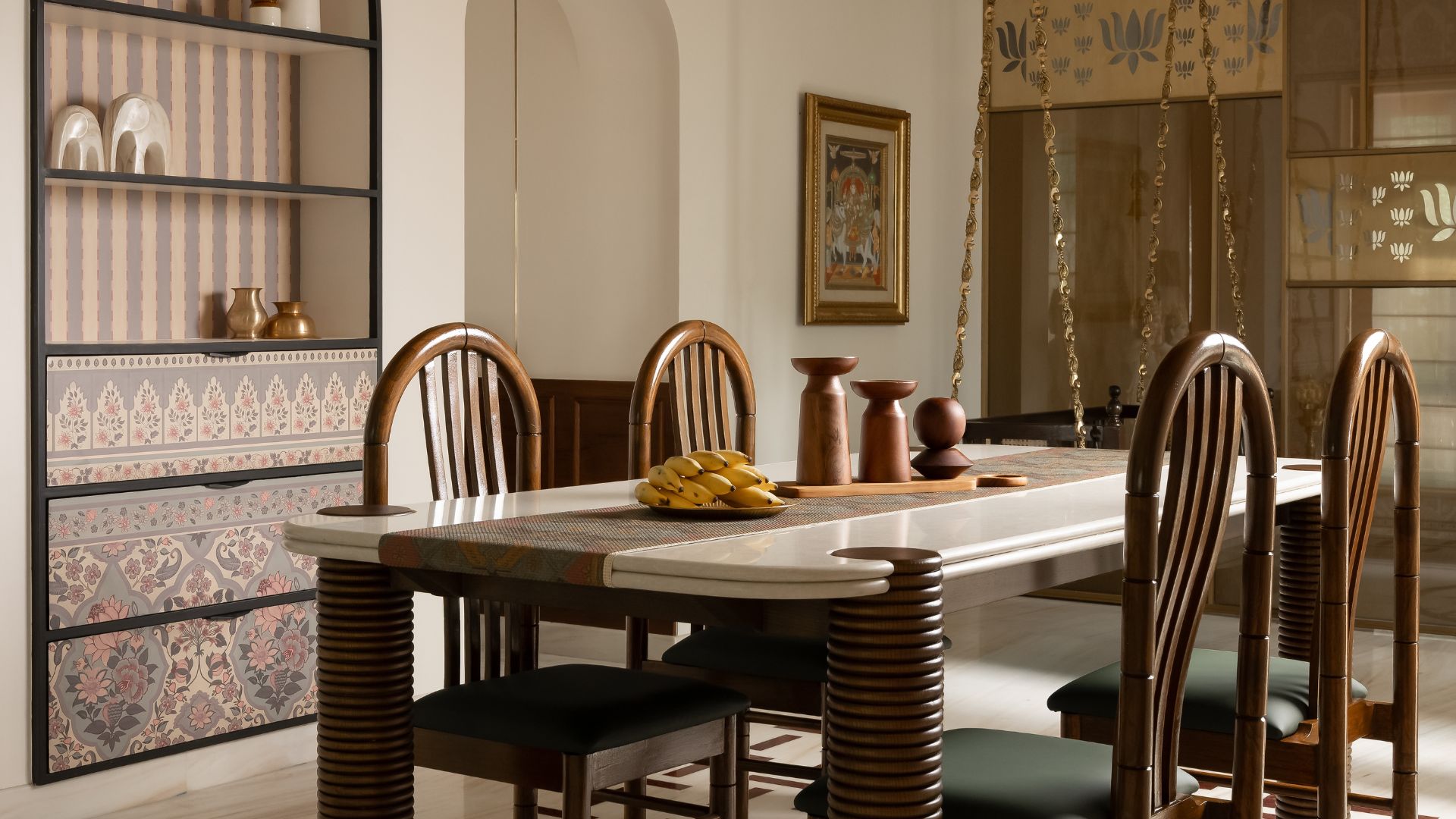
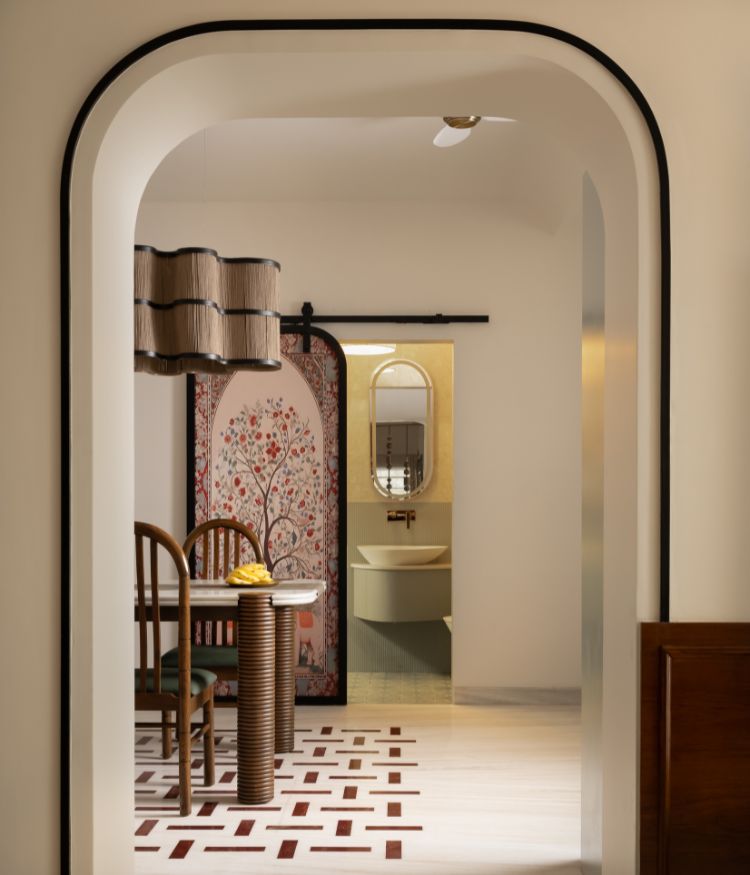
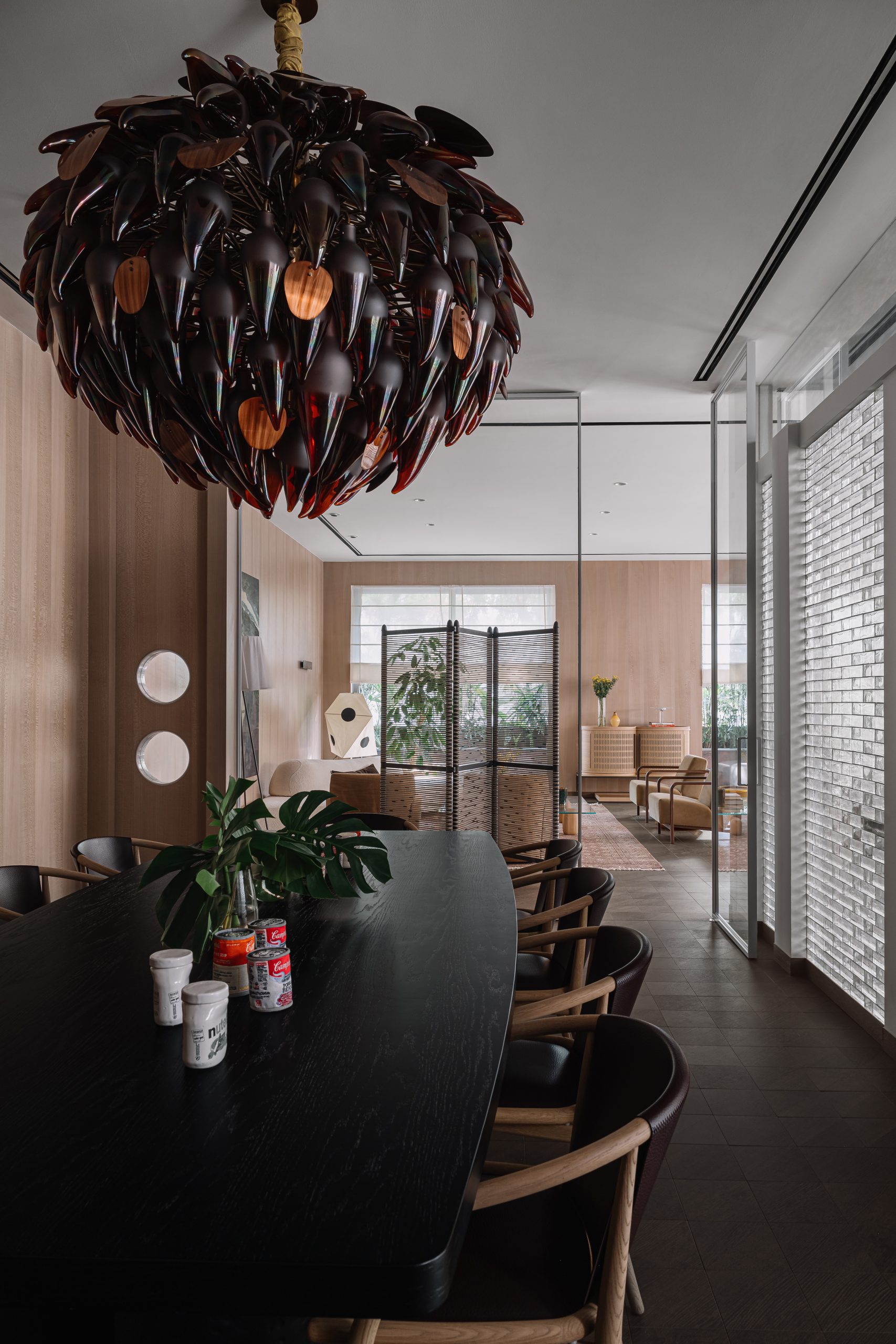
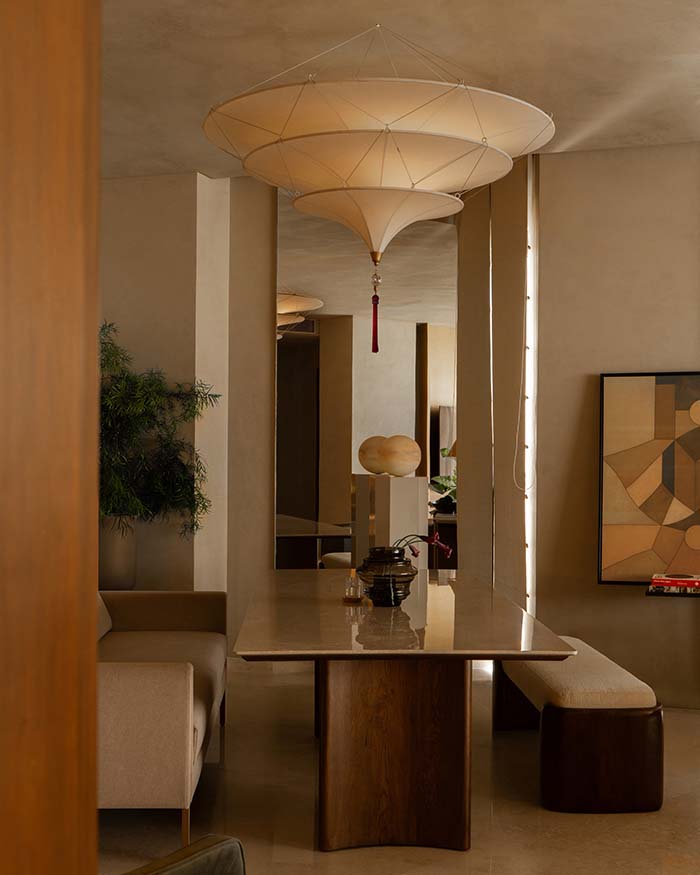
Moving further in, a collection of 70-year old musical instruments and brass artefacts is placed at the forefront of the design in the corridor. The dining area features a bespoke hand-painted slider which infuses cultural and artistic depth. Meanwhile the 50-year old teak temple door finds new life as a wall art in the guest room. Each space holds a balance of heritage, craftsmanship and comfort.
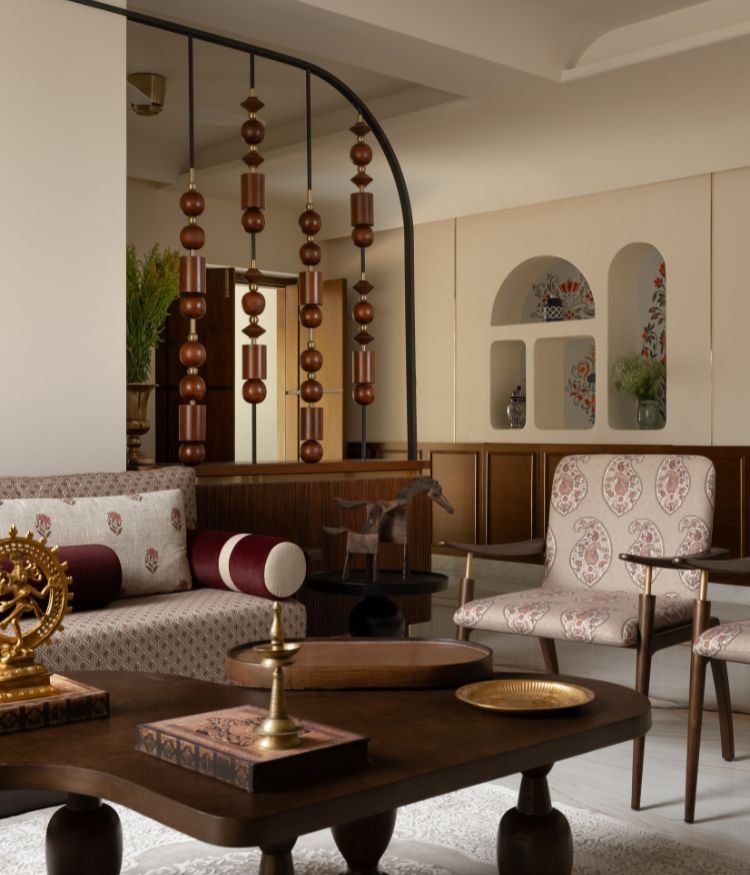
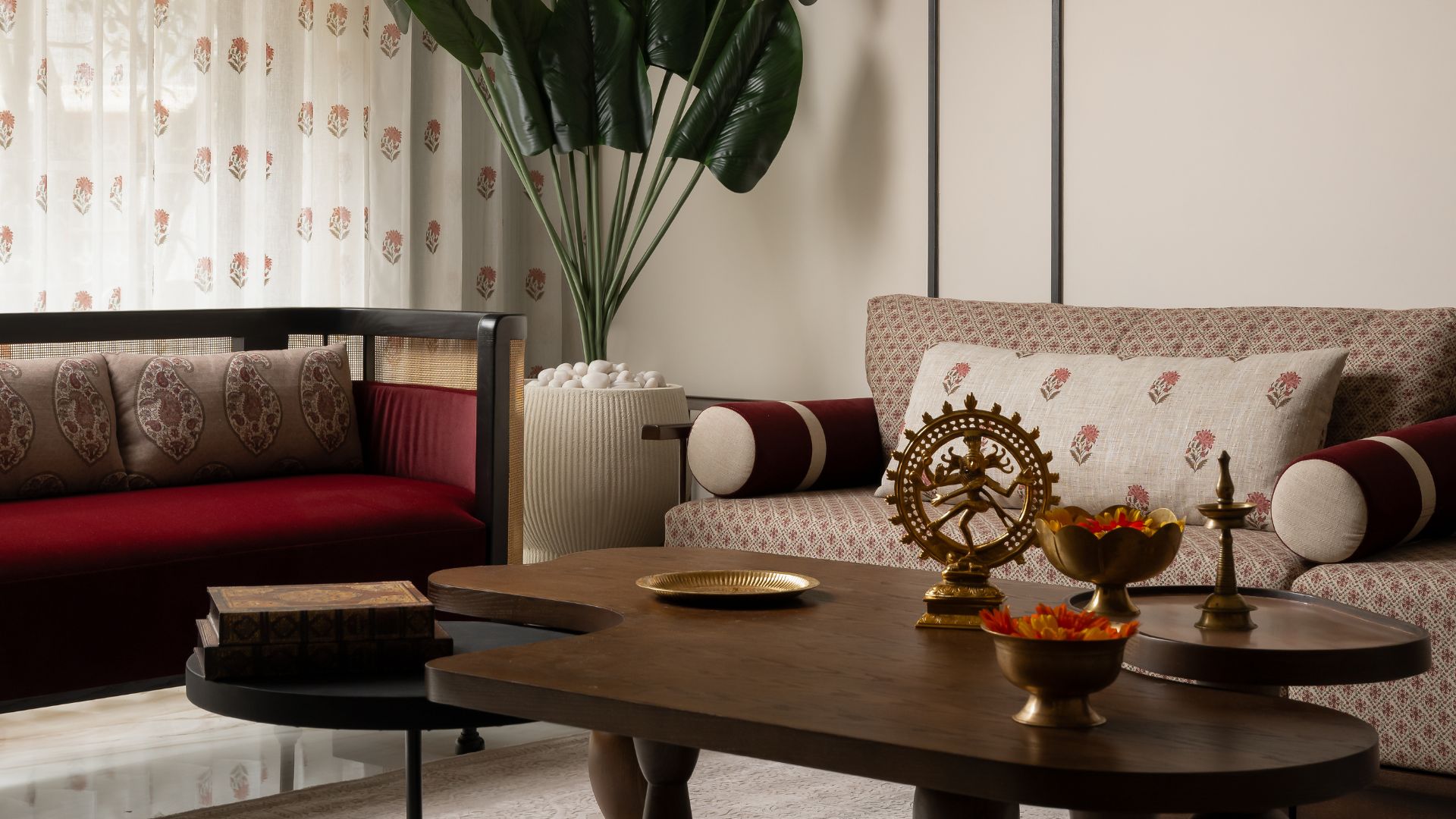
As Kiran describes it, “Like the aroma of “Saundh” that fills the air after the first rains, the design sought to evoke renewal, nostalgia, and serenity through every detail”. The restoration is approached as an act of caretaking. Objects are not treated as decor but as storytellers: ancestral instruments, temple doors and brass vessels carry memory, giving the home the feeling of a living museum.
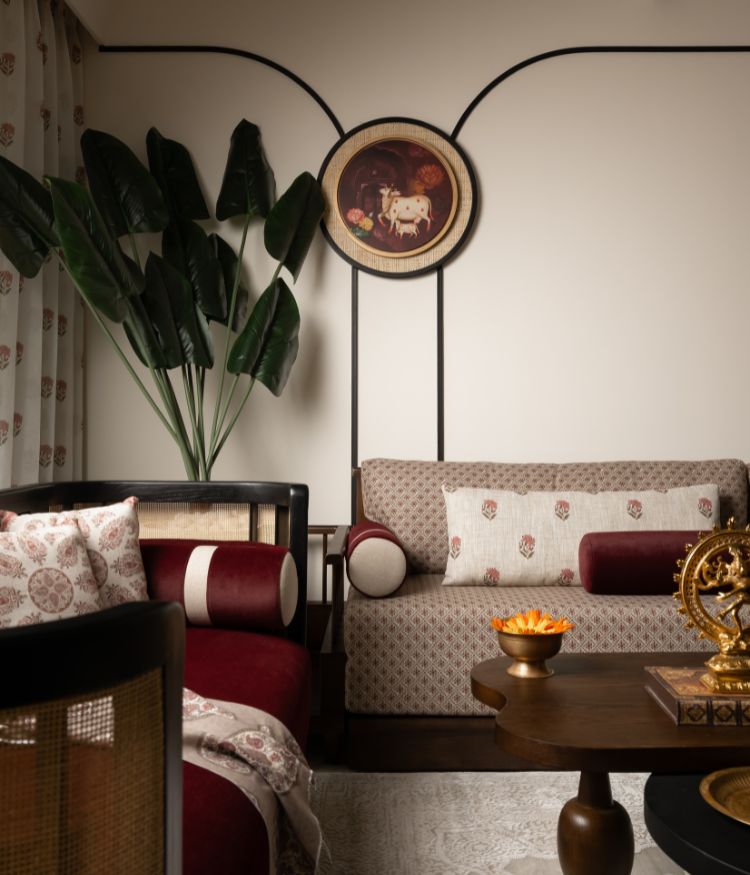
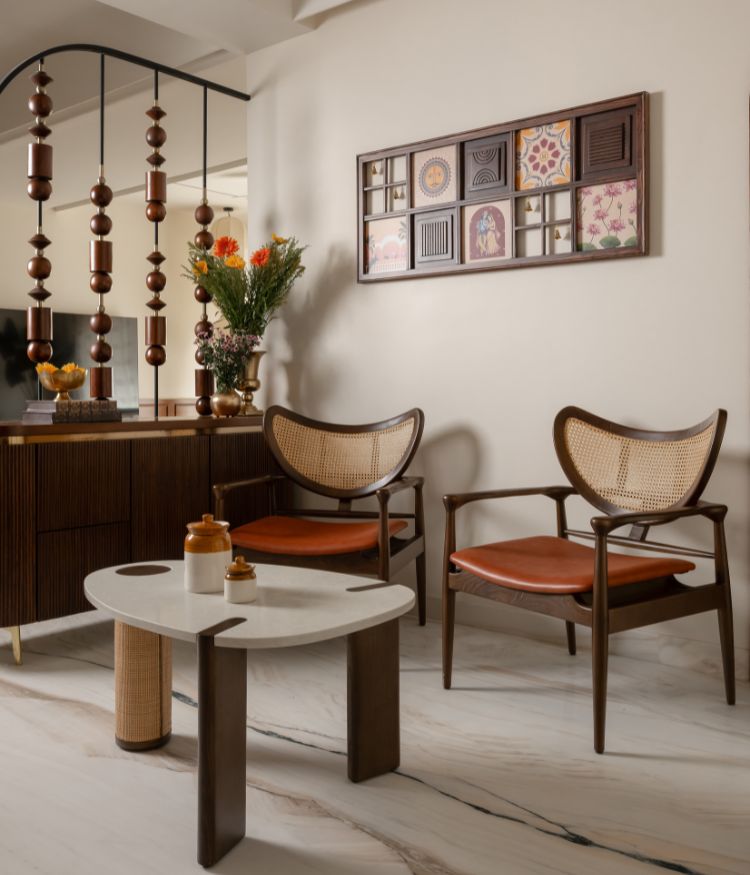
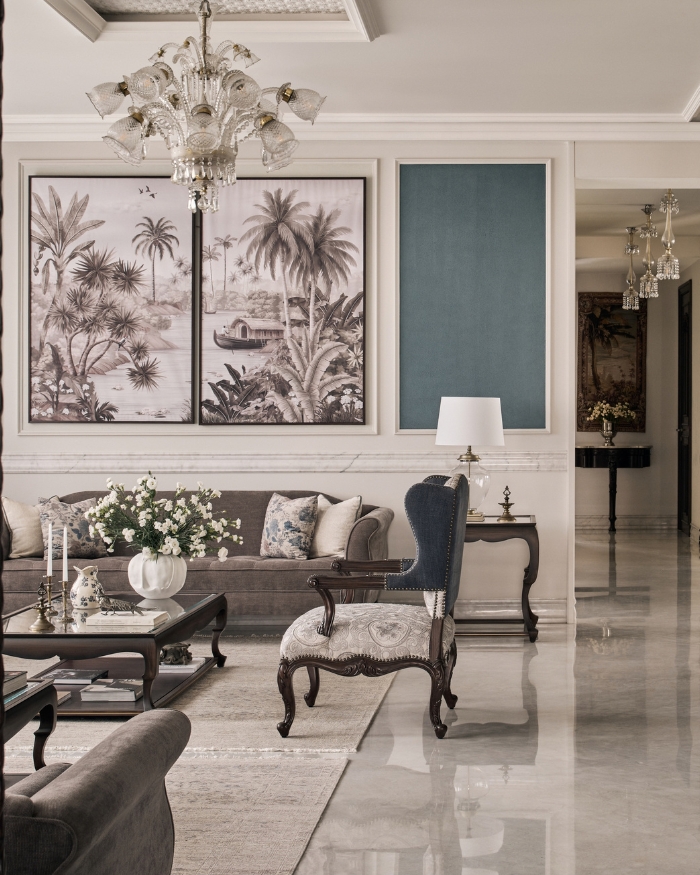
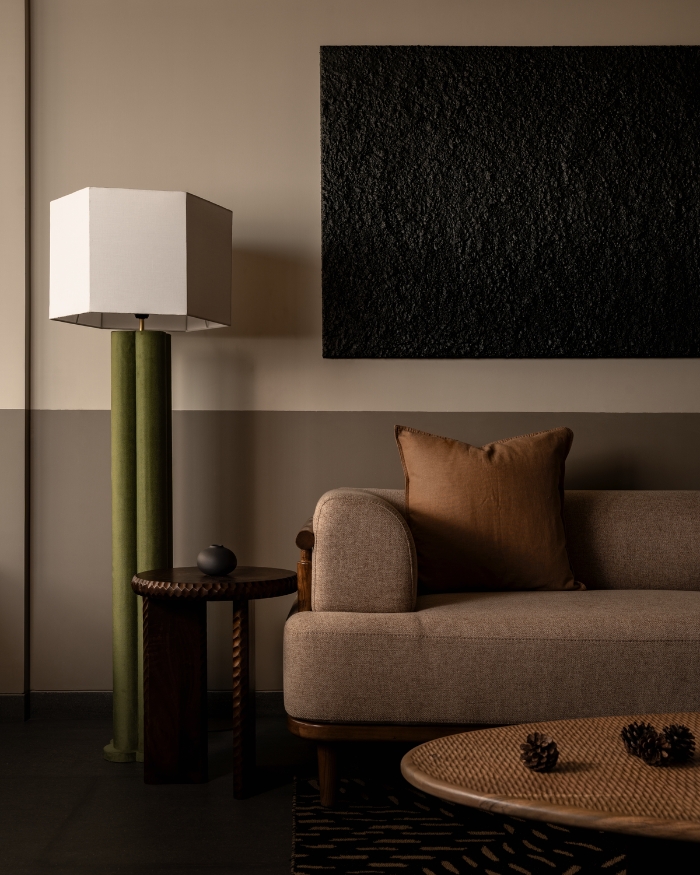
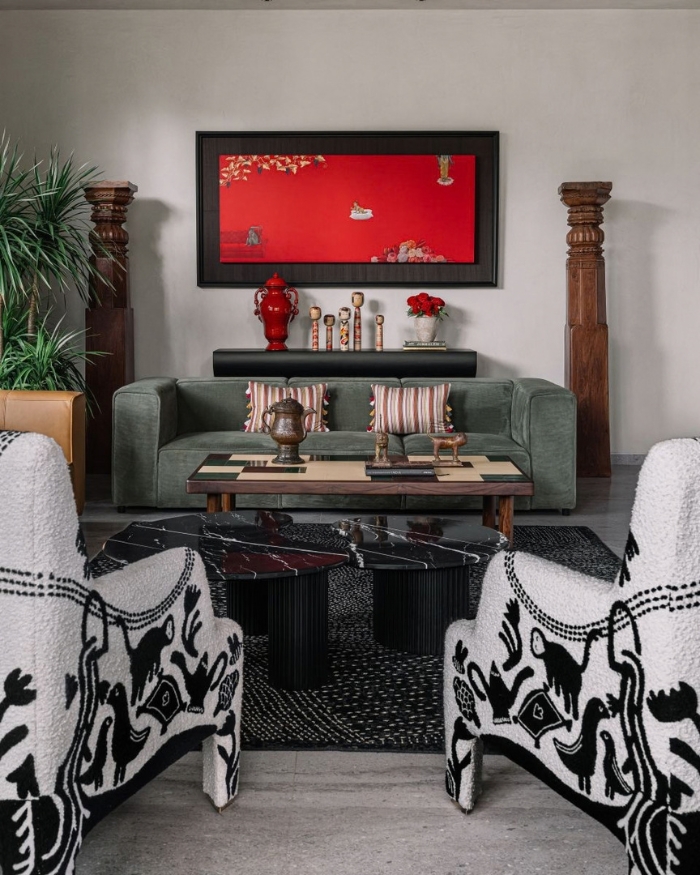
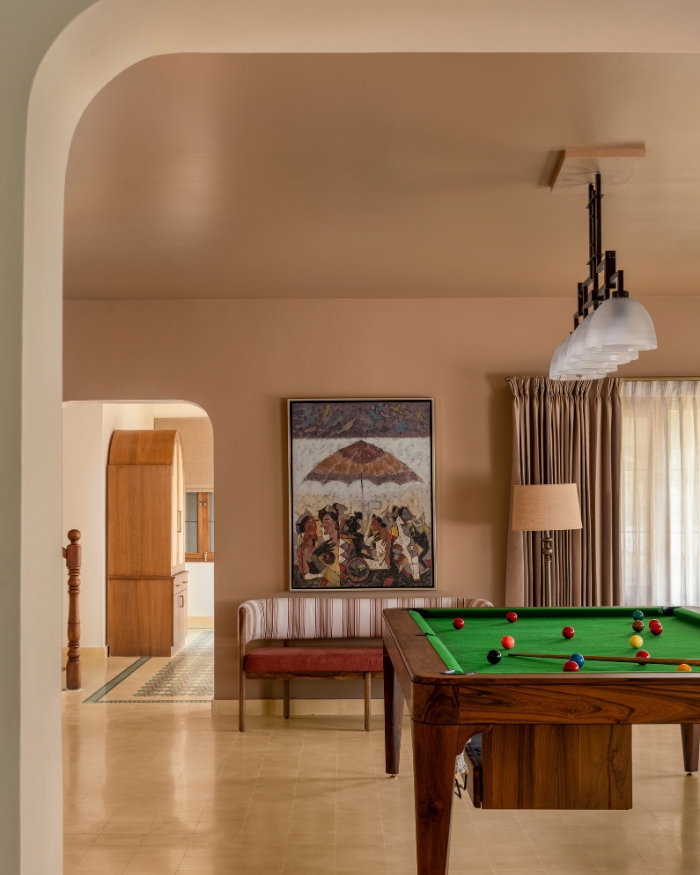
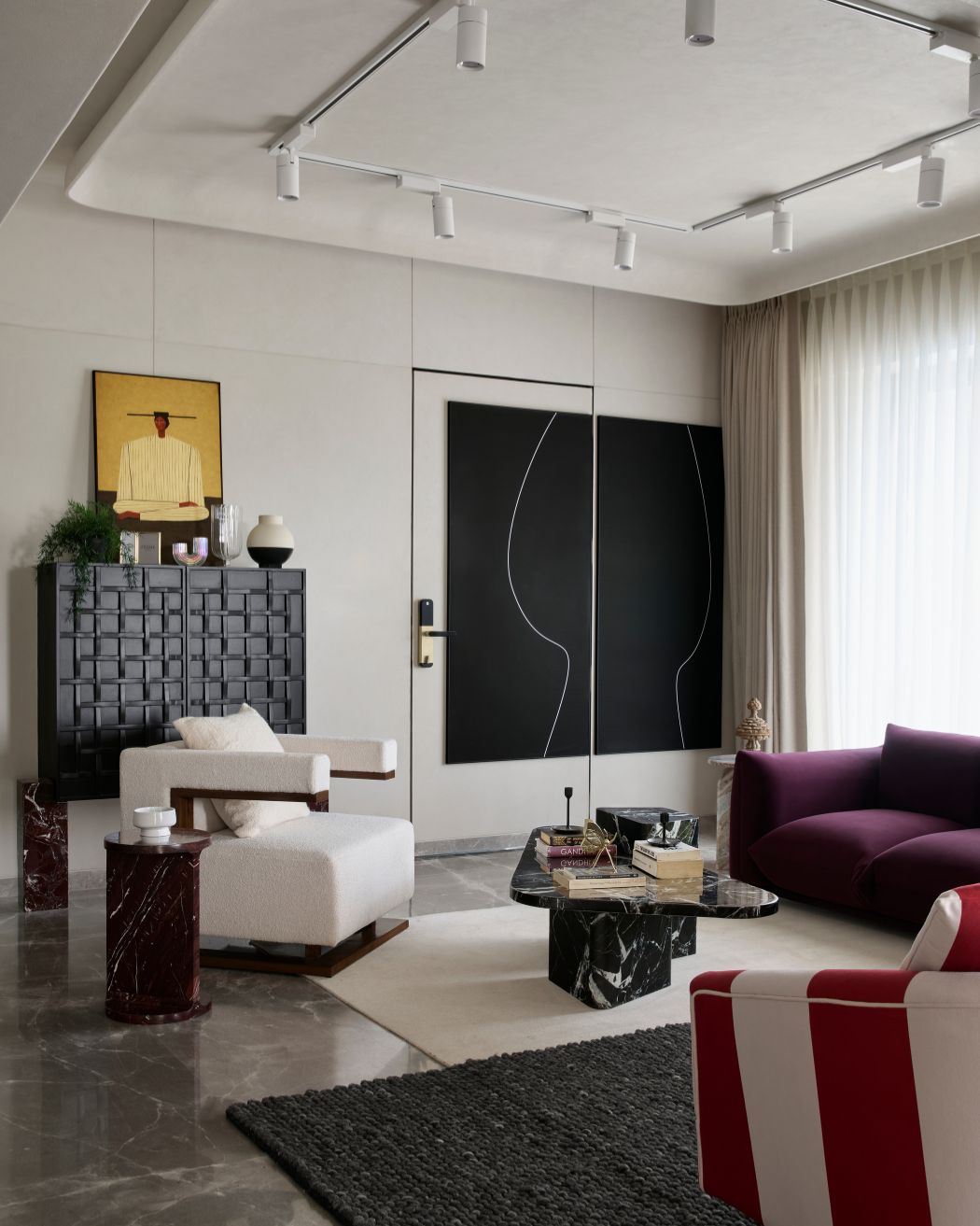
Materiality plays a key role in reinforcing this narrative. The foundation lies in warm marble tones, natural teakwood and brass accents. A palette of cream, sage green and muted gold creates a soothing backdrop. These are layered by cotton batik prints, ethnic wallpapers and handcrafted elements adding authenticity and character. Within this composition the lighting crafted in silk, jute, metal and glass lends a softer layer to the space.
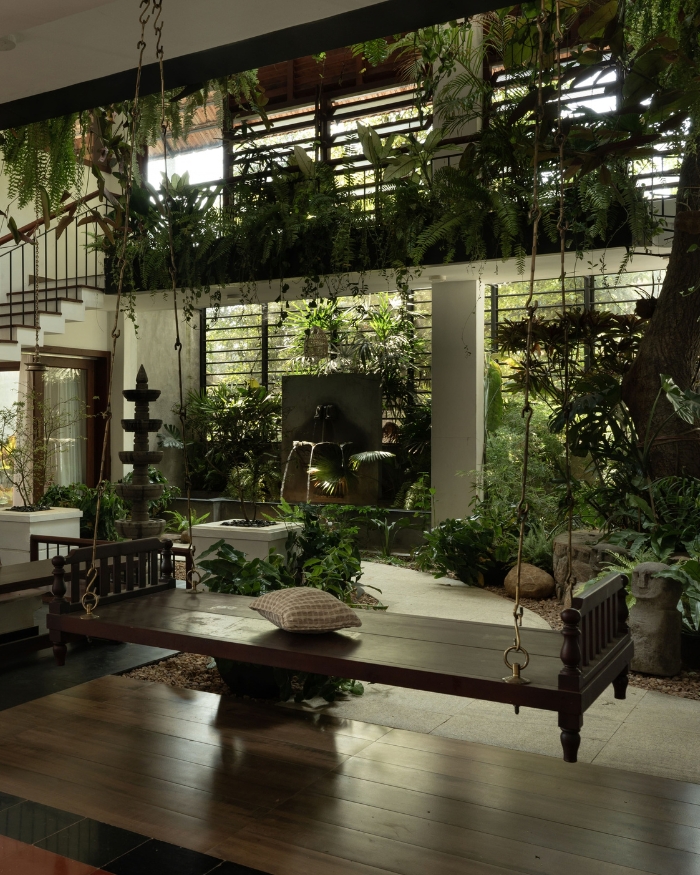
Intricately inlaid marble flooring throughout the home brings timeless elegance into play. The swing is reimagined as a nostalgic feature that grounds the space. Designing the open kitchen, dining, and temple area became a key highlight of the project. Working within a load-bearing structure the team introduced ismb beams to open up the layout.
What was once a dark, cramped cluster of three small rooms is now reworked into a light-filled, open space. Tall windows and doors draw in daylight with the swing and open dining area extending the visual plane allowing for more fluidity across the centre of the home.
The aging ancestral home gradually opened up to be weightless and more connected without losing what made it special in the first place. Moving step by step, working through constraints, redefining spaces and holding on to details that carried meaning, the journey was worthwhile.
Each decision along the way felt like a small win for the team where memory and design found harmony. Today, the home feels refreshed but still familiar. You can see its past in the surfaces, the artefacts and the spatial rhythm. This home carries its past forward into the present which feels effortless and nostalgic.
Read more: Between pause and spaces
No results found.