The road that leads to satori

With an earthy palette and intuitive planning, this home by Skew Studio redefines Japandi

BY

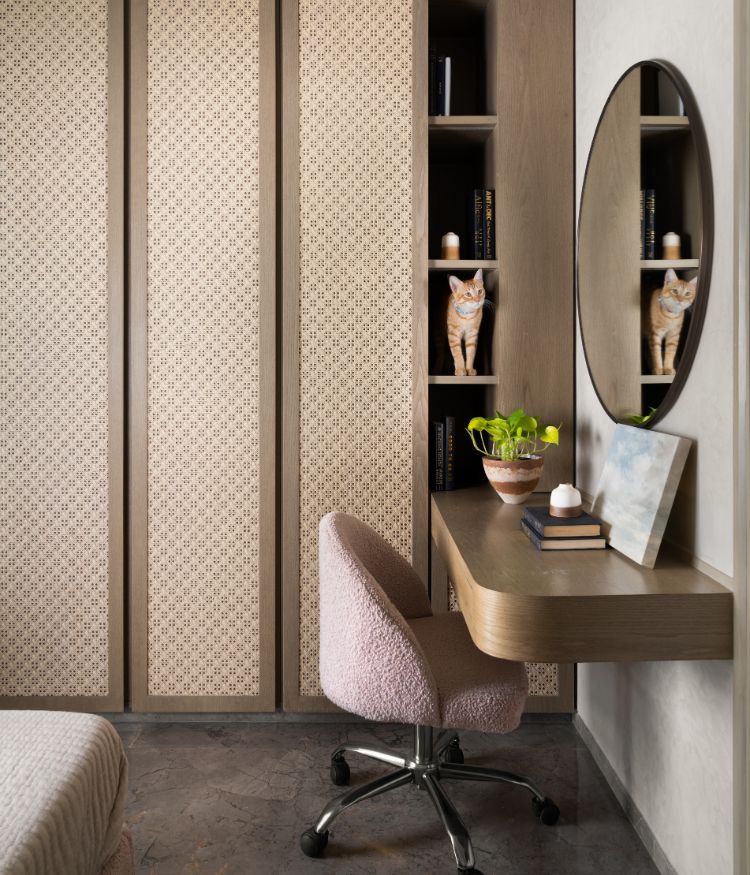
One could imagine a cat leading the way through this 1,600 sq ft Japandi-style abode in Thane, a suburban city just outside Mumbai. Dubbed Satori, a home designed by Shabrin Mom of Skew Studio, unfolds like a gentle narrative, guided by this imagined presence. It’s a space that feels fitting for a home rendered in a palette of beiges and greens. The spaces seem to move with ease, never slipping into sterility. Centred on the idea of satori, a fleeting moment of clarity or enlightenment, one senses this. You sense this intention in the way the home gathers the rhythms of the family that inhabits it.

“Guided by Japandi sensibilities, we balanced calm minimalism with tactile richness, while Wabi-Sabi informed the textures and finishes, celebrating the quiet beauty of imperfection”

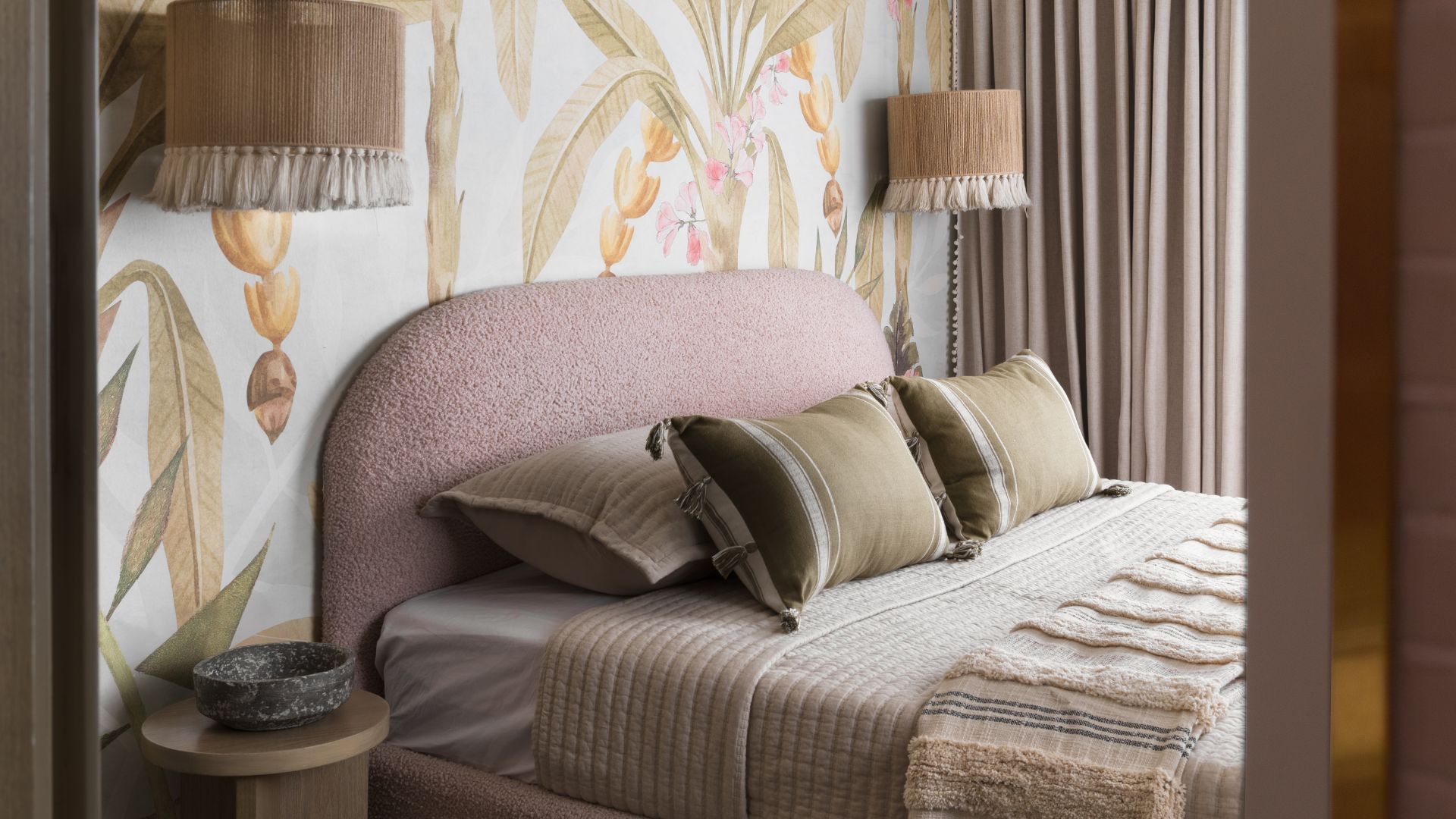
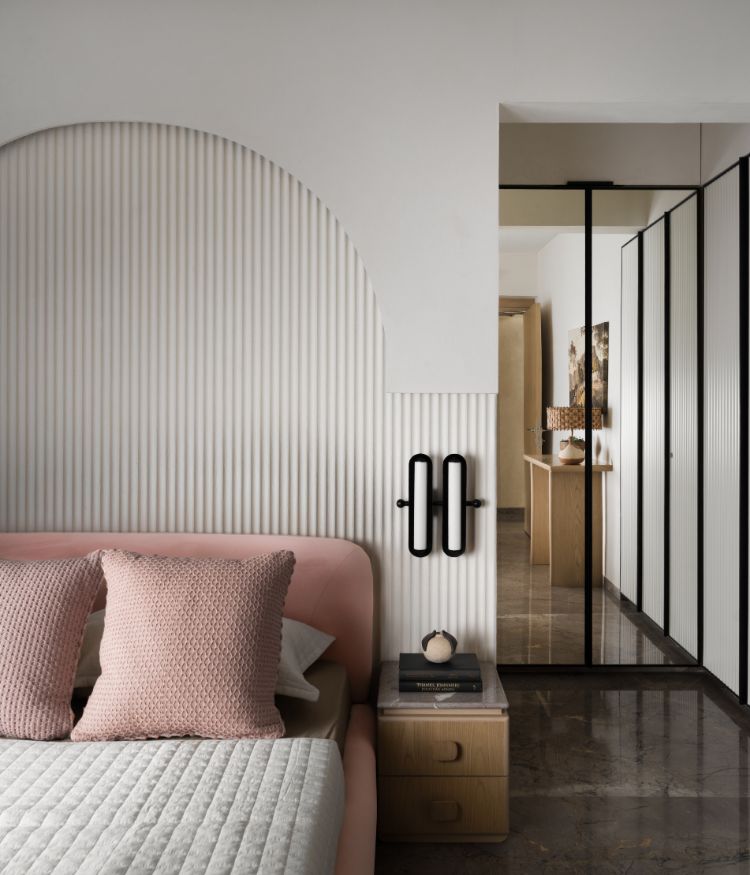
The playful blush-toned daughter’s room adds to the home's calm and cohesive ethos; Photography by 21 Frames by Mahendra Jangid

A space to exhale 

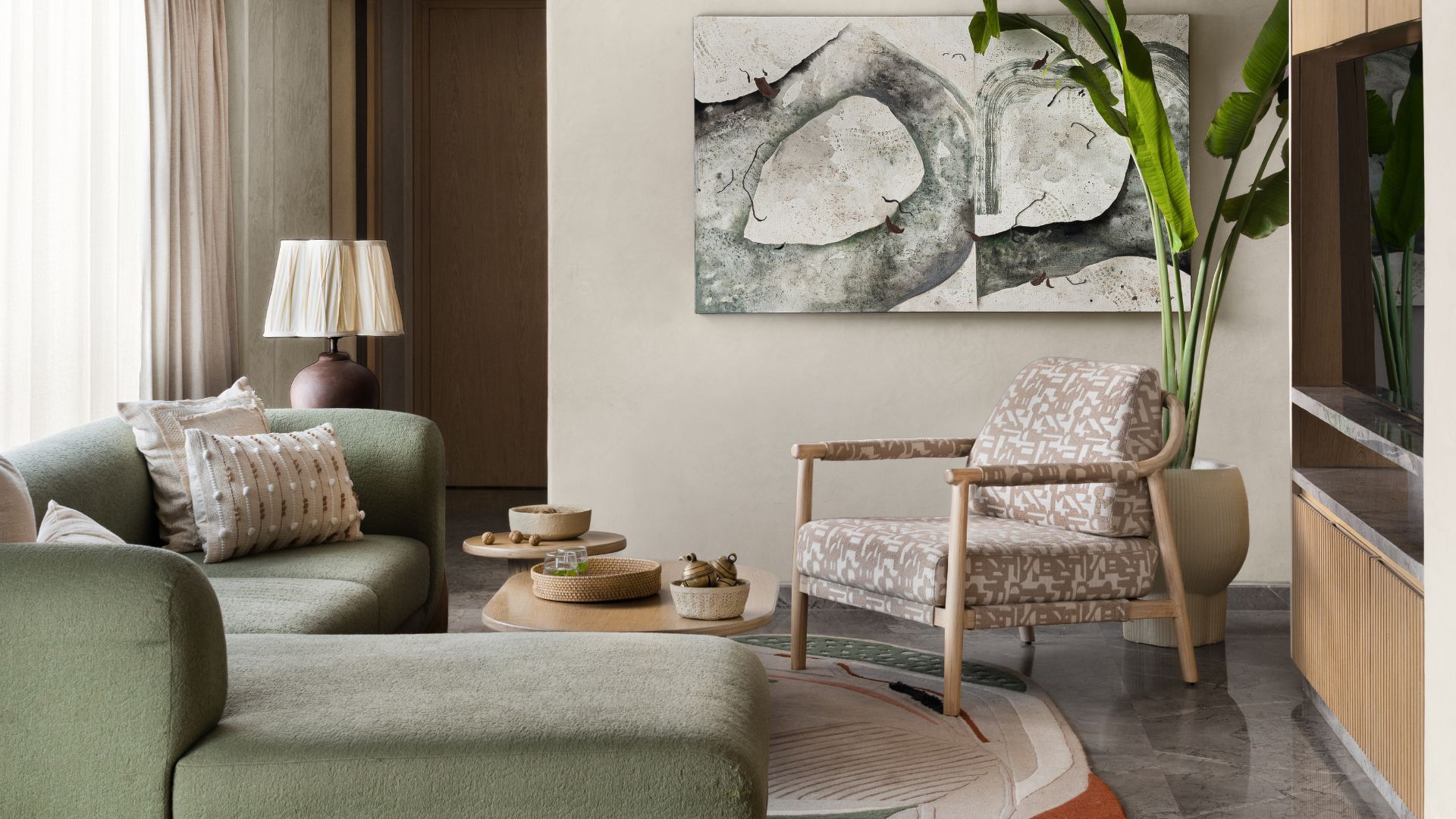
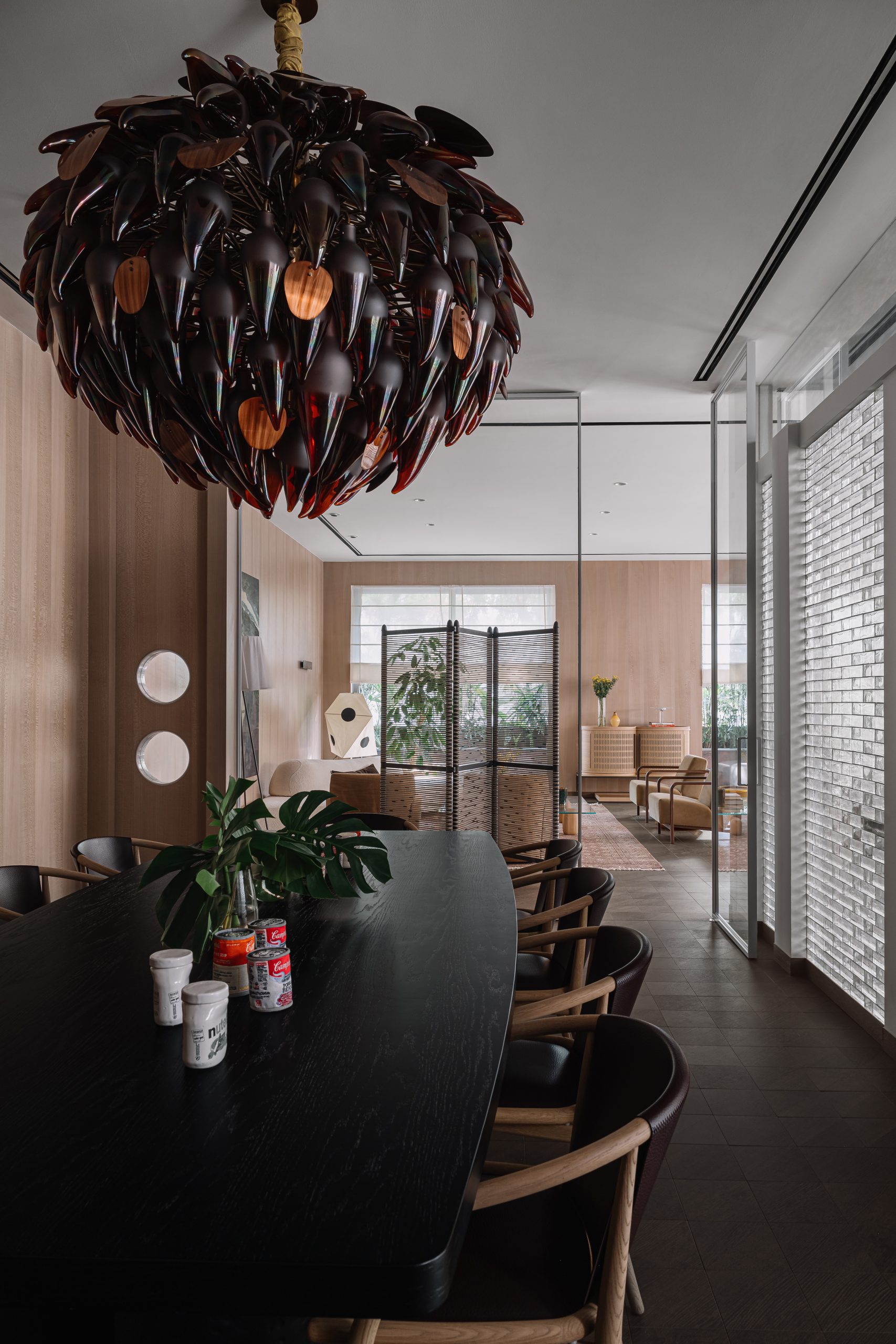
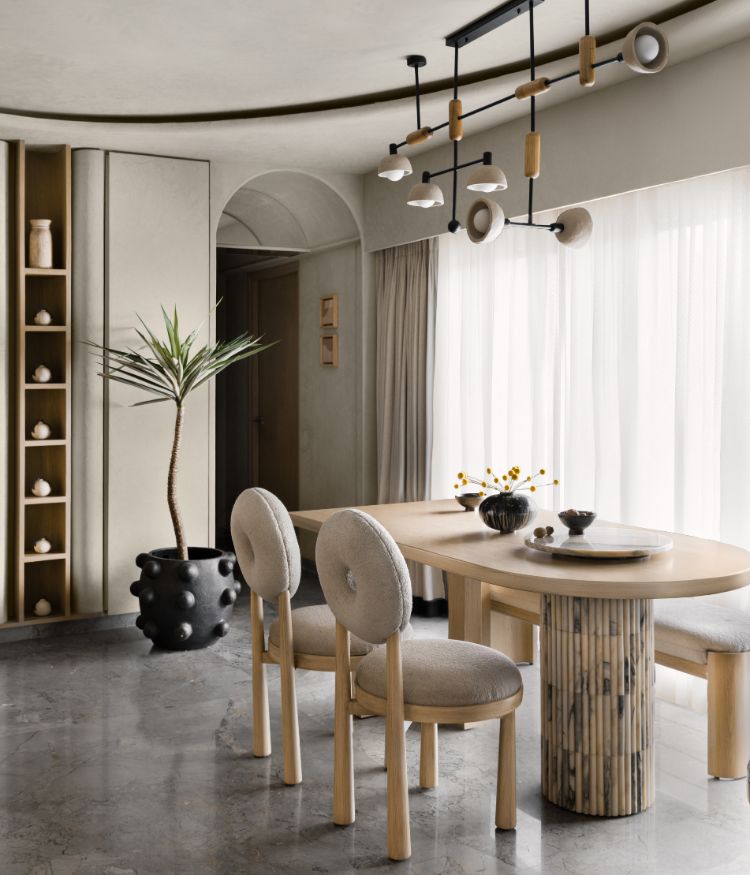
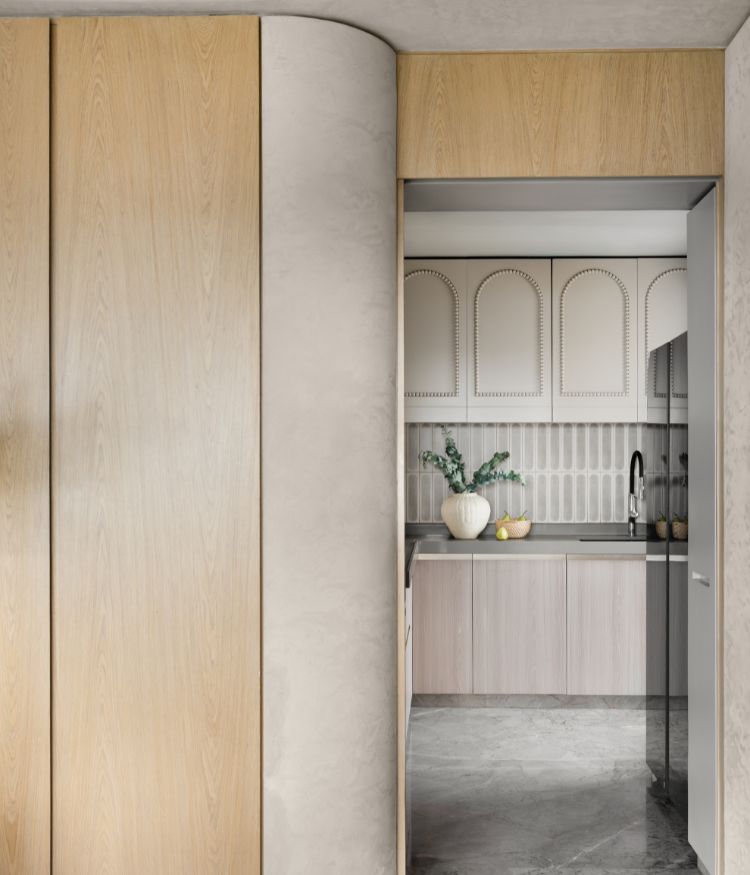
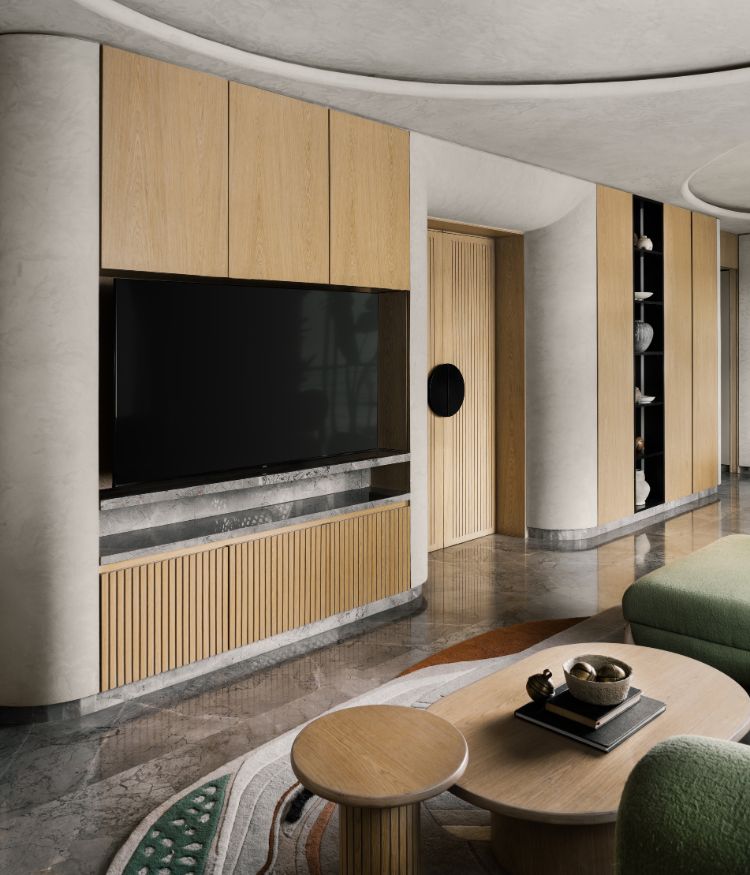
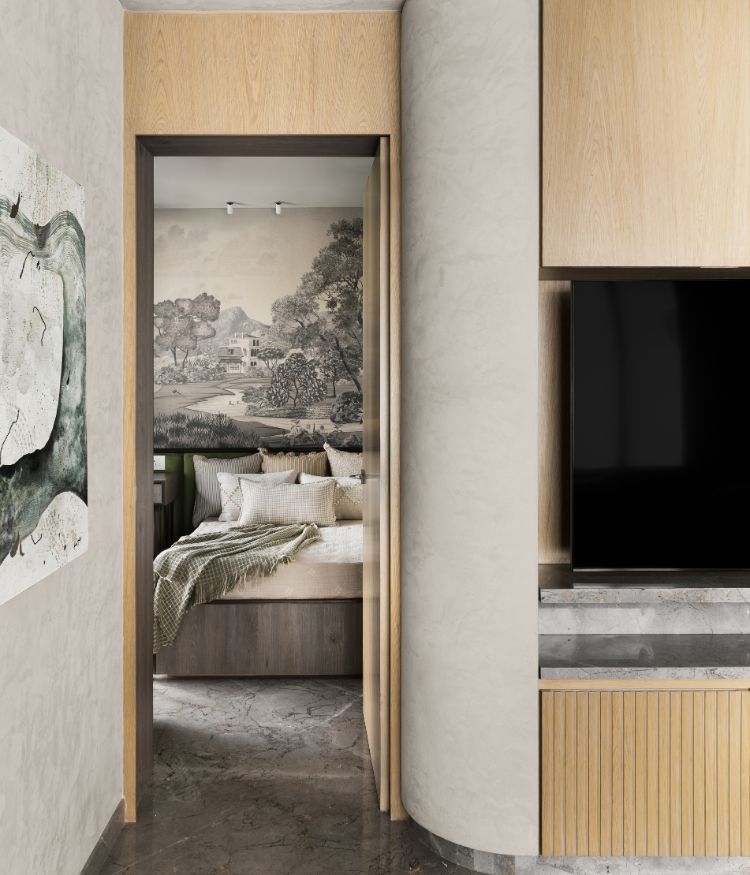
The living and dining areas share a language of soft curves and obscure functionality, which naturally gives you a movement unique to itself. A sculptural pendant over the dining table draws your eye, while a bench-and-seat arrangement keeps the room flexible, expanding or contracting depending on the day. There’s practical intelligence at play with doors that disappear into the walls, storage that folds into curved cabinetry and transitions that feel almost imperceptible. The kitchen follows suit, designed less as a standalone zone and more as an extension of the living rhythm, balancing utility with a visual language that keeps the larger space intact. 

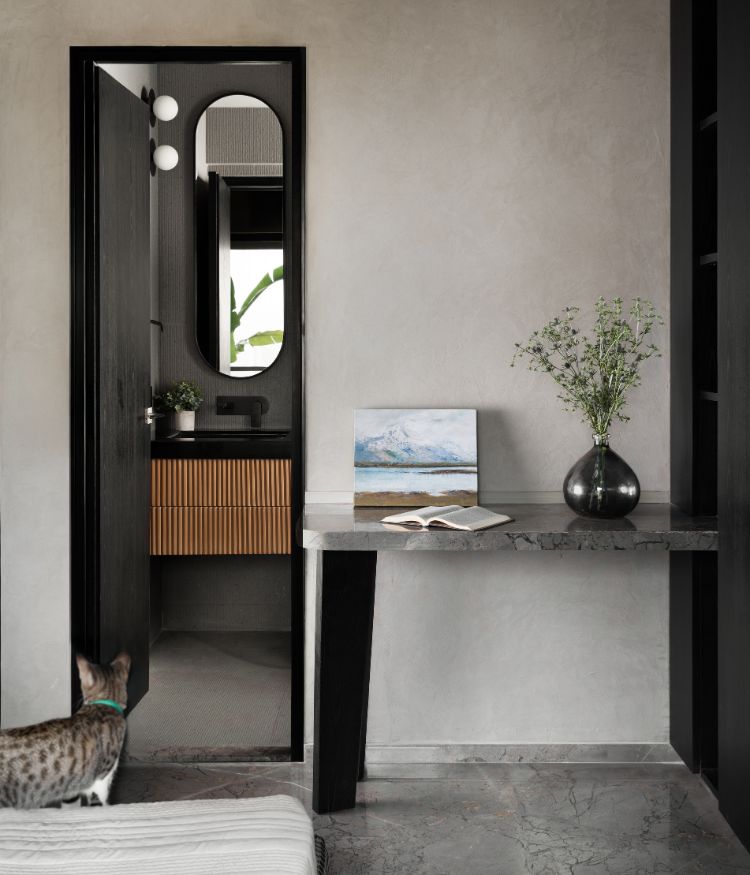
Materials do most of the talking: lime plaster walls, light wood, stone underfoot, all working within a palette that stays firmly earthy. Even moments of play like the patterned swirl in the powder bathroom, a custom-shaped rug adds just enough variation to keep things from feeling too composed. It’s a home that understands that openness isn’t about size, but about how thoughtfully a space is used. “Guided by Japandi sensibilities, we balanced calm minimalism with tactile richness, while Wabi-Sabi informed the textures and finishes, celebrating the quiet beauty of imperfection” notes Shabrin.

In the dining area, a bench-and-seat arrangement opened the room when not in use, and a custom chandelier quietly united the spaces; Photography by 21 Frames by Mahendra Jangid
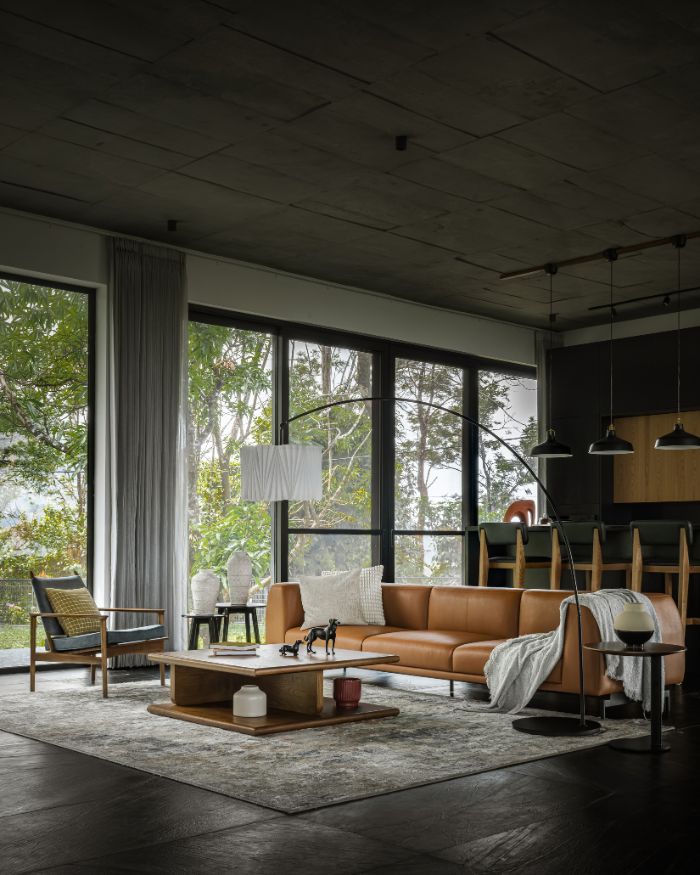
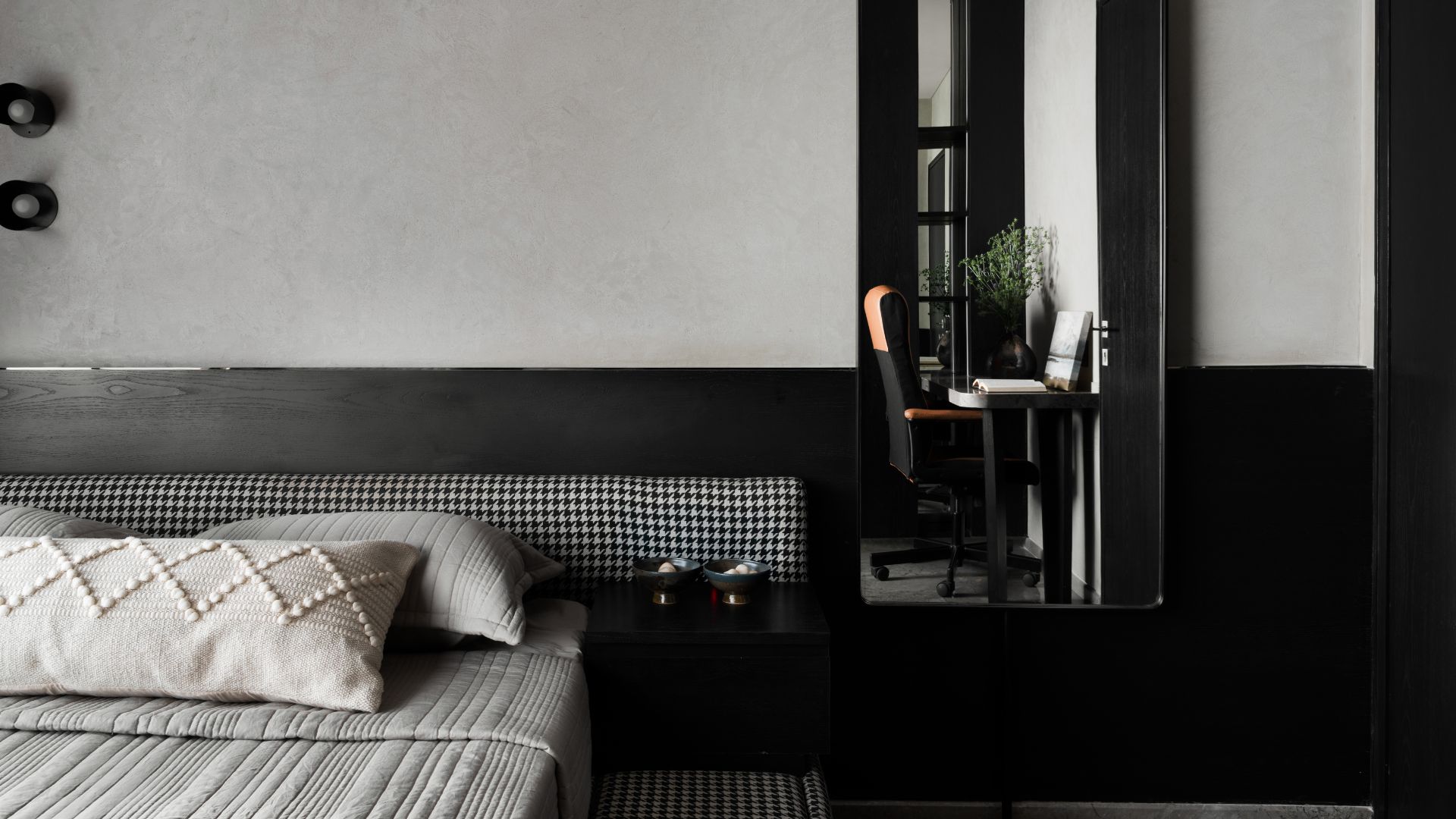
The son’s bedroom offers a quieter retreat in charcoal and grey, grounded with wood and textured fabrics; Photography by 21 Frames by Mahendra Jangid

Satori, by design

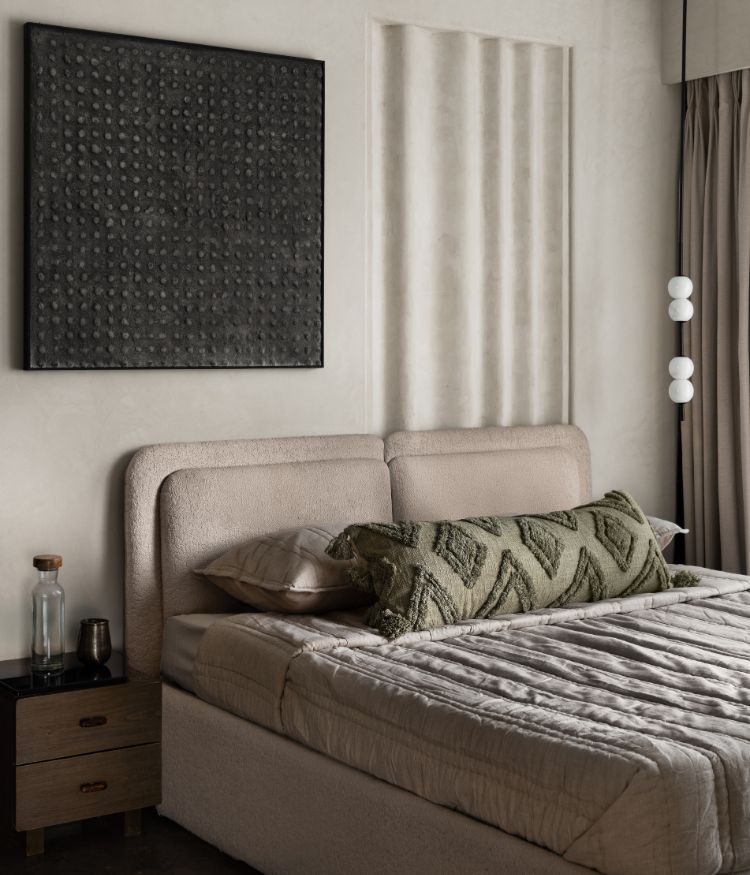
The private quarters carry this sensibility forward, but with more room for personality. Each bedroom shifts tone slightly, tuned to its owners without breaking the overall continuation of being peaceful and put together. The daughter’s room leans into blush hues and softer edges, playful but not overtly so. The son’s room, in contrast, settles into charcoal and greys, anchored by wood and texture, creating a more inward-looking space. 

The master bedroom returns to a Japandi-inspired aesthetic, where lime plaster, wood, and stone come together in a way that feels almost meditative. A secondary suite in blush and ivory softens things further, its curves and materials making it feel intimate. Across all rooms, the design holds back just enough: panelling is minimal, lighting is indirect, and even structural quirks like ceiling beams are absorbed into the design. What emerges is a home that leaves space for change, for accumulation, for life to settle in slowly. And in that, it finds its balance.
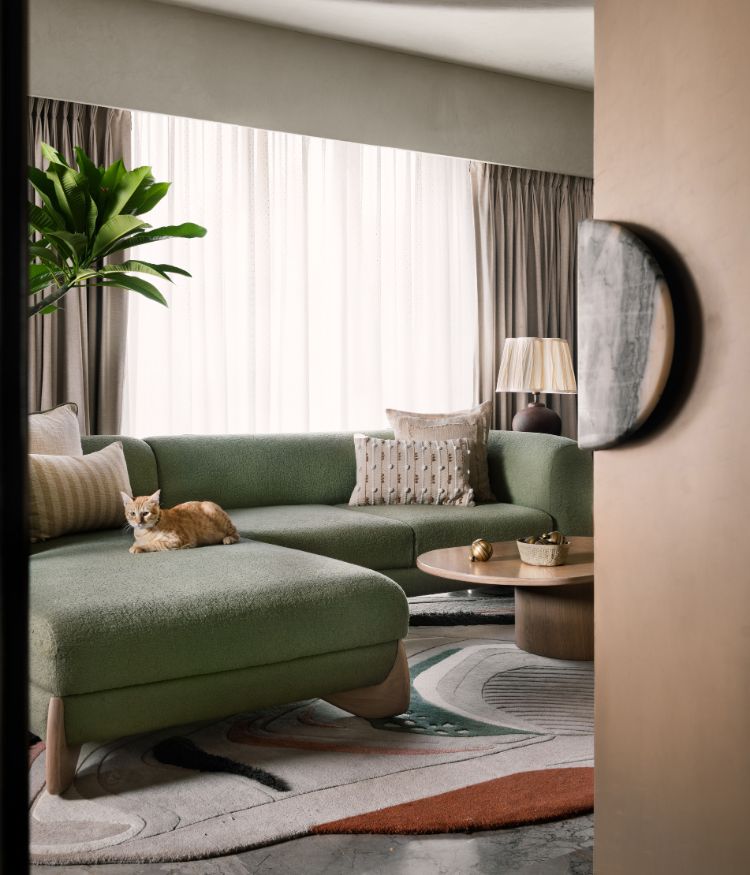

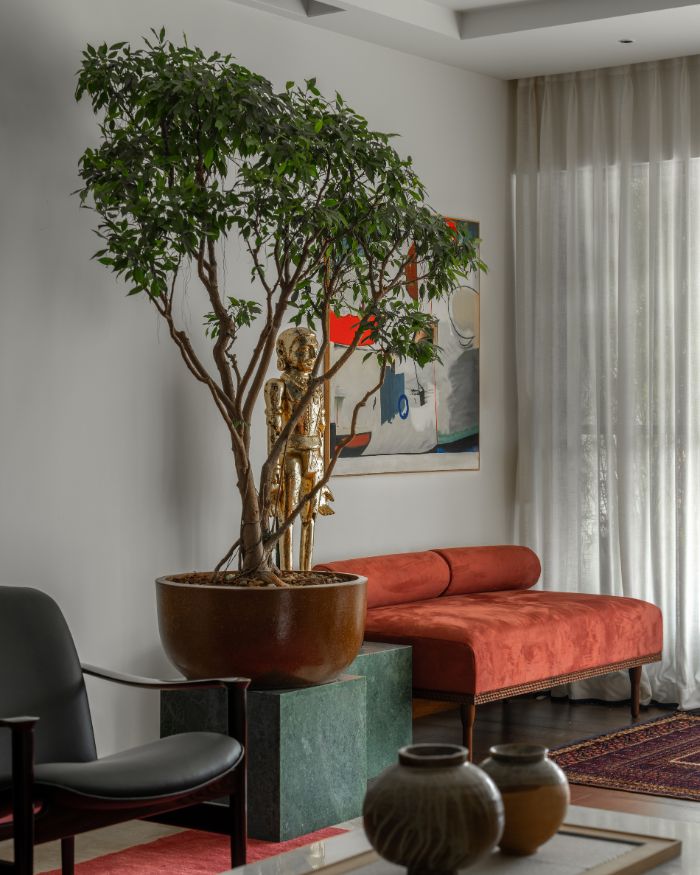
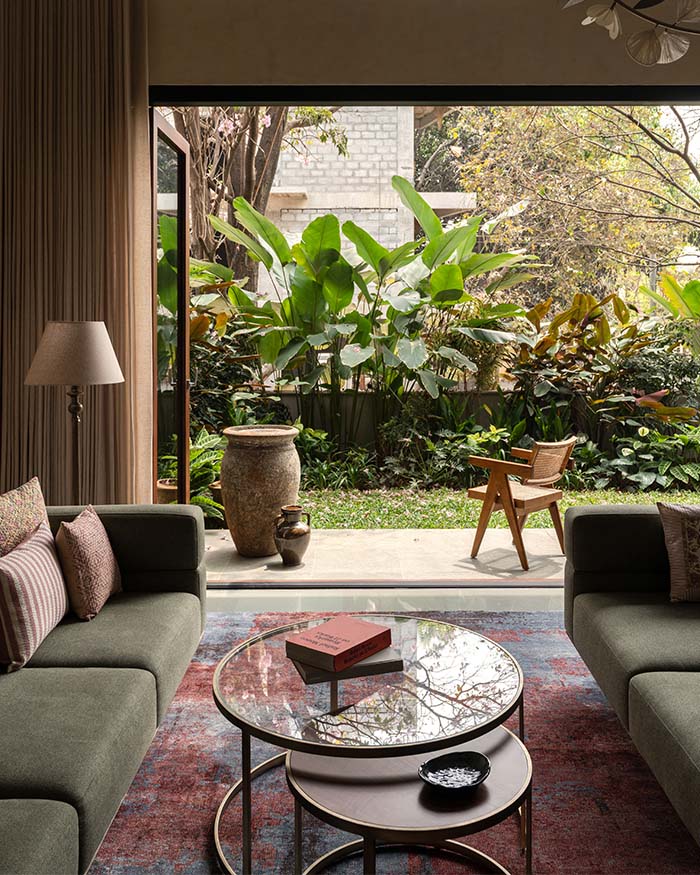
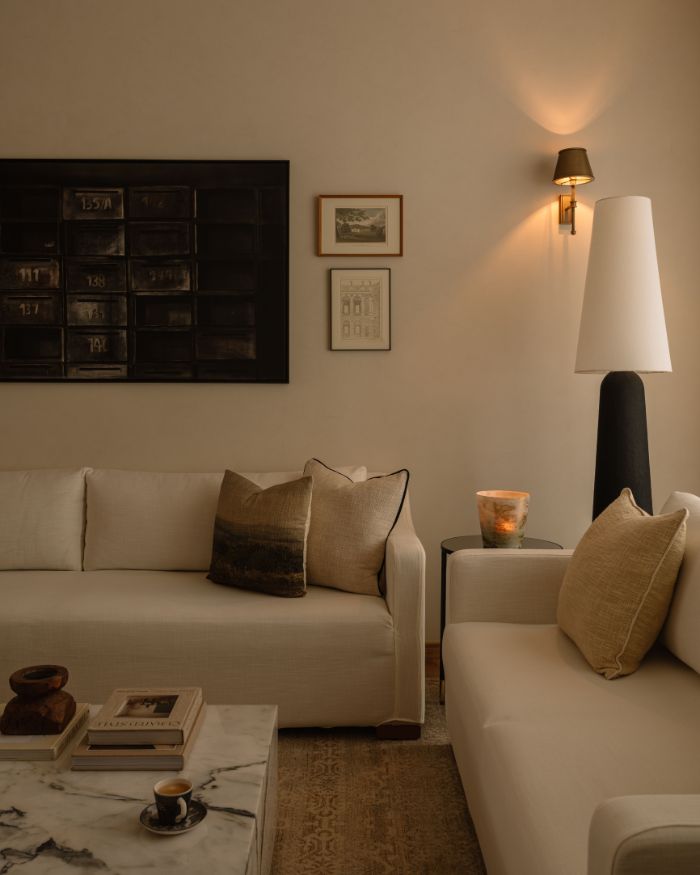
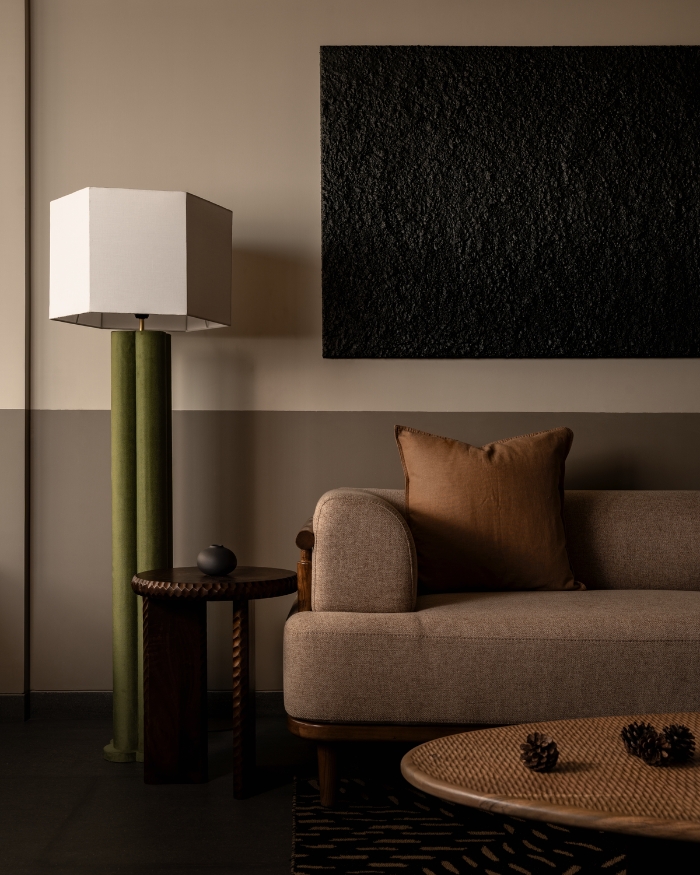
Throughout, an earthy and understated palette tied the home together, allowing natural materials, subtle textures, and handcrafted details to shine; Photography by 21 Frames by Mahendra Jangid
SHARE THIS ARTICLE

You May Also Like

Watch

No results found.

Search
Close this search box.