Restoring memory in Old Calcutta

Amid Kolkata’s storied lanes, a 1900s mansion breathes again — preserved by Ajay Arya with equal parts devotion and craft

BY

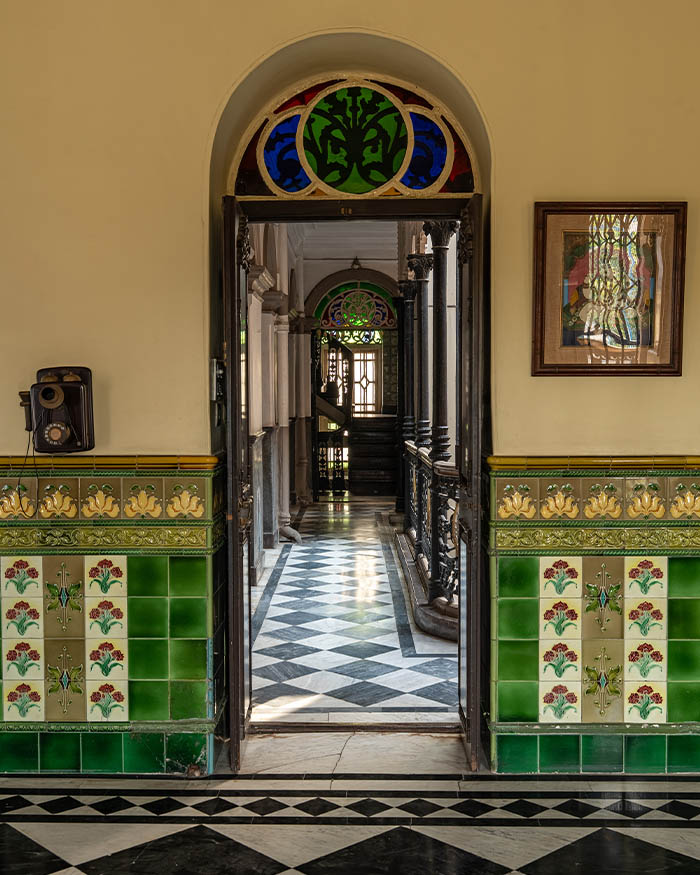
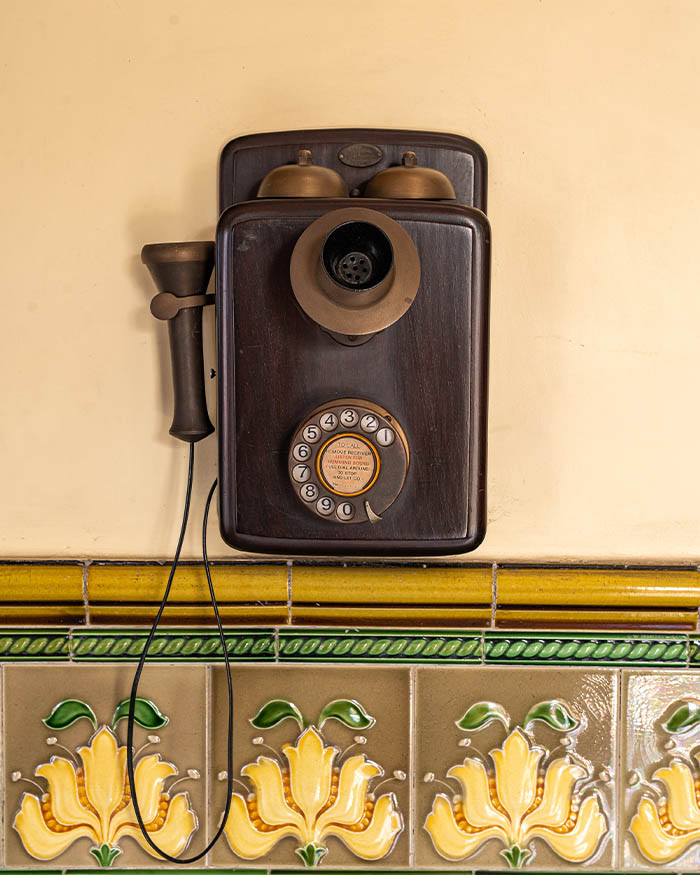
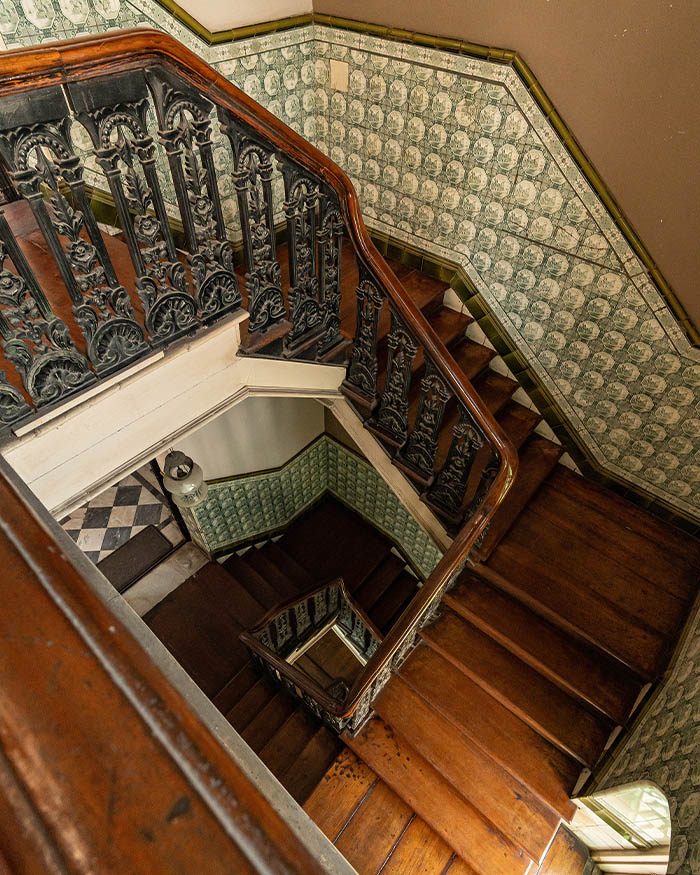
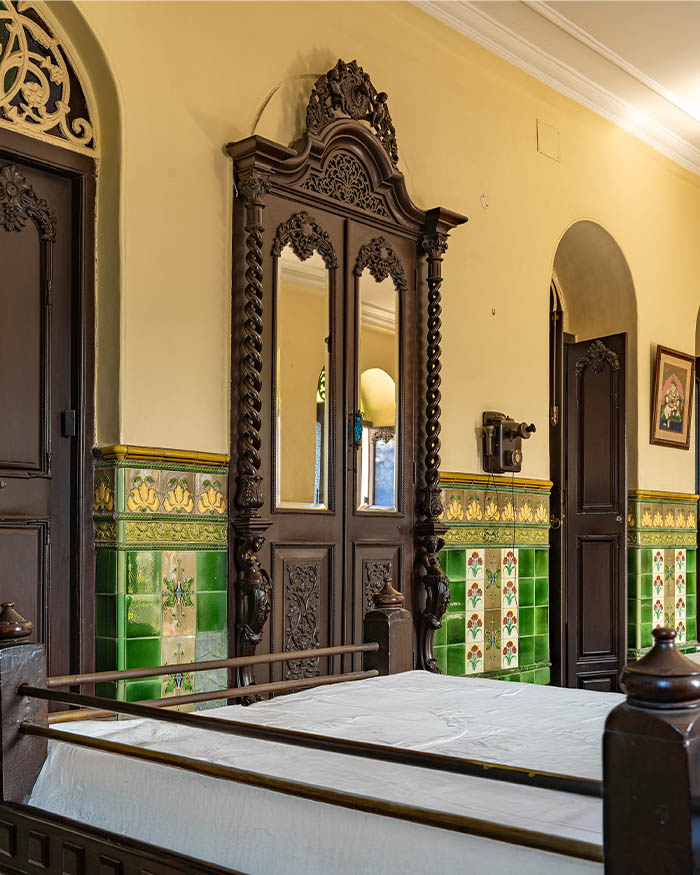
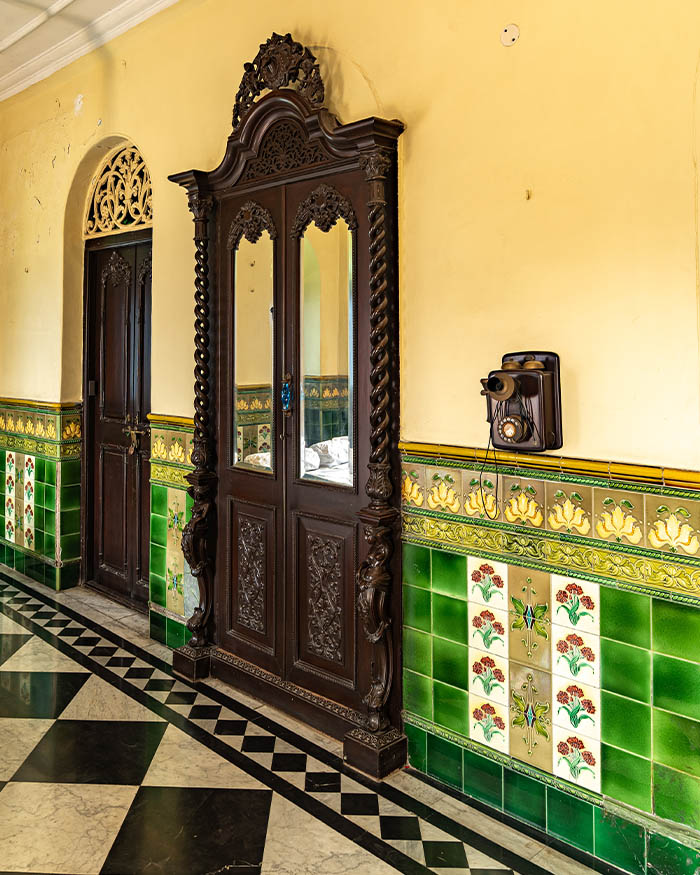
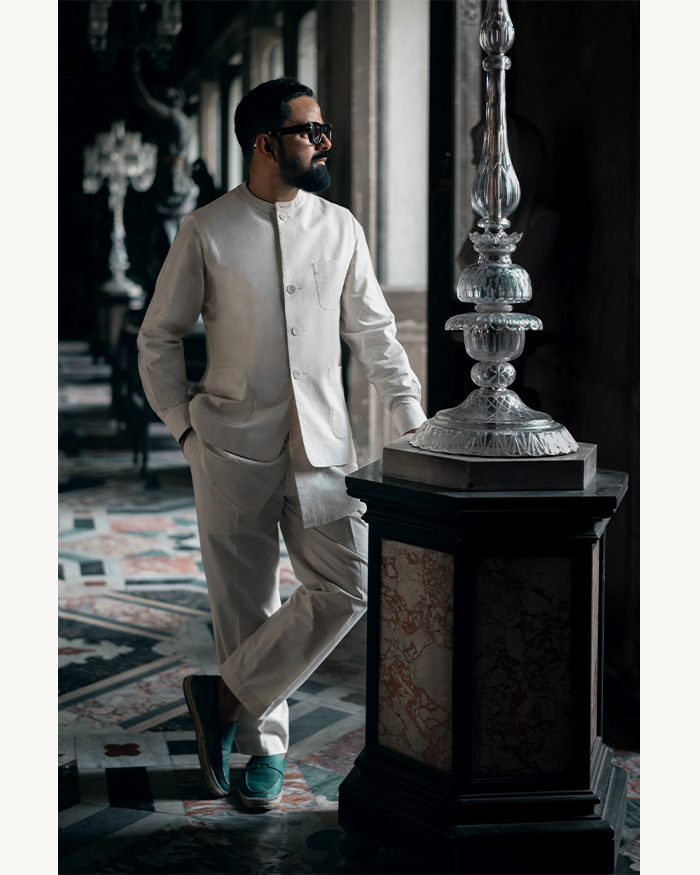
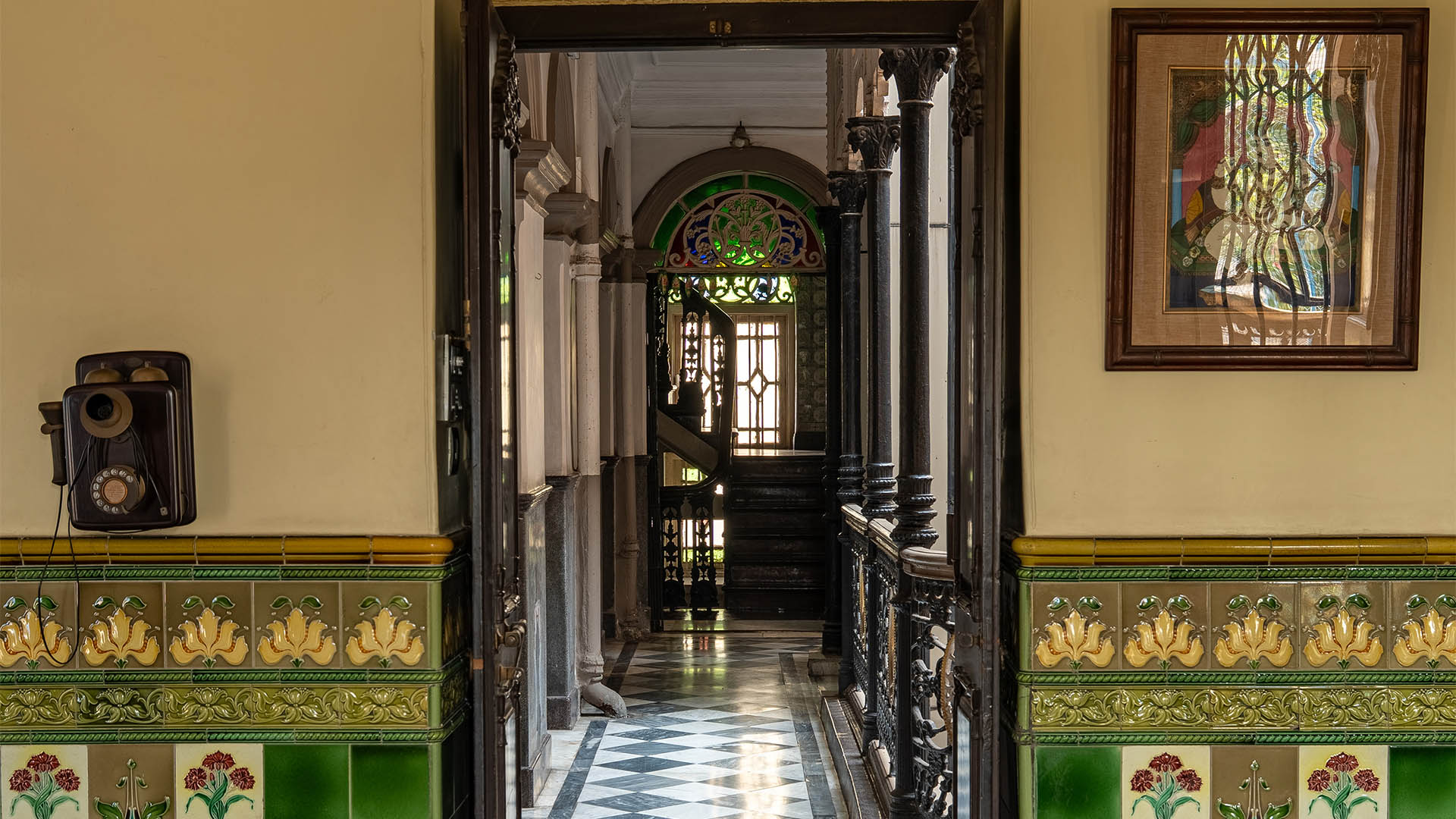
Long before the home’s walls felt the first touch, tracing their weathered brushstrokes, or heirlooms were passed from aged hands into younger ones, there persisted a portrait of a family’s life. In restoring this early 1900s colonial mansion in North Kolkata, Ajay Arya, Principal Interior Designer and Founder at A Square Designs, leaned on memory as an unassuming yet faithful ally. Encompassing 10,000 sq ft, The Ancestral Home flickers to life in his gaze like a quiet act of recognition. The historic quarter of Burrabazar, once the city’s epicentre, is now a labyrinthine tangle of streets and ancient façades standing shoulder to shoulder — the residence at hand tucked behind its ornate frontage, peering into the mercantile scene. With the family relocating from their bari to a condominium, Ajay, assumed the role of custodian, balancing what the house must remember and what it could release to follow the family forward. Speaking to the inimitable nature of the home’s domestic vocabulary, Ajay notes, “The architraves, solid wood doors, cast iron work, stained glass and handmade Portuguese tiles — over a century old — are elements beyond replication in their craftsmanship. It would, in all honesty, be unfair to rip these away from the house. So instead, our interventions prioritised authenticity over mere cosmetic renewal.”

“I felt answerable to both the past and the future, and I rest easy knowing that we gave it our all. How fortunate we must be to have something so precious to safeguard and pass on to generations that will walk in through these doors"

Photography by Rohit Ganguly

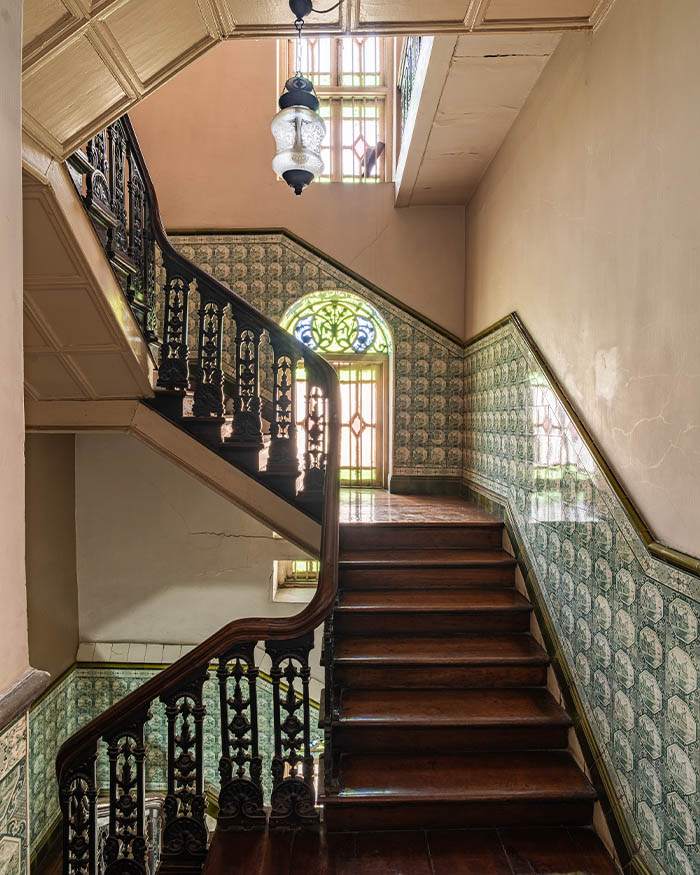
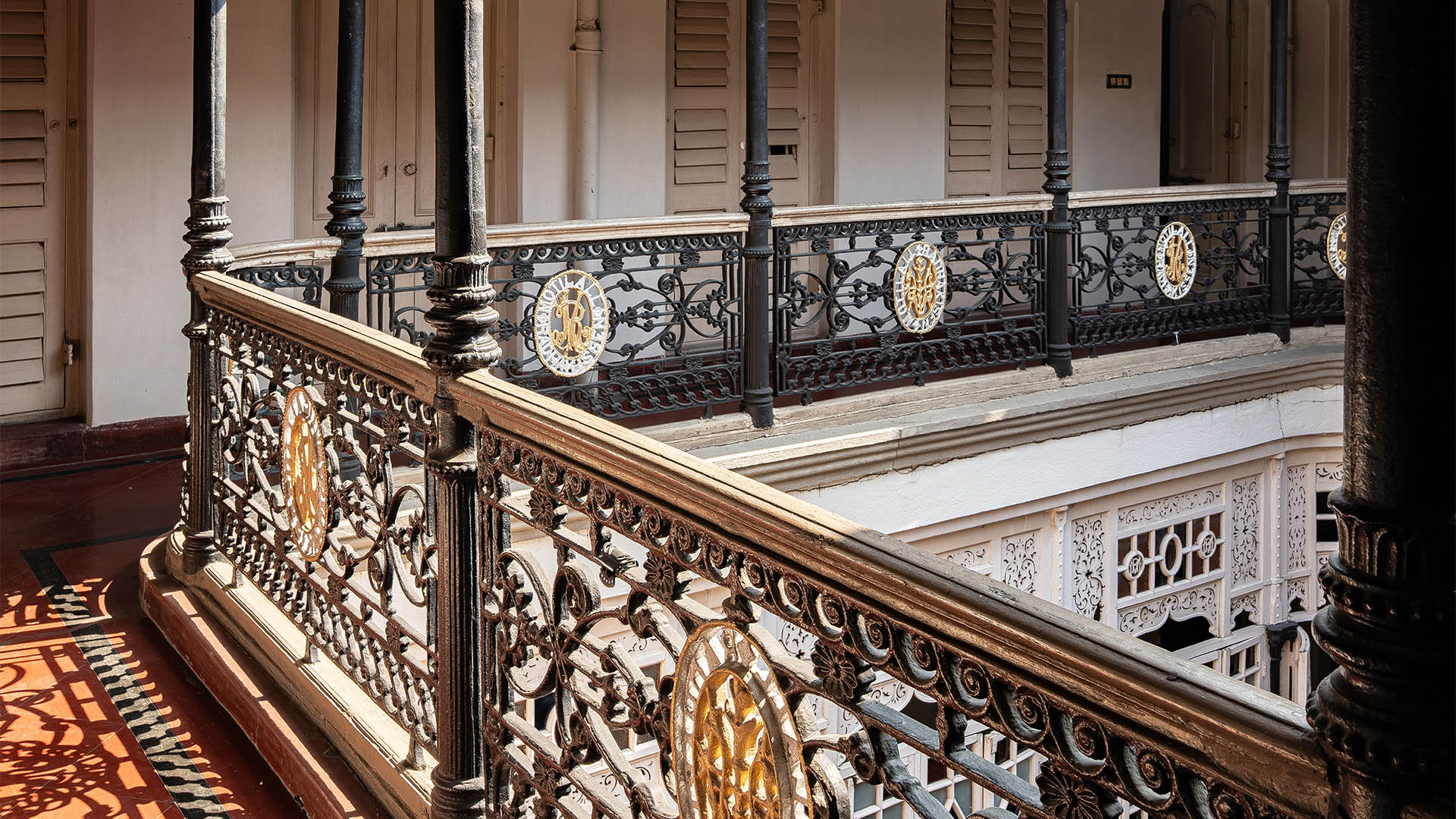
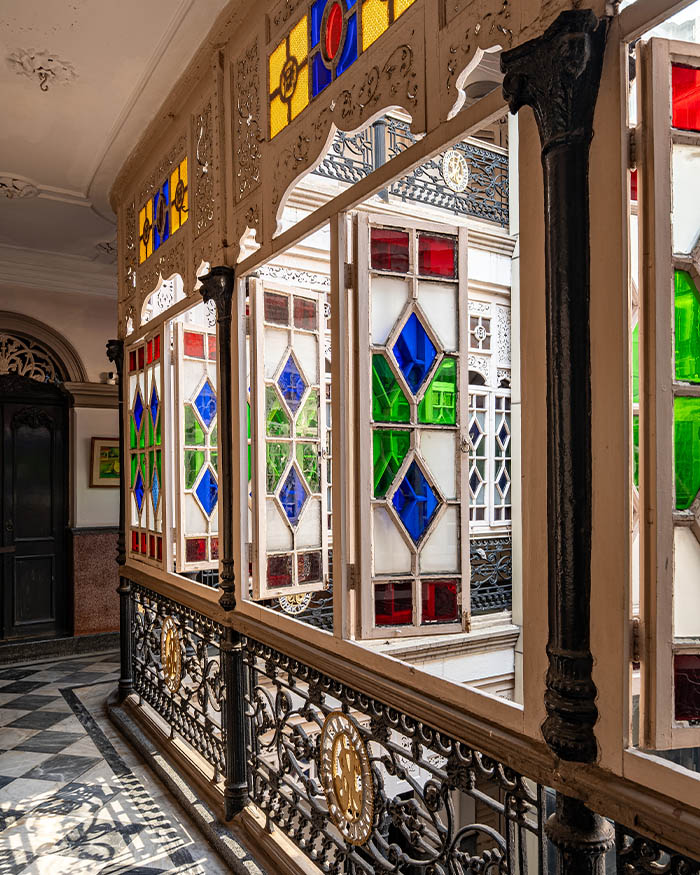
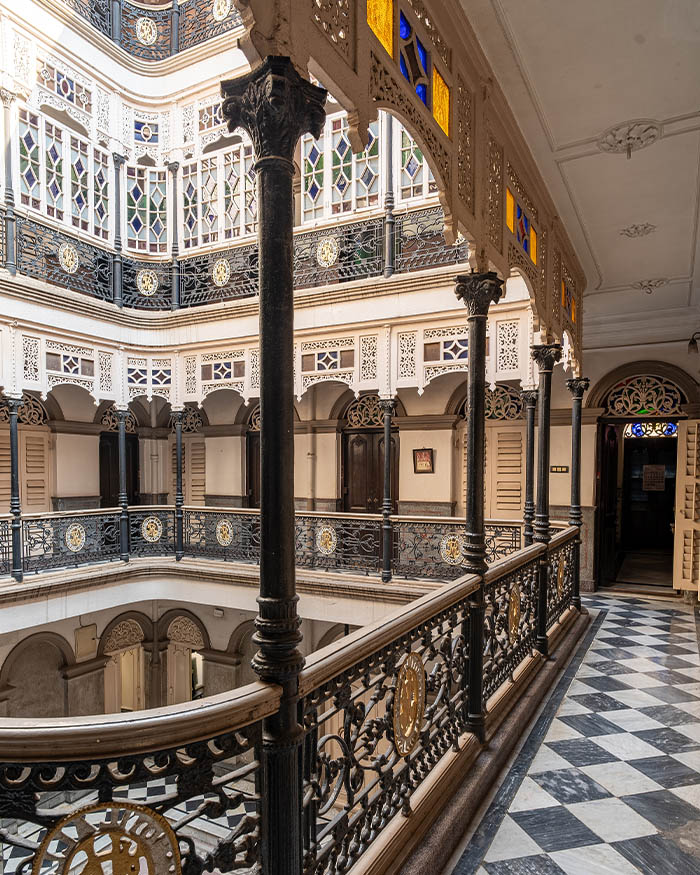
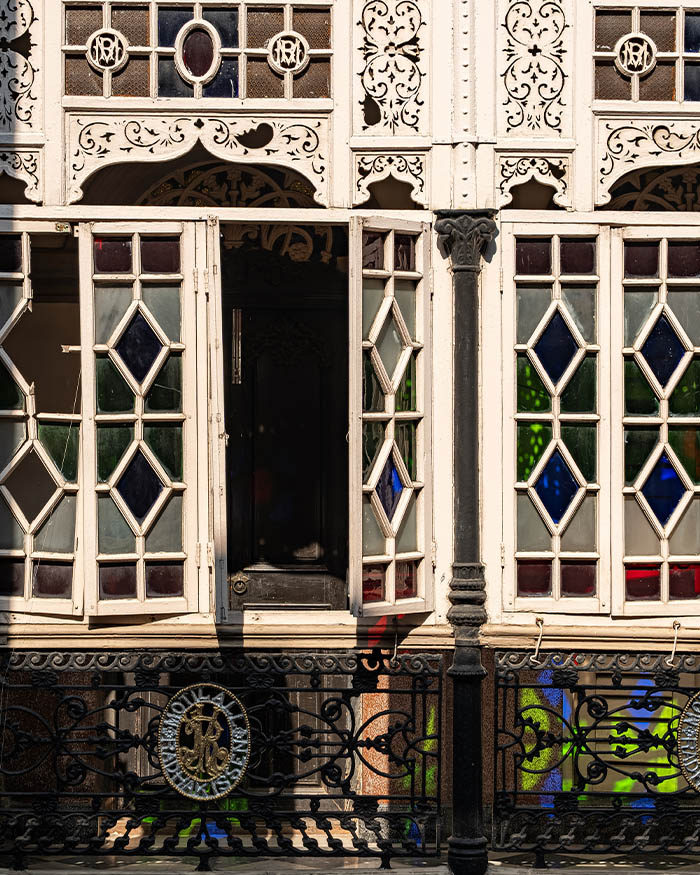
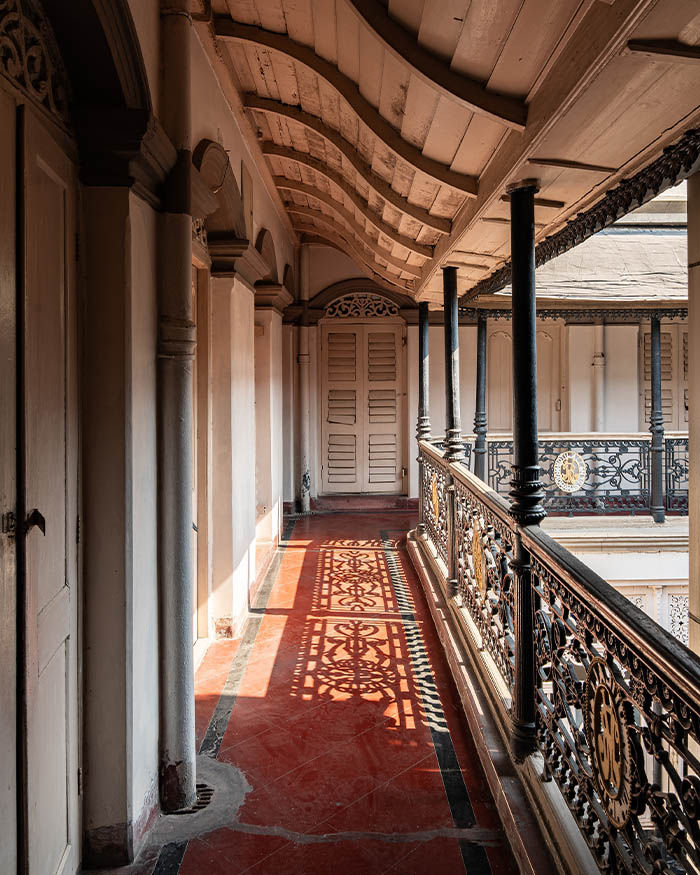
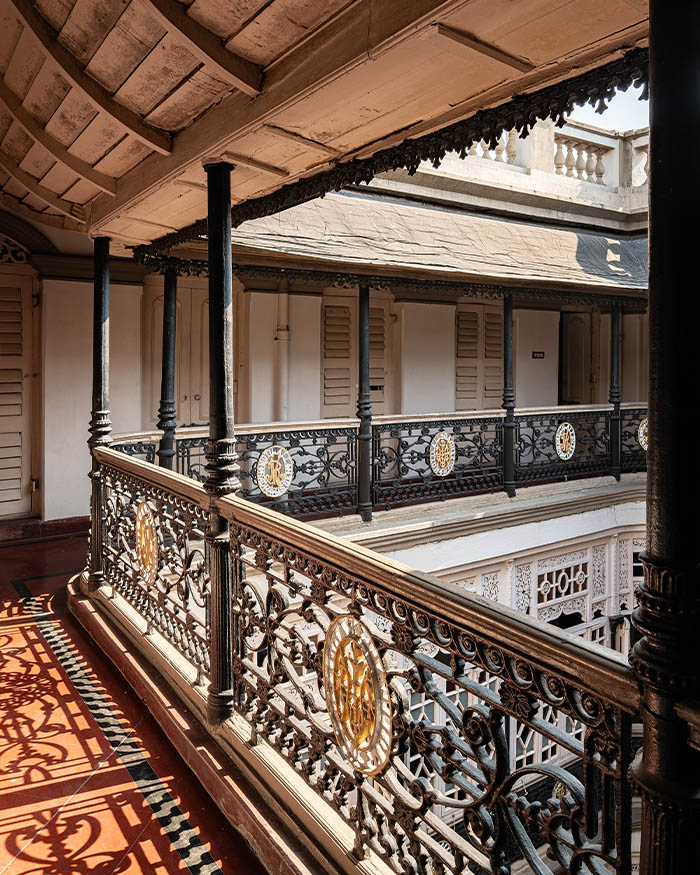
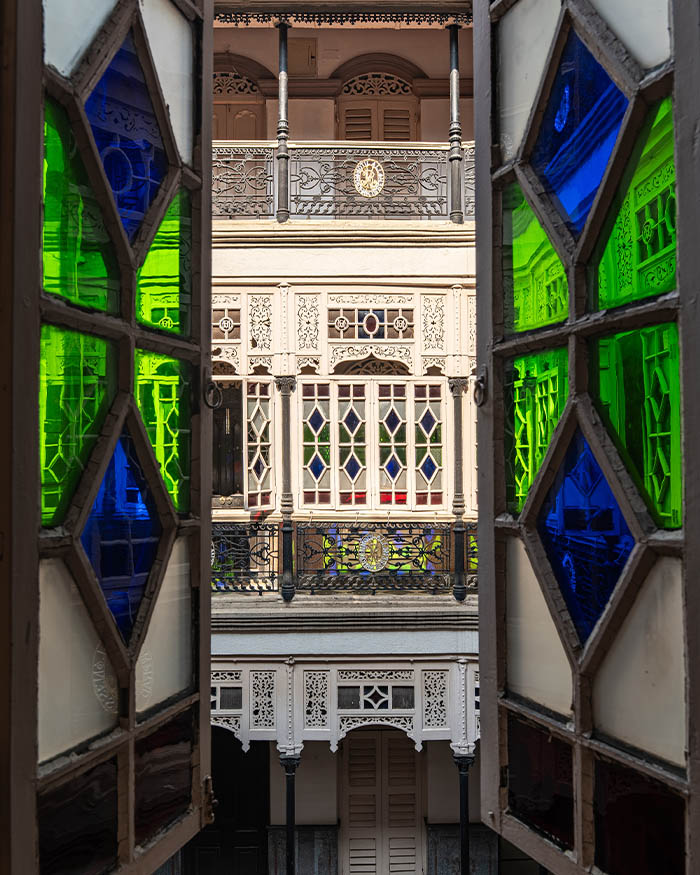
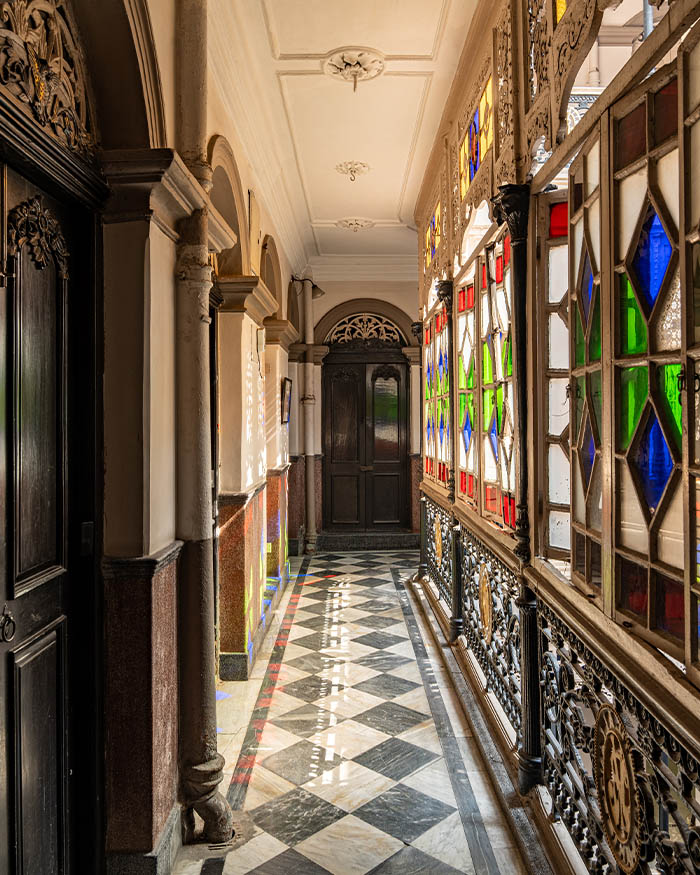
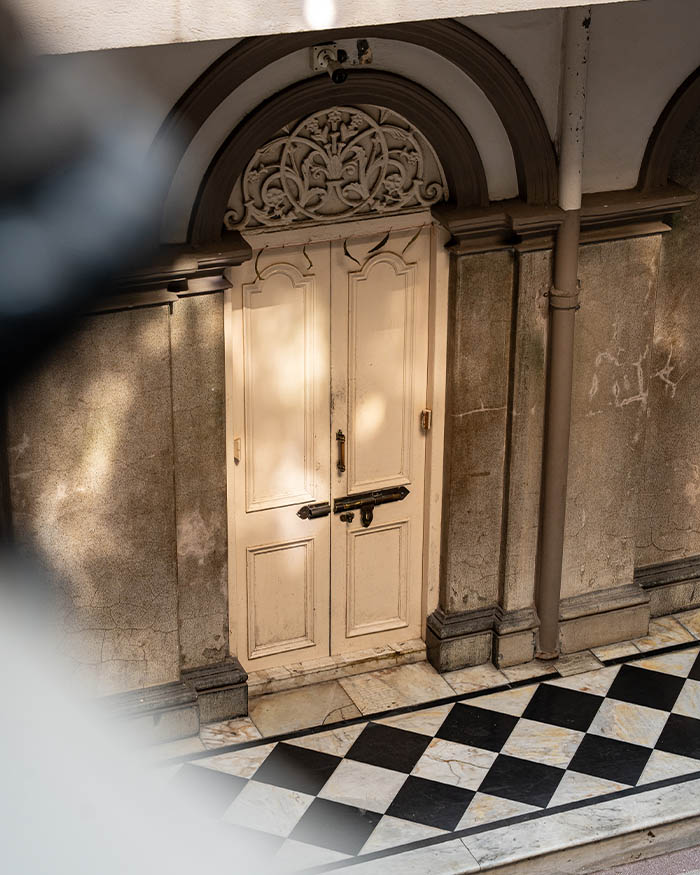
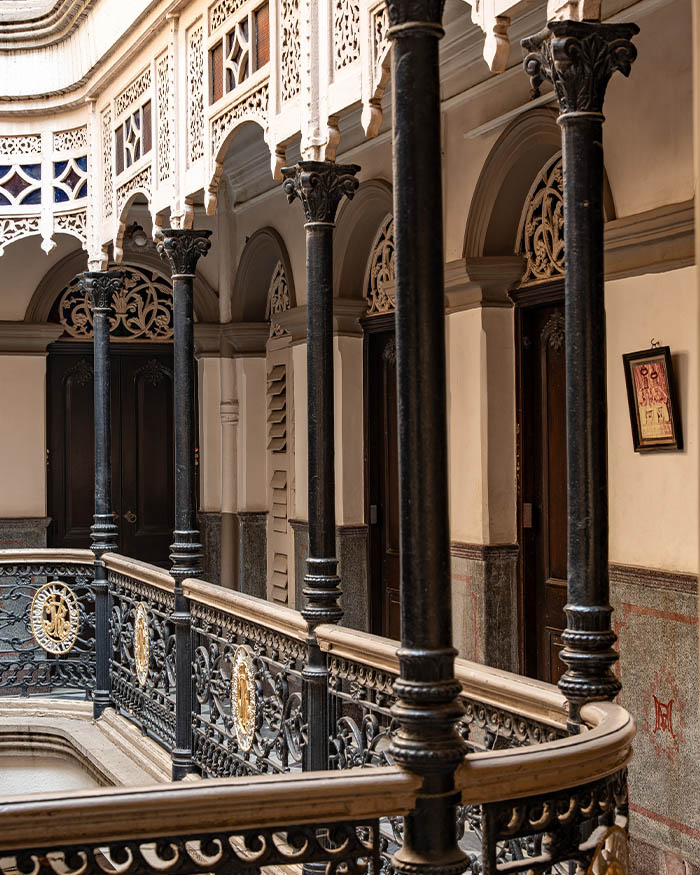
From within the courtyard, with its black-and-white marble harlequin floors, the great house rises across levels into an embroidery of iron fretwork, decorative emblems and sculpted balustrades — its layered skin alive with light, air and privacy. Along the passageways, stained glass infills cast fleeting pools of crimson, emerald, sapphire and amber. The stairwell with its solid wood construction nods to the family’s ties to Yangon (then Rangoon) and the timber trade, which influenced many of the residence’s finishes and furniture. Patina- clad, hand-painted Portuguese tiles in shades of olive and sage green rise alongside the cast iron railing. At the end of a two-year odyssey, Ajay carries with him a sense of fulfilment: “I felt answerable to both the past and the future, and I rest easy knowing that we gave it our all. How fortunate we must be to have something so precious to safeguard and pass on to generations that will walk in through these doors.” Even as the mansion draws the curtain on its domestic chapter, it prepares to welcome citizens as a gallery, cultural venue or film location in due time. Through adaptive reuse, Ajay’s practice tenderly returns a home unto itself, affirming that even as new memories come alive, they can do so alongside the old.


Daylight plays hide-and-seek in the form of lace-like reflections that fall across the restored harlequin floors; Photography by Rohit Ganguly
SHARE THIS ARTICLE

You May Also Like

Watch

No results found.

Search
Close this search box.