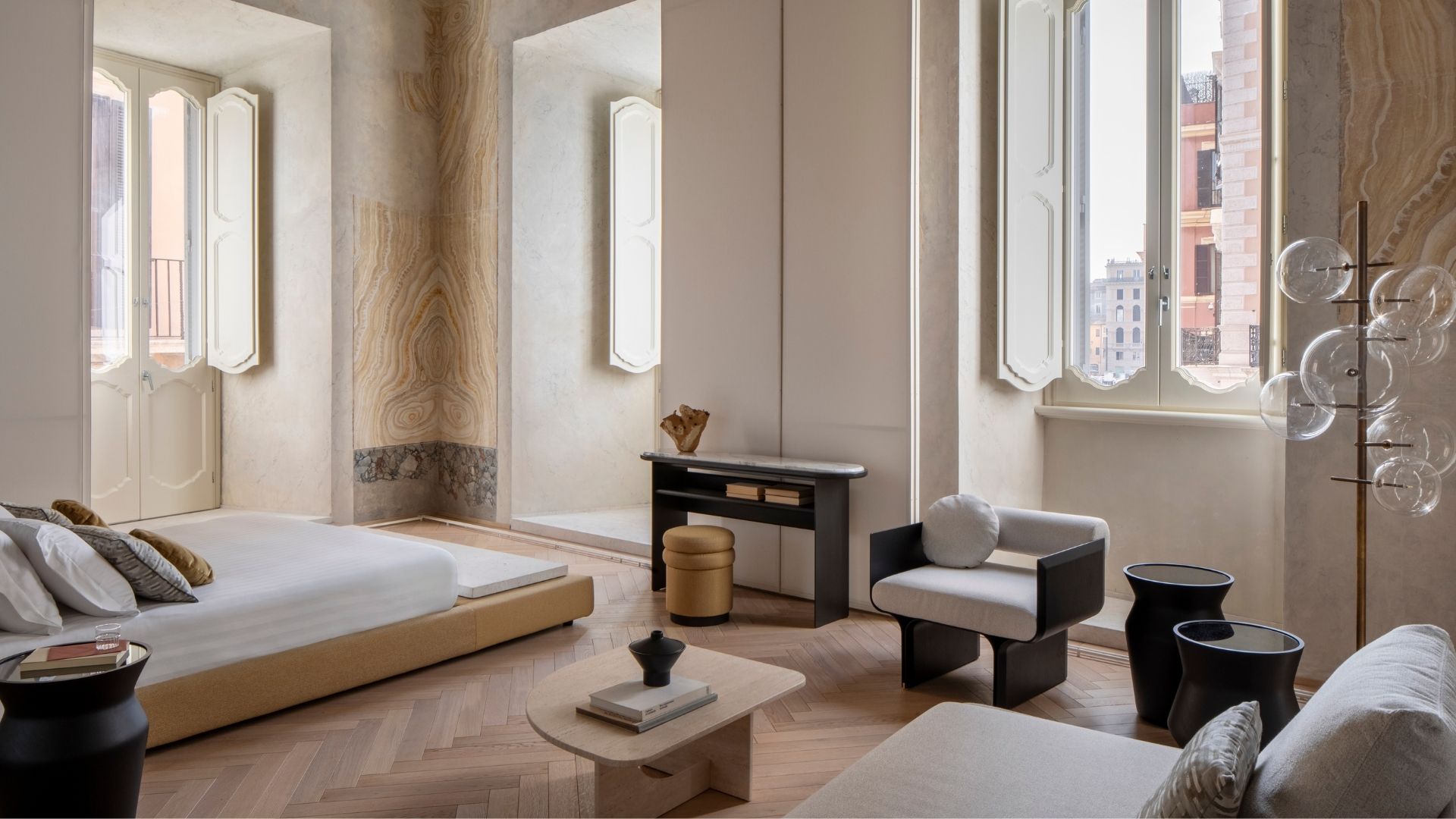
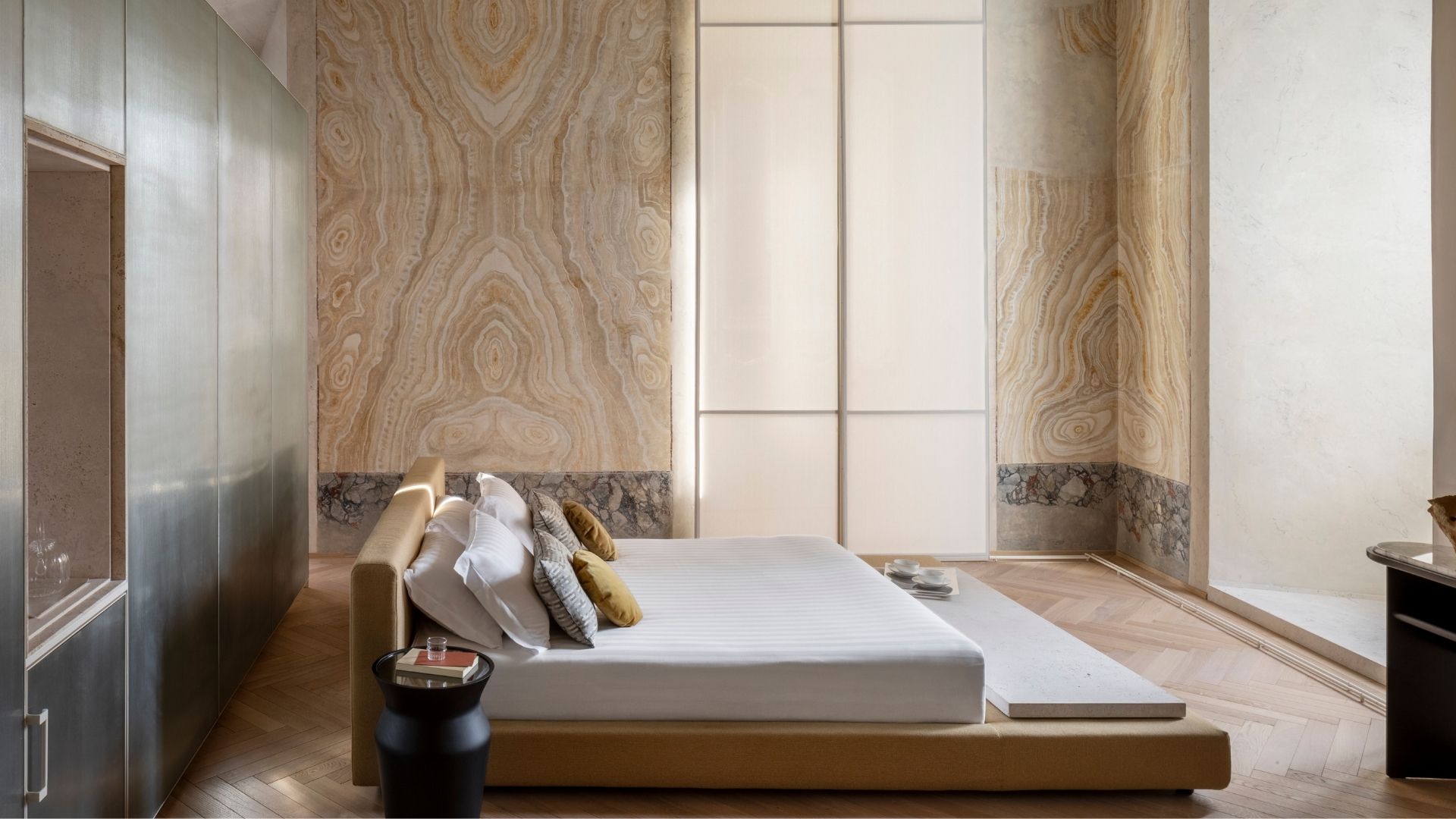
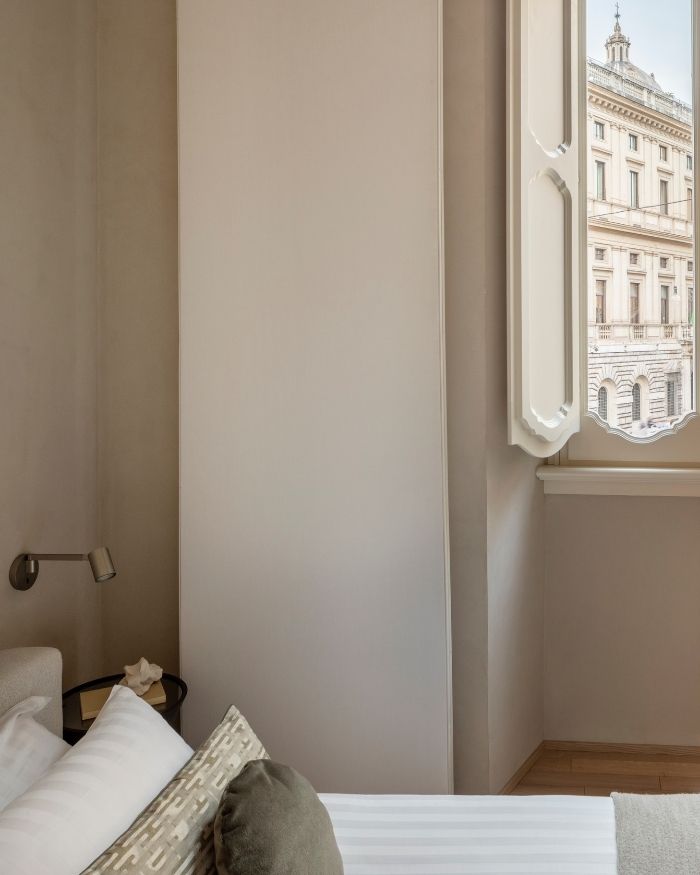
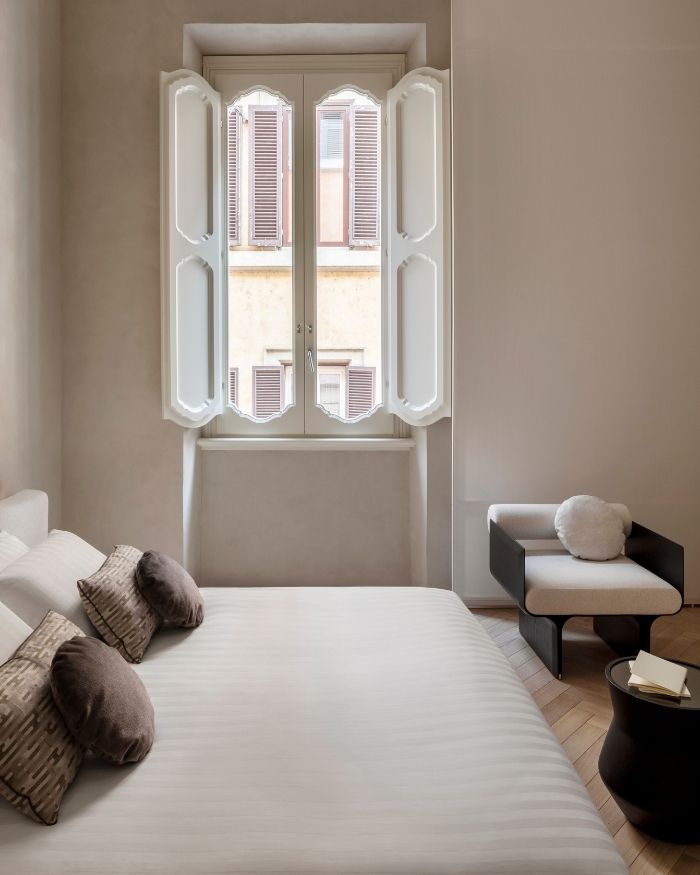
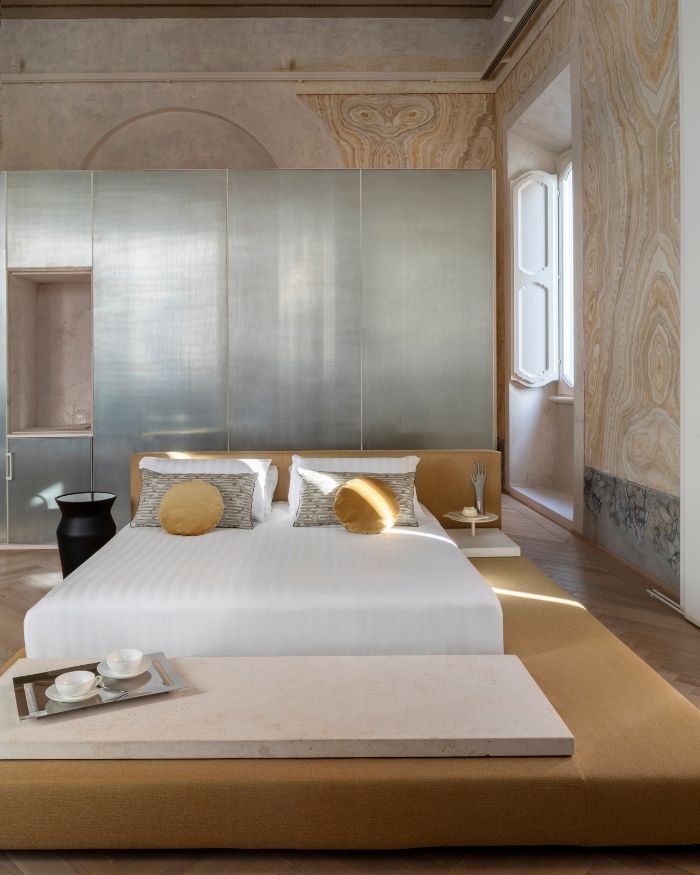
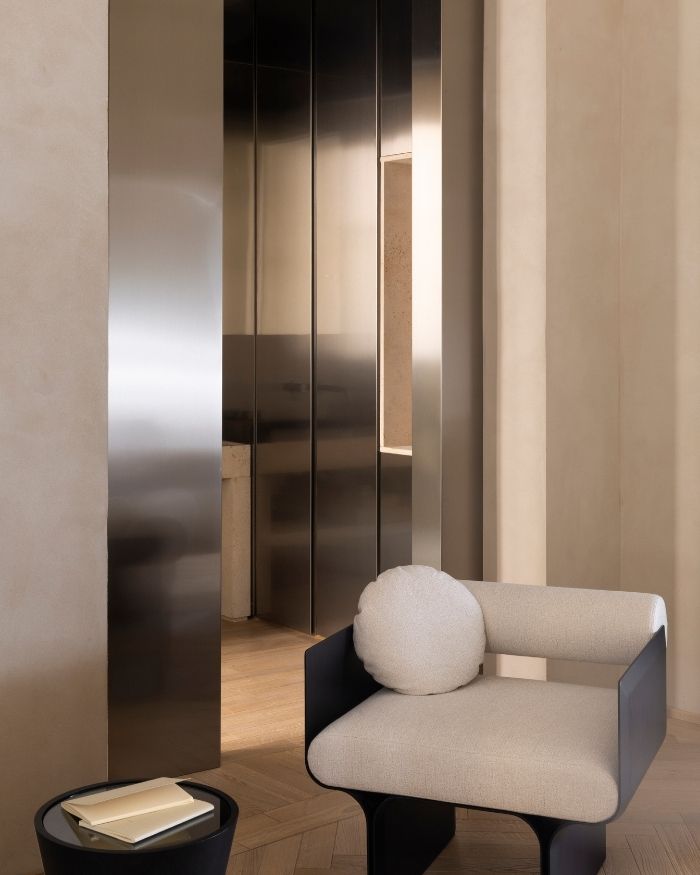
Framed by tall windows and expressive stone surfaces, the room draws in natural light to create a calm, gallery-like atmosphere where historic architectural details meet a restrained material palette. Featuring a custom Letto bed based on a design by architect Boragina, the Sensei Console by Tollgard + Castellani, Dama and Selce coffee tables, Studiopepe’s Stami Lounge armchair and Stami Pouf, and the Bolle Stelo lamp by Massimo Castagna; Photography by Serena Eller of Eller Studio

Hotel Trame wasn’t built in a day

A 16th-century Roman palazzo finds a new rhythm as Hotel Trame

BY

A century ago, in 1926, a routine demolition in Rome peeled back layers of time to reveal the Area Sacra of Largo Argentina, where four Republican-era temples held their ground beneath the modern city. Today, just steps away from that archaeological palimpsest, on Via Monterone in the Sant’Eustachio district, sits Hotel Trame. Led by architect Valeriano Boragina, it occupies a 16th-century palace that has outlived noble lineages, urban upheavals, and even the dramatic unearthing of the ruins it now overlooks. You arrive and immediately slip into the continuum here and witness how history persists. The building itself has had a long, slightly dramatic life: commissioned by the Roberti family, passed through the hands of the Colonna Conti and later the Datti, and somehow surviving 19th-century demolitions that reshaped much of the area around Largo di Torre Argentina. Fast forward to now, and that same structure has been reworked into a 13-room boutique hotel furnished by Gallotti&Radice that feels like a conversation across centuries. 

A custom Letto bed based on a design by architect Boragina anchors the room, accompanied by the Sensei Console by Tollgard + Castellani and the sculptural Dama coffee table by Studio G&R; Photography by Serena Eller of Eller Studio

Moving through history, room by room

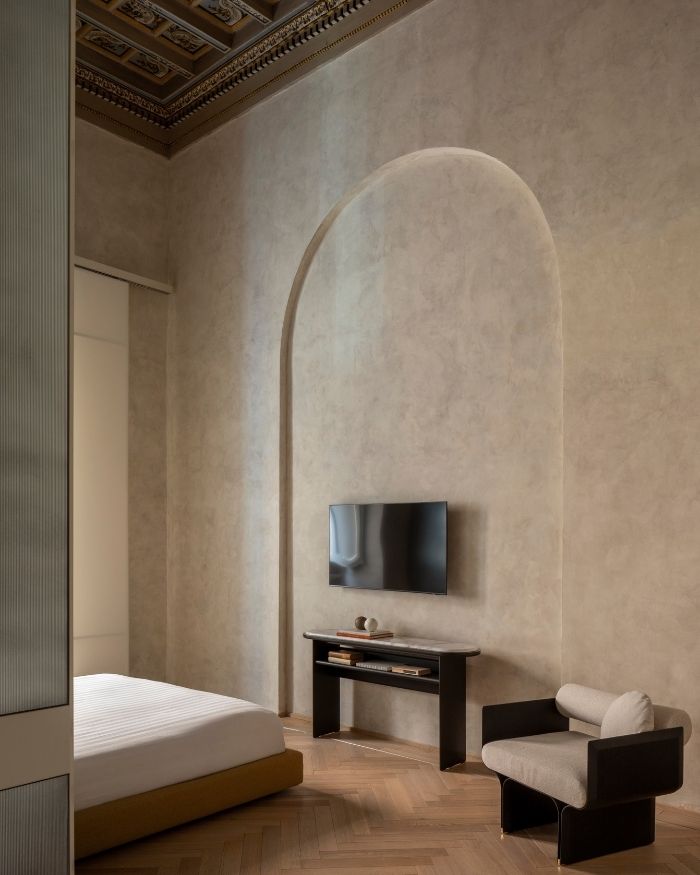
Beige and white have long been shorthand for minimalism, often reduced to a visual trope. It’s rare, then, to see the same palette being used with intent. Hotel Trame positions itself as that exception. The interiors reward attention as they reduce the gaze of spectacle on the structure. Once the suspended ceilings were removed during restoration, what emerged was a set of coffered wooden ceilings with floral frescoes that had been patiently waiting to be seen again. Instead of competing with them, the design leans in. 

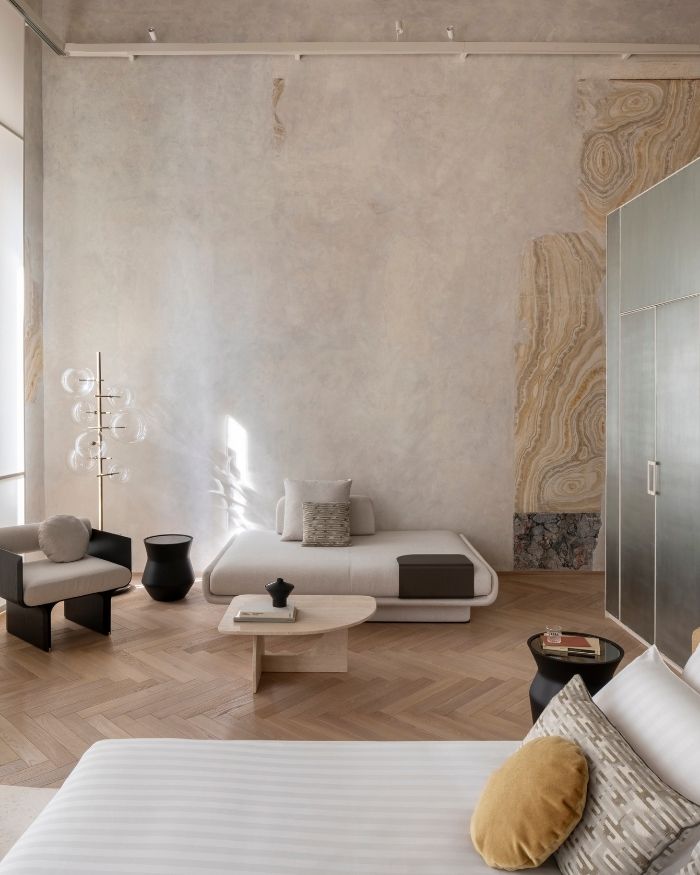
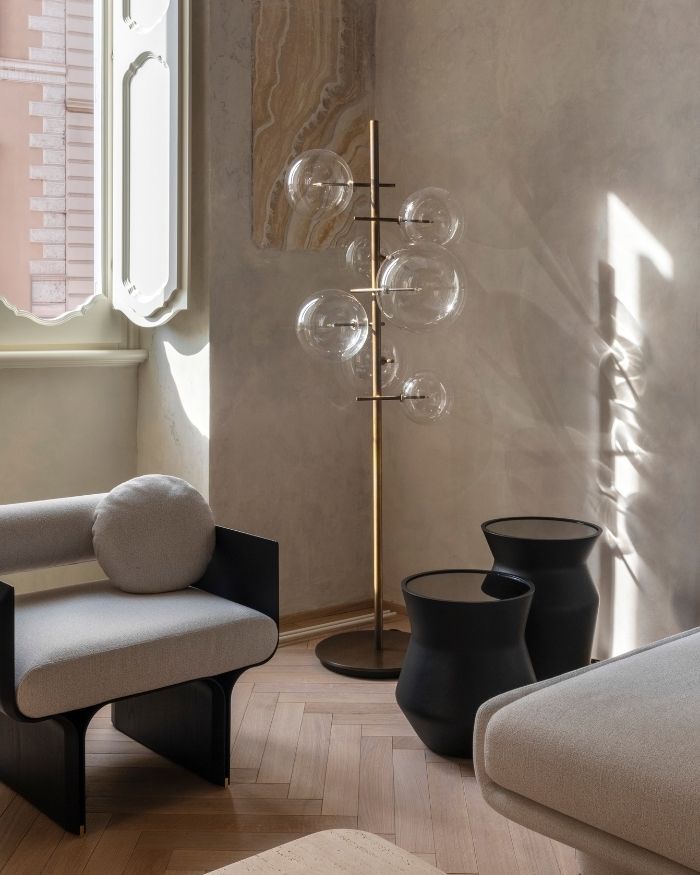
Light is used almost academically here: angled, softened and directed to make you notice the grain of wood, the depth of plaster mouldings, the slight irregularities that signal age rather than the imperfections. What’s particularly satisfying (especially if you’re the kind of person who notices floor patterns in old buildings) is how the material palette carries the narrative forward. Herringbone oak parquet grounds the rooms, while lime plasters in warm Roman tones keep the walls from feeling inert. Then come the interruptions: bathroom volumes inserted as lower, self-contained structures, rendered in travertine, steel and glass. They don’t pretend to belong to the 16th century. You can read the intervention clearly, like a footnote in a well-annotated text.

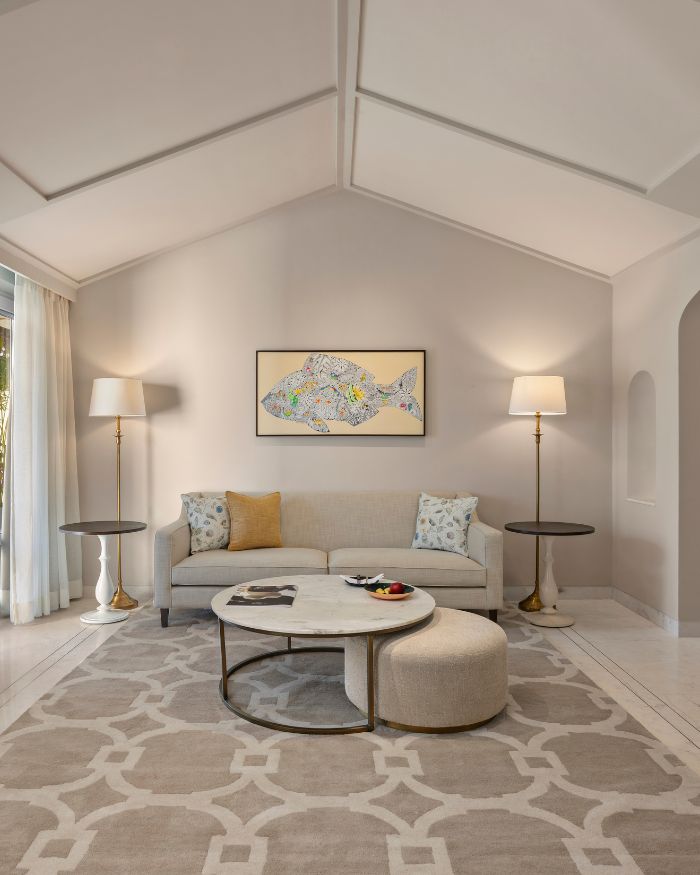
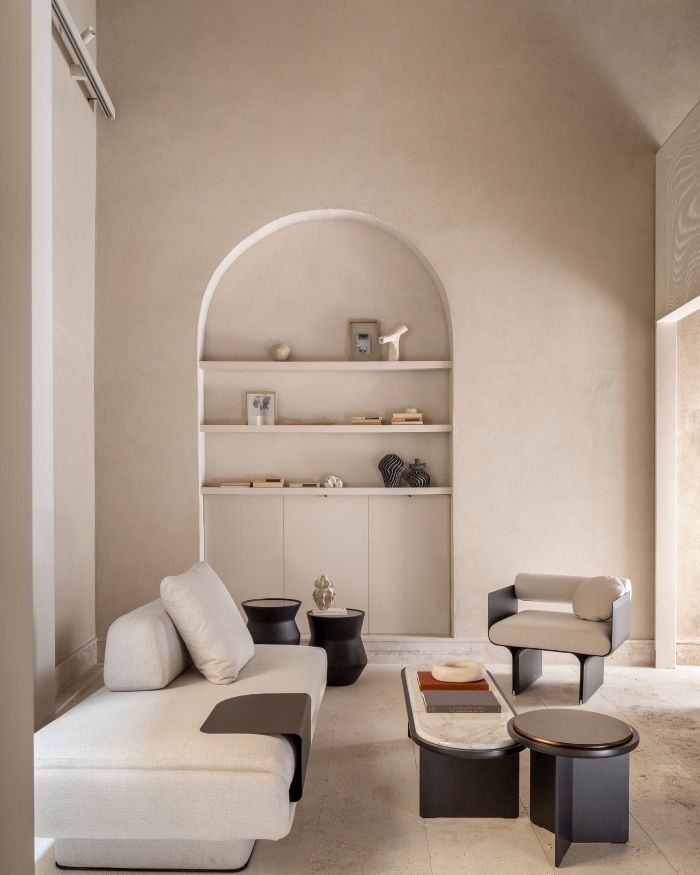
A palette of soft neutrals and sculptural silhouettes defines the lounge, where Lilas Mosaïque seating by Dainelli Studio is paired with Studiopepe’s Stami Lounge armchair and the Sensei and Dama coffee tables; Photography by Serena Eller of Eller Studio
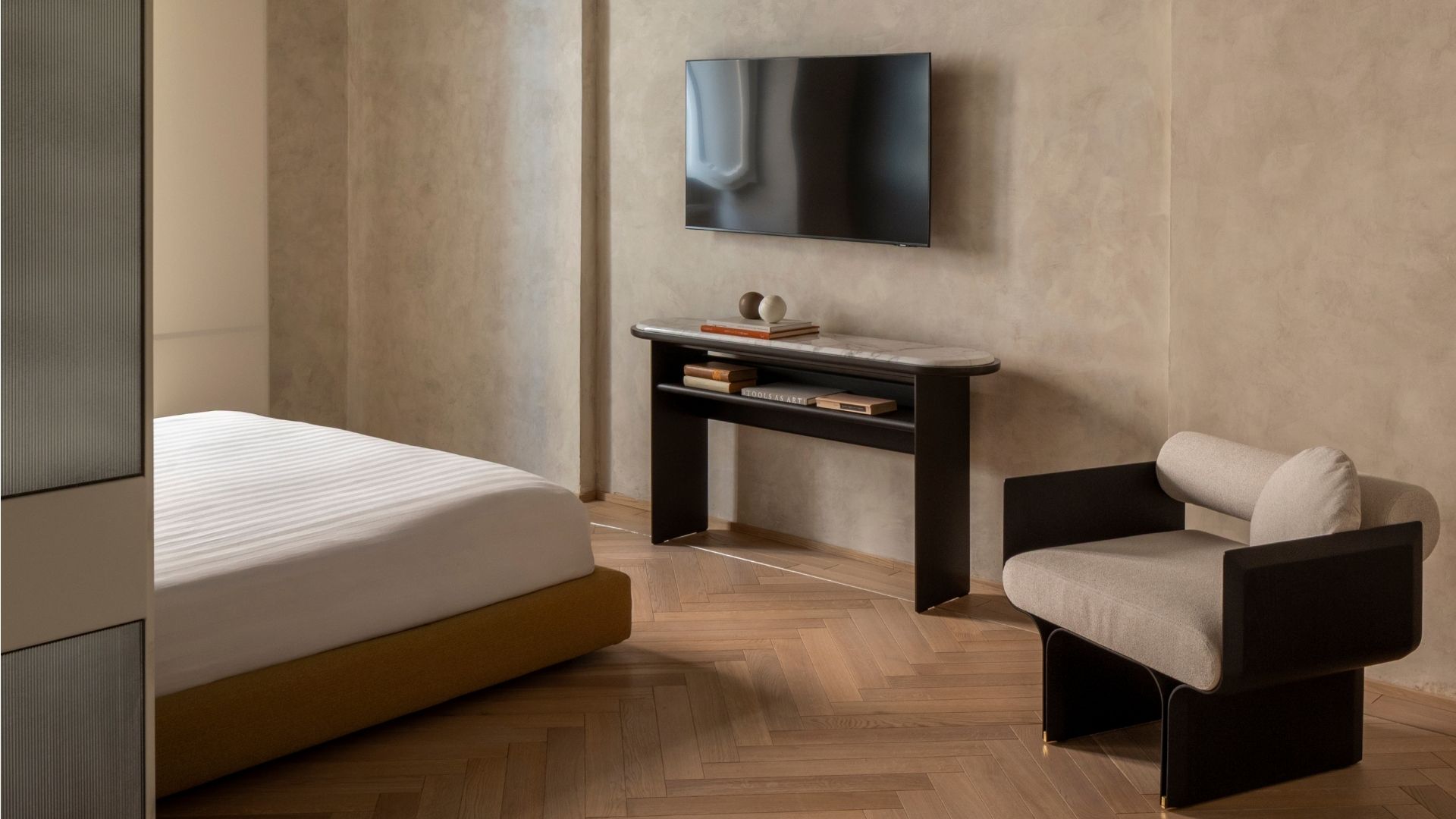
Warm timber herringbone flooring and softly textured walls frame the Stami Lounge armchair by Studiopepe, while the Sensei Console by Tollgard + Castellani lends a sculptural presence beneath the television; Photography by Serena Eller of Eller Studio

Inside a palazzo’s second life

The layout of the hotel leans into the logic of the original piano nobile, starting with the main floor of aristocratic residences, where most of the experience unfolds. There’s a circular breakfast room that feels almost diagrammatic in its symmetry, a lounge that foregoes over-design, and a smart working area that acknowledges the modern-day travellers without overcommitting to the whole work-from-anywhere aesthetic. The rooms themselves vary in layout, which is a polite way of saying they follow the quirks of the original structure rather than forcing uniformity. It’s a choice that makes the stay feel less standardised, more discovered.

What ties it all together is the idea embedded in the name Trame, which is French for the framework. Not in a poetic, overreaching way, but quite literally in how the project weaves together preservation, adaptation and contemporary hospitality. Backed by the Piperno family and infused with the design sensibility of Gallotti&Radice, the hotel lets the tension between past and present coexist, occasionally collide, and, at their best moments, amplify each other.

Read more: Inside Anantara Palazzo, where the city grid does the hosting
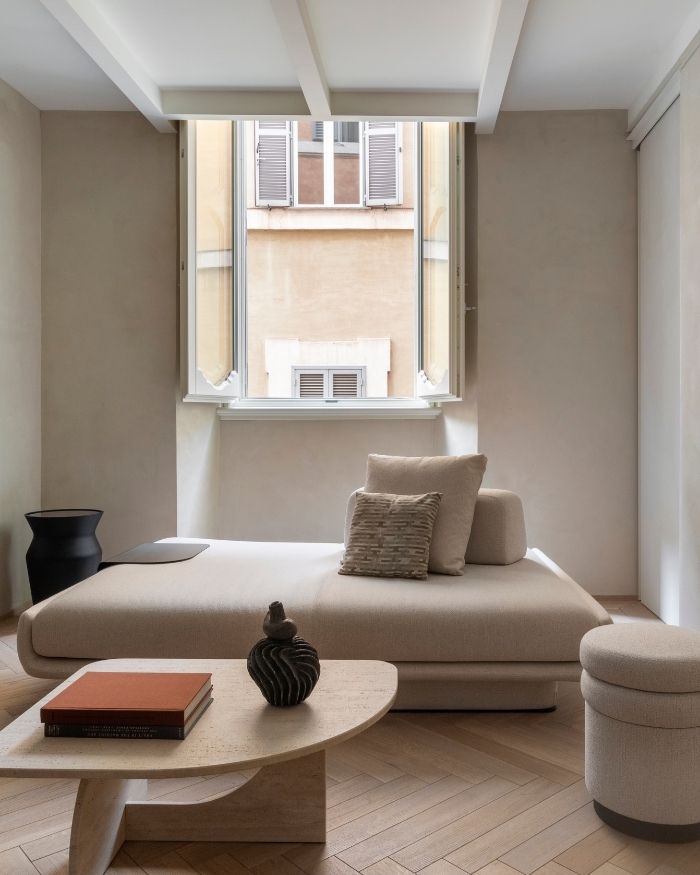
A restrained palette of stone, plaster and wood lends the space a meditative quality, where light and shadow become integral elements of the design; Photography by Serena Eller of Eller Studio
SHARE THIS ARTICLE

You May Also Like

Watch

No results found.

Search
Close this search box.