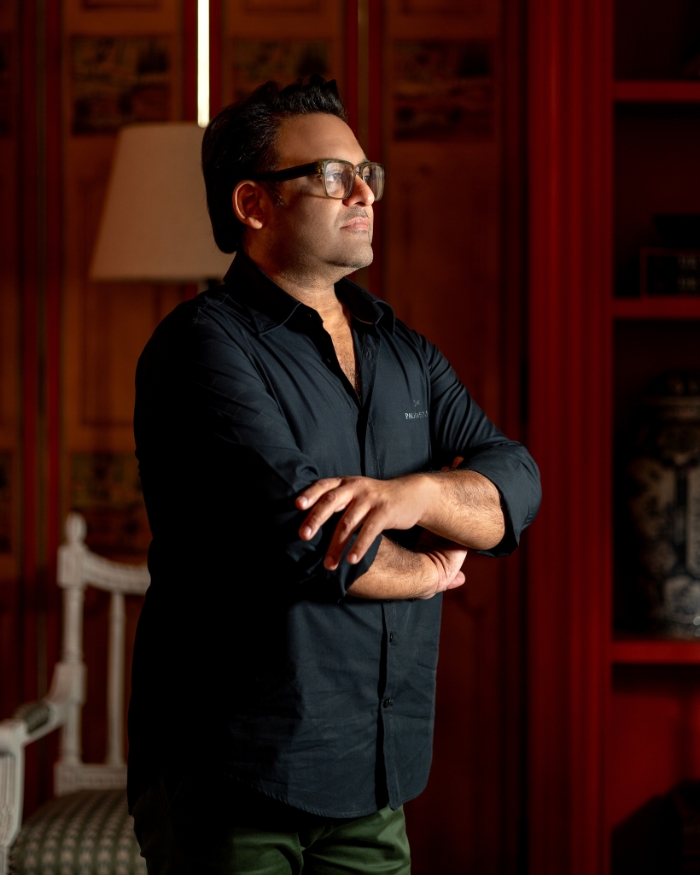
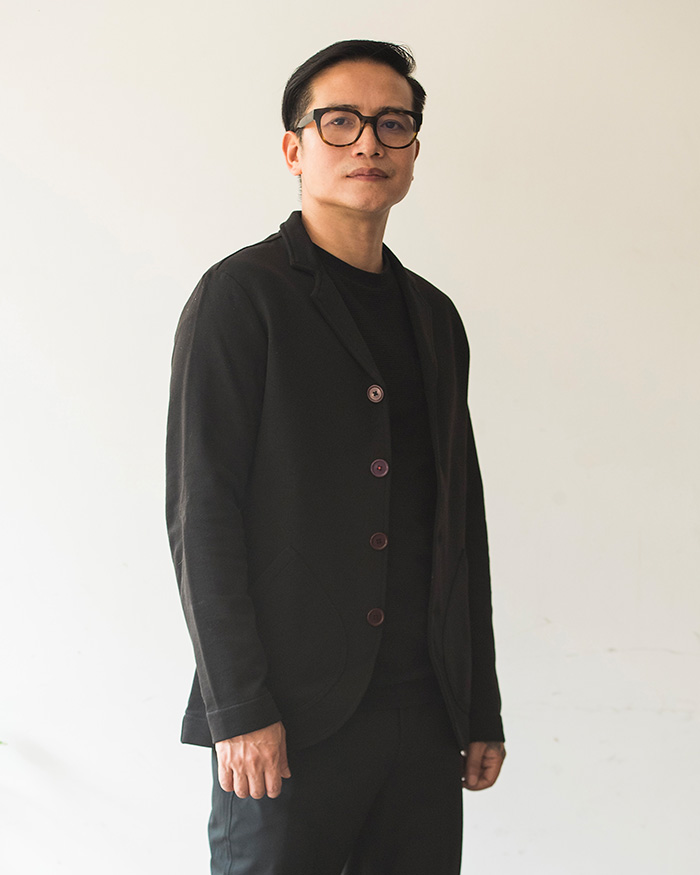
Artists have an uncanny ability to teleport you through time and space. For Jenjum Gadi, that means returning to the ephemeral memories of his childhood. Raised in a village in Arunachal Pradel, he experienced a world shaped by close relationships between people, land, craft and nature. We find him at Gallery Vayu in New Delhi before the opening of his show NGOK DOLU (My Village). In the midst of the restless installation rush, an unexpectedly calm Jenjum walks us through the workings of his mind, speaking about material, gender and recreating the rural morphology in the city.
Could you tell us about life in your village?
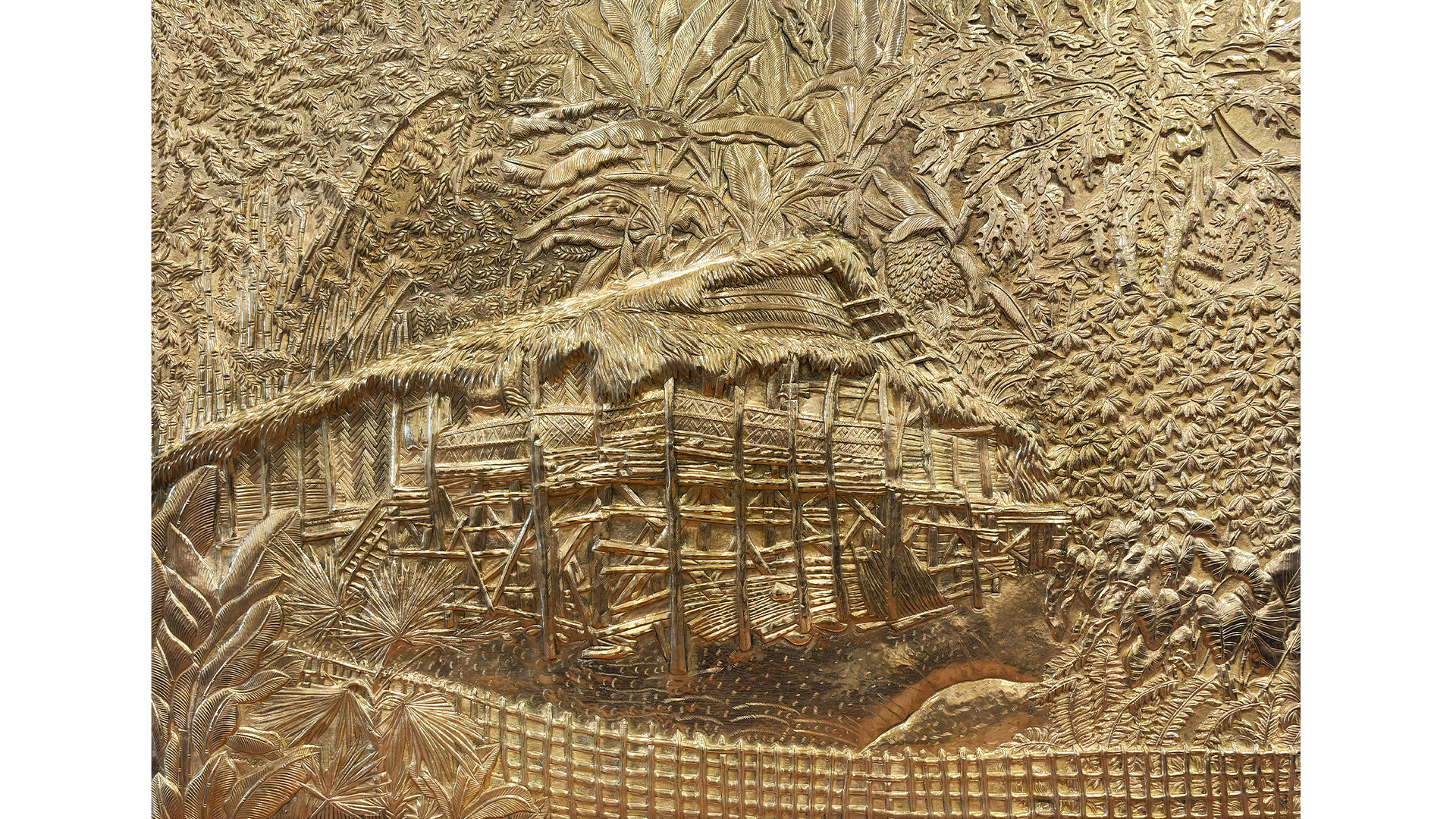
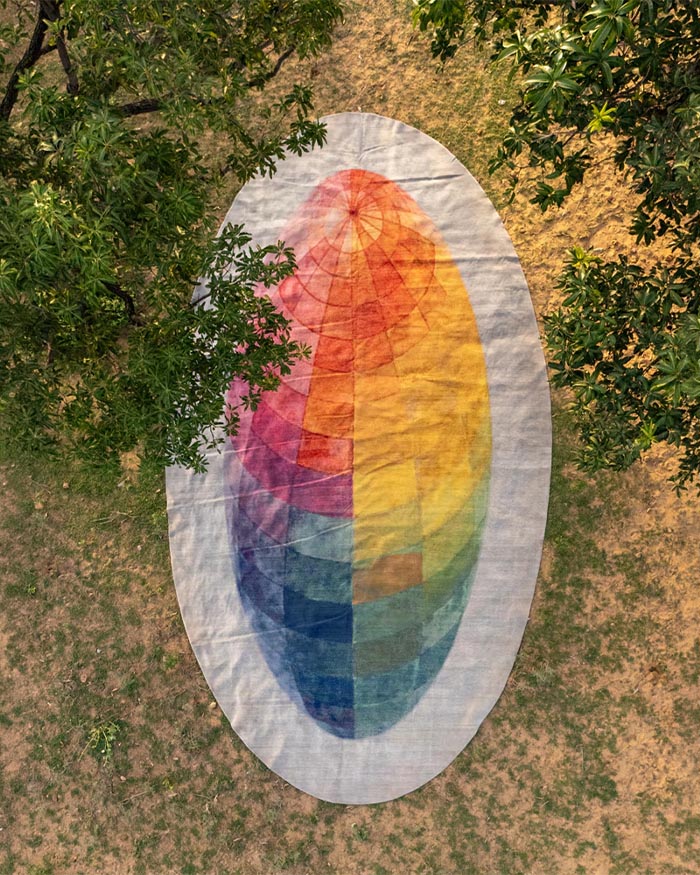
Throughout the village somewhere you’d see the rice drying, birds eating the rice, and cattle trying to steal the crop from the garden. There was no running water. When people came back from the fields in the evening, they would clean themselves along the common steps. This was a place where everybody gathered. And the clouds in the sky represent the fleeting memory of my village. You don’t know how much of it you can hold on to. In the houses, we would have two big verandas, one on each side. There would be a bench, a place for chickens, a place for pigs. Inside, there would be a kitchen right in the middle. There were no separate rooms. Everybody would sleep on the floor. What I really miss about our village is the feeling of closeness.
The loom is a recurring motif in your work. Why is it important to you?
Growing up, I saw my mother working on the loom, and she would let me play with it. And in the tribe I come from, men are not allowed to touch the loom. It is believed that if men touch it, they lose their masculinity. People used to make fun of me as a child. But my mother never, for a single second, said, “Don’t do it. It’s a girl’s thing. You’re a boy.”
Why were you drawn to brass?
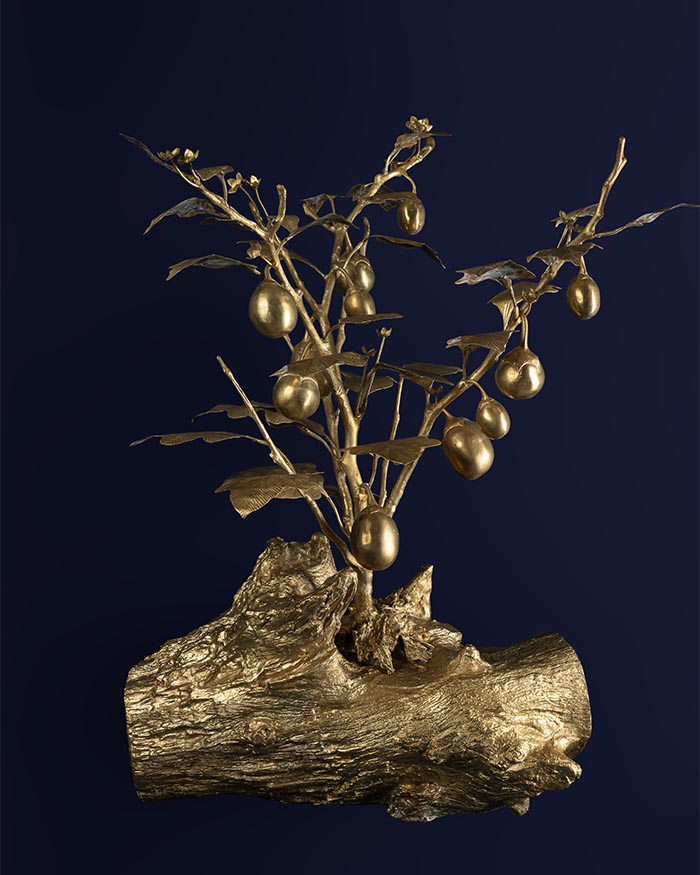
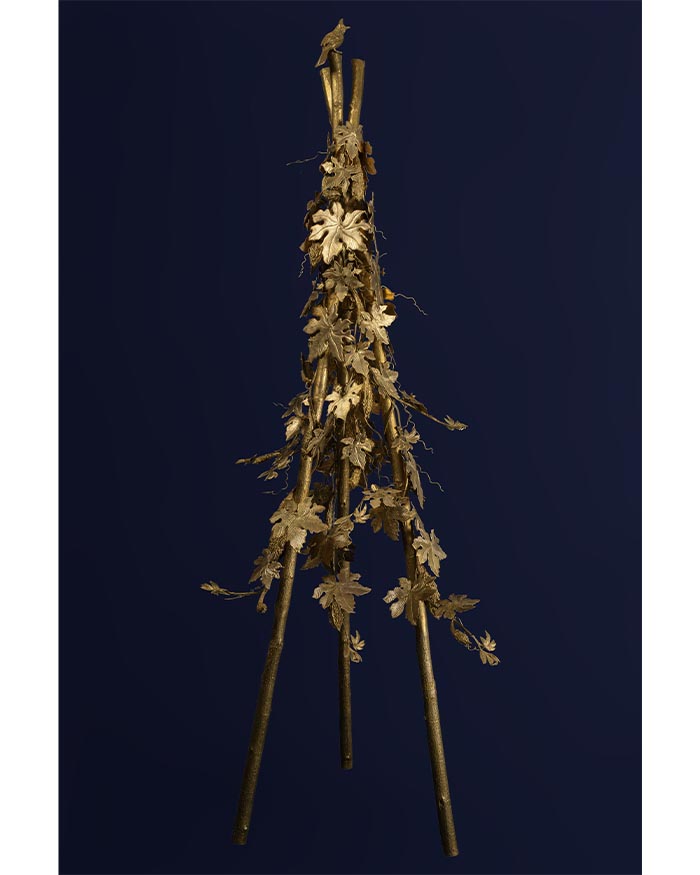
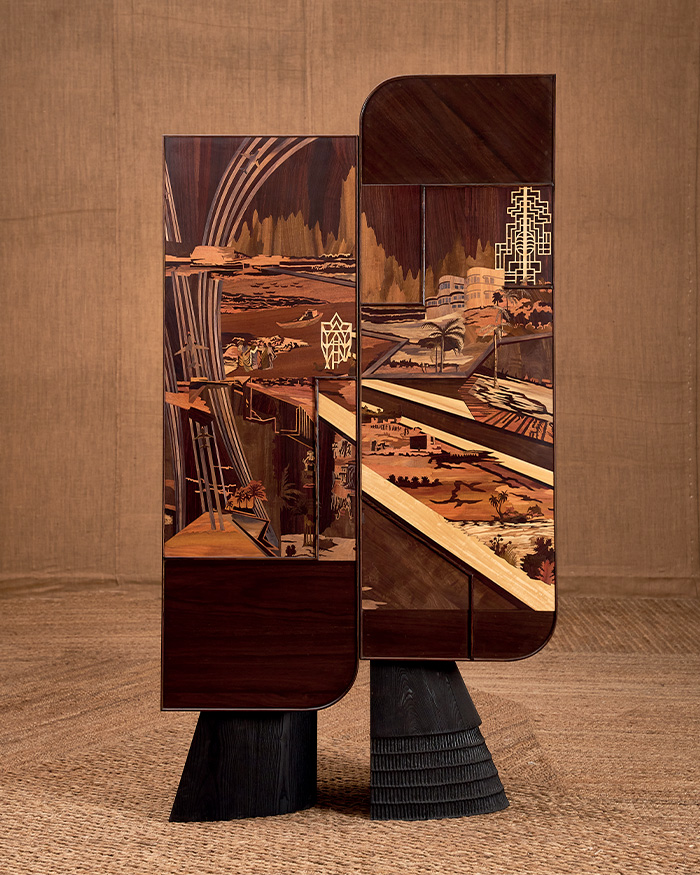
When I was doing my first collection, Apase, I worked with fruits and vegetables. I started thinking about material as something that also ages. If something remains the same, it can become boring. Brass also behaves differently in different places.
Has everyone migrated out of the village?
Not everyone. But it’s sad because some of the houses are full of belongings, but there’s nobody living there. The older generation has died, and the younger generation doesn’t want to stay.
I really want to use whatever I’ve built to give young artists from different networks a chance. There are so many talented people. Why shouldn’t I do something?
"What I really miss about our village is the feeling of closeness"
Jenjum Gadi