
With several universities around and the neighbourhood fuelled by the city’s young crowd, Koramangala comes alive on weekends. Its streets are awash with neon lights and music spilling out from clubs, the energy feels distinctly of-the-moment. Amid this bustle emerges an experiential retail spot with a sculptural facade, dubbed Pregame.
While the interiors are imagined such that they immediately transport you to the sandstone stillness of Egypt, the menu chooses to keep its palate desi. Drawing from subterranean architecture — Egyptian cave formations, excavation logics and ancient carved spaces — dedicated to the game of “pre booze,” PREGAME is a retail store and pub synchronised in one space by Atelier Astil. Founded by Jagadish S and designed by Lead Architect Arpita Sharma, PREGAME transforms the idea of a regular retail store into an architectural journey in itself. “The central idea is continuity: a hybrid environment where retail, dining, and leisure dissolve into a singular spatial narrative,” says Arpita.
“From the outset, the project was conceived as a continuous spatial journey, one that unfolds gradually, privileging sequence over spectacle and transformation over decoration”
Arpita Sharma
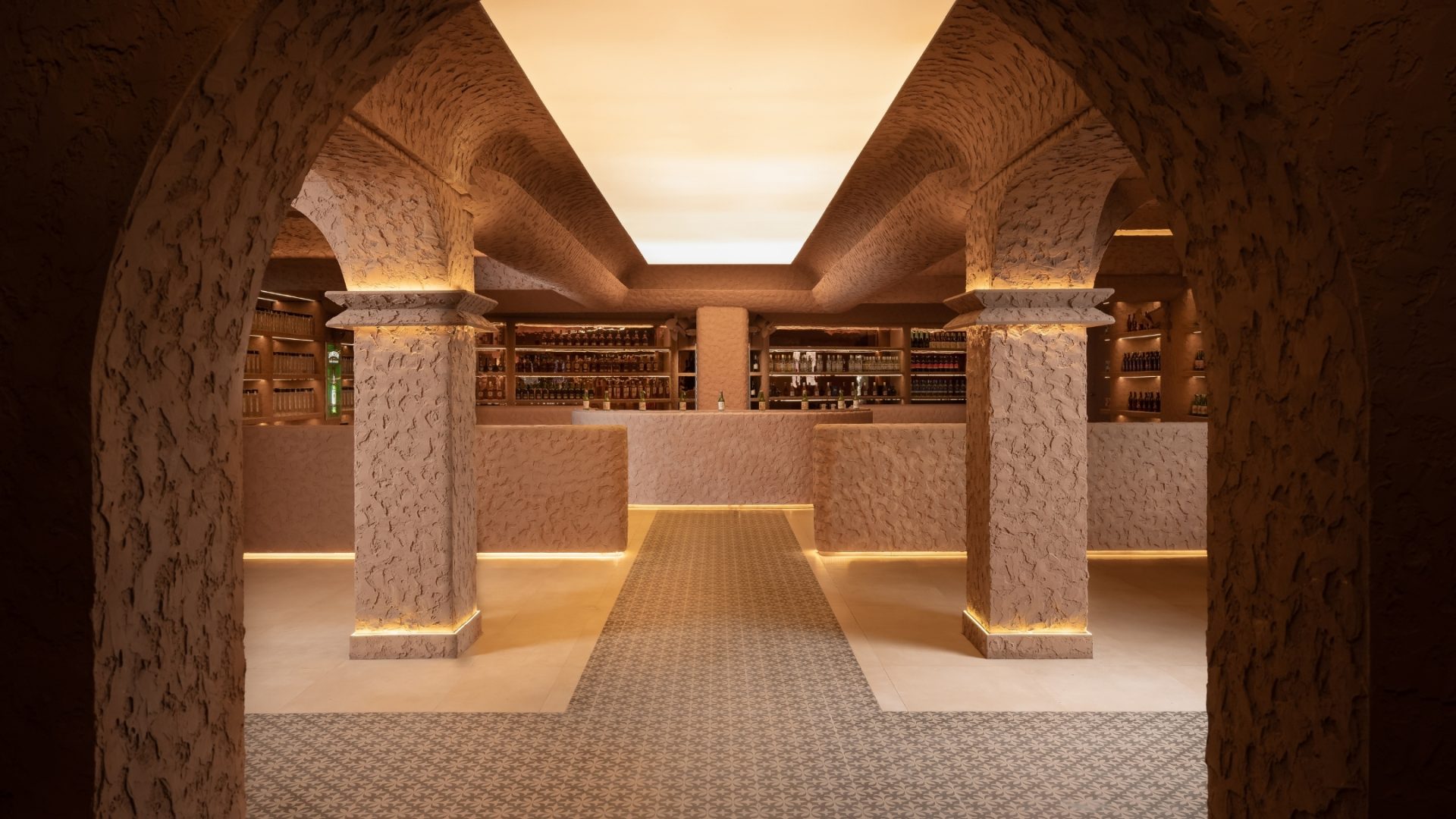
The space navigates rather simply. Spread across 10,000 sq ft and split over two levels; the ground floor serves as a concept store and cellar and the upper floor as a restaurant and a secondary bar. Designed on a structurally constrained former commercial space, the idea was to overcome this challenge and craft an area that unfolds into a maze-like sequence.
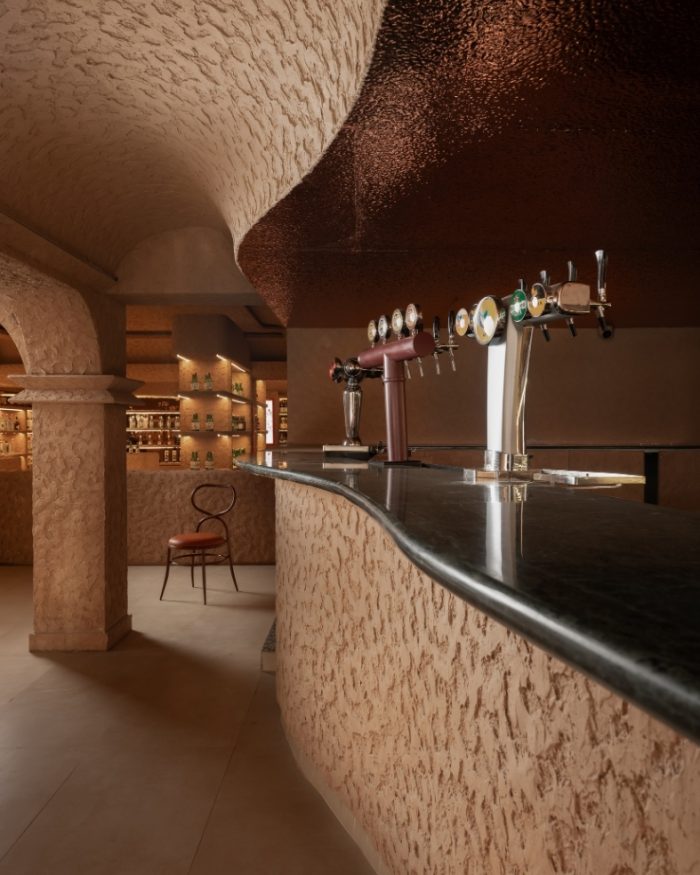
“Early discussions centred on movement, compression and spatial continuity rather than formal expression. The design approach resisted concealment; structural columns, beams, and low ceiling heights were treated as formative elements rather than obstacles,” states Arpita. A concealed sub-frame system and layered construction methodology were used to integrate the structures while maintaining a consistent curvature throughout the space.
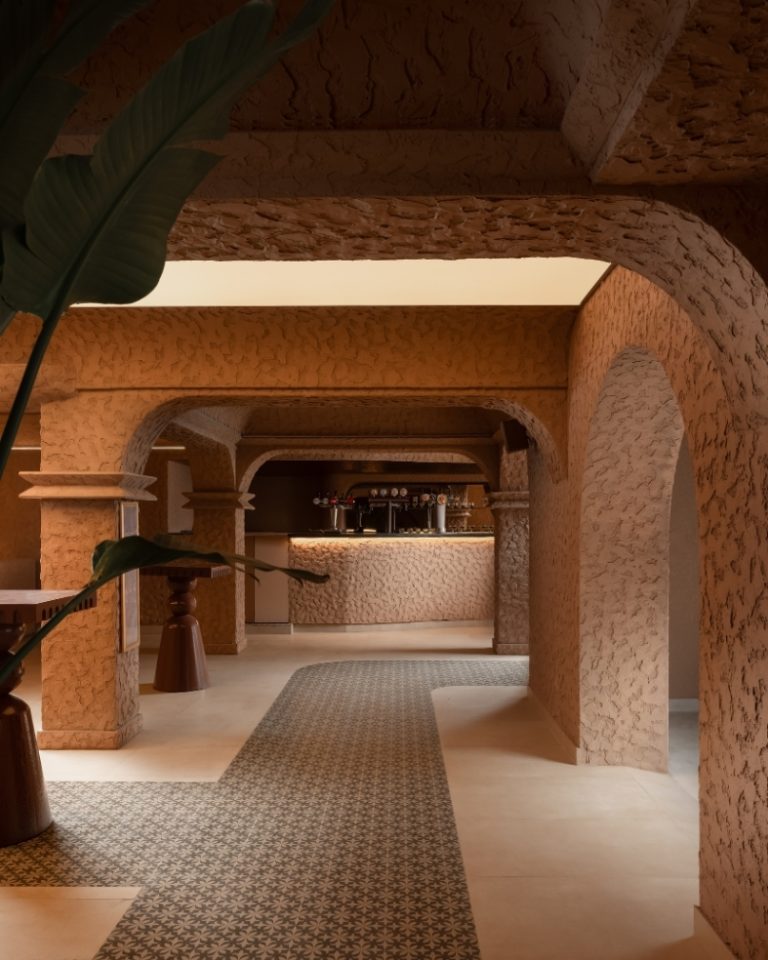
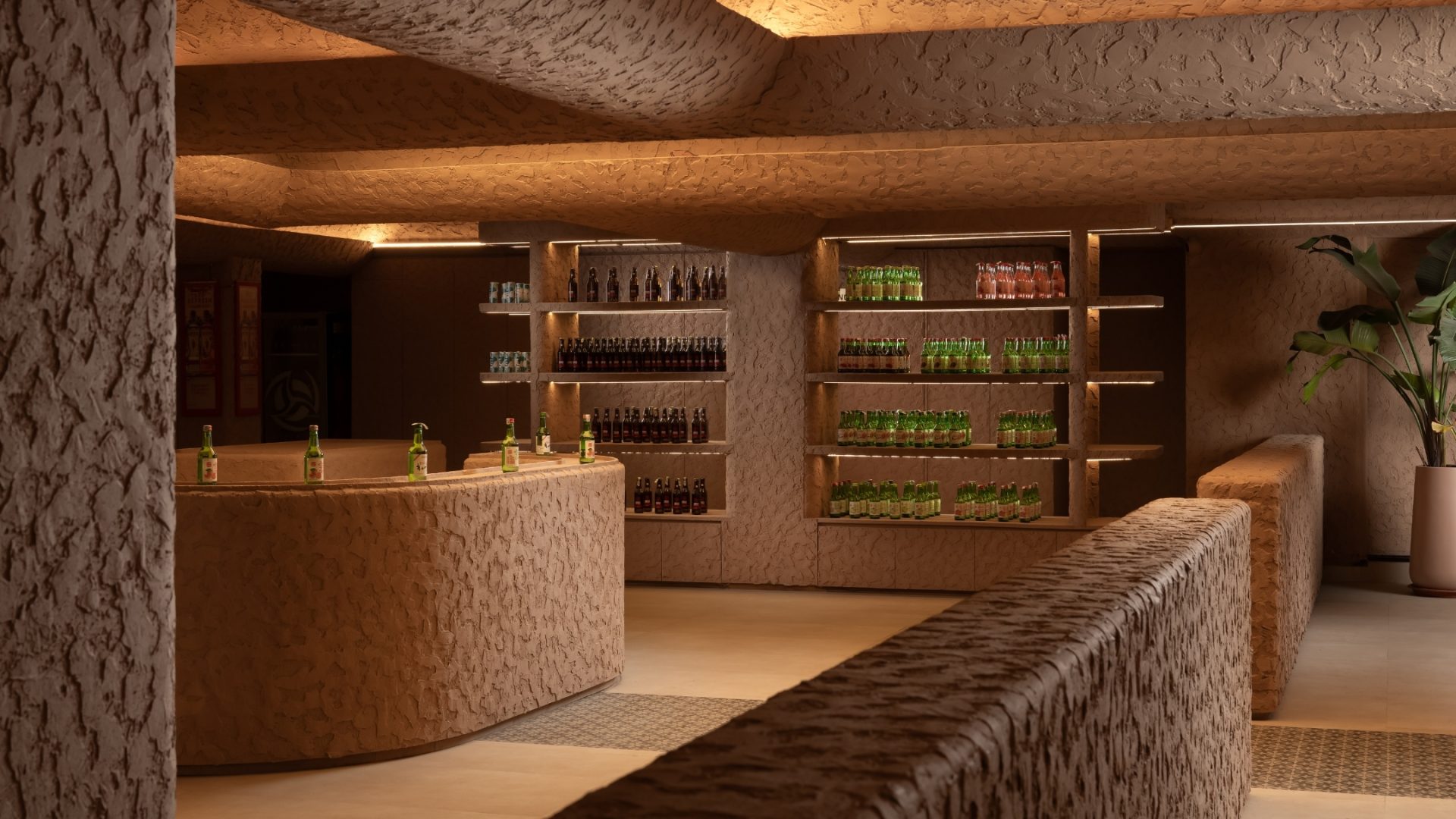
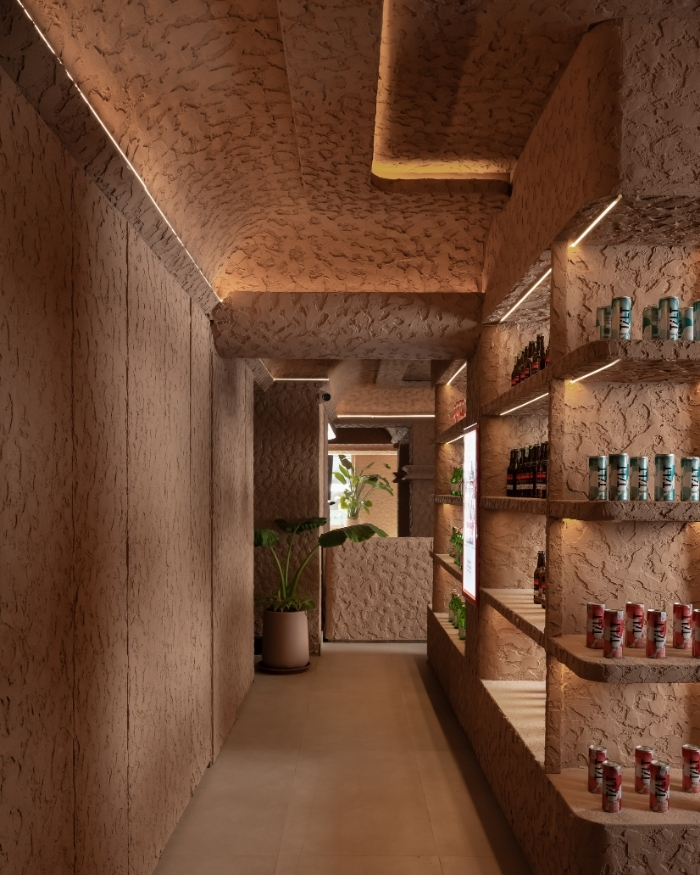
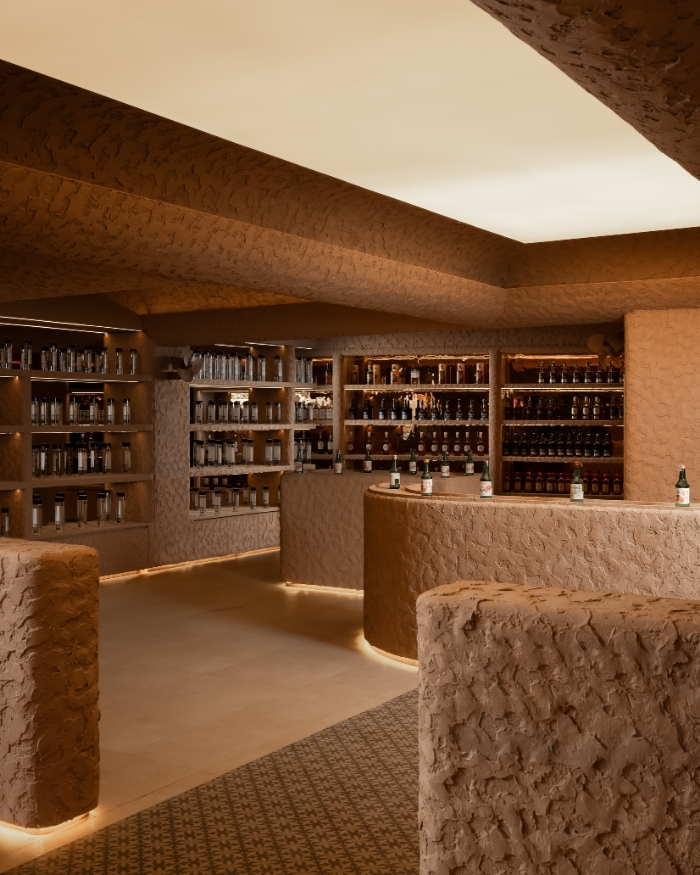
Drawing inspiration from the Egyptian cave systems, the ground-floor shelves are arranged along both sides, slowing one’s movement through the space. Turning the cellar from just functional to a rather immersive experience on its own. Focusing on the idea of hybrid spatiality, the store is carefully modulated through changes in ceiling height, enclosure, and openness, moving from a compressed cellar maze to the more expansive dining spaces above.
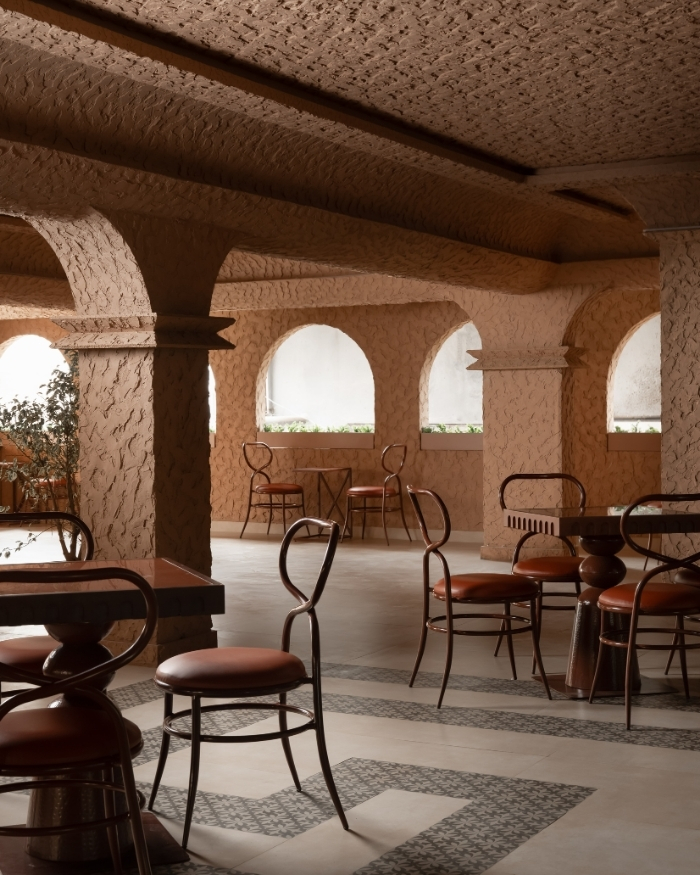
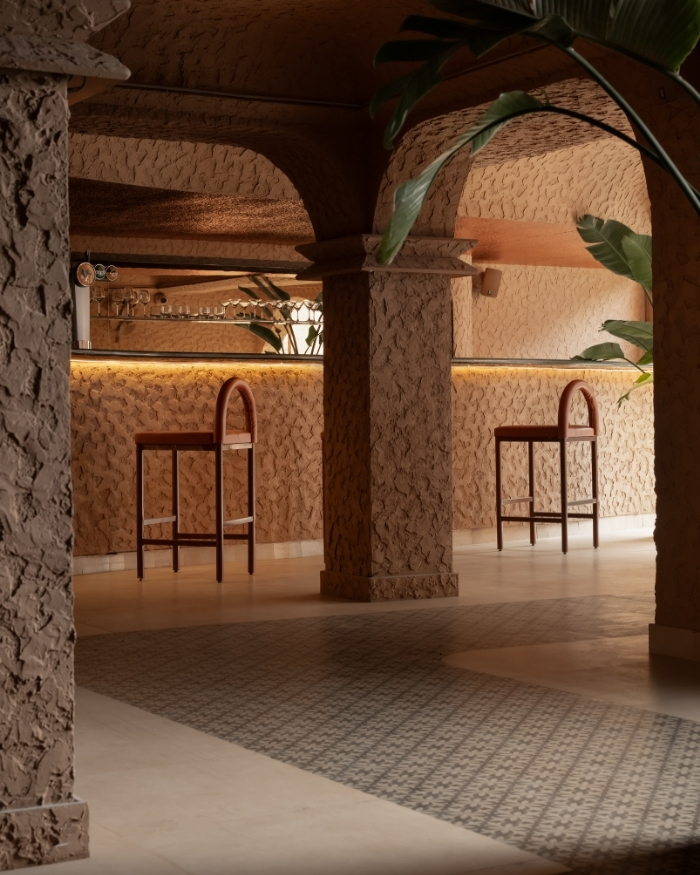
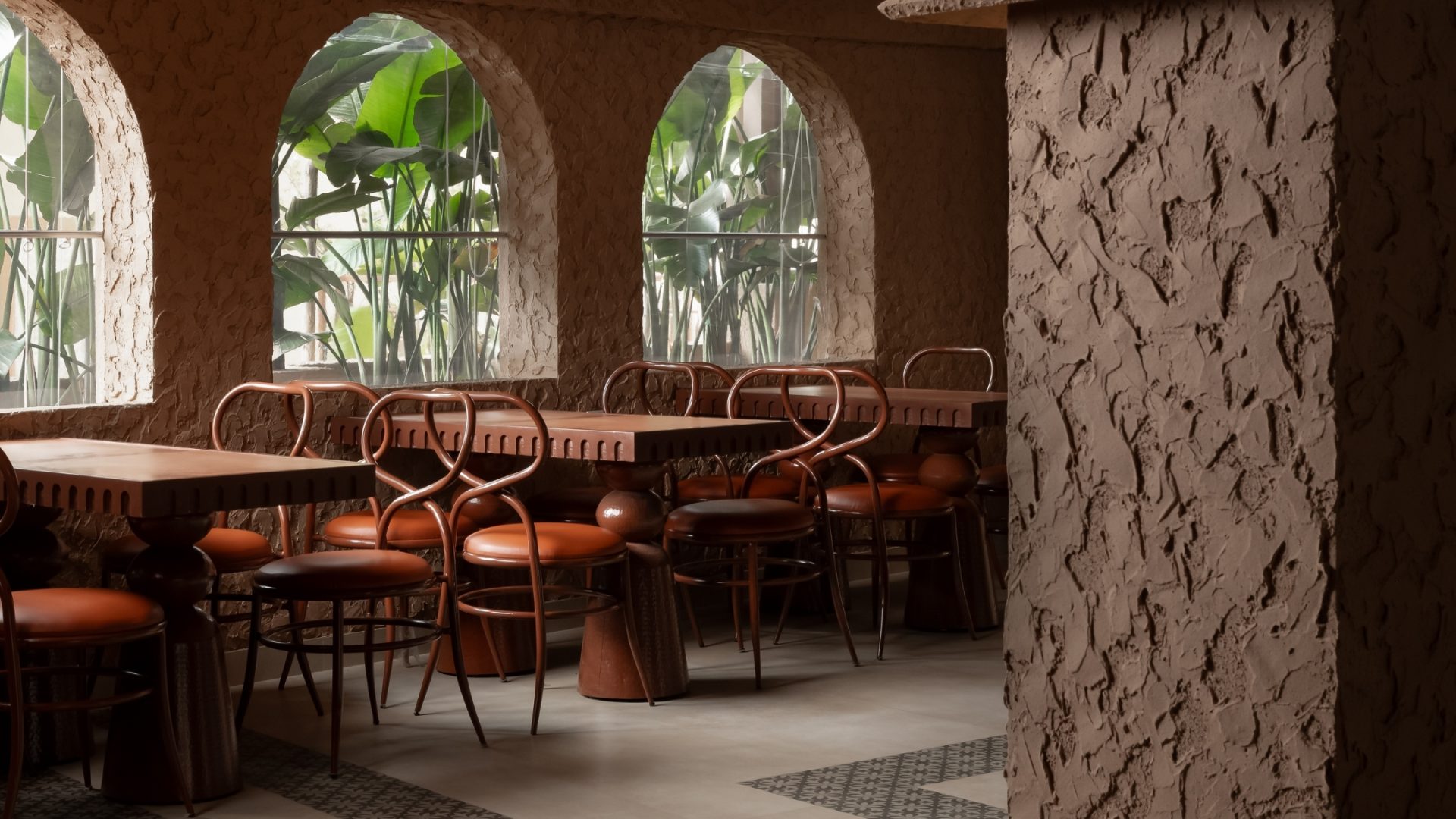
Scattered seating zones and ample space for movement across the room, the upper floor serves as a dining and lounge zone. With its beige and patterned tiles, the floors here look reminiscent of maze maps, where the beige serves as a background, while the pattern runs across as an answer on how to escape a maze (here, seatings are the break). A quite poetic detail befitting of the pub’s theme.
This is where the BYOB concept comes into play. One can navigate from the cellar to the dining area after buying their preferred bottle of alcohol or directly order from the bar and choose from their menu selection of assorted drinks and eatables.
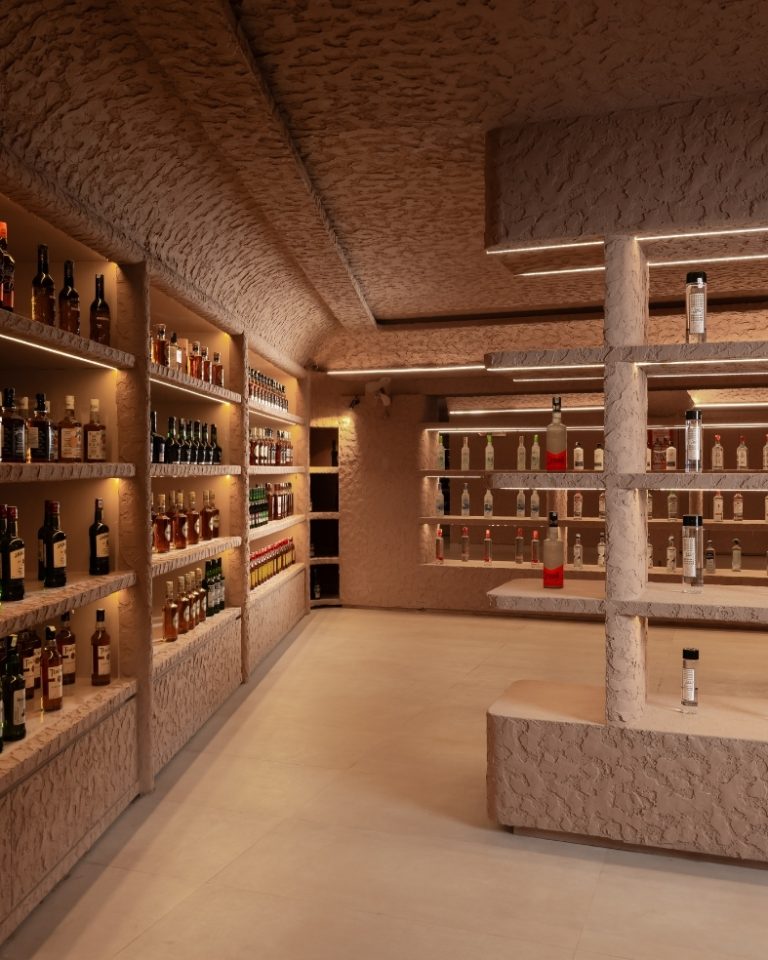
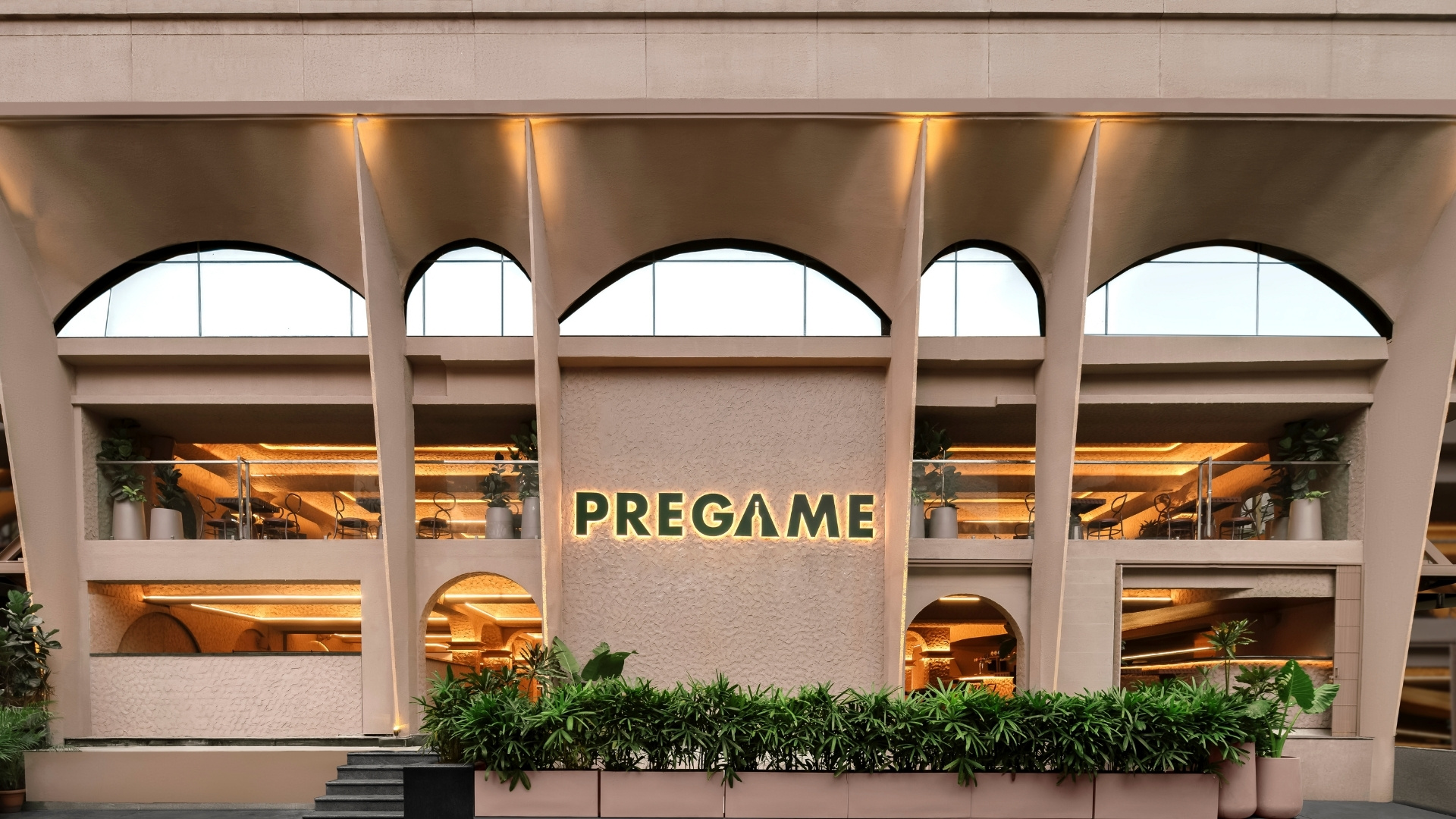
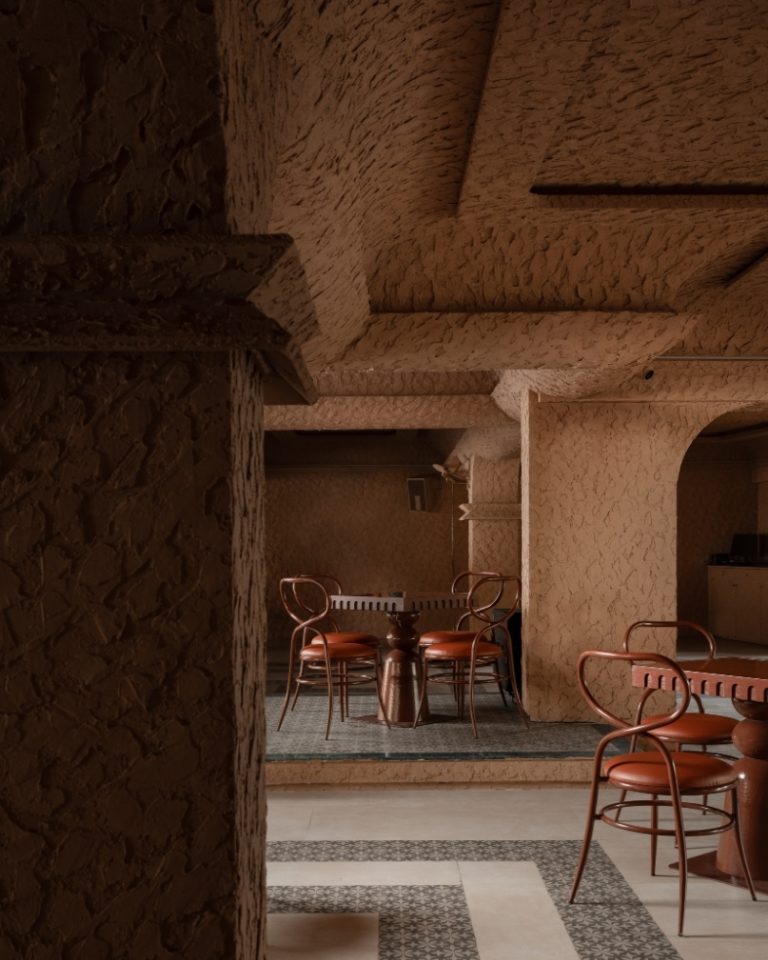
There is a precise visual memory attached to ancient excavated sites: weathered brown sandstone, uneven textures, and planes untouched by uniformity. Drawing from this palette, the interior of PREGAME is grounded in warm clay and sand tones with hand-finished surfaces across curves, recesses, and compressions.
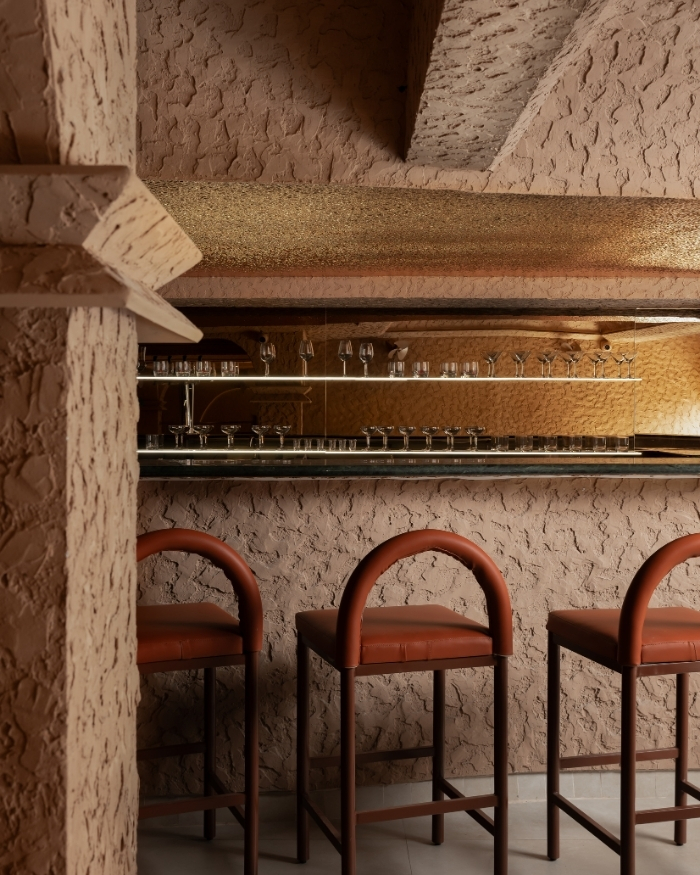
The terracotta-toned furniture and reflective gold elements at the bar serve as accents against the otherwise monolithic, monochrome character of this space. Given the limited access to natural light within the structure, Atelier Astil plays with the idea of glow and shadow in a cave-like formation using layered lighting to reveal the texture and depth of the space. In doing so, each zone is flawlessly unified under a single palette as scale, light, and spatial hierarchy dictate the shift from one space to another.
With its unconventional cocktail servings in a plastic glass to a restrained monochrome colour scheme that stands apart from Koramangala’s extravagant clubs, PREGAME is not just a retail outpost serving drinks, but also a concept destination where every element befits the architectural narrative serving leisure as a side dish.

No results found.