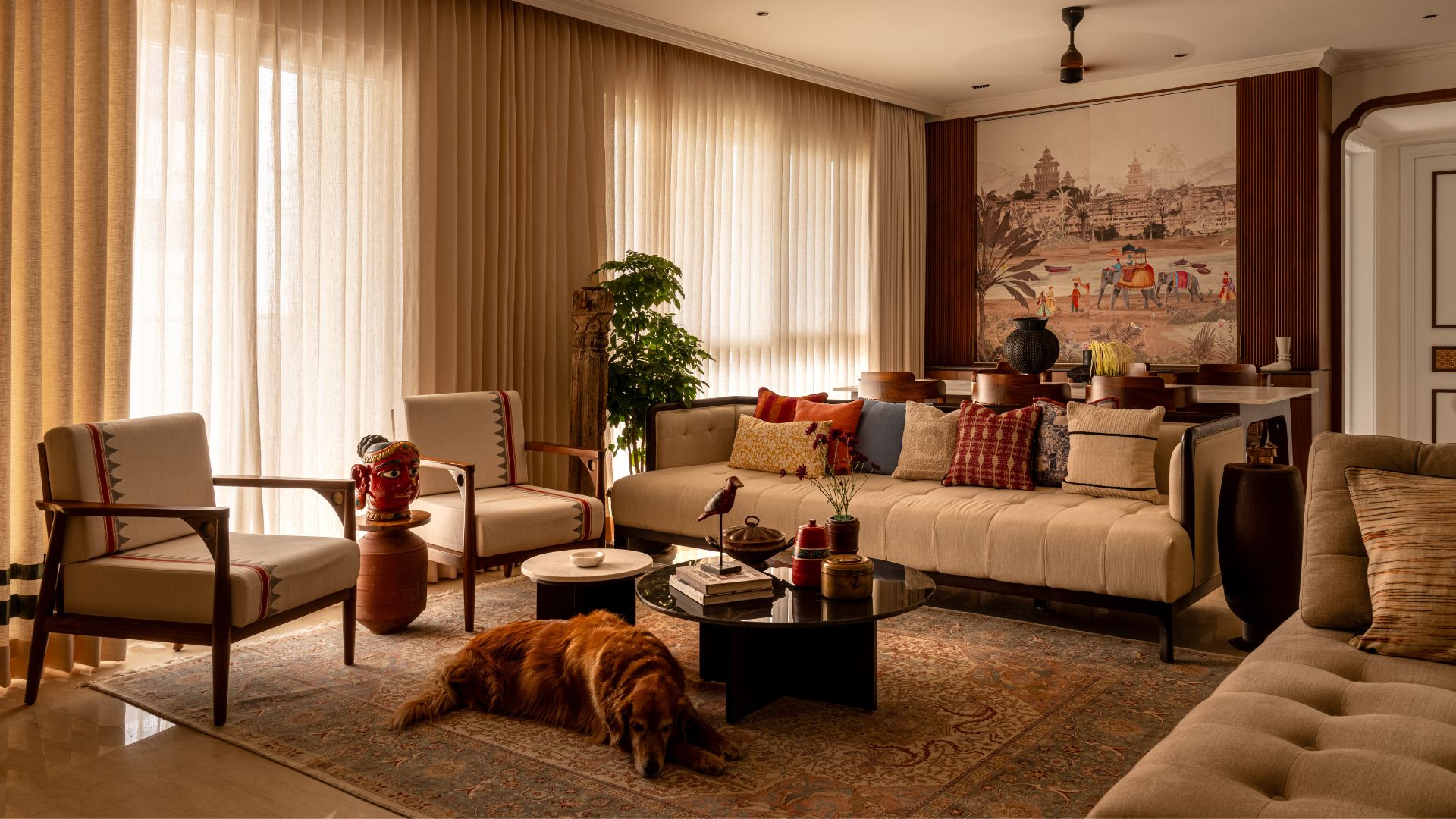
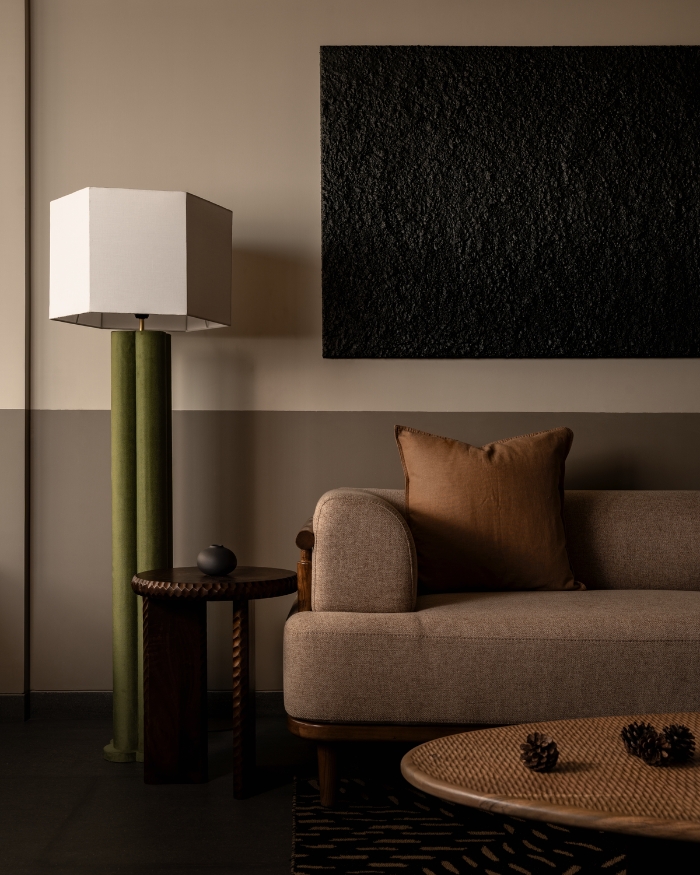
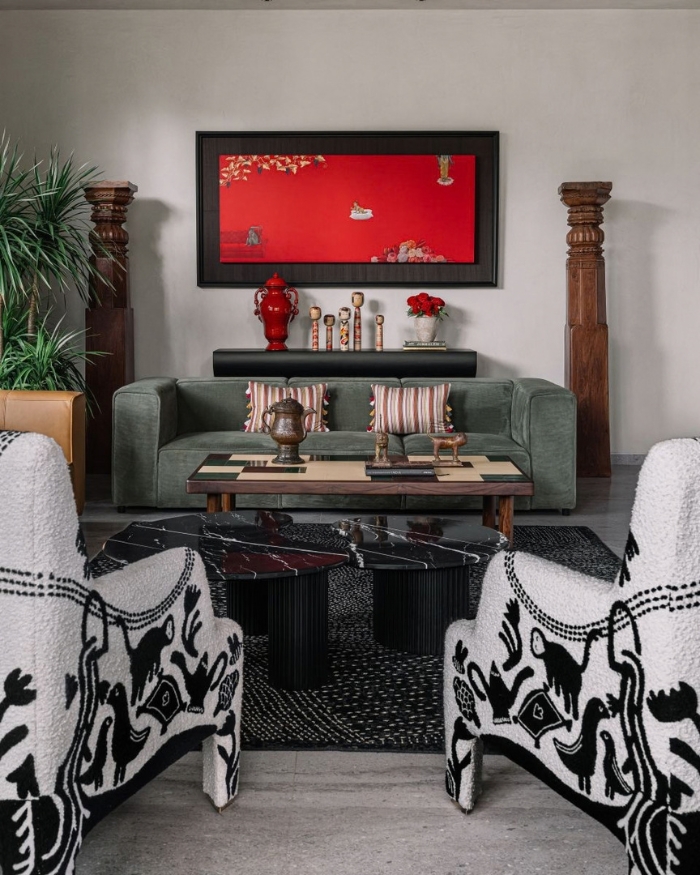
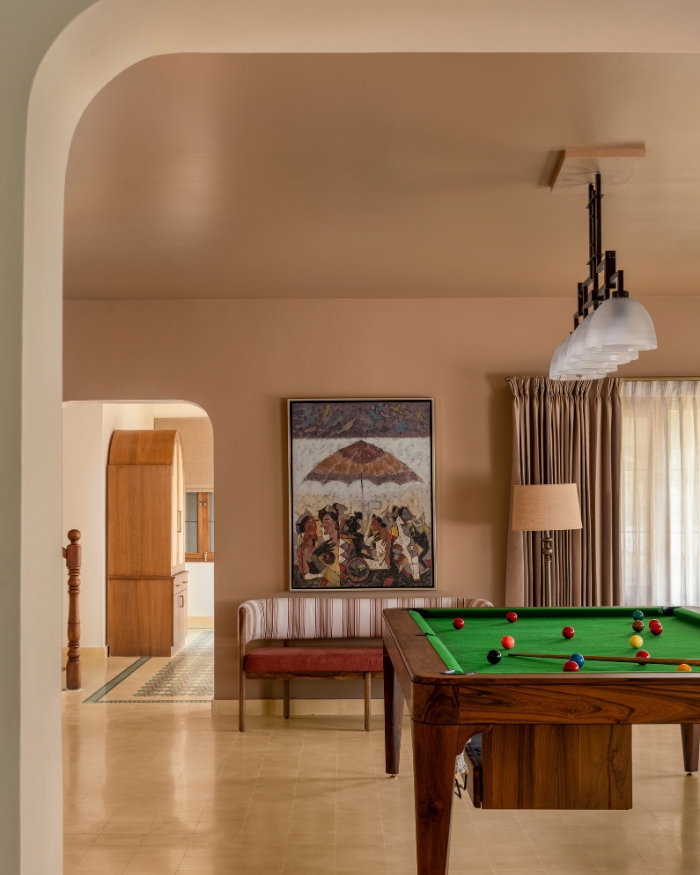
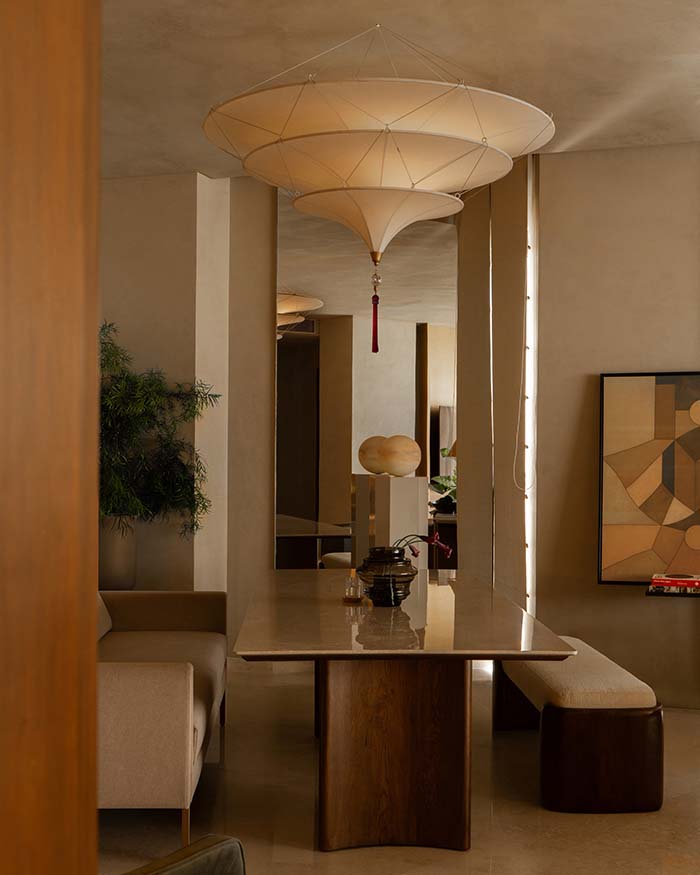
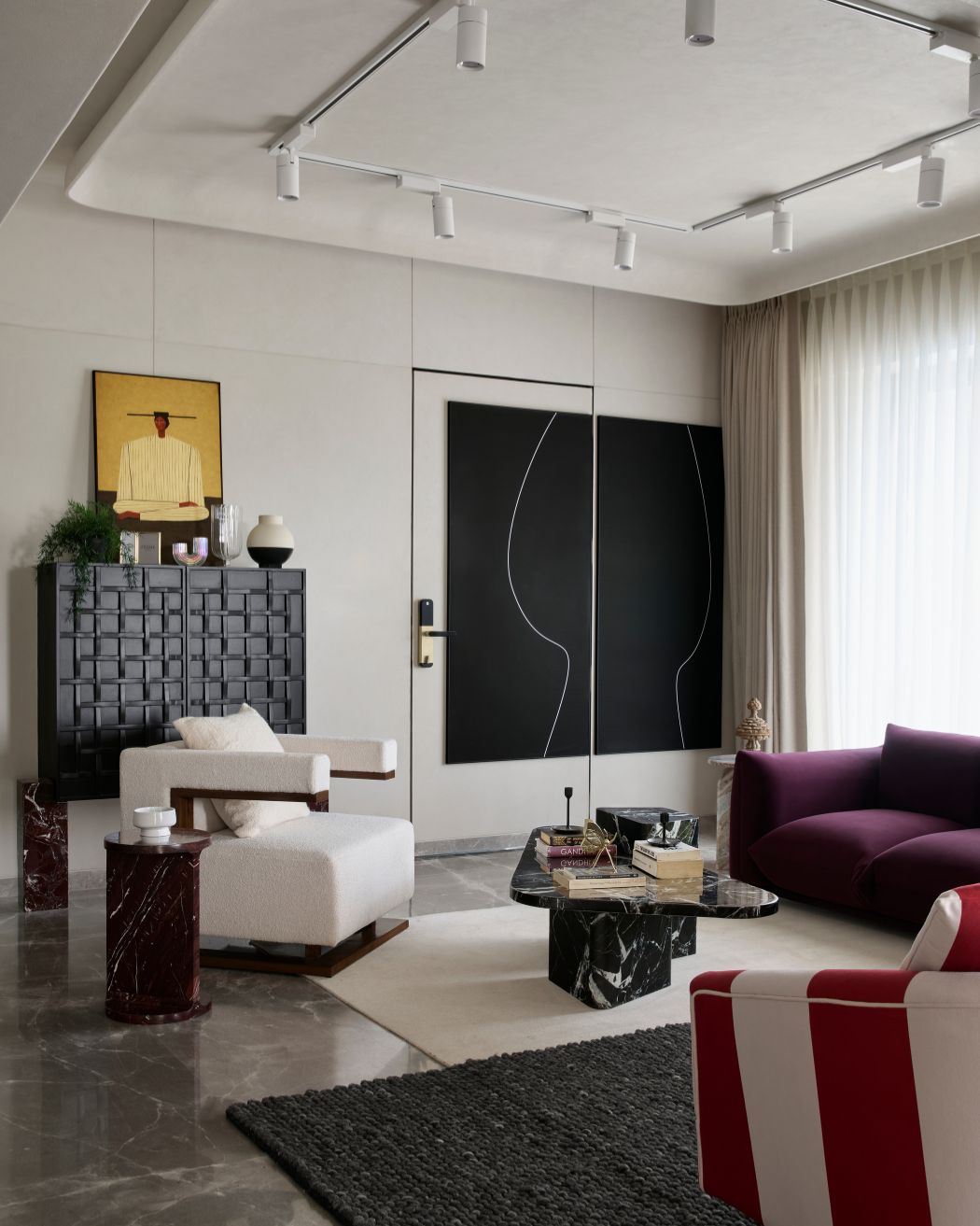
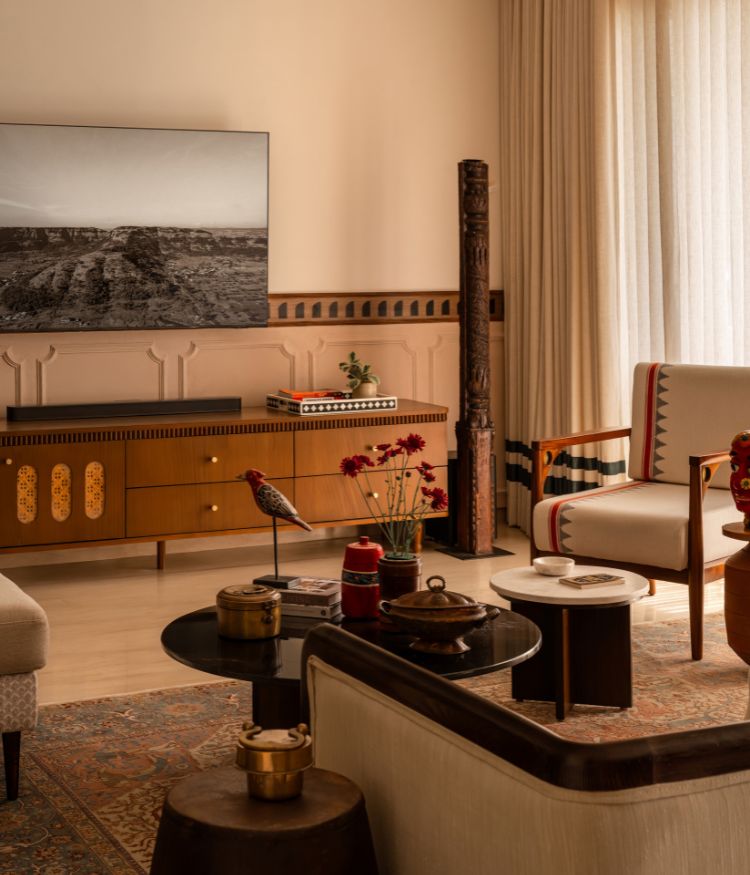
The living room gathers around neutral-toned seating and handcrafted accents; Photography by Jubin Johnson

Athangudi underfoot a southern address

House of Katha designs a home that brings Chettinad to Bengaluru

BY

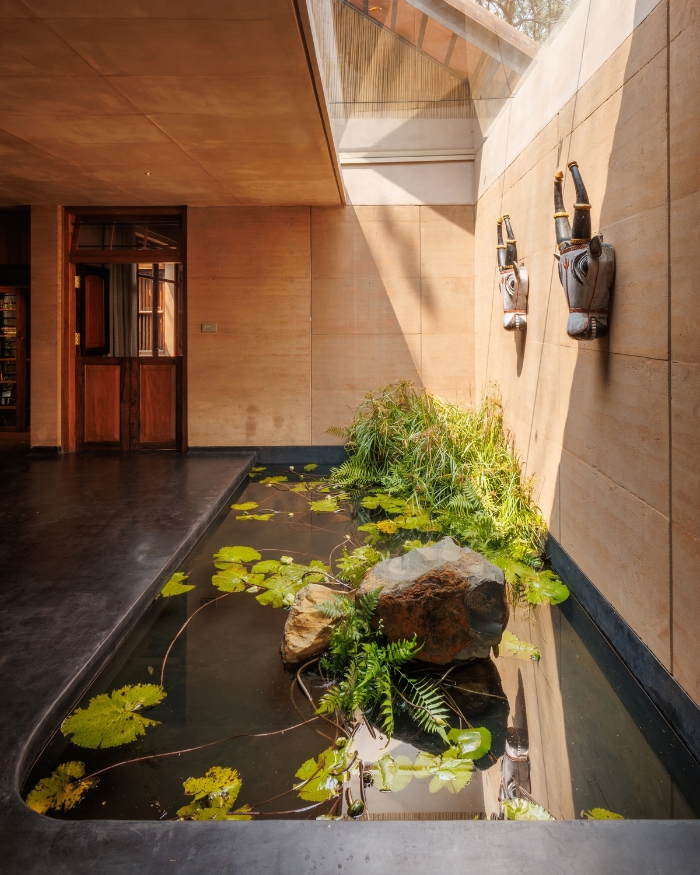
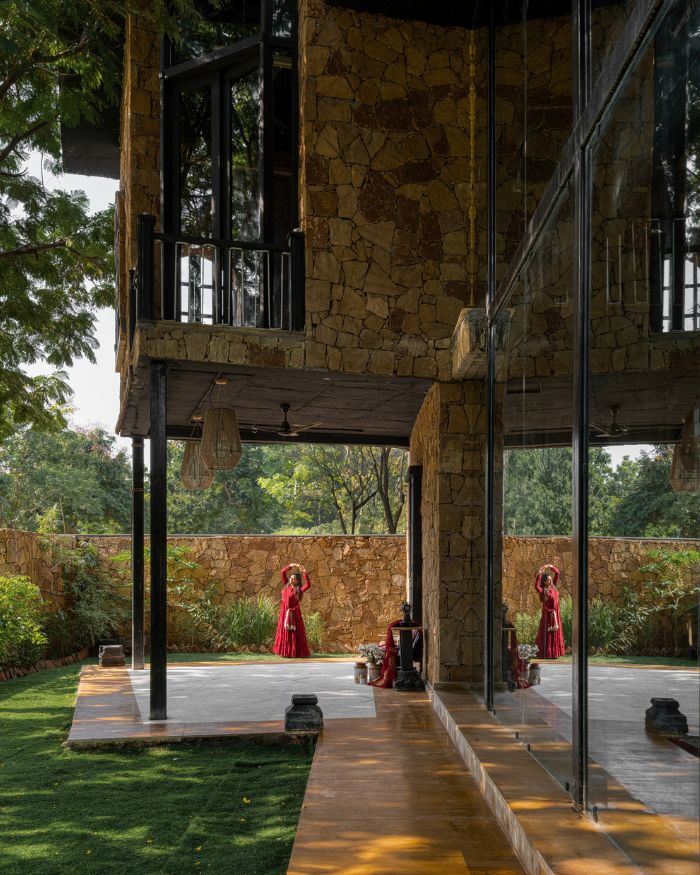
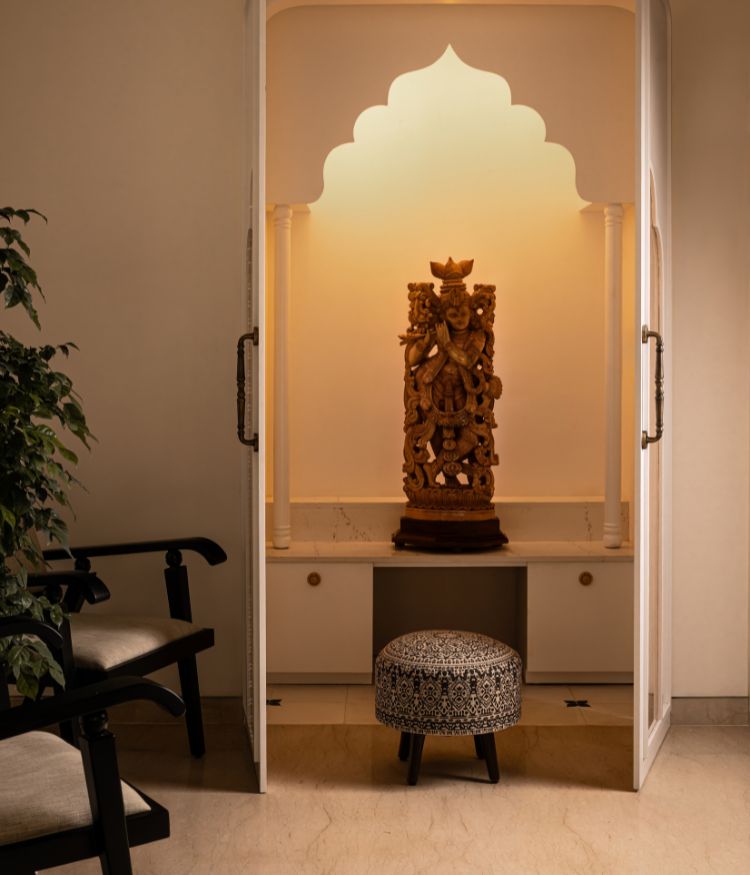
An ode to the homeowners’ Chettinad lineage, this home follows a narrative of holding onto its nostalgic bits while making way for it to have its own character. In Sukoon, a 2,700 sq ft residence in Bengaluru designed by Pratyusha Kethinedi of House of Katha, the memory of its inception is gently tethered to the objects seen around the space. The owners grew up around Athangudi tiles, carved wood and brass vessels that warmed slowly on the stove. Instead of transposing those elements literally, the design distils them. Arched doorways and patterned floors ground the rooms without overwhelming them. A temple corner sits within the plan, present, not performative.

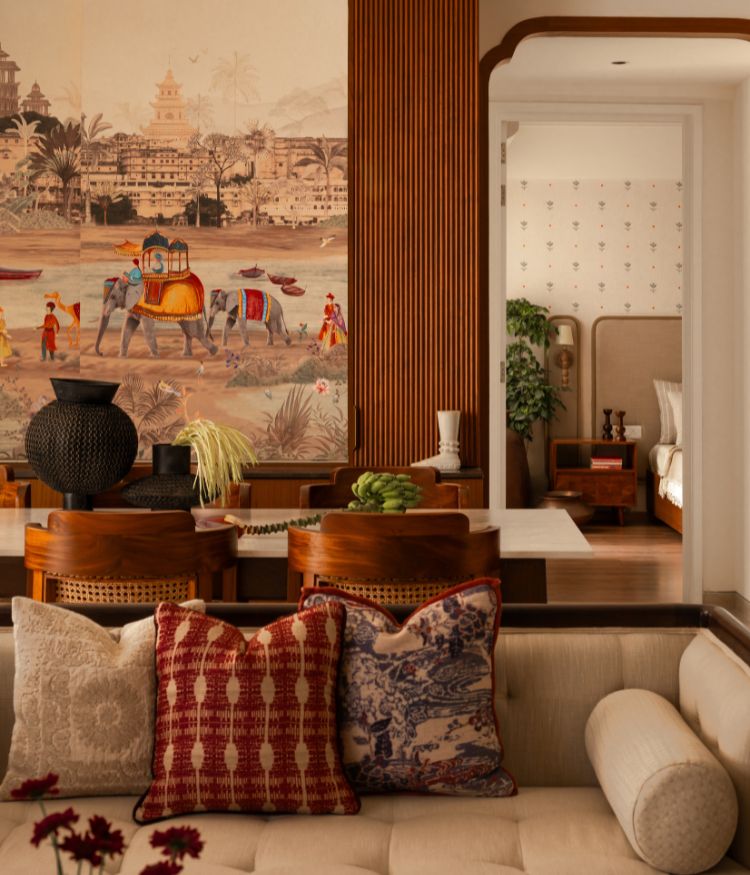
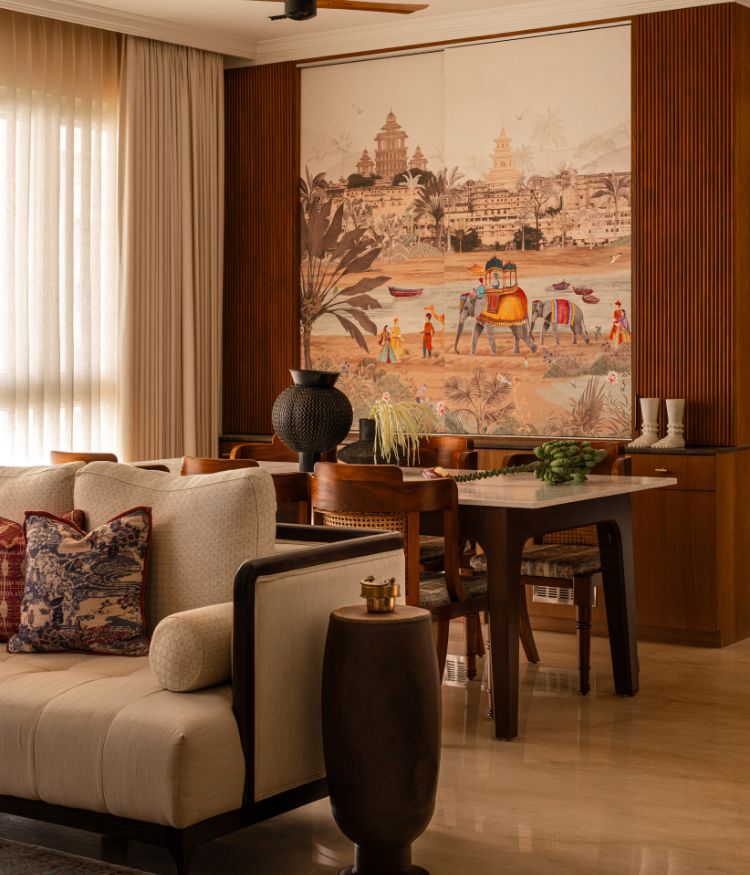
“The Kalakaari Haath mural in the dining area always draws attention, it adds warmth and becomes a great conversation starter”

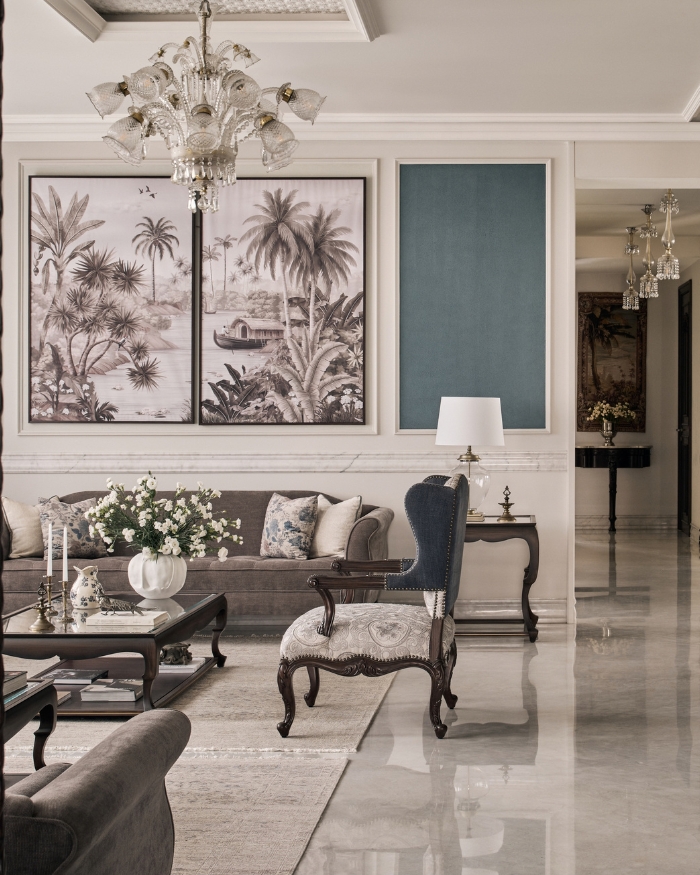
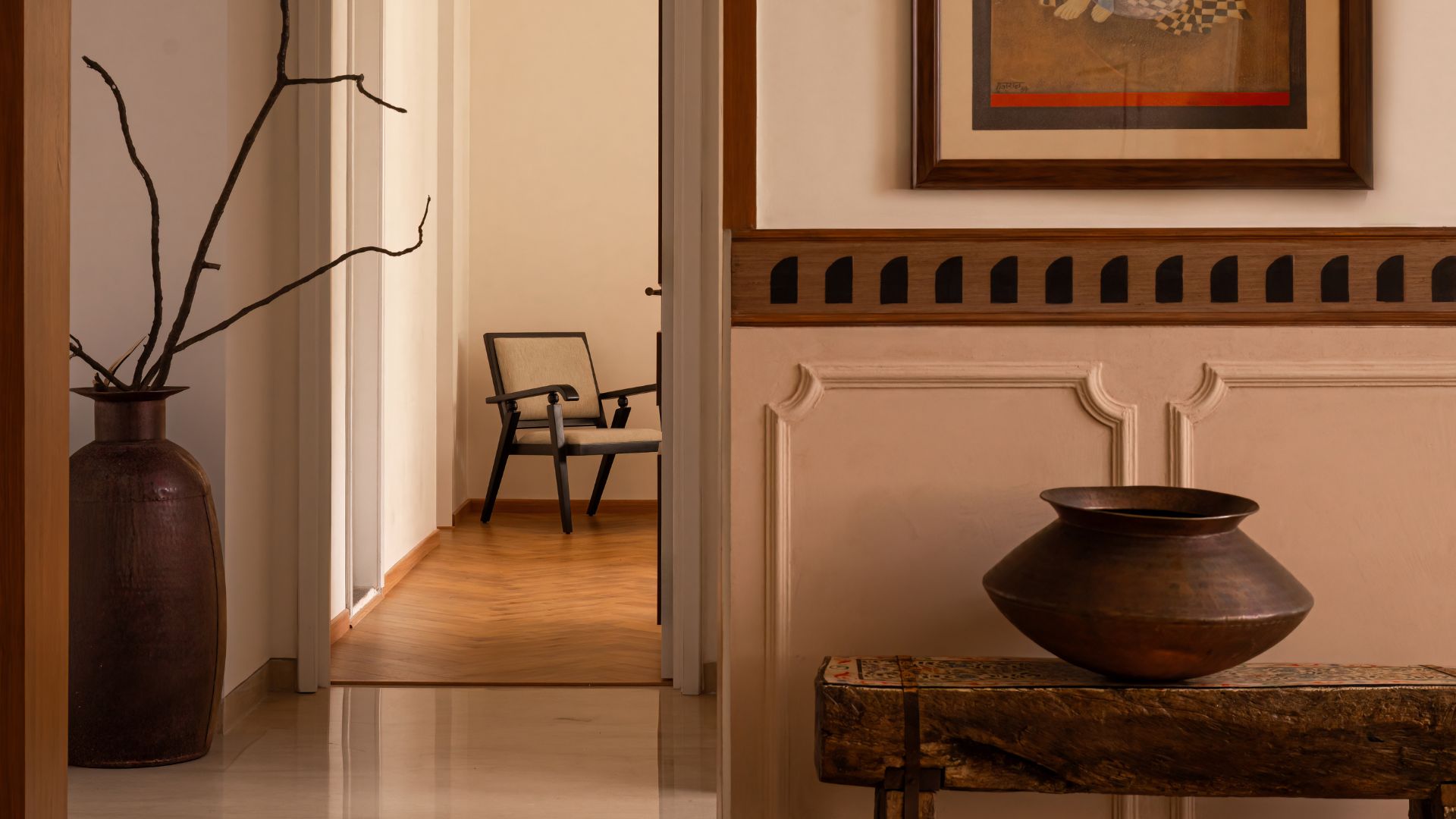
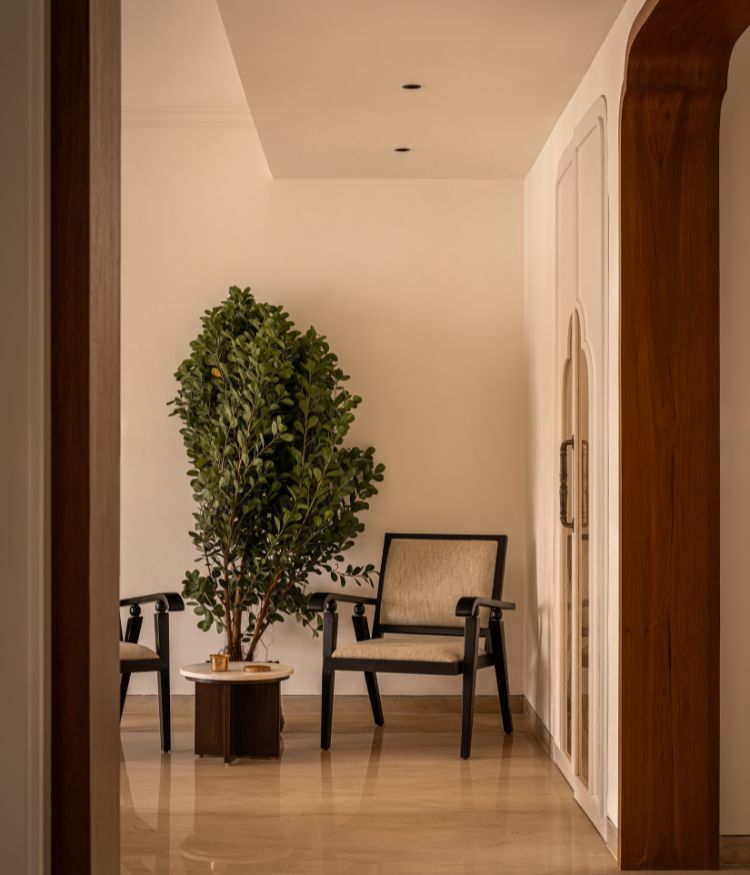
The hallway features arched openings and carved accents that reflect the home’s traditional influences; Photography by Jubin Johnson

Of wood, brass, cane and stone

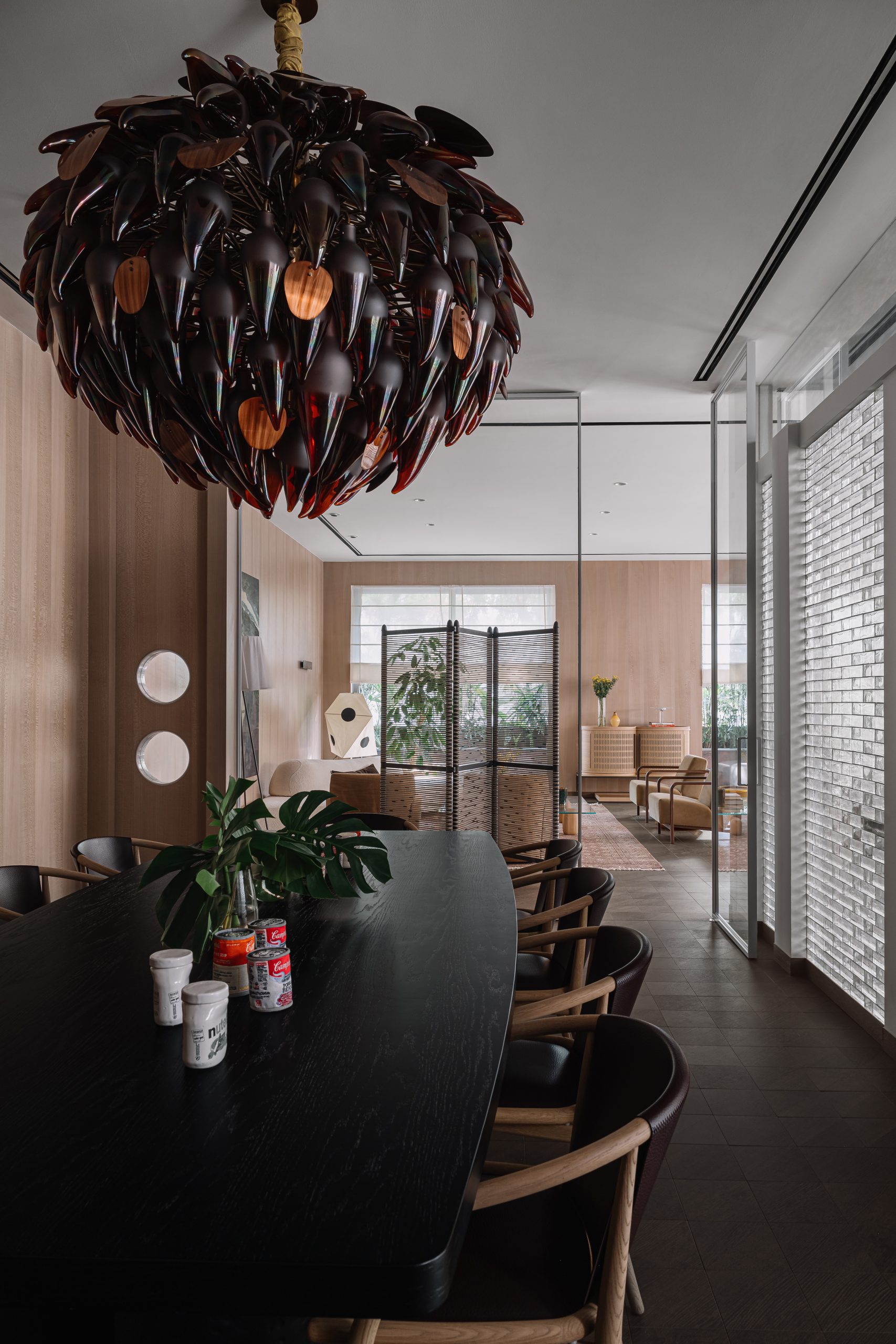
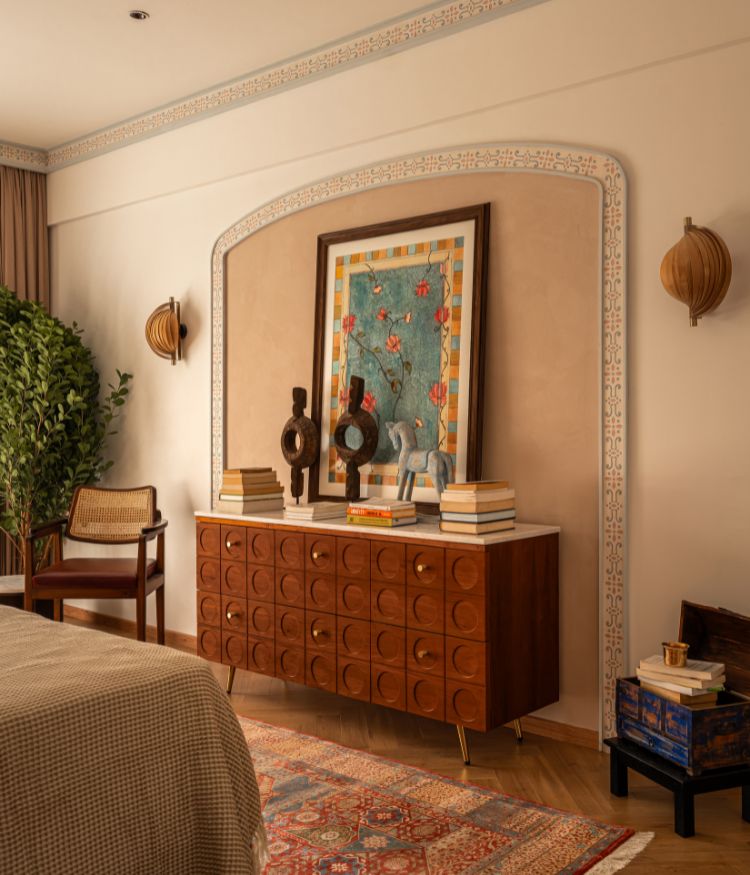
The material palette — wood, brass, cane, stone — doesn’t flinch at touch. It darkens at the edges. It accepts time as a collaborator. The blues and greens move like shadow and foliage through the house, while browns hold everything steady. You enter and instinctively exhale. In the dining space, a Kalakaari Haath mural holds the eye. It’s the one moment that feels declarative. The home evolved as a conversation between those instincts. You can feel it negotiating in the details: clean-lined furniture against ornate tiles, contemporary lighting under archways that recall another era.

The foyer’s arched opening frames the living room paired by wall mural and handcrafted decor; Photography by Jubin Johnson
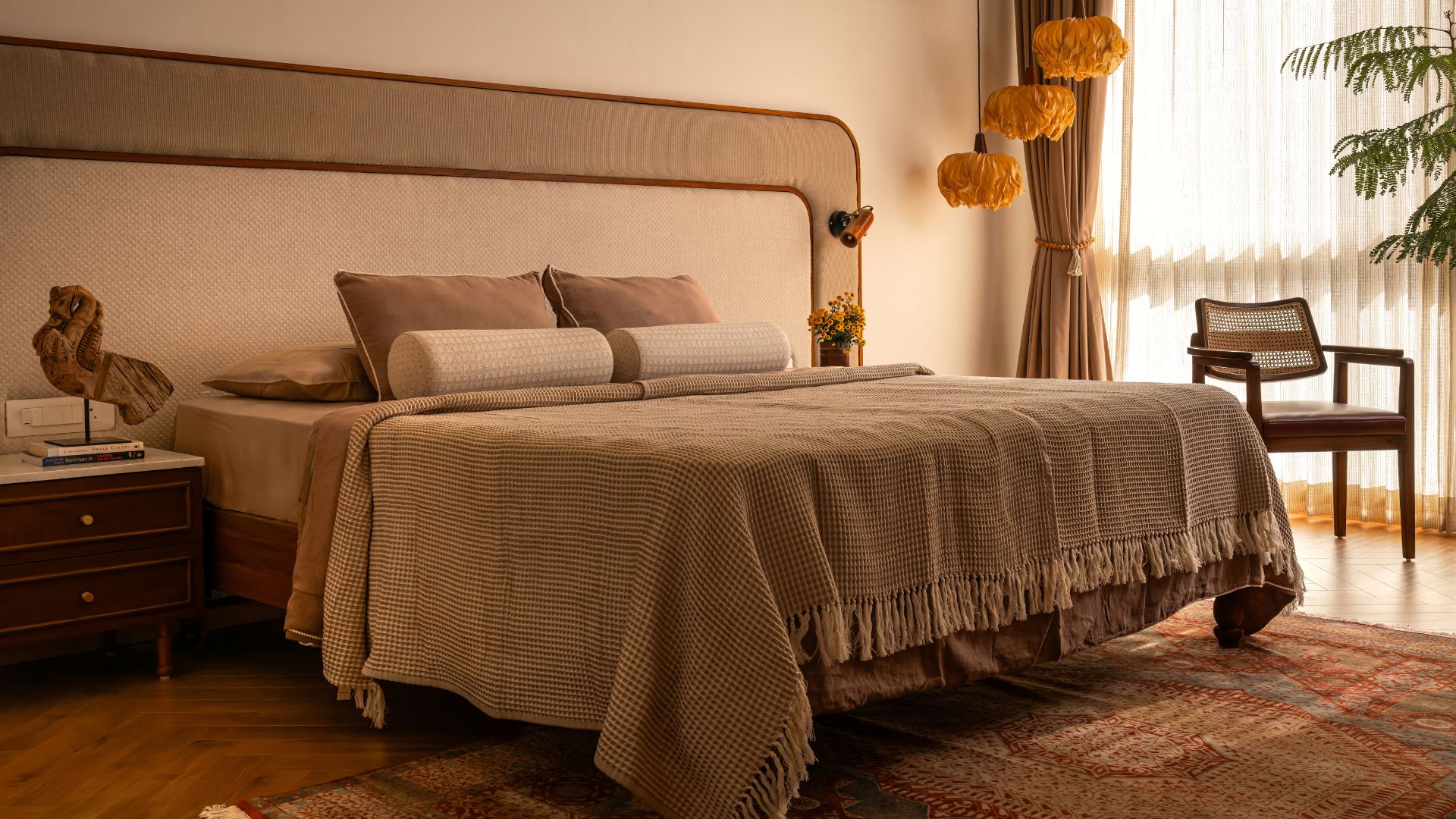
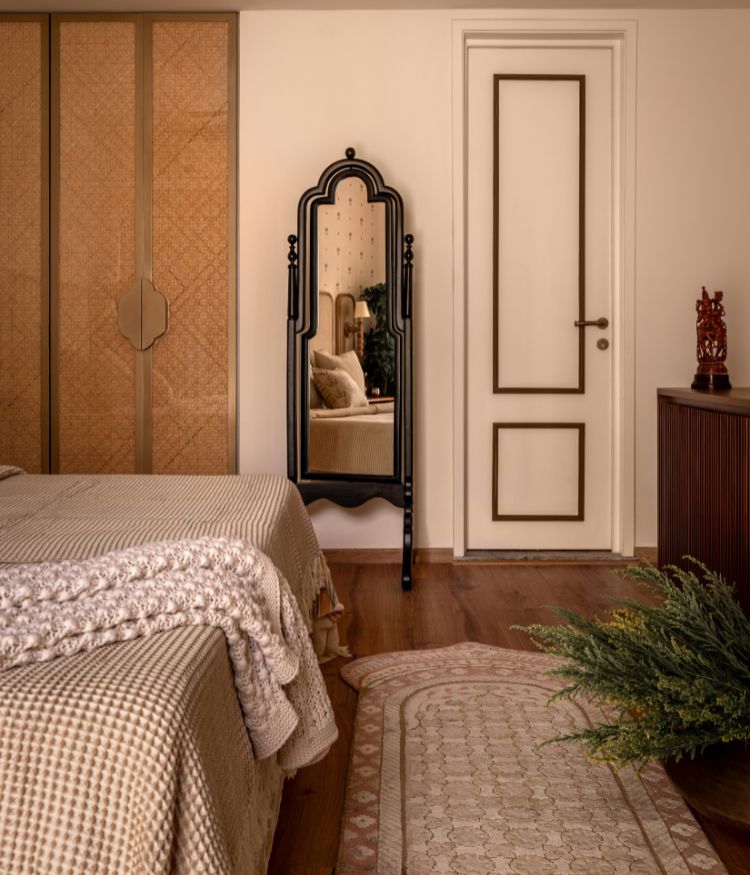
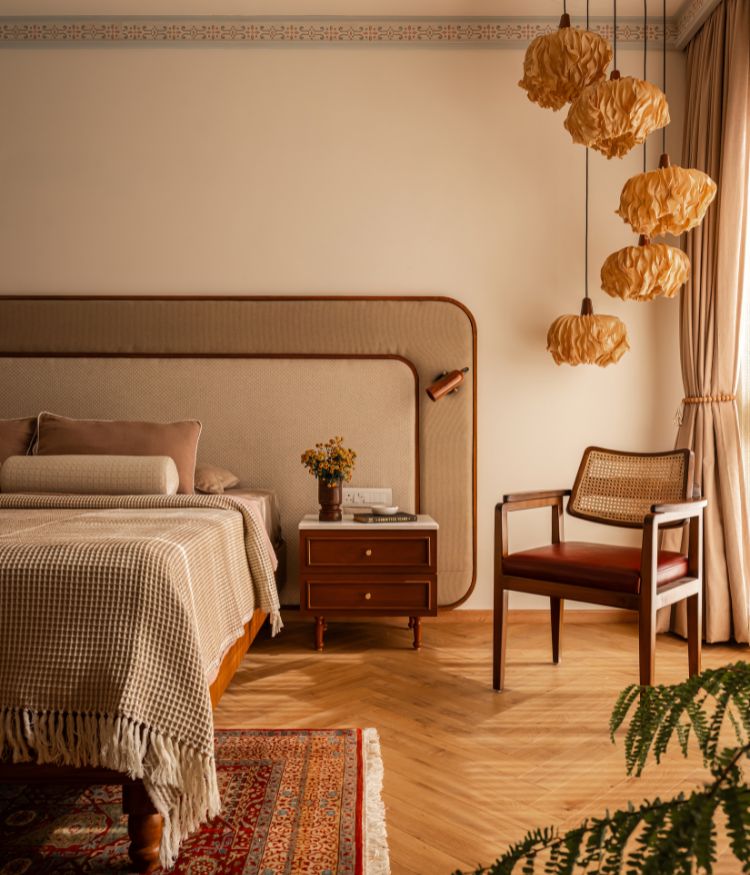
The bedroom features cane and wood accompanied by earthy tones for a restful ambience; Photography by Jubin Johnson

For the sake of lineage

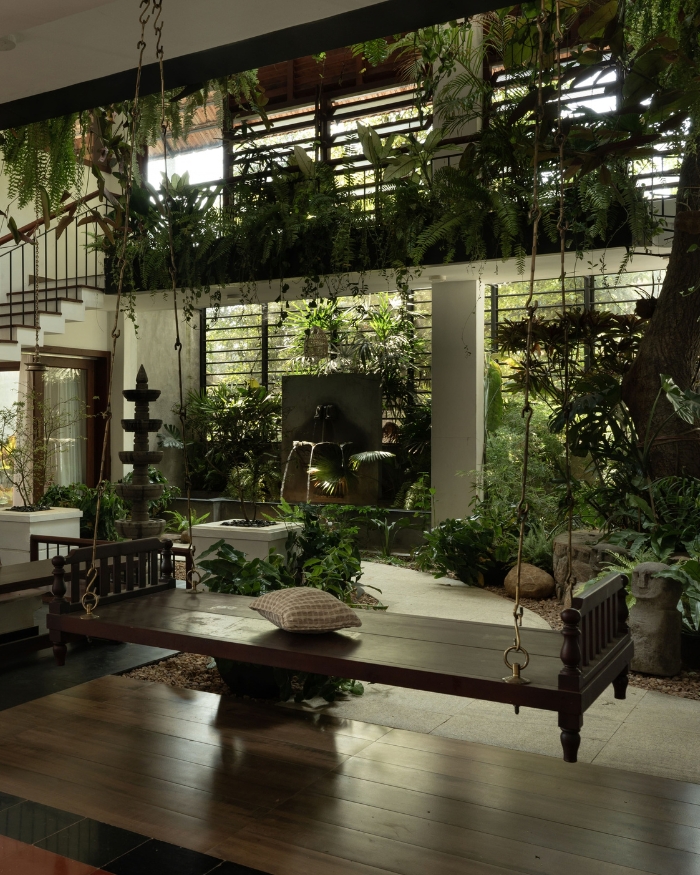
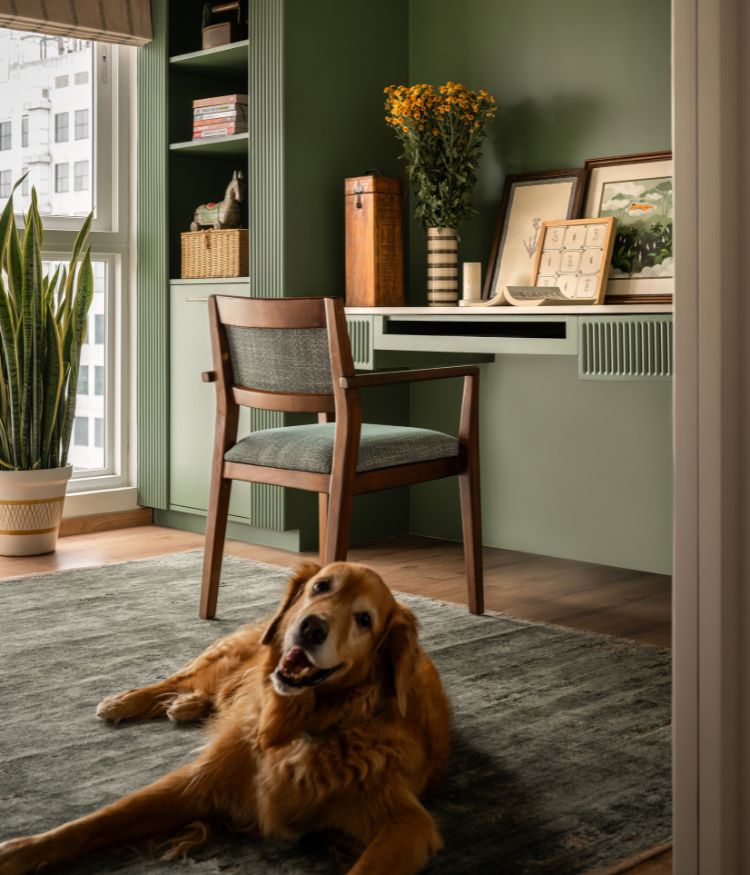
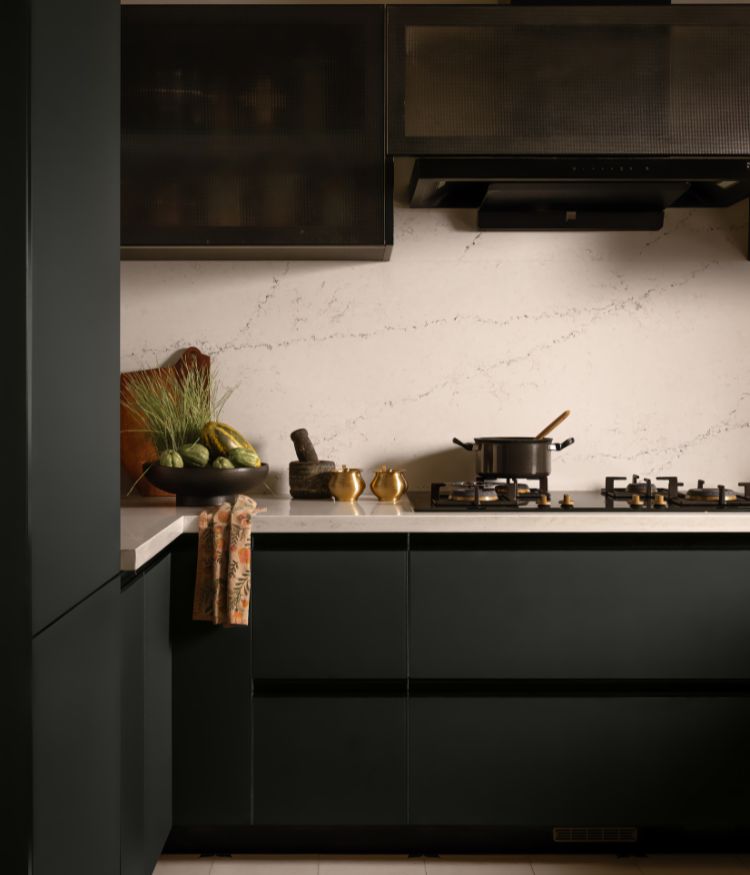
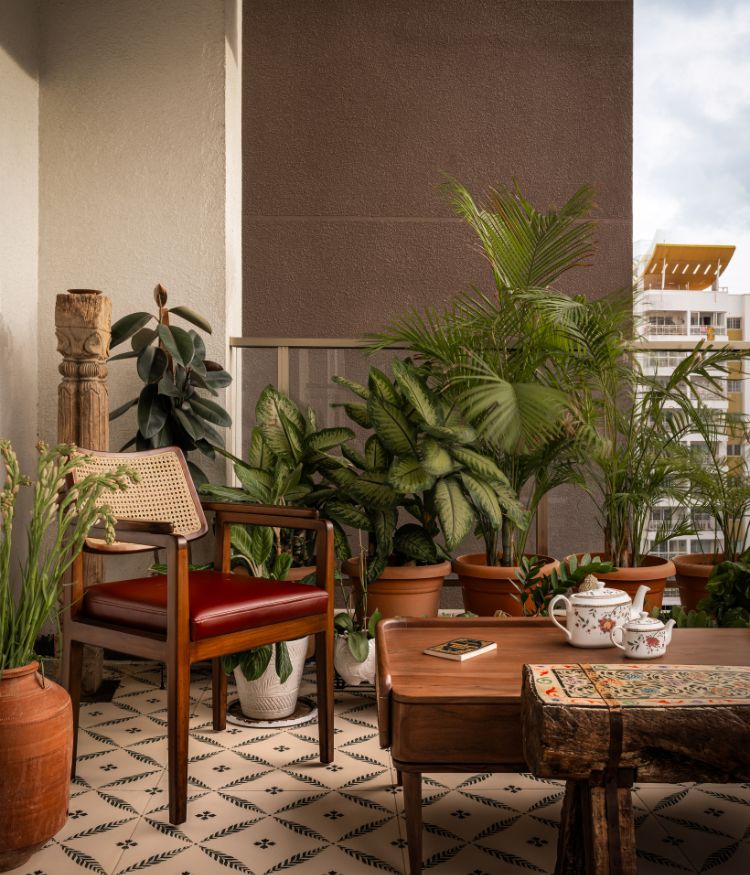
A checkered floor. A wooden chair. Leafy plants stretching toward the light. A tamba glass resting on the table as though someone had just stepped away. Familiar sculptures punctuate the space with their narratives. The kitchen continues the story in brass and copper cookware, burnished from use rather than display. It’s practical but also poetic in the way everyday rituals are when you slow down enough to notice them. The living room is warm and sociable, while the master bedroom features teakwood furniture, a detailed rug, gentle lighting and vintage vases lending it a restful dignity. The study, painted a deep green and positioned by the window, gathers sunlight through the day, making room for thought. And beyond the living area, a plant-lined balcony waits for evenings, for chai, for silence, for conversations that stretch longer than intended.

What I find compelling about Sukoon is that it doesn’t aestheticise heritage. The Chettinad references aren’t curated but rather absorbed into daily life. And perhaps that’s what groundedness really is: not replication, not a mere trend, but the faith in knowing where you come from, even as you make space for where you are.

The small study corner by the window finished in deep green keeps the space focused for work; Photography by Jubin Johnson
SHARE THIS ARTICLE

You May Also Like

Watch

No results found.

Search
Close this search box.