
Memory is a difficult thing to build with. It resists blueprints, ignores material schedules and refuses to be specified. And yet, when Thomas Parambil of Thomas Parambil Architects was asked to design a home for one’s parents on their ancestral land in Thrissur, Kerala, memory was precisely what the brief demanded.
The homeowner grew up visiting his grandparents’ tharavad; its courtyards, long corridors and unhurried relationship with the outdoors and what he wanted for his parents was not a replica, but an echo of that world. Something that felt known, without pretending to be old. And thus came along Mala, a 2,700 sq ft house named for the sensation of longing that sparked it. Spread across a single floor in a C-shaped plan, the home comprises a living room, media room, dining room, kitchen, utility and three bedrooms, each with an attached washroom.
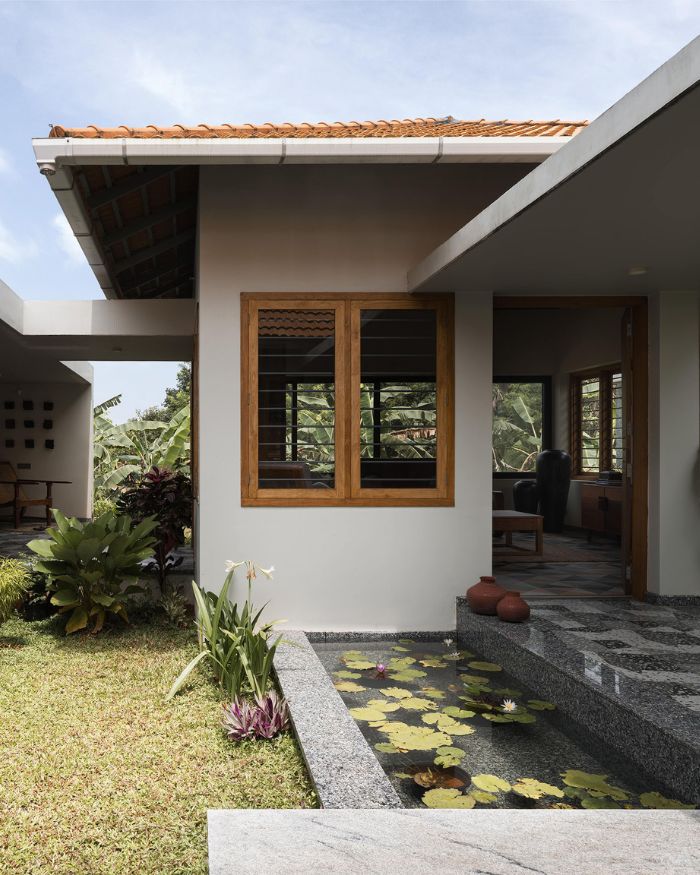
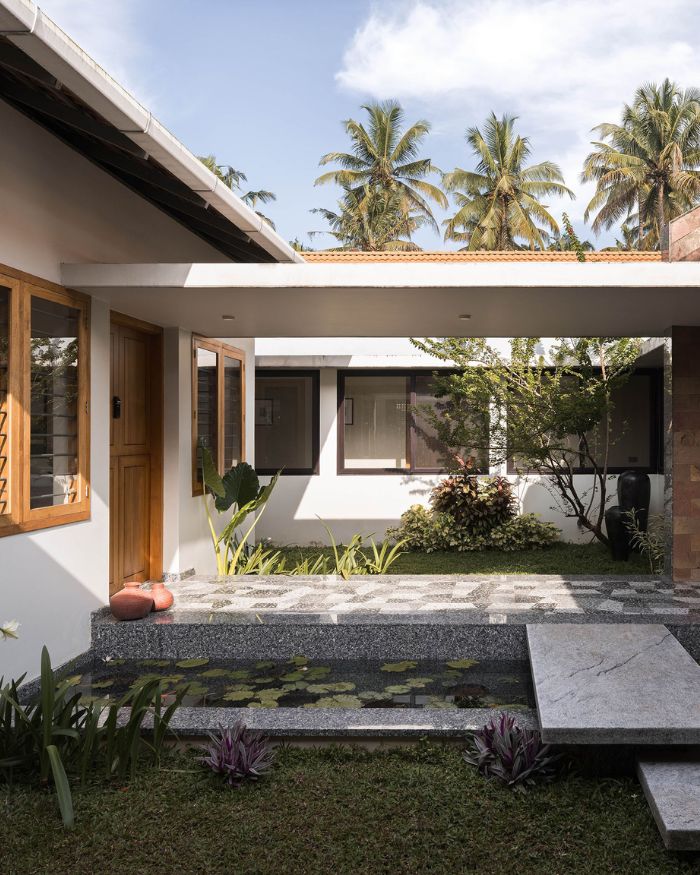
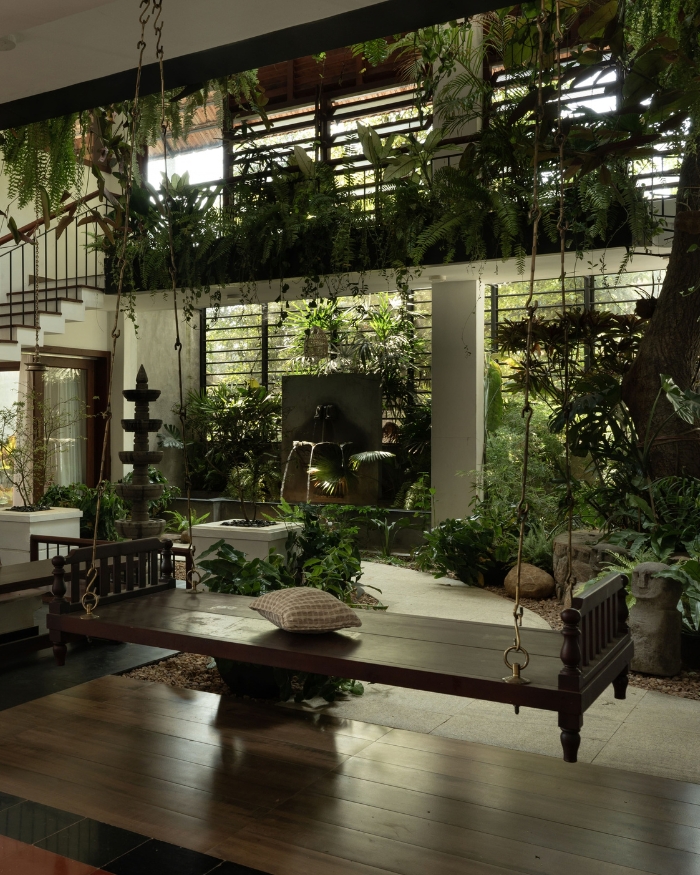
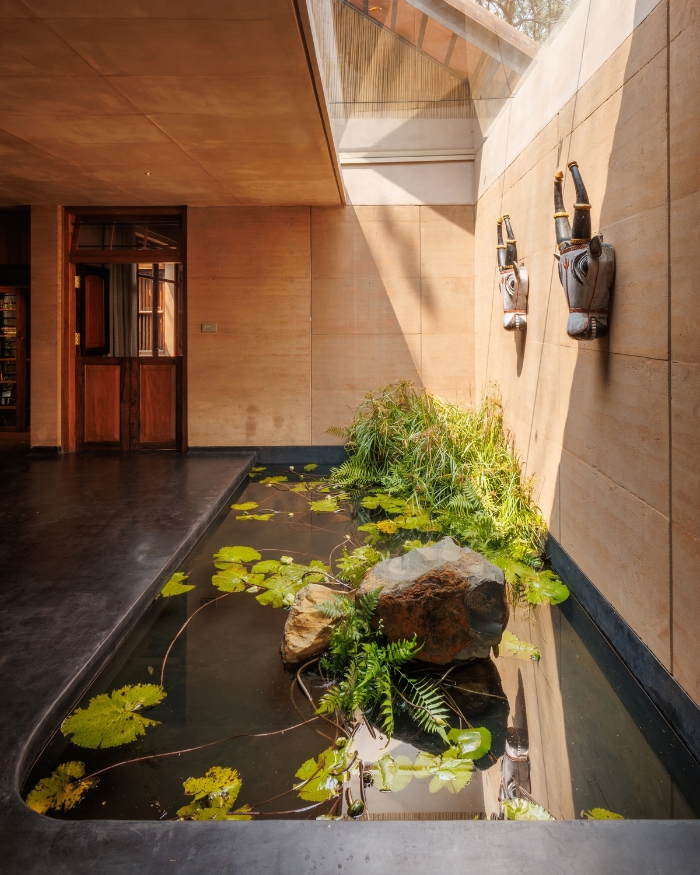
The plan organises itself around a courtyard: a green, open centre that breathes light and air into every room around it, drawing directly from the logic of the Kerala Nalukettu, but without replicating its form. A lily pond runs along the front of the house, a narrow granite bridge crossing it at the entry. Verandahs buffer the tropical heat and carry the outdoor-oriented rhythm that is particular to the rural Kerala life.
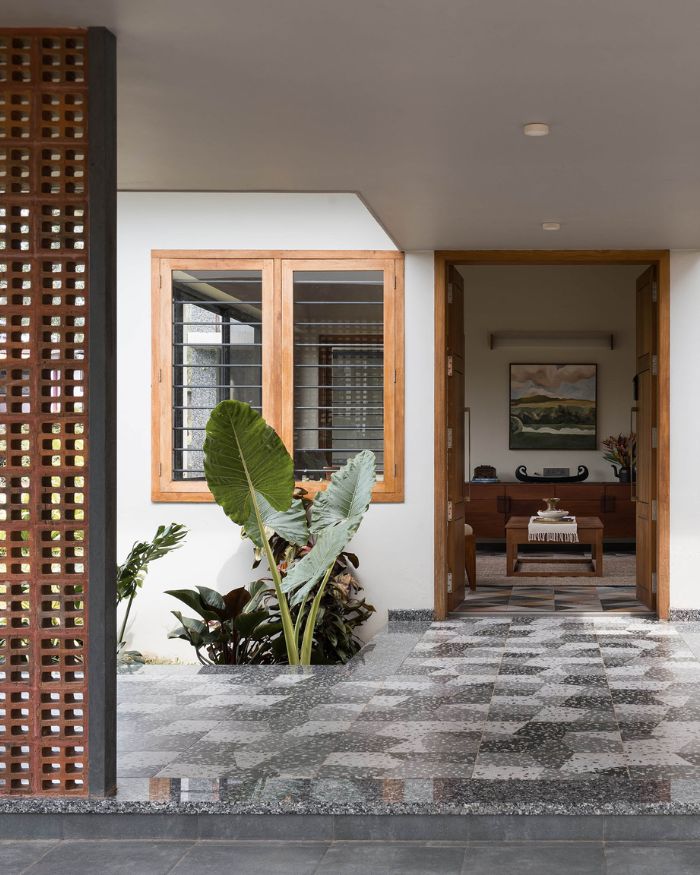
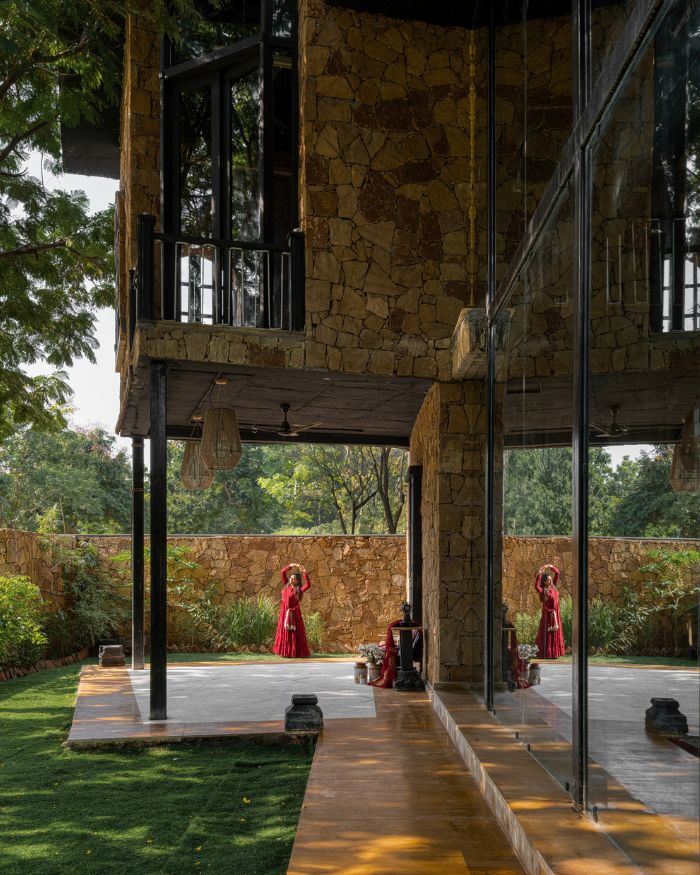
Materiality here is not an aesthetic decision; it is an act of fidelity to place. Locally quarried laterite stone forms the foundation and walls of the main block, its warm ochre surface reading differently in morning light than in the afternoon. Terracotta roof tiles pitch over the primary volume, referencing traditional form while keeping the house honest about what it is. Internally, timber and terrazzo continue the natural palette.
"Concepts like openness, simplicity and integration with the landscape are consistently carried through the spatial planning, material palette and architectural form"
Thomas Parambil
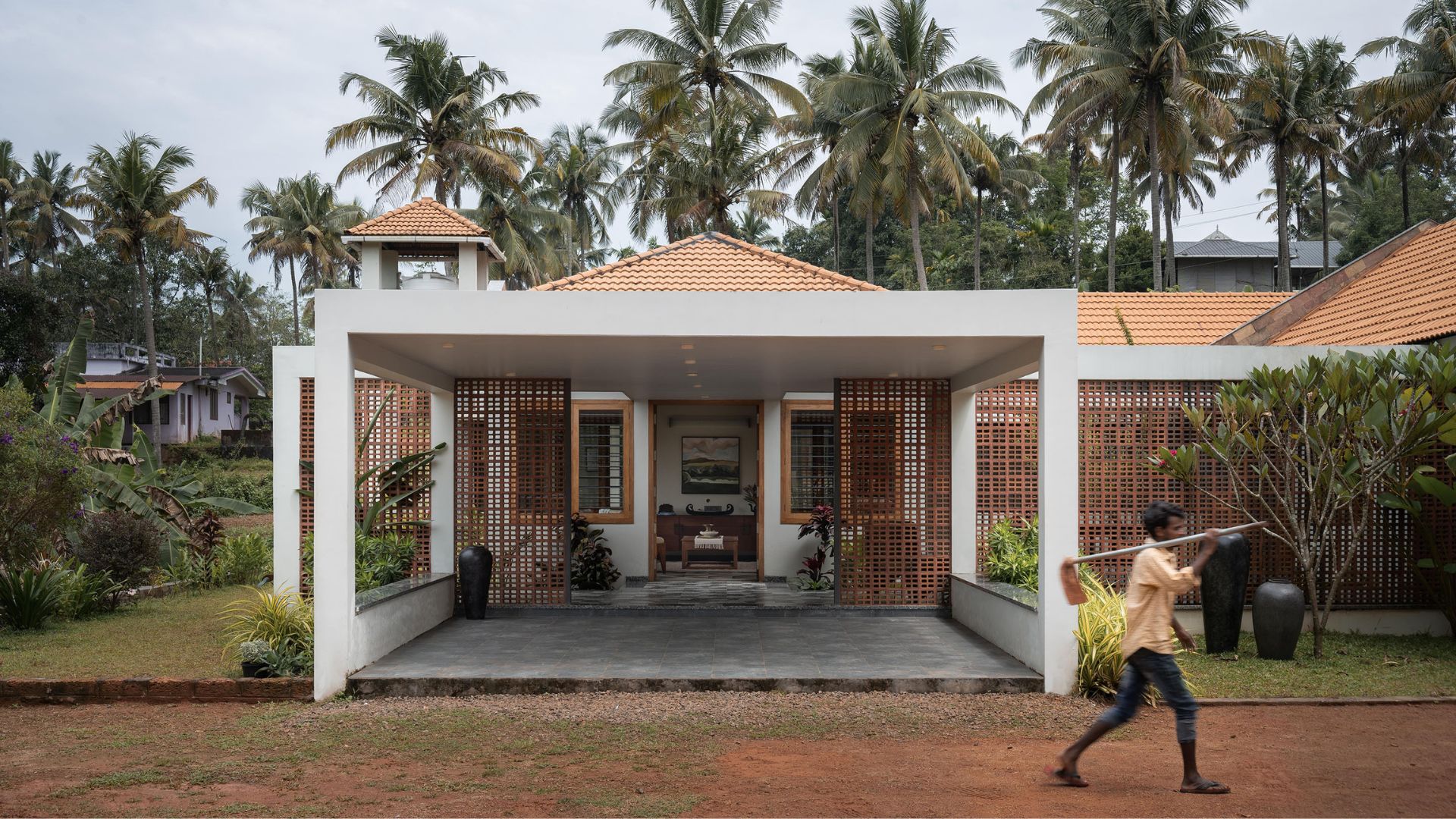
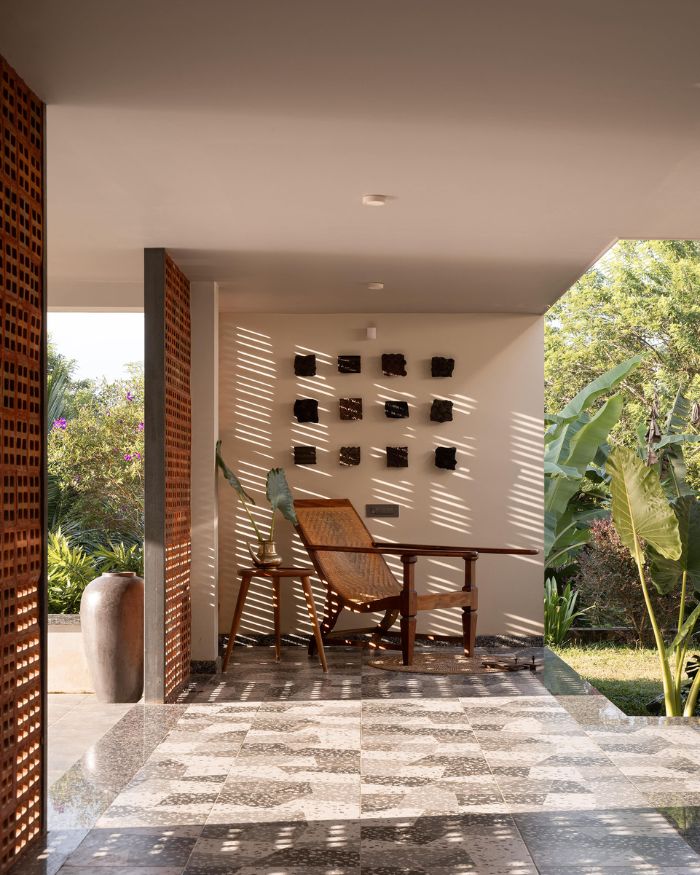
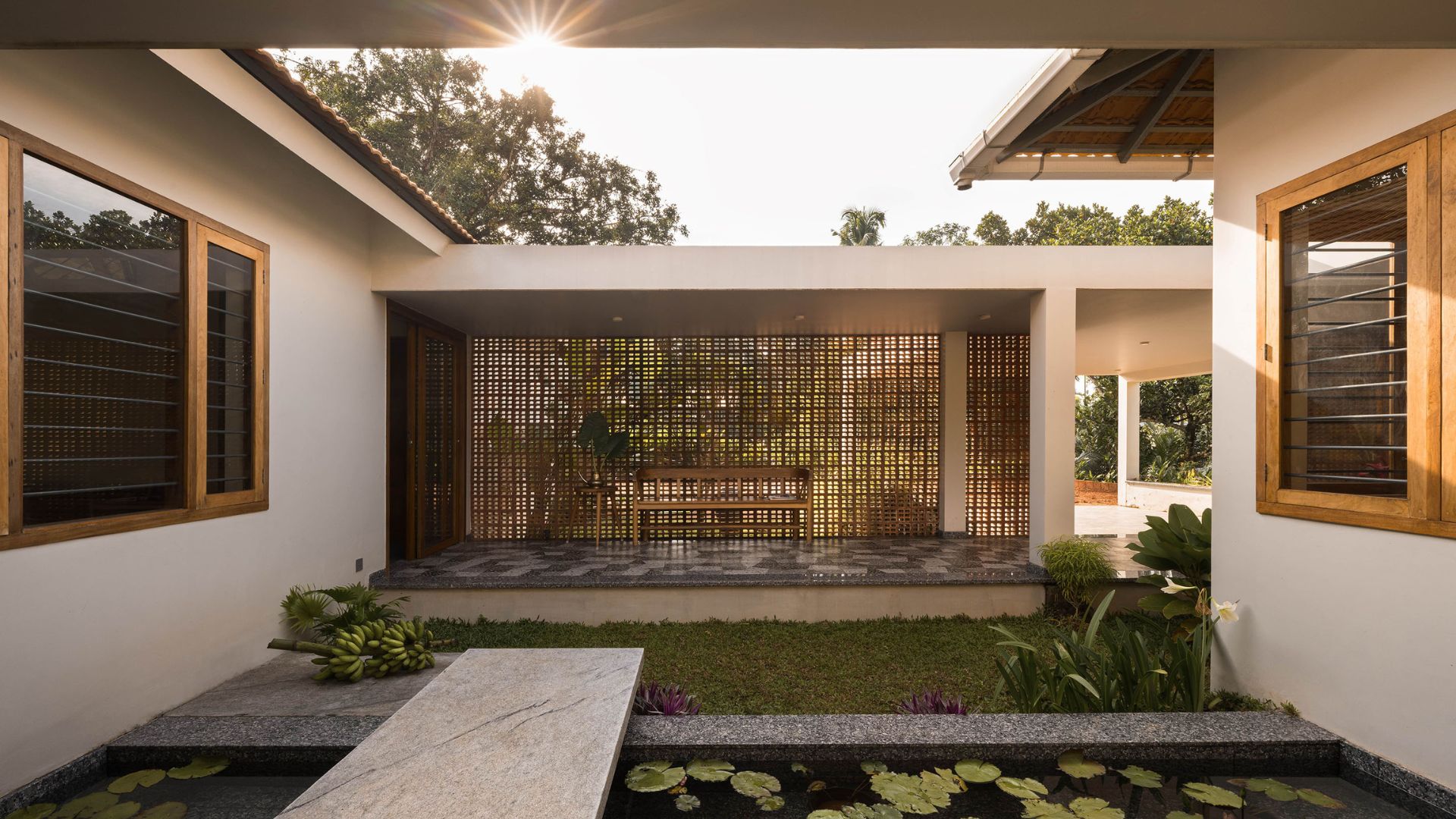
The terracotta jaali on the western verandah is the home’s most considered gesture. Positioned to filter the intensity of the afternoon sun, the perforated screen does something that solid walls never could; it makes light a participant.
Striped shadows fall across the granite floor and shift across the day, turning a functional element into something close to a sundial. A planter’s chair from local craftsmen sits within this shifting light, an artefact from Fort Kochi placed beside it, the wall behind holding a quiet grid installation of dark ceramic pieces. It is the kind of corner that rewards sitting still.
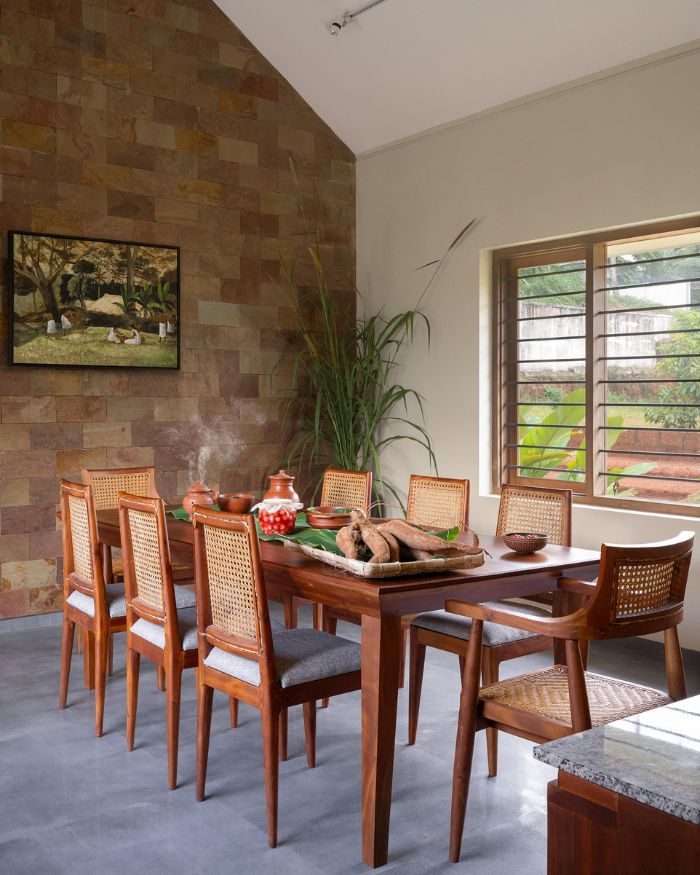
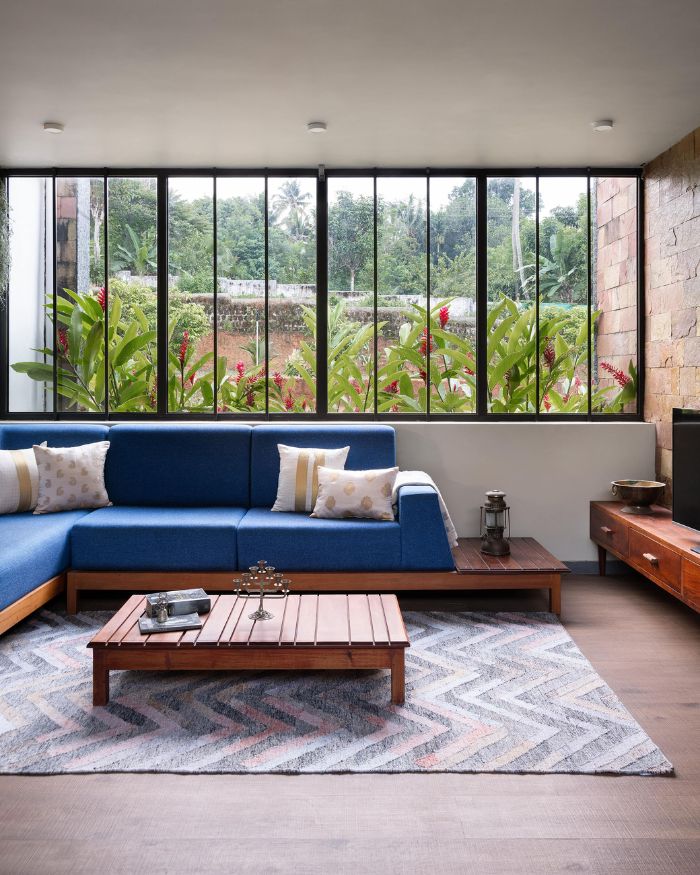
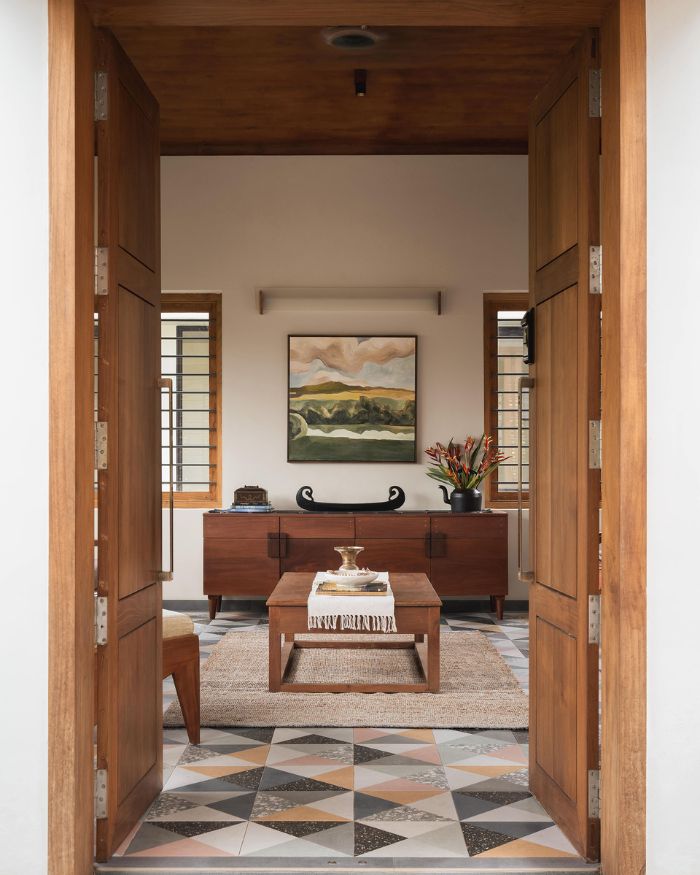
The corridor connecting the dining and living areas to the water body is the stretch Thomas enjoyed crafting the most. It is easy to understand why. Moving through the house, you are always adjacent to the outdoors; a courtyard to one side, a garden beyond a window, the lily pond at the threshold. The dining room opens to a laterite stone wall that rises into a pitched ceiling, a landscape painting from Espravo grounding the head of the table while cane-back chairs made by local craftsmen line the sides. In the living room, a cobalt blue sofa from local craftsmen faces a full-width picture window, the garden pressing close against the glass, red heliconia blooms bright against Kerala green.
From the street, the house barely announces itself; a terracotta jaali screen, a sloping roof, a suggestion of something behind the vegetation. The slope of the land tucks the building gently into the hillside, making it discreet in the way old houses are. Mala is not a reproduction of a tharavad. It is what remains when the memory of one is held carefully and translated not into stone and tile, but into the particular quality of light on a verandah floor and the sound of water just outside the door.
Read more: i2a Architects Studio shapes a home around its existing landscape, letting trees guide its form
No results found.