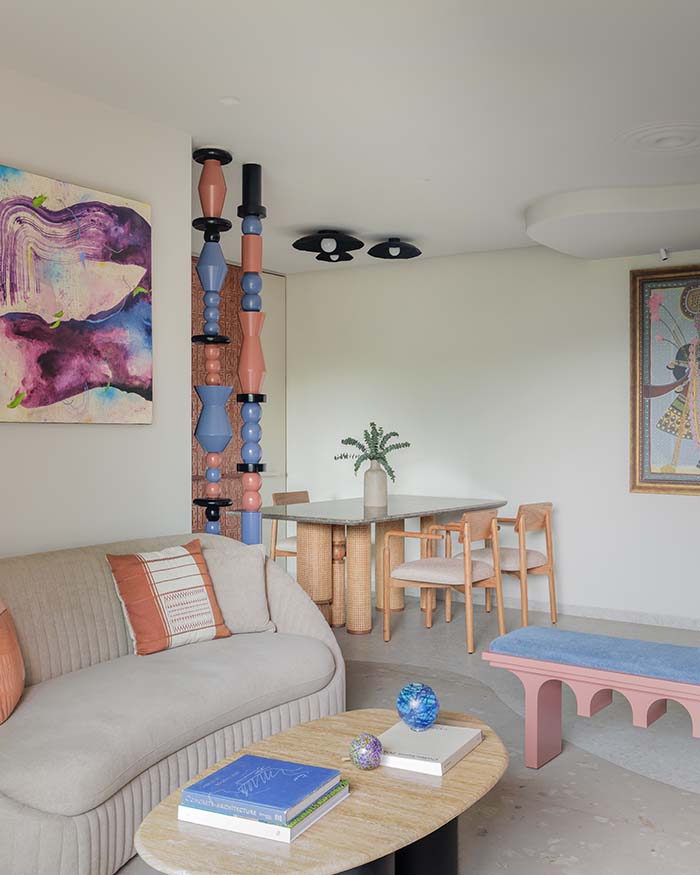

The spirit of this home seems to wake with the light. Slipping in through tall windows and pooling across pale stone floors before settling against sun-washed walls in blush tones, the light traces the curves of the sofa and sculpted surfaces. Located in suburban Mumbai, this 1,100 sq ft apartment is envisioned by Principal Architects Sameer Balvally and Shilpa Jain Balvally of Studio Osmosis. And true to its name, Flow Haus, it is guided by the language of movement, expressed through fluid transitions, repeated forms and a harmonious spatial flow.
With Mediterranean influences at its core, the home leans into materiality that feels steeped in time. Colours seem carried in from the coast: terracotta recalling clay vessels, pale blue echoing open skies and chalky white walls reminiscent of salt-worn shores.
“At the heart of Flow Haus lies the idea of movement and continuity, explored through spatial planning and visual language”
Sameer Balvally and Shilpa Jain Balvally
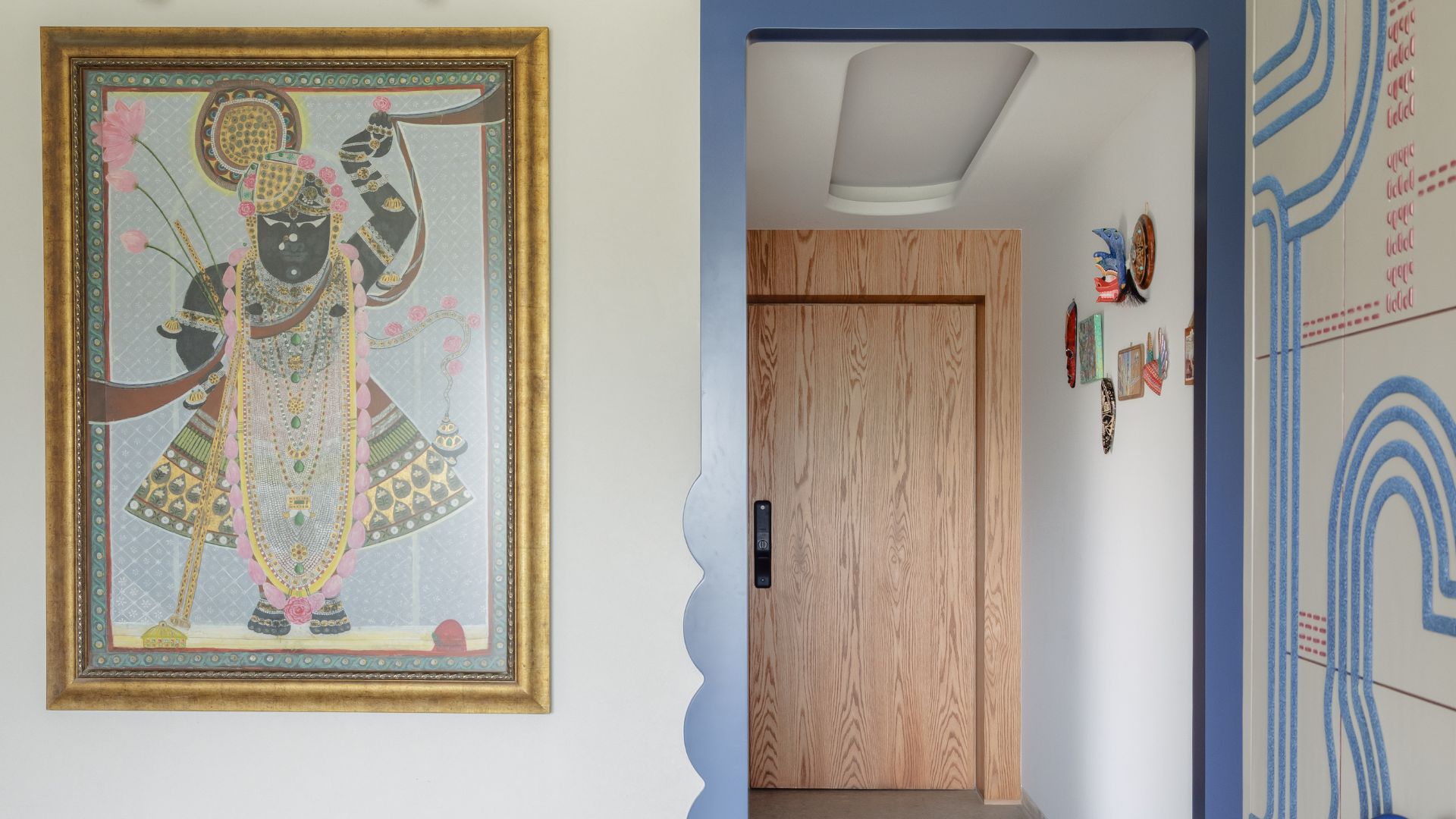
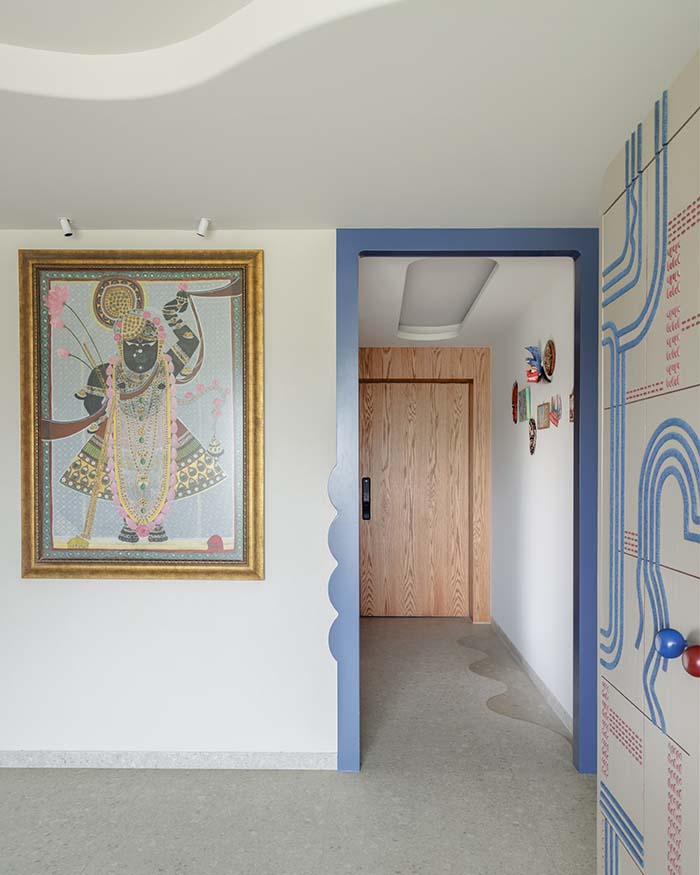
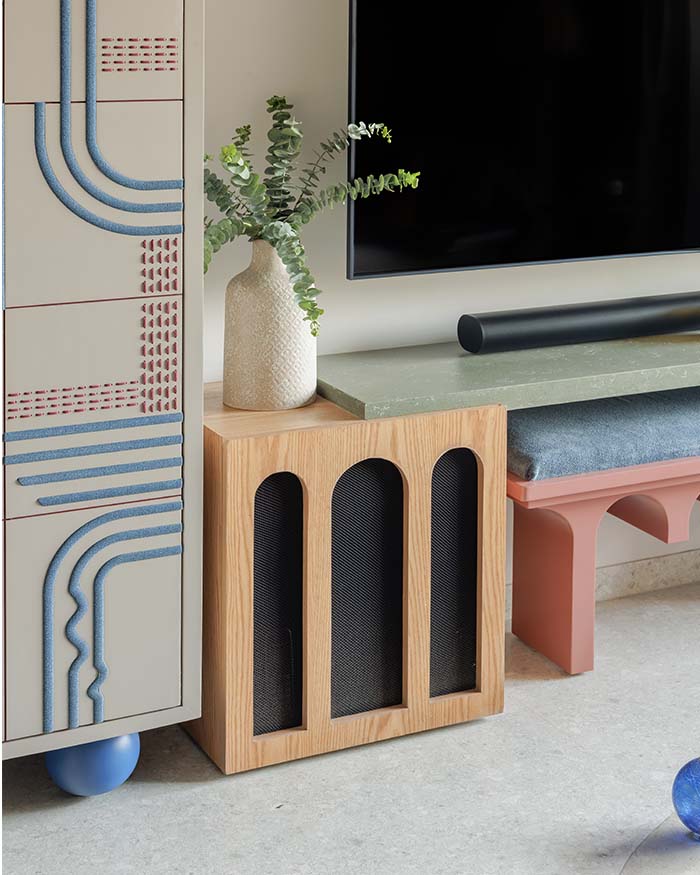
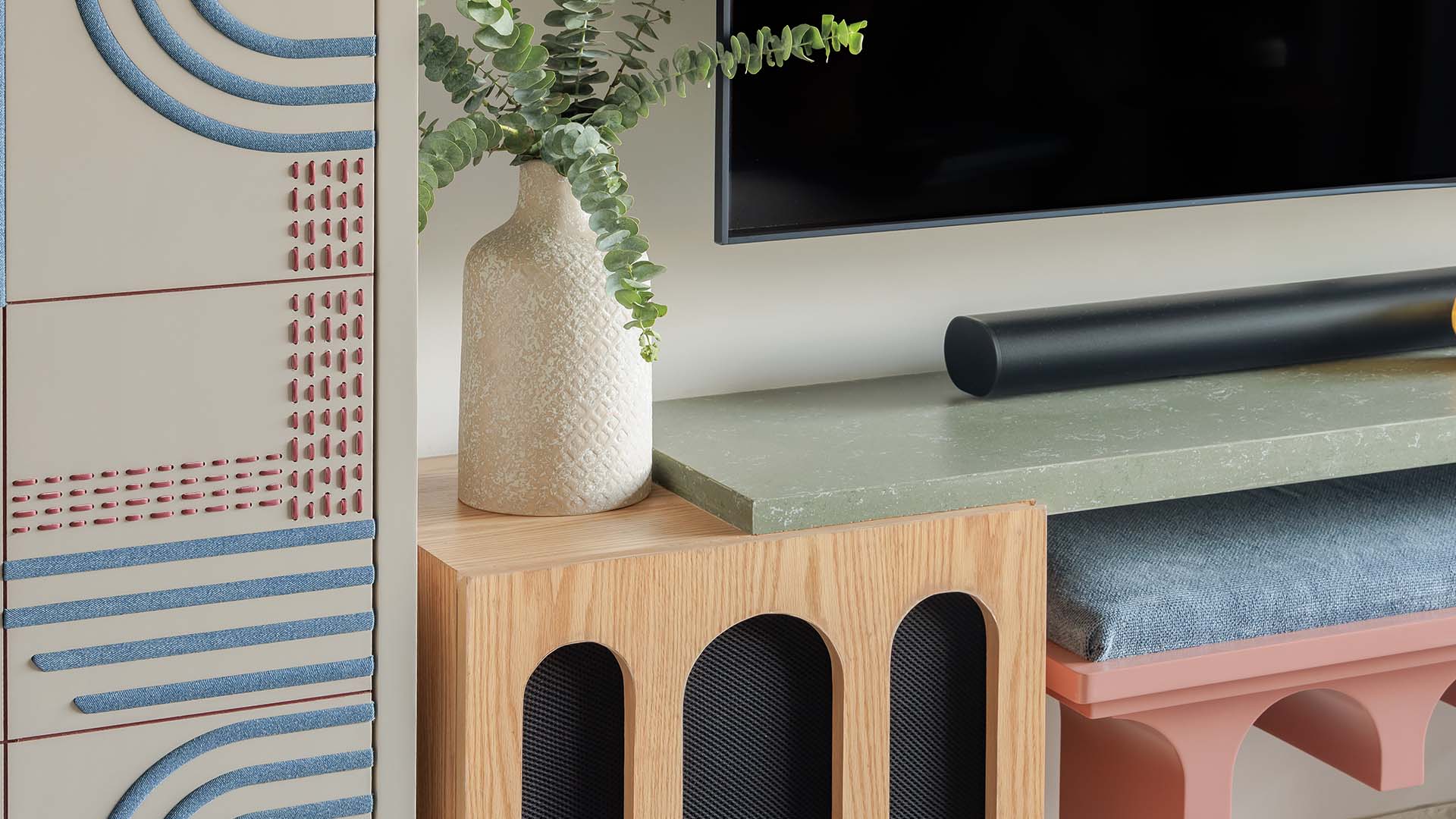
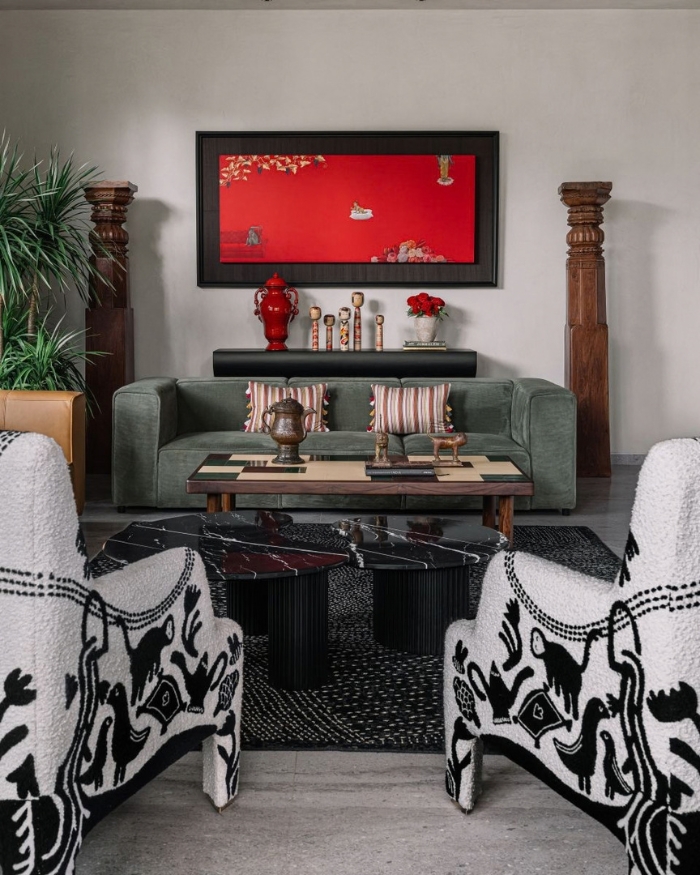
Tucked within Oberoi Splendor, Flow Haus unfolds as a reimagining of a compact three-bedroom apartment. Reworked to better reflect the family’s love for hosting, it is visualised as a space that could hold the family’s warmth. As Sameer and Shilpa recall, “At the heart of Flow Haus lies the idea of movement and continuity, explored through spatial planning and visual language.” At the entrance, a wardrobe introduces this language immediately. Its routed lines travel across surfaces, setting up a rhythm that carries forward. The living room emerges as the social heart of the home. Treading further, a custom bar unit frames the space. Its material layering and curved geometry lend it a sculptural presence. Nearby, the television wall is designed to adapt, concealing sound systems while revealing a pull-out bench that extends the room during gatherings and impromptu karaoke evenings.
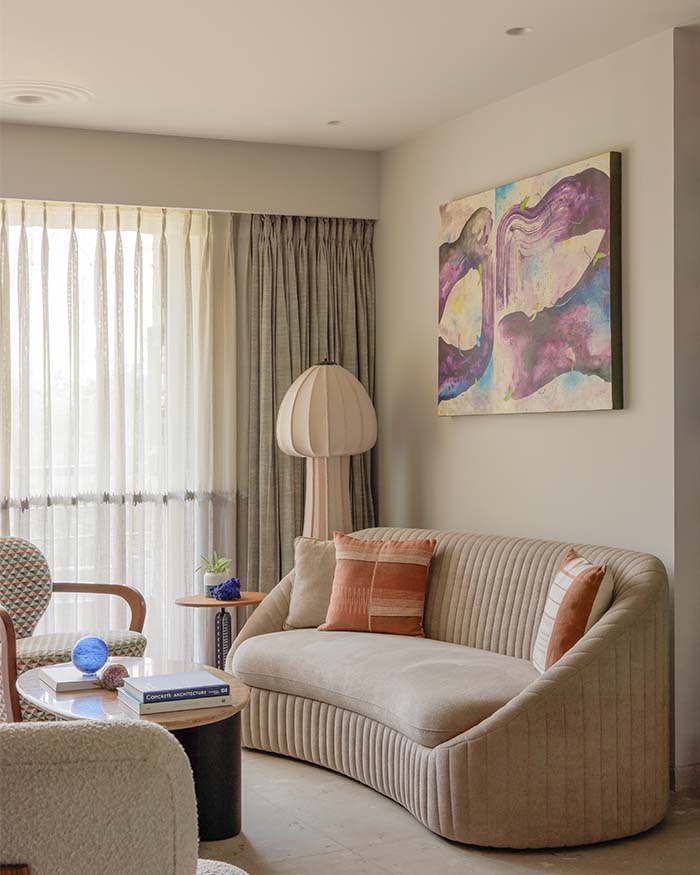
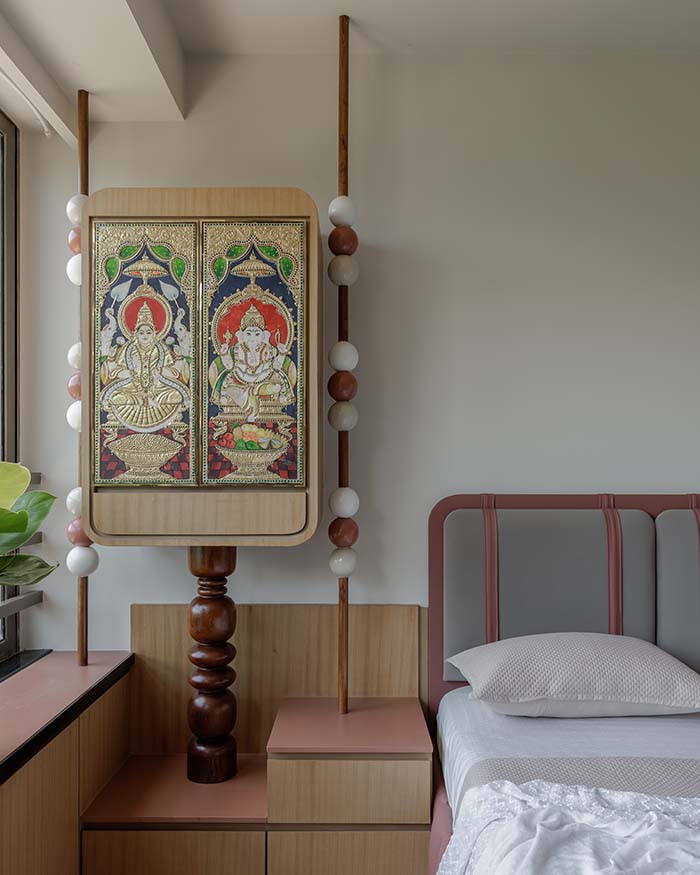
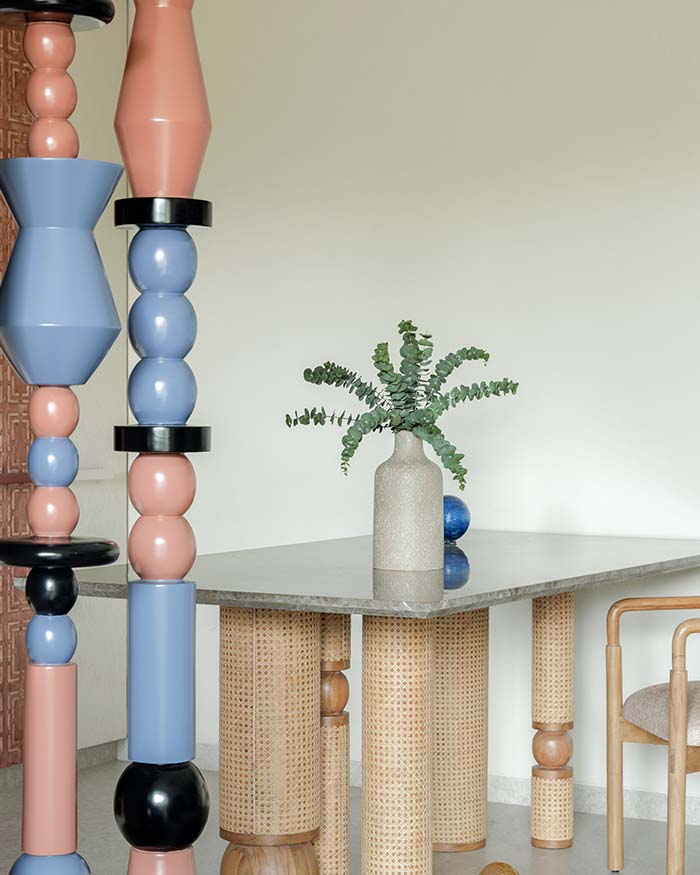
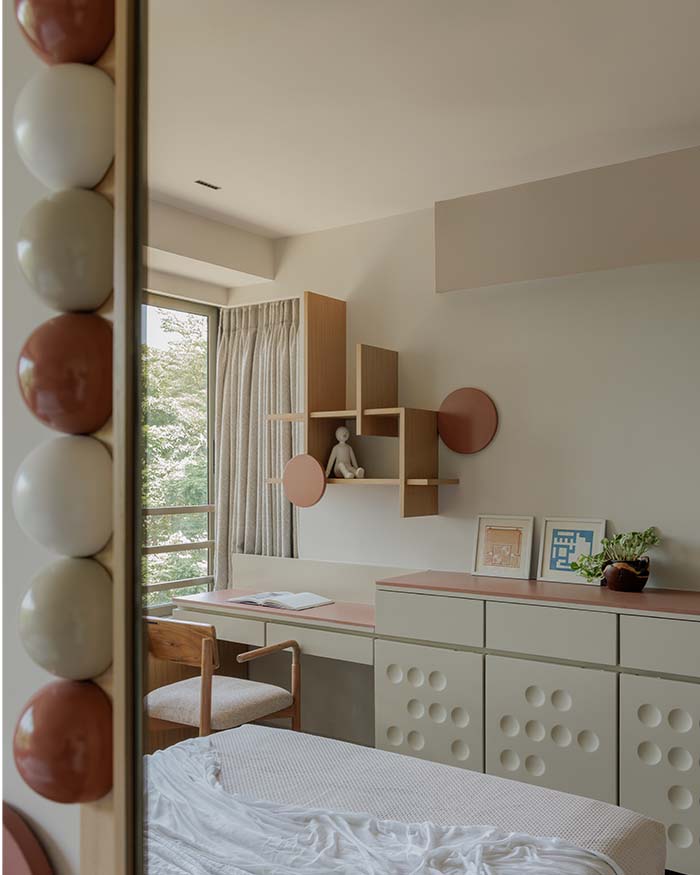
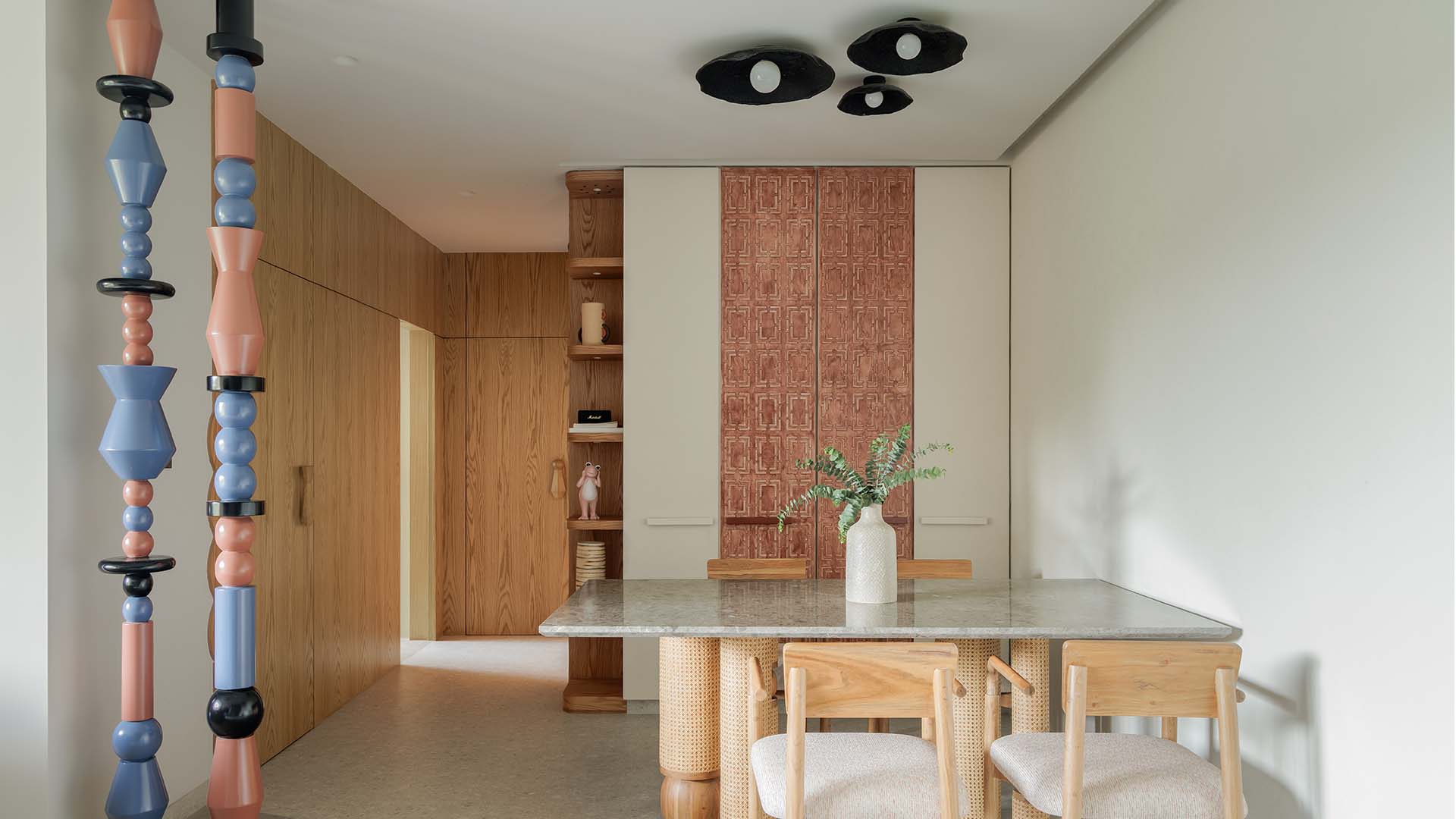
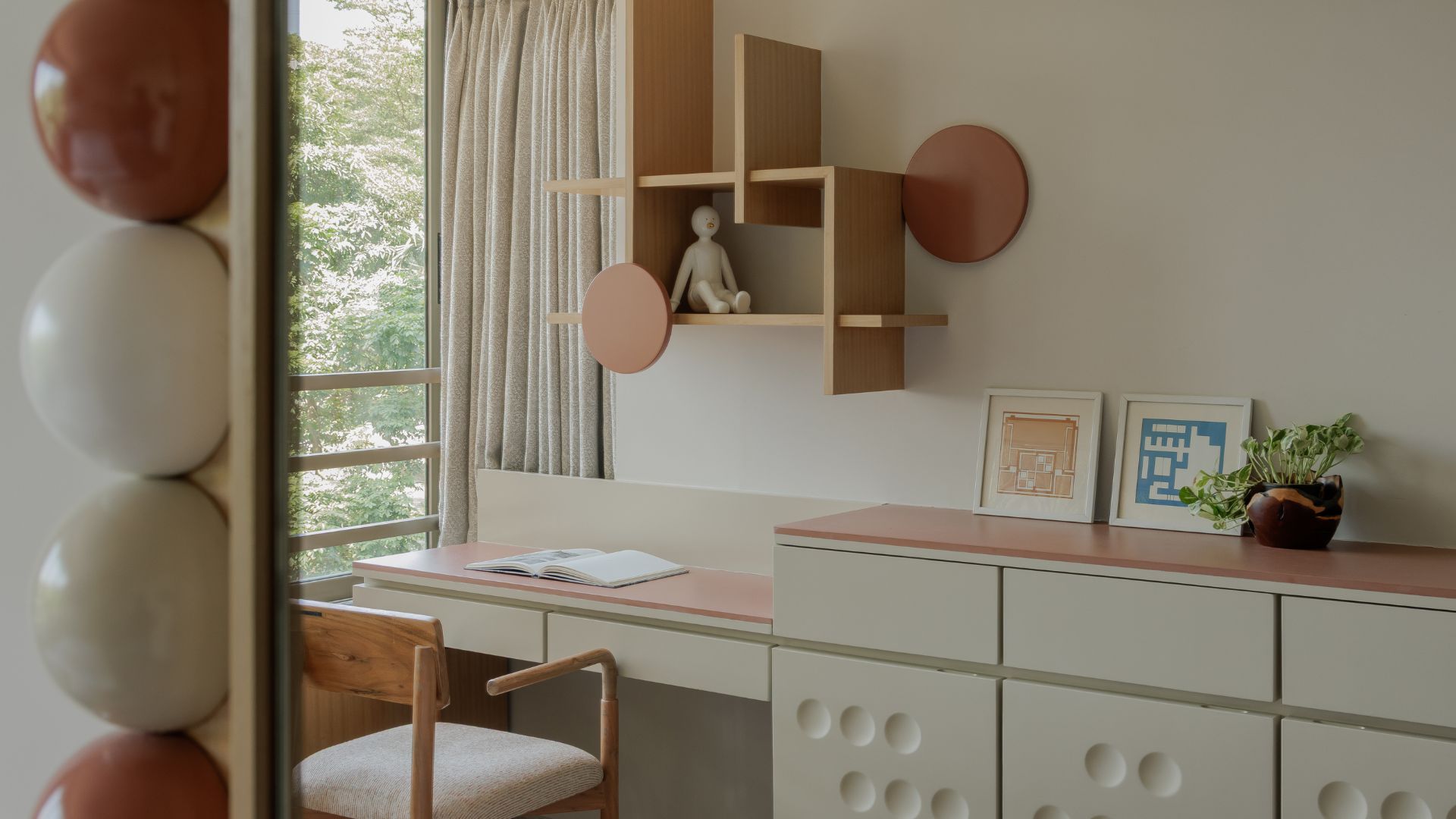
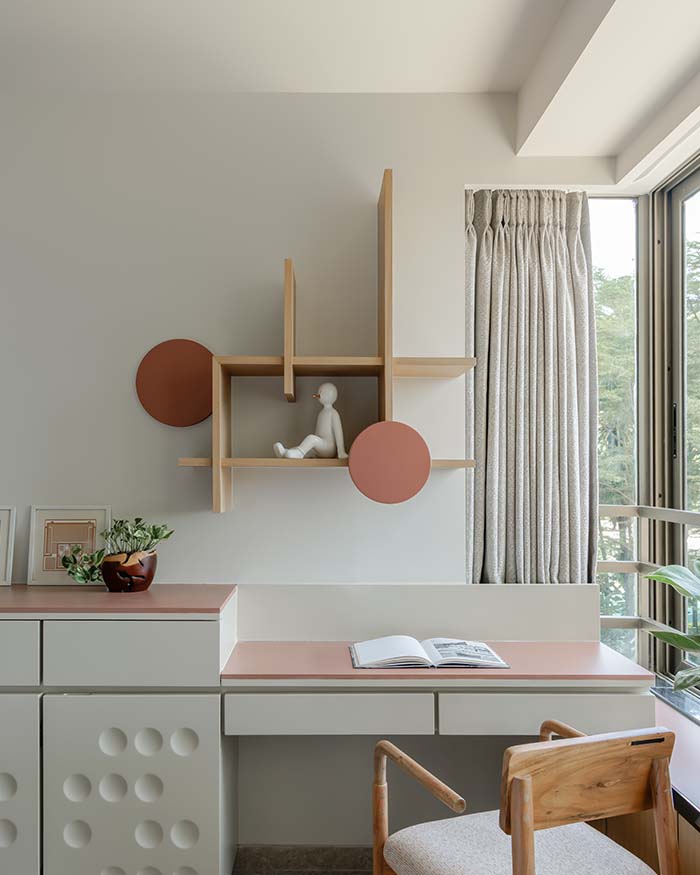
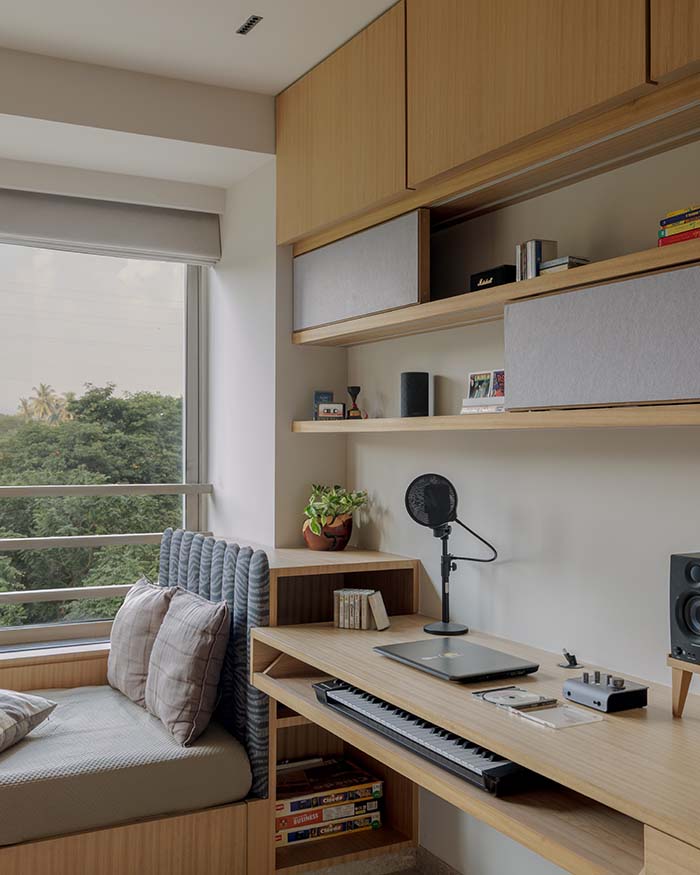
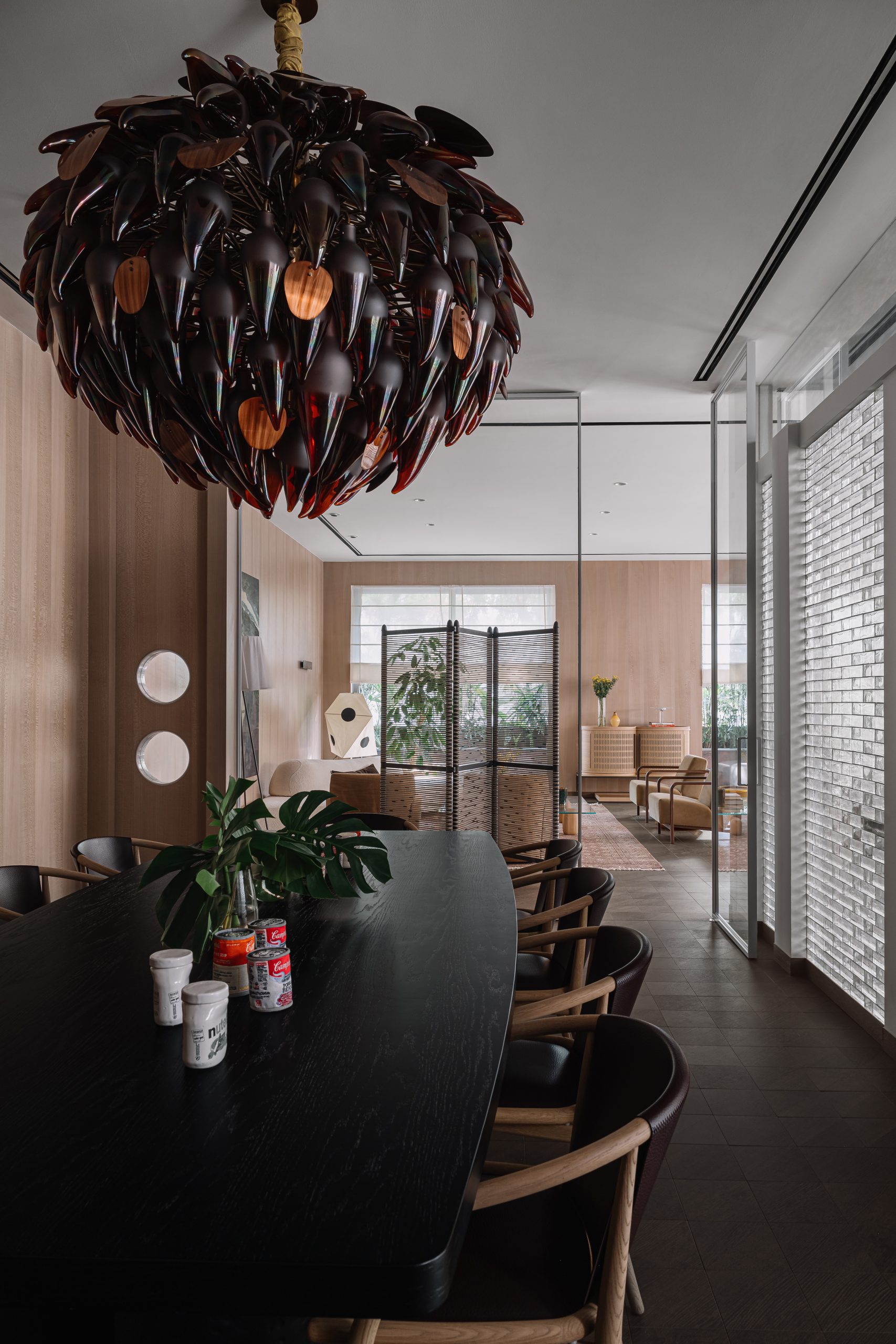
This openness flows into the dining area. Cane, wood and veneer come together in balanced proportion with overhead lighting echoing the home’s continuity. The transition into private spaces is more subdued. In the master bedroom, a patterned veneer partition introduces zoning, integrating storage and media while maintaining openness. In the daughter’s room, a window-aligned desk draws in daylight, complemented by cabinetry detailed with circular indents and blush-toned laminates. Floating shelves extend this visual language, pairing linear surfaces with curved forms. A Tanjore artwork, repurposed as a mandir shutter, brings a note of tradition within the contemporary setting. The second daughter’s room is conceived as a composition studio. Here, the design and acoustics are seamlessly integrated. Fabric-wrapped sliding shutters conceal acoustic panels within built-in shelving, maintaining performance and visual precision. A custom desk supports musical equipment, while a window-side daybed creates an introspective corner.
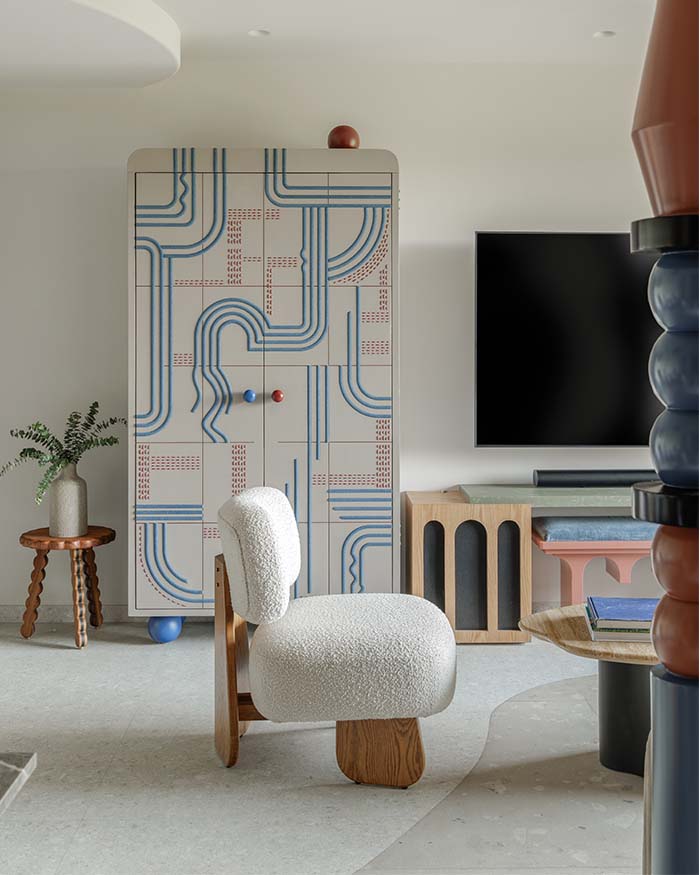
Materiality becomes the thread that binds the home together. Underfoot, a textured stone flooring runs uninterrupted, creating a continuous visual base that grants the spaces to feel expansive despite their compact footprint. This unified aesthetic is carried upward through veneer-clad joinery. Here, surfaces are gradually articulated through carving and routing, transforming otherwise flat planes into expressive tactility. Flow Haus is defined not by a singular gesture, but by the way it is experienced over time. The design explores texture through a lens of restraint.
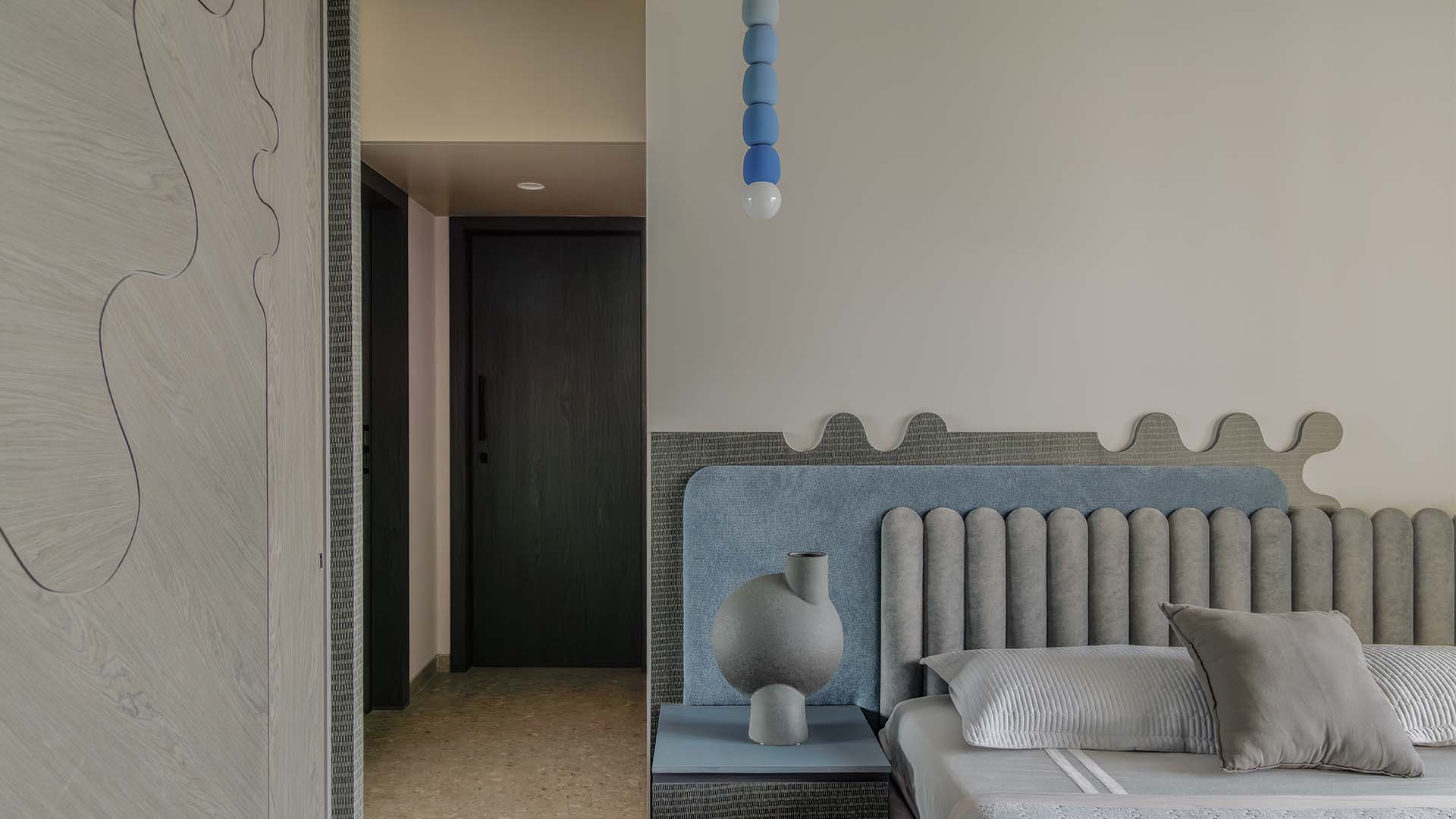
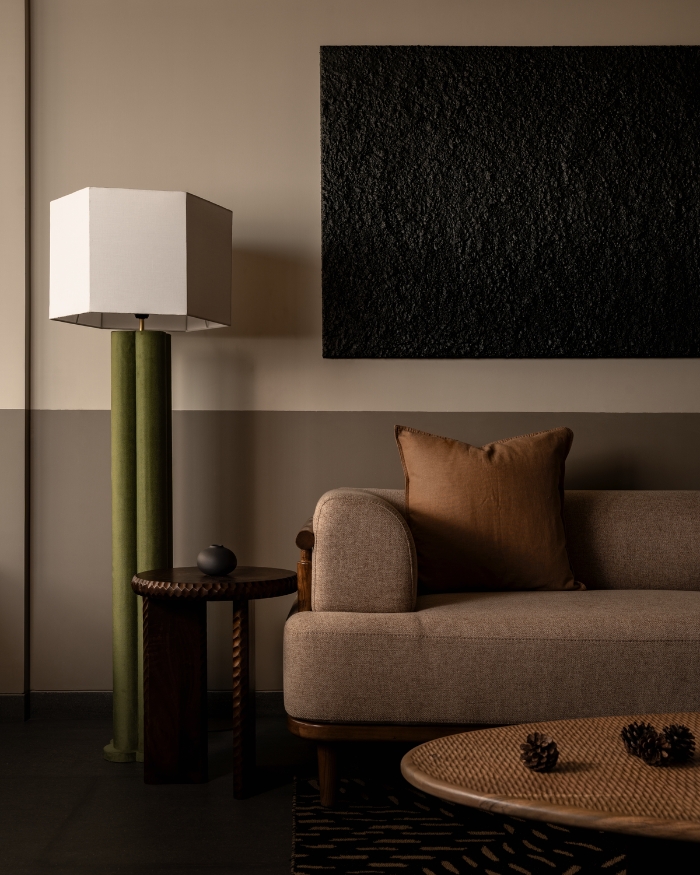
Fluted details, green stone surfaces and blurred edges introduce depth while preserving the home’s calm. In the dining area, custom light fixtures hover above as suspended forms, reinforcing the sculptural undertones. Within the master bedroom, layered materials create a subdued, calming environment. Muted blue tones, textured greys and blush accents work together through curved detailing.
The mandir is integrated into this vocabulary, etched with flowing contours. Bathrooms continue the narrative through contrasting palettes, combining textured surfaces, tonal stone and warm metal finishes to create refined spaces that feel effortless.
The transformation didn’t stem from a need for more space, but from a desire to feel differently within it. With a series of conversations about warmth, about togetherness, about what it means to feel at ease in one’s own home. The home comes most alive in moments of living. The pull-out bench, the layered bar, the listening nook by the window, each element waits until it’s needed, then becomes part of a larger moment.
What feels composed during the day expands effortlessly at night, holding more people, more voices and more energy without feeling strained. It resists the feeling of limitation. Instead, it stretches: visually, spatially and socially. What begins as a contained plan gradually releases itself through movement, enabling spaces to feel expansive, pulling beyond what the eye can measure. This is where flow stops being an idea and becomes a sensation, as something deeply felt. It is expressed through the home’s seamless adaptability, where stillness and activity coexist within a singular, composed frame. The environment doesn’t feel staged; it feels ready. Ready for people, for laughter and for moments that arrive unannounced.
Read more: You can eat art at this new restaurant
No results found.