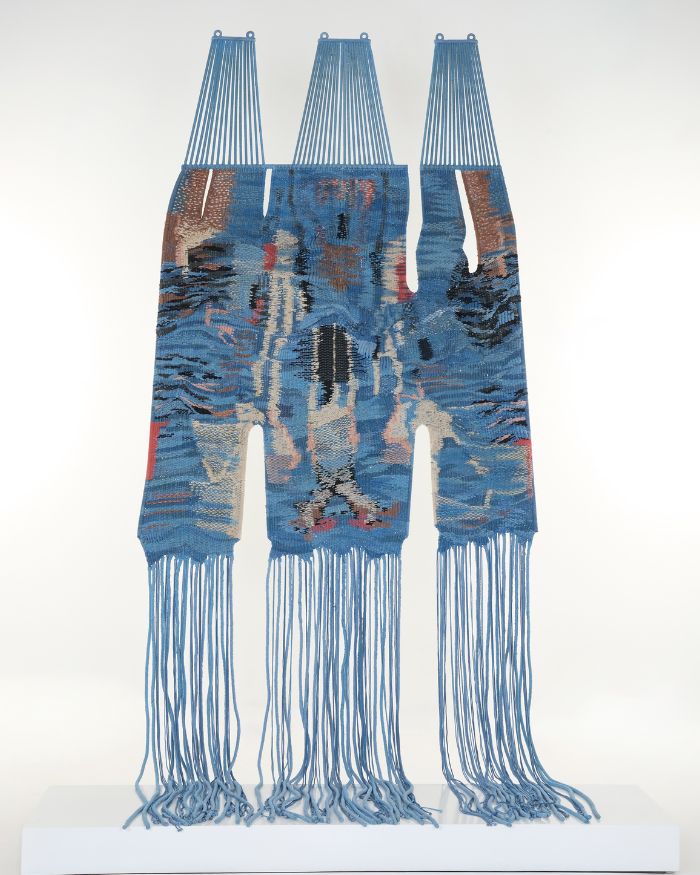
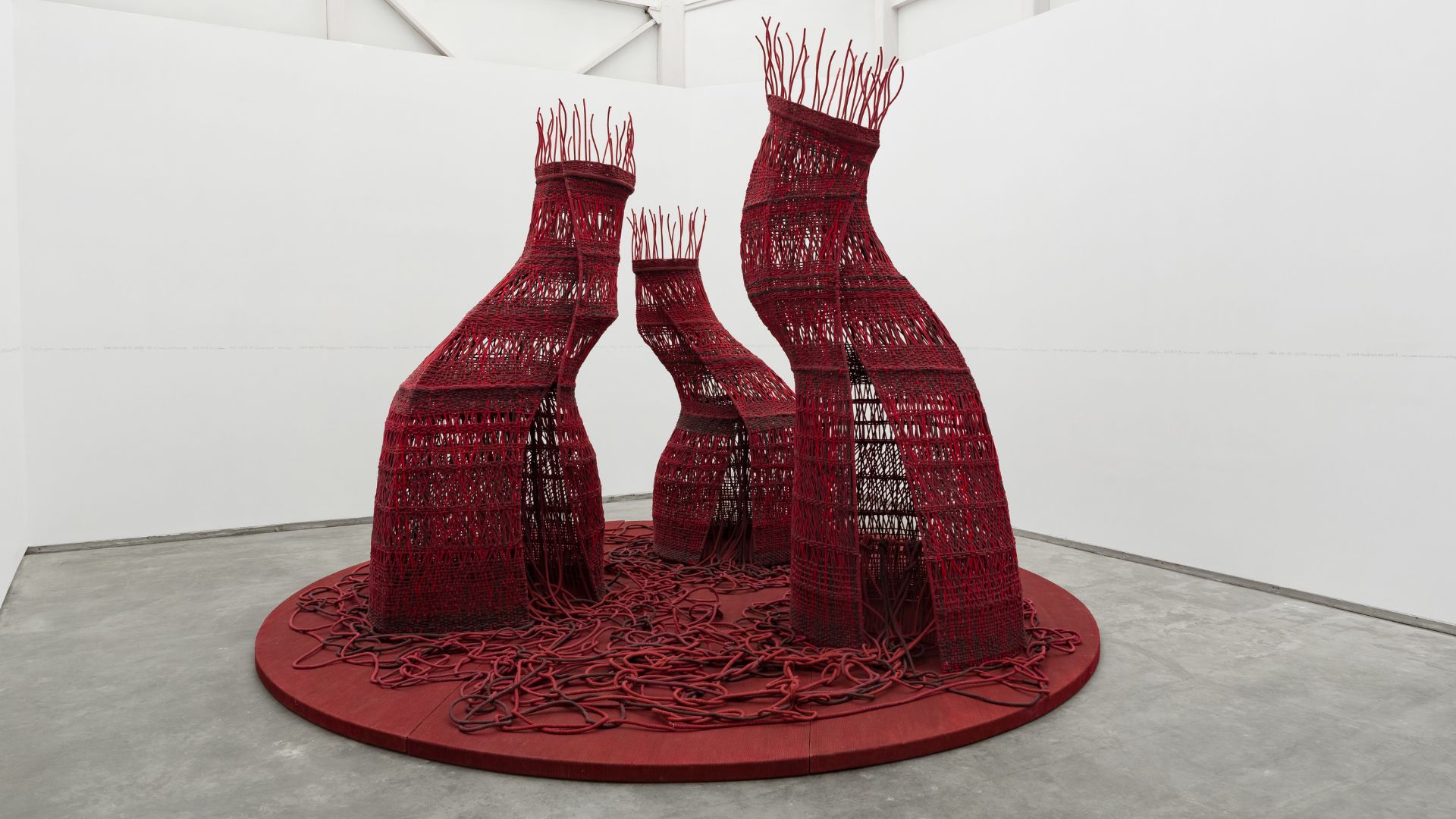
Dwelling: Hand-sculpted armature wrapped with cotton thread; Photography courtesy of Chanakya School of Craft

Where the thread comes from

In Kolkata, Chanakya School of Craft traces the generational skill of weaving and the women who have long sustained it

BY

To trace a line of thread is to follow a lineage of knowledge, especially one that has always moved through women’s hands. Long before authorship, archives, or institutions, women were recording the world in cloth, across cultures and centuries. Few human inventions carry our imprint across time as intimately as textiles: they absorb the personal alongside the collective, holding memory, labour, ritual and care within their fibres. For the Chanakya School of Craft collective, this history is not metaphorical but is, in fact, a lived inheritance. Trace, the collective’s debut solo exhibition in India, begins from this premise: women have always carried these lineages forward, often invisibly, embedding shared histories into cloth while remaining absent from the narratives that celebrate the finished work. Led by Karishma Swali, Chanakya School’s practice sits at the intersection of indigenous textile knowledge, artistic authorship and the autonomy of the women who sustain and transmit these traditions.

The exhibition on view until March 21 is presented by Experimenter, the Kolkata-based gallery co-founded by Prateek and Priyanka Raja in 2009. One of the exhibition’s sculptural forms, echoing the circular bhunga structures of Kutch, evokes women gathered in domestic weaving circles, spaces where labour, learning and community historically converged. In these collective acts of making, knowledge has always travelled from hand to hand, generation to generation, thread by thread.
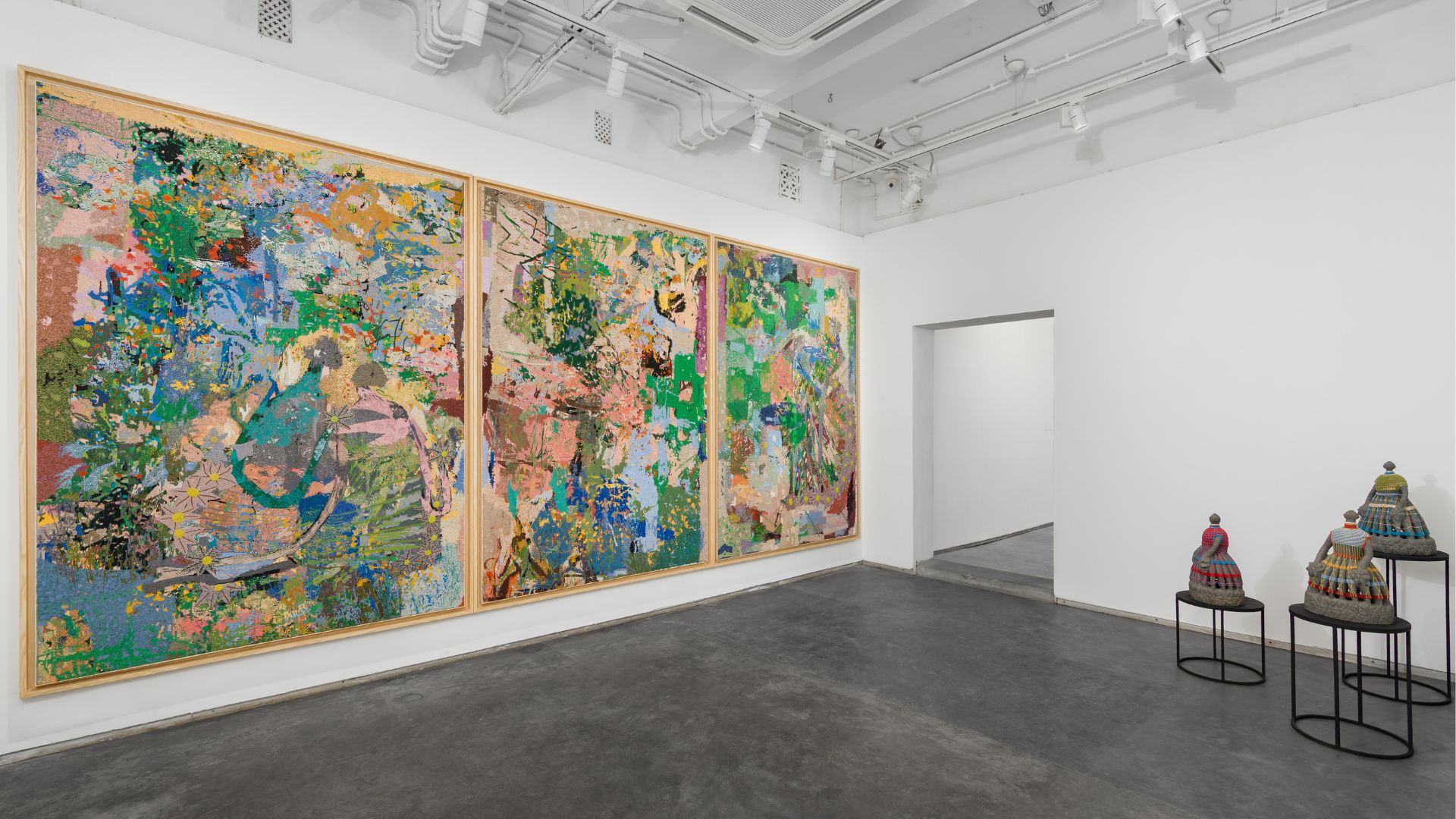
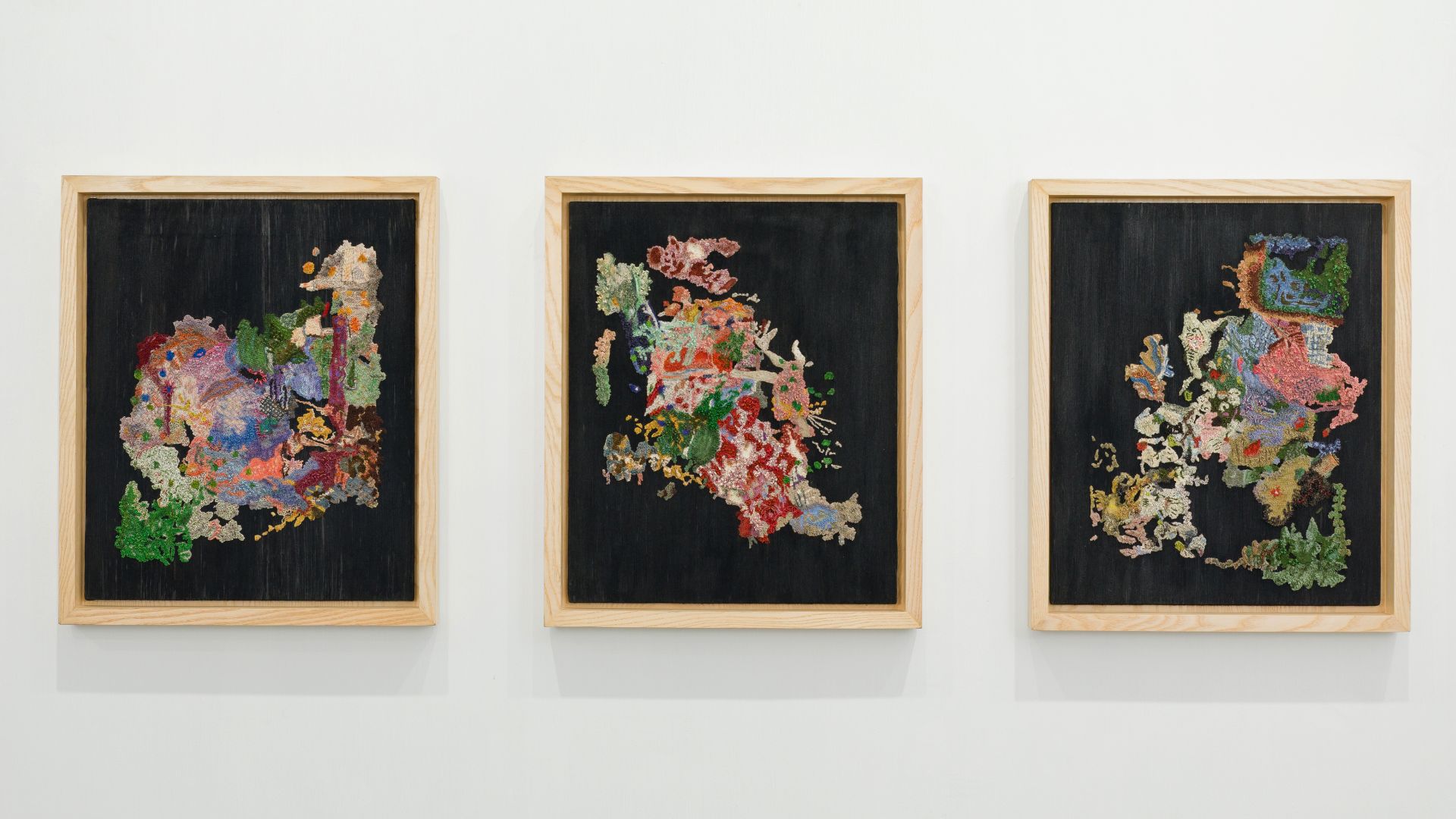
Trace III, IV, V; Photography courtesy of Chanakya School of Craft

The commonality between stone, thread and hand 

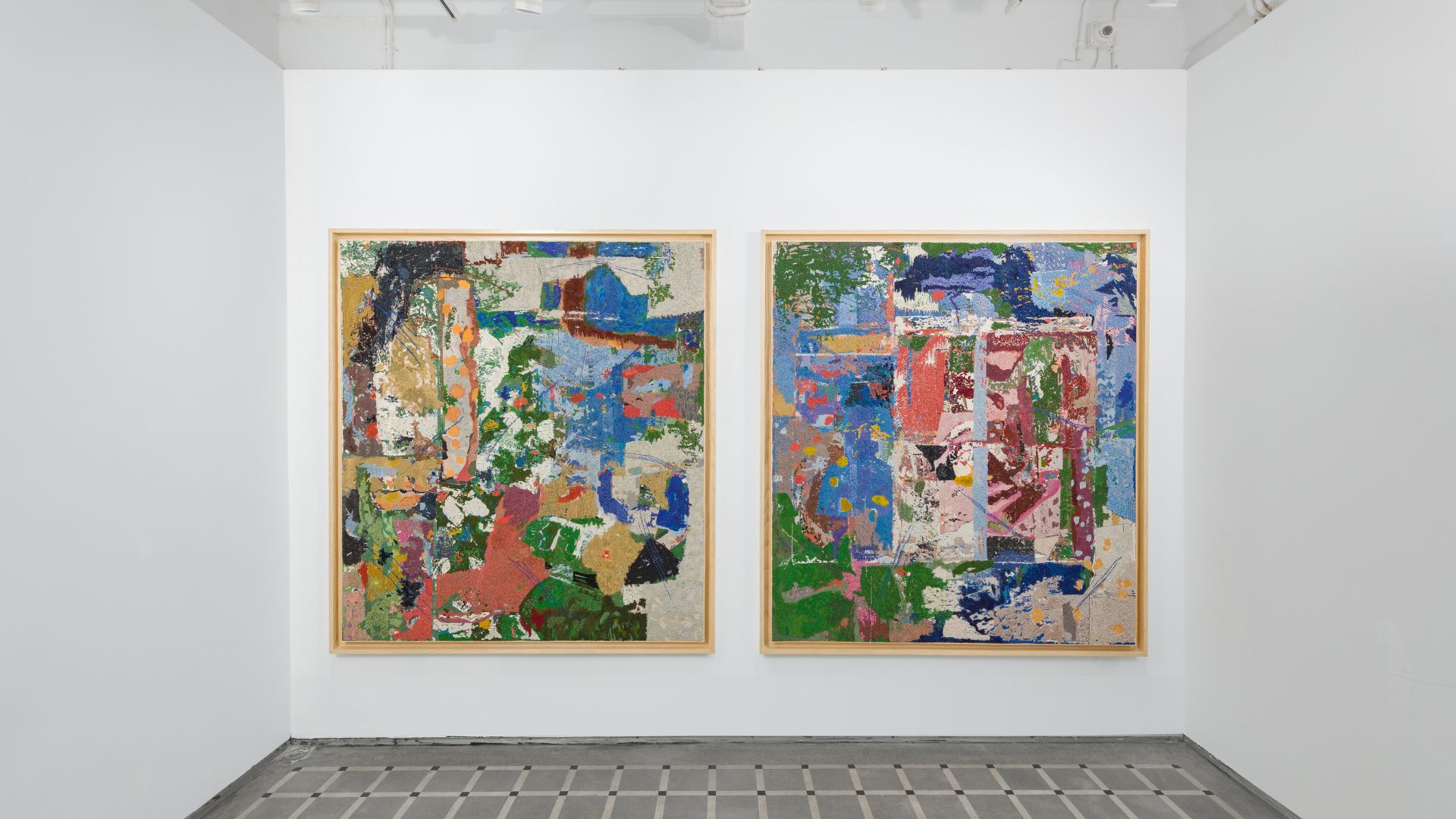
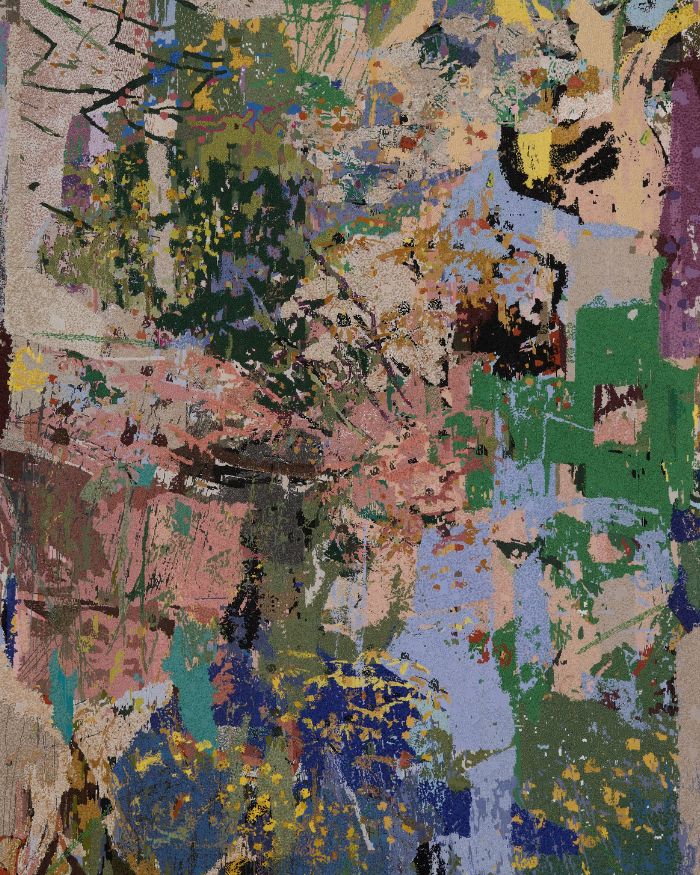
At the centre of the exhibition stands the large triptych Trace (III-V), a continuous abstract landscape built through layers of thread and bead that accumulate to significant depth. The surfaces possess a geological density, almost stone-like in their material presence, yet distinctly textile in their pliancy. Nearby, singular woven panels titled Trace expand this exploration through processes of weaving, embroidering, spinning and dyeing. Within these panels, sculptural forms begin to emerge from the textile surface itself, shaped through an open-ended engagement with material that allows each medium to determine its own form. 


Textile handwoven with cotton thread and glass bead ; Photography courtesy of Chanakya School of Craft
Photography courtesy of Chanakya School of Craft

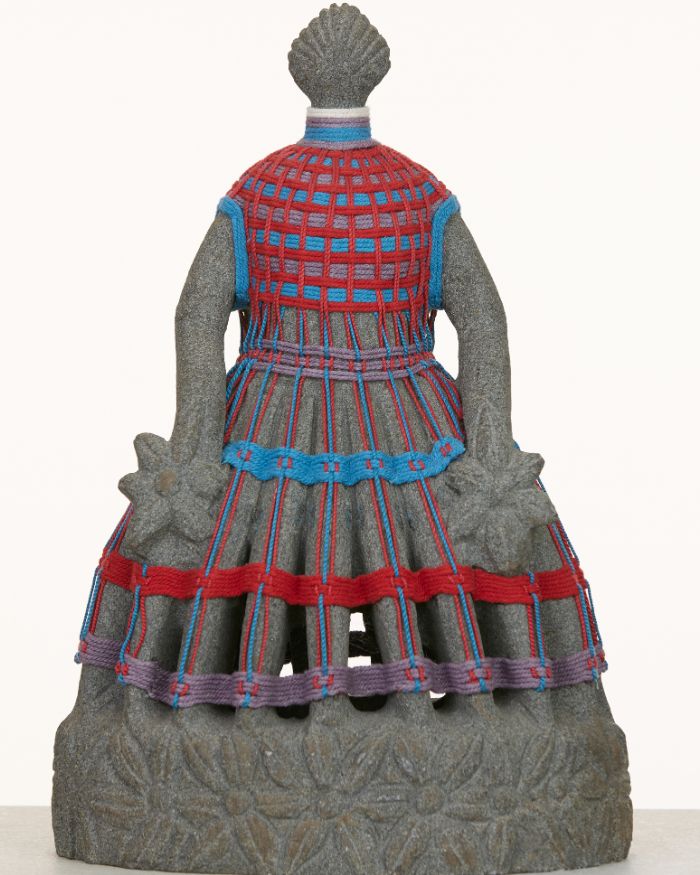
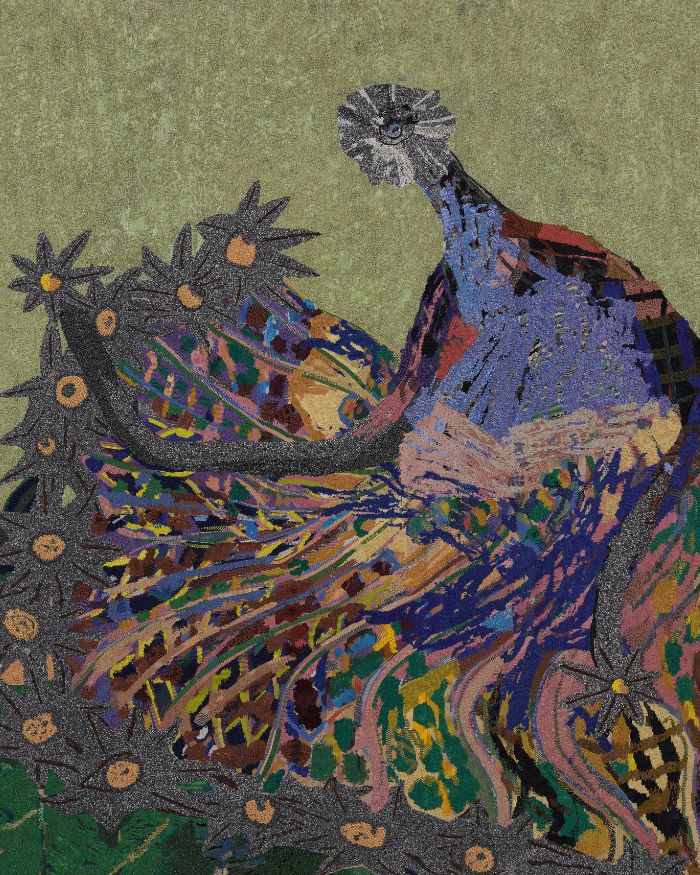
Referring to the echo of early stone, portraiture appears in softened outlines across the woven ground in Anthropomorphic figures often holding abstracted floral offerings rendered in grey glass beads. Standing in dialogue with them are the hand-carved black stone sculptures titled Form (II-V), whose armatures are bound with organic thread, extending the exhibition’s conversation between fibre and stone. 

A recurring thread throughout Trace is the recognition of women’s labour within weaving communities, particularly the preparatory processes that often remain unacknowledged. The series Flowers in the Night isolates and honours such techniques, including shuttle wrapping, foregrounding them as gestures of skill and knowledge. Woven on Saori looms using hand-dyed cotton, linen and jute, these panels draw upon foundational weave structures such as herringbone, basket weave and chevron among the earliest systems used to organise fibre. Their surfaces retain rips, joins and irregularities, allowing the hand of the maker to remain visible. 

Cotton and silk embroidery with glass and seed beads on cotton textile ; Photography courtesy of Chanakya School of Craft
Shuttle wrapping on wood panel, embroidered with cotton thread and glass beads; Photography courtesy of Chanakya School of Craft

Woven Anatomies 

The exhibition culminates in the immersive installation Dwelling, positioned within the gallery’s vaulted space. Referencing the circular Bhunga structures of Kutch, the sculptural forms resemble women gathered in domestic weaving circles; spaces associated with collective labour and shared learning. Dyed with madder root and extending outward through cords that connect one form to another, the installation gestures toward the collaborative ethos at the heart of Chanakya School’s practice, where the transmission of knowledge remains in the hands of women artisans who continue to reshape tradition through ongoing experimentation.

Hand-sculpted black stone with cotton thread; Photography courtesy of Chanakya School of Craft
SHARE THIS ARTICLE

You May Also Like

Watch

No results found.

Search
Close this search box.