Photography courtesy of Herman Miller
Featured

Herman Miller designs for the way meetings actually happen

Byne Meeting Tables provides the modern meeting room with furniture that adapts to all office needs

BY

In many ways, a meeting room is often reduced to three elements: chairs, a table, and a tool to brainstorm ideas, like a whiteboard or a projector. But the role and form of meetings have changed over time — accelerating much faster after the advent of online meetings — and they have evolved from being considered unnecessary spaces to ones that require various amenities and accommodations.  

A single meeting room may host a team briefing, a brainstorming session, or a hybrid presentation with remote participants. While contemporary interior architecture has created flexible floor plans, the meeting table remains the most important asset of the room. It dictates how people interact, how technology integrates into the workflow and how the room looks as a whole. The challenge for designers is to absorb these changing demands without adding spatial friction.

The geometry of the furniture itself influences how people behave. The arc or angle of a table edge implicitly guides where people look, how easily they maintain eye contact, how visible all members of the team are and who feels empowered to speak. When remote participants are projected onto walls, these sightlines matter more, as the arrangement must bridge those physically present and those joining through a screen. When furniture fails to adapt to these group sizes and social dynamics, the space itself becomes an obstacle to communication.
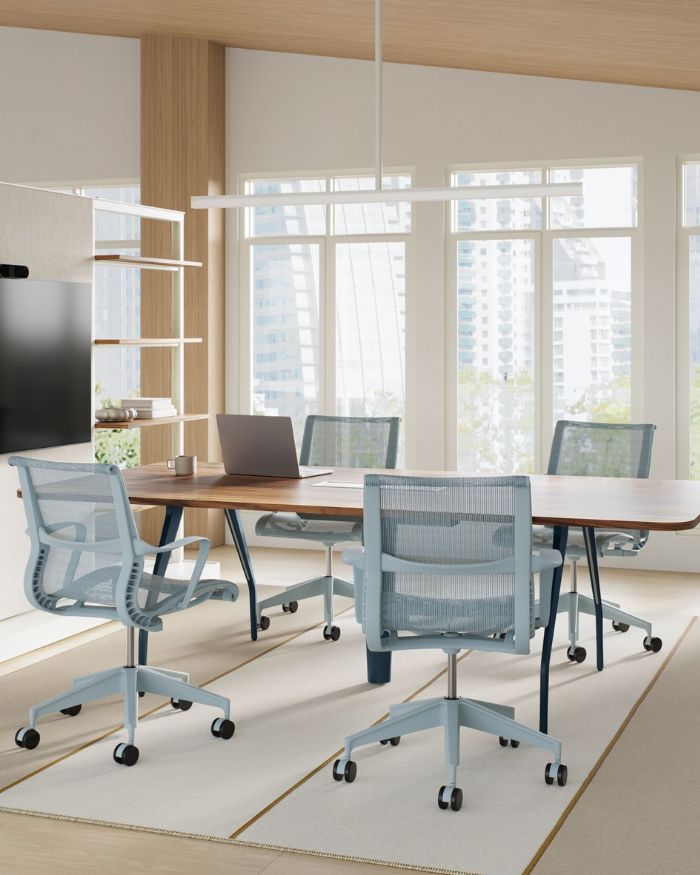
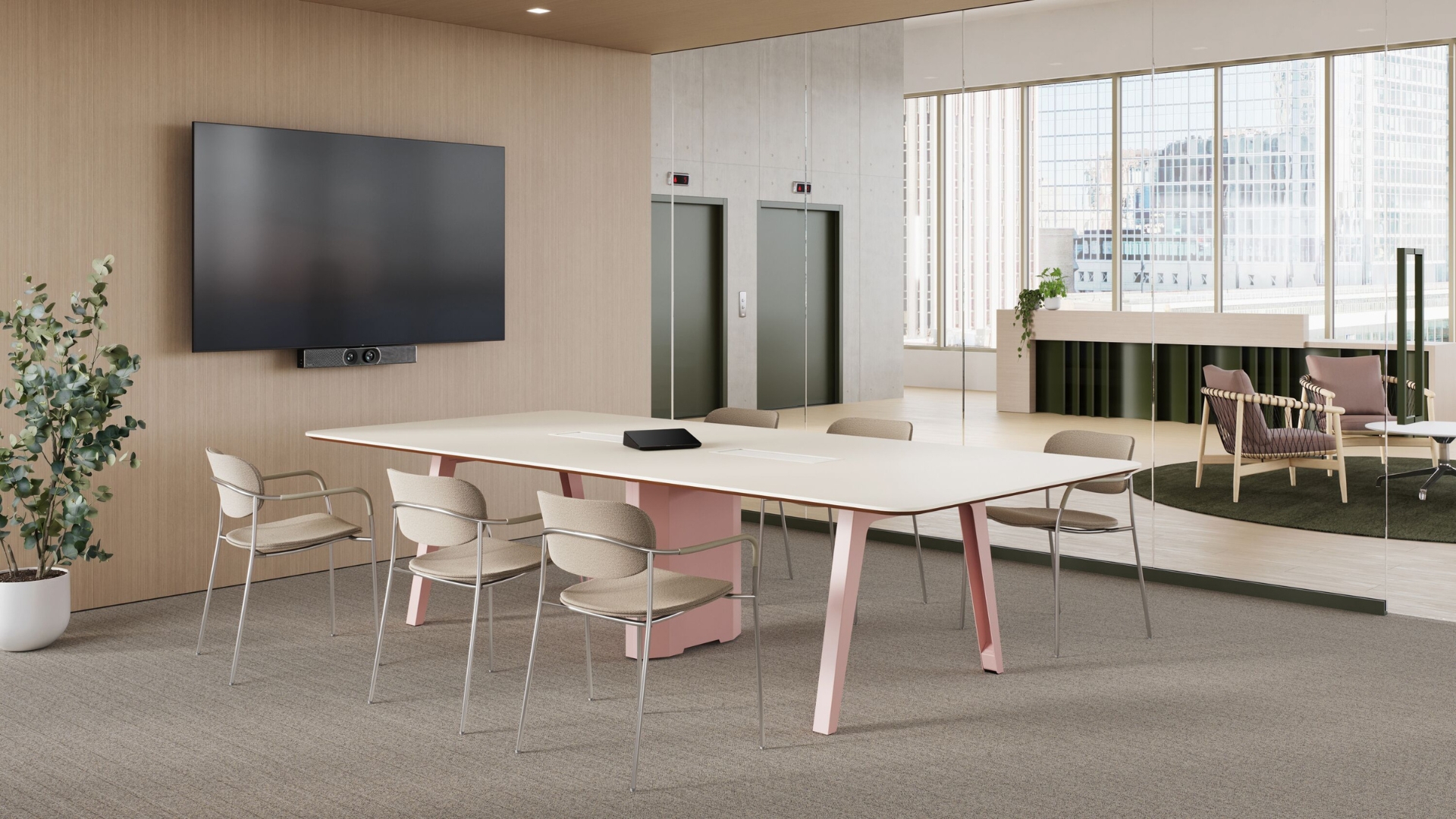
Photography courtesy of Herman Miller

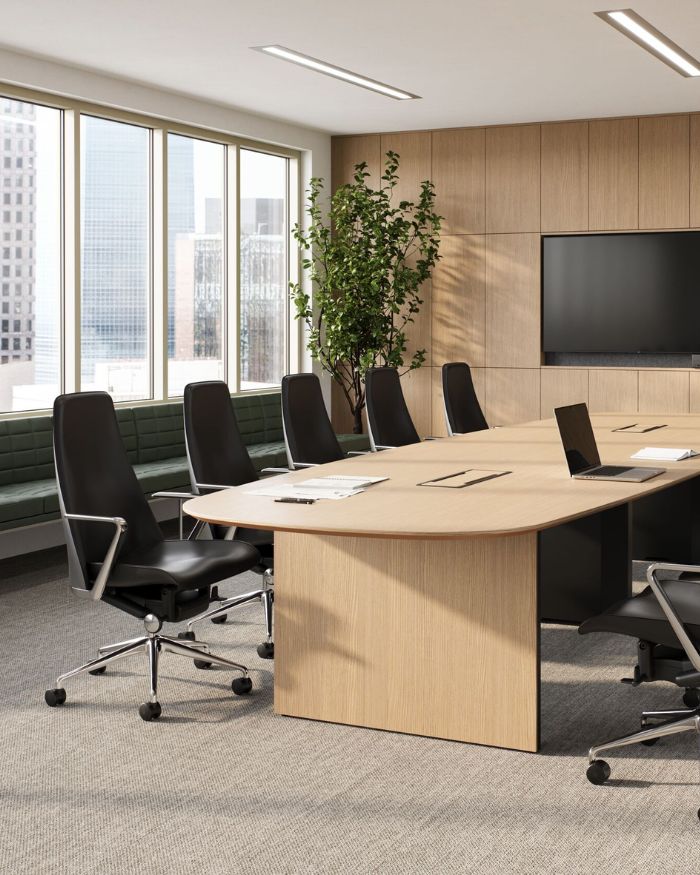
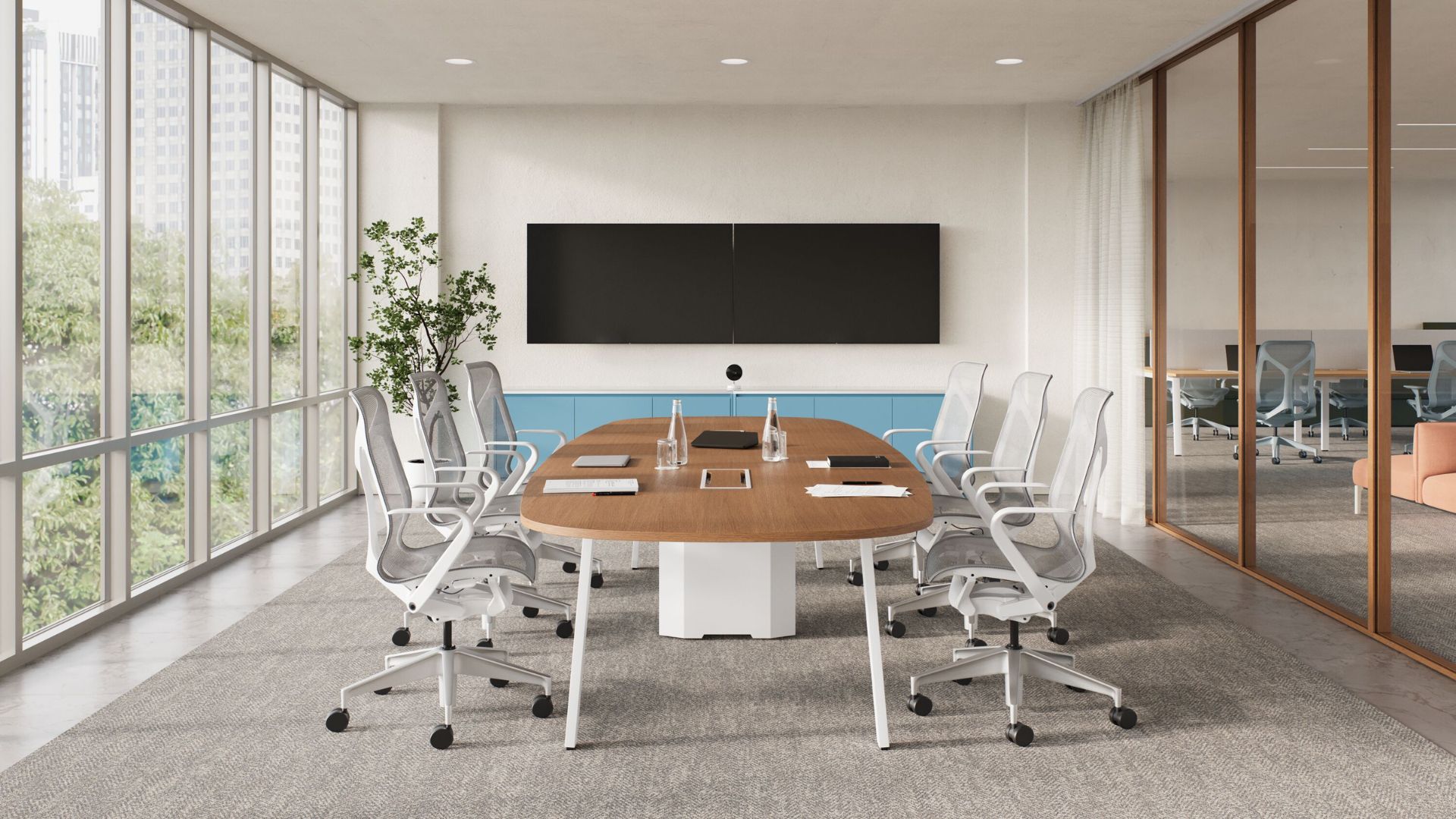
This is where thoughtful design becomes paramount. A classic rectangular table suits structured, direct dialogue, while a boat-shaped table with a widened centre opens up viewing angles, allowing everyone to see one another and the room’s main screen without leaning forward. This choice lets a designer set the tone of the room, accommodating people in either a familiar or more democratic layout.

A table also cannot be viewed in isolation from the larger interior and technical requirements. Because it functions as an anchor, its base, edge detailing, and finishes sit in direct view of the walls, lighting, and floor treatments. And when technology is introduced here, cables and surface boxes can add to visual clutter. The new Byne Meeting Tables from Herman Miller address this challenge by building power routing and cable management directly into the frame. Through concealed routing, cable trays and a choice of aluminium or wooden flippers, technology remains accessible when needed but hides when it is not.

This integrated approach extends to the table’s aesthetic too, offering greater design freedom. As an extension of the Byne System, the meeting tables allow architects and designers to carry a consistent design language from individual workstations into collaboration spaces. It offers four choices in leg styles: Bow, Imagine, Layout Arena and Optimis; two work surface shapes and a range of edge profiles and finishes like melamine, high-pressure laminate and premium veneer, and adapts to contemporary minimal and executive environments. This creates visual continuity across the office while ensuring each space can respond to its specific purpose.

Visit Herman Miller to learn more about the Byne Meeting Table!

Photography courtesy of Herman Miller
SHARE THIS ARTICLE

You May Also Like

Watch

No results found.