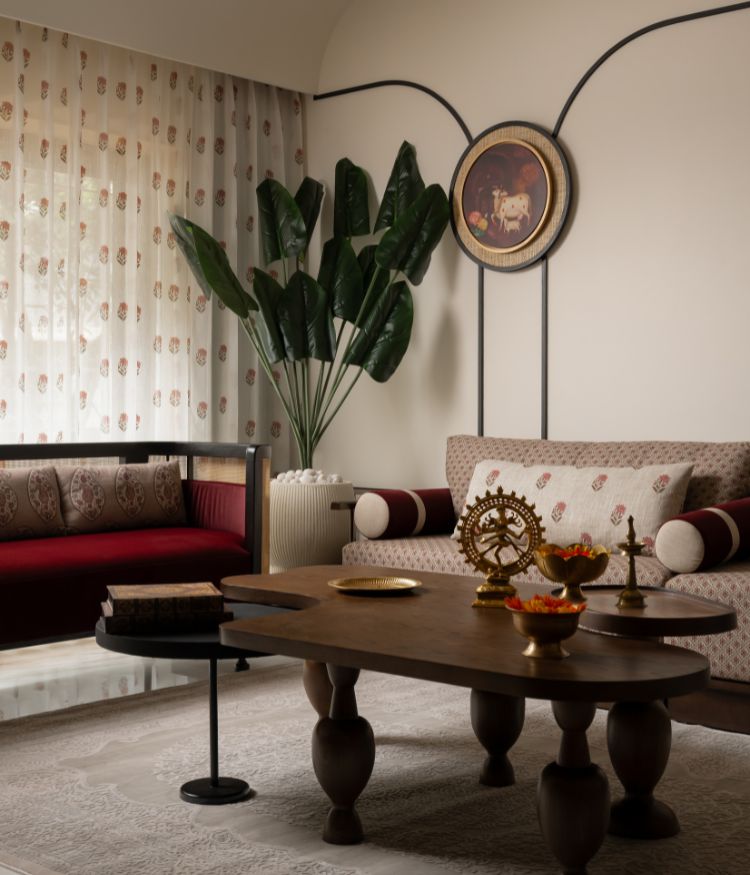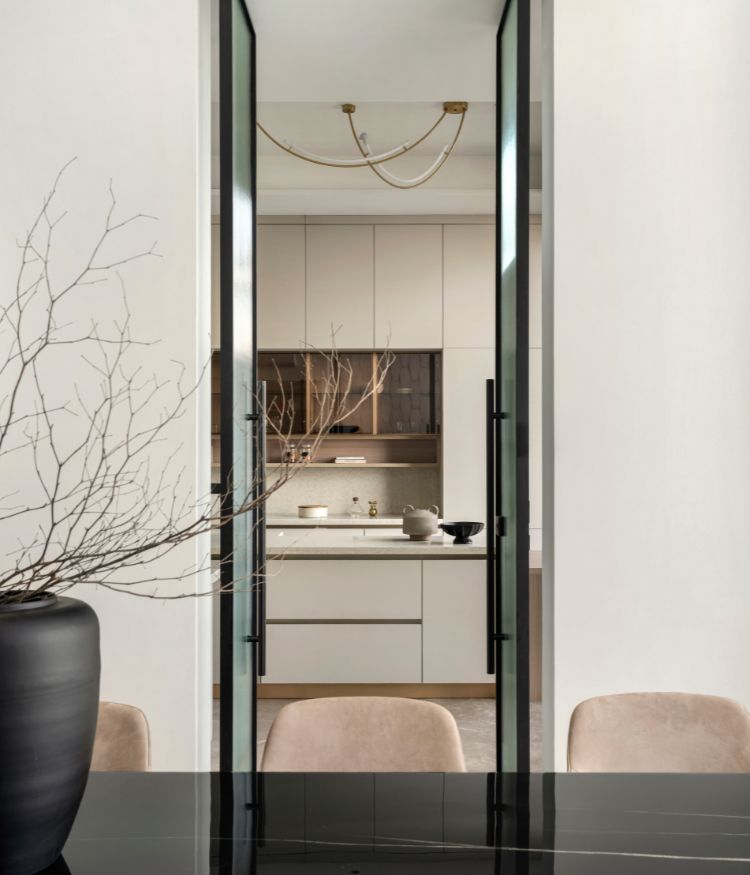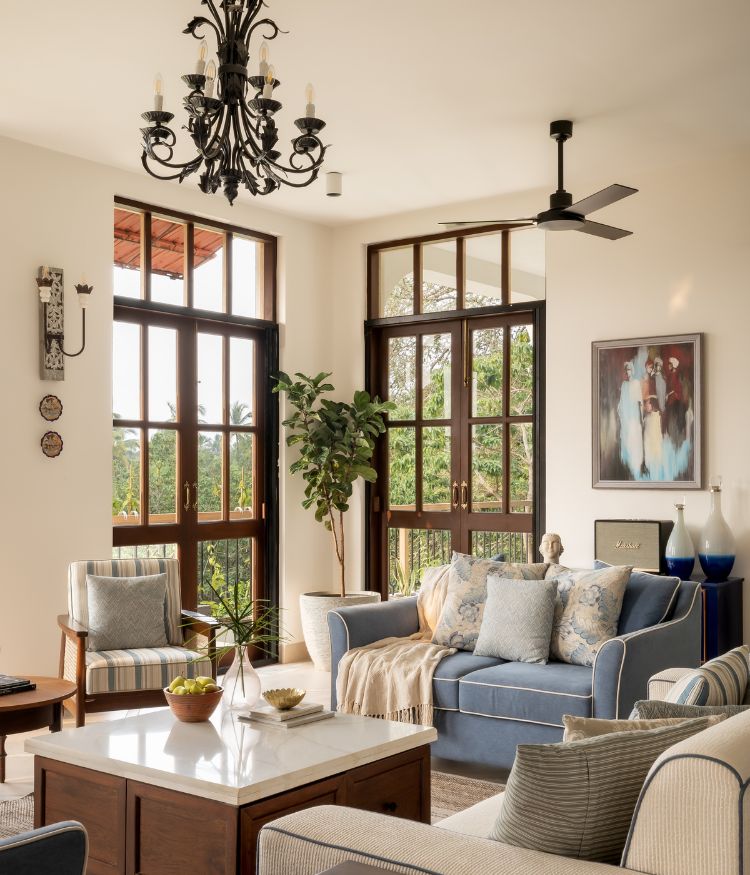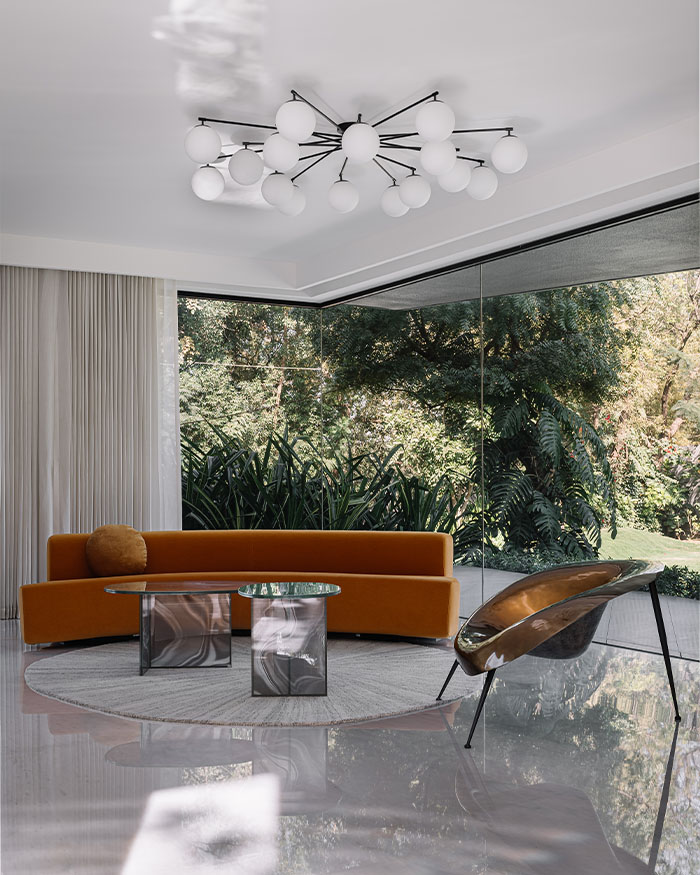
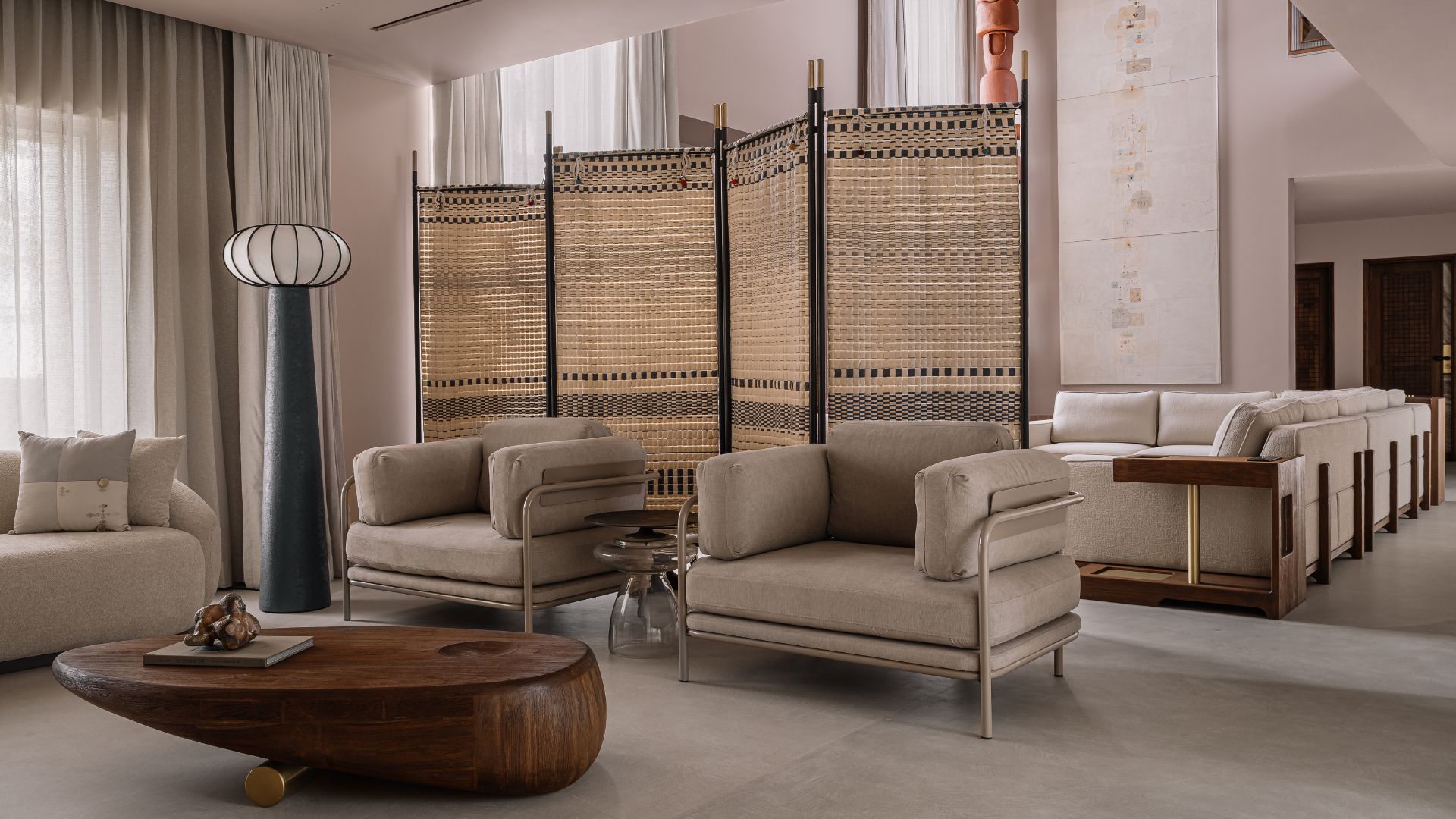
The Sujani partition is by Design ni Dukaan and RaasLeela Textile. Lounge chairs by Spin sit in the foreground, with a sofa by Dtale Modern and a coffee table by Design ni Dukaan. The floor lamp has been crafted by Length Breadth Height and Harshita Jhamtani Designs; Photography by Ishita Sitwala

Print exclusive: Real, rugged and imperfect in Navsari

Eclipsing Navsari’s sleepy alleys, Design ni Dukaan sculpts a lofty modernist home that slopes, slants and sheds perfection in pursuit of a higher purpose

BY

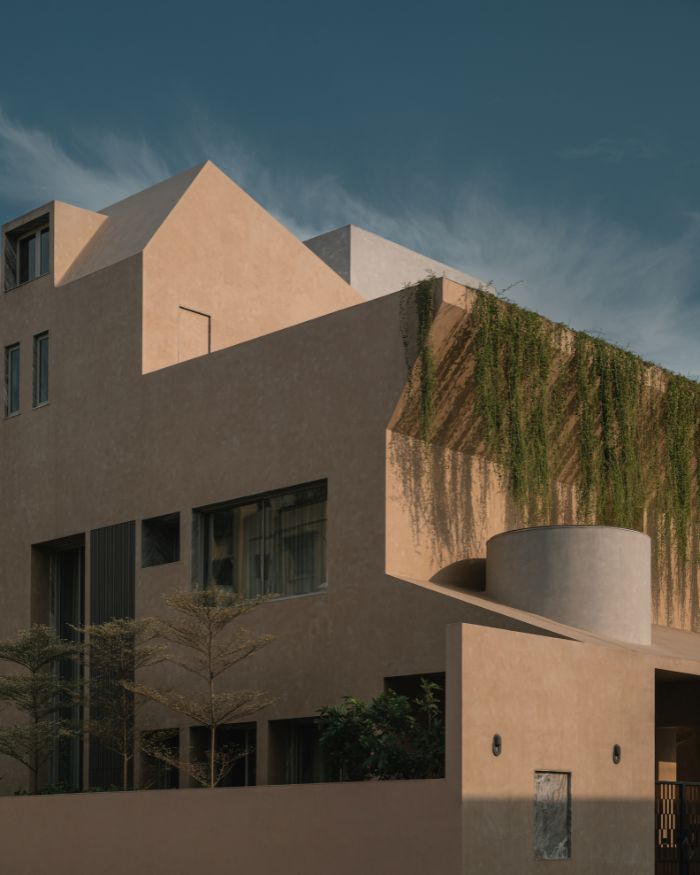
Ten, fifteen years down the line, nobody will want to live in a city,” says Veeram Shah of Design ni Dukaan. It’s difficult to offer a rebuttal under Navsari’s exceptionally blue skies, especially when the Dandi beach — a direct antithesis to Mumbai’s plastic-strewn seaside — is only a few kilometres from his childhood home in this quaint city in Gujarat. And as luck would have it, his residence is a stone’s throw away from the home I write about: a 12,000 sq ft family home crafted by him. “Would you rather cycle or walk?” he asks us. We promptly opt for the latter. Two quick turns later, we spot the home’s modernist facade from a distance. Our eyes first fixate upon a narrow grey structure looming over the home. “That’s the staircase that connects all floors,” explains Veeram.

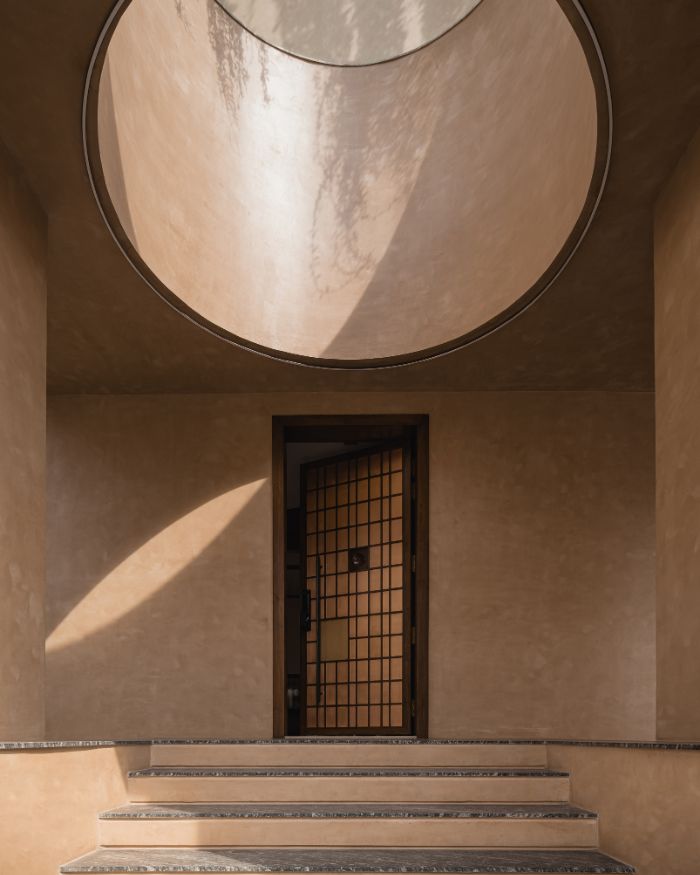
The emanating effect is that of a spaceship parked in Navsari’s sleepy streets: the asymmetric edifice standing, sloping and slanting around this architectural statement. I share this observation with Veeram, and he smiles. “Corbusier would often separate services and make them a sculpture,” he explains. Unlike Corbusier’s penchant for unfinished concrete, the exterior here resembles a canvas painted over with thick terracotta brushstrokes. Meticulously overlaid by painters who “scaled the building like Spidermen with trowels in hand,” reminisces Senior Architect Dolly Thakkar, this rugged finish softens the edges of the home’s intimidating scale, making it appear more grounded and lived-in.

“The interiors are a prime example of how you can build a self-sustaining community of architects, designers, artists and craftsmen”

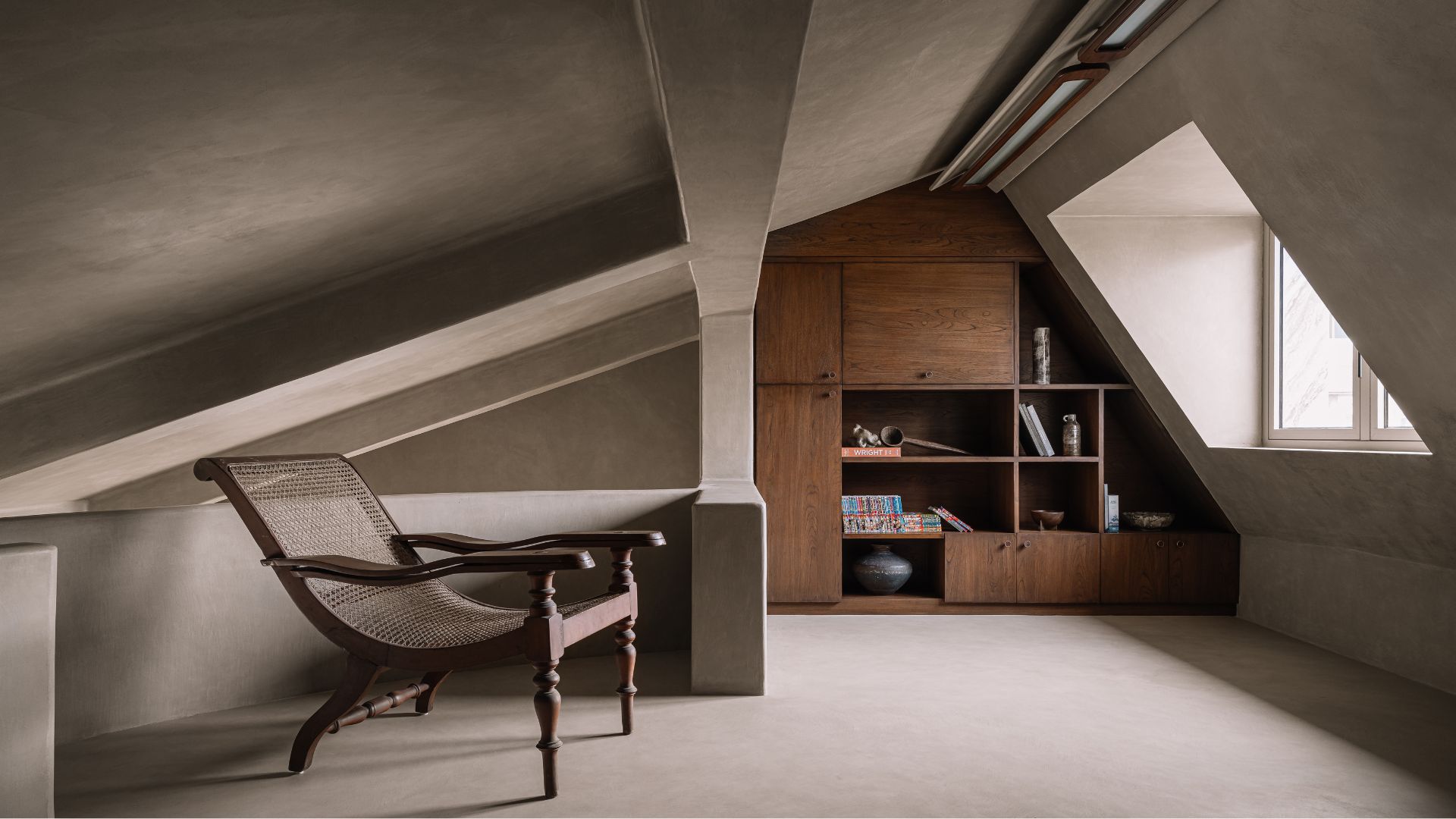
The home is crowned by a gently sloping structure fitted with solar panels, which opened up enough space underneath for a light-filled mezzanine. All furniture in the attic-like space is by Design ni Dukaan; Photography by Ishita Sitwala

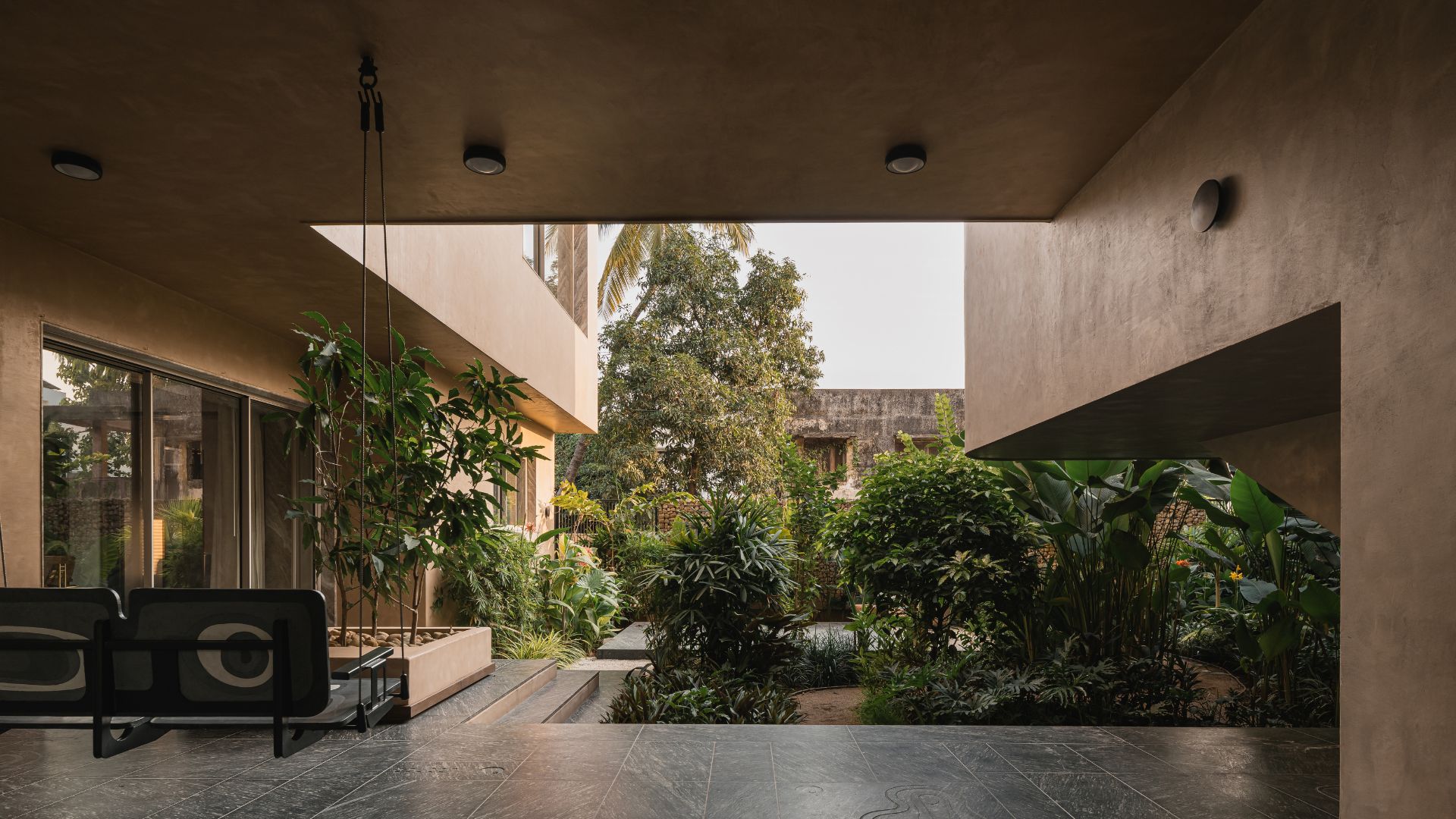
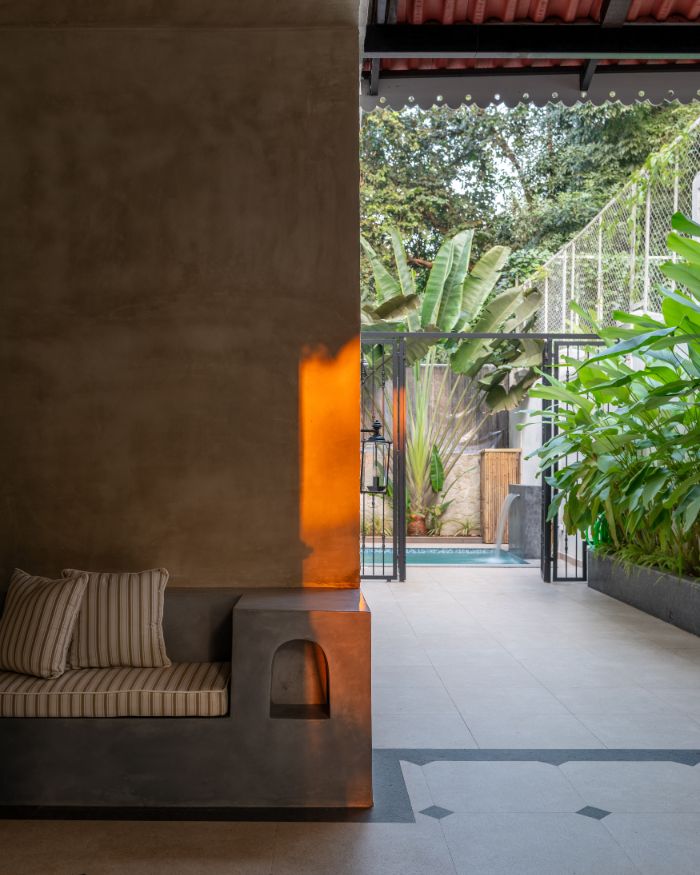
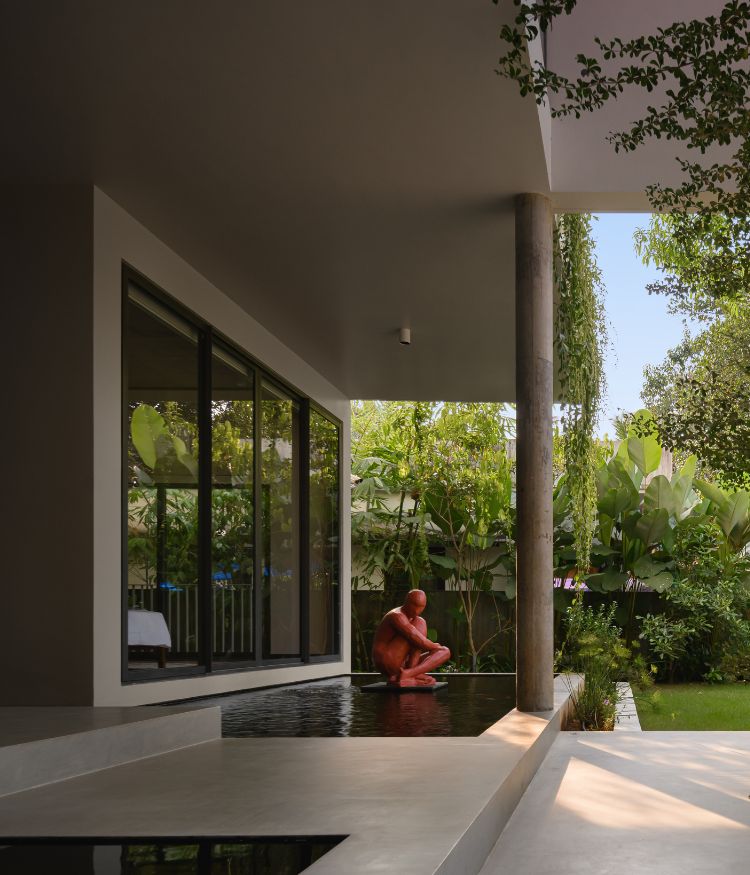
Come night, the spike lights embedded deep into the mud in the garden — a cornucopia of lush, local varieties of flora — cast tall shadows that dance across the home’s exterior. Dolly calls it an unintentional elevation. I think nature always finds a way. Veeram coins it differently. “This house involves very intuitive decision-making,” he says, leading us through the light-filled foyer. Sunlight permeates deep into the home, filtering through the 18 ft window system. Even in Gujarat’s moderate winter, the home feels toasty enough for us to abandon our jackets at the door. A small, rippling pond gently murmurs to our right here, part of the garden that the home curves around. Pausing here, he points at the terracotta and indigo textile partition dividing the living and the foyer as an example. “I’d bought two Sujani quilts from Hetal Shrivastav of RaasLeela Textile. I was sleeping in one in the afternoon, when I noticed that the light was seeping through where the weave was the thinnest. It was glowing! I told her we had to use it as a divider,” he reminisces. The unique craft form hails from Bharuch, a labour-intensive textile woven by very few artisans today. It echoes what is to follow within: a novel amalgamation of technology, craft and yes, intuition, all differing from room to room in scale, shape and application.

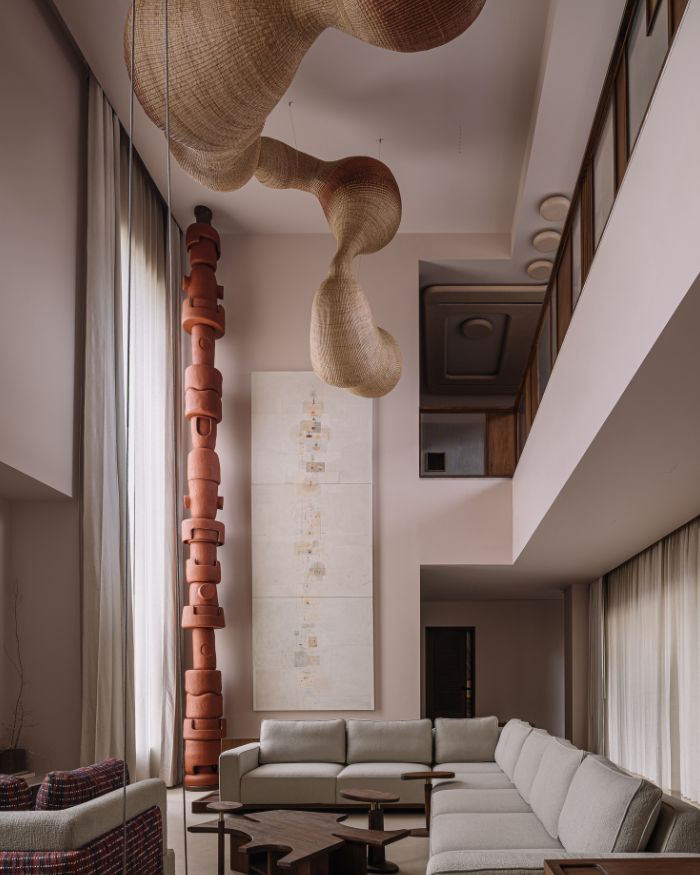
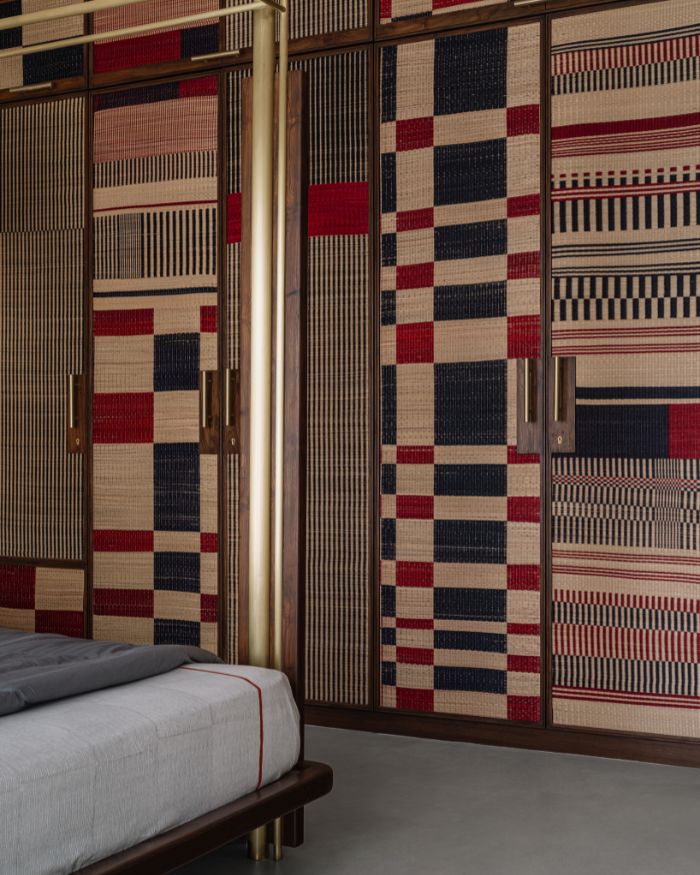
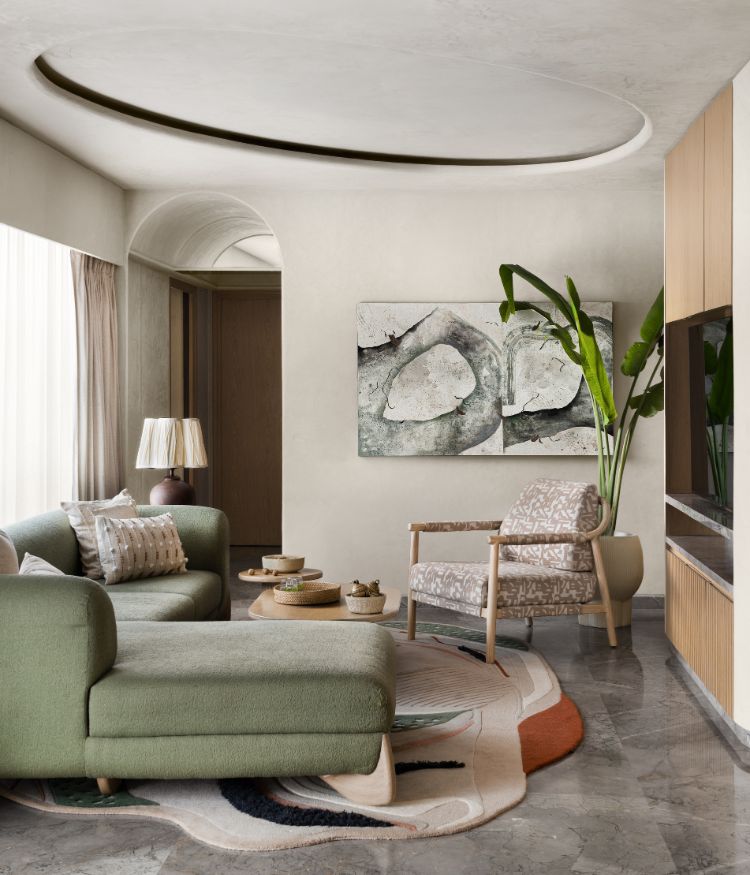
Case in point, the double-height living room is home to super-sized accents: a mammoth ceiling installation by The Wicker Story, a tall terracotta sculpture that doubles as lighting by Harshita Jhamtani Designs, and a painting that entered the room “in three parts: all of it assembled on site, by Shahanshah Mittal,” reminisces Veeram. In the common areas and bedrooms on the first floor, this penchant for craft becomes subtler: think wardrobe shutters fitted with Jamdani by Glocal Weaves, and Pattamadai mats crafted in collaboration with Majja Design Studio — customised furniture that doubles as art, and vice versa! Some of these collaborations were intentional, some accidental, but all served one goal. “It is a prime example of how you can actually build a self-sustaining community of architects, designers, artists and craftsmen,” emphasises Veeram.

A ceiling sculpture by The Wicker Story crowns the double-height living room. A floor lamp by Harshita Jhamtani Designs abuts a wall fitted with an artwork by Shahanshah Mittal. The sofa, centre table and swing have been crafted by Design ni Dukaan; Photography by Ishita Sitwala
The landscape of the south- facing orchard, designed in collaboration with Soham Changediya and Sanyogita Gaikwad, has been imagined as a tropical micro-system lush with local tree varieties. A terrazzo swing crafted by Design ni Dukaan in collaboration with Rohan Shroff hangs in the patio; Photography by Ishita Sitwala

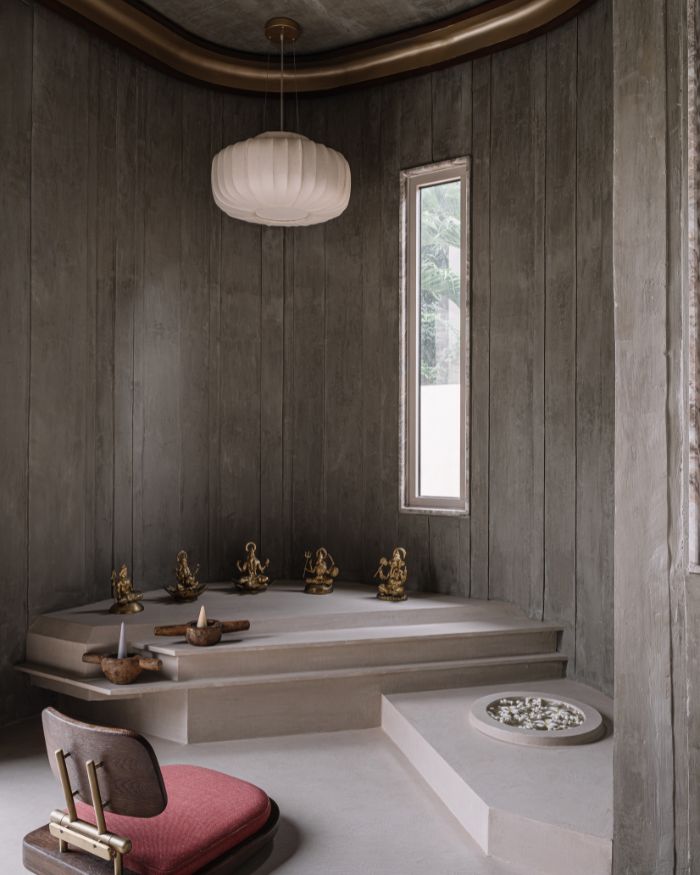
Look down, and you’ll notice that the home carries a certain tactile memory too. All the wooden door handles bear intricately carved grooves. The microconcrete flooring swaps hands with sandstone outdoors, organic forms carved in the floor to mark the change in threshold. Visually, however, the colour palette rarely deviates from an array of neutrals: the browns muddy, the greys austere, the mauves muted. Occasionally, an errant streak of blue, red or green decorates the wall or coats a counter. But these accents rarely ever overpower the overarching palette. “There was a micro-level thinking on the tonality of the project. It had to be right,” stresses Veeram. When the main staircase had been painted pink at the onset, he’d vehemently opposed the same, explaining, “Mujhe gulaab nahi, mitti pasand hai (I don’t like roses, I like soil).” The pink (now greyish mauve) staircase was one example of a design accident gone wrong. Were there any design accidents that had gone right? Veeram answers in the affirmative, quoting his favourite one. “The second floor, hands down,” he promptly answers.

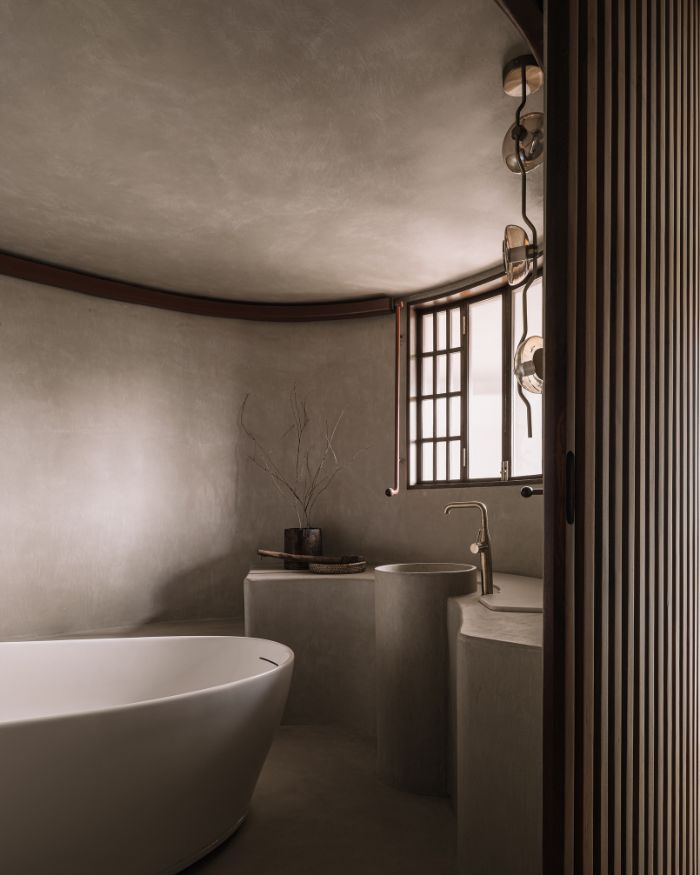
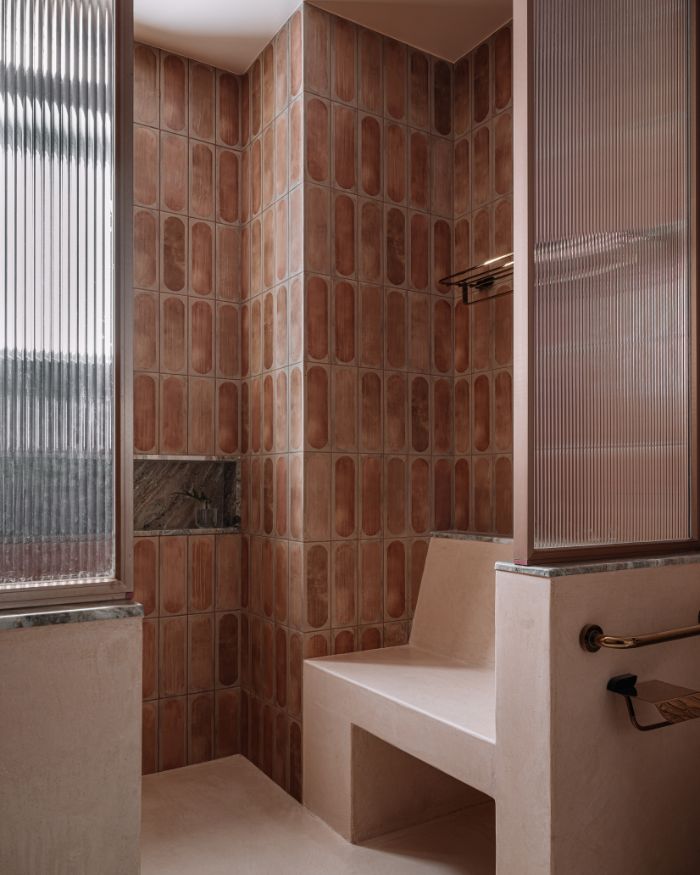
When the ceiling of the home was fitted with solar panels angled at 14 degrees, a natural slope emerged at the top. The narrow space below turned out to be perfect for a small mezzanine, complete with a bed, an antique chair from Veeram’s father’s collection, and a tiny “Rapunzel” window. Disjunct from the rest of the house, this floor holds an expansive spa-like bathroom and a lounge, complete with sink-worthy armchairs and cosy seating nooks. It functions as a study area for the homeowners’ daughters by day, and the ideal spot to host guests by night. The mezzanine joins a longer list of happy accidents that made this house a home: from the pawprints captured on concrete near the entrance and creepers that hang over the home’s front “like bangs!” exclaim the residing daughters, to the individual strokes of paint that claim collective ownership over the facade. In its disdain for perfection, it embraces the hands that built it as a vital part of the home’s future.

Read more: A meditation on thresholds

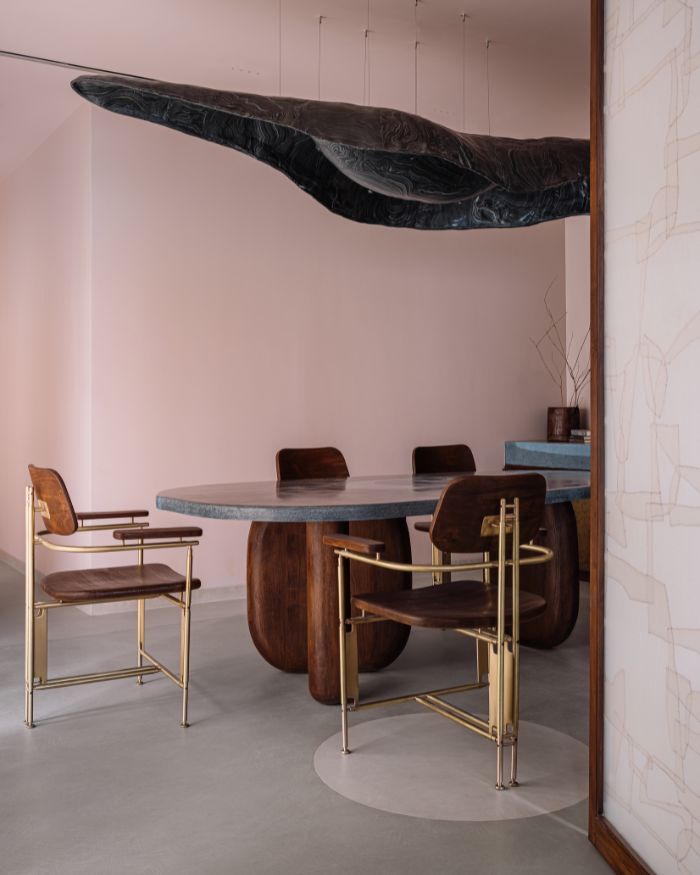
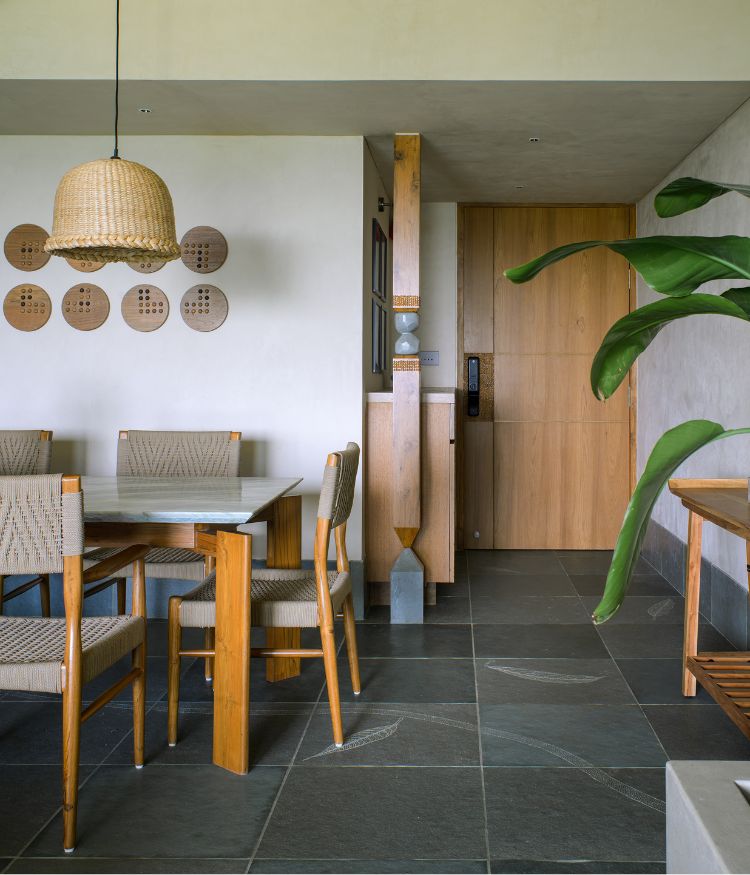
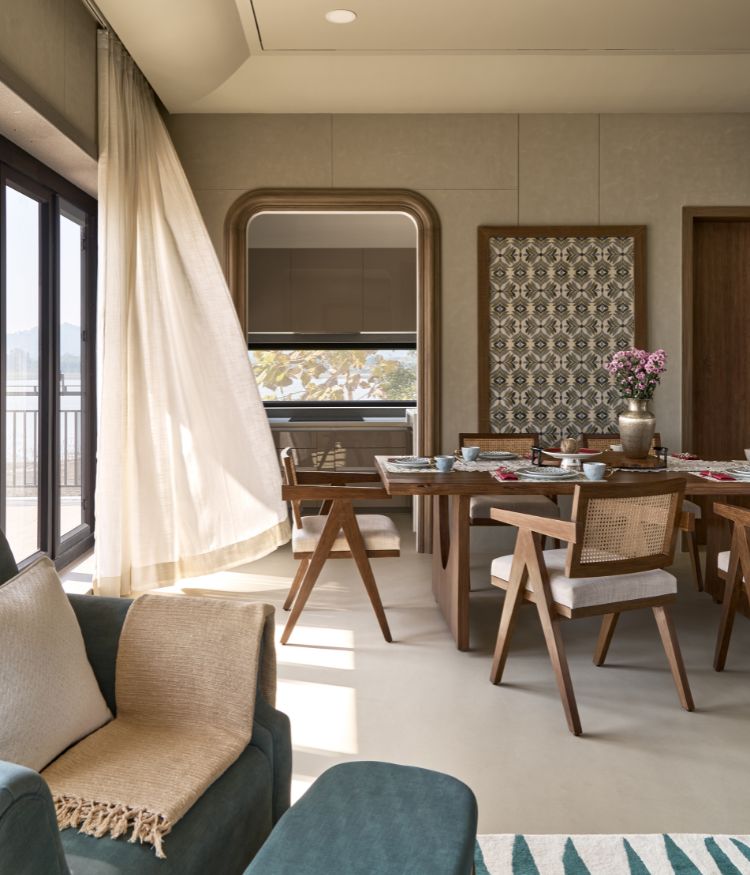
The dining table is crafted by Design ni Dukaan and Rohan Shroff. Brass and wood dining chairs by Design ni Dukaan sit underneath a pendant light by KEPH Design Studio; Photography by Ishita Sitwala
SHARE THIS ARTICLE

You May Also Like

Watch

No results found.

Search
Close this search box.