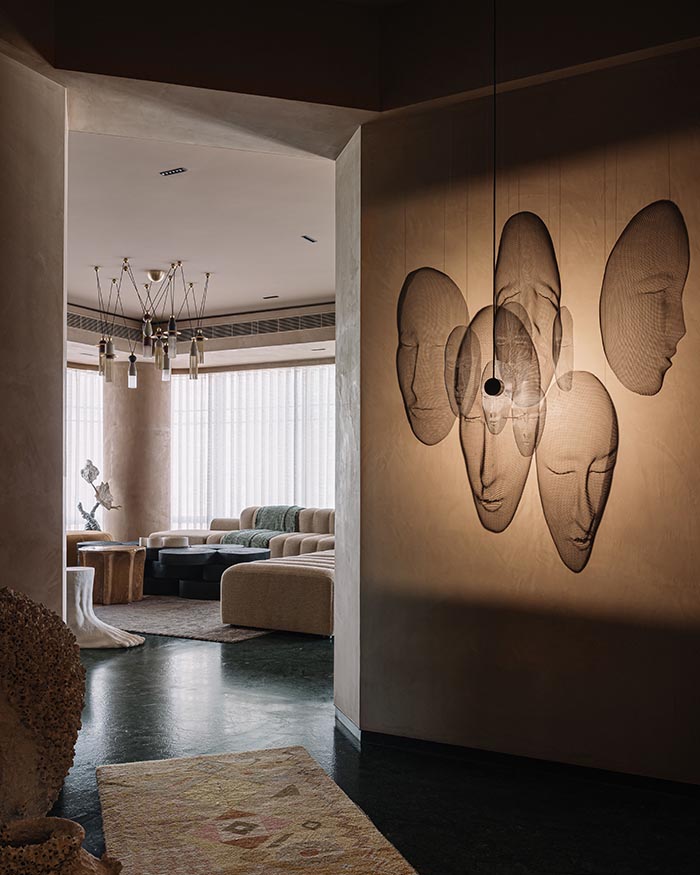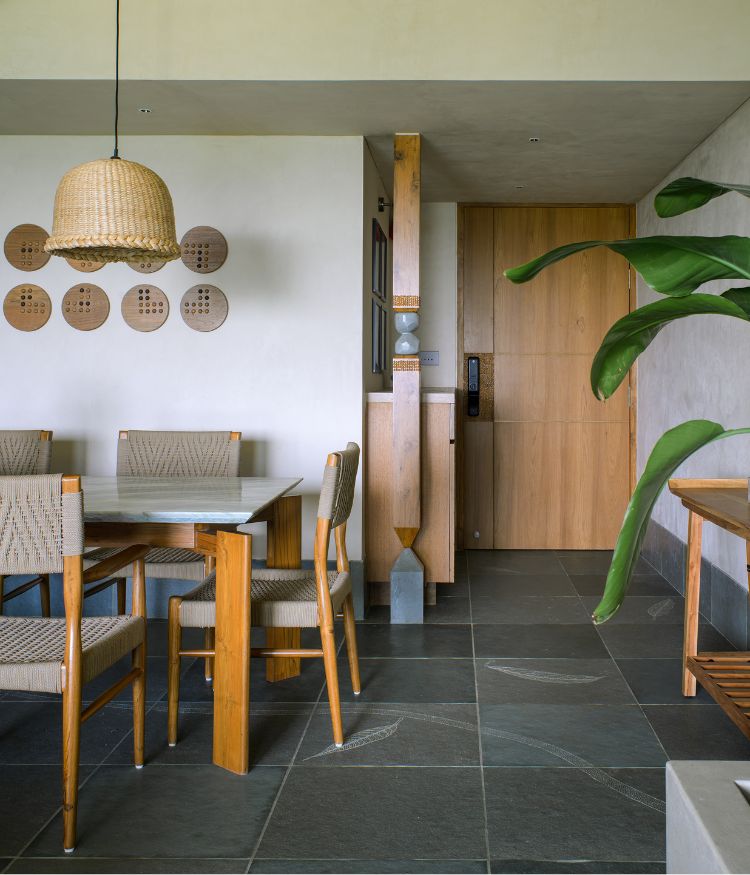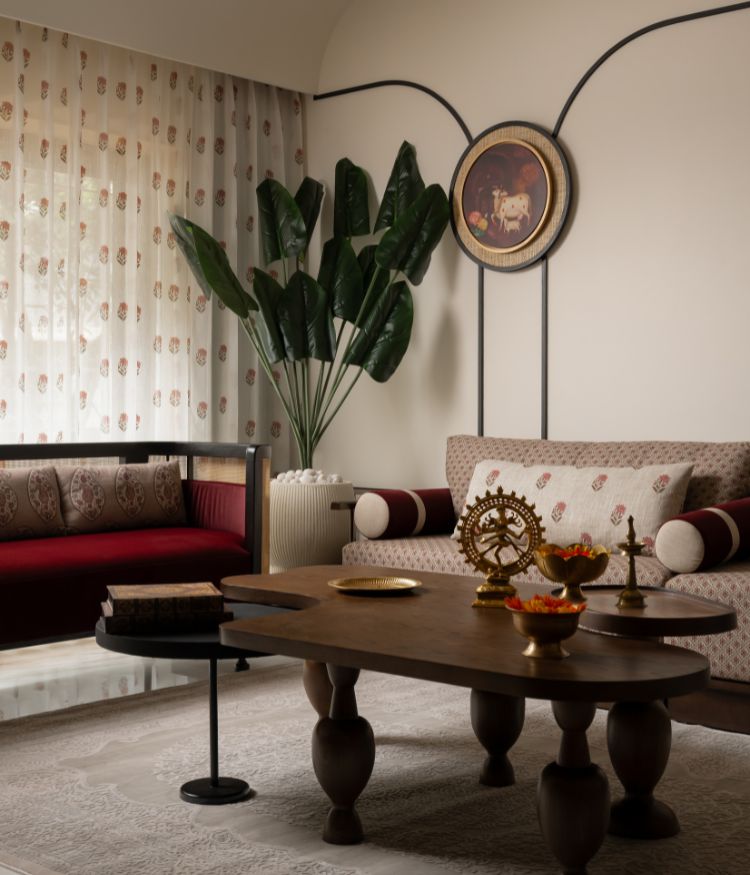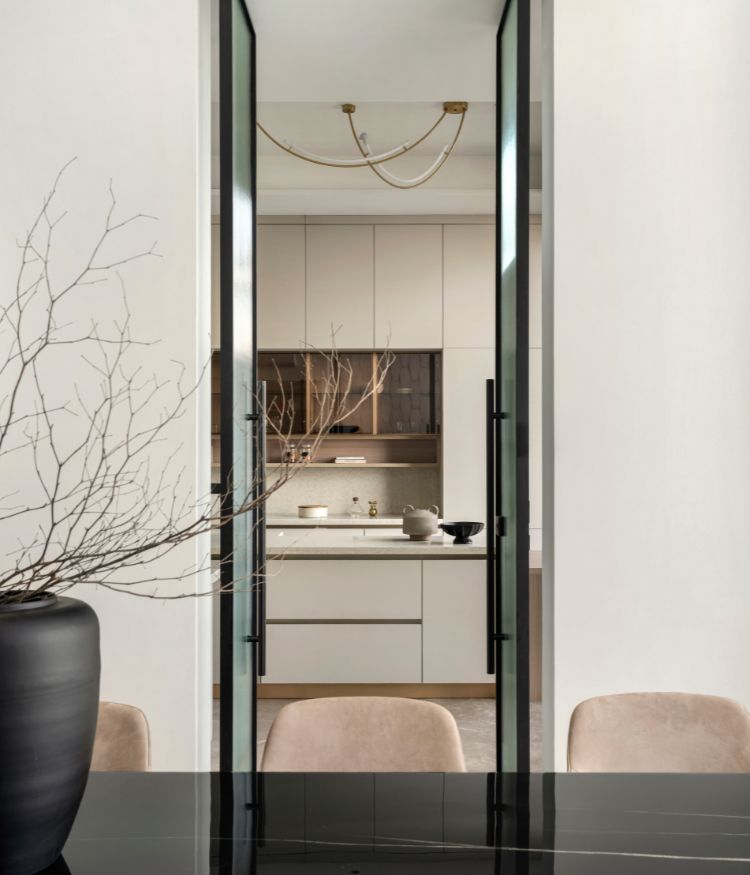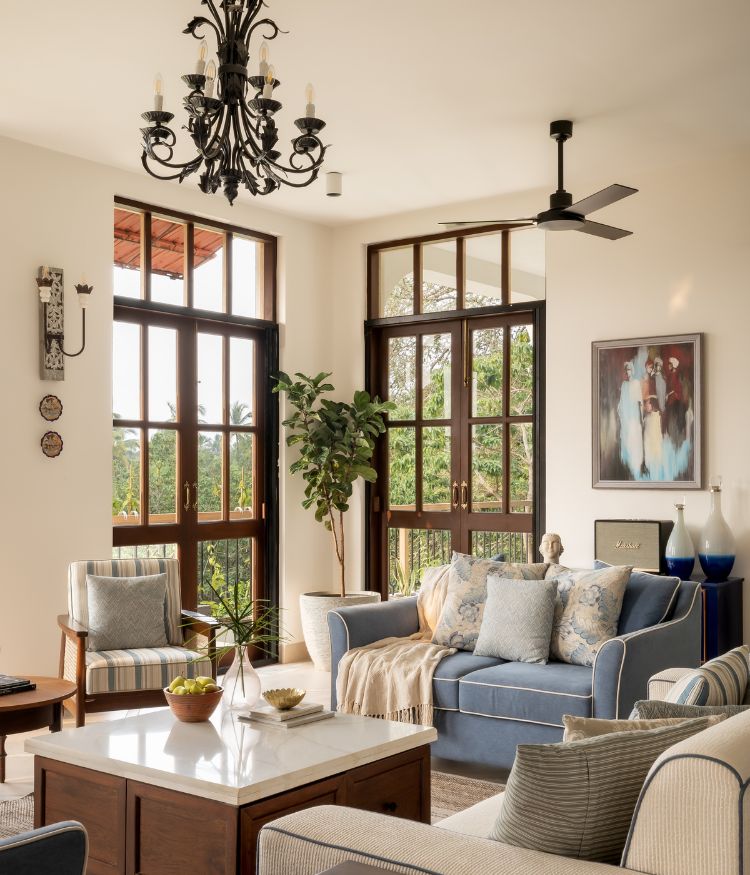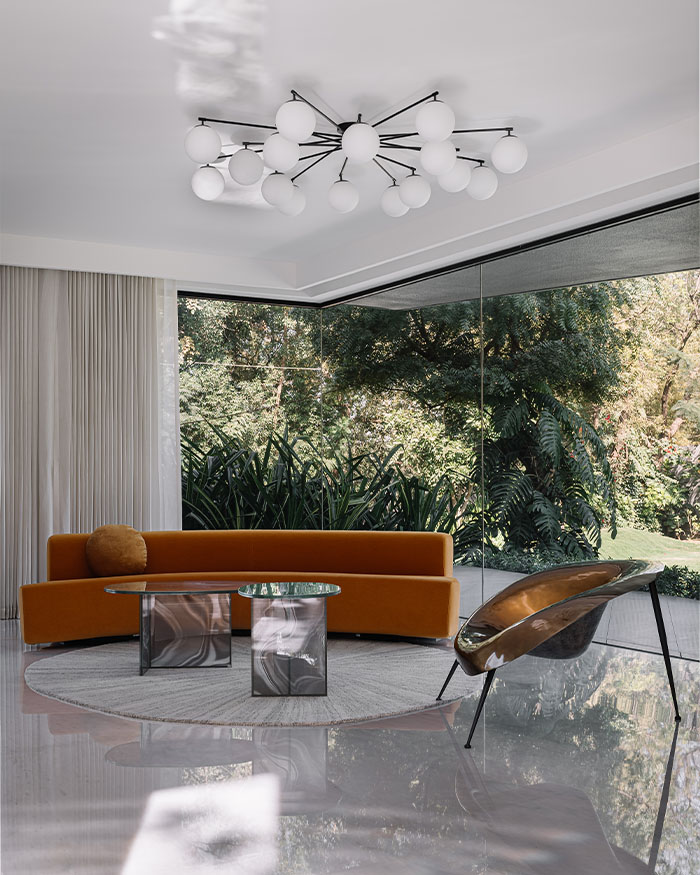
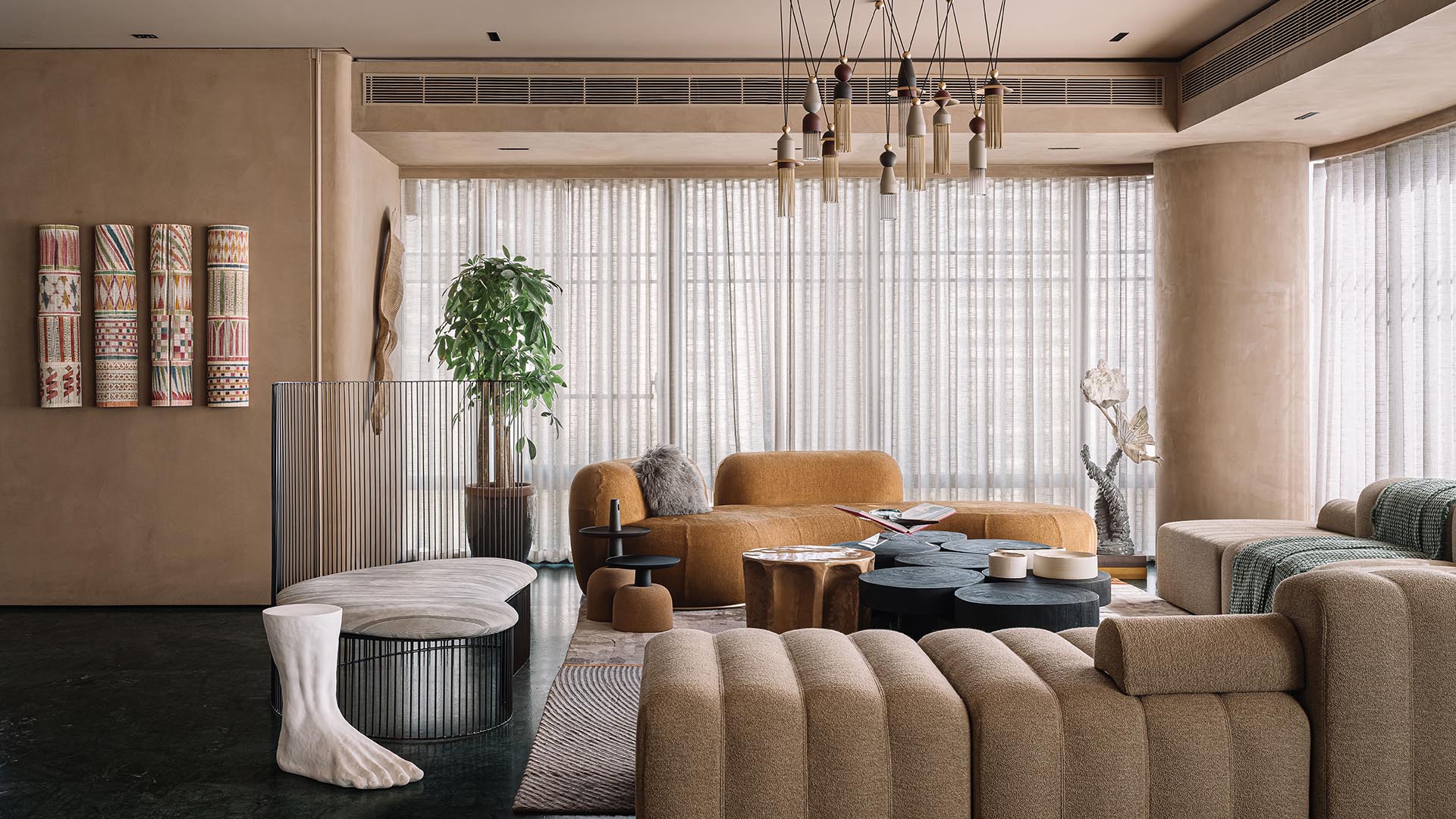
The same space hosts a sofa by Kristian Sofus Hansen of NORR11 alongside a Ginestra Vestita metal bench by Antonino Sciortino for Baxter. The Charcoal Puzzle table by Blaxsand – Workshop anchors the setting, complemented by a Nappe C10 light sculpture by Masiero, an Assemblage side table by Bonaldo and a Vivid rug by Hands Styling by Samir Wadekar; Photography by Ishita Sitwala

Print exclusive: Playing it curious

reD Architects concoct a whirlwind of curiosities that reveal themselves in cinematic progression inside a residence in Mumbai

BY

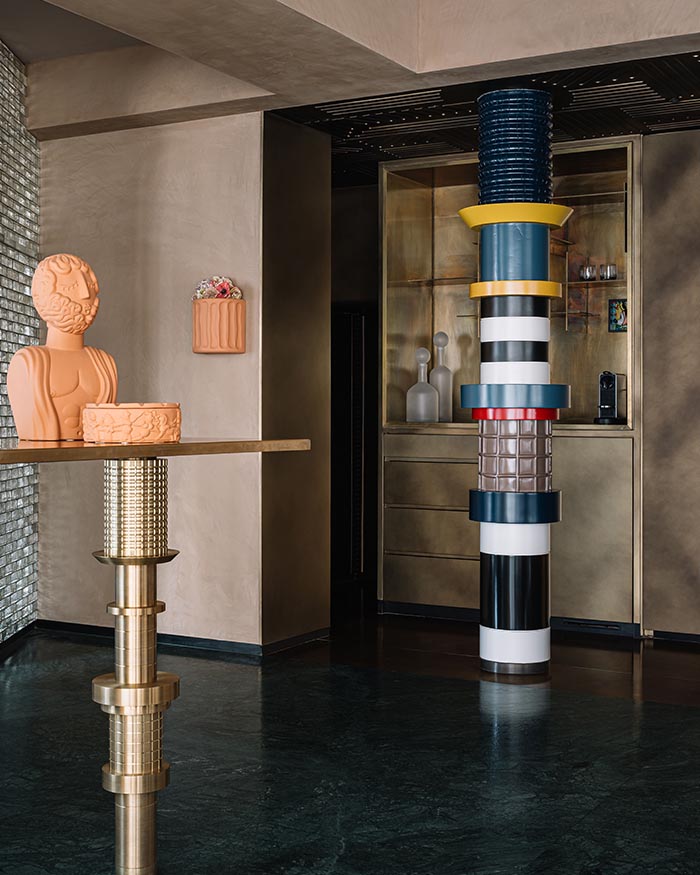
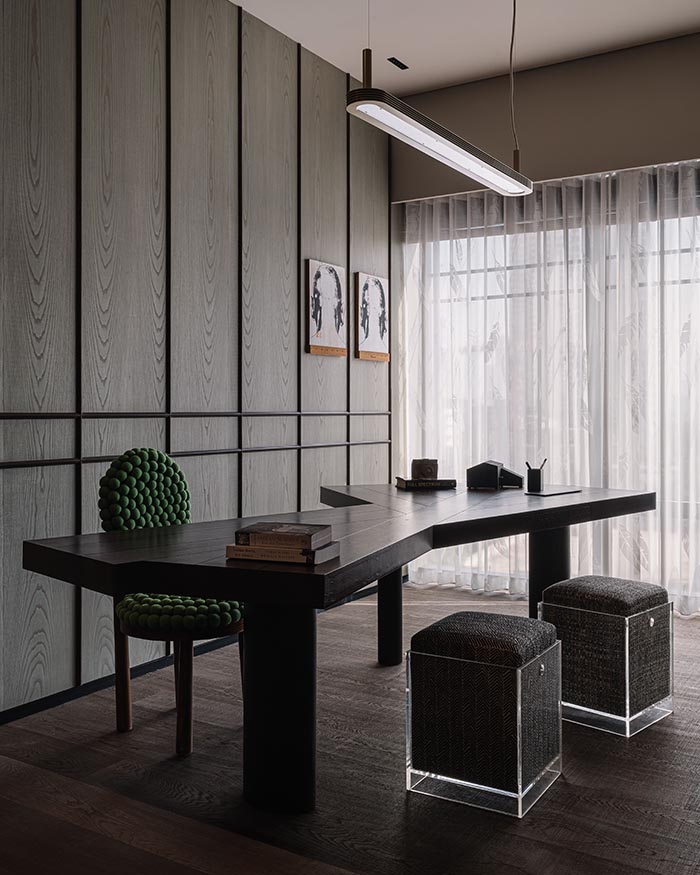
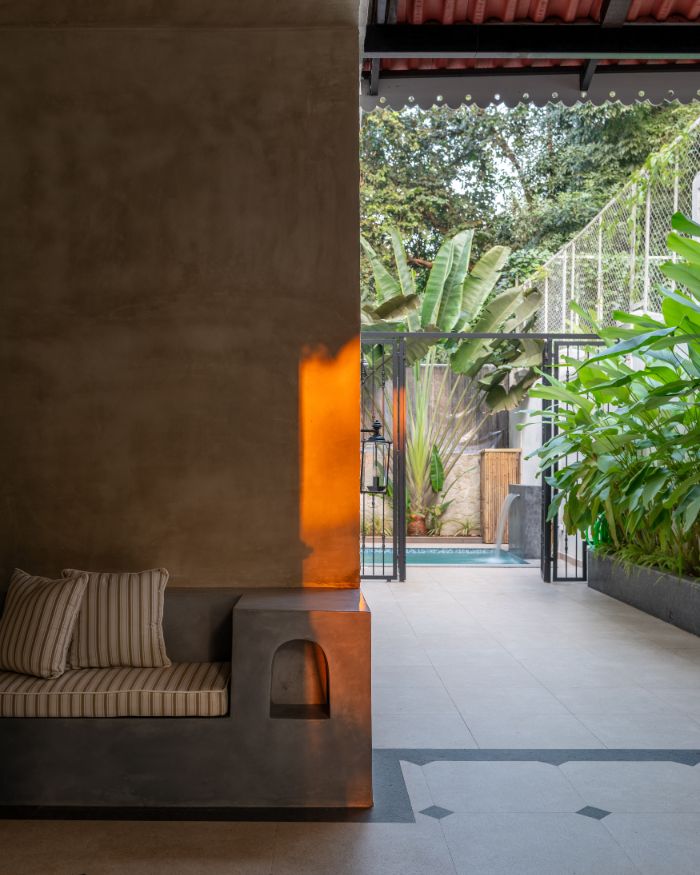
When Japanese-American artist Isamu Noguchi proposed a playscape in the 1930s, it looked nothing like the cookie-cutter slides and swings one was familiar with. It was, in his words, a primer of shapes and functions, simple, mysterious and evocative. His principles of privileging curiosity subconsciously rippled through time, across generations of architects. Nearly a century later, on the other side of the world, reD Architects translates the often-elusive idea of play into an 8,000 sq ft residence in Mumbai, with an apt sobriquet, House of Curiosities.

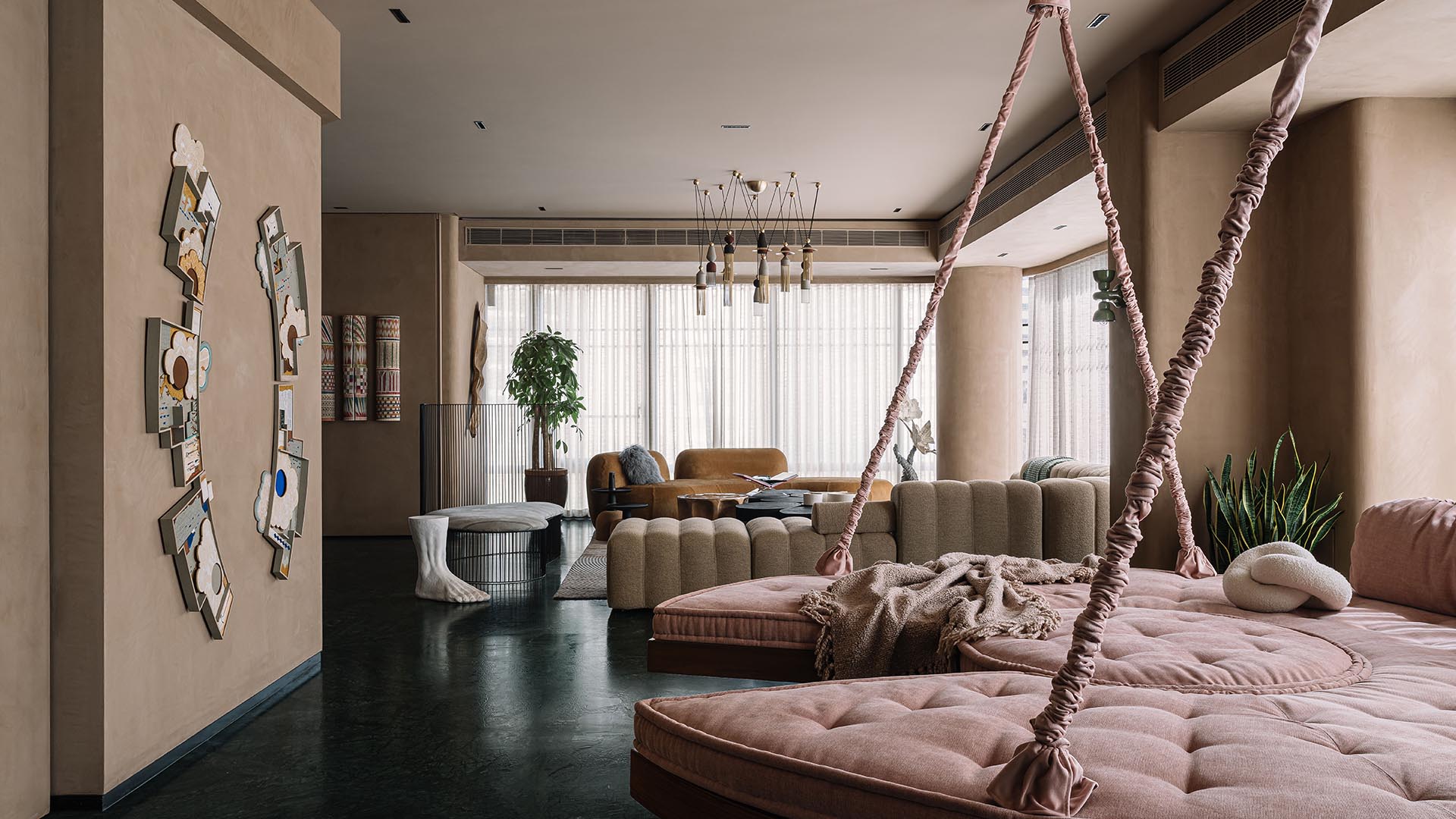
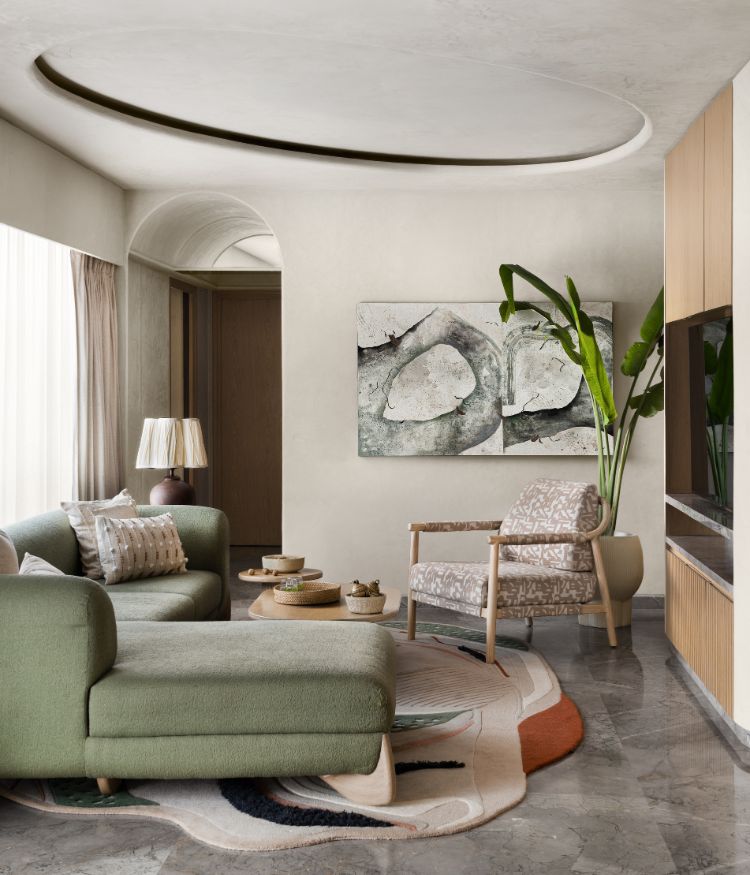
“We called it so because the home unfolds like a cabinet of curiosities, a layered collection of moments, materials and ideas that reveal themselves over time,” say the Principal Designers of the studio, Rajiv Parekh, Ekta Parekh and Maithili Raut. In a repudiation of convention, they opted instead to choreograph movement in a way that heightens one’s experience. The two living areas, for instance, share the same earthy semantics, but their expressions differ entirely. Where the formal space is composed and restrained, owing to more stoic choices in seating, the informal space, only a few feet away, sports a bold 14 ft swing sofa designed by reD Architects, surrounded by a burst of colour.

“Rather than separating rooms architecturally, we design psychological thresholds through mood, material and use, allowing the spaces to flow while maintaining different emotional experiences"

Curves and Continuum – II, an artwork by Jagannath Panda, is in conversation with the Lounge in Motion swing sofa by reD and the Tateyama sofa by Secolo; Photography by Ishita Sitwala

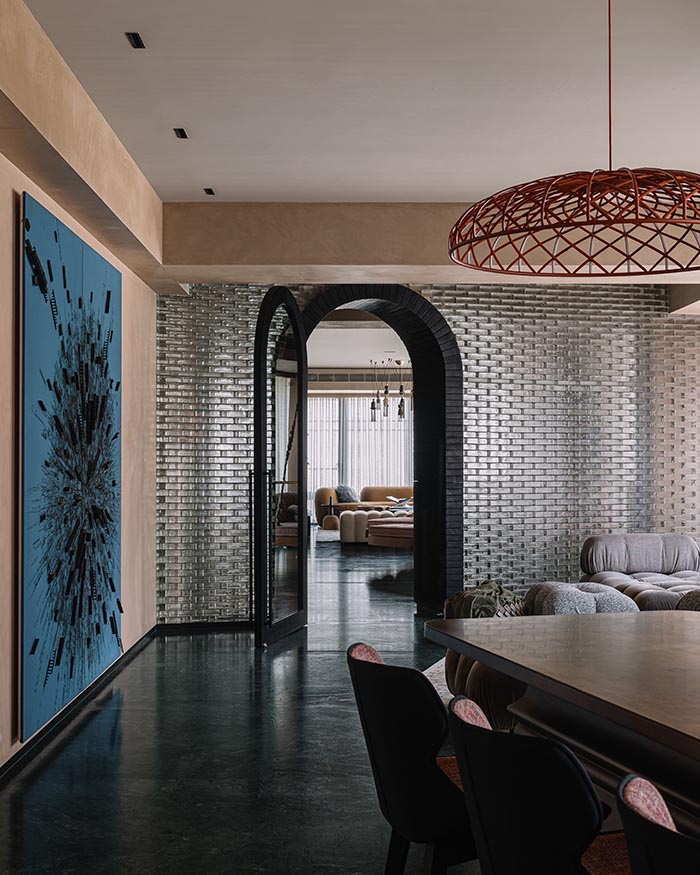
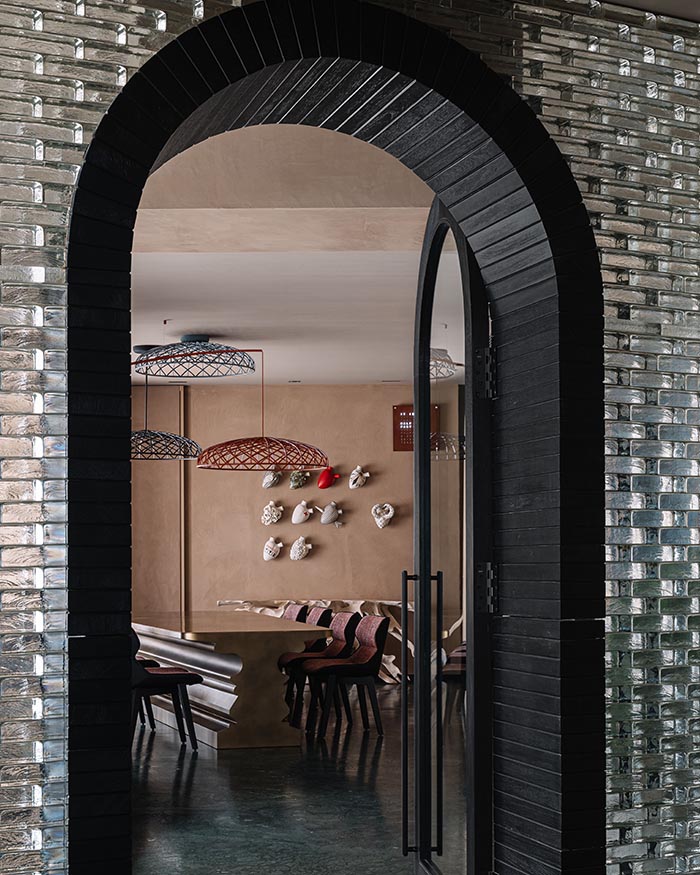
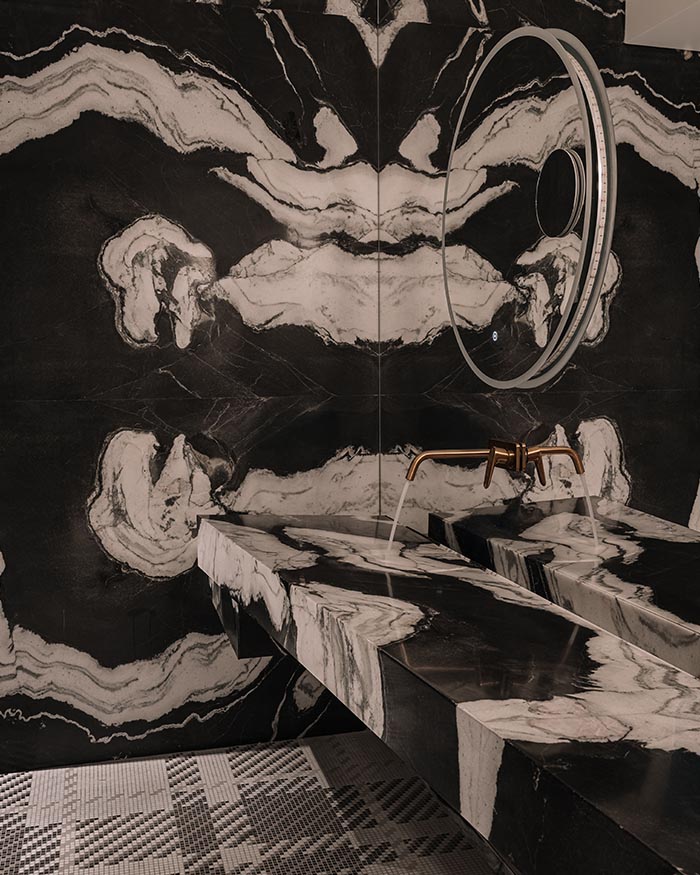
“Rather than separating rooms architecturally, we design psychological thresholds through mood, material and use, allowing the spaces to flow while maintaining different emotional experiences,” elaborate the architects. These distinctions are perhaps most evident between the private and public. A dark green Baroda stone anchors the lower floor for communal gatherings and entertaining. On the upper level, warm wood takes over the floors, creating a shift in mood for the bedroom and family spaces. Through attentive detailing, the home moulds itself around the lifestyle of its occupants. For instance, the cane staircase offers a tactile interface for the soles of residents who often walk barefoot through the space. This spirit of experimentation and walking an unconventional path informs decision-making throughout, from river stones in the temple to solid walls swapped for glass bricks. Even in the powder room, an interactive peg wall serves as a whimsical touch to what most would consider a banal utility.

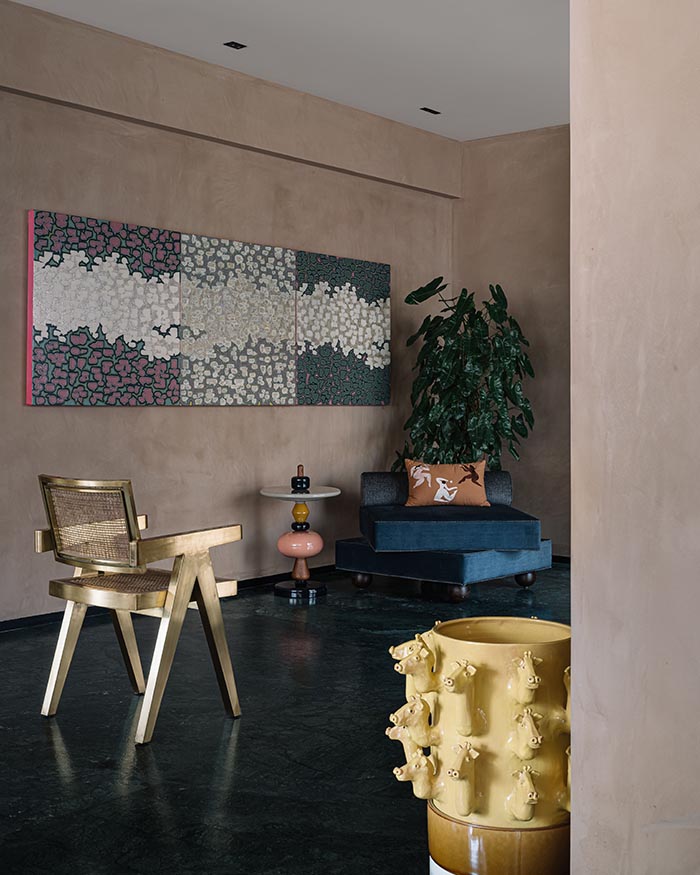
On the wall is an artwork by Dhruvi Acharya named He Said, She Said, below which is a Chandigarh Chair from Mahendra Doshi; Photography by Ishita Sitwala
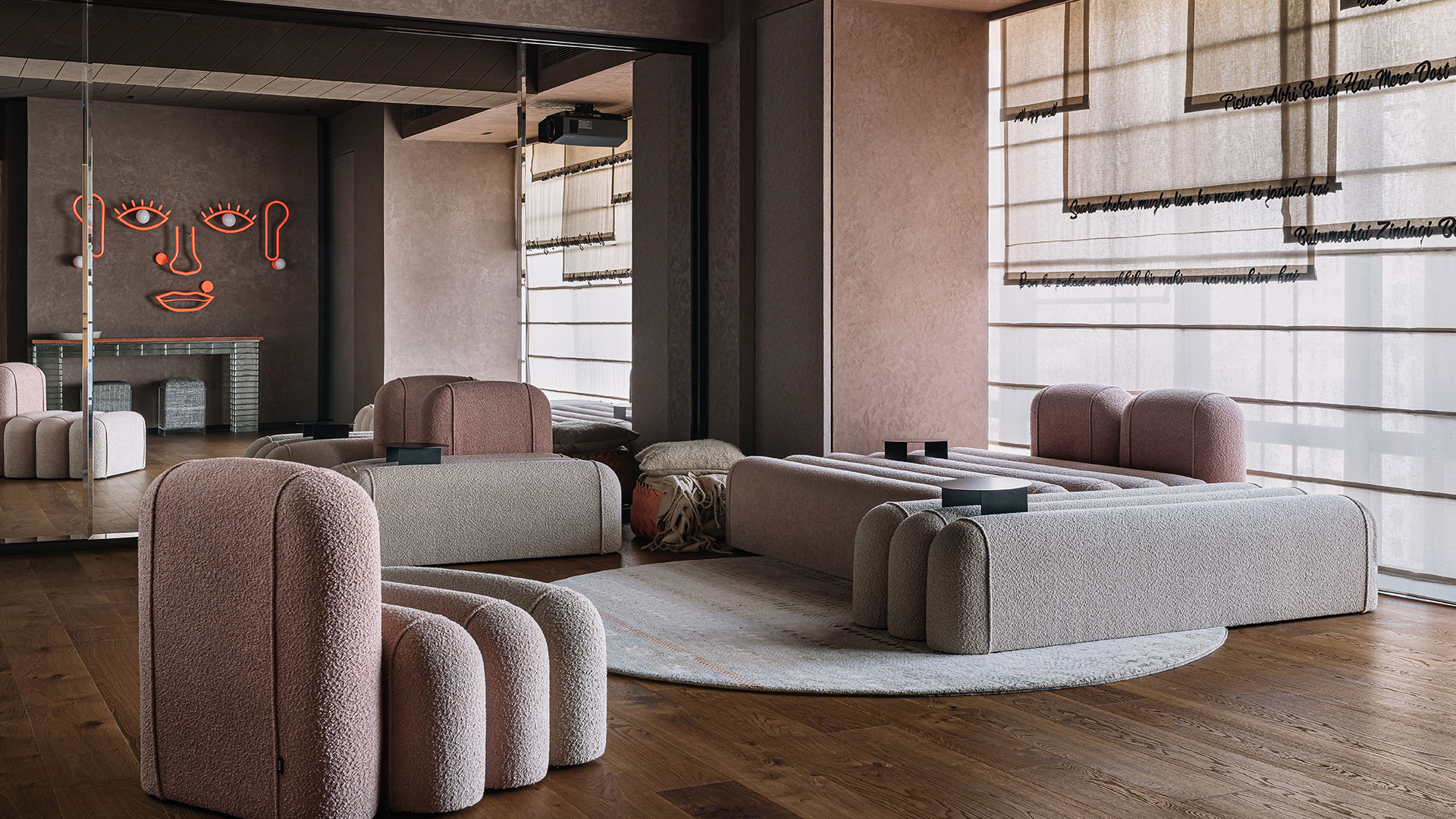
The Puffa System sofa by Rostyk Sorokovy for Kint defines the space with a Blythe rug from Jaipur Rugs and Bolly Buff blinds by reD in collaboration with Embellish. On the wall behind is a Visio A Full light by Masiero; Photography by Ishita Sitwala

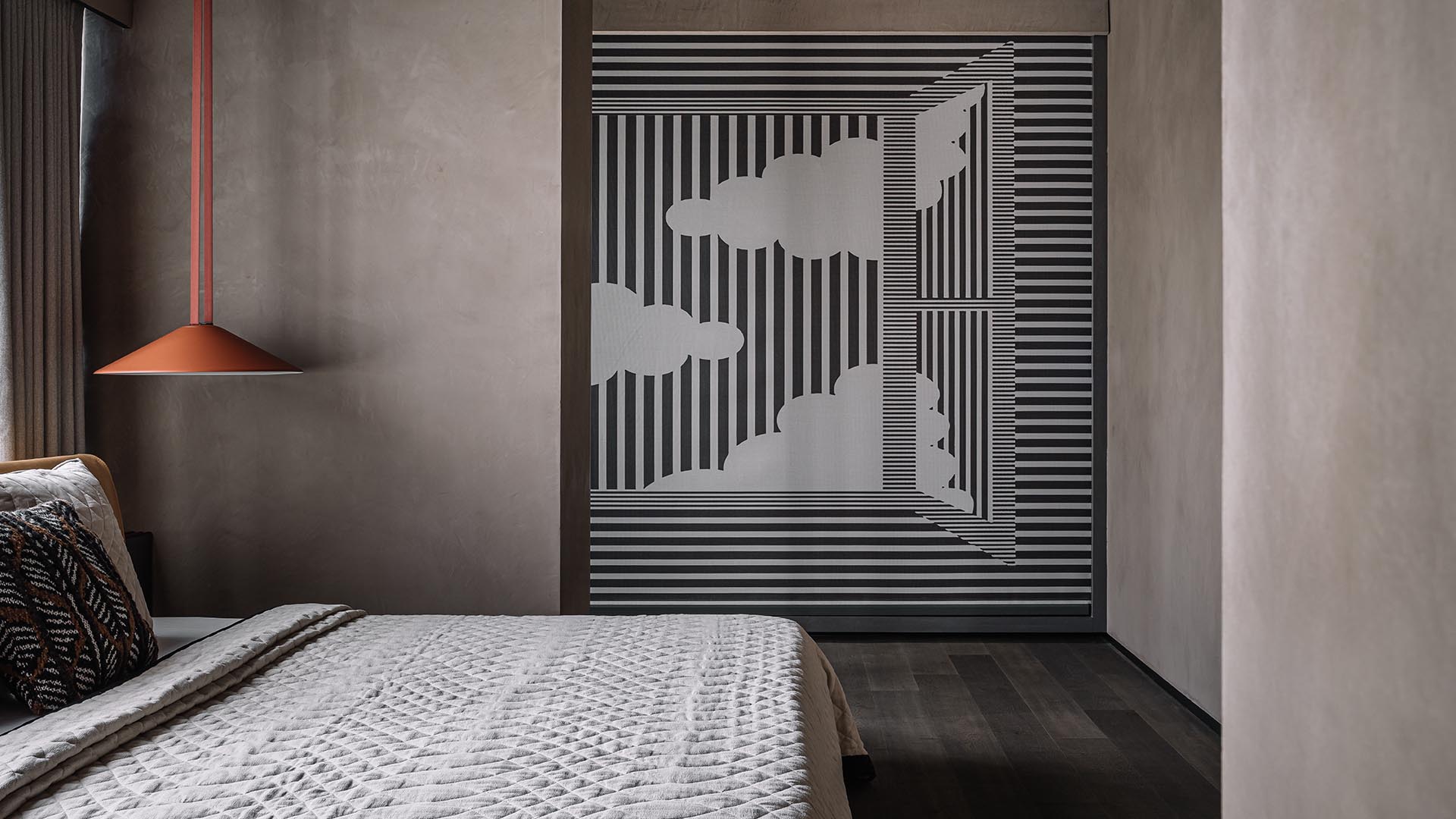
The architects explain, “This home is designed to reveal itself gradually, encouraging residents and guests to slow down and engage more deeply.” Yet it leaves clues of its intriguing nature strewn around: a nameboard with over 16,000 modular switches in the lift lobby, a Murphy door in the children’s bedroom that leads to the laundry and a study nook, cloud-printed curtains for the young son who dreams of becoming a pilot, and a pegboard to display another’s medals. In the den, a poker table extends from a hidden cabinet. “The house becomes a place of discovery, almost like a wonderland, not just for the residents, but for every guest who experiences it,” the architects add. Instead of being just a place of refuge, “it invites energy, interaction and social life.” The house transfigures into multiple characters, at times acting as a sanctuary, at others, a jubilant host.

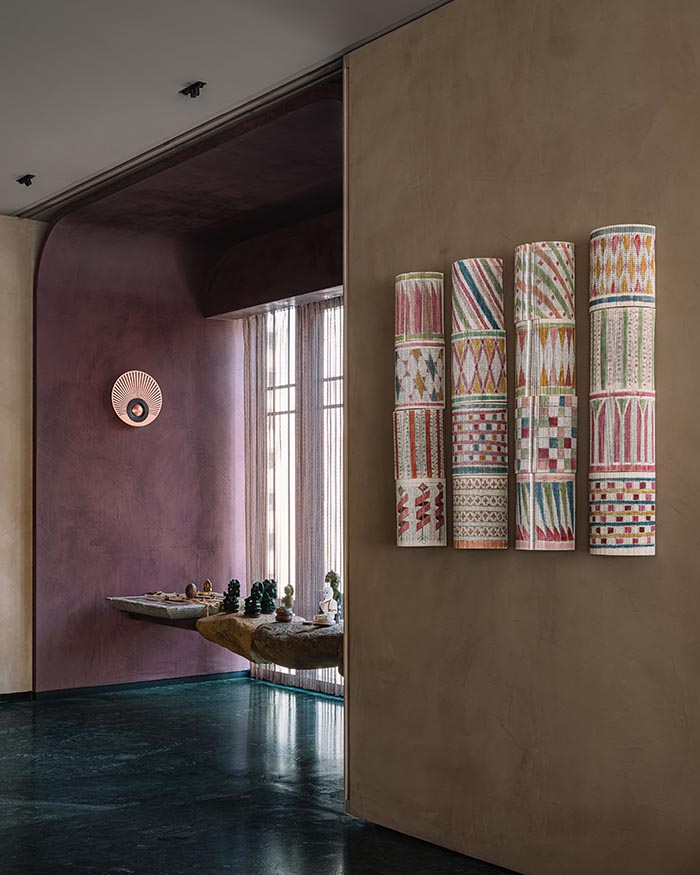
The Floating Altar by reD forms a contemplative focal point, illuminated by the Earth Radian wall light by Emilie Cathelineau for CVL and layered with artworks collected during the owners’ travels; Photography by Ishita Sitwala
A light by Vibia from Sources Unlimited hangs next to the bed by Mario Bellini for Cassina, with bedding from The Pink Champa. The wardrobe shutters are created by reD with Meshworkz; Photography by Ishita Sitwala

But in the absence of a static identity, how does one define a space? Perhaps a home, unlike all other architectural typologies, revels in permutations of the infinite, like a Noguchian landscape of all that one has seen and all that one is. The only constant being a happy medium between comfort and curiosity.

Now read: A lofty villa in Navsari by Design ni Dukaan

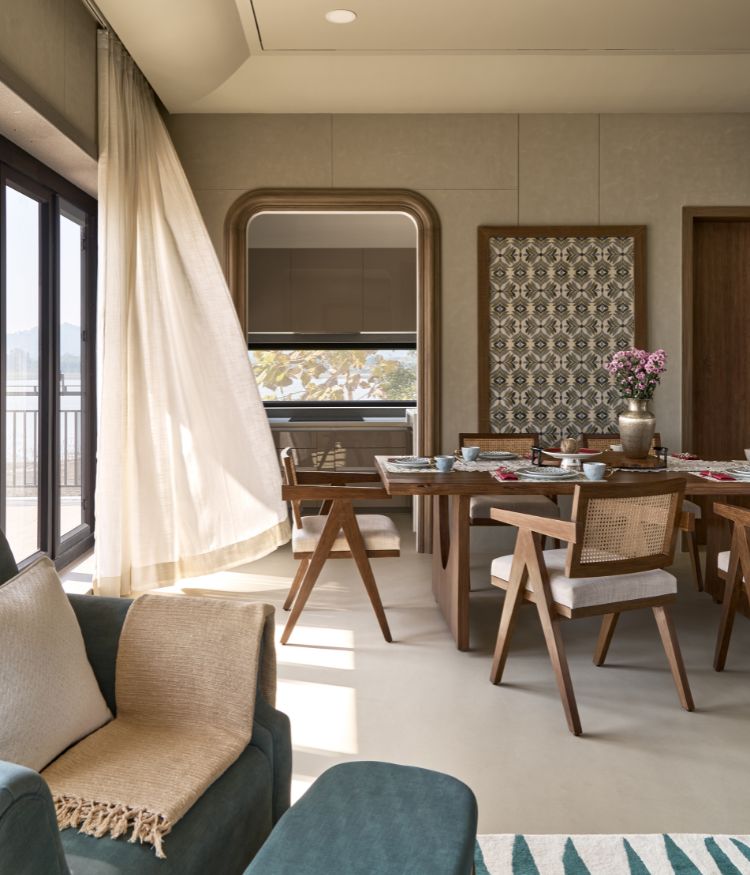
The Monolith dining table by reD is surrounded by Clarissa dining chairs by Patricia Urquiola for Moroso. Overhead, the Sky Nest light by Marcel Wanders for Flos casts a soft glow, while an artwork by Martand Khosla completes the setting; Photography by Ishita Sitwala
SHARE THIS ARTICLE

You May Also Like

Watch

No results found.

Search
Close this search box.