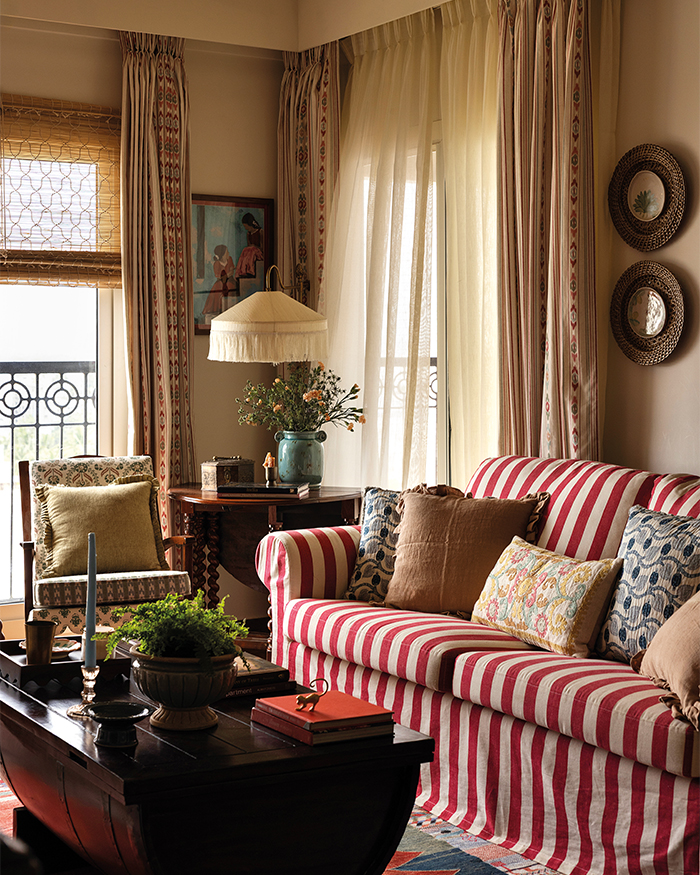

As a child growing up in London, my parents, brother and I would slip away on little trips during the summers. Once it was to the Cotswolds, another time to Scotland and the Lake District. A third, to the mesmeric coastline of Cornwall. And each time, unfailingly, we’d stay in a little bed-and-breakfast, with cobblestone walls, creaky floors, and, as ever, a friendly face to welcome us inside and see us off in the morning. They were never grand — often a little lopsided, always a little quirky — but endlessly warm. When we moved to Bengaluru in 2003, those cheerful little B&Bs quietly became my earliest memories of architecture: spaces full of character, small imperfect details, and the comforting sense that a home should feel lived in rather than perfectly put together.
Time moved on, as it does, but those little B&Bs never quite did in my imagination. When my husband, Siddharth, and I bought our forever home after more than a decade of living in rentals, I found myself circling back to them again. I wanted our home to carry that same easygoing charm — unfussy and a little rough around the edges — the sort of place where the light drifts lazily through the windows and, somewhere in the background, a teapot is always just beginning to whistle. When it came to designing the space, our vision was clear: nothing cookie-cutter, nothing too contemporary, and nothing overly shiny or new. We wanted a home that felt familiar, lived-in and nary too precious — a place where our children, aged six and four, could simply be children, zooming their magic cars around the living room without bonking their heads and running about freely without worrying about knocking over china. It was a small ask yet a tall order — especially given that our apartment — a 2,200 sq ft layout with made-as-per-plan living and dining rooms, a kitchen and four bedrooms — was the exact opposite of our vision: builder-grade, boxy and rather too new, with all the glossy finishes and straight lines that make a space feel more showroom than sanctuary.
I still remember my first conversation with interior designer Shweta Malaviya of Bengaluru-based Studio Primrose. “I’m a 1960s soul trapped in a millennial body,” I informed her, rather sagely. “Good thing I am too,” she replied. And suddenly the brief didn’t feel quite so eccentric after all.
I wanted our home to carry an easygoing charm — the sort of place where the light drifts lazily through the windows and, somewhere in the background, a teapot is just beginning to whistle
— Vaishnavi Nayel Talawadekar
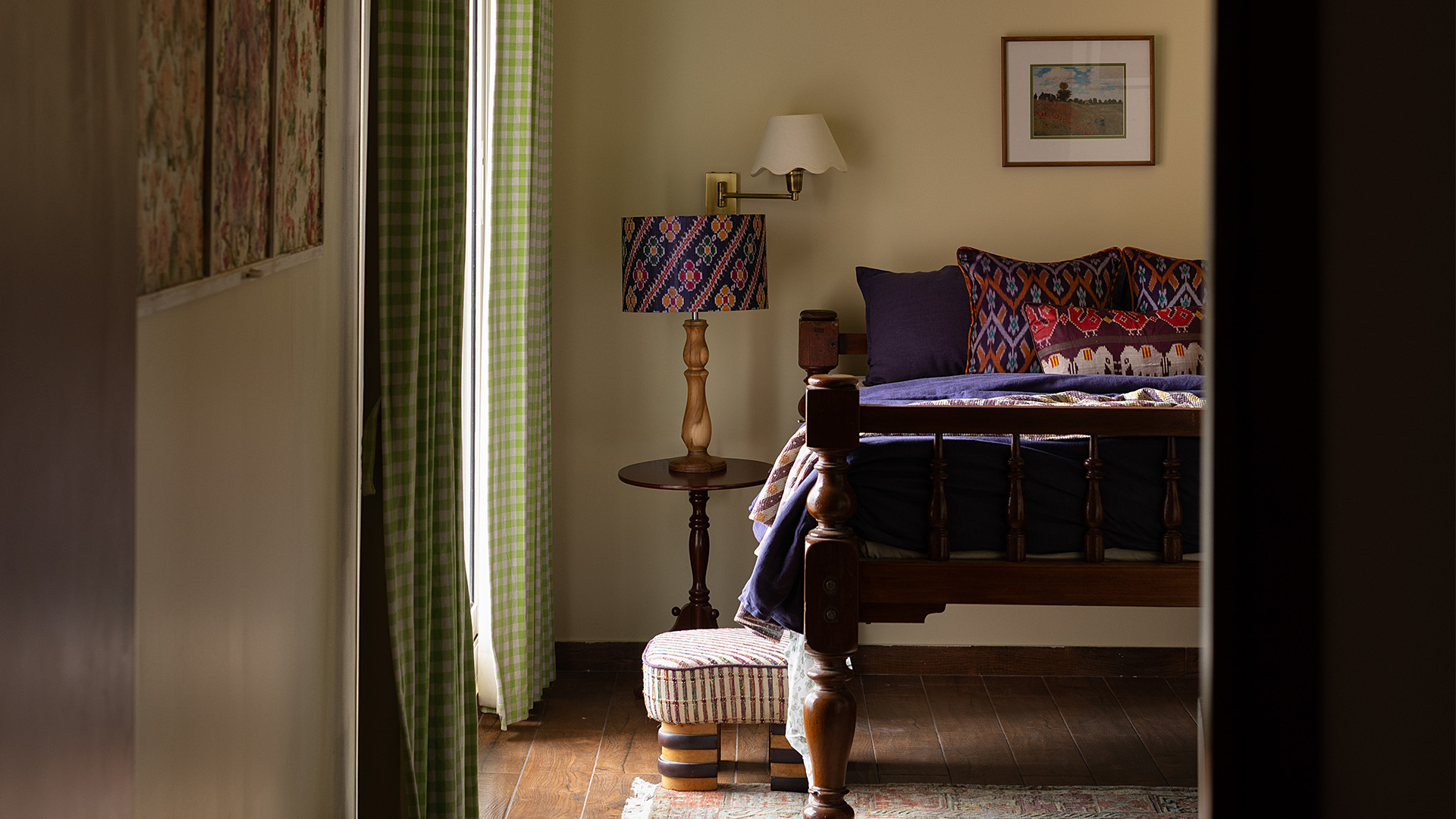
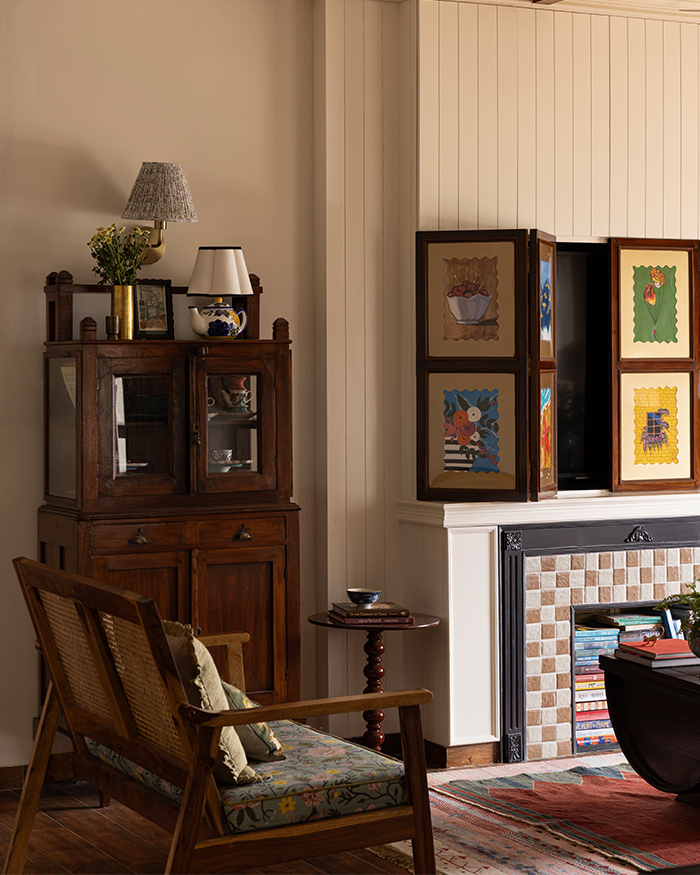
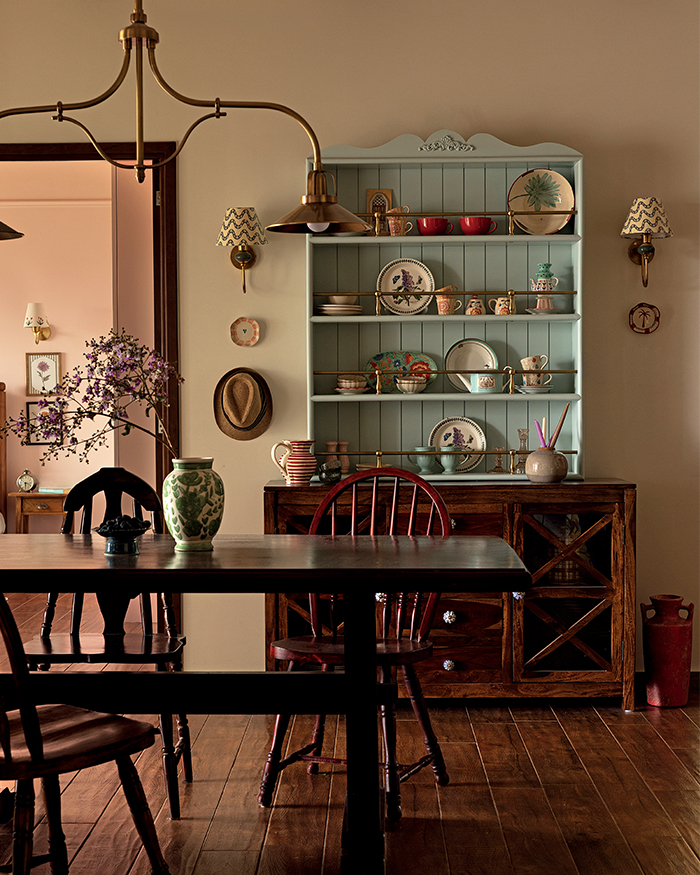
Early on in this journey, my maternal grandparents’ home in Mumbai was listed for redevelopment. It was the home my mother had grown up in and where my grandparents had lived for more than sixty years, so nearly everything inside came with a story attached. The crystal handle on the teak armoire had once been a strict “look-don’t-touch” curiosity in my mother’s childhood; the spiral-legged table had, over the decades, enjoyed a busy career as a coffee perch, television stand and occasional dinner table; and the chiffoniers had faithfully housed clothes, books and — depending on the season — all manner of delightful odds and ends. By then my grandparents, now well into their nineties, had moved out (they live with my parents in Bengaluru now), and very kindly let me claim a few of these pieces. Bringing them into our home added a deeply personal layer to the project and reinforced another small but stubborn principle of mine: no built-ins. I liked the idea of a house shaped by objects with stories, rather than one filled with things freshly bought and faintly anonymous.
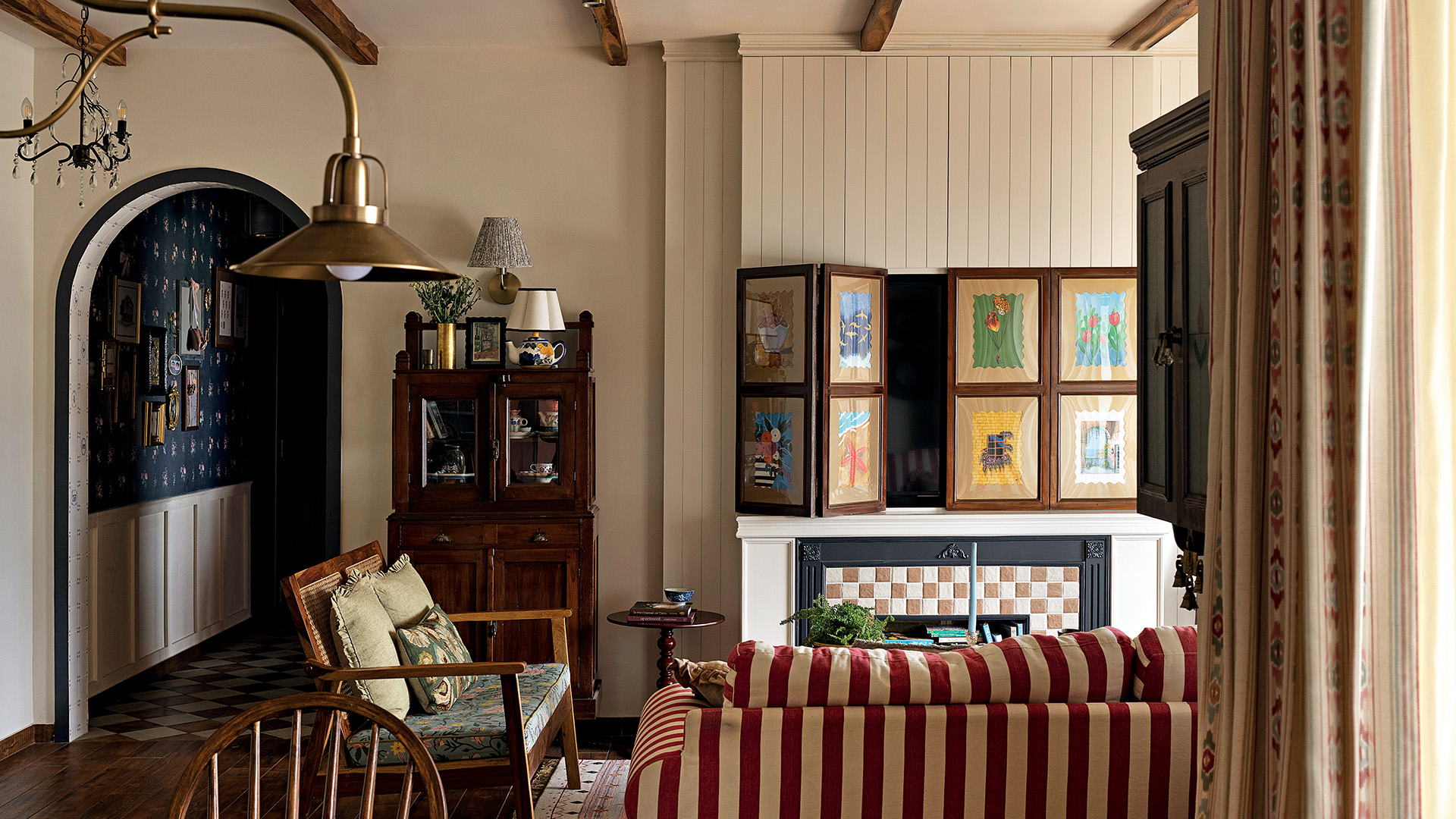
Siddharth and I have always had a soft spot for objects with stories to tell, so this home slowly became as much about restoration as reinvention — a philosophy Shweta happily embraced. My paternal grandmother’s delicate bone china teacups from the 1960s now dangle overhead as chandeliers. A set of my father-in-law’s chairs, bought in Aurangabad in 1985 and perilously close to retirement, were coaxed back to life with a little patience and a lot of polish. And a metal projectile — once part of a bomb and salvaged decades ago by my late paternal grandfather during his time in the Air Force — was turned into an improbably charming papier-mâché lamp by Delhi-based Vahe Ensemble.
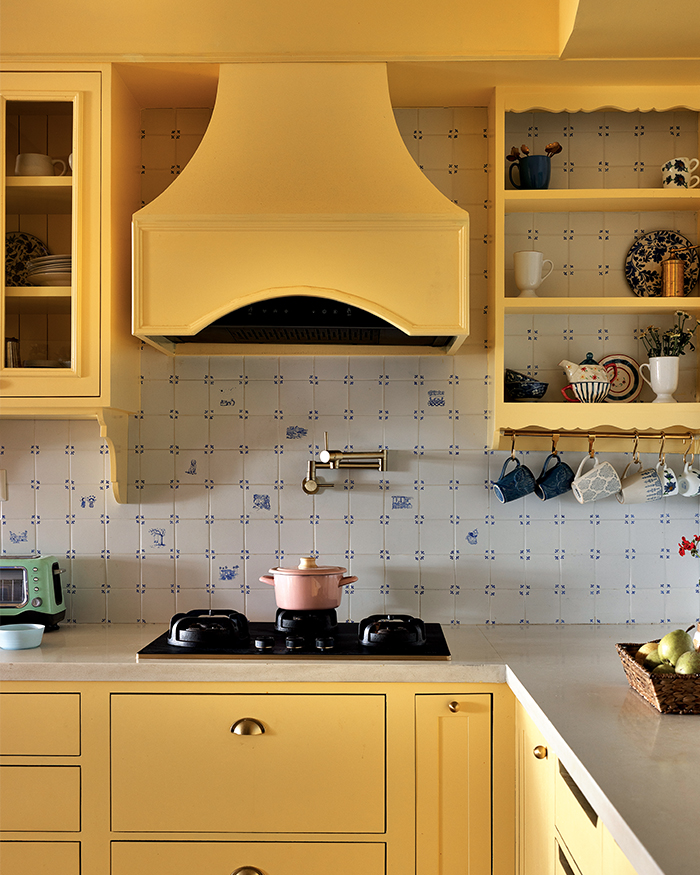
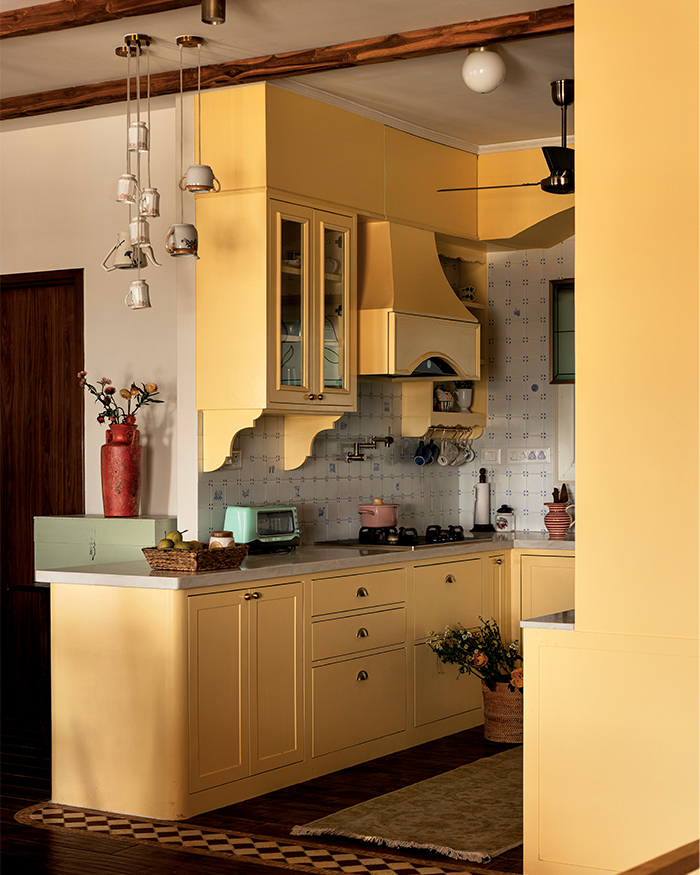
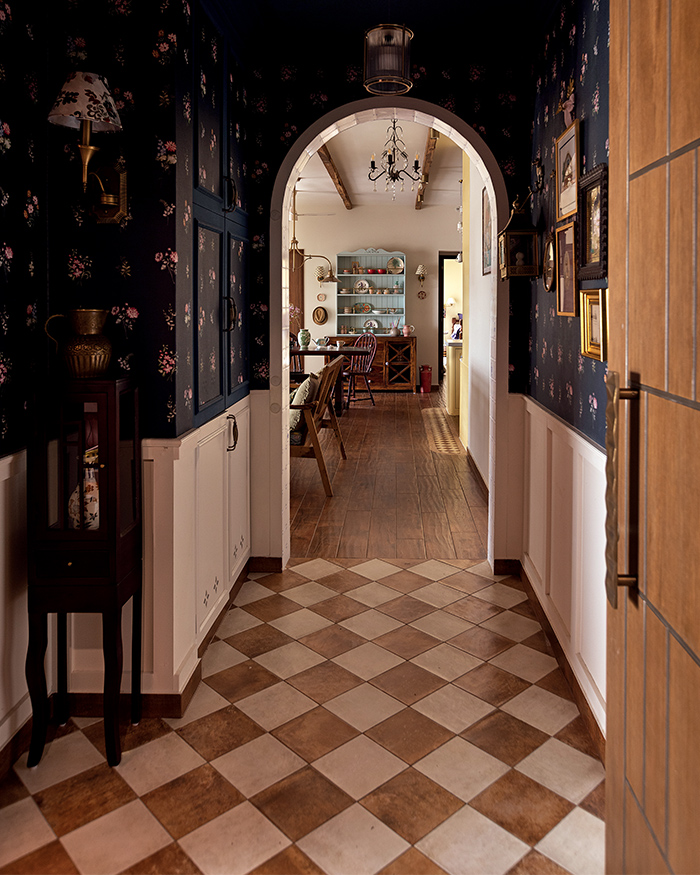
Soon, under Shweta’s thoughtful eye, every corner of the house began quietly nodding to someone or something we loved. The kitchen tiles, for instance, are customised by Bengaluru-based Trayah Pottery in the Delft style, each one hand-painted with its own small vignette. One shows Siddharth, the kids and me gamely recreating the Beatles’ stroll across Abbey Road (our son is a devoted fan); another features the humble but heroic vada pav, which Siddharth could happily subsist on; and a third captures the university campus where the two of us first met. In the foyer, Shweta suggested a wallpaper abloom with flowers, brought to life by Gurugram studio Design by Metamorph, each chosen to represent a family member’s birth month — a gentle reminder, every time we walk through the door, of the little constellation that makes this house a home. She had a knack for turning our sentimental ideas into thoughtful design moments, weaving them into the interiors without ever letting the house feel overly themed.
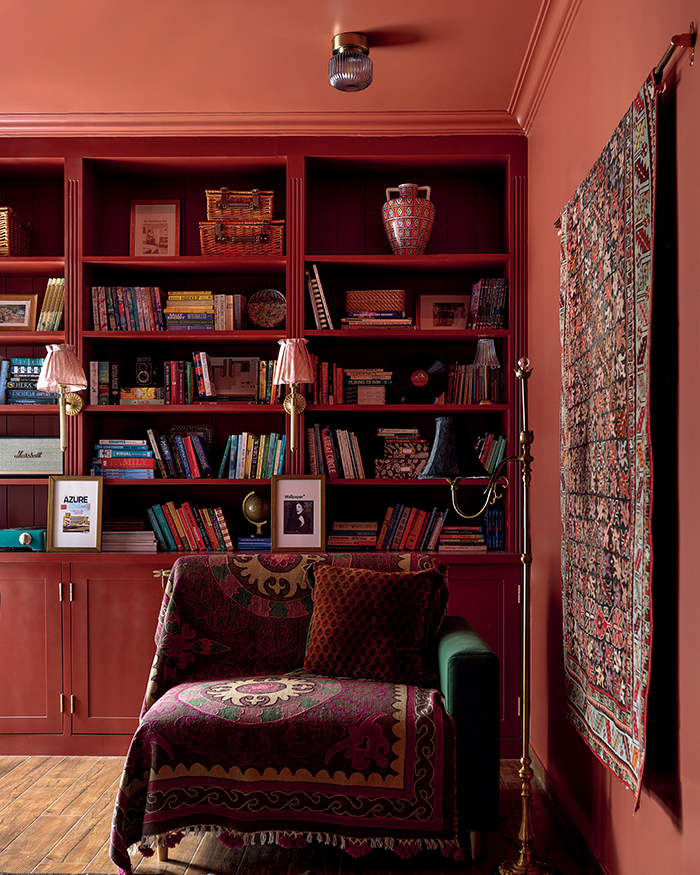
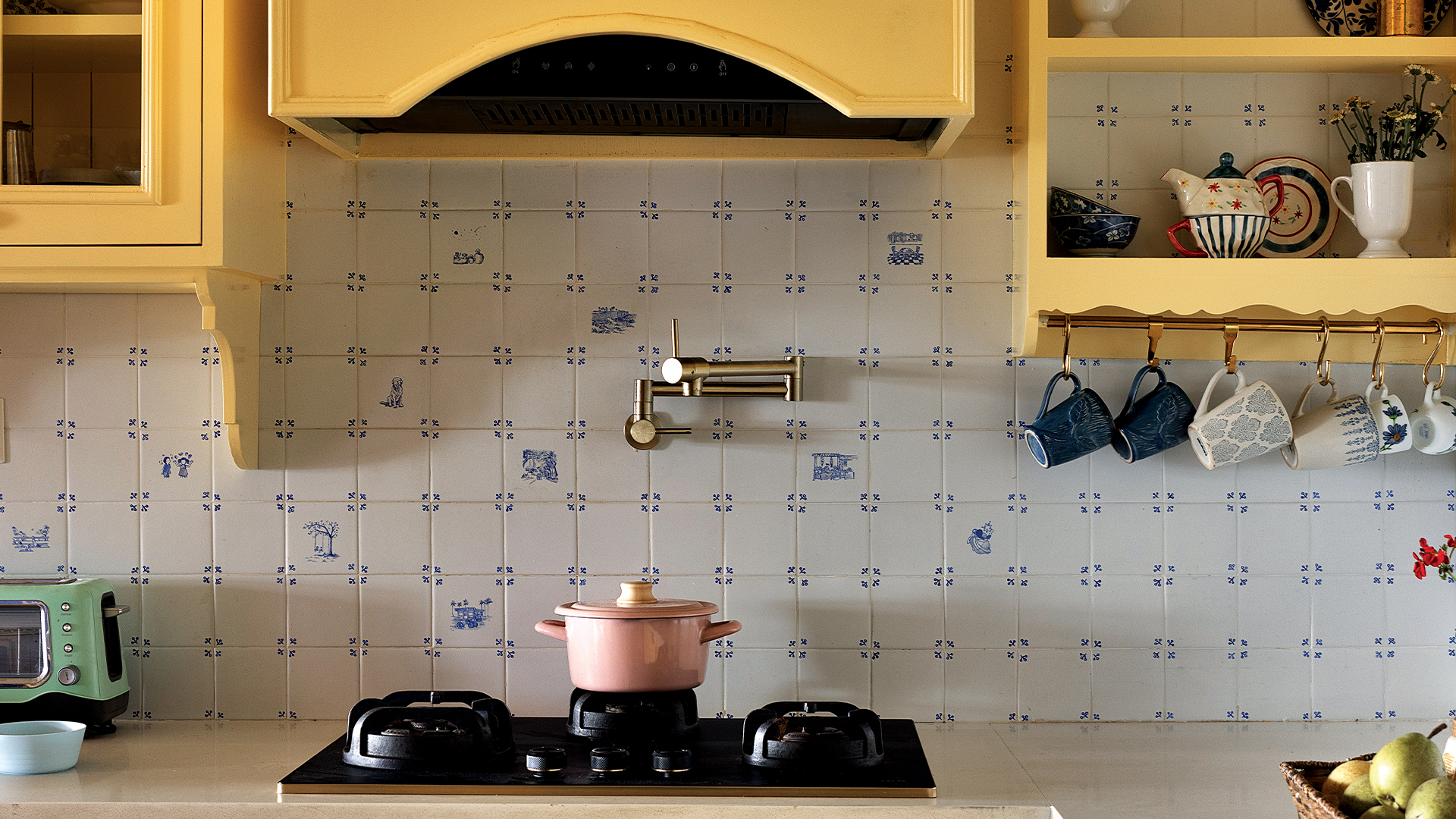
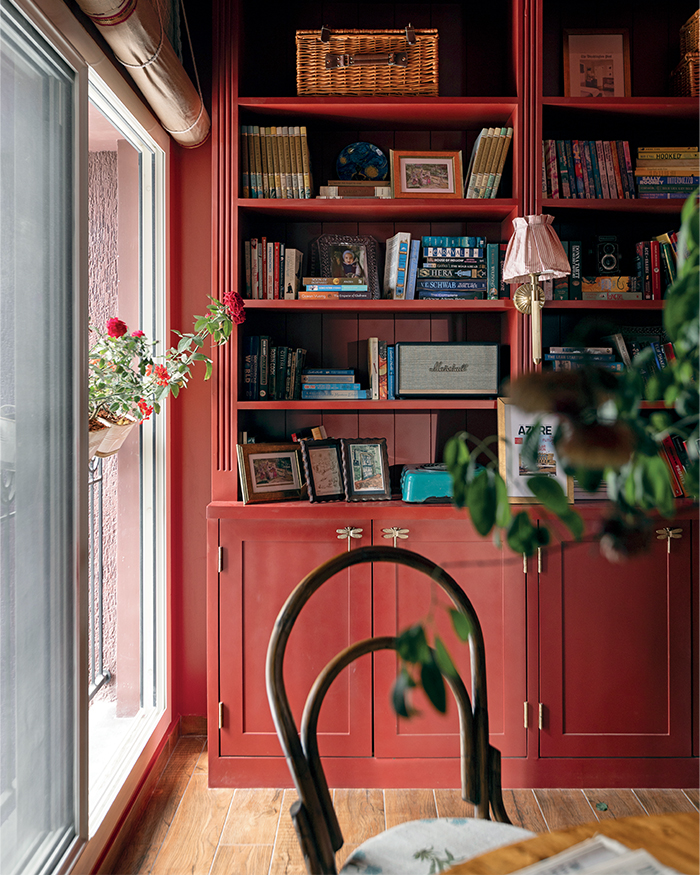
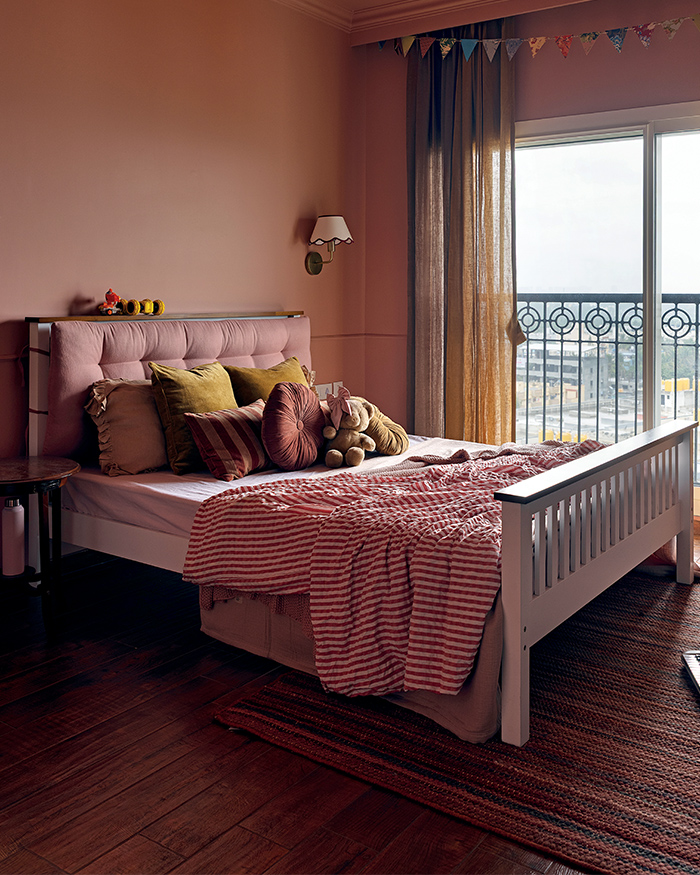
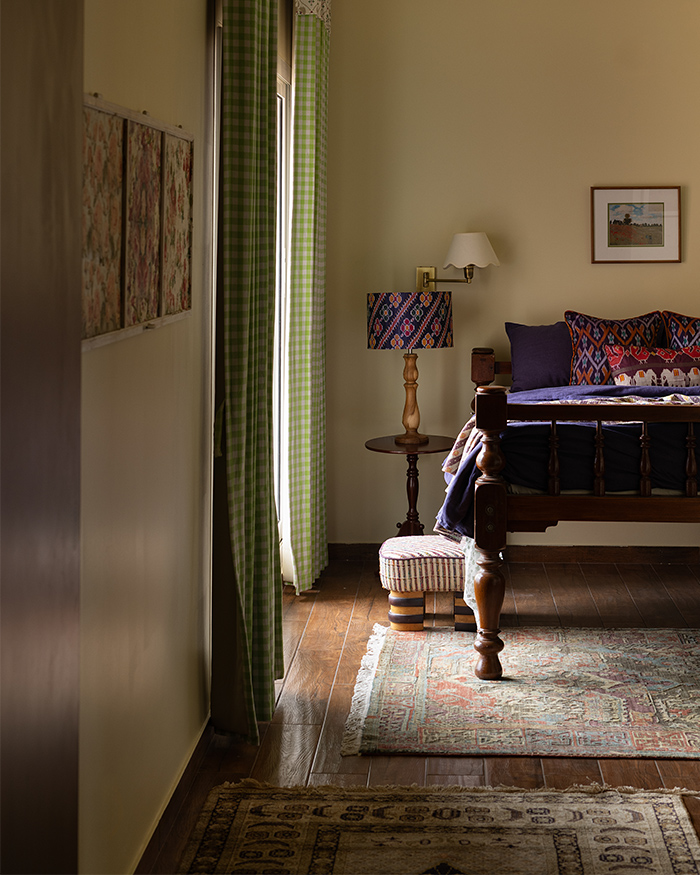
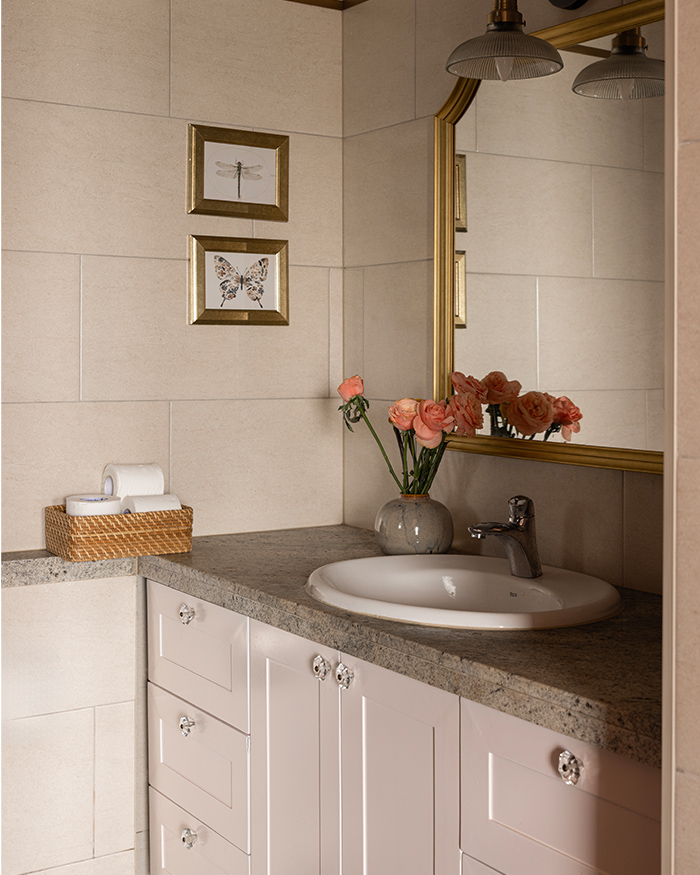
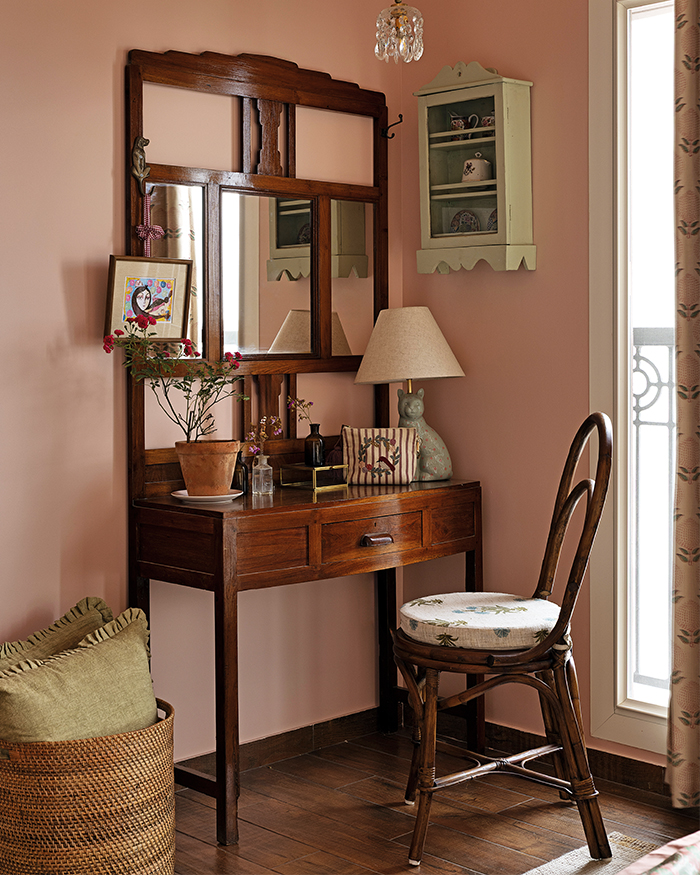
Before long, Shweta began to shape the house around the gentle rhythm of the seasons, giving each room its own distinct mood. The library, drenched in deep laterite hues, became the winter refuge — cosy, quiet and reassuringly cocooned, the sort of place where a cup of tea stays warm and sentences come easily. Our bedroom leans into the languid mood of summer afternoons, with playful pinks and honeyed light. The guest room, painted pistachio green with mulberry accents, feels like spring — fresh, cheerful and faintly reminiscent of picnics on new grass. The children’s room captures the softness of golden hour, with gentle colours and that dreamy in-between light before bedtime. And the kitchen, cheerful and busy as ever, glows like a sunbeam. Each space carries its own little atmosphere, layered with details that deepen our emotional connection to the house.
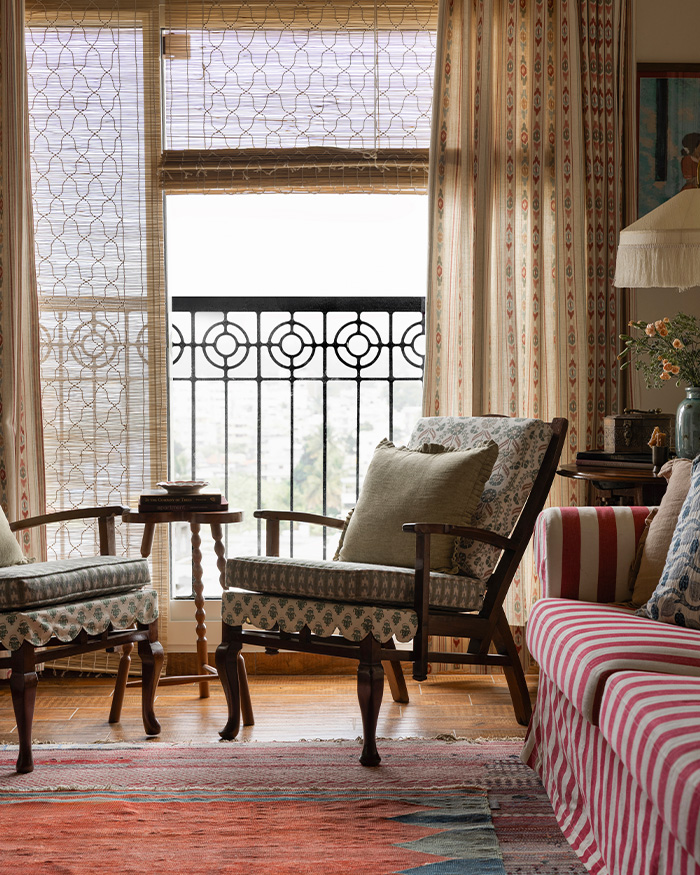
Indian textiles, too, became an important part of grounding the space — something Shweta was keen to highlight as the design evolved. Ikat fabric softens the windows as curtains, traditional blockprints bring the armchairs to life, and in the library, the backing of the window shades is fashioned from one of my grandmother’s old saris — a small, secret flourish that feels stitched into the room.
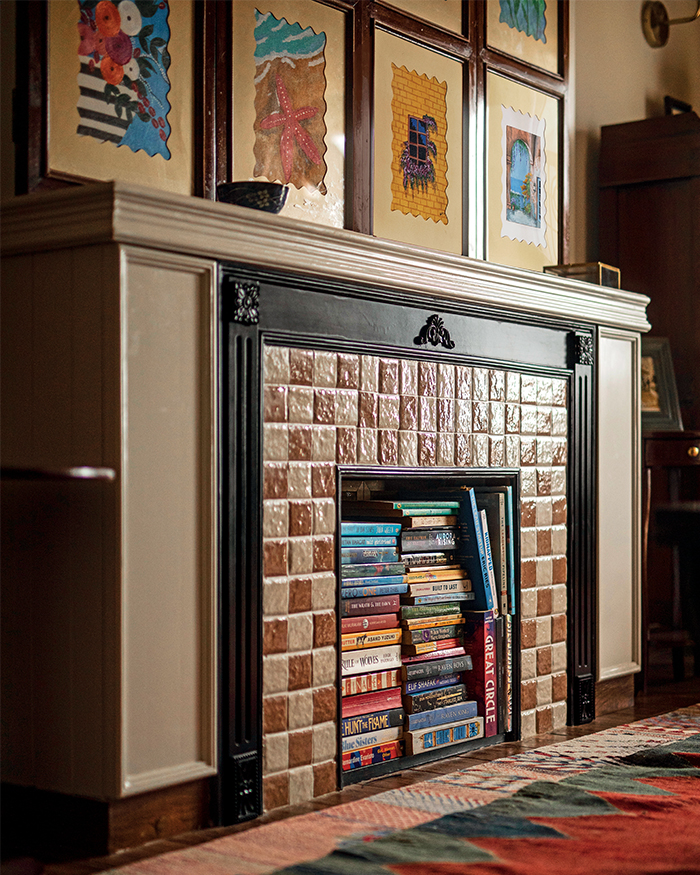
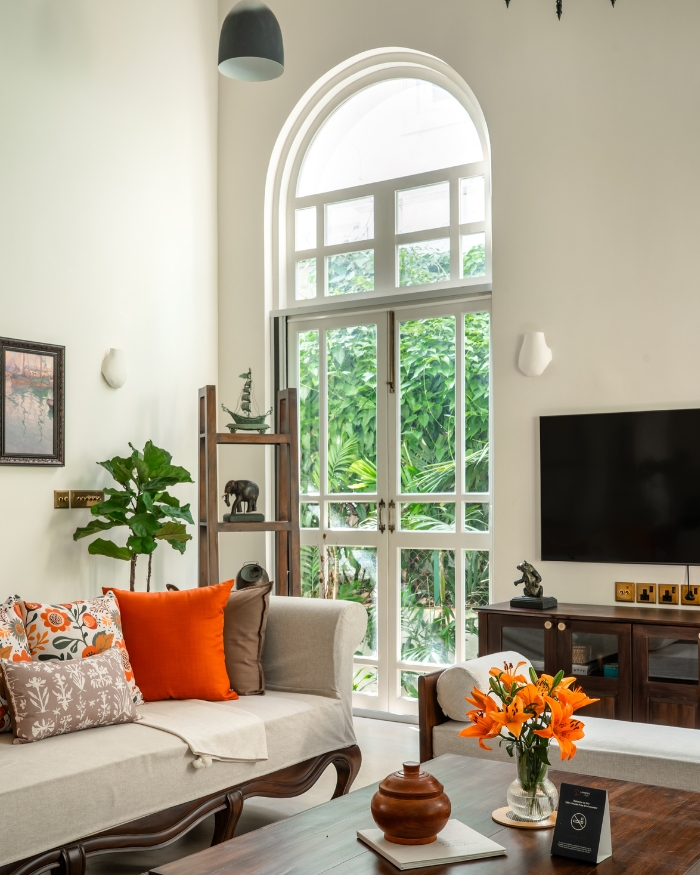
Practicality, of course, had to quietly keep pace with romance, and Shweta devised clever ways to tuck storage discreetly into the design. The television in the living room disappears behind shutters painted with works by artists with special needs, turning what might have been a blank cabinet into something far more meaningful. The fireplace, meanwhile, hides a tangle of electrical wiring and doubles as discreet storage. In the foyer, the shoe cupboard melts almost invisibly into the wall, while in the living room a half-barrel cheerfully cosplays as a coffee table. Somewhere between the practical solutions and the sentimental touches, the house slowly found its character.
Sometimes, I find myself marvelling at how much our home resembles those little bed-and-breakfasts I remember so fondly from childhood: a little lopsided in spirit, perhaps, full of oddities and stories, and all the better for it. The floors don’t creak (modern construction has its limits), but the rooms hum with the same easy warmth I remember from those summer holidays. And on quiet afternoons, when the light drifts through the windows and the kettle begins its familiar whistle, I’m suddenly a child again — half expecting toast and marmalade to appear on the table, and a friendly voice to wish us good morning and see us off on our way.
No results found.