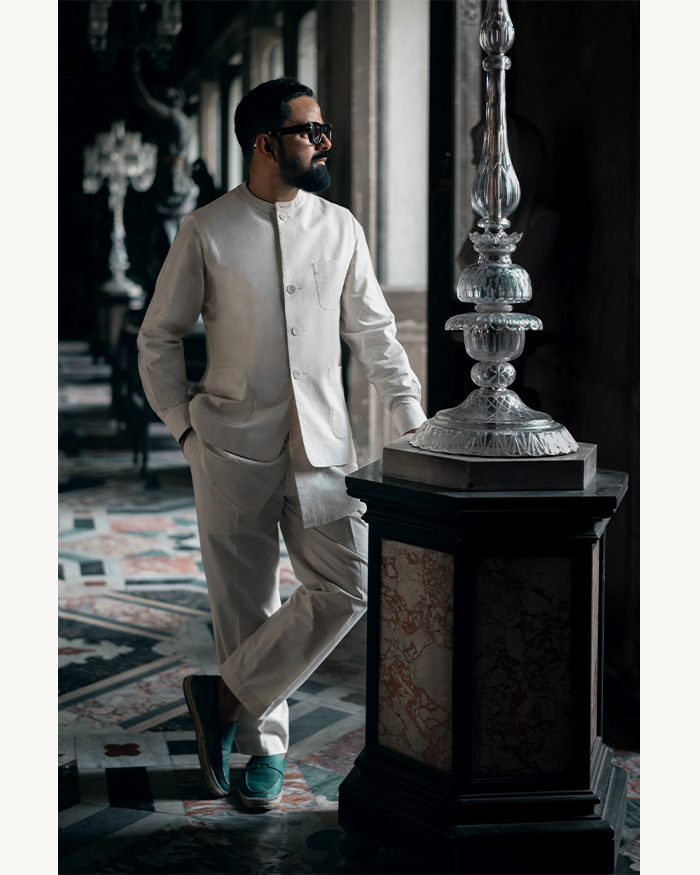

The first time I came across The Eyes of the Skin by Finnish architect Juhani Pallasmaa, the book’s title confronted me with a slow, feverish urgency about how we experience design in our everyday lives. He explains, the architecture of experience lies as much in the margins of our vision as in the centre. These words return during my conversation with Ravi Vazirani, who reminds me, “The first step towards good design is being in touch with your peripheral awareness.”
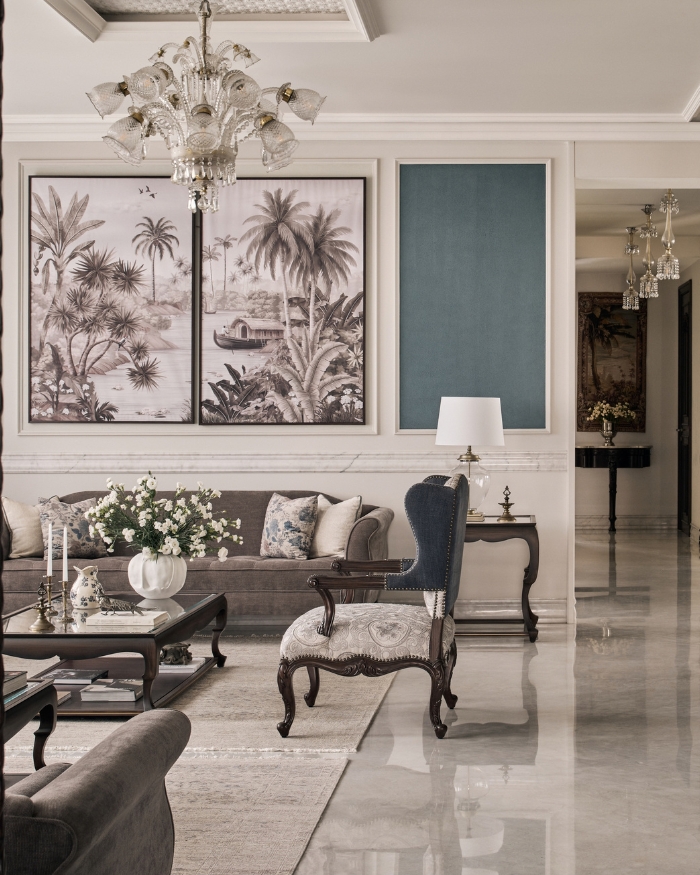
Technically, there may not be a fixed definition for ‘good’ design. Yet when it is present, it is sensorially far from neutral. It heightens our sense of self, sharpens our sensitivity to atmosphere and suddenly, design begins to feel uncannily intimate. A home in Hyderabad by Ravi Vazirani unravels this experience. As I walk through the passageway — the temperature shifts slightly as my feet adjust to the marble floor, light lingers at the edge of my sightline, a chime of materials like stone, wood, glass and metal echo between rooms that aren’t yet fully seen from my stance in the passage.
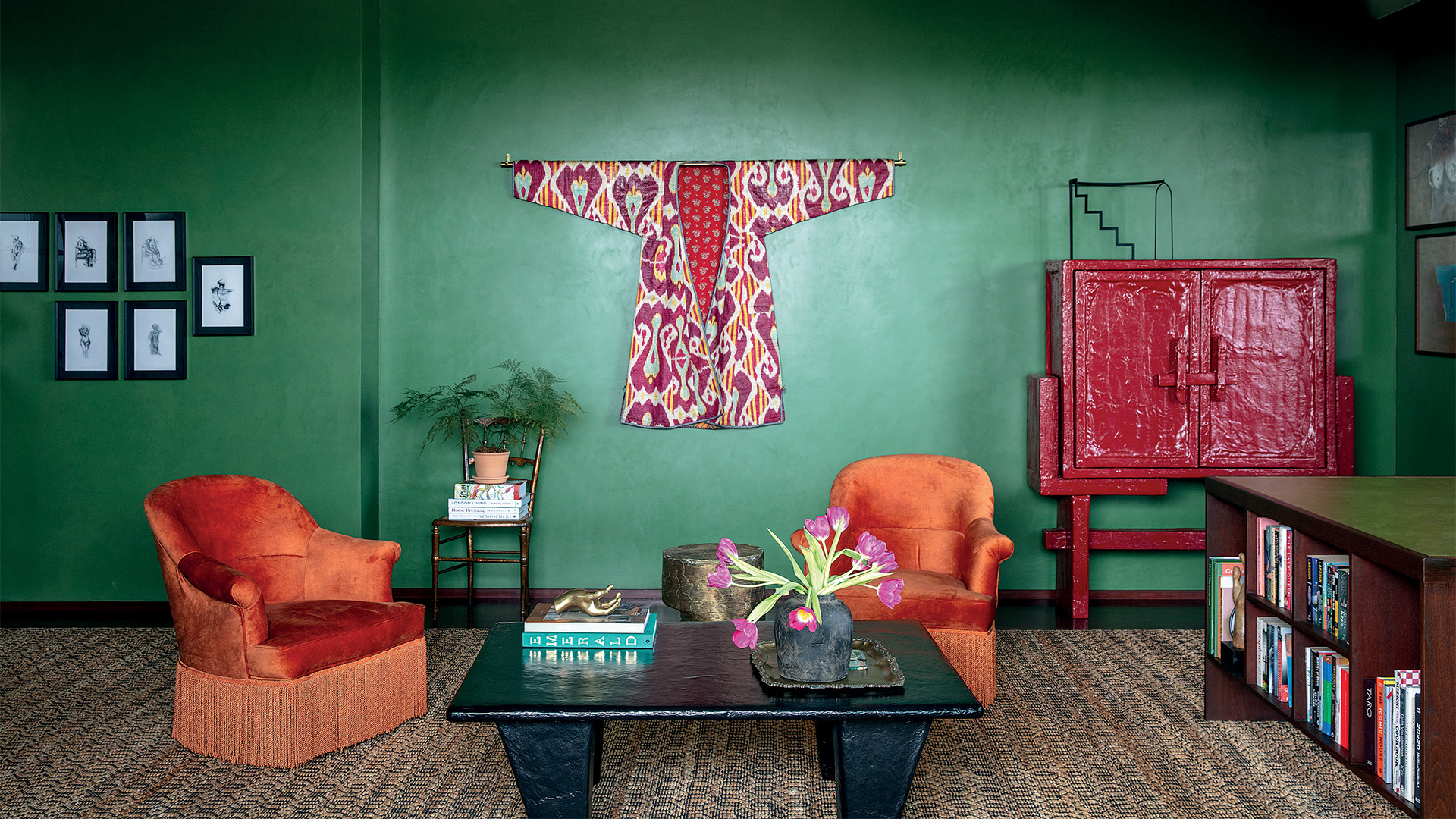
“It’s very different for us (RVDS) to engage with colour this way. Cooler tones in the formal living room, deeper tones in the study, greys and whites in other areas, and a black-laced foyer to land into”
Ravi Vazirani
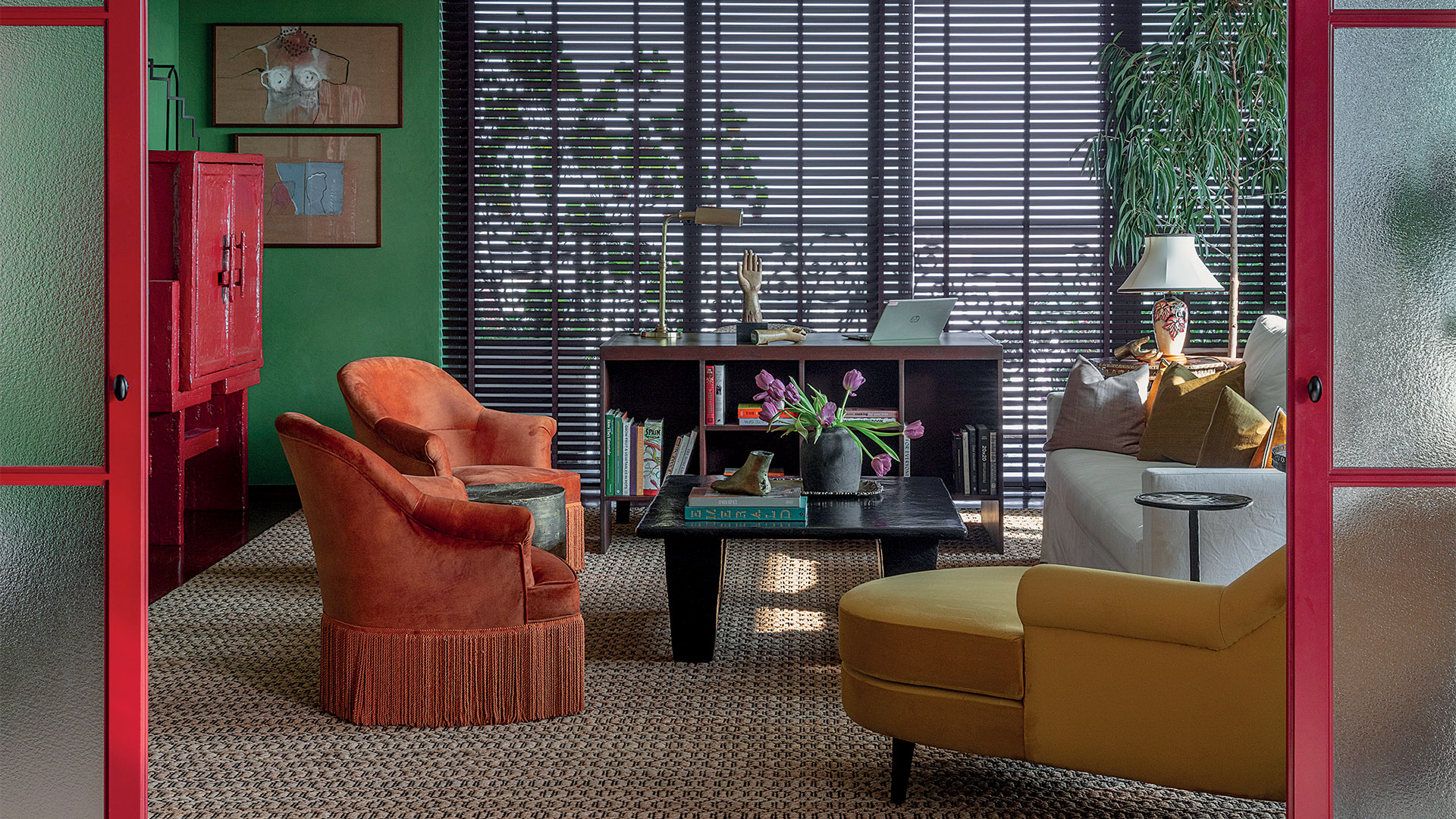
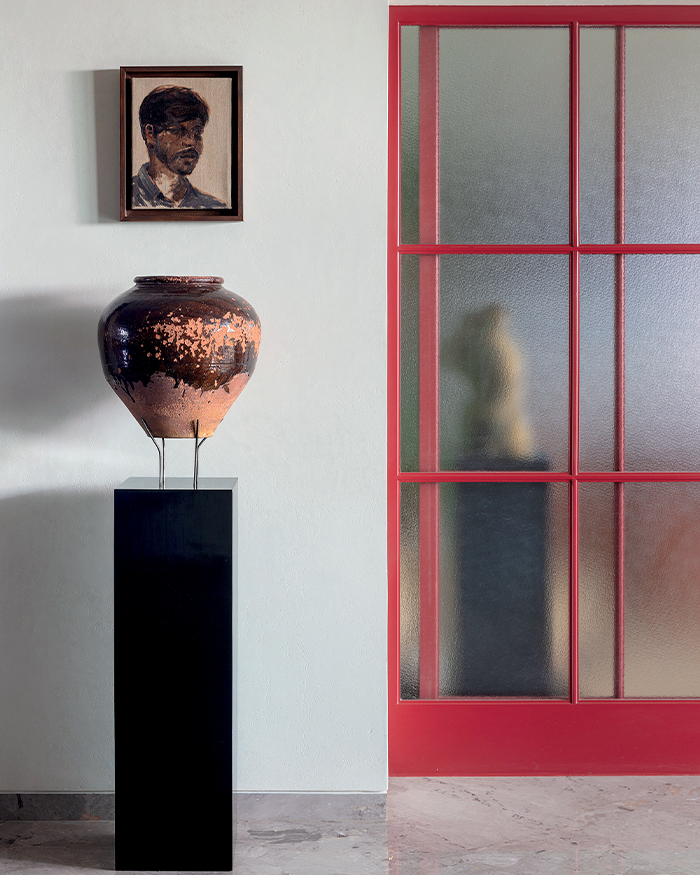
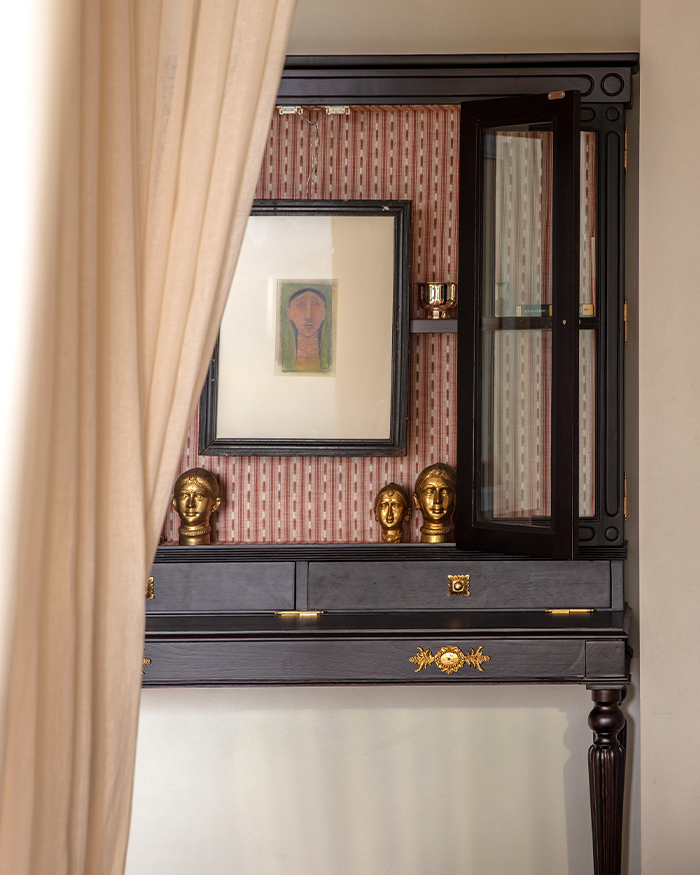
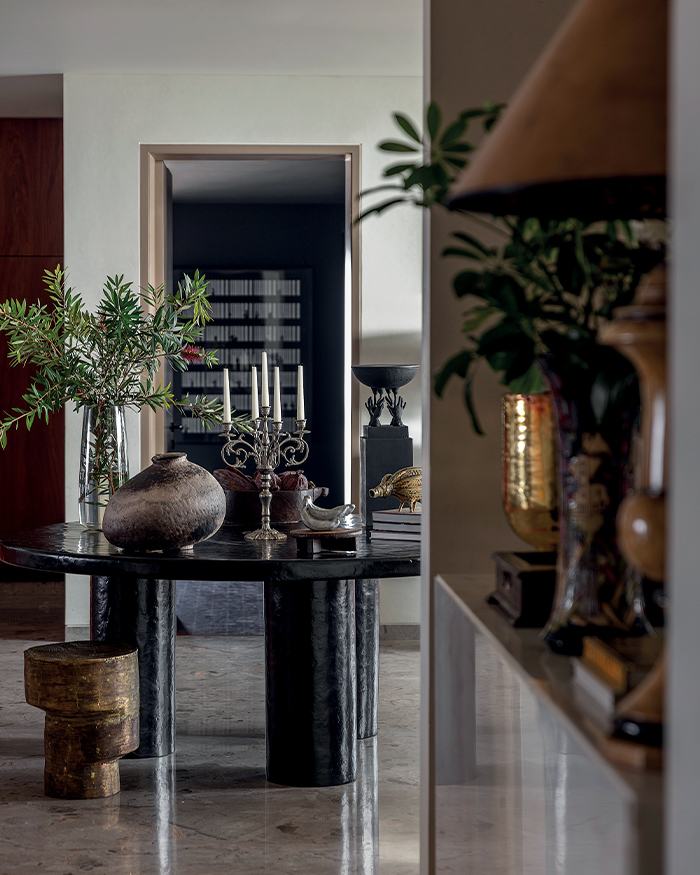
It was his peripheral vision that Ravi trusted to stage this home’s permanence, designed for a young couple and their canine Nori. The 7,500 sq ft space feels charged with an emotional temperature that adjusts at every corner. “You have to think of every element before you even experience it.” From where I stood intently in the foyer, for a few minutes more than intended, his reasoning made sense. My vision touched more than it could see immediately: how colours erupted and artworks layered the walls with a decided intention.
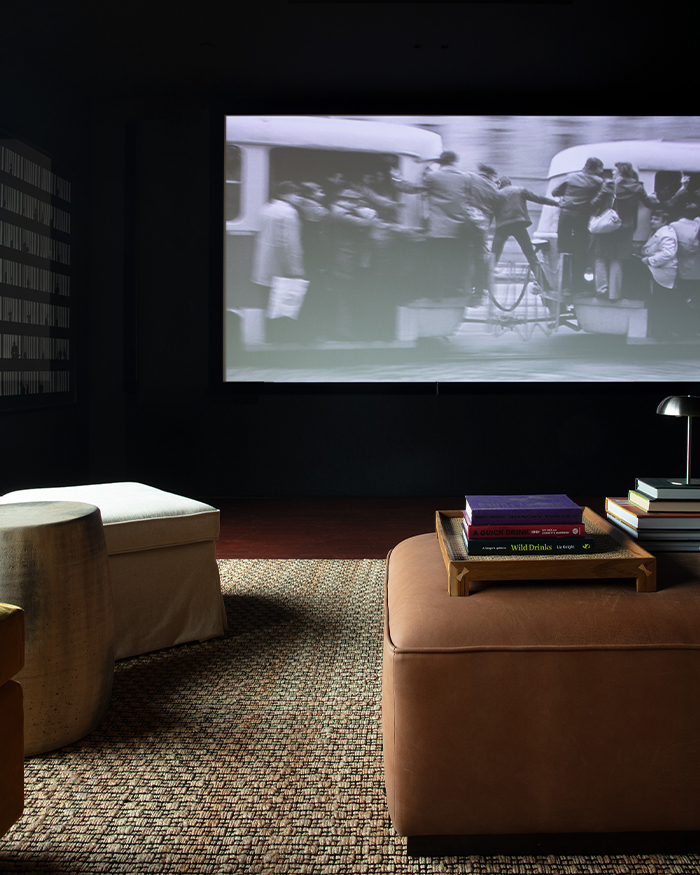
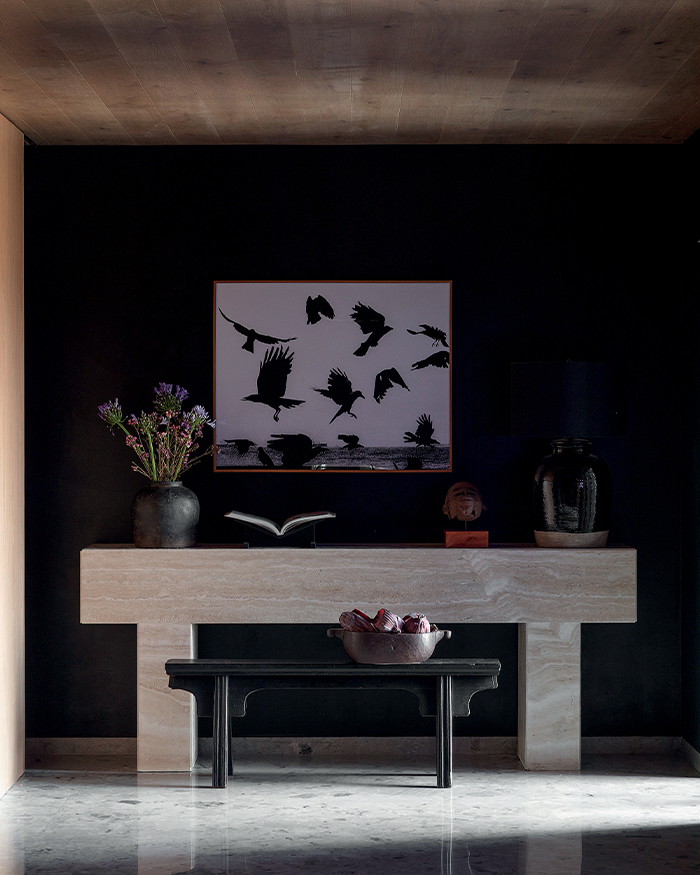
Despite its lack of natural light, one experiences the foyer’s length and breadth in one uninterrupted sweep. As Ravi puts it, “In the foyer, the eye first pauses on a round console table and travels to the screening room further. As you approach the living room, you begin to notice different layers and different spaces beyond that single point. And that is just how I like to design.”
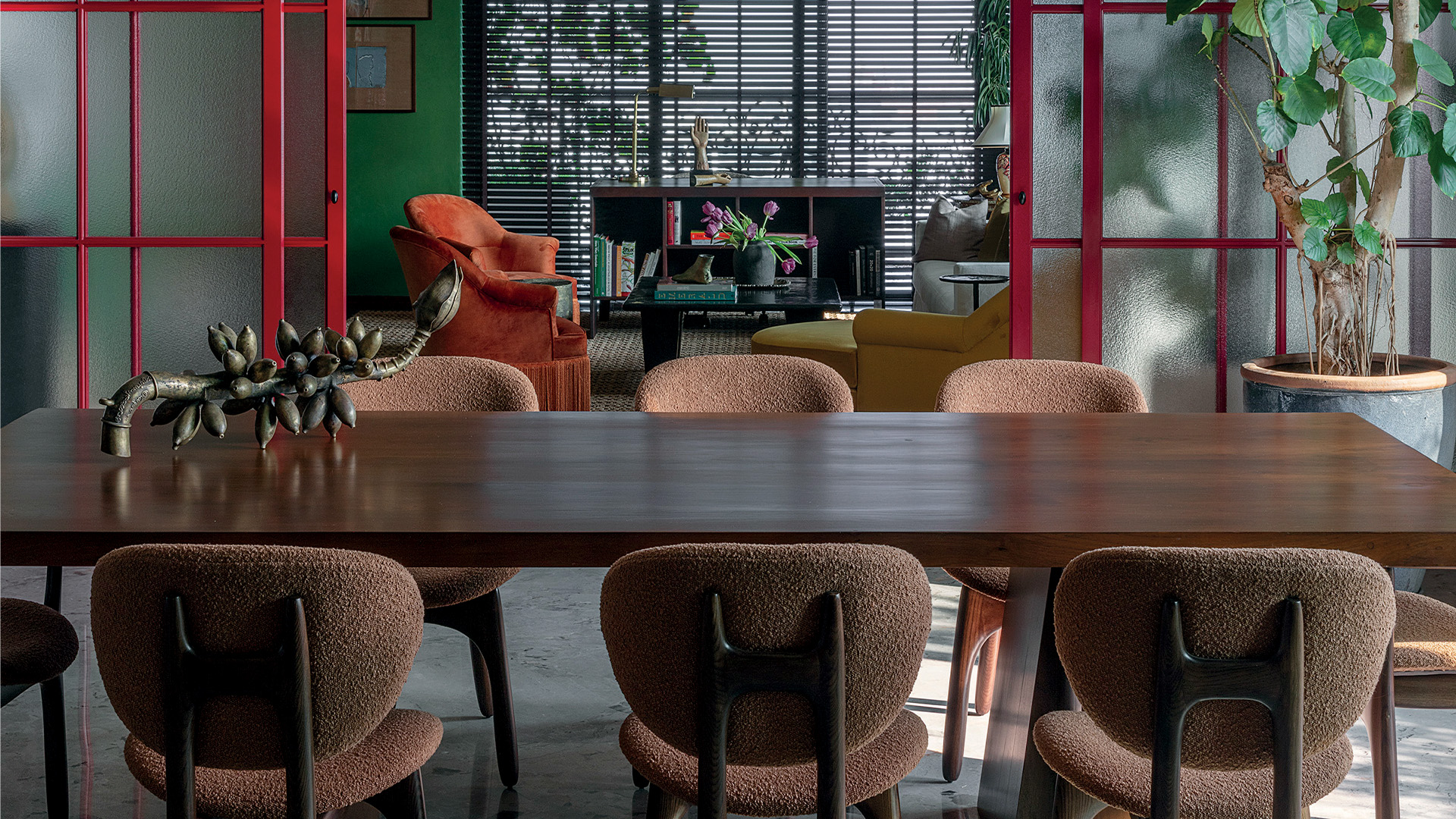
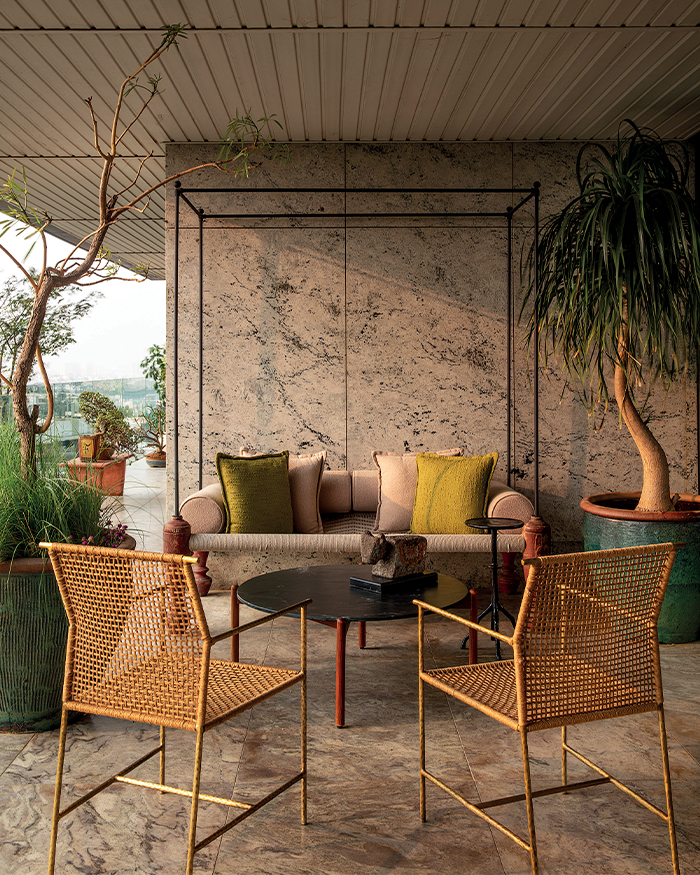
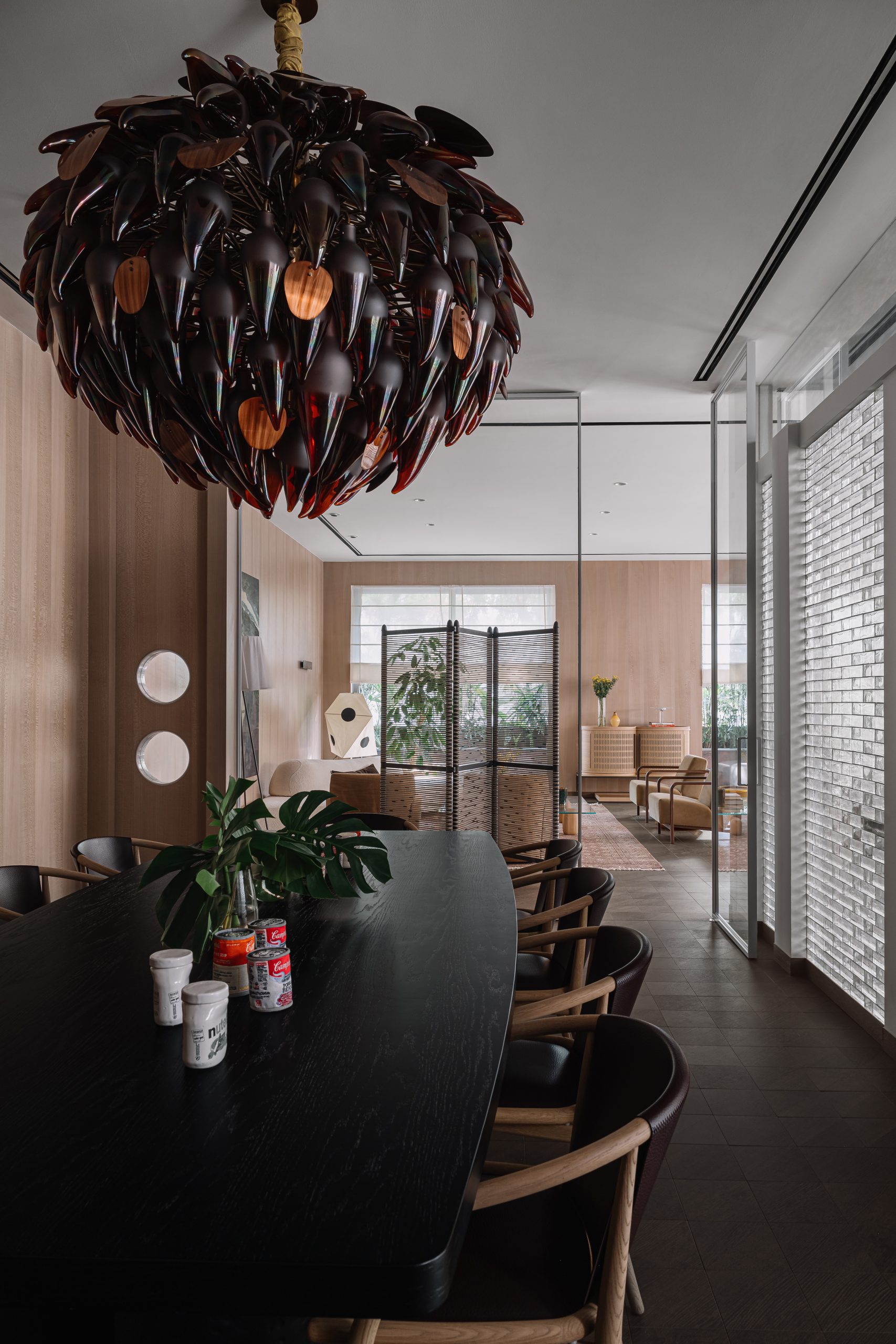
Defined by an unfixated, everyday rhythm of gathering, dispersal and return, the home unlearns the templates of sameness. It asks instead: what does it mean to curate a home at a time when everyone has access to the same references and feeds, by centering its soul around awareness, atmosphere and accumulation instead. Ingeniously hidden from each other but somehow bare in demeanour are three bedrooms, a screening room, a living room, a family room, a dining area, a home bar, a kitchen with a breakfast counter, an expansive study, a his and her walk-in wardrobe, extending into a shoe and bag closet, and multiple breezy decks.
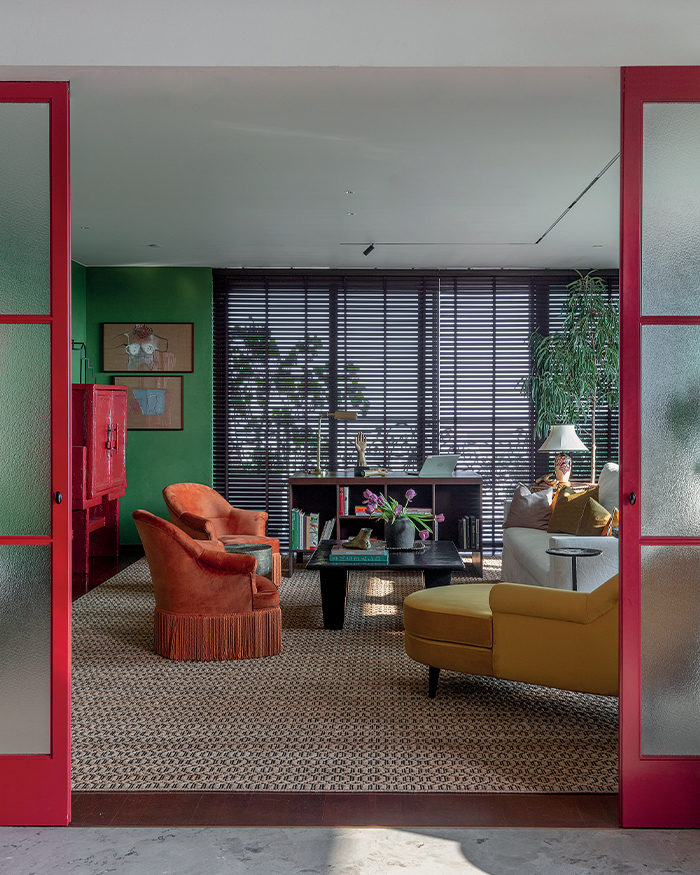
Perched in a skyrise with far-reaching views of the green-blanketed KBR National Park, it is almost riddling to imagine that the space was once a blank shell, bereft of its current palette of exuberant colours like greens, reds, yellows and oranges. The interesting part? “The living room does not have any windows. That’s where a cinematic wash of red enveloping the wooden Georgian doors becomes one of the leading acts of the home, standing as a screen between the public and private areas, allowing for just a hint of the world that exists behind it.
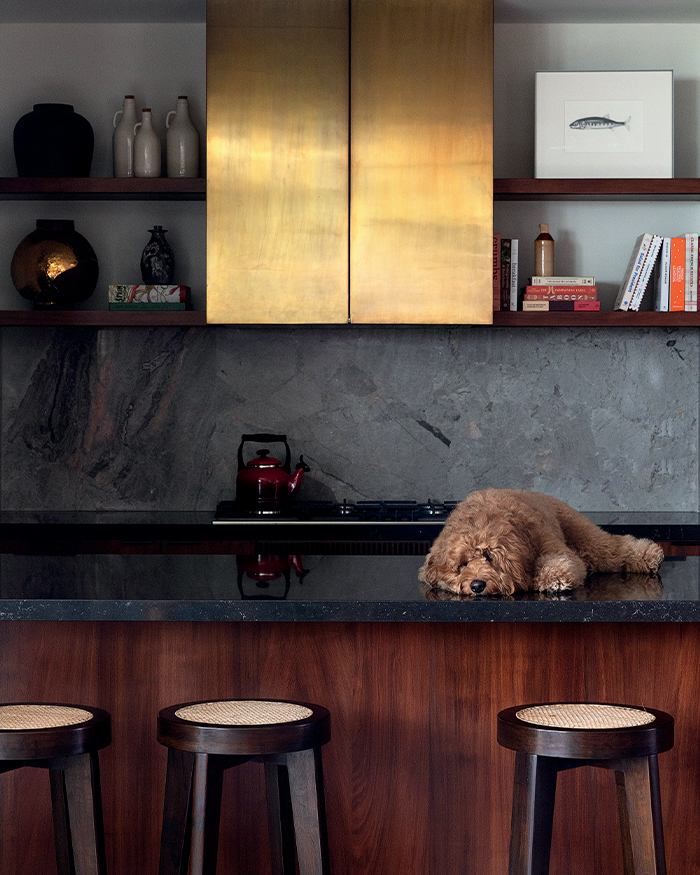
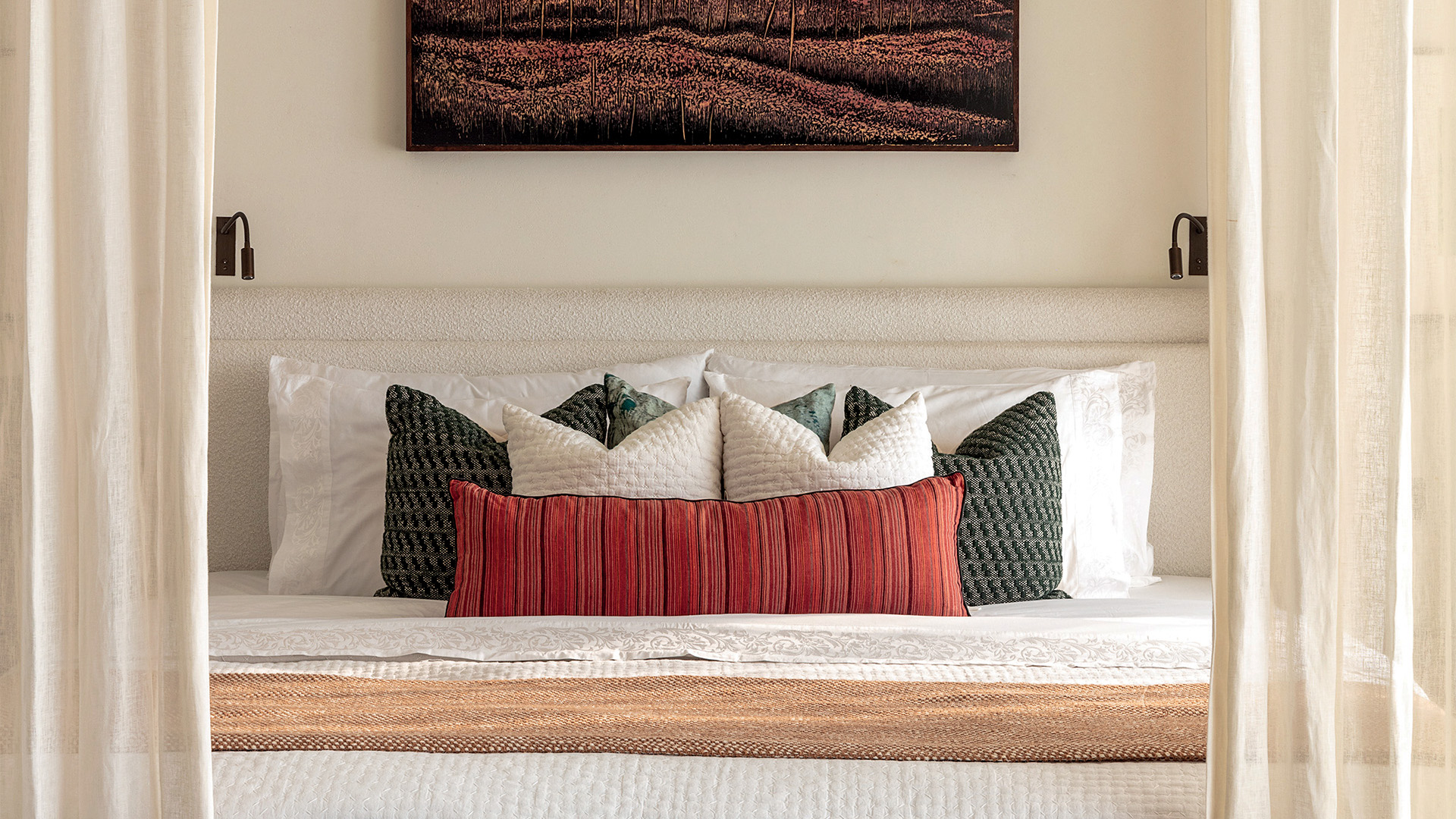
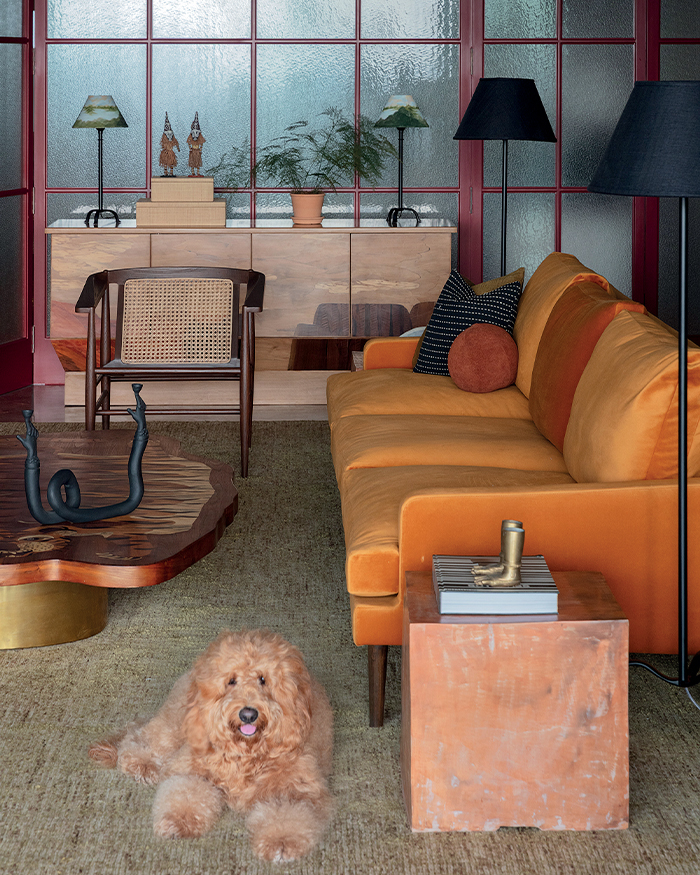
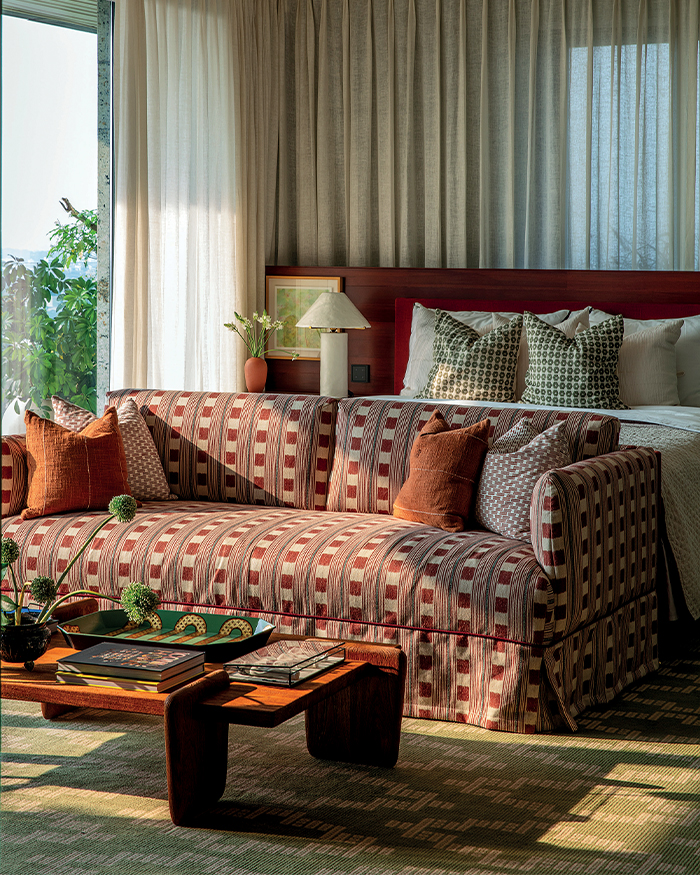
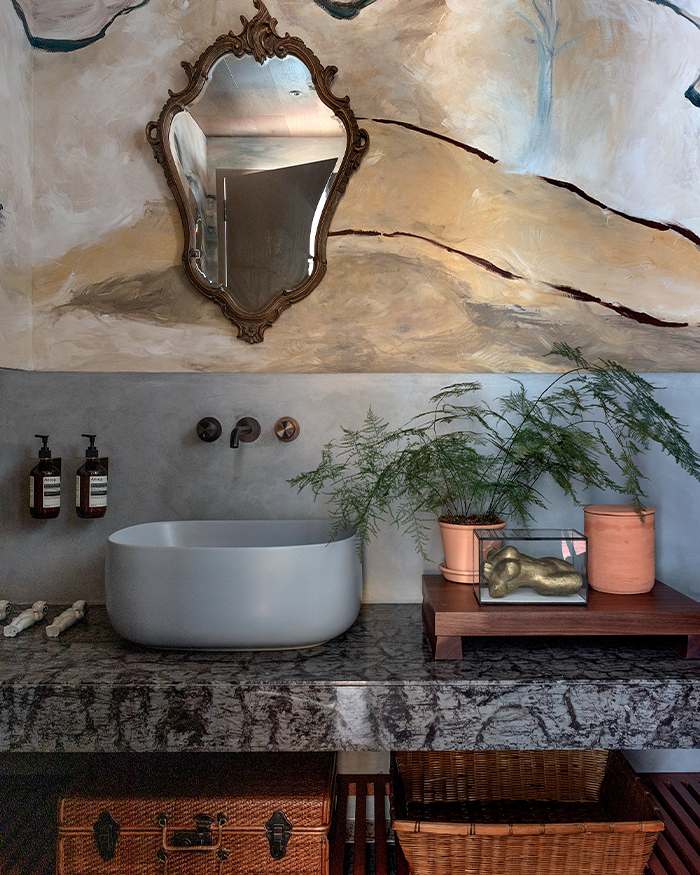
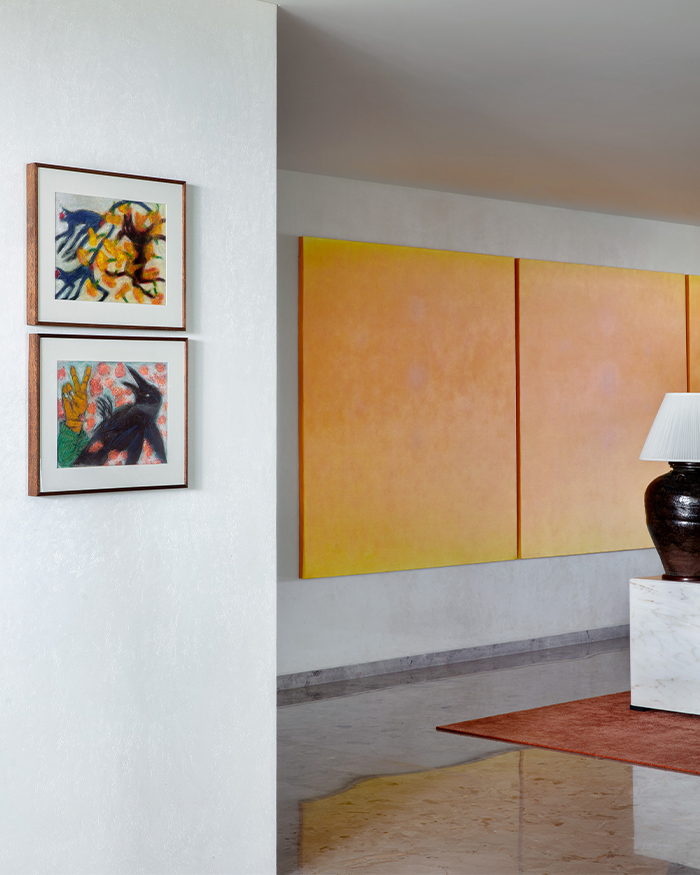
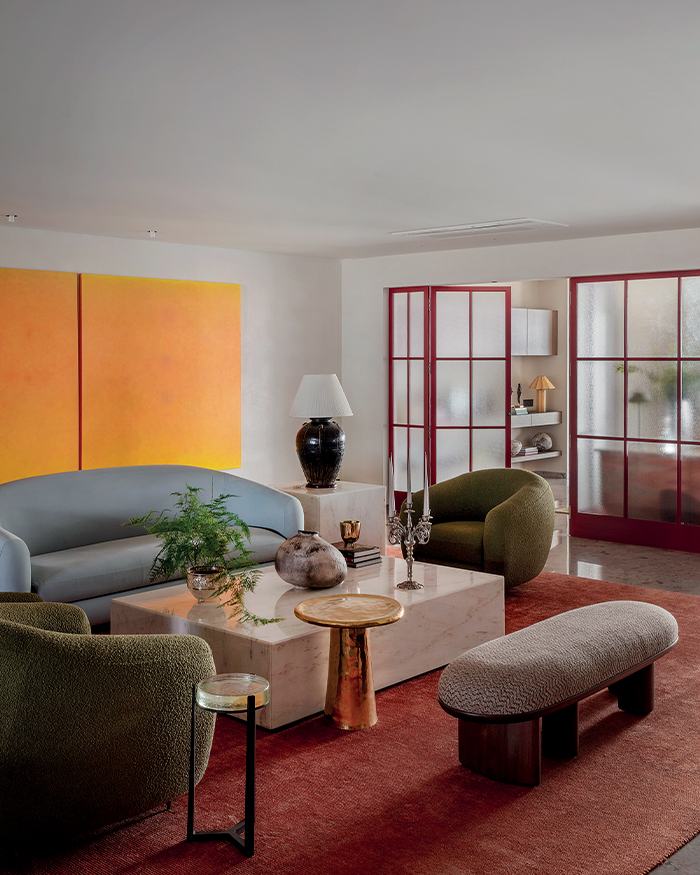
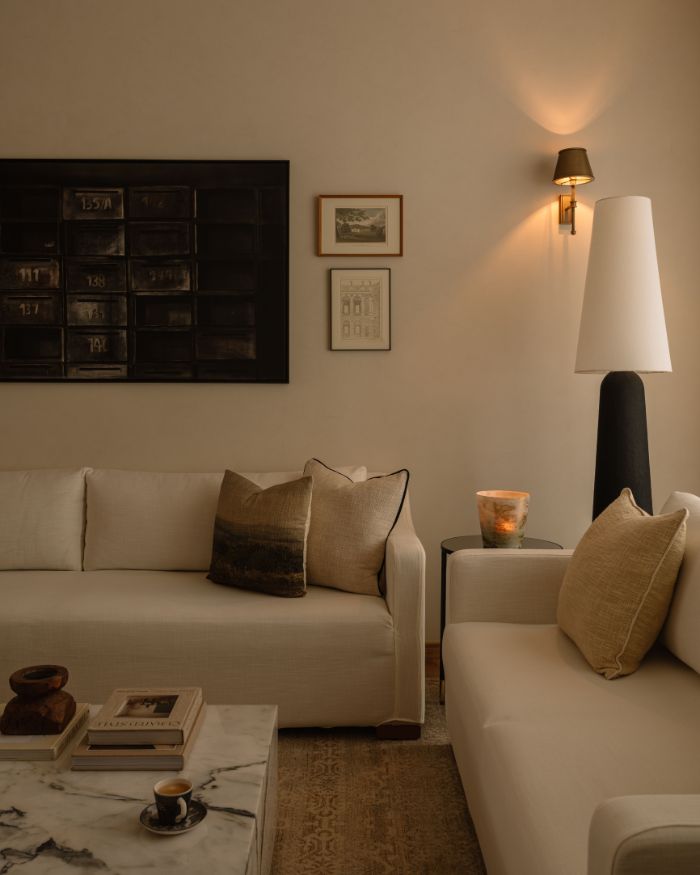
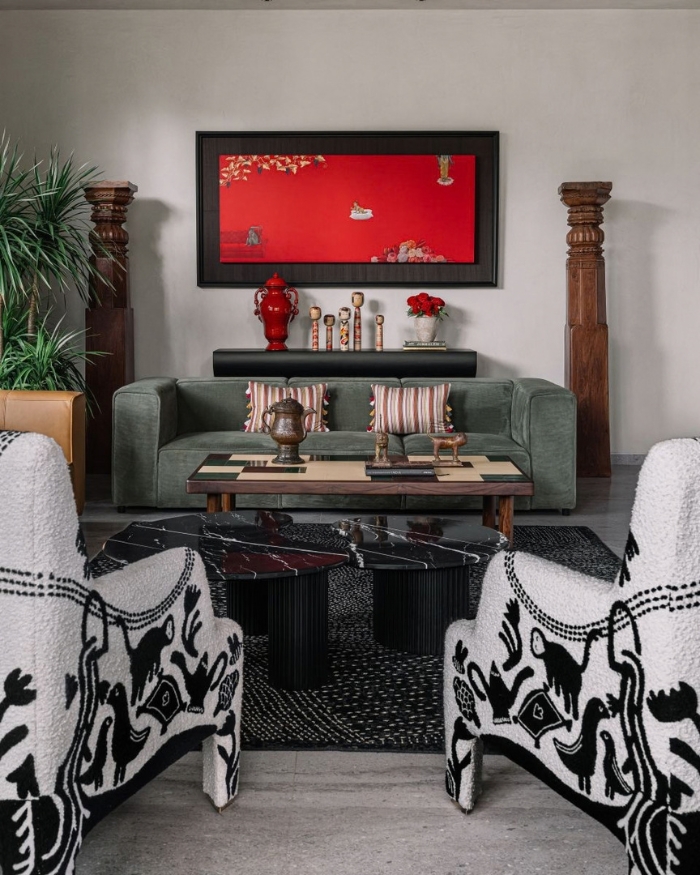
Each room recites a non-conforming colour logic, yet, all are connected by recurring moments of art and pieces of intrigue. Where the formal living room draws an innate glow from the statement yellow-hued Triptych artwork by Pandit Khairnar, elsewhere, a consuming landscape painting by Soghra Khurasani grounds the master bedroom with an earthy palette.
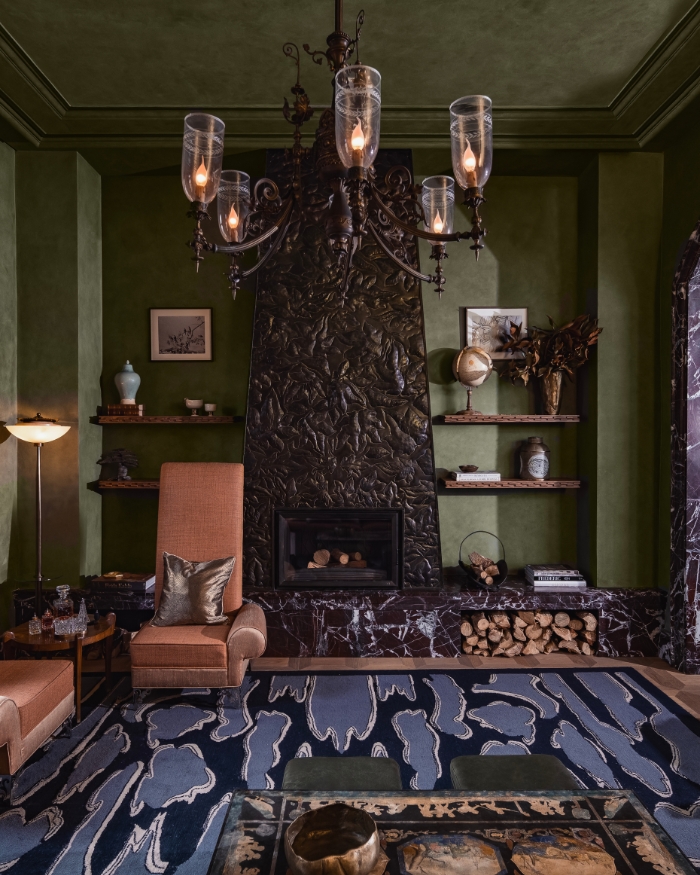
“It’s very different for us (RVDS) to engage with colour this way. Cooler tones in the formal living room, deeper tones in the study, greys and whites in other areas, and the black-laced foyer to land into,” he explains. But what led Ravi to these vivid hues? “There is no formula. I don’t think that is how design works. You have to allow the space to speak to you. You have to allow the homeowner’s energy to speak to you. Personally, I was also in a space where I was enjoying colour.”
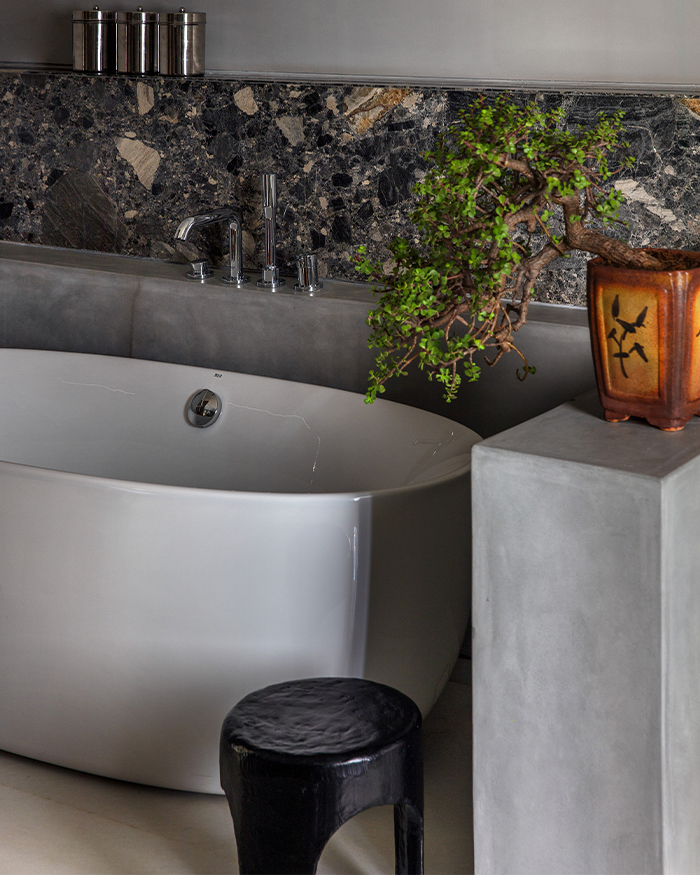
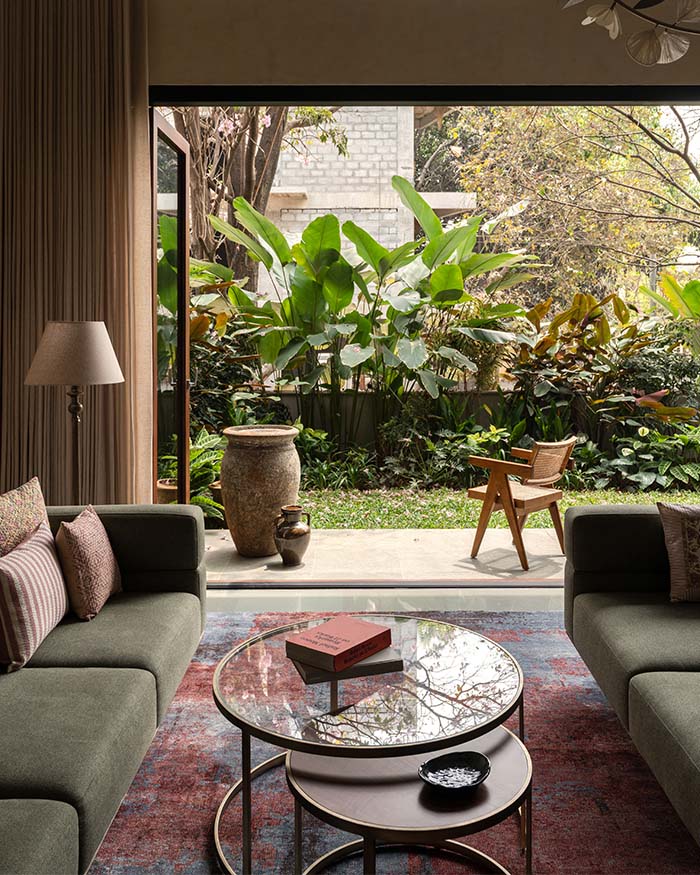
Tones of green recur, thanks to the sight’s calculated encounters with indoor plants and landscaping by Studio Gaea, which makes botanical vignettes like the cascading ferns and bonsai a part of the home’s daily architecture instead of an afterthought.
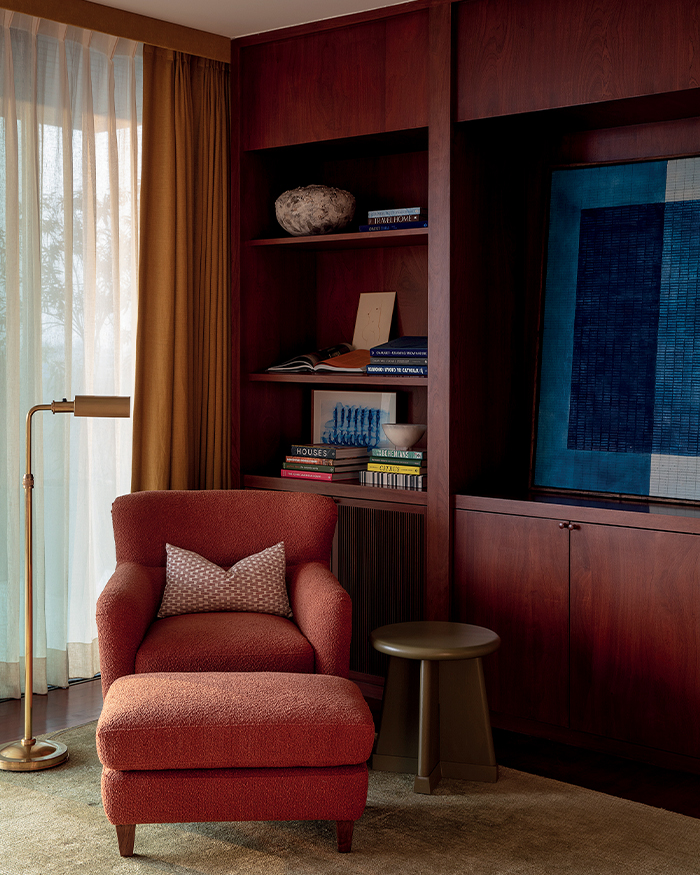
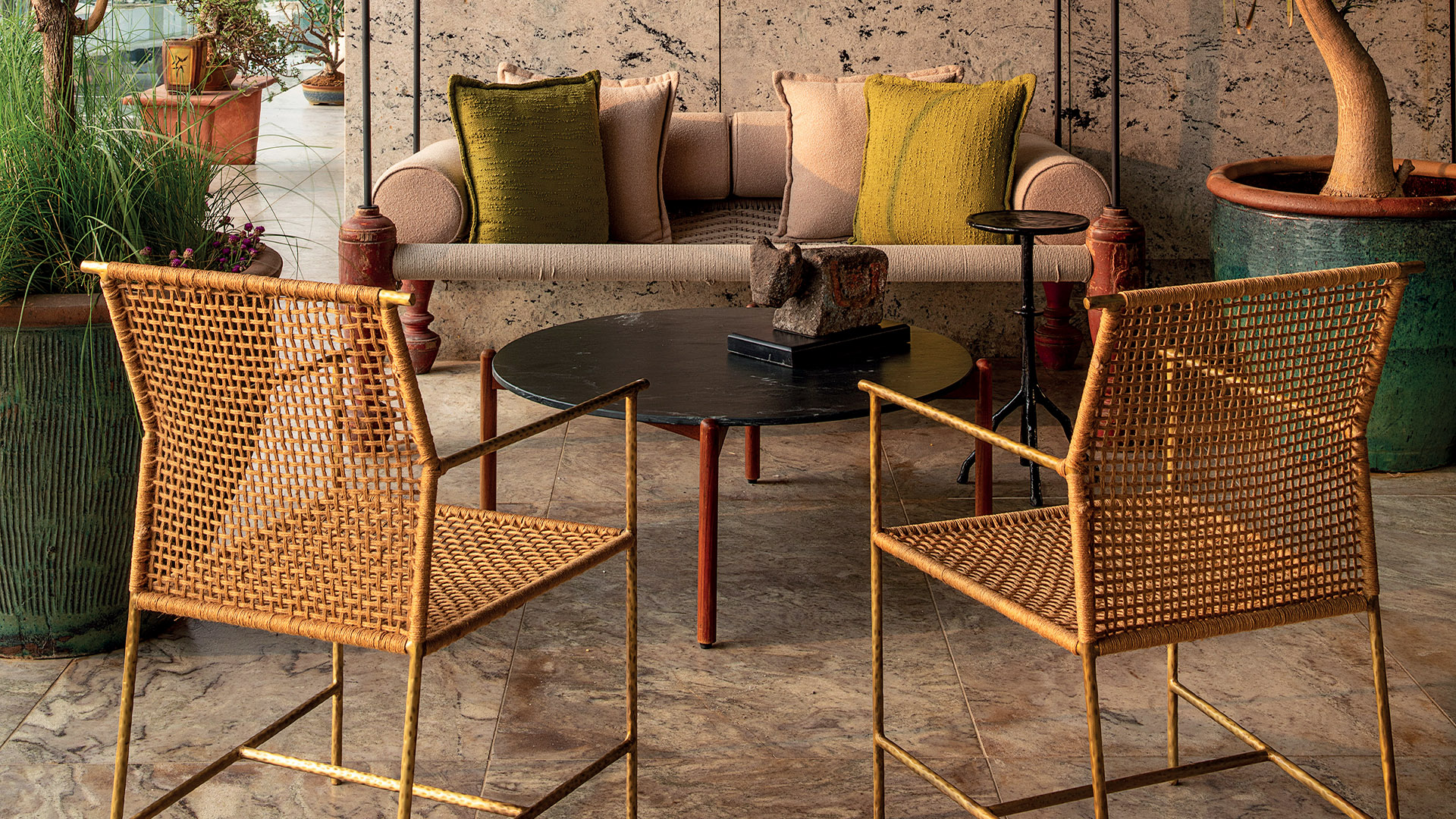
The homeowner’s grandfather, a builder in his days, left a lot of red-tinged teakwood for the family. The teakwood flooring thus appears in the study area and bedrooms, which Ravi precisely balanced with objects sourced from artists around India. 7,500 sq ft is indeed a paradoxical expanse to design around for a couple, especially, for whom it’s their first home together.
To Ravi, it also was a rare kind of spatial ambition, where he approached the space’s largesse with an intuitive intimacy. A timely question he asks is, “How do you design something for two people for them to be able to consume different parts of the house?”
A quote from The Eyes of the Skin returns to me again. The experience of architecture is not a series of retinal images, but a fusion of all sensory modalities. In the context of this residence, it is the slow progression, the tickle of transitions and portals of pauses — for the couple and for gatherings they would host. As Ravi finally ponders, “Everybody is a designer these days. And whether everybody should be a designer or not is a question for the time. But people, I think, have forgotten the concept of taste.” That’s how, perhaps, this home emerges as a deliberate antidote.
No results found.