Photography courtesy of Abhik Mazumdar
Featured

Abhik Mazumdar and the evolution of aquascaping in India

A pioneer in aquascaping, brings living ecosystems into architecture and interiors

BY

Water, by very definition and nature, resists control. But in contemporary Indian interiors, aquascaping is being used to harness flow and give form and identity to water as an element. From decorative ornamental aquariums to architecturally integrated, self-sustaining ecosystems that merge ecological understanding with spatial design, this evolution finds its centre in Abhik Mazumdar and his team at Reef and Stream Aquascapes Pvt. Ltd. Over the last two decades, Abhik has approached water as a living system that requires ecological literacy just as much as aesthetic clarity. He has executed installations across India, from private luxury residences and hospitality spaces to large-scale corporate environments and outdoor zoos and animal rescue centres. 

In interiors made of concrete and stone, water is the only element that is moving, a quality that is beautiful but also challenging. Both marine and freshwater systems demand constant calibration and long-term commitment. Working with large volumes and precious, sustainably sourced livestock also brings responsibility, something that Abhik and his team take very seriously. 
Photography courtesy of Abhik Mazumdar

Beneath the surface

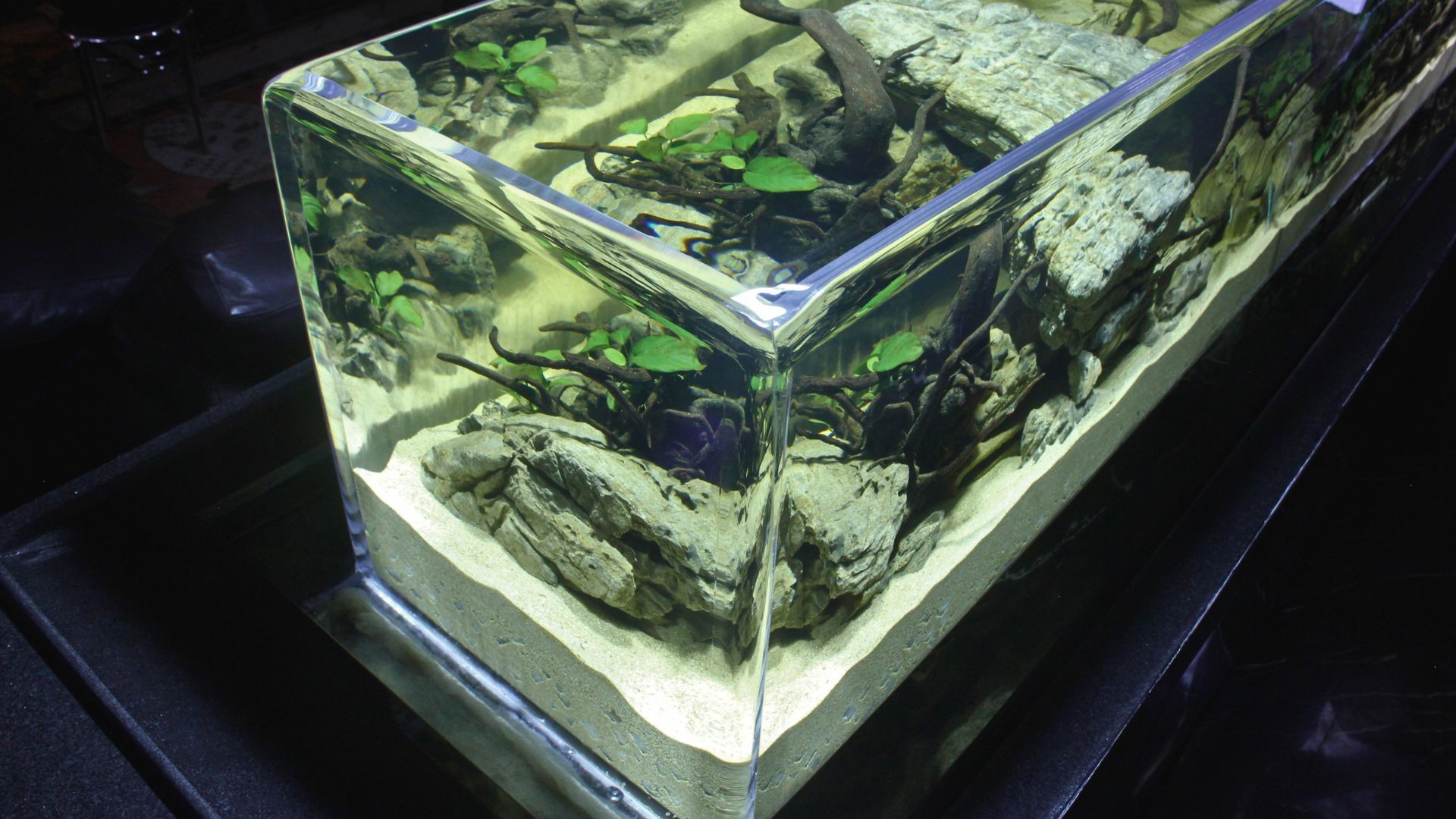
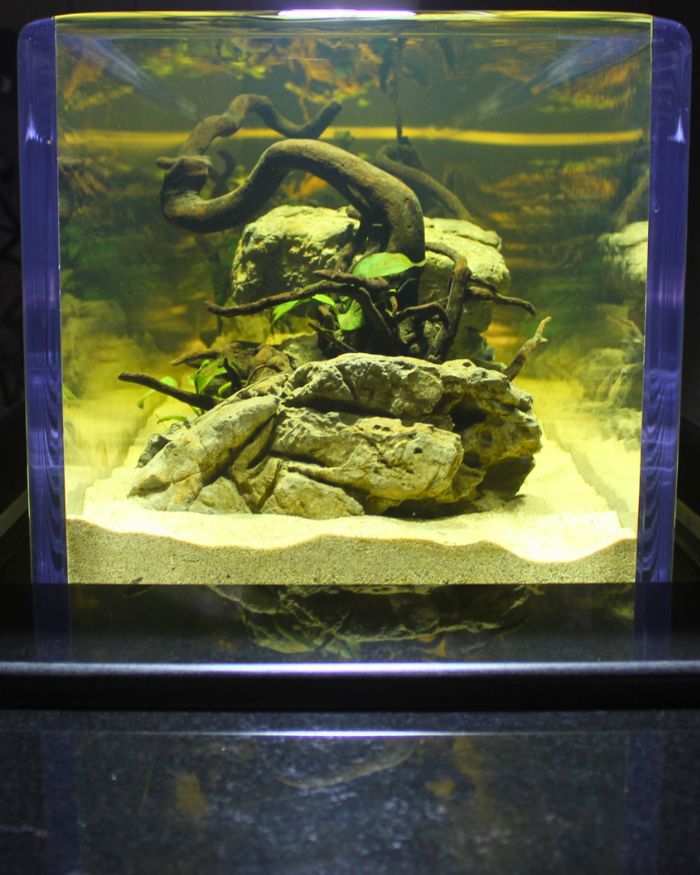
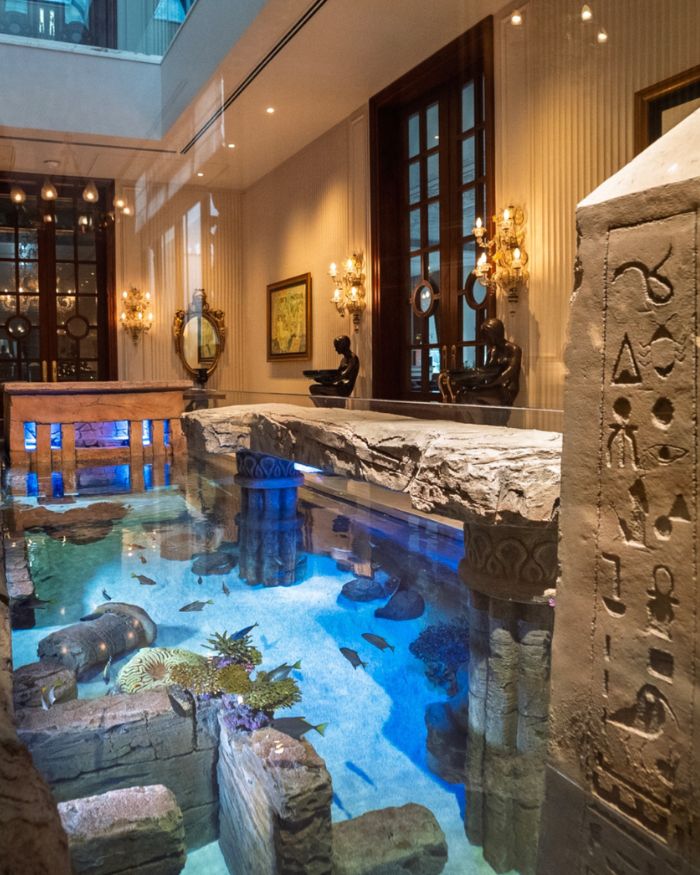
At the turn of the century, long before aquascaping entered mainstream design in India, Abhik started conceiving authentic aquatic biotopes. One notable early project was a freshwater Amazonian root and rock biotope at DLF, Gurgaon. The installation moved away from the conventional wall-bound aquarium. It was designed in seamless acrylic with 360-degree visibility, in fact seamless in all three dimensions with water overflowing on all sides, looking just like an ice cube. It functioned as a transparent architectural centre piece within the room. Inspired by flooded Amazonian forests, the project recreated the ecology of a riverbank with submerged roots, water-eroded rocks, layered substrates and freshwater species forming a balanced microhabitat. 

What made it radical at the time was its premise, that an aquarium could simulate a geographic ecosystem rather than just simply display aquatic life, and its design presence and form. It introduced the idea of the biotope into Indian interiors. Biotope is not just for visuals; it’s also about creating environments that support well-being, mental health and productivity, marking an important shift towards ecological inclusion within residential environments. The project revealed Abhik’s long-standing passion for building living systems, a pursuit that continues to define his work even today. At the same time, the structure dissolves into fluidity; what appears as a glass crystal is, in fact, water, enveloping it from all sides. 

Photography courtesy of Abhik Mazumdar

Fantasy of the depths brought home

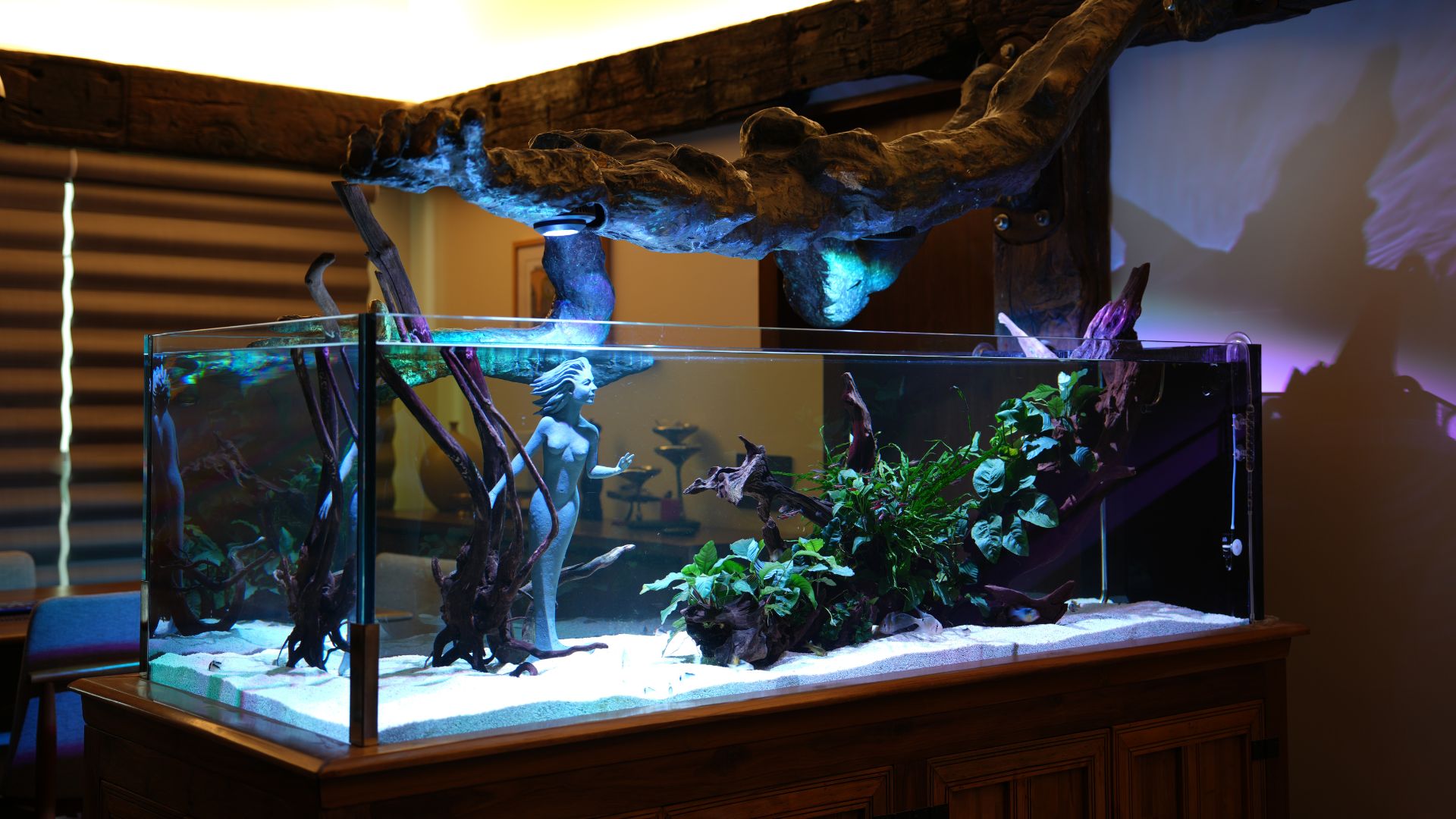
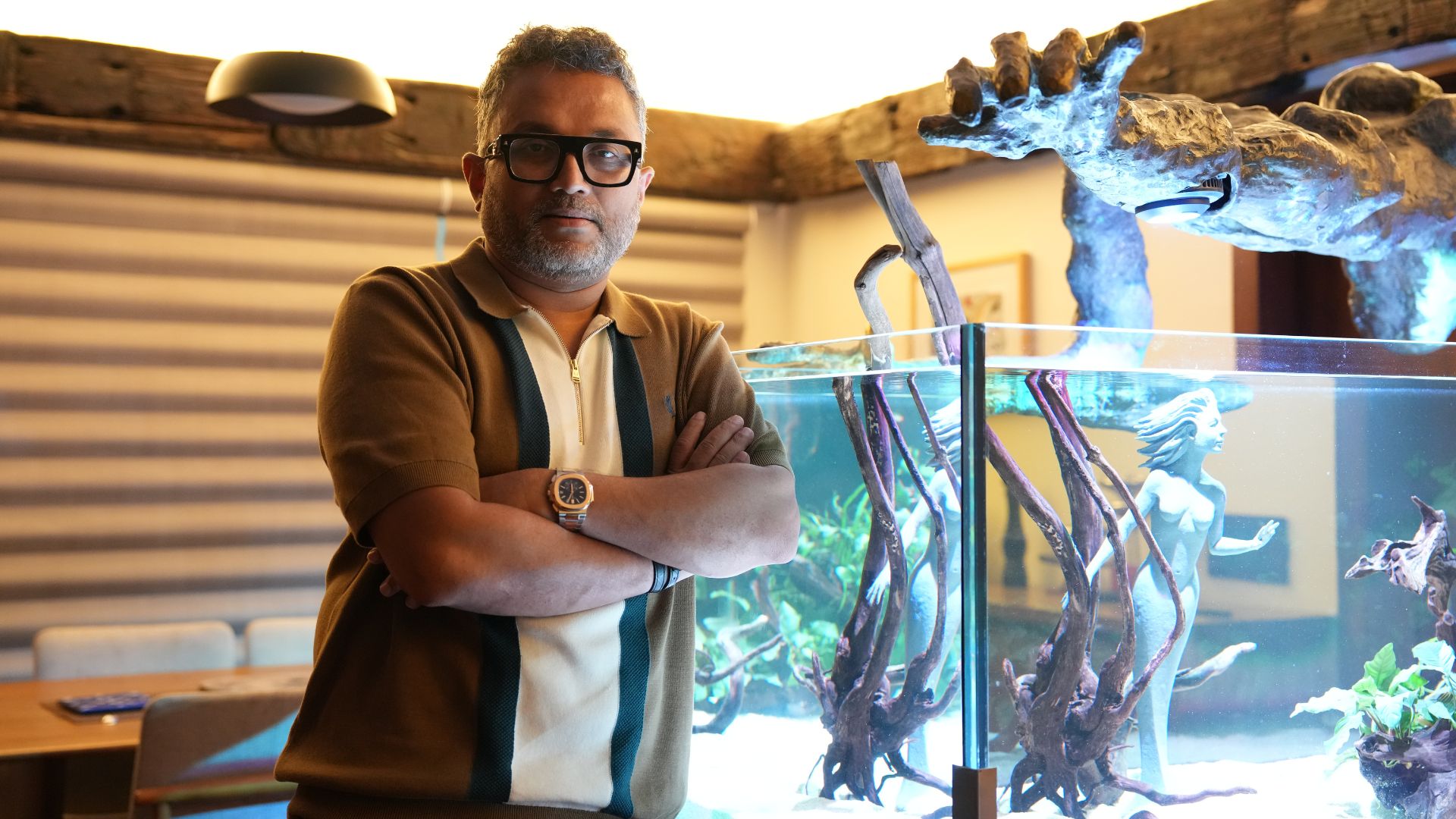
Poseidon is a recent, smaller installation by Abhik and his team. At just 1,000 litres, the project derives its name from a bronze and gold sculpture of Poseidon, cantilevered above the water, where it functions as both a sculptural centrepiece and a source of light. The scene captures a moment of reunion, where Poseidon, after a long search, finds Amphitrite in the waters below, adding a narrative layer to the spatial experience. Abhik insists on acknowledging his collaboration with Polish sculptor Tomasz Koclega for Poseidon and art studio Studio Hash for Amphitrite. 

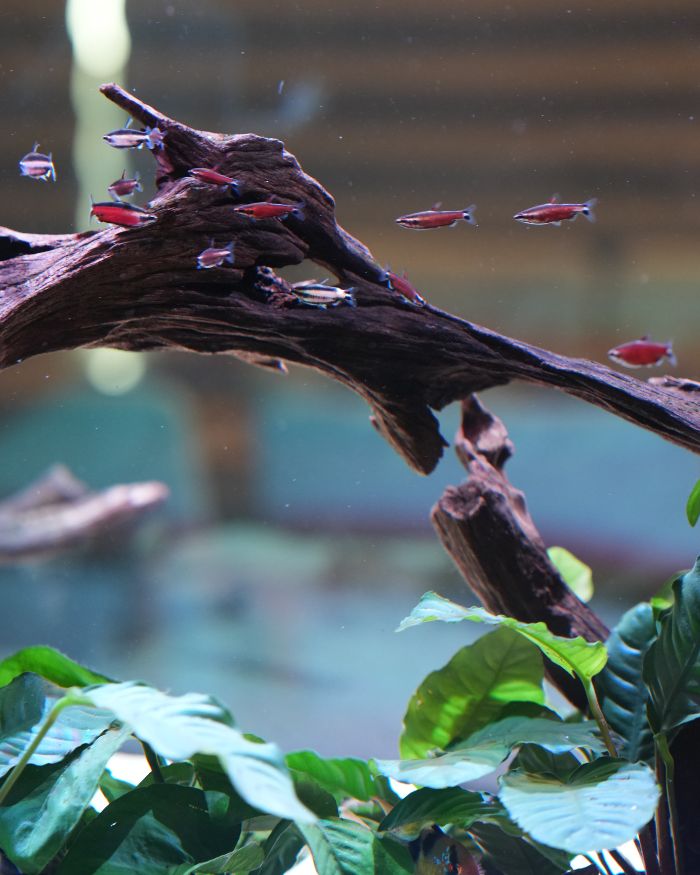
While its visual language draws from mythology and submerged ruins, the installation was originally conceived as a marine habitat. Two years later, Abhik’s instinct to evolve led to its transformation into a freshwater ecosystem, inspired by the early stages of the Amazon River, specifically the blackwater tributaries of Peru’s Río Marañón. Designed for smaller, more delicate species, the aquascape brings together natural driftwood, plant life and a balanced aquatic population. Species such as Nanostomus varieties form the visual core, accompanied by bottom-dwelling and algae-grazing fish, along with select cichlids and tetras that introduce variation without disturbing the ecological balance.

Lighting is seamlessly integrated into the Poseidon figurine through programmable spot systems, allowing the installation to shift in mood while continuing to support aquatic life. Beneath the surface, a network of temperature control, filtration, and circulation systems works quietly to sustain the environment, ensuring long-term stability without interfering with the visual experience. Like all aquascapes, the installation is not static. It continues to evolve, shaped by growth, behaviour, and ongoing calibration. It seems Abhik might rework this again in the next 2 years! Through projects like these, Abhik has not only expanded the possibilities of aquascaping within interior design but also helped position it as a serious and evolving design discipline. 

Photography courtesy of Abhik Mazumdar
SHARE THIS ARTICLE

You May Also Like

Watch

No results found.

Search
Close this search box.