Photograph courtesy of Gallery XXL
Featured

Venturing beyond the surface

Ashna Malik collaborates with Gallery XXL to explore the syncretic nature of design at India Design ID 2026

BY

Between the late 1950s to early 1960s, Vera Molnár was learning programming languages to create art, computing algorithms in her head and plotting results on paper by hand. She called it the machine imaginaire — a far stretch from her university specialisations in painting and art history. In 1968, she switched over to renting computers by the minute at Paris University, resulting in the machine réelle — no screens, no colours, no visual guides — only bits of code fed to supersized machines on tiny cardboard punchcards, resulting in unanticipated visuals. A strange mix of the human hand and a computer’s objectivity was born. 

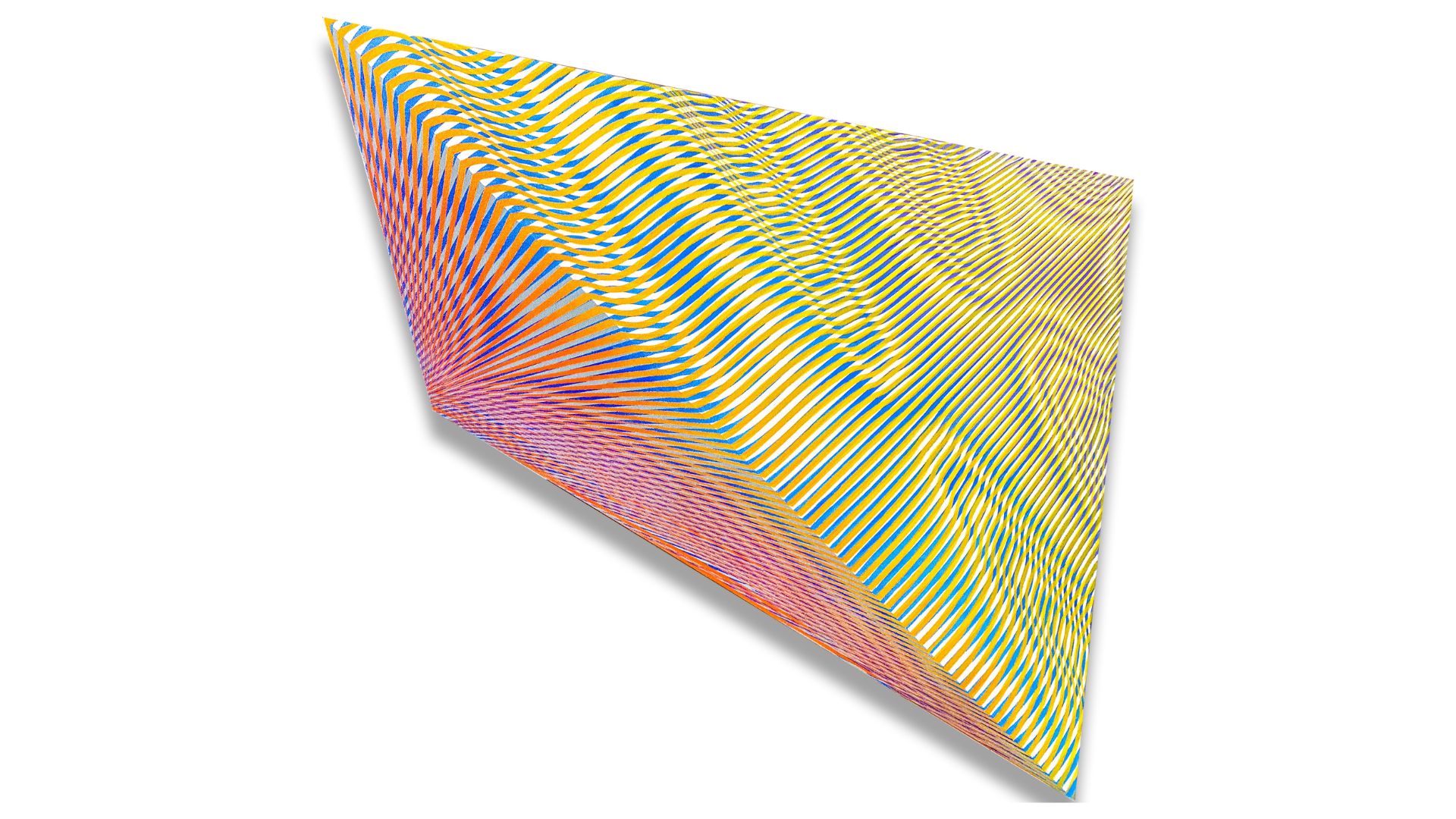
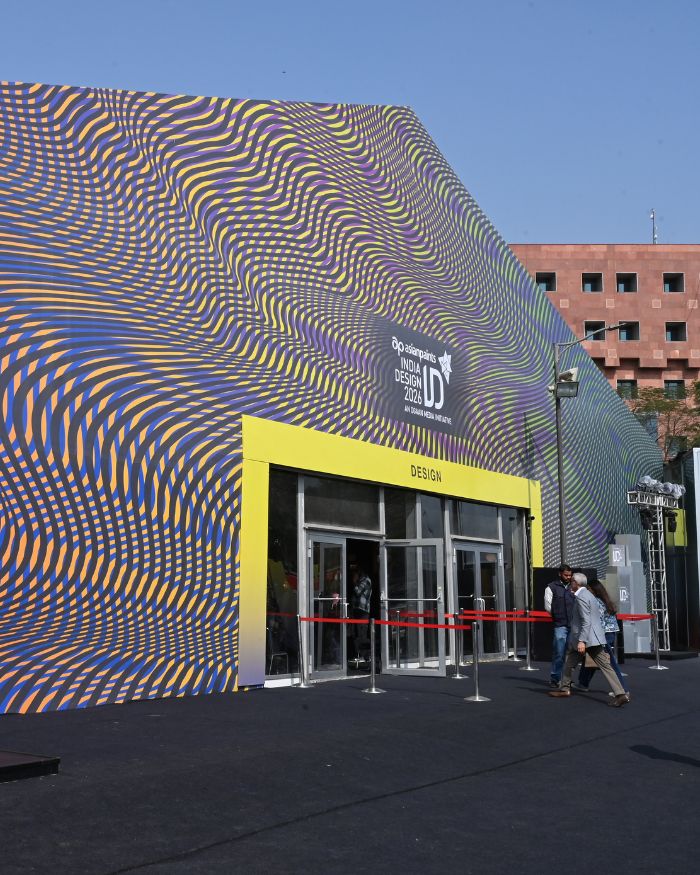
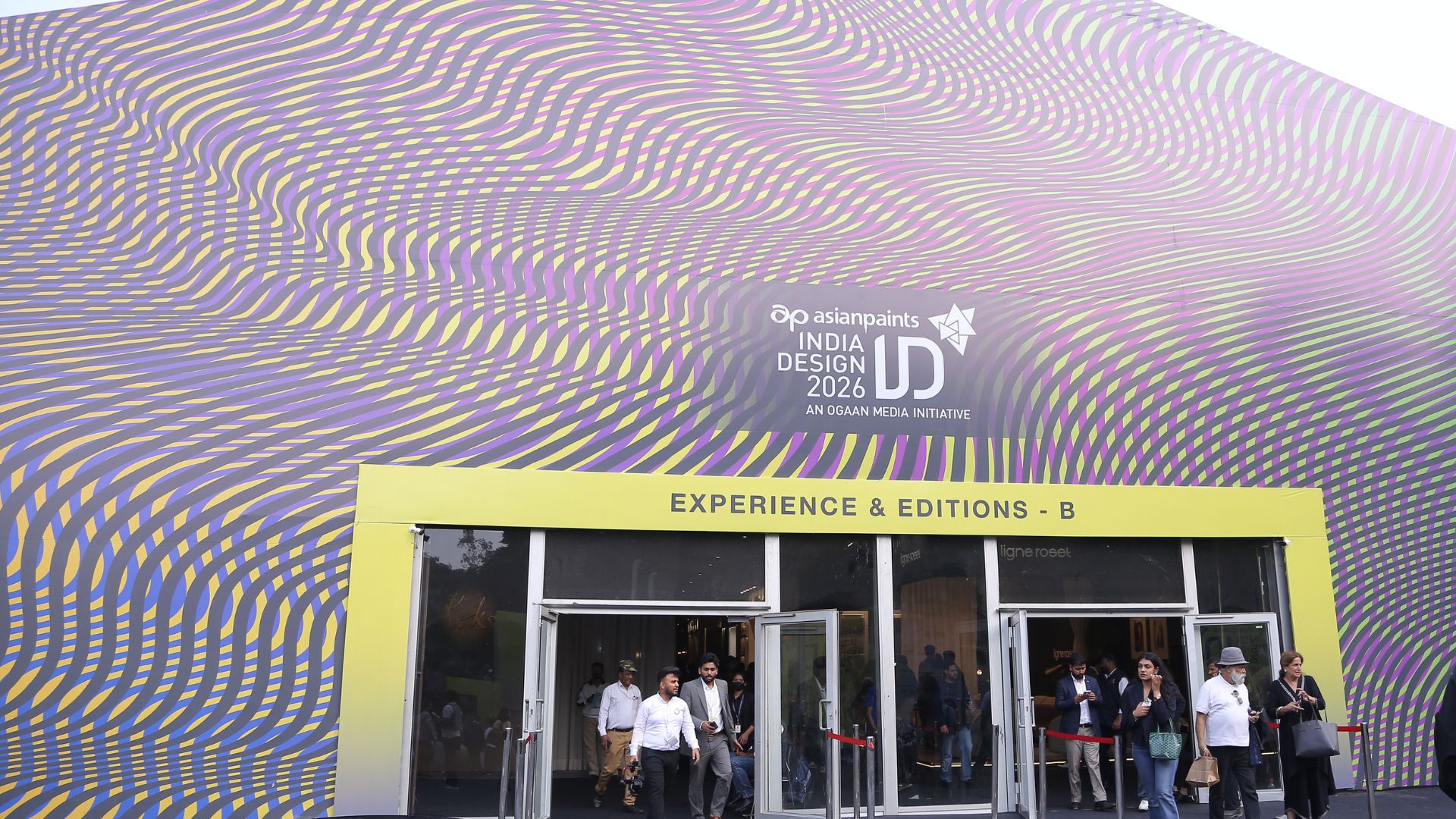
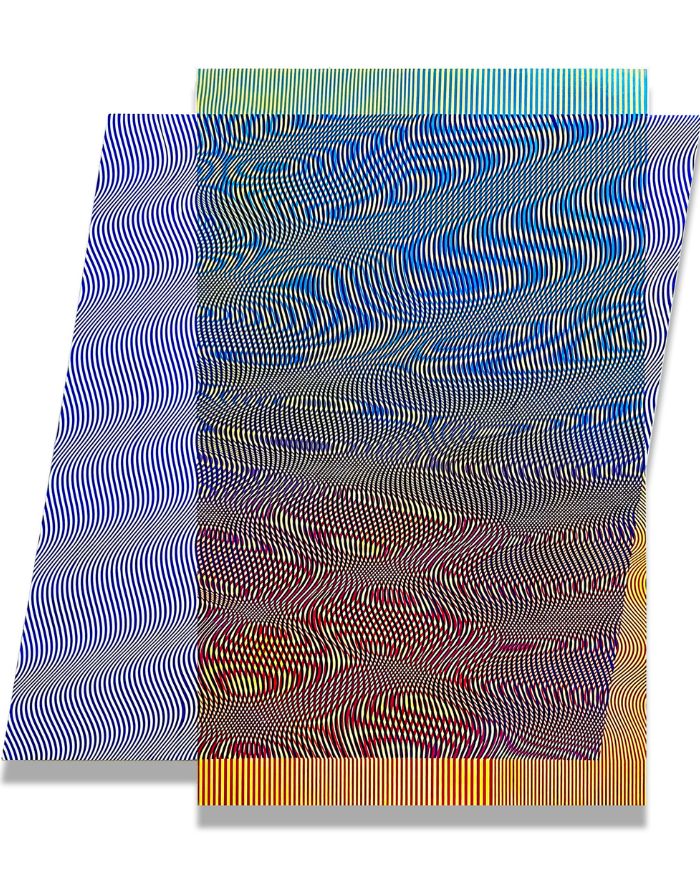
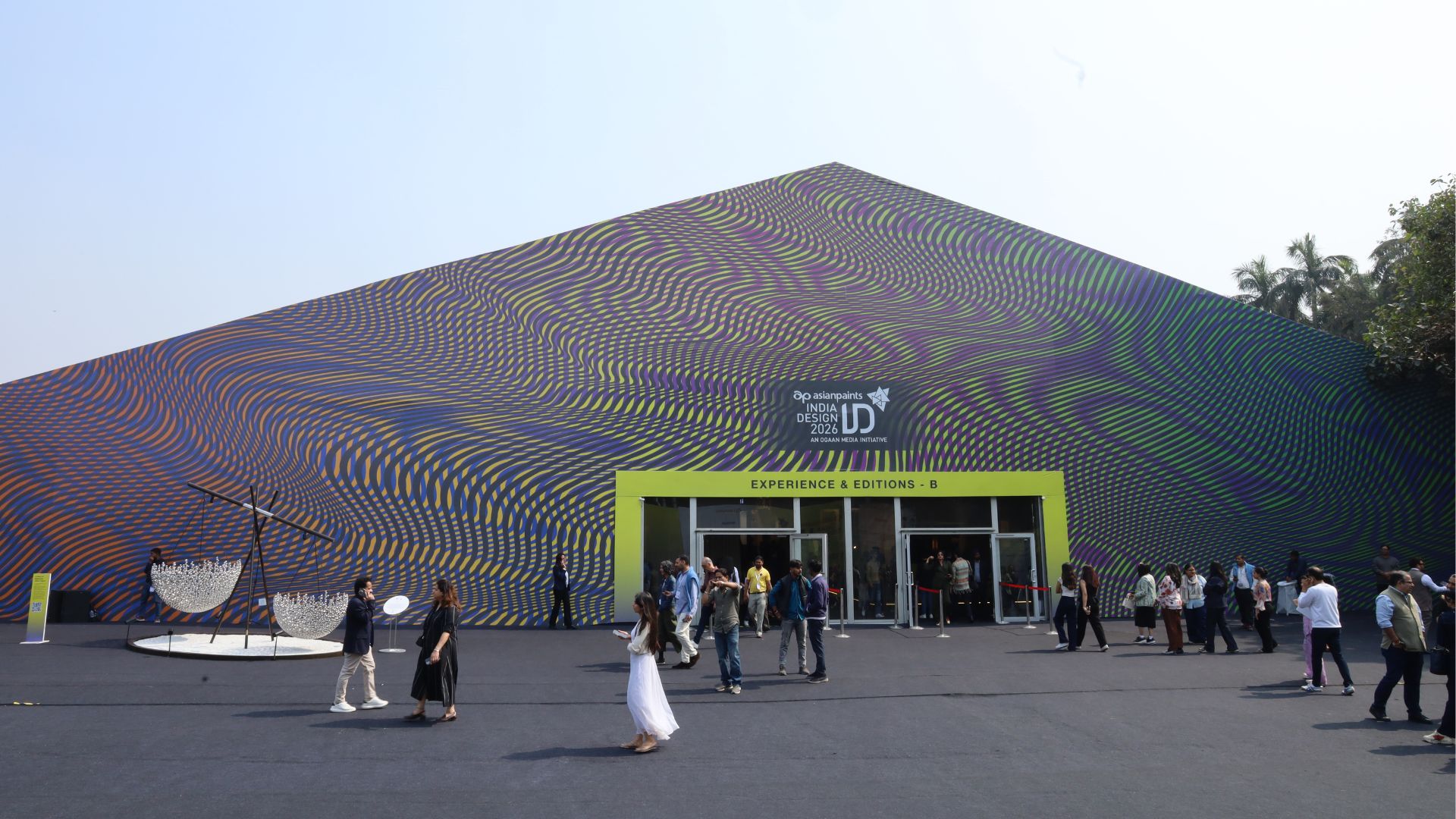
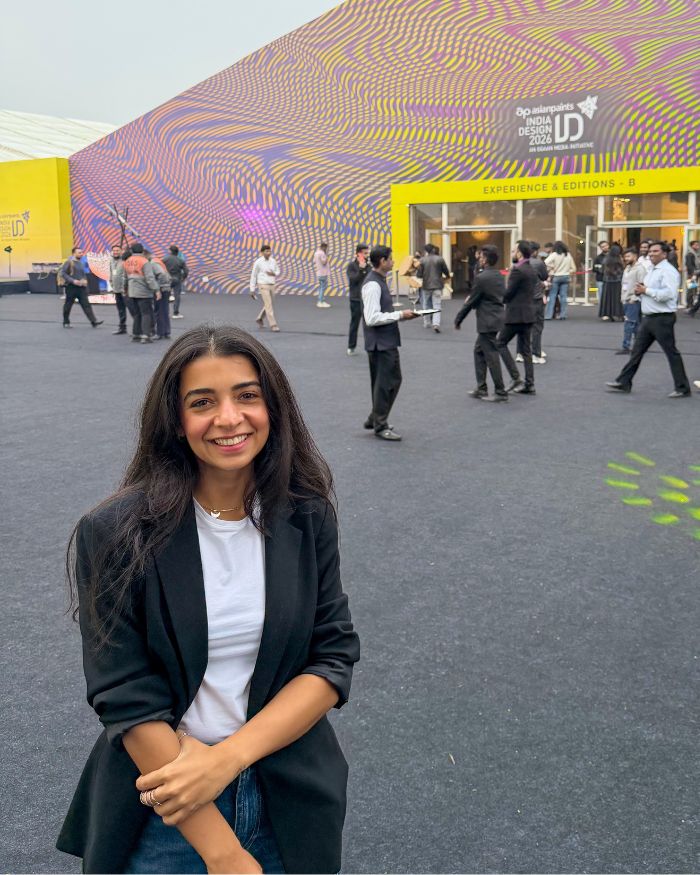
Sharing the same time period was Canadian media theorist Marshall McLuhan. Back as early as the 1960s, he heralded that technology’s rapid progress has turned the world into a “global village”, where we’re constantly flooded with information from across the globe. Within such a pluralistic framework, what would become of the world of art and design? India Design ID, an annual design extravaganza in New Delhi that features more than 150 Indian and international brands in a single shared space, pegged its curation as an extension of The Age of Design Syncretism — a world marked by newer modes of expression born from forces across the globe. In tandem, each pavilion at the exhibit featured a vivid facade of lines and curves drawn in shades of purple, blue and lime, crafted by artist Ashna Malik in collaboration with Gallery XXL. Is it an oil spill? Are they the rings of a tree, manipulated into chromatic aberrations? The form invites intrigue, appearing to shift in accordance with where you stand. These unique linear aberrations were first sketched digitally, then translated by hand into large-scale painted forms. When scaled for public display, it breathes life into a static image and turns it into an immersive experience. This visual language is an extension of the Distort series, an ongoing body of work by Ashna that captures the messiness of everyday lives in tangled lines and chromatic curves. It seeks to implore viewers to challenge how they see and perceive the world.  
Photograph courtesy of Gallery XXL


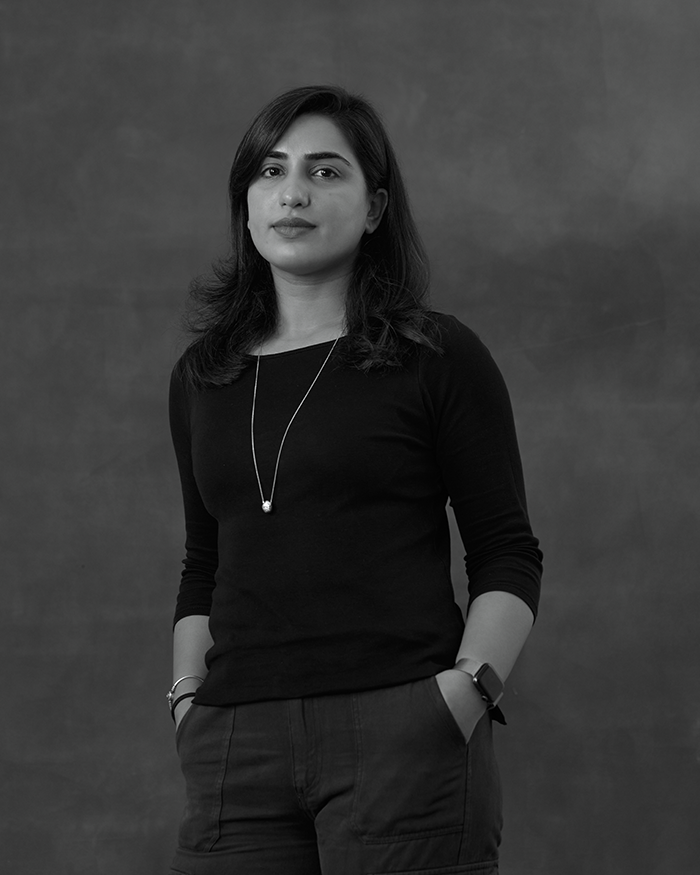
This is not the first time the artist has melded the digital with the physical. Ashna’s own artistic journey has been closely marked by the pluralistic influences that abound in the world today. The Delhi-based artist holds a minor in dance and a major in visual arts from the Savannah College of Art and Design. She moved away from portraiture towards abstraction at the behest of a professor — and the rest was history. Scroll down her Instagram today, and you’ll see her working away at canvases armed with acrylics and a paintbrush, pulling away slivers of masking tape to reveal a satisfying intersection of lines and curves. Her canvases are fluid, too: from MDF Boards, motorcycle helmets and bus exteriors to NFTs, digital screen totems and interactive installations that pulse right alongside your body. 

This dichotomy between the digital and the physical, the tangible and the intangible that outlines both Ashna’s creative modes of expressions and the facades at India Design ID, ties in with the fair’s overarching theme perfectly. Borrowing from an assemblage of influences to create a larger-than-life, charged visual field for attendees to reflect upon, the pavilion’s surfaces are no longer singular entities. They become an illusion, a vacuum for introspection. 

Photograph courtesy of Gallery XXL

The act of creation, especially in the times we live in, often feels like resistance. Unlike the 1960s, computers today can generate complex images with merely a few rudimentary text prompts. No more paint-speckled pants, squinting over lines on a canvas, or hands darkened with charcoal. When you take human struggle and experience out of the equation, what are you left with? The answer, as history would prove, is simple — you end up with newer modes of expression. Long before the conversation shifted to AI-generated art, digital art was seen as equally ruinous. Vera Molnár was accused of dehumanising art by introducing machines in the process, but she stood resolute in the face of backlash. In a video where she is questioned over the same, the 95-year-old digital pioneer clearly remarks, “People who argued at the beginning that using computers dehumanises art: the opposite is true.

Because it’s thanks to all this technology that we can get very close to what we have imagined, that we might not have found otherwise.” She paved the way for a new medium of expression, inspiring scores of multidisciplinary artists like Ashna to experiment with merging the physical and digital in their own unique ways.  

And as for artificial intelligence? We can take solace in the fact that the datasets these machines are training on will always be human. The key to creation has, and will, always lie in the palm of our hands first. 

Find out more about Gallery XXL from www.galleryxxl.com


Photograph courtesy of Gallery XXL
SHARE THIS ARTICLE

You May Also Like

Watch

No results found.

Search
Close this search box.