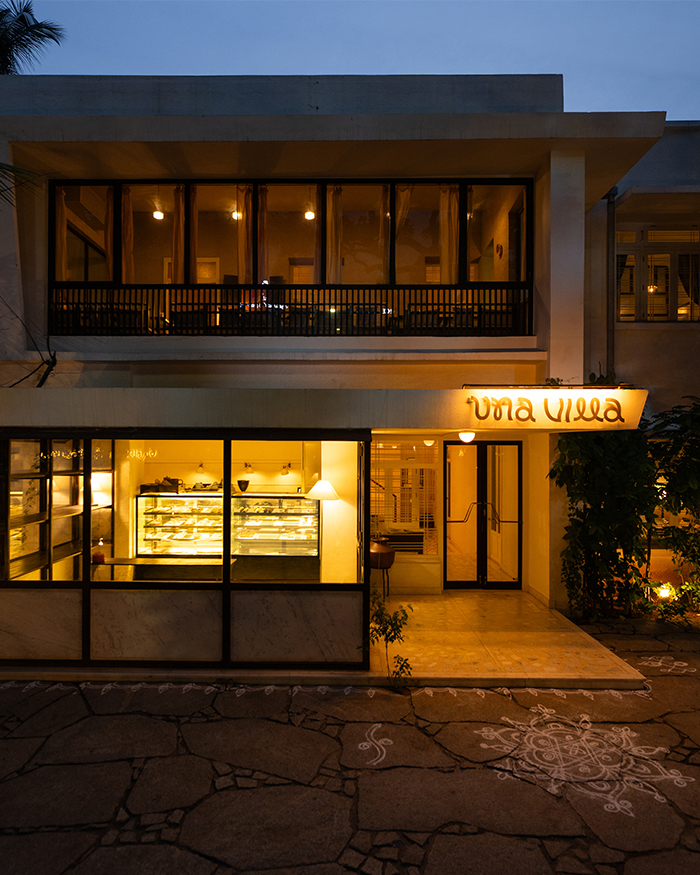

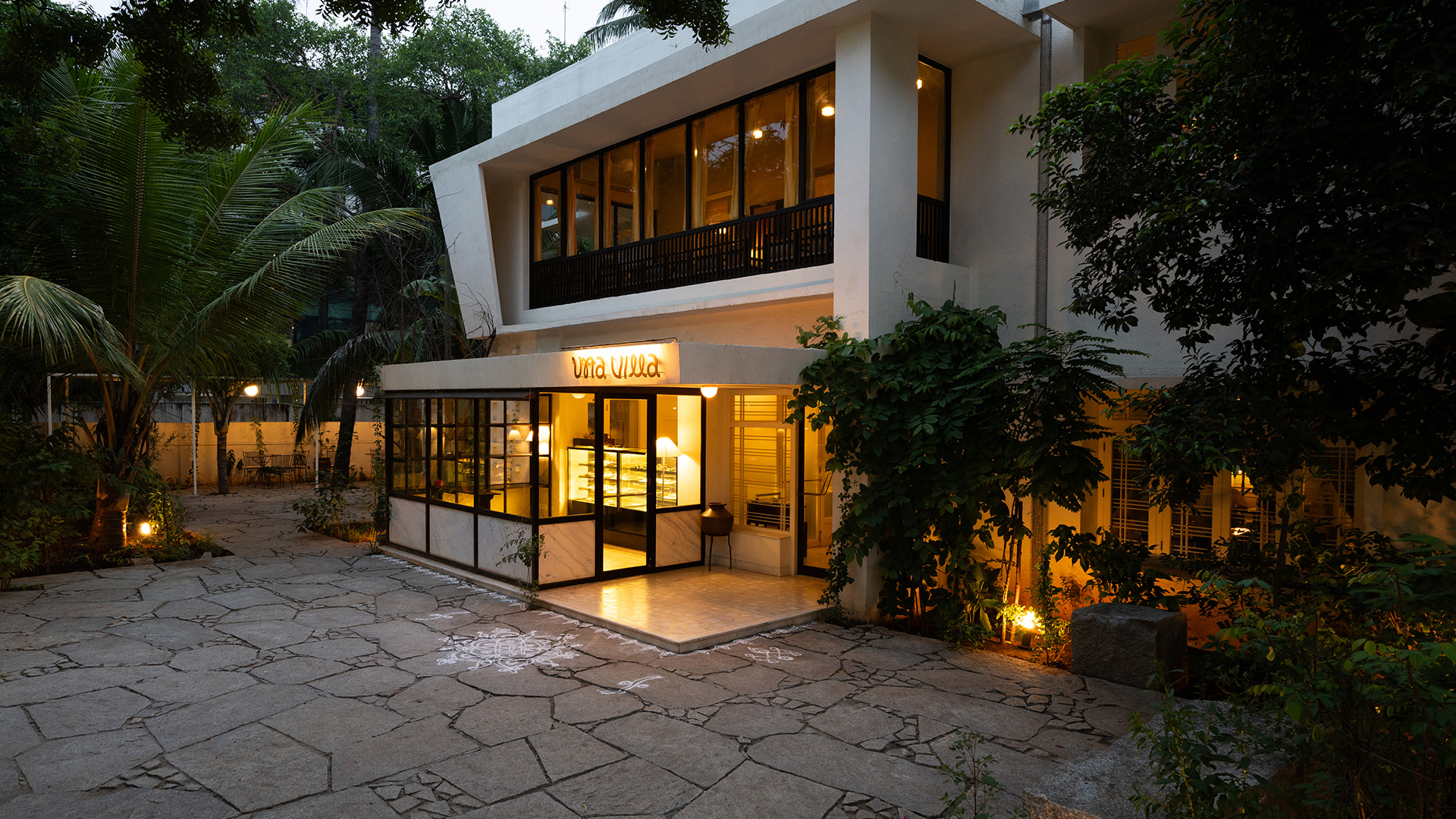
Time is a maverick artist, a virtuoso even. It holds its paintbrush gently yet with fierce conviction, streaking the canvas of eras, reviving forgotten histories. One such episode transpires at Una Villa, on Chennai’s Nungambakkam High Road, in the distinguished company of its neighbours Taj Coromandel and the Aayakar Bhawan, buildings that have long served as city landmarks. Sprawling over 8,800 sq ft, the 1960s Mid-Century bungalow’s adaptive reuse yields a restaurant, bakery and a sprawling domestic garden, magicked to life by Principal Architects Anisha Murali and Denver Pereira of u:i:make. The spatial configuration preserves the building’s layout, only sparingly edited to strengthen connections between spaces.
“The house is set back within a mature garden, its roots tracing back six decades, standing as a quiet marker of resilience. The unoccupied residence once served as a family’s summer home. The bungalow had become a familiar presence to our client, Mr. Rafiq Ahmed of KICL Hospitality, gradually registering in his awareness during daily commutes,” recalls Anisha.
At u:i:make, all endeavours bear an interwoven quality — spaces resonate with their surroundings and the people who inhabit them. Denver iterates, “We approach each project as a hopeful exploration, blending stories, rituals, and space. For Anisha, Una Villa was a reintroduction to the city where she was raised. For me, it was a serendipitous encounter. The project enabled us to draw strong parallels between the cities we call home, reminding us that Madras and Bombay share abundant commonalities.”
In Tamil, ‘Uṇavu’ translates to a meal, the word carrying a deep sense of belonging which manifests as the venue’s name. But the feeling transcends mere signage. “The studio’s sensitive approach helped us anchor Una Villa in its authenticity. I knew I didn’t want to rebuild. The structure needed to be honoured and gently reawakened,” reflects Rafiq.
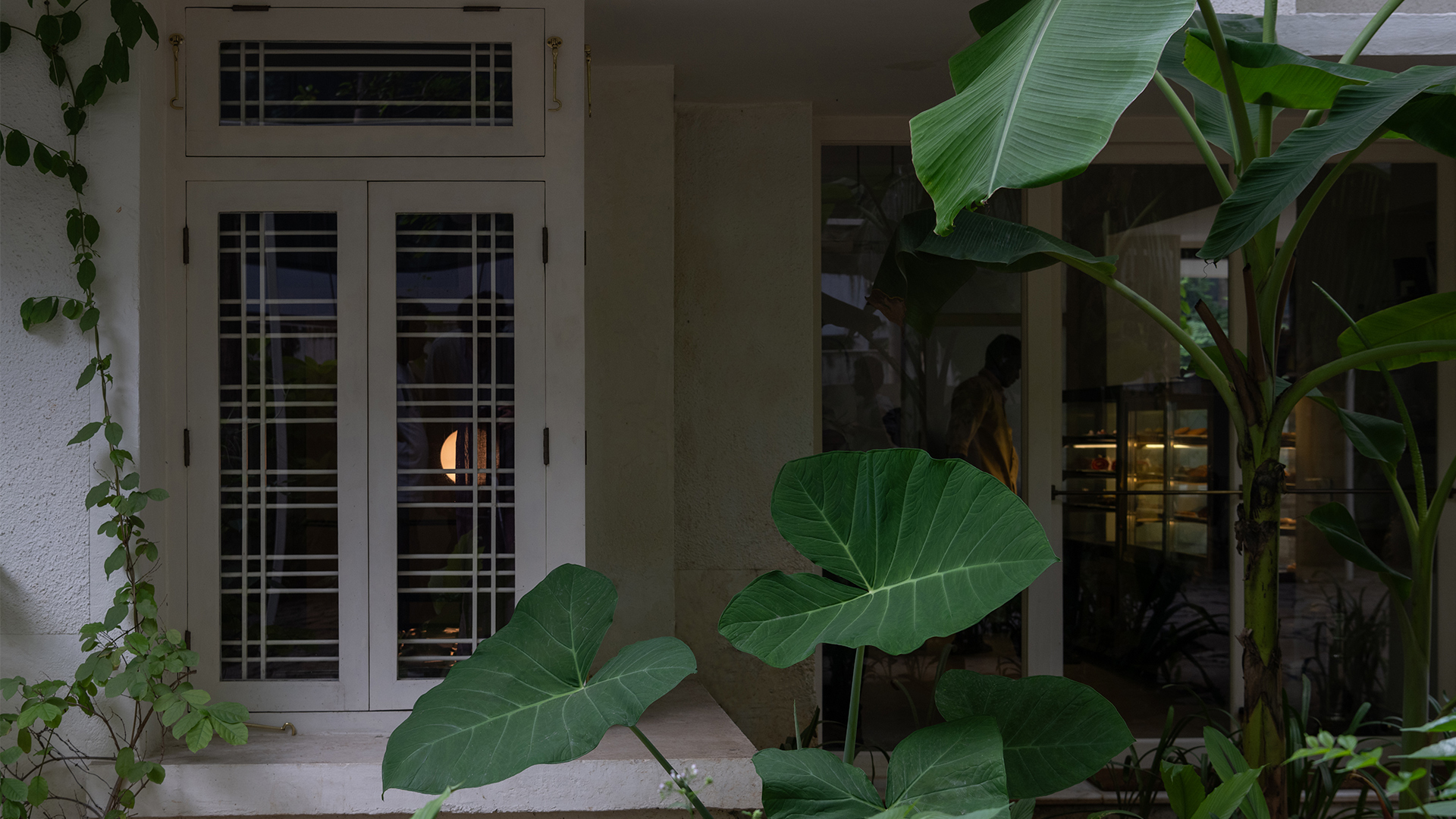
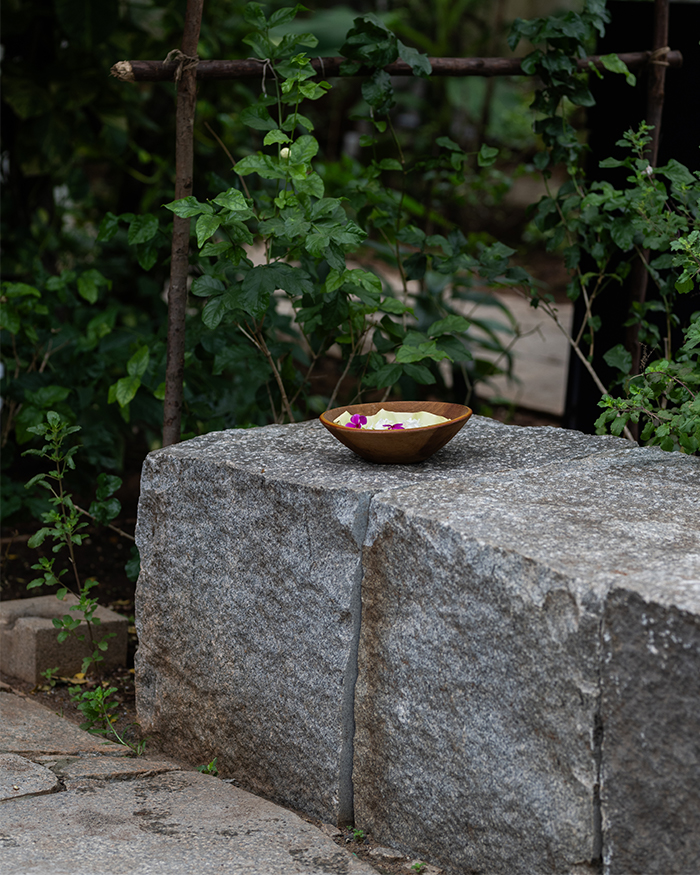
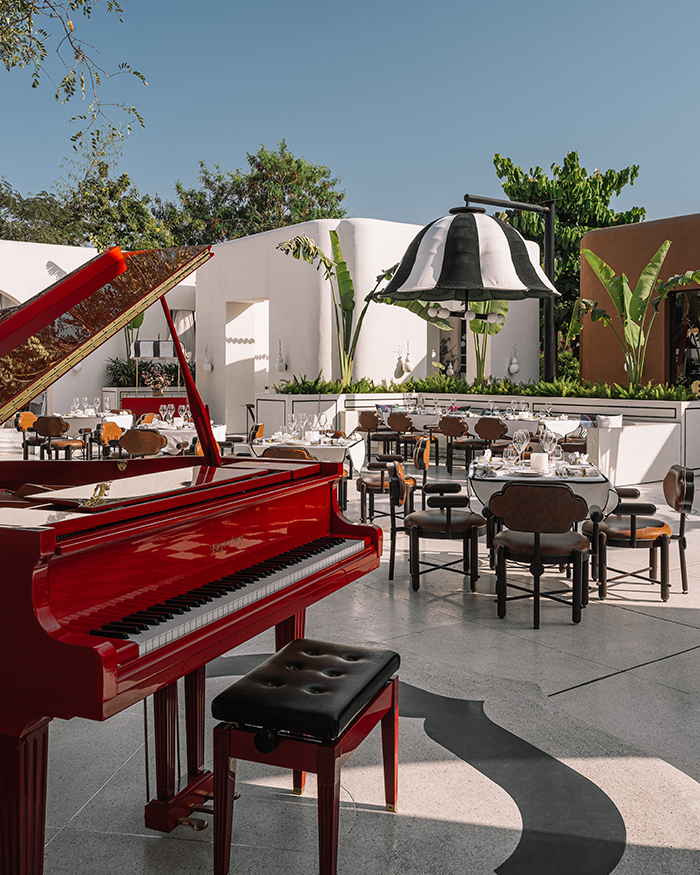
Preserving the building’s architecture, the studio swathes the east-facing façade in a warm white, nodding to the colour’s omnipresence among homes of the same era. The abode rises at the centre of the family-tended garden revitalised as an ecosystem of sorts by Landscape Architect Varna Sashidhar — every tree preserved, including species like mango, jackfruit, and guava alongside native varieties of fruits and blooms.
A crackled rough-cut Sadarahalli granite carpet forms the hardscape laid by Mamallapuram stonemasons — its gravitas thrown into vivid relief by the delicate kolams drawn at daybreak. This cool sweep of grey meanders into narrower paths, leading one to a kitchen garden with spinach, chillies, assorted herbs, and a banana grove that supplements the pantry.
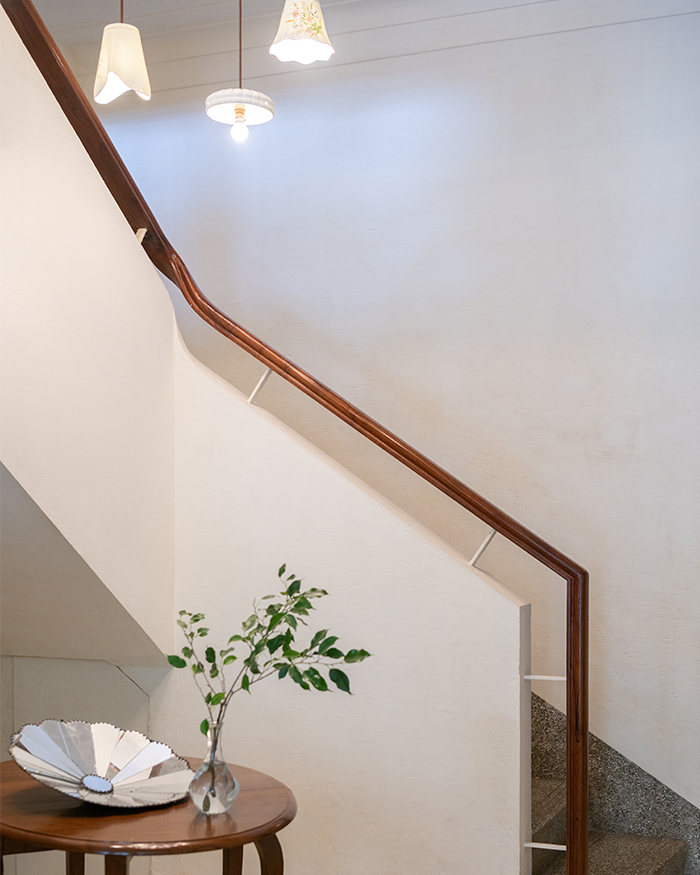
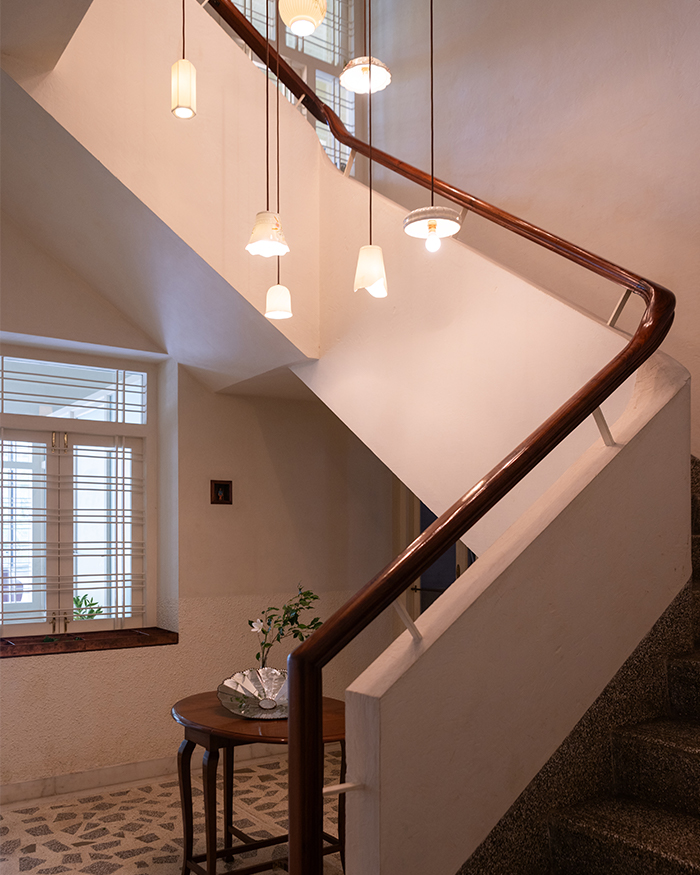
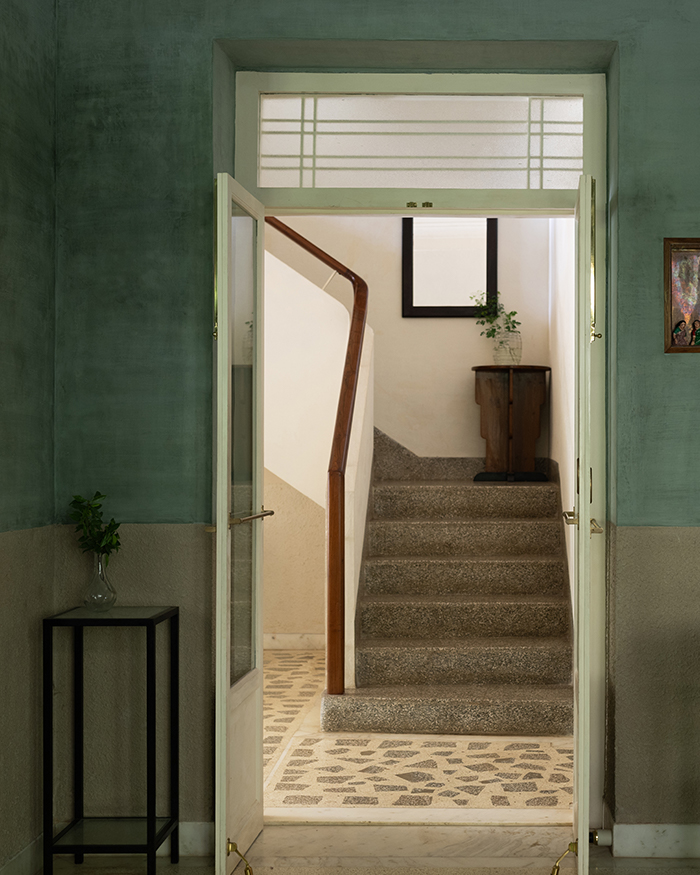
The erstwhile porch now houses the bakery. Enclosed in a teak and glass frame with white marble infills, the space reads as porous, framing the garden beyond. In the foyer, one is greeted by the gently curving staircase, a seasoned custodian of the bungalow’s history. White limewashed walls carry the signature of restraint from the outside into the inside, while the teakwood railing introduces contrast. A ribbon of grey mosaic cascades over the staircase, melting into terrazzo floors cast in situ using broken tile remnants from the restoration. The warm haze of suspended bone china lights washes over the foyer, its ambient glow imprinted on the stairwell’s curvature.
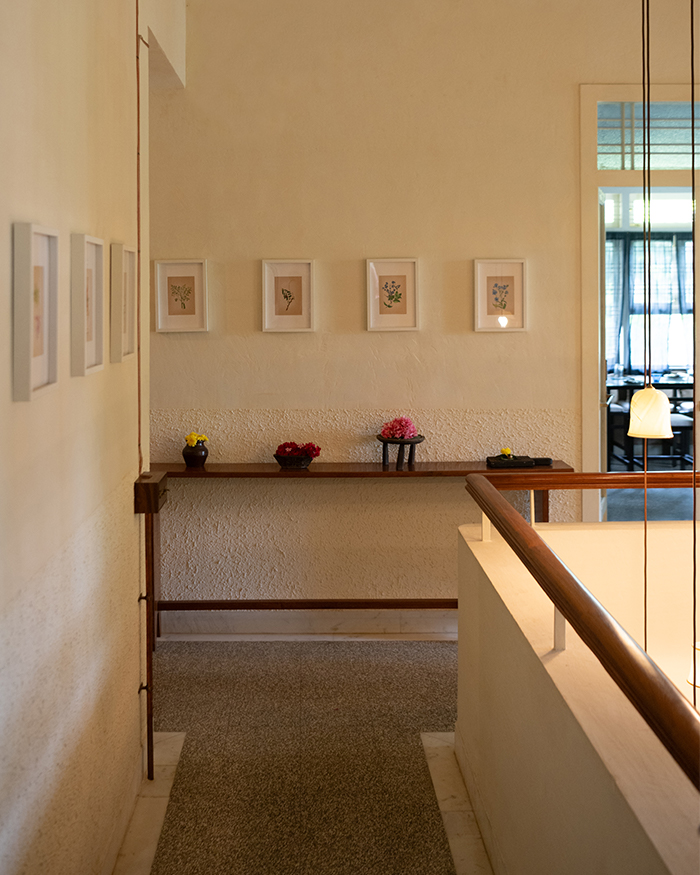
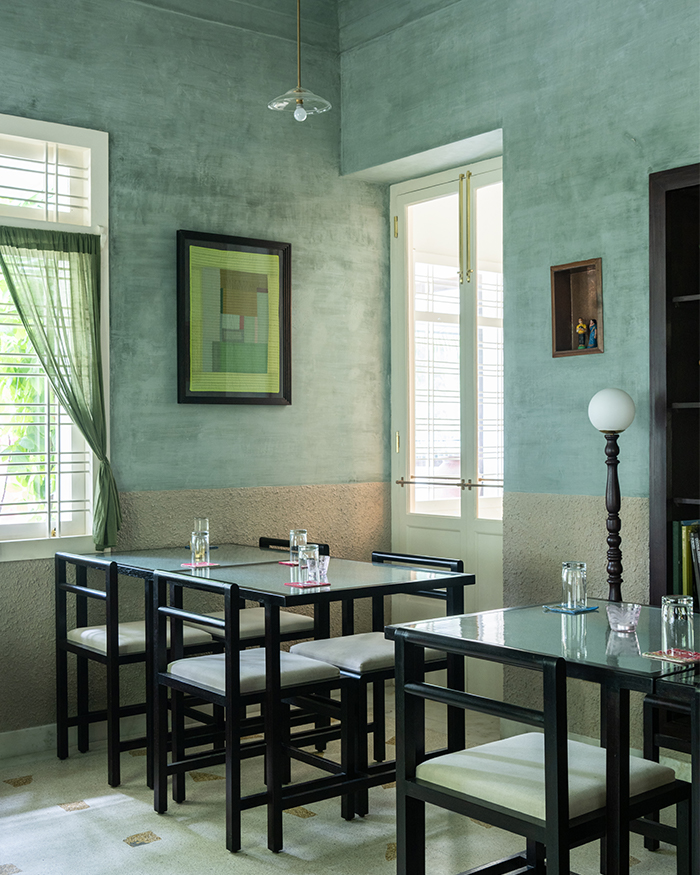
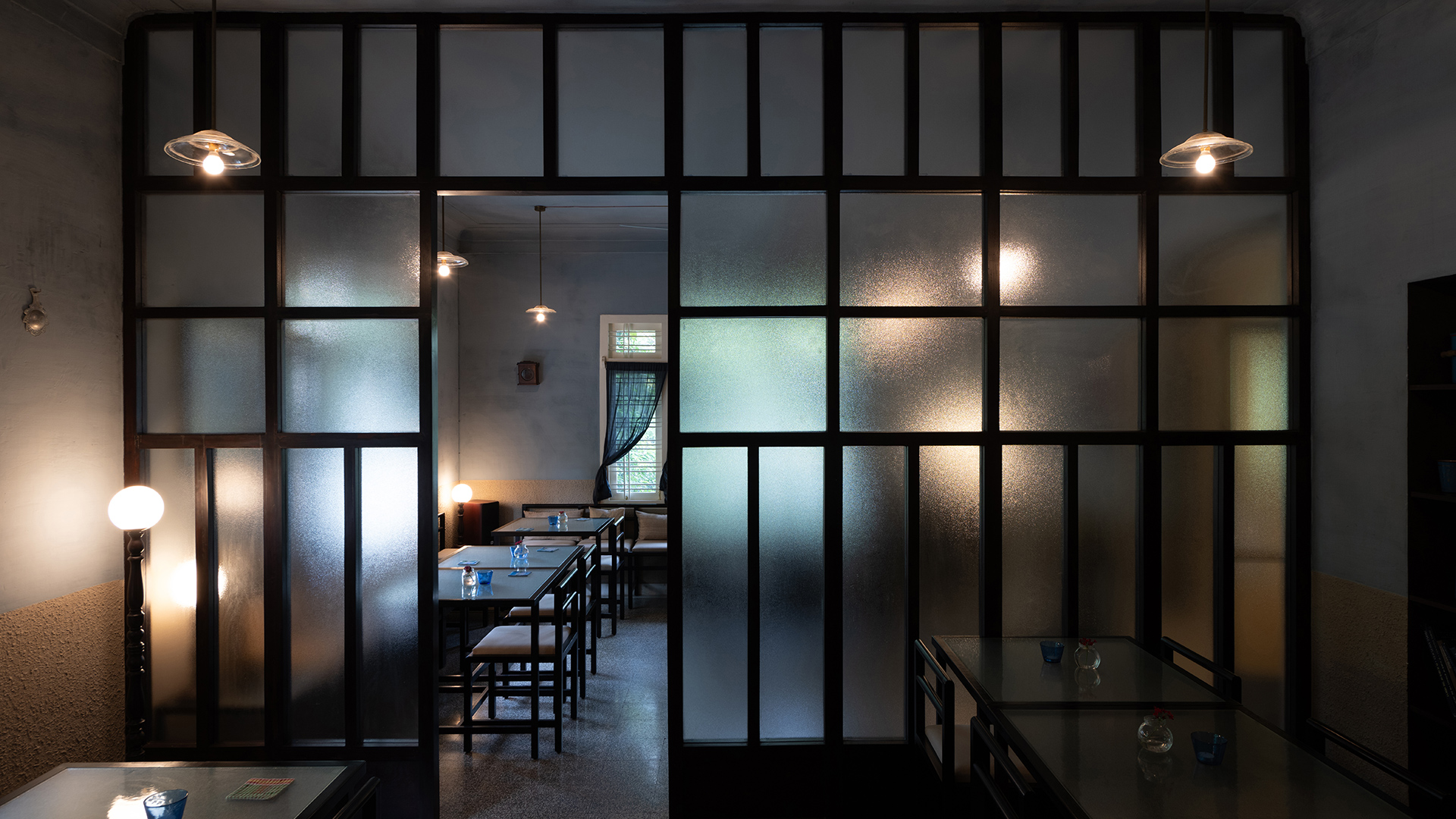
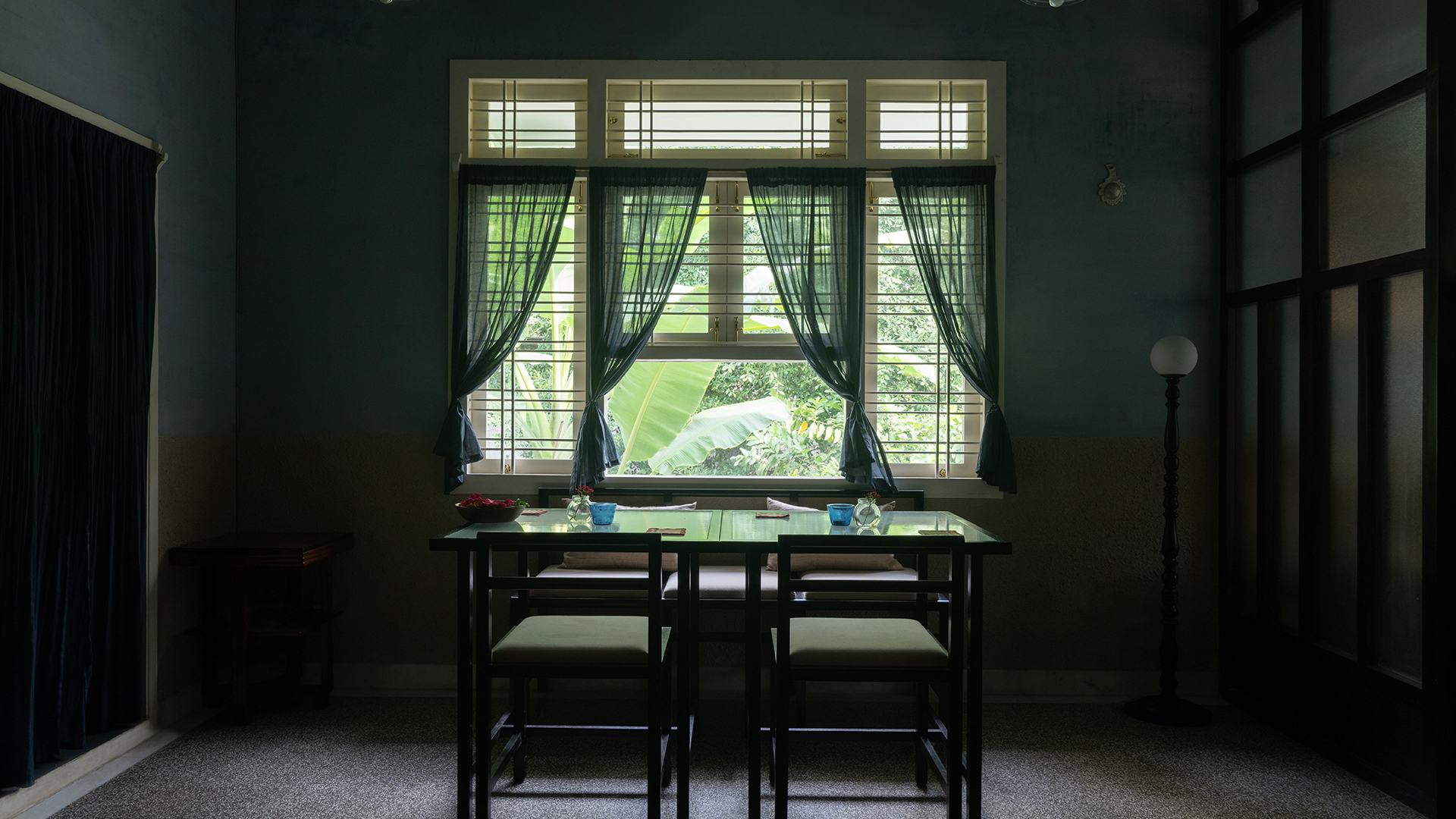
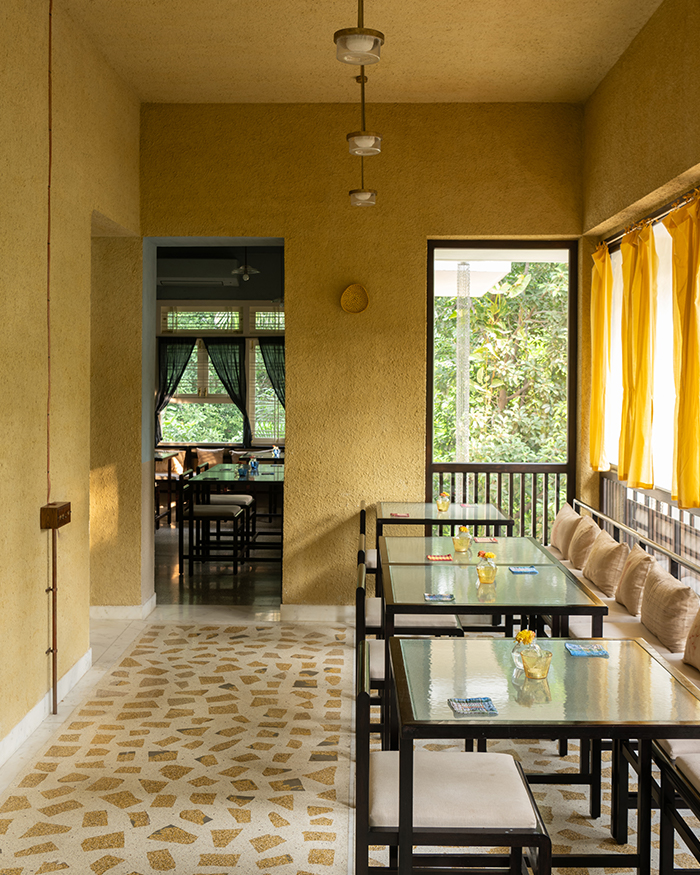
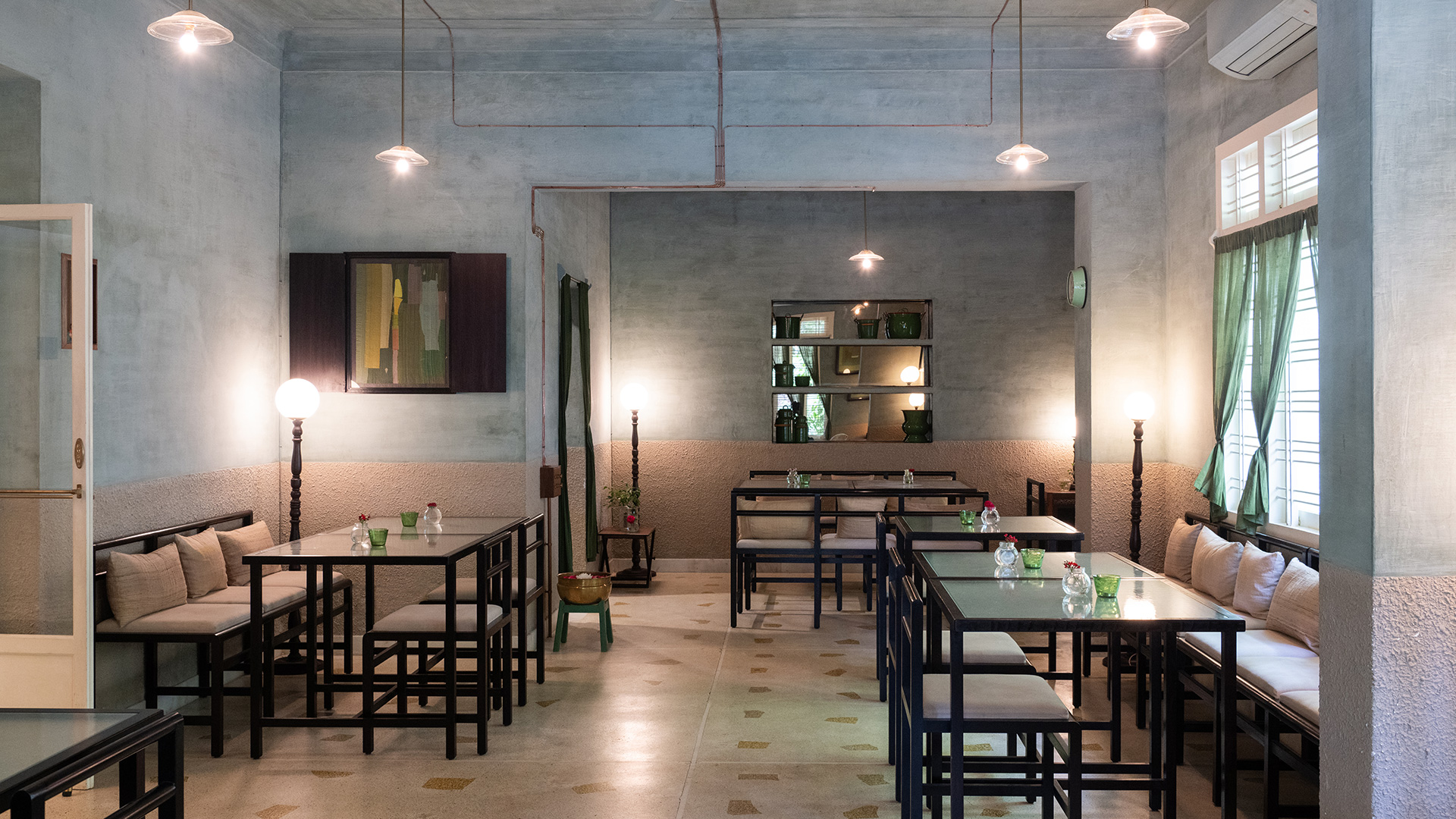
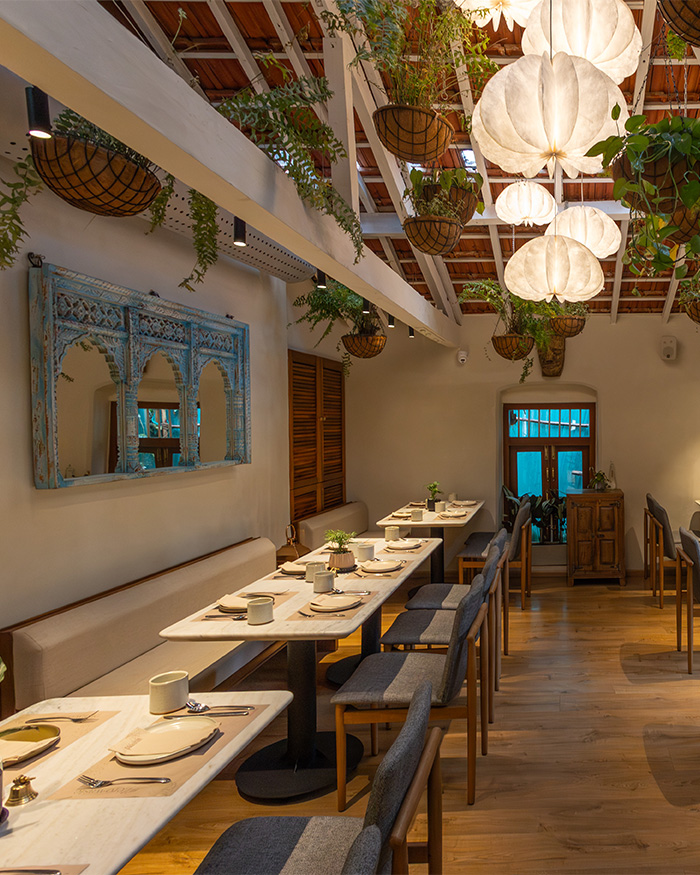
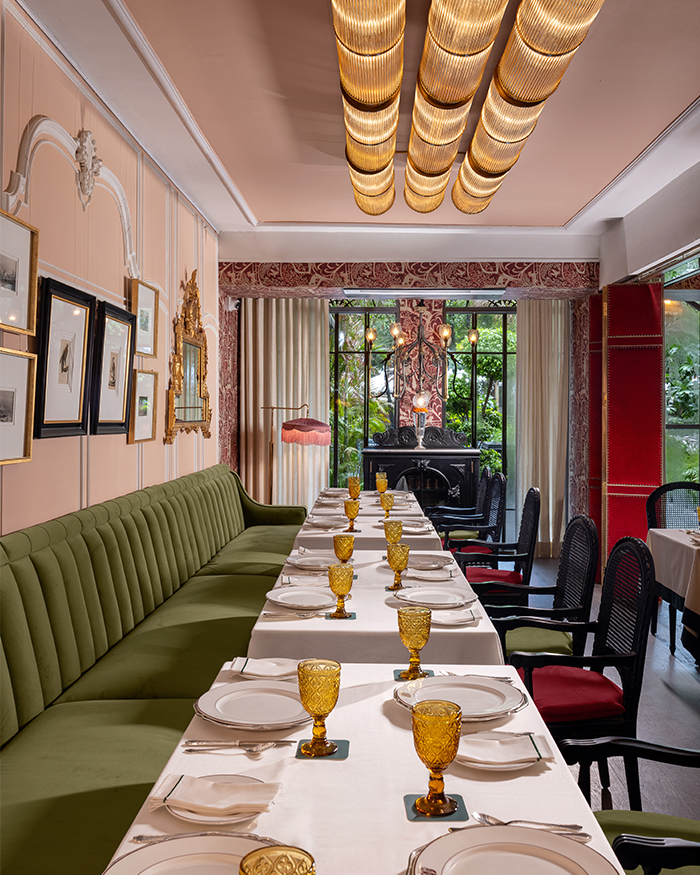
Two private and three communal dining rooms organise themselves around the central volume, their hues and textures informed by the city vignettes and the home’s landscape. Anisha illustrates, “Colour association runs deep here, inspired by walks down Mylapore streets: the rush of hues, colourful koodais (woven baskets), the vivid patterns of sarees worn by women, and shades of the soil and flora dotting the site.”
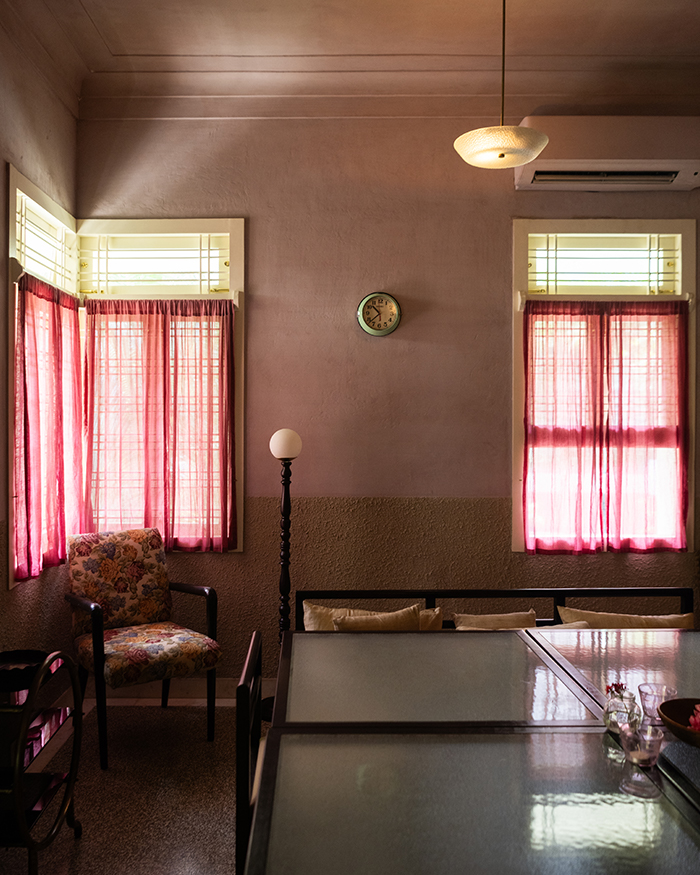
Absorbing this palette, the dining rooms are earmarked in limewash colours of glaucous green, greyish-lavender, pale glaucous blue, cameo pink, and ivory buff. A leitmotif binding the spaces is a textured dado, its ecru colour referencing the site’s earth while creating a consistent backdrop. Surface-mounted wiring echoes the electrical systems of yesteryear. The exposed copper conduits usher in a quiet order, their paths laid on the walls and ceilings painstakingly by hand.
Without overwriting the site’s past, Anisha and Denver restore a domesticity that feels unmistakably familiar while serving its renewed purpose. The duo shares, “The traces of the home’s former life and years of disuse add depth to its role as a restaurant. Adaptive reuse does not erase the past but builds on it.” At Una Villa, time appears unhurried and malleable, reflecting the patient vision of its architects. “This parcel of land was too rare and poetic to ignore! Una Villa bridges generations while retaining the soul of the place that connects with today’s diners. It carried a wistful beauty that I wished to protect,” reminisces Rafiq.
BY
ELLE DECOR

No results found.