Portrait and photography by Bikramjit Bose

Anniversary issue: Princess Esra Birgen Jah

A minimalist in the Nizam's Palace

BY

Produced by Mrudul Pathak Kundu

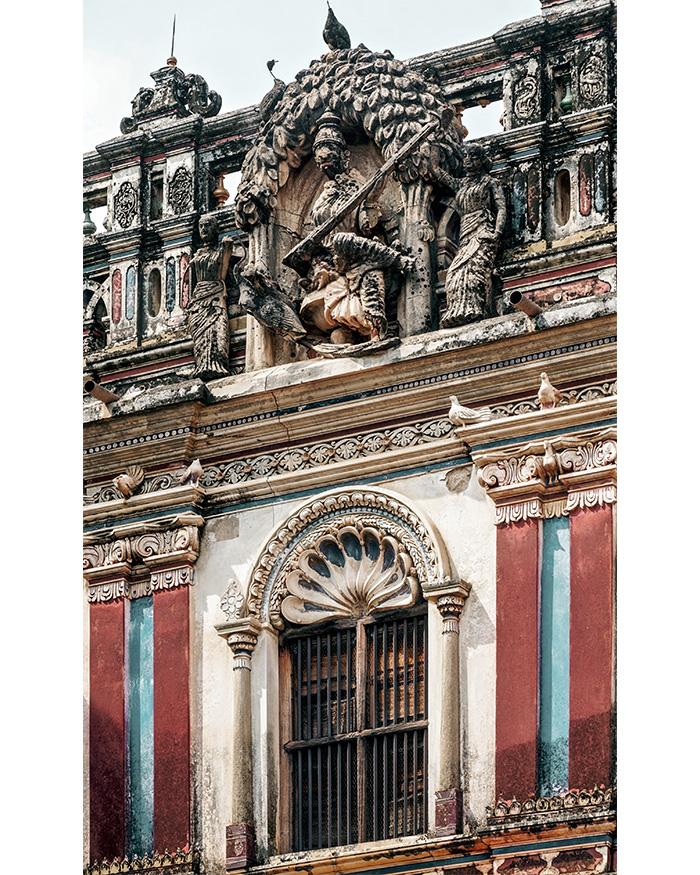
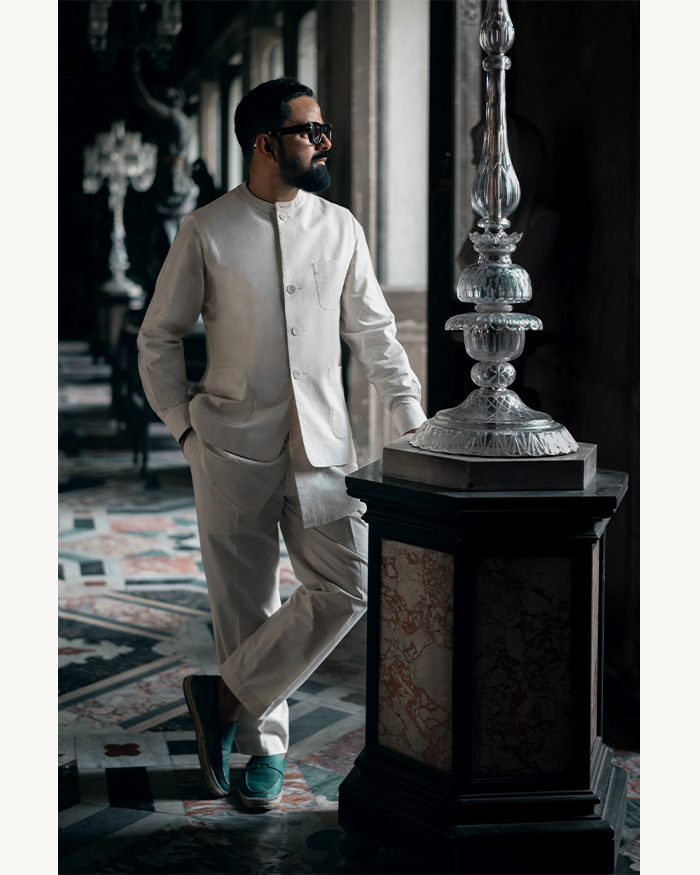
Hyderabad’s story is often told through its diamonds and its Nizams. A land that gifted the world some of its most expensive, rare gemstones. An economy that rivalled small European nations. And a Nizam whose wealth was estimated at two percent of the American GDP during his time. Mir Osman Ali Khan, Asaf Jah VII, the last Nizam of Hyderabad, was one of the richest men of his era and the palaces of Chowmahalla and Falaknuma staged his power. Heads of state and imperial guests were hosted at the 32-acre Falaknuma Palace, perched on a hill above the city. With 60 rooms and 22 halls, it housed the world’s largest collection of Venetian chandeliers (including 40 Osler pieces), lined with a Windsor-style library of more than 5,000 books, an unrivalled jade collection and a 108 ft dining table that seated around a hundred guests. He ruled from the Chowmahalla Palace which sprawled 45 acres with four palaces. His fleet of cars included a Rolls Royce Silver Ghost of 1912 among many other rare luxury cars.

While the wealth, the palaces, the land and kingdoms are always remembered in the names of men who invaded or inherited them, the afterlife of many such empires has been carried by women — women like Princess Esra Birgen Jah. Born in Turkey to a prominent and respected Ottoman family though not directly linked to royalty, Princess Esra (then Esra Birgen) chose to marry Prince Mukarram Jah (grandson and designated successor of Mir Osman Ali Khan, the last ruling Nizam of Hyderabad). She stepped away from India when the marriage ended, but returned decades later, not to live in its splendour, but to rescue what was left of it. Cut to the present, it has been 15 years since the Falaknuma Palace was restored and relaunched by Taj Hotels Resorts and Palaces. 25 years since Princess Esra initiated Falaknuma’s restoration, 29 years since she returned to the country to confront the family’s crumbling palaces and 66 years since she first came to India as a young woman marrying into the Asaf Jahi dynasty in 1959. But it is the period from 1947 till her marriage that shaped the landscape she would eventually inherit.

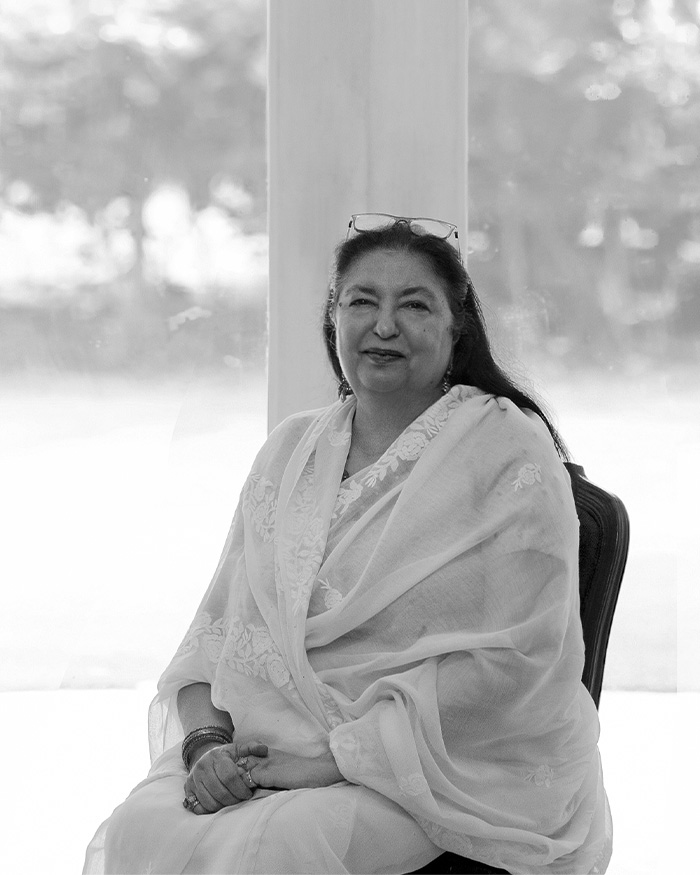
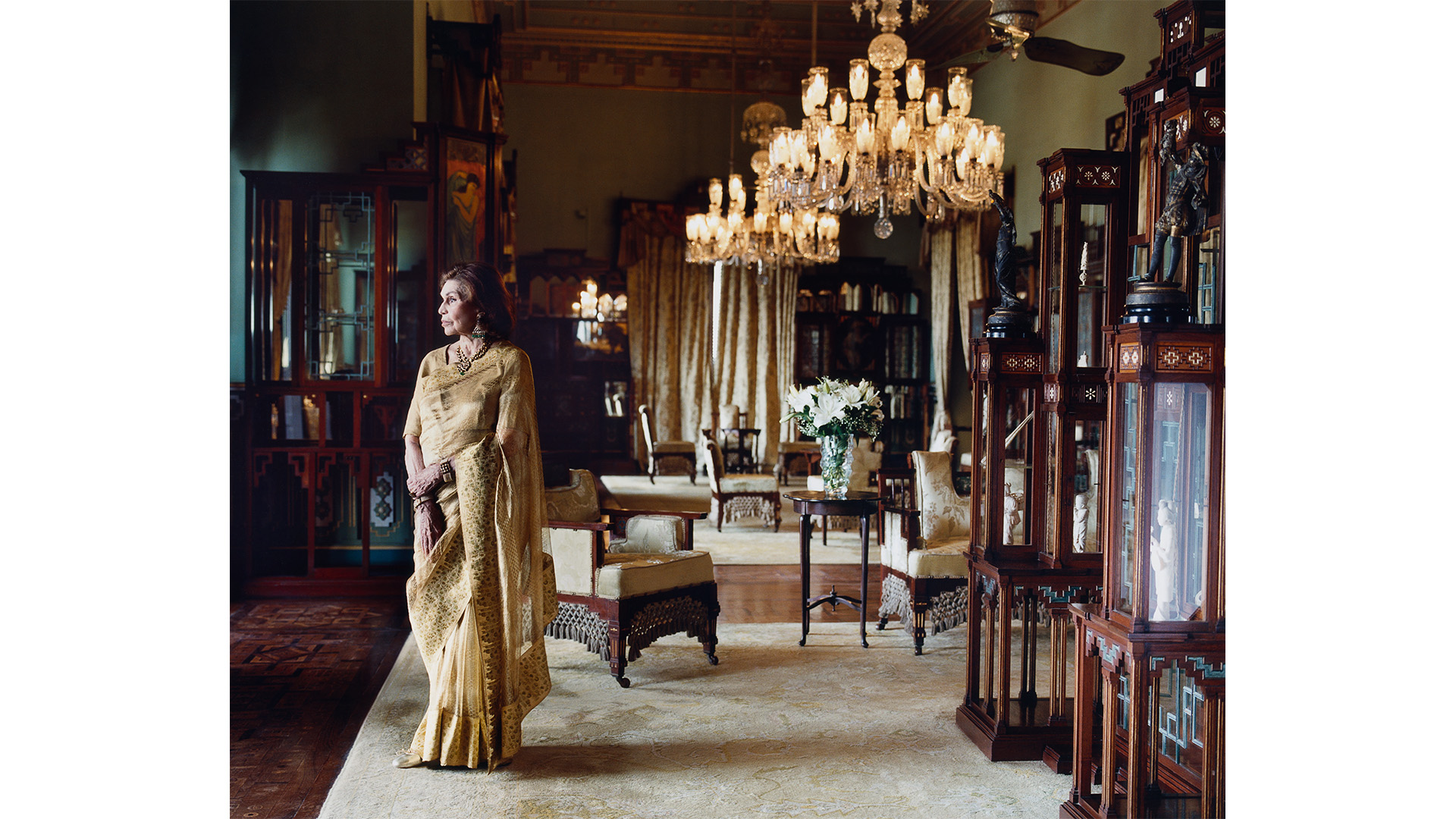
The palaces fell into neglect when sovereignty ended and with the abolition of privy purses in 1971, the last supports of royal life disappeared. Today she divides her time between India and England. I meet her at the Games Room in the Falaknuma Palace. She wears a tissue gold saree, “I am not a maximalist,” she tells me. “But if there was ever a programme on minimalists, I’d fit right in,” she continues. Her worldview is shaped by living across continents, and coming of age in post-war Europe. She attended boarding school in England and later studied architecture. It was not only the moment of mid-century modernism, but also a time of social upheaval and anti-elitist sentiment. “In those years in England, we were against rich people for the poor,” she recalls. “If you over-jewelled, they called you a Dowager Duchess.”

“I am not a maximalist. But if there was ever a programme on minimalists, I’d fit right in”

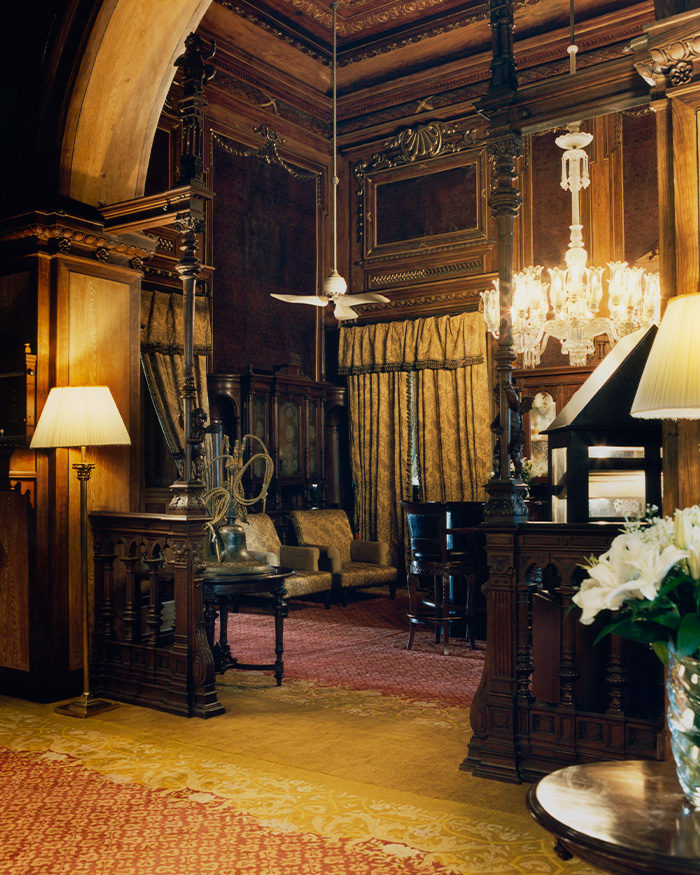
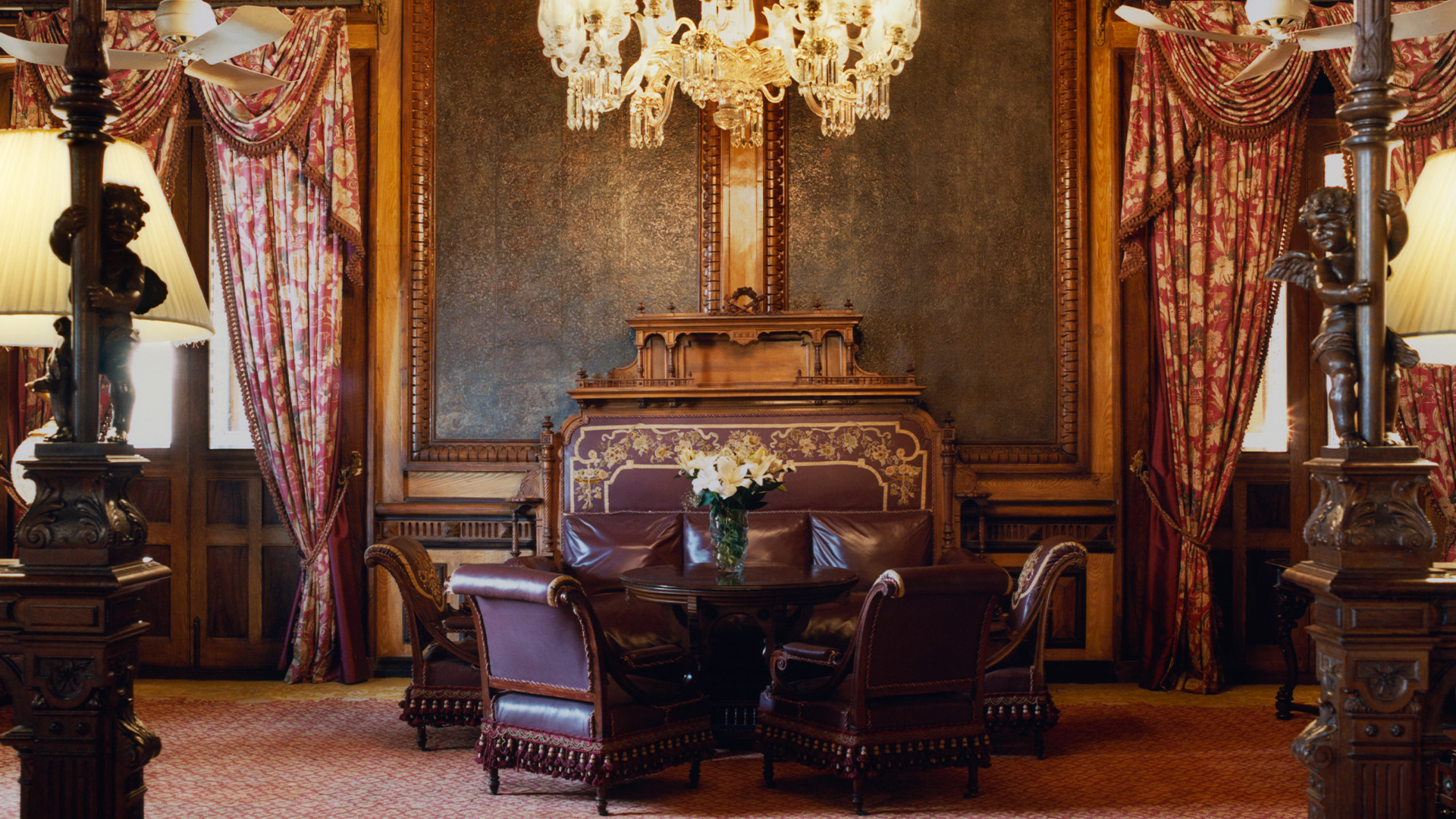
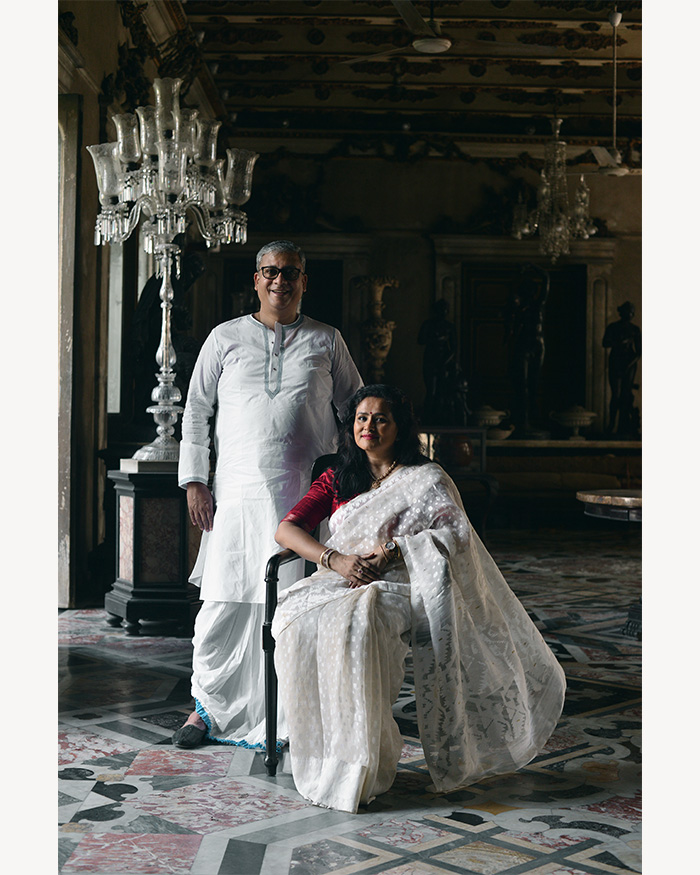
In the Games Room, carpets, woodwork and tassels were recreated. The chandeliers cleaned and rewired; Portrait and photography by Bikramjit Bose

It was this refined restraint that Princess Esra brought about, after two decades of living abroad post her divorce, to the task of resurrecting one of the most opulent palaces in India. “It looked like the loot of Delhi by Nader Shah. There was nothing left. Everything was taken,” says Princess Esra, referring to the state of the palaces in the 1990s. The death of the seventh Nizam in 1967 left a large estate divided across trusts, dependents, legal claims and properties that were extremely expensive to maintain and were rapidly degrading. Between 1967 and 2001, Chowmahalla shrank from 54 acres to 12. Falaknuma was sealed, and it continued to deteriorate. Thousands of jobs associated with running the palaces had been dismissed.

“I thought to myself that I have to give something of the family back to Hyderabad. It was our duty,” she says. Shut from the early 1950s, the Taj Hotels Resorts and Palaces leased Falaknuma Palace in 2000 but put it on a back burner since it wasn’t part of the Golden Triangle: New Delhi, Agra and Jaipur. “They assumed tourists wouldn’t come here. Then I met RK Krishna Kumar, who was heading the Indian Hotels Company, including the Taj Hotels division, from 1997 to 2002. He was remarkable. He trusted me completely and said, ‘You have carte blanche. Go ahead, pick your team and do it up. A decade later, the hotel reopened in 2010,” she says. Once given carte blanche, she began rebuilding. Rahul Mehrotra and Anuradha Naik led architectural restoration, Martand Singh shaped conservation strategy and Rahul Jain oversaw textiles. They worked alongside a wide network of conservators, carpenters, archivists, textile specialists and historians. Carpets, woodwork and tassels were recreated, chandeliers cleaned and rewired. Once imported from Córdoba, the trompe l’oeil leather in the Games Room was recreated by repainting the surfaces with precision. It was repainted and not reinstated because sourcing the original was impossible.

“Restoration is much harder than building,” she says, underlining the grit of such an undertaking. Building anew allows invention but restoration demands patience and restraint from adding new layers in the pursuit of grand gestures. It is often painful, especially when you face everything that has been neglected, broken, sold, stolen or forgotten. And then to rebuild piece by piece, make the difficult choices of what goes and what stays to keep the story legible for those who come next. Bringing a minimalist’s temperament to one of India’s most maximal inheritances, she untangled power, debt and memory, and turned the Nizams’ royal past into public pride. When I walk through Falaknuma, the story still appears to belong to the kings at first glance. Portraits along the staircases, the crests on carriages; they all point back to the Nizams. The visual language of power will always be male, I suppose. But the palace is also a record of the woman who refused to let it disappear — a restoration shaped by Princess Esra’s autonomy, judgement and stewardship as much as by the history it preserves.

SHARE THIS ARTICLE

You May Also Like

Watch

No results found.

Search
Close this search box.