
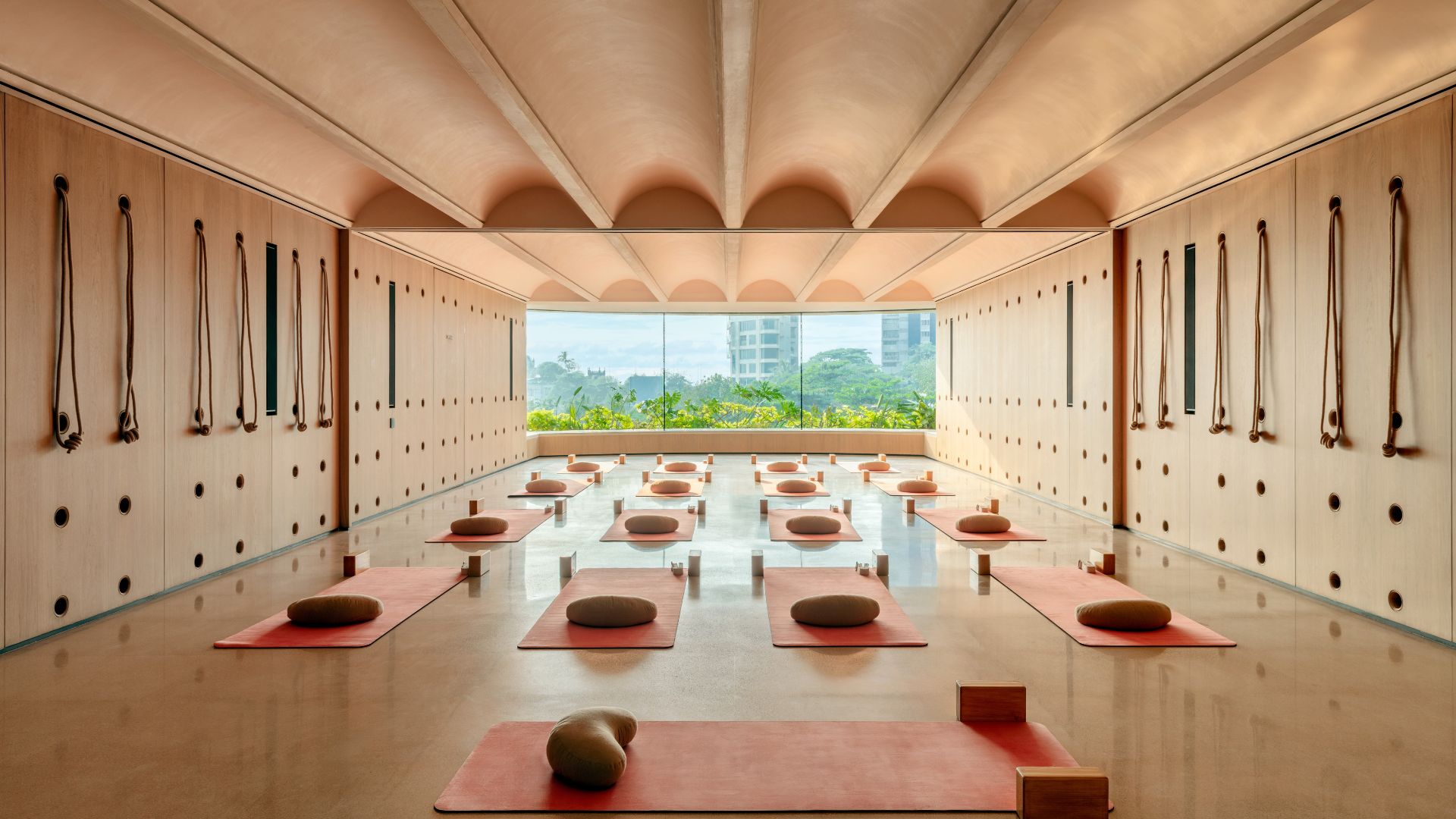
What does it mean to translate a sound into space? At AUM Wellness in Mumbai the idea comes from the continuous vibration of AUM, unfolding as a seamless progression into architecture. In the middle of India’s busiest city, Shefali Balwani, Principal Architect of Architecture BRIO designed this 7,800 sq ft urban ashram as a cohesive sequence of environments. Here wellness is experienced through the rhythm of the layout. The plan unfolds as a continuum moving fluidly between introspective and collective zones. This movement echoes the convergence of A, U and M, translating creation, preservation and transformation into a continuous spatial rhythm.
As AUM Wellness took shape the idea extended beyond concept. It began to ask a larger question—can a space really sustain ashram-like serenity within the pace of the city?
" The design draws from the symbolic structure of AUM - the convergence of A, U and M representing creation, preservation, and transformation."
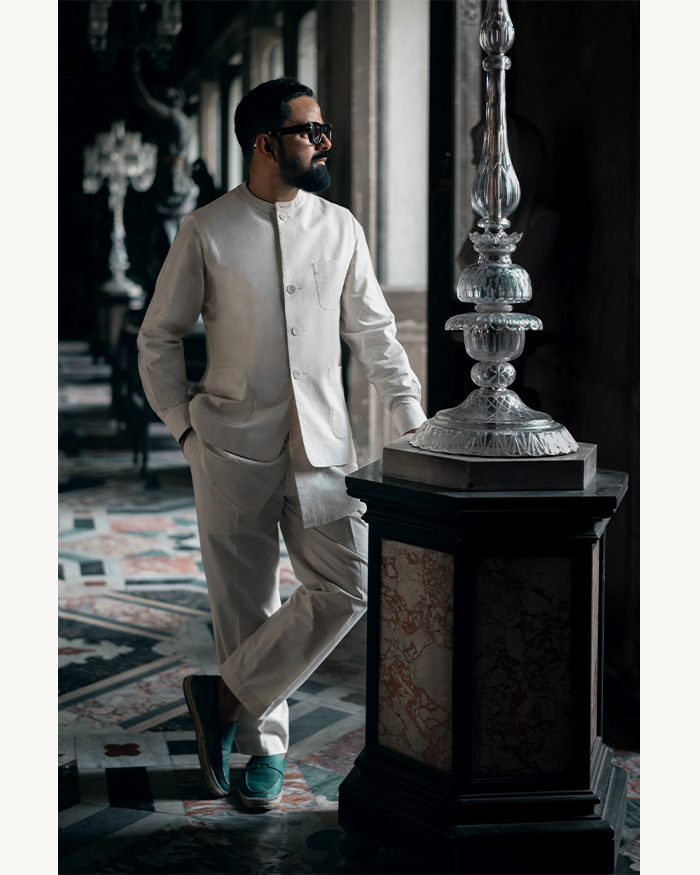
Shefali Balwani
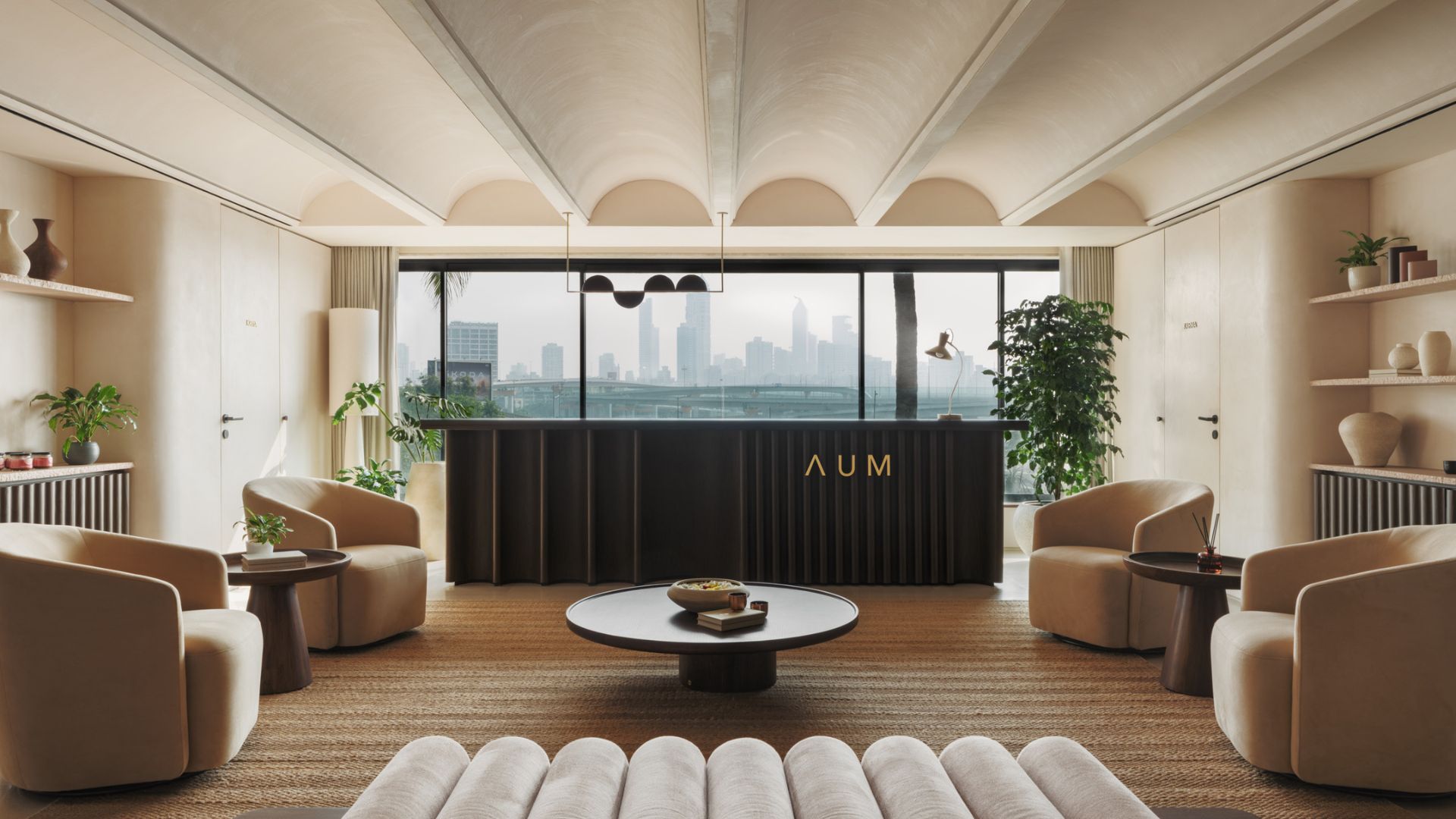
The urban ashram is not positioned as an escape in the traditional sense, but preferably as a shift in tempo—something that happens immediately as you enter. For Shefali and her team: Rohit Mankar, Sakshi Ghulati, Miloni Doshi, Amruta Halgekar and Shriya Parab the brief was rooted in the desire to dissolve the presence of the city without physically disconnecting from it to create a space where retreat can become a state of mind rather than a destination. Instead of clearly demarcated zones, the plan unfolds as a sequence of experiences moving seamlessly between introspection and interaction. This fluidity emerges from AUM as part of a continuous cycle and not as separate states. As Shefali notes, “The design draws from the symbolic structure of AUM – the convergence of A, U and M representing creation, preservation and transformation.”
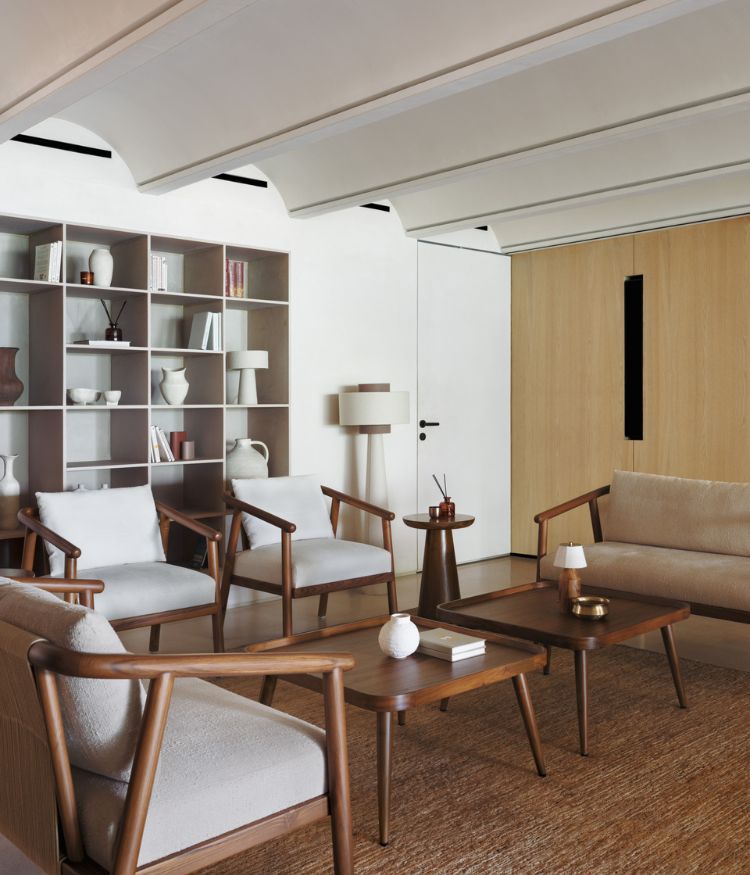
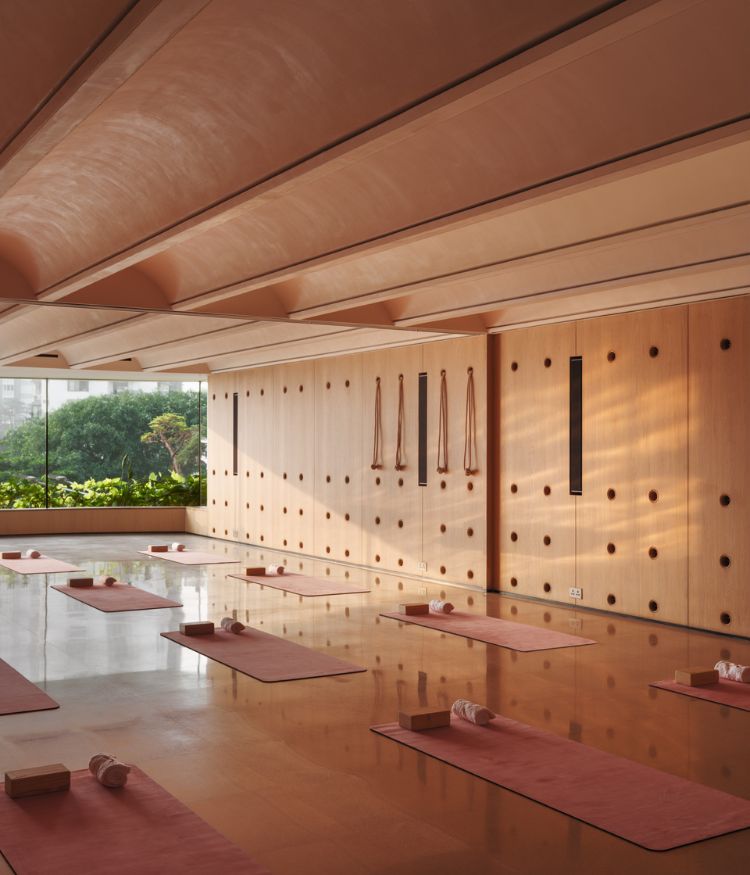
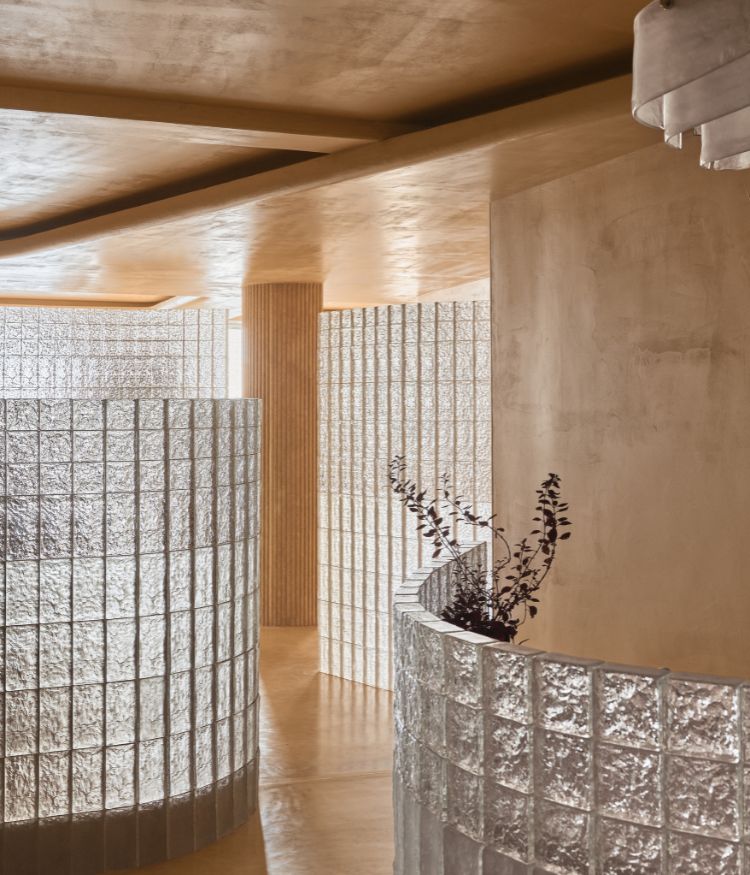
The idea is translated into architecture through circular geometries and a non-hierarchical layout which resists assigning importance to any single space. Vaulted ceilings become a standout feature here. Rising up gently overhead and expanding the volume it parallels the act of breathing. Spaces meant for meditation and self-reflection are quieter while areas designed for movement and interaction open up more fluidly.
This zoning extends into seven private treatment rooms and four consultation areas alongside shared spaces such as the reception, yoga and meditation hall and dining complemented by a sound healing room and dedicated administrative areas. Whether it’s a meditation room, a consultation area or a shared space each zone feels connected to the next, encouraging a conscious way of inhabiting the interior.
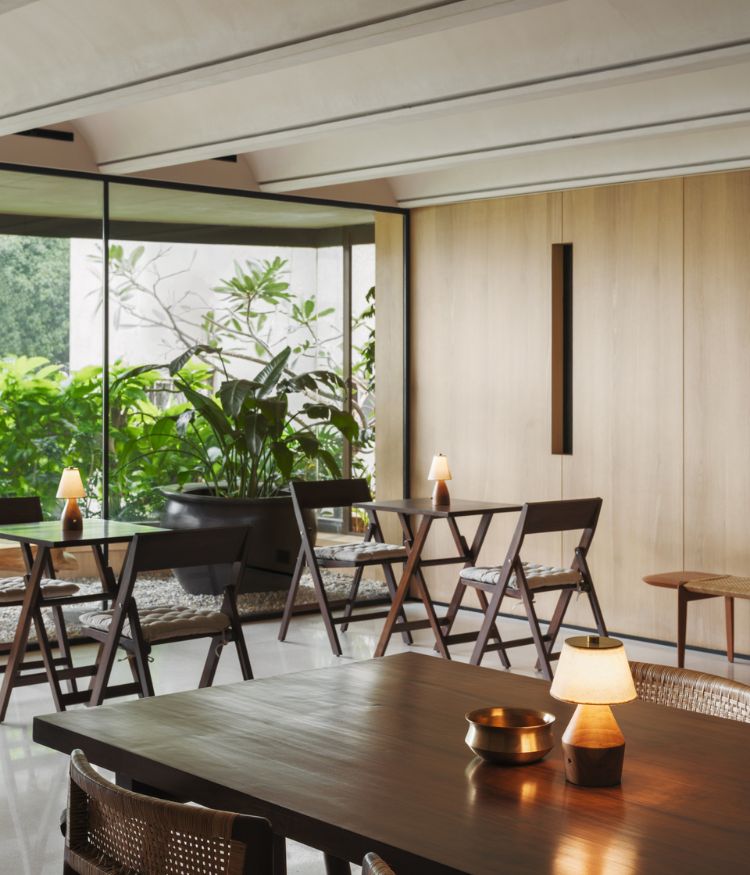
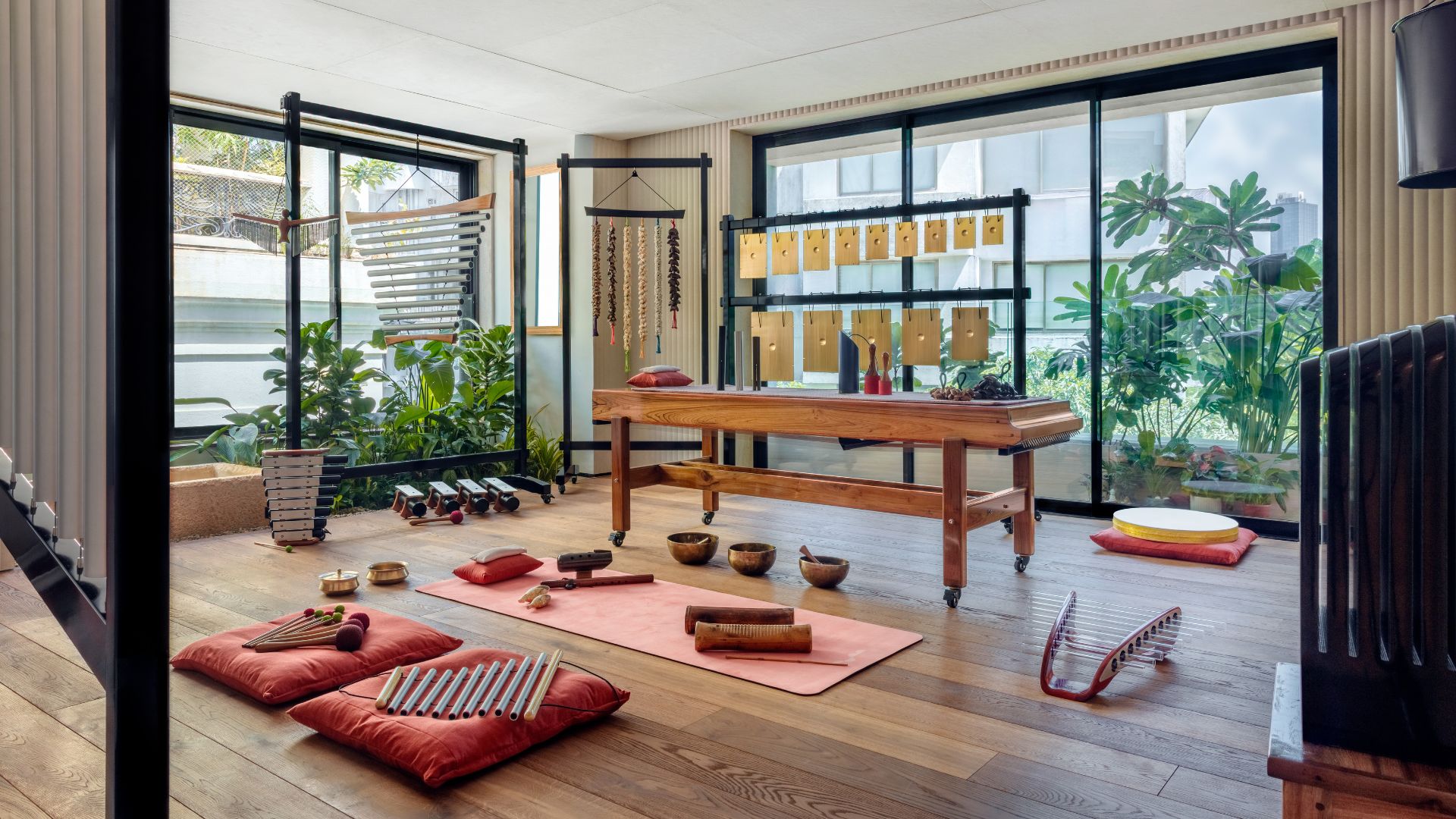
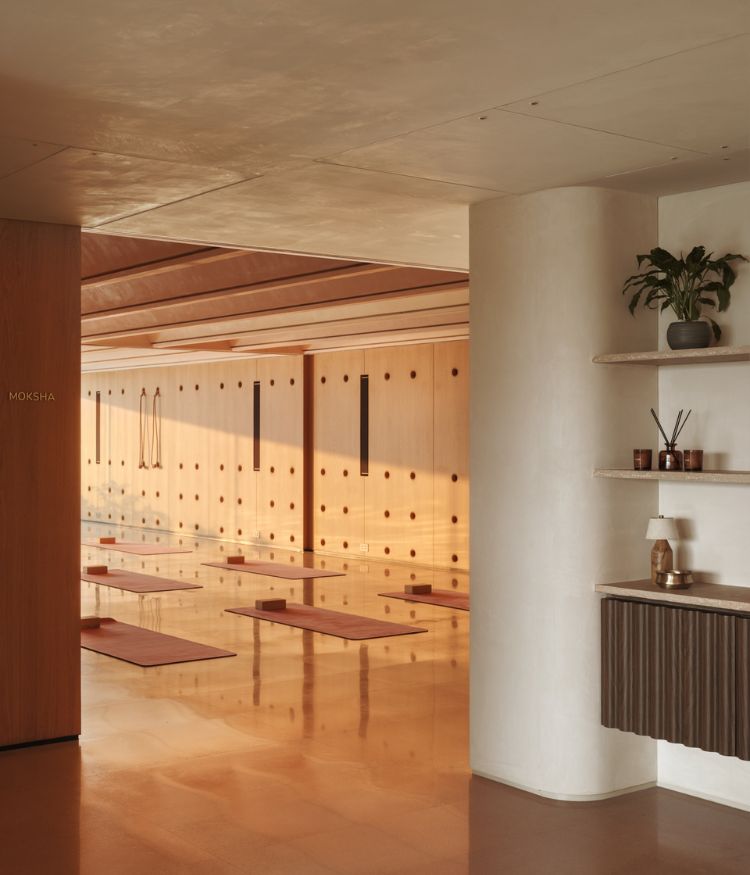
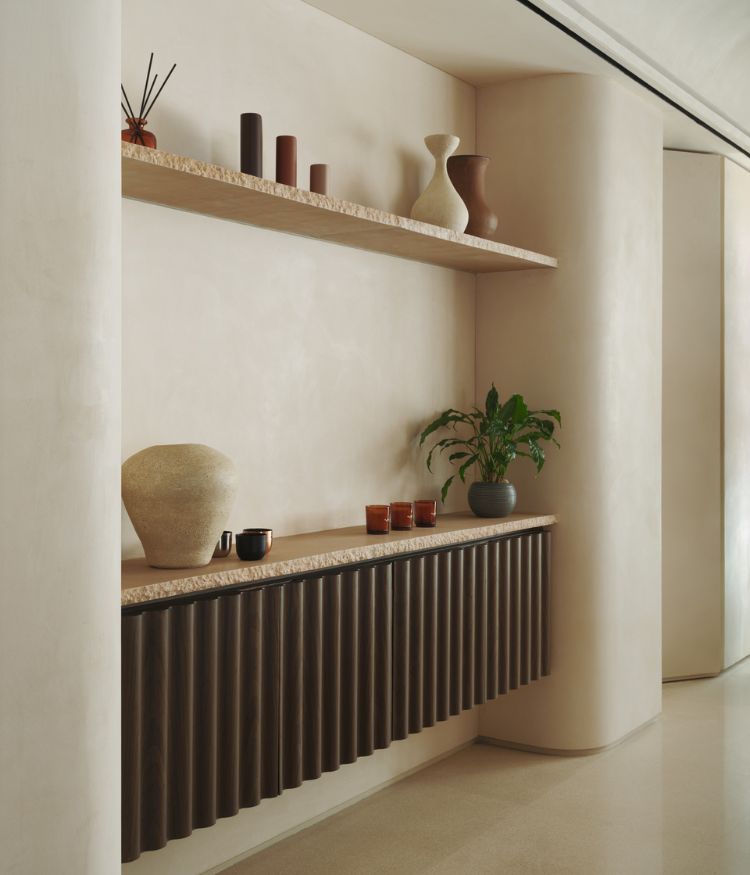
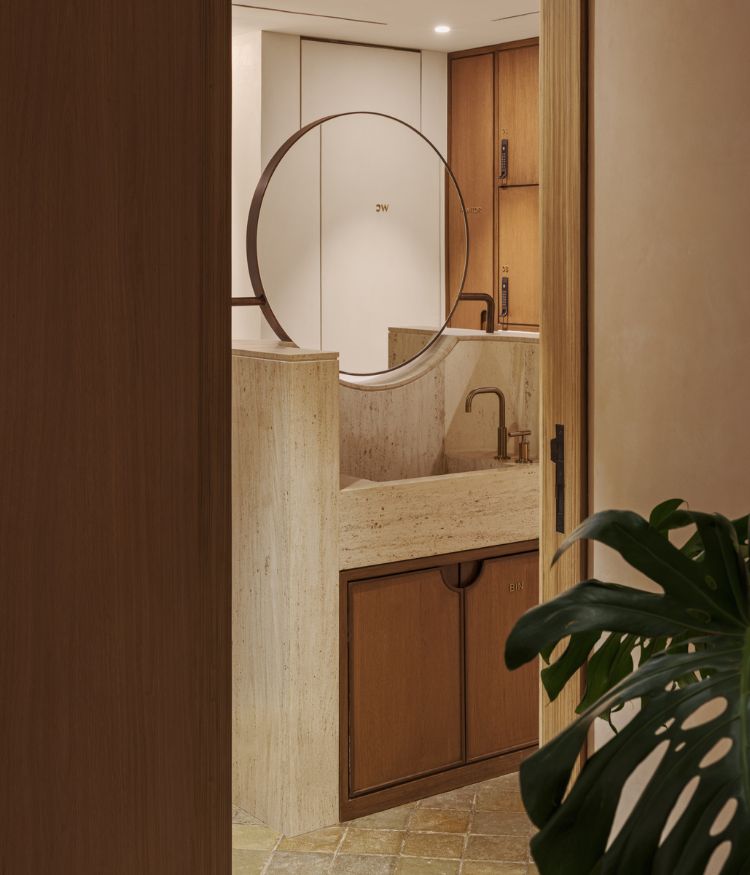
If the planning establishes flow, the material palette anchors it. “Rooted in the concept of unity, this project explores how built form can support not only physical comfort but also psychological and spiritual restoration,” says Shefali. A base of stucco, limestone and terrazzo sets a neutral canvas layered with timber which feels restrained but far from minimal. What stands out is how these materials are not used for contrast, but for continuity. Soft transitions replace sharp visual breaks allowing the eye to move as gently as the body does through the space.
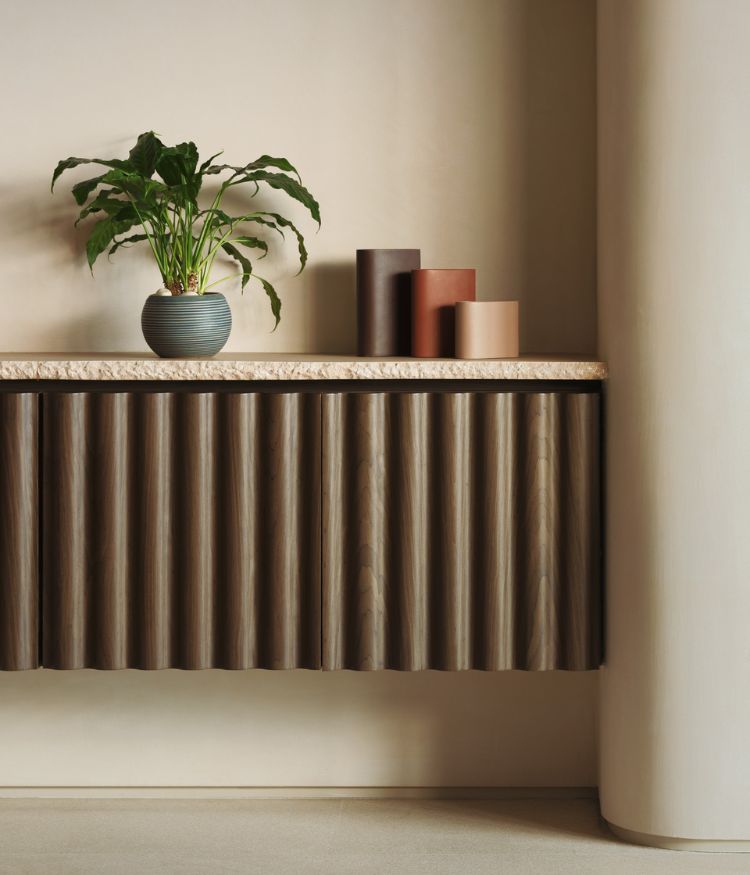
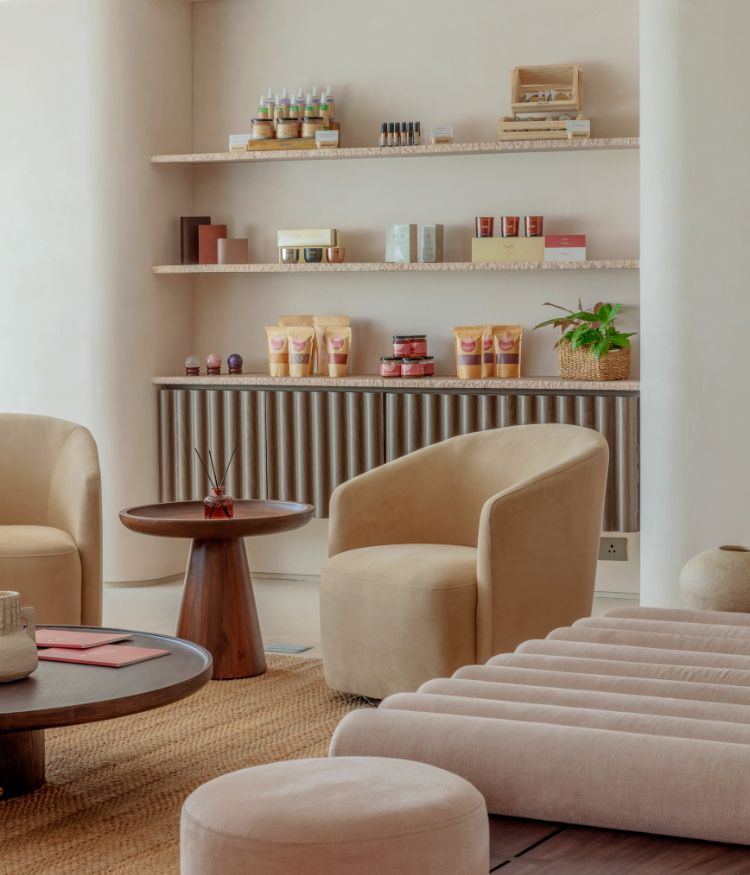
The muted blush tones of the vaulted ceiling in the yoga and meditation hall evolve with the changing daylight. Even in smaller rooms, the palette remains consistent with stone floors, pale walls and crafted wooden elements. Among these, the reception area was one of the teams’ favourite spaces to design. “ It allowed us to focus on a series of carefully considered details, from the custom reception desk and rough stone shelving to the suspended light feature and articulated vaults,” says Shefali. Each element contributed to the overall character of the space.
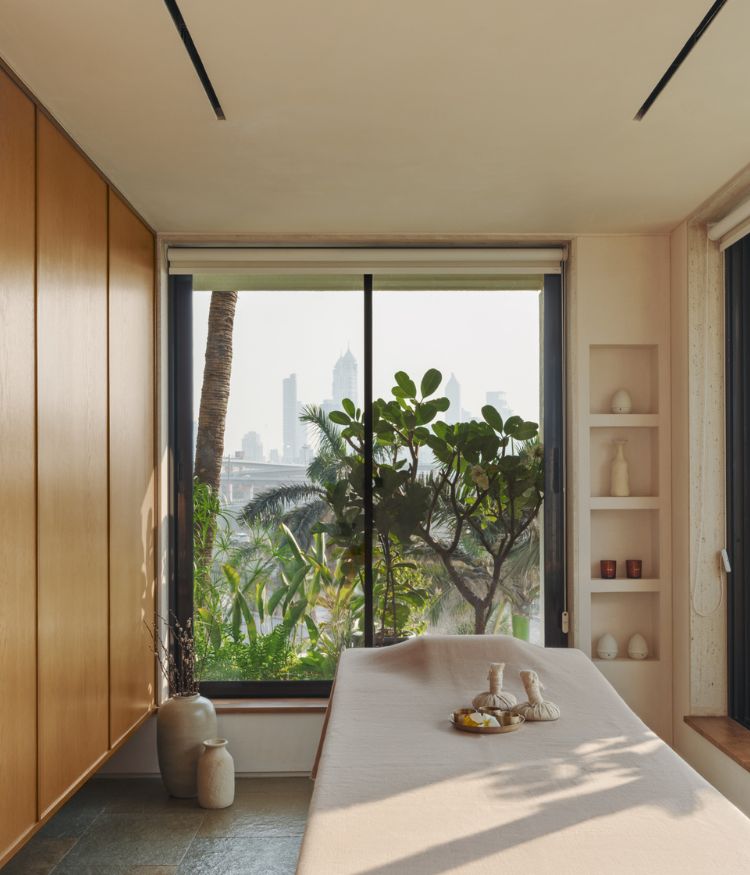
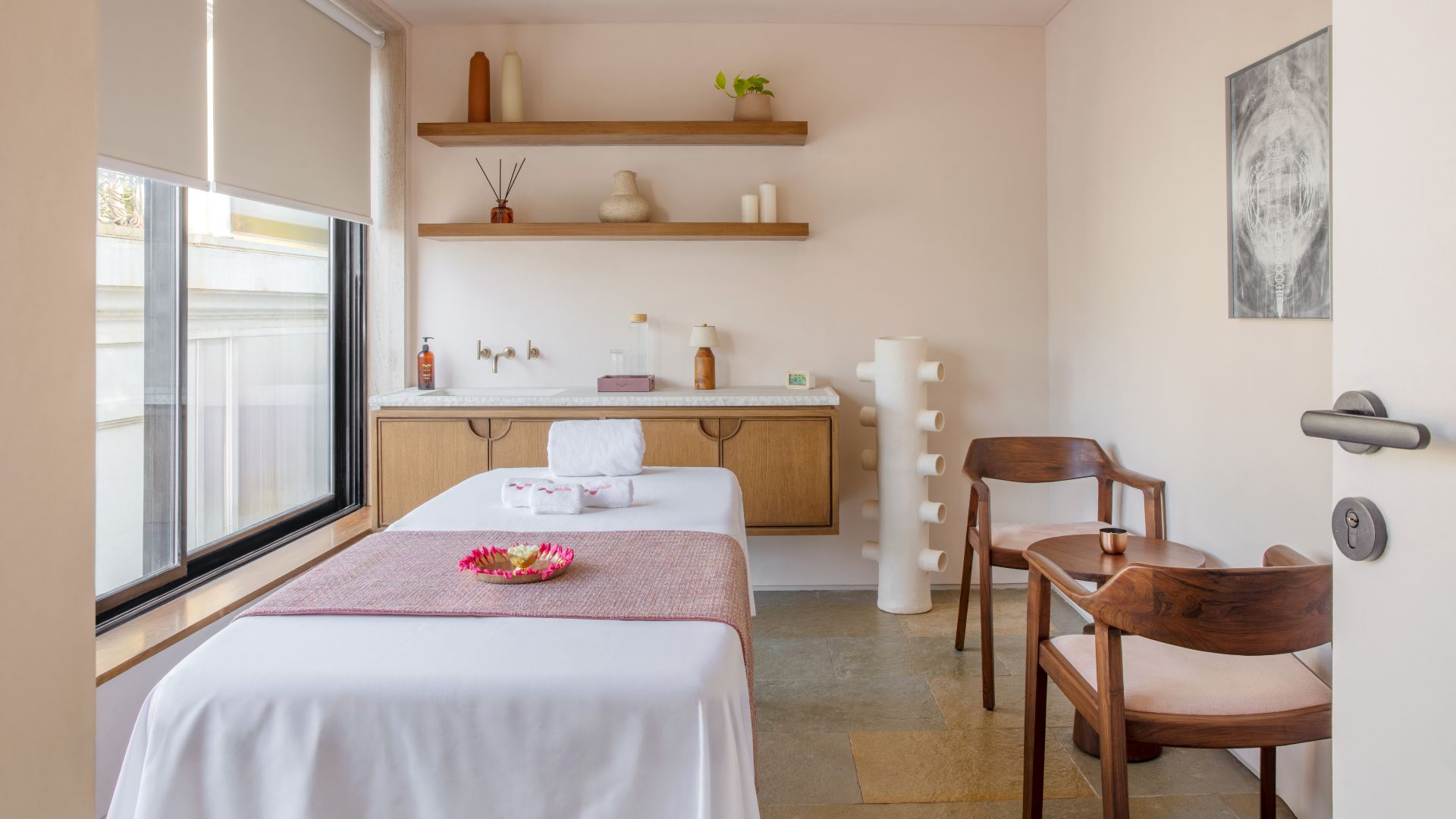
The project feels most resolved in the way it shapes the atmosphere which is not about imposing calm but more about creating the conditions for it to unfold naturally. This becomes especially significant given the constraint of low ceiling heights where services, storage and display had to be carefully integrated without disrupting the overall design intent.
As Shefali notes, navigating these limitations became central to the process, ultimately leading to a design that finds its strength in subtlety. Sometimes a moment to yourself feels like a luxury—especially in a city where you’re constantly surrounded by people, movement and noise. The mind is rarely still, always occupied with what’s next. In that sense, spaces like these create a rare opportunity for pause and reflection.
Read more: Print exclusive: Two’s a vibe in Hyderabad

No results found.