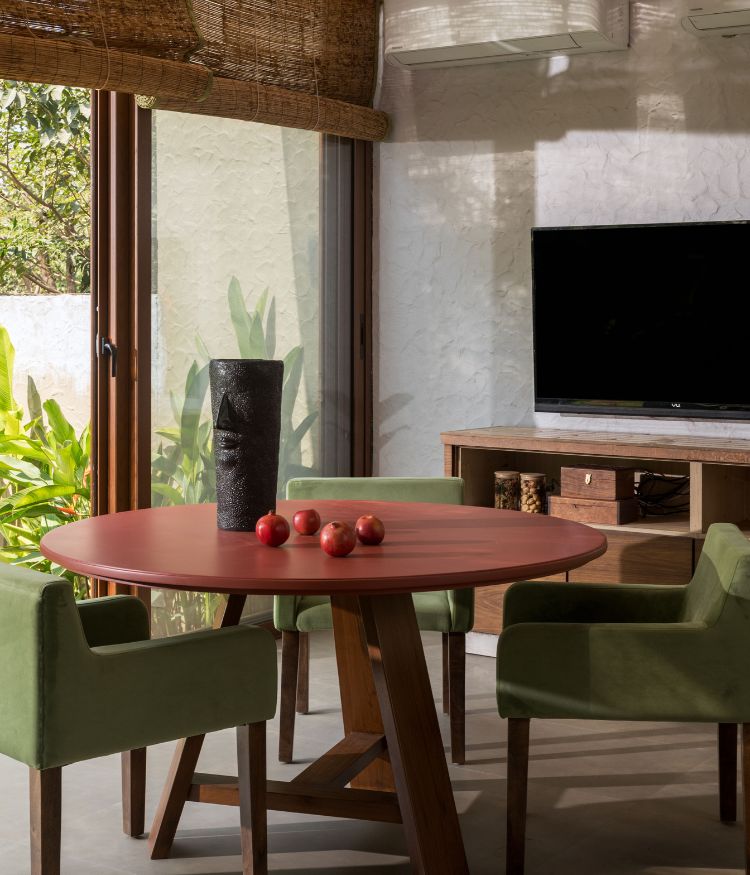

In Lonavala, where hills, humidity and scenic downpour shape everyday life for most part of the year, architecture begins with a practical question: how should a house coexist with the terrain’s climate? Titled Meghavan, a twin-villa weekend retreat designed by Sheffalie Jhaveri, Principal Designer of Rutam Intarch, answers this dilemma through design that is closely attuned to its weather and surrounding. Throughout the project, the strategy remains consistent: climate responsiveness, spatial openness and restrained interiors.
“The design intent was clear from the outset: to create a home that could host lively parties yet remain pristine, functional, and free from the challenges of the region’s heavy monsoons.”
Sheffalie Jhaveri
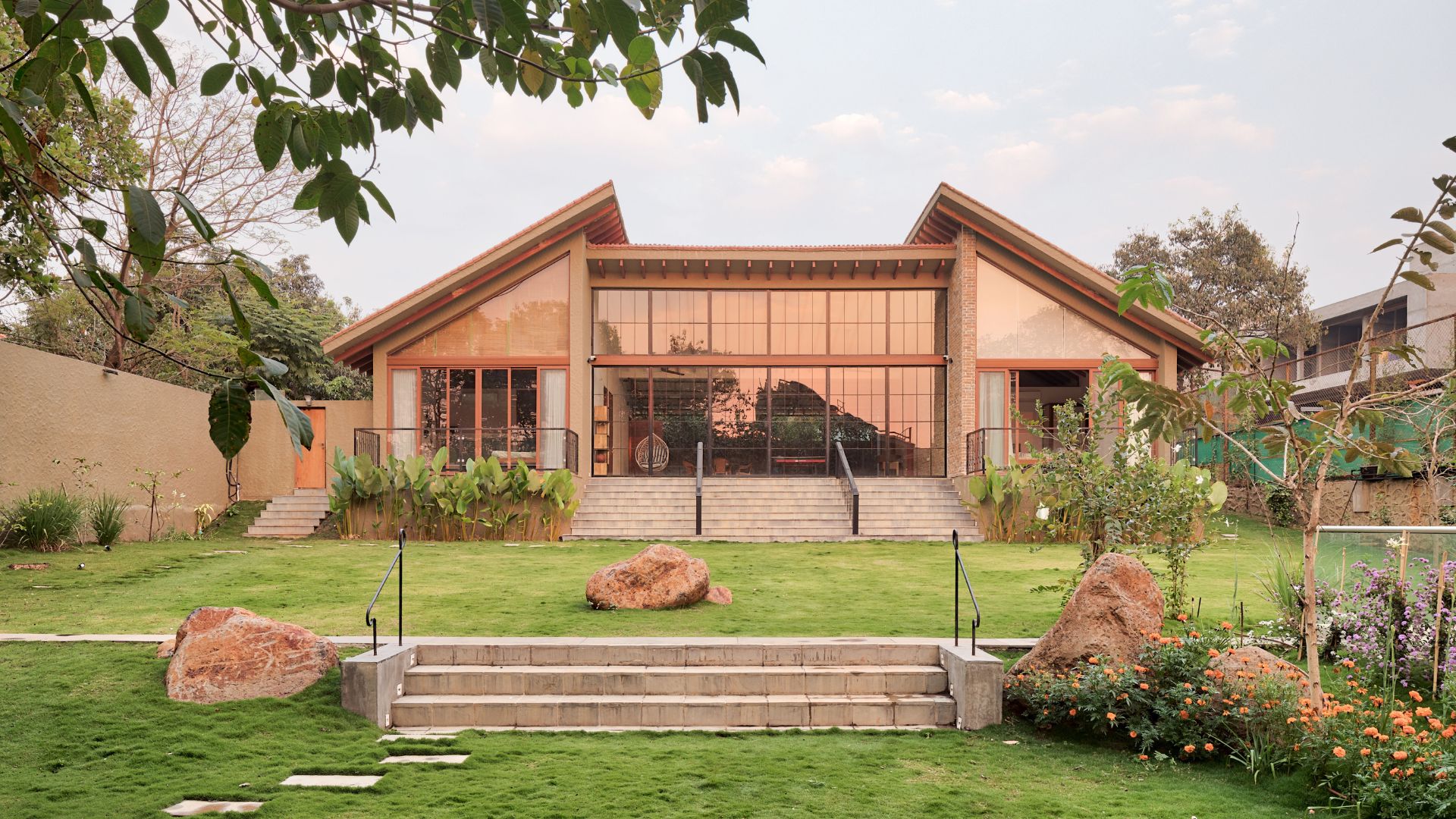
Instead of a singular residence contouring the plot, the designer chose to divide the layout into two structures. This elevates the living experience here. One building functions as the primary residence, housing the main living spaces and bedrooms, while the other acts as a more informal counterpart designed around leisure and recreation. The separation allows groups to occupy the property in different ways. In this way, the architecture anticipates the movement of people rather than controlling it. “The design intent was clear from the outset: to create a home that could host lively parties yet remain pristine, functional, and free from the challenges of the region’s heavy monsoons.” says Sheffalie. At the centre of the composition lies a thoughtfully shaped garden that becomes the social heart of the retreat. Terraced seating carved into the landscape forms an amphitheatre-like setting. The two villas remain visually connected across the corridor, enabling the outdoors to act not as a dividing line but as the home’s most active living space.


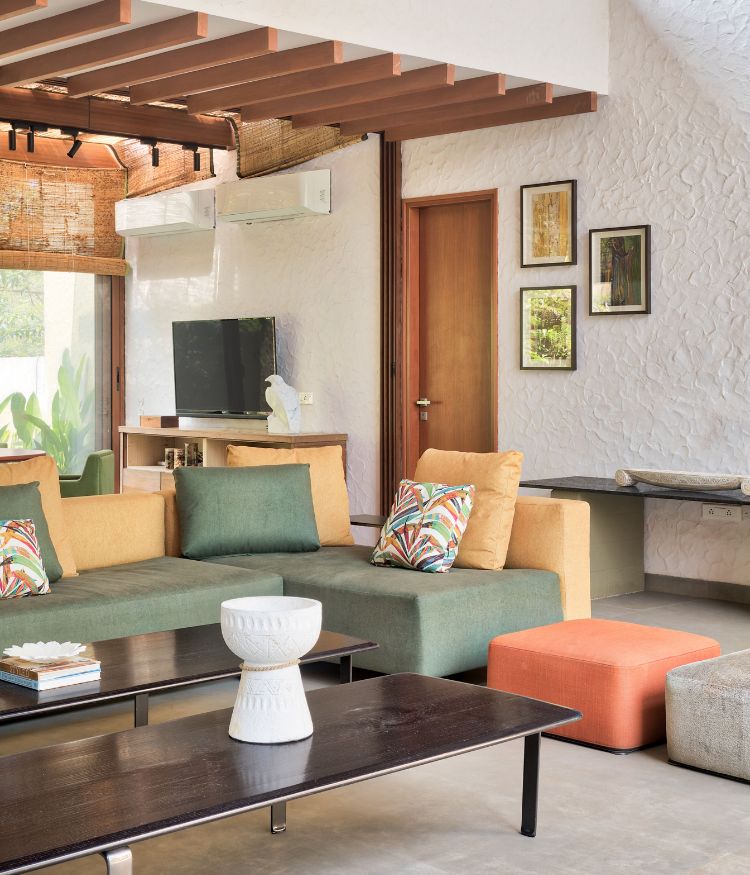
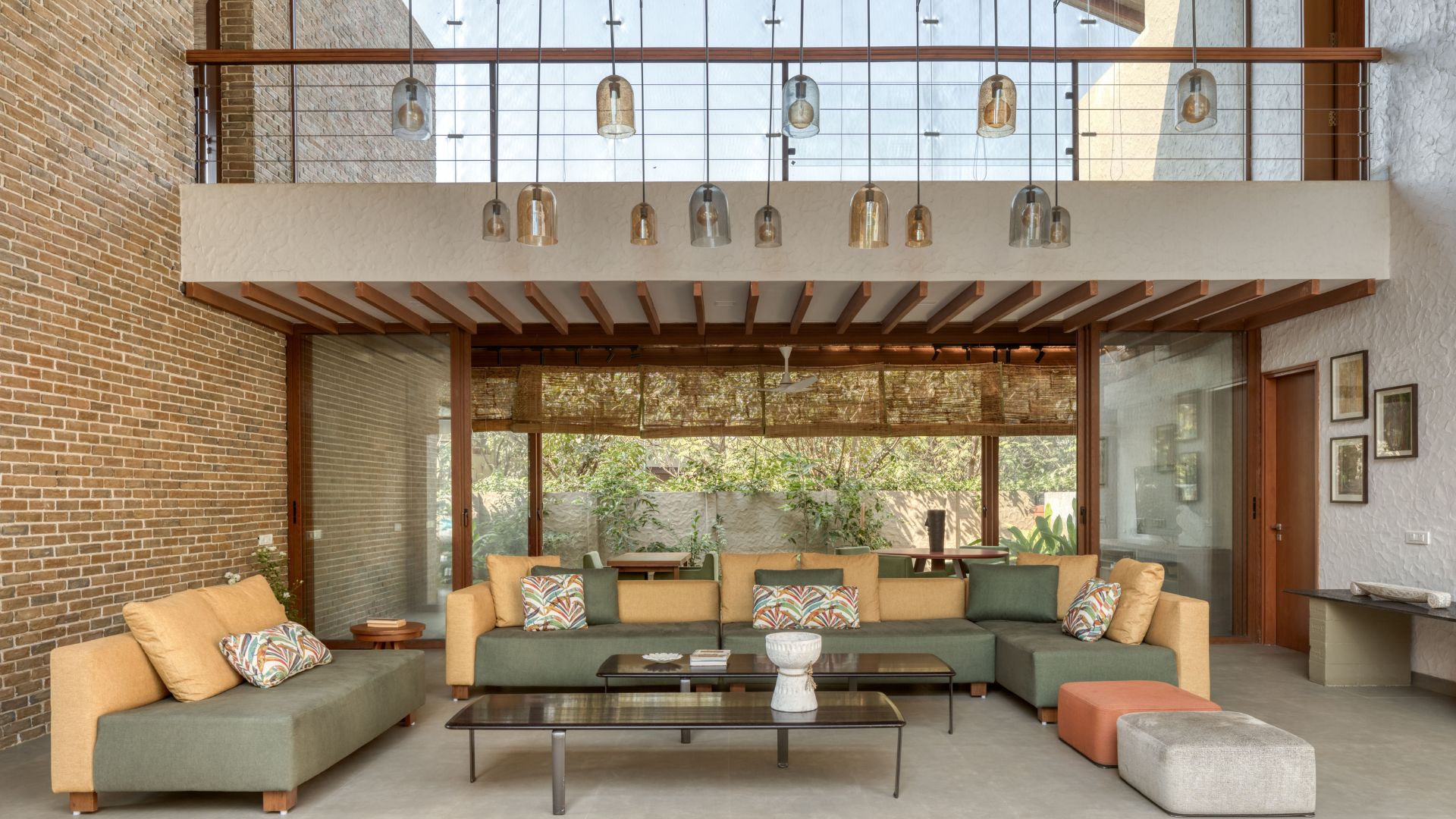
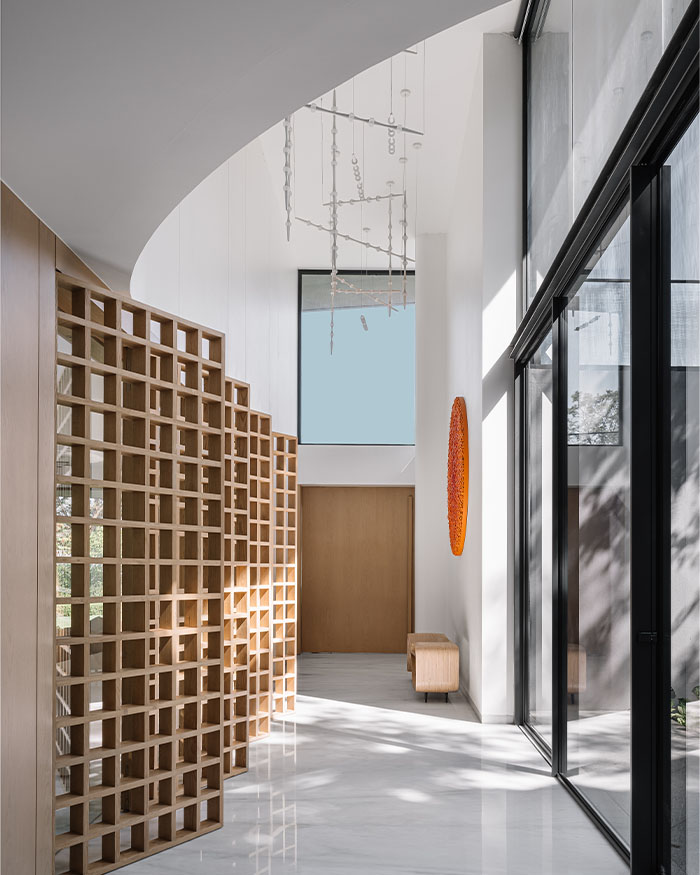
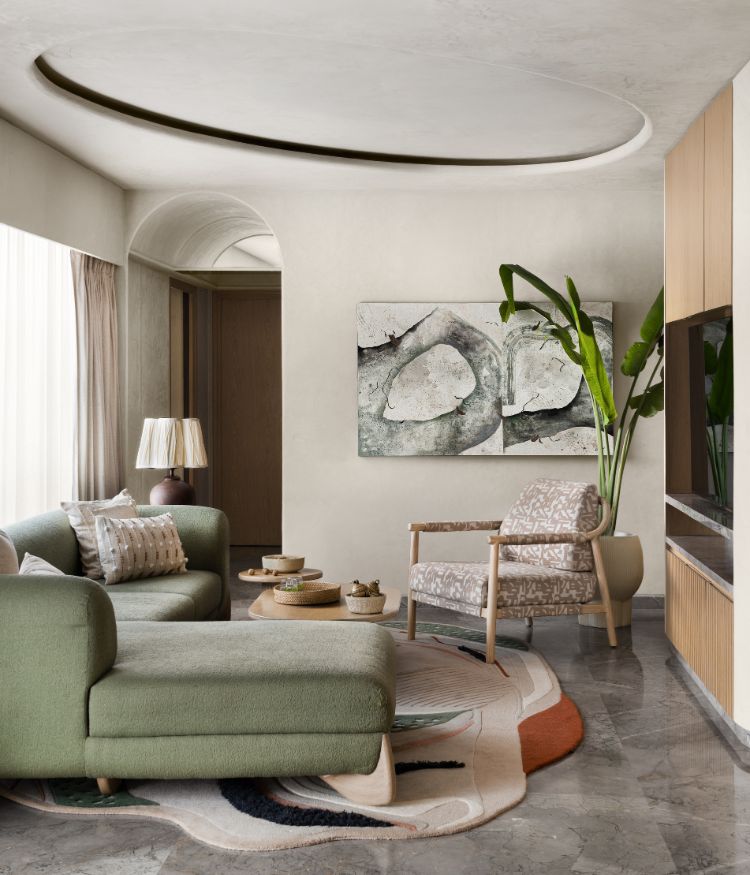
The architecture itself relies on restraint rather than spectacle. In the main living room, a 24 ft. high ceiling draws the eye upward, where a large handcrafted light installation acts like a suspended sculpture. Instead of crowding the room with decorative elements, the designer allows this single detail to hold the space emphasising the height of the room. In the den, a U-shaped sofa transforms into sleeping space for children during overnight stays, while the main living area comprising a modular seating system easily reconfigures to accommodate guests. The approach avoids rigid layouts, favouring furniture that evolves with its occupants. Seating elements can shift and adapt depending on how the house is being used, an arrangement suitable for the unpredictability of large gatherings.
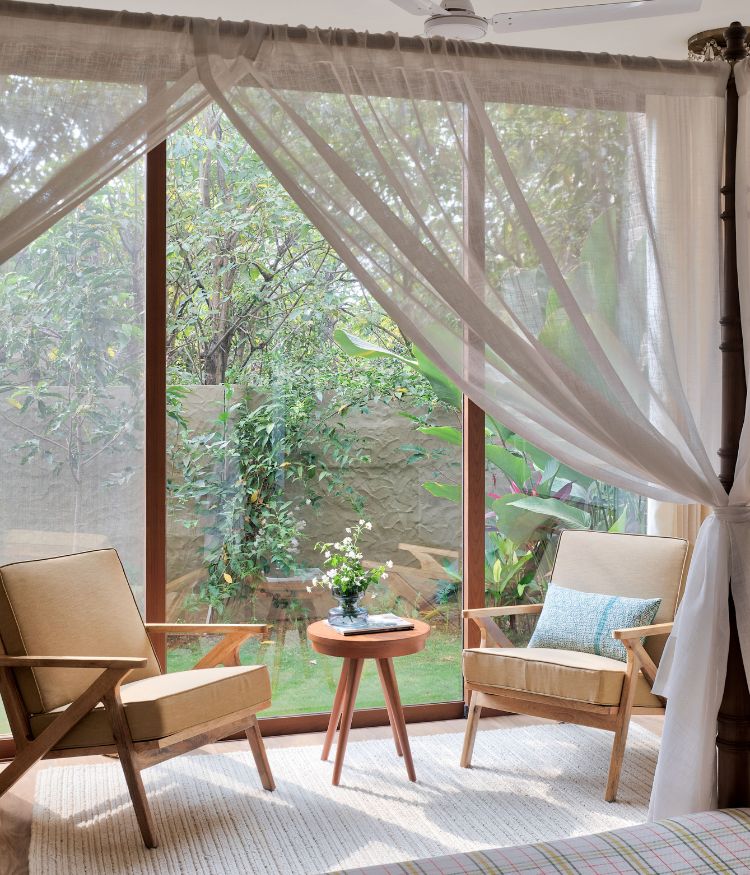
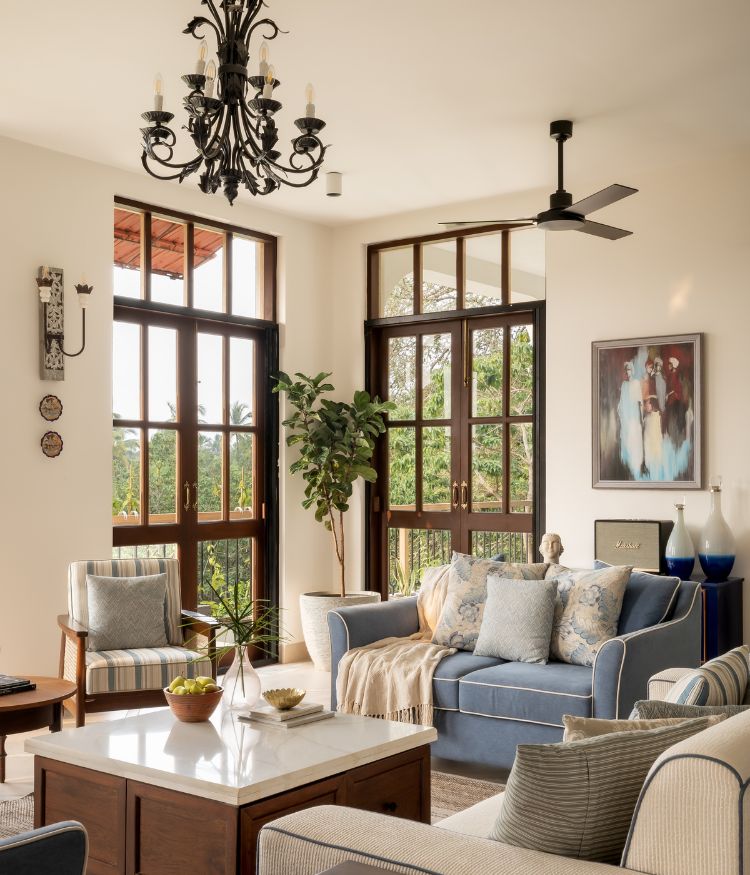
Bedrooms are characterised by timber and twin Burma teak beds, handloom fabrics and teak headboards, designed for Lonavala’s moisture-heavy climate. Some rooms open directly to garden views, allowing the changing daylight and greenery to become part of the everyday experience, while others introduce personality through botanical wallpapers, patterned panels or study corners tucked beside the bed.

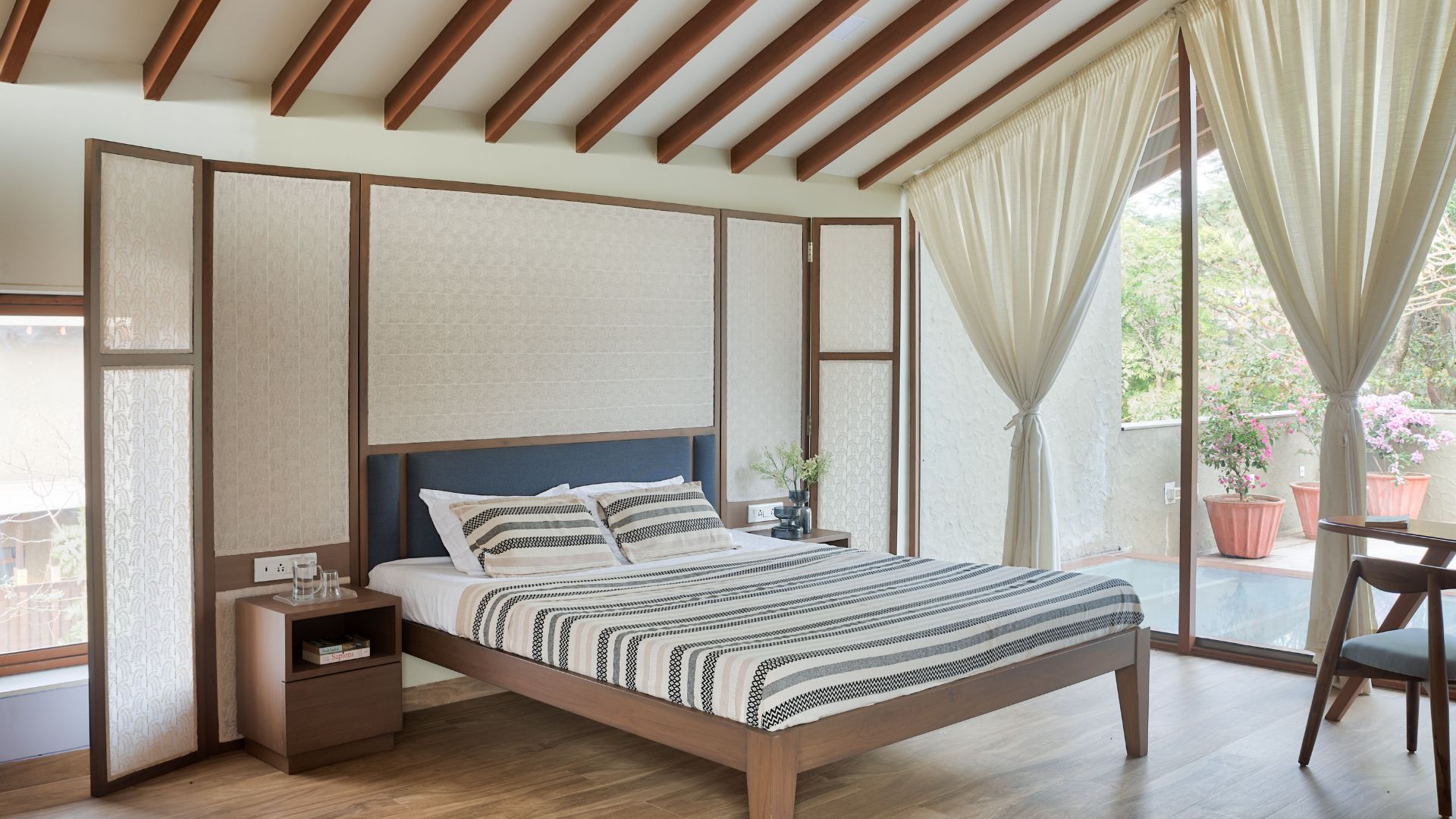
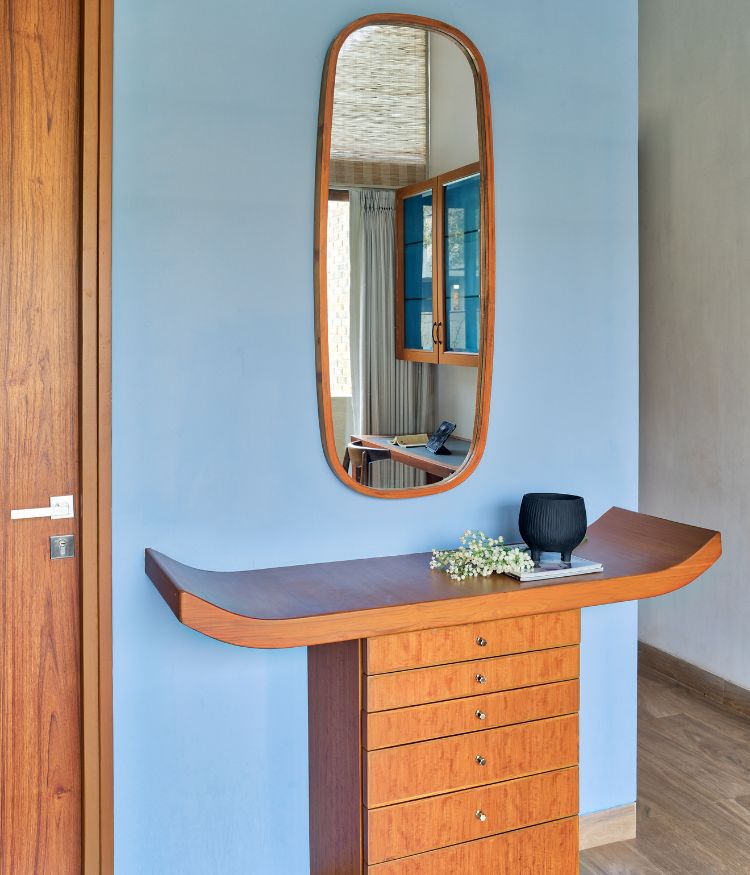
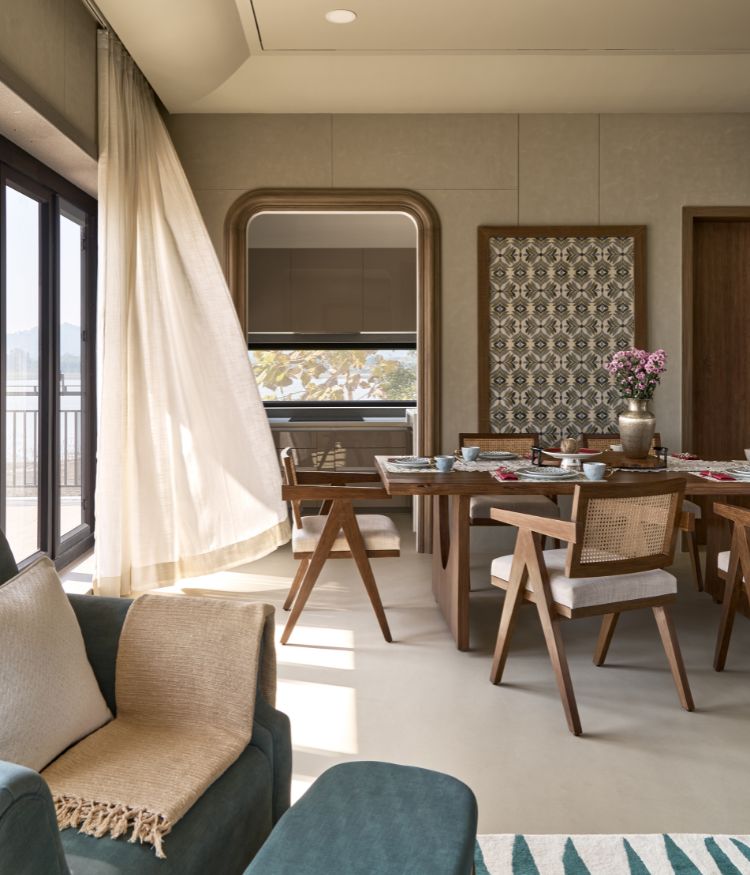
Timber and Burma teak alongside natural limestone with all custom-made furniture form a palette that feels grounded and tactile. Rather than chasing trends, the designers focused on materials that improve with age and require minimal intervention over time. Even the landscape follows this logic: trees over delicate flowering plants allow the garden to remain robust through Lonavala’s intense seasonal rains.
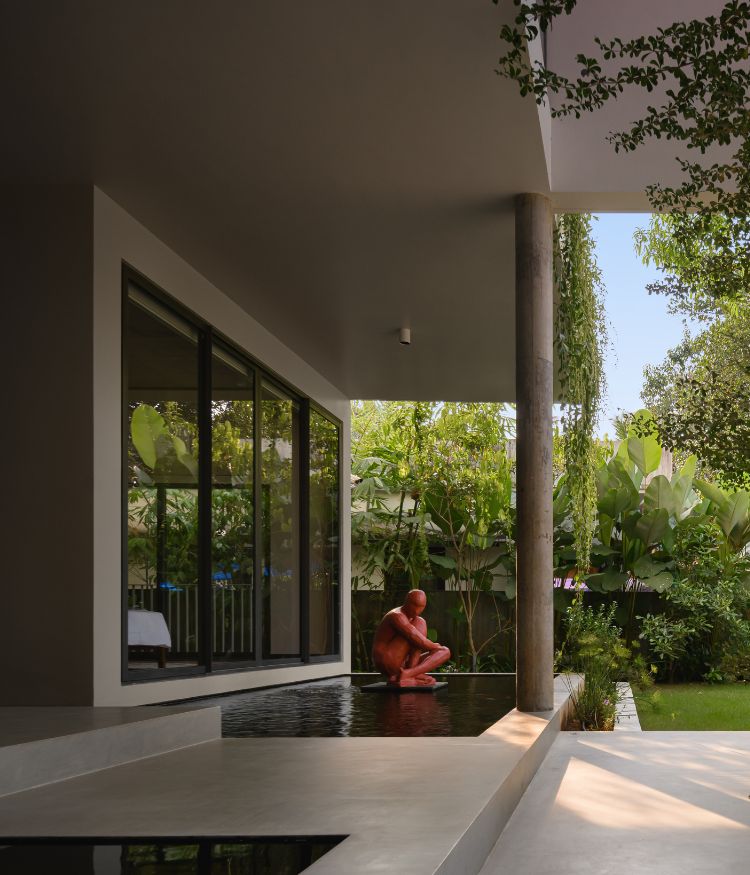
Large stones uncovered during excavation were not discarded but reincorporated into the outdoor areas as sculptural tables and landscape elements. The decision preserves a fragment of the terrain’s original character lending the garden a raw, grounded texture. Nearby, water becomes another defining presence. A lap pool sits beside a smaller jacuzzi pool edged by a cascading sheet of water. Against the backdrop of the valley, the setting shifts dramatically through the seasons.
Being in nature in today’s world is a privilege. Meghavan is a reminder that good design begins with respecting nature and is shaped as much by people as by the place.
Read more: Crafted from earth in Pune

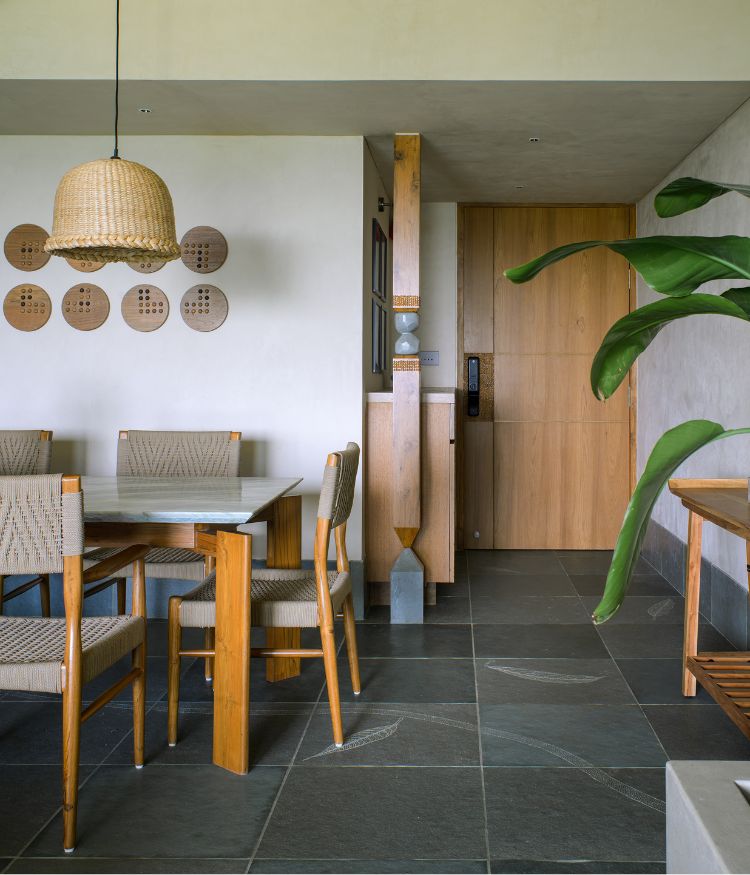
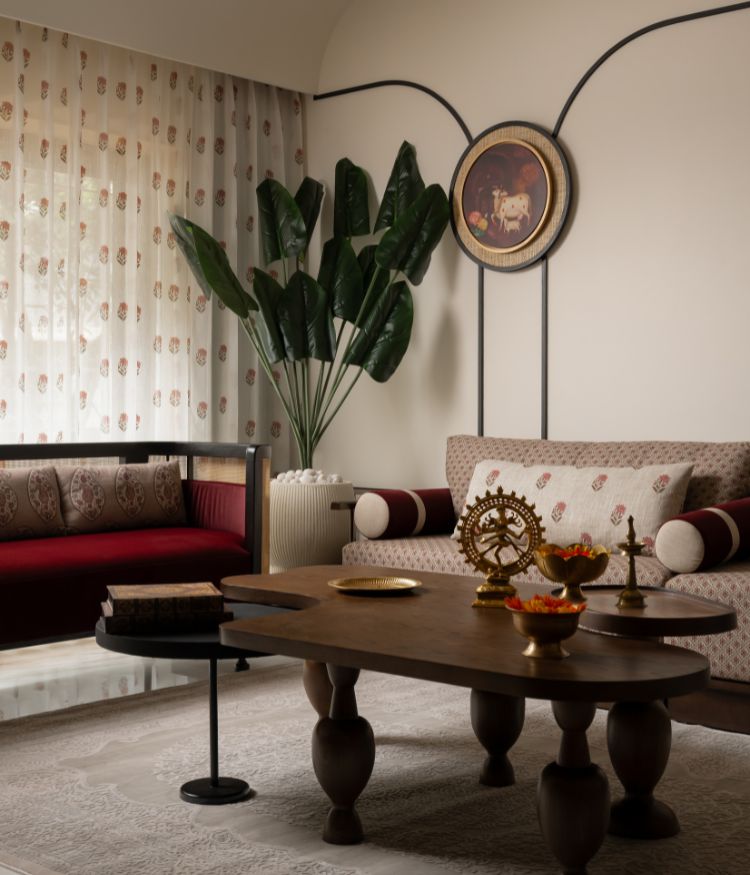
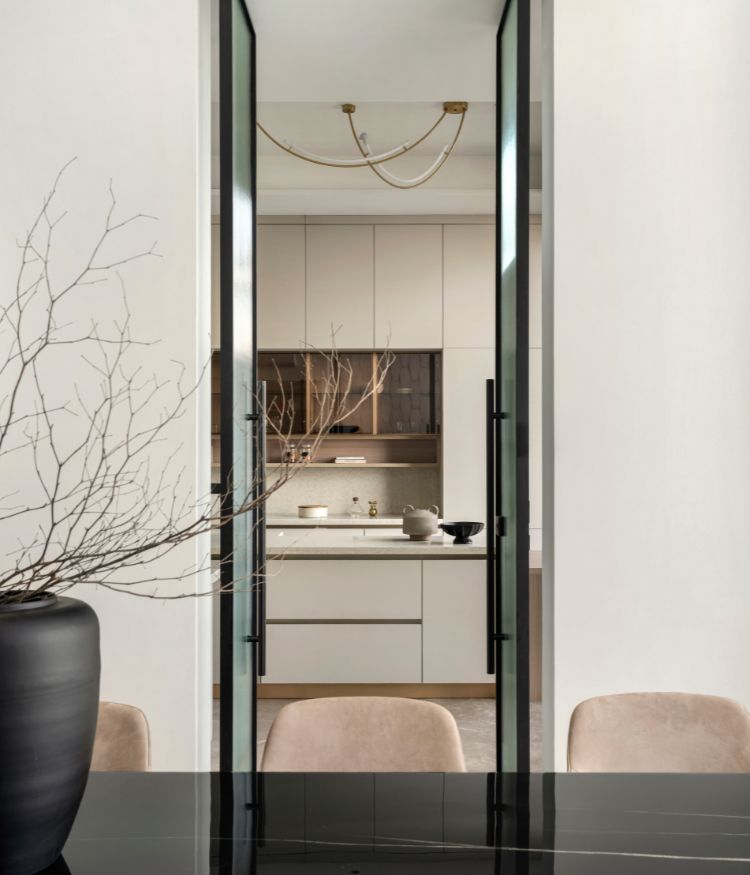
A clean, modernist fusion with a sprinkle of “I desire to escape the city life and immerse in nature.” This wish was fulfilled by two design wizards, Shiv Dada and Mohit Chawla of 23DC Architects for a homeowner in Amritsar who envisioned a home that whispers tranquillity with a minimal touch of Indian heritage. The […]
No results found.