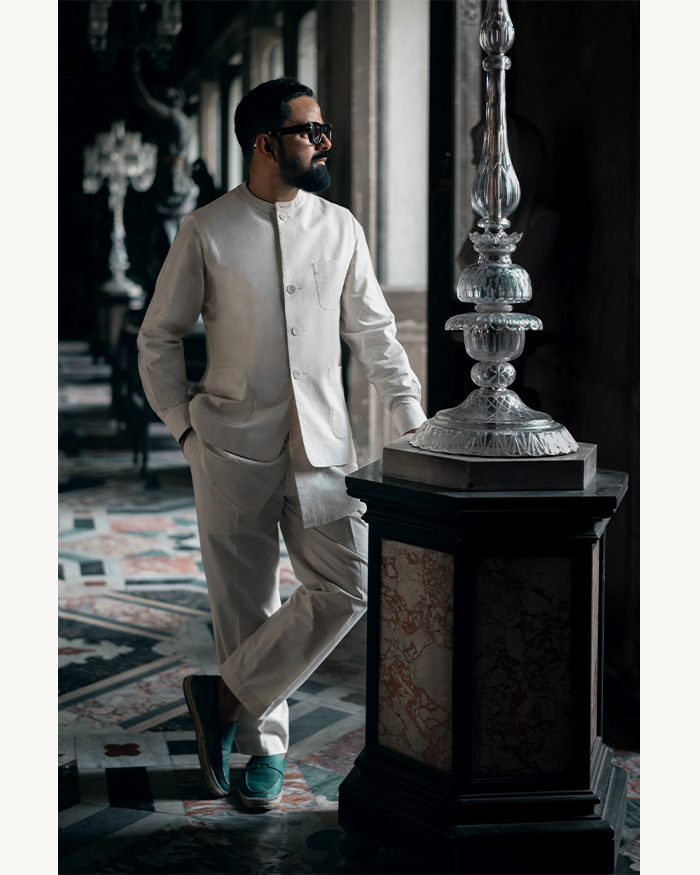
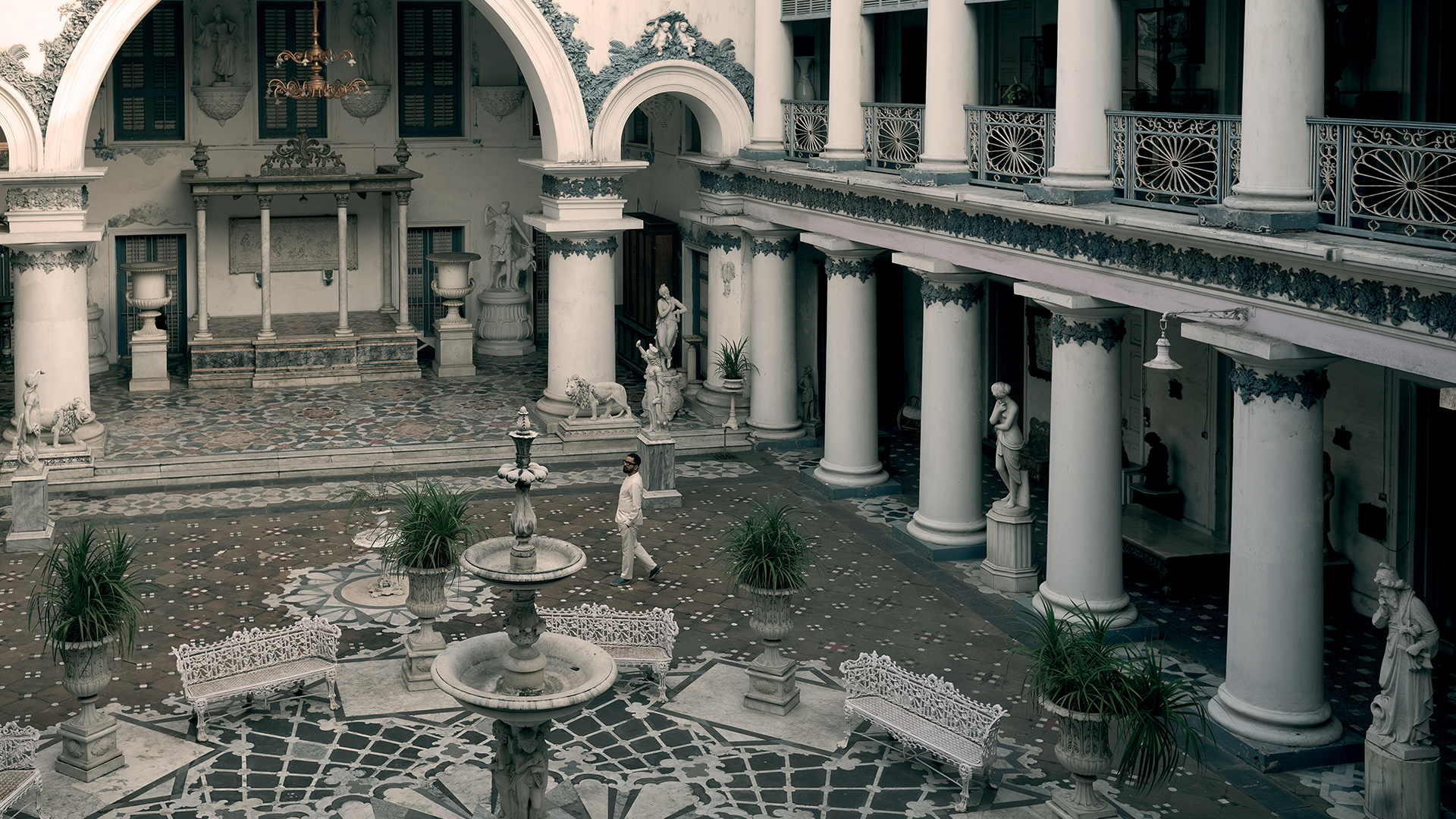
The grand central courtyard with a marble fountain surrounded by wrought iron benches; Photograph by Sunhil Sippy

Anniversary issue: The immortal palace

The elusive Marble Palace in Kolkata opens its doors to be documented for first time

BY

El Dorado. These are Mrinal Sen’s words, not mine. But in describing this city we have shared across different planes of time, his moniker could not be more accurate. A city to love and loathe, a constant conundrum, a construction of contradictions, appearing stagnant yet bursting at the seams. Even for those of us who call it home, Kolkata remains ever elusive. Just when you think you have understood it, the city places you at a glaring polyfocal crossroad. No logic or rationale can muscle you out of it. The only road left is one of surrendering to its bewildering, uncanny beauty. But what is the genesis of it all? For some, it is an eye for art, and for others, it is the drive of commerce. In this push and pull, the juggling act produces the most spectacular incidental results. Yet there is an underlying element that you can’t quite place, attributing this strange beauty squarely in the service of a divine power.

On one September evening, as the last of the summer light clung on, I found myself at one such crossroad. Hand-pulled rickshaws lined the street. A tangled web of electricity lines hovered above. A slew of people, cars honking. The same incorrigible disorder that once drove Rudyard Kipling to the hills of Shimla. You either resonate with Kolkata or you don’t. A group of college students broke my stupor. “Kar bari eta?” (Whose house is this?) Decked in marble and guarded by formidable white lions frozen in time, some asleep and some standing guard, a palatial residence materialised out of thin air, seemingly forgotten. Marble Palace and Zoo, it read. Its expanse leaves you at a loss for words. Its scale is of such grand proportions that it can only be perceived in parts. It’s maddeningly exquisite. I reached for my phone, then noticed the sign: No photography allowed. Surely the rules did not apply to me. If I just explained, they would let me take a photograph or two. The guards did not look up.

Dada, I have come from a magazine,” I tried my luck in Bengali.
Naam ta lekhun visitor book e.” (Write your name in the visitor book.)
“I have come all the way from Mumbai just to see the Marble Palace.”
Phone number ta likhun. Ekhane address.
I complied with my number and address.
“I just want one photo.”
“Not allowed,” came the firm reply, “Caretaker inside. No entry fees.”
Feeling dismissed yet resolute, in what I admit was misplaced entitlement, I walked ahead.
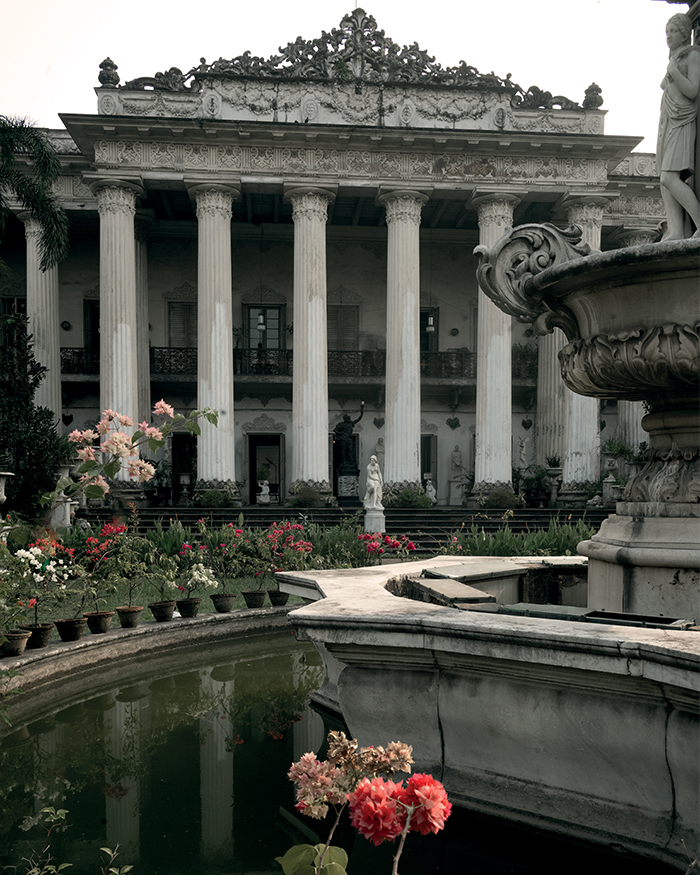
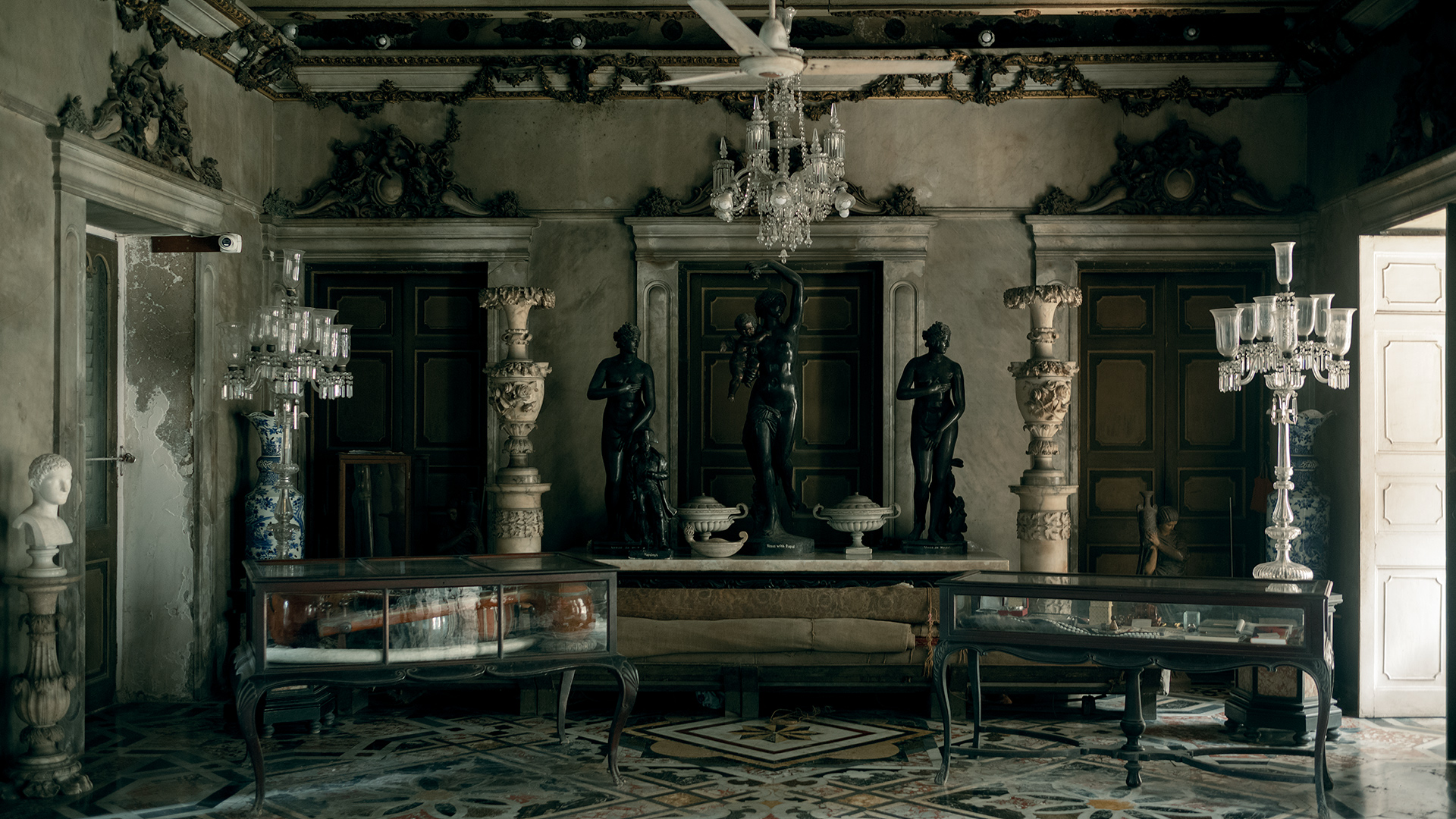
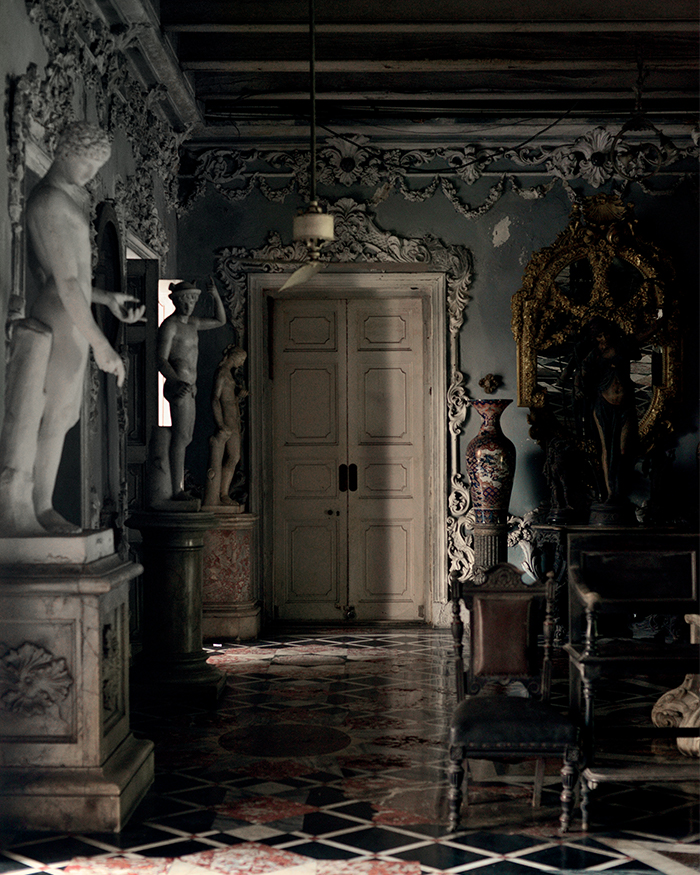
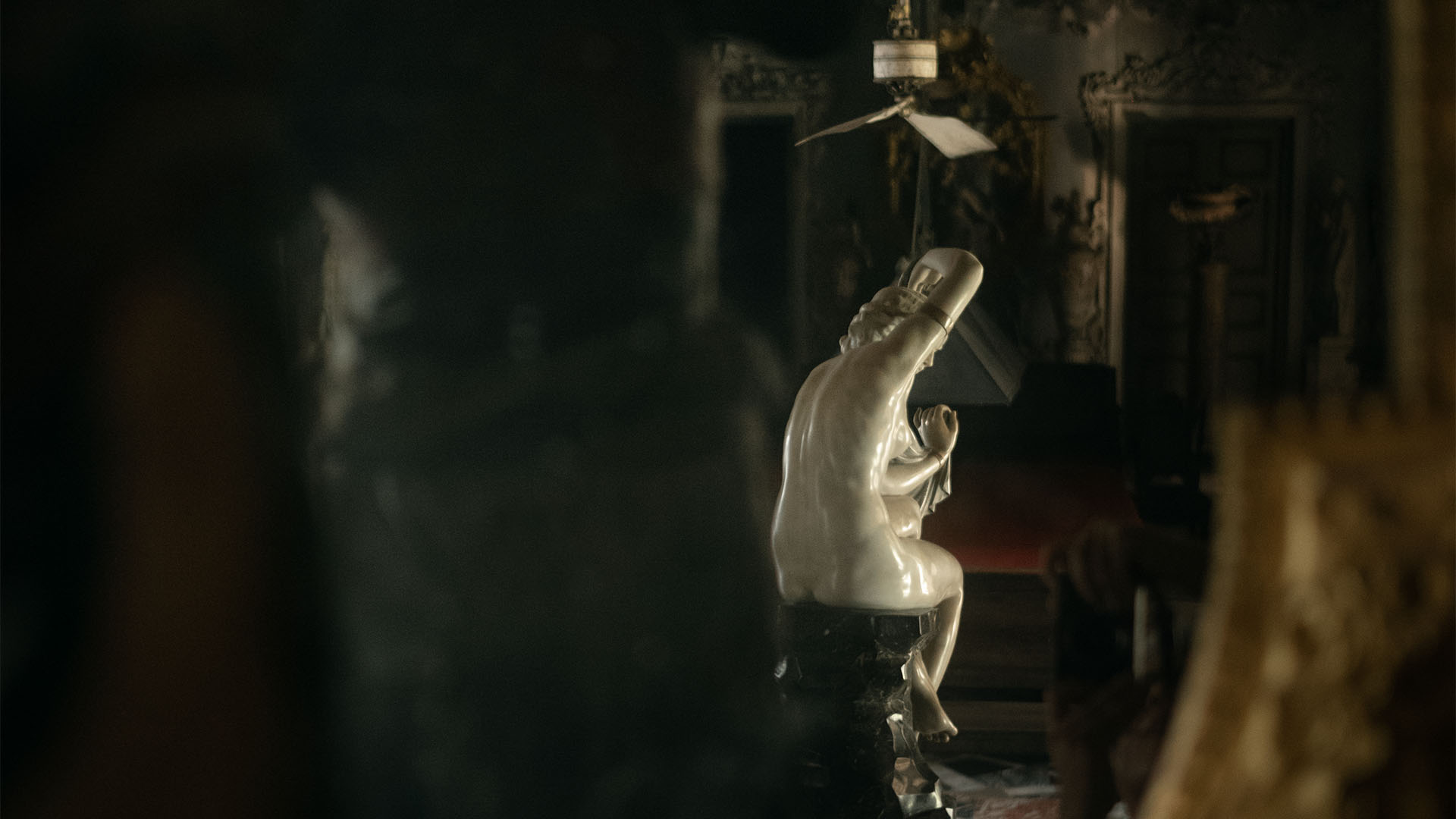
Gifts from notable vistors are displayed in the Jalsa Ghar, including a sitar from Pandit Ravi Shankar. A carpet with the exact floor pattern is spread in winters, and now can be seen rolled in the backdrop under the statue of Venus and Cupid; Photography by Sunhil Sippy

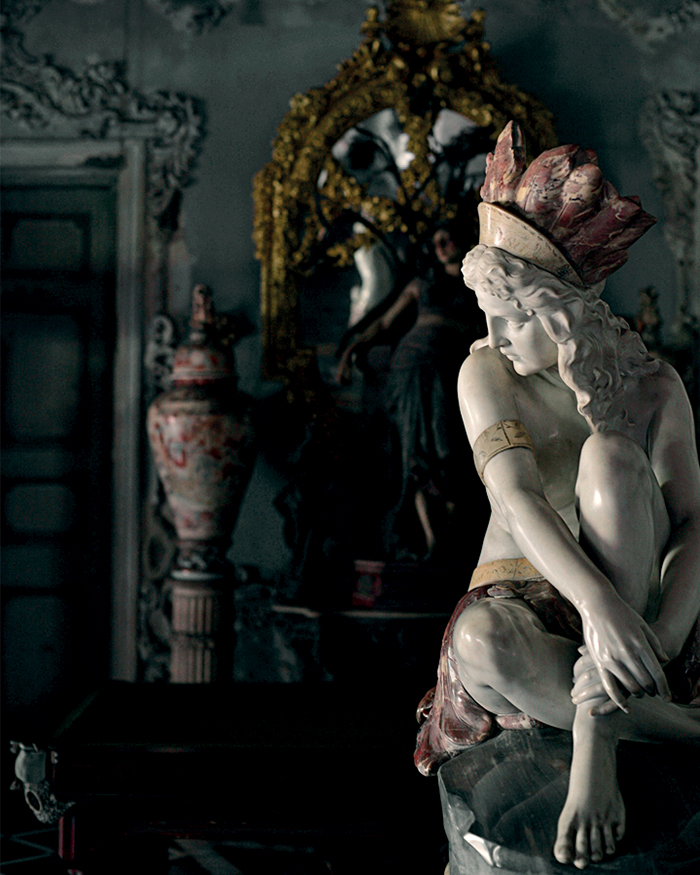
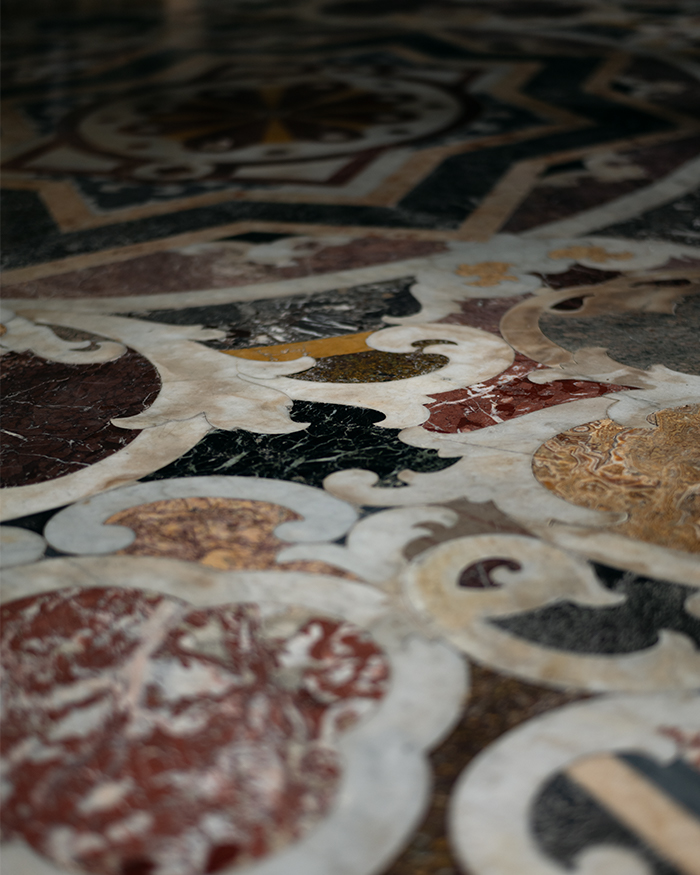
In the first conversation my editors had with Sabyasachi Mukherjee, he inextricably linked the Marble Palace to the idea of maximalism. That was partly what led me here. Yet, as I stood under the acanthus-topped fluted columns, the callously rusting wrought iron and the wild untamed greens, I realised I had not accounted for the languish that flooded the air. Where had I entered? What was this otherworldly beauty? “Juto ta khulun (Take off your shoes),” says the caretaker, beginning a well-rehearsed script: the marble statues are from Italy, the mirror and window glass from Belgium, the vases from Japan. Three hundred lights. A hundred and twenty-six varieties of marble. In the Billiard Room, was a statue of a girl created out of four different veins and shades of the material.

Nearby stood a marble Medusa, her hair a nest of serpents, as if turned into stone by her own gaze. From Venice to China, the world was folded into the resplendence of this palace. Golden light filtered onto the peeling plaster and the scattering of moss outside. A towering sculpture of Victoria carved from a single trunk of rosewood held command just outside the Jalsa Ghar. Grand pianos. Venus and Apollo. Night and Day. The four seasons. A sitar gifted by Pandit Ravi Shankar. Original Rubens and Renoir. Raja Ravi Varma and Giovanni Battista. A congregation of masters contained in ravishing, improbable disarray, far from the cold draft of a white-walled museum. A melancholic undercurrent paints the residence. The neighbourhood only half-remembers its former glory. Beauty on the verge of becoming a myth.

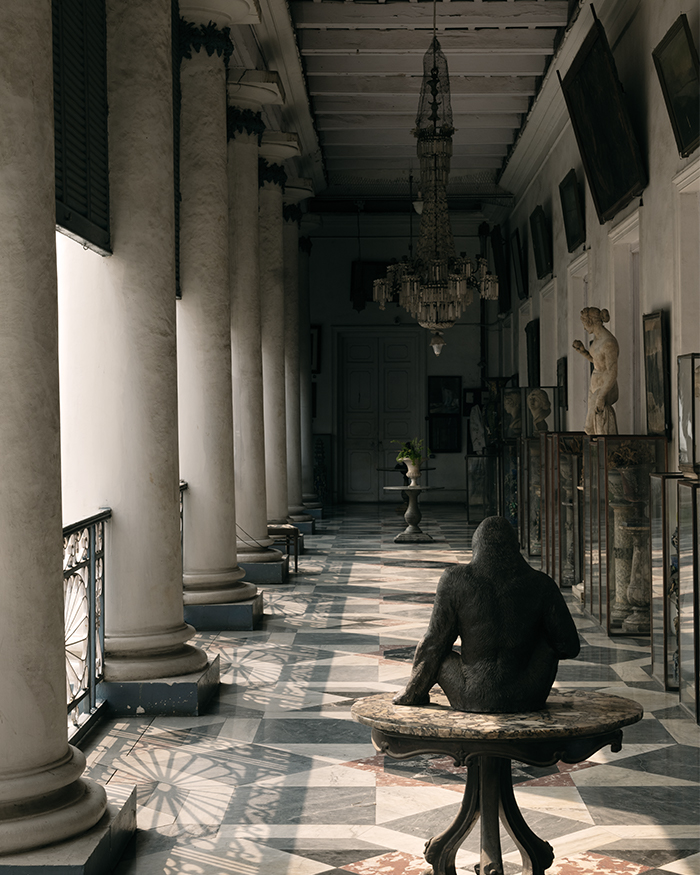
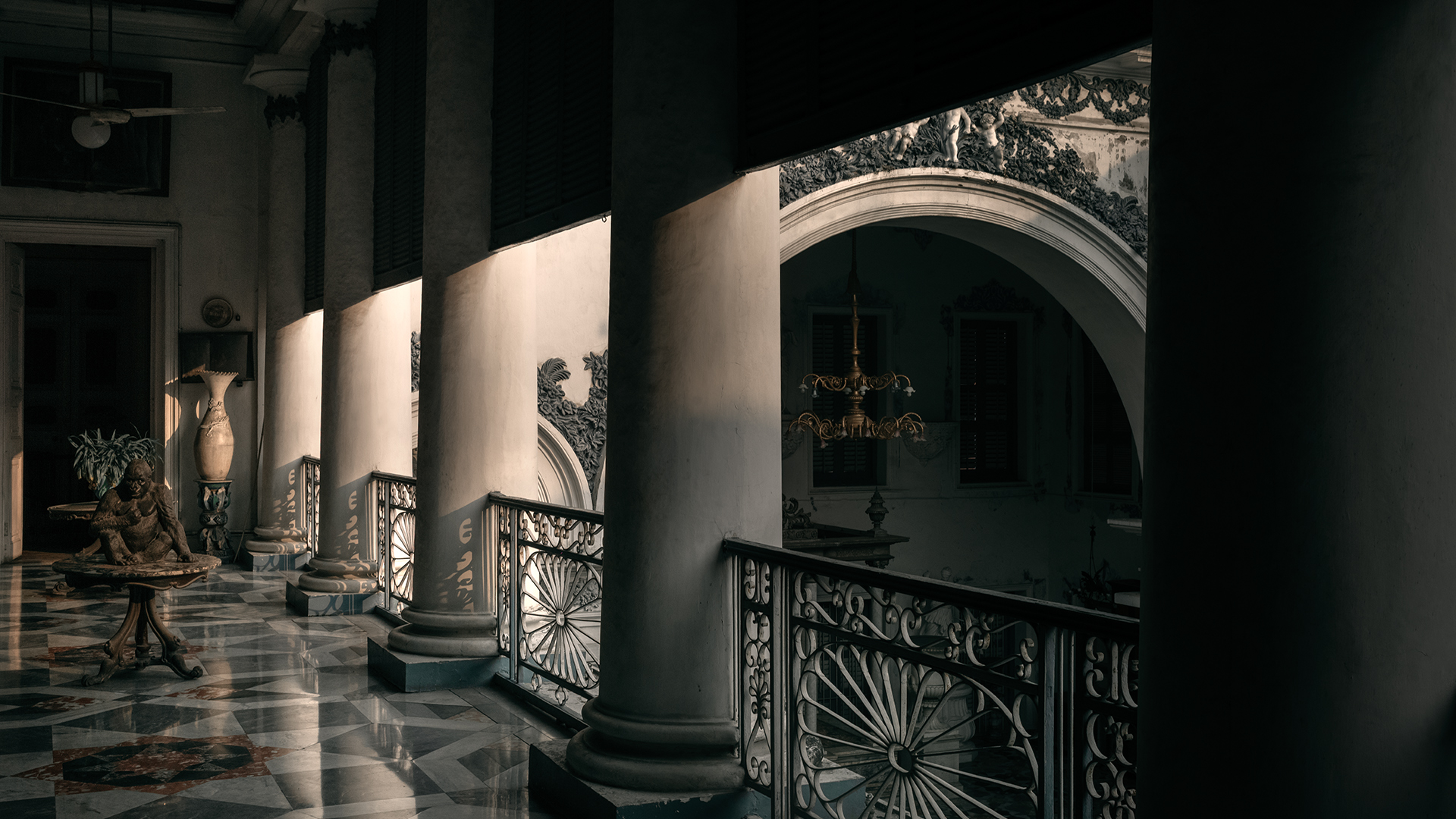
The upper floor of the across the Mullick’s Neo-Classical residence in Kolkata; Photography by Sunhil Sippy
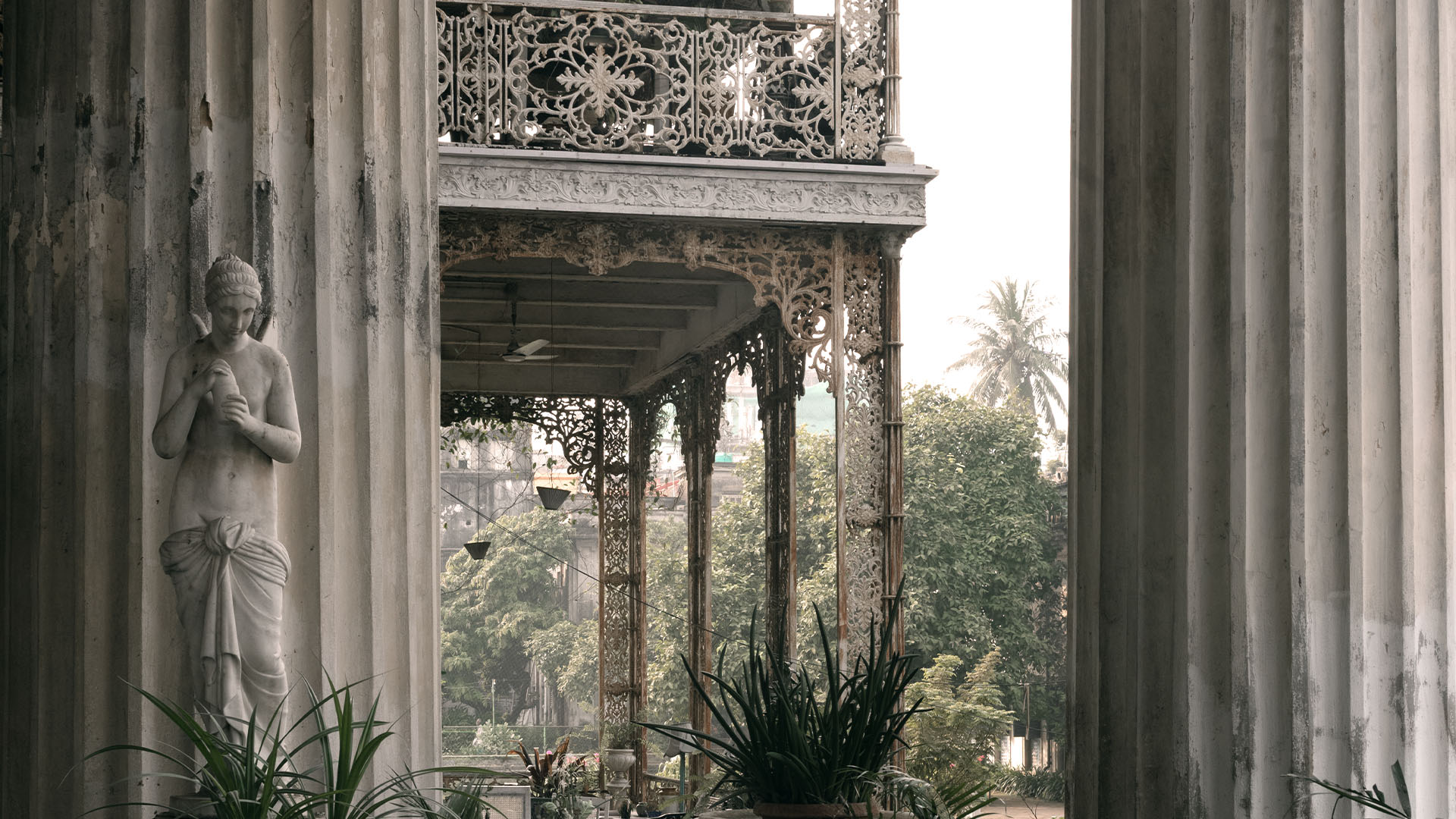
Upstairs, the corridor overlooks the thakur dalan where elaborate puja and performances are held; Photography by Sunhil Sippy

Shrill cackles drifted through the air. “Scarlet macaws, from Brazil,” the caretaker adds, “This was India’s first zoo.” Like the artefacts, the animals too had worldly trajectories. All of us, by some inscrutable sleight of hand, found ourselves in this monument of transfixing brilliance. On Muktaram Babu Street, in what more seasoned city-dwellers call central Calcutta, the residence stands a short distance from numerous illustrious contemporaries. The Tagores, for instance, are just around the corner. In the early 19th century, the neighbourhood had gained the favour of the elite.

At the edge of Sutanuti, one of the three original villages from which Kolkata emerged, the Marble Palace marked an era of Bengali Renaissance. Over time, the city expanded, roads acquired definition and the sociological fabric shifted. Houses like the Marble Palace, or as it was originally named, Nilmoni Niketan, were at once public and private, accommodating the transition from zamindari patterns of life to an evolving urbanity. You can still find remnants of evidence in its design: a straight access road aligned with the entry steps, a choreography of approach and display.

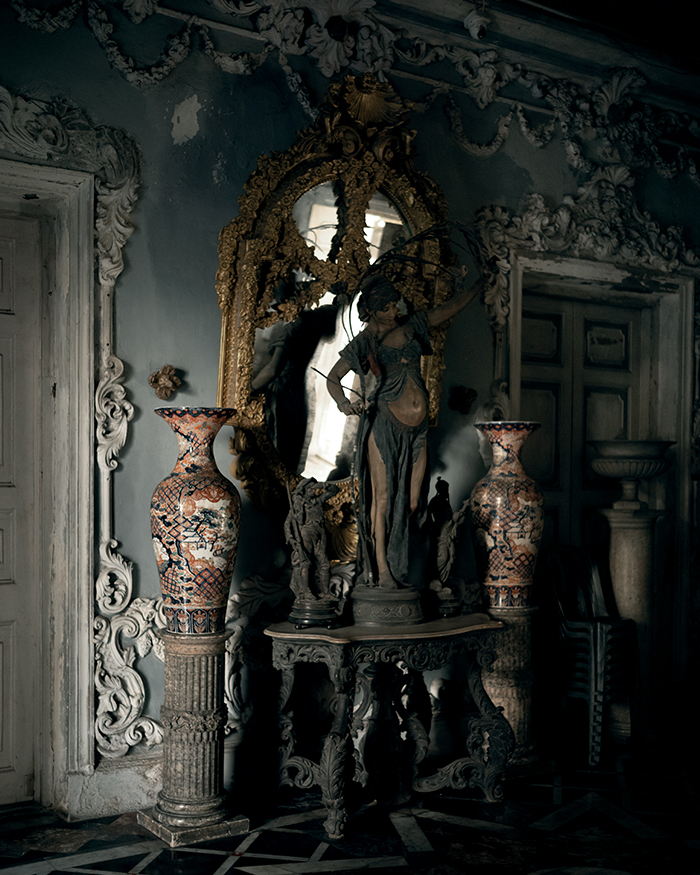
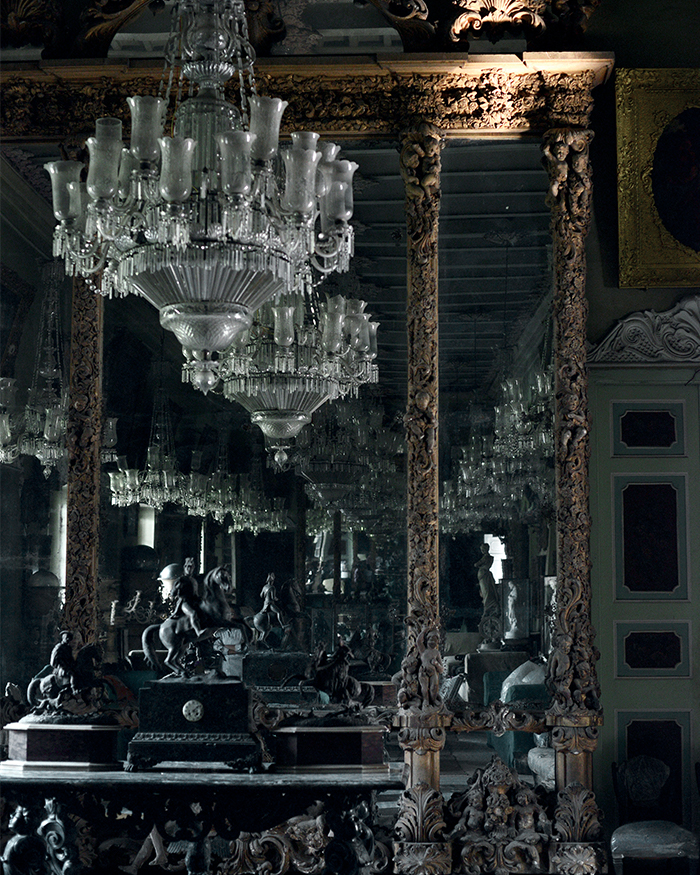
In the Billiard Room are wares from around the world, from Chinese vases to a gilded Belgian mirror; Photography by Sunhil Sippy
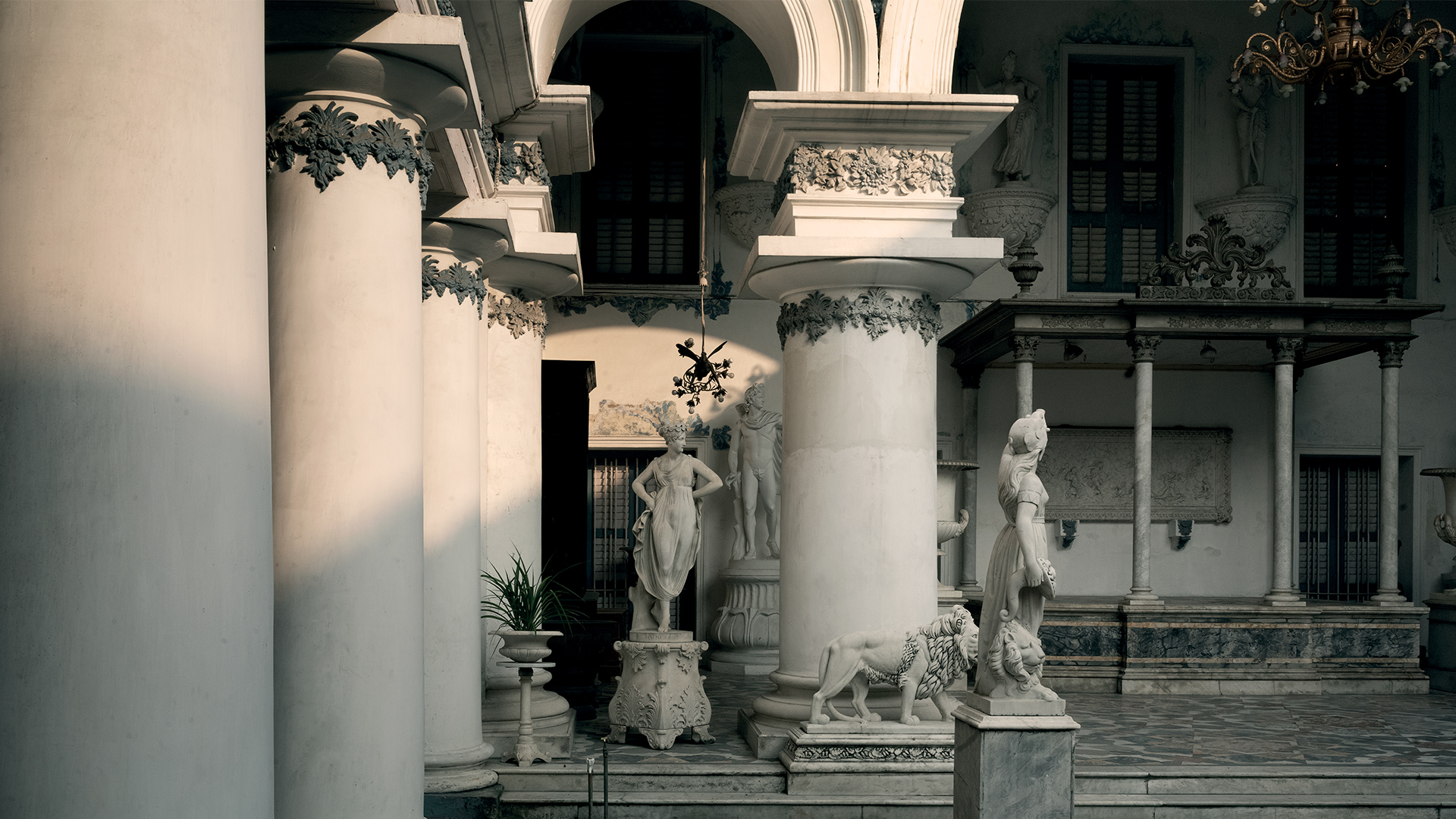
Across the residence and its grounds are marble lions in various poses, symbolic of British influence; Photography by Sunhil Sippy

Nilmoni Niketan played host to many illustrious guests. One of whom was the Viceroy of British India, Lord Minto. Upon seeing the glittering surfaces, it was he who christened it with its current sobriquet, Marble Palace. In an effort to decolonise our past, should we insist on referring to the house as Nilmoni Niketan, alone? Or does such purity obscure the layers that history so patiently deposits? Perhaps, it is both Marble Palace and Nilmoni Niketan, just as the city is both Calcutta and Kolkata, and the structure both native and colonial. If only the pentimento of identity ever gave way to such plain resolve.

The palace’s arcane enigma followed me to Mumbai without a single photograph to prove my presence. Lingering questions kept rearing their head. Why did Sabysachi insist that this house be taken as a paradigm of Indian maximalism? In a civilisation shaped by abundance, trade and ancient aesthetic complexity, why was this residence above it all? Filled with such global treasures, could we ever consider this Neo-Classical residence wholly Indian? And, who in this waning metropolis, had the good fortune of calling this exasperating — no, agonising — revelry their home?Forty-five days later, when I returned, the humid heat had thinned into winter’s faint anticipation. In the interim, my editors and I had sifted through every mention of the palace, frantically flipped through photo books and dialled all the numbers we could locate. Only after that long-winded search, and my Managing Editor Shriti Das flying to Kolkata, did we meet Brotindro Mullick. He is the seventh-generation descendant of Raja Rajendro Mullick, the man behind the Marble Palace. You might imagine an individual surrounded by such grandeur to carry the inevitable stiffness of inherited stature. Yet, Brotindro is disarmingly without pretence. “Growing up, it was quite lonely because there were no other children of my age here,” he recalls, “But I used to play cricket with a few boys from the neighbourhood. Once the ball went flying and shattered a glass window.” He laughs, “Thankfully, it was not a Belgian one. God was on my side.”

statue of a girl crafted out of four different veins and shades of marble; Photography by Anirban Mitra
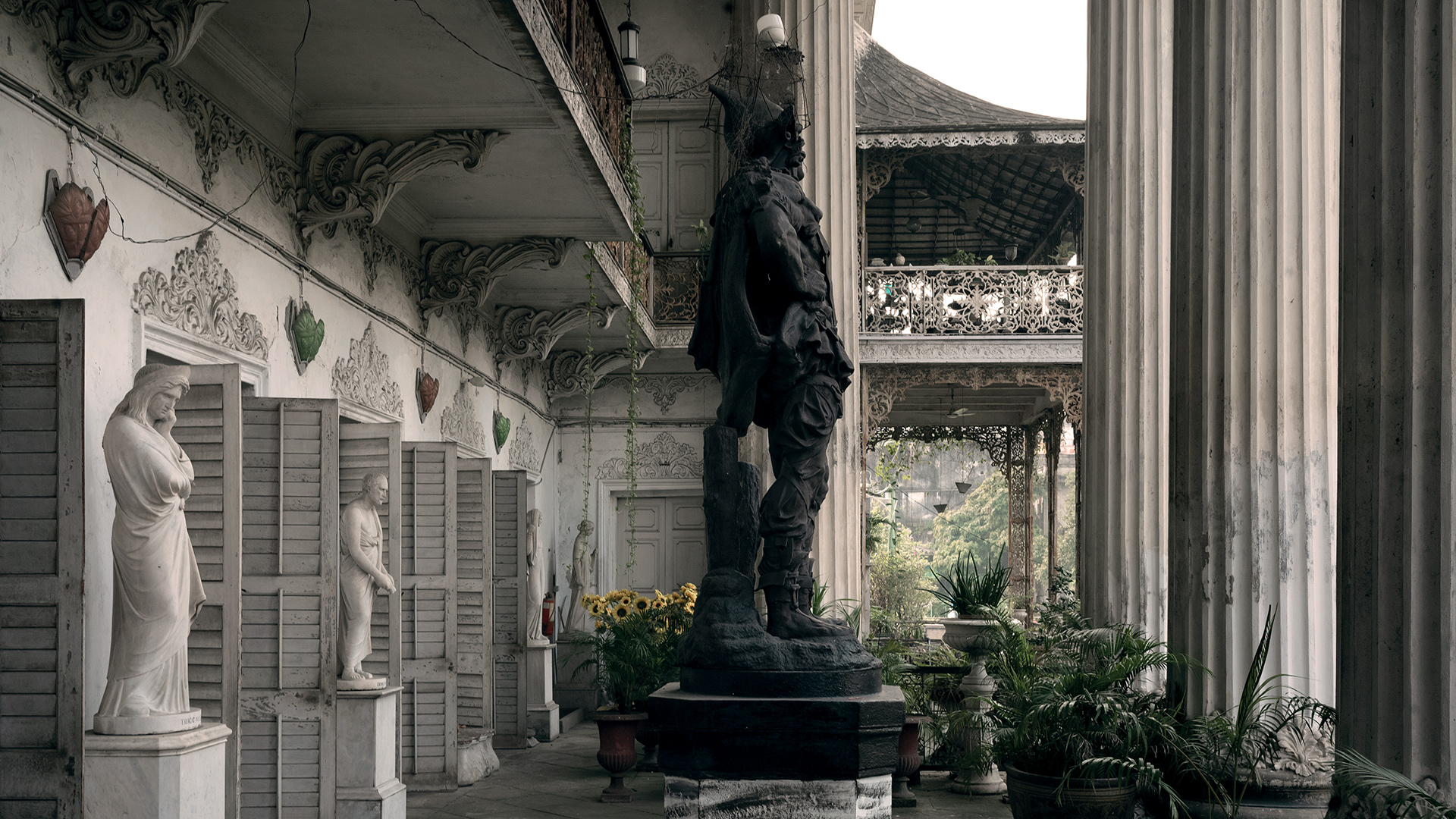
Shuttered doors, typical of the city’s urbanscape make an appearance; Photography by Sunhil Sippy

He learned the meaning of responsibility early in his life, “I knew that if anything happened, I was answerable to my father, and my father was answerable to the trust board.” Now the youngest member of the board himself, Brotindro exists between two worlds, one anchored in custodianship, the other looking towards reinvention.“When I travel abroad, I realise how much potential our museum has,” he says, “There is so much we can do to make the experience of visiting the museum better.” Then he speaks of the will. Rajendro drafted it thrice. Each time, he placed it before Lord Jagannath. And the same night, a dream would come to him insisting on revision. Only after the third attempt was the will complete.

In its final form, the property belonged not to Rajendro or his descendants but to the Lord Jagannath. The family were Shebaits, custodians rather than owners, prohibited by law to modify or sell the estate. The house thereby existed on divine guidance, not human ambition. One of the foremost figures of 19th century Bengali society, Rajendro inherited his father Nilmoni Mullick’s fortune as an infant of only three years. The Supreme Court at the time appointed Sir James Weir Hogg, registrar of the Court of Wards, as his guardian tutor. Under Hogg, he learned Western values and from his mother Hiramani he absorbed a sense of ritual and devotion.

Classical statues of Venus and Apollo flank the Billiard Room; Photography by Anirban Mitra
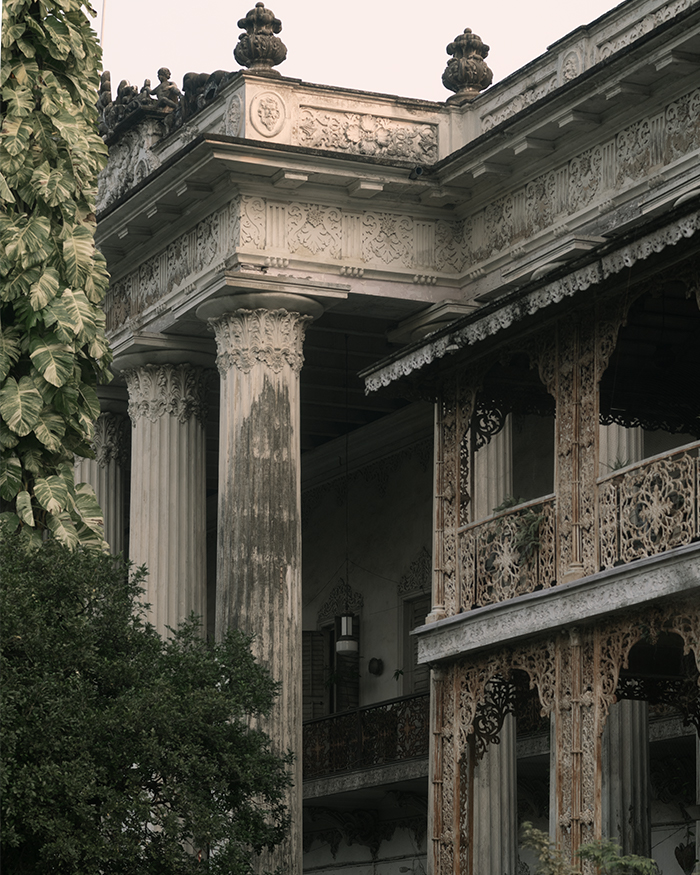
The palace’s entrance porch showcases its elaborate 19th century architecture; Photography by Sunhil Sippy

When he moved from the Mullick’s ancestral home on Pathuriaghata Street to Chorebagan, Rajendro intended to live with his mother in the thakur bati (temple) erected by his late father. The adjacent mansion rose later. The construction began in 1835 and concluded in 1840 during Calcutta’s mercantile peak under the East India Company. Rajendro imagined a house where the people could glimpse the world, and named it Nilmoni Niketan. Though he never travelled abroad, he received gifts and collected art from Europe and Asia. A mosque was also built on the estate to embody unity in faith.

The trust still feeds the poor every day in the thakur bati, a modest, persistent gesture that outlives grandeur. In our aesthetic intellectualism, have we complicated the essence of maximalism? Perhaps, philanthropy and openness form the real heart of it. However, palaces such as these are vestiges of a past with unequal power and stifling traditions. It would be untrue to assume architecture of this typology to be neutral objects. In a metropolis that is still impassioned by Leftist values, this subject may be controversial but is never out of mind. Is the solution then to turn away from our heritage? Can we ever cherry-pick what we like from history and leave behind its flaws? The meaning of inheritance is not always static, and there is no better proof than Sujata Mullick, Brotindro’s wife. A social scientist with a PhD, her work focuses on gender and women’s empowerment. Sujata sees the palace as a living system, one that must adapt to survive. As someone who has stayed resolute in protecting her identity, she is deeply aware of the dual nature of heritage, “Houses like these come with rules, rituals, hierarchies. But we have to make space for the generations who might not live here full-time, who may have their own callings. The structure cannot be watertight.” She continues, “Earlier, women did not wear blouses but it changed with need. The same applies to how we live.” To her, home is a place where she can be herself. “The house did not matter,” she says, “The man mattered.”

Shimmering with chandeliers, the Ballroom of Marble Palace is renowned for its resplendence; Photography by Anirban Mitra
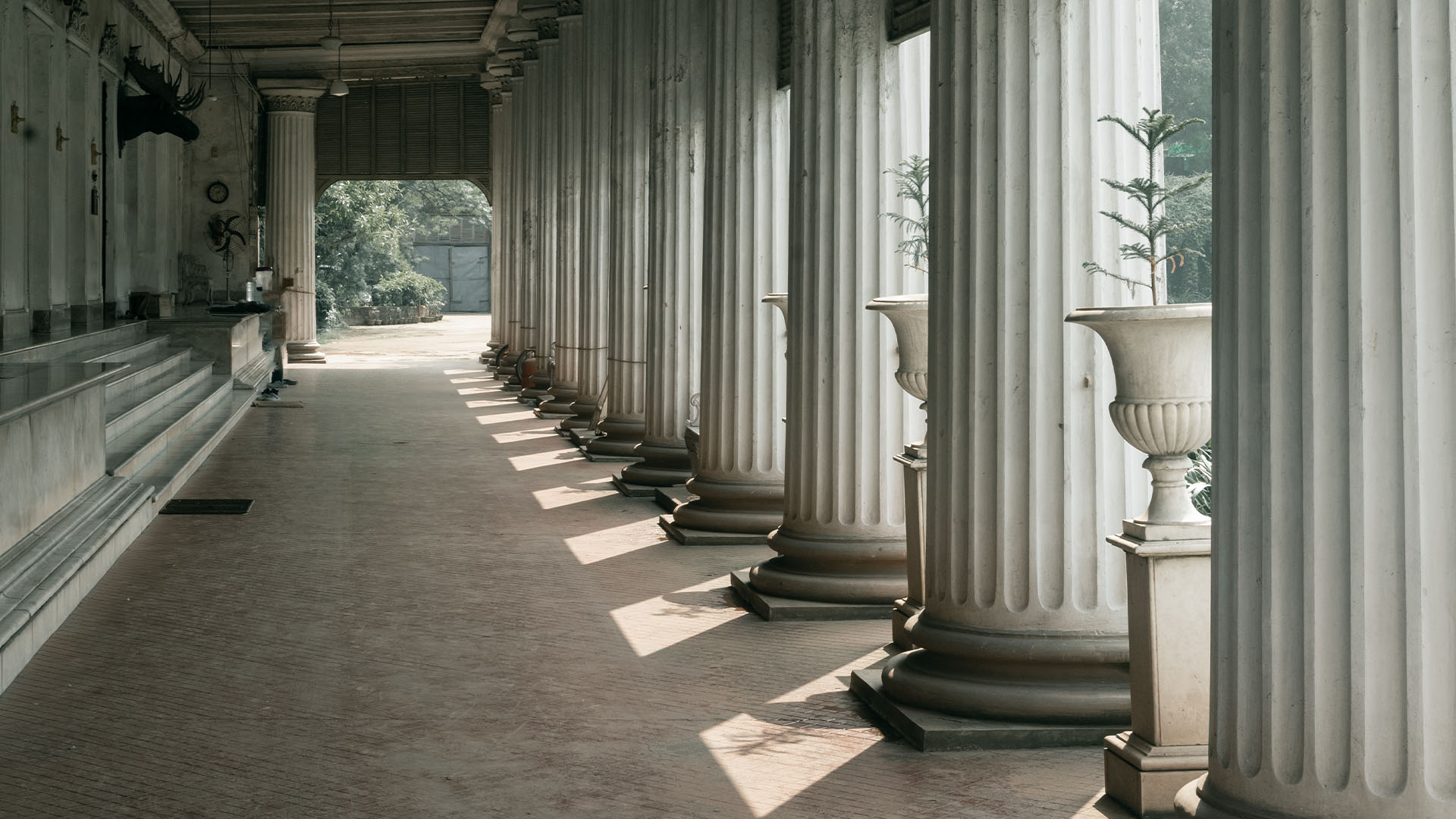
A shaded colonnade wraps around the East facade where a few of the 200 staff members lounge in the fading light of the afternoon; Photography by Sunhil Sippy

As the light shifts from a gilded fervour to long shadows, Sabyasachi enters Marble Palace, “I have come here many times, but this is the first time with shoes on.” As we walk through the courtyard, a few children play cricket in the portico. Their bats swing wide, a six nearly grazes the roaring marble lion that once seemed unassailable. What is unattainable to us is ordinary to them. “That’s maximalism,” he notes. “The Marble Palace is the perfect example of what a good life meant at a point in Calcutta’s history,” he tells us. Sujata invites us for tea in a room adjoining the Jalsa Ghar. The cups are far from antique. “They are IKEA,” she says, amused. The remark is small but telling. The objects around her do not enchant her, yet she recognises their history and actively works to protect it without being burdened by its weight.

The sun had turned amber, and we left the palace behind. The city outside hummed, restless and familiar. “It is like magical realism,” muses Editor, Mrudul Pathak Kundu, “Everything is a fantasy. There is magic in the mundane.” We stop at the temple and sit in silence. In a profession of finding the world’s most beautiful homes, we stand before one that questions the meaning of beauty itself.

Fluted acanthus-topped columns in the front porch of the house find a material foil in the rusted wrought iron jali; Photography by Sunhil Sippy
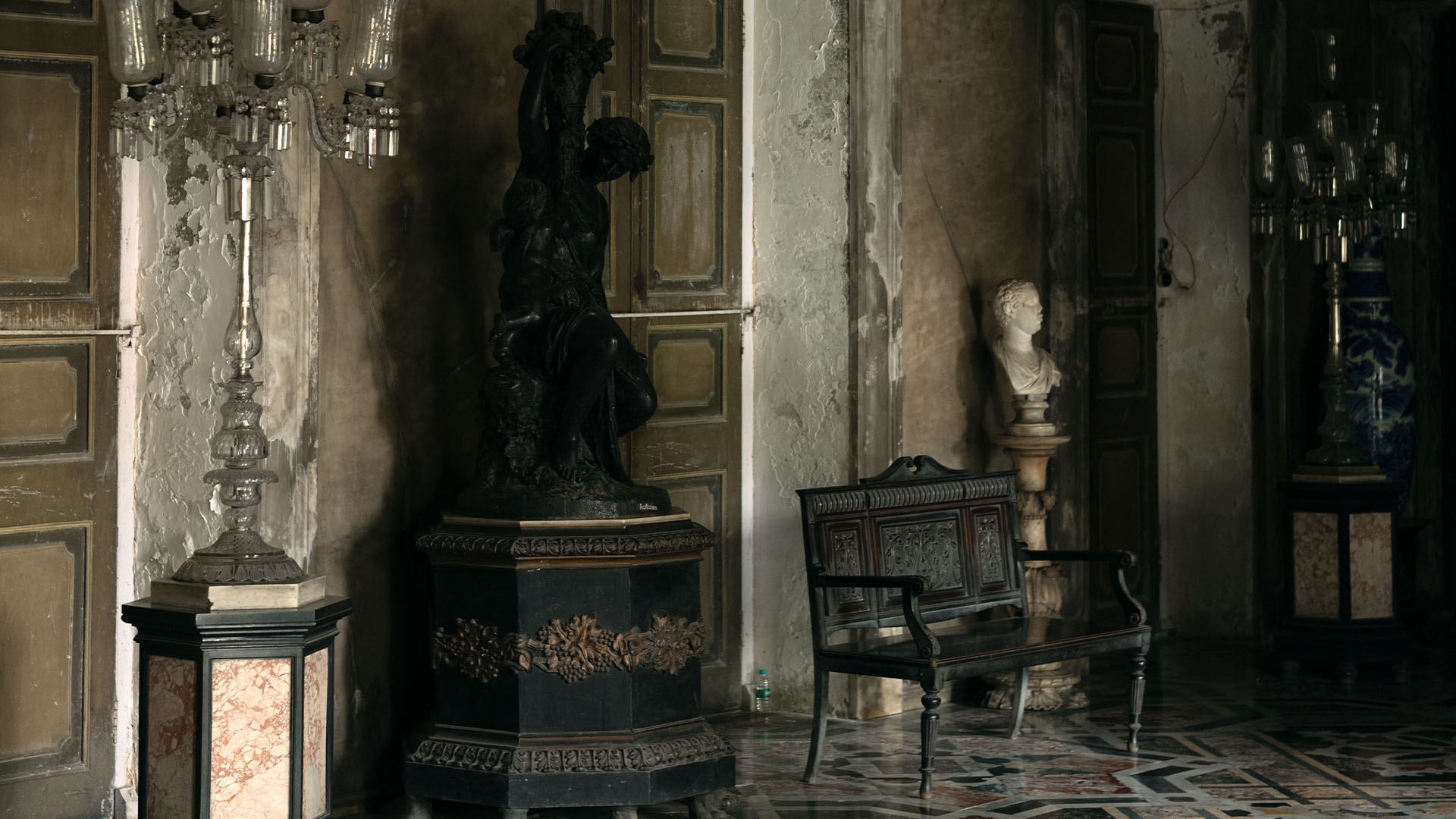
The Jalsa Ghar of the palace houses artefacts like Belgian glass chandeliers and claw-footed pedestals with sculpted depictions of seasons; Photography by Anirban Mitra

As evening fell, a curtain of darkness descended upon the scene. All the secrets the palace had divulged in the light of day, forgotten and recoiled in a snap. All that remained were cloudy apparitions of memory. The macaws had stopped squawking, and the cocky budgerigar had no one to show off its feathers. The statues, admired by hundreds, finally have a moment to rest. In their glittering grandeur, do the chandeliers ever pause to lament the bygone years? Born halfway across the globe, what do they think of my absurd, unreasonable city? Do they too fear Kolkata will one day stop in its tracks, unable to contain the multitudes it harbours? What if the magnanimity of this infernal metropolis was not contained in excess at all? Its doomed glory may rest solely on its stubborn refusal to separate beauty from decay.

Nilmoni Niketan is a near-metaphysical proposition but the conundrum would not settle: why, amidst a million palaces in the subcontinent, does this in particular emerge as the prime example of Indian Maximalism? “Well, it was an Indian who had the might to bring the treasures of the world under one roof,” offers Mrudul, opening the door to another avalanche of paradoxes with no end in sight. Thus stands Marble Palace and Zoo, defiantly radiant while the city around it is stripped to its bones. I often think of those who went searching for the mythical El Dorado. What is a city of gold next to a city of contradictions? Between ruin and splendour, delirium and grace, Indian and colonial, we may never find what we are seeking. Perhaps, Kolkata does not want to be found. It confounds and consumes in equal measure. You might come here chasing answers, and lose yourself instead.

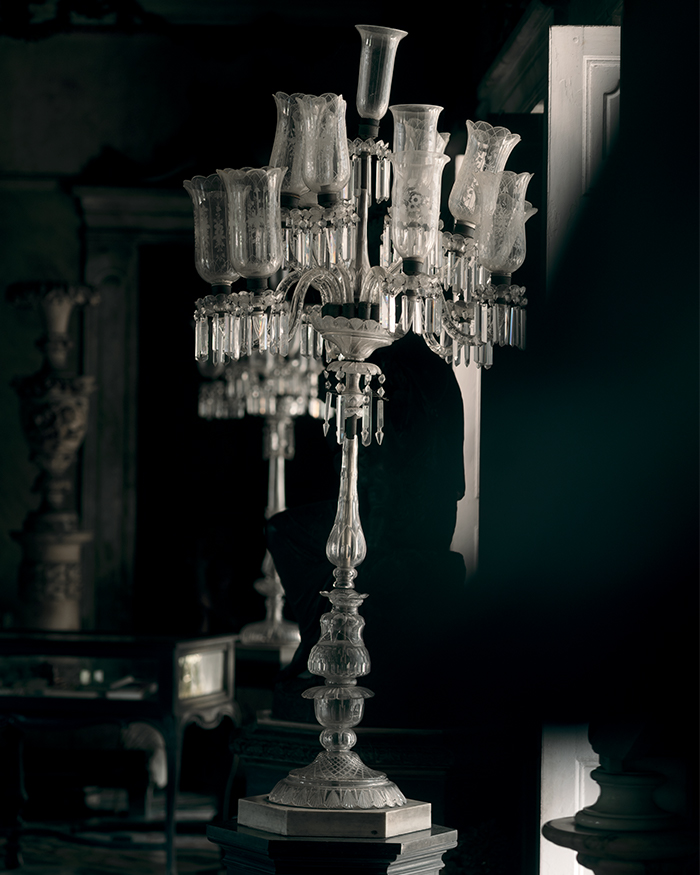
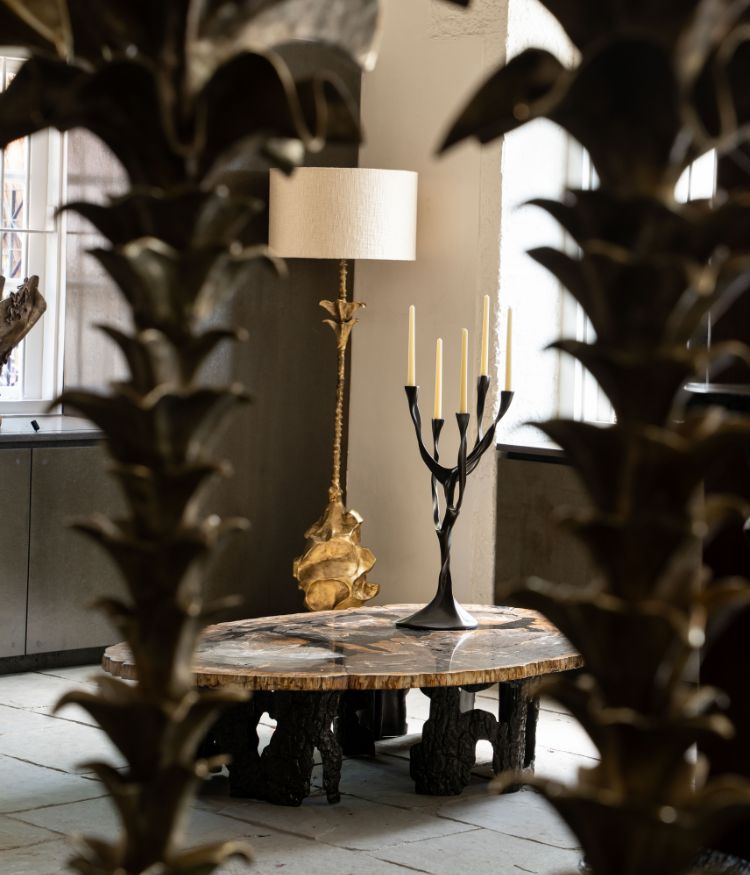
An antique Venetian candle stand with floral etching; Photography by Sunhil Sippy
Raja Rajendro Mullick collected sculptures and art from around the world; Photography by Sunhil Sippy

“No longer do the fountains flow, no song fills the halls, no graceful feet touch the white marble steps. Now, it serves only as a vast empty dwelling for lonely men like myself.

When I first arrived, the gloom of this abandoned palace took root inside my chest like a terrible burden. Soon, its strange intoxication began to attack me, like a living organism slowly and imperceptibly digesting me whole”

— Rabindranath Tagore, The Hungry Stones

Read more: Our Guest Editor Sabyasachi Mukherjee on India and maximalism


From flooring to statuary, a hundred and twenty six varieties of marble feature across the Marble Palace; Photography by Sunhil Sippy
SHARE THIS ARTICLE

You May Also Like

Watch

No results found.

Search
Close this search box.