Photography by Adityaraj Mehta

Anniversary issue: Beauty as a consequence of business

Commotion of daily life at Kolkata's flower market

BY

Produced by Mrudul Pathak Kundu 

Kolkata starts its day on slow simmer. The sun rises over the Hooghly by 6 a.m, but the city does not rush itself. Breakfast is a leisurely affair over tea, luchi alur-dom, and deem paurutis. The City of Joy respects appetite and delays with equanimity. But on the other side of the Hooghly, under the Howrah Bridge, the Mullick Ghat flower market has already finished its day’s most intense work. The flowers have long reached neighbourhoods that are just beginning to stir. It’s 5 a.m. as we make our way down from the bridge, navigating smaller flower vendors into the bigger market that bustles on the banks of the Hooghly. The market is wide awake, like it never slept, as if it has pulled an all-nighter and carried the same energy into the early hours of the day.

Unlike the rest of Kolkata, where people are generally unhurried and surprisingly patient, there is no such generosity here. “Didi raasta chhaadun,” a man yells at me. Loosely translating to, “Sister, give way,” I am rebuked by men hurrying past us with their arms raised, carrying cascades of marigold garlands held high above their heads, or at times balancing wide baskets of flowers. It is difficult to walk fast as muck (petals, stems, river water and dark alluvial mud) keeps clinging to my shoes. In theory, it’s the same fertile silt that blooms these flowers, but under my shoes, it’s noticeably less romantic and indifferent to what I find beautiful, gathering everything that we have come to admire and what we find disgusting. But if you get past the grime, you notice the beauty that exists despite the crud.

"Unlike the rest of Kolkata, where people are generally unhurried and surprisingly patient, there is no such generosity here at Mullick Ghat flower market"

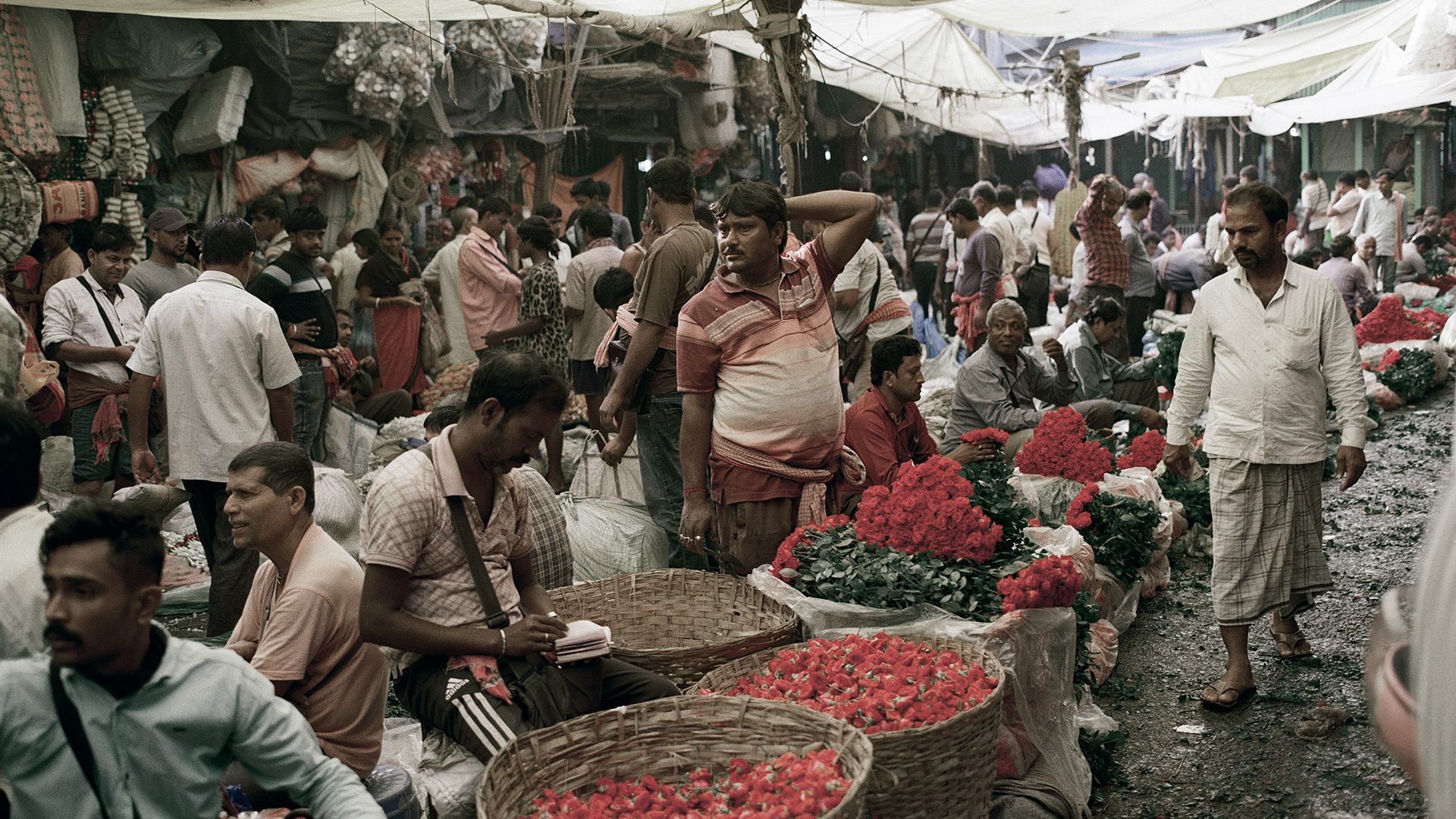
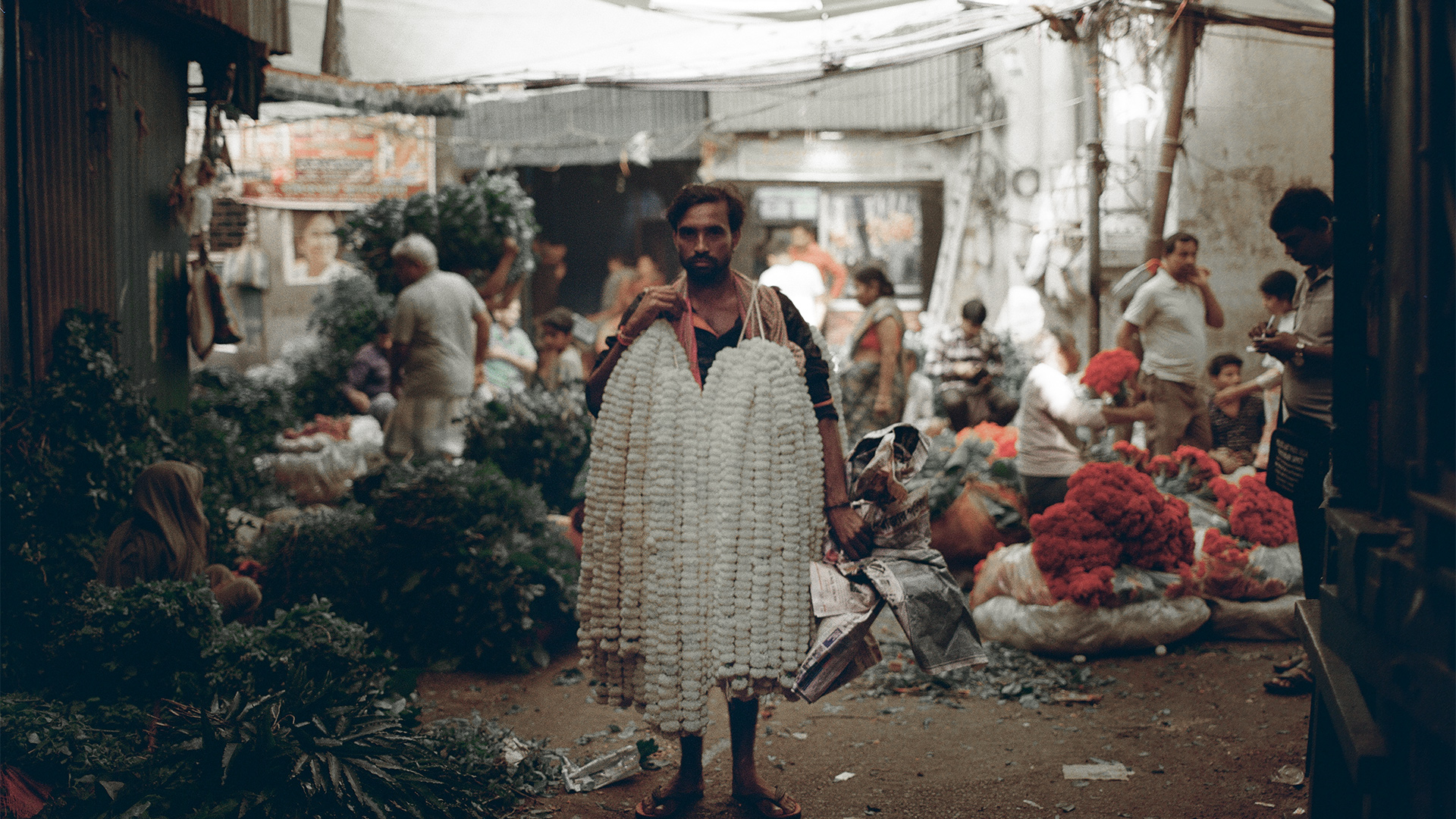
The market is wide awake, like it never slept, as if it pulled an all-nighter and carried its energy into the day; Photography by Adityaraj Mehta

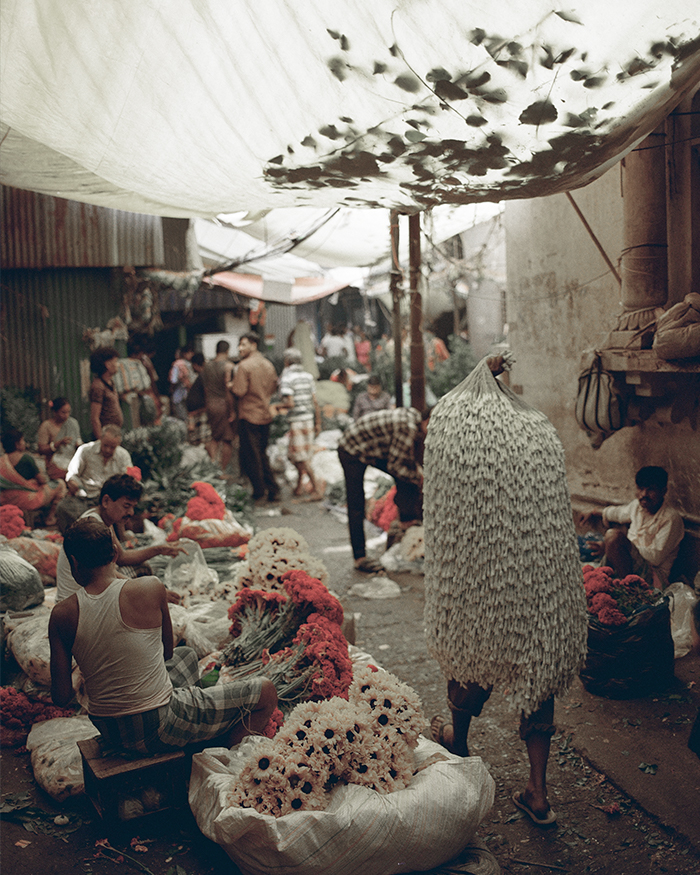
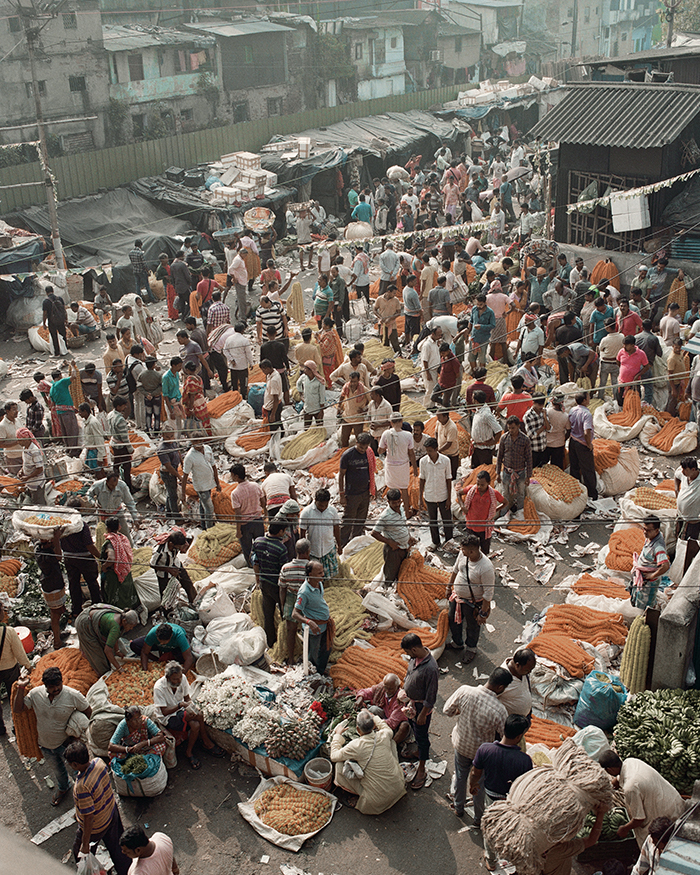
Gunnysacks are split open on the ground, and flowers spill in improbable quantities, as if someone has upturned every shrine and garden of Bengal and emptied them along the Hooghly. Garlands upon garlands of marigold are piled inside sacks that are bursting at the seams with a vivid orange, coils of yellow and saffron pooling at the vendors’ feet, while more hang in dense curtains behind them. When that hasty seller holds a bundle up in both hands, the heap becomes a bright, swaying column of flowers, a small architectural monument in its own right. Next to bright marigolds, pale white tuberose and jasmine’s cool scent contrasts the smell of mud, wet jute, sweat, engine oil and the river. Roses appear in every possible mood, from tightly furled buds in plastic buckets to blowsy, overconfident blooms.

I notice gerbera daisies in flat billboard colours, but also the cockscomb whose tight, rippled heads catch the light like velvet. Then there are those who sell only green; banana leaves, long fronds and sheaves of grass that are essential for lining puja thalis, wrapping offerings and padding the bases of altars. It is a powerful image of what might be called maximalism. The maximalism of colour, scent, excess, access and the logistics of abundance. Answering the demands of faith and ceremony, scarcity is unthinkable at Mullick Ghat. The wholesale institution, largest of its kind in Asia supplies the city’s calendar of rituals — Durga Pujo and Kali Pujo, daily temple rituals from Kalighat to para shrines, Friday namaaz, Christmas midnight mass, births and deaths, Valentine’s Day bouquets and right now, the wedding season. “How long have you been selling flowers?” my journalist Namrata Dewanjee asks an elderly lady seller. Without looking up from her place, she replies, “20, 30 years, maybe more.” Her interest in us dwindles as a buyer appears. She begins assembling the flowers like clockwork. We are forgotten and disappear into the background of the commotion.

Photography by Adityaraj Mehta

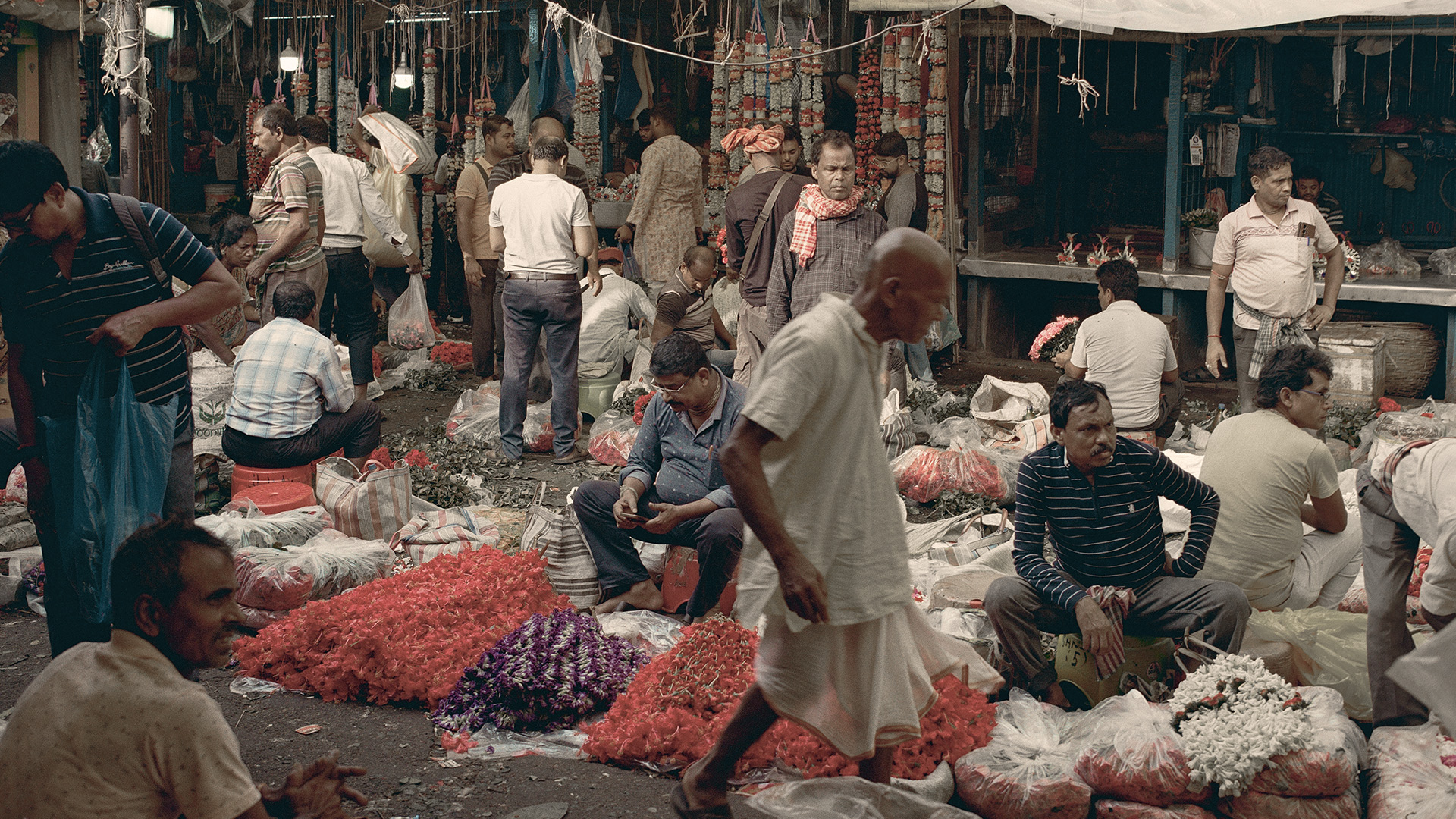
We notice another seller, an old man smiling at us. We ask him, “Do you know this is one of India’s largest flower markets?” He tells us, “Asia’s, not just India’s,” as he lights a cigarette. We then become more ambitious as we tell him about investigating maximalism in this market. Maximalism, as we try to explain, is the vastness of the place, the way flowers and colour multiply in every direction, stacked in what feels like endless layers. He responds, “Aah, tai, maximal… shob bhetore paben.” He is referring to the market that gathers in the internal roads, opening into a courtyard of sorts, which, unlike the banks, is covered with tarpaulin and plastic sheets to protect the flowers from wilting away in sunlight. They cast a yellow-ish filter, not exactly conducive to photography. It is at this moment that I realise that the flower market’s beauty is just a consequence of its business. It is not interested in being picturesque. Occasionally, a vendor will indulge the photographer or a social media creator with the weary patience of people who know that their lives are now part of the city’s visual archive. But mostly, they will keep calling out for you to “leave the road and keep moving.”

SHARE THIS ARTICLE

You May Also Like

Watch

No results found.

Search
Close this search box.