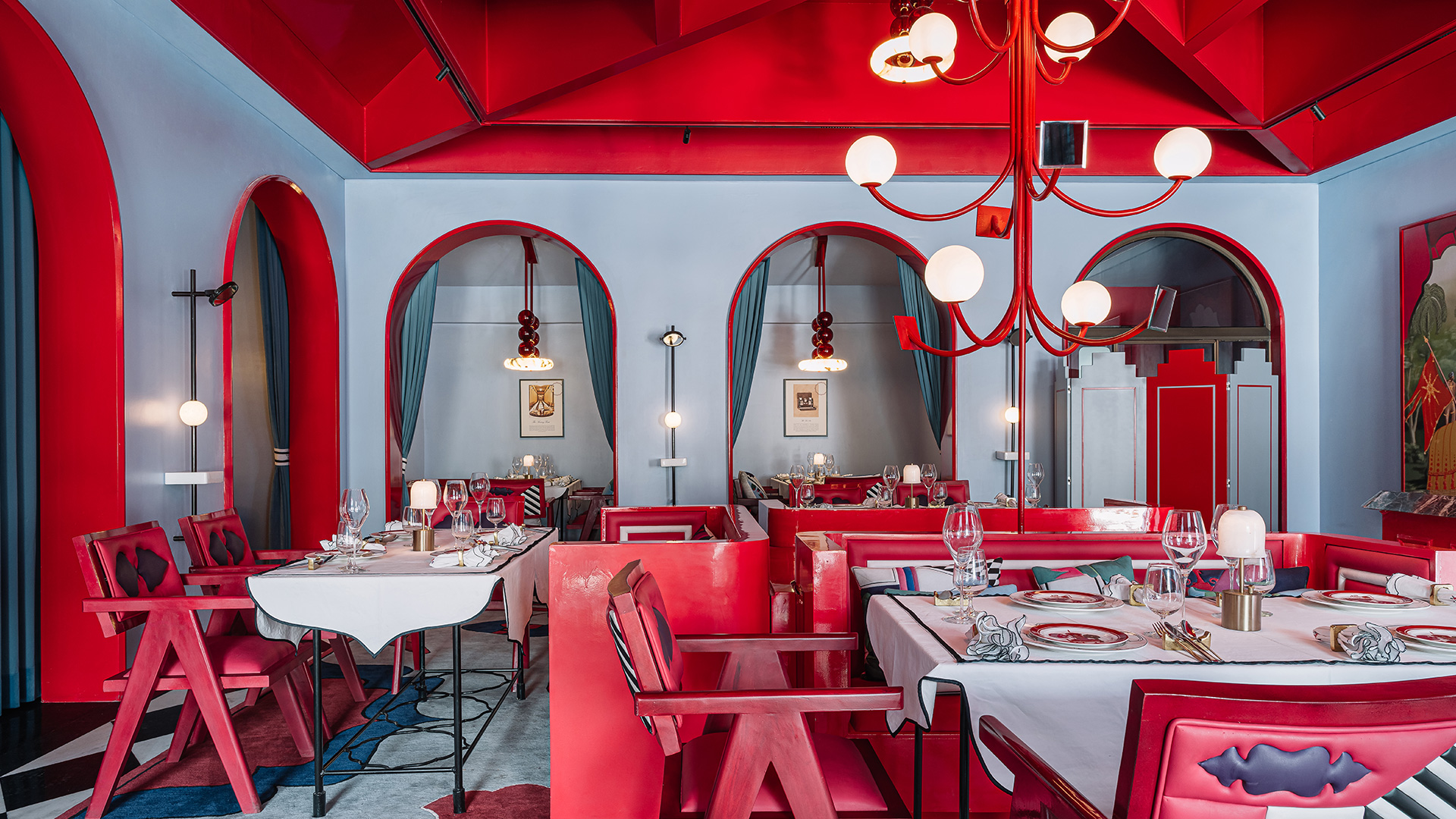
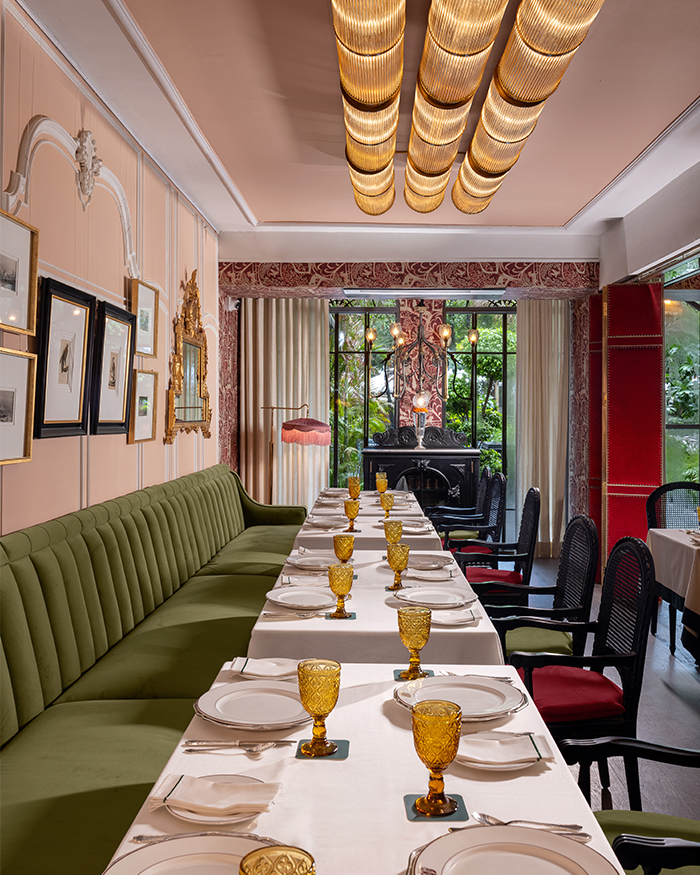
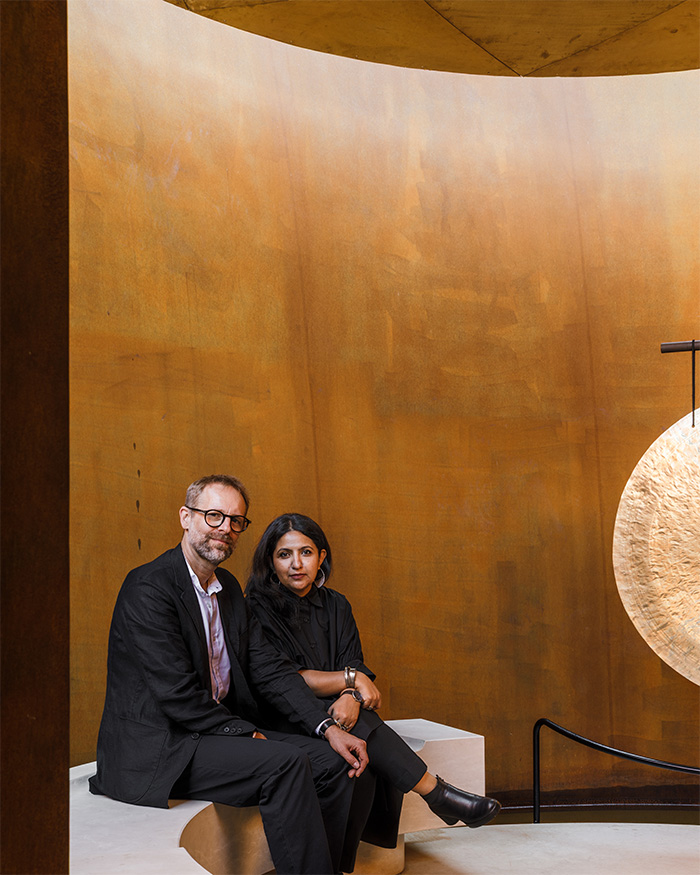
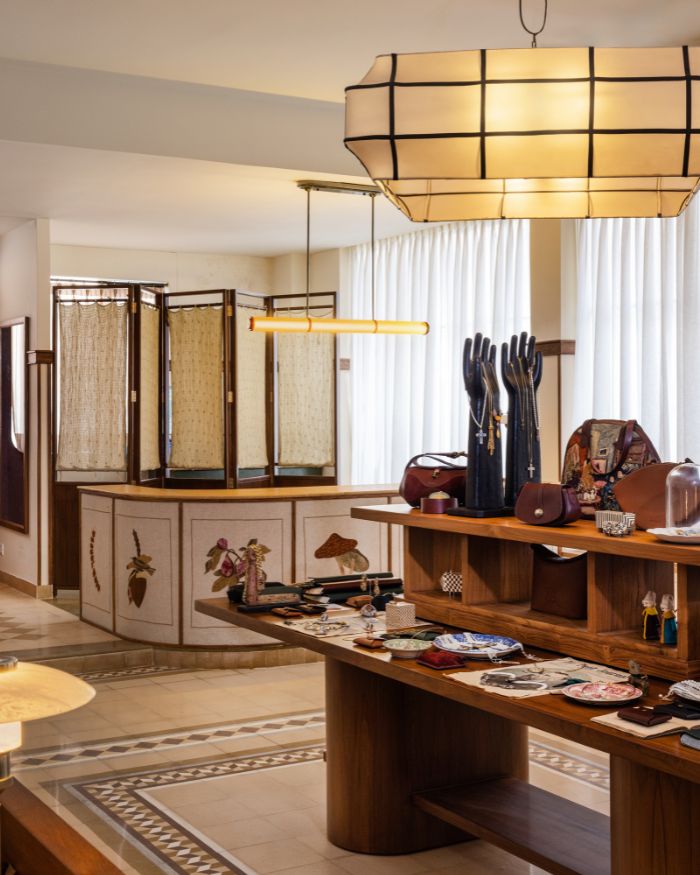
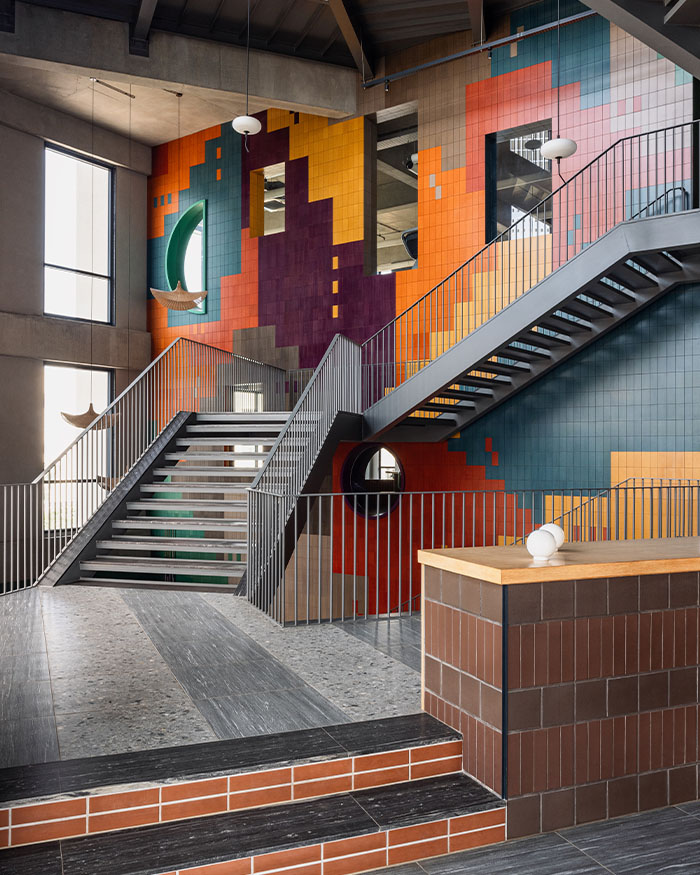
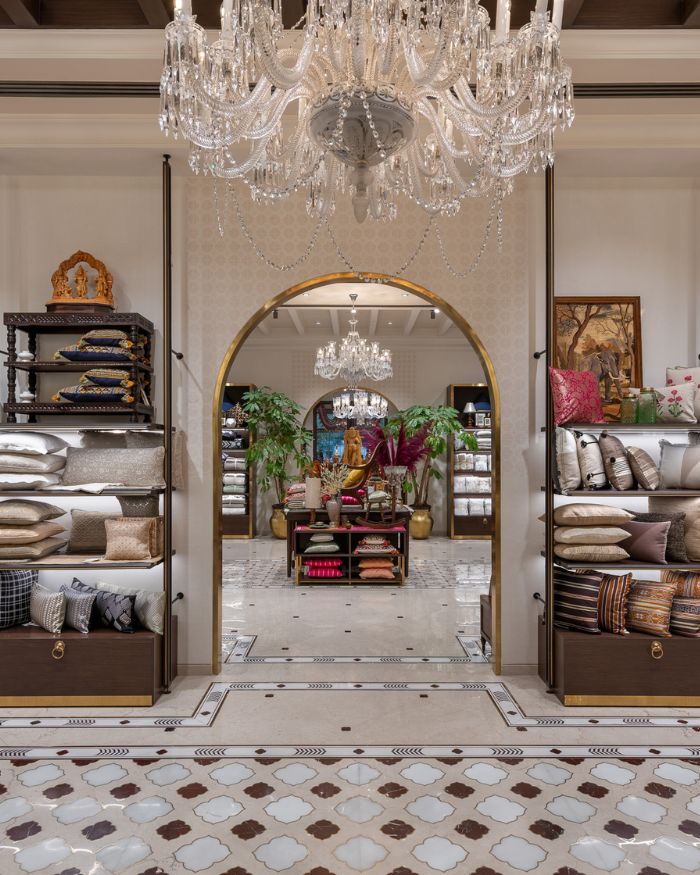
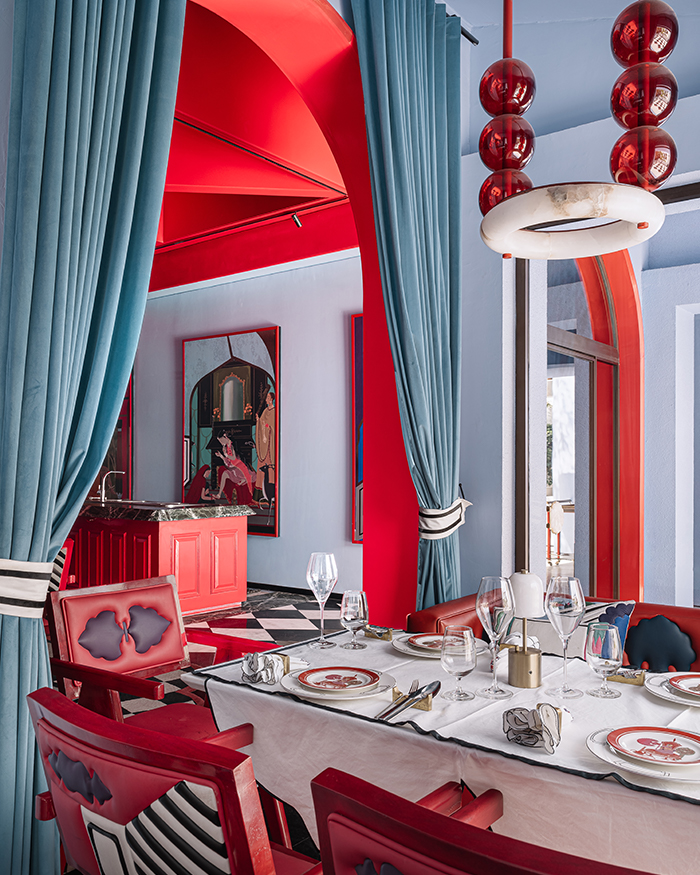
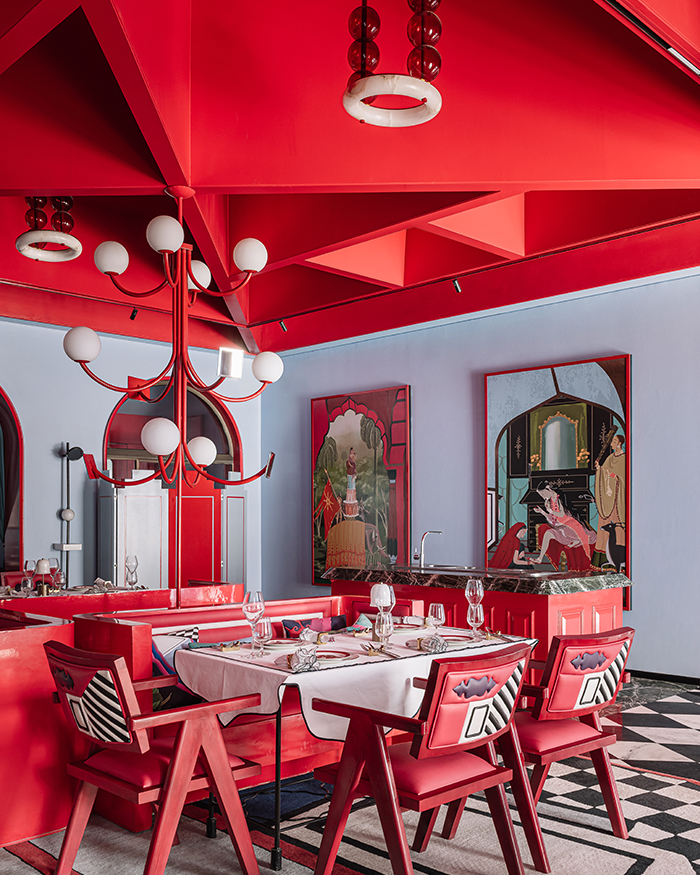
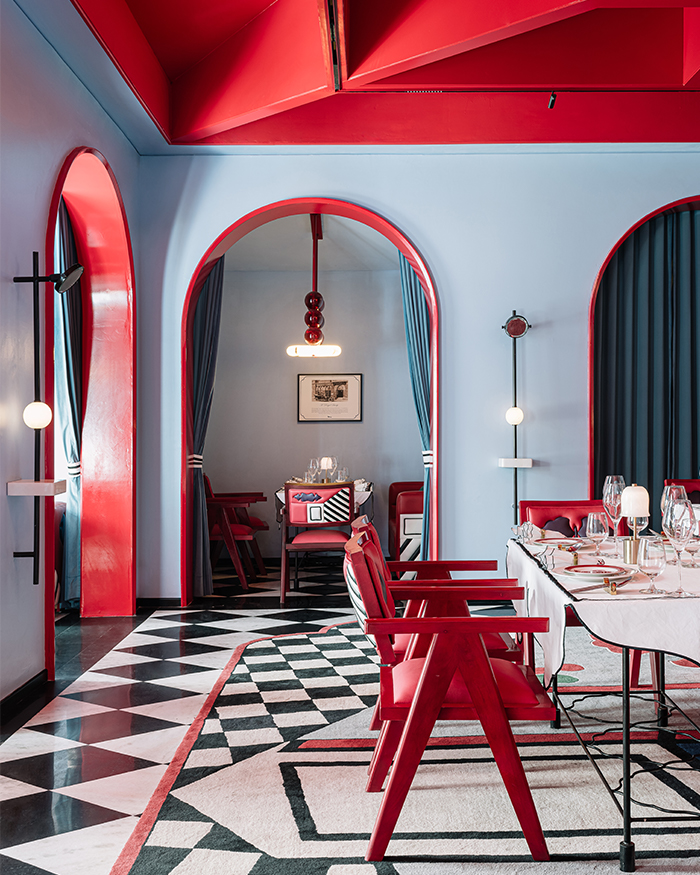
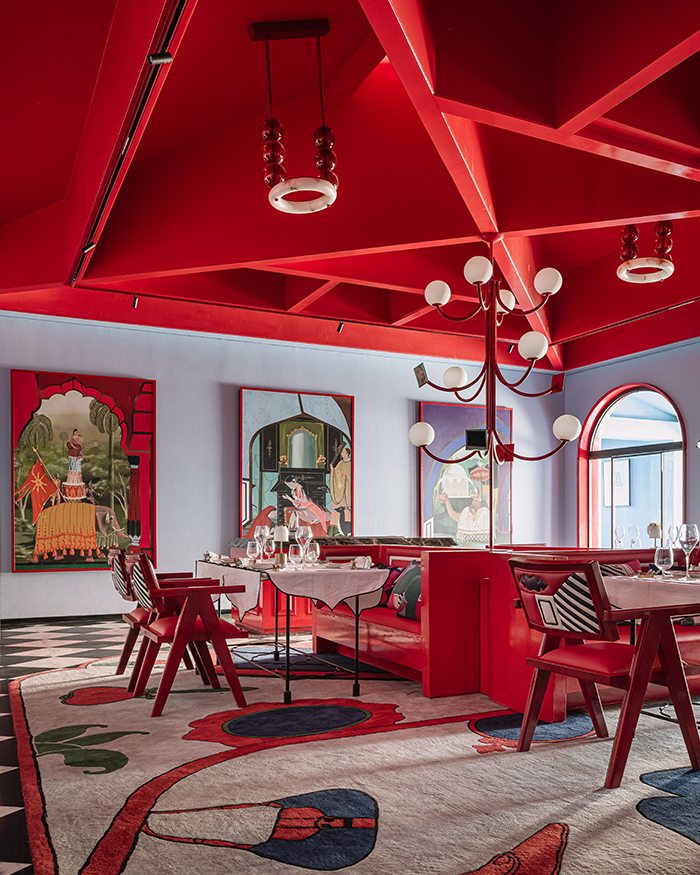
The private dining space, dubbed the Vanity Room, draws inspiration from a Maharani’s boudoir with vanity mirror-inspired lights and mirrors. The Aaina chandelier is a mid-century modern-inspired piece by Shantanu Garg Designs, occupying the spotlight in this milieu; Photography by Ishita Sitwala

Inside Trevi, a restaurant serving Jaipur al dente

At 1932 Trevi by Shantanu Garg Design, feast on margheritas straight out of a peacock-arch shaped oven

BY

Before 1932 Trevi in Jaipur could take shape as a restaurant, Shantanu Garg thought of the space as a person. The interior designer envisioned it as an extension of a well-travelled Indian royal: someone with a burgeoning travel schedule coming home at last, bringing back souvenirs, spoils, anecdotes and an irrevocably changed self. “Like a royal who travelled the world and he comes back and presents it to the public,” avers Shantanu. True to this perspective shift, you’d be hard-pressed to know where Italy ends and India begins at Trevi, the brainchild of Founder Namokar Jain. “The idea was to create an Indian-Italian fine-dining space that doesn’t fuse the two, but celebrates both cultures for what they truly are. For me, Trevi is where Jaipur’s old-world charm meets the warmth and romance of Italy,” Namokar affirms.

“Jaipur brings a lot of content in terms of history, heritage, creativity, craft and design. It’s the true facade of our country.”

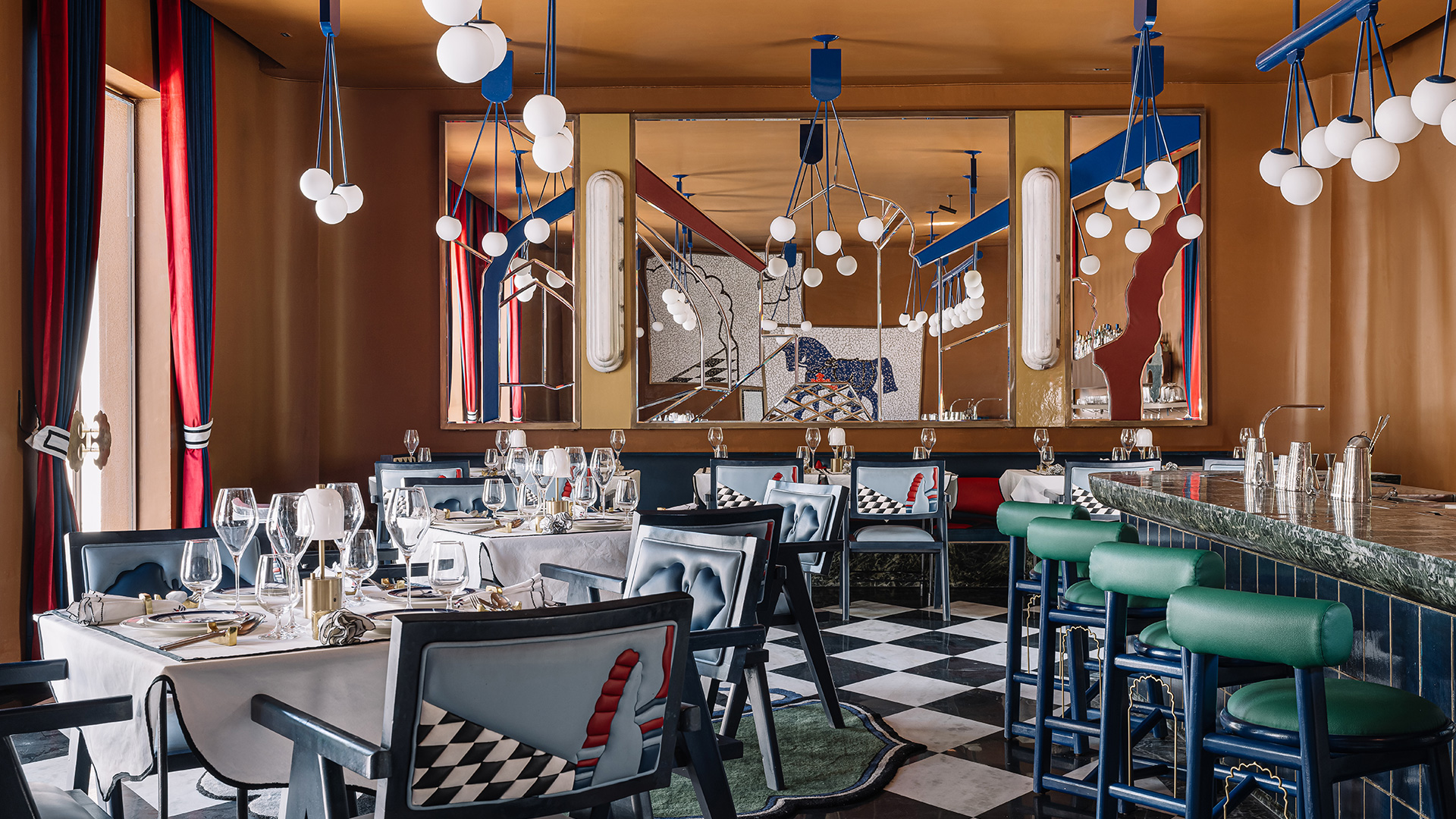
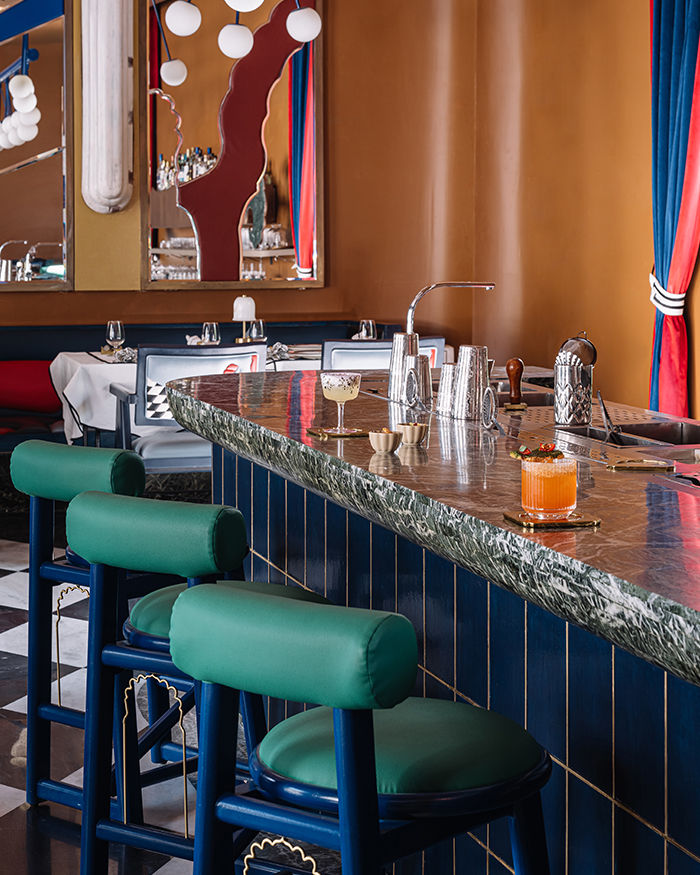
The internal dining area with chequered floors and teal tone highchairs at the bar zone with a marbletop table; Photography by Ishita Sitwala

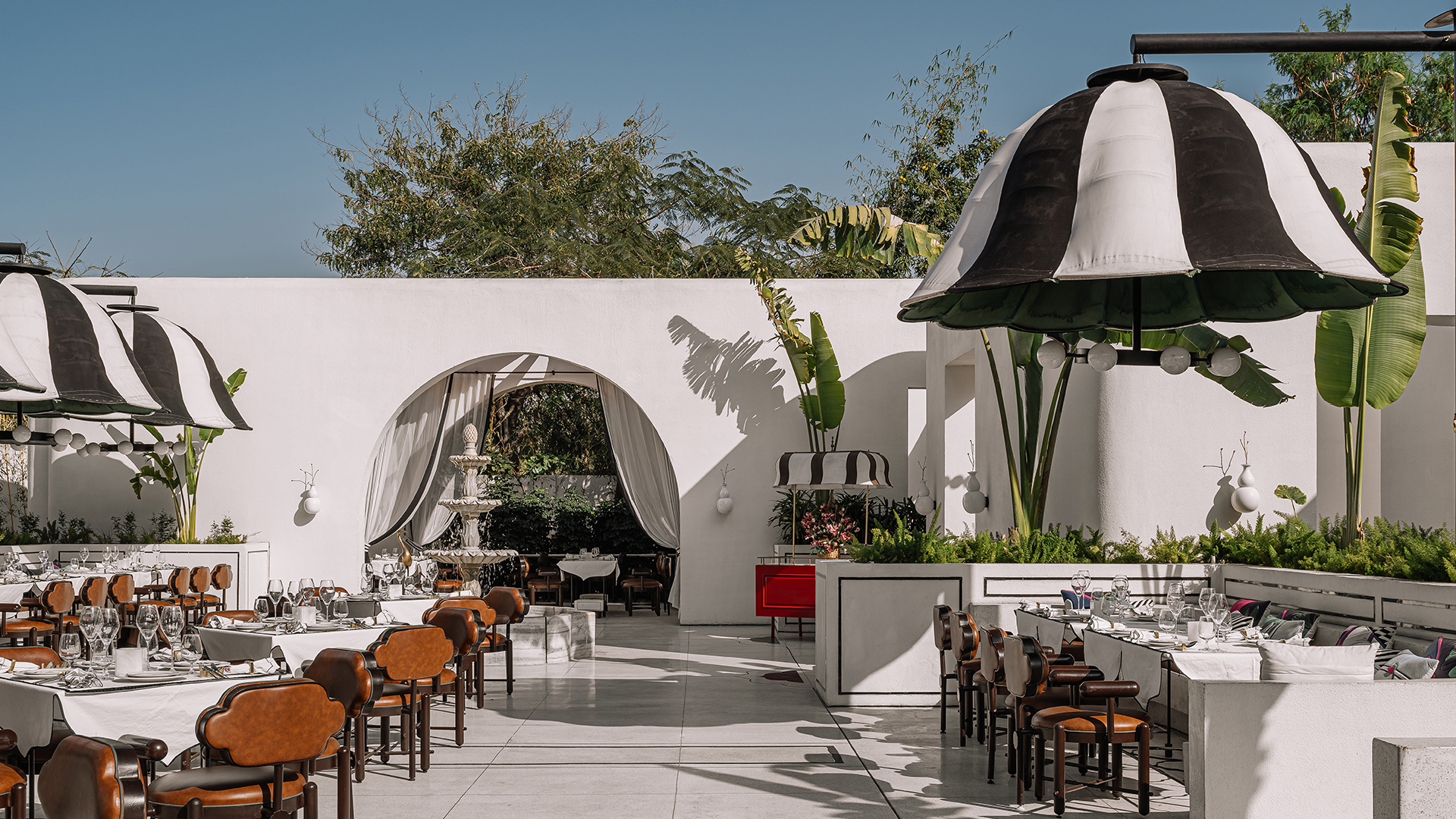
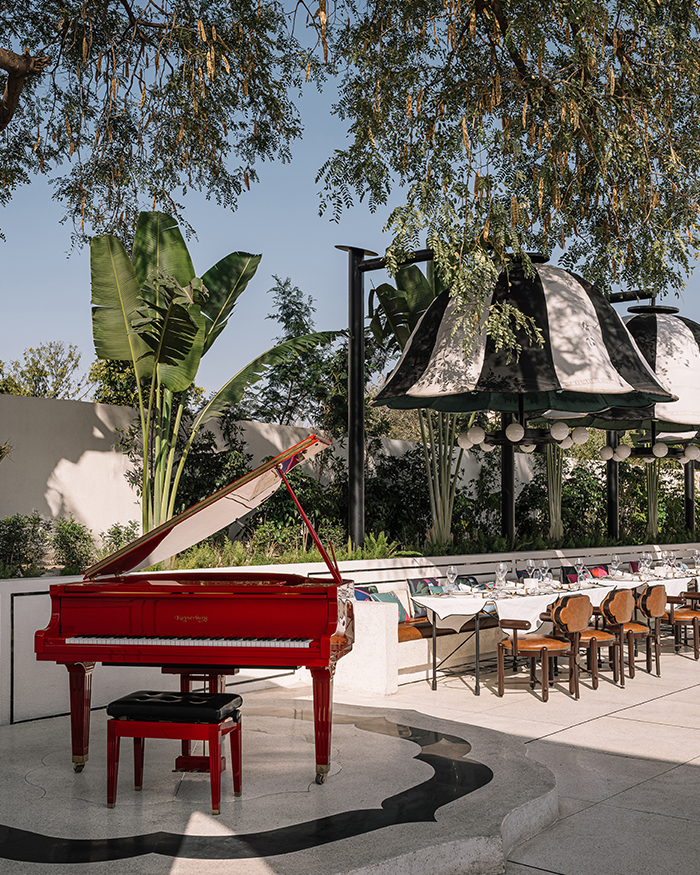
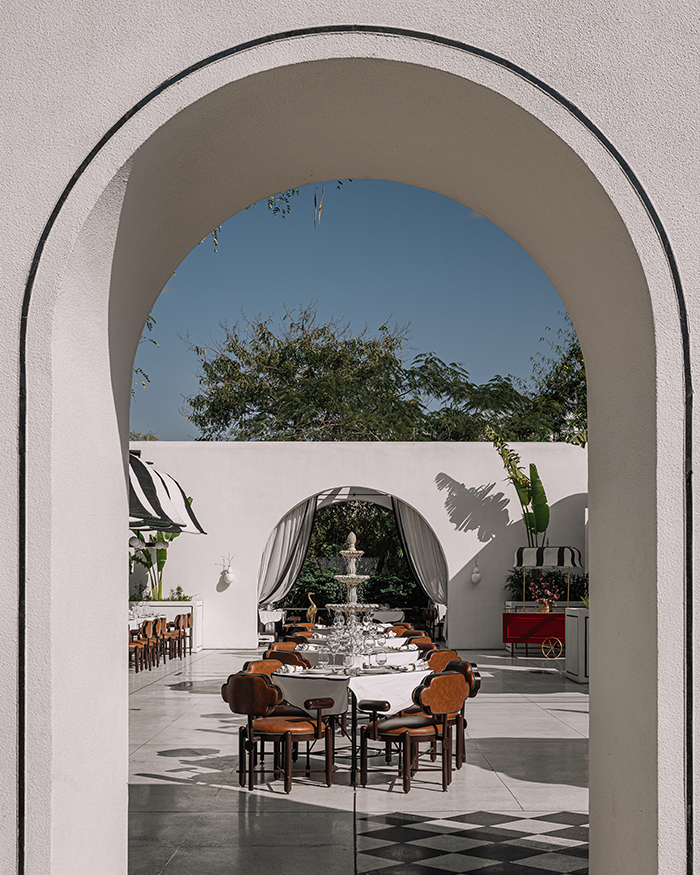
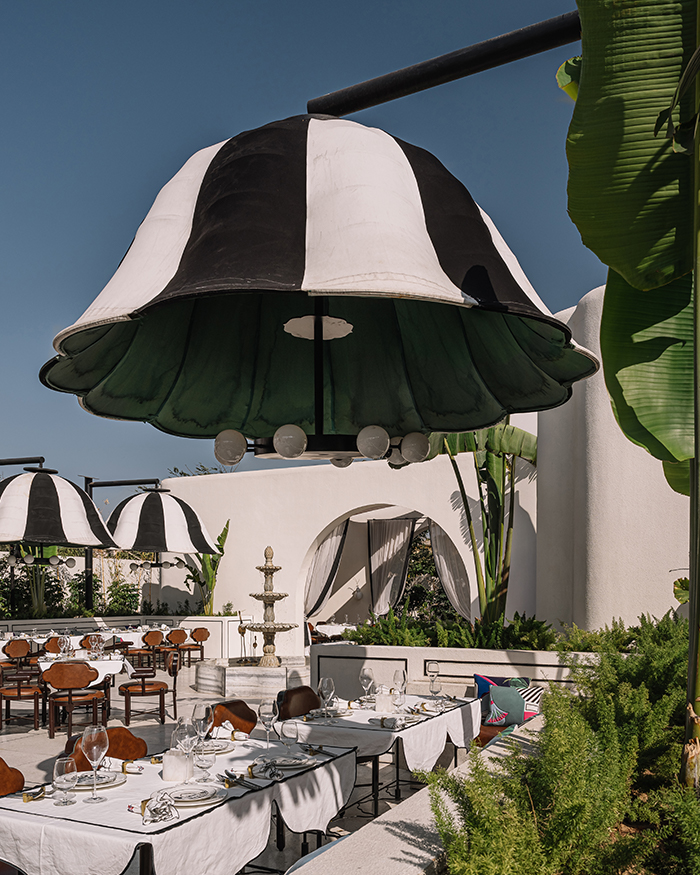
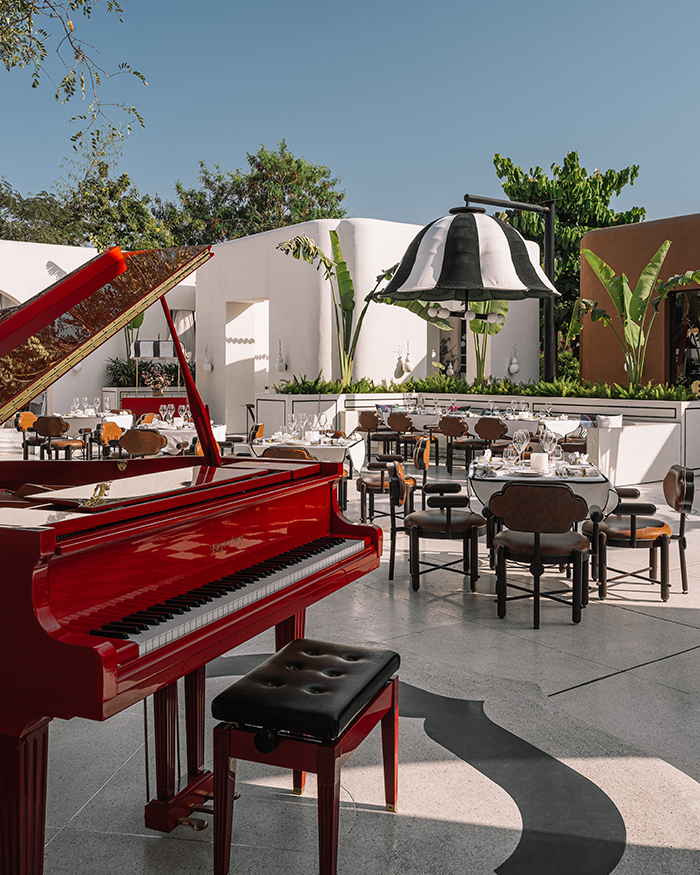
But while the white courtyards echo their namesake fountain only in hue and material, the Pink City is an inseparable part of the property. Ask how, and Shantanu rattles off a long list. “Everything has a piece of Jaipur in it. Even the carpet you see, the cushions, the leather upholstery on the Chandigarh chairs!” he affirms. This is not just Jaipur in isolation: it is Shantanu’s Jaipur, and decisively so. As you enter the chowk, an open-air dining space anchored by a fountain (the best spot to aim your coins at, à la Trevi) and a red piano, three other zones emerge: the Plume Bar, a private dining space Shantanu dubs as the “Vanity Room”, and an open-air dining section covered by the Indian shamiana’s more contemporary sibling. 
Illuminating the tables is Chudi by Shantanu Garg Design, a light pendant that resembles an Alabaster bangle held aloft by red glass beads; Photography by Ishita Sitwala
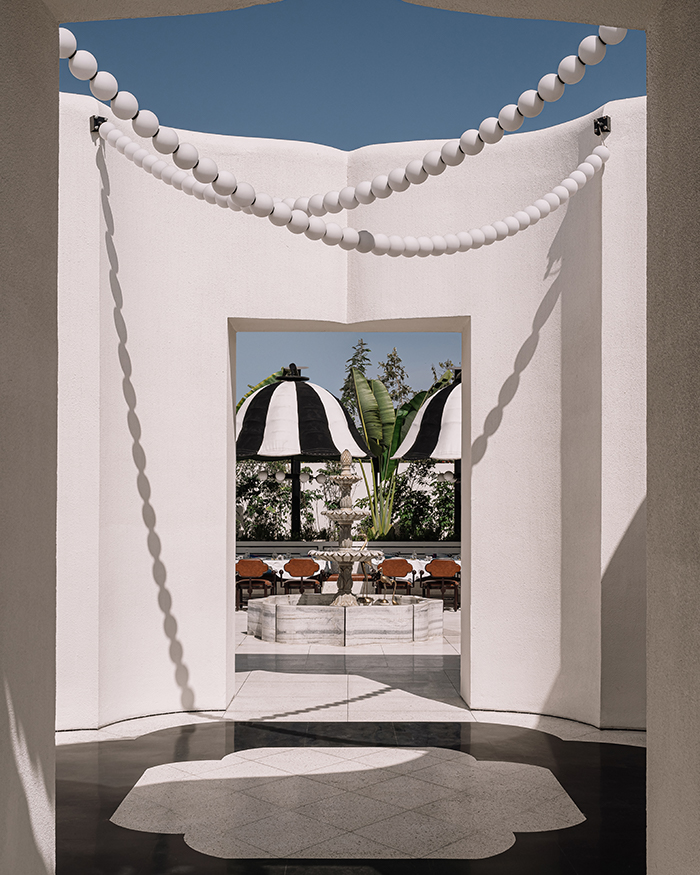
Inspired by its namesake fountain, 1932 Trevi spotlights Indian marble across its sprawling courtyards, both through materiality and hue; Photography by Ishita Sitwala

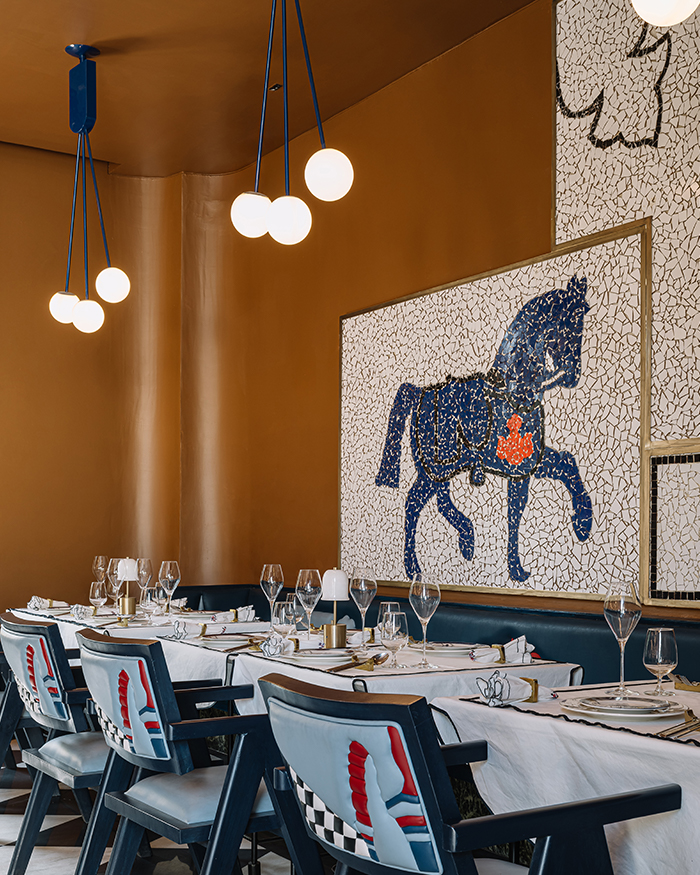
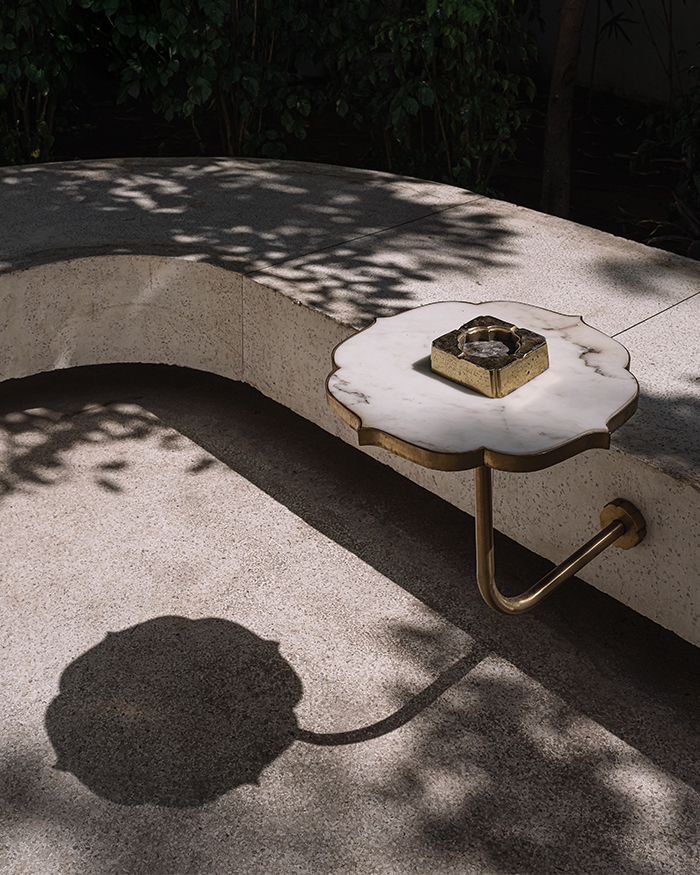
What unites these distinctive spaces? It is a sea of recurring motifs: Padmas, arches plucked from Jaipur’s palaces, leather-padded peacocks and mosaic horses — all signature creations, developed over years at Shantanu Garg Designs. The architecture follows their vibrant lead in form: right from the Padmadari at the entrance (a clever word-play on the traditional Baradari, inspired by this interpretation’s eight-point form), to the peacock arch-shaped woodfire oven. But as the duochromatic courtyards lean towards Italy, the Plume Bar and the Vanity Room bleed colour: unquestionably Indian. “Personally, colour gives me a kick. I feel like in cases like Trevi, we should always have a space that adds eccentricity. And gives you a choice of experiences,” enthuses Shantanu.

A horse artwork adorns the wall of the indoor space; Photography by Ishita Sitwala
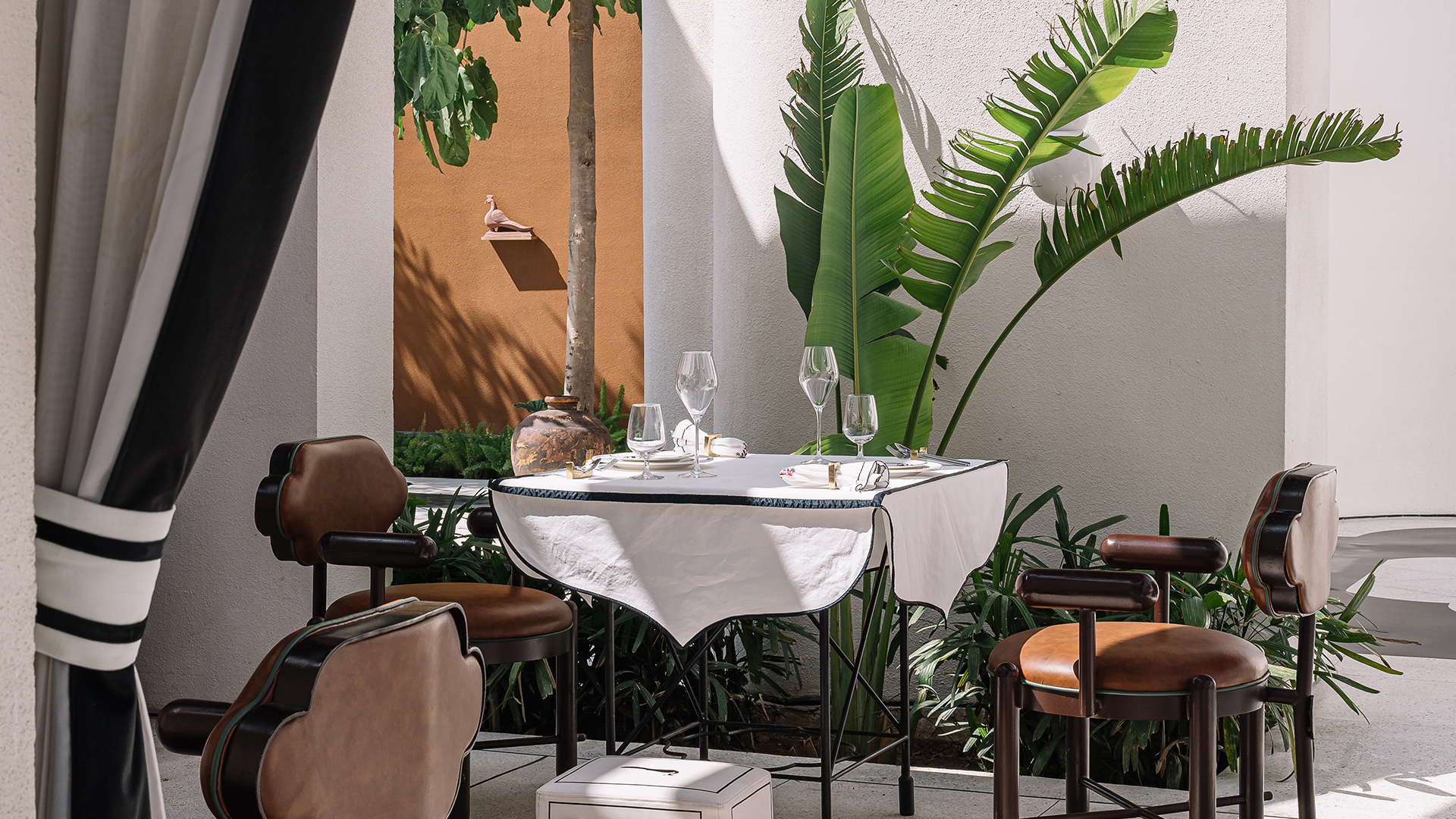
Motifs grace the silhouettes of the chairs at 1932 Trevi; Photography by Ishita Sitwala

We could guess, but we still ask: which space is his favourite? Pat comes the response, “I love the vanity room. It was designed for the purpose of a tasting menu. So I thought, why couldn’t it be very eccentric and central to our maharanis? How our queens and princes were so flamboyant, how they were inclined towards fashion?” In tandem with his vision, up came the vanity-lights-inspired chandeliers, wall scones affixed with hand mirrors, and an arsenal of other creations inspired by the inside of a woman’s vanity — all conceptualised and created by the design firm in-house. This obsessive attention to detail goes beyond the Vanity Room and permeates Trevi’s very being. And it is this very trait that sets it apart, exalting it from being merely a culinary experience to a cultural one.

Read more: At a New Delhi restaurant, Beyond Designs stages a two-act masterpiece

One can spot Indian motifs everywhere within the restaurant, right from the furniture to the decor and tableware; Photography by Ishita Sitwala
SHARE THIS ARTICLE

You May Also Like

Watch

No results found.

Search
Close this search box.