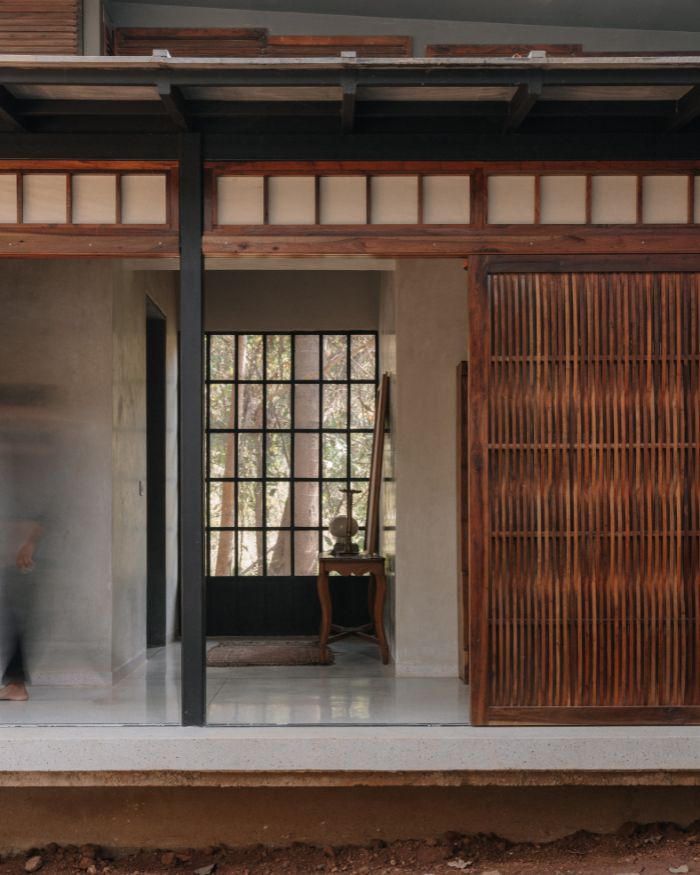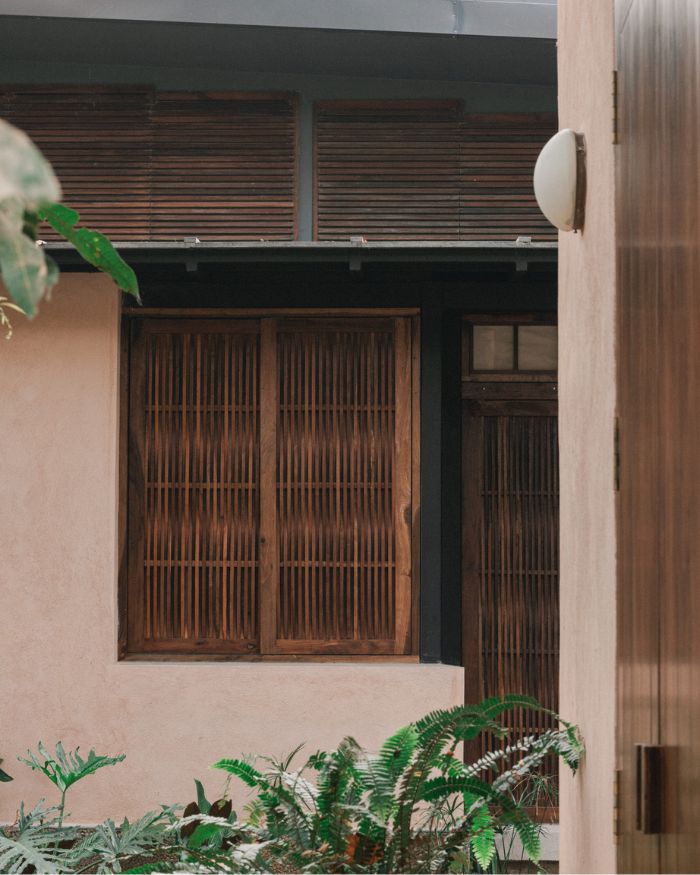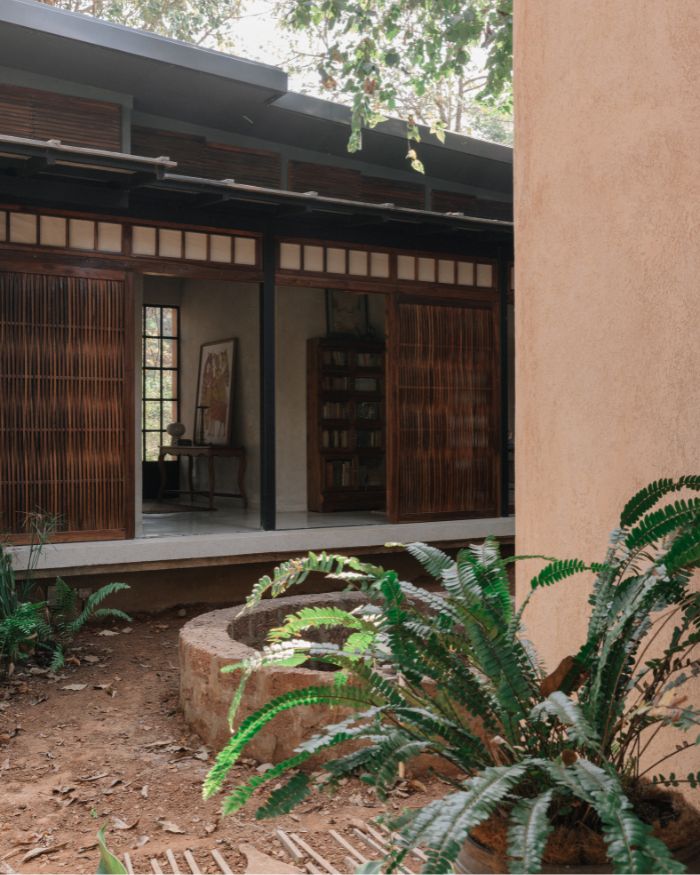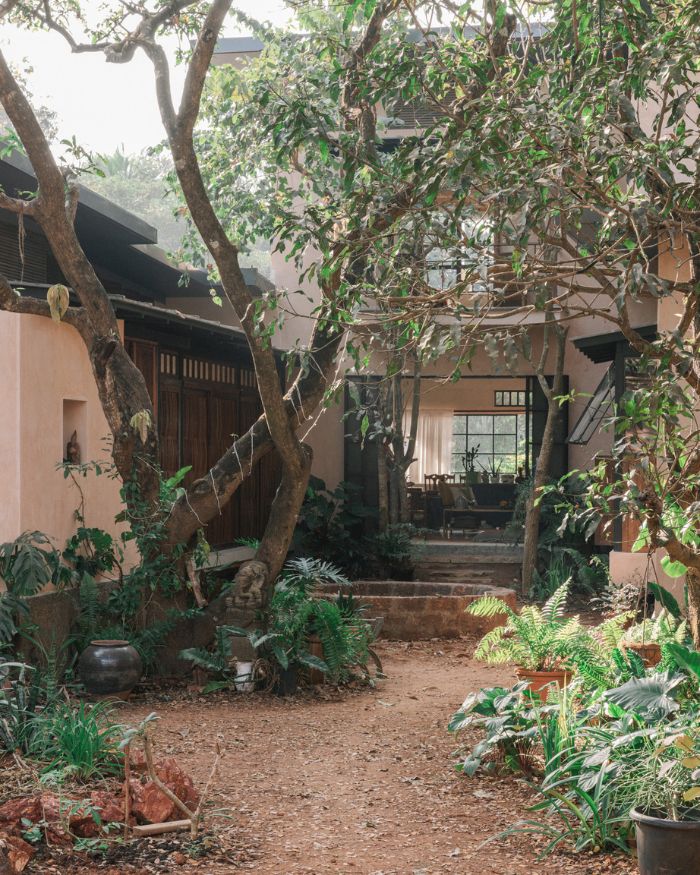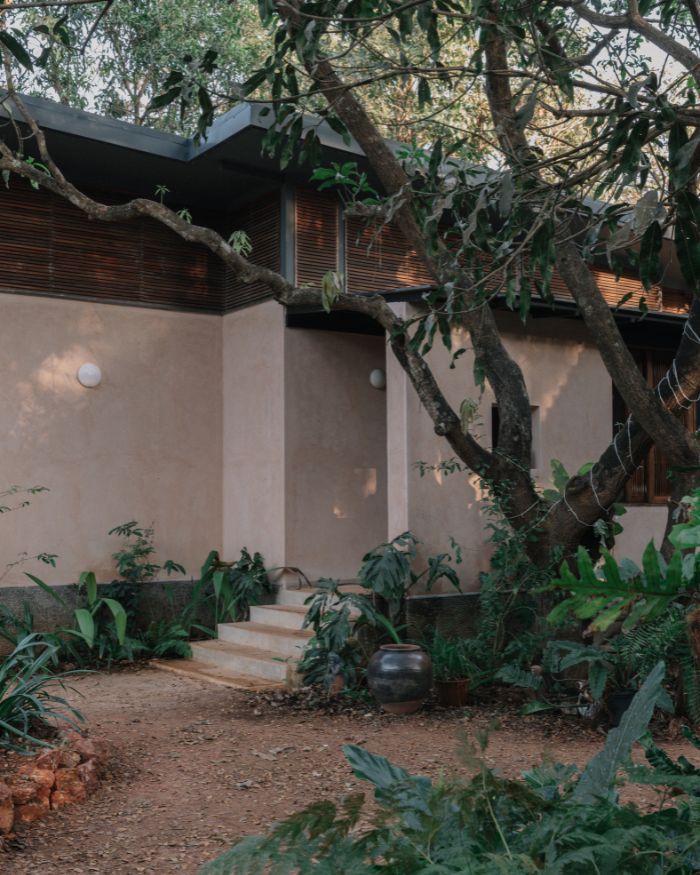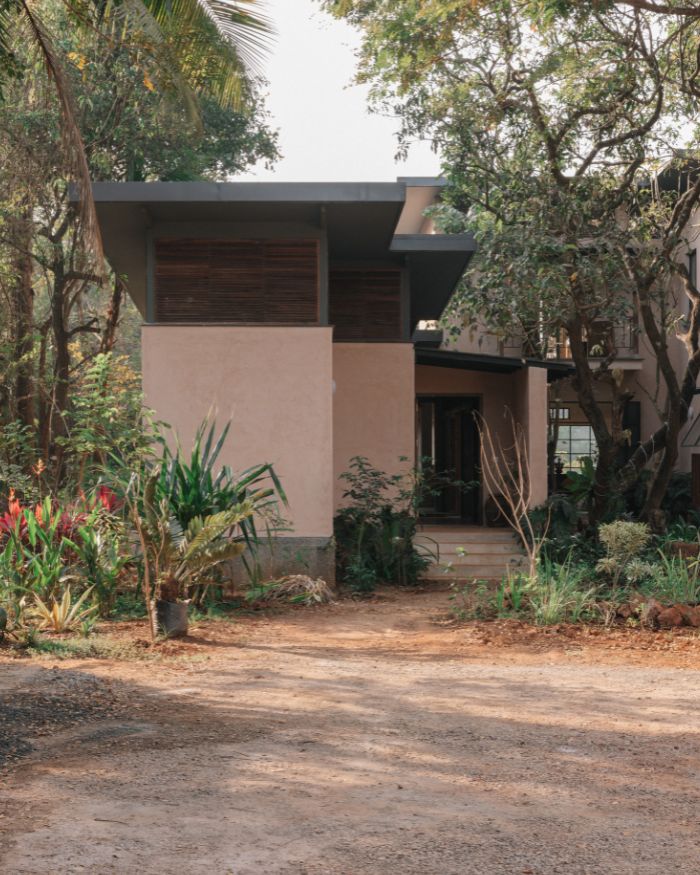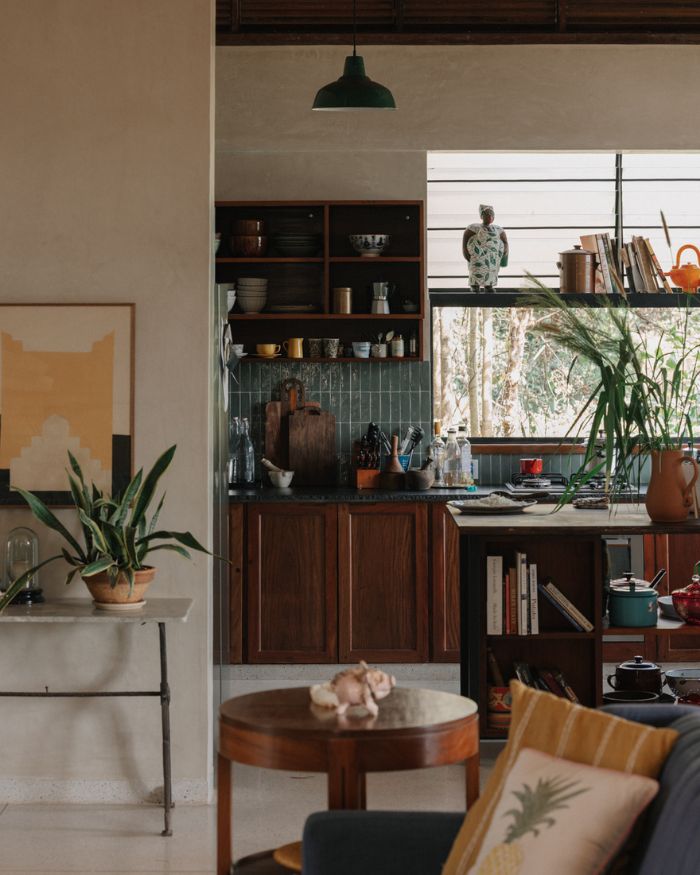

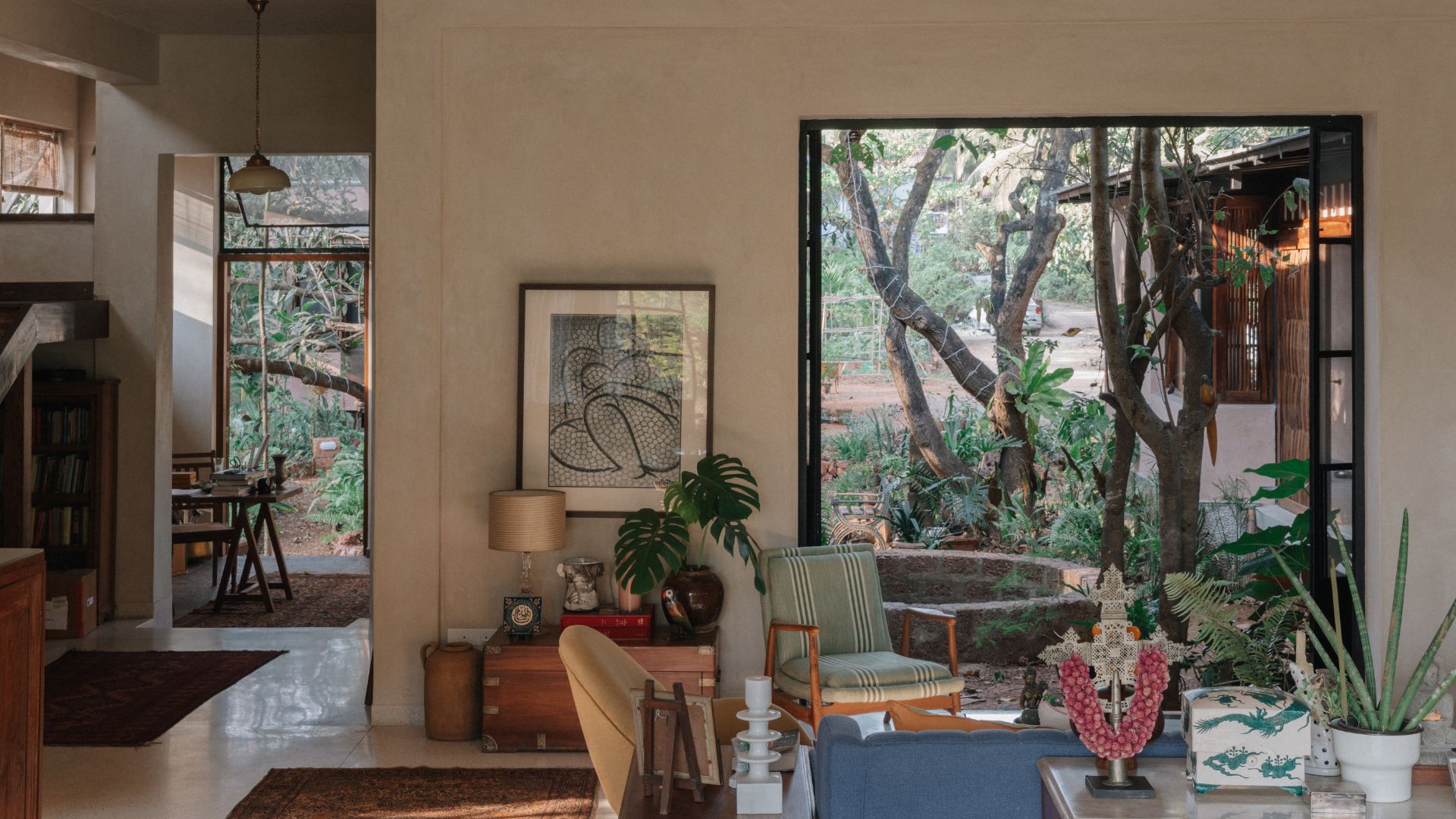
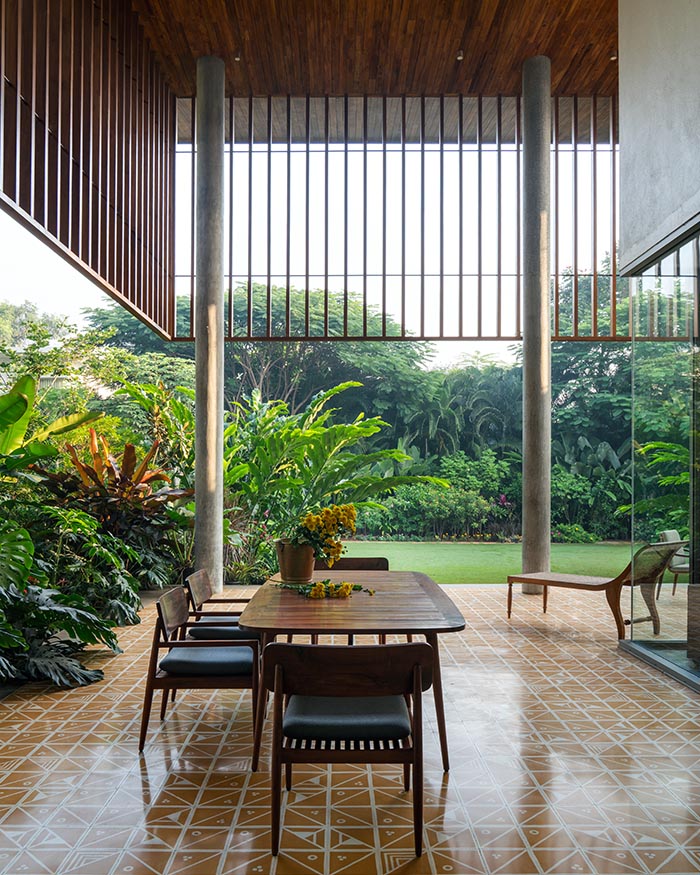
There is a playful vigour to this home. One that feels reminiscent of cousins darting between verandahs in a spirited round of pakdam pakdai, before retreating to the shade with a chilled glass of juice. In the village of Corjuem in North Goa, this dwelling is embedded amid an existing vegetation terrain. Designed by principal architects Yatin Fulari and Teja Amonkar of Field Atelier as a constellation of verandahs, the architecture resists fixity, while spaces expand, overlap and assume multiple roles.
Covering 21,527 sq ft, the home is more pavilion-esque than anything else. A stage that is habitable and oriented towards the landscape. Almost insular within its boundaries, the house mediates a close, tactile relationship with nature, instinctively responsive to the Goan landscape.
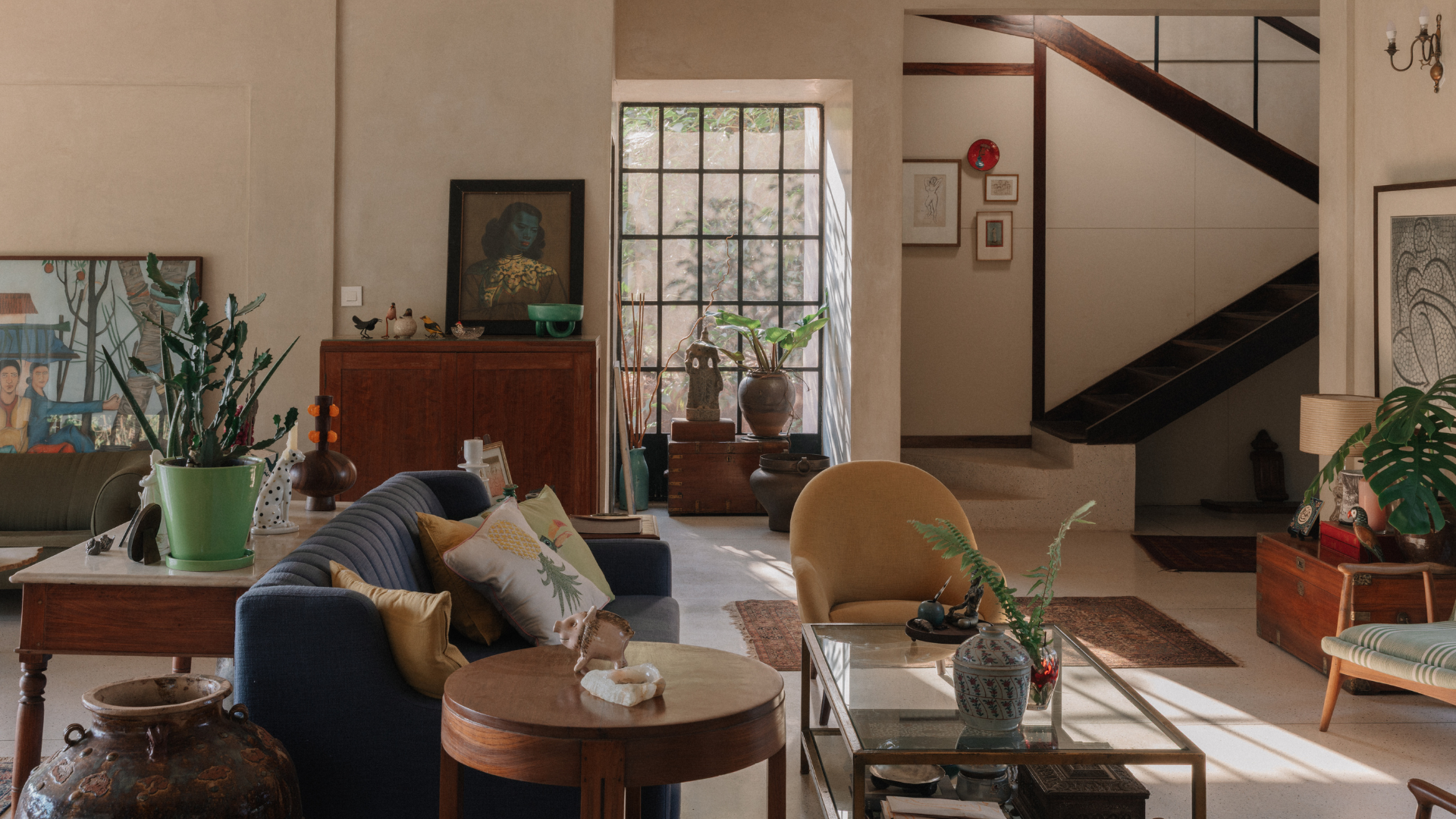
The atmosphere of the home is steeped in susegad, a characteristic Goan term that speaks of unhurried living. A winding road, lined with coconut trees, guides visitors in before the architecture reveals itself. To the right — a vegetable garden, maintained by the owner, a landscape designer by profession, stretches towards two massive trees planted at the very centre of the plot.
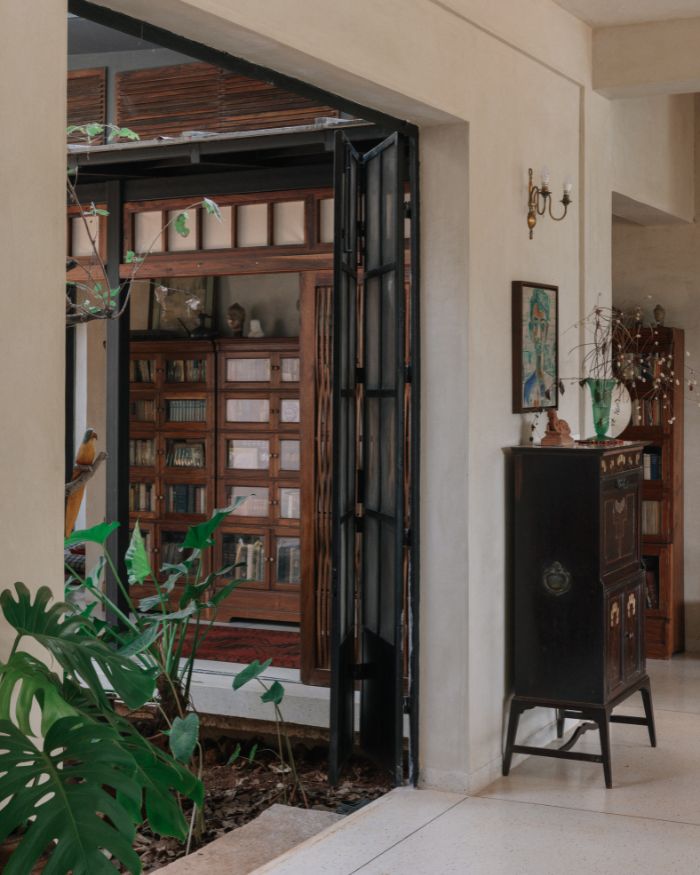
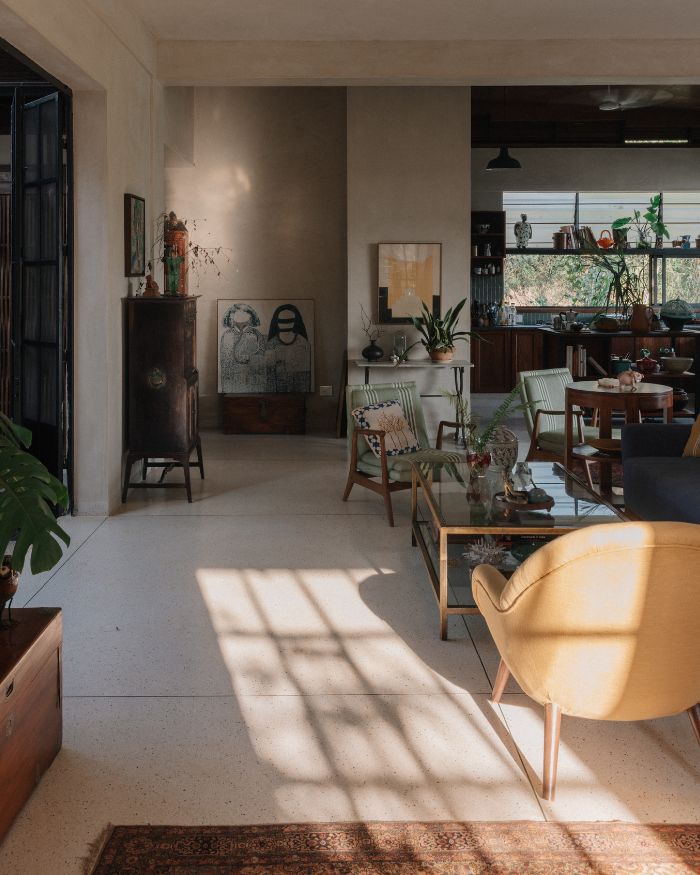
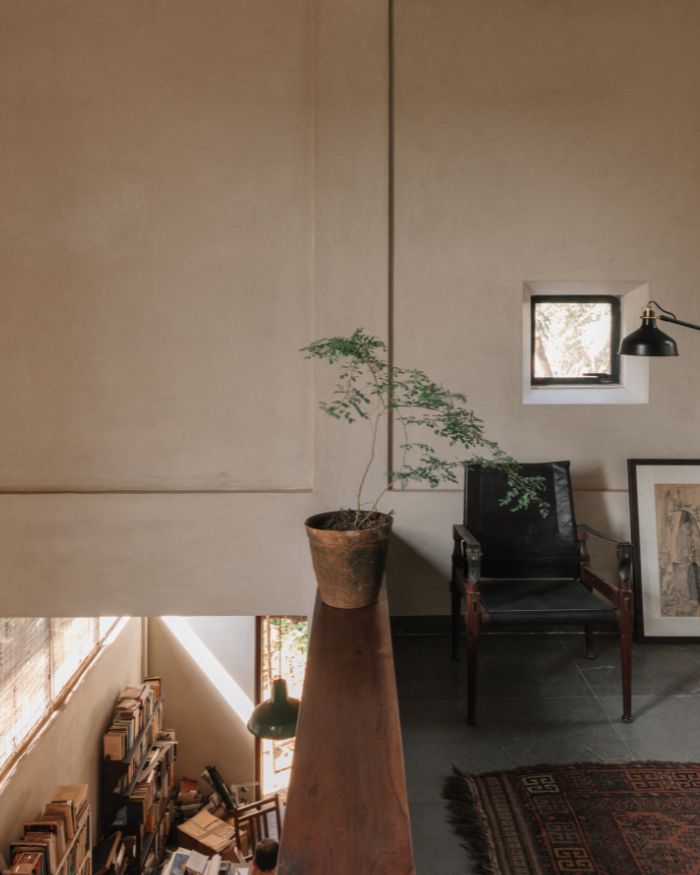
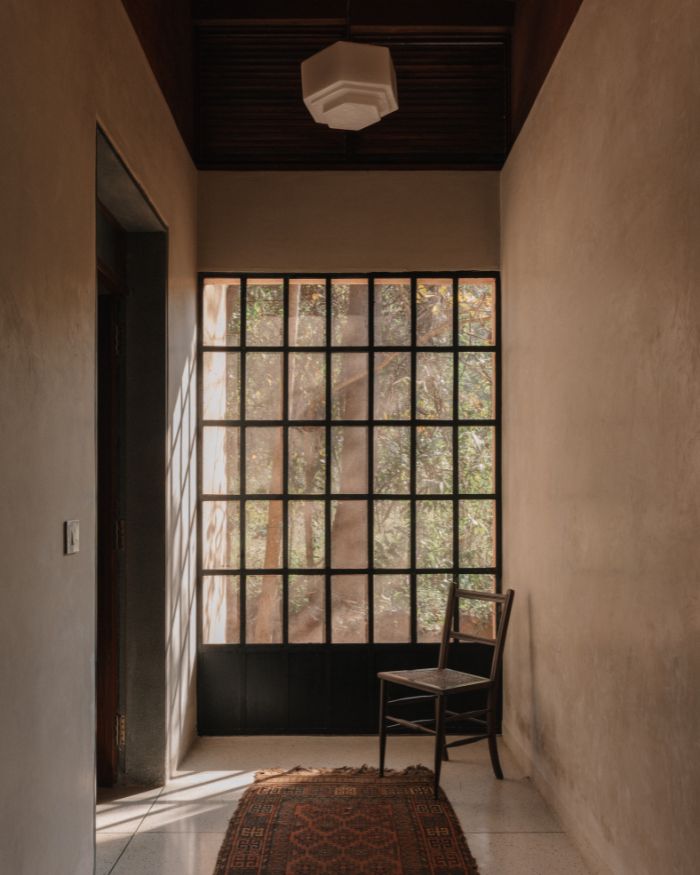
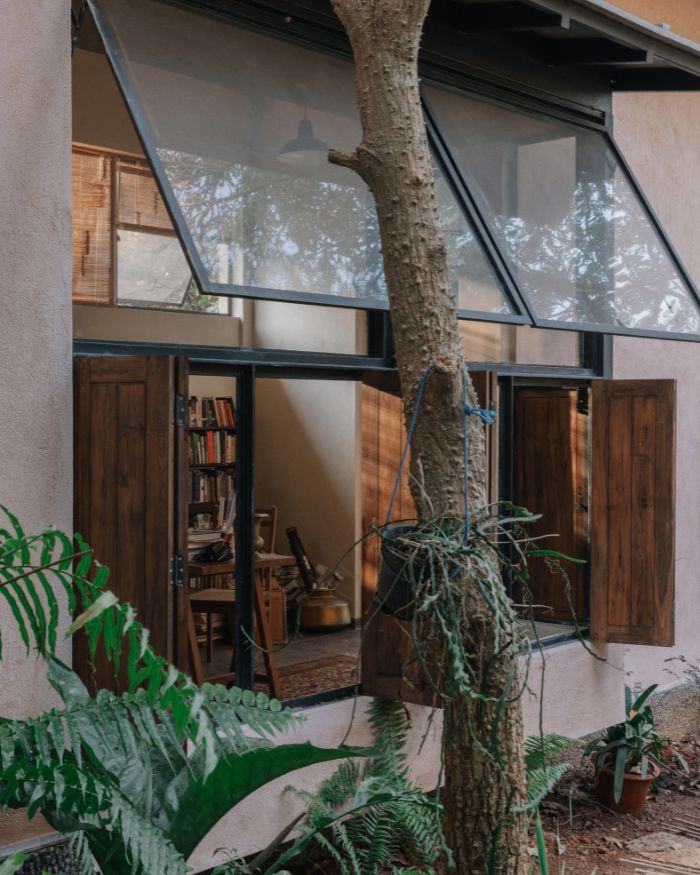
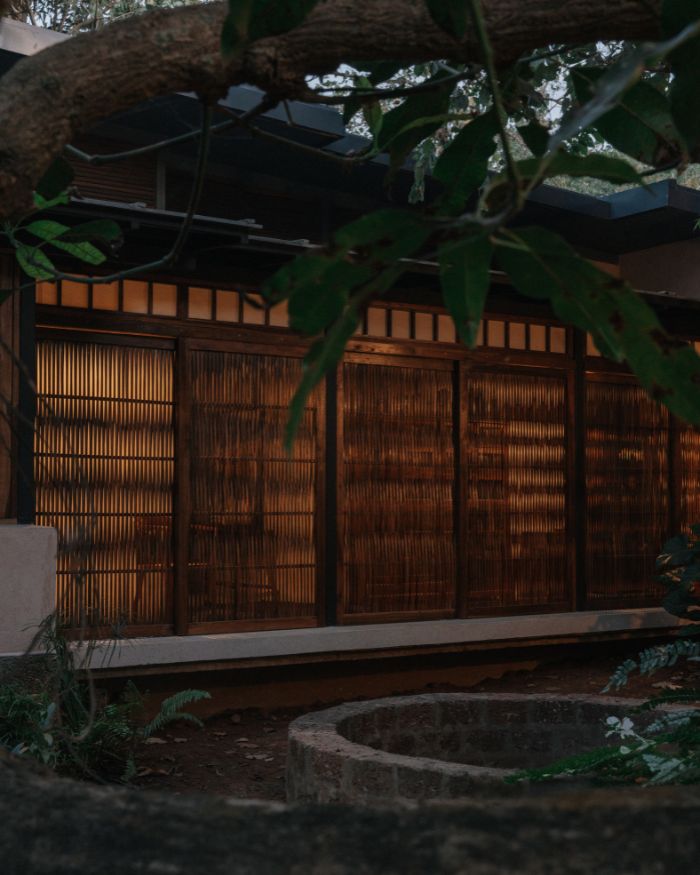
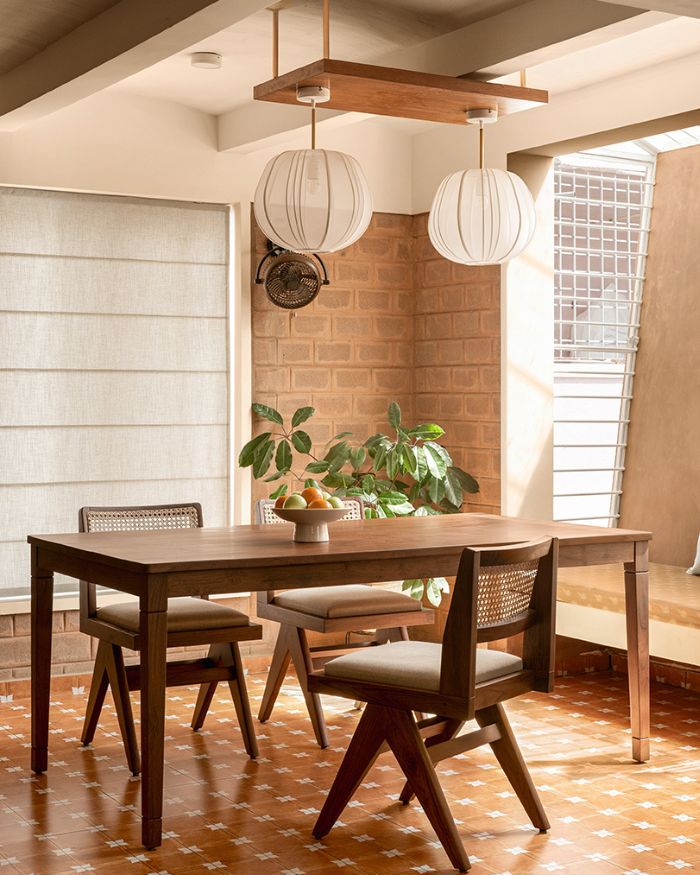
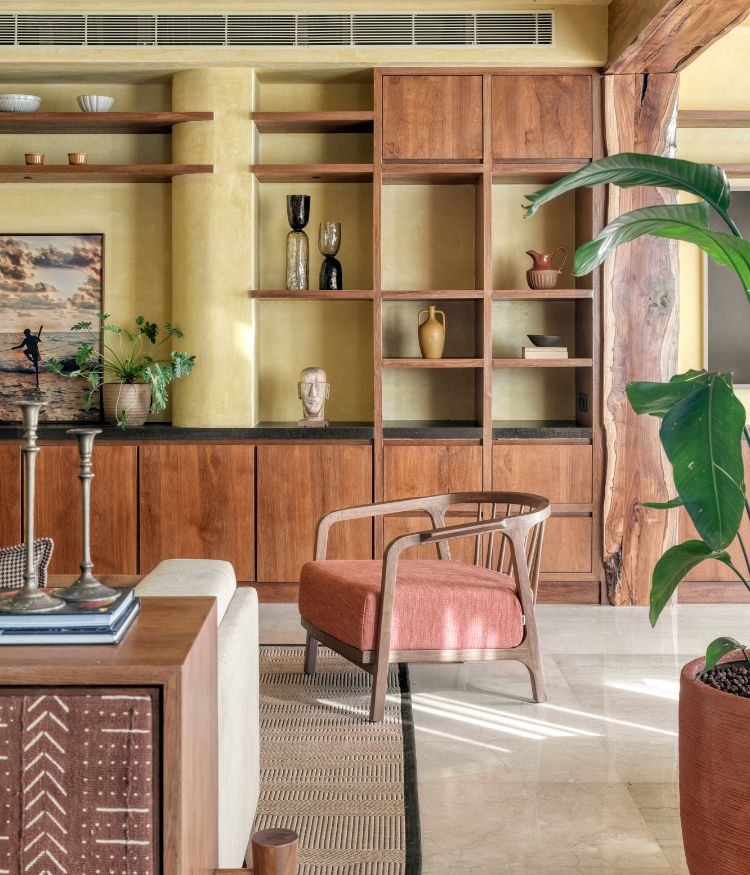
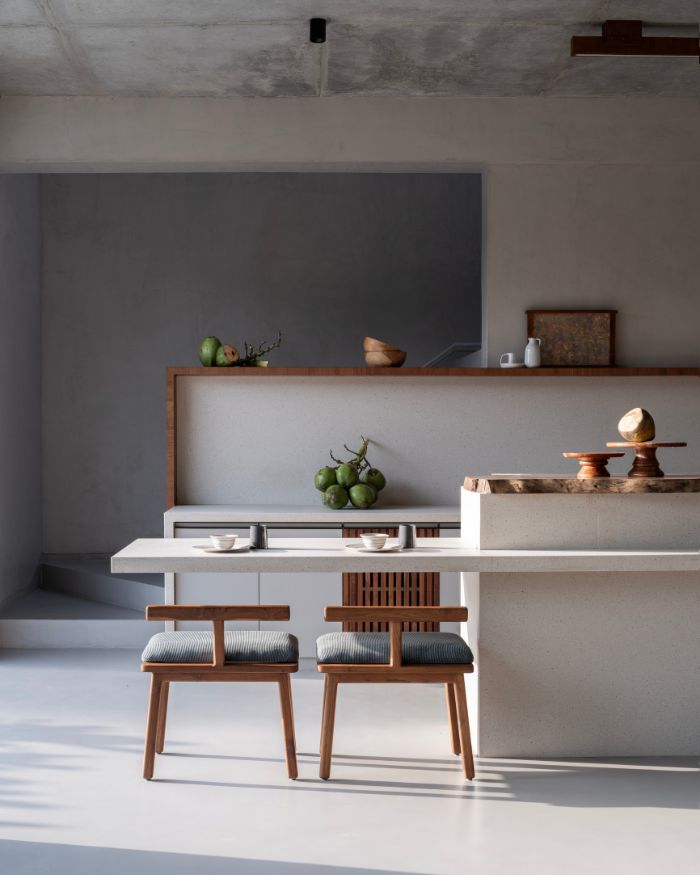
Indian craftsmanship and vintage elements are embedded in the very fabric of the house, dotted with the presence of a well; a feature that’s become a rarity in modern homes. Indoors, the house holds a long verandah topped with a basalt stone roof, while wooden sliding shutters filter breeze and light. A corridor features bookshelves, doubling as an informal reading area and a conversation pit, where paintings, planters and antique pieces. “The living and dining is a one large space allowing its occupants the freedom to plan their life,” Yatin and Teja explain.
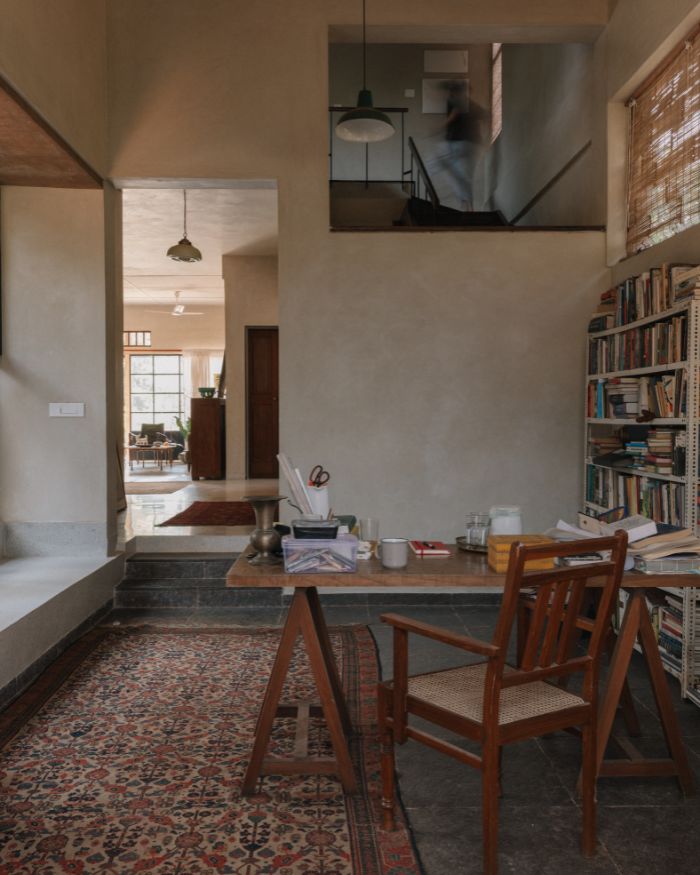
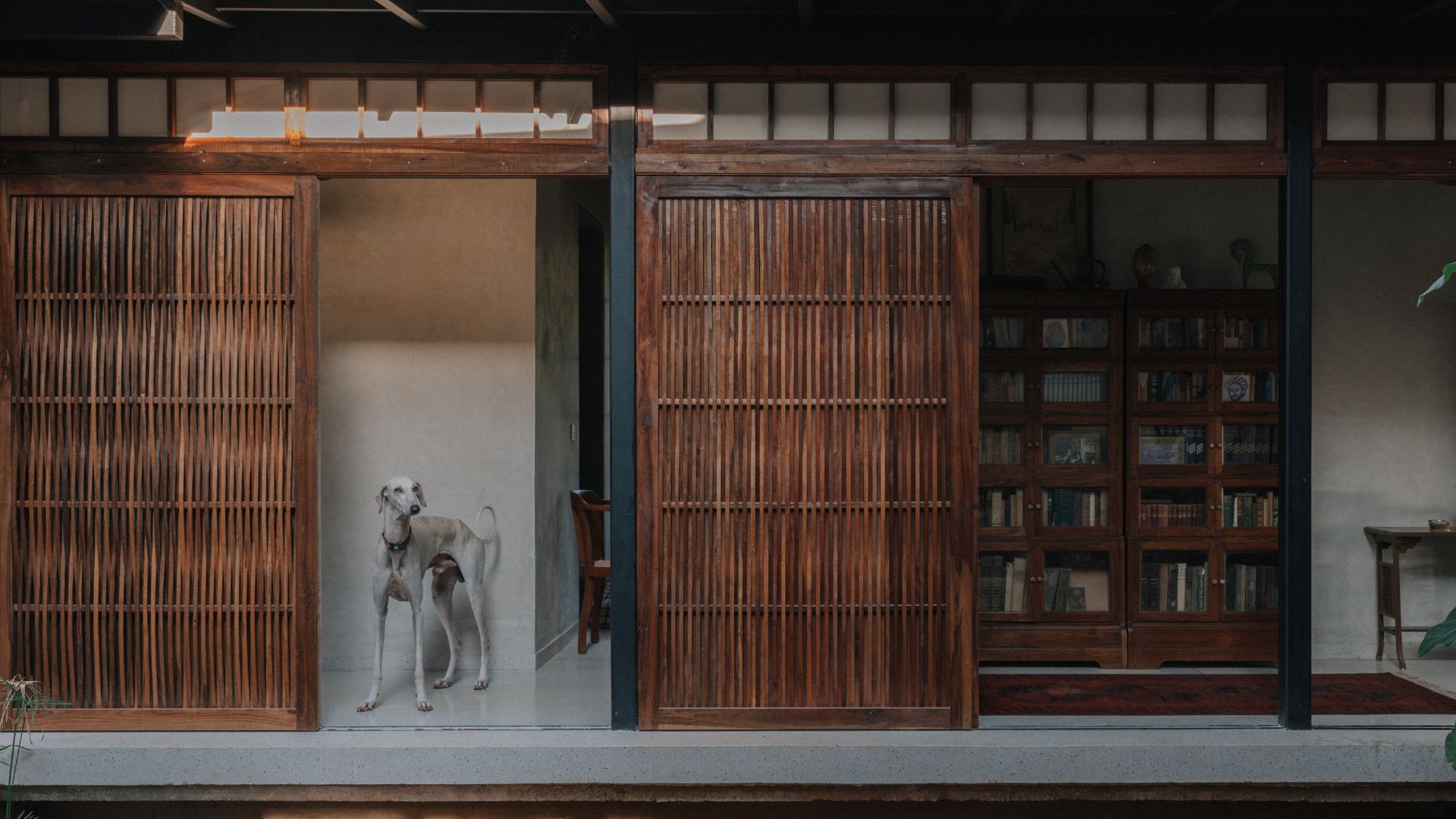
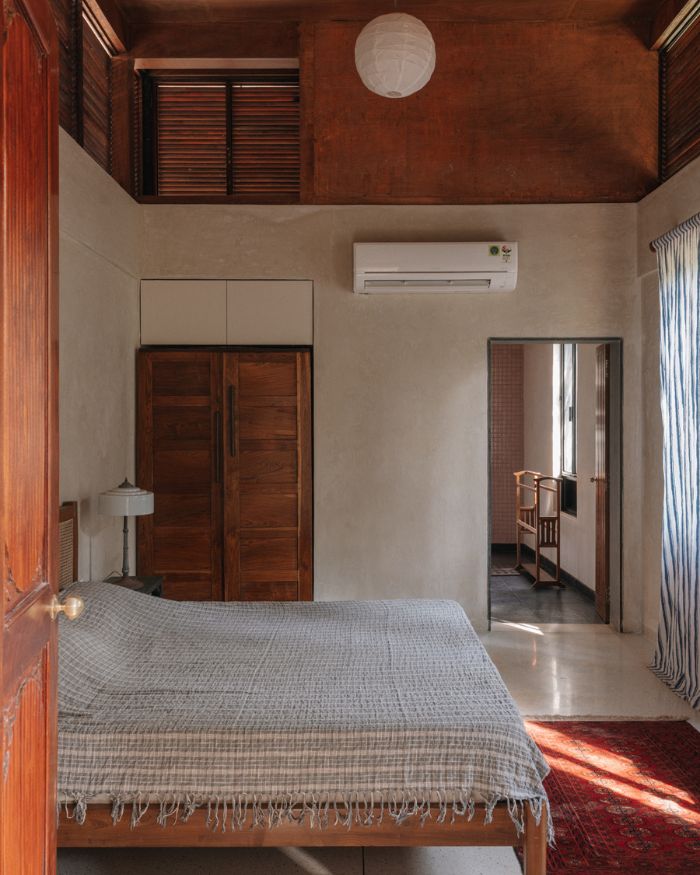
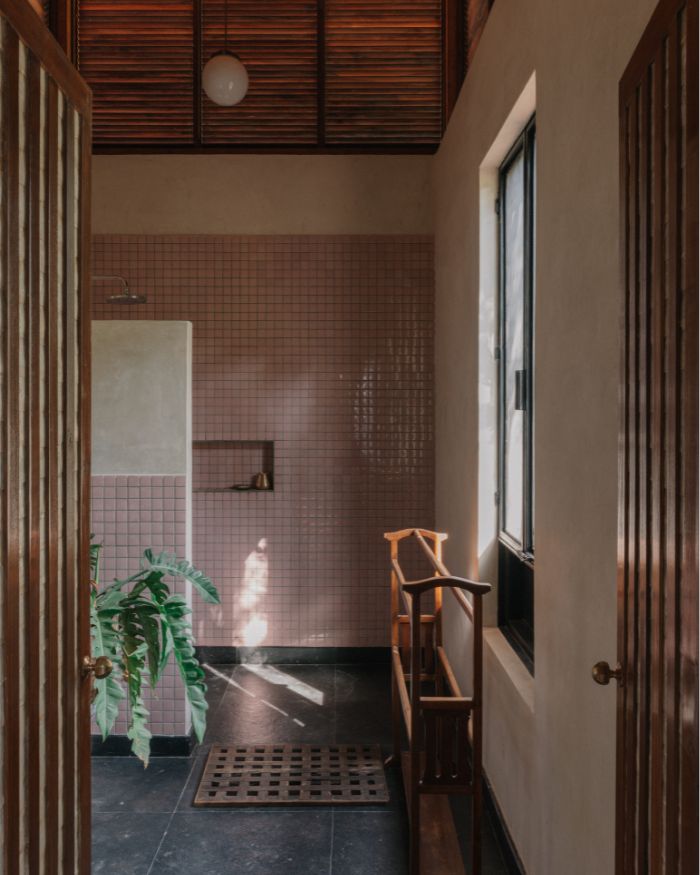
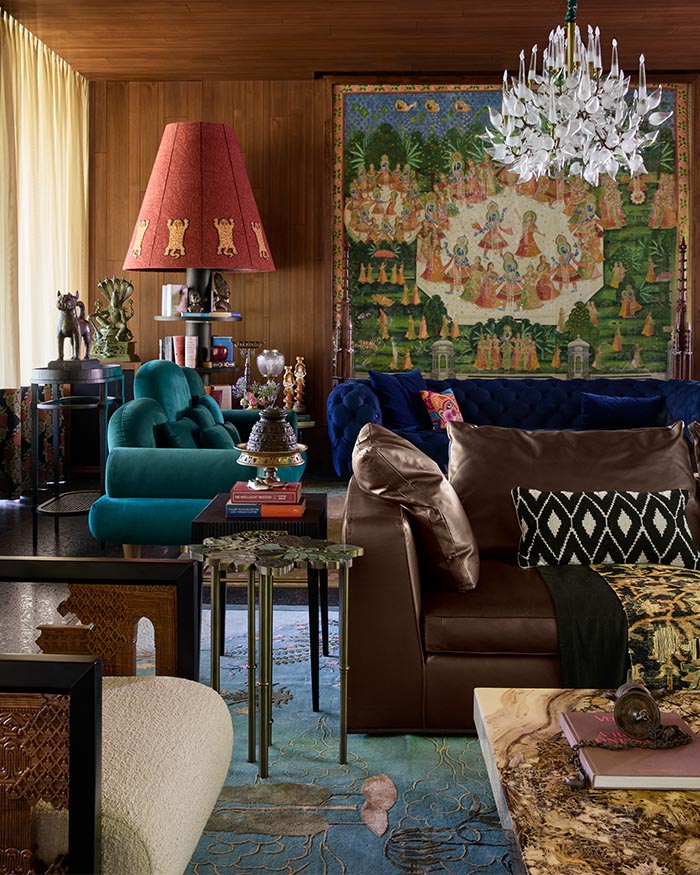
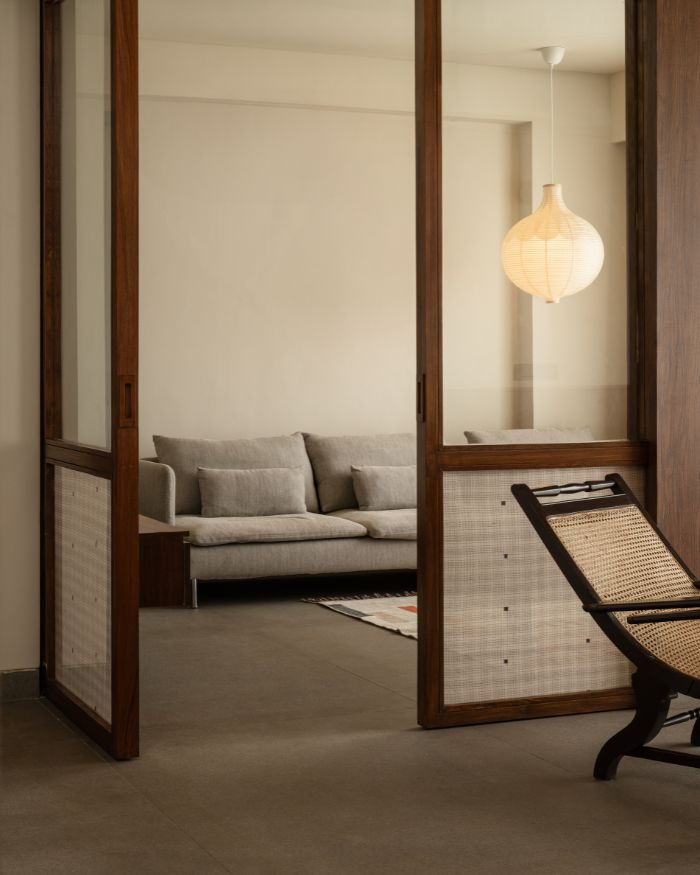
The house speaks in wood throughout. Decorative doorways and oyster shell doors, sourced from the homeowner’s ancestral residence, continue the sensual memory. This legacy manifests most vividly in the living room, which becomes the emotional centre of the house. Ample natural light, openness and visual connectivity give it a sense of ease and movement. Metal-framed windows and doors, filled only with mosquito nets promote cross-ventilation and minimise the need for air-conditioning, a clever gesture towards climate and comfort.
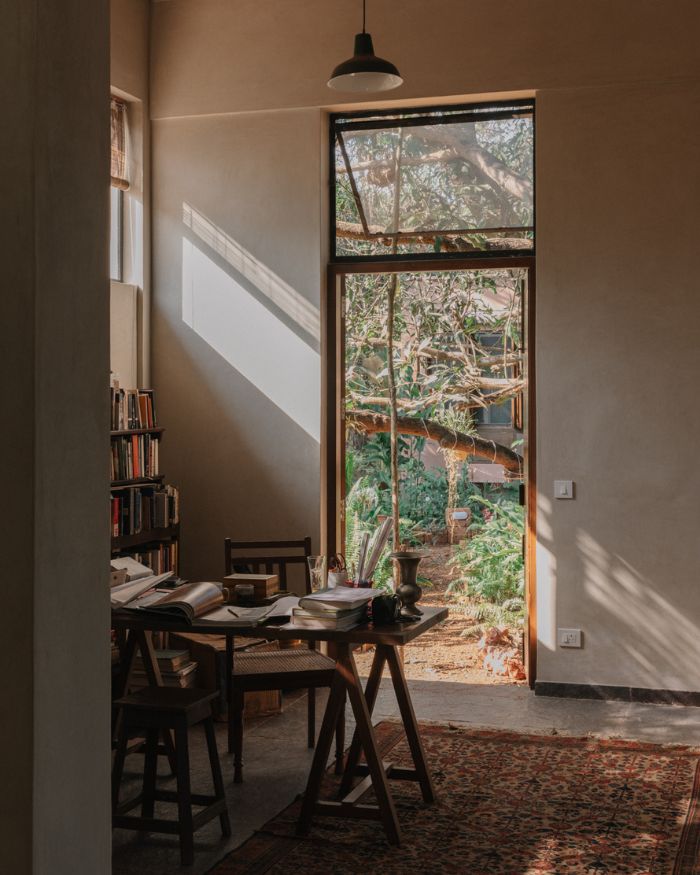
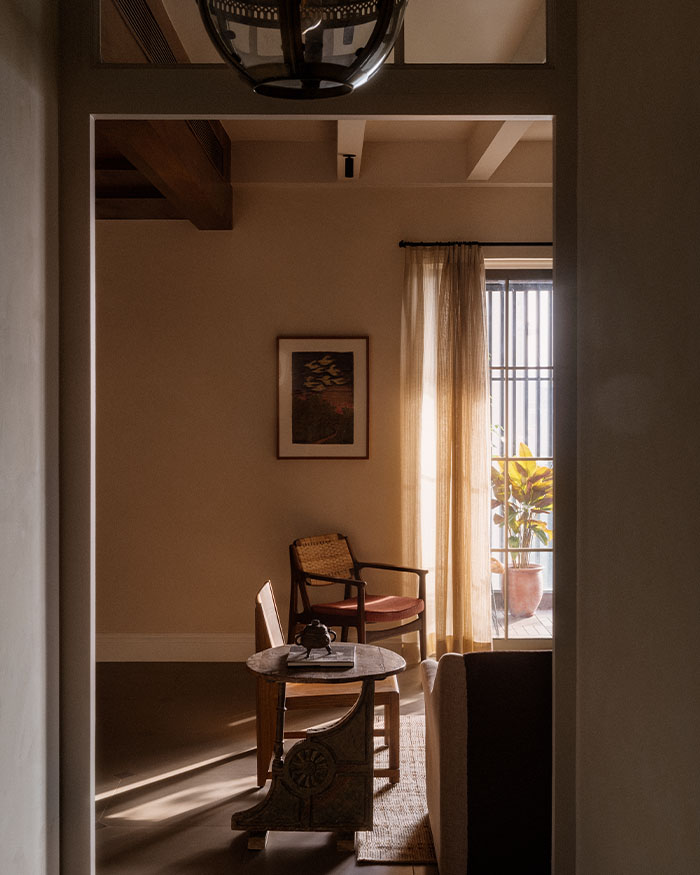
The passage through the verandahs becomes a gentle roundabout route, where movement is led by nostalgia and convenience. The rooms are reconnected through the thresholds, emphasising the feeling of being close. Although the odeon colours remain consistent, the artistic carpets, spotted in the reading room, around the dining area and in the bedrooms, add rhythm to the sculptural lighting all around.
Read more:
Before/After: A chapel and a chickoo tree inspire the restoration of a century-old Goan villa by Ariane Thakore Ginwala and Field Atelier
No results found.