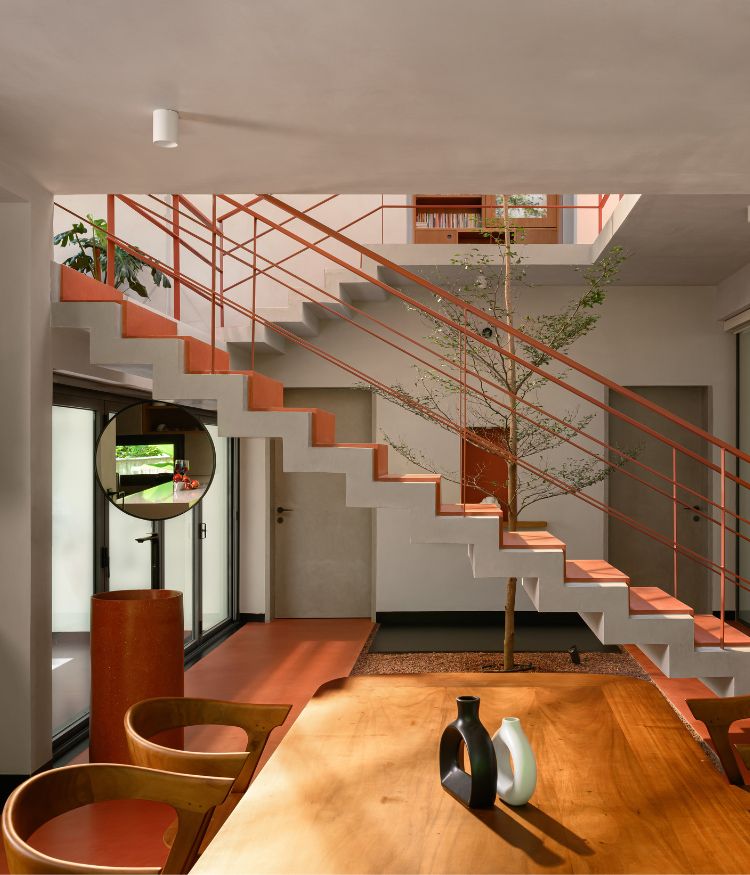

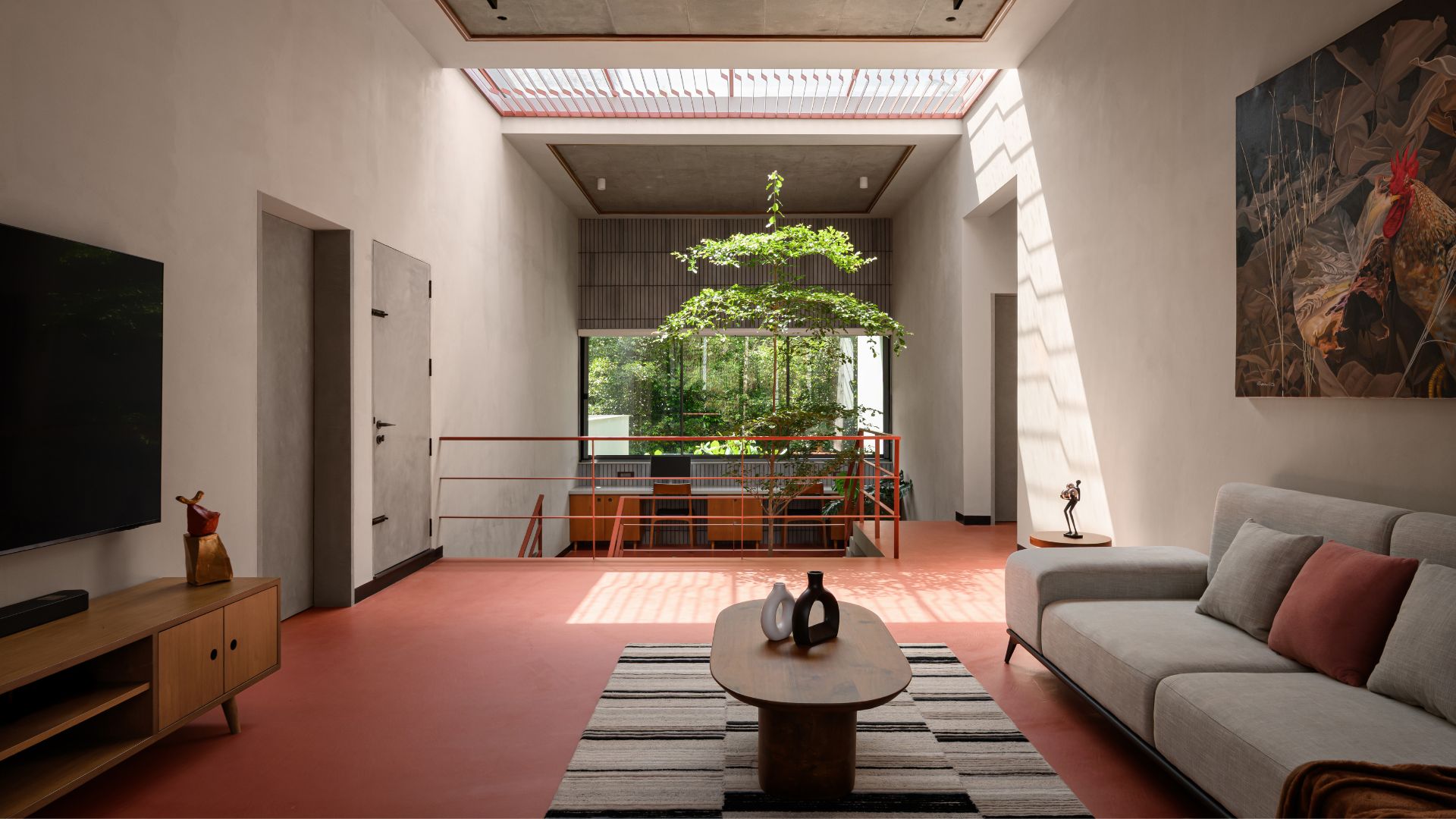
In a world where trees are often the first casualty of construction, this home makes them the main character. It changes the perception of how homes are built today. The design reminds us that there’s a gentler way to live with nature without erasing it. Inside the cultural capital of Kerala, Thrissur, this idea is shaped beautifully. Designed by i2a Architects Studio, the home, dubbed Mriya, is shaped around existing nutmeg and mango trees, allowing them to guide its form. Accents of deep red run throughout the space, grounding the home with a strong visual identity while standing out against the surrounding greenery.
Mriya is more than a home: it is shaped by a personal vision, a close connection to its surroundings and a refined use of hues. It suggests that we don’t need barren land to begin with—a green landscape can work just as beautifully. This approach is reflected in the layout which unfolds around the existing site.
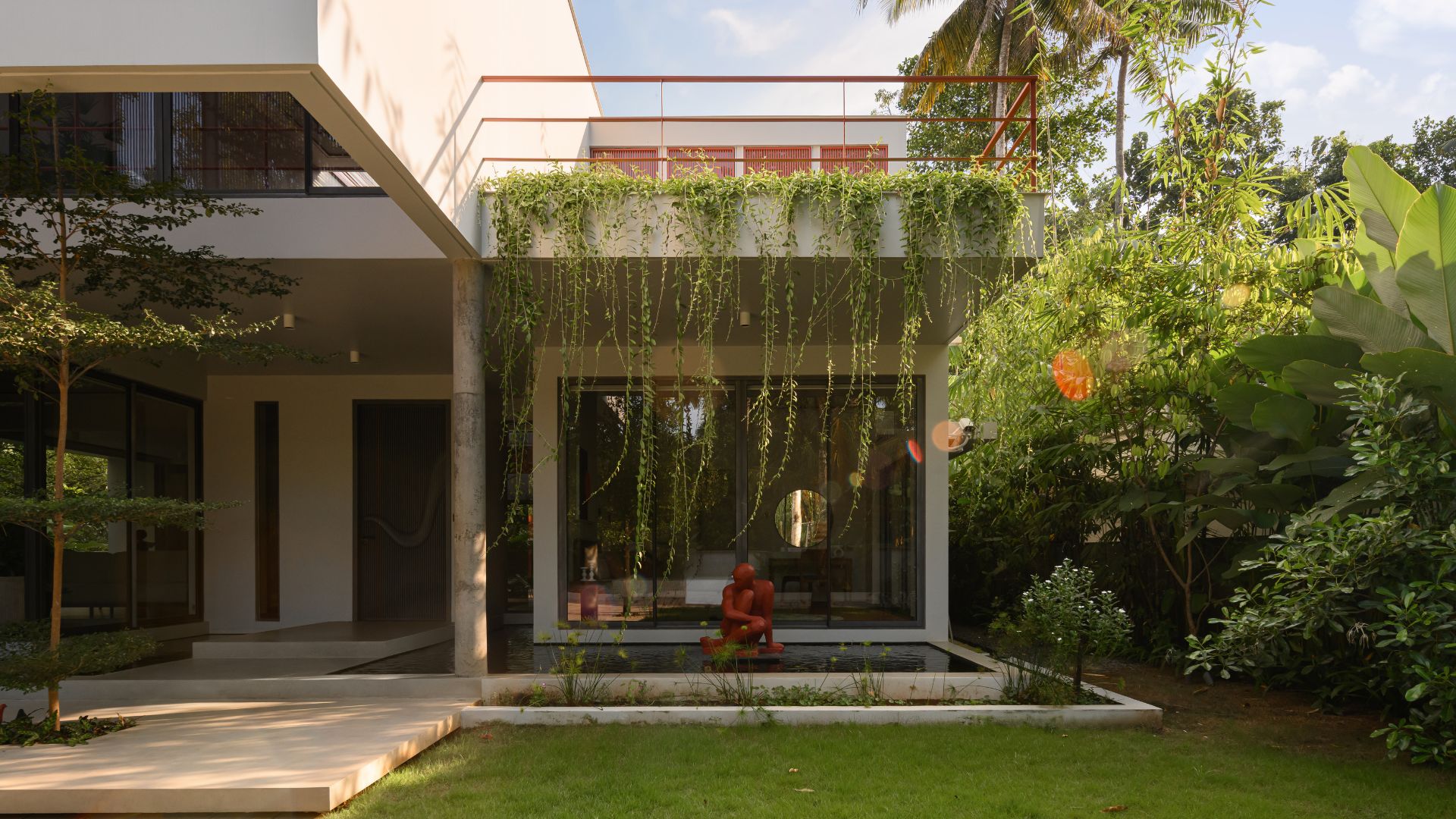
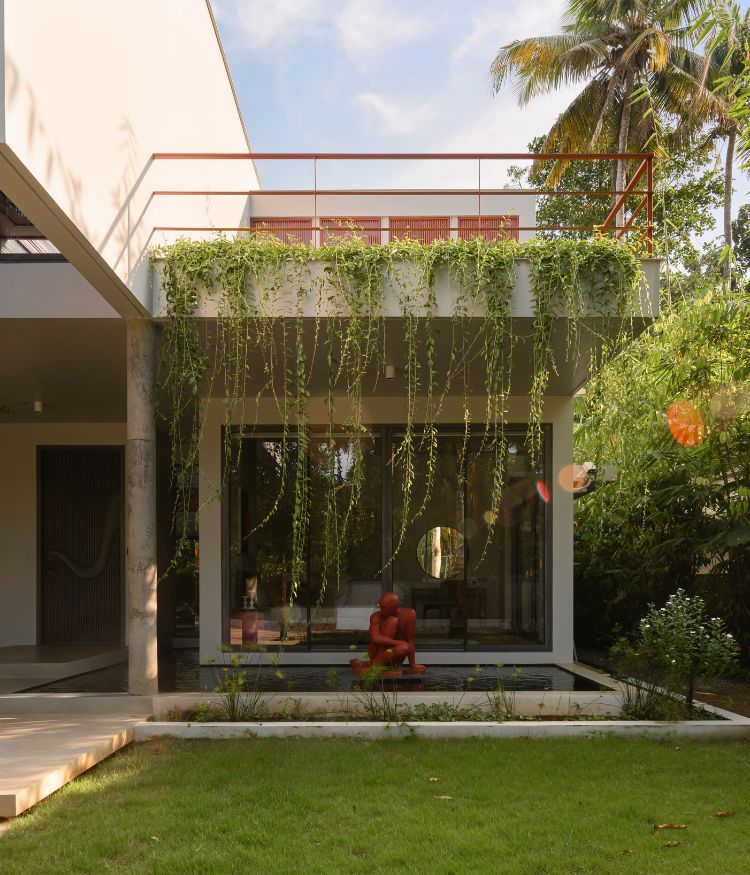
At Mriya, the design begins by working with what already exists. Instead of clearing the site, the house is shaped around the nutmeg and mango trees that were already rooted here, allowing them to guide the layout and form. The design allows walls, openings and courtyards to emerge as responses to their presence rather than additions on it with the intention of retaining as many nutmeg and mango trees as possible.
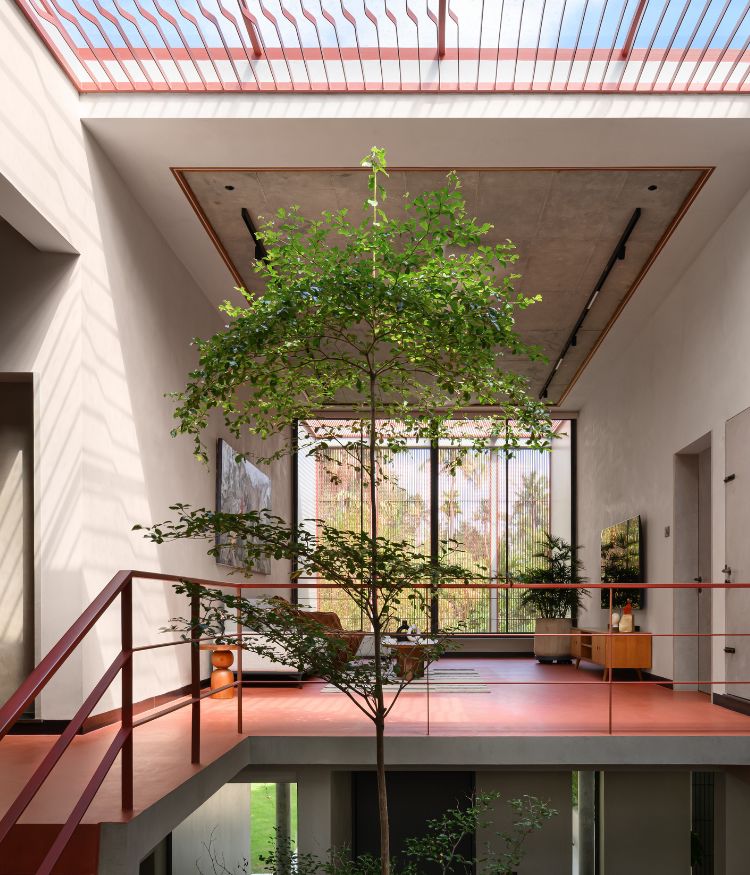
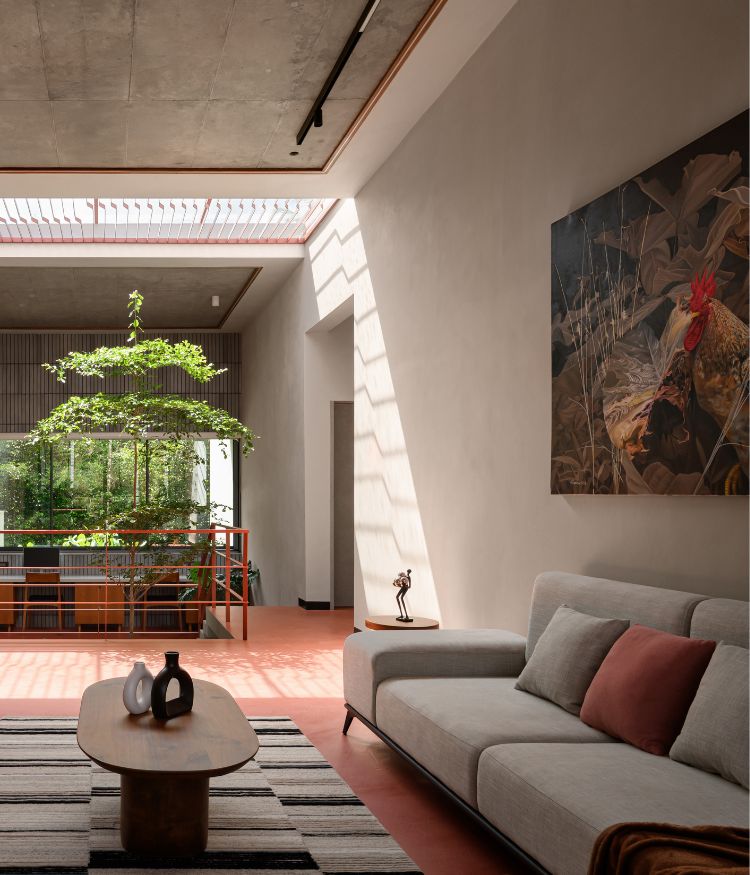
Within the porch, this relationship becomes even more direct—the roof slab is punctured to let trees pass through, making them a constant part of the spatial experience. Walking through the house almost feels like taking a stroll through a garden with glimpses of green appearing at every turn. There’s a certain restraint at play here—an understanding that not everything needs to be designed, some things are allowed to exist as they are. What might seem like a limitation becomes the starting point instead. It makes the experience of home feel more open and immersive.
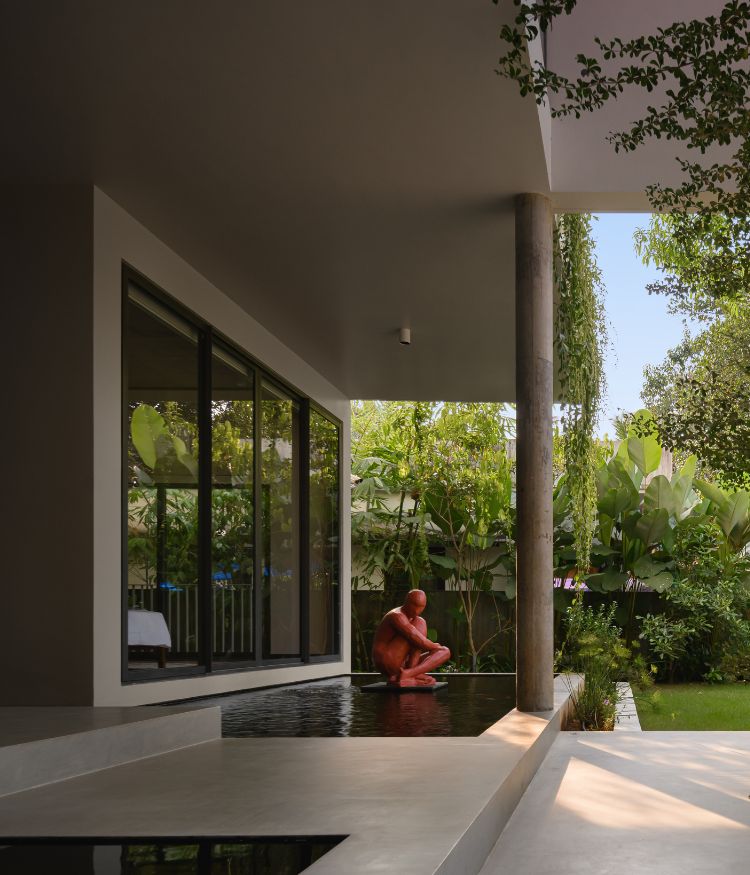
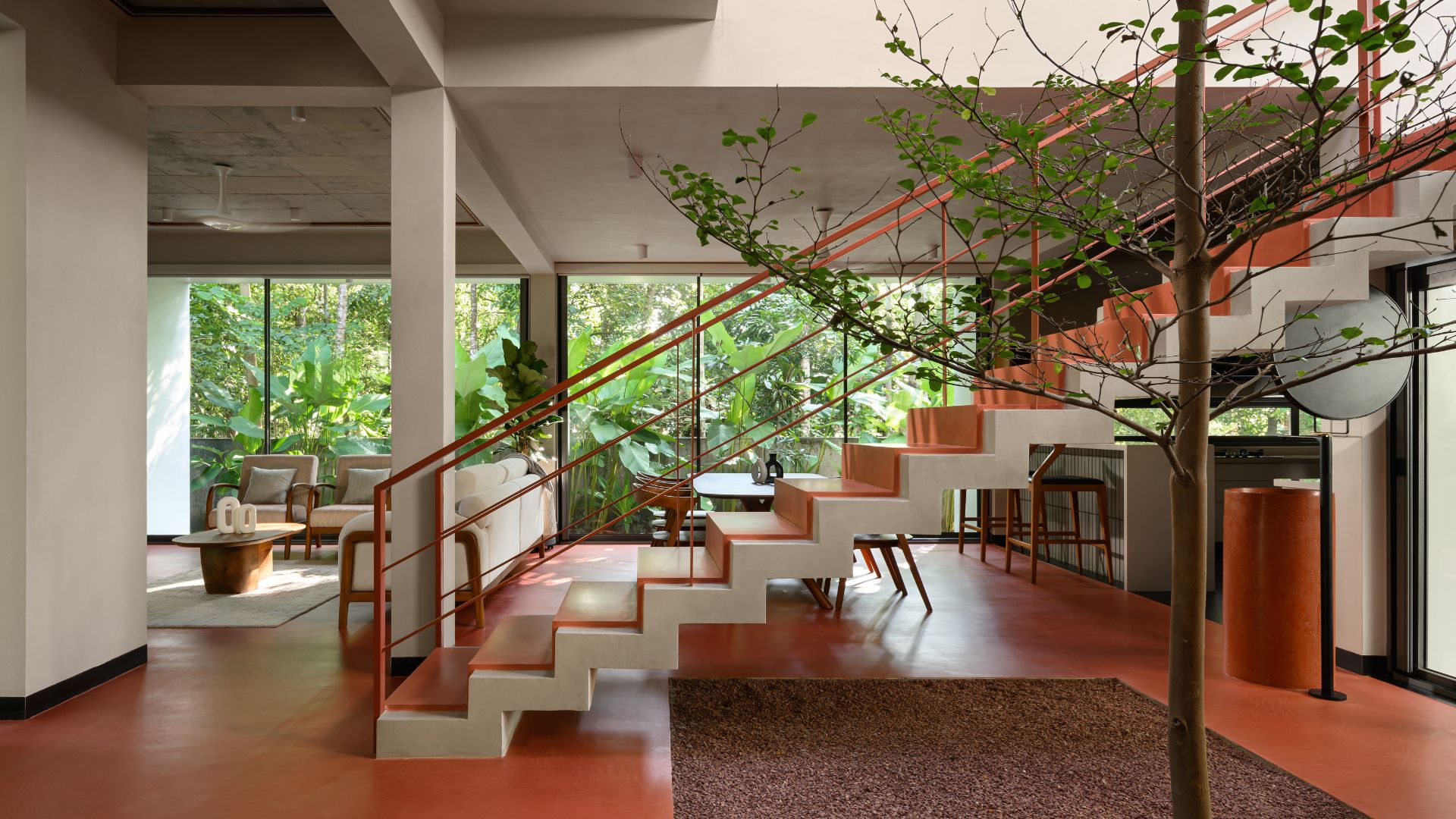
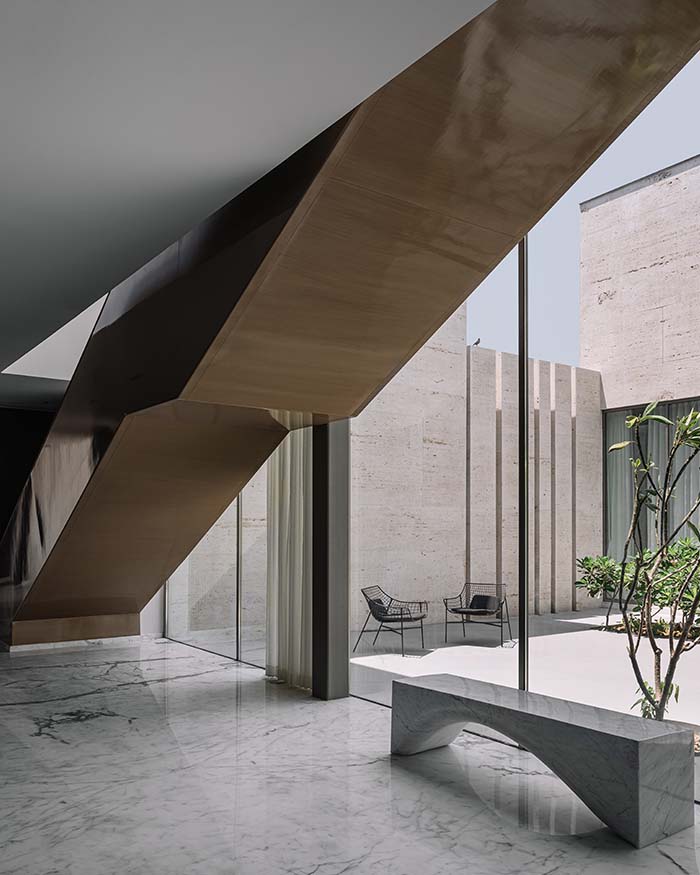
The planning of the house is straightforward, but it’s been carefully considered to balance openness with privacy. The visual identity of Mriya comes alive through projecting cuboidal volumes that define the facade. These are shaped through a play of solids and voids which allows light and air to move through the volumes. A central axis runs through the home connecting the entrance to an internal courtyard and bringing clarity to the layout. The journey begins at the sit-out which acts as a moment of pause before stepping inside and opens into a double-height central space that ties the home together visually.
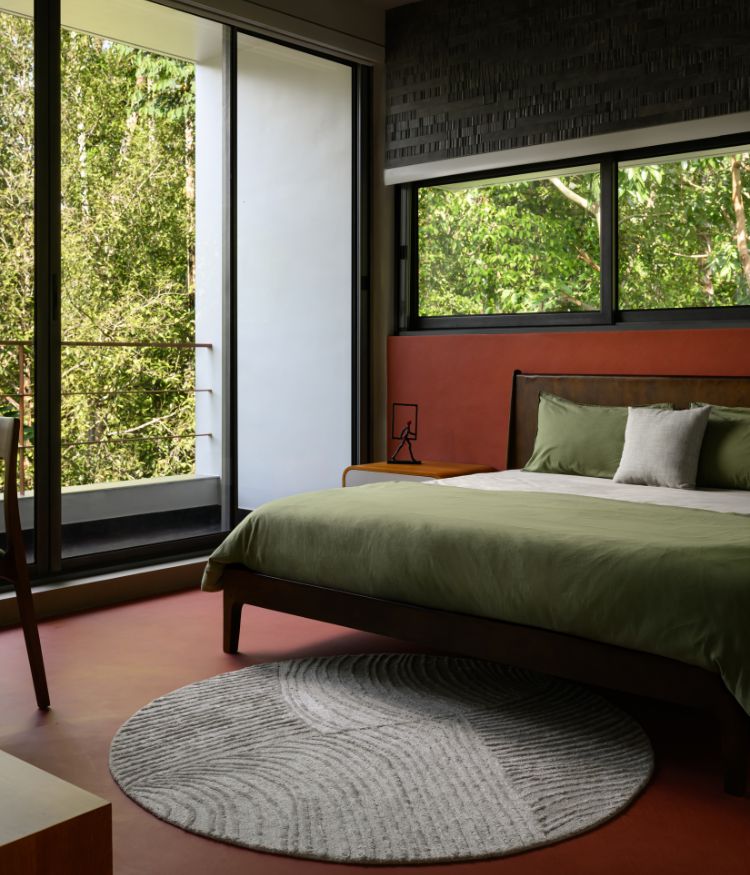
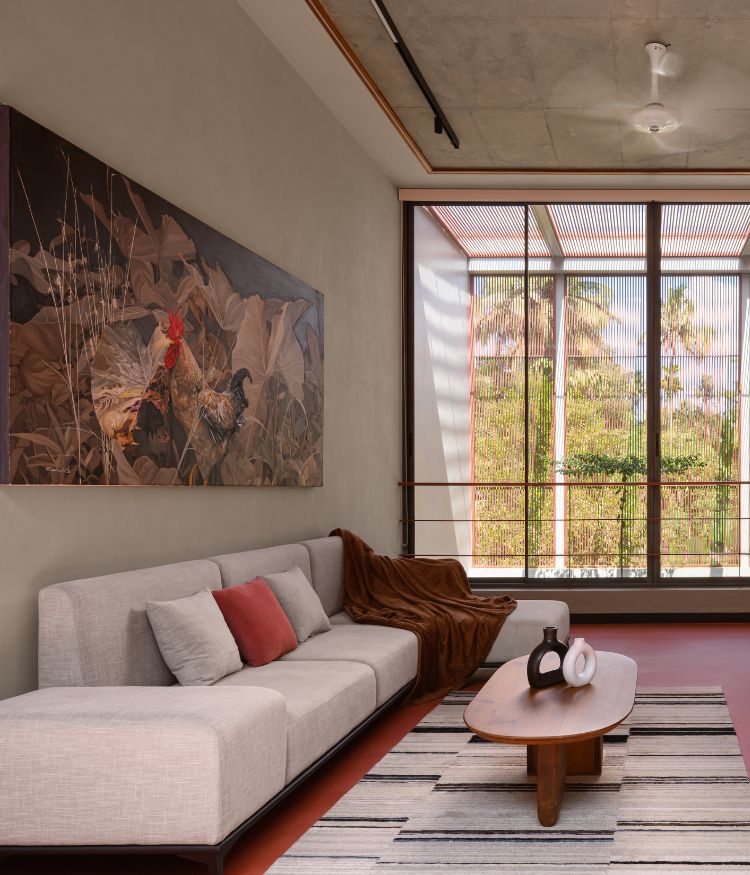
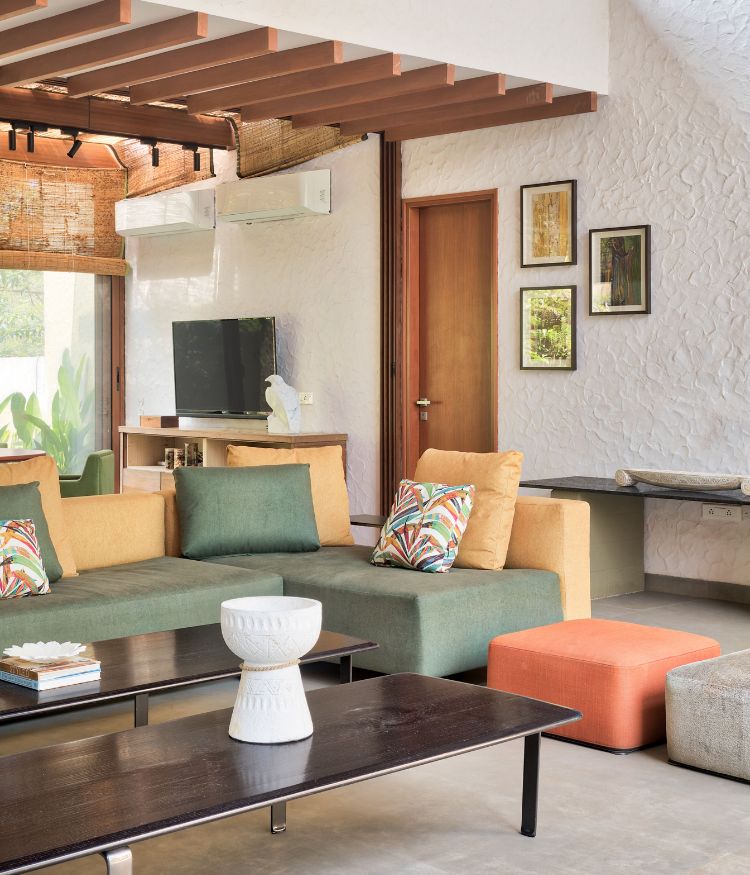
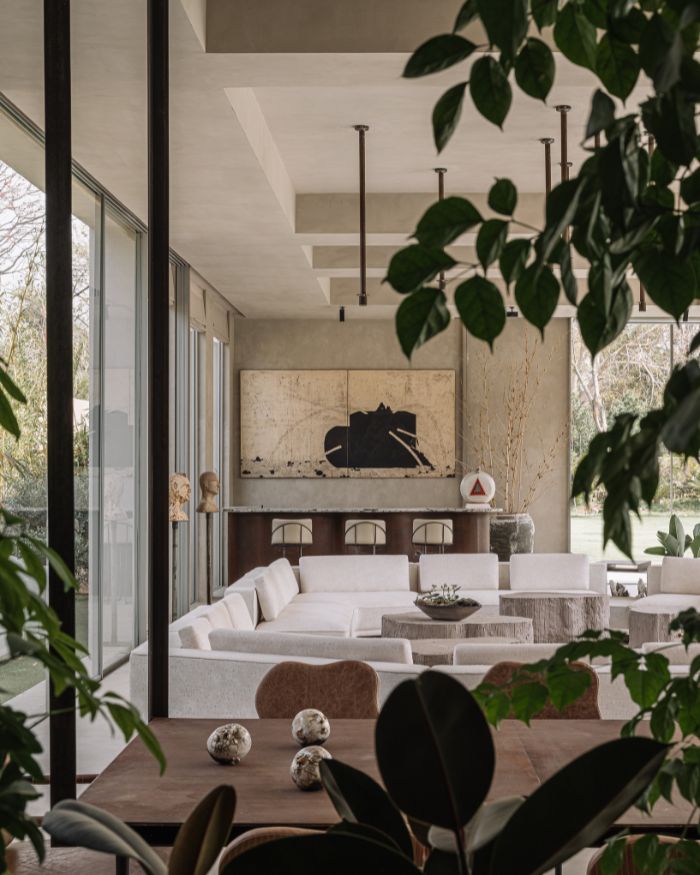
Shared areas like the living, dining and kitchen are placed on one side— open and filled with light and the bedrooms sit on the other side— delivering a quieter, more private retreat. This zoning feels intuitive allowing the house to shift between active and restful spaces without feeling abrupt. Light is also among the main characters playing a defining role in this experience. It is guided through courtyards, openings and volumes. Mornings enter gradually from the east, filling the common areas with diffused light. Skylights draw daylight in the centre through the day. And by evening the home is lit by warm natural glow, making the experience feel fluid and continuous.
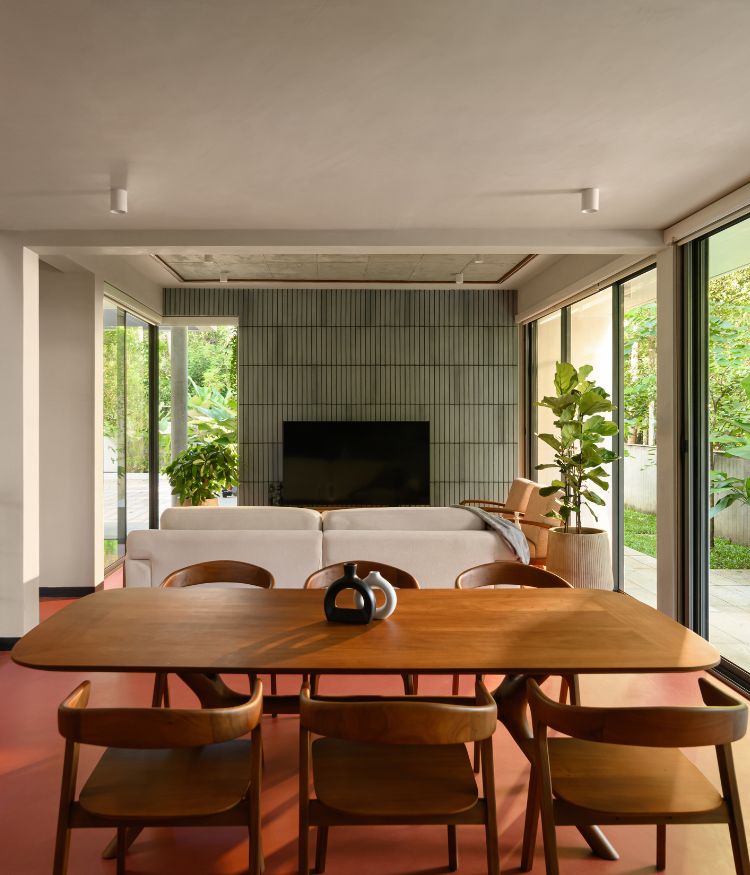
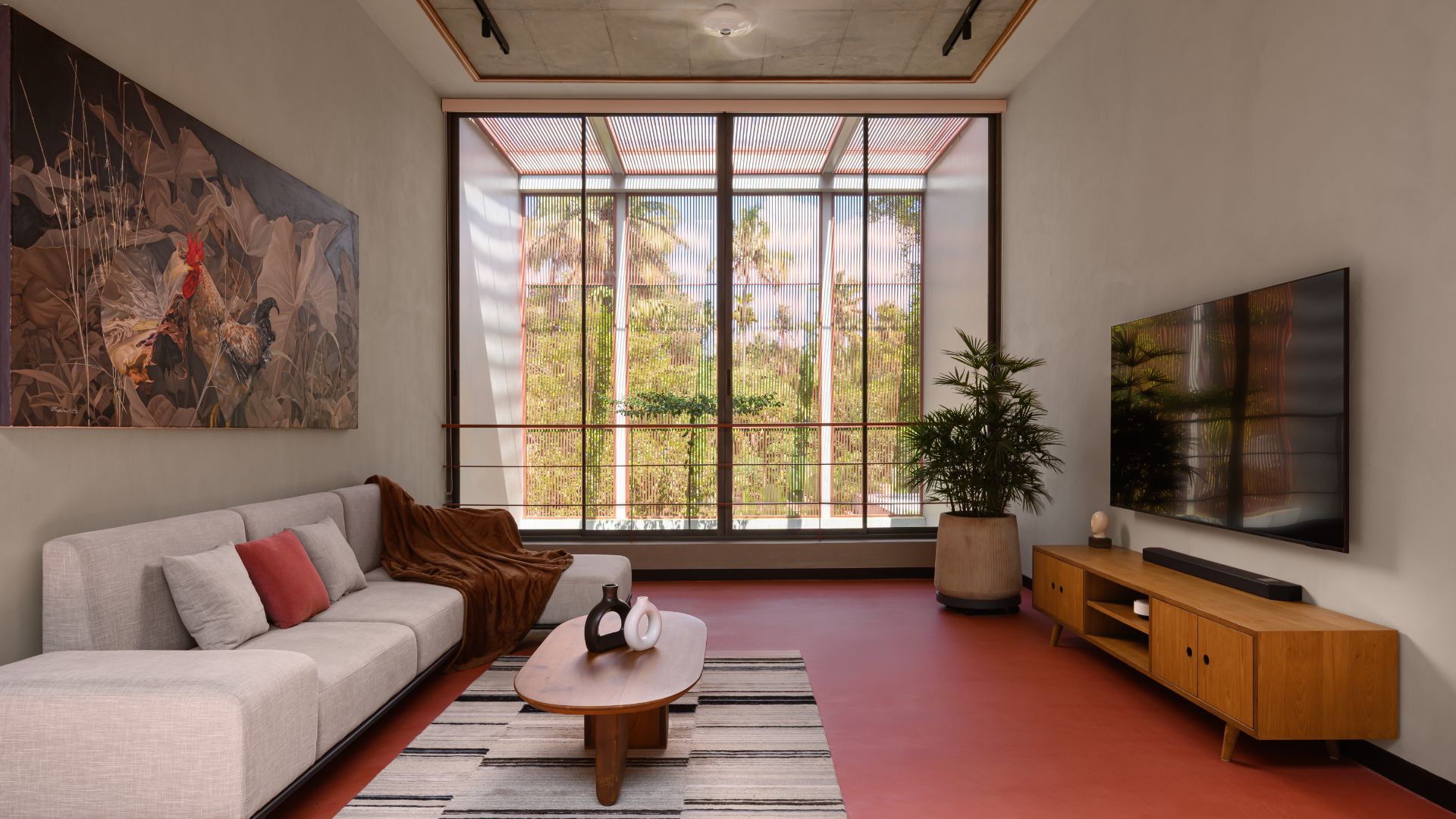
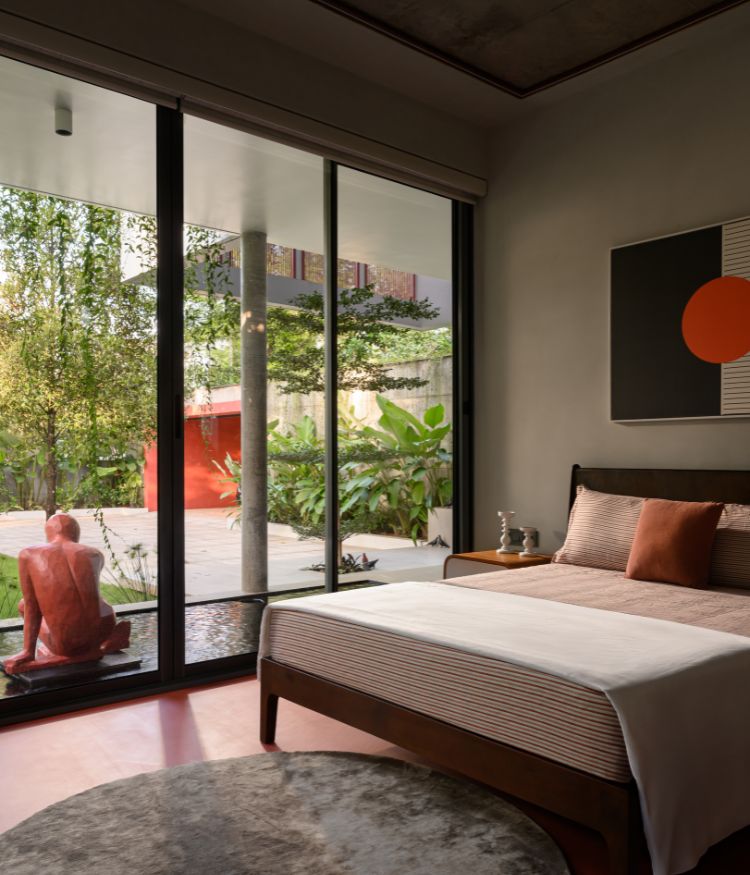
While the architecture remains restrained, colour brings in a strong sense of identity. Red appears across floors, doors and as a sculptural element throughout the landscape creating a thread that ties the spaces together. The material palette mellows this further with lime-washed walls adding texture and warmth and balancing the intensity of the red. Outside, water bodies sit along key edges of the house helping cool the interiors and reflecting light back into the rooms. Together these elements create a unified experience, making the space feel relaxed without making it static.
There’s a constant feeling of openness—not just visually but emotionally. Light filters in differently throughout the day, shadows keep changing and the presence of trees, courtyards and greenery becomes something you’re always aware of even in the smallest most routine moments. You don’t “step out” to experience nature; it’s already around you, woven into everyday life. At the same time it creates a deeper connection. Because the house isn’t imposed on the land, it carries rootedness. You feel anchored and not just sheltered. It’s less about ownership of space and more about coexisting with it. In many ways the experience is subtle. Over time it reshapes how you understand comfort, not as separation from nature but as a closer, continuous relationship with it.
Read more: A salon sculpted in glass bricks

No results found.